Shooting Birds on the “Snake Road”?

Being almost solely interested in “herps” (reptiles and amphibians) for a couple decades of my life, a place in southern Illinois known as LaRue Road, or more legendarily – “Snake Road”, has long been on my list of favorites to visit.  Years ago, before becoming interested in the reptiles with wings and feathers, I barely took notice that this location was swarming with all sorts of life.  Upon becoming a more rounded nature enthusiast, I have since discovered this simple road is located within a special zone of multiple habitats.  Whether it be herps, birds, plants, insects, etc., this is a special area of biodiversity that is celebrated by those lovers of life who are fortunate enough to have found it.

So enough with the flowery description.  What makes this area so special?  LaRue Rd. is located on the western edge of the Shawnee National Forest; this particular portion of the forest is called the LaRue Pine Hills.  Where the flood plains of the Mississippi and Big Muddy Rivers meet these hills, bluffs of up to 200 feet have formed.  At the base of these bluffs, the rivers have helped form some very special swamp and marshy habitats.  Between the mixed hardwood-pine forests and the wetlands lies – Snake Road.  Okay, so what of that?  Well, this explains the moniker.  Twice a year, snakes move en mass – from the hills to the swamps in spring, and vice versa in autumn to find a high, dry and safe place to overwinter.  To do so, they must cross a gravel road.

Anyway, snakes were not even the quarry in mind when Steve and I decided to take the journey.  Being so late in the season and relatively late in the day, I didn’t give credit to any dreams of finding a legless squamate.  Our goal was to find and grab an exceptional photograph of a Prothonotary Warbler.  I’m not sure of the latter, but we were sure able to find them!
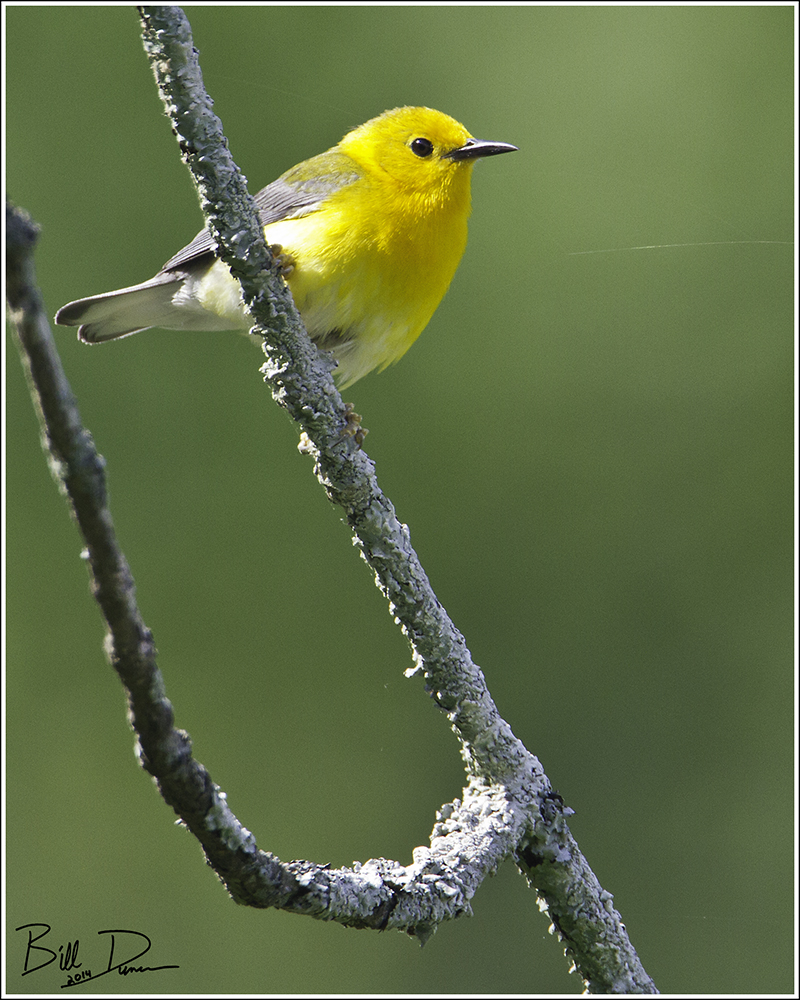
Prothonotary Warbler

A slightly shallower depression in the road often afforded mostly unbroken looks into the marsh, and opportunities to find these ancient clerics soaking up the sunlight that gives them their spectacular color.  Once finding a male, a little bit of playback brought out more and more, coming to get a look at the particularly pathetic naked apes.  This guy did a bit of preening following a bath.
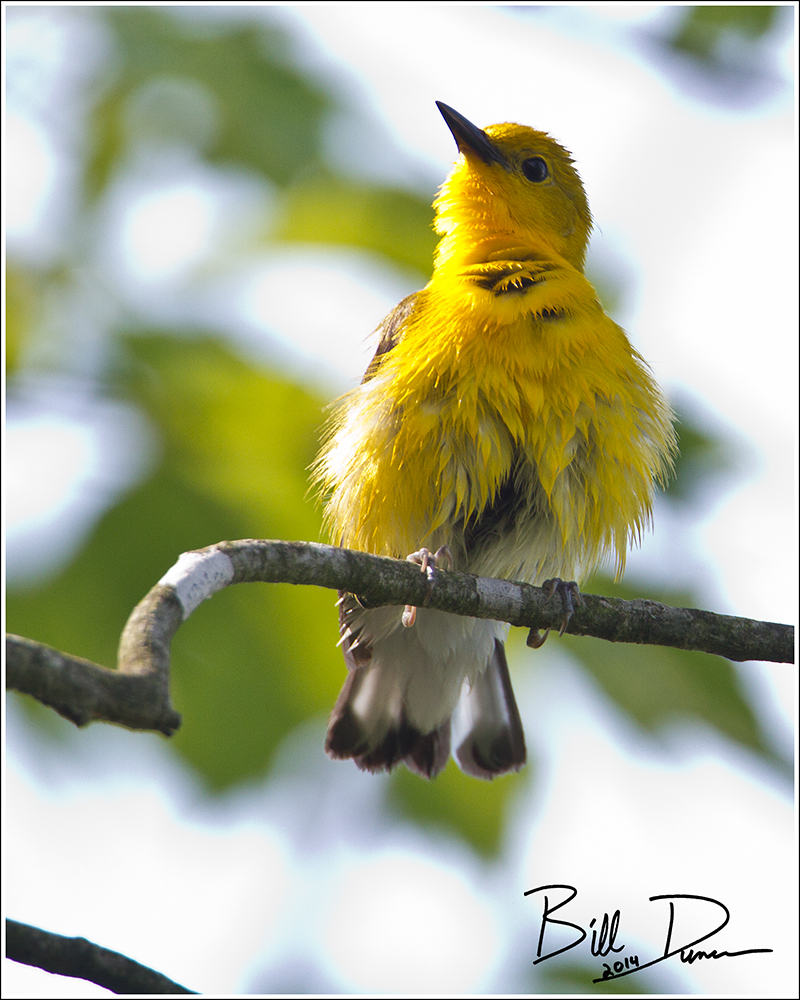
Prothonotary Warbler

Getting great looks at several of these spectacular animals was more than we could ask.  Walking a bit farther we were fortunate to find an active nest!
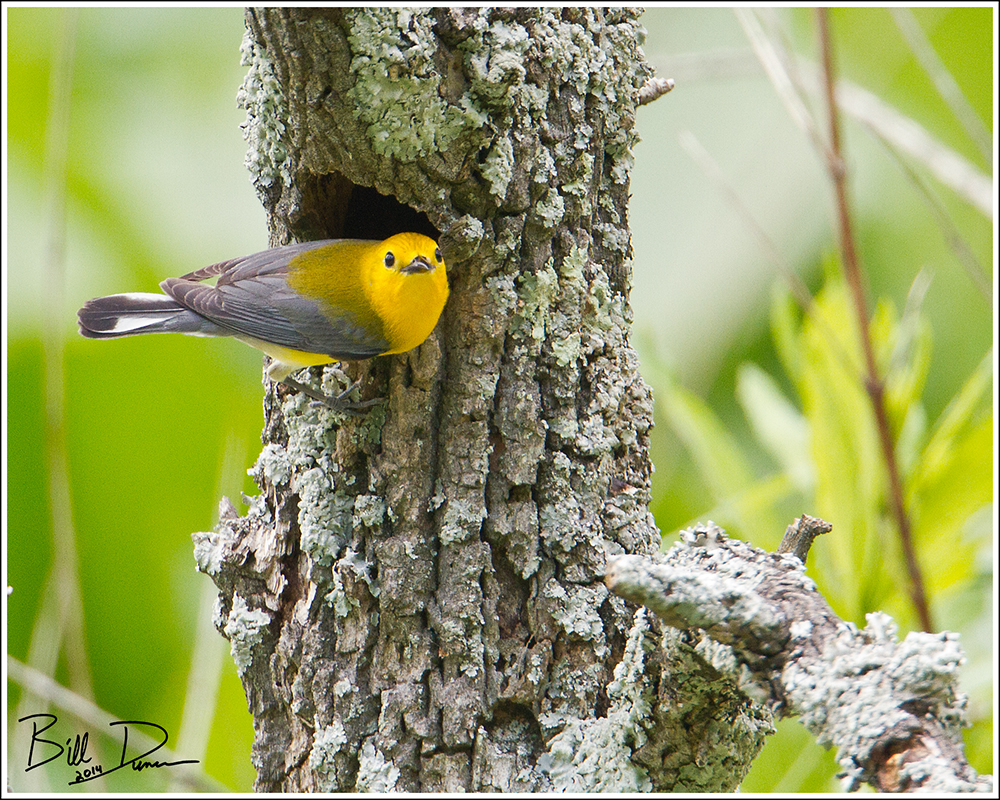
Prothonotary Warbler at Nest

Prothonotary Warblers nest in shallow cavities in trees, often old Downy Woodpecker nest holes.  Below, one of the parents can be seen removing a fecal sac from the nest.
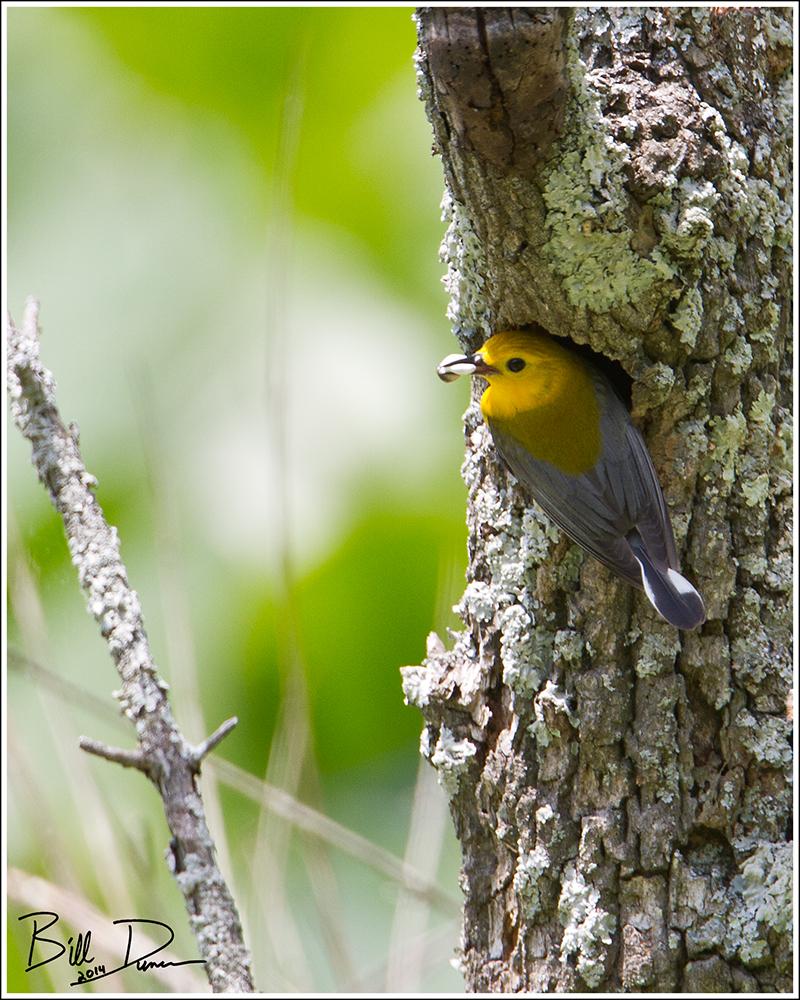
Prothonotary Warbler Removing Fecal Sac.
Prothonotary Warbler Removing Fecal Sac

The next photo shows what I am assuming to be mom instructing dad to find an even bigger insect next time.  😉
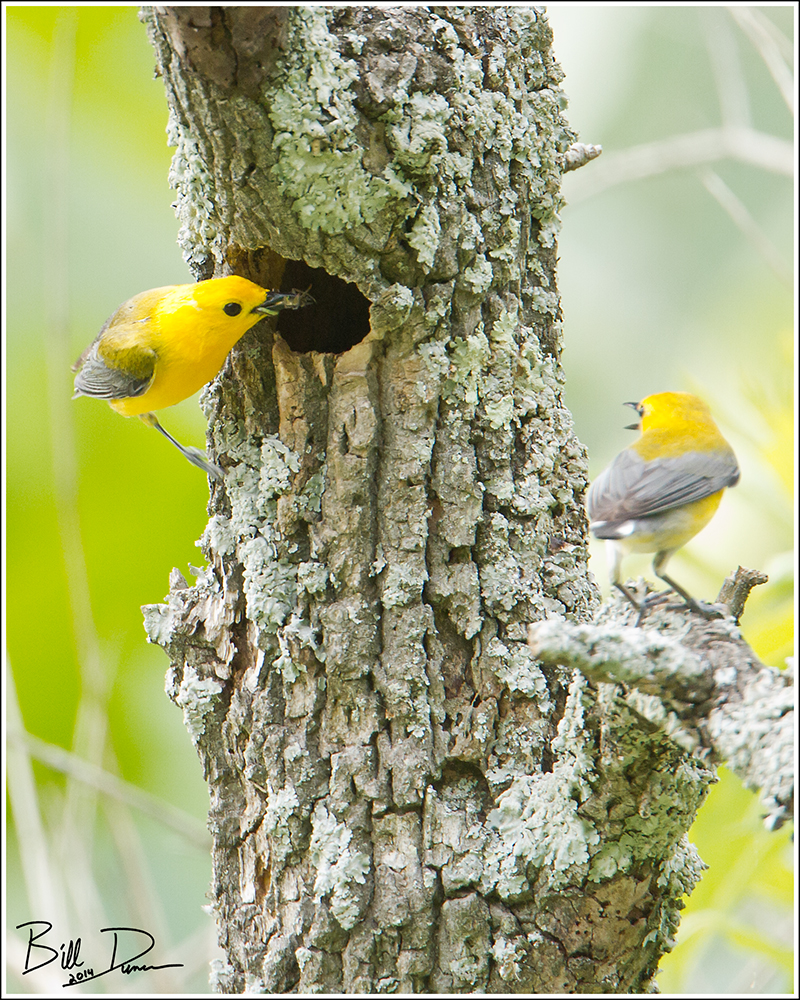
Parents
Parents

Remember when I said we were not expecting to find much of anything besides the birds on our trip down “Snake Road”?  There, in the middle of the road, we discovered the guy you see in the next image, and I discovered I made another huge mistake.  On more than two occasions now I have been in a circumstance of not being able to make a photograph, or the photograph I had envisioned, because I did not bring the necessary equipment.  On this day, my only equipment was a 500mm lens on a 1.6 crop body and my iPhone.  After contemplating throwing myself on the viper to end my pathetic existence once and for all, I decided to give a shot at shooting a snake with an equivalent focal length of 800mm!  On a partly cloudy day with lots of tree cover, I knew that lighting the subject would be difficult.  Of course, I had no artificial light source either.  Shooting wide open, depth of field was nearly nonexistent.  This was the result of my first attempt.
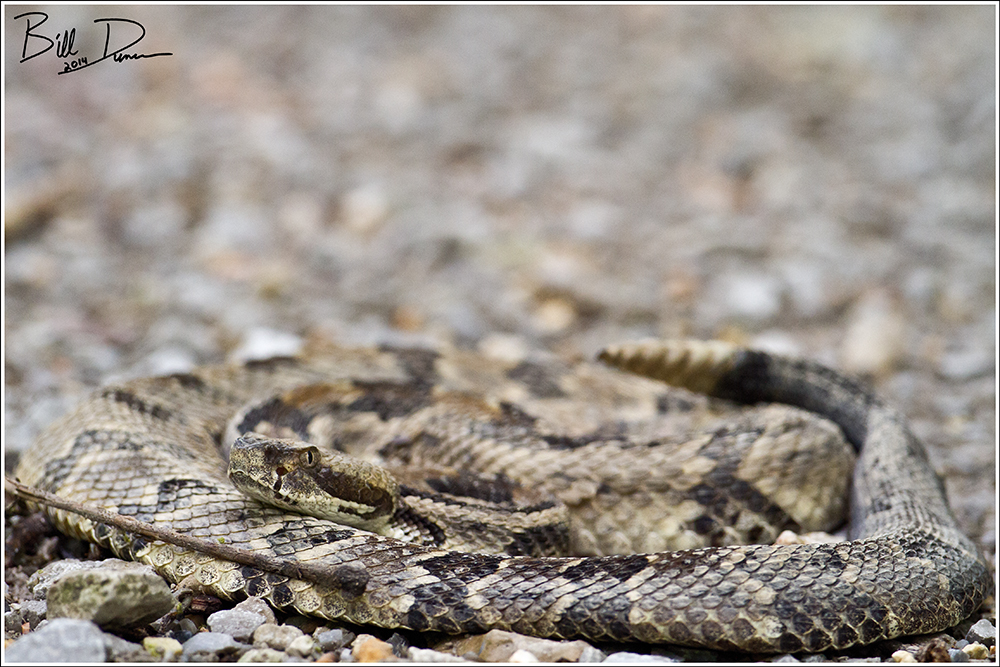
Timber Rattlesnake
Timber Rattlesnake

So, not a complete disaster, but something like a 70-200mm would have been more desirable.  We then decided to get him in a little more natural setting with hopefully a bit more light.  We gently moved the snake just off the road and I remembered a trick I could use to get a little closer than the lens’ close focusing distance of 15 ft.  I put an extension tube between the lens and the body.  Although I still had pathetically little DoF (as long as I get the eye in focus, right?), I was able to get somewhere in the range of 10-12 feet from the subject, allowing it to look a little more prominent in the composition.  I must apologize for the oh-so-distracting leaf petiole in this image.  I asked Steve to please remove it gently with his fingers, but he replied with some of his medical jargon, going on about rhabdomyolysis, hypotension, necrosis; whatever, it sounded like cop-out to me.
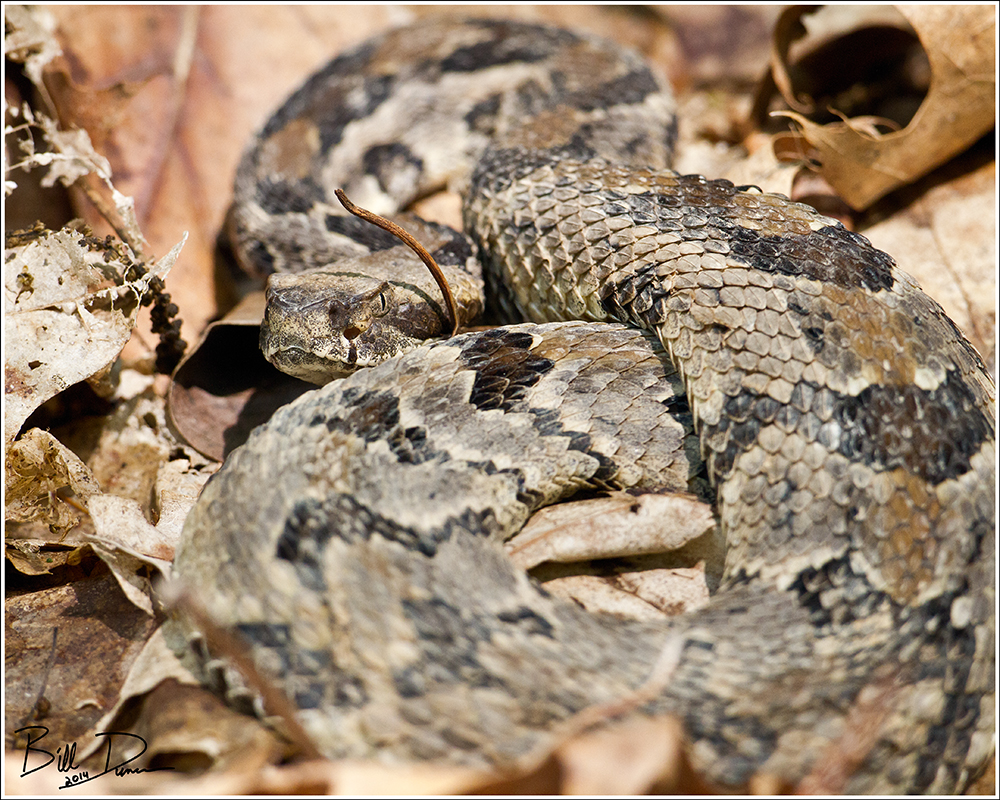
Timber Rattlesnake
Timber Rattlesnake


Nesting Birds of Missouri – Pine Warbler

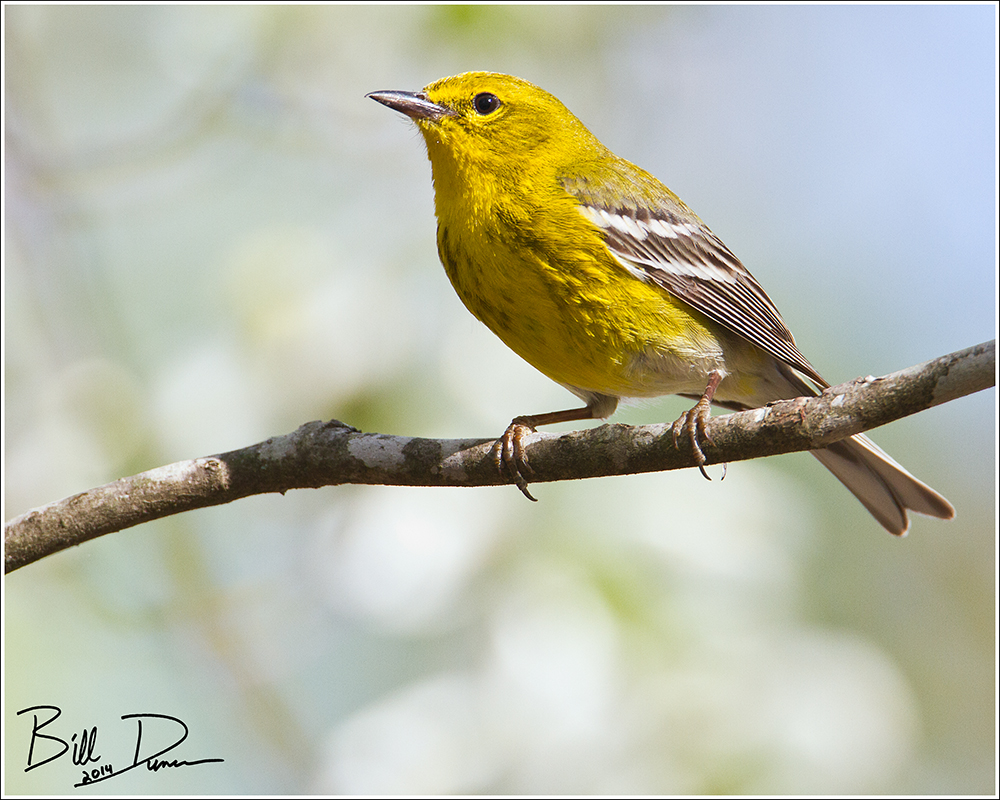
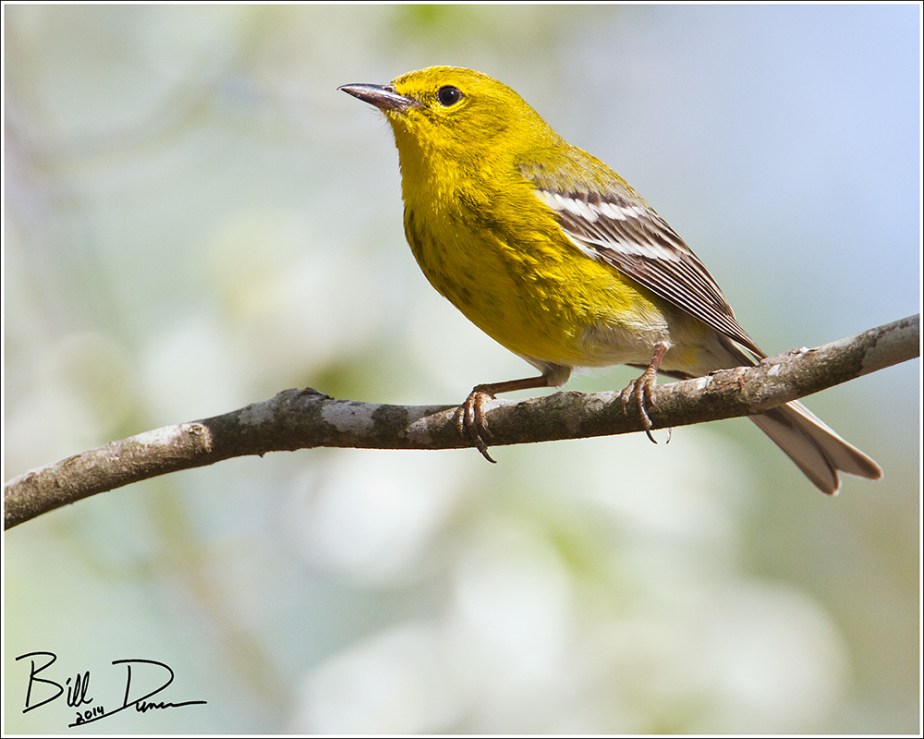
Perhaps the most appropriately named warbler, this special bird is said to nest almost exclusively in pine trees and is one of the earliest nesting warblers within it’s range.  These special birds were a thrill for us to find and watch.  Closeup images of the male bird were taken at Big Spring State Park, while the nest was located in a Short-leaf Pine located on a parking lot within Shaw Nature Reserve.

Male Pine Warbler, Big Spring State Park, April 2014

The chicks were adorable and near-helpless, only able to open their gigantic craws at anticipation of a juicy insect meal.

IMG_1393
Pine Warbler Chicks, Shaw Nature Reserve, May 2014

During the time Steve and I strained our necks watching the child care from ~50 ft below, we were able to observe that when dad visited the nest he always approached from the side of the nest facing us as seen in the image below.  Mom always visited on the opposite side, affording us poor looks.  It was interesting to observe that both parents approached the nest in a slow and indirect manner, usually starting low in the nest tree or an adjacent neighbor.  They would then hop from branch to branch, often in a spiral up the tree to reach the nest.  I do not remember watching either parent make a direct flight to the nest.

IMG_1603
Pine Warbler Father with Chicks, Shaw Nature Reserve, May 2014

I’ll leave you with the Pine Warbler advertisement song and with hopes of seeing them as soon as possible in the next spring.

IMG_9914
Male Pine Warbler, Big Spring State Park, April 2014


April Remembered

About three months ago Steve and I made a trip to southern Missouri in perfect time to catch the songbird migration near its peak.  Our primary areas of focus were the two largest springs in Missouri – Big Spring and Greer Spring, two areas located within Ozark Scenic National Riverways.  This National Park contains some of the best habitat in Missouri for newly arriving nesting birds as well as good stopping grounds for those birds heading to more northerly destinations.

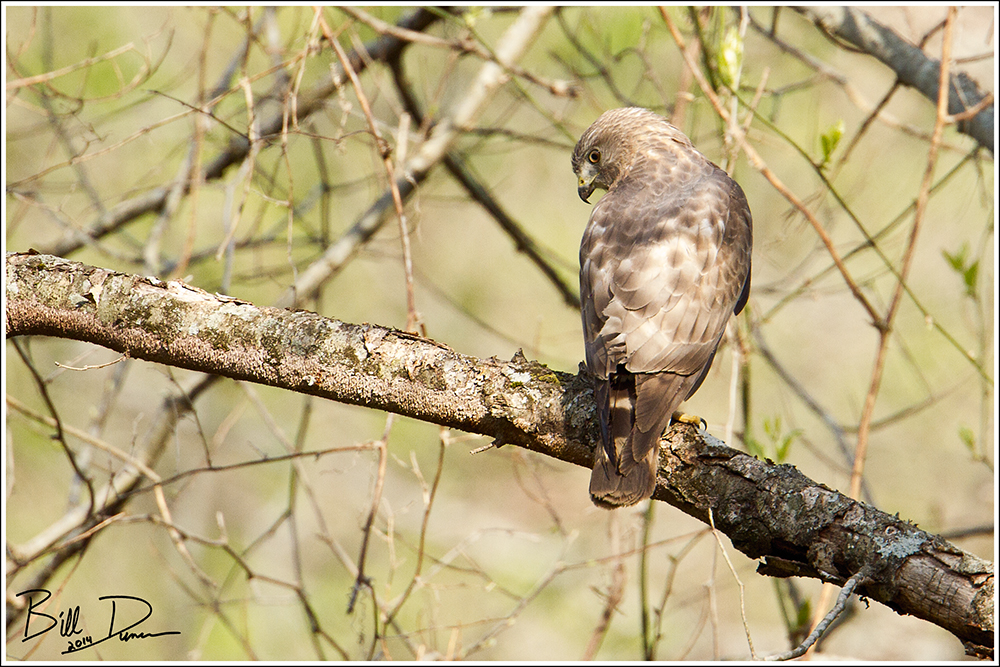
I was very fortunate in being able to take first photos of several new species during this trip, one of which was this amazing Broad-winged Hawk – a species whose diagnostic vocalization is often heard among the treetops in densely wooded areas but is less frequently seen.

Broad-winged Hawk
Broad-winged Hawk

Another species that I finally captured on camera was this Yellow-throated Vireo.  This species advertising song is quite similar to the Red-eyed Vireo.  The difference being that the Yellow-throated will give you a chance to answer his questions, whereas the Red-eyed won’t shut up long enough for you to respond!  😉

IMG_0427
Yellow-throated Vireo

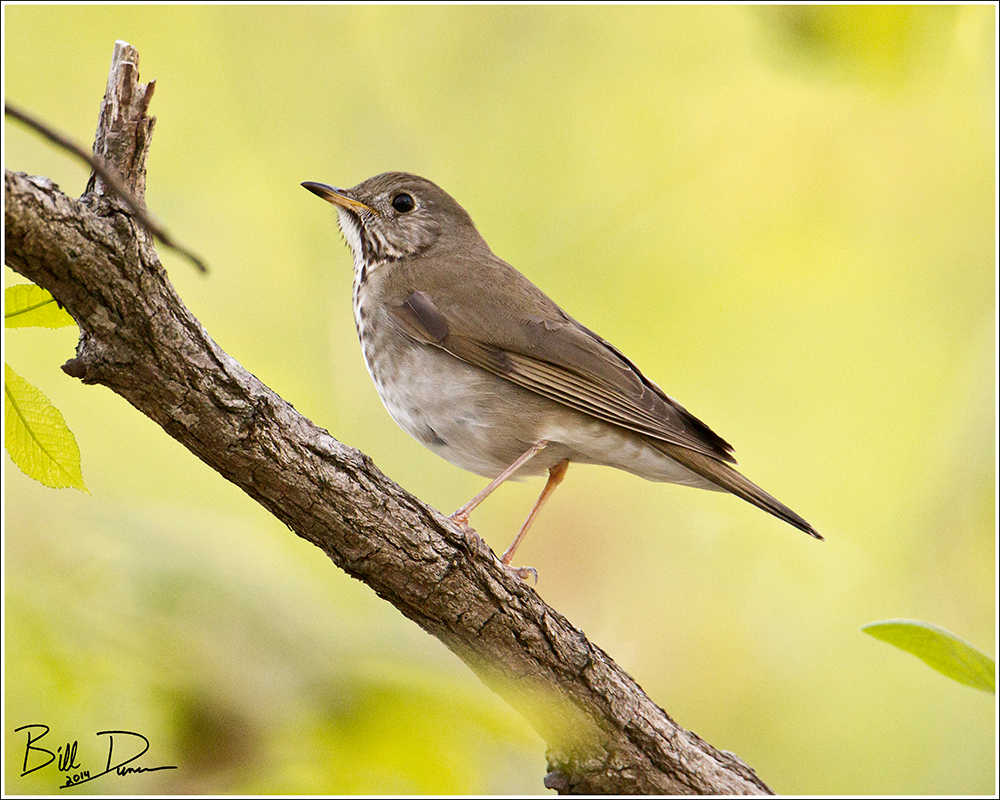
Next up is a species that was just passing through, on its way to nest in northern Canada or Alaska.  The Grey-cheeked Thrush is the least studies of North American Catharus species.

Grey-cheeked Thrush
Grey-cheeked Thrush

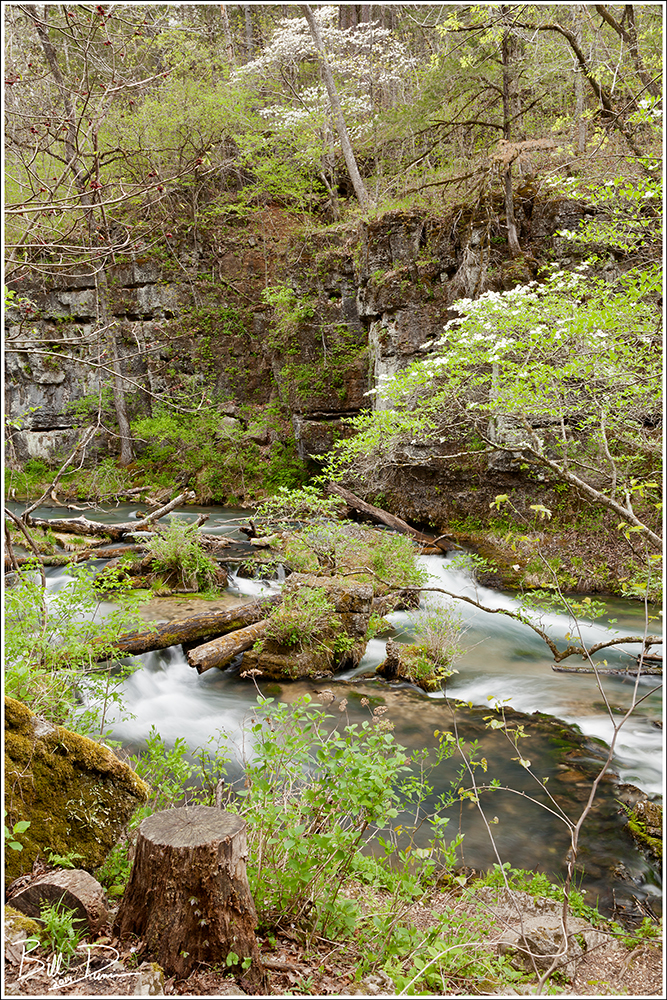
Greer Spring is always a place of great beauty, although usually stingy with pleasing compositions.  On this visit we took the plunge into the first deep boil immediately outside the cave opening.  An unforgettable experience!

Greer Spring in Bloom

At the trail-head on the way down to the spring, Steve found this Pheobe nest with mom on eggs.  She patiently sat while I took a few photos.

A Step Back In Time
A Step Back In Time

Probably the most exciting find and photographs for us was this resident Swainson’s Warbler.  This warbler is likely the least common of Missouri’s nesting songbirds and is considered endangered in the state.  Loss of its preferred habitat of thick shrubby understory within flood plain forests has caused this species to decline across its entire breeding range.  The boat dock at Greer Spring is one of the few locations that this species can be expected to be found every spring in Missouri.

Swainson's Warbler
Swainson’s Warbler
Swainson's Song
Swainson’s Song

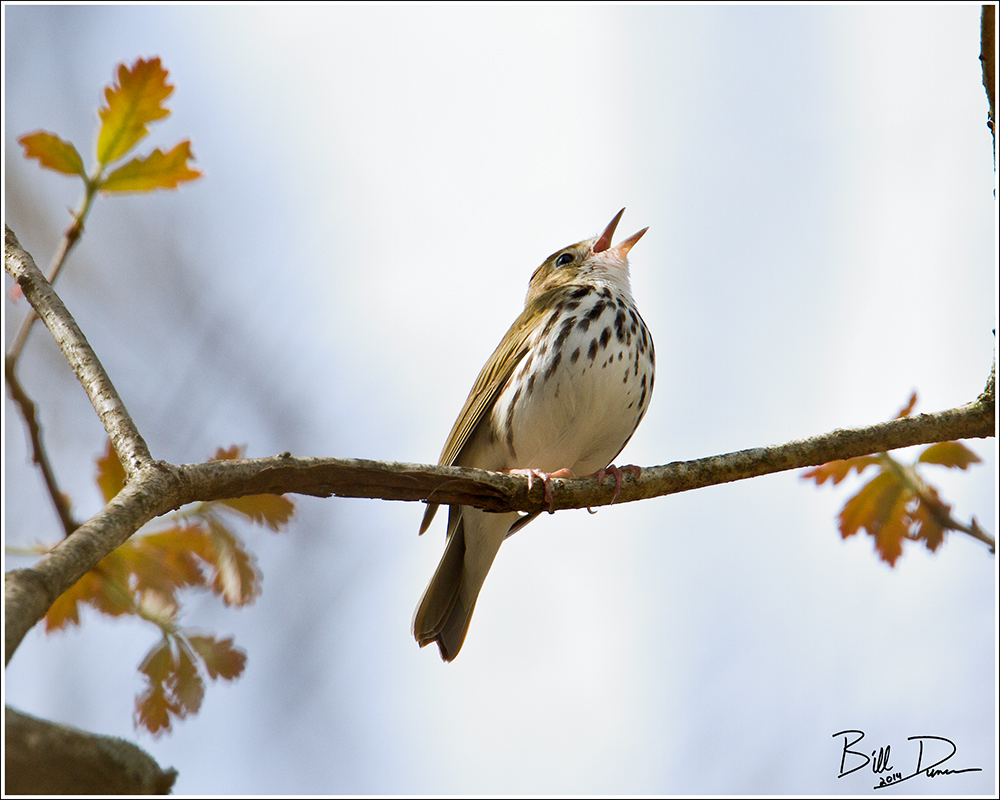
This last image, which may be my favorite of the trip, shows a singing Ovenbird, a species of the understory within high-quality hardwood or hardwood/conifer forests.  It’s song, often described as teacher, teacher, teacher, can be confused with the similar sounding song of the Kentucky Warbler.  We have noticed the difference of habitat preference between the two species, which may aid the novice birder.  The Ovenbird is most often observed in dry upland areas with sparse vegetation, whereas the Kentucky Warbler prefers lower, wet areas with dense undergrowth.

IMG_9261
The Ovenbird

In my opinion, one has not experienced anything in the Missouri Ozarks until having spent a sunrise on an April morning listening to the newly arrived nesting songbirds and those just passing through.

There could not possibly be enough Aprils in a lifetime.

An April Morning
An April Morning

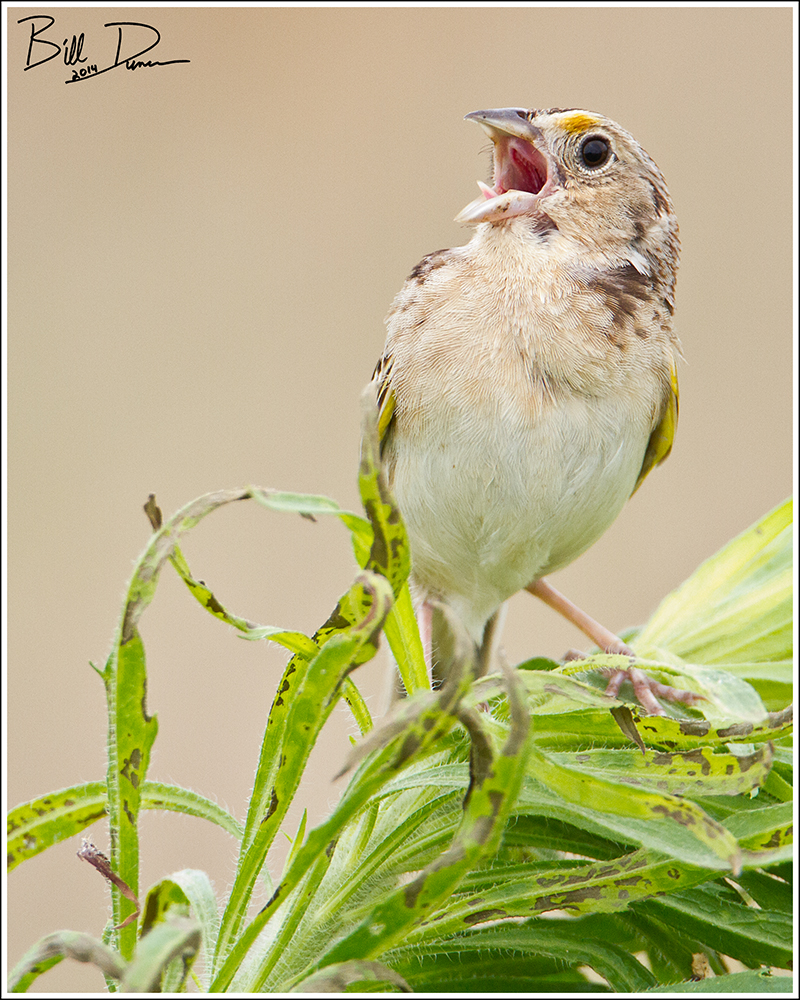
Nesting Birds of Missouri – Grasshopper Sparrow

Sarah helped me nab this shot of a singing Grasshopper Sparrow recently at Confluence State Park.  It was interesting to me that out of such a large area of potential habitat, the only two birds we had singing this day were right on top of each other.

IMG_4703

A Spring Day at Victoria Glades

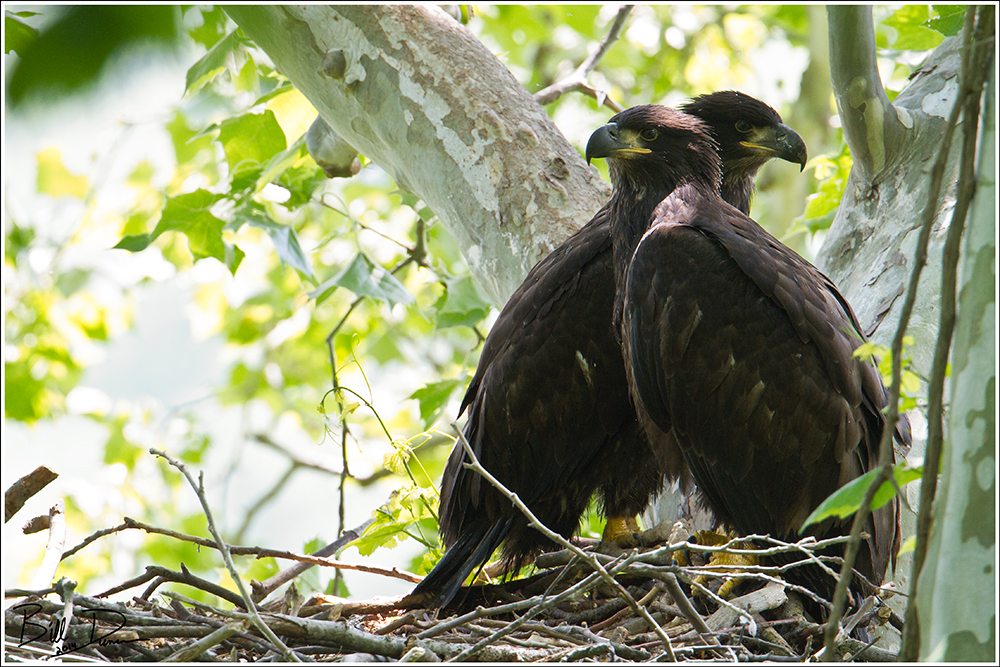
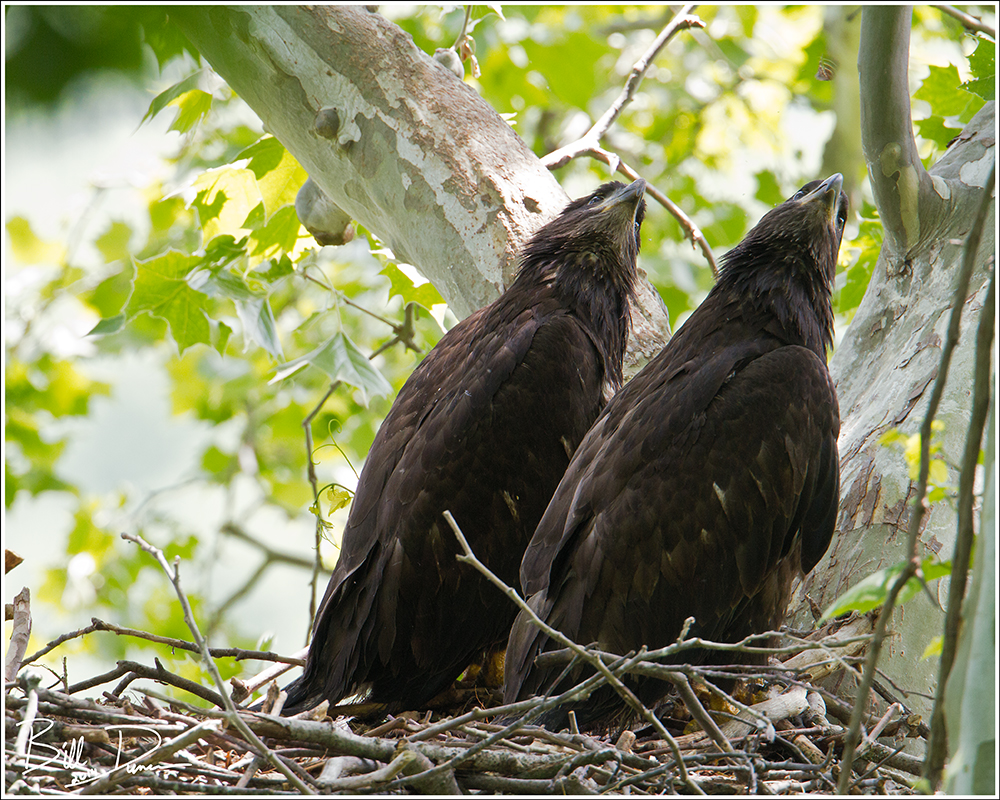
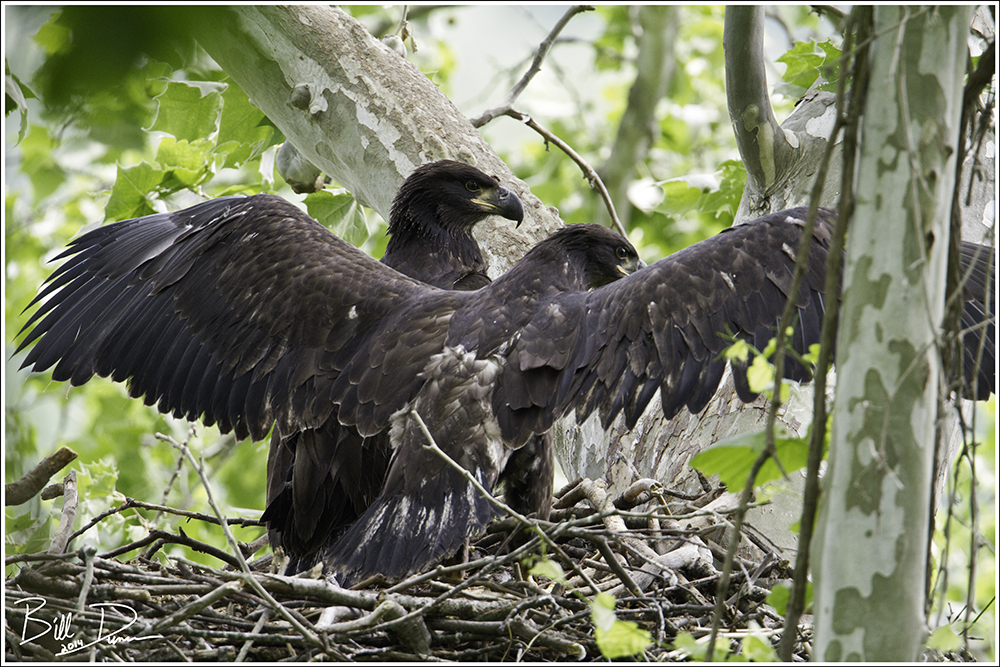
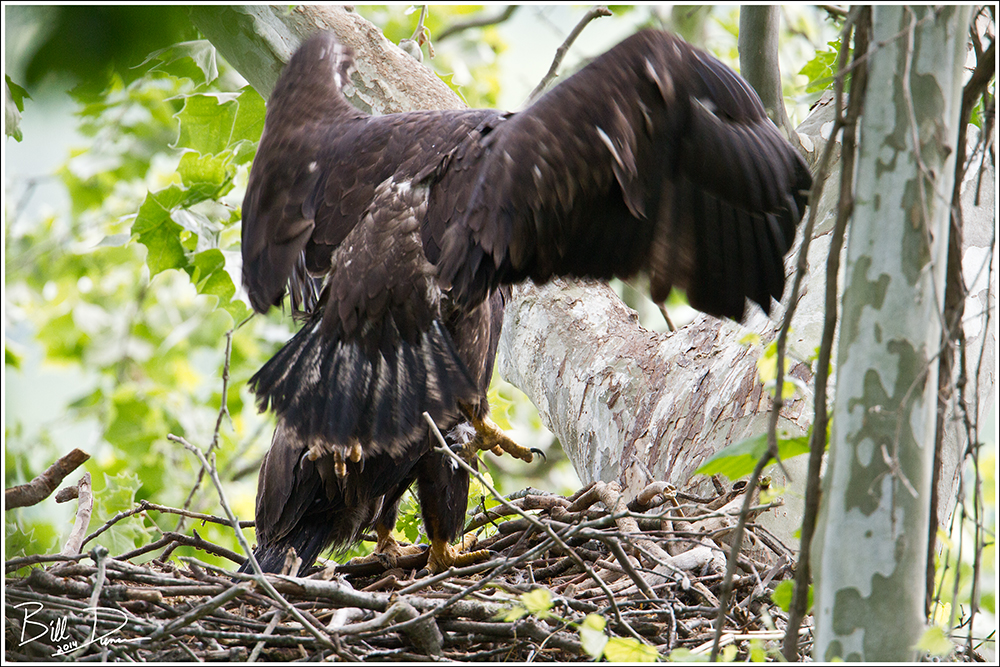
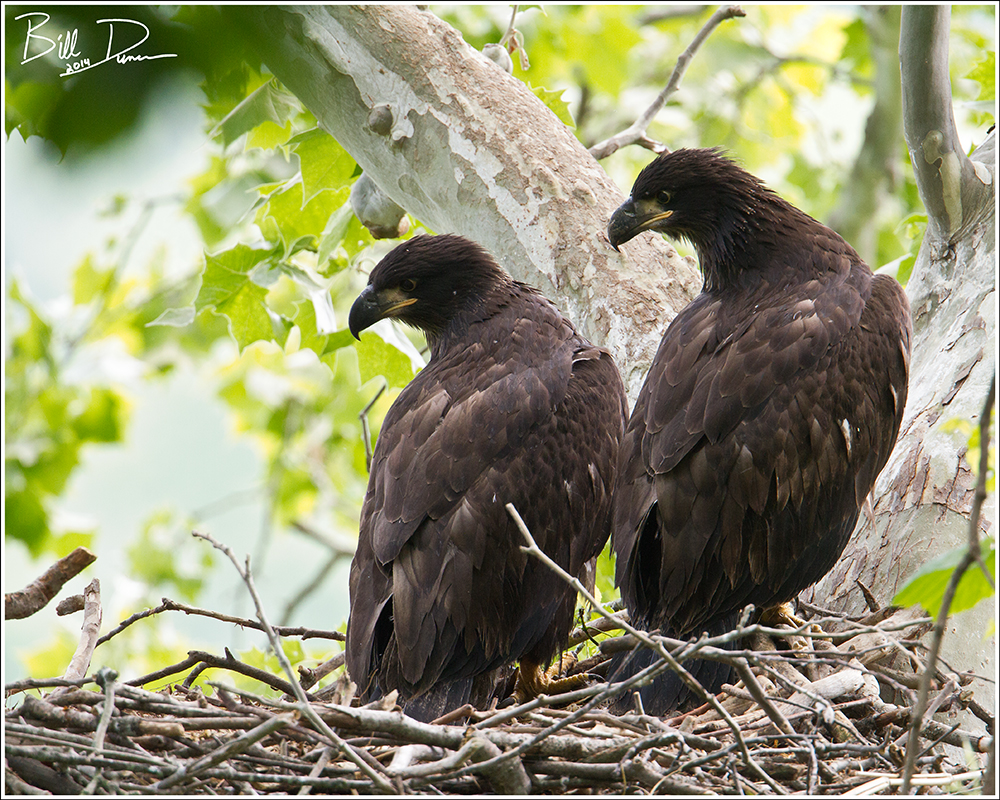
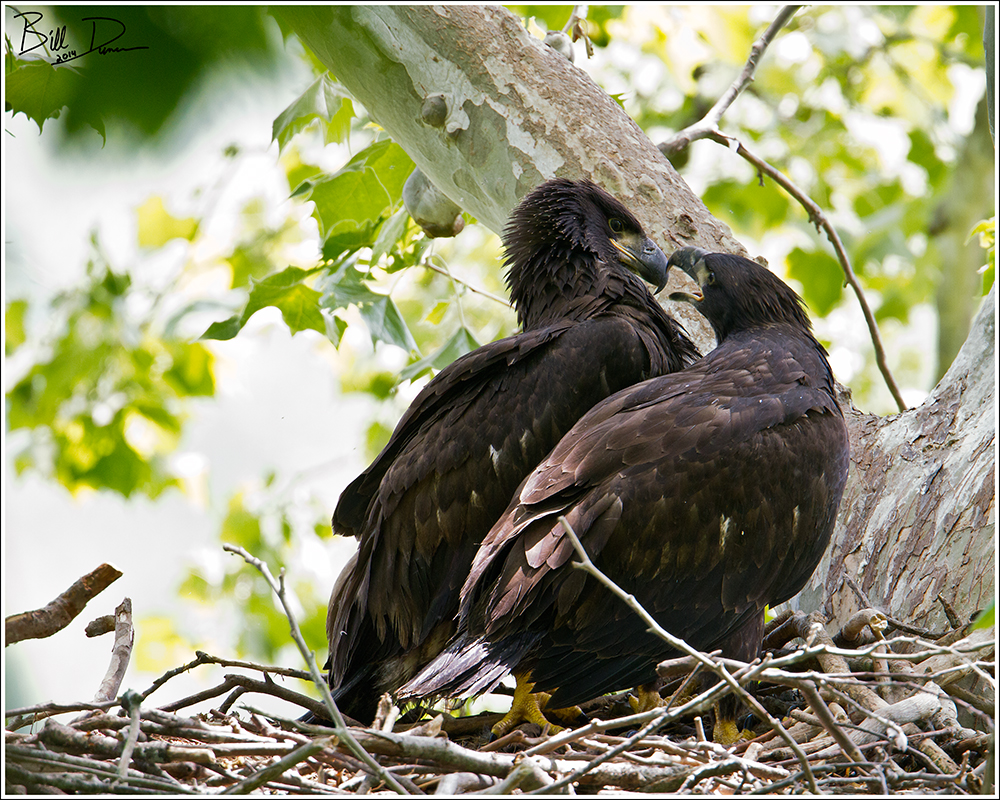
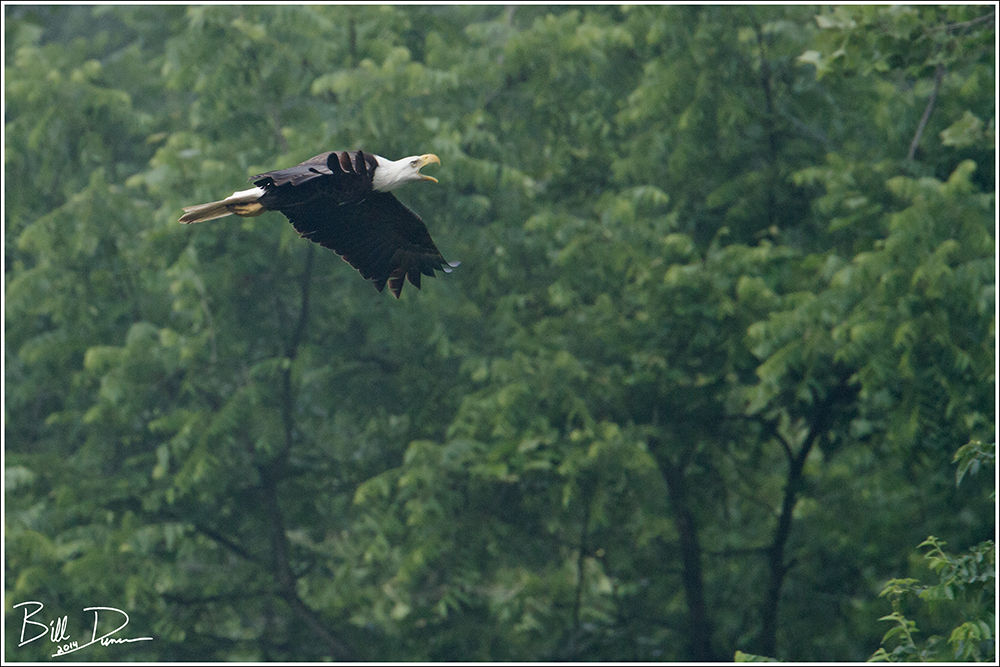
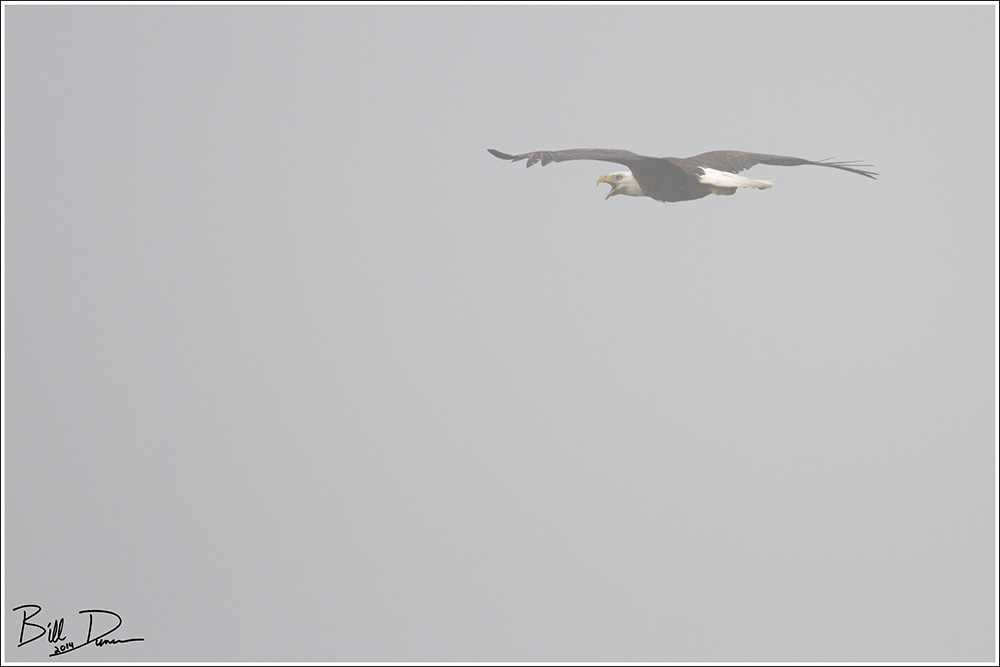
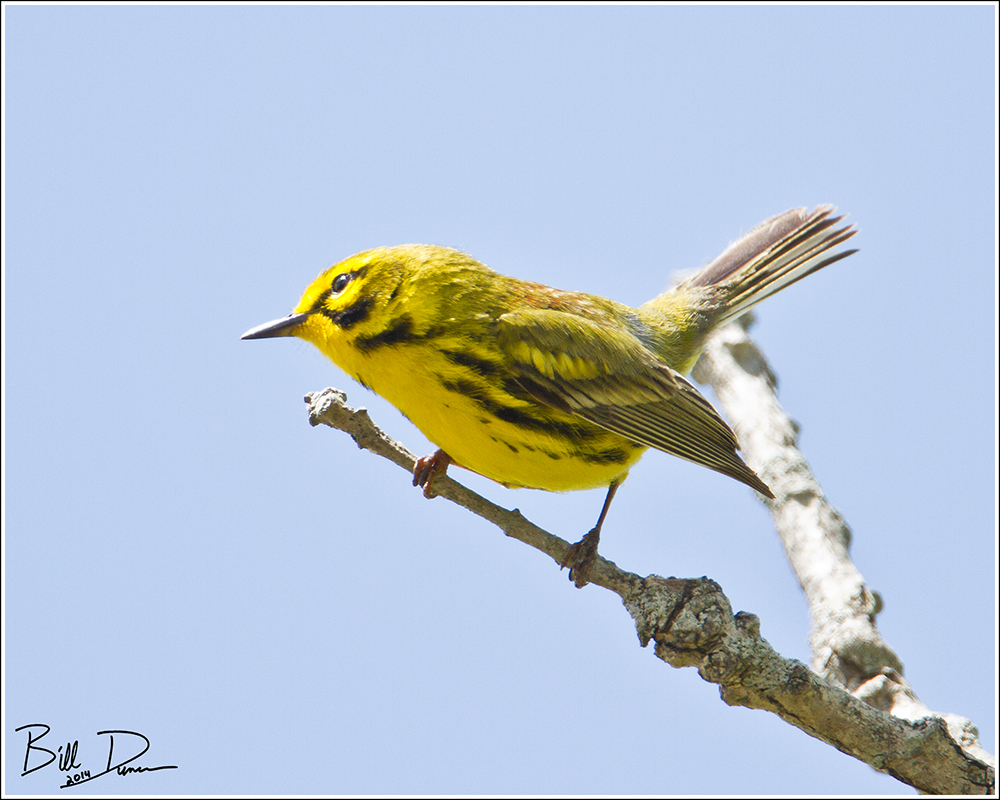
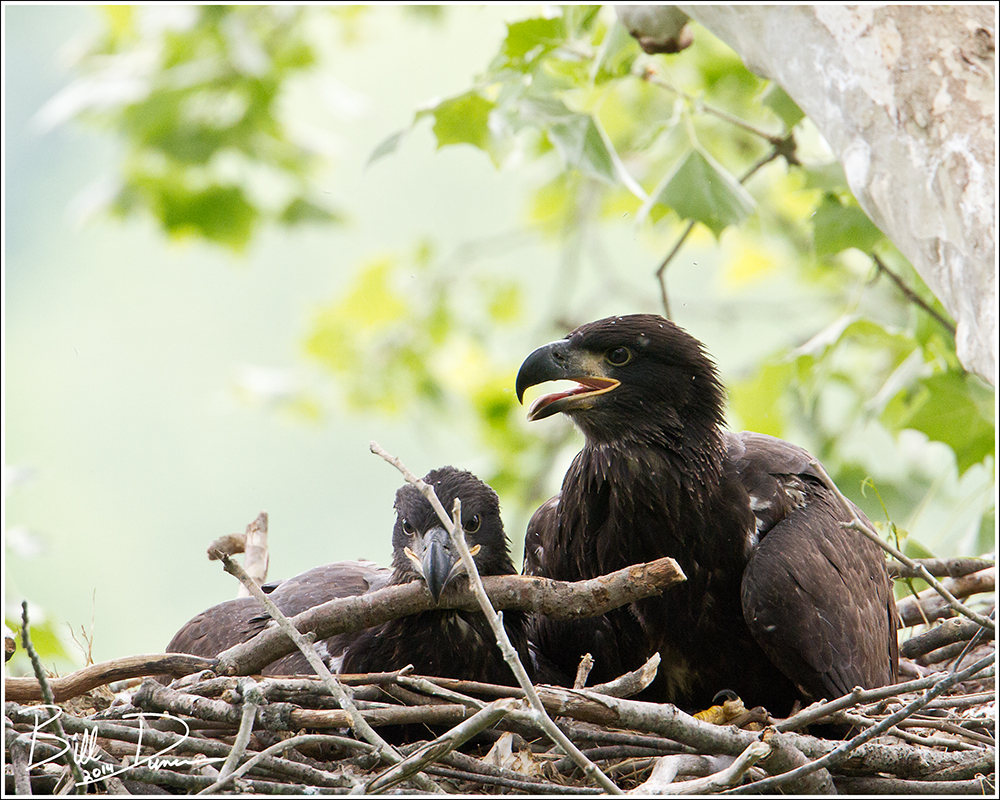
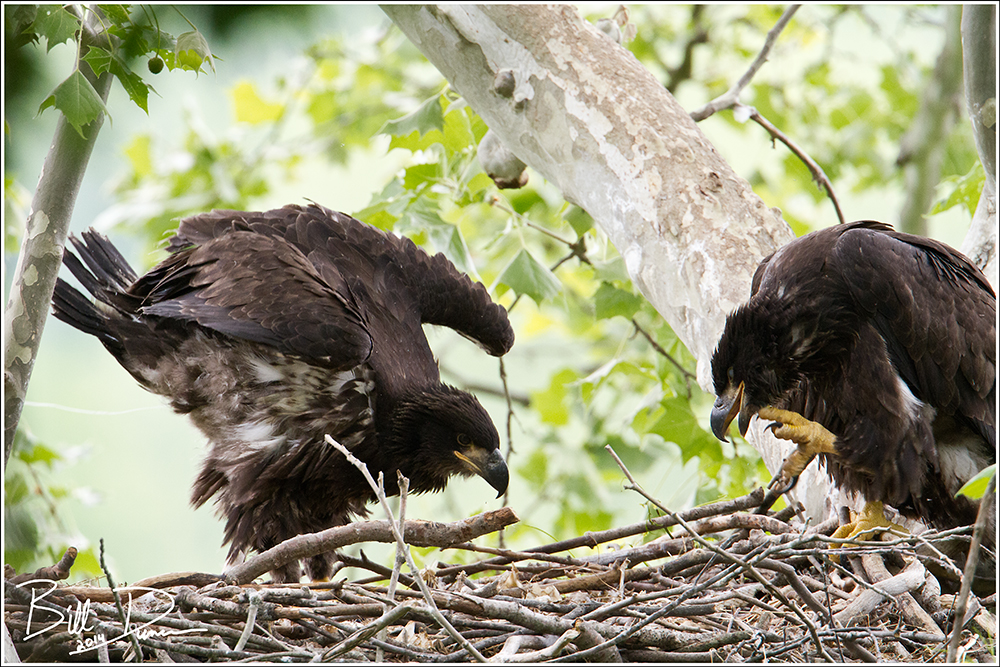
Following up a Saturday morning spent at the Eagle’s nest, Steve and I traveled to Victoria Glades to finish up the day during the perfect season to spend time on Missouri Ozark Glades.  We decided to focus on the MDC side of things as we explored The Nature Conservancy holding about the same time the previous year.  My primary goal of the day was to get some acceptable shots of a Prairie Warbler while performing his song.  I had no idea how relatively easy this would be.  We were able to find this male almost immediately along the trail as he patrolled his territory – focusing on trees isolated within the glade habitat.

Prairie Warbler in Song
Prairie Warbler
Prairie Warbler
Prairie Warbler
Prairie Warbler

Lovers of the treetops and focused more on trees that make up the forest edge border with the glade, the Yellow-breasted Chat is a bird I have wanted to get photos of for quite some time.  Not perfect, but acceptable.  Steve and I watched and listened as neighboring males carefully partitioned the area into well established boundaries that they seemed to know so well.

Yellow-breasted Chat


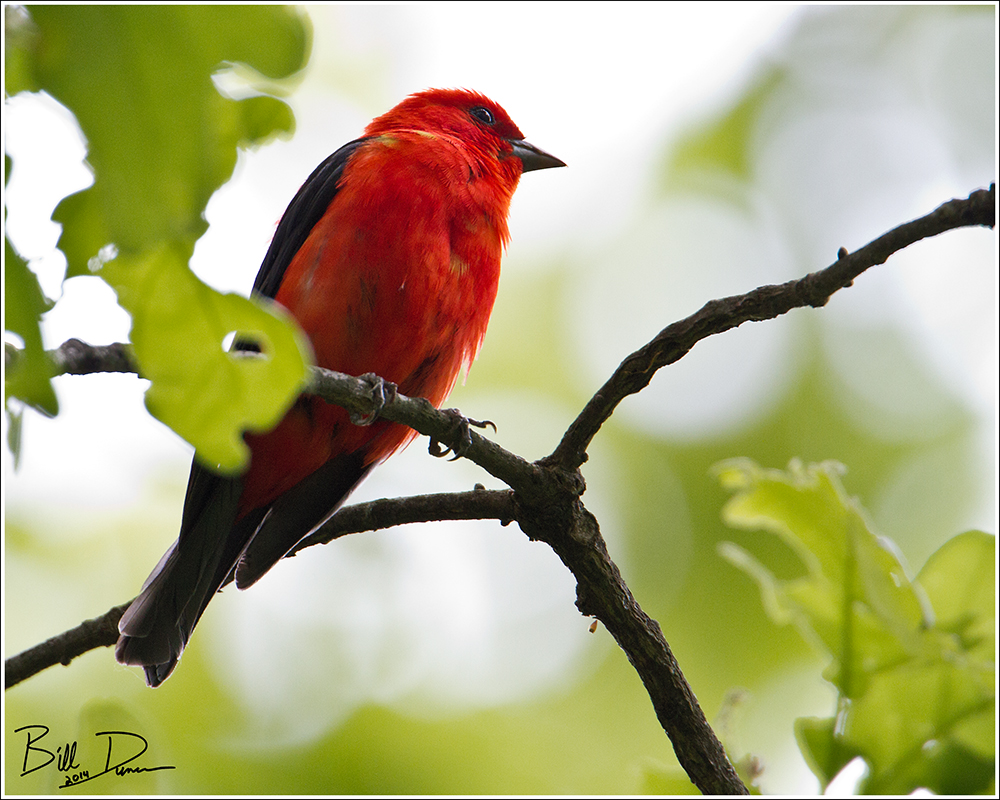
What’s that?  Getting bored with yellow?  Okay, let’s change things up a little and look at this Scarlet Tanager male that we found within the forest canopy.  With a song similar to the Summer Tanager, the chip-burr call note of the Scarlet Tanager is most diagnostic.  We were somewhat surprised to find a couple of Summer Tanagers singing in the open areas of the glade near sunset later this evening.

Scarlet Tanager
Scarlet Tanager


And now for something downright plain.  Well, at least from the front, which is not the Field Sparrow’s best side.  This female was definitely not interested in us as we got these close looks of her trying to feed on insects and seed at the same time.  We watched her and listened to her mate advertise his rights to their home with his dropping ping-pong ball like song.

Field Sparrow
Field Sparrow

Just when you thought we were done with the yellow…  Along with the Chat, these were my first photographs of a Blue-Winged Warbler as well.  After we discovered what the hell was going on, Steve and I discovered and learned the dawn song of this feisty bird.

Blue-Winged Warbler
Blue-Winged Warbler

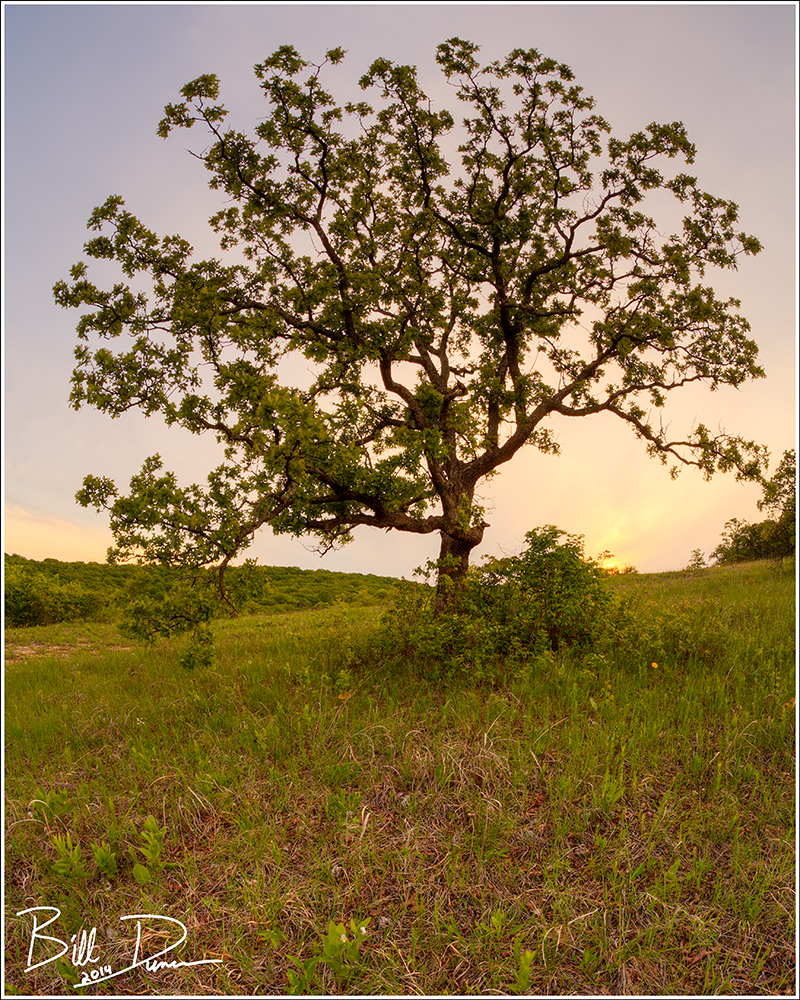
On our travels through the glades we couldn’t help but take note of this truly magnificent Post Oak, surrounded by blooming prairie/glade forbs such as Fremont’s Leather Flower and Lance-leaved Coreopsis.  Mostly secluded on a low hill, this was the spot to wait and see if the sunset would turn into anything special.  As we watched the progression of dusk we were most fortunate in hearing a special symphony composed of Woodcock, Whippoorwill, Chuck-Will’s Widow and Barred Owl.  Twas quite the memorable day and it goes without saying, I can’t wait to get back.

IMG_0531_2_3_4_tonemapped Final