"What a thousand acres of Silphiums looked like when they tickled the bellies of the buffalo is a question never again to be answered, and perhaps not even asked." -Aldo Leopold
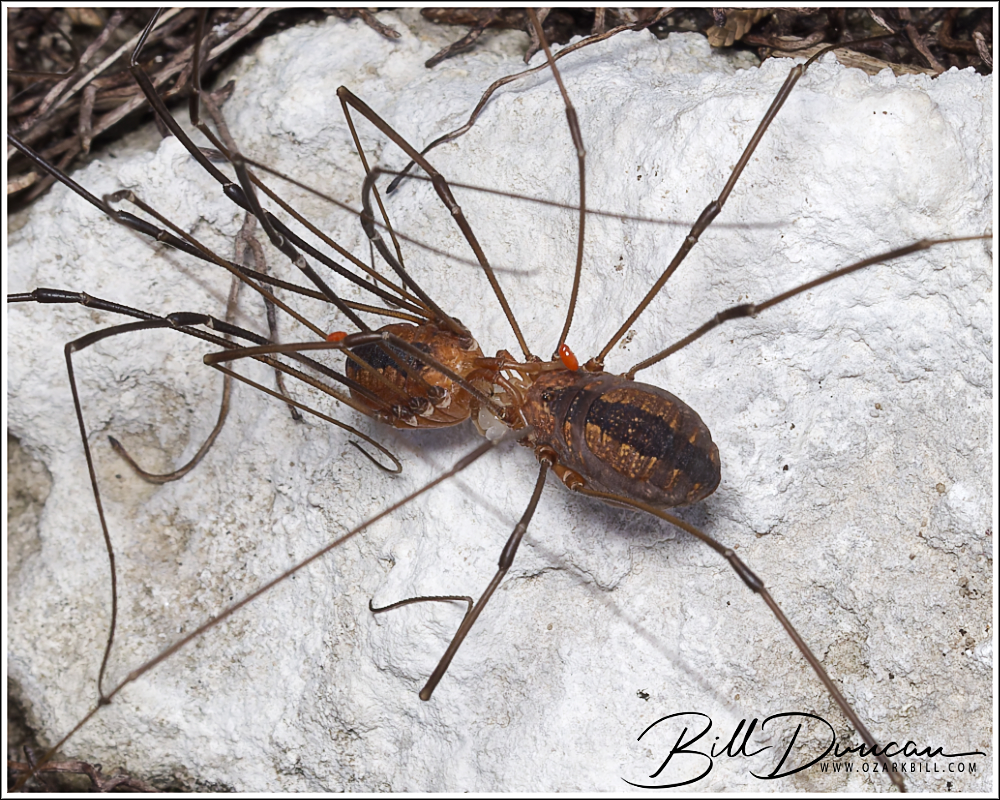
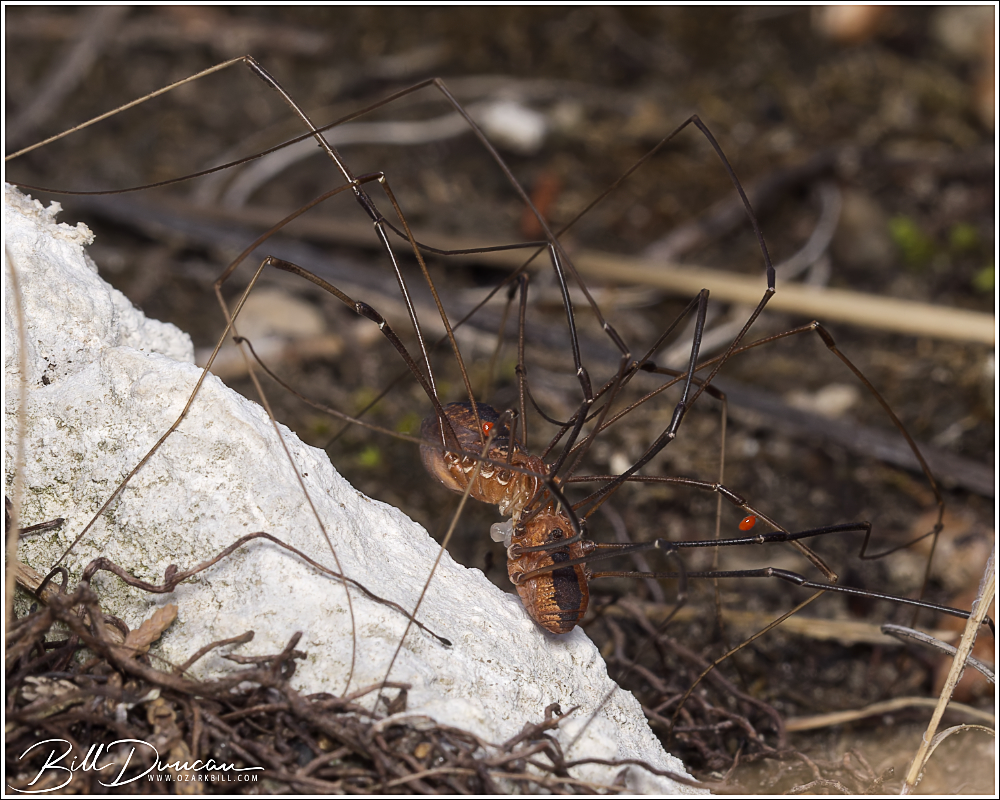
During a WGNSS Entomology Group trip in September of last year, we were thrilled to come across a mating pair of Leiobunum vittatum (eastern harvestmen) at Caney Mountain Conservation Area. In some of the photos below, you can see the male handing off his prenuptial gift to the female. Prenuptial gifts are produced by the males and consist of a mix of essential amino acids. Mating behaviors in harvestmen are complex and vary wildly between taxa. Unfortunately, these guys were among thick scrub that made for difficult photography. I tried my best to capture some of this behavior.
First look at mating eastern harvestmen. Smaller male at back/left.
A closer look shows what I presume to be a prenuptial gift being handed off to the female at front/right.
Another look at mating embrace of Leiobunum vittatum (eastern harvestmen).
In February, the Webster Groves nature Study Society’s Nature Photography Group headed to the Sophia M. Sachs Butterfly House in Chesterfield. We paid for after-hours access and were delighted with the opportunities presented to us. Many thanks to Casey Galvin, group leader for the Nature Photography Group, for organizing this visit, and to Chris Hartley from the Butterfly House for being a lovely host. Chris patiently dealt with our needs, requests and questions, while wrangling our subjects for us. He and the Butterfly House provided us a wonderful experience of photographing some remarkable arthropods from around the world. Here are some of my favorite photos from the evening.
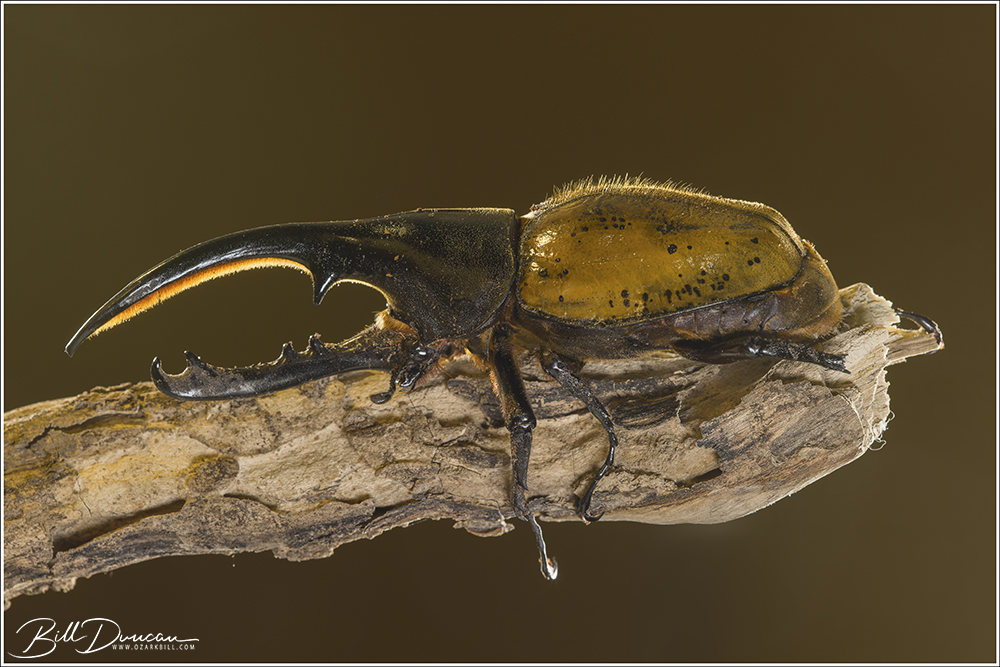
Hercules Beetle (Dynastes hercules) F. Scarabidae. The hercules beetle, found in the neotropics, is the longest extant beetle species in the world.
Rainbow Stag Beetle (Phalacrognathus muelleri) F. Lucanidae. This beetle is found in northern Australia and New Guinea. The mites that can be seen on this beetle do no harm to it. They tag along to pick up a free meal from their sloppy host.
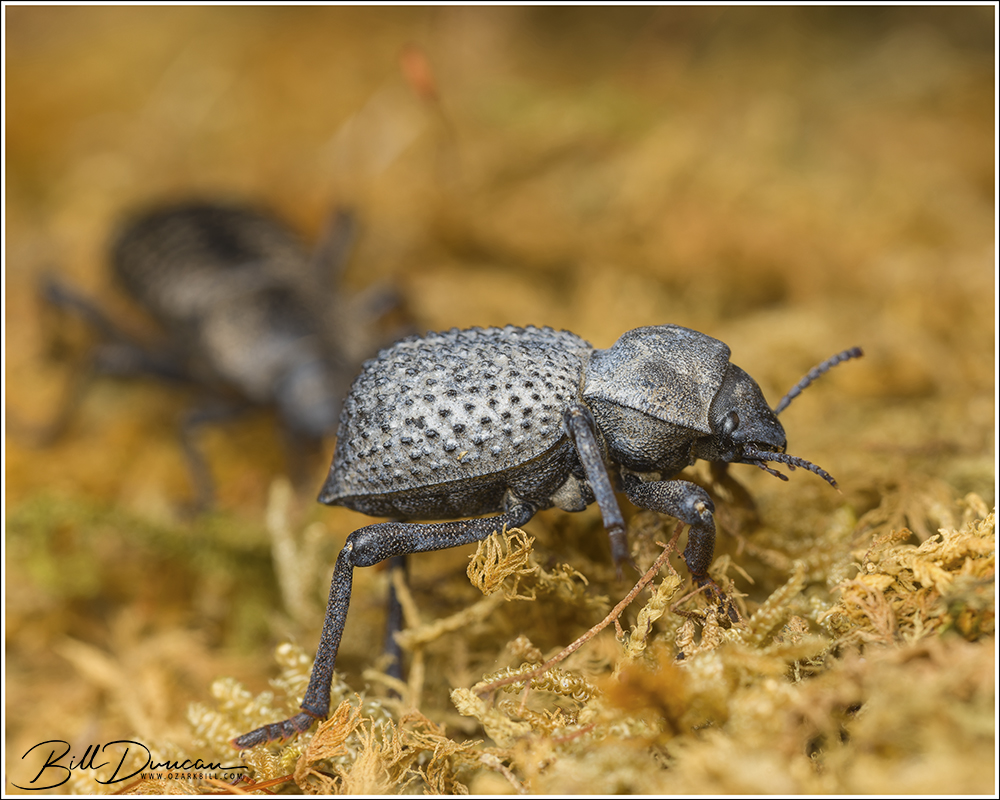
Death-Feigning Beetles (Asbolus verrucosus) F. Tenebrionidae. Found in the desert southwest U.S., these beetles feign death when harassed. After a minute or two they right themselves and continue on their business.
Flamboyant Flower Beetle (Eudicella gralli) F. Scarabaeidae. Found in tropical Africa, this beetle is a sure stunner.
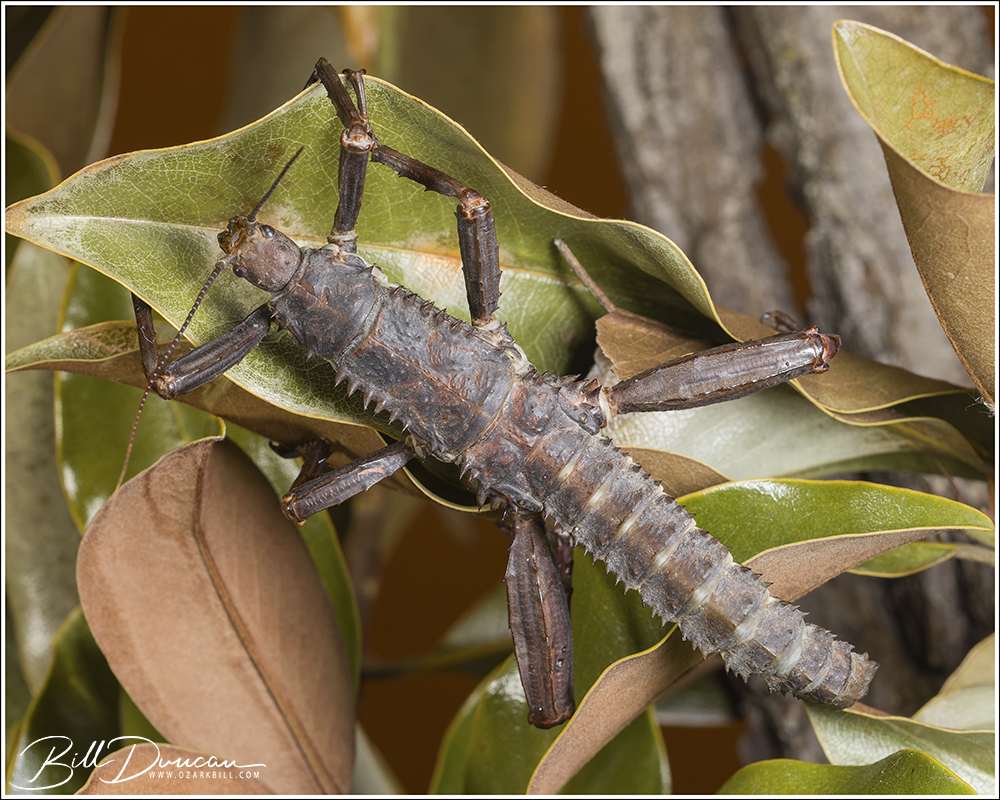
Spiny Stick Insect (Eurycantha calcaratta) F. Lonchodidae. These giant phasmids are endemic to humid rainforests in Australasia.
Curly-haired Tarantula (Tiltocatl albopilosum) F. Theraphosidae. This handsome spider is native to Central America.
That’s all from this outing. Interested in joining in one one of these WGNSS outings? Feel free to contact me or check us out at http://www.wgnss.org to learn more.
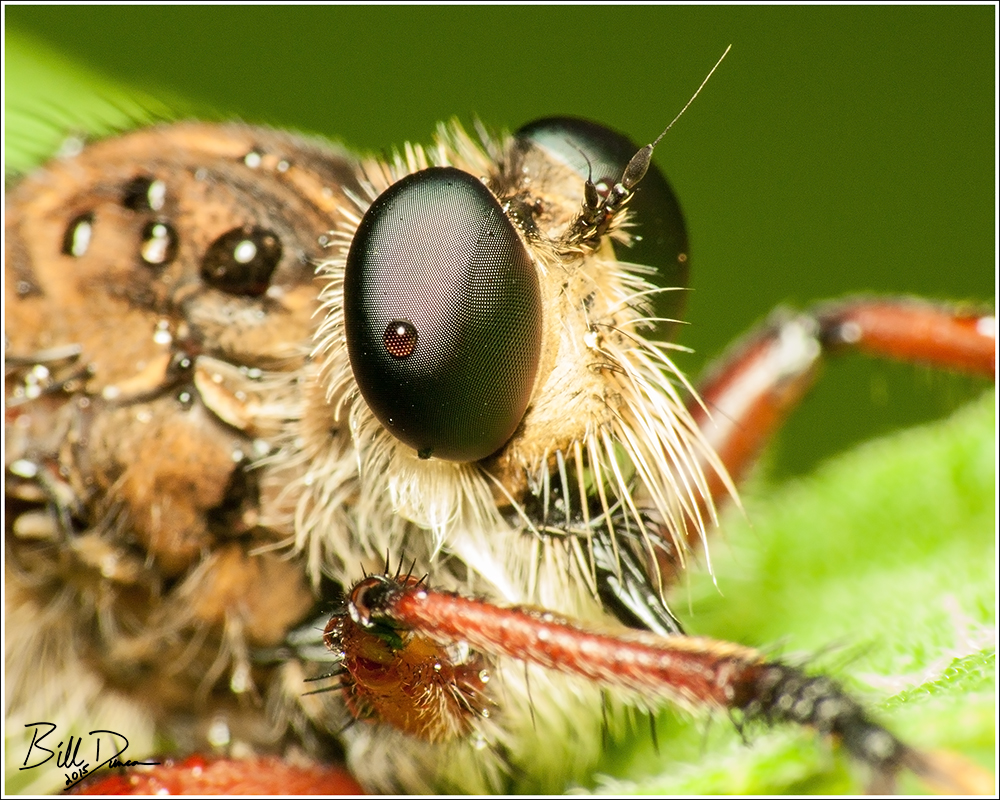
I find the flies to be one of the more interesting groups of insects and I was constantly on the lookout for new species to photograph this summer. There is such diversity in the flies, from size to form and function. There is still so much to learn about some flies, including some rather common species that researchers have still not described where or on what the larval forms live. To start, here is a closeup of a true giant of the flies, a Robber Fly (Family Asilidae). The Robberflies are true predators, with an intimidating beak that they use to inject neurotoxic and protein-dissolving cocktails.
Trichopoda pennipes
The photograph above showcases a fly that should be a favorite of gardeners and farmers. Flies in this family (Tachinidae) parasitize a number of different insects and this species specializes in many of the plant-feeding true bugs like Stink Bugs and Leaf-footed Bugs. The generic name can be translated from Greek to mean “hairy foot” and the specific name “pennipes” means feather. This namesake feature can be seen on the rear legs of this fly in the photograph above.
Thick-headed Fly
The Thick-headed Flies are extremely interesting and a joy to watch. These guys not only mimic bees and wasps, but they also parasitize the hymenoptera by depositing their eggs on the stinging insect, sometimes attacking the host to place their egg. The eggs hatch and the larvae become internal parasites of their host.
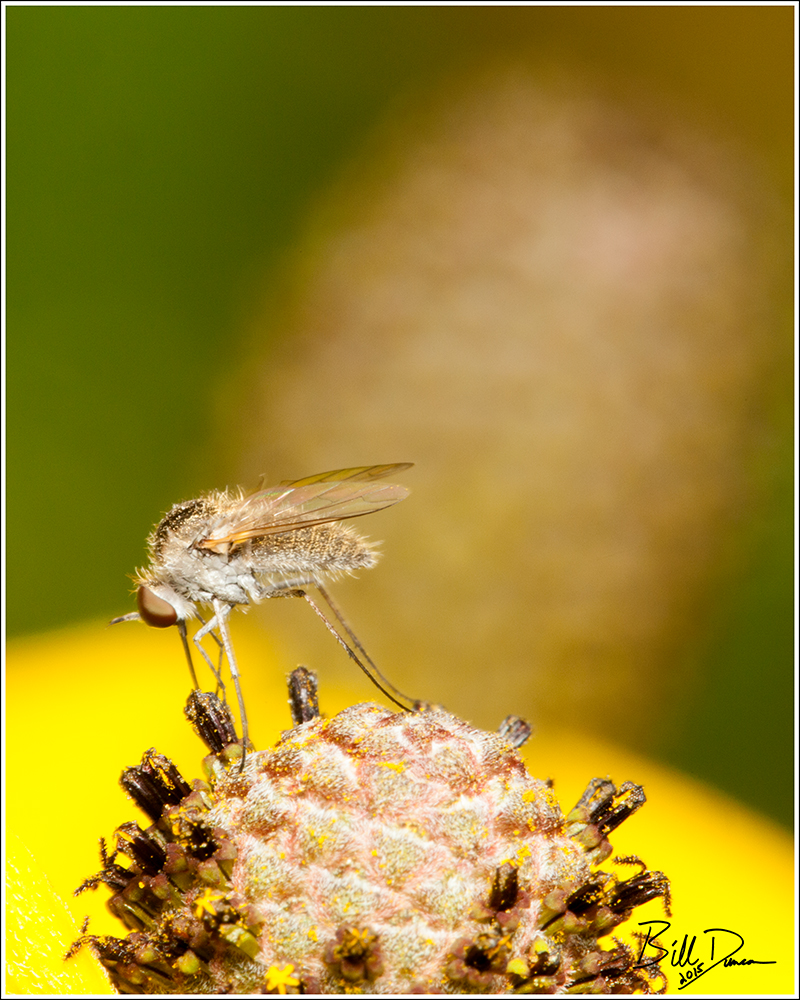
Geron Bee Fly
The minuscule Bee Flies in the genus Geron parasitize moth caterpillars. The adults of these flies feed almost exclusively on yellow-flowered Asteraceae.
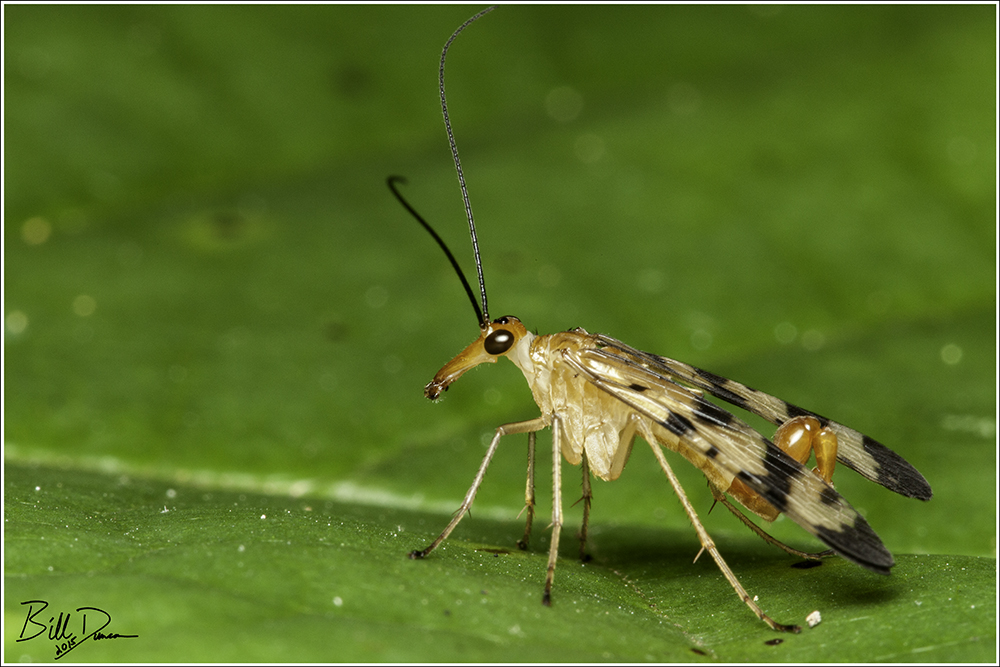
Scorpion Fly
Don’t be threatened by the sting-like structure that this Scorpionfly (Family Panorpidae) has arched over its back. This is simply the male genitalia and is quite harmless. Scorpionflies primarily make a living by scavenging on dead insects, and like many flies, exhibit elaborate behaviors to attract mates. These flies will perform various dances in front of females and will often provide a ripe insect carcass as a prenuptial gift.
So Long!
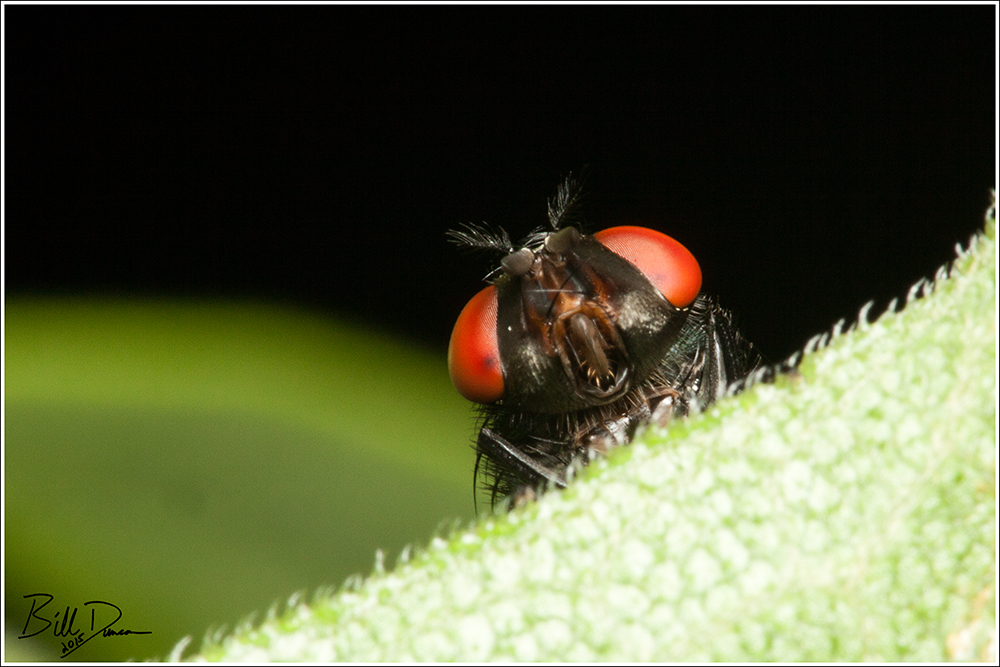
Finally, here is a rather different view of a Greenbottle Fly. I hope this helps to describe some of the fascinating diversity in form, function and behavior that can be found within the Diptera. These are but just a few of the easier to find and photograph! I hope to continue my exploration of these fascinating insects next year.
Tonight’s post all share a theme of the challenges of being a pollinator on prairie wildflowers. The first photo above shows a lovely-colored, ambush predator known as a Crab Spider. Crab Spiders do not spin webs, but lay in wait, often on a flower for a pollinator to visit.
Attacked!
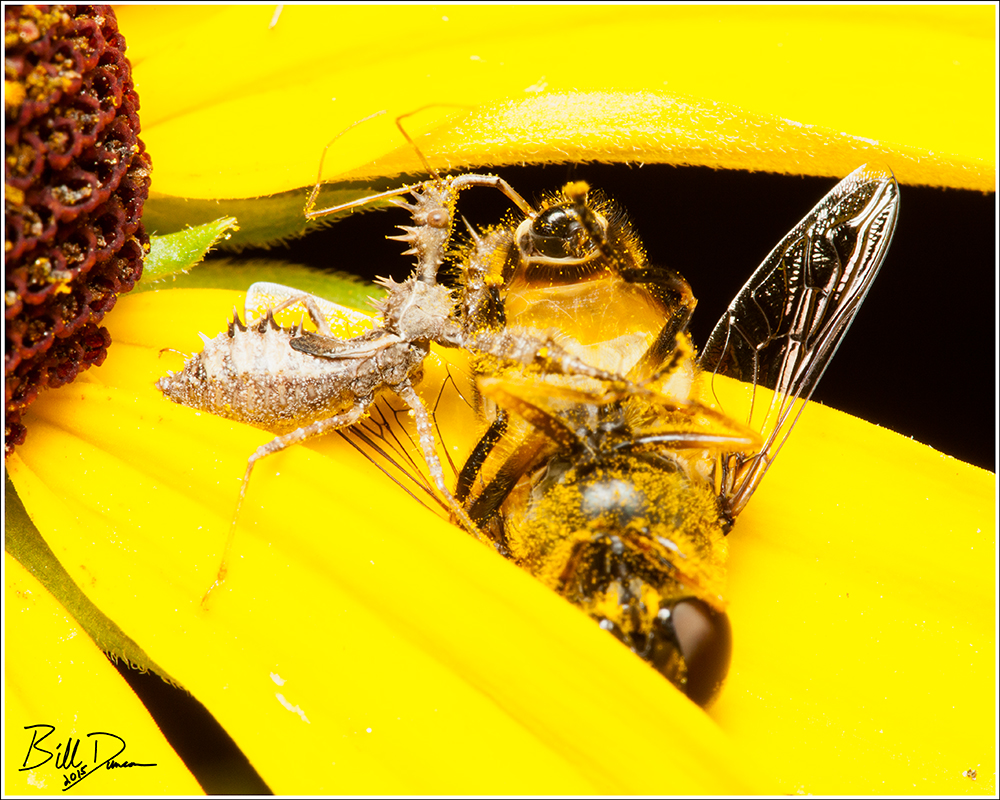
This Assassin Bug has captured a syrphid fly and is having himself a meal.
Ambushed!
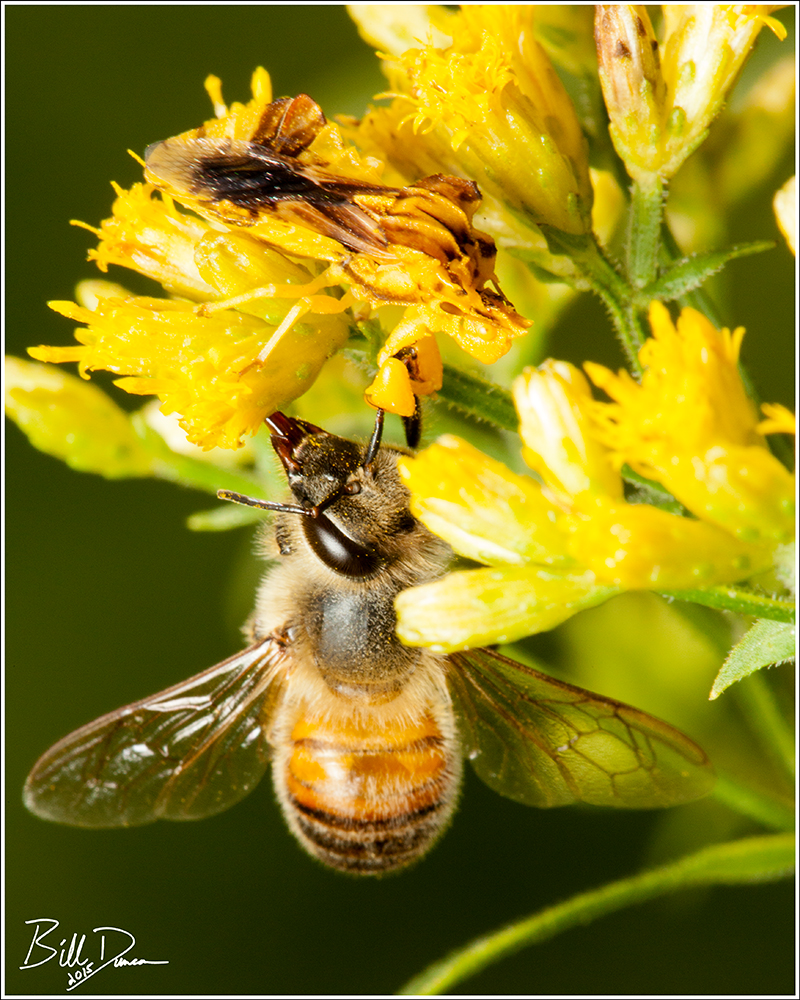
In the image above, this goldenrod flower came to life to ambush a Honeybee. I find that Honeybees are the most often caught in traps like this. Native bees seem to be constantly on the move and much more defensive, most likely due to the fact that they are solitary and there would be nobody to care for the brood if they were more care free like the honeybees.
Ambush Bug
The creature is actually called an Ambush Bug. What an interesting face this one has! I can imagine the potential conversation.
Robberfly
Finally, this gigantic Robberfly is finishing off some small prey.
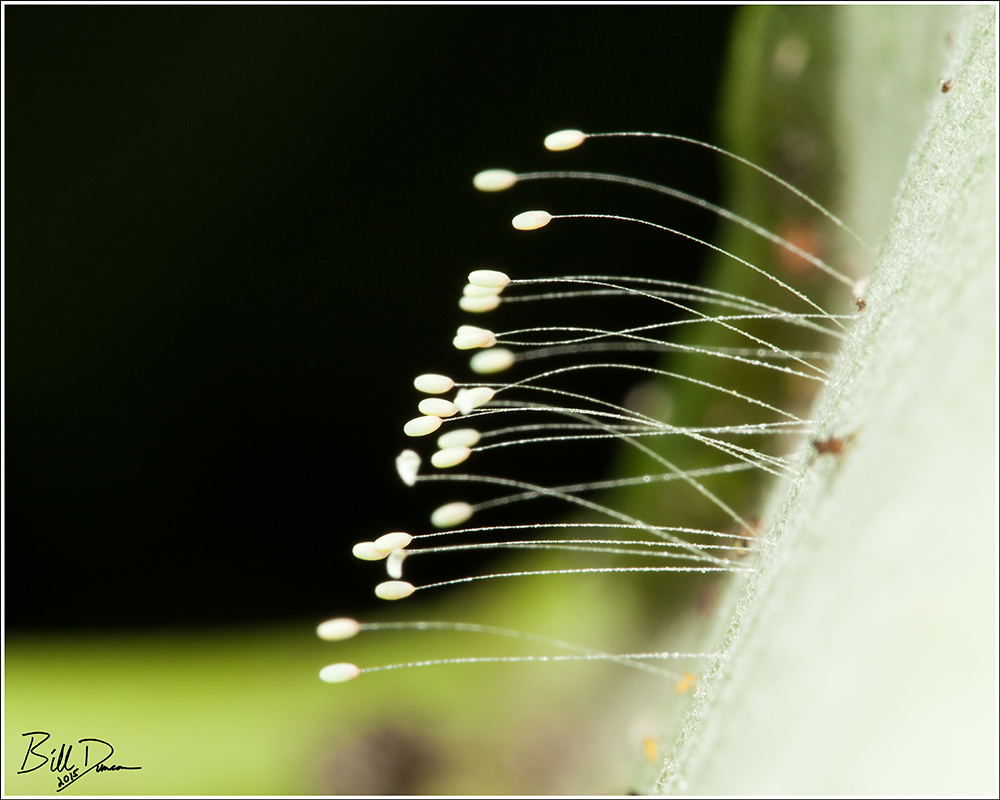
The Lacewing (order Neuroptera, roughly translated to “nerve-wings”) insects are important predators of economic pests. Lacewing larvae are voracious predators that prey upon soft-bodied arthropods such as aphids, scale and whitefly. I have not yet been able to photograph one of these killer larvae yet, and that may be due to their tendency to cover themselves in pieces of trash (including parts of their victims) they find in their environment as camouflage. Another interesting bit of information about these insects is how their eggs are deposited. The photograph below shows the eggs deposited on long thread-like stalks, which have been hypothesized to be deterrents to not only predation, but cannibalism as the larvae hatch and immediately begin to look for something to eat.











 A Thousand Acres of Silphiums