English: Rufous-tailed Jacamar
Portuguese: Ariramba-de-cauda-ruiva
LB: Galbula ruficauda
Song


"What a thousand acres of Silphiums looked like when they tickled the bellies of the buffalo is a question never again to be answered, and perhaps not even asked." -Aldo Leopold


That’s right! I am excited to announce that OZB will once again be presenting his work (~100 unique prints will be available) at Art at the Shaw Nature Reserve 9th Annual Show & Sale to be held the weekend of November 8th and 9th. I would love to meet and say hello to all of you who have given me support through our relationships via Flickr and A Thousand Acres of Silphiums over the years. There will be more than 20 artists, providing art in a wide variety of mediums, including one particularly pathetic photographer… 😉 Here are directions to the show…

This Locust Borer (Family Cerambycidae) was photographed this fall feeding on Tall Goldenrod (Solidago altissima) that grow in my wildflower patches in our yard.

The Locust Borer’s preferred larval host plant, the black locust tree, is now widespread across North America and Europe, but was originally found in the Appalachian and Ozark regions.

It is unclear whether the color and pattern of this long-horned beetle serves to mimic the aposematic coloration of the well-known yellow jacket wasps (Batesian mimicry), or for crypsis – allowing for camouflage in the goldenrod, where they are often found.

I apologize for the tacky post title. I just wanted to let everyone know that I am busy at work in preparation for the ninth annual Art at the Shaw Nature Reserve Show and Sale – 2014. If you are reading this and have the ability to visit, please stop by to see more than 20 talented artists of many different media. I look forward to meeting and talk with you. It is a very nice event.
Here is a photo…

Warning: although I find the material in this post quite interesting and I am pleased with the observations made and detective work accomplished, there is not, unfortunately, a happy ending.
Having the fortune of living within minutes of a few Ste. Genevieve County gems, this summer Steve was fortunate to find something we had been on the lookout for while on a stroll at Hawn S.P. He sent word that he had found an active nest of a pair of Acadian Flycatchers. Not only that, but it was in a fairly nice position for photography and the pair did not seem too concerned if the viewer stayed low and silent. Needless to say, I was excited. We visited days later to find mom on the eggs – yet to hatch.

The female would leave the nest for less than three to four minutes at a time to feed herself. The male was primarily concerned with scouting and announcing his territory, vocalizing continuously as he traveled its circumference.

Once in a while both parents would be at the nest at the same time. Gee, I wonder why dad doesn’t come around more often… 😉 We were surprised by the relatively large size of the bird’s beaks and the small size of the nest!

To give some idea of the habitat these guys were using… These are definitely forest dwelling birds. This section of Hawn was close to a 50:50 mix of Short-leaf Pine and deciduous trees. The nest itself was located in a Black Gum that was approximately 30-40′ tall.

A follow up visit a week later found that two visible chicks were in that tiny nest! In the photo below, one of the parents had just brought a spider back to feed to one of the altricial young.

The next photo documents the large, developing eyes of these sightless young. Also take note of the characteristic nests of these birds. The tendrils on these nests are strung up with spider webs and can be up to a meter long. According to the literature, this nest is near the maximum height range from the ground (~25′) that this species will build. As great as this was, I would love to find a nest built lower.

The following Saturday we visited during prime lighting hours for where the nest was located. With the relatively quick fledging time of these songbirds, we gave it about a 50% chance that the chicks would still be in the nest. We got to our viewing spot – a dry creek bed that gave us partial cover, and waited. Other than an occasional song from dad at a distance, we had no sign whatsoever of anything going on at the nest. After sitting silent and ready for about 40 minutes, we had concluded that the nest was no longer in use. The chicks might have fledged?
We decided we could safely walk directly under the nest without interfering with anything. When we arrived we were disappointed to find that both chicks were lying directly underneath the nest, dead. For a while we contemplated what could have happened. Could a storm or wind gust have knocked them from the perch? As we lamented the demise of these fresh beings, Steve saw something near the crotch where the nest branch met the trunk. Here is what we observed and answered our questions.

See that bulge in this young Rat Snake? We hypothesized that this was a third chick that this guy had preyed upon. We suppose that during the process of ingesting this chick, the other two were either pushed or decided they were better off jumping from the nest, then wait for the fate of the unfortunate sibling. We were fortunate to arrive at the nest in time to spot this snake before it had moved on. We bothered it long enough to take some images, then let him hide in peace to digest his meal.


Another common visitor to native wildflower gardens are metallic sweat bees (Halictidae: Agapostemon sp.) such as the one posted here. Most species are quite small and are usually very active. It is best to try and photograph these guys (like most insects) at first light on a relatively cool morning.


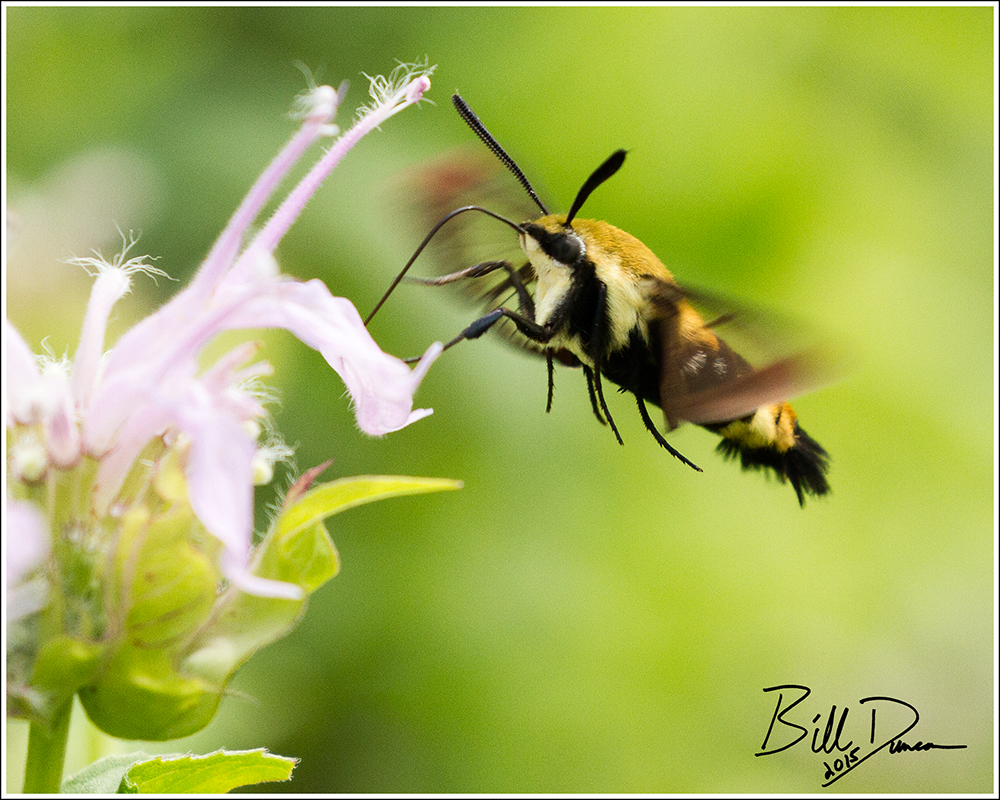
Hey everyone. This one comes from a recent Saturday morning I spent using a new DIY flash difusser I built. I had eight species of native bee as well as lots of honey bee on the Silphium and other native forbs blooming in my wildflower patches. It is really something to see the difference in the number of pollinators and other insects that can be found in a native plant garden in comparison to the typical exotic landscaping plants used predominantly in the suburbs.

I missed the focus on this one, but I think I captured the species characteristics.