
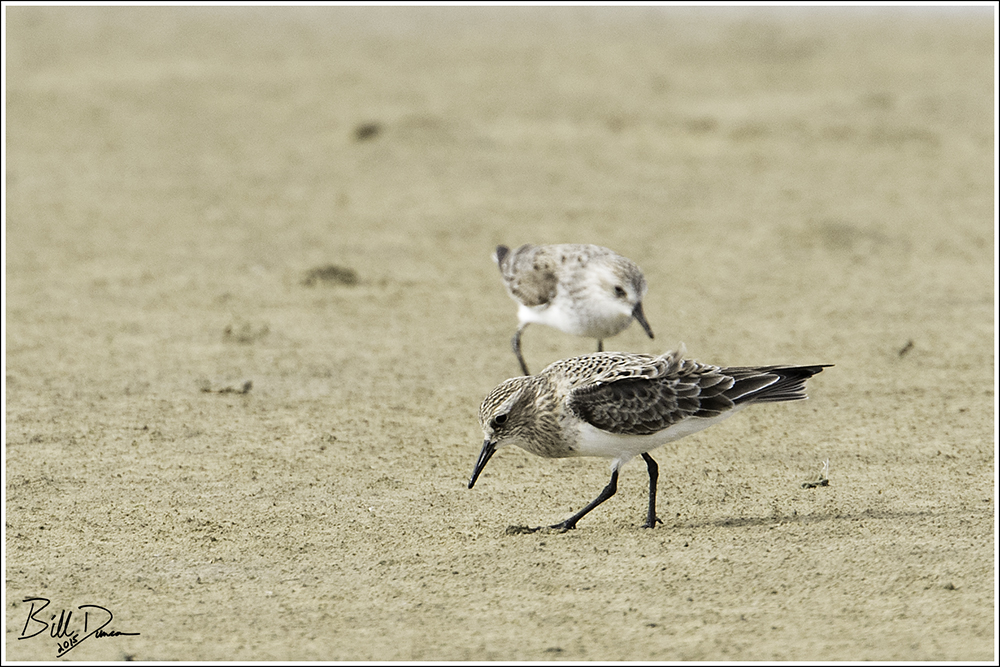
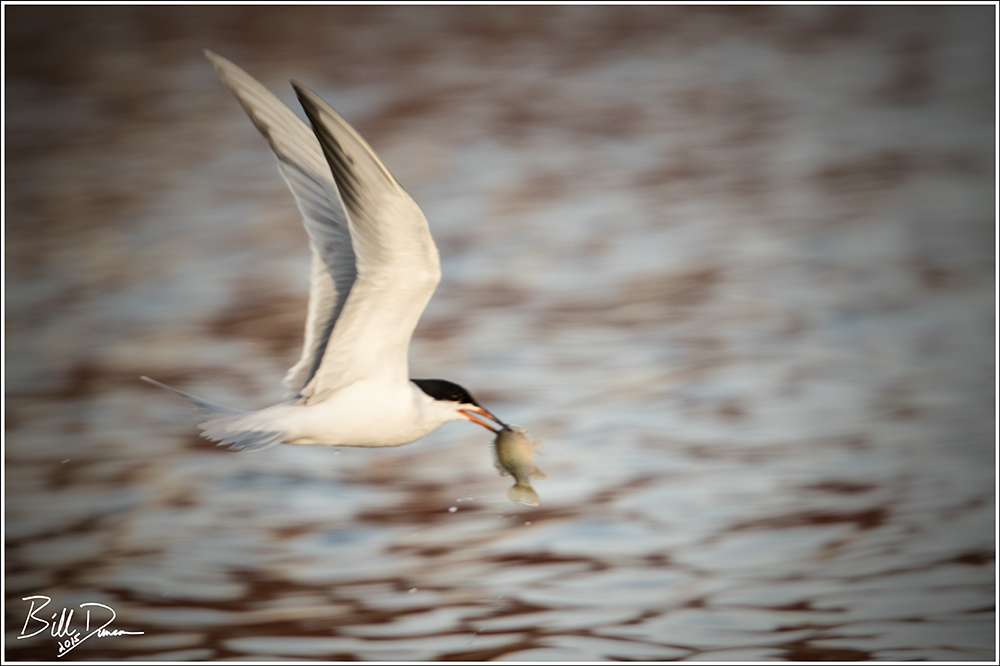
A few birds to share from Quivira tonight…


"What a thousand acres of Silphiums looked like when they tickled the bellies of the buffalo is a question never again to be answered, and perhaps not even asked." -Aldo Leopold
A few birds to share from Quivira tonight…
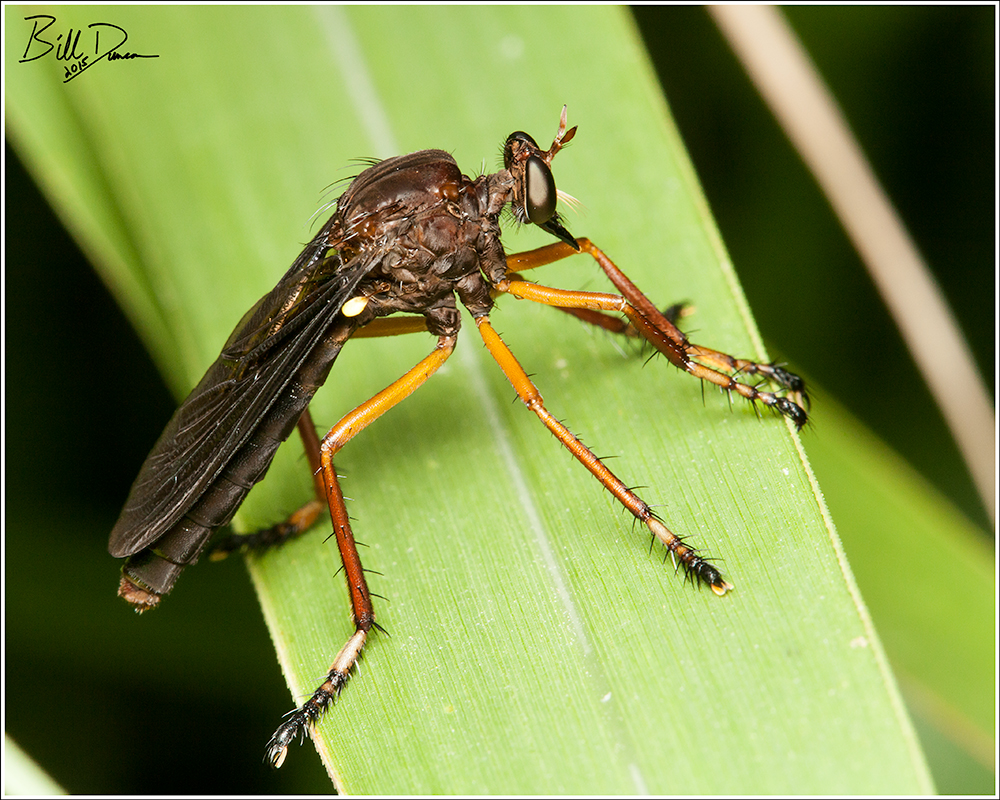
In keeping with the flies, I thought I would share this photo of a Robberfly (Asilidae – Dioctriinae – Dioctria sp.) that we found and photographed at Shaw Nature Reserve this summer.
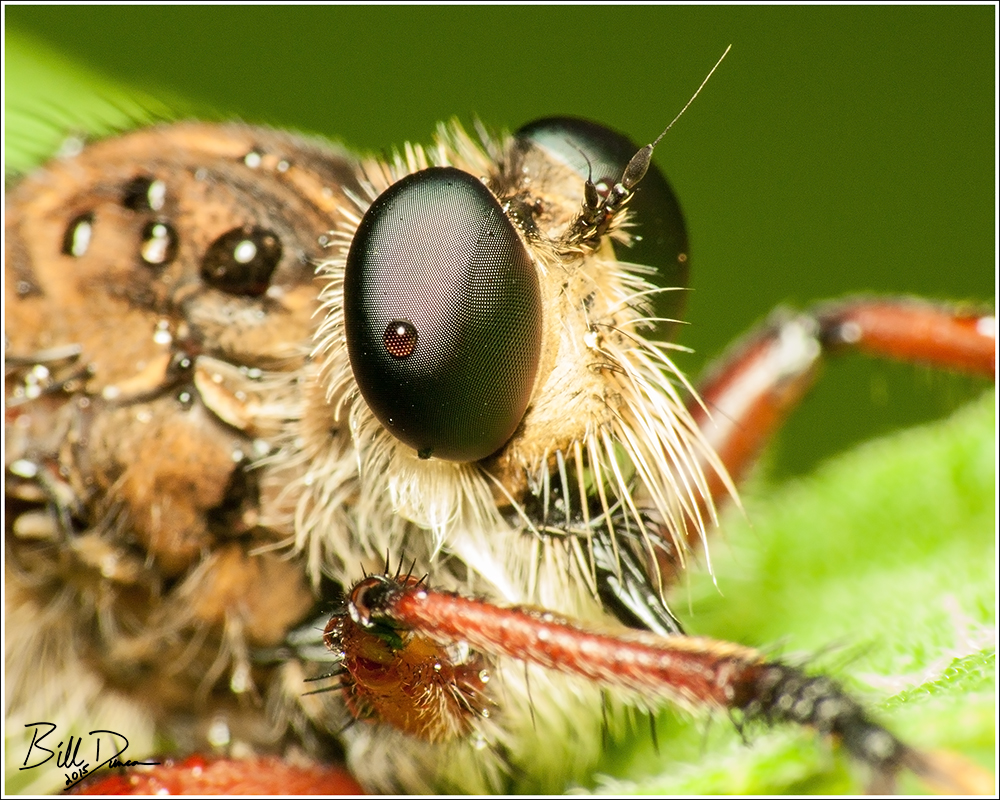
I find the flies to be one of the more interesting groups of insects and I was constantly on the lookout for new species to photograph this summer. There is such diversity in the flies, from size to form and function. There is still so much to learn about some flies, including some rather common species that researchers have still not described where or on what the larval forms live. To start, here is a closeup of a true giant of the flies, a Robber Fly (Family Asilidae). The Robberflies are true predators, with an intimidating beak that they use to inject neurotoxic and protein-dissolving cocktails.

The photograph above showcases a fly that should be a favorite of gardeners and farmers. Flies in this family (Tachinidae) parasitize a number of different insects and this species specializes in many of the plant-feeding true bugs like Stink Bugs and Leaf-footed Bugs. The generic name can be translated from Greek to mean “hairy foot” and the specific name “pennipes” means feather. This namesake feature can be seen on the rear legs of this fly in the photograph above.

The Thick-headed Flies are extremely interesting and a joy to watch. These guys not only mimic bees and wasps, but they also parasitize the hymenoptera by depositing their eggs on the stinging insect, sometimes attacking the host to place their egg. The eggs hatch and the larvae become internal parasites of their host.
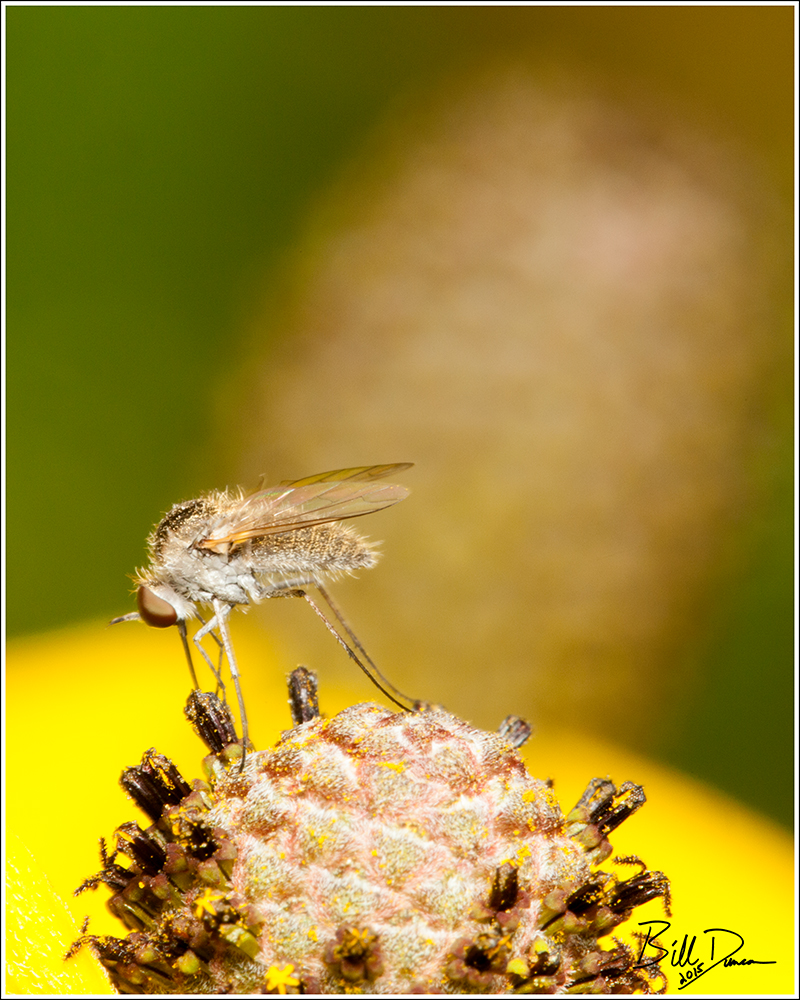
The minuscule Bee Flies in the genus Geron parasitize moth caterpillars. The adults of these flies feed almost exclusively on yellow-flowered Asteraceae.
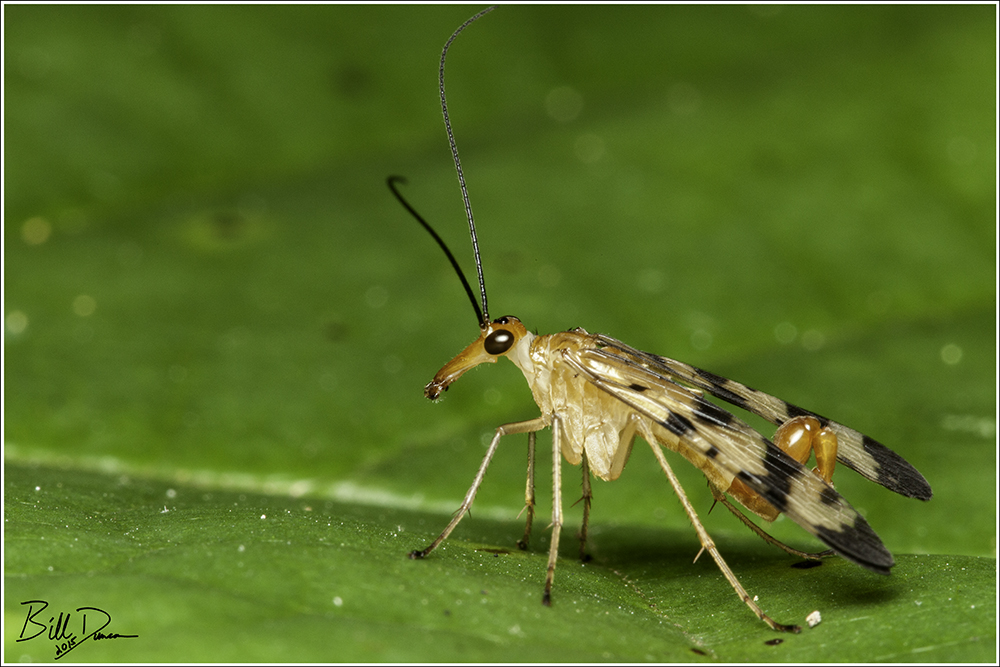
Don’t be threatened by the sting-like structure that this Scorpionfly (Family Panorpidae) has arched over its back. This is simply the male genitalia and is quite harmless. Scorpionflies primarily make a living by scavenging on dead insects, and like many flies, exhibit elaborate behaviors to attract mates. These flies will perform various dances in front of females and will often provide a ripe insect carcass as a prenuptial gift.
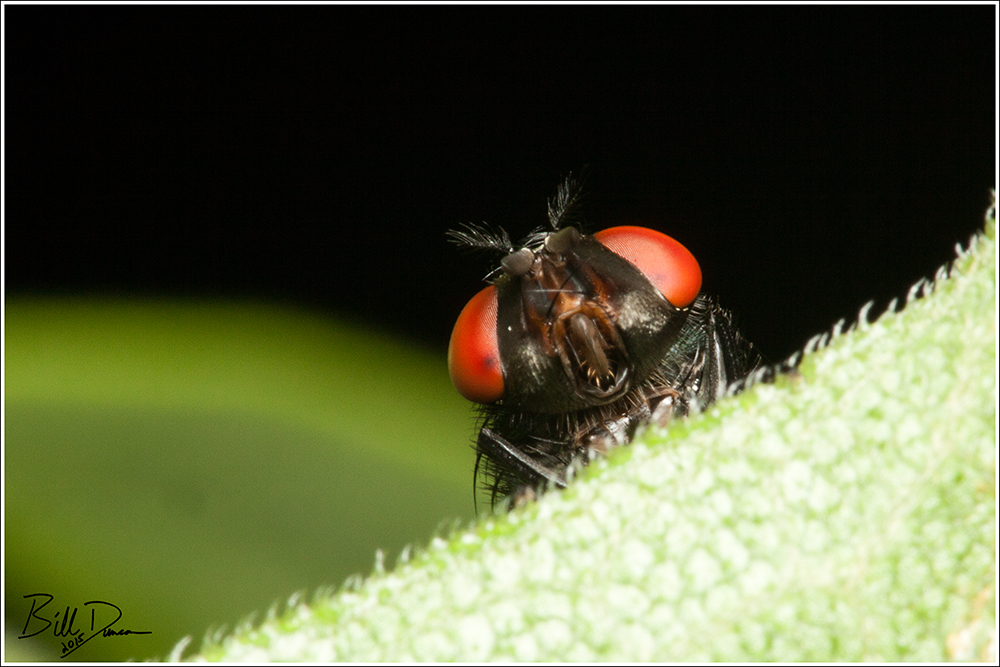
Finally, here is a rather different view of a Greenbottle Fly. I hope this helps to describe some of the fascinating diversity in form, function and behavior that can be found within the Diptera. These are but just a few of the easier to find and photograph! I hope to continue my exploration of these fascinating insects next year.
-OZB
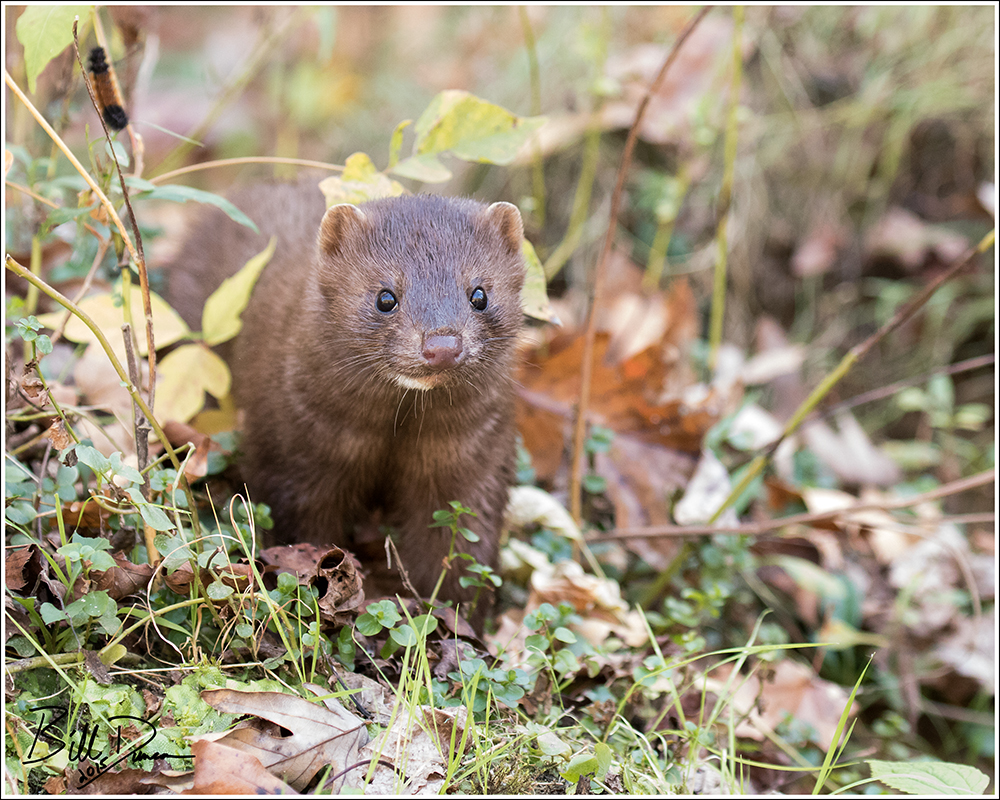
Steve and I just returned from five fun filled days in which we spent some great time floating the upper Current. Of course, I will be processing images for some likely months, but I wanted to share a couple now. We found five American Mink along the banks of the river during our first day. They were mostly unconcerned with our presence as we floated along, following them as they fished and foraged.

We were fortunate to find most favorable weather during this break. The nights were cool and clear and the days warm and blue for the most part. We were able to find and follow a number of forest friends and I’m looking forward to sharing them.
-OZB

A recently born Timber Rattlesnake was “found” by Steve during an outing we had in Cape Girardeau County.
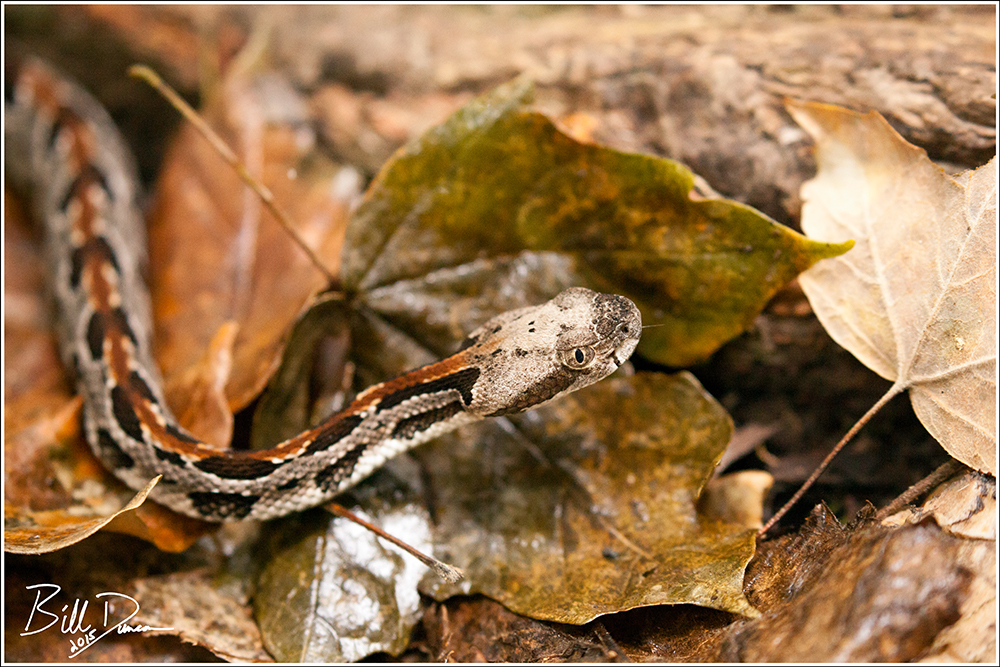
Rattlesnakes are ovoviviparous, and young are usually born in September or October. This little one was not long out of mom when we came across it.
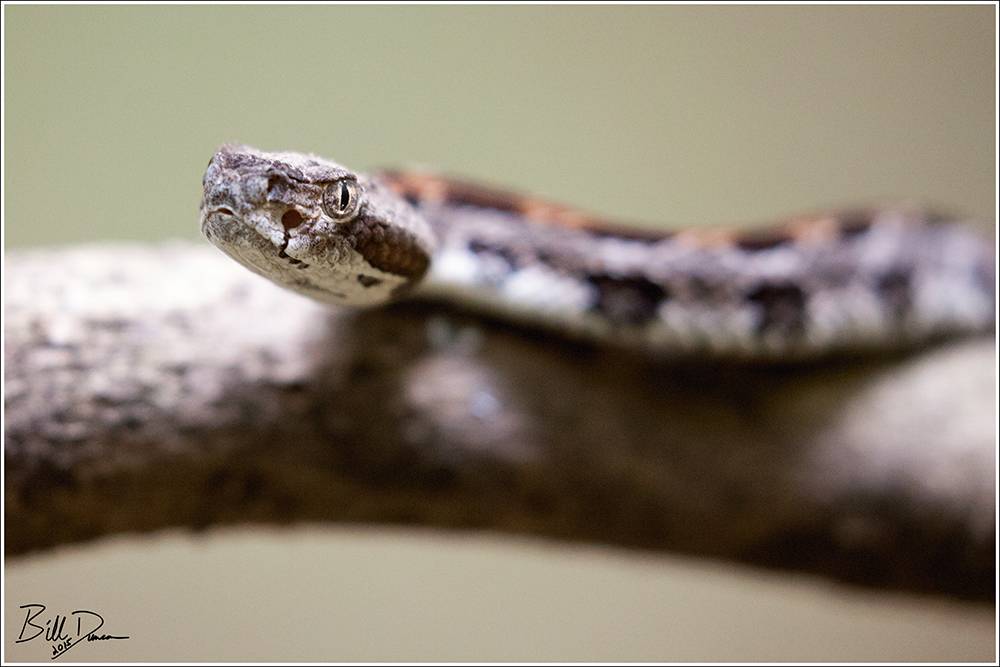
In the photo above the heat sensing pits that give pit vipers their name are easily seen.
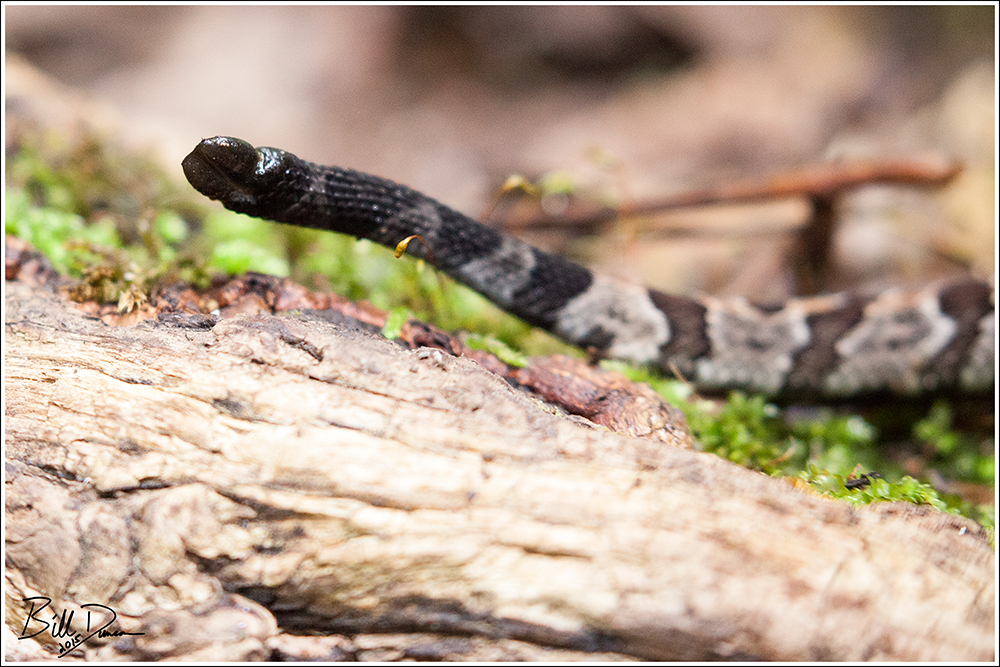
Finally, the little nubbin of a rattle that these guys are born with. Typically, rattlesnakes will add a rattle every time they shed their skin, which this guy has not done yet.
-OZB

Tonight’s post all share a theme of the challenges of being a pollinator on prairie wildflowers. The first photo above shows a lovely-colored, ambush predator known as a Crab Spider. Crab Spiders do not spin webs, but lay in wait, often on a flower for a pollinator to visit.
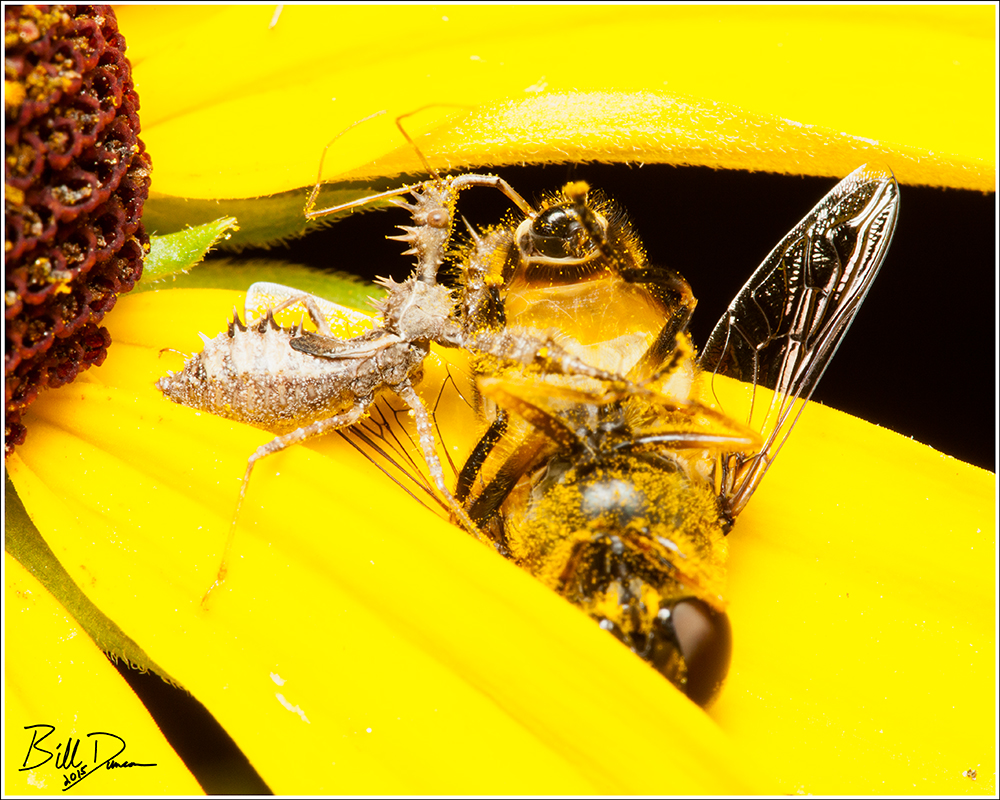
This Assassin Bug has captured a syrphid fly and is having himself a meal.
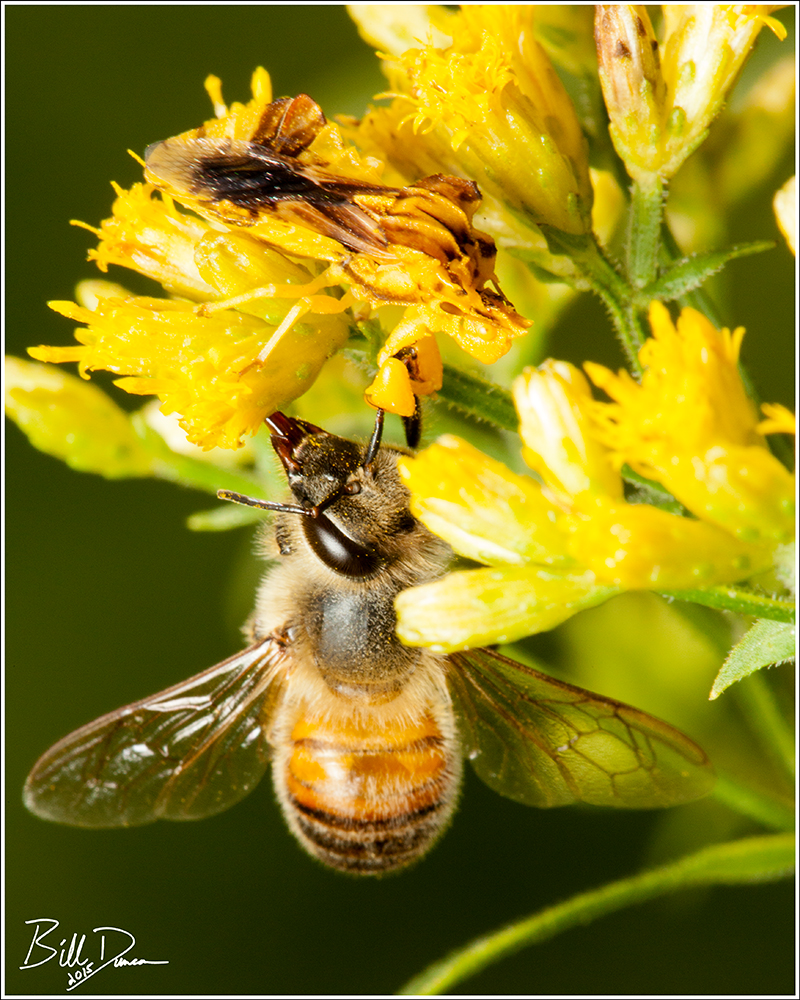
In the image above, this goldenrod flower came to life to ambush a Honeybee. I find that Honeybees are the most often caught in traps like this. Native bees seem to be constantly on the move and much more defensive, most likely due to the fact that they are solitary and there would be nobody to care for the brood if they were more care free like the honeybees.

The creature is actually called an Ambush Bug. What an interesting face this one has! I can imagine the potential conversation.

Finally, this gigantic Robberfly is finishing off some small prey.

My third and final day to myself in southwestern Puerto Rico would be quite memorable. I placed myself within the center of the Elfin Woods of the Maricao State Forest. I arrived at ~ 06:30 and did not leave until ~19:30. The AM weather was spectacular, with cool temps and some steady breeze and partly cloudy skies. I stayed the entire day in a little recreation/biological station that was about 1/4 of a mile long. It contained nice bathrooms and covered picnic tables. This was a good thing because the rains came onto the mountain at about 13:00 and stayed mostly through the time that I left.

On mountain road 120, look for this sign. This is one of only a likely two spots on earth to have a good chance of seeing the Elfin Woods Warbler, one of the endemic bird species to the island and one I had little hope of finding.

There were a couple of those old CCC signs here as well.
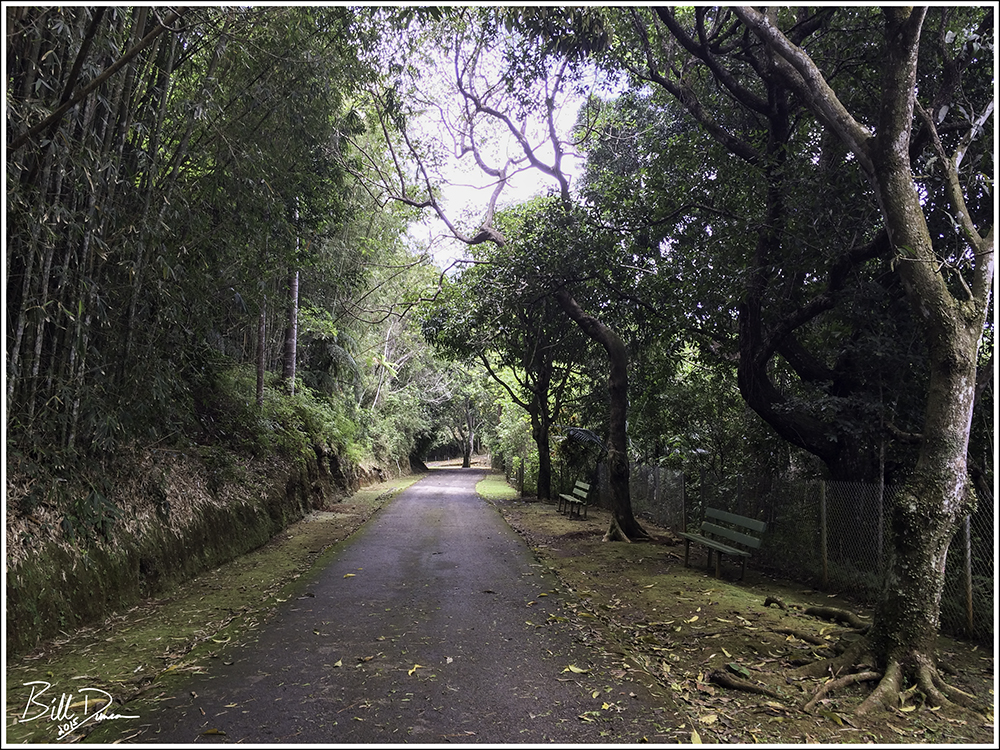
I had read bits and pieces that there were trail heads here and others scattered throughout this small forest preserve, but I could find no signs of those anywhere. Ultimately, I doubt I missed much. The ~1/4 of a mile I had was split mostly between the birds and myself. All it took was some patience, or, lots of patience as the birds came and went into the thick vegetation that rose or dropped steeply on one respective side of the road or the other.

Many species of tropical hummingbirds are known to occur within a narrow range of altitude. The Antillean Mango can be found throughout the rainforest habitats of Puerto Rico, up to the highest peaks of the island.
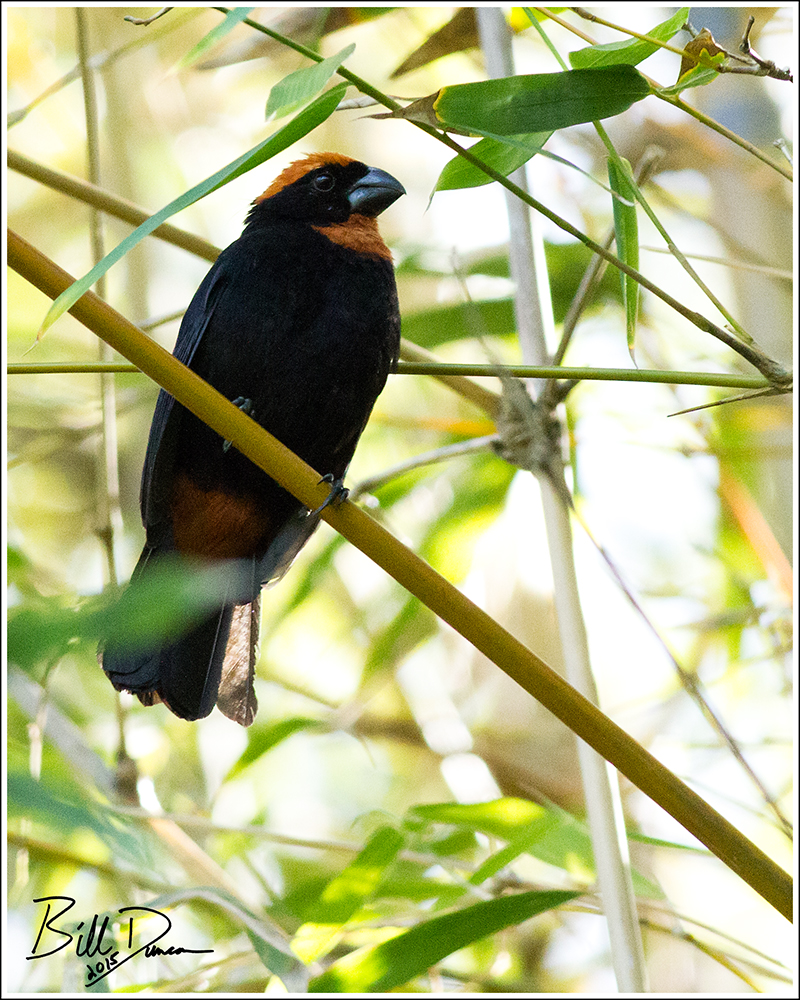
The Puerto Rican Bullfinch is not a finch at all, but a Cardinal. It has a song that is quite reminiscent of our Northern Cardinal. I found these guys, like so many of the birds on the island, to be a bit shy and tricky to get a clear view of.

The Puerto Rican Tanager is another endemic bird of the island. The cloudy skies made photography quite challenging.

After this Pearly-eyed Thrasher had its fill of the water-apple, I made sure I got my two or three as well… 😉

While this stretch of mountains is a dream for the botanist (more than 250 species of trees), several of these are imports from other tropical locations. Similar to the El Yunque forest on the eastern side of the island, several exotic tree species have been introduced here from Australia. While several of these species seem to have a small or even neutral effect on the native ecosystems, some have become quite problematic, like these invasive eucalyptus.

The Todys were here as well! And I was in for quite a surprise.

One of the several highlights of the day was finding a PR Tody nest cavity in the side of a mud bank. These guys are in the same family as the Kingfishers, and build a similar nest cavity. I happened to be walking by as a bird hopped to the entrance and darted within feet from my face while giving me a terrible scolding. I backed off a bit, hoping it would come back for a great photo opportunity. After 20-30 minutes no birds came, so I pushed on, not wanting to be the reason a youngster was not getting a meal. I would walk by the cavity a few times over the course of the day, but never had any luck. I don’t think they spend a lot of time within sight of the nest cavity, it being a quick in and out operation.

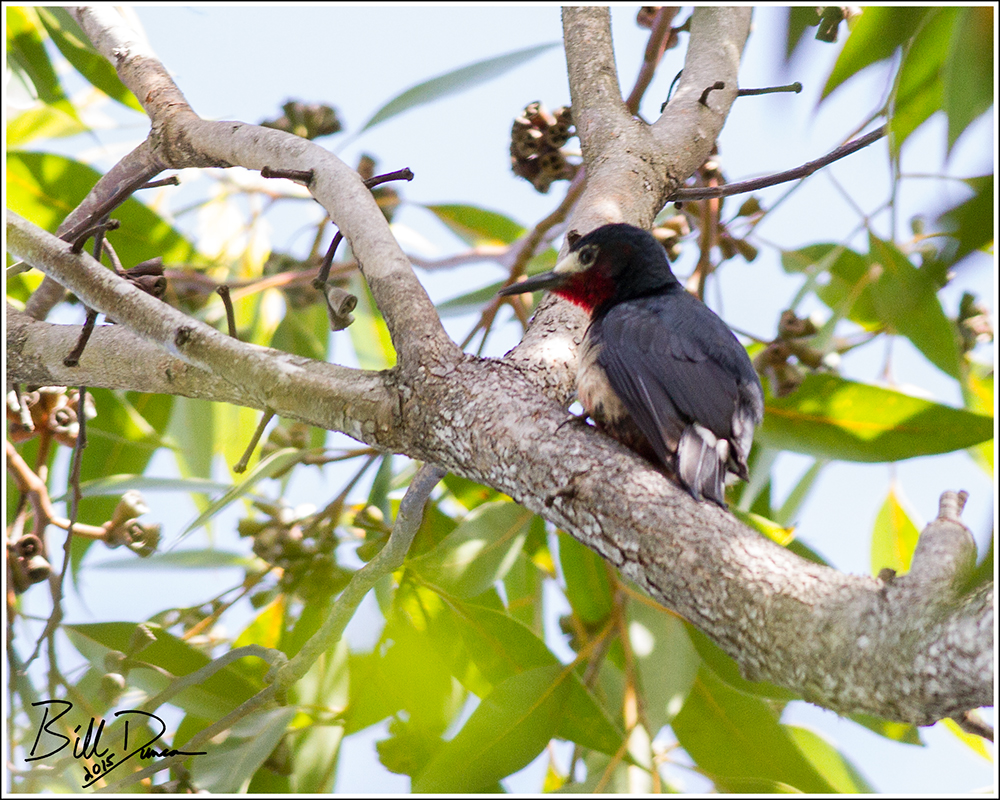
Although I was able to find a couple of the PR Woodpeckers the day prior at Cabo Rojo, I was not able to get any photographs. Thankfully a group came through the area and I managed a couple of mediocre shots. Spectacular birds, as are most Woodpeckers.
Finally, the quintessential bird for this most Tolkienesque of forests. The Elfin Wood Warbler. I was able to watch a small group of these quite mobile darts move in and out of the dense, roadside wall of the forest canopy. Only described by science in 1972, it has been estimated there may be as few as 1800 of these birds left on the island.

Human modification and destruction of these mountain forests are having major detrimental effects on these habitats throughout the tropics. In Puerto Rico this habitat is being lost to communication arrays and the roads to service them – one of the costs of global connectivity. I was appalled by some of the views I had of antennas being stacked as thick as trees on some of the mountain tops in this Forest.
Coffee is king here and some of the oldest and largest coffee farms are found within Maricao. I was able to speak with several folks on the island who worked as, or were part of families associated with farming coffee. Not one of them practiced or had any plans to practice shade-grown, bird-friendly coffee. Although it certainly is not the perfect answer in protecting these endemic mountain species, purchasing shade-grown coffee is an important practice in enabling conservation in these areas.
As the light waned and the rains began to lighten, I sat listening to the coqui frogs and other pieces of the night symphony begin their warm up. Just when I thought it couldn’t get better, I heard what I had hoped to hear – the Puerto Rican Screech Owl. This bird gave me a total of 17 of a possible 18 endemic bird forms for the enchanted isle. The only miss was the Puerto Rican Parrot, which is only found in small patches of El Yunque to the east. I can only hope that these birds can continue existing in their present forms long after I have not.
Thanks for visiting…
OZB

While at Quivira, Steve and I happened upon one of the most patient, cooperative wild birds I have ever come across, this male Belted Kingfisher. It stayed perched, except when taking off to grab a prey item, as we slowly crept closer in the car.
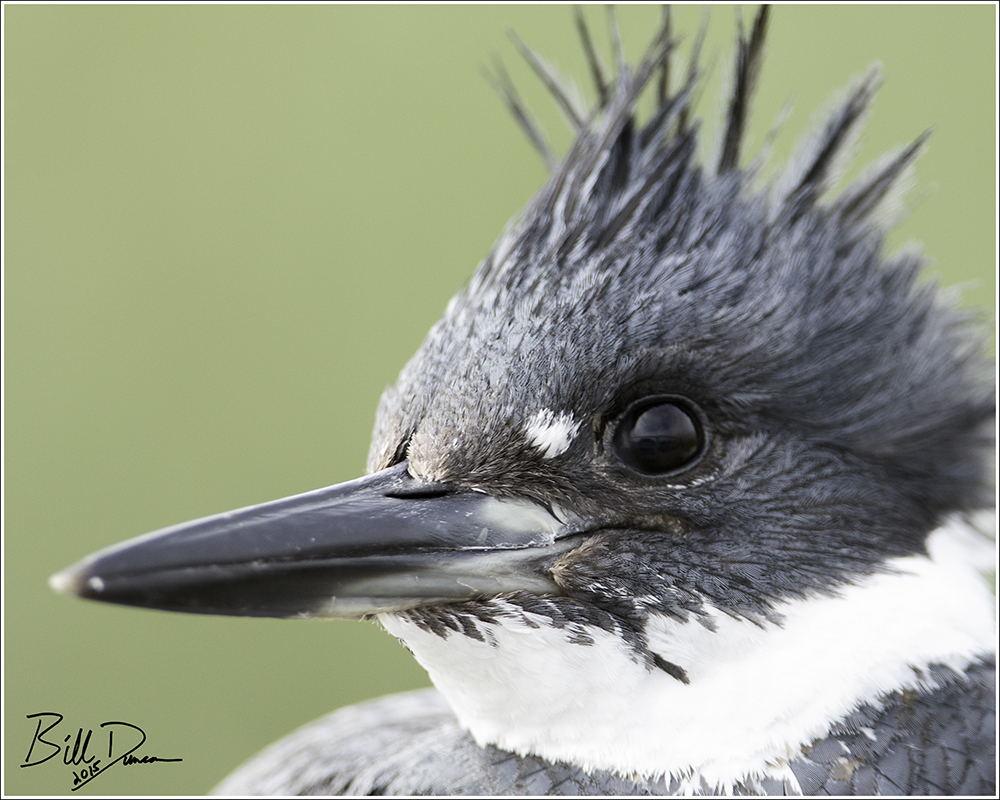
In the photo below, the bird winds up to bash a crayfish that it eventually swallowed.

Thanks for visiting!

-OZB

Today I am sharing a few photos of Eastern Gama Grass (Tripsacum dactyloides), an interesting plant that grows in abundance at Shaw Nature Reserve. This warm-season grass has a C4 metabolism and can grow in a wide variety of habitats. Due to its use as a forage crop, man has introduced this perennial plant across the Americas. Gama Grass is a distant relative of maize, separating approximately 60,000 years ago. The inflorescence of the plant can be seen above. Whereas maize has its male and female flowers borne on separate spikes, Gama Grass carries its flowers on separate sections of the same terminal spikes. You can see the exposed anthers towards the upper 75% of the spike, while the developing seed are located in the lighter green sections nearest the stem. The photograph below shows a closeup of the exposed stigmas, waiting for the wind-borne pollen.
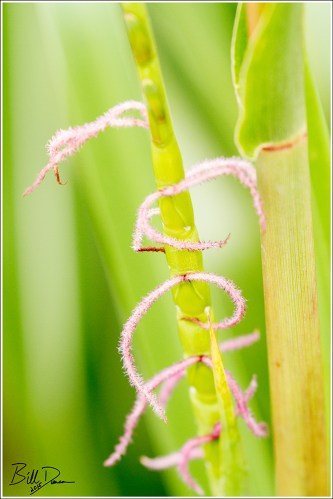
In the final image, you can see a grape vine using a Gama Grass spike for its support.

-OZB

The skimmers (Family Libellulidae) are the largest family of the Odonata and contain some of the most widely known and conspicuous dragonflies.
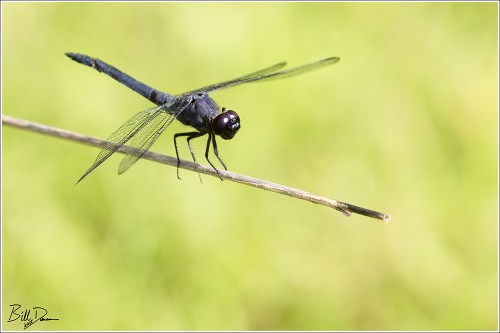
Much like a flycatcher within the world of birds, the skimmers typically sit and wait on a perch and fly to catch an insect.
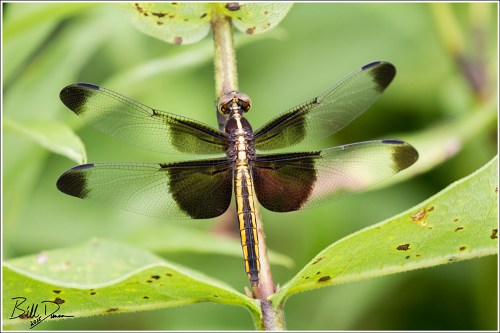
These photographs were taken at a small pond at Shaw Nature Reserve this summer.

-OZB
 A Thousand Acres of Silphiums