Killdeer Nest

Killdeer on Nest
Killdeer on Nest

Sarah and I found this girl on her eggs this spring at Clarence Cannon NWR.  According to Harrison (Peterson Field Guides – Eastern Birds’ Nests), the male of the species will “make various scrapes in the ground” and one is chosen by the female to deposit and incubate her eggs.  As most of us familiar with the bird know, the Killdeer will usually nest far from water and often within human disturbed habitat.  This girl’s nest was along the side of a gravel road within the refuge.

Killdeer! Killdeer! Killdeer!

Day Two in Southwestern Puerto Rico – Cabo Rojo National Wildlife Refuge

Wilson's Plover
Wilson’s Plover

I found myself on the second day a little further from Ponce, where I visited what has been described as the most important habitat in the Caribbean for migratory and resident shorebirds – the Salt Flats of Cabo Rojo NWR.

Cabo Rojo Trails
Cabo Rojo Trails

The refuge was first established in 1974, when it was comprised of a patch of subtropical dry forest near the coast in the southwestern tip of the island.  This patch of nearly 600 acres was gifted to the US Fish and Wildlife Services by the CIA, of course.  Unfortunately, this initial plot of land and the nice looking visitor’s center that is run by the USFWS is closed on Sundays, the day of my visit.  Within the tall wire fence, the forest and savanna habitat looked very inviting.  Immediately upon exiting the car to deposit some used coffee I watched as a pair of striking Puerto Rican Woodpeckers flew directly over me to land in a tree, bathed in the light of the golden hour, just on the other side of the fence.  Of course they would not stay put while I put the camera together.

Subtropical Dry Forest

Subtropical Dry Forest is characterized by low annual rainfall (~30-35″ annually), high temperatures of over 100 F and plants adapted to such climatic conditions.  Within such habitat plants normally achieve heights of 15″ on average.  Plants are further adapted to these hot, xeric conditions by having small, waxy leaves – often shaped into thorns to dissuade herbivores.

Cactus
Cactus

Several cactus where found throughout the refuge.  The photo above captures not only cactus, but a dry-adapted lichen, known as tropical mistletoe, that was quite common as well.

The Salt Flats
The Salt Flats

In 1999, approximately 1300 acres of salt flats were added to the refuge.  These salt flats are very important for overwintering shorebirds, but I was a bit late for this as the majority of these birds were already headed north to the arctic tundra.  However, I was able to find a few straggling migrants as well as nesting species – including several endemics of Puerto Rico.

Whimbrel
Whimbrel
Whimbrel
Whimbrel

The Salt Flats are considered Important Bird Areas by Birdlife International and the Western Hemisphere Shorebird Reserve Network.  This area serves as important nesting grounds for the Black-necked Stilt, Antillean Nighthawk, Least Tern and both Wilson’s and Snowy Plovers, among others.

Snowy Plover
Snowy Plover

This refuge is also important habitat for the federally endangered Yellow-shouldered Blackbird.  This author considers himself fortunate to find one bird, but was crushed by not being able to get a photograph.  😦

Least Tern
Least Tern
Least Tern
Least Tern

One plant that I encountered over most of my travels on this corner of the island was very common within Cabo Rojo – Wild Cotton (Gossypium hirsutum).  This wild relative of cultivated cotton is perennial in nature and adapted for salty, sandy soils.

Wild Cotton
Wild Cotton

There is quite a length of trails throughout the salt flats and the native islanders used these for recreation activities like running and bike riding as well as means to get to different beaches around this section of coast.  Near the area where I parked was some very attractive mangrove groves that attracted the Yellow Warbler.

Mangrove Pier
Mangrove Pier

Four species of mangrove are commonly found on the island: Red, Black, White and Button.  Tide lines and preference/tolerance of submerged roots is the primary reason behind how the different species are composed along Puerto Rico’s coastlines.

White-cheeked Pintail

With only approximately 500 pairs known on the island, I was quite fortunate to find and photograph these White-cheeked Pintail.

Smooth-billed Ani
Smooth-billed Ani
Caribbean Elaenia
Caribbean Elaenia
Yellow-crowned Night Heron

Towards one end of the salt flats were some of the workings that produced the salt for non-food purposes.  I could not determine if the works were still in production, or if it was left mainly for show.

Salt Production
Salt Production

I observed only the Black-necked Stilt utilizing this area, as the next two images suggest, they are quite tolerant of the saline conditions.

Black-necked Stilt
Black-necked Stilt
Black-necked Stilt
Black-necked Stilt

I never found a nest or chicks, but the way these guys were harassing me during this part of my hike, I would be surprised if there was not some sort of nesting activity going on nearby.

Black-necked Stilt
Black-necked Stilt

So, that was Cabo Rojo.  I would love to visit during a weekday when the dry forest/savanna section is open and when the few narrow roads that wind through this narrow bottleneck are not clogged with vacationing islanders.

Next time, I will recap the last day of my visit where I ventured a bit north in latitude to visit the Tolkienesque mountain rainforest known as the Elfin Woods of Maricao State Forest.

Thanks for your visit.
OZB


Birds of Quivira – The Sparrows

Lark Sparrow
Lark Sparrow

The sparrows were not to be outdone by other groups of birds.  Steve and I were fortunate to find a number of interesting sparrows.  Unfortunately most were difficult and uncooperative, at least when light was good.  The Lark Sparrows, although gorgeous, were giving us a little confusion with their unfamiliar song.

Lincoln's Sparrow
Lincoln’s Sparrow

While moving through the woodlots of Quivira, we found a couple of sneaky, tricksy Lincoln’s Sparrows.

Clay-colored Sparrow

My first time hearing the song of Clay-colored Sparrow.  Their insect-like trills were somehow quite appealing and I looked forward to hearing them in the mornings.

Harris's Sparrow
Harris’s Sparrow

The Harris’s Sparrow is another classic western sparrow found at Quivira.

Savannah Sparrow
Savannah Sparrow

Finally, the Savannah Sparrow, which can be found in different forms across the continent.

Thanks for visiting…
OZB


Birds of Quivira – Sanderling

Sanderling Breeding
Sanderling Breeding

A medium sized, markedly-colored Calidris sandpiper, the Sanderling is one of the most highly traveled migrant birds on the planet.  Breeding only in the far north arctic, some Sanderlings will winter as far south as Cape Horn of South America.  Individuals in breeding plumage are easily identified with close enough inspection by looking for the rusty-gravel coloration.  Winter and juvenile forms are contrasty black and white.  All birds lack a back toe, which are typically found on shorebirds.

Sanderling Juv or Winter - 6A1A3007
Sanderling Juv or Winter

Thanks for visiting…
OZB

Birds of Quivira – East Meets West – Part Two

Eastern Kingbird
Eastern Kingbird

Much like the Meadowlarks, Steve and I observed an abundance of both Eastern and Western Kingbirds.  We were surprised by the close proximity of the assumed territories.  The typical super-aggression shown by the Eastern Kingbirds did not seem to be delivered to either the Westerns or conspecifics.

Western Kingbird
Western Kingbird
Western Kingbird
Western Kingbird

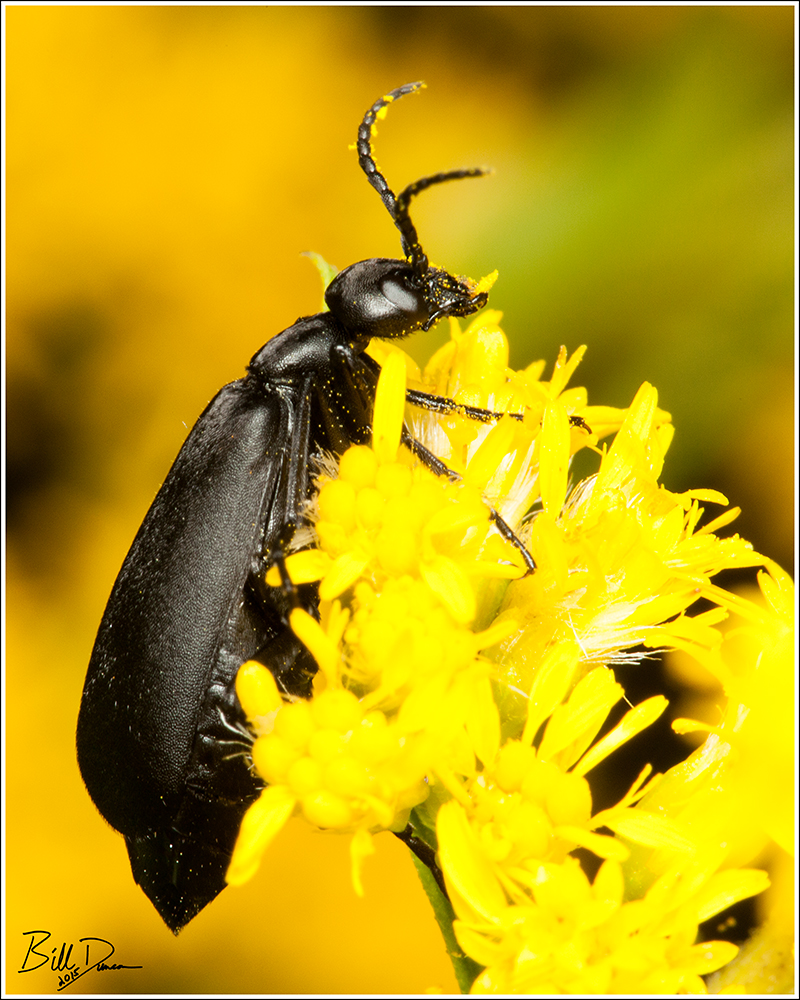
One Fascinating Beetle – Orange Blister Beetle

Orange Blister Beetle

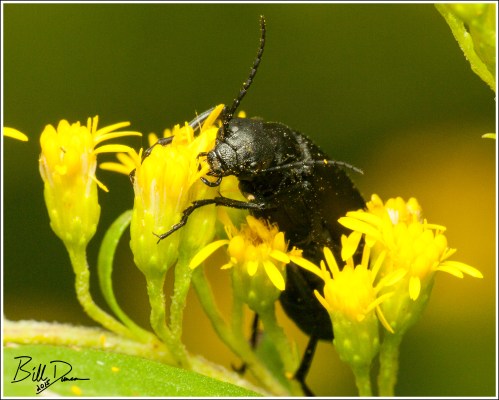
How fascinating a beetle.  Did you know this group of beetles begin their lives as kleptoparasites – stealing food from the the nests of solitary bees?  As adults these beetles are primarily nectar and pollen feeders and use the specialized mouth parts visible in this photograph to collect their food  – primarily from the flowers of Asteraceae.  If that were not enough, these guys get their names from a defensive chemical they produce called cantharidin which can produce severe chemical burns and blisters when sprayed on skin and severe poisoning if ingested.  This chemical has proven an effective treatment against diseases such as cancers and leishmaniasis.  This guy was found at Shaw Nature Reserve.

Thanks for visiting.
OZB

Birds of Quivira – Piping Plover

Piping Plover
Piping Plover

The Piping Plover, or as Pete Dunne has named them – the Sand Wraith, was one of the more special birds that Steve and I were able to view and photograph at Quivira this spring.  The Piping can be identified by its top color of dry sand (vs. the wet sand-colored top of the Semipalmated Plover) and its bright yellow-orange legs (vs. the gray-legged Snowy Plover).

Piping Plover
Piping Plover

There are currently an estimate of ~2500 pairs of Piping Plover left on the planet – causing this species to be listed on the endangered species list.  Unlike most of the shorebirds – who pass over most of North America on their migration north to nest in the arctic tundra, the Piping Plover dares to nest on Atlantic coasts and sandy shores of lakes of the northern plains.  It is here where its nesting needs have been overlooked by the desires of man who has converted its coastal habitat to development and flooded its fresh-water beaches and whose dogs and cats have made easy meals of its eggs and chicks.

Thanks for visiting
OZB