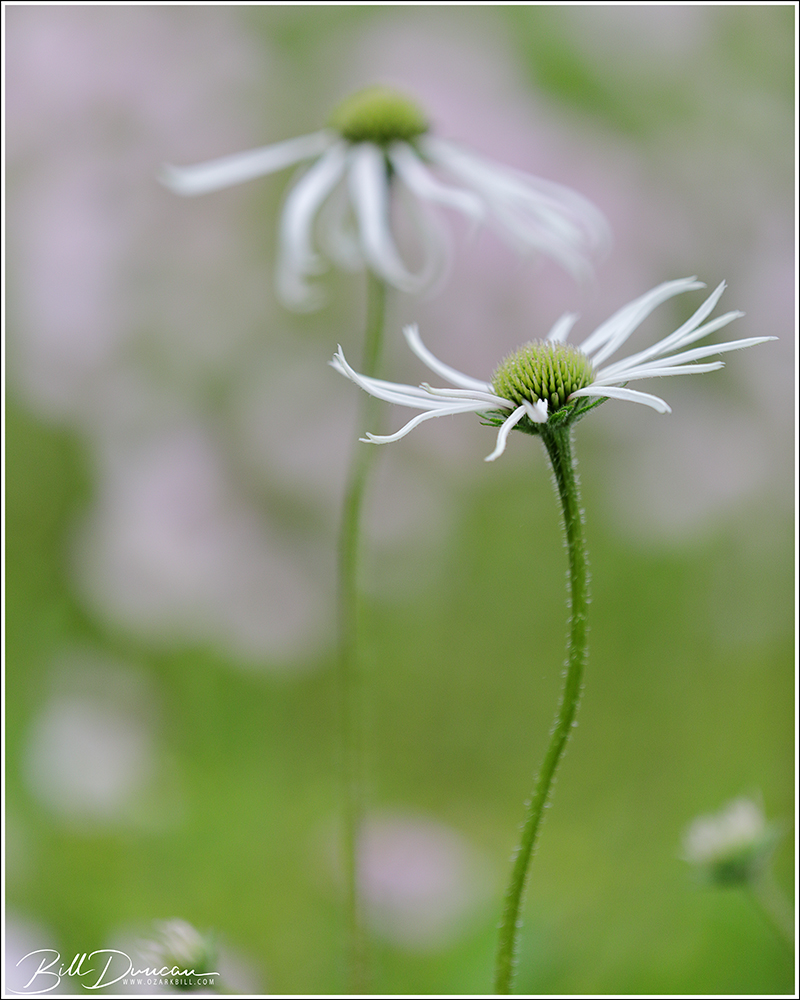
"What a thousand acres of Silphiums looked like when they tickled the bellies of the buffalo is a question never again to be answered, and perhaps not even asked." -Aldo Leopold
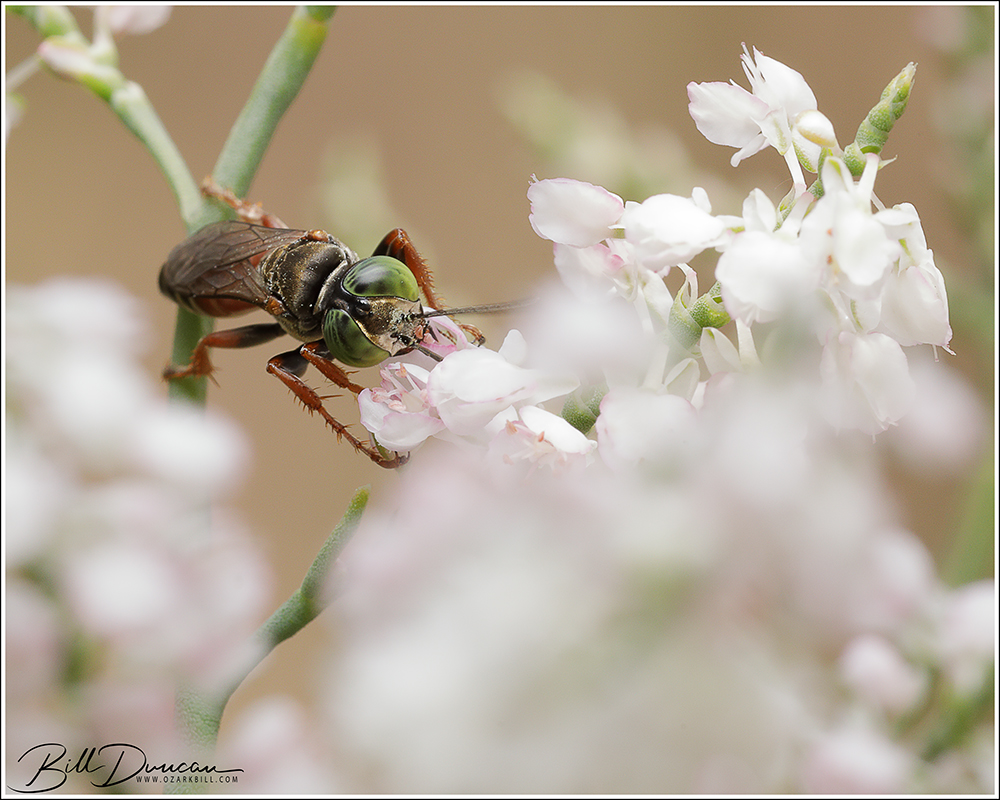
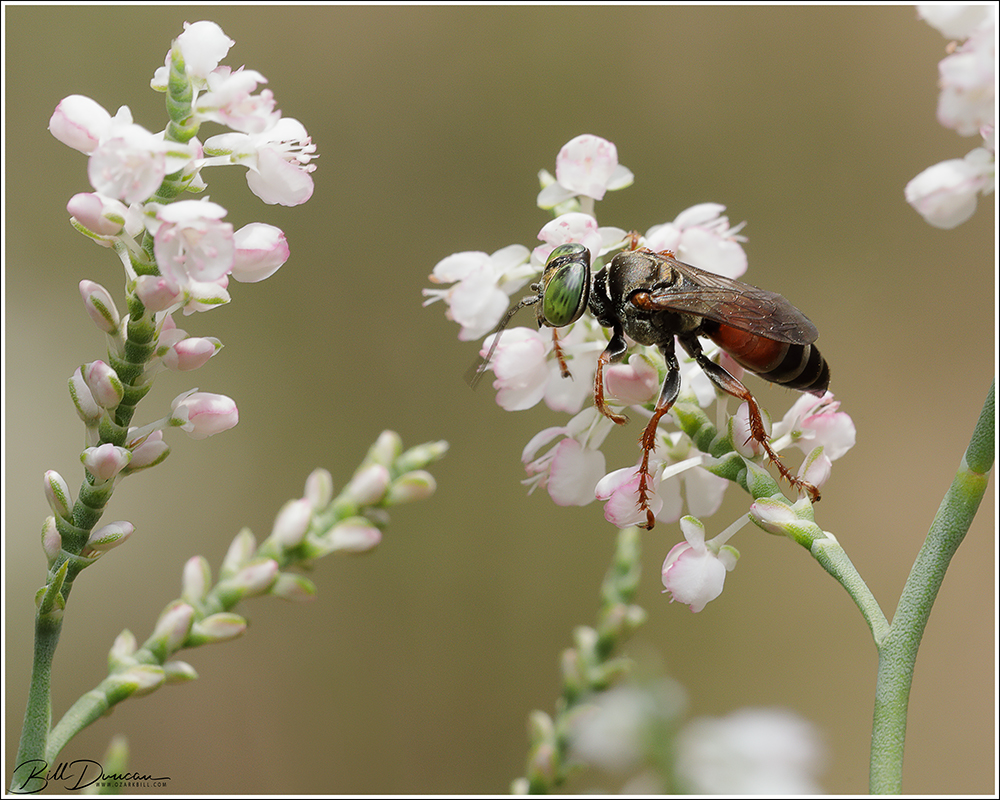
This summer I finally got to spend a little quality time wandering through Sand Prairie Conservation Area in Scott County, MO. Within and bordering the dunes one walks by large numbers of Stylisma pickeringii (Convolvulaceae) and Polygonum americanum (Polygonaceae), the later called American jointweed. If you arrive at or near sunrise there does not seem to be a lot of interest in regards to pollinators. Wait until the day heats up, say around 9 or 10 am, and then things get hopping. I saw all sorts of insects I had never seen before, mostly in the Hymenoptera. One of these was the green-eyed wasp (Tachytes sp.). Of course, when everything is warmed up, getting the photographs you want of these small and active insects becomes an epic story of frustration. But, try and try again and you might get something you’re happy with. The following pics aren’t as nice as I had hoped but I think they show this splendid little wasp as you might find them in situ.
A green-eyed wasp (Tachytes sp.) nectaring at a blossom of Polygonum americanum (American jointweed) as the gracious photographer works.
With a head that is almost all eyes, the green-eyed wasp (Tachytes sp.) is always wary and alert to potential threats.
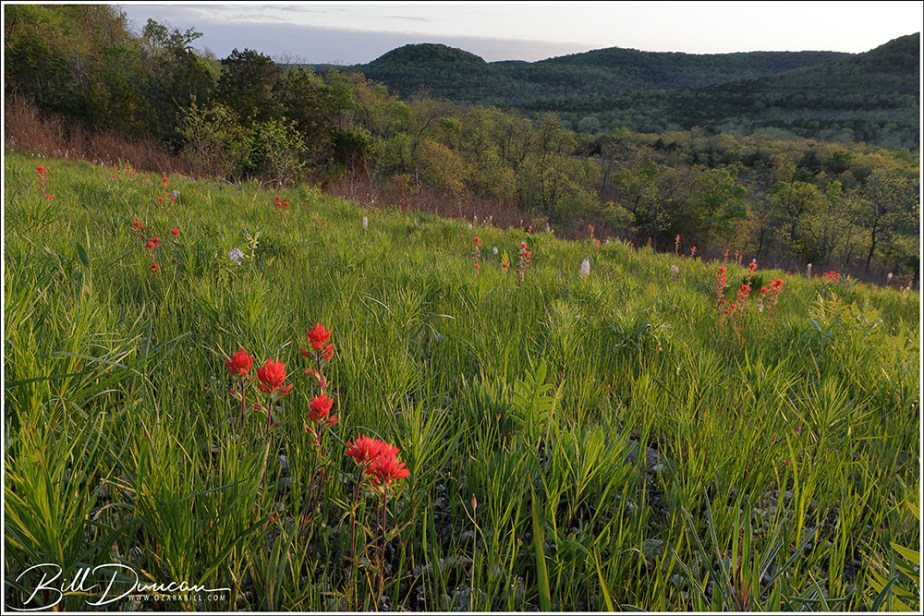
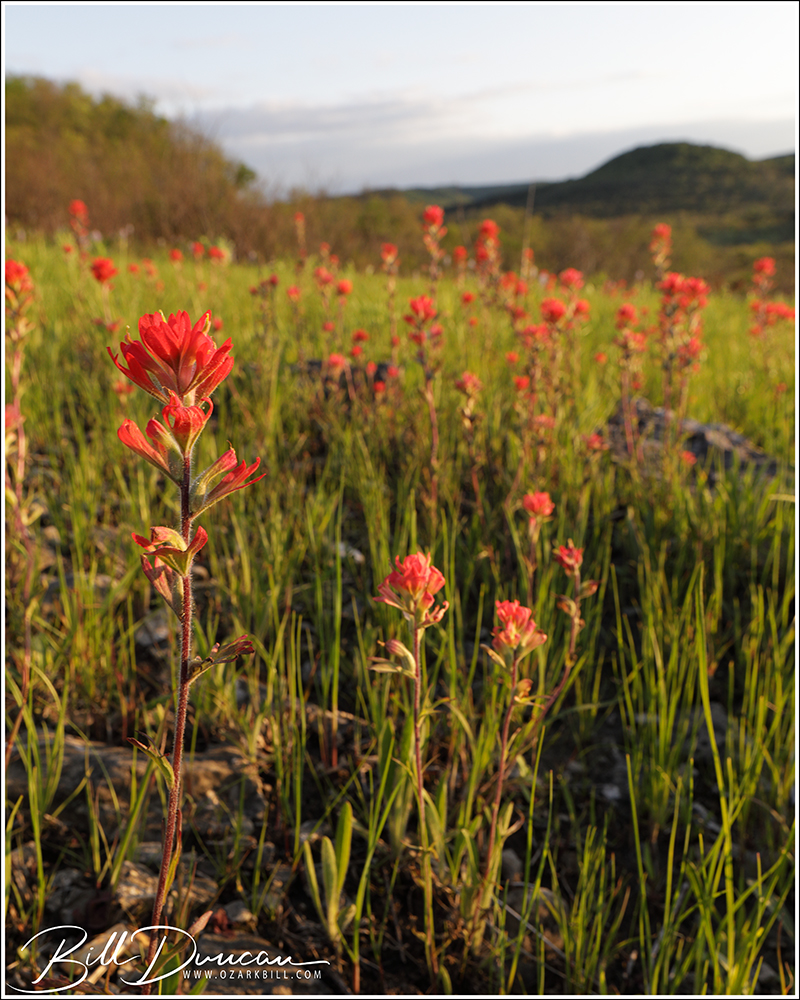
I finally got to spend some time at Roaring River C.A. this past spring when Casey and I made a trip to the southwest of the state. This location is easily seen driving to and from Roaring River State Park. At this time, the Castilleja coccinea (Indian paintbrush) and Camassia scilloides (wild hyacinth) were the stars of the show, accenting the hilly glades and savannahs.
Castilleja coccinea (Indian paintbrush) in bloom at Roaring River Conservation Area.
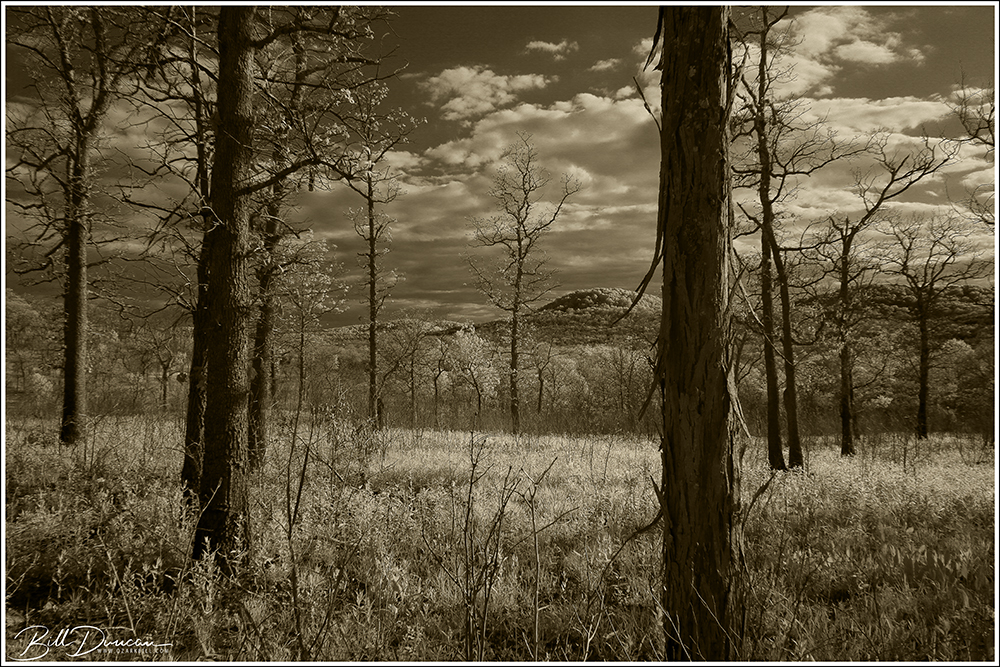
A sepia treatment was given to this infra-red capture of the savannah at Roaring River Conservation Area.
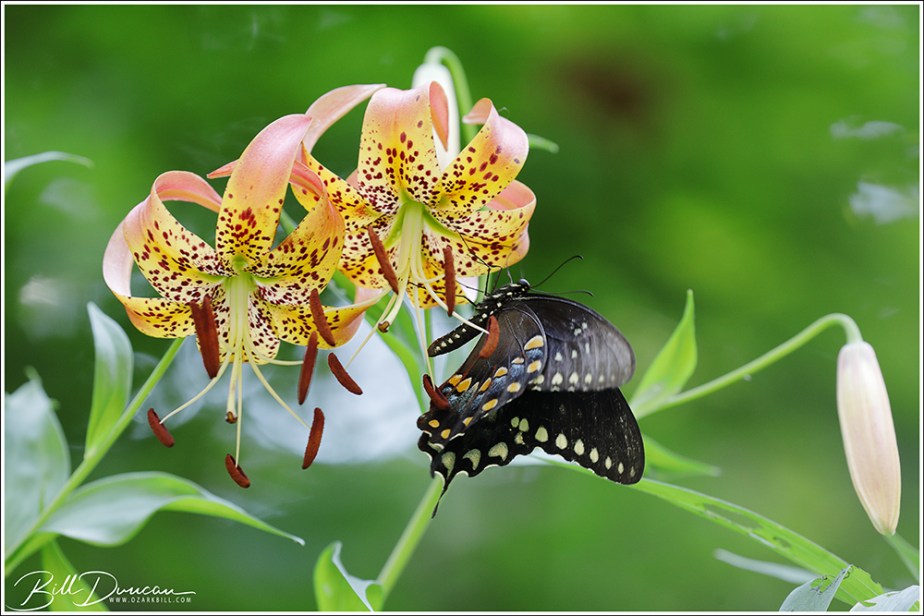
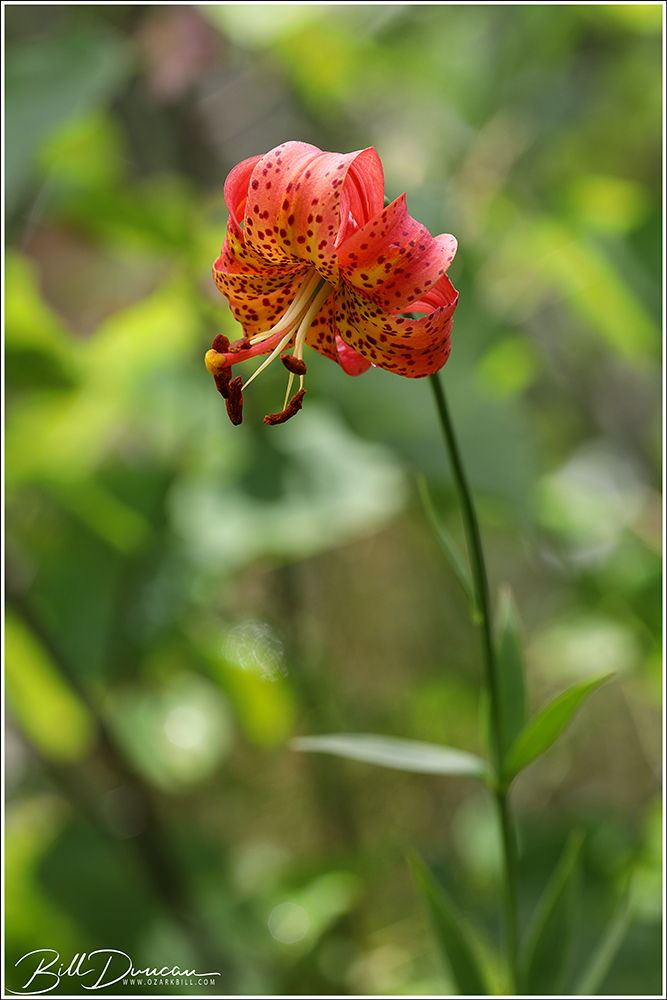
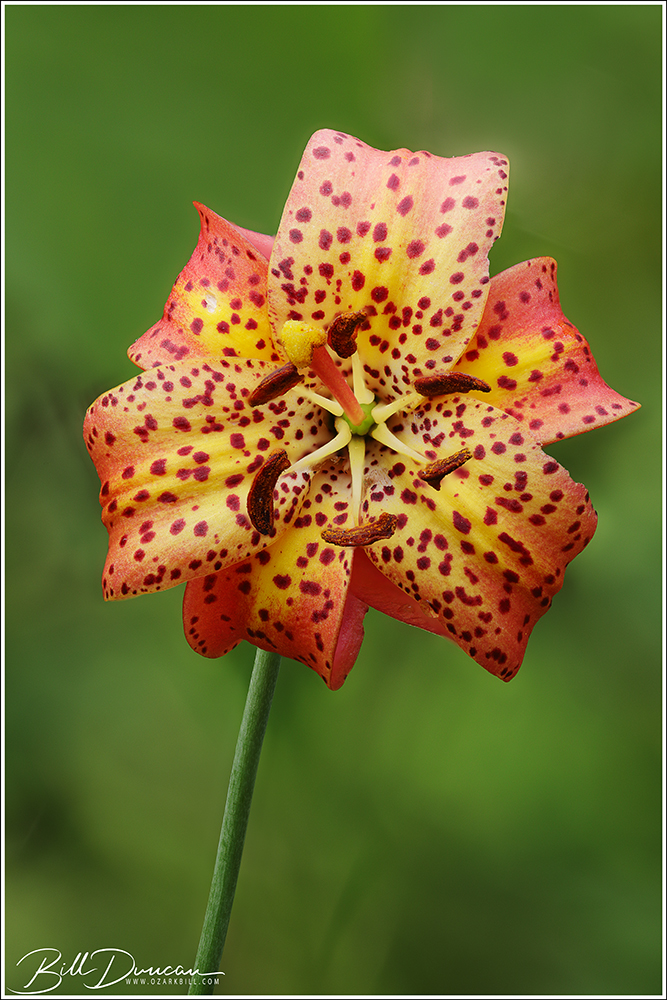
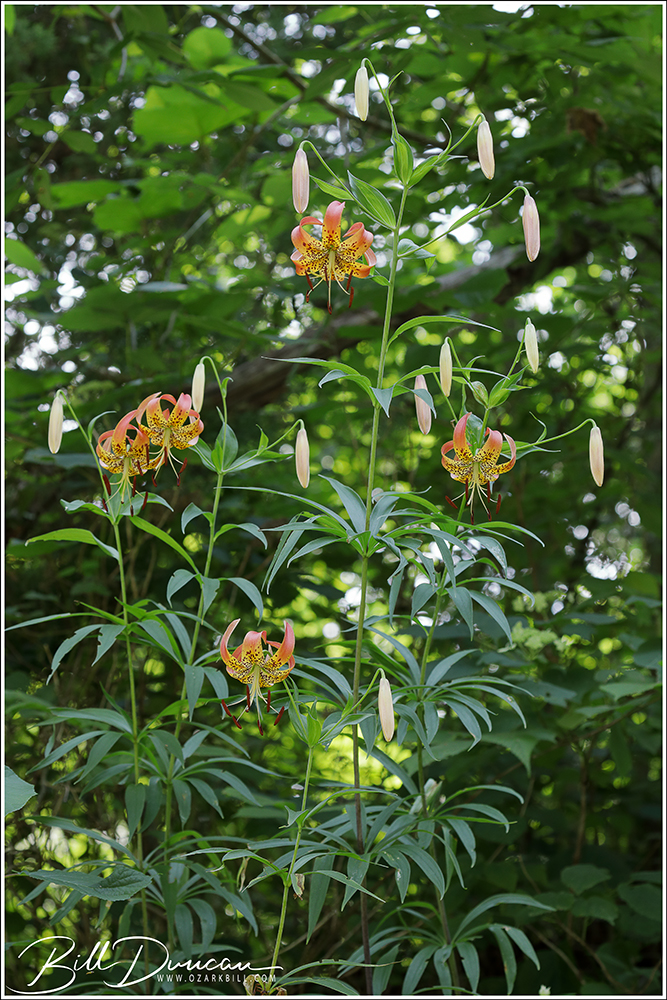
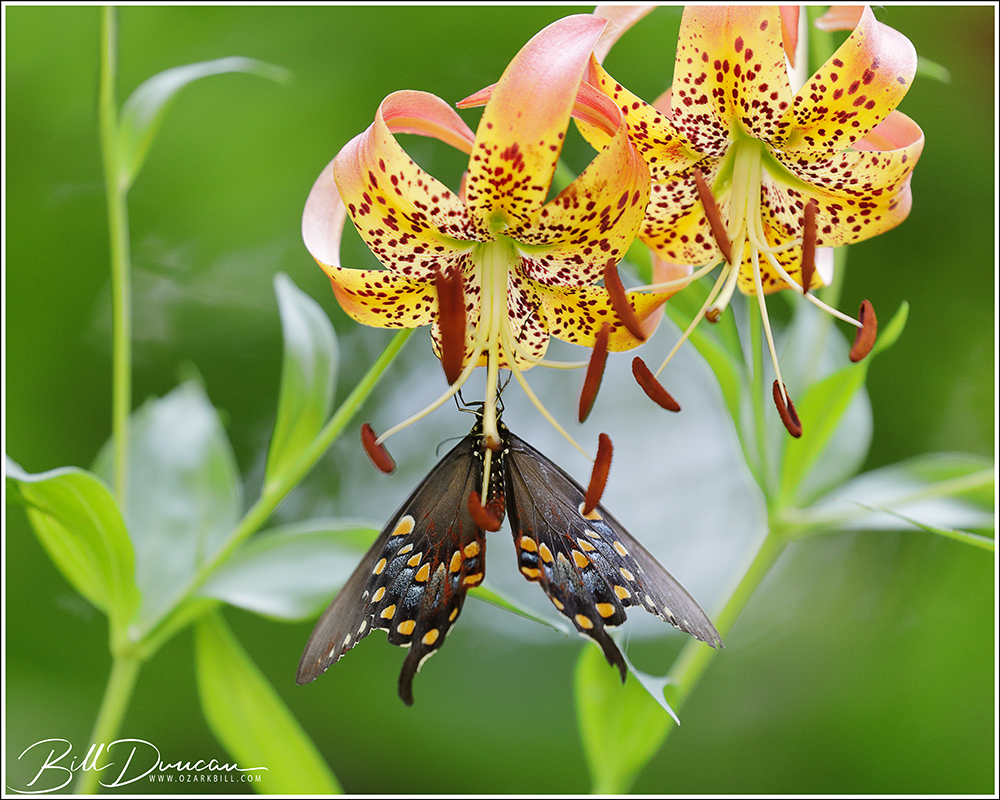
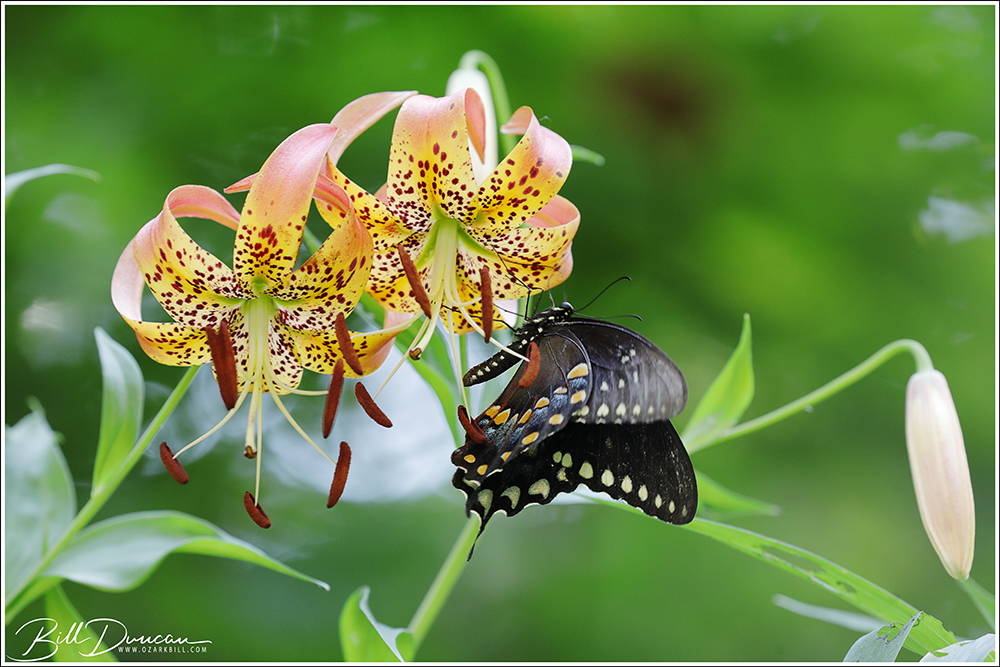
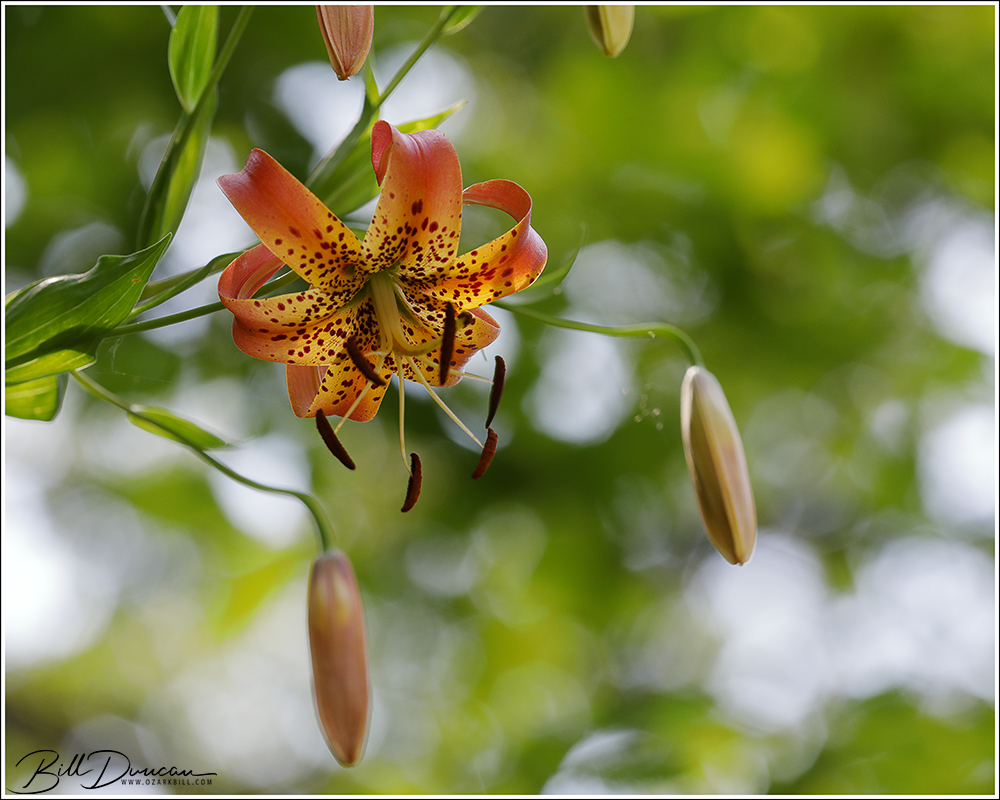
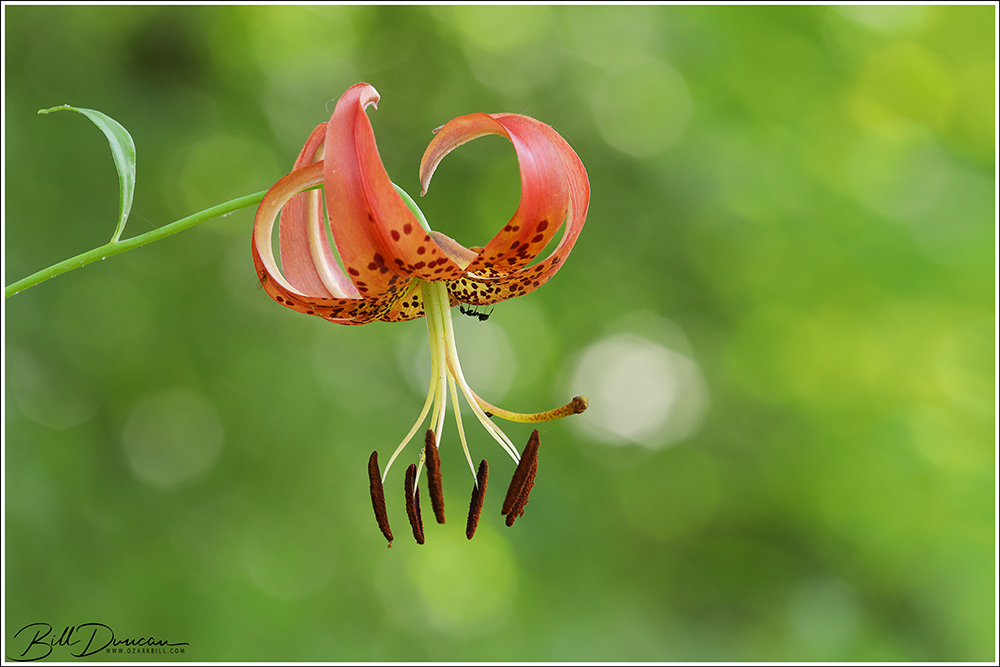
This year I was fortunate to meet with all three members of Missouri’s Lilium species.
Up first and by far the most common is the Michigan Lily, Lilium michiganense. This species blooms in June and July and can be found throughout the state except for the southeastern lowlands. This individual was photographed in Reynold’s County.
Up next is Liliumsuperbum, the so-called “Turk’s cap lily.” The largest native lily found in the U.S., These photos were taken in the only known population of this species in the state in Perry County.
Last of all was an unexpected finding of a Lilium philadelphicum, or wood lily. Like L. superbum, this is a very rare species in Missouri, only occasionally found in prairies in the north-western portion of the state. Unfortunately, the plant was not yet in bloom and I did not have the opportunity to travel the nearly 4.5 hours to visit again when the plant was in bloom.
For the past few years I have noticed a good number of native bee nest holes along exposed sections of bare soil at one of my favorite hiking and nature observation sites – August G. Beckemeier Conservation Area in St. Louis Co., MO. This past spring I finally decided to make this a project and set about a quest to make some images of these gals provisioning their nests. As usual, I wound up learning along the way.
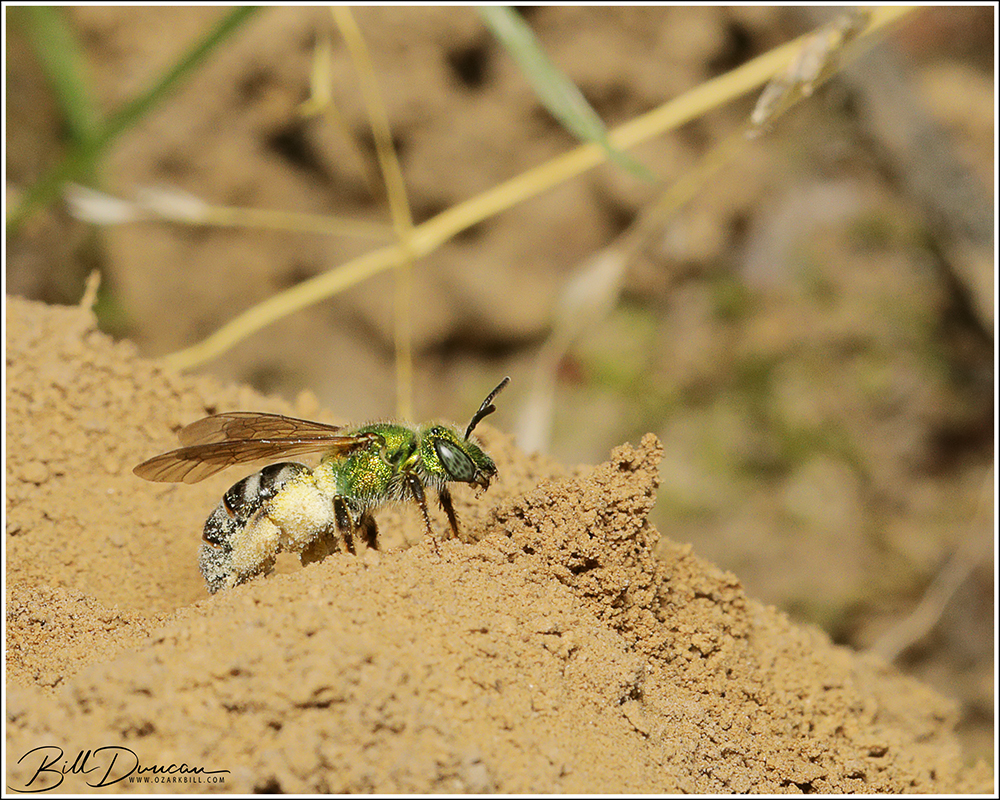
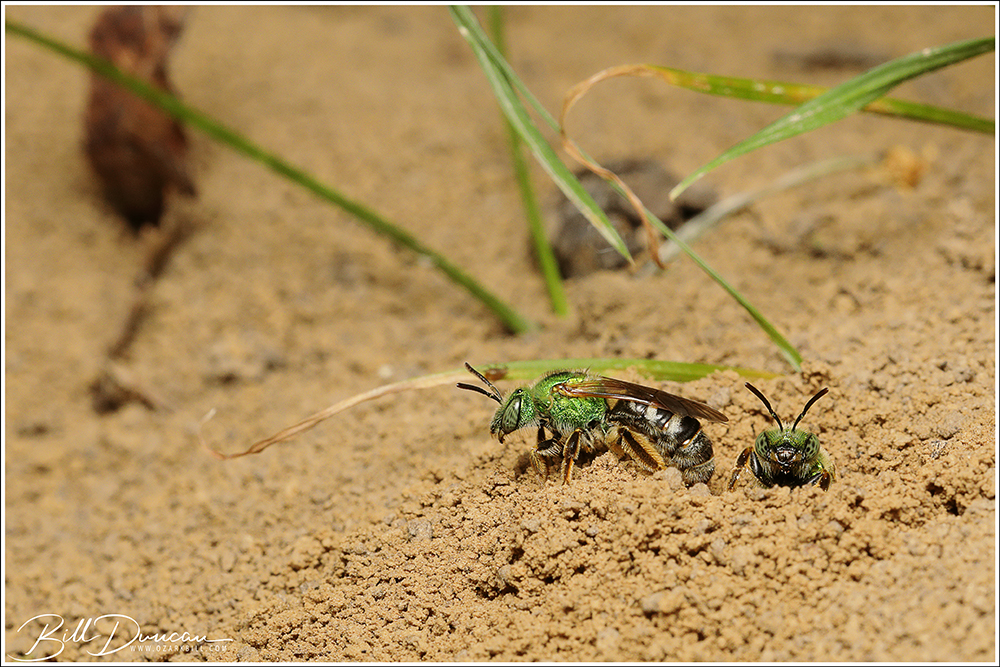
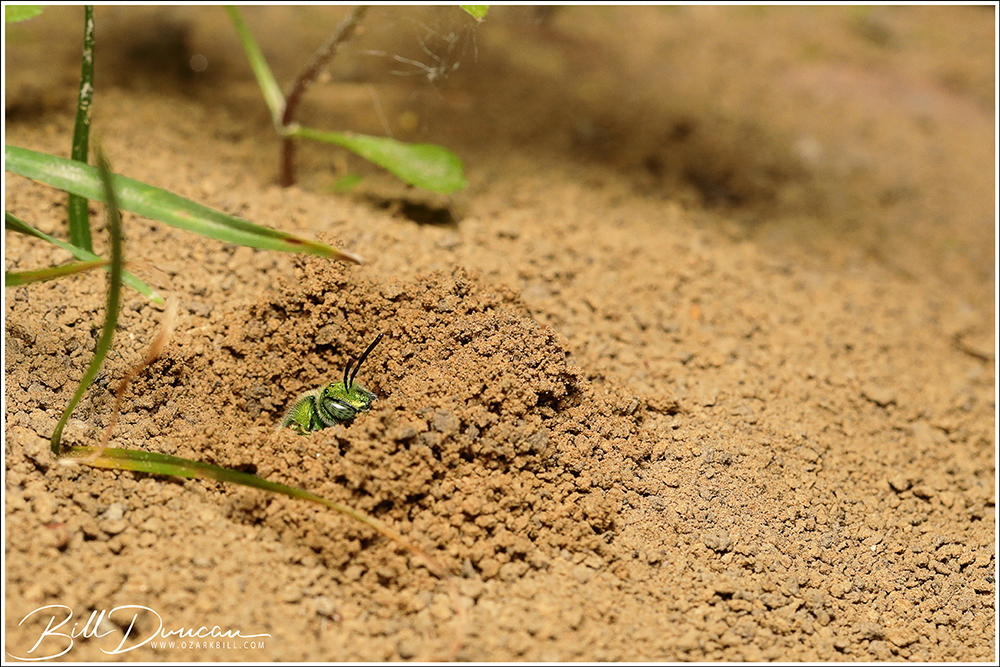
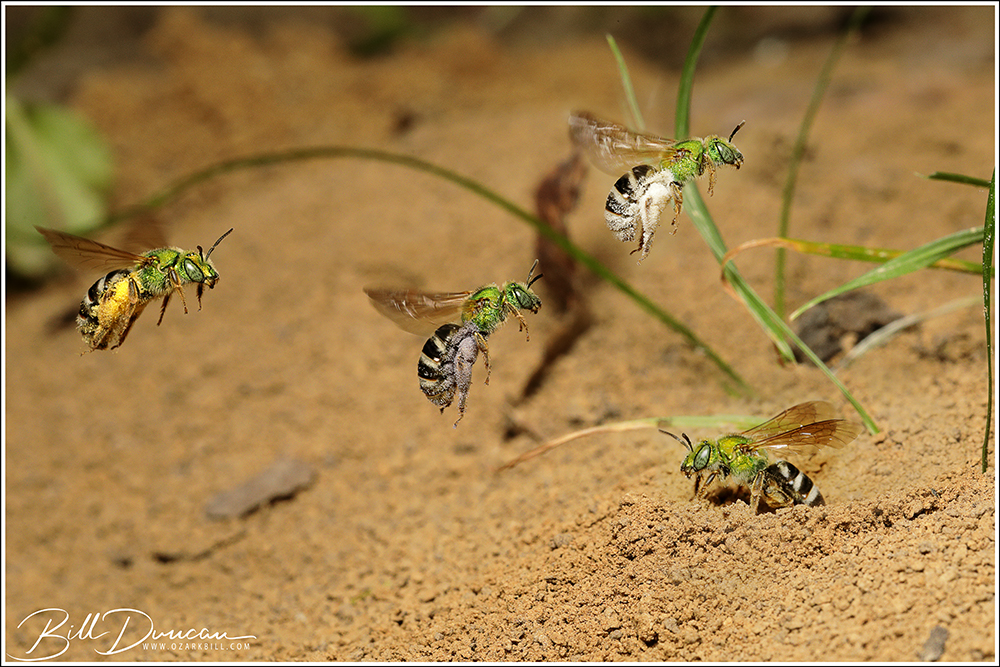
An Agapostemon virescens pauses at the entrance of the largest of the communal nest entrances I observed. It is impossible for me to accurately count the number of females using this ~ 10 cm tall conical entrance, but I observed six individuals at one time on or hovering above the entrance.
As is commonly known, many of our native bees are solitary and nest without close contact or cooperation in regards to conspecifics. At the opposite side of this spectrum of sociality in the Hymenoptera are most species of bumble bees and the honeybee. These bees are considered truly social, or, eusocial. The characteristics necessary to be considered a eusocial species are 1) cooperative care of offspring of others within the colony, 2) overlapping generations within a colony of adults, and 3) a division of labor into reproductive and non-reproductive groups. Many of our bee species lie somewhere between these two extremes. The bee of focus here, Agapostemon virescens, lies early in the area we call being presocial, aka parasocial.
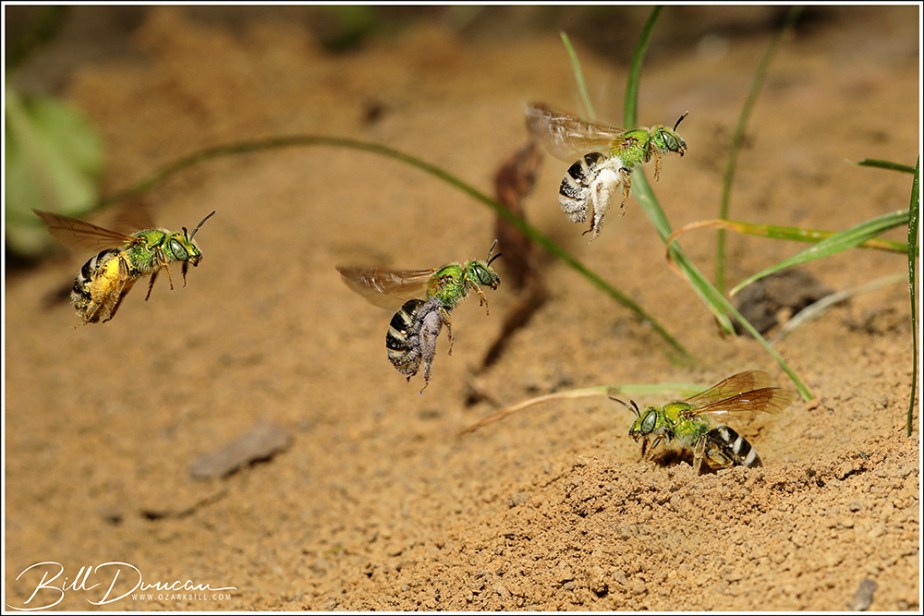
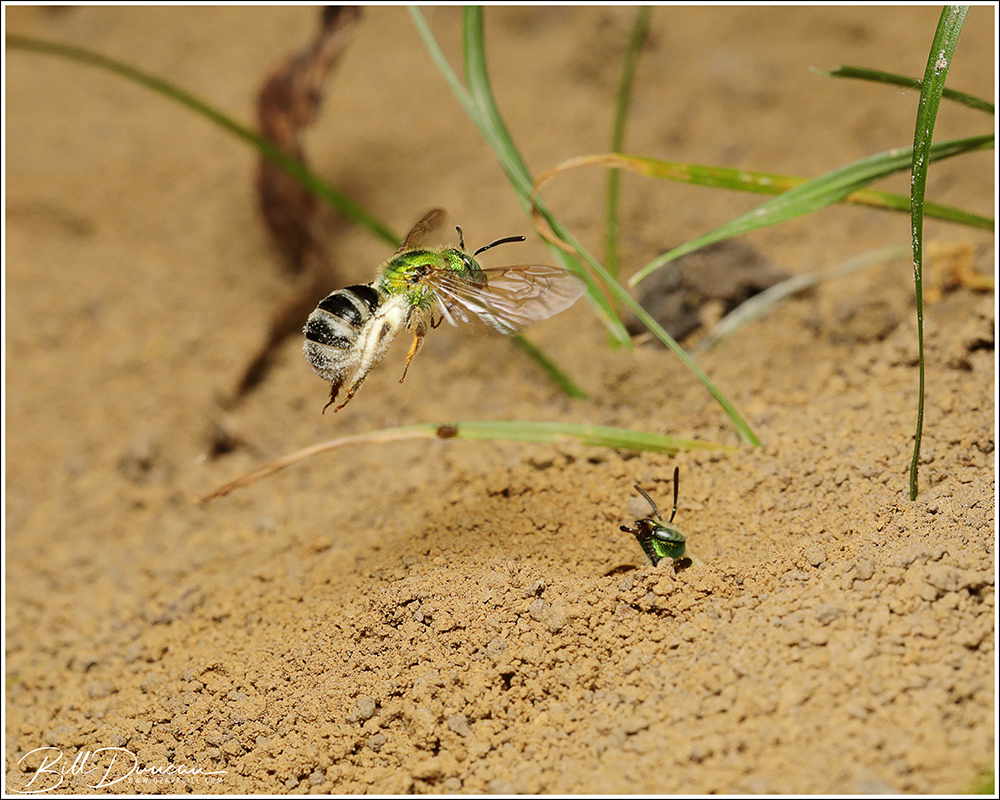
Two Agapostemon virescens females exiting a communal nest entrance having dropped off their loads into their individual cells.
Let’s clarify the differences between a presocial species such as A. virescens and the eusocial honeybee. The honeybee shows all three necessary characteristics of a eusocial species. The individual workers obviously care for brood that are not their own – they don’t even have offspring of their own, instead spending much of their lives caring for the offspring of their queen (sisters). They have multiple overlapping generations within the hive in a particular season, as well as across multiple seasons and as just mentioned, there is a division of labor into reproductive and non-reproductive castes.A. virescens on the other hand, is not nearly as cooperative. Individuals of this species share basically just a front door to their brood chambers and nothing more. After entering the communal nest, each female builds their own brood sub-chamber cells and each provisions their own by processing pollen into cakes and leaving them in their respective brood chambers. There is no brood care after the egg is deposited and the sub-chamber sealed. The offspring then emerges later in the summer.
So, what are the pre-conditions necessary for the eventual development of more complicated forms of sociality, i.e. eusociality? Or more directly, what advantages are there in adopting more of a social lifestyle if we assume the starting point was a solitary existence? Scientists consider two important pre-conditions need be met for the evolution of eusociality. First, the species offspring must be altricial, or require a great amount of parental care in order to reach maturity. Second, there need be low reproductive success rates of solitary pairs that attempt to reproduce. Here is what is believed to be the primary driver that pushed A. virescens into this presocial condition.
A sentry Agapostemon virescens stands guard at the communal nest entrance allowing only conspecifics to enter. This guarding of potential kleptoparastism is regarded as the primary benefit that led to communal nesting in this species.
This sentry Agapostemon virescens closely inspects an incoming conspecific. How it is determined who stands watch while its neighbors forage is not known.
Kleptoparasitism is where one animal takes advantage of the hard work of another by taking their prey or collected foods. In this case, we are primarily concerned with the large group of bees known as cuckoo bees. Kleptoparasitism has evolved numerous times in the Hymenoptera and cuckoo bees lay their egg on or near the host’s provisions. The parasite will hatch first and eat the host’s pollen and will often kill and eat the host’s larvae as well. With such an obviously successful reproductive strategy, it should come as no surprise that there would be a strong selective advantage of finding ways to thwart these parasites. In the case of A. virescens, evidence suggests that by communal living as described here, the rate of kleptoparasitism is much lower when compared to related species that have the completely solitary reproductive strategy.
A busy day of bringing in pollen provisions for these Agapostemon virescens sweat bees.
I guess the obvious next question is how in the world could eusociality evolve from this state? This is a fascinating story that involves terms like kin selection, altruism and haplodiploidy. It also involves a good deal of math and explanation from some of the greatest evolutionary thinkers since the time of Darwin (read anything by William D. Hamilton for example). It is also well out of the scope of this piece. But, I hope it is clear that before getting near the high rung of eusociality on this ladder, that a small first step like seen in this example would be necessary.
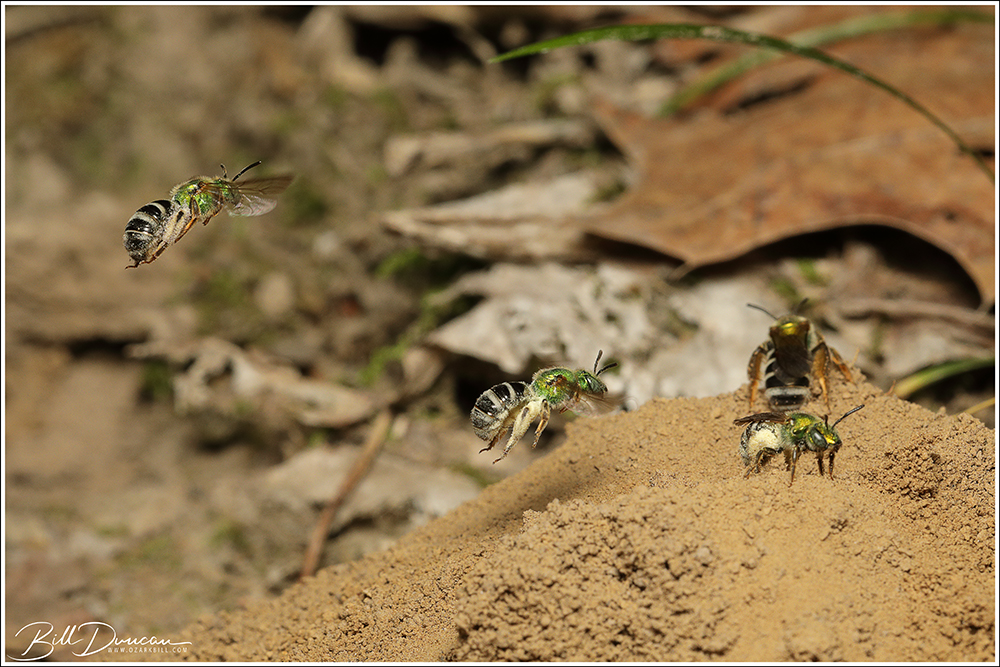
Although Agapostemon virescens sweat bees are communal nesters, this photo gives a clue that they are not cooperative foragers like the honeybee. Each of the three returning females is carrying different colored pollen, indicating different pollen source plants for each.
I hope I got most of this correct enough. It’s been a long time since I took Zuleyma Tang-Martinez’s Evolution of Animal Sociality class at University, which I thoroughly enjoyed. Please feel free to leave a comment to correct or clarify or ask a question.
Much of what I covered here and a lot more can be found in Malte Andersson’s The evolution of eusociality (Ann. Rev. Ecol. Syst. 1984. 15:165-89
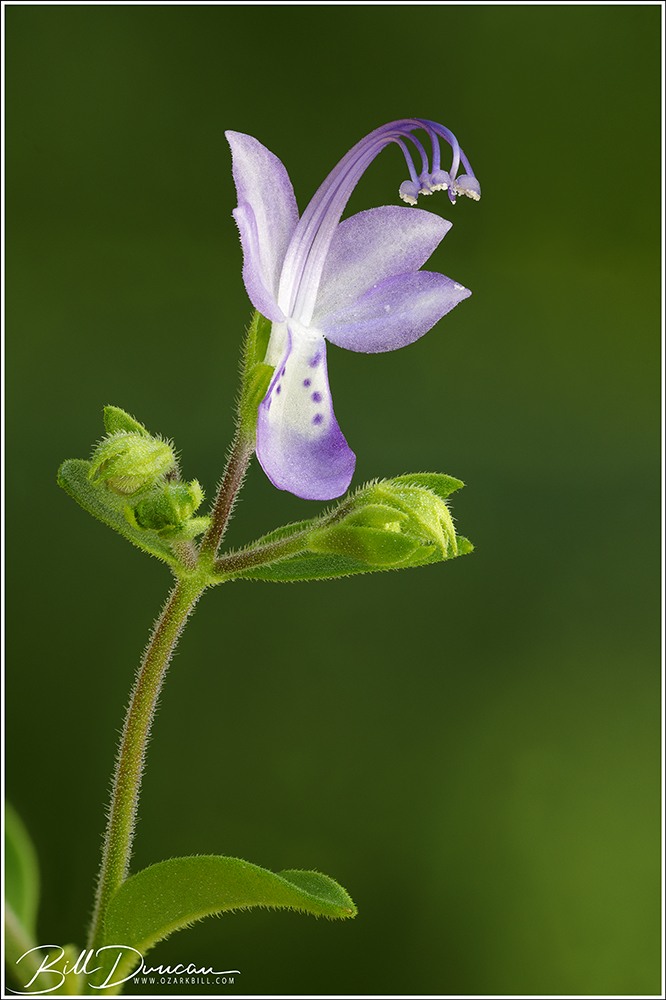
I finally had a good chance to photograph these spectacular flowers at peak bloom. Photographed at Don Robinson State Park, Jefferson County, MO on 28, Aug, 2021.
Trichostema dichotomum (forked bluecurls) are members of the mint family (Lamiaceae).
Trichostema dichotomum (forked bluecurls) seem to make for great garden plants. I hope to get some seeds to try in the front beds.
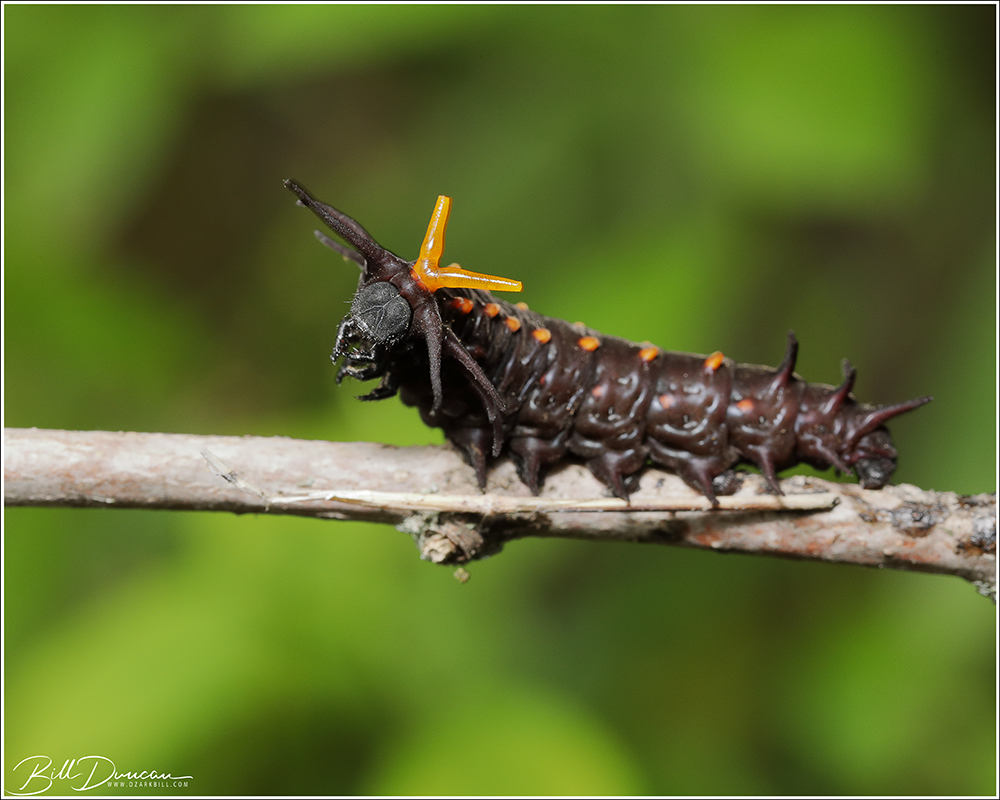
I finally lucked out and found a late instar Battus philenor. This guy was walking along a trail, presumably looking for a good spot to pupate. I persuaded it to walk on a stick for a brief period to pose for a couple of portraits and then left it where I found it.
The orange and black coloration exhibited by Battus philenor are considered aposematic coloration, warning would-be predators of their distasteful nature. This distastefulness is due to the sequestering of aristolochic acids that are found in their host plants of the Aristolochia genus.
A wee bit of gentle prodding coaxed the cat to evert its osmeterium, a defensive organ that is used to dissuade predators and/or parasitoids.
Echinacea paradoxa, also known as Ozark coneflower, Bush’s coneflower and yellow coneflower is found natively in southwestern Missouri, Arkansas and Oklahoma. I was happy to see this one flowered during its first year in my front yard garden.
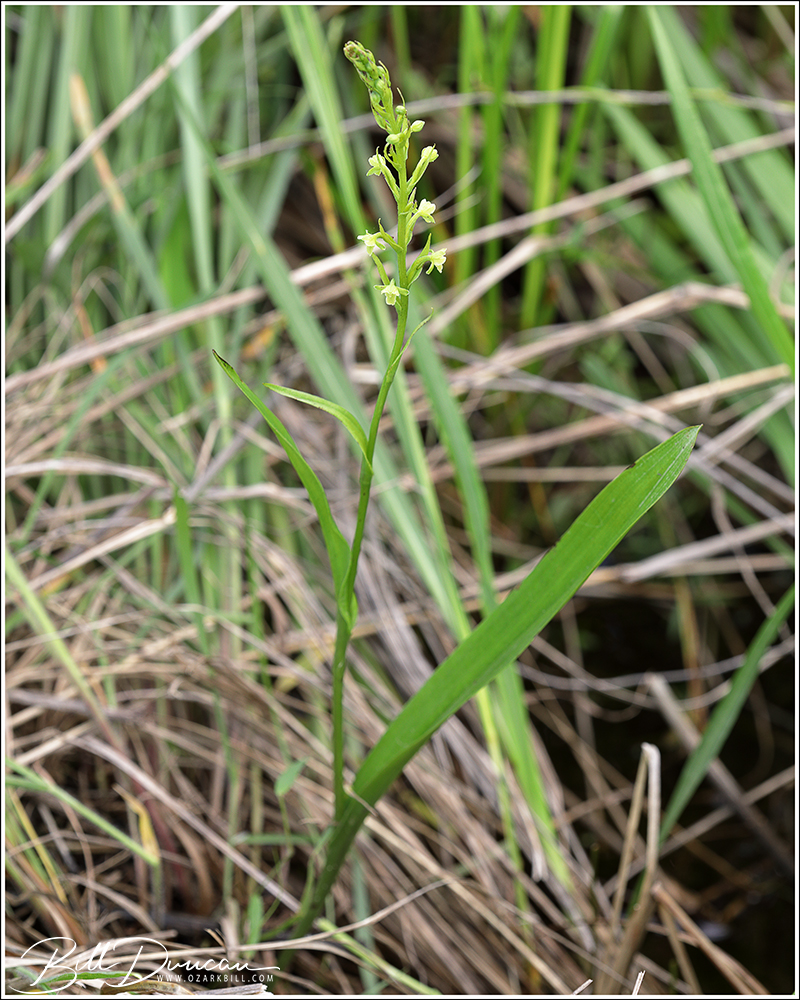
Here is my last new orchid for the season. It is also probably the orchid I had to work the hardest to find in this entire project. Platanthera flava var. flava is classified as S2 (imperiled) in Missouri due to the very few remaining populations. This is an orchid that likes its feet wet and can be found in a variety of habitats containing moist to wet soils. After trying unsuccessfully in 2020, Pete and I went back to the same location this year – a wet prairie in southern Missouri in early June. This was very tough searching as the high temps, strong sun and saturated air created a potentially dangerous heat index. We tried our best, slowly slogging through the already quite thick prairie. Just when it looked like Pete was wanting to throw in the towel, we came across a patch of less-dense vegetation with water about ankle-high. Here we found young orchids that numbered in the hundreds. Unfortunately, most were on the early side and were not fully flowering but we did find a few that made us happy. We also found that many of the orchids in this group had grazed top leaves – most likely from white-tailed deer that usually find orchids to be very appetizing.
Platanthera flava var. flava, the 33rd Missouri orchid species I have been able to see and photograph.
There is another variety of this orchid, P. flava var. herbiola that is also found in Missouri. Recently Pete and I tried to find this in most of the known locations but came up short. As of now my quest stands at 33 of 36 orchid forms that can be found in the state (36 is my accepted number and others may disagree). In addition to P. flava var. herbiola, I also need to find Coeloglossum viride (Long-bract Frog Orchid) – this species is known from a single location in the state but apparently does not flower and Epipactis helleborine, the broad-leaved helleborine – the exotic orchid that is becoming naturalized in this state but originates in Asia and Europe. Finding these three remaining orchids should be quite the task and I look forward to attempting these next year.
The floral bract morphology, looser inflorescence and number of leaves are among the characteristics that identify this as Platanthera flava var. flava and not P. flava var. herbiola.
I have run into a couple other circumstances in our orchid flora where intermediate forms have caused problems in determining the identity of a plant or population. Where these two varieties overlap, as they seem to do in Missouri, there are intermediate forms between these two varieties as well. I will hope that when I do find a potential herbiola variety that this will not become a problem.
Platanthera flava var. flava is the more northern variety. Here a couple of distinguishing characteristics can be observed – the lip of variety flava is longer than it is broad, whereas the lip of variety herbiola is as broad as it is long, being almost square or circular in appearance. Also, variety flava, featured here, has a more open raceme, whereas variety herbiola has a much more densely packed raceme.