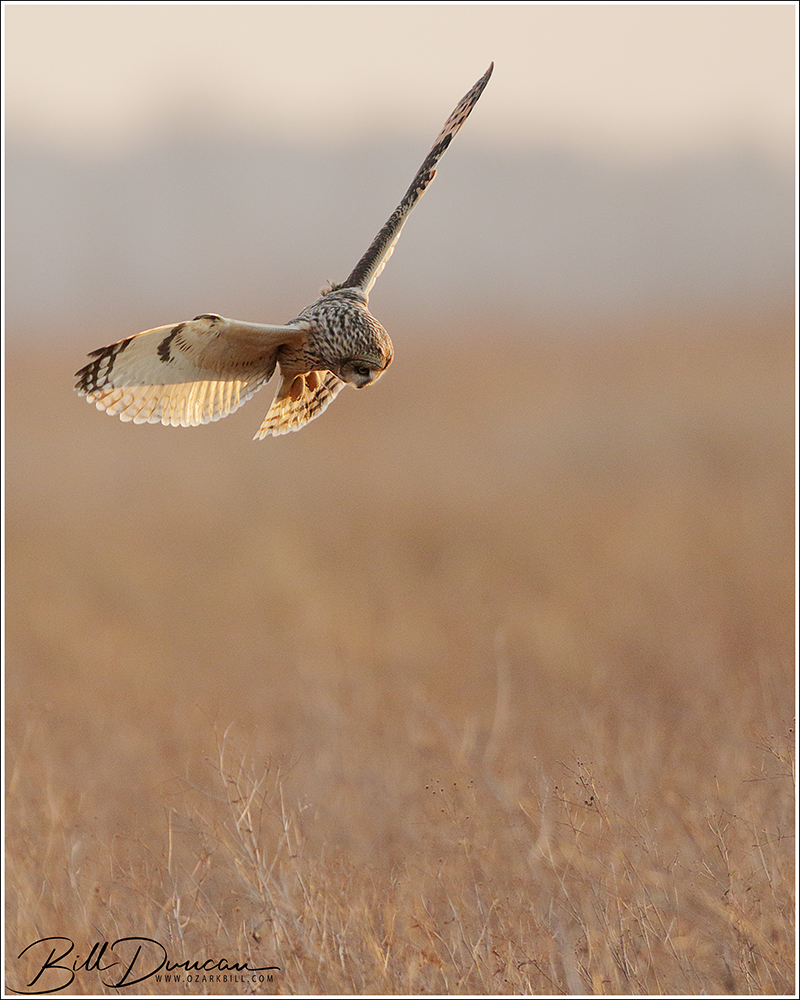
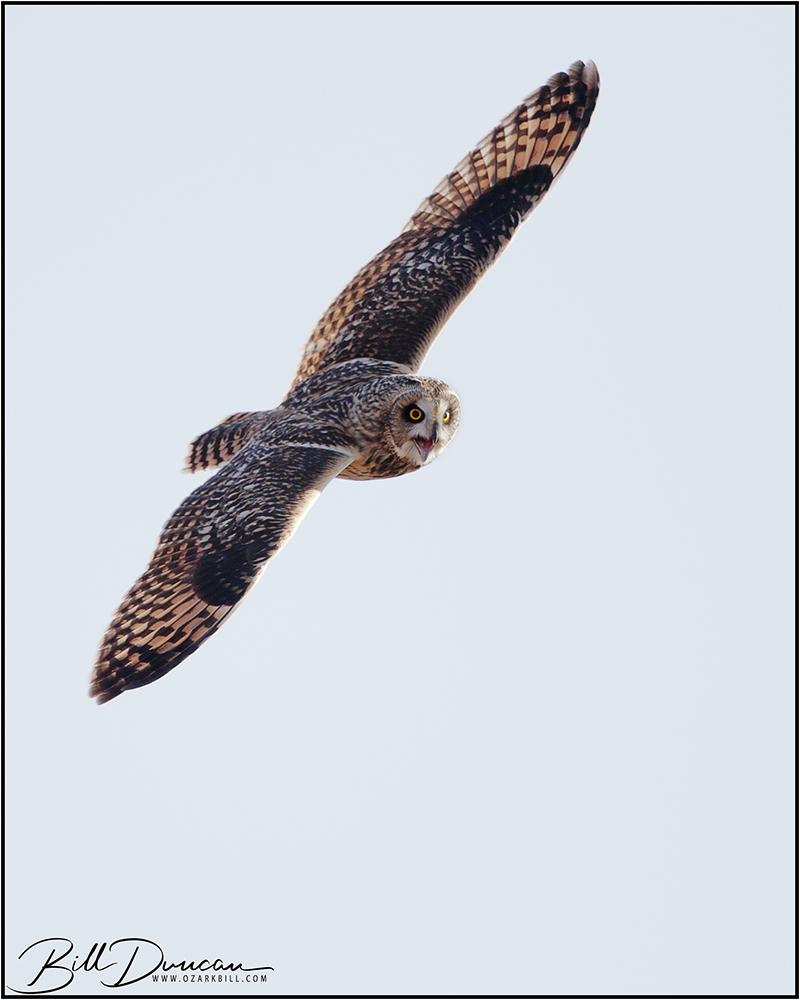
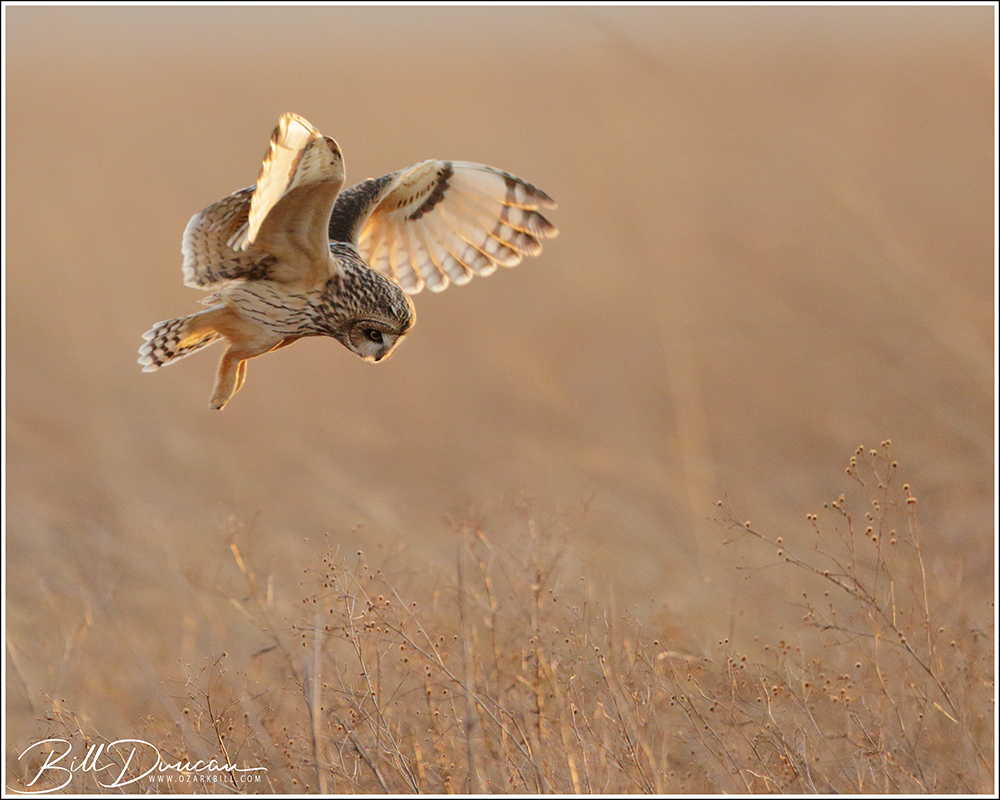
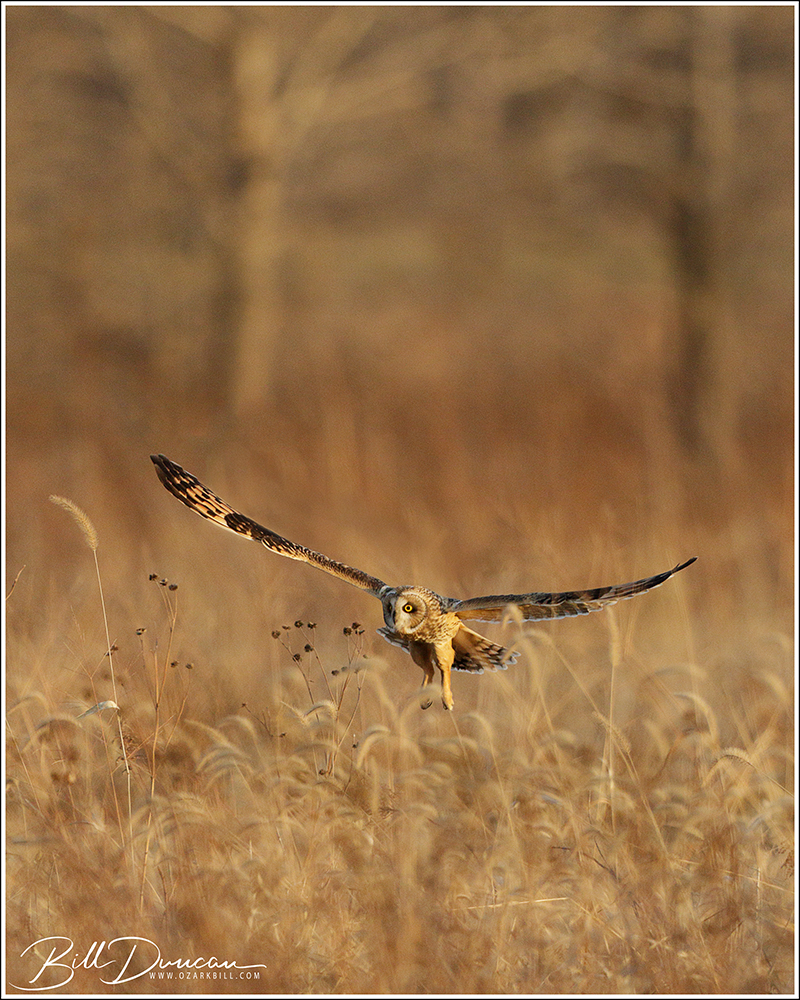
"What a thousand acres of Silphiums looked like when they tickled the bellies of the buffalo is a question never again to be answered, and perhaps not even asked." -Aldo Leopold
Another thing that makes Short-eared Owls so fascinating to observe is their vocalizations. These birds make sounds in a variety of ways. First, is their primary “hoot”. I have never heard this in person because this is primarily used by males in advertising for mates and establishing territories in the nesting season. You can, however, hear the barks and screams given by both males and females on their wintering grounds. The screams seem to be primarily given while in flight and the barks can be given in flight or while perched. I do not know the purposes of these two call types but will put this on my list to research. Another sound these birds deliver is the wing clap. This seems to be primarily used by males in their courtship flights and I have not observed this yet in Missouri.
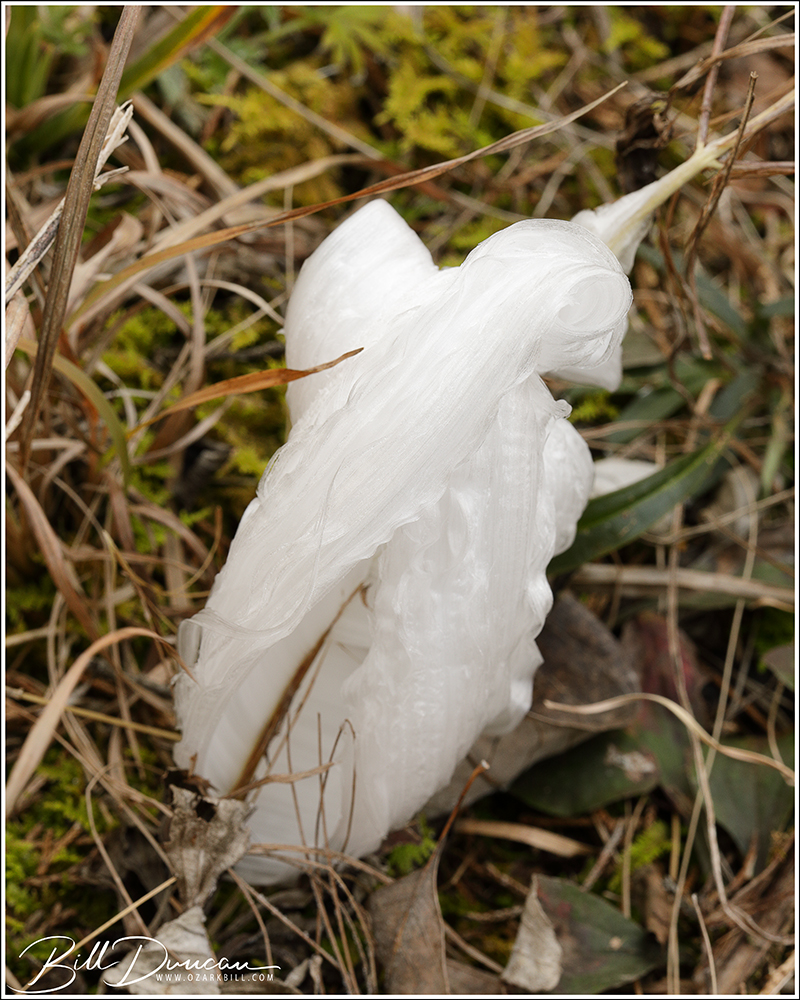
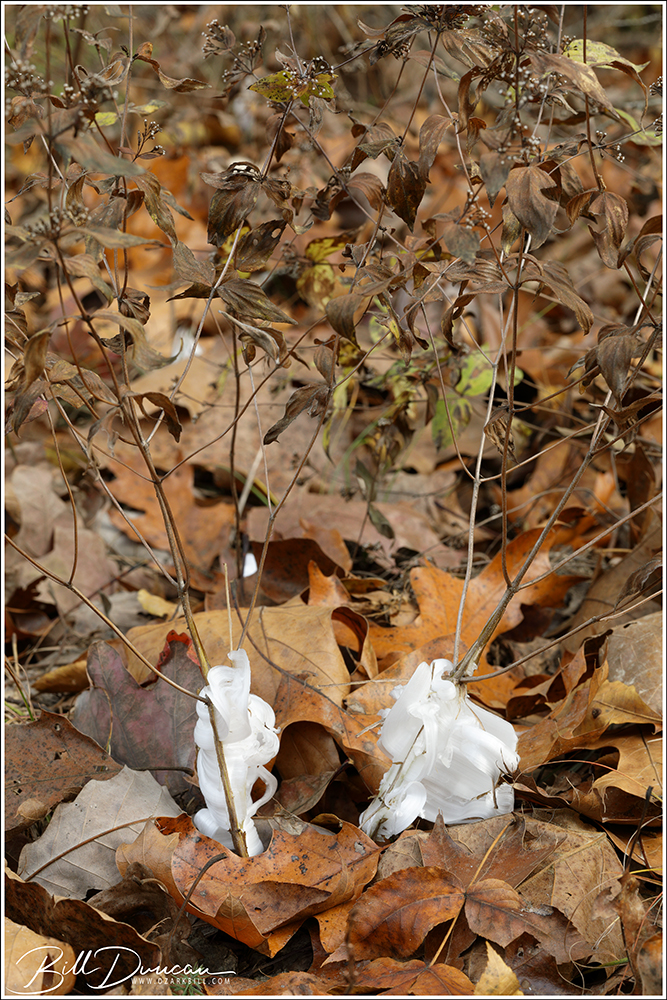
I first posted about frost flowers a little more than ten years ago on this blog. This season, after learning about the two plants that are most likely to form them in our geography and having the flexibility to be on location at the specific times they are capable of forming, I was able to take advantage and take my time in capturing them with the camera.
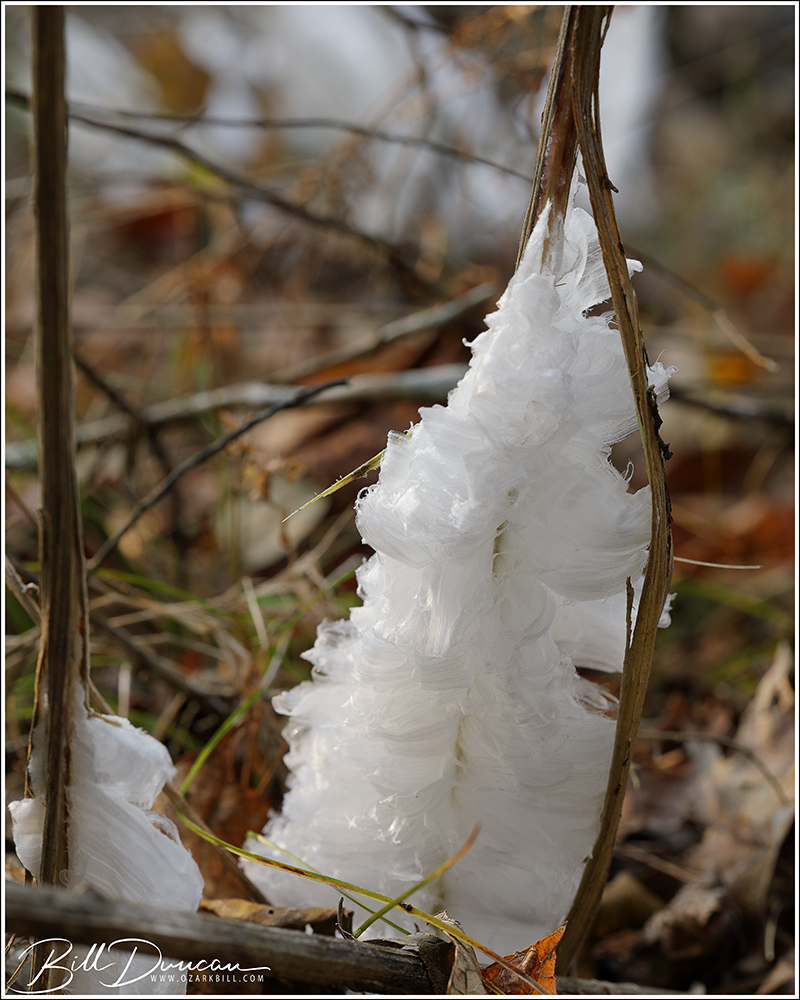
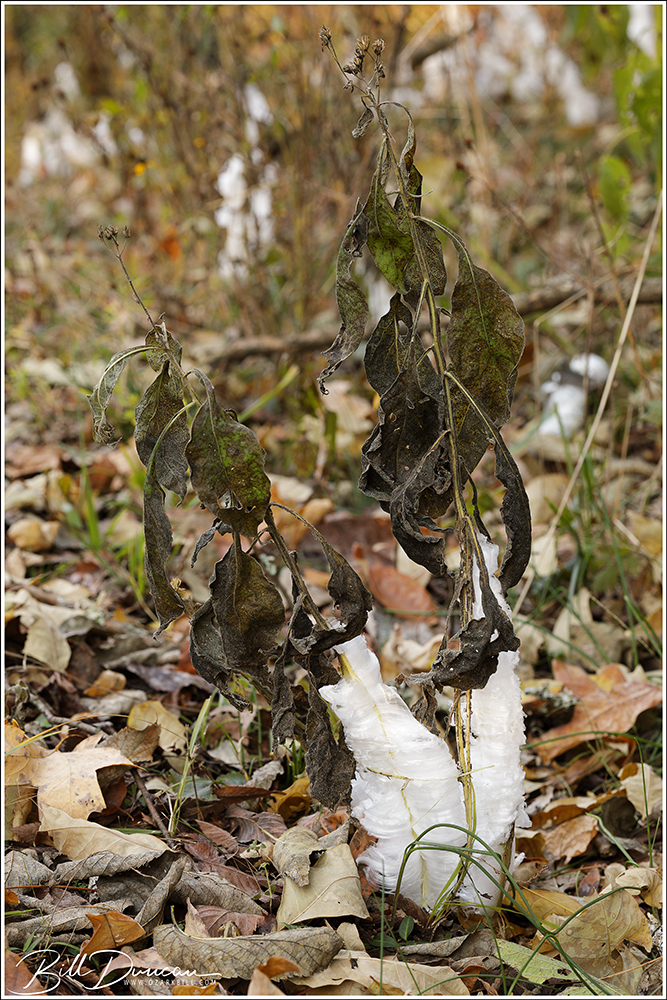
The first gallery are the more robust of the crystallofolia. Dave and I stumbled across these in Madison County, MO. These are formed on the dying stalks of Verbesina virginica (F. Asteraceae), aptly named “frostweed” or white crownbeard. This is the more robust plant of the two featured here and, consequently, forms larger and more robust frost flowers. Some of these were up to 12″ in height.
A note about how crystallofolia form. Because these later-maturing species are still somewhat viable during the first deep freeze, the xylem pathways responsible for moving water from the roots to the shoots are still functional. The roots in the still unfrozen soils are pushing water to the shoot of the plant via capillary action. On the first few nights when temperatures drop to the mid 20 degrees F, the water in the shoot freezes, bursting the sides of the stem pushing the freezing water out and forms these gorgeous petals. If you look closely, you can see the individual “tubes” of ice that make up the petals of the frost flowers. These tubes correspond directly to the xylem rays – the tubes that distribute water from the vertical rising xylem to the outer tissues of the plant. Another interesting thing about these structures is that they will often dissipate through sublimation. The super cold and dry conditions can cause these thin and delicate petals to evaporate directly to gas, skipping the liquid water phase.
The second species featured here were found in Jefferson County, MO on a trail. Earlier in the season I had noted the abundance of dittany (Cunila origanoides) F. Lamiaceae. This species is smaller and forms dainty frost flowers, mostly no more than four inches in height. They can also be much more elaborate than the frost flowers formed by V. virginica, with long, curling petals that have a tendency to curl back on themselves.
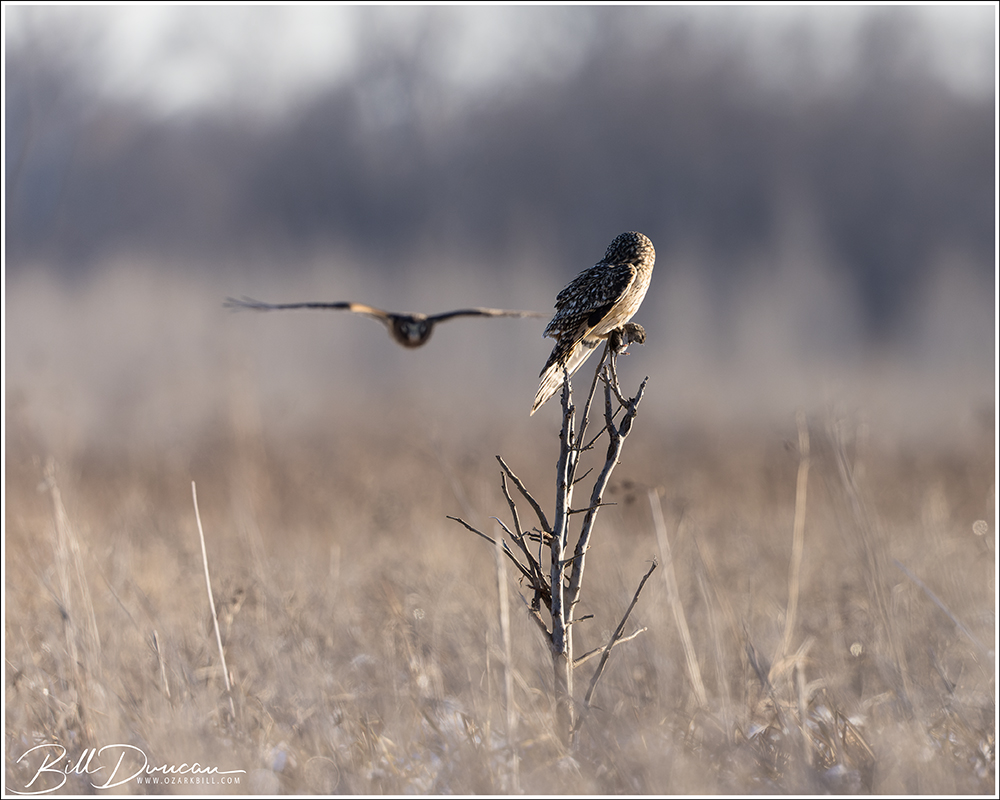
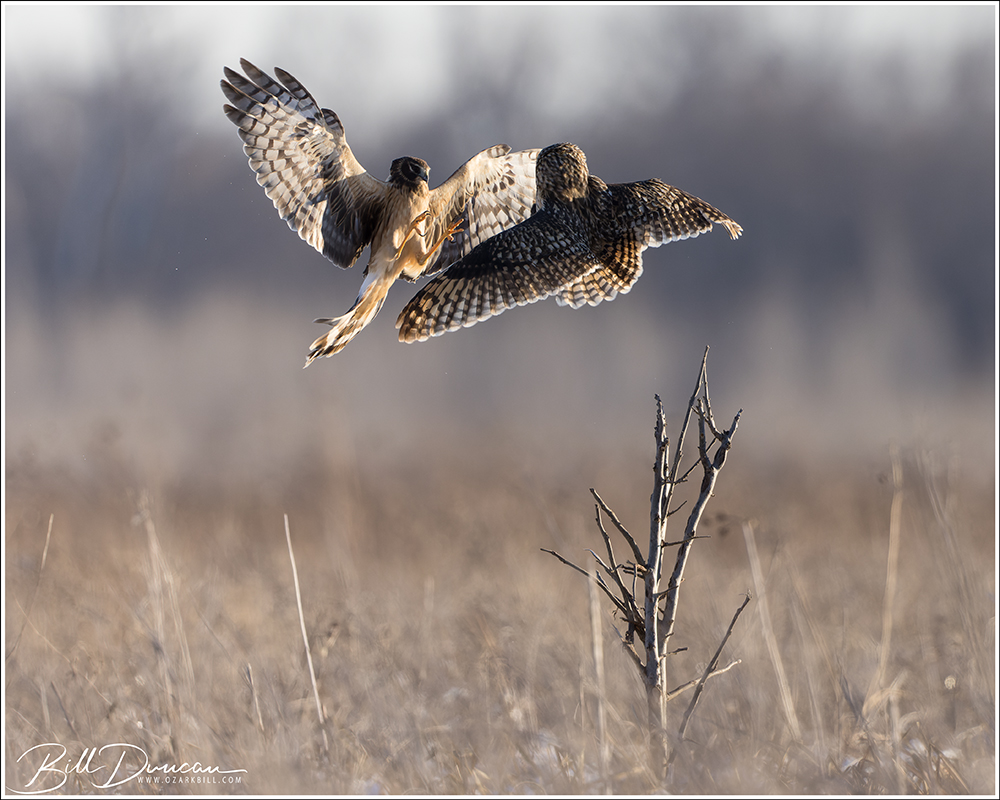
Miguel and I watched as this SEOW returned to a favorite perch after just catching a vole. It wasn’t quick enough to ingest its catch and the NOHA is coming up behind to take advantage of this.
I would love to know how many thousands of years this struggle has been going on. The Short-eared Owl (SEOW) and Northern Harrier (NOHA) are separated genetically by millions of years, currently existing in separate orders. The SEOW belongs to the Strigiformes and the NOHA falls within the Accipitriformes. However, they have evolved to have similar lifestyles that have placed them in similar niches and thus, pushed them into direct competition with each other.
Yes, technically, the SEOH has developed more of a nocturnal habit and the NOHA is more active in the day. However, both species are highly crepuscular (active near dawn and dusk) and the SEOW is one of the most diurnal owl species, routinely hunting during daylight hours. They also use the same prey sources – primarily feeding on small rodents like mice and voles in winter. Additionally, both species have similar hunting strategies of flying low over the prairies, meadows and agricultural fields, using both their keen sight and hearing to locate their favorite scuffling mammals.
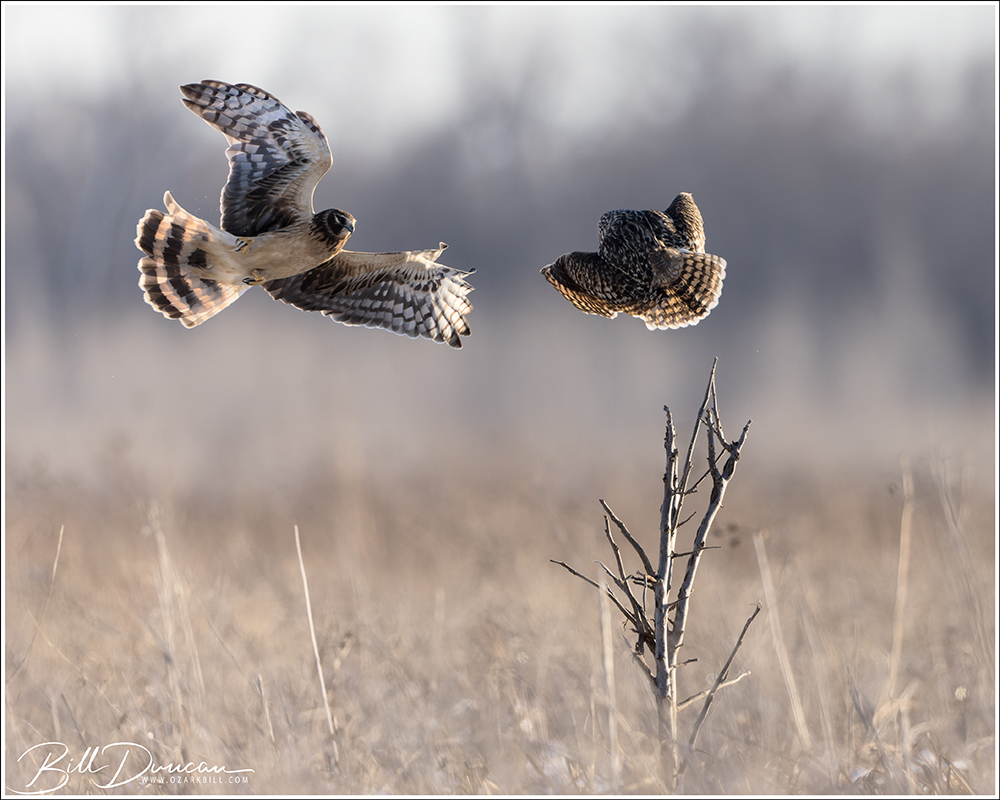
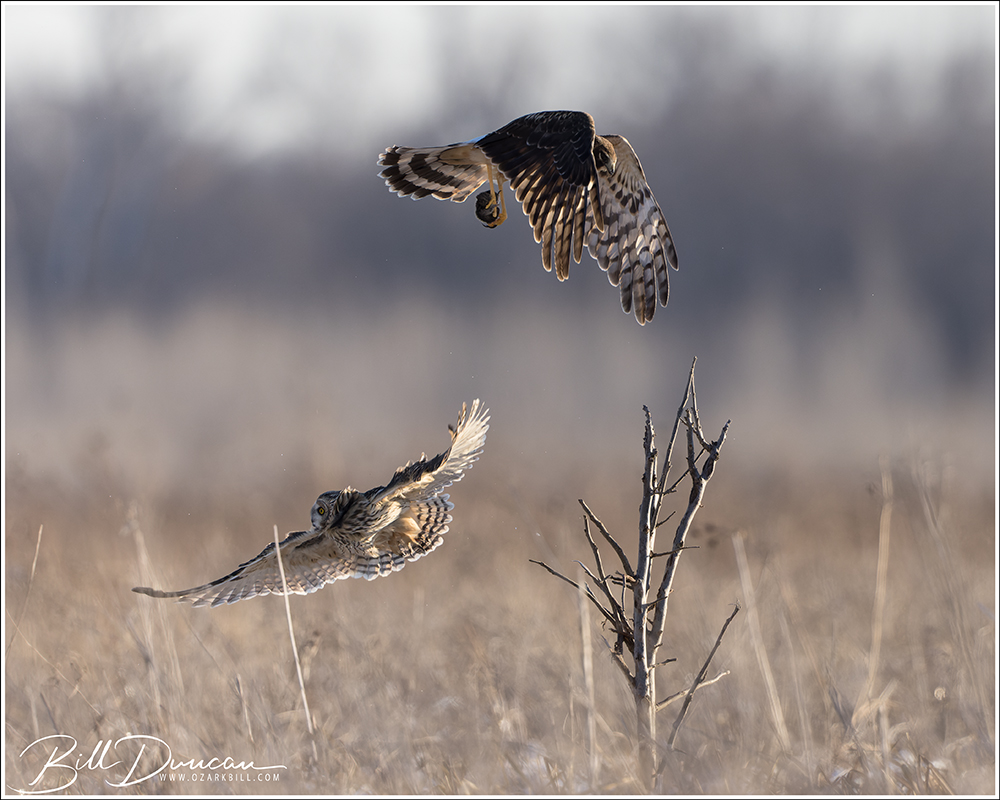
As the NOHA arrives, the SEOW leaps from its perch with catch in claw.
On average, harriers are roughly 25% larger than the SEOW but the wingspan of both species is nearly identical. Short-eared Owls use this increased wing area to their advantage with increased maneuverability. They can find themselves on the menu of NOHA but this is a much more challenging prey for the harriers who usually prefer their acts of kleptoparasitism (stealing another’s food).
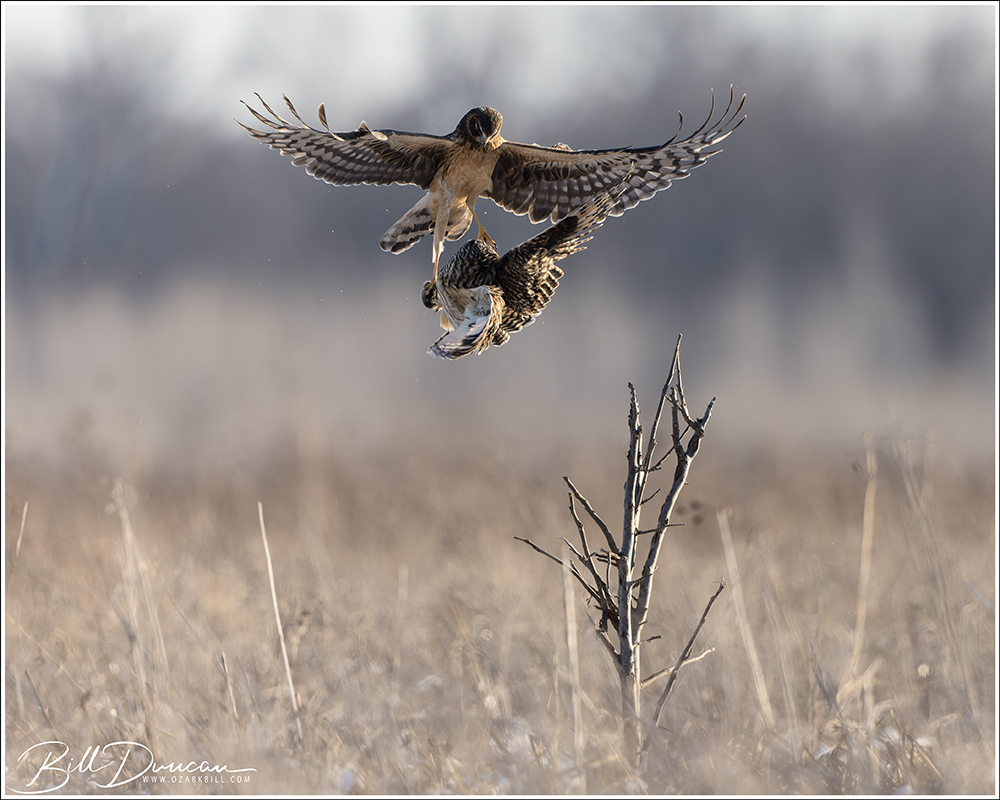
This female NOHA rushes in talons first with her eyes on the prize.
After spending dozens of hours this season watching these two species forage across these grasslands of Lincoln County, MO I can attest that both species are terrific hunters. However, I think it’s safe to say that the SEOW has the higher success rate. They were not successful every time they plunged into the vegetation but more often than not, we saw these birds rising with a recently departed vole or mouse in their beak or claws.
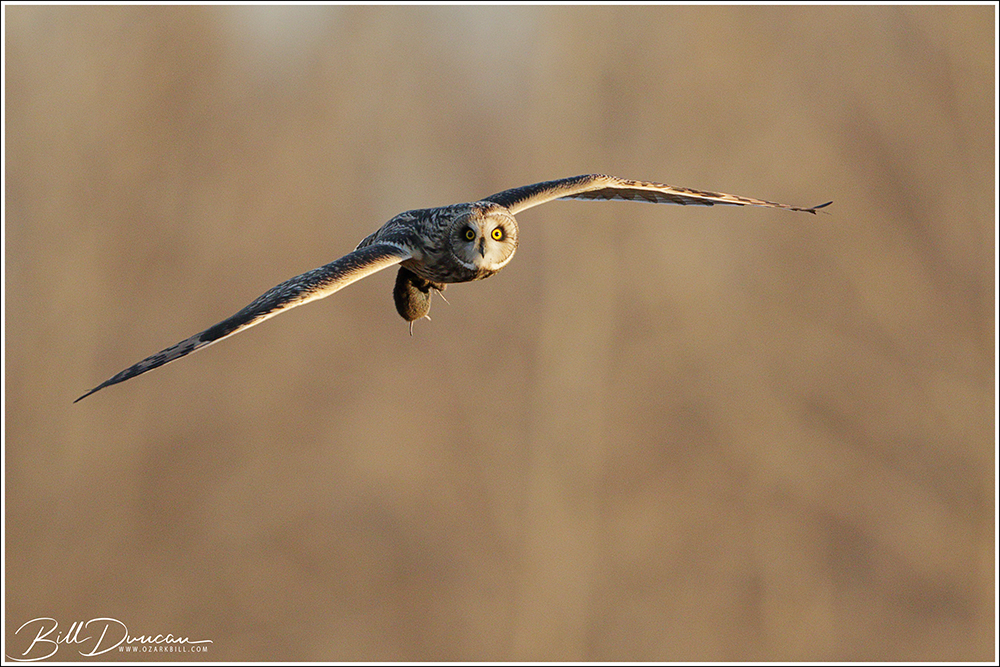
An observation I found interesting is that when the SEOW made a successful kill, they almost always would fly a short distance and either eat it on the wing or, more often, would land in a new place to consume. I can only speculate that they do this because they think the act of catching the prey may alert would-be kleptoparasites and they move with the prey to get a better idea of who may be watching. On the other hand, it could be argued that this action could make it more obvious that they have had a successful kill and potentially ring the diner bell. Here is another interesting question.
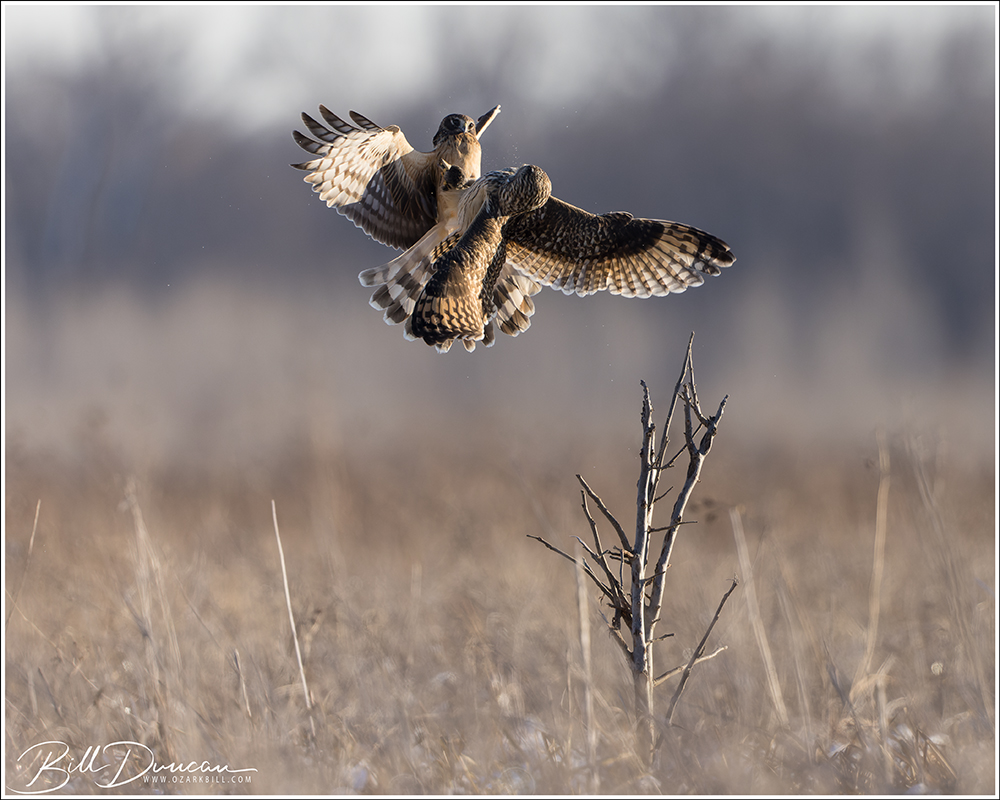
Moment of impact. We can’t say for certain what happened here but I like to think the NOHA put one foot on the prey and one directly in the owl’s chest. Note that each bird pulls their head and delicate eyes as far from their opponents weapons as they can.
It’s a complicated relationship, for sure. I do not know for certain, but I would anticipate that the NOHA gets a significant portion of their caloric needs from the SEOW – or at least in this particular setting. As I mentioned earlier, the SEOW are so successful, it appears they can take this loss with little significant impact – or at least in a setting such as this with ample rodent populations. It may be a completely different scenario when they find themselves in a less productive area.
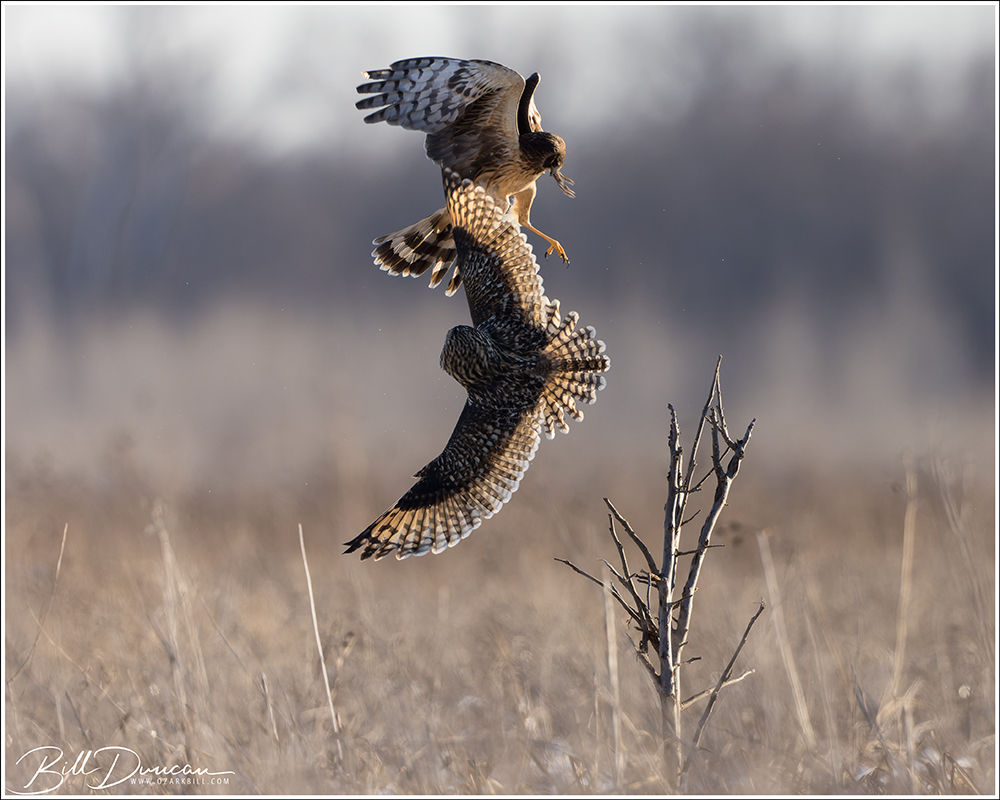
Caught in the act. I was very happy to have caught a frame that shows a foot of each bird on the vole at the same time.
On numerous occasions, Miguel and I watched as the SEOW took a much more aggressive and territorial stand. They were much more likely to pick a specific area that they foraged in and defended, often chasing NOHA and other SEOW away from their lands. NOHA, on the other hand, appear to cruise much more at random.
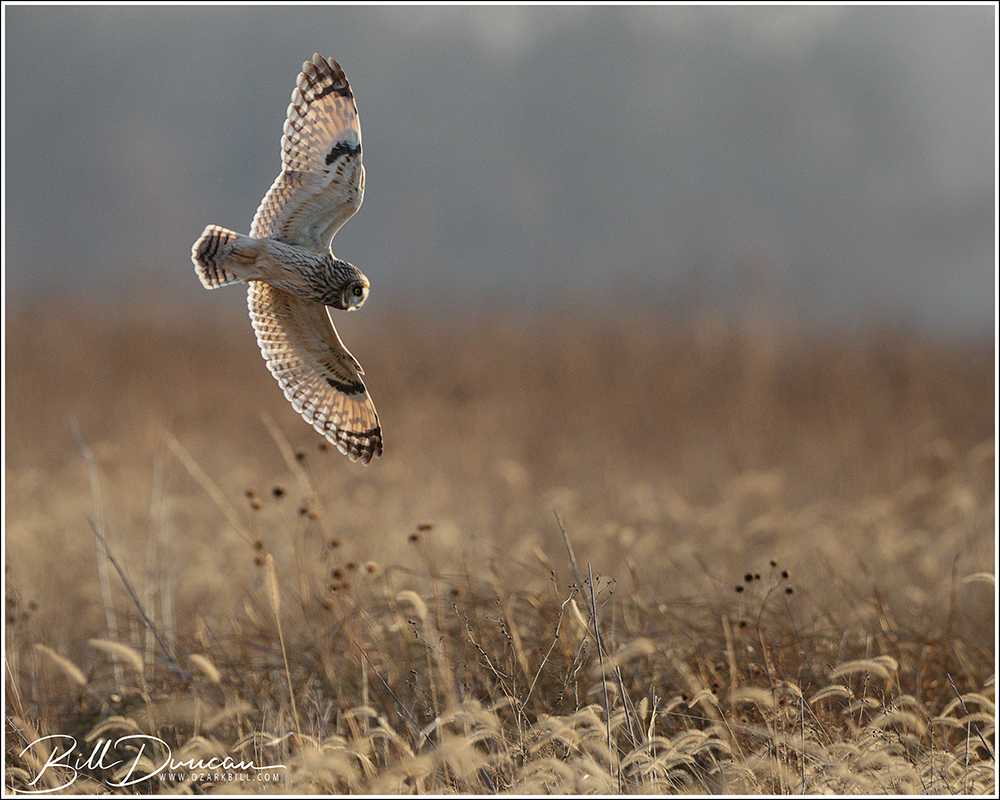
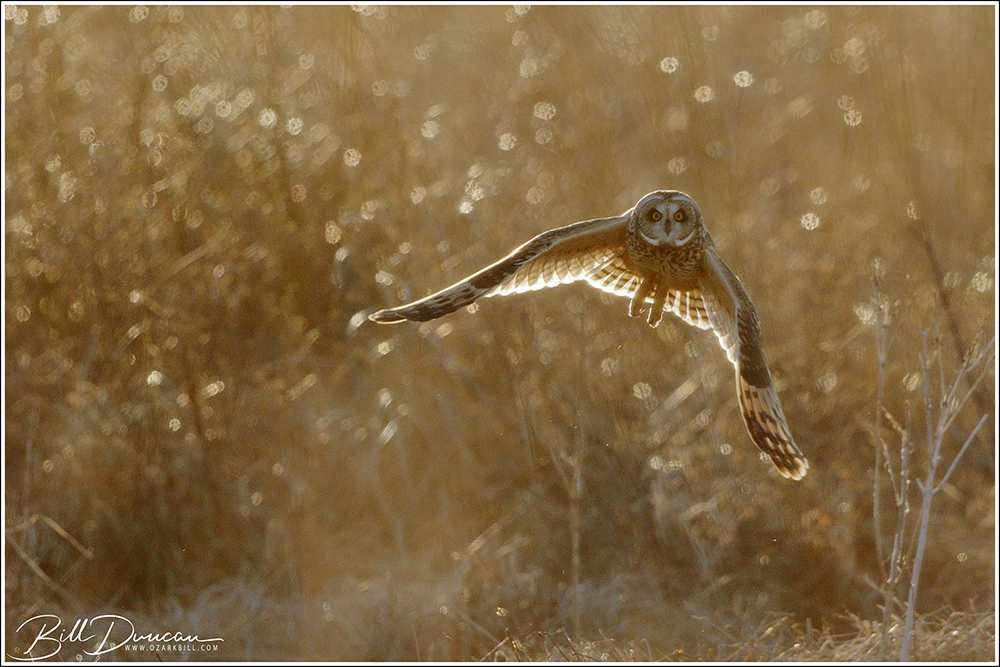
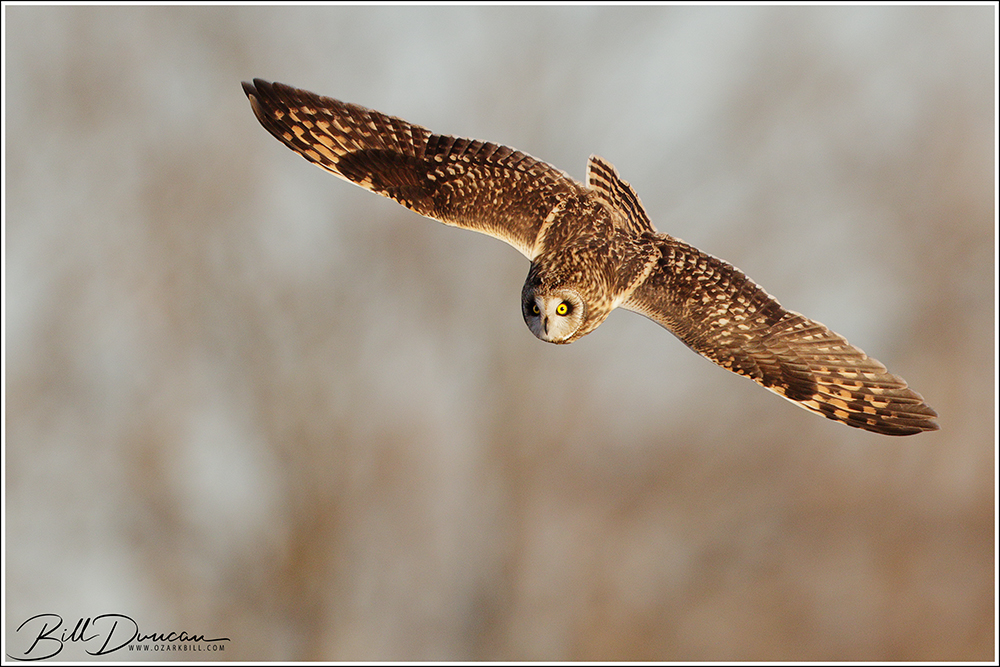
There is nothing particularly noteworthy ethologically speaking about this image. I just liked the shape of the SEOW with wings and tailfeathers spread and backlit by the low-hanging sun.
I have read that others have documented the swings in the numbers of SEOW from year to year and location to location based on the availability of prey. It is also well known that the SEOW is one of the most migratory of owl species. In the years we have followed these birds in Lincoln County, we can attest to this. If not already done, it would be really interesting to see the results of an in-depth look at the population dynamics and migration patterns of the SEOW and determine what role, if any, the NOHA may play.
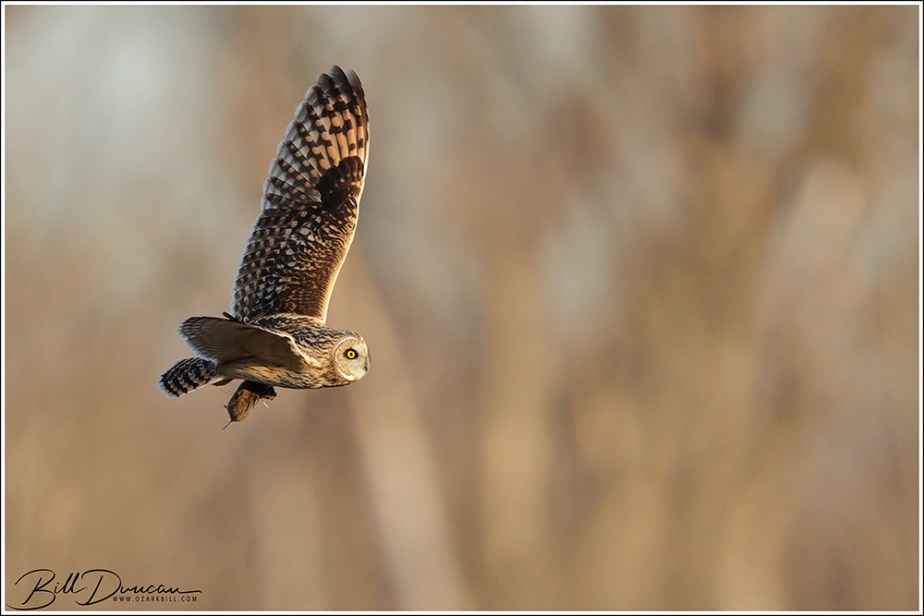
The NOHA has its meal and the owl will likely have another for itself in little time.
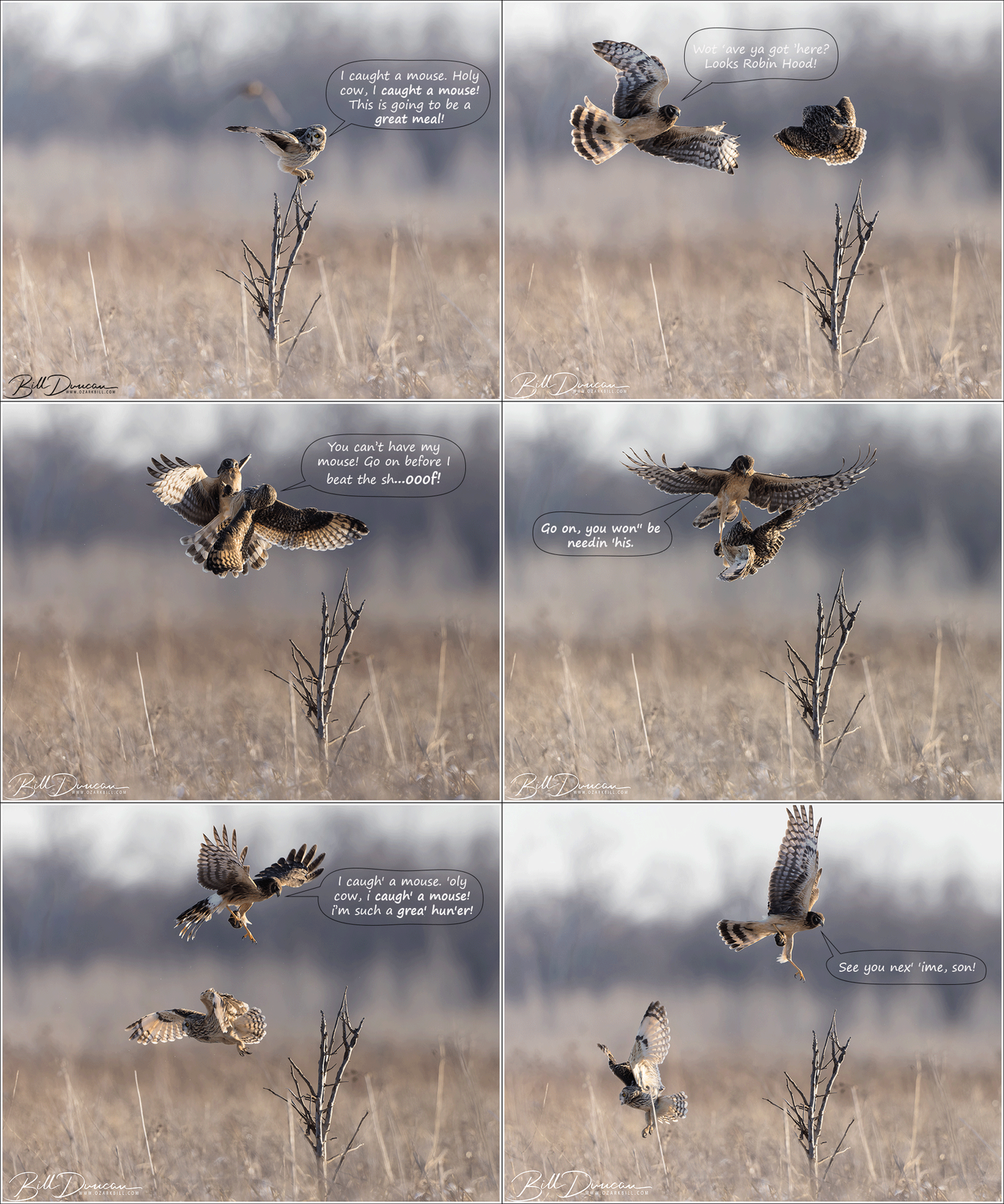
Finally, I tapped into the inner comic writer in me and produced this silly little GIF that personifies the above interaction. I apologize if I offended anyone with my bad attempt at using a Cockney accent for the “villain” of this story… 😉
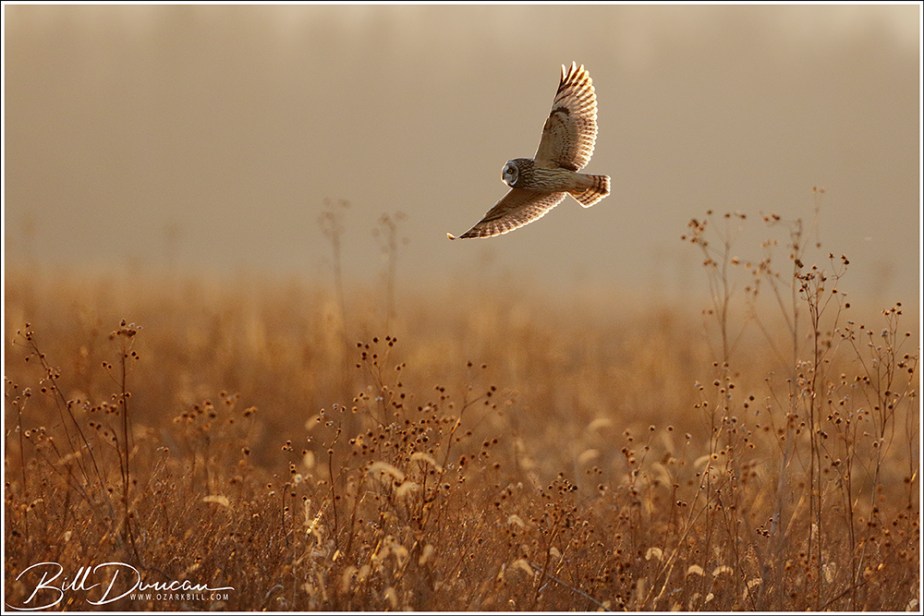
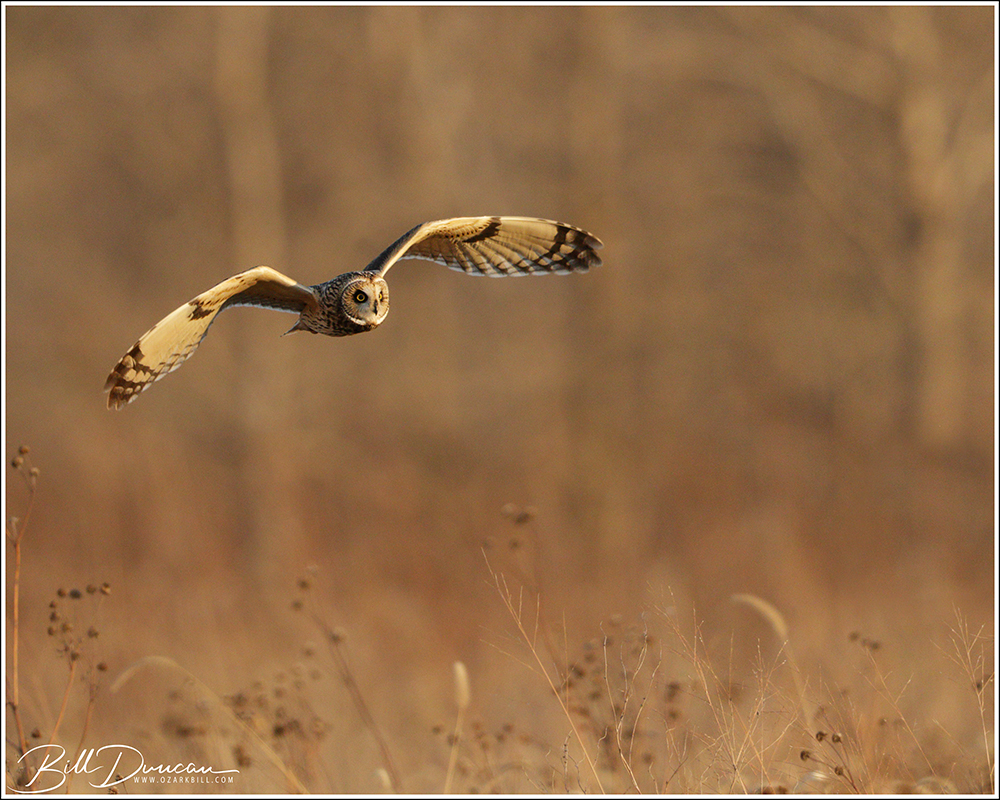
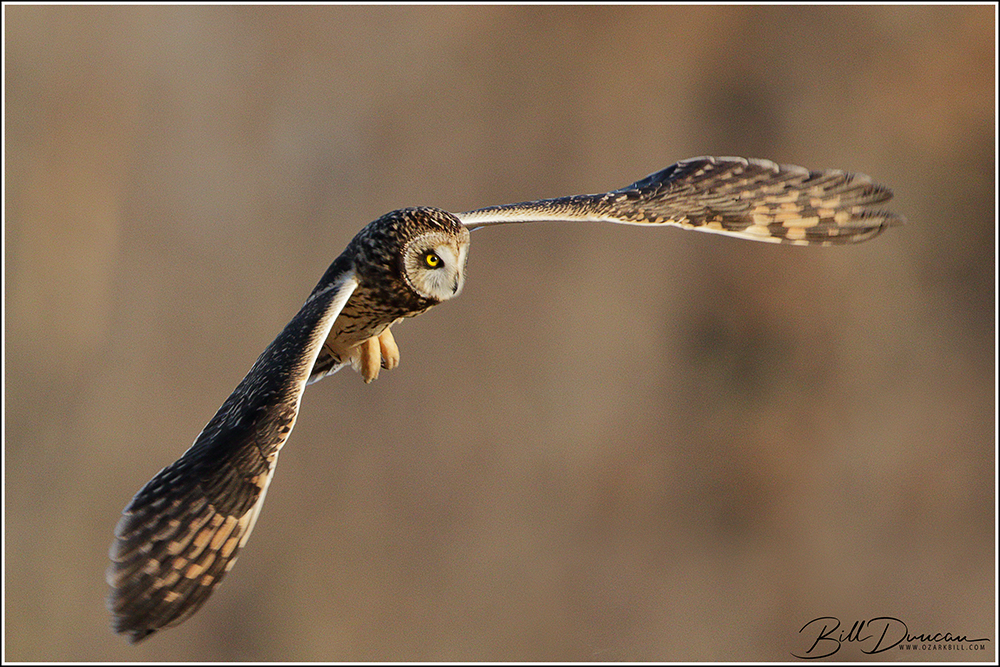
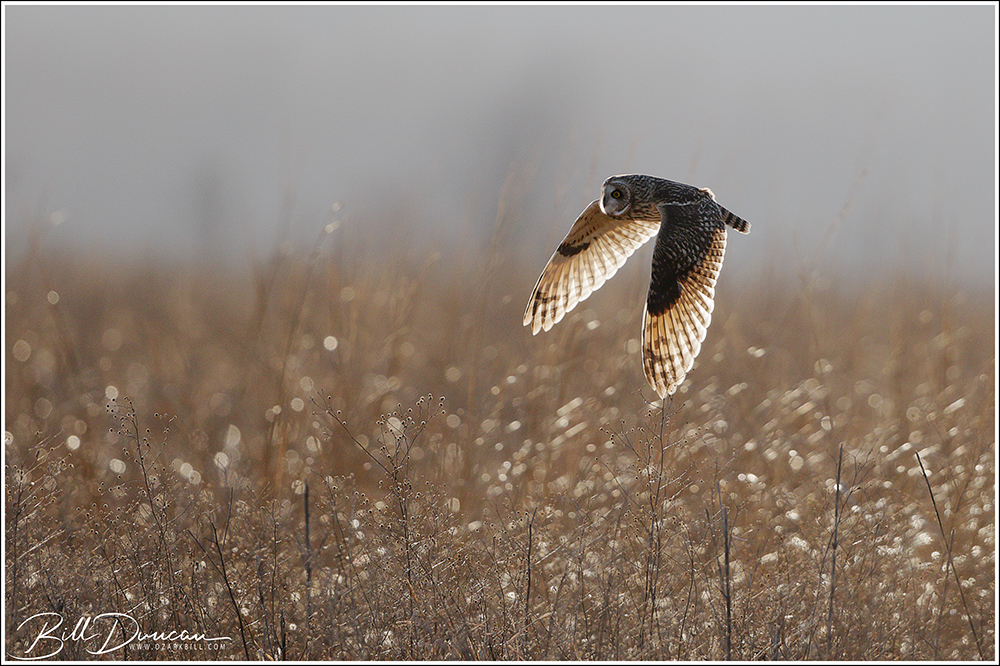
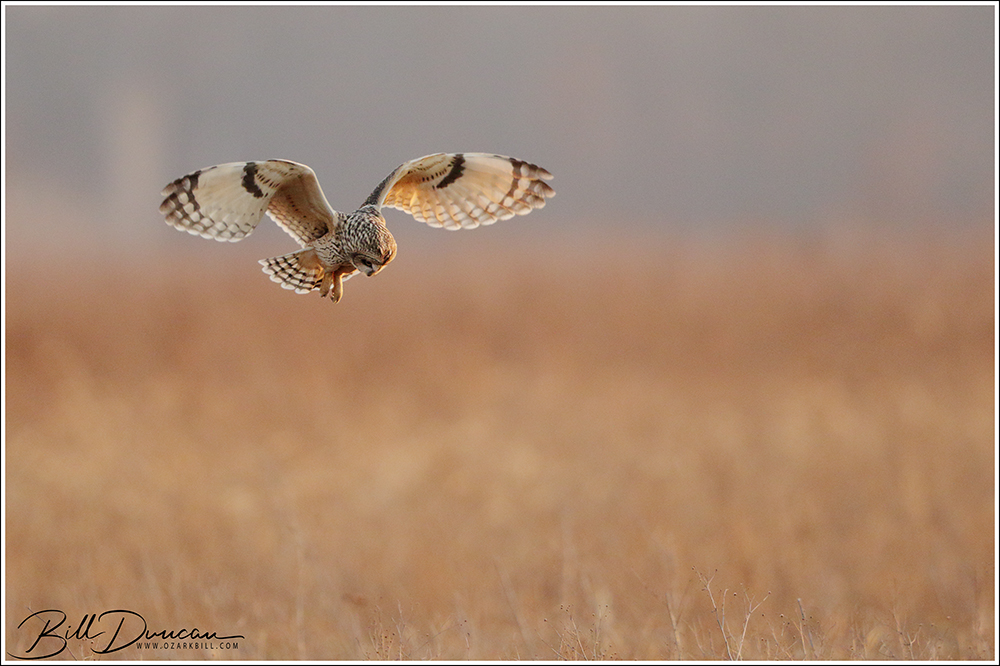
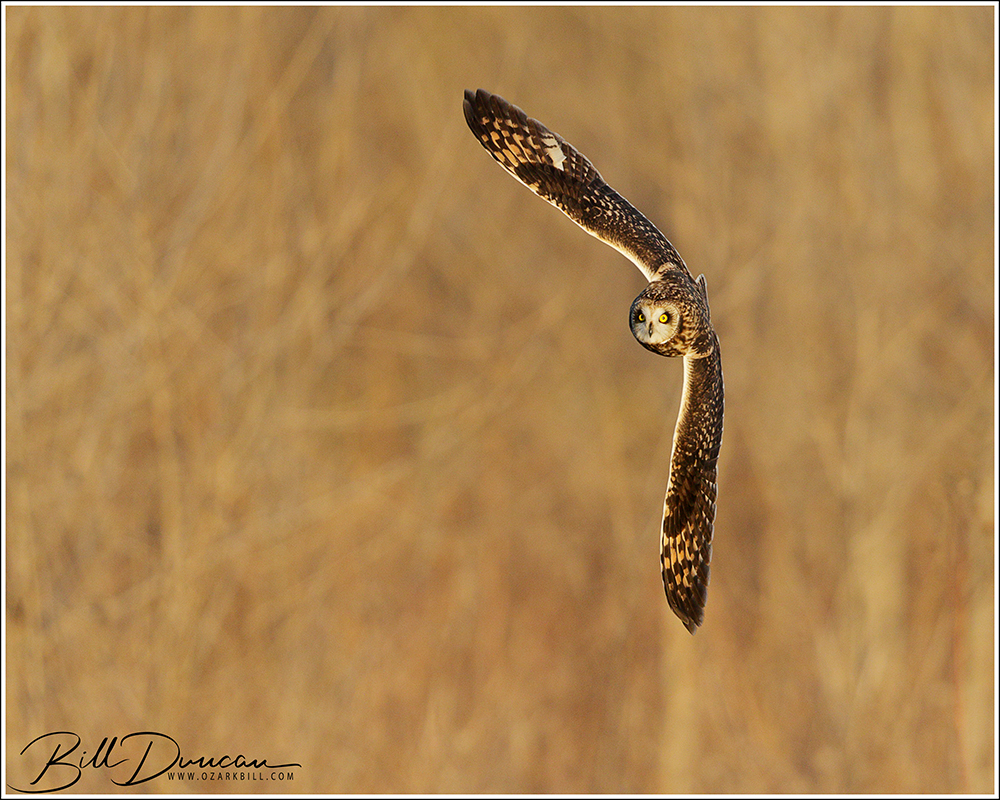
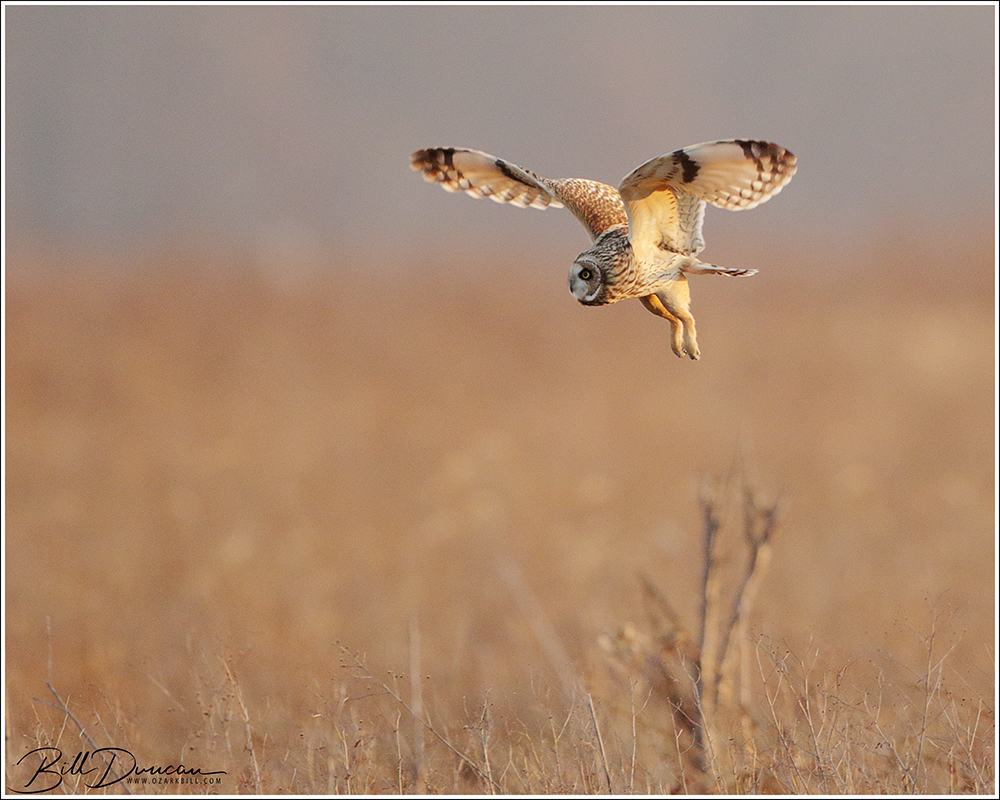
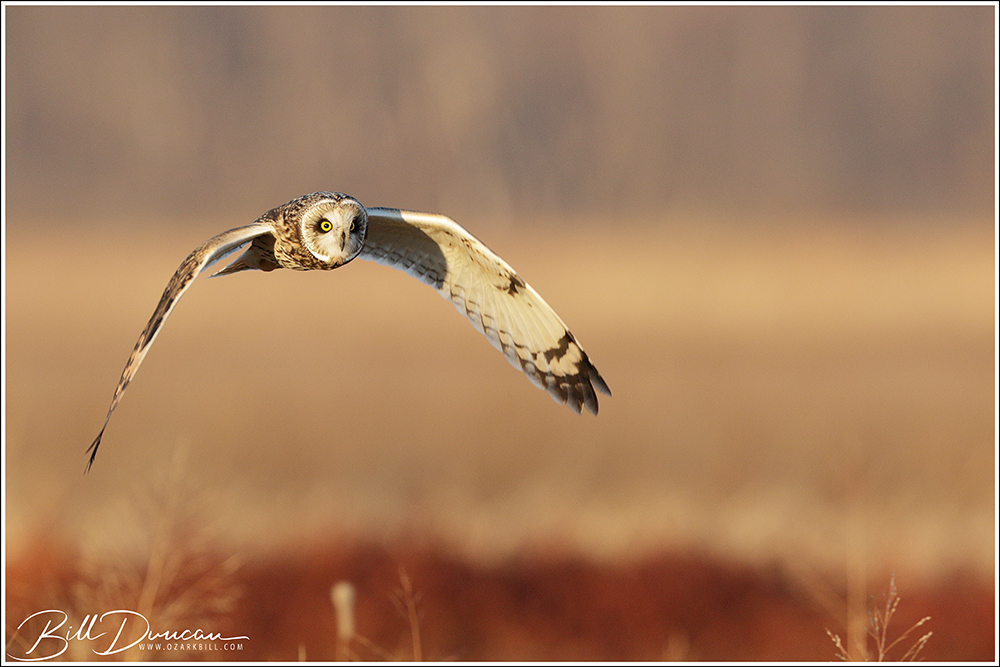
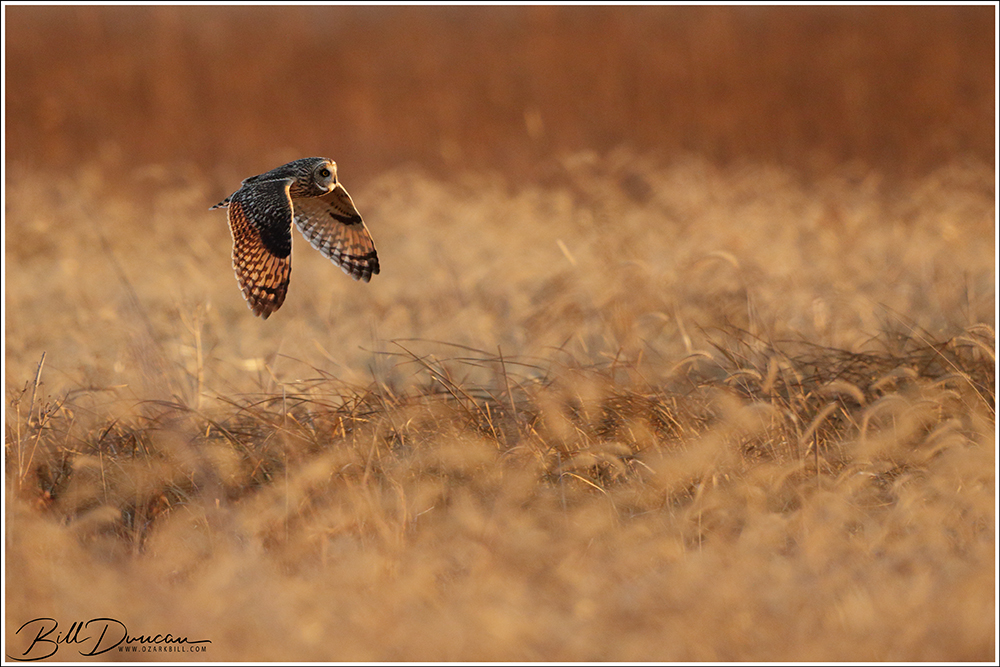
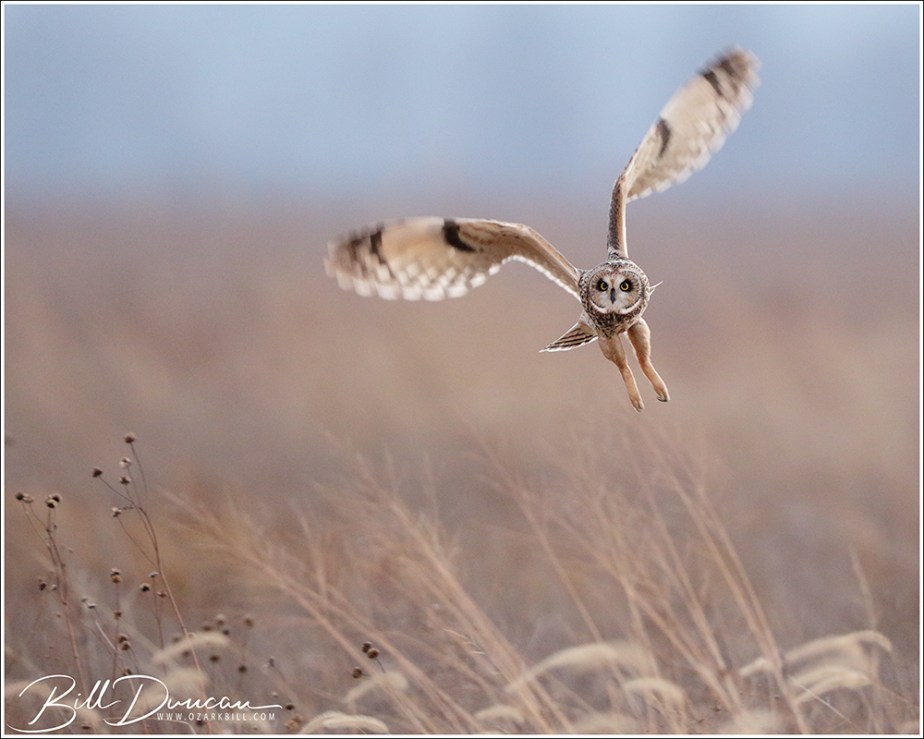
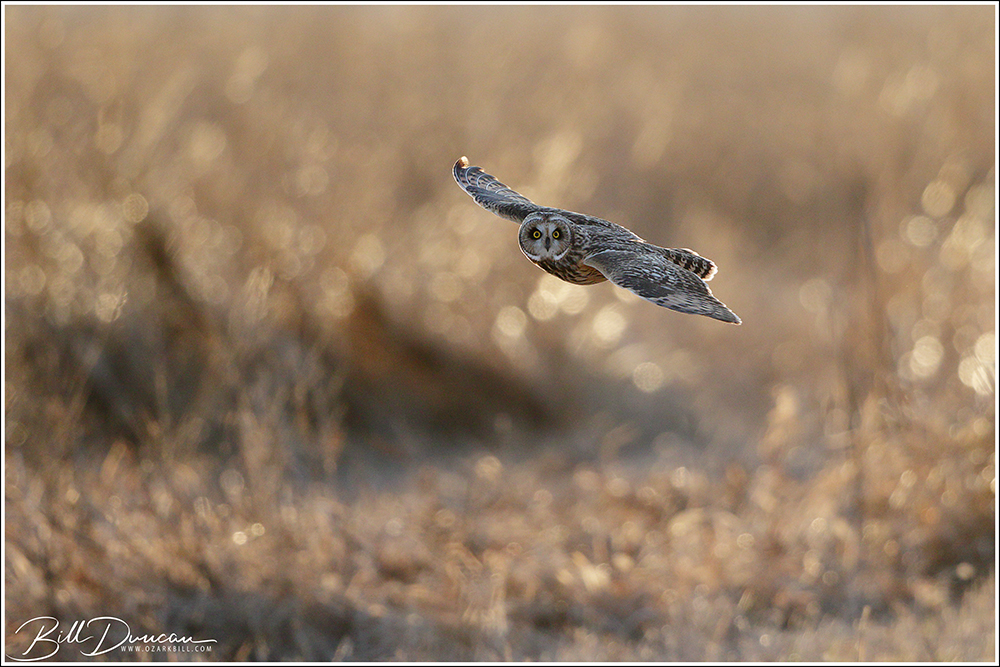
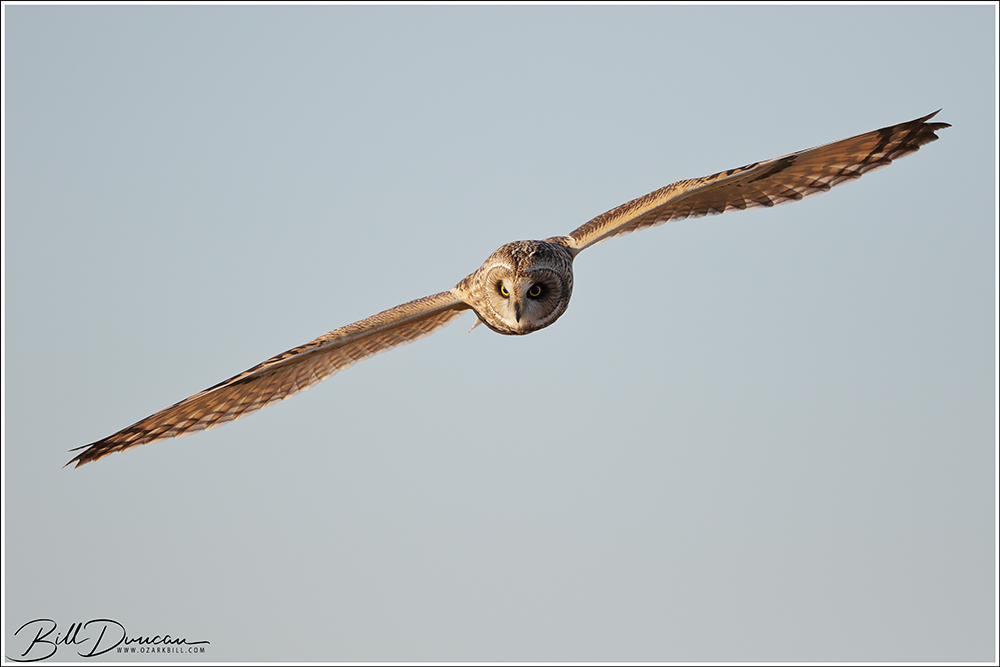
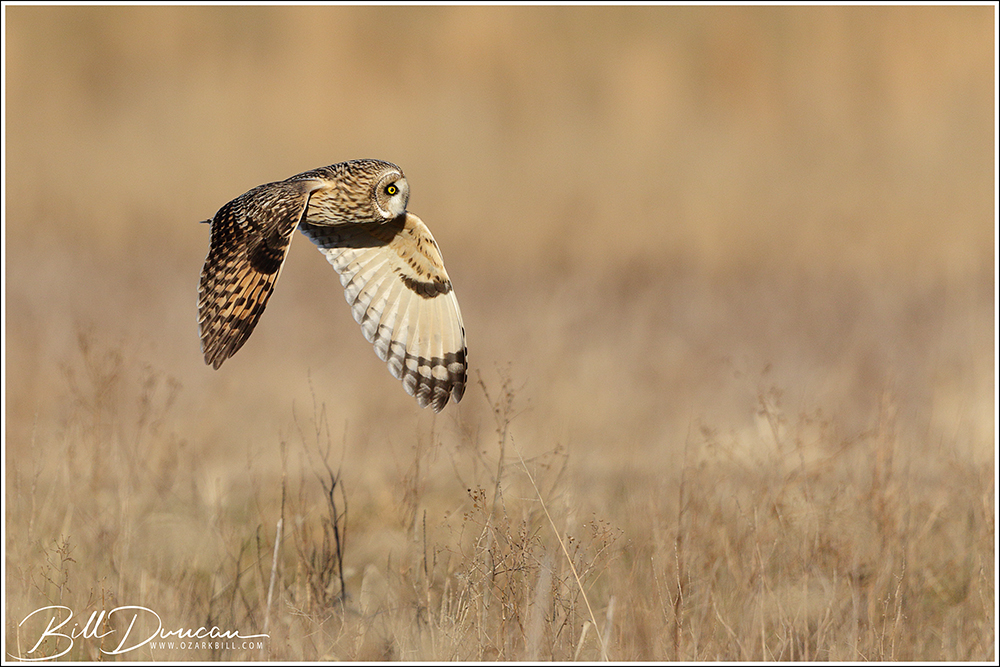
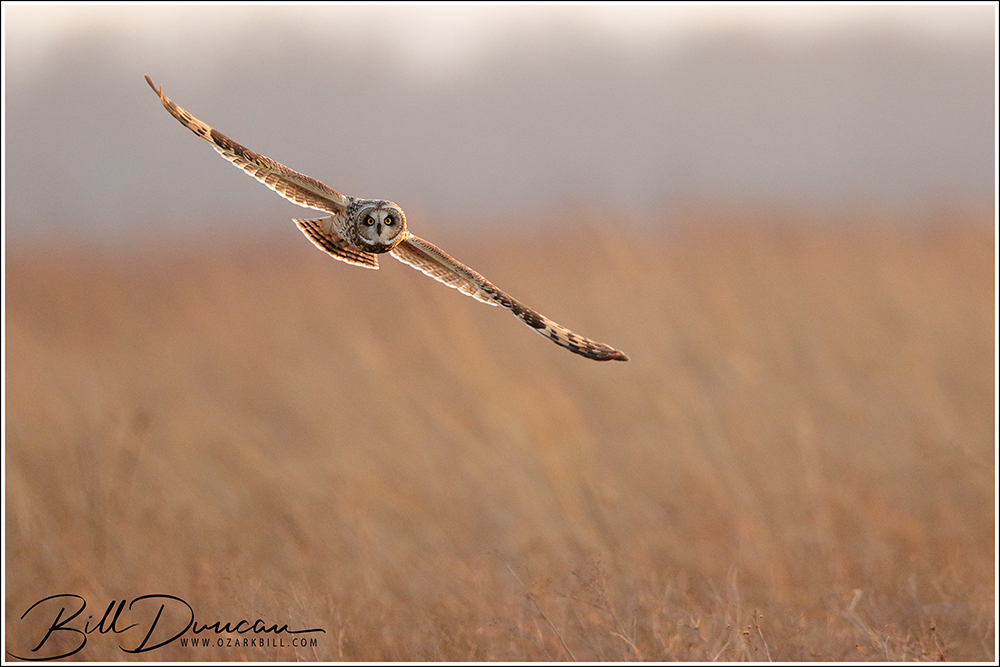
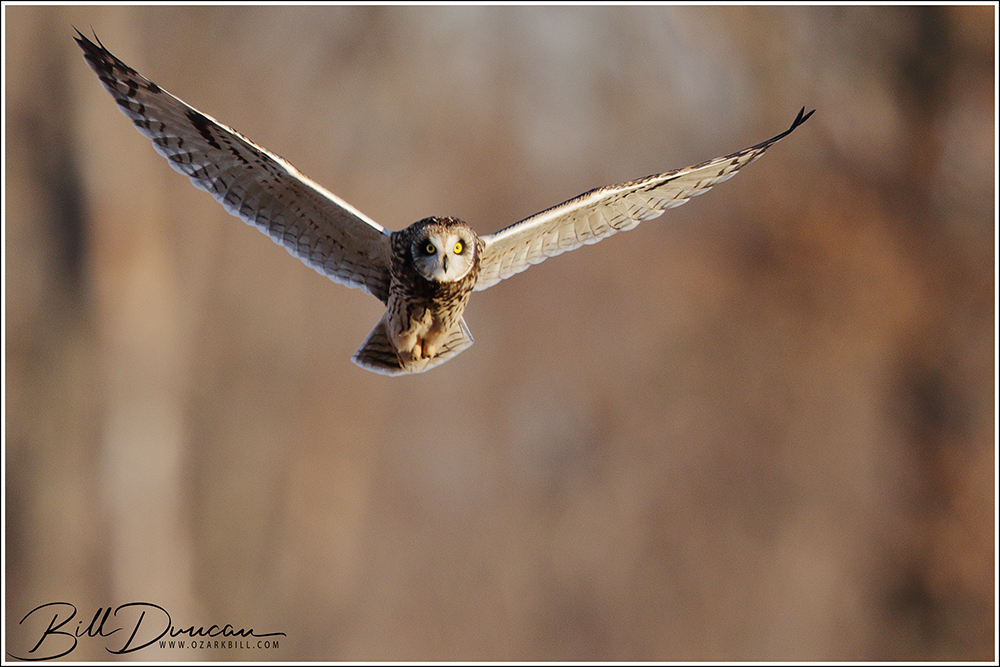
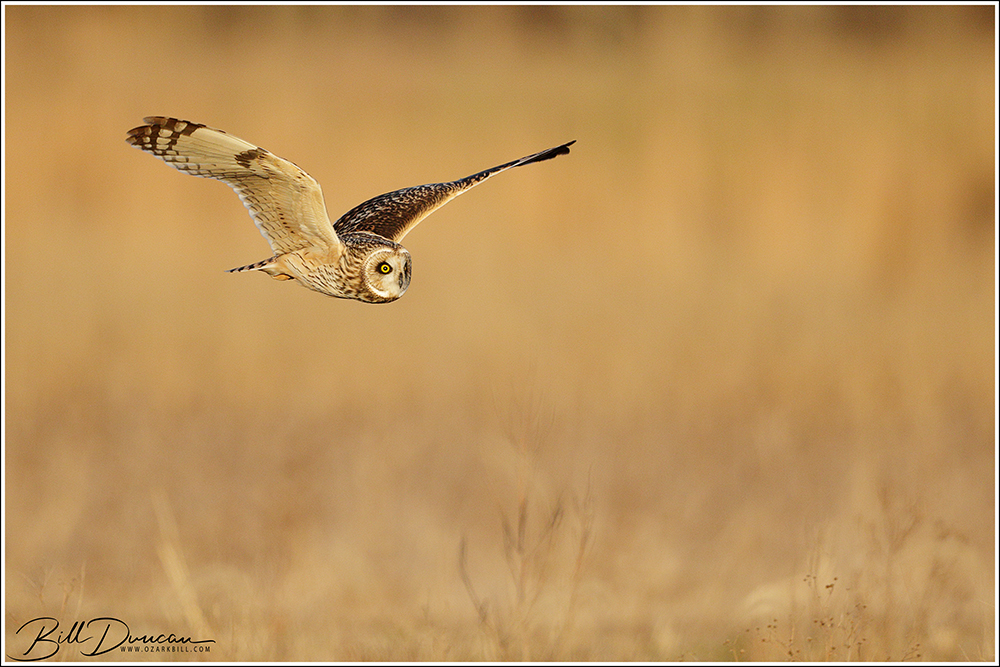
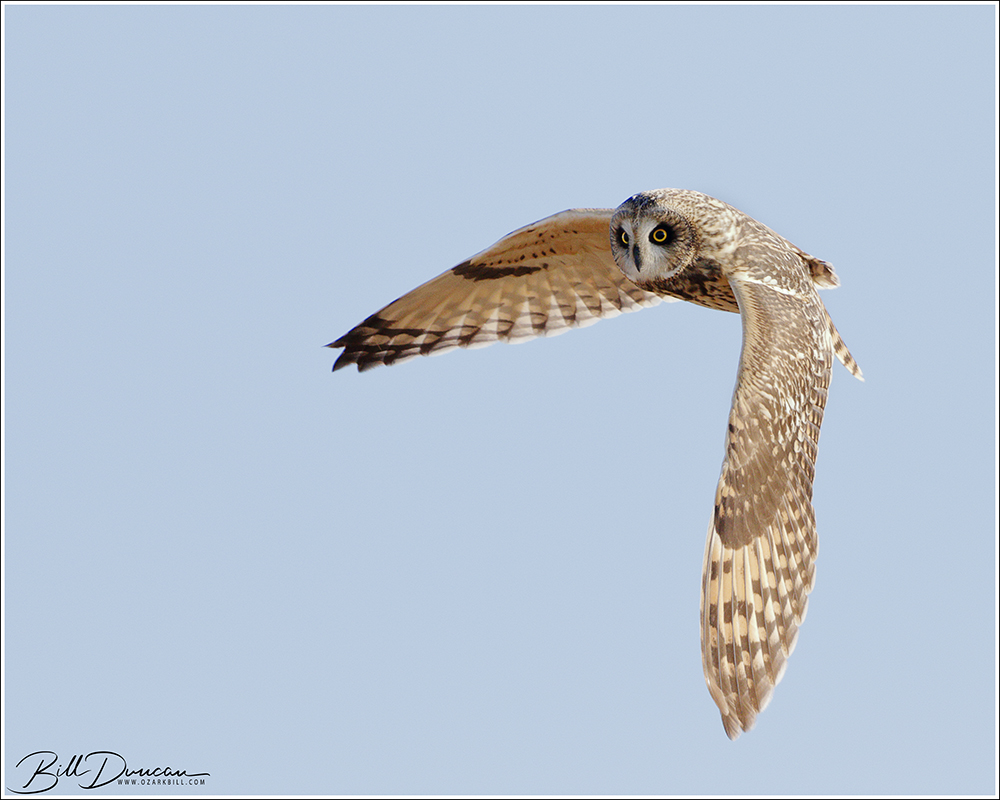
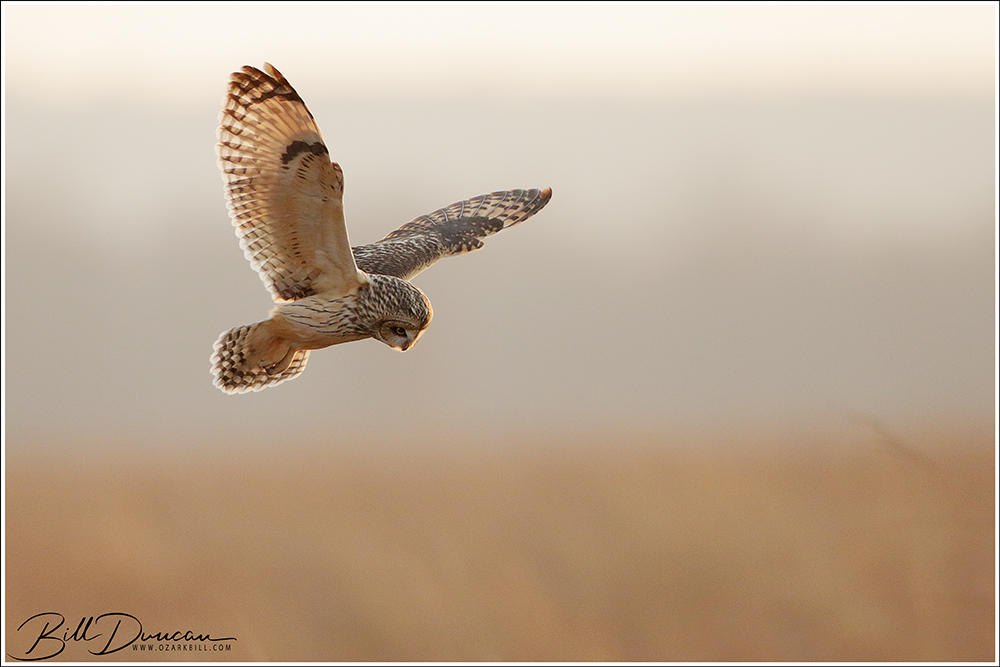
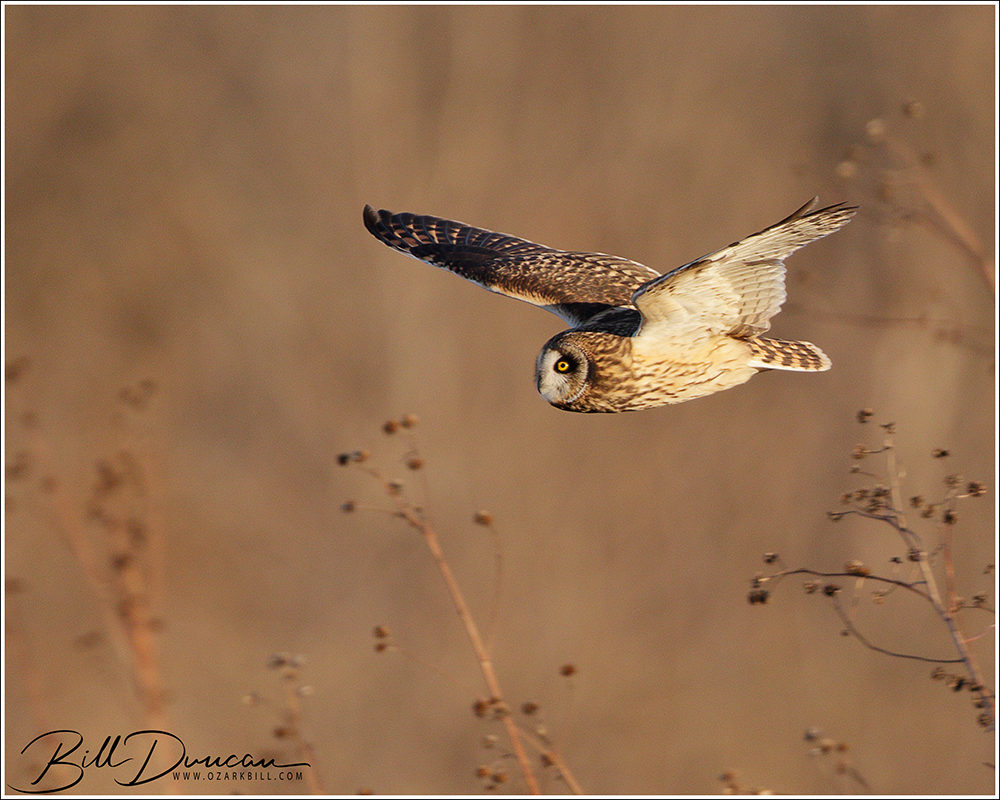
The Short-eared Owl is a unique flyer. Birder and author Pete Dunne described them as a “…pale beer keg on wings.” Just as apt, but completely different, many have described their flight as like that of a moth, with long, straight wings that give a buoyant and unpredictable pattern that is often mixed with long periods of gliding. They have the tools of a successful hunter and although they lack the speed and power of their neighbors – the Northern Harriers, their ability to fly agilely and without making a sound, allows them to pick up their rodent prey without much apparent effort.
Although pretty gnarly looking, this beautiful spider is relatively harmless to vertebrates and is common in Missouri woodlands. I admit, this is one of the reasons I sometimes dread heading out for a late summer hike, especially on a lightly-traveled trail or if I will be bushwhacking. I still haven’t gotten rid of all my arachnophobia and the sight of several of these climbing up my shirt after running through a few of their orb webs can cause a significant adrenaline boost in me.
A female Micrathena sagittata (Arrowshaped Micrathena), Araneidae. Taken in St. Francois County, MO on 11/SEP/2021.
As you know by now, the Short-eared Owl does not nest in Missouri. It uses our state as a wintering ground and nests in the plains states and up into the tundra of Alaska and Canada. It does the same in conducive habitats in South America, Europe and Asia and is even found in Hawaii. In Missouri winters, these birds of prey feed primarily on voles, mice and other small mammals but, in the summer, they expand their diets to include almost anything they can catch including arthropods, birds, reptiles and amphibians.
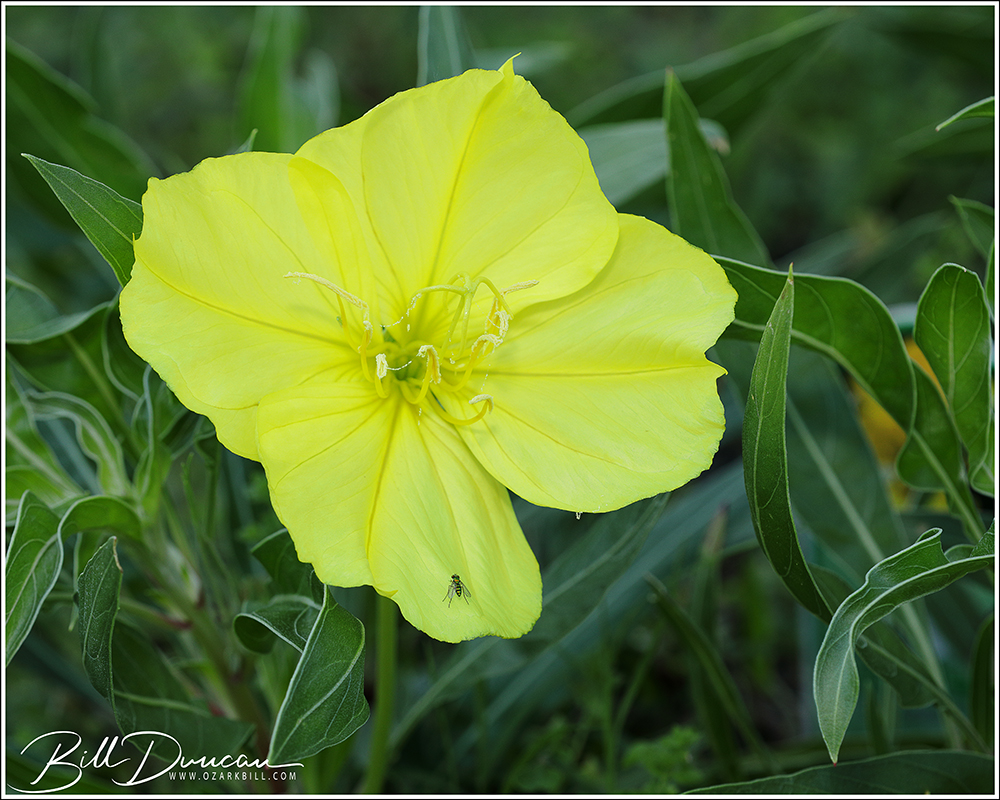
I know this is a well-known plant for those of us who care about such things, but I can’t believe it isn’t more popular than it is. For the most part, it gets along pretty well with much of our soils (I’m hoping it will stick around in our yard despite the fact that its growing in a mostly clay bed), needs no watering, is easy to propagate and is a perennial! You will typically see this plant listed as “Missouri evening primrose”. However, I recently read it referred to as “Ozark sundrop” and thought that was just perfect.
Oenothera macrocarpa (Ozark Sundrop) grown in my front yard bed.
Anyway, I was pleasantly surprised that the couple of potted plants I put in the ground last spring decide to bloom in their first year. I know the flowers last but a day, but I don’t have to tell you how much they’re worth seeing when they bloom right outside your front door. Check these out in the wild too. They grow in great numbers at a couple of glade spots in Jefferson County – Valley View Glades and Victoria Glades – along with a lot of other fantastic species that bloom at the same time.
The Flaming Owl was the original English name given to the Short-eared Owl. This directly represented its Latin binomial of Asio flammeus, and assumedly refers to the fiery textures and colors of its plumage. I like to think that it might better represent the look of the bird when it is typically seen – in the golden warm light of the setting or rising sun.
I’ve been hunting and trying to photograph Short-eared Owls in Lincoln County, MO for nearly 10 years with mixed success. The past three years or so have been particularly challenging with lower numbers than typical, often without seeing a single owl on several outings. We hypothesize that a year or two of bad flooding in these areas adjacent to the Mississippi River have caused dramatic declines in the small rodents that these and other birds of prey need in order to spend their winters here.
Whatever the reasons, this winter (2021/2022) we are seeing incredible numbers of these long-winged beauties. Although primarily nocturnal, this species also exhibits diurnal and crepuscular habits and this is another area where we have been fortunate. I have spent close to 25 afternoons and evenings with these birds over the past six weeks, sometimes alone and sometimes with friends. On most of these days at least one or two owls were seen flying with the sun still well into the sky. This makes for excellent opportunities for observing their behaviors and working on better strategies to get the meaningful photographs we are after.
I have probably kept way too many photographs that will require purchasing new external drives much sooner than I anticipated and I have probably processed too many as well. Still, I plan on sharing many of these here over the course of the next several weeks. Hell, the season isn’t over. I’ll probably try for more before they head back to the great north for the breeding season.
Prolimacodes badia (Skiff Moth) Hodges#4671. Until looking closely at this photograph, I never noticed the whisker-like setae these caterpillars sport. Freshly deposited out-of-focus frass for scale.