Seven Days of Mina Sauk Falls – Day Three

Technical details: Canon EOS 7D camera,  EF24-105mm f/4L IS USM lens @ 40mm, ISO 200,  f/11, 1/4 sec

It wouldn’t be a trip to the St. Francois Mountains in January through March without finding some Ozark Witch Hazel in bloom.  These small shrubs love the sandy, acidic soils found along streams in this region.  The flowers of these guys really put out some fragrance!  If you find yourself in a large patch of these during a particularly warm day, the smells of vanilla and other sweet spices and floral notes can almost be overpowering.  In this image, I tried to feature a branch of one of these plants that carries both new blooms from this year along with spent fruit cases from last year – many of which that still hold seed.  I used a gold portable reflector to increase the warmth of the branch and its flowers.  This branch is featured nicely in front of a couple of picturesque falls that can be found high on the set of falls and cascades that make up Mina Sauk.

Seven Days of Mina Sauk Falls – Day Two

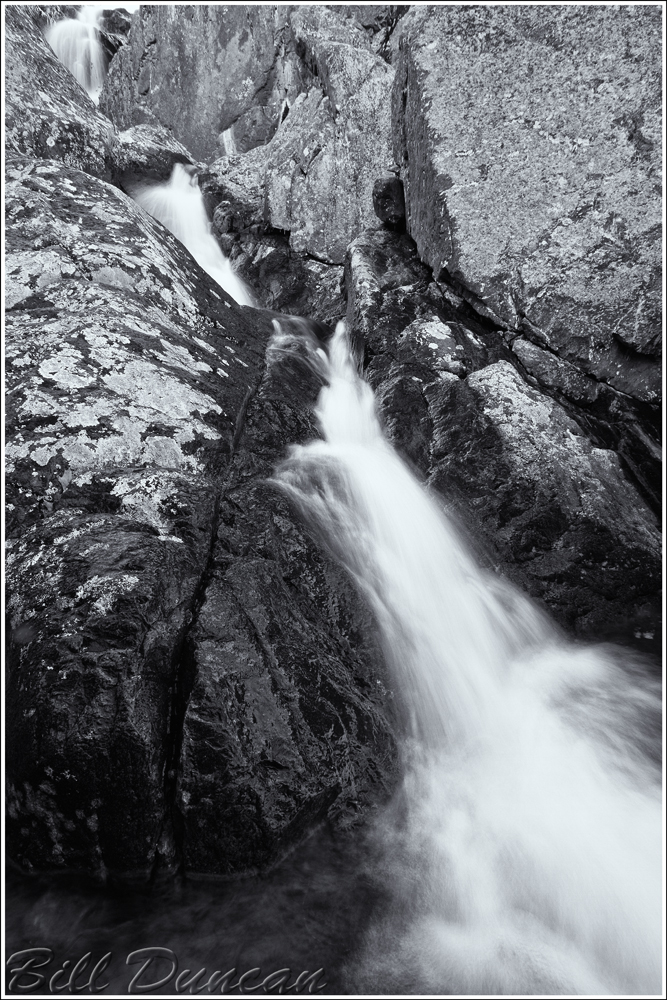
Technical details: Canon EOS 7D camera, EF-S10-22mm f/3.5-4.5 USM lens @ 10mm, ISO 160,  f/14, 0.6 sec

I estimate the vertical distance in this image in the neighborhood of 60-80 feet or more.  The ultra wide angle utilized in this image takes out a lot of that scale for the viewer.  I should have placed a kitten or something in the near foreground to capture that scale, I know.

The cascades and falls begin much higher up the mountain than this particular section.  Here is where the falls begin their more vertical descent.  This is a good example of the fractures (joints) that form in this super hard and dense rhyolite and granite.  The water slowly works its way in between the cracks and given enough time, water wins.

Seven Days of Mina Sauk Falls – Day One

Technical details: Canon EOS 7D camera, EF-S10-22mm f/3.5-4.5 USM lens @ 10mm, ISO 200,  f/14, 1/2 sec

Flowing down the largest mountain in Missouri, Taum Sauk, is a series of wet-weather cascades and falls that are collectively known as Mina Sauk Falls.  The total drop is said to be approximately 132 feet and over the course of this elevation change is a bounty of potential compositions as well as places to hurt yourself.  This is the heart of the St. Francois Mountains and there are not too many soft places to land.  This past “winter” I visited Taum Sauk and took the hike down to Mina after a rainy spell.  The temperatures were just cold enough to put ice on some of the rocks and other shallow surfaces but this mostly seemed like a spring time visit.  I’ve visited once or twice before where the waters were flowing better, but this was pretty nice and I was surprised to see Mina flowing this high.

Over the next seven days I plan on presenting a photograph and a bit of information regarding Mina and her father Taum Sauk as well as discussing the St. Francois Mountain region of the Missouri Ozarks.

Spring has Sprung. Winter MIA and Presumed Dead

I spent the majority of the day at Shaw Nature Reserve in Grey Summit, Missouri.  Mother Nature is busy transitioning to the next phase.  As the photo shows, I found harbinger of spring as well as spring beauty and a couple of very early blood roots in bloom.  It’s nice to get out looking for wildflowers this time of year because there are so few I can identify them all!  Over the next three months or so, Shaw NR will have an ever changing cycle of blooming spring-ephemerals, then the summer plants start!  The bird life I witnessed today also suggests that nature is moving on even though old man winter was playing dead beat dad this time around.  I had my first Pheobe and Field Sparrow of the year. I love listening to the Field Sparrows sing their bouncing ping-pong ball type of advertisement song across the open savannahs and woodlands.  It was also entertaining watching and listening to the Eastern Bluebirds who were busy building their nests in the boxes provided them across the reserve.  Yellow-rumped Warblers were seen in increasing number and the Woodpeckers could be seen and heard in every part of the preserve all day long.  The weather was fantastic today, although the sky was that boring, uninterrupted Robbin’s egg blue without a single cloud.  The morning was chilly though still, with no wind, which is so important for macro photography.  The best part of the day was finding the location of this year’s Red-shouldered Hawk nest.  This pair of Hawks or their descendants have nested in the same section of SNR for at least the past five years.  I’m glad I found the location this early.  It seems to be in a good location for making some good images.  It looked like there were already eggs in the nest and I can’t wait to get back and watch and take some photos.

Technical details: Canon EOS 7D camera, EF100mm f/2.8L Macro IS USM lens, ISO 160,  f/11, 1/6 sec

Thorny Creek Shut-in

Technical details: Canon EOS 7D camera, EF24-105mm f/4L IS USM lens @ 32mm, ISO 250,  f/14, 0.5 sec. Orton effect applied in PS Elements 9.

One of my several lifelong photo projects is to find and photograph every interesting shut-in I can within the Missouri Ozarks.  What is a “shut-in” you may ask?  A shut-in is a section of a river that is forced to move through resistant, igneous rock, such as the rhylolite pictured above.  Because the igneous rock is much tougher to erode, the water is often forced through narrow passages resulting in picturesque cascades, drops, chutes, steps, shelves, potholes, waterfalls and other sensory pleasing features.  Beveridge listed near 90 Shut-ins in Missour and most of these are located within the sturdy St. Francois Mountains.  Shut-in was originally an Appalachian term that was brought by the first white settlers in the Ozark region. It is now a term that is almost entirely used by Ozark residents.

This particular shut-in, on a small tributary of the Current River called Thorny Creek is located not to far from where the creek meets the Current.  It is also quite close to the three spectacular shut-ins of Rocky Creek and the rugged shut-ins type cascades of Prairie Hollow Gorge.  This location would actually have been easier reached by boat from the Current River.  Not knowing all that much about boating and not having access to one if I did, I hiked about two hours one way to make my way here.  I was quite pleased with myself upon reaching my goal as some amount of bushwhacking was required and I was not completely sure of where the location was.  Using maps and GPS was crucial.

Finding and spending time at a shut-in is always a grand idea.  Often these location not only provide candy for the eyes and ears, but are great spots for having a swim, fishing, taking a nap as well as doing some nature watching.  Most of the Missouri shut-ins are found within high-quality forest habitat and it is usually easy to find an interesting plant in bloom or a bird stopping at the fresh flowing water for a drink.  If I’m going to find many of the other shut-ins I will definitely need to build my skills in reading maps as well as talking with land-owners when these locations might be found on private property.

Location Spotlight: Elephant Rocks

Technical details: Canon EOS 7D camera, EF24-105mm f/4L IS USM lens @ 28mm, ISO 160,  f/14, 1.3 sec

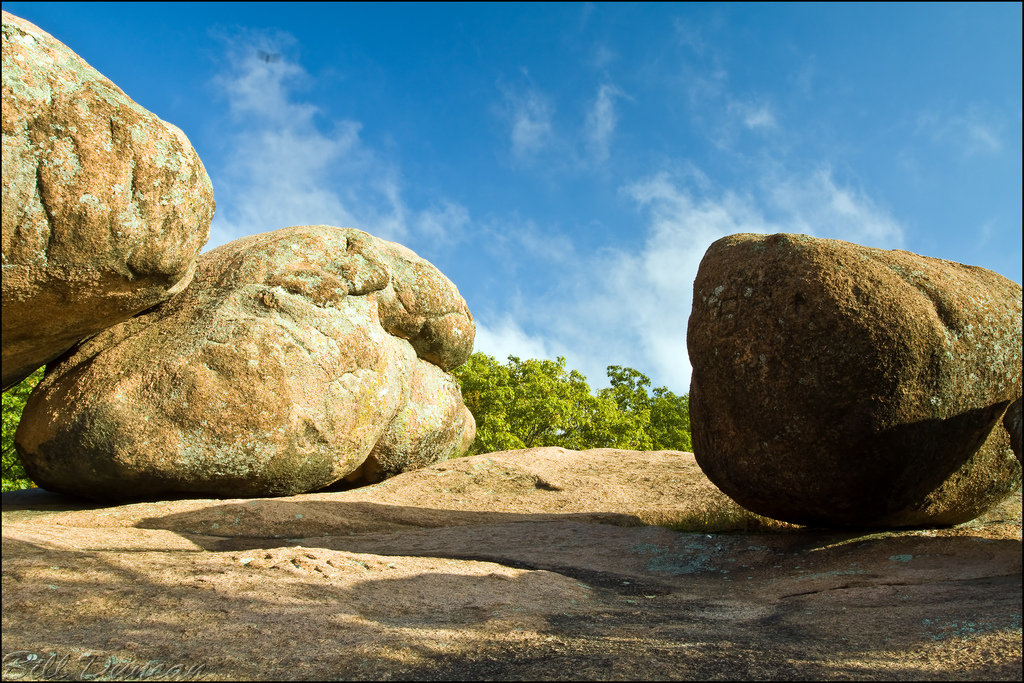
Today we’re traveling back south to my favorite region for landscape photography, the rugged and beautiful St. Francois Mountains.  This location, known as Elephant Rocks, is located in Iron County and lies about six miles north of Ironton and two miles west of Graniteville.  By the names of these towns can you figure out what the principle economic activities of this area were historically?  The primary features of this location, the elephants, are easy to see in the image below.

Technical details: Canon EOS 50D camera, EF17-40mm f/4L IS USM lens @ 17mm, ISO 100,  f/16, 1/6 sec

So what are these “elephants” and how did they get there?  Well first of all these rocks are composed of a pink-colored, Graniteville Granite, or more affectionately known as “Missouri Red Granite”.  Geologists discern between different types of granite based on mineral grain-size and color.  Missouri Red is actually one of the younger granites of the St. Francois Mountains, coming in at a mere 1.3 billion years.  Missouri Red, collected from quarries surrounding this feature was used as paving stones that covered most of St. Louis near the turn of the 20th century.  It was also used in parts of the Eades Bridge, the Jefferson National Expansion Memorial, the Missouri Governors Mansion in Jefferson City and in important buildings across more than a dozen cities in the United States.  It is still quarried today and used mostly for tombstones and counter-tops.

Technical details: Canon EOS 50D camera, EF-S10-22mm f/3.5-4.5 USM lens @ 10mm, ISO 100,  f/16, 1/6 sec

So, if you are reasonably educated in the discipline of geology and you were forced to guess how these boulders managed to be found here your first answer might be to suggest those great marble movers – the glaciers must have moved them here from up near Canada, right?  Sorry, the southern limit of intrusion of those sheets of ice was about where the Missouri River now flows about 150 miles or so to the north.  Hints upon the excepted mechanism of formation can be seen in the image above.

These boulders were formed by a process known as “spheroidal weathering”.  Before you reach for that tube of Preparation H, let me try to explain.  Sometime in the Pre-Cambrian molten rock was forced into the earth’s crust.  As the rock slowly cooled it formed long, nearly vertical joints, or fractures.  As time passed these rocks were covered with younger, sedimentary rocks.  When the Ozark Plateau was forced upward the resulting streams cut their way through this younger rock and eroded much of it away.  Erosional ground waters acted on the corners and edges of these granite joints quicker than on the surfaces and gradually increased these joints.  When the rocks were later exposed to the surface, erosion and weathering acted much quicker in forming the clean and rounded features of the boulders.  Plant life (tree and grass roots, lichen, etc…) also helped to chip away at the surfaces of these future boulders.  Eventually a tor – an exposed mass of bedrock, was left with these elephantine boulders now widely separated.

Technical details: Canon EOS 50D camera, EF-S10-22mm f/3.5-4.5 USM lens @ 10mm, ISO 100,  f/14, Photomatix-HDR blend of 9-images

Above you can see one of the more famous pachyderms who make this site their home, “Dumbo”.  This guy measures at about 27 feet tall, and with the incredible density of this granite (~160 lb per cubic ft) weighs close to 680 tons.

Technical details: Canon EOS 50D camera, EF17-40mm f/4L USM lens @ 19mm, ISO 100,  f/16, 1/6 sec

Not even the people of the “it will never run out” period of western U.S. expansion would destroy something as unique as Elephant Rocks.  Although there has been mining of granite, iron, lead and other minerals throughout this area, Elephant Rocks still looks pretty much as it did 200 years ago.  When a quarry worker reached “master stonecutter” status they would carve their names here upon the boulders and bedrock.  This gives the place an interesting human historical aspect.  Today, this location is protected as a Missouri State Natural Area and a State Park.  There is a very well done ~mile paved “braille trail” that circles through many of the features of the park.  The trail’s meandering allows the blind to feel some of the geologic features and braille signs are posted to explain what the person is experiencing.  I find this to be a fantastic development.  In my opinion our country does nowhere nearly enough to help the blind and these people are often forced into greater dependence and exclusion because our government refuses to take the smallest of steps.  Ever notice how the US paper currency is all the same size?

Technical details: Canon EOS 50D camera, EF-S10-22mm f/3.5-4.5 USM lens @ 12mm, ISO 100,  f/16, 1/10 sec

The tinajita, or panhole like those pictured above are more evidence of the weathering this exposed porphyry is being subjected to.  The process of seasonal freezing and thawing as water seeps ever deeper into minute cracks forms these shallow depressions that fill with water in wetter times allowing for animals like insects and frogs to have places to breed.

Technical details: Canon EOS 7D camera, EF-S10-22mm f/3.5-4.5 USM lens @ 15mm, ISO 100,  f/16, manual-HDR blend of 2-images

Elephant Rocks.  It comes as no surprise to those who live in the region – everything in the mid-western United States, but particularly the Ozarks is often overlooked in favor of the grand natural spectacles of the Rockies, the Appalachians, the South-West’s deserts and canyons, etc…  Well, Elephant Rocks is one location that should be on the bucket lists of any tourist, any rock-star landscape photographer or nature enthusiast.  It is a location deserving of being voiced-over by a James Earl Jones, Alec Baldwin or Brangelina in the nature documentary of the week.  I hesitate to scream too loudly, however. I have loved the times I’ve been able to spend hours here without seeing another bipedal ape and hope for many more

I’ve called this the place of unlimited compositions.  I have been fortunate enough to make a few images I really like and I look forward to many more visits over many more years to come to see what other compositions the place is hiding.

You can view more of the photographs I’ve taken at Elephant Rocks.      

Birds of the Great Confluence – Part Two – Columbia Bottom Conservation Area

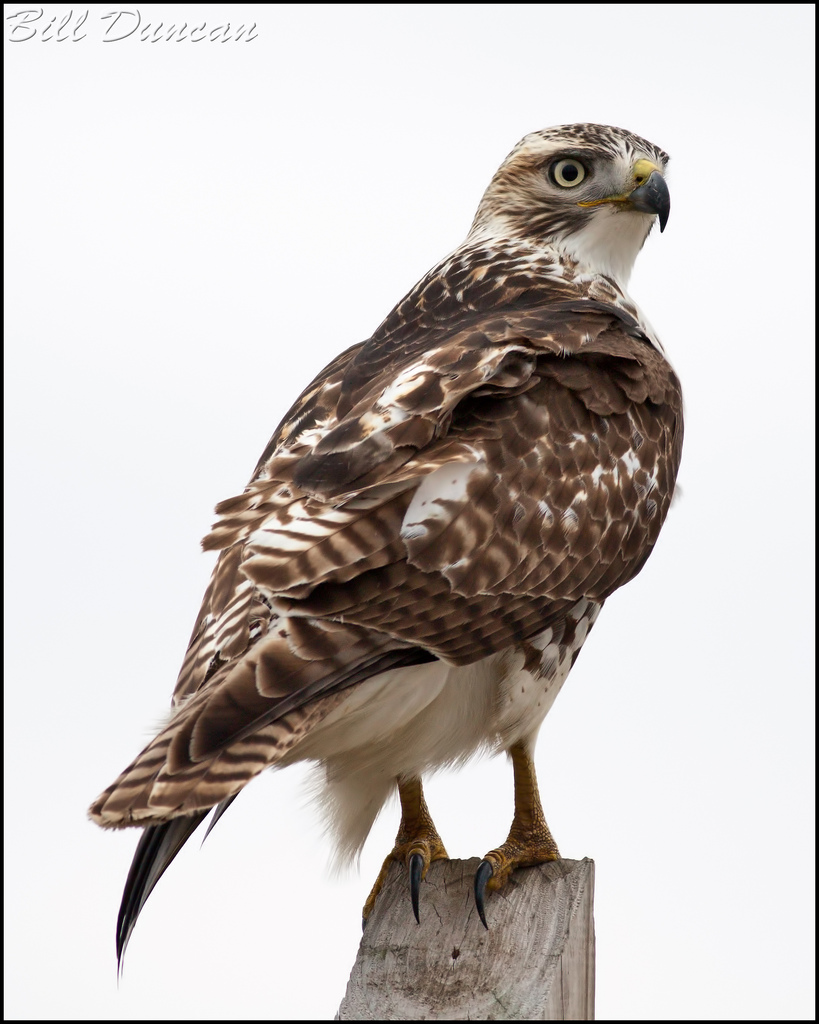
Technical details: Canon EOS 50D camera, EF400mm f/5.6L USM lens, ISO 400,  f/5.6, 1/640 sec

The Great Rivers Confluence is the area where North America’s two largest rivers, the Missouri and the Mississippi, meet together and flow as the Mississippi.  This confluence is just north of St. Louis, Missouri and provides many opportunities for birds along the Mississippi migratory flyway to find the habitat they need.  These areas provide great opportunities for bird-watchers, hunters, and other outdoors types and go by names such as Riverlands Migratory Bird Sanctuary, Jones Confluence State Park, Columbia Bottom Conservation Area, Marais Temps Clair CA, and a handful of other public properties that have been given mandates based on conserving the basic habitat that wild birds and our other wildlife kin rely upon for their existence.

I have been bird watching in this region for about five years and taking bird photographs here for the last two or three.  In a previous post I showcased six of my favorite images I made at Riverlands MBS and Confluence SP.  Today, I will feature another group of bird photographs taken at Columbia Bottom CA, which sets on the south side of the Missouri River.

These areas may seem very different to us bird watchers because it is about a 15-20 minute drive between the two.  The birds, however can literally move between the two locations in 20-30 seconds.  Such was the case with this Red-tailed Hawk, which is pictured above.  This guy was present in the confluence area for three weeks or so and I had several great opportunities to photograph it.  This is probably my favorite bird photograph to date.  My wife and I were doing a drive through CBCA and in one of the smaller gravel parking lots here was the bird perched atop a post.  I slowly pulled within about 25 feet or so from her going as slow as possible so not to flush her.  The bird cooperatively sat still for maybe five minutes before another car flying by a nearby road caused her to take off.

Technical details: Canon EOS 7D camera, EF400mm f/5.6L USM lens, ISO 250,  f/5.6, 1/1000 sec

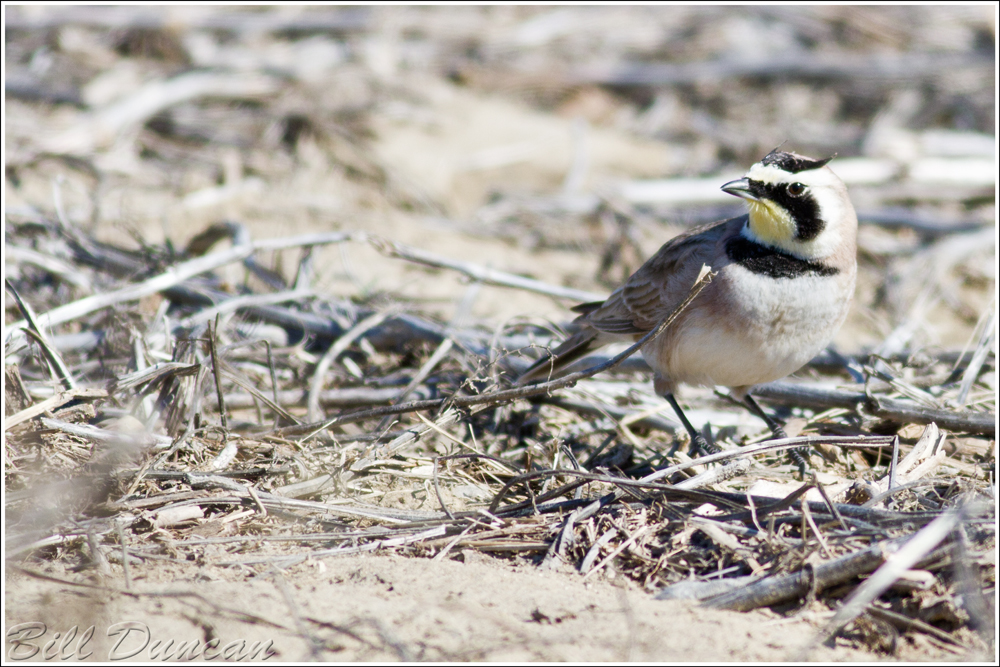
One of the great things about birding the confluence region is that every season brings with it a different species composition.  On a monthly basis you will find that some species have arrived and some have left in the ever ongoing event we call migration.  The bird pictured above is a Horned-Lark and he is found in about equal numbers year round.  They are a little more noticeable in the winter season, however, because they tend to aggregate in small flocks – most likely to make finding food easier and potentially spotting predators quicker.  Starting in early spring they will slowly form the mating pairs that will spend the breeding season together.

Technical details: Canon EOS 50D camera, EF400mm f/5.6L USM lens, ISO 400,  f/5.6, 1/250 sec

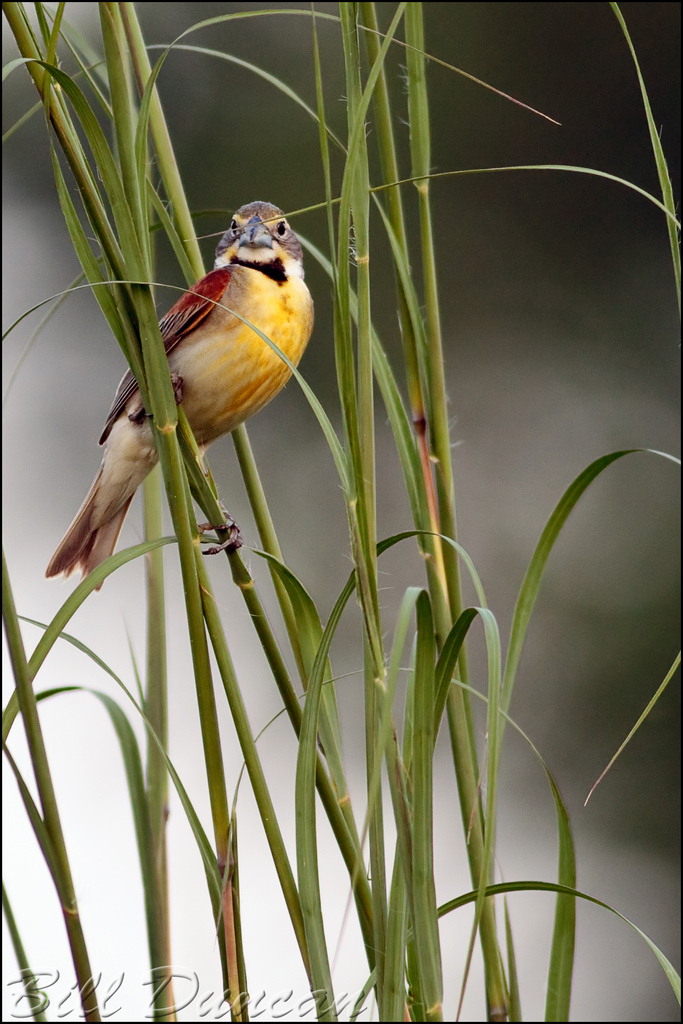
This relative of the Cardinal is the monotypic, Dickcissel, and is very much a summer visitor.  These guys arrive en masse to the confluence area around mid-May and following the breeding season leave just as abruptly to their over-wintering homes that lie from southern Mexico to northern South America.  These guys are usually very numerous, but their population in recent decades are facing pressures.  Dickcissel are grassland specialist, seed eaters.  As such they have found there are easy pickings in agricultural areas.  In their off-breading homes in Latin America, where there are fewer regulations against such things, farmers are using very dangerous poisons that have been documented in the killing of thousands of these birds as well as other non-targeted species.

Technical details: Canon EOS 50D camera, EF400mm f/5.6L USM lens, ISO 640,  f/5.6, 1/320 sec

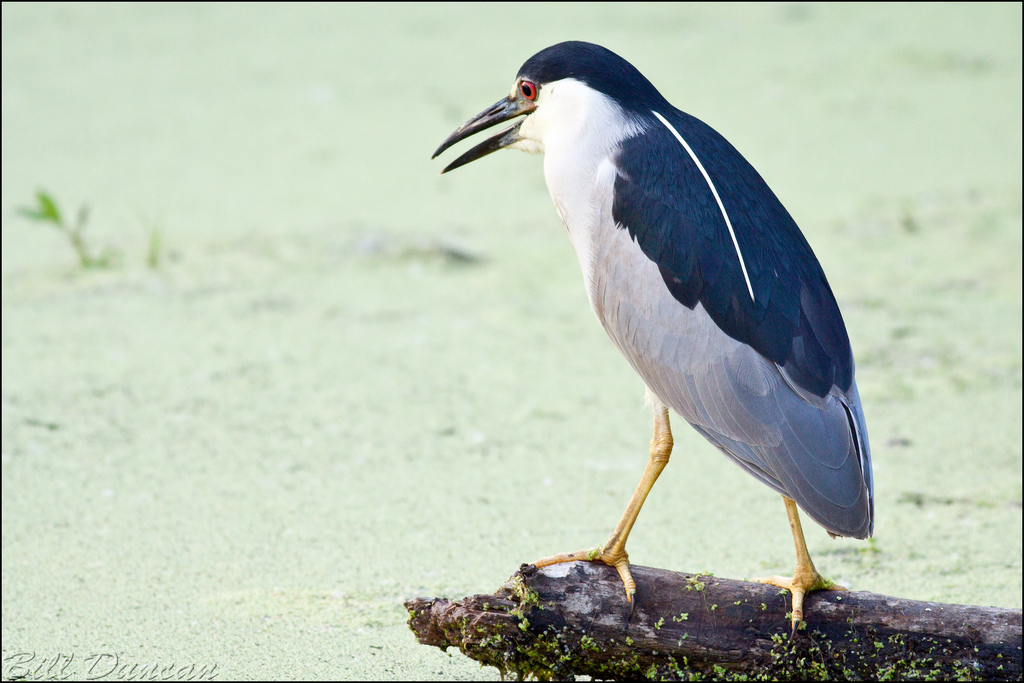
The widely distributed, Black-crowned Night Heron is the quintessential marsh associated bird.  These guys are perfectly adapted at catching and consuming a wide variety of animal prey items that they come across in wetlands across the world.  I very much enjoy watching and photographing these birds.  They can be found in the confluence region during the warmer months of the calendar.
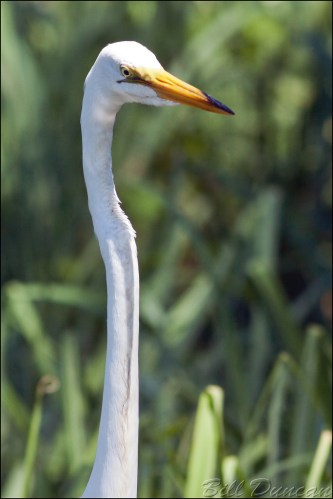
Technical details: Canon EOS 50D camera, EF400mm f/5.6L USM lens, ISO 400,  f/6.3, 1/1000 sec

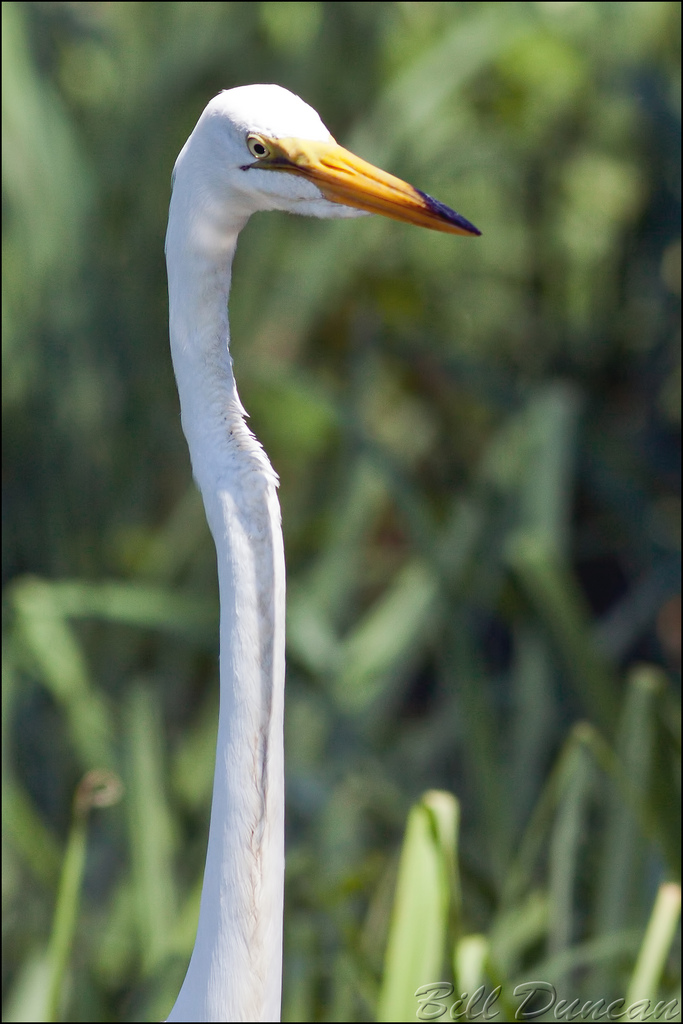
In bird photography nothing beats a typical, perfect, “documentary” style shot.  You know, the photograph in which you were actually able to get close enough to your subject to come close to filling the frame, acheive a perfect exposure and obtain sharpness that will make your eyes bleed?  That is definitely nice, but just as much, I appreciate the “bird as art” image; the photograph in which, with intent or not, you are able to show the subject and/or its environment in a way that looks different than a mere documentary of what the species “looks like”.  The image above of a Great Egret is probably somewhere in between these two image styles.  I wanted to exaggerate the length of this bird’s neck by cutting it from its body.  The shallow DOF separates the bird from the background to further emphasize the subject and its lengthy proportions.

Technical details: Canon EOS 7D camera, EF400mm f/5.6L USM lens, ISO 250,  f/5.6, 1/1600 sec

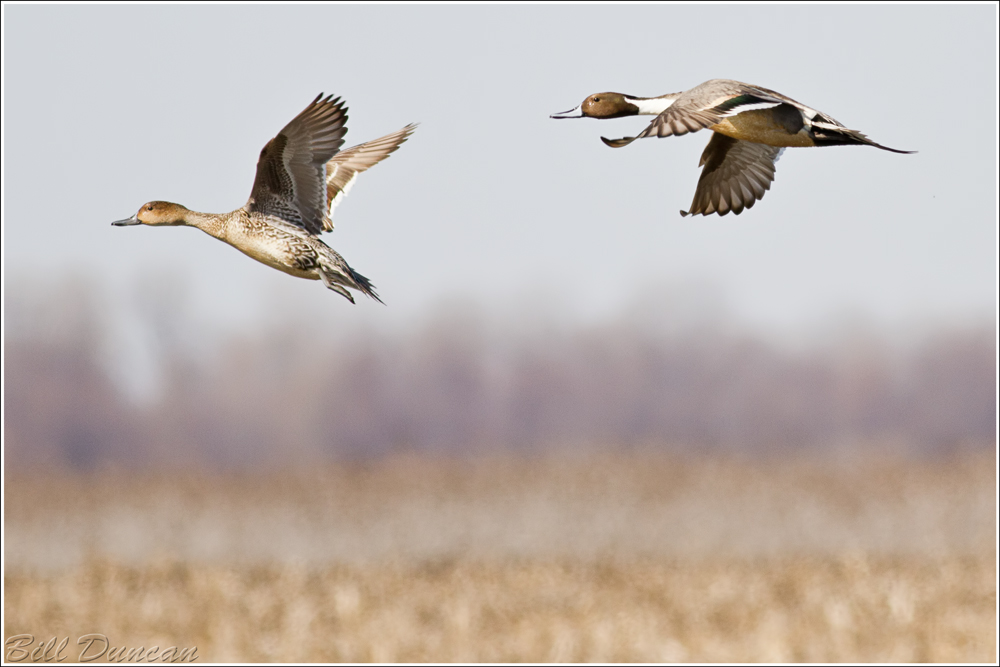
The Cadillac driving, fancy-pants of the duck world, the Northern Pintail is probably my favorite of the waterfowl.  Much like any photographer who can’t afford to own $10K in glass that will reach, I always struggle to get close enough to ducks.  I made this image just this weekend and it’s probably the closest I’ve ever been able to get to this species with a camera.  The Confluence area lies almost directly in the middle of these guys range.  We are near the northern limit of their wintering range and the southern limit of their breeding range.  Their presence is hard to predict in this area.  Typically they will start to arrive in early spring, but they are not uncommon to find any time during the winter when unfrozen water is present in marshy habitats.  They typically are not found here in the summer as northern Missouri has only a small number of breeding pairs on record.

Folks who give a darn about things other than economic concerns have recently saved the confluence region from an environmental threat.  The development that was proposed would have threatened and endangered many of the birds that rely on this region of the Mississippi River Flyway.  I have attached a few links below for those of you who may be interested in this story.

http://missouri.sierraclub.org/home.aspx?/emg/sierrascape/s2009m10/05_casino.html

http://www.savetheconfluence.org/

http://blogs.riverfronttimes.com/dailyrft/2009/11/conservation_area_casino_faces.php

Location Spotlight: Hughes Mountain Natural Area – Devil’s Honeycomb

Technical details: Canon EOS 7D camera, EF24-105mm f/4L IS USM lens @ 35mm, ISO 100,  f/16, 0.3 sec

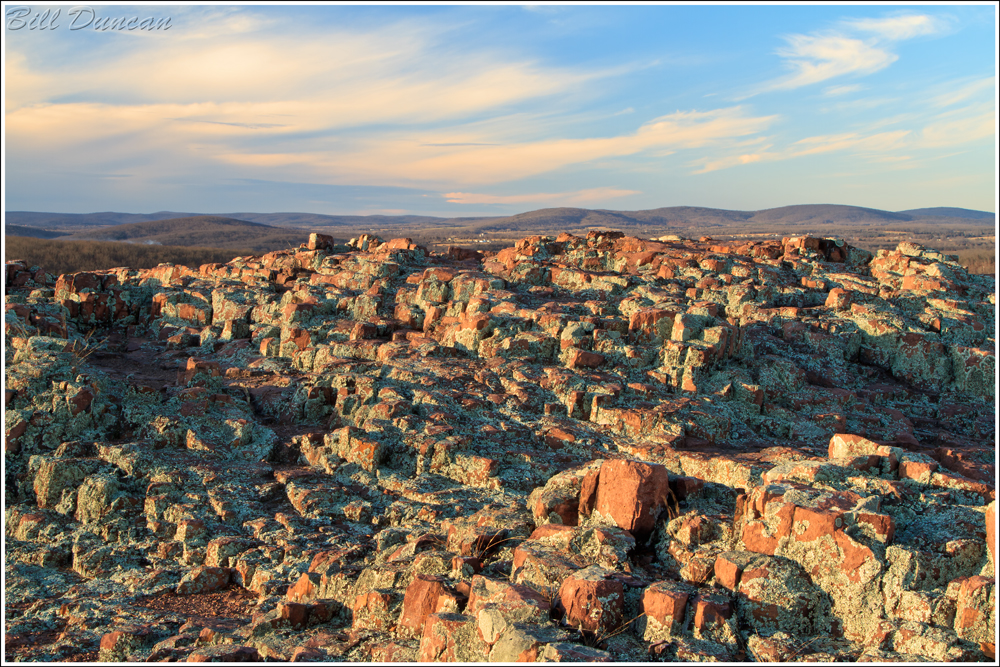
Three miles from the small old mining town of Irondale, along the north-western side of the St. Francois Mountains lies Hughes Mountain and the 1.5 billion year old rock that forms its namesake, the Devil’s Honeycomb.  As the precambrian rhyolite cooled near the surface it formed polygonal columns composed of four to six sides, 8-10″ in diameter and up to three feet exposed above the surface.  These fractures/joints in the rock are analogous to mud drying in the sun.  Looking upon these columns grouped together reminds one of a honeycomb pattern facing the heavens, hence the name – Devil’s Honeycomb.

Technical details: Panasonic DMC FZ50 camera, ISO 100,  f/9, 1/60 sec

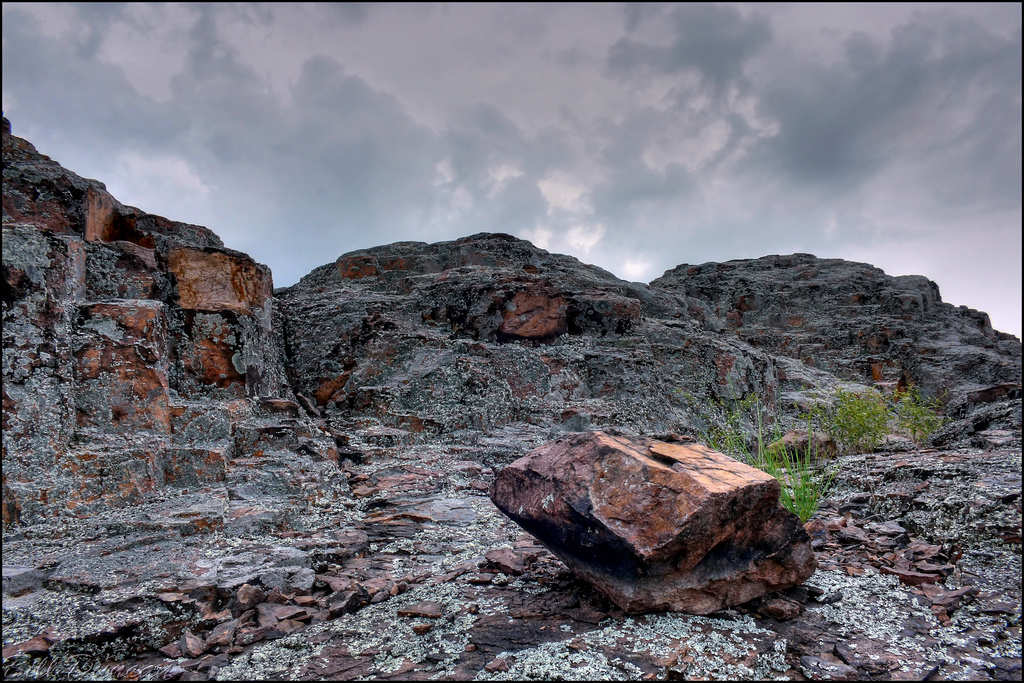
In the image above you can see some of the details presented in the rock, the typically pink colored rhyolite is often stained with whites, yellows, greens and tans from the lichen that cover these exposed rocks.  This mountain was named after John Hughes, the first settler of this area who ran a grist mill from a nearby stream in the early 1800’s.

Technical details: Canon EOS 50D camera, EF17-40mm f/4L USM lens @ 40mm, ISO 100,  f/16, 0.25 sec

Only a handful of places on the planet have geological features similar to those shown here, Devil’s Tower National Monument in Wyoming being one such place.  I feel this place has a lunar landscape kind of feel and I tried to capture that in the photo above.

Technical details: Canon EOS 50D camera, EF17-40mm f/4L USM lens @ 20mm, ISO 100,  f/18, 0.25 sec

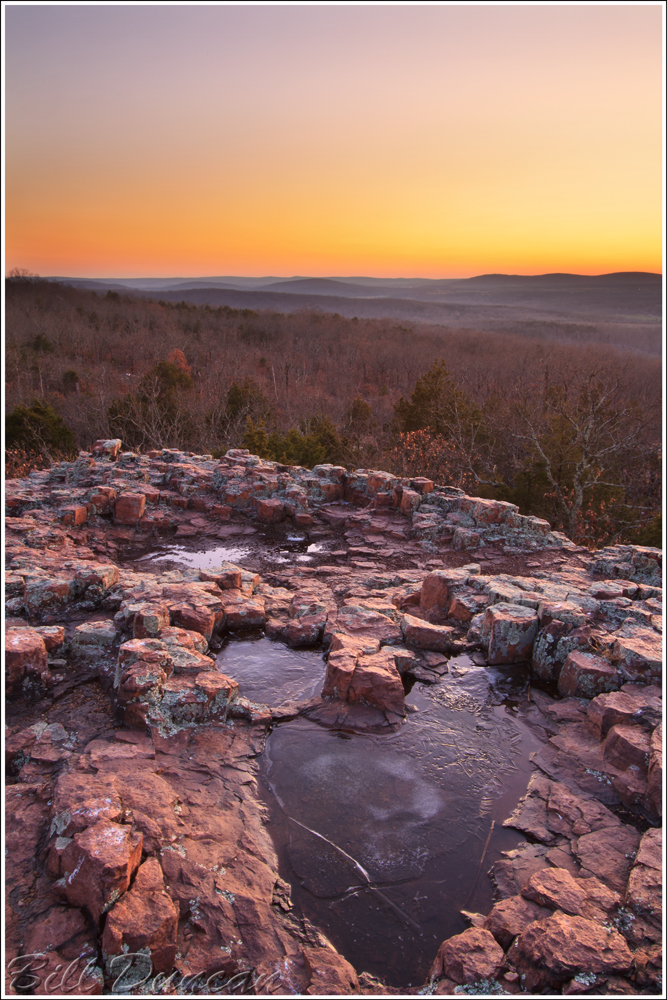
Walking from the car towards the summit one moves through a typical mixed oak/hickory woodland/forest found in this section of the Ozarks.  As you walk the ~ mile towards the summit the soils gradually become shallow and exposed rock becomes more and more noticeable.  Dry woodland, dominated by blackjack oak, eastern red cedar and black hickory, interspersed with glades become the dominant habitats toward the summit.  When you reach the top you are suddenly aware there is no more soil; the entire summit is a cap of igneous rock formations.

Technical details: Canon EOS 7D camera, EF-S10-22mm f/3.5-4.5 USM lens @ 17mm, ISO 100,  f/16, 0.8 sec

I can’t think of a better spot in the Missouri Ozarks to watch the sunset/rise.  I have hiked up this mountain at least ten times and have yet to get that beautiful, 50%-cloud covered sky that creates that furnace of a sunset that everyone looks for.  I hesitated to publish this post without that image, but who knows when I’ll have that kind of luck.  I do think that these five images show the diversity that the season, weather and time of day can provide your eye and images at this location.  There really is no bad time to make a visit here.

I really look forward to spending time on the summit during a summer thunderstorm, a January snow, a warm-Indian summer autumn day with changing colors, and of course that breathtaking sunset.  I wish you and yours the best in your natural outings wherever they may take you this coming weekend.  Get out there and think about something else beside the daily grind.


Location Spotlight: Turner’s Grist Mill & Spring

Technical details: Canon EOS 50D camera, EF17-40mm f/4L IS USM lens @ 21mm, ISO 160,  f/16, Photomatix-HDR blend of 6-images


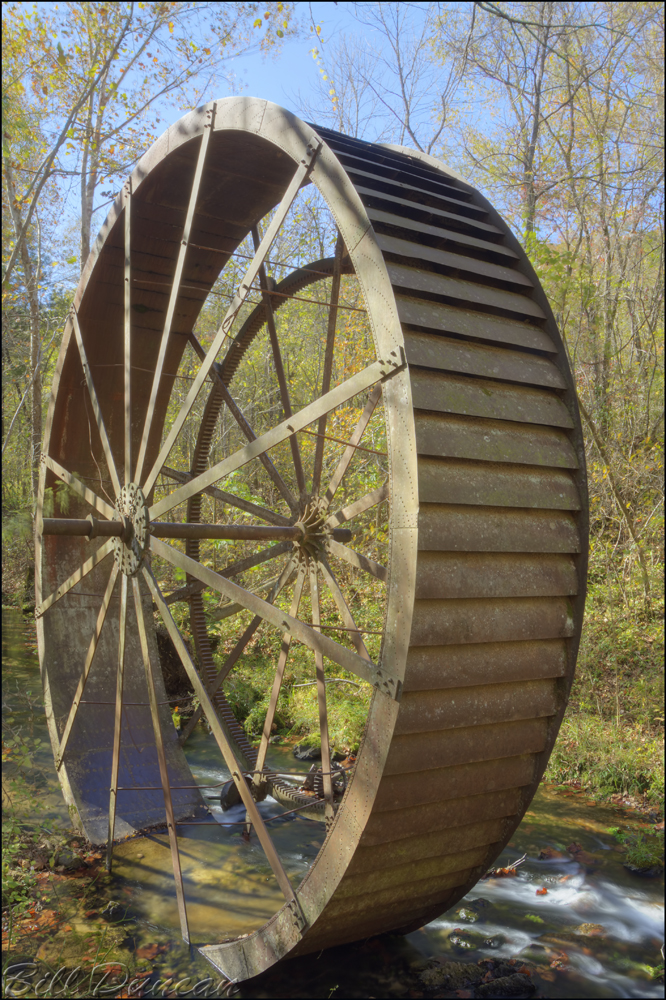
Turner’s Mill Spring lies deep in the Missouri Ozarks in Oregon County near the town of Winona.  The mill building and the whole supporting town of Surprise no longer exist; the ~25 foot tall overshot wheel, gears and concrete flume are the only obvious signs this location was ever inhabited.

Technical details: Canon EOS 50D camera, EF17-40mm f/4L IS USM lens @ 17mm, ISO 200,  f/13, 1.3 sec


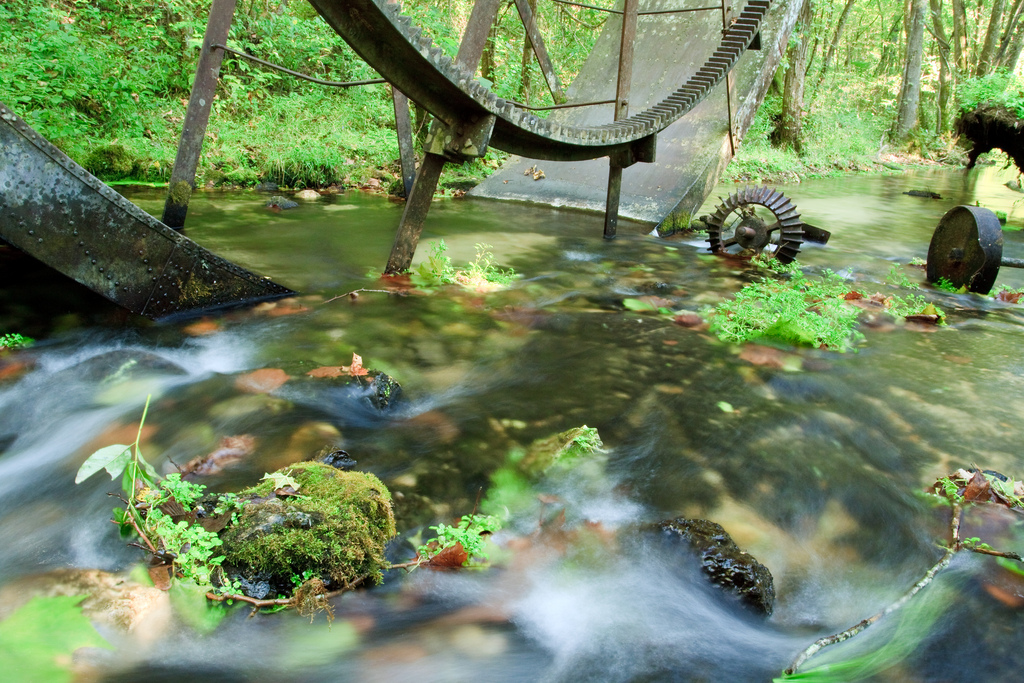
The immensity of the wheel and gears lying on the creek floor stirs the imagination into dreaming of what it took to get these materials to this rugged area in the middle of the 19th century.  I believe the area was dramatically cut and major roads (for the time) were installed.  The area now has been taken back by the forest and is a beautiful part of the public land of this area that includes the nearby Irish Wilderness, Ozark National Scenic Riverways, Missouri’s second largest spring – Greer Spring, and much more.

Technical details: Canon EOS 50D camera, EF17-40mm f/4L IS USM lens @ 35mm, ISO 160,  f/16, 3.2 sec

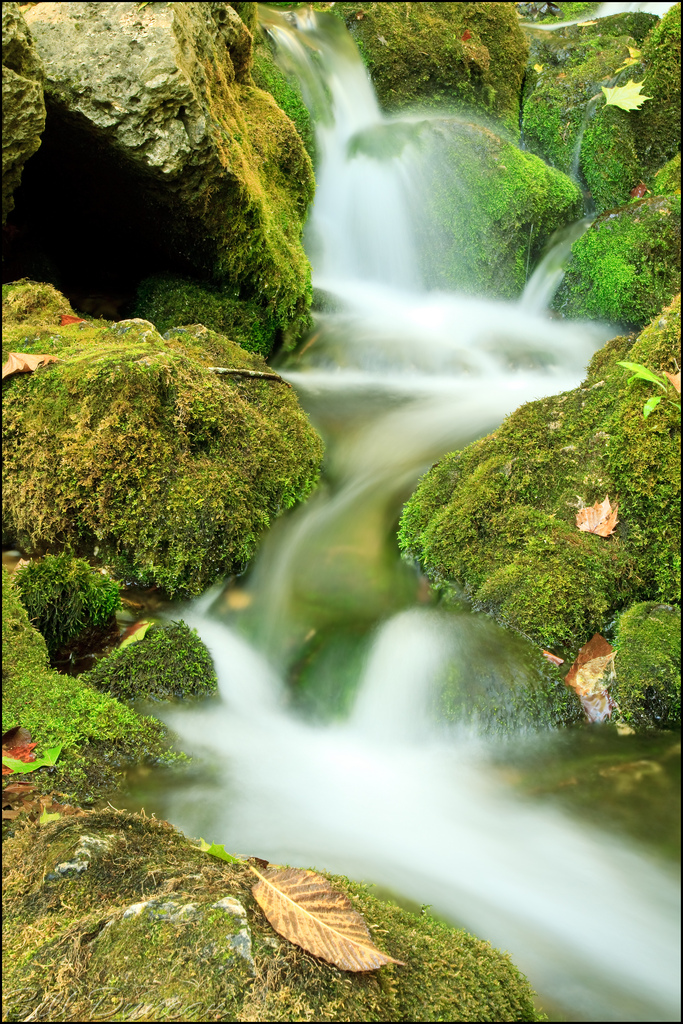
How did the town of Surprise get its unusual name?  It was named because of Mr. Turner’s astonishment that the petition he made for a U.S. Post office in his little dream town was approved.  The spring was used to power the area’s grist mill(s) from about 1850 until 1940.  Following the retirement of the mill the town of Surprise rapidly dispersed and Mother Nature quickly took over.  The image above shows the effluent about 500 feet or so from the exit of the spring’s mouth as it escapes down the side of a rather steep hill.

Technical details: Canon EOS 50D camera, EF17-40mm f/4L IS USM lens @ 27mm, ISO 160,  f/14, 1.6 sec

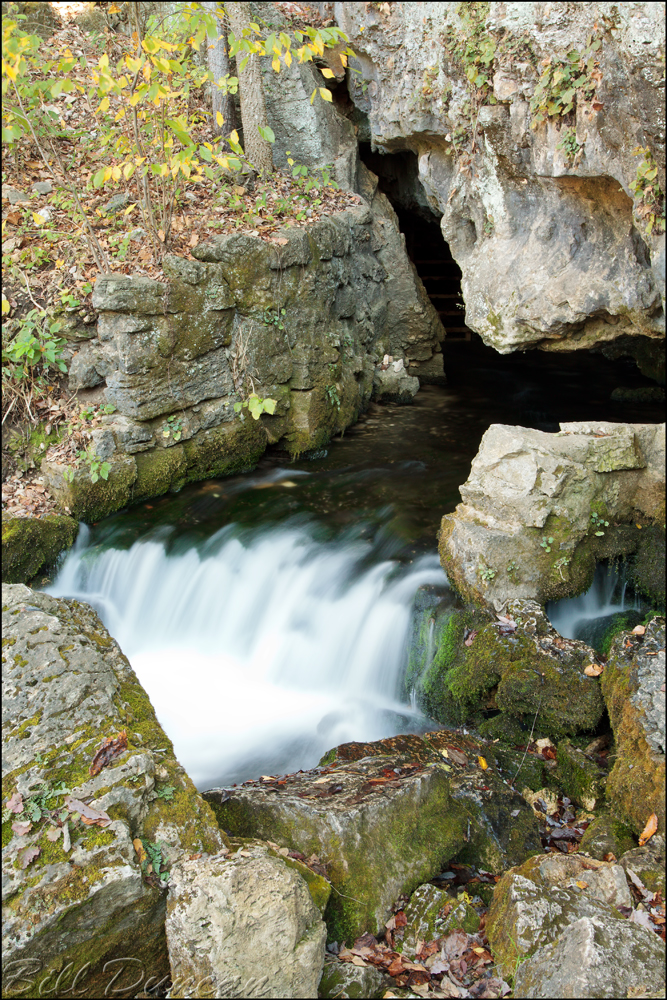
Here you can see the outlet of the spring as it flows at an average rate of 1.5 million gallons per day from the mouth of a cave.  This cave, which is located at the base of a 460 foot bluff is another reason that this area is a must-visit.  The lighting and other circumstances did not allow me to make any good photographs showing this steep bluff, but I look forward to trying to capture this one day.  If you look closely you can see some of the rock and concrete work that was used to shape the flume as well as the metal gate just inside the cave to keep modern knuckleheads from hurting themselves and the natural delicacies that reside within the cave.

Technical details: Canon EOS 50D camera, EF17-40mm f/4L IS USM lens @ 20mm, ISO 160,  f/14, 1/15 sec

A very quick walk following the creek that this spring creates takes you to this location where it empties into the Eleven Point River.  This river is a favorite of fishermen and float trippers and is an example of one of the prime waterways that can be found in the Missouri Ozarks.  The Turner Mill Recreation Area is a high quality habitat where an abundance of spring wildflowers and wildlife reside.  A day or weekend visit to this location is definitely worth the travel and I cannot wait to pay another visit.

Fountain Bluff Petroglyphs – Part Two

Technical details: Canon EOS 7D camera, EF24-105mm f/4L IS USM lens @ 32mm, ISO 160,  f/4, 1/25 sec

Reading into the Mississippian/Woodland periods suggests that birds and other animals were very important in the belief systems of the cultures in the mid-western United States.  Rock art showing birds in a multitude of forms is found throughout Illinois, Missouri and Arkansas.

Technical details: Canon EOS 7D camera, EF24-105mm f/4L IS USM lens @ 47mm, ISO 160,  f/4, 1/25 sec

This definitely looks like a raccoon track and it most likely is.  Being a nature super-freak, naturalist, hippie type, these periods of history or world cultures that existed then and now fascinate me.  Almost every single experience these people were exposed to was set in nature and the only explanation there was for any phenomena they encountered was embodied in nature.  Sure, via their myths and imaginations they thought up “super”-natural explanations, but there was no other answer that led these folks from nature as the true alpha and omega.  These days people in most of the world can go their entire lives without knowing nature except for the resources it provides that sustain them in their daily grind.  I get so tired of the apologists whose response to anything that counterpoints “progress” is by saying something like “humans are a part of nature as well”.  At one time in human history this was the case.  I believe that with 99% of contemporary people, this is no longer true.

Technical details: Canon EOS 7D camera, EF24-105mm f/4L IS USM lens @ 45mm, ISO 160,  f/5.6, 1/25 sec

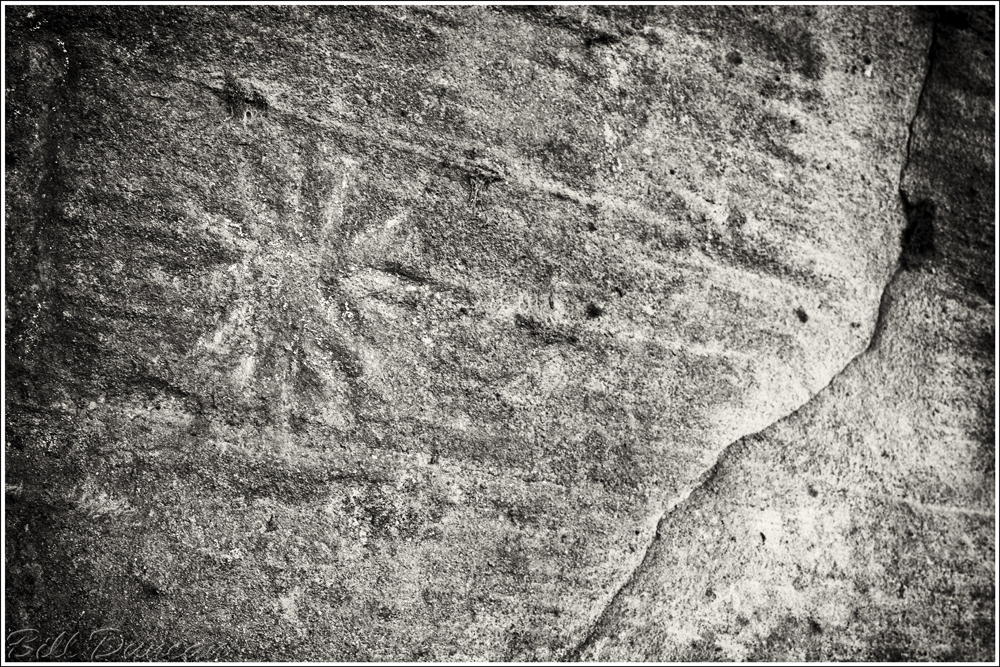
Another natural representation, a star is often represented in pre-colombian rock art.  It is thought that sites with astronomical representations mean this was an important spiritual location for those that made them.

Technical details: Canon EOS 7D camera, EF24-105mm f/4L IS USM lens @ 75mm, ISO 160,  f/4, 1/25 sec

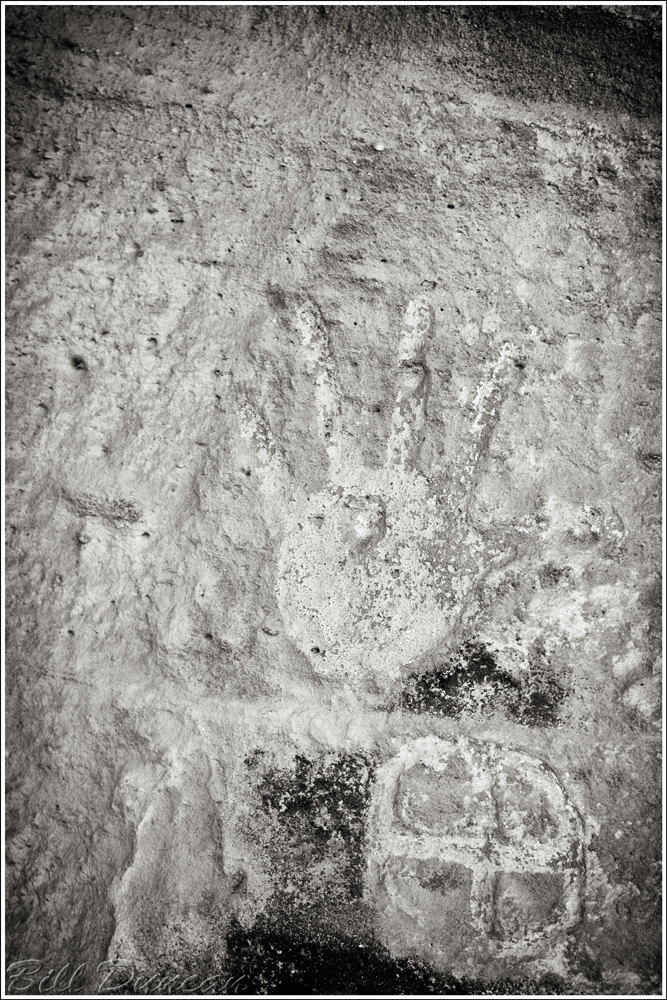
Petroglyphs and pictographs.  What’s the difference?  Pictographs were simply painted on the rock surfaces, while the less frequently encountered petroglyphs are carved or chipped into the rock.  I have read that these were originally painted over in a red-colored paint and that this helped maintain their condition over the centuries.  The petroglyphs pictured here were mistreated by those who were attempting to preserve these artifacts and most of the original paint is now missing.

Technical details: Canon EOS 7D camera, EF24-105mm f/4L IS USM lens @ 32mm, ISO 160,  f/7.1, 1/25 sec

Well, that’s all I have from the Fountain Bluff Petroglyph site.  As I was commenting to a friend of mine recently, I never come away from my first visit to a location with the images I really want.  To get what I find are the best compositions it seems that I need to visit a location several times to get to know it better.  I also realize I did not see all the artifacts at this site and I look forward to exploring more around these bluffs.