Snowberry Clearwing Moth

Snowberry Clearwing
Snowberry Clearwing

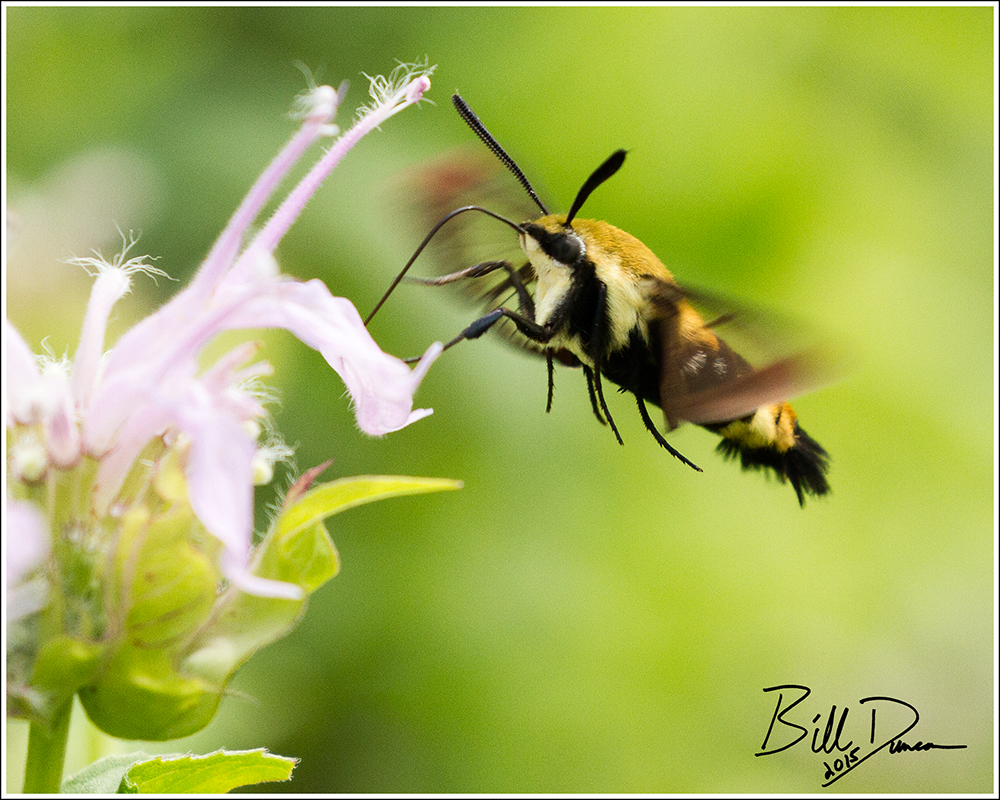
The Snowberry Clearwing is a member of the Sphinx Moths (AKA Hawk Moths).  Its name comes from the fact that one of this species important larval foods is the Snowberry plant.  Sphinx moths are important pollinators and are often mistakenly identified as Hummingbirds or Bumble Bees due to their size and their habits of visiting flowers.  Most Sphinx Moths are active nocturnally or at dawn and dusk, but the Snowberry Clearwing is diurnal.  One Missouri favorite, the Missouri Evening Primrose of glade habitats, shares an obligate pollination mutualism with a species of Hawk Moth, meaning that no other animal can provide pollination services for this plant.  This is a photography project someday in the future!

A Sphinx Moth
Not a Humingbird…


The caterpillars of these moths are known as “hornworms”, and they are just as fascinating as the adults.  Included in this group is the Tobacco Hornworm, which is a notorious pest on tomato plants.  A useful natural controller of hornworms are the parasitoid braconid wasps that lay their eggs on the developing moth and whose larvae then eat the caterpillar from the inside out.

Not a Hummingbird...
A Sphinx Moth

Next time you are in the garden, take a closer look at that bumblebee or hummingbird.  It might not be what you assume it to be!

Thanks for visiting…

OZB
email: handsomeozarkbillyboy@gmail.com

The Flies

Carrion Fly
Carrion Fly

The beetles (order Coleoptera) are famous for being the most diverse group of animals on the planet.  The flies, however, are not too far behind and many people are surprised to hear how many forms and places flies can be found.  I have been able to find and photograph a few of these forms in my own backyard and will share them here.  I photographed this carrion fly (Calliphoridae) hanging out on my rosinweed.

The Soldier

Soldier Beetle
Soldier Beetle

Most soldier beetles are true opportunists when it comes to tucker.  While not being the most efficient pollinators, these beetles can be found around almost any flowers from mid to late summer where they feed on nectar, pollen and small insects like aphids and ants.  This one was photographed on my common milkweed (Asclepias syriaca).

Thanks for stopping by.

OZB
email: handsomeozarkbillyboy@gmail.com

“Damsel” by Name Only…

Damsel Bug
Common Damsel Bug

I imagine the conversation may have went something like this…

Aphid (with a cockney accent, of course): “Oh, hello, who are you then?”
Damsel: “Name’s Damsel…”
“Oh, that’s a lovely name.  My name is Aphid.”
“No, I think I’ll call you ‘Sugar Bag.’ “
“Sugar Bag? Now that doesn’t sound Aghhh!…”

😉

IMG_3114
Sugar Bag

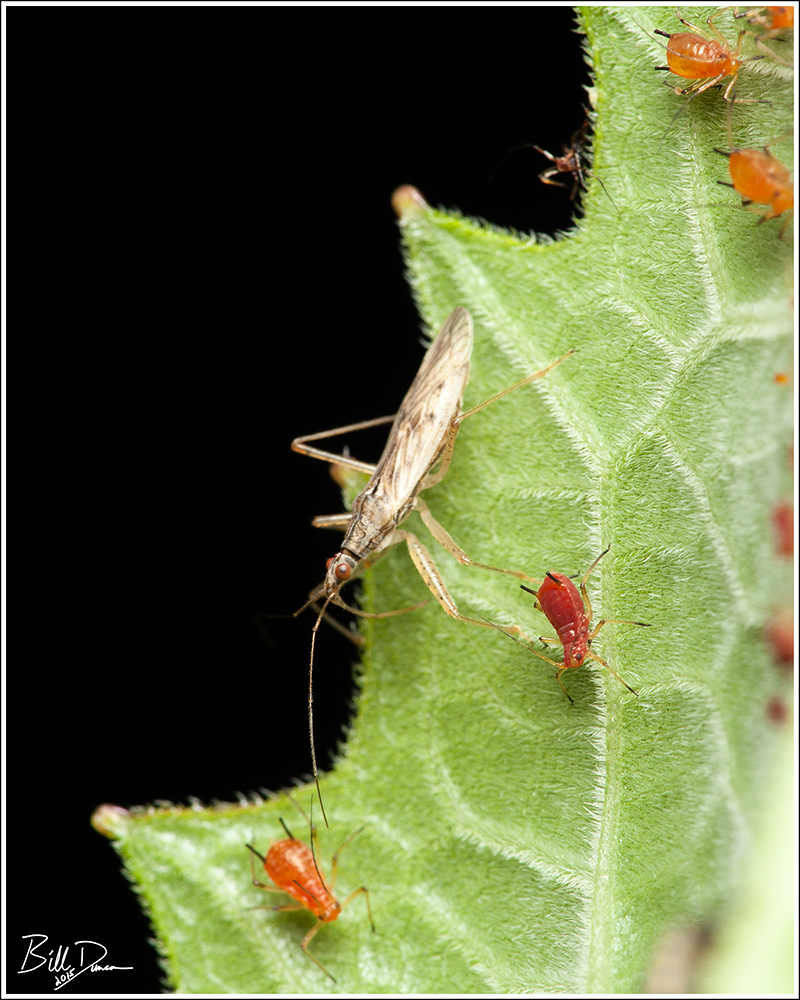
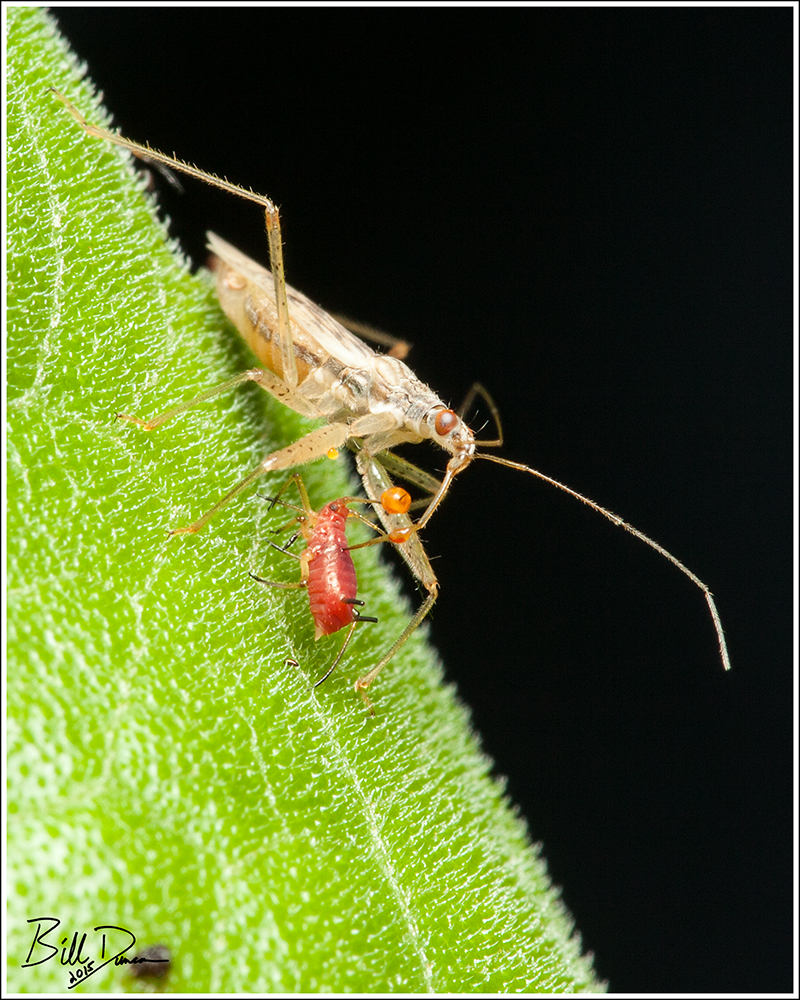
I caught a glimpse of this guy early one morning patrolling around the surfaces of my rosinweed and decided to watch.  I didn’t wait long to observe the hunt.  This bug is definitely in the family Nabidae, and I am going to call this one the common damsel bug, Nabis americoferus, due to it matching a few photos and the fact that this is considered to be the one of the most common hemipterans in the United States.

Nabis
Nabis

I have read that these guys overwinter as adults and have a wide selection in the prey they choose.  It seems that if it is smaller than they are, or close in size at least, they will poke it and suck out their hemolymph.  Like I said, “damsel” in name only…

Thanks for visiting!

OZB

email: handsomeozarkbillyboy@gmail.com

Death of a Pollinator

IMG_3293


I had been watching this exquisitely camouflaged spider on this Common Milkweed (Asclepias syriaca) all week.  This evening I noticed it had grabbed itself some tucker and grabbed the camera.  In these two photos (not the same bee) check out the pollinium (pollen sacs) that are attached to the honeybee’s legs.  This is quite the interesting pollination system that milkweed use.  As an insect is having a meal on the nectar the flowers provide, the pollinium attaches itself to the leg of the visitor and is removed from the donor flower.  Upon removal, the pollen sack is turned perpendicular to the receptor sight, known as the “stigmatic slit” – thus avoiding self-pollination.  A few minutes or so later, as the insect is visiting other flowers, the translator arms begin to dry and that flat sack of pollen now orients itself to be able to fit in this slit – thus pollinating another flower.  Often, these pollinium can attach to themselves, forming long, branched chains, which may increase the chances for successful pollination.

IMG_3265

Obviously the honeybee is not the natural pollinator of milkweed, but this exotic insect is now the primary pollinator of Asyriaca and several other milkweed species.  Scientists are unsure which native species were primarily responsible for this service prior to the introduction of the honeybee, or why they are not found in more abundance currently.  With the current plight of both the honeybee and the monarch butterfly, it would be a wise thing to plant as many milkweed as we can in neighborhoods and in reconstructions of prairie habitats.  So far my milkweed are looking good and I hope to collect plenty of seed this year (aphids really limited flower and seed production the last two years).  So, if you are interested in planting some milkweed, let me know.

OZB

email: handsomeozarkbillyboy@gmail.com