"What a thousand acres of Silphiums looked like when they tickled the bellies of the buffalo is a question never again to be answered, and perhaps not even asked." -Aldo Leopold
I heard about the death of a friend this week. I had only known Gary since March, when I met him and his wife, Patricia, while we were all looking for American Woodcock at Young C.A. one evening. I did not know Gary long or even very well, but to give an idea of what kind of person he was, I will share this story.
I lent my binoculars to the Bohns in order to share the Woodcock I was watching and photographing. We watched the bird while we introduced ourselves and after a few minutes said goodnight. When I arrived home later I discovered I was without my binoculars. I have a horrible habit of leaving equipment on top of my car and driving away. Forgetting that I had lent the binoculars to Gary and Patricia, I assumed I had made yet another expensive and embarrassing mistake. The next day at the office, still smarting from my assumed mistake, I noticed I had a voice message. It was Gary informing me they had my binoculars. Gary had remembered what he learned about me the night before and taken the steps to track me down to make sure I got my binoculars back.
Gary and I met for dinner later that week and discovered we had several things in common. He shared that he had worked as a photographer for the St. Louis Post Dispatch for a number of years. In recent years he had gotten more interested in birds, butterflies, habitat restoration and nature photography. We had agreed to get together in the near future for some spring birding/photography. We were only able to do so together on a couple of occasions, and the photo above was from one of these outings. Gary took me to a popular birding destination at Weldon Springs C.A. – a place I knew about but had never visited before. We had pretty good luck with getting a number of nesting songbird species, including hearing no fewer than three singing Cerulean Warblers. We were both able to get shots of this cooperative Blue-winged Warbler. Looking at the images on the back of his camera, I liked his better.
In May, I had shared with Gary the details of a trip that Steve and I took to Quivira NWR and Cheyenne Bottoms in central Kansas. He was hooked and couldn’t wait to get there himself. I shared the details we had gathered and I know he made the trip sometime in the weeks prior to his passing. Unfortunately I was not able to hear from him about his experience there. I do hope he enjoyed it.
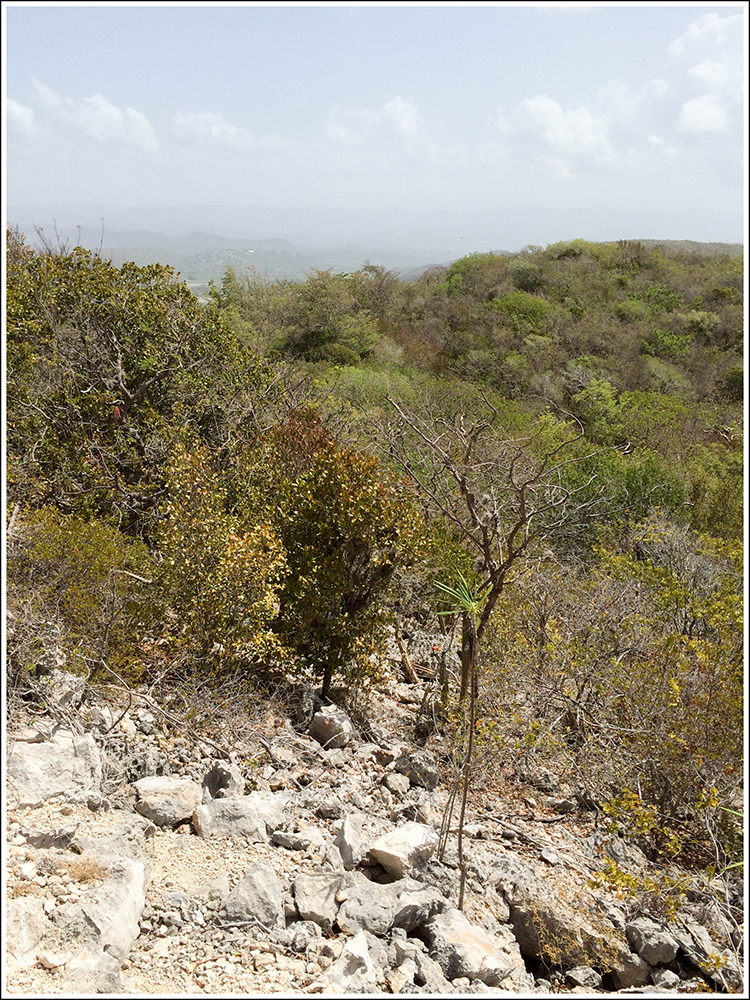
Ask the average gringo about their perception of Puerto Rico’s climate and habitats and I am sure most would describe heavy rains associated with tropical rainforests. However, due to rain shadow effects from the central mountain chain known as the Cordillera Central, much of the southern coastal regions receive very little direct rainfall. On my first day of exploring southwestern Puerto Rico, I found myself a 20 minute drive west of Ponce in the Dry Forest of Guanica. Guanica receives about 30″ of rainfall per year, which is very close to the annual average for the state of Missouri. However, with the harsher tropical suns, coastal winds and rocky/sandy soils, this amount of precipitation does not go nearly as far in Guanica. This coastal habitat is much more dry-adapted than the comparatively lush Ozark forests of Missouri.
Welcome to Guanica
Typically dense and developed as Puerto Rico tends to be, the entrance to this reserve was literally on the edge of a subdivision, which is where I found myself with an hour to wait near sunrise before the gates where opened. No worries, I grabbed the camera and the binocs and did some of my first real birding on the island. With about 12 named trails of who knows how many total miles, Guanica (~10,00 acres) offers a lot to see, including a Guayacan tree estimated to be over 700 years old. The photo below shows a monument I was to see elsewhere on the island. These identification markers were carved by FDR’s Civilian Conservation Corps (“Las Tres C” in Puerto Rico). I had never given a thought about the CCC’s presence in U.S. territories like Alaska and PR, but it turns out they were quite active in PR – not only building roads and other structures but replanting forests as well. Applauds to these guys for replanting so many trees and helping to set up these reserves. However, along with the National Forest Service the CCC unfortunately participated in bringing exotic, “desirable” trees like mahogany, teak and eucalyptus. Many of these trees were chosen for their fast-growing ability and their tendencies to suck up a lot of water in order to dry out the island. Consequently, in Puerto Rico’s protected natural areas, a significant amount of the forests’ composition is Australian or Asian and completely altered.
CCC-Puerto Rican Style
I parked at the visitor’s center, which is located on the site of an old sugarmill ruins. I was unable to find a single trail sign. I had read the park ranger on duty spoke English, but if the attendant on this Saturday morning did, maybe he was hesitant to do so with the sweaty, ginger gringo who wielded no more than a dozen words of Spanish (see below).
Pathetic Gringo
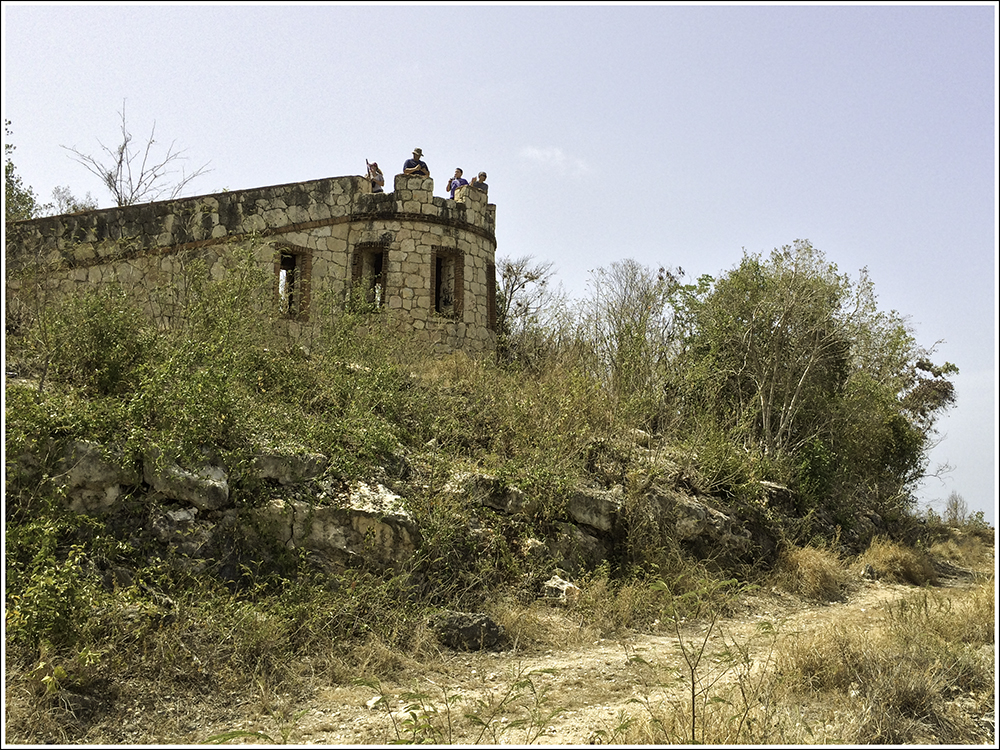
Always a good idea while out in wild areas, but definitely a good idea in PR is to use a GPS device. Every map I could find was deficient in more ways than one. The GPS unit I found to be the best during my visit was the map app on my iPhone. Also, as you might have guessed, the Guanica Dry Forest is DRY. Bring plenty of water. I thought the three liters I brought on this hike was a bit of overkill. However, at the end of my ~ eight miles of hiking up and down these coastal hills under extreme heat and sun, I was completely dry. I decided to head out on the most promising of the retired forest road trails and it wound up being the one I hoped it was, leading me to the coast where I was to find Fort Capron that was built by Americans in 1898 and is really more of a lookout tower. There is also a lighthouse nearby, but not all that interesting either.
Fort Capron
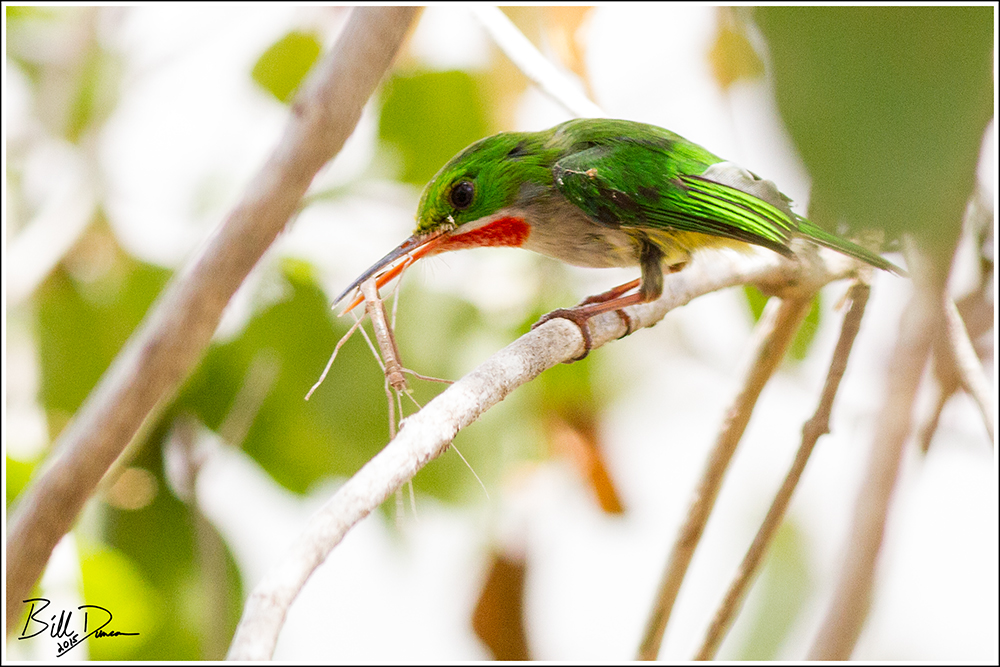
Okay, enough with the tour guide stuff. Early in the day, I made my first acquaintance with what would turn out to be my favorite bird of the trip – the Puerto Rican Tody. Check it out…
Puerto Rican Tody
I would find these guys all over my travels in southwestern PR. They are related to and behave somewhat like the Kingfishers, are slightly larger than a Chickadee, are nearly as bold as a Kingbird and as brilliantly colored as a Parrot. I captured the one below as it tackled a stick insect.
Puerto Rican Tody
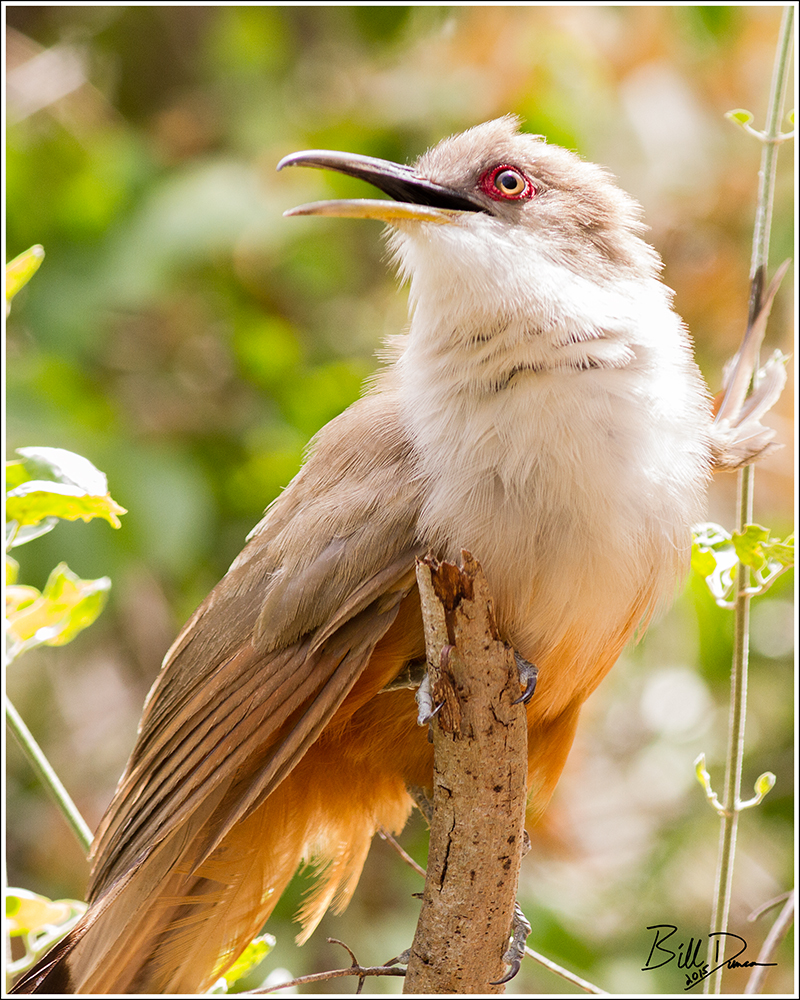
Much of the trails of Guanica are old forest roads that cut through the habitat, mostly along hilltops. Along most of my hike I was faced with thick walls of scrubby vegetation about 10- 20 feet high, often so thick that I was faced with a mere meter or two of visibility. Even though I could hear bird vocalizations, I was often at a lost to see or identify the species. With patience, however, views can be had. Near the fort, where the hillside slopes got steeper and the coast loomed near, I heard what I immediately knew to be cuckoo on their way up to intercept the trail – the Puerto Rican Lizard Cuckoo. These birds were at first so close, I couldn’t possibly get one in the frame without cutting off significant portions.
Puerto Rican Lizard Cuckoo
Towards this end of the reserve I was presented with more open views.
Guanica Hillside
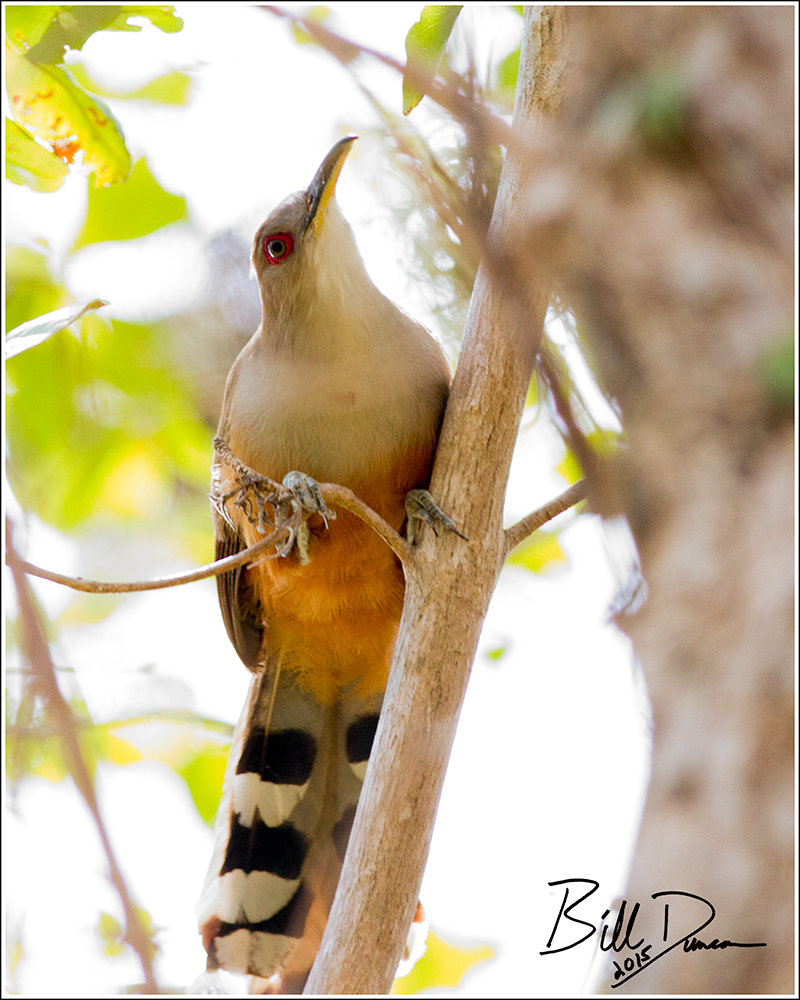
I was quite fortunate to find the quiet and shy Mangrove Cuckoo during this hike.
Mangrove Cuckoo
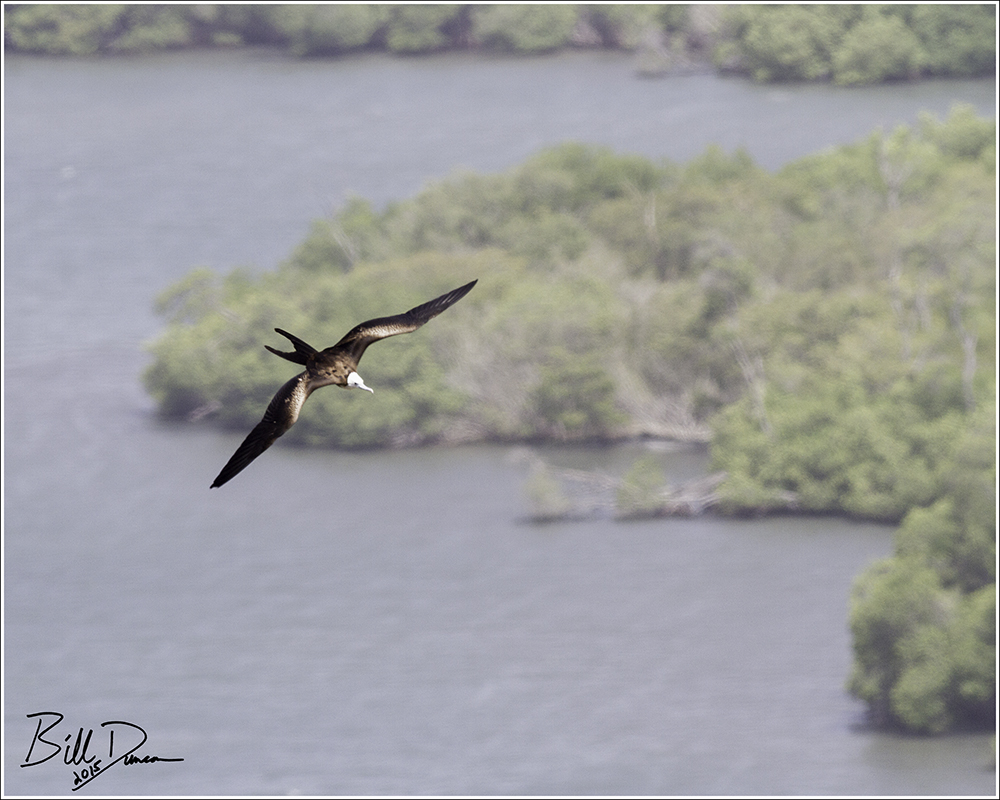
Abundant in Puerto Rico and across Caribbean coastlines, the Magnificent Frigatebird is a seabird that feeds by catching fish on the wing. This is a long-lived species. The one pictured below is a juvenile.
Magnificent Frigatebird
It seemed that the closer I was to the coast, the drier the habitat became. The Caribbean Sea is just behind me where I stood to take the picture below.
Cactus Scrub
Well, that covers my trip report for the first of three days. Southwestern PR is a great place for the birder-naturalist. Of the approximately 17 or so endemic birds on the island, all but the Puerto Rican Parrot can be found here. Also, highly varied habitats can be visited within short driving distances. Stay tuned for my next day’s trip-log where I will be summarizing my day spent at Cabo Rojo NWR and Salt Flats.
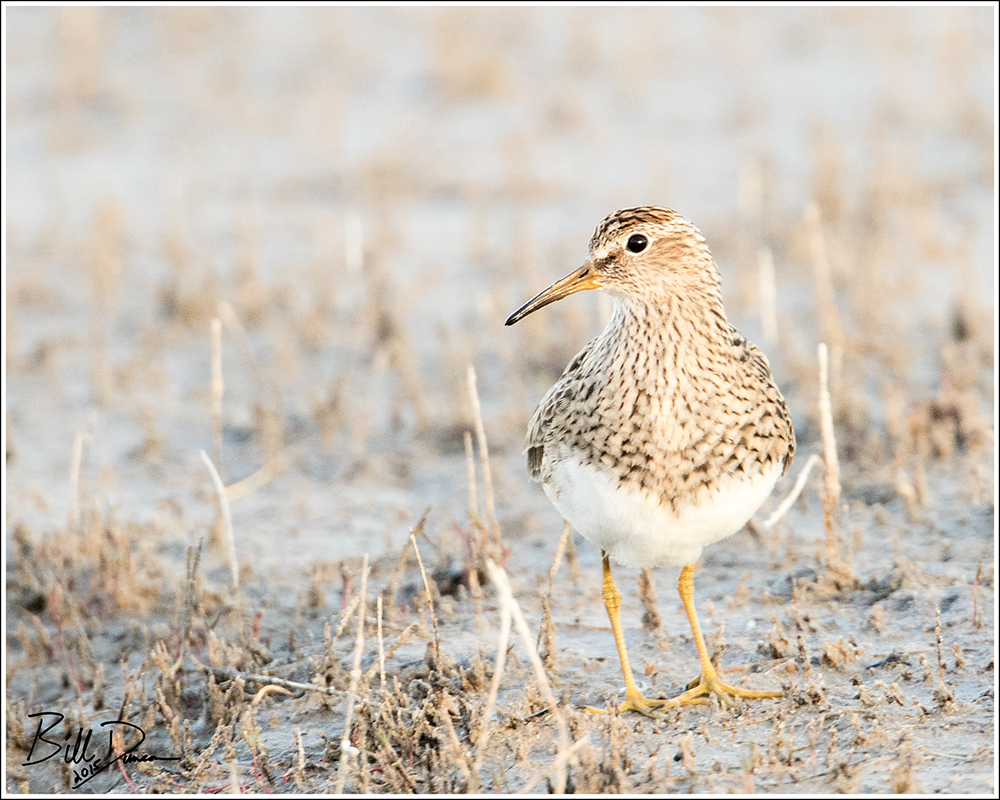
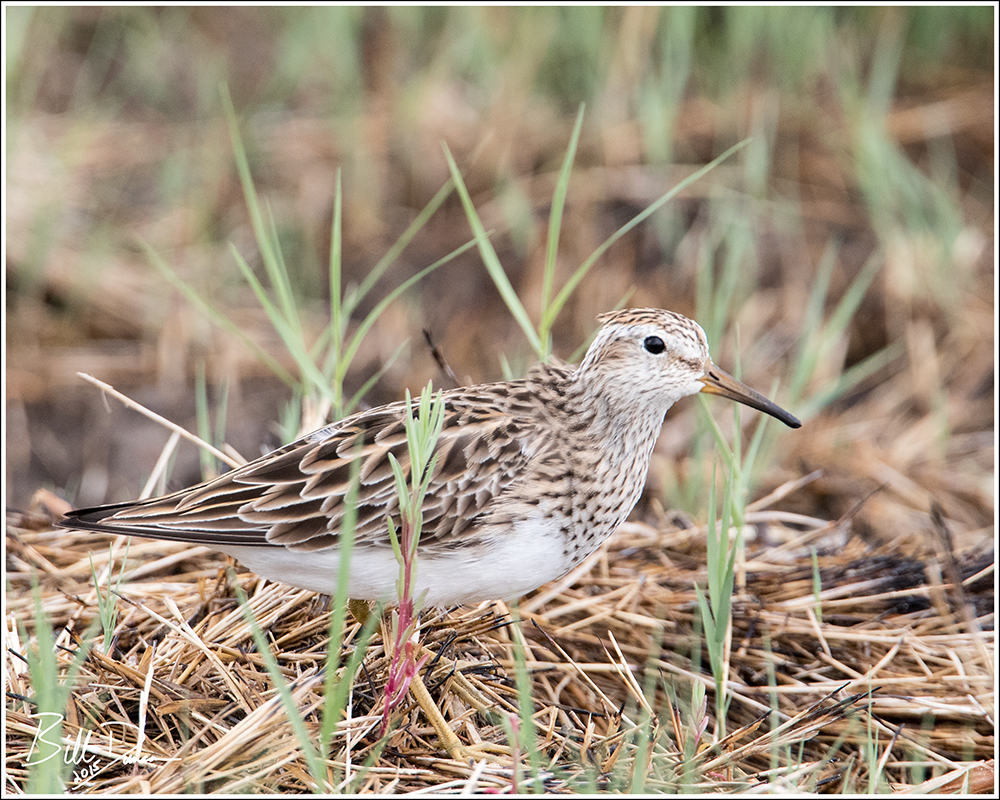
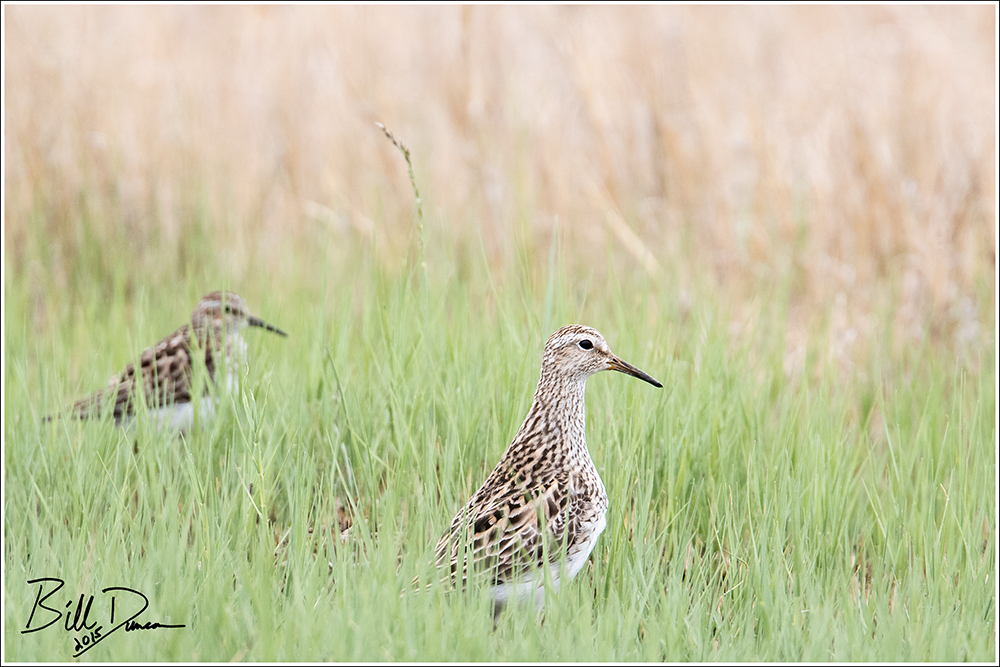
One dream I have is to visit the tundra nesting grounds of the shorebirds in the arctic of northern Alaska and witness the territorial displays and nesting activities of these fascinating creatures. Probably the species I am most keen on observing would have to be the Pectoral Sandpiper.
Pectoral Sandpiper
The “Pec” looks like a larger, slightly better dressed Least Sandpiper, and are relatively common to see during migration in Missouri. It is when on the nesting grounds when this “pre-lek” species shows its true colors. Watch this video and this video. Their “thunder booming”, reminiscent of a Prairie Chicken, while in flight display is truly impressive and can be heard here:
As the above photo suggests, this is a species more comfortable with its feet in grass than on the sand or mud, such as typically found with other calidrids.
Found rarely in Missouri, the Yellow-headed Blackbird was a real treat for Steve and me to find in Kansas. I had seen one or two during our trip out west last September, but not in the numbers we were to experience this spring at Quivira.
Yellow-headed Blackbird
Their habitat preferences, habits and behaviors seemed to me to be quite similar to the more familiar to the easterner – Red-winged Blackbird. Most will not agree, but I found the song of this species to be preferable to the Red-winged.
Yellow-headed Blackbirds
We found a couple flocks that were surprisingly large. Containing a goodly number of Brown-headed Cowbirds, we watched these flocks roll across the wetlands as the clouds rolled with the winds across the big skies of Kansas.
In that half-forgotten era, With the avarice of old, Seeking cities he was told Had been paved with yellow gold,
In the kingdom of Quivira-
Came the restless Coronado To the open Kansas plain, With his knights from sunny Spain; In an effort that, though vain,
Thrilled with boldness and bravado.
In the year 1540 a band of Spaniards led by ultra-badass Francisco Vasquez de Coronado set out to find the fabled “Seven Cities of Cibola” within the kingdom known as “Quivira”. You can probably guess why. The region was supposedly overflowing with rich mines of gold and silver, and New Spain was bound and determined to get some of that. Coronado’s righteous expedition, into what is now central Kansas, yielded no riches to return to the crown and was thus considered a failure.
Fast forward 475 years when a two-man expedition, this time based in the french port of Saint Louis, set out for the Kingdom of Quivera. This expedition would in fact find riches that Coronado wouldn’t have noticed unless they were hanging from his fire spit. Way back in early May (where in the world is time going?), Steve and I packed up the N.E.V. and headed west to Quivira NWR to observe one of the natural wonders of the great plains.
Long-billed Curlew
League by league, in aimless marching, Knowing scarcely where or why, Crossed they uplands drear and dry, That an unprotected sky
Had for centuries been parching.
But their expectations, eager, Found, instead of fruitful lands, Shallow streams and shifting sands, Where the buffalo in bands Roamed o’er deserts dry and meager.
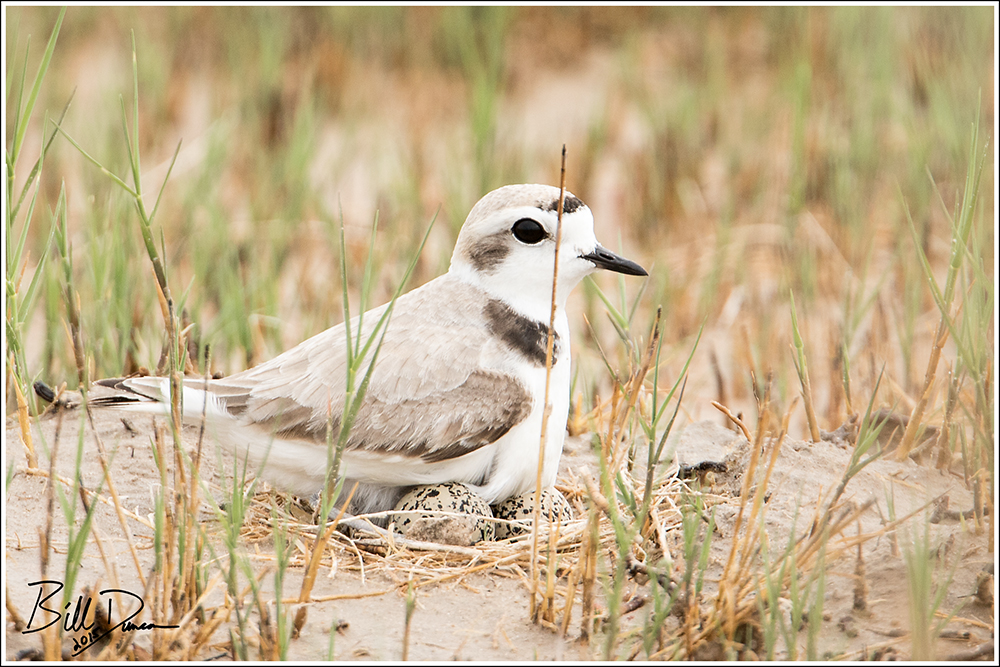
This section of south-central Kansas (near the town of Great Bend) is a crossroads of different habitat type and is a critical staging area for migrating birds throughout the central flyway. Parts tallgrass prairie, shortgrass prairie, sand prairie, salt marsh, salt flats and fresh water wetlands – this region is used by birds of the east and the west. More than 340 species of bird have been documented within the NWR and it has been estimated that up to 90% of all shorebirds that use the Central Flyway (and up to 45% of all NA shorebirds) on their way to arctic nesting grounds will stop here and in nearby Cheyenne Bottoms Reserve to have a fill-up.
Blue Grosbeak
Back to the scenes more trite, yet tragic, Marched the knights with armor’d steeds; Not for them the quiet deeds; Not for them to sow the seeds
From which empires grow like magic.
For centuries the Europeans looked upon the prairie – particularly the short-grass regions of the great plans – as worthless desert. Although the livestock – cows and green-colored deere the Europeans introduced nearly extinguished these grassland habitats, these few low and wet patches were mostly spared and are now offered some, if imperfect protection.
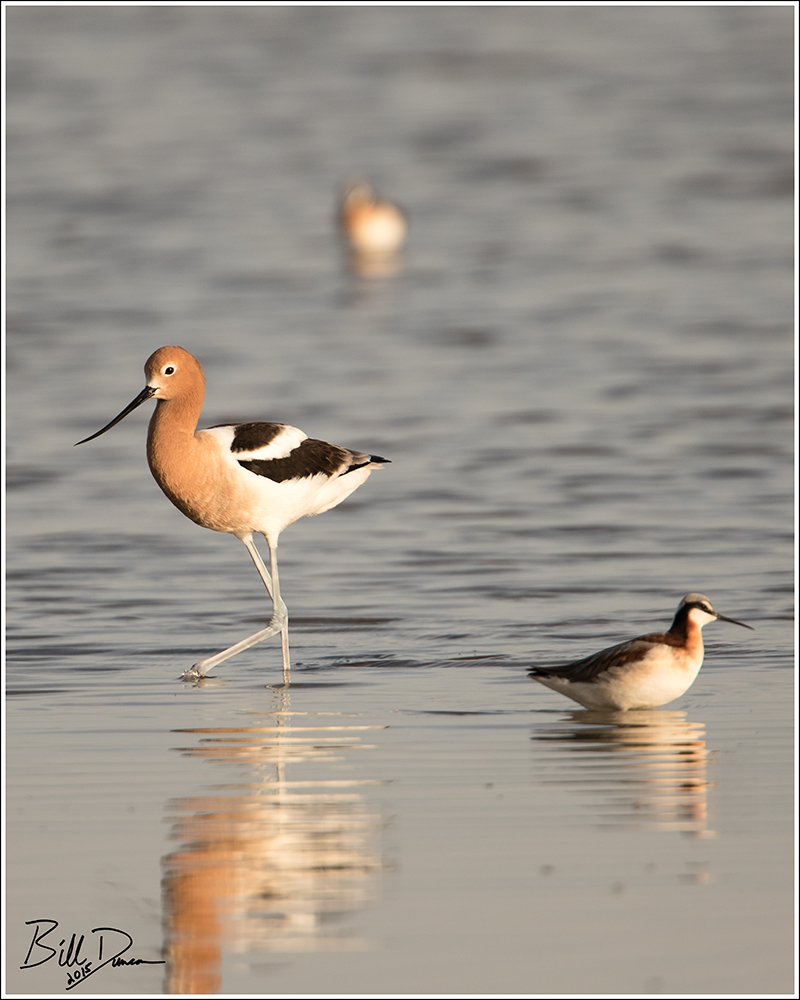
American Avocet and Wilson’s Phalarope
Thus Quivira was forsaken; And the world forgot the place Through the lapse of time and space. Then the blue-eyed Saxon race
Came and bade the desert waken.
— Eugene Ware —
It has been a crazy spring, with this trip, a short sail along the Jacks Fork and a puddle jump to the enchanted isle of Puerto Rico (another former Spanish colony). I will be sharing much more about the birds and ecosystems of the Kingdom of Quivira as well as the rest of these locals over the coming weeks and months.
Thanks so much for paying a visit and keeping in touch.
OZB
You can email me at: handsomeozarkbillyboy@gmail.com
We had been anxious to get Steve’s newly acquired canoe wet for sometime. The only questions were, “where to put in?” and “how to find the time to do so?” Because we found ourselves near the halfway mark of the summer season, we knew the favored Ozark streams would potentially be packed with the pop-top kind of crowds. Getting familiar with Mingo, which lies near Puxico in south-east Missouri, had been near the top of my list for sometime. The opportunity to do so during what might be considered the most mildly pleasant summer of our lives made the decision easy.
On what was to turn out to be a perfect July day, I was on the road at 04:00, breaking my fast with an apple, granola bar, and French press that I prepared the night before. Arriving at Steve’s promptly at 05:30, I found he already had his Dagger Legend canoe tied into his tiny Toyota Tacoma – a somewhat comical appearance. We hit the road and it worked out great. We were in the water within ditch number five by a little after 08:00, paddling slowly northward towards Monopoly Marsh, the true Wilderness of Mingo.
In less than fifteen minutes we spotted our first wildlife find of the day, this perched Mississippi Kite. This was my first experience of the fact that Steve had previously explained; wildlife react differently to humans in the water than they do to people on land (a learning that caused me considerable agitation throughout the day). We were able to glide right under this spectacular bird without disturbing it. Not knowing how long I might have, I burned through nearly half a memory card before being satisfied.
Mississippi Kite
Other birds of note in our list, which grew to near 60 species by the end of the day, were Acadian Flycatchers, Yellow-billed Cuckoos, Wood Duck, Yellow Warbler, and Canada Geese.
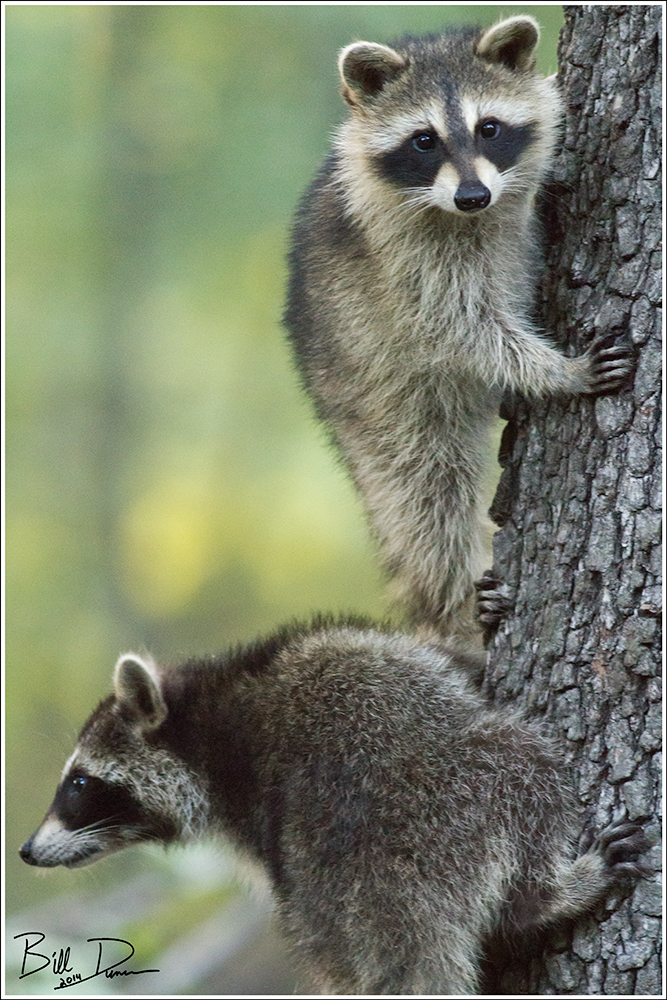
To save space in the dry bag inside the canoe, I brought only two lenses on this trip. Covering the extremes of focal lengths, I brought a wide-angle zoom and a fixed 400mm f5.6. As I mentioned above, this proved to be almost heartbreaking, as I have never experienced “having too much lens” in a wildlife photography situation. But, this would turn out to be the case on several run-ins with wildlife throughout the day. It was in ditch number five that we encountered our first of several groups of raccoon. A couple times we came across a mom with up to four youngsters. We were usually so close that I had to settle for head-shots! 😉
Mingo Raccoons
In October, 1976 Mingo and Hercules Glades Wilderness areas became the first of the officially designated Wilderness Areas in Missouri (1). At over 22,00o acres, Mingo is the last significant remnant of swamp and marshland in Missouri, which prior to European settlement were the primary habitats in the Missouri boot-heel.
Mingo Raccoons
Mingo was named for the mixed tribal peoples known by this name that were composed of assorted Iroquian tribes (2).
Mingo Raccoons
Oh, how I wish I would have had a medium-zoom lens on this trip. I was often too close to take an image of any kind. Oh well, enough about this, just learning for the future. We continued following ditch number five, with the flooded hardwood forest of bald cypress, tupelo and assorted oaks on one side of us until we came upon the clearing known as Monopoly Marsh.
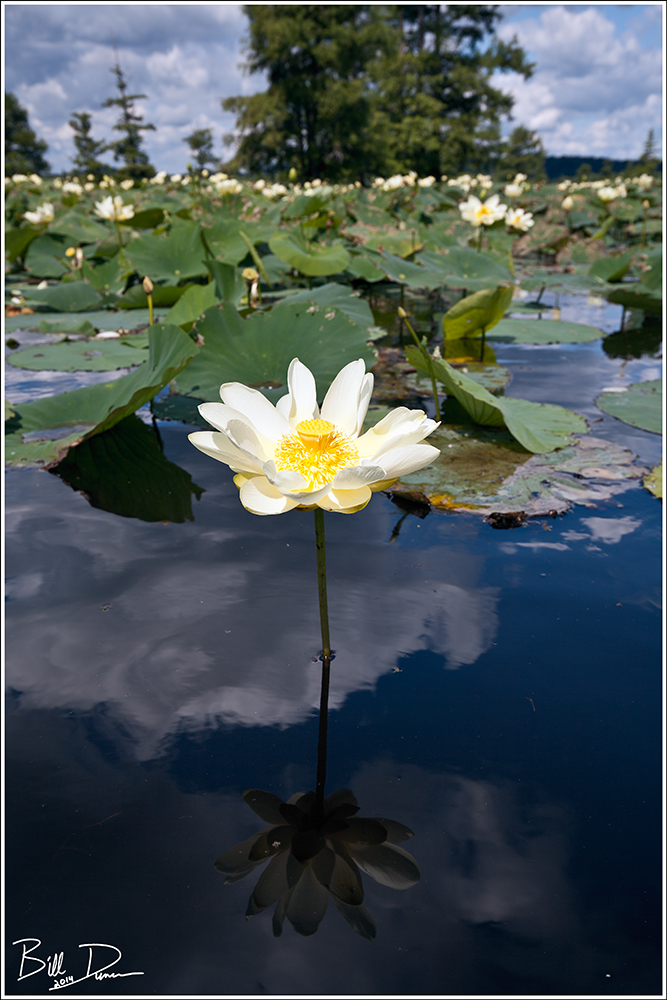
American Lotus
We knew that by this late into the green season the marsh might be impenetrable due to aquatic vegetation such as American Lotus, which we found in peak bloom. For the most part we were able to make our way around well enough, although much of the marsh would have been quite difficult to navigate by paddle.
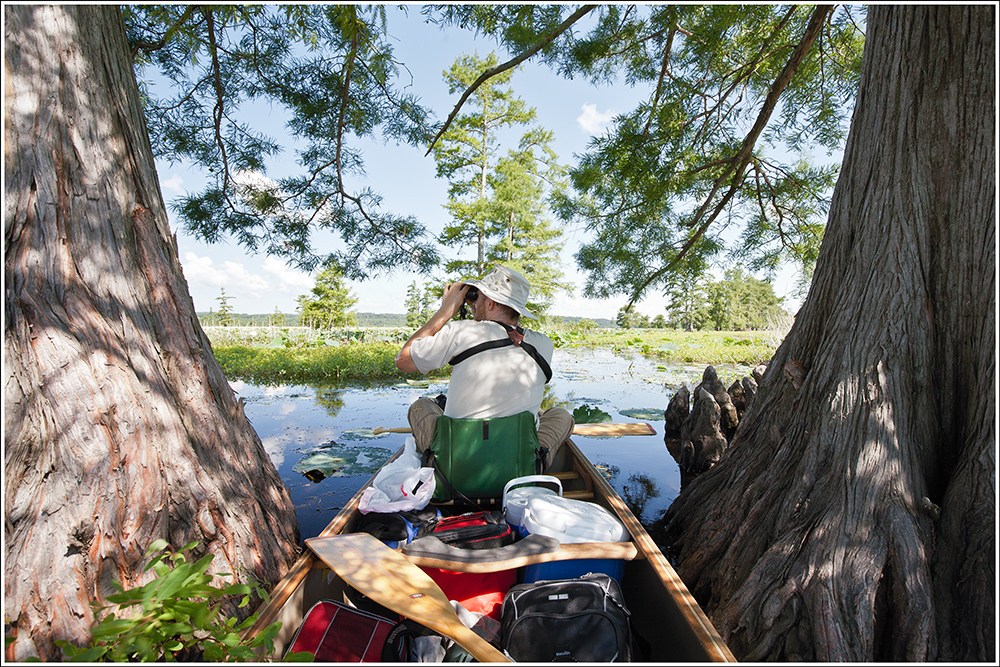
The Only Way to Travel
An auto tour route is available that gives access to the refuge area, but the only way to see the Wilderness is by boat. The Wilderness act of 1964 put into law that no motorized equipment can be used within a Wilderness area. It was interesting to hear the staff in the Refuge Visitor’s Center say they could only use hand tools to cut through tree falls across waterways in the Wilderness. I suppose this also means to not expect helicopters or ATVs to come to the rescue in case of emergency?
White-tailed Deer
White-tailed deer where more numerous than the raccoons. The refuge is more popular for the opportunities for waterfowl hunting, although I believe at least a couple managed dear hunts are conducted each year. However, without true predators, it seemed to me that the wilderness area was already being potentially overrun by these animals. We pushed groups into flight nearly every ten minutes along the waterways.
Did I mention all the raccoons?
More Mingo Raccoons
Mammals and birds are definitely not the only groups of animals that thrive in this Wilderness. Reptiles and amphibians are quite abundant and are probably second only to the insects in shear biomass. We glided gently passed this Broad-banded Water Snake, which feeds on other reptiles, amphibians and fish.
Broad-banded Watersnake
While in Monopoly Marsh, we stopped under a couple of well-placed cypress in order to watch one of the year-long resident Bald Eagles soaring overhead.
Swamp Thing
After going about as far into the Marsh as we dared try from the south, we headed back to our put-in and had some lunch. Already the day was worth every bit of respiration, but there was so much more to come!
The Dagger Legend
After lunching on the best hippy food Mother Earth provides and paying an entertaining visit to the newly constructed Visitor’s Center, we decided to put it at Stanley Creek. Here we planned on heading downstream and then up into the marsh again via the Mingo River. A GPS or good map skills are critical in finding your way in this area by boat.
We paddled down Stanley Creek with much ease, due to the nearly non-existent currents within these streams. It was in this section that we came upon the highlight of the day for me and one I will never forget. River Otters!!!!
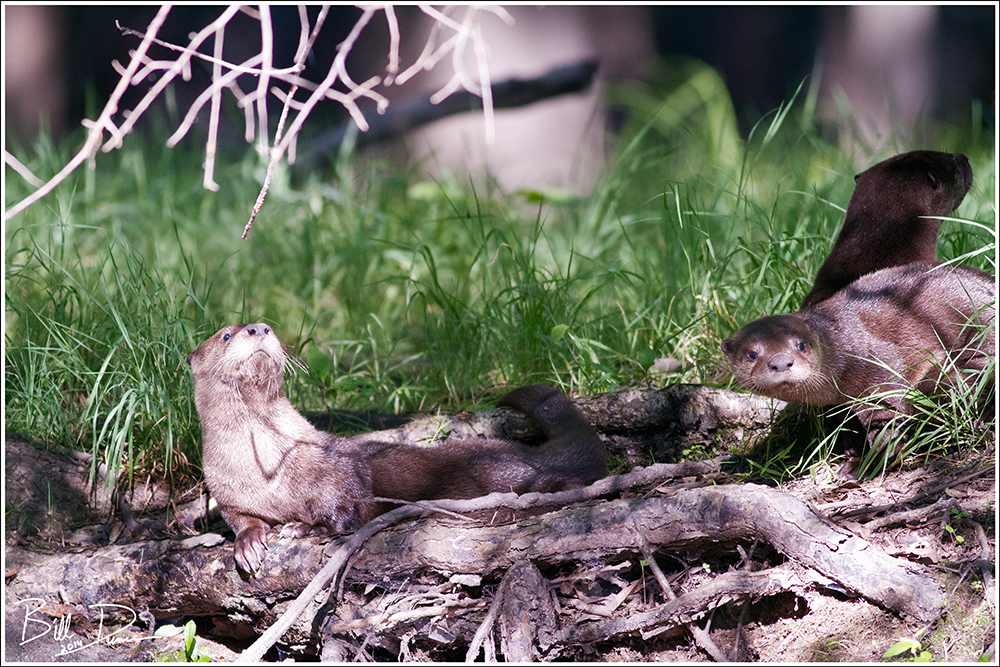
Along a dry bank, almost perfectly eye-level to where we sat in the canoe, we watched a mom and four otter cubs. I tried my best to capture what Steve so wonderfully described as a “collective ball of play”, but mostly struck out due to their non-stop activity and the fact that they were often obscured by vegetation.
Collective Ball of Play I
It was quite the experience. We let our momentum move us slowly closer to the bank, watching as play was interrupted by periodic rests and grooming opportunities.
Collective Ball of Play II
Whether due to poor eyesight or that we were mainly a floating log that was downwind, we were quite surprised how close we were able to drift without the alarm being raised. Finally, we put on the breaks and maintained our distance to take in the show. Once in a while the play would evolve into a slide into the water by one or two of the animals, followed by heading back onto the land, not to stray too far from mom’s protective gaze.
Lontra
The history of the River Otter in the Show-me State is, of course, terrible and controversial. Between the 1930s and early 1980s otter numbers hovered somewhere between 30-70 animals, due primarily to the loss of marsh and swamp habitats like those of Mingo and because of over-harvesting by the fur industry. Following the River Otter being classified as endangered in Missouri, the Missouri Department of Conservation finally began a restoration project in 1982. This was considered a success as River Otter numbers rebounded into the 1990s. As the animals searched outside their minuscule and not-increasing natural habitats, they discovered that other animals, such as one of their primary prey items – fish, were also being stocked by man (3, 4, 5, 6).
To Relax or Play?
Finding easy prey in stock-ponds, the population grew even more. Unsurprisingly, the naked apes could no-longer put up with a species trying to compete with its sport and maintenance of the Missouri River Otter population began via a trapping season in 1996.
Collective Ball of Play III
Destruction of commercial stock fish ponds and natural fishing holes along with the usual claims of “property damage” were used to justify the change from restoration to management.
Please don’t get me wrong, I have nothing necessarily against hunting or trapping, especially when we have exterminated all the original predators long ago. However, I cannot see justification in this day and age for the hunting season on any predator in this country.
Commercial Menace?
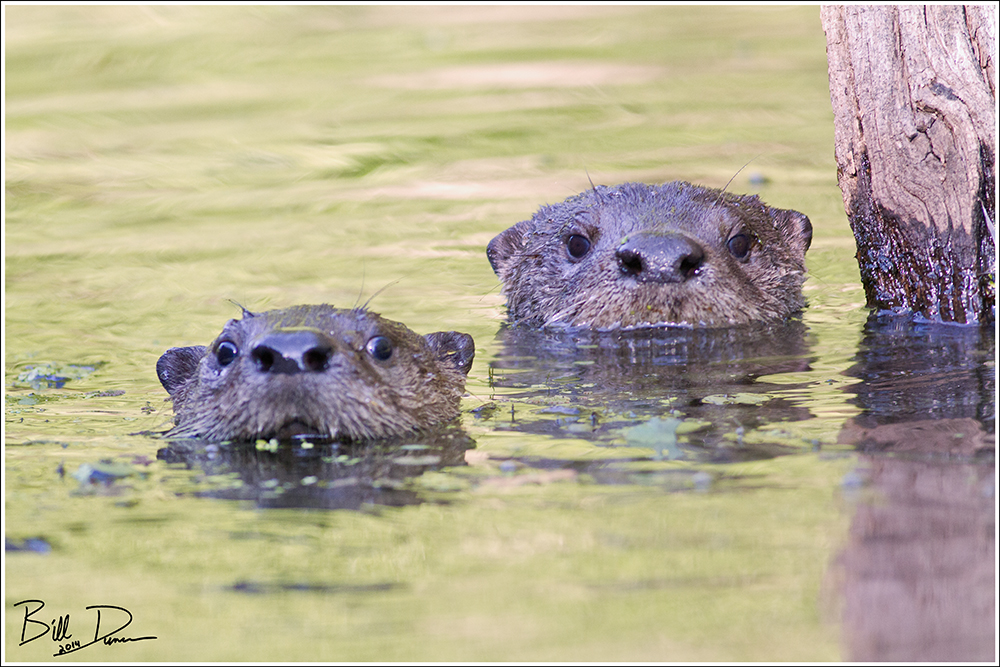
Finally, maybe from the odors of so many digesting fruits, 😉 the jig was up. We were spotted and all five animals headed to the water. The next two minutes was like being in some sort of reverse “whack a mole” game. The pups, sometimes getting within 6-8 feet of our boat, would pop their heads out of the water just long enough to get a look before disappearing. Mom, keeping a greater distance, would snort and snap at the water, throwing splashes in our direction. In the photo below, you can see a curious pup immediately in front of mom’s suspicious private eyes.
I See You, You See Me
Finally, just when we started to worry if we should be worried, the entire group disappeared. We watched them briefly as they resurfaced downstream about 25 yards. After getting ourselves together, we portaged the boat over Flat Banks Rd to continue into the marsh.
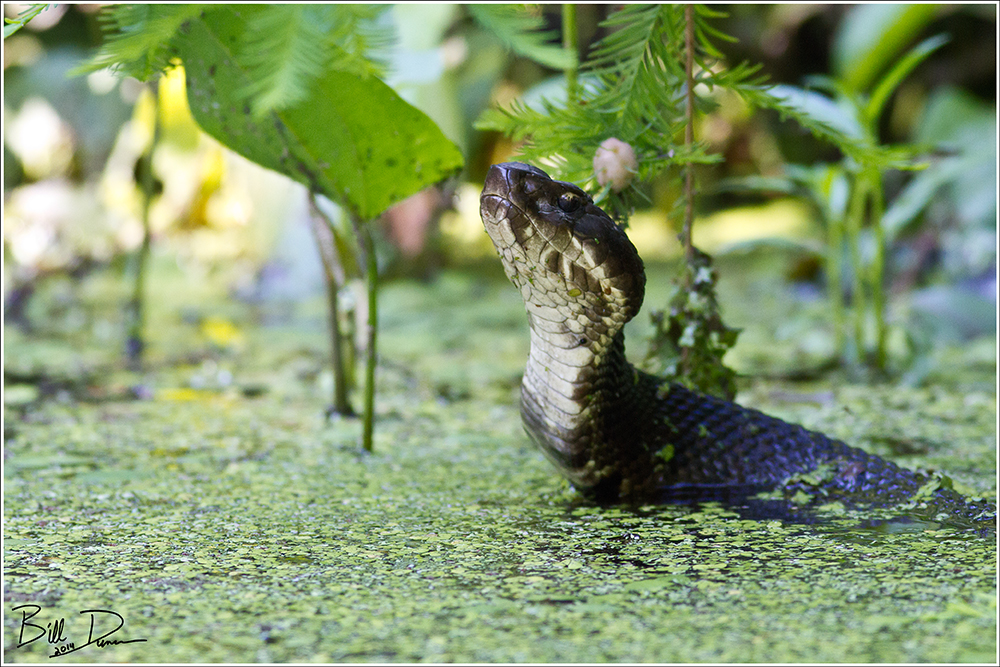
Just prior to getting into the marsh, we spot this handsome Cottonmouth. We slowly followed the snake as it swam along the bank. I heard some sort of whimpering coming from the back of the boat, but that fell silent with a dull thud when the snake raised its head and looked back towards us. Remembering that these guys can be a little more curious, or potentially aggressive when in the water, I called for reverse engines, rather than gaining a new passenger.
No, No, No, It Ain’t Me Babe, It Ain’t Me You’re Looking For
Arriving into the marsh from this direction got us up close to what must be some of the oldest living organisms in Missouri.
I Shall Not Be Moved
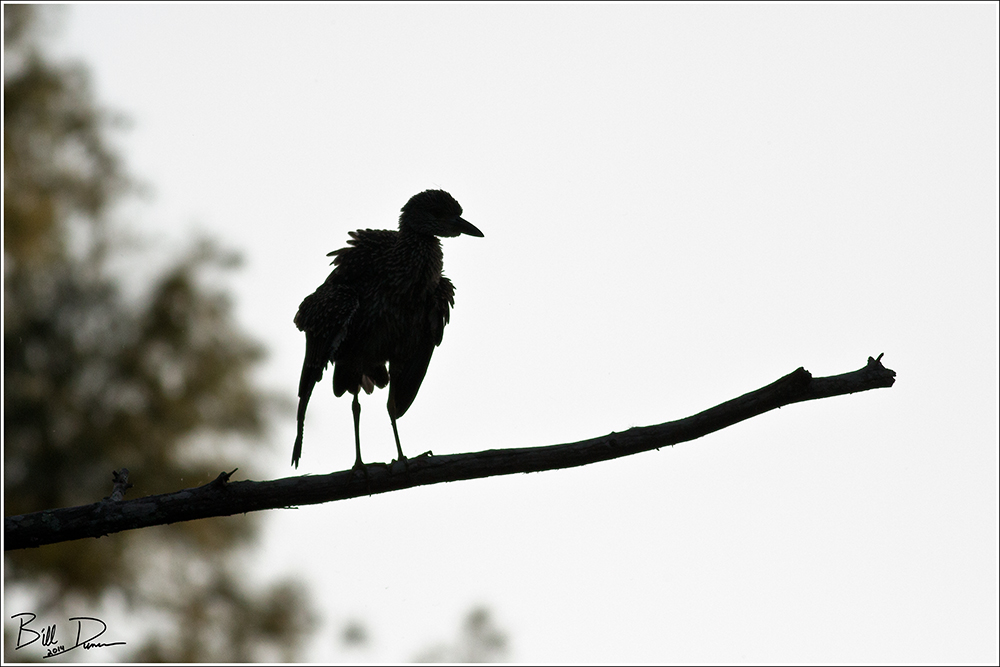
Hooded Mergansers, Belted Kingfishers and Barred Owls were some of the creatures keeping us company as the sun began to fall. We arrived just in time to tie the boat on to the vehicle before last of light. Just before we did, we observed that the night shift was checking in. This juvenile Yellow-crowned Night Heron was preening and stretching on an overhead snag.
Yellow-crowned Night Heron
Well, that’s all from Mingo for now. These being the highlights from a single day, I can’t wait for another visit!
Bald Cypress
Oh, in case you were wondering, yes, that is an 18-pointed sun-star. 😉
Works Cited:
1) Farmer, Charles J. “Unspoiled Beauty – A Personal Guide to Missouri Wilderness”, University of Missouri Press, 1999.
3) Schwartz, Charles J., Elizabeth R. Schwartz. “The Wild Mammals of Missouri – Second Revised Edition”, University of Missouri Press and Missouri Department of Conservation, 2001.
Being almost solely interested in “herps” (reptiles and amphibians) for a couple decades of my life, a place in southern Illinois known as LaRue Road, or more legendarily – “Snake Road”, has long been on my list of favorites to visit. Years ago, before becoming interested in the reptiles with wings and feathers, I barely took notice that this location was swarming with all sorts of life. Upon becoming a more rounded nature enthusiast, I have since discovered this simple road is located within a special zone of multiple habitats. Whether it be herps, birds, plants, insects, etc., this is a special area of biodiversity that is celebrated by those lovers of life who are fortunate enough to have found it.
So enough with the flowery description. What makes this area so special? LaRue Rd. is located on the western edge of the Shawnee National Forest; this particular portion of the forest is called the LaRue Pine Hills. Where the flood plains of the Mississippi and Big Muddy Rivers meet these hills, bluffs of up to 200 feet have formed. At the base of these bluffs, the rivers have helped form some very special swamp and marshy habitats. Between the mixed hardwood-pine forests and the wetlands lies – Snake Road. Okay, so what of that? Well, this explains the moniker. Twice a year, snakes move en mass – from the hills to the swamps in spring, and vice versa in autumn to find a high, dry and safe place to overwinter. To do so, they must cross a gravel road.
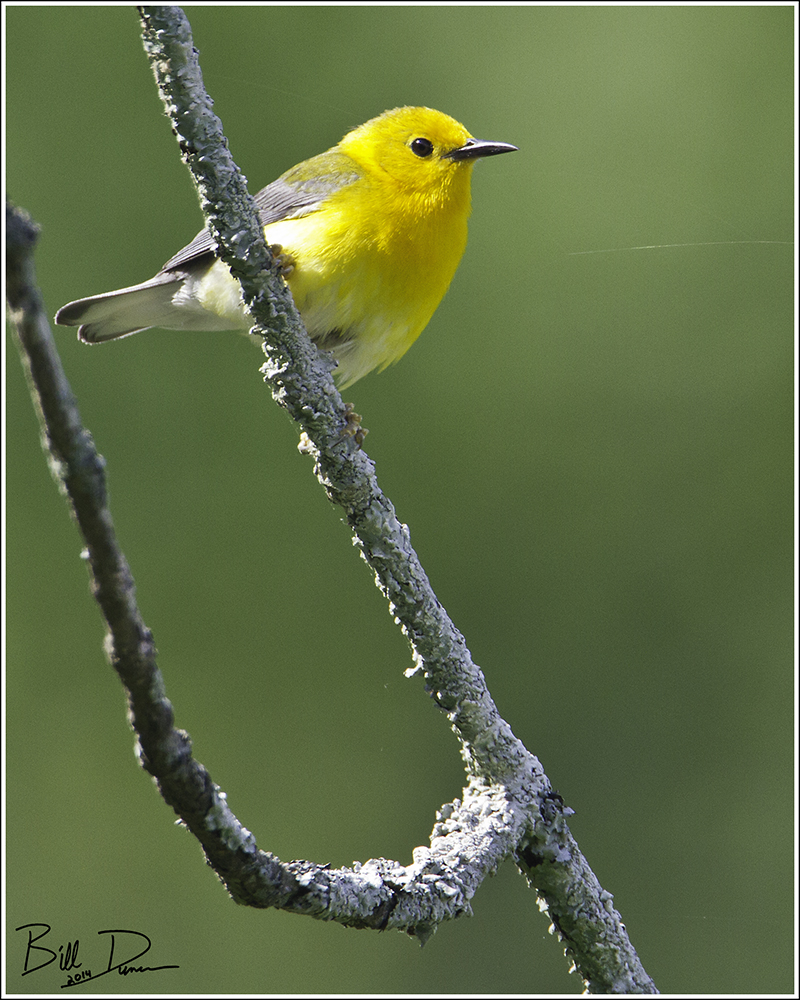
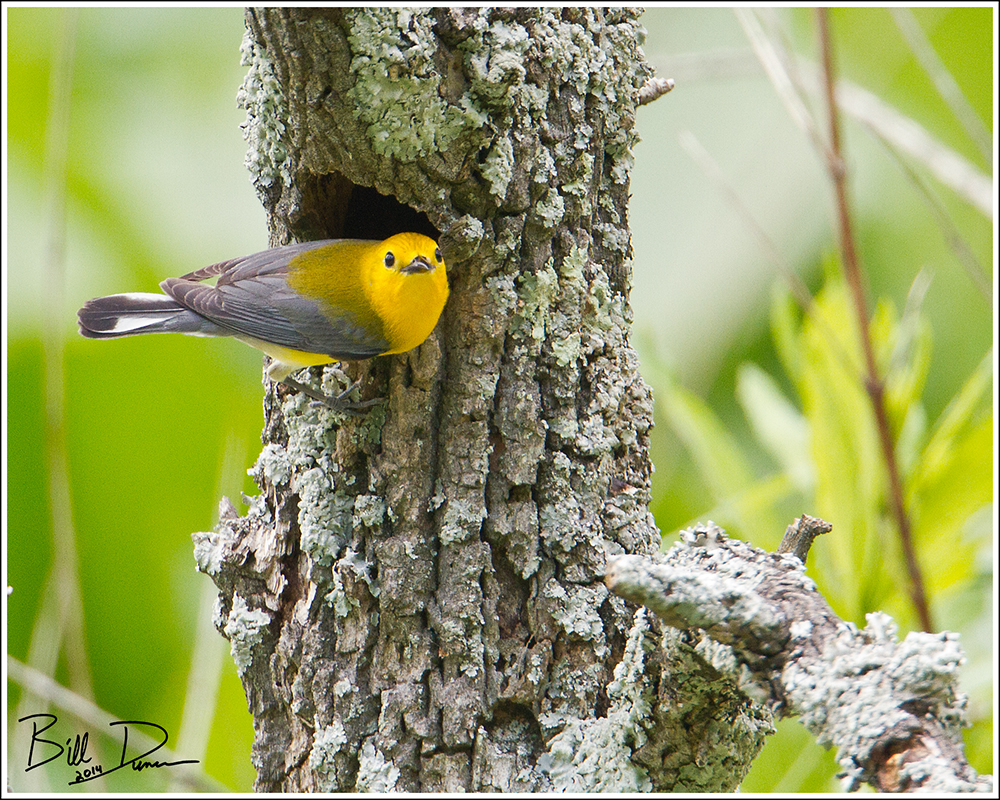
Anyway, snakes were not even the quarry in mind when Steve and I decided to take the journey. Being so late in the season and relatively late in the day, I didn’t give credit to any dreams of finding a legless squamate. Our goal was to find and grab an exceptional photograph of a Prothonotary Warbler. I’m not sure of the latter, but we were sure able to find them!
Prothonotary Warbler
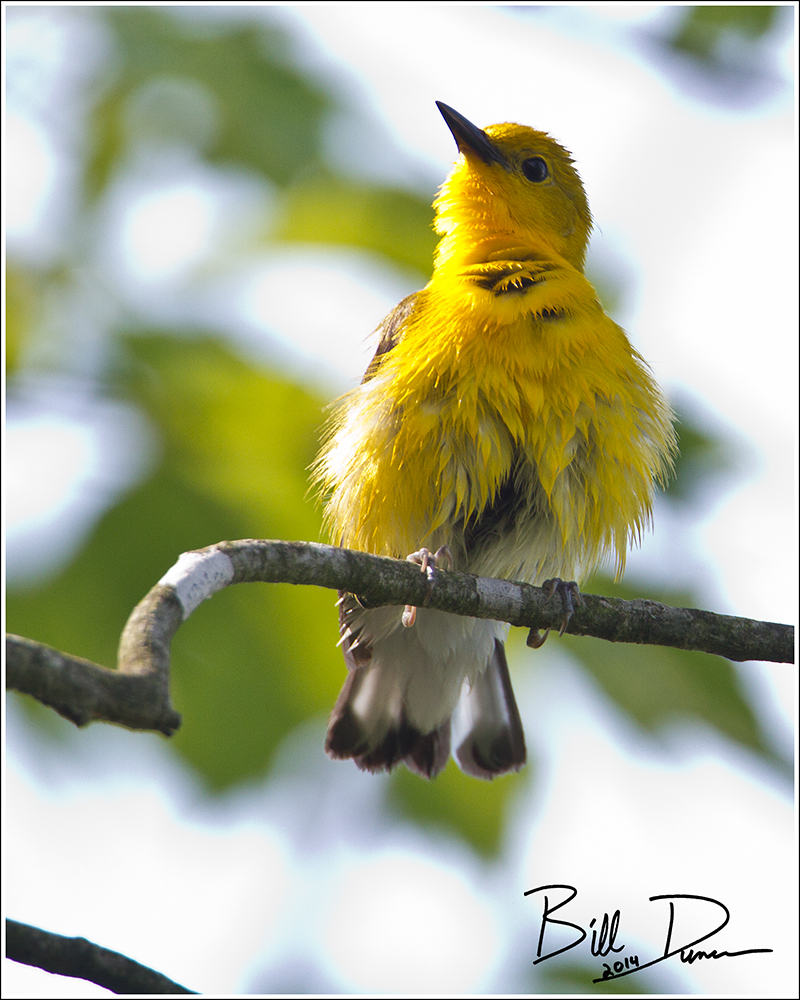
A slightly shallower depression in the road often afforded mostly unbroken looks into the marsh, and opportunities to find these ancient clerics soaking up the sunlight that gives them their spectacular color. Once finding a male, a little bit of playback brought out more and more, coming to get a look at the particularly pathetic naked apes. This guy did a bit of preening following a bath.
Prothonotary Warbler
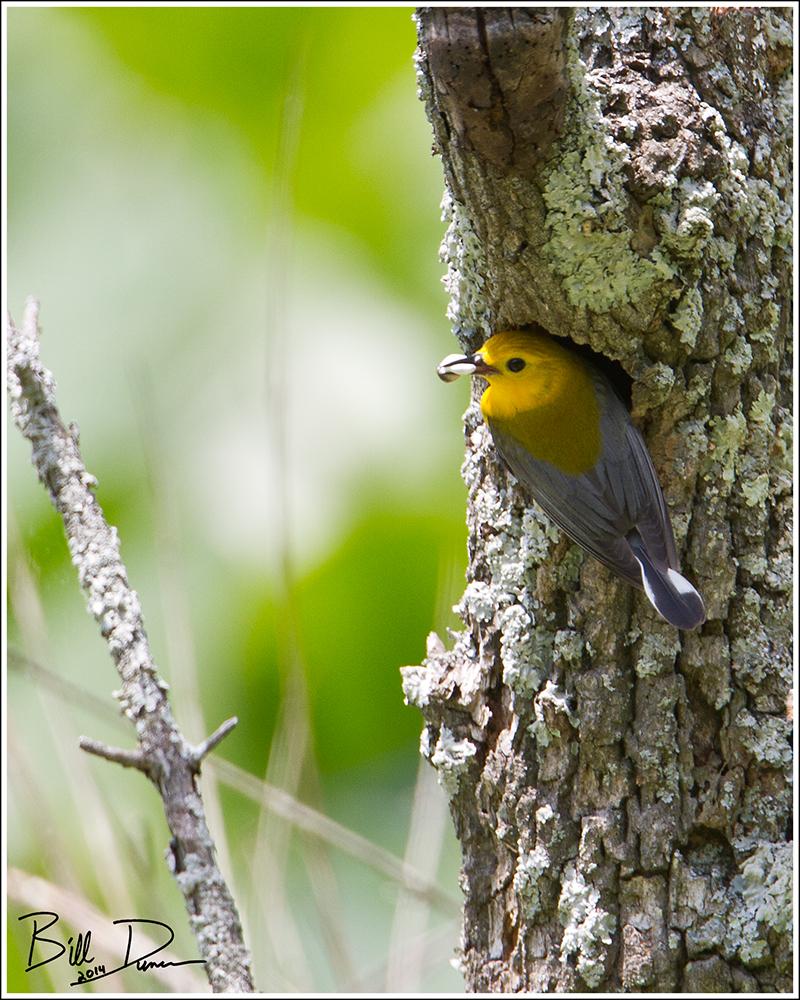
Getting great looks at several of these spectacular animals was more than we could ask. Walking a bit farther we were fortunate to find an active nest!
Prothonotary Warbler at Nest
Prothonotary Warblers nest in shallow cavities in trees, often old Downy Woodpecker nest holes. Below, one of the parents can be seen removing a fecal sac from the nest.
Prothonotary Warbler Removing Fecal Sac
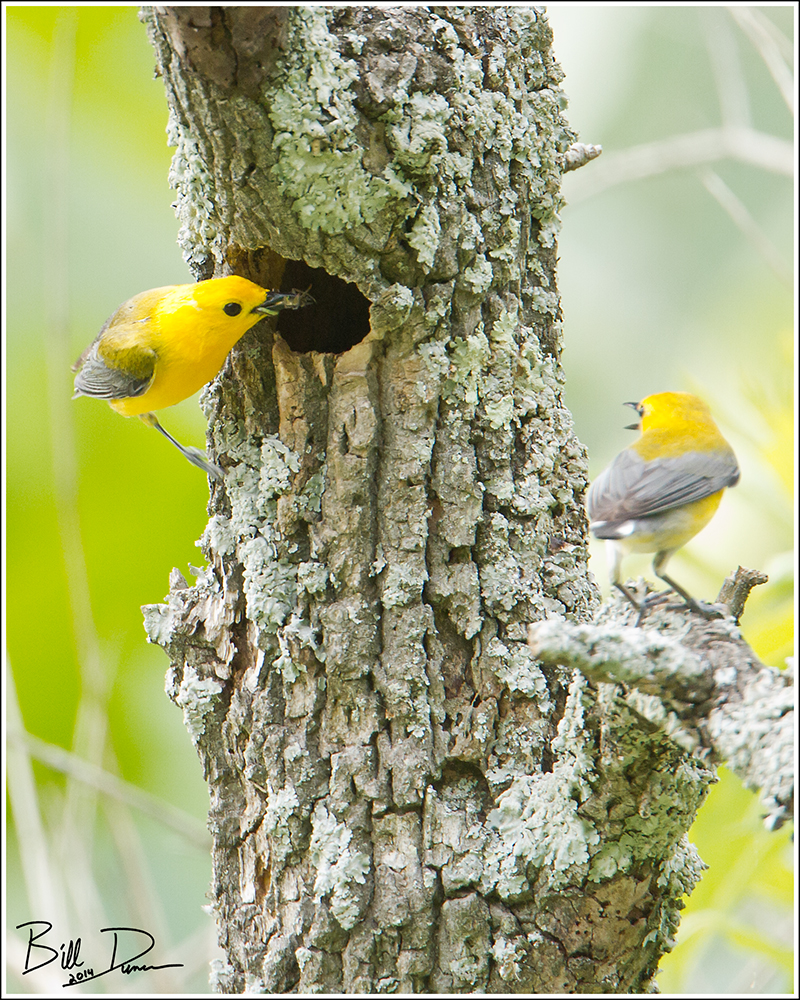
The next photo shows what I am assuming to be mom instructing dad to find an even bigger insect next time. 😉
Parents
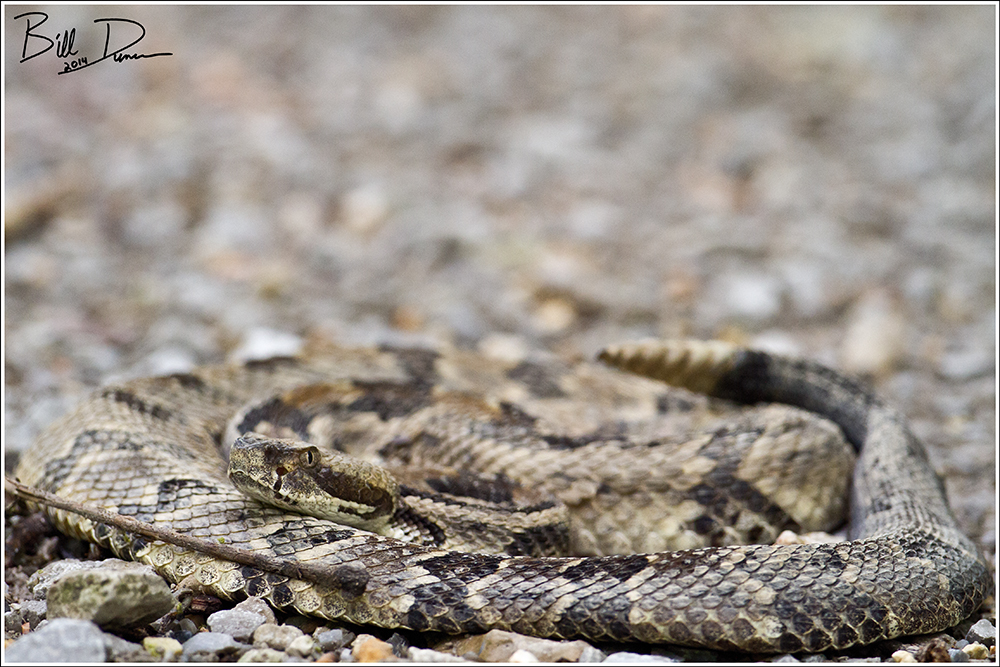
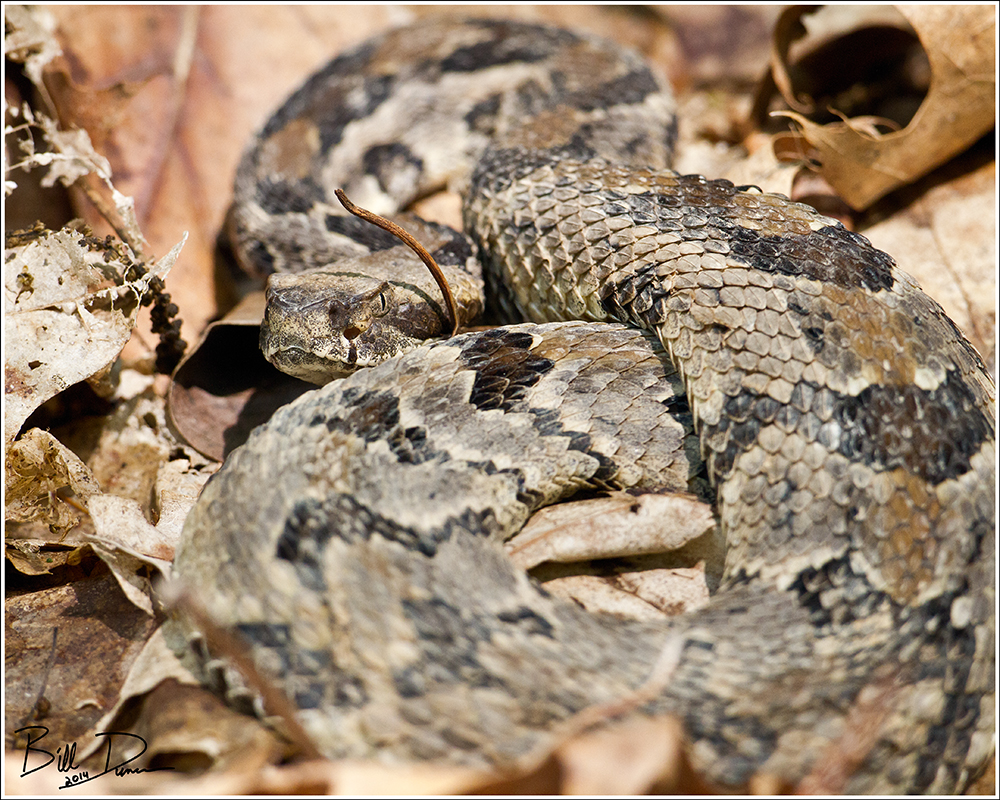
Remember when I said we were not expecting to find much of anything besides the birds on our trip down “Snake Road”? There, in the middle of the road, we discovered the guy you see in the next image, and I discovered I made another huge mistake. On more than two occasions now I have been in a circumstance of not being able to make a photograph, or the photograph I had envisioned, because I did not bring the necessary equipment. On this day, my only equipment was a 500mm lens on a 1.6 crop body and my iPhone. After contemplating throwing myself on the viper to end my pathetic existence once and for all, I decided to give a shot at shooting a snake with an equivalent focal length of 800mm! On a partly cloudy day with lots of tree cover, I knew that lighting the subject would be difficult. Of course, I had no artificial light source either. Shooting wide open, depth of field was nearly nonexistent. This was the result of my first attempt.
Timber Rattlesnake
So, not a complete disaster, but something like a 70-200mm would have been more desirable. We then decided to get him in a little more natural setting with hopefully a bit more light. We gently moved the snake just off the road and I remembered a trick I could use to get a little closer than the lens’ close focusing distance of 15 ft. I put an extension tube between the lens and the body. Although I still had pathetically little DoF (as long as I get the eye in focus, right?), I was able to get somewhere in the range of 10-12 feet from the subject, allowing it to look a little more prominent in the composition. I must apologize for the oh-so-distracting leaf petiole in this image. I asked Steve to please remove it gently with his fingers, but he replied with some of his medical jargon, going on about rhabdomyolysis, hypotension, necrosis; whatever, it sounded like cop-out to me.






















 A Thousand Acres of Silphiums