"What a thousand acres of Silphiums looked like when they tickled the bellies of the buffalo is a question never again to be answered, and perhaps not even asked." -Aldo Leopold
While searching for arthropod subjects to photograph on Steve’s property, we decided to check the compost/midden pile and found something completely unexpected.
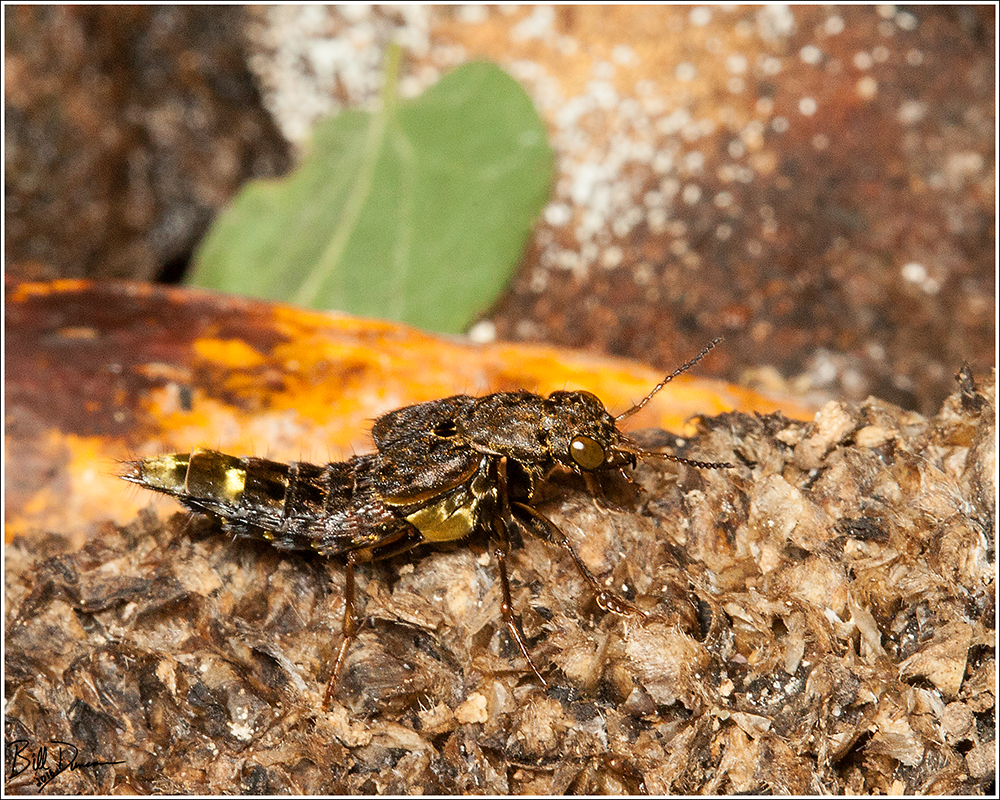
Gold and Brown Rove Beetle – Staphylinidae-Ontholestes cingulatus, Farmington, MO
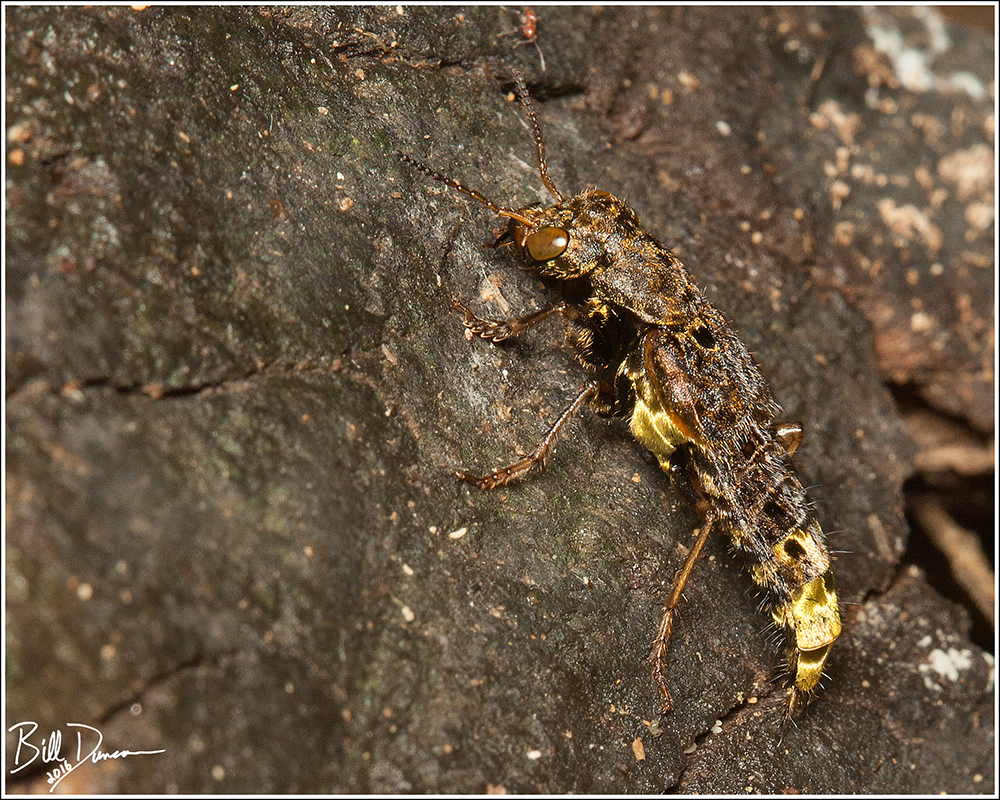
These beetles were crazy to watch – super speedy while flipping their gold-tipped abdomens over their backs in display. These guys yield even more support to my contention that the vast majority of ideas used in the sci-fi genre (particularly the creature-features) were taken from somewhere within the natural world.
Gold and Brown Rove Beetle – Staphylinidae-Ontholestes cingulatus, Farmington, MO
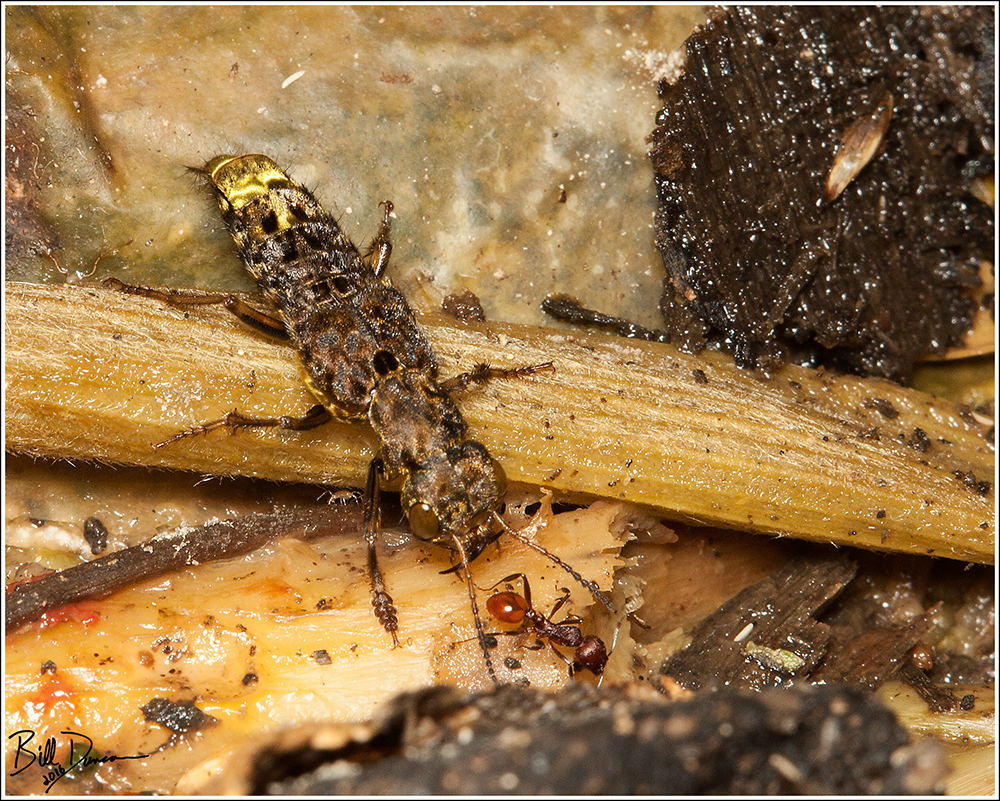
Check out those chompers!
Gold and Brown Rove Beetle – Staphylinidae-Ontholestes cingulatus, Farmington, MO
…comes the newest in reality based, sustainable living instructional programming: Corruption Construction!
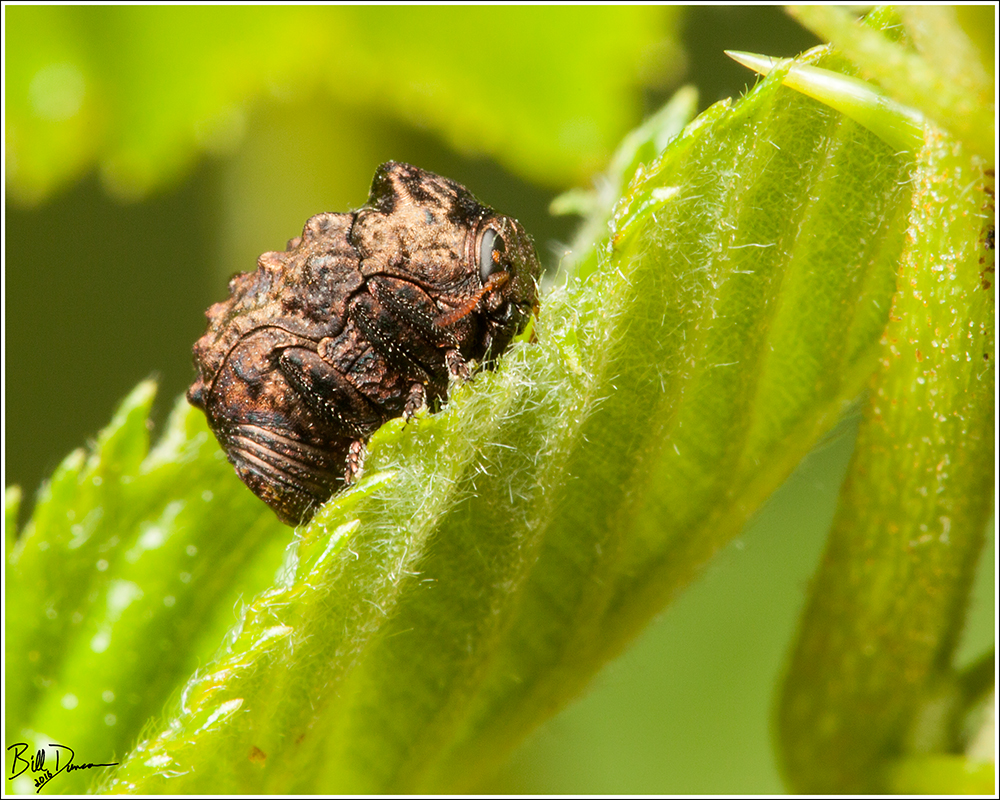
In a previous post I wrote a bit about the Warty Leaf Beetle (Neochlamisus gibbosus), a member of the Cryptocephalinae subfamily. Fascinating due to the fact that the adult form seems to be a perfect mimic of caterpillar frass, this species is much more interesting than I had imagined.
This species is highly, if not solely, associated with blackberry as a host plant. While watching these guys and looking for other insects on these plants I kept noticing gall-like structures, usually on the undersides of the leaves.
Paying closer attention, I noticed that these structures were not galls, nor were they attached directly to the plant tissue – they moved. On closer inspection, I could sometimes see the legs of the creature that resided within the house.
I had to crack one open to see if I could get an idea of what sort of organism built and resided within. As you can see in the photograph below, the animal appeared to be a beetle larvae.
Warty Leaf Beetle – Chrysomelidae – Neochlamisus gibbosus. Larvae exposed from within its scatological residence. Photographed at Shaw Nature Reserve, MO.
It took me a while to put it together, but eventually I confirmed that the larvae belonged to the same species as the adult beetles that I observed all over the blackberries. My next question was, on what materials did the larvae use to build its shelter? Usually, an insect will use detritus or perhaps fresh plant tissue that it processes to make a protective enclosure like this. These guys do it a bit differently.
It starts with mom. As she oviposits, she encases each egg with a layer of her own feces and some rectal secretions. As the larvae hatches and grows, it continues to expand its home by building with its own feces to accommodate its increasing bulk. Here is a photo of an adult and larvae close together.
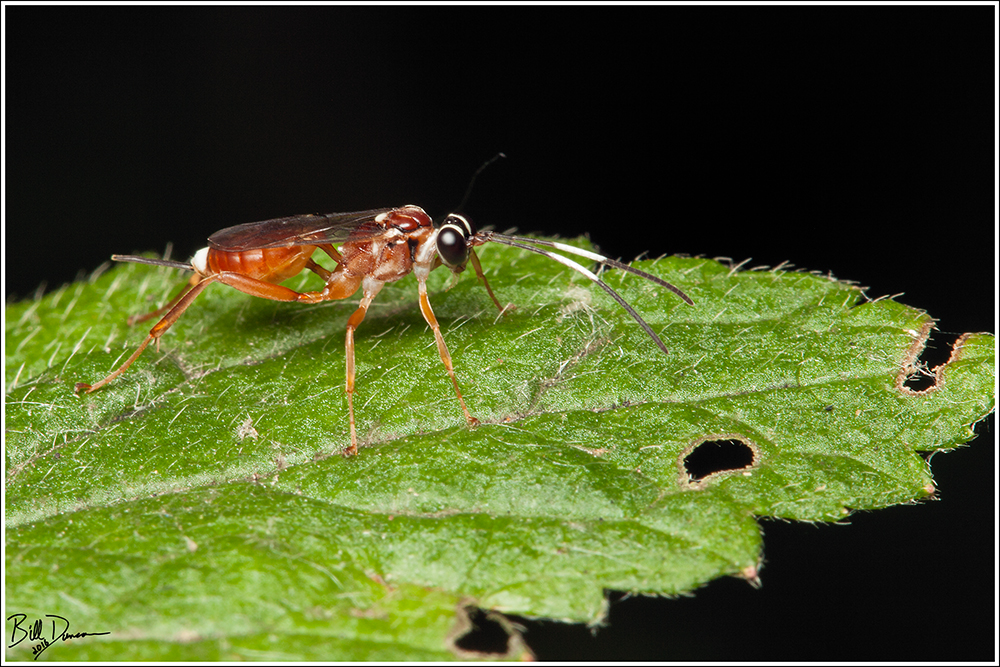
This tiny and speedy ichneumon wasp, which I am calling a Theronia species, has been hanging around my patch of wild strawberries for a couple of months. If I am close to correct in the identification (with more than 100,000 described ichneumons, how close could I be?), then this species parasitize tent caterpillars along with a number of other lepidopterans.
Ichneumonidae – Theronia sp. – Female – Photographed in the author’s wild strawberry patch, St. Louis Co., MO.
“I cannot persuade myself that a beneficent & omnipotent God would have designedly created the Ichneumonidæ with the express intention of their feeding within the living bodies of caterpillars …”
-Charles Darwin-
Ichneumonidae – Theronia sp. – Female – Photographed in the author’s wild strawberry patch, St. Louis Co., MO.
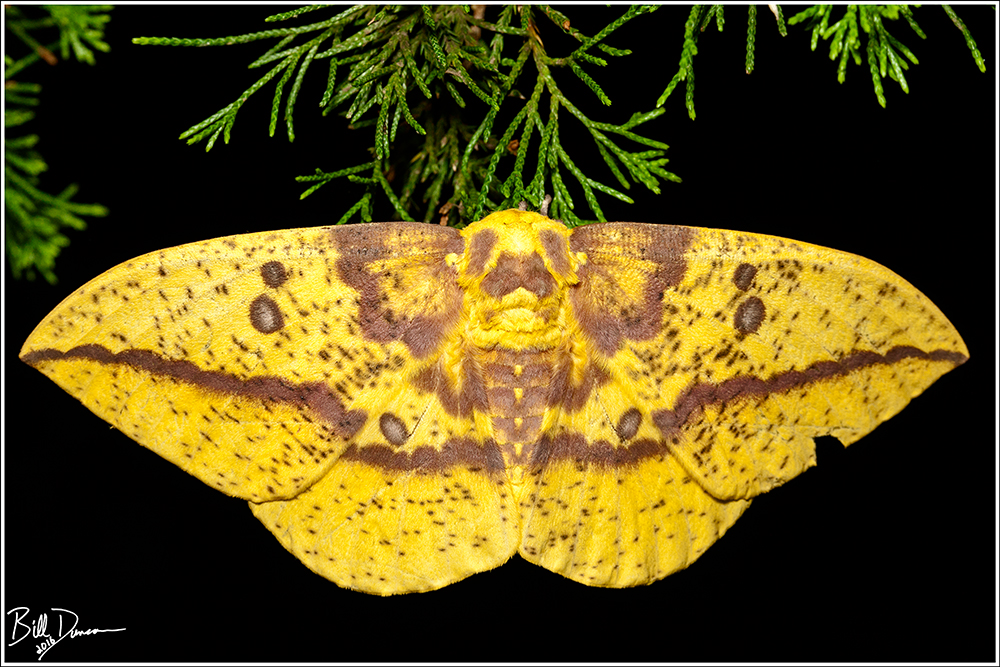
Belonging to the family of moths called Saturniidae, the Imperial Moth can reach up to six inches. Many members of this family are large-bodied and short-lived as adults – typically living only one or two weeks and not feeding in this stage. This female was attracted to lights during a national moth week event at Cuivre River State Park on July 31, 2016.
Imperial Moth – Saturniidae – Eacles imperialis, photographed at Cuivre River SP during national moth week.
Hidden along the Eleven Point River in the south-eastern Missouri Ozarks lies Greer Spring (the 2nd largest spring in the state). This location and surrounding areas of bottomland and riverfront forest are widely heralded among birders in Missouri as being prime for easily picking up a number of forest species. Cerulean, Swainson’s, Worm-eating, Kentucky, and Hooded Warblers, to name a few, are documented as nesting in this area. These clips were recorded during a trip that Steve and I made this past May.
I have featured Bell’s Vireo on this site before, but it is one of my favorites and I never get tired of hunting, watching and photographing this grassland cutie.
Black Skimmer – East End Lagoon Nature Park and Preserve, Galveston TX
Steve and I are a couple of weeks back from a nice few days of birding the Texas Gulf Coast. We were able to visit a number of habitats and locations along the gulf and were mostly able to dodge the rains and flood waters.
Boat-tailed Grackle – Anahuac NWR, TX
Of course, we were able to pick up a good list of lifers as the number of specialists, such as this Boat-tailed Grackle, in this region was quite impressive.
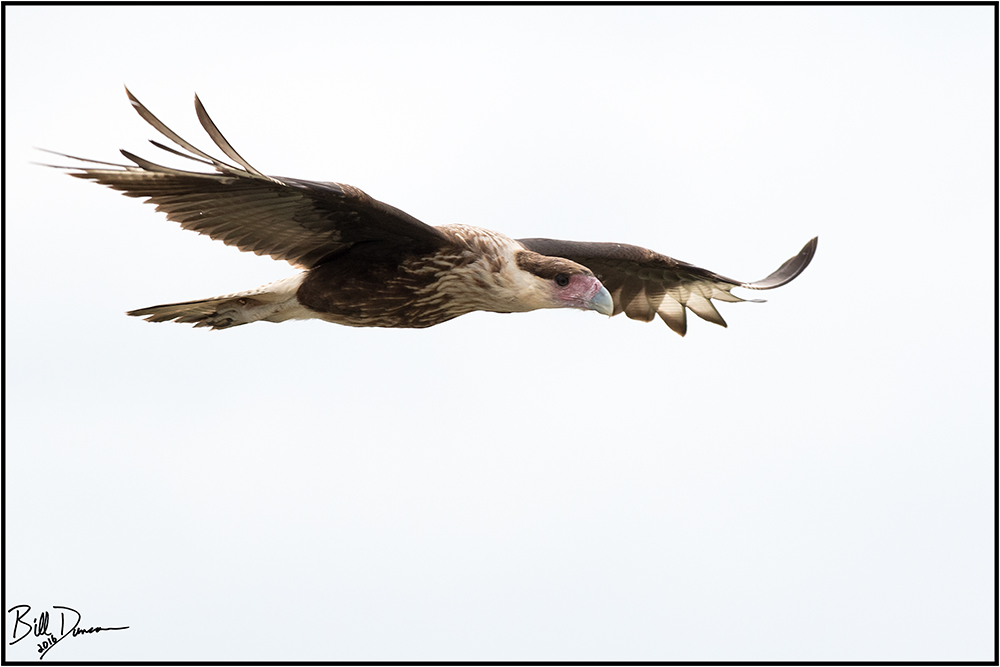
Crested Caracara – East End Lagoon Nature Park and Preserve, Galveston TX
Mostly a bird of the new world tropics, the Crested Caracara is considered to be common in Texas. We were able to find a few.
Roseate Spoonbill – Houston Audubon Society Smith Oaks Bird Sanctuary, TX
The Spoonbills were quite a treat. At the HAS Smith Oaks Bird Sanctuary we were fortunate to visit at a time when the local rookery was in full swing. We observed active nests of not only the Spoonbills, but also of Great Egret, Snowy and Cattle Egret and Common Gallinule.
Seaside Sparrow – Anahuac NWR, TX
The Seaside Sparrow may have been my most exciting find of the trip. I have long wondered about this interesting sparrow that sticks to coastal habitats and sings its interesting song. There are currently nine recognized subspecies of the Seaside Sparrow – this one is likely Ammodramus maritimus fisheri. These birds are among the many that are threatened with destruction of habitat for human coastal development. The Houston metro area is a sprawling web of concrete and Steve and I couldn’t help but notice that natural areas were still being bulldozed and paved.
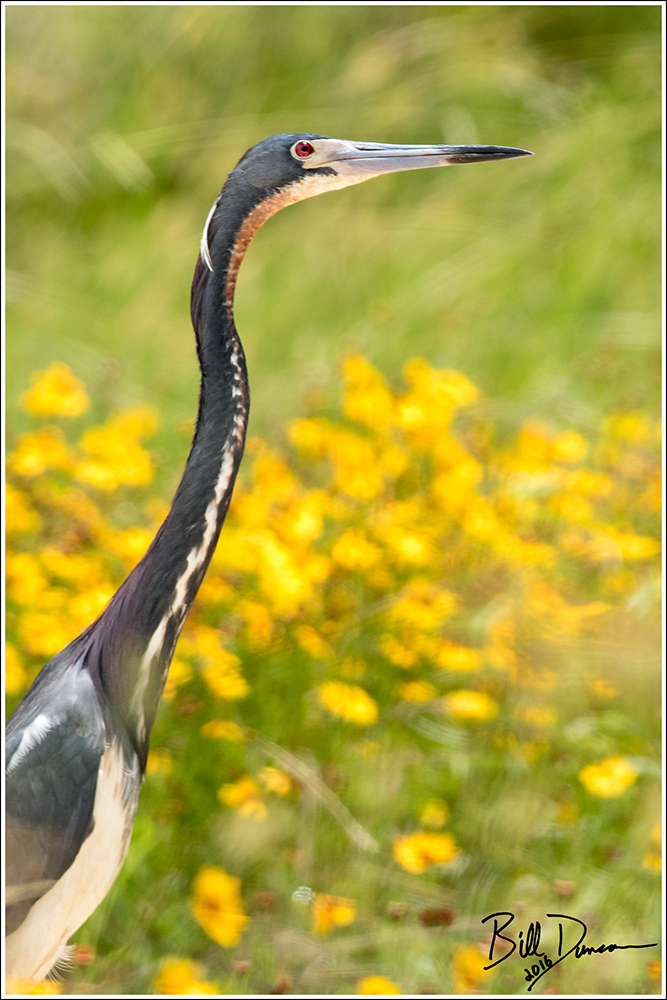
Tri-colored Heron – San Bernard NWR, TX
The Tri-colored Heron was yet another lifer for both Steve and me. This gorgeous bird was found with a lovely backdrop of wildflowers at San Bernard NWR, one of several locations that we could have gladly wasted a week in.
That is all that I have processed and am prepared to share for now. More to come. -OZB
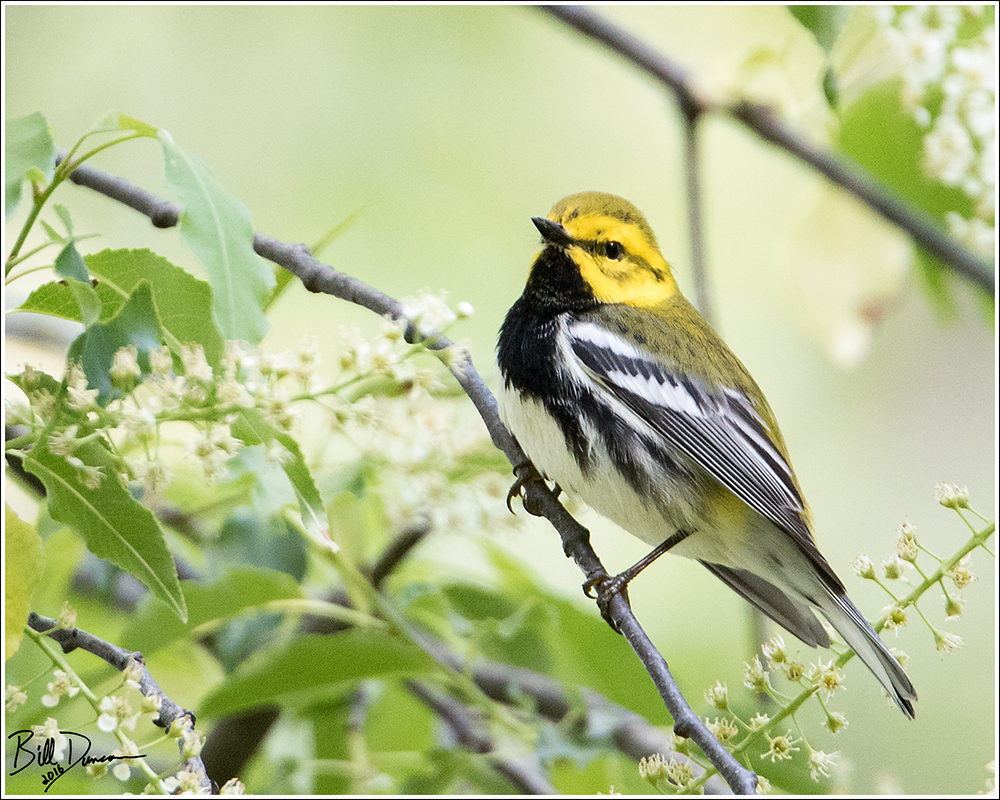
Black-throated Green Warbler; Tower Grove Park, St. Louis, Missouri
As is often the case, no better description of a bird can be found other than those of Arthur Cleveland Bent. From Life History of American Wood Warblers…
“The northern black-throated green warbler I have always associated with the white pine woods, the delightful fragrance of fallen pine needles carpeting the forest floor and the murmuring of the warm summer breeze. The song has been written as ‘trees, trees, murmuring trees,’ appropriate words that seem to call vividly to mind the pretty little bird in its sylvan haunts and its delicious and soothing voice.”
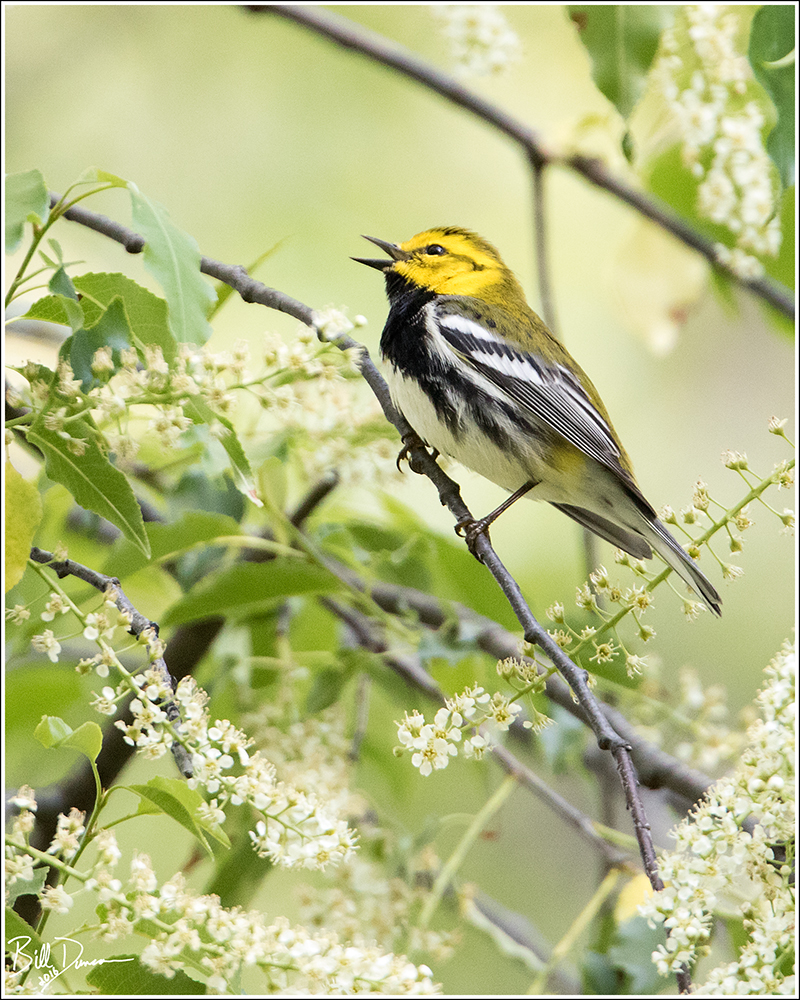
Trees, Trees, Murmuring Trees – Black-throated Green Warbler; Tower Grove Park, St. Louis, Missouri
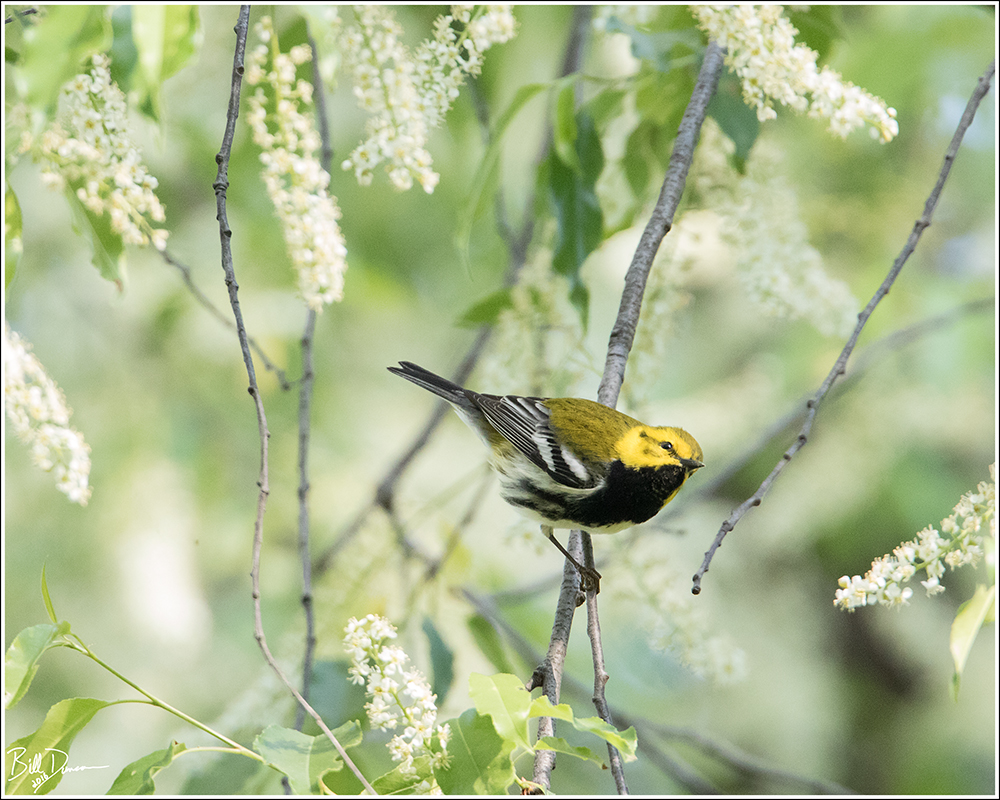
As is usually the case, I was only able to get to Tower Grove Park a few times this year in order to witness the songbird migration that rolls through this migrant trap every spring and fall. Thankfully, I was able to be there for a couple good days in terms of numbers and diversity, and was pleased to find this cooperative BGWA singing and foraging through a flowering Black Cherry.
Black-throated Green Warbler; Tower Grove Park, St. Louis, Missouri
I don’t believe the pleasing colors and patterns of this stately bird could be captured in a single better pose than what is pictured above.
Black-throated Green Warbler; Tower Grove Park, St. Louis, Missouri











 A Thousand Acres of Silphiums