

The Swainson’s Warbler (Limnothlypis swainsonii) is a very secretive bird whose summer nesting range occurs in the southeastern United States. It requires a habitat of dense undergrowth and heavy leaf litter for foraging and nesting and, in Missouri, this species is rarely found north of the Current River watershed. It’s safe to say that in the St. Louis birding community, the most popular bird of the past week is a Swainson’s Warbler that has apparently set up a territory along the Lost Valley Trail in Weldon Spring Conservation Area in St. Charles County.
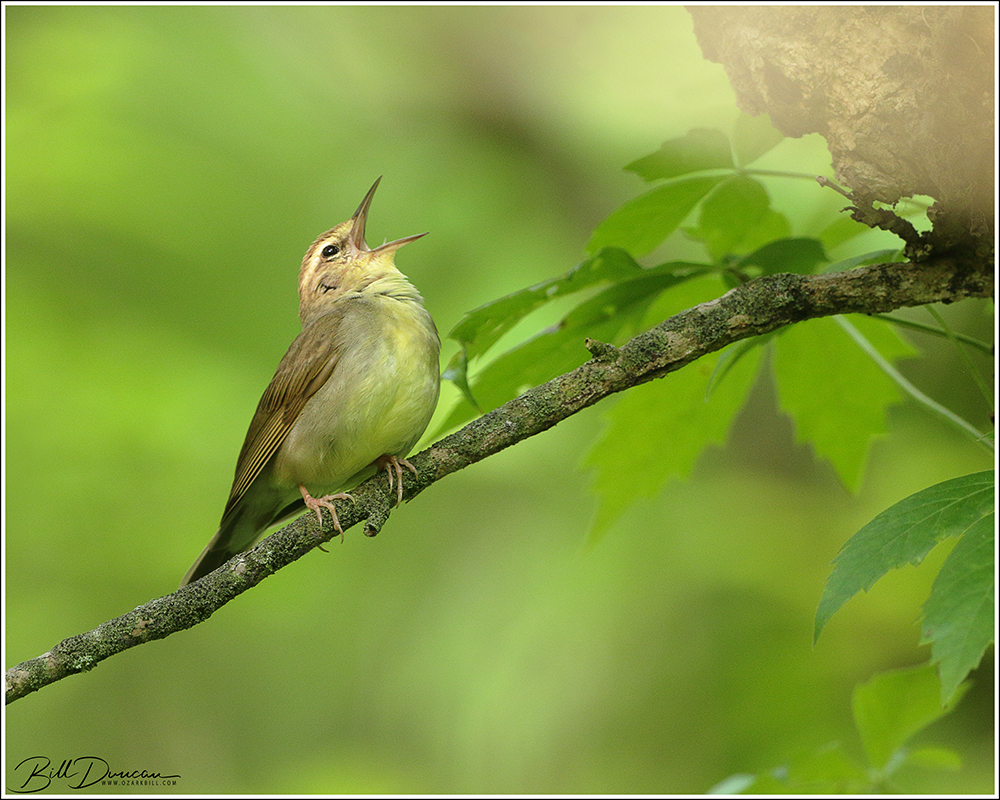
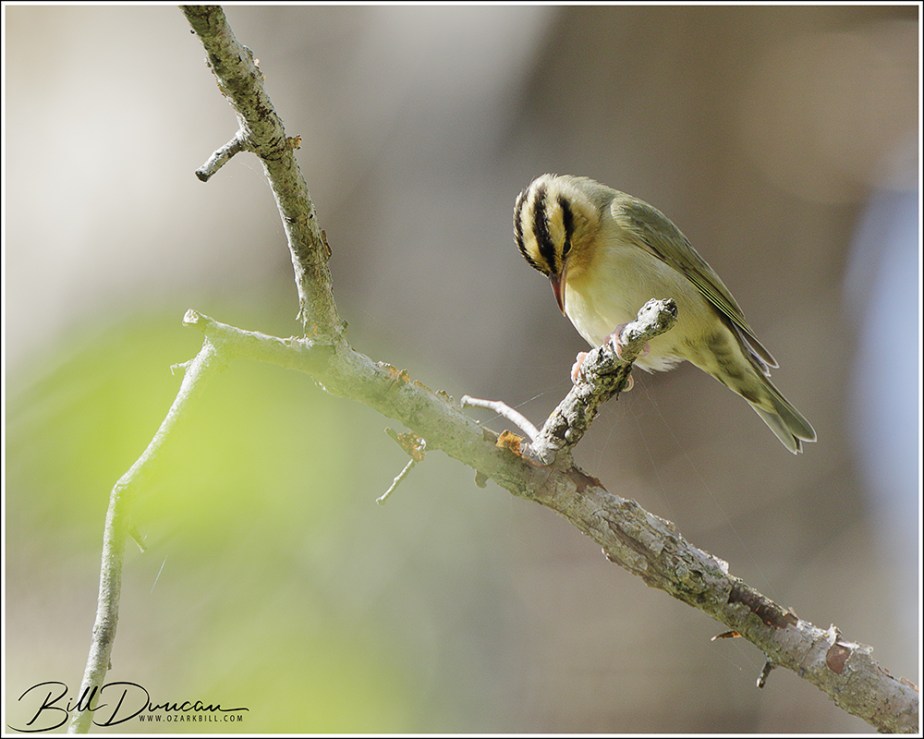
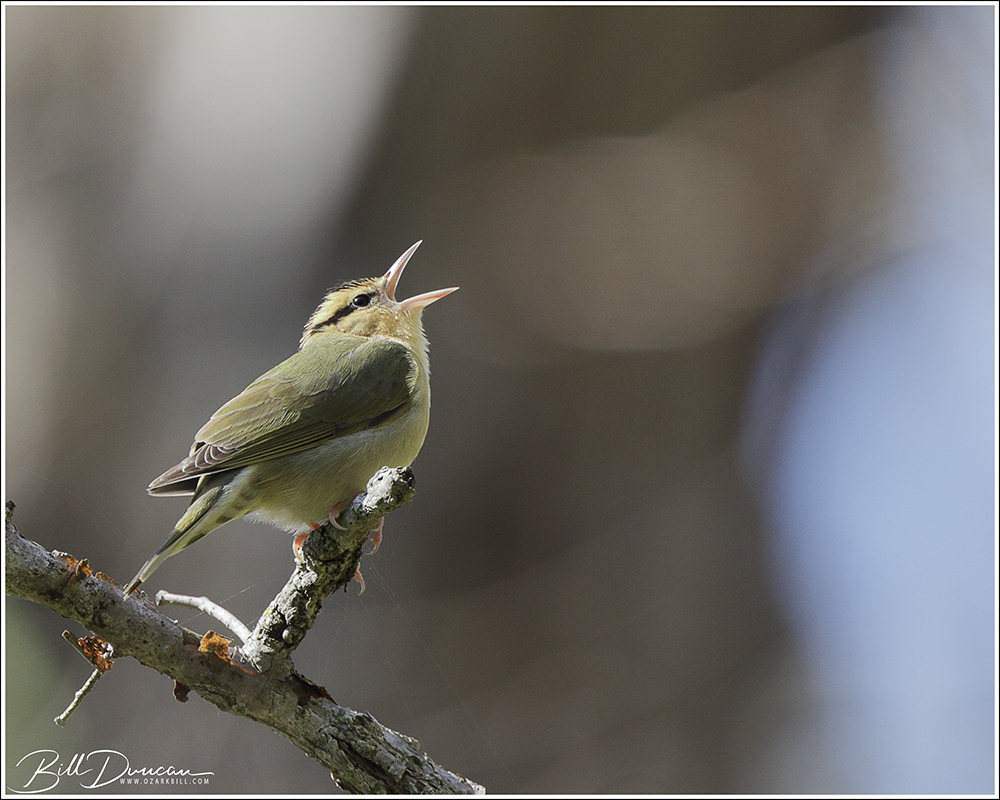
Named for William John Swainson, a naturalist, illustrator and contemporary of John James Audubon, the Swainson’s Warbler could fit in well in the lush habitat of this section of Weldon Spring C.A. Here it will compete with the bounty of other low-feeding passerines found here like the Ovenbird, Kentucky Warbler, White-eyed Vireo, Worm-eating Warbler and the occasional Hooded Warbler. Like we needed another reason to love birding at this location!

The Swainson’s Warbler is definitely not your typical species of wood warbler. The Parulidae family is well known for the gem-like coloration and spectacular patterns of many of it’s species. The Swainson’s Warbler, however, has a color and pattern more adapted to a lifestyle of foraging in the leaf litter and spending time in the dark understory of swamps and bottomland forests. This bird has a brownish back and lighter, white to cream-coloration on its breast. This typical countershading coloration allows it to blend in and virtually disappear within its environment. There is no sexual dimorphism in the coloration of this species – males and females are virtually identical, unlike other species of warblers also found along the Lost Valley Trail like the American Redstart and the Cerulean Warbler.
The bird is rather flat-headed with a much longer and stronger bill than most other warbler species. It is also known for its pink-colored and strong legs. These adaptations are probably helpful while lifting dead leaves and other detritus of the forest floor while it forages for its arthropod prey.
It is this author’s opinion that the song of the Swainson’s Warbler is one of the most satisfying of bird songs. It sounds like it took the stuttering song of the Louisiana Waterthrush (a closely related species) and perfected it. I can still completely enjoy myself just being in the woods with these guys singing. Be prepared for frustration if you are waiting for one of these birds to pop out of the dense understory to get a nice clear look.
Here you can find video of singing Cerulean and Swainson’s Warblers I took years ago at the Greer Spring Access location.
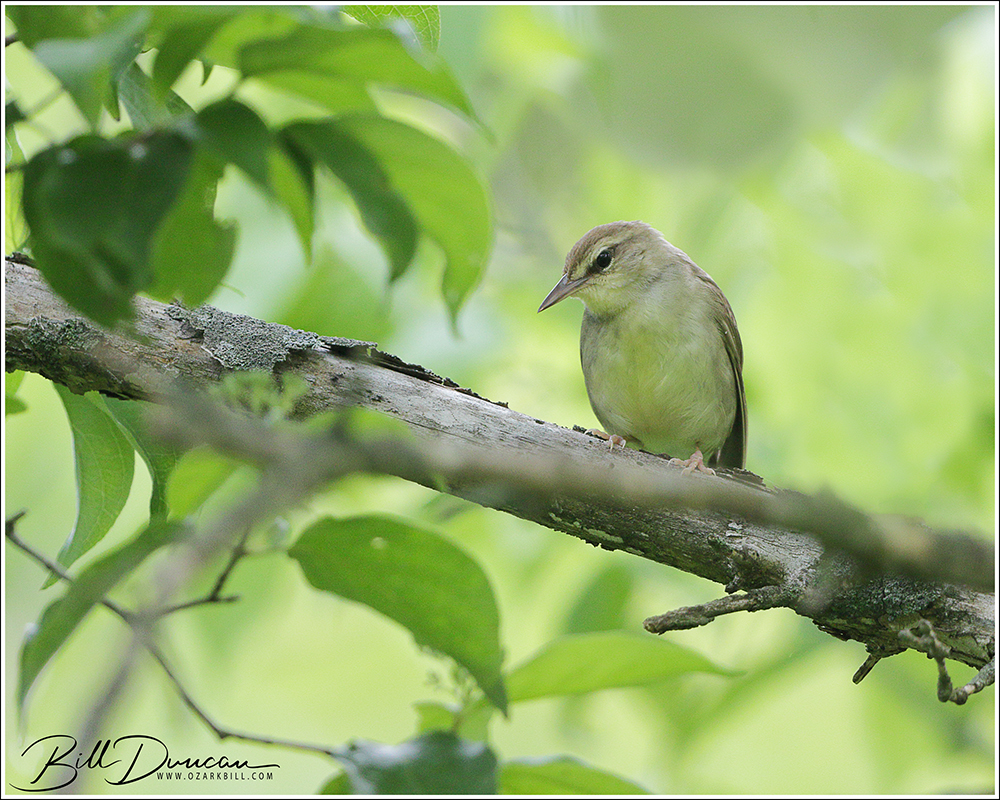
Colombia, MO has had one or more Swainson’s Warblers for the past five years or so. Will this species become a regular at Lost Valley Trail? Is this one of the “good consequences” of climate change? It should be mentioned there have been a few reports that there are currently more than one bird along the trail. Some have claimed two males in separate territories and/or two birds spotted at the same location, indicating the potential presence of a female. I have spent four mornings over the past week looking for this bird and have seen no evidence of more than a single male yet, but there is always that potential.
Best of luck to those going to try for this bird. You would be hard pressed to think of a better place to spend some hours on a spring morning.
Thanks for visiting and let me know if you have had success hearing or laying eyes on this bird or if you have had any luck finding evidence of more than the one bird.
-OZB


















 A Thousand Acres of Silphiums
