Compromise

Along with the concept of the “Golden Rule” go ahead and put the law of compromise up on the list of common sense life lessons we all should have learned by the age of eight or so.  That being said, at my age I have come to realize how strongly this law affects any aspect of life I can think of.  Do nothing but eat Little Debbies and watch He-Man & the Masters of the Universe after school then don’t be surprised at the talentless overweight adult you have become.  Do nothing but work at studies, tirelessly trying to become the most productive individual on the planet, then chances are you will wind up with a joyless existence.  Don’t work, go hungry.  Do nothing but work and starve just the same.  I think you get my point.

Photography is the perfect example of this law.  The contemporary photographer has the exposure triad – equal parts shutter speed, aperture setting and ISO speed.  Increasing any one of these three for particular aesthetic effects (DOF, action freeze, etc…) will necessitate a change in one or both of the others.  We can rarely get everything we want from all three corners of the triad without a good deal of work, patience and serendipity.  Taking this even further, the nature photographer – as I describe myself, has what I call a “subject triad” that covers the landscape, the wildlife, and the macro.  Now, none of these are mutually exclusive, but rather like the exposure triad it can be seen as a continuous three-way interaction.

The larger point I’m attempting to make is, just like using the exposure triad in making a proper exposure under constantly changing lighting, a nature photographer should be open at all times to changing subjects.  This point was driven home recently when Sarah and I paid a visit to the Castor River Shut-ins within Amidon Conservation Area.  This is one of my favorite locations for landscape photography.  It can often be very challenging, however.  Compositions must be hunted down and the light needs to be near perfect to capture the rocks, water and vegetation just the way you like.  During this particular visit, even though there was some nice autumn color, the lighting was utter crap at the shut-ins.  As I hopped from rock to rock attempting not to drown myself or my over-priced gear trying to make something happen with what little I was presented with, I happened to take a look back at my wife, Sarah.  As usual, she had taken a short little stroll and was in the woods taking pictures!  I noticed she was taking back-lit foliage pics as well as macro shots.  I then cursed myself for putting the blinders on and looking only for that grand landscape composition and forgetting the other points within my self-described triad.  The maples and hickories were in glorious colors and I was able to take some macro shots that I am pretty pleased with.  This is why I try to carry as much gear with me as I comfortably can.  If I did not have my macro equipment, then I would have likely been out of luck.  The compromise?  Aching legs and shoulders for the next few days!

“But we gotta get happy when we wiggle in the middle” – John Hartford

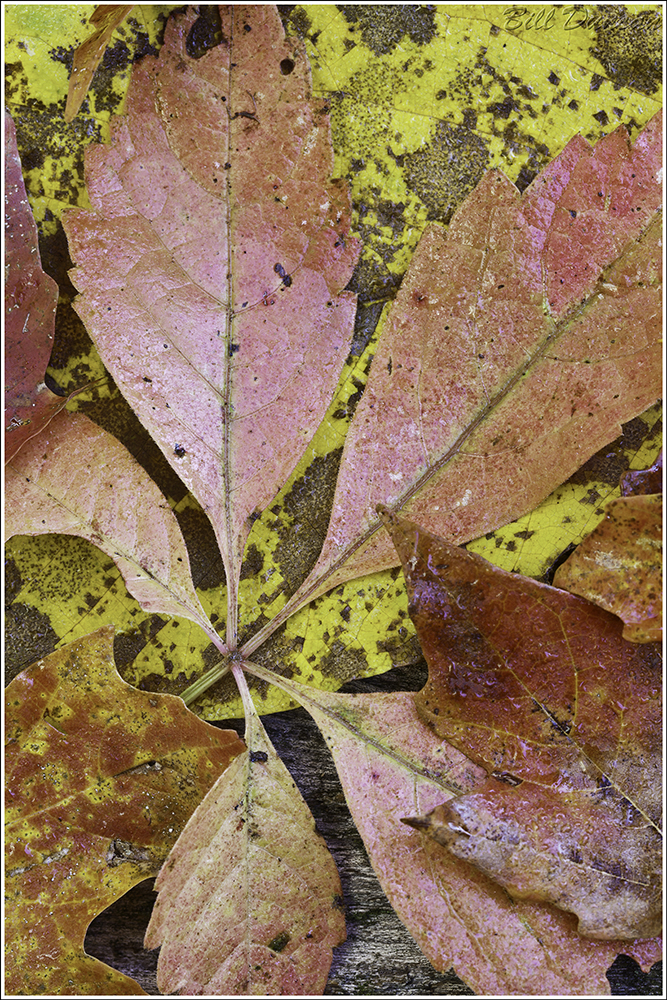
“Creeper, Pawpaw & Maple″
Technical details: Canon EOS 5D Mark II camera, EF100mm f/2.8L Macro IS USM, ISO 160,  f/16, 1.6 sec

Sunshine On My Shoulders Makes Me Happy

Hi everyone.  It’s an absolute gorgeous Saturday here in the northern Ozarks.  I hope the weather is to your liking wherever you are reading this.

This post is dedicated to my grandmother, Genny, who is currently recovering from a health crisis.  Sarah and I are so glad you are getting better and we wish you all the best in a speedy recovery.

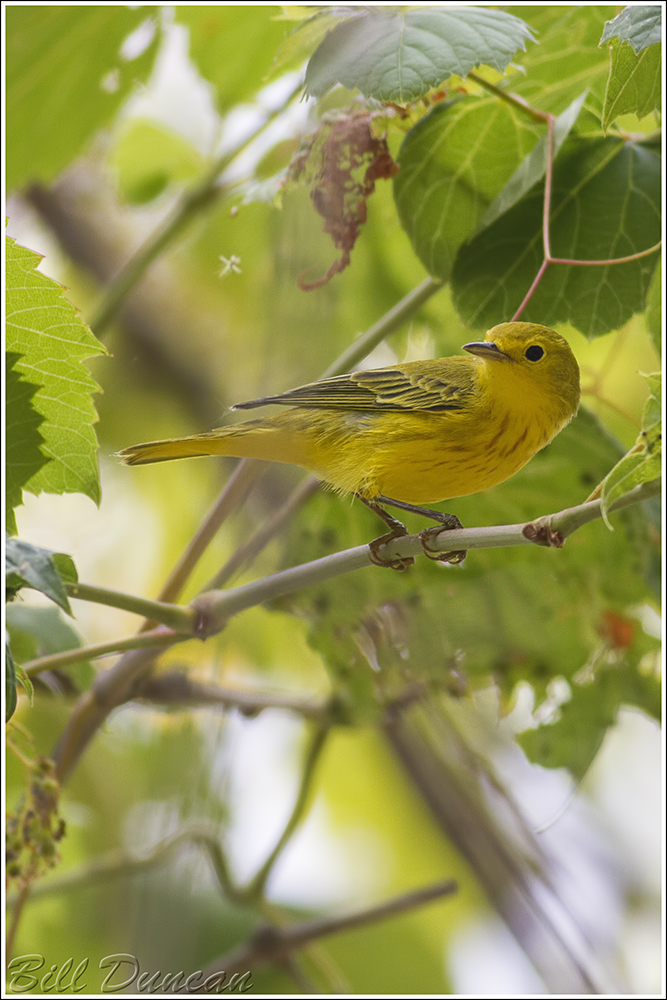
Today’s post is a result of one of the magical times I spent recently at Ellis Island at Riverlands.  During an evening hike I noticed I was in the middle of a huge mayfly hatch.  There seemed to mayflys in the millions.  This rang the dinner bell for migrating passerines for miles around the confluence!  This was definitely one of the coolest bird experiences ever for me.  The bird pictured below, a Yellow Warbler, was one of near 50 of this species I came across.  Also in huge abundance were Black and White Warblers, Empidonax Flycatchers, Red-eyed Vireo and many others.  Thirteen total warblers, four vireos and a large handful of other species were all gorging on this insect feast.  The swarm, so thick the flies were perching on me, lasted until sunset and unfortunately I had limited opportunities for getting decent lighting for photographs.  That was frustrating, but being able to watch this natural wonder was reward enough.

This is one of those species that I’ll always remember the first time I found.  It was a springtime male perched on a dead branch singing his heart out and touched by the morning sun.  I never truly saw the color yellow until that morning!  The image bellow does that guy no justice.

Enjoy the weekend and remember, in Missouri, dove and teal are in season so hunters will be out there doing their thing.  There are places nature watchers and hunters use in close proximity, so be careful and considerate.

“Sunshine On My Shoulder”

Technical details: Canon EOS 7D camera,  EF400mm f/5.6L USM lens, ISO 400,  f/5.6, 1/800 sec

Summer at the Confluence

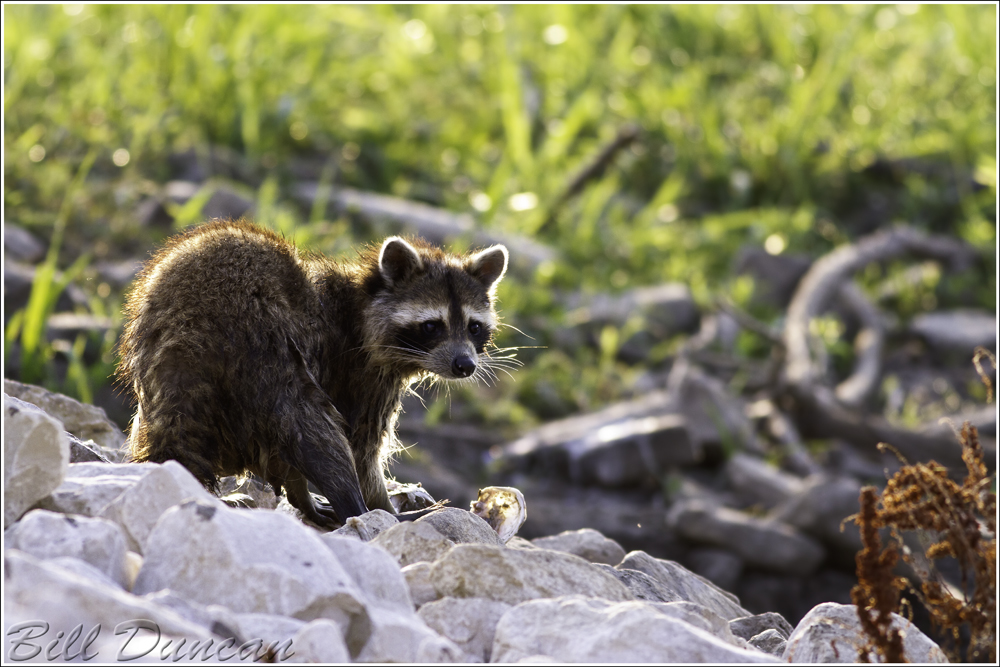
This weekend I spent both mornings at Riverlands Migratory Bird Sanctuary, arriving near dawn and walking around the trails for a few hours before the extreme heat of the day took over.  Sarah got up early and came with me this morning. Saturday morning I was fortunate to spot this guy feasting on carcases of fish that succumbed to the poorly oxygenated waters of the shrinking, heated pools of the wetlands.  This was my first opportunity at shooting a raccoon.  Even at such an early morning hour, the back-light serves to give a sense of the heat and humidity that were already noticeable.

Technical details: Canon EOS 7D camera,  EF400mm f/5.6L USM lens, ISO 640,  f/5.6, 1/400 sec

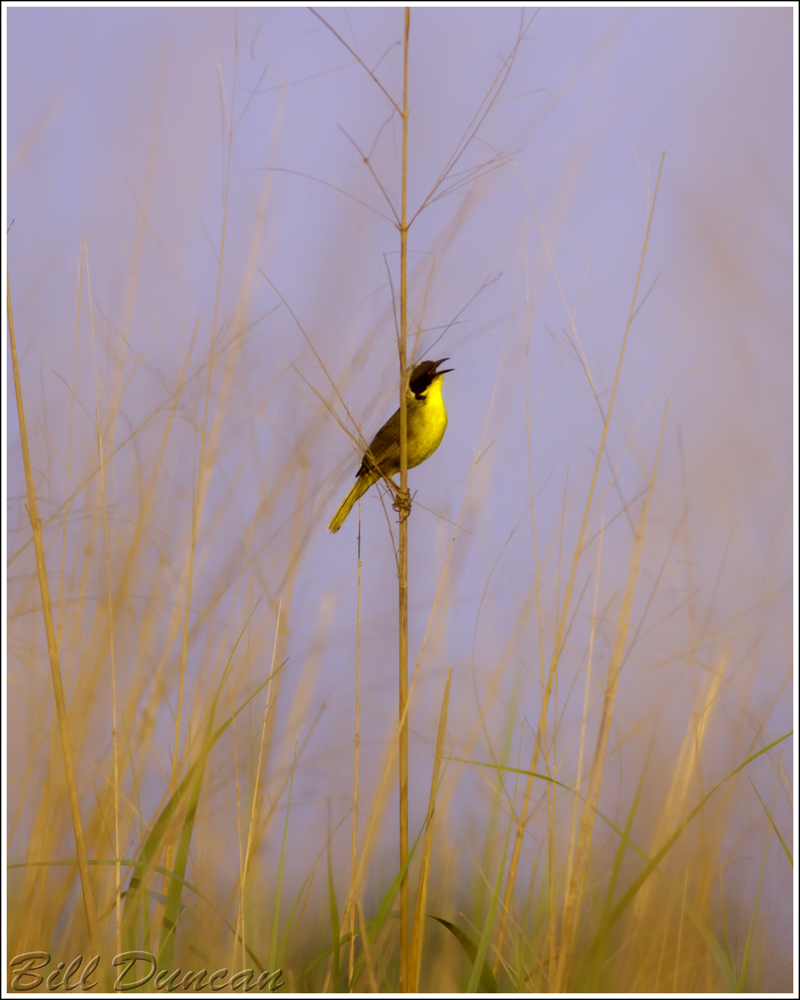
One of the photographic challenges of this location is trying to get shots of the song birds that live among the tall grasses.  They usually stay pretty far from the trails and are usually hidden low in the vegetation.  This Common Yellowthroat Warbler was close enough and partially obscured by the grasses.

Technical details: Canon EOS 7D camera,  EF400mm f/5.6L USM lens, ISO 640,  f/5.6, 1/1250 sec

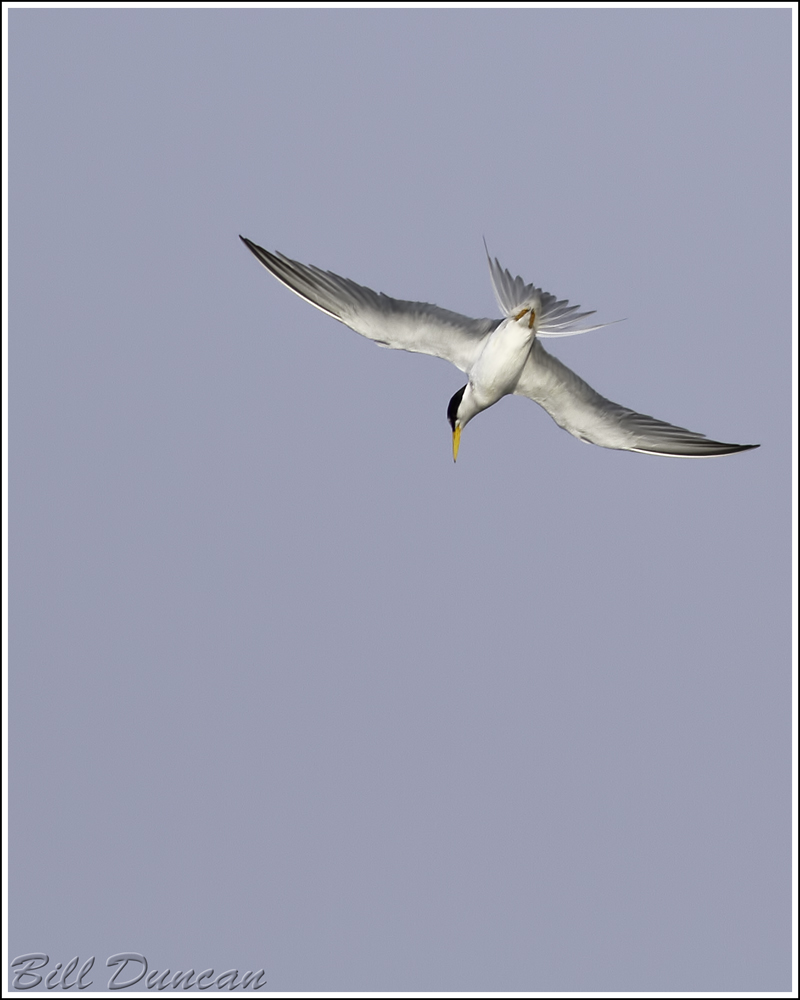
One of the pleasure one can get from a summertime visit to RMBS is watching the Least Tern.  I love watching these guys fish.  This one is beginning the plunge into the water off of Ellis Island to grab a little fish.

Technical details: Canon EOS 7D camera,  EF400mm f/5.6L USM lens, ISO 250,  f/5.6, 1/1600 sec

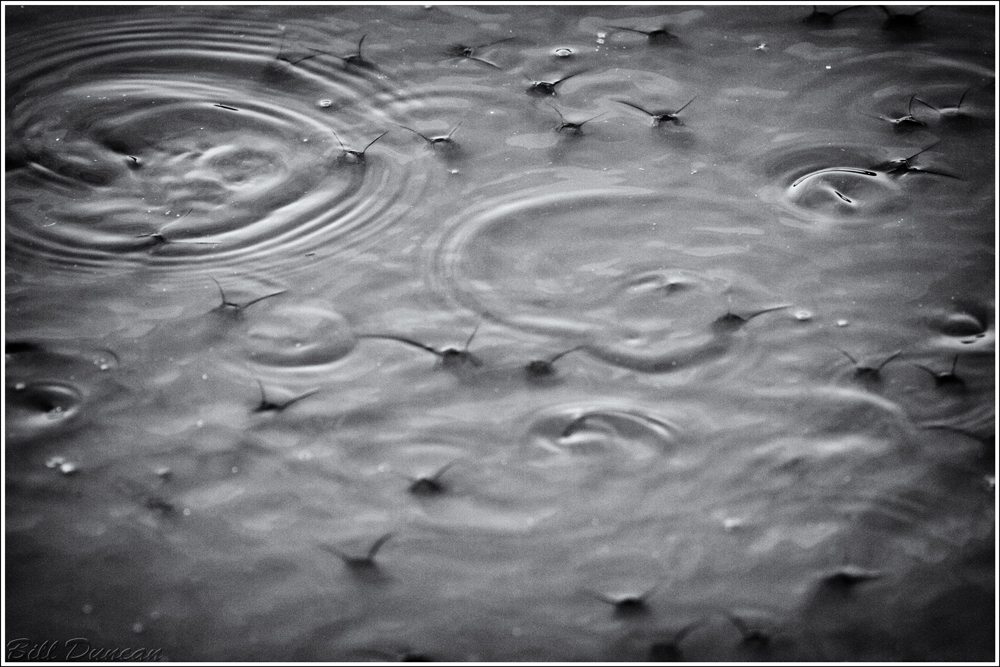
Kudos to Sarah, who took a closer look at these guys.  What looked like a bunch of tadpoles gulping at the surface of one of these rapidly vanishing pools was actually a nice-sized school of small catfish.  If rains do not come soon, these guys have no chance.

Technical details: Canon EOS 7D camera,  EF400mm f/5.6L USM lens, ISO 800,  f/5.6, 1/400 sec

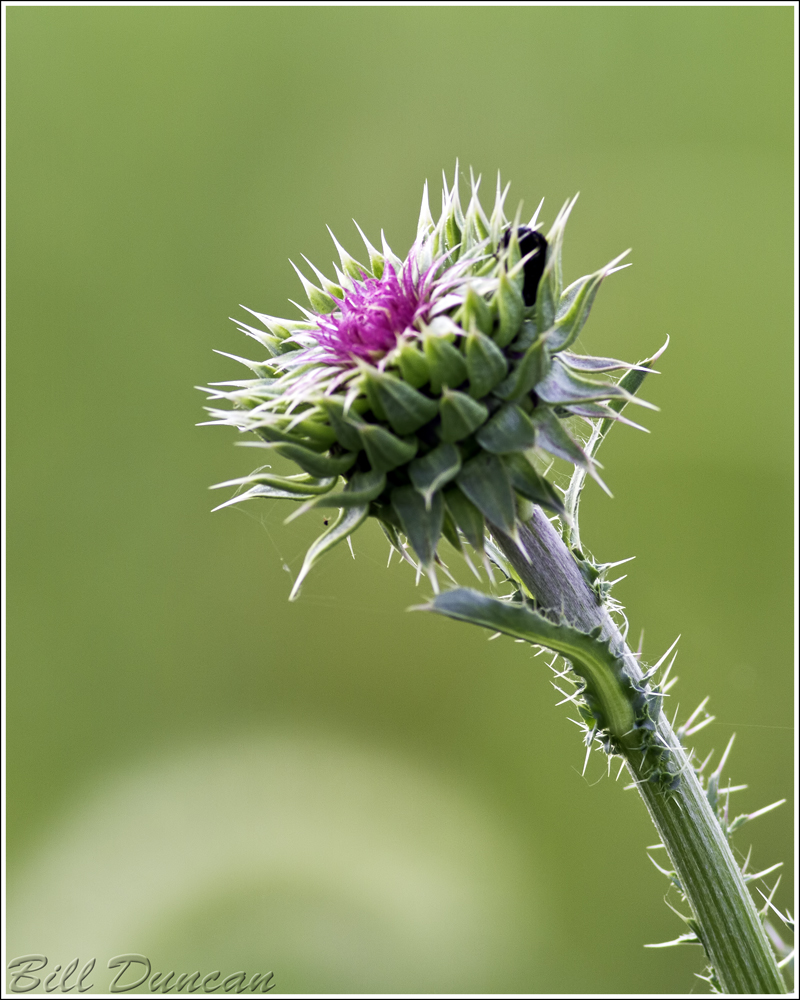
Sarah also spotted this thistle in early bloom and asked that I take its picture.  I haven’t done a lot of macro style shooting with the 400mm, but I know that using the super tele’s to do this can work magic.  The focus isn’t perfect, but I was actually fighting the minimum focus distance.  I need to try this with dragonflies and other large insects.

Technical details: Canon EOS 7D camera,  EF400mm f/5.6L USM lens, ISO 800,  f/5.6, 1/400 sec

This morning there was actually a bit of cloud cover over the sun.  I decided to try a little panning blur and thought this was an apt image to go along with the record breaking heat we’ve been experiencing.  Stay cool everyone.  I am sure looking forward to all the time I’ll have to spend in the greenhouse this week.  ;=)

Technical details: Canon EOS 7D camera,  EF400mm f/5.6L USM lens, ISO 100,  f/14, 1/125 sec

Location Spotlight: The Canyon-land of Ferns and Waters – Hickory Canyons Natural Area

Today’s post spotlights a few images I took recently at the least well-known, but perhaps my favorite, of the Ste. Genevieve trio gem locations found in south-eastern Missouri, Hickory Canyons Natural Area.  The other two nearby locations are Hawn State Park and Pickle Springs Natural Area.  Much of the exposed rock in this area is known as LaMotte sandstone and was deposited around 500 million years ago under the Paleozoic sea, which covered this region except the igneous knobs of what are now called the St. Francois Mountains.  Unlike the other sedimentary rocks – like dolomite and limestone that compose much of the Ozarks, sandstones are generally much more resistant to erosion.  This results in rock features that are often quite spectacular to the eye and the canyons, bluffs and other exposed sandstone bedrock have become favorites for hikers, rock climbers and other travelers to this region.

“Addressing the Optimates”

Technical details: Canon EOS 7D camera, EF70-200mm f/4L IS USM lens @ 89mm, ISO 320,  f/20,  0.4 sec

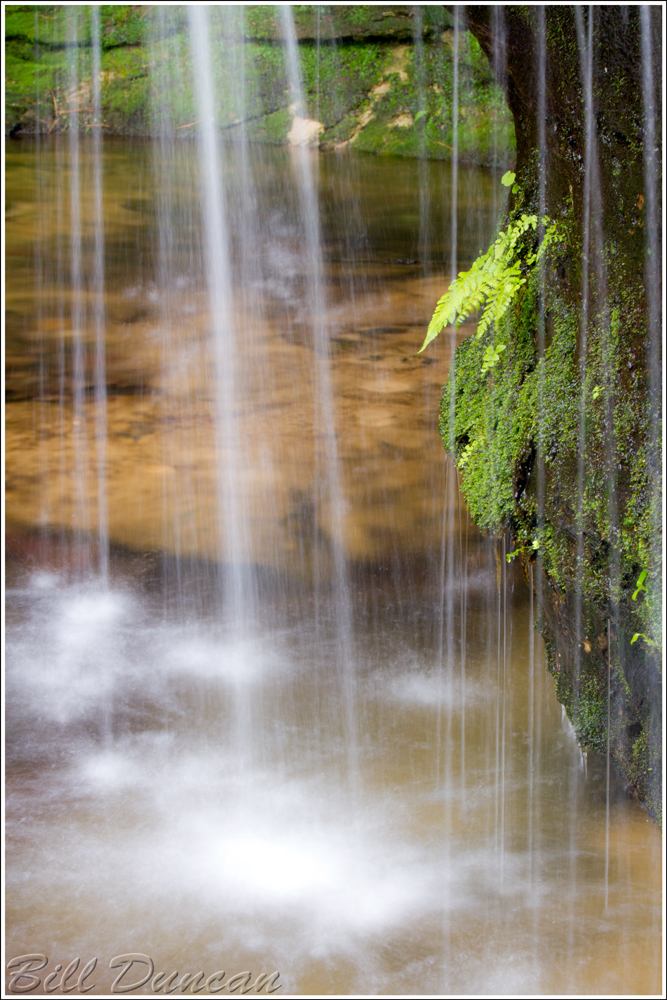
Two short hikes are available at Hickory Canyons N.A.  Both offer great views of the rock formations, including wet-weather waterfalls like the one shown below.

“The Bath House”

Technical details: Canon EOS 7D camera, EF70-200mm f/4L IS USM lens @ 70mm, ISO 320,  f/16,  1.3 sec

The overhangs and cracks created in these box canyons, gorges and cascades provide opportunities for ferns, mosses and lichens.  In fact, these three spots mentioned above in Ste Genevieve Co are the only place the fern enthusiast need travel to in Missouri.  The well-draining, sandy and acidic soils found here are perfect for species like wild-rose azalea, hay fern and rattlesnake orchid.  White oak, hickories, sugar maples, short-leaf pine and flowering dogwood are the primary tree species found at this location.  A few trips during spring time are definitely worth it to find some of these fantastic plants in bloom set against these dripping canyons and ephemeral cascades and waterfalls.  The wild-rose azaleas bloomed about six weeks early this spring and I missed them.  Oh well, something to look forward to next year.

“The Senate”

Technical details: Canon EOS 7D camera, EF24-105mm f/4L IS USM lens @ 28mm, ISO 160,  f/16,  2.5 sec

“Floralia”

Technical details: Canon EOS 7D camera, EF70-200mm f/4L IS USM lens @ 93mm, ISO 250,  f/16,  1 sec

Virere Candere

Technical details: Canon EOS 7D camera, EF24-105mm f/4L IS USM lens @ 24mm, ISO 160,  f/16,  1.6 sec

Arboris Relictus

Technical details: Canon EOS 7D camera, EF100mm f/2.8L Macro IS USM lens, ISO 160,  f/16,  0.5 sec

As the glaciers of the last major ice age retreated, species that required lower temps and had higher water requirements moved back north as well.  These canyons provide cooler and wetter environments for relict species like the one pictured above, the partridge berry.  This evergreen vine-like tiny shrub can be found throughout the canyon and hollow floors along with lichens and mosses.

Location Spotlight: Squaw Creek National Wildlife Refuge

“Traditional Boundaries”

Technical details: Canon EOS 7D camera,  EF400mm f/5.6L USM lens, ISO 400,  f/10, 1/1250 sec

I’m finally taking a few of the images I made during my first visit to Squaw Creek National Wildlife Refuge last autumn and putting them into a blog post.  Living within miles of the Mississippi River Flyway – an ancestral route many migratory birds follow in their north-south seasonal movements – I have all sorts of options in visiting well-managed wetland areas to watch and photograph waterfowl.  Of all these locations none has the opportunities for getting great looks at numbers and diversity of bird species that can be found at Squaw Creek NWR, located near Mound City in north-western Missouri, not too far from the Nebraska Border.
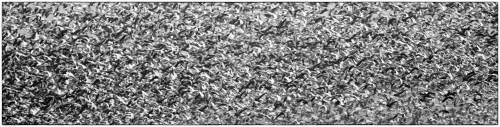
“Cacophonic”

Technical details: Canon EOS 7D camera,  EF400mm f/5.6L USM lens, ISO 1600,  f/5.6, 1/125 sec

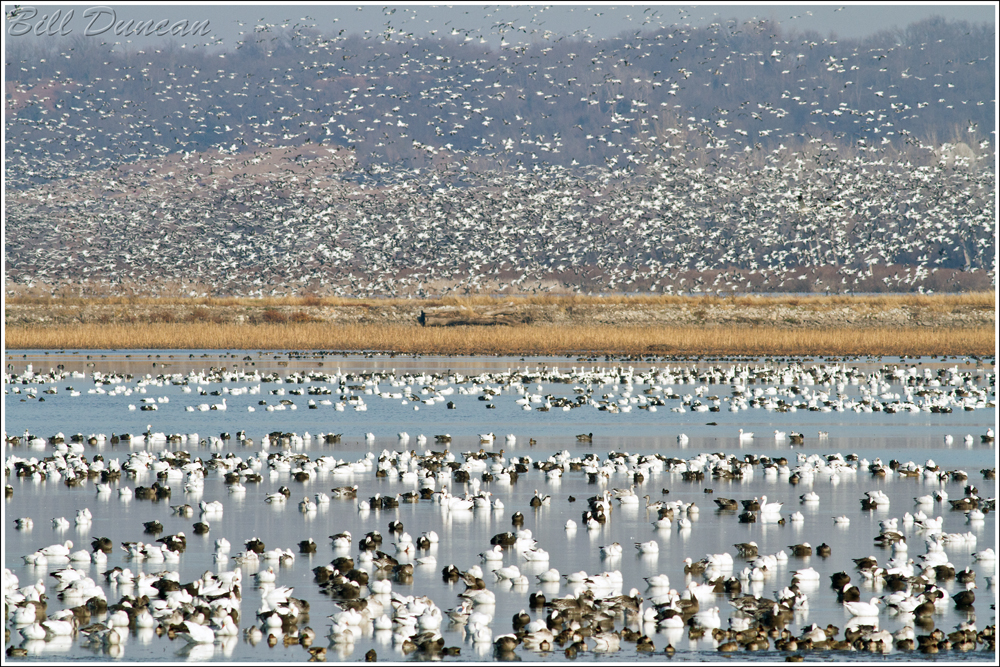
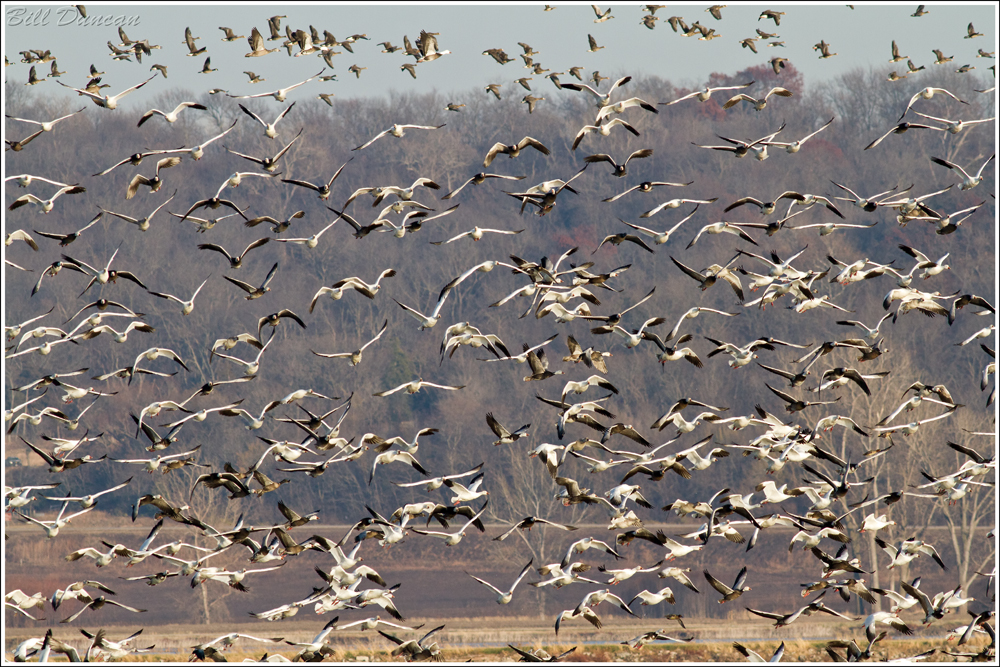
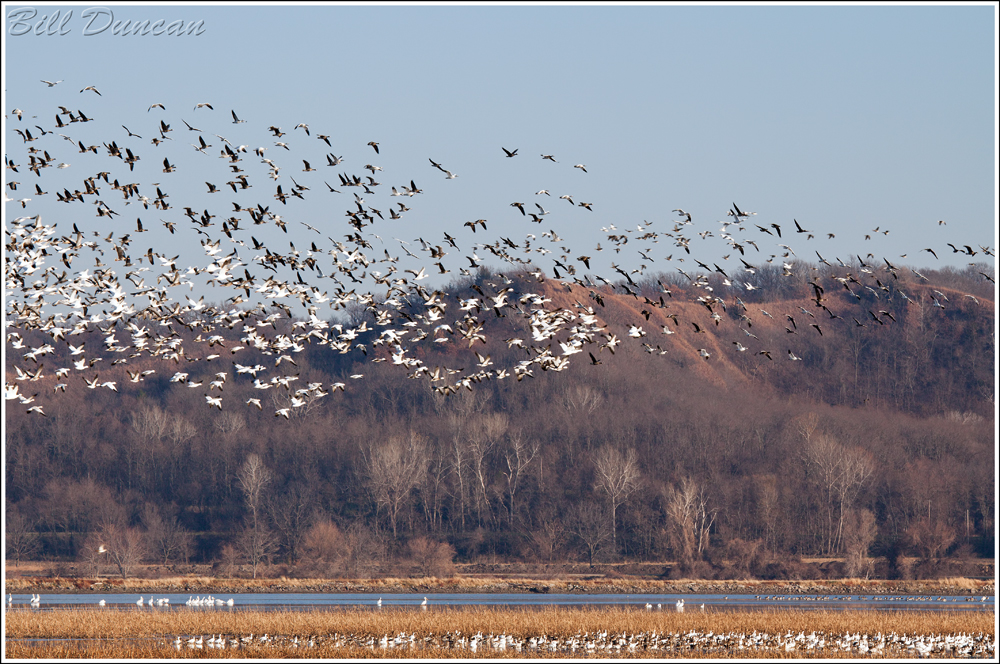
The big stars at Squaw Creek around Thanksgiving and surrounding weeks are the Snow Geese.  For years I had read about and seen images of the more than one million birds that pass through this location every fall.  At peak times more than 500,000 birds can be counted on the reserve at one time.  I had images in mind that I hoped to make if I could find the birds present in these kinds of numbers.  I really had little clue of where and when I needed to be set up and if I had the ammunition (lenses) to make the images I had in mind.  I feel the photos I was able to get are of mixed success due to several reasons.  I was quite lucky in the numbers of birds that showed up.  A week before my visit the counts were only a little more than 10,000.  The day I arrived the latest weekly count suggested there were more than 250,000 on the reserve.  This is shy of the 500-600K that can be found during peek times, but for my first visit, it was quite a treat!  Of the 1.5 days I had to spend here, one full day was very cloudy and dark, making bird photography particularly troublesome.  Around noon on my last day the sky cleared and I was able to get some nice light.  Hopefully I can spend a few days more during my next visit.
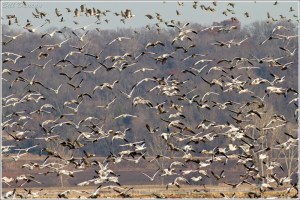
“Let My Army Be The Rocks And The Trees And The Birds In The Sky”

Technical details: Canon EOS 7D camera,  EF400mm f/5.6L USM lens, ISO 400,  f/8,  1/1250 sec

Snow Geese are not the only waterfowl that can be found in good numbers here.  In almost every one of these types of images Greater White-fronted Geese, Green-winged Teal, Northern Pintail, Mallards and more can be found as well.
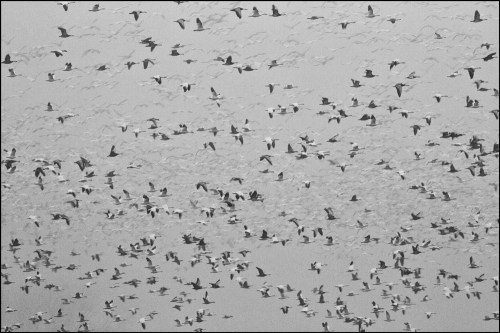
“The Snow & the Mist”

Technical details: Canon EOS 7D camera,  EF400mm f/5.6L USM lens, ISO 1600,  f/8,  1/100 sec

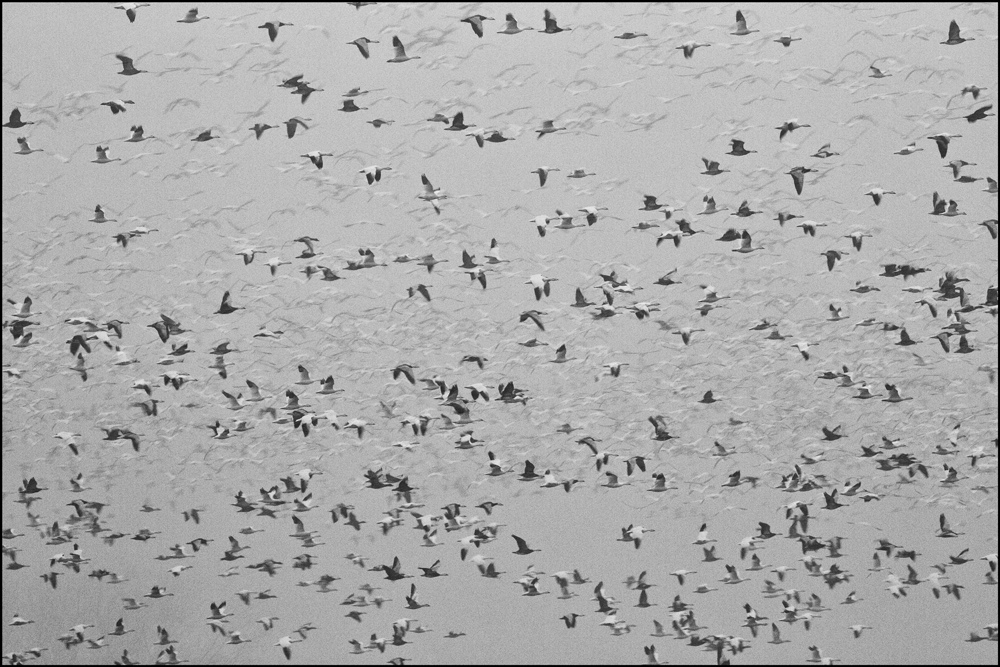
Squaw Creek NWR and its 7500 acres was established in 1935 just in time.  Close to 98% of the original marshes and related wetlands that border the Missouri River in the state of Missouri have been destroyed or permanently altered – mostly for use as farmland.  Thankfully sportsmen realized the importance for providing habitat for migrating and over-wintering waterfowl and a series of these man-made marshes were built near Kansas City, Columbia and St. Louis.  This image is actually a composite of two separate photographs – the foreground and the background, both taken in extremely cloudy and grey conditions.  I was surprised by how well this blending worked and I feel it represents what it was like on this first day, the geese constantly taking off in large groups and others taking their place in the marshes.

“Squaw Creek Eagle”

Technical details: Canon EOS 7D camera,  EF400mm f/5.6L USM lens, ISO 800,  f/5.6,  1/400 sec

Waterfowl are not the only birds or wildlife that utilize the reserve.  Although you can see more Bald Eagles in spots along the Mississippi River, I have never been able to get as close to these birds perched as I did during this visit.  This is true with the wildlife in general.  The auto-route roads were set perfectly in the reserve, in my opinion.  Getting close enough to the wildlife can be troublesome from the roads at other places I visit, but here the roads are much better situated near the pools and the wildlife never seem to be overly stressed.  During the time of my visit with cloudy weather and poor light, I was able to get closer to several duck species than I have ever been able to before.

“White Ibis”

Technical details: Canon EOS 7D camera,  EF400mm f/5.6L USM lens, ISO 400,  f/5.6,  1/640 sec

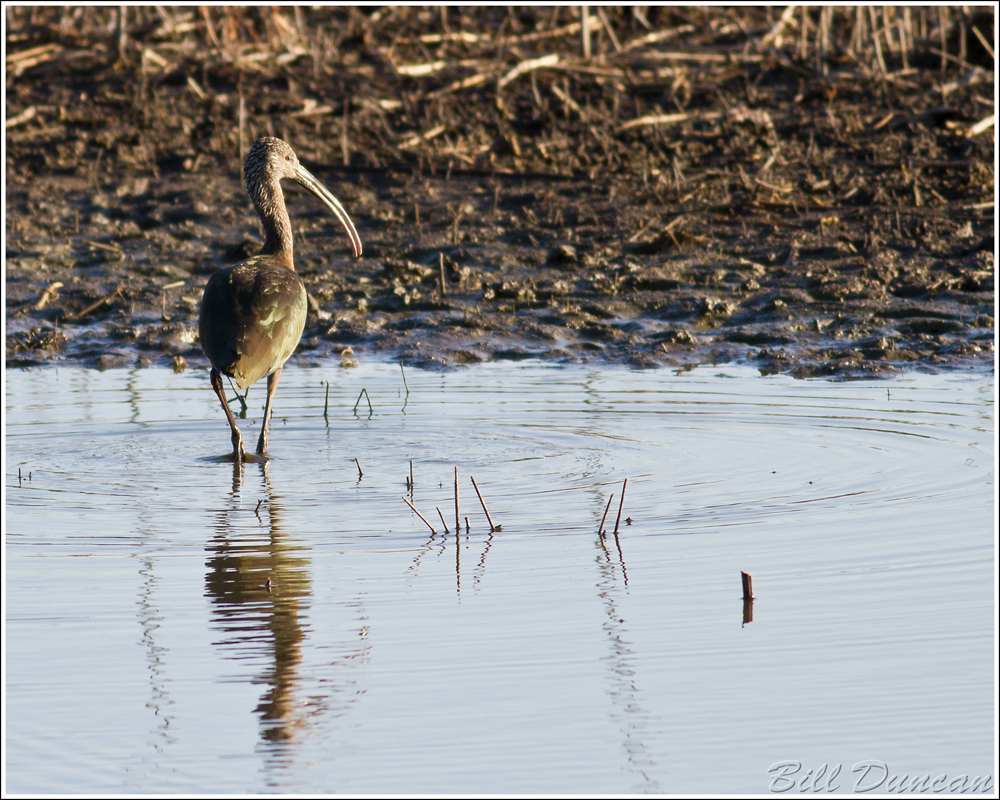
This White Ibis was actually a very late bird for this part of Missouri and it made a bit of noise in the MO birding community.  This was also one of my best looks at this species.  I had found it the day before and took some rather poor photos.  I was happy to see it still in the same pool the next day when light was better.

“Snow Geese on Loess”

Technical details: Canon EOS 50D camera, EF70-200mm f/4L IS USM lens @ 150mm, ISO 100,  f/10,  1/200 sec

This image is probably my favorite from this trip.  To me, it really captures the essence of the place and I believe this is what this area looked like when Lewis and Clark first laid eyes to this part of the country.  The bluffs in the background are known as loess hills and are formed by the actions of glaciers.  Along with draining the natural wetland habitats along the Big Muddy, European settlers also got busy destroying many of the impressive loess hills, using the fertile soil for numerous development and farming projects.  Many of these features are still being harvested and destroyed to this day.

There are several more nationally well-known reserves like this throughout the country that scores of photographers, nature lovers, biologists and sportsmen flock to every year.  I can’t imagine a spot being more suited for these activities than Squaw Creek NWR.  I hope to make an annual pilgrimage to this location on Thanksgiving week.

If you make the visit and are looking for a nice place to eat, I highly recommend “Klub”.  This is a great place to enjoy a late dinner after spending the day at the reserve, which is only about ten minutes away.  They have a great menu using a lot of fresh, local ingredients.  I ate here twice during my visit and I was quite surprised to find such a quality establishment in such a little town like Mound City.

Thanks for paying a visit.  You can find more photographs taken from this location by visiting my Squaw Creek Flickr Set
Seven Days of Mina Sauk Falls – Day One

Technical details: Canon EOS 7D camera, EF-S10-22mm f/3.5-4.5 USM lens @ 10mm, ISO 200,  f/14, 1/2 sec

Flowing down the largest mountain in Missouri, Taum Sauk, is a series of wet-weather cascades and falls that are collectively known as Mina Sauk Falls.  The total drop is said to be approximately 132 feet and over the course of this elevation change is a bounty of potential compositions as well as places to hurt yourself.  This is the heart of the St. Francois Mountains and there are not too many soft places to land.  This past “winter” I visited Taum Sauk and took the hike down to Mina after a rainy spell.  The temperatures were just cold enough to put ice on some of the rocks and other shallow surfaces but this mostly seemed like a spring time visit.  I’ve visited once or twice before where the waters were flowing better, but this was pretty nice and I was surprised to see Mina flowing this high.

Over the next seven days I plan on presenting a photograph and a bit of information regarding Mina and her father Taum Sauk as well as discussing the St. Francois Mountain region of the Missouri Ozarks.

Fountain Bluff Petroglyphs – Part Two

Technical details: Canon EOS 7D camera, EF24-105mm f/4L IS USM lens @ 32mm, ISO 160,  f/4, 1/25 sec

Reading into the Mississippian/Woodland periods suggests that birds and other animals were very important in the belief systems of the cultures in the mid-western United States.  Rock art showing birds in a multitude of forms is found throughout Illinois, Missouri and Arkansas.

Technical details: Canon EOS 7D camera, EF24-105mm f/4L IS USM lens @ 47mm, ISO 160,  f/4, 1/25 sec

This definitely looks like a raccoon track and it most likely is.  Being a nature super-freak, naturalist, hippie type, these periods of history or world cultures that existed then and now fascinate me.  Almost every single experience these people were exposed to was set in nature and the only explanation there was for any phenomena they encountered was embodied in nature.  Sure, via their myths and imaginations they thought up “super”-natural explanations, but there was no other answer that led these folks from nature as the true alpha and omega.  These days people in most of the world can go their entire lives without knowing nature except for the resources it provides that sustain them in their daily grind.  I get so tired of the apologists whose response to anything that counterpoints “progress” is by saying something like “humans are a part of nature as well”.  At one time in human history this was the case.  I believe that with 99% of contemporary people, this is no longer true.

Technical details: Canon EOS 7D camera, EF24-105mm f/4L IS USM lens @ 45mm, ISO 160,  f/5.6, 1/25 sec

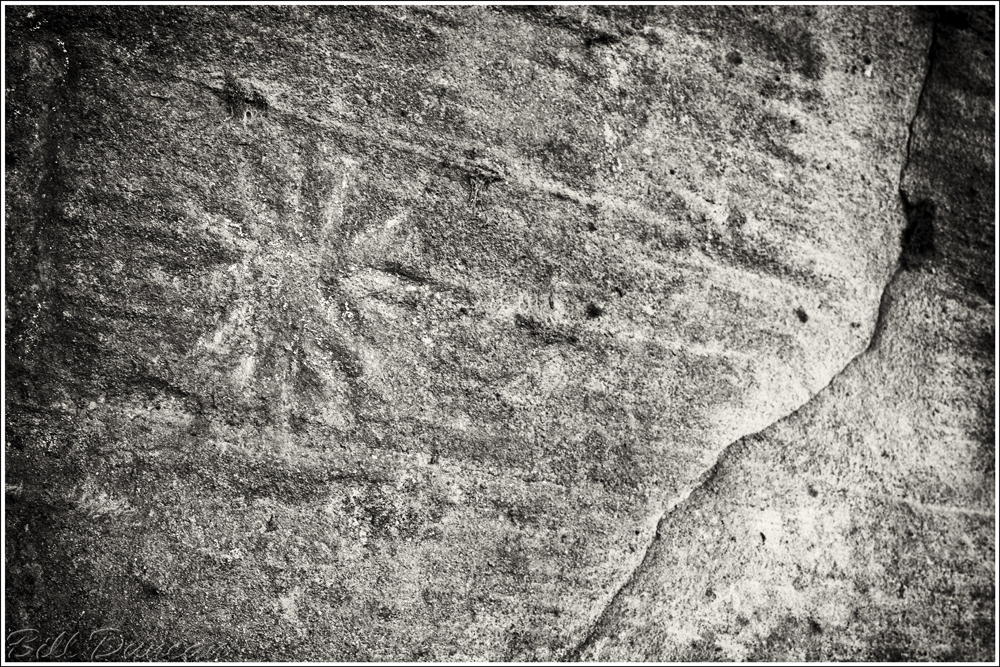
Another natural representation, a star is often represented in pre-colombian rock art.  It is thought that sites with astronomical representations mean this was an important spiritual location for those that made them.

Technical details: Canon EOS 7D camera, EF24-105mm f/4L IS USM lens @ 75mm, ISO 160,  f/4, 1/25 sec

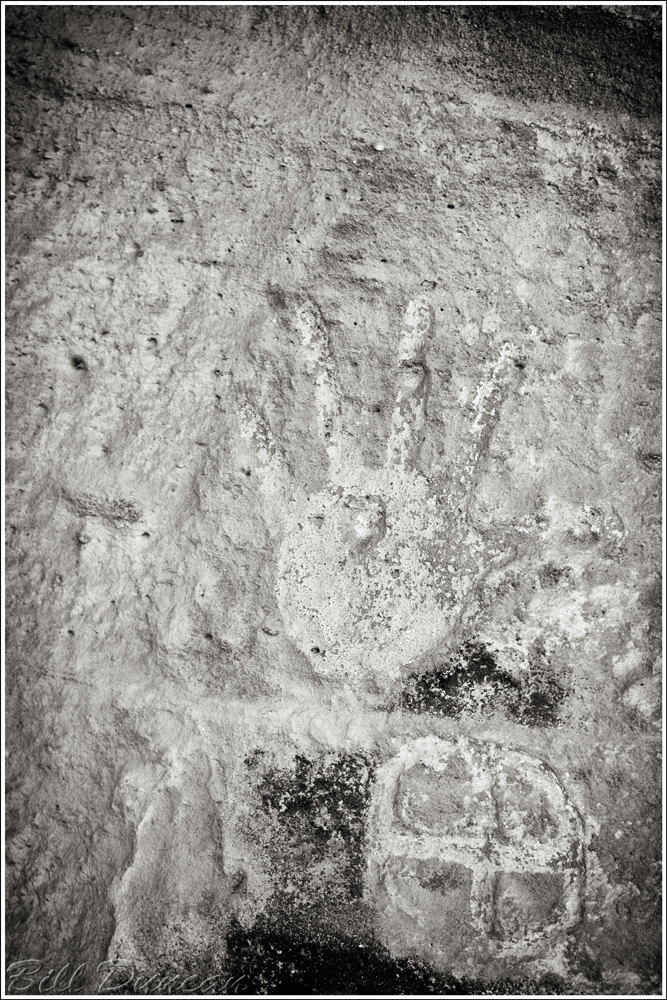
Petroglyphs and pictographs.  What’s the difference?  Pictographs were simply painted on the rock surfaces, while the less frequently encountered petroglyphs are carved or chipped into the rock.  I have read that these were originally painted over in a red-colored paint and that this helped maintain their condition over the centuries.  The petroglyphs pictured here were mistreated by those who were attempting to preserve these artifacts and most of the original paint is now missing.

Technical details: Canon EOS 7D camera, EF24-105mm f/4L IS USM lens @ 32mm, ISO 160,  f/7.1, 1/25 sec

Well, that’s all I have from the Fountain Bluff Petroglyph site.  As I was commenting to a friend of mine recently, I never come away from my first visit to a location with the images I really want.  To get what I find are the best compositions it seems that I need to visit a location several times to get to know it better.  I also realize I did not see all the artifacts at this site and I look forward to exploring more around these bluffs.

A Winter’s Touch of Color in the St. Francois Mountains

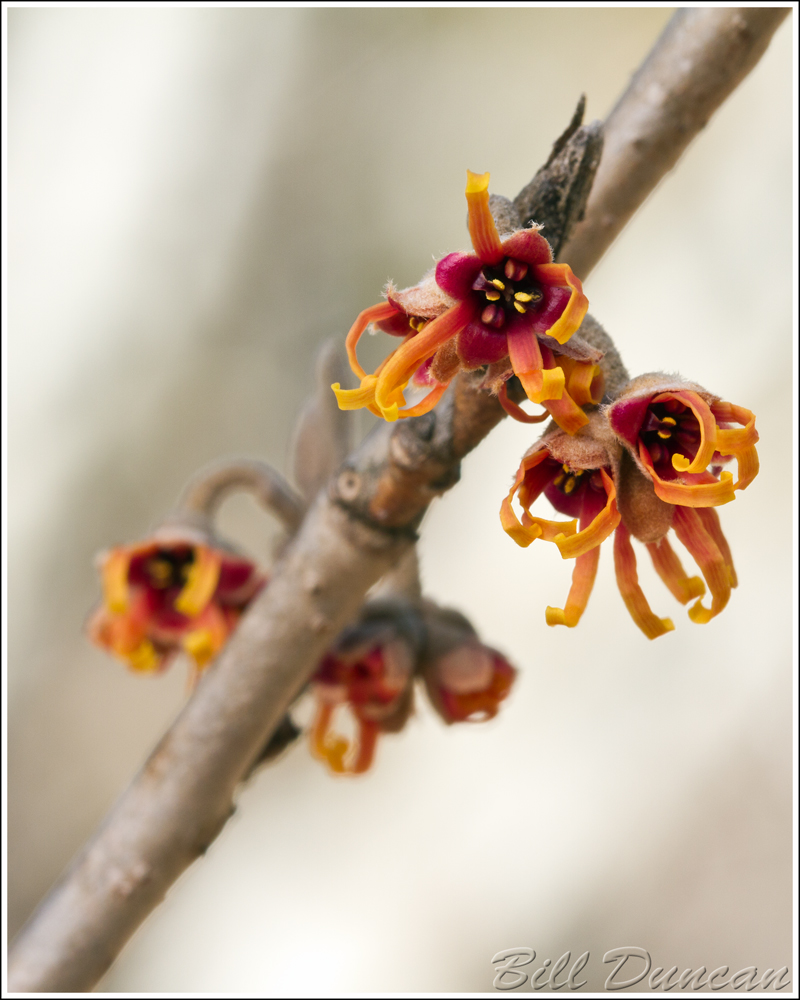
“Harbinger of spring” is a common name given given to a spring ephemeral wildflower, which among other places throughout the Eastern United States, can be found in bloom as early as February in our Ozark woodlands and forests.  Ozark witch hazel, pictured below, is a species of shrub found in the St. Francois Mountains that begins to bloom in early January.  These images were taken on January 7th at Lower Rock Creek Wilderness in Madison County, MO.  These plants are incredible and I seek out their blooms every year during their January though April flowering period.

Technical details: Canon EOS 7D camera, EF100mm f/2.8L Macro IS USM lens, ISO 320,  f/14, 1/40 sec

These blooms can last in the middle of the harshest winter for up to six weeks under temperatures as low as 0 deg F.  When temperatures get much below freezing the long petals will curl up and then uncurl during sunny warm weather.  When warm these blooms emit a very pleasant, vanilla-like scent.  I spent a good amount of time yesterday napping in the sun on a rhyolite shelf of Lower Rock Creek listening to the rushing water and having the scent of these fresh blooms waft by me with a gentle cool breeze.

Technical details: Canon EOS 50D camera, EF17-40mm f/4L USM lens @ 35mm, ISO 160,  f/9, 1/10 sec

These plants are also noteworthy for the variability in color of their flowers.  I’ve found plants side by side that held flowers completely of red, oranges and reds, or like the plant below, nothing but yellow.  Typically the sepals of these plants will be a lovely burnt, orange/red and the strap-like petals will be lighter shades of orange and yellow.  It has been suggested by some that these colors may change over the course of the individual flower’s life, over the course of a season, or even over the course of the plant’s life.  I do not know the answer to this.  As you can see below, these yellow flowers are fresh, crisp and new.

Every year I wonder about the specific pollinator(s) that service this species.  I’ve read that it may be early emerging species of bees or flies.  I saw a few insects and other arthropods moving about around the water, but never witnessed a visit to the flowers while I was shooting them yesterday.  Flies can be very ephemeral and advantageous about when they will emerge over the course of a season.  It would not surprise me that flies fill this role, at least until March or April when more insects are up and about looking for their duty.

My visit to this special place exemplifies that to study biology-to study nature is to study exceptions.  I’m not sure if I’ve ever heard a “rule” or “absolute” by expert or professional in the realm of biology that turned out to be truly universal.  If there is a niche to be filled or an opportunity to thrive, natural selection will see to it, as long as it makes sense for the time and place.

Technical details: Canon EOS 7D camera, EF100mm f/2.8L Macro IS USM lens, ISO 400,  f/14, 1/20 sec

A Thousand Acres of Silphiums

Okay, I think I’ve settled on a title for this blog. Silphium are one of my favorite groups of plants native to the prairies of the United States and I pulled this phrase from my favorite book, “A Sand County Almanac” by Aldo Leopold. If any of you are wondering, that book contains a lot of the message I will be trying to bring forward in this blog.

P.S. Check this out: http://www.gatewaygalleryonline.com/matchickggo.html

It seems the moniker “Ozark Light” is pretty popular with nature photographers of the region. I’ve gone to see Greg’s photos at this gallery in the past and I’d highly recommend his work.