"What a thousand acres of Silphiums looked like when they tickled the bellies of the buffalo is a question never again to be answered, and perhaps not even asked." -Aldo Leopold
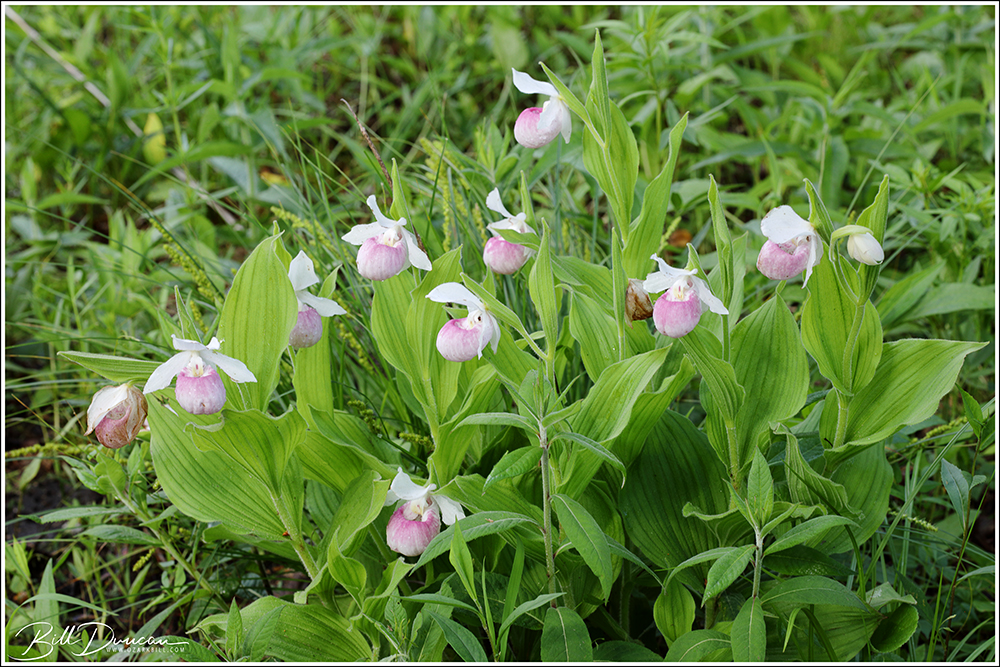
I was thrilled to be able to photograph this stunner of an orchid this past spring. Thanks to Casey Galvin who turned me on to this tiny population in Shannon County, MO.
A small cluster of Cypripedium reginae in bloom.
The Showy Lady’s Slipper is currently ranked as S2/S3 in Missouri, meaning this species is imperiled/vulnerable. We carefully tread around these guys and hide their specific locations as this is a species that may still be poached for horticulture purposes.
Aplectrum hymale is a relatively common orchid in Missouri, preferring rich mesic forests, particularly along stream and river banks. It is known by two common names that are both widely used. “Adam and Eve Orchid” is used due to the presence of twin underground corms. The leaf of the current year is connected to the youngest corm (Eve), and is an offshoot of the previous corm (Adam).
Aplectrum hymale (Adam & Eve orchid)
The other common name, “puttyroot orchid”, is given to this species due to the putty-like consistency of the corms that were sometimes eaten, most likely for medicinal purposes.
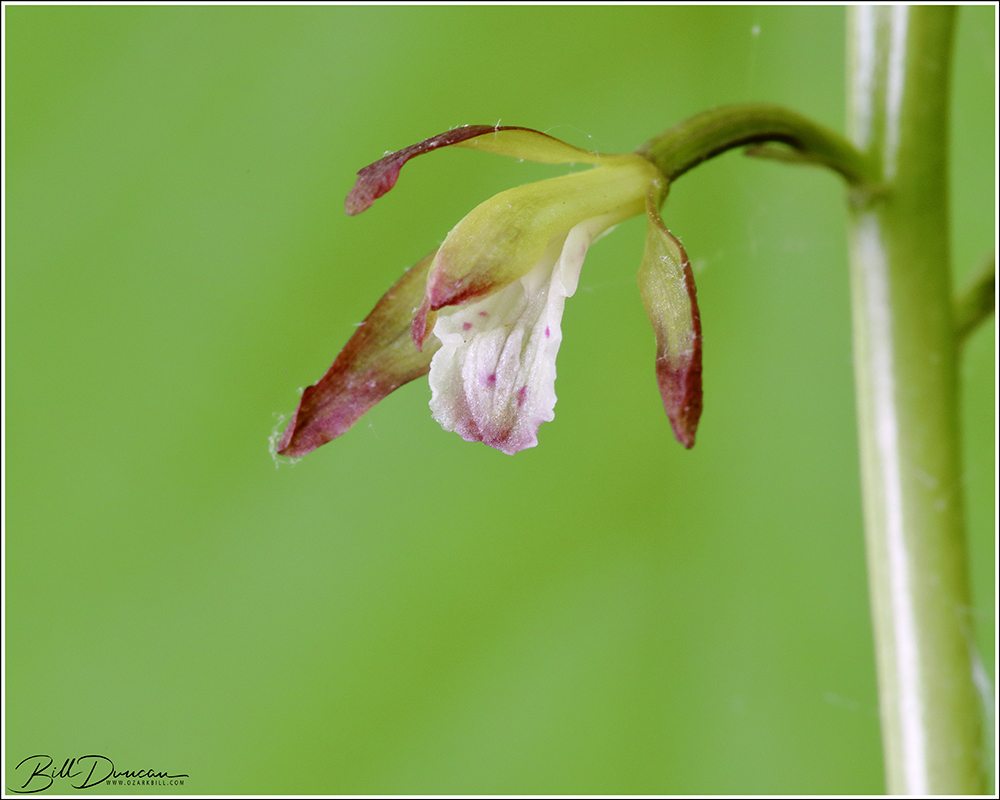
Aplectrum hymale in early stages of flower development.
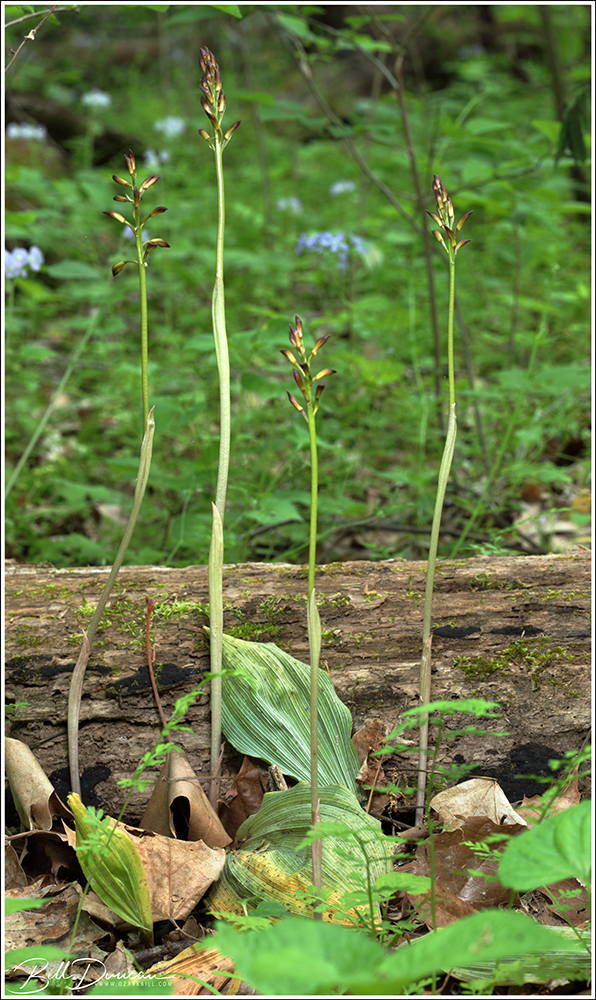
A. hymale is unusual in that it exhibits an alternate vegetative cycle. Leaves of this plant (one leaf per plant) develop in the autumn and overwinter. The leaves begin to senesce in the spring and have almost completely withered by the time the plants are in full bloom, or shortly after. In the preceding photo you can see the leaves at the time of flower shoot formation.
Aplectrum hymale with senescing leaves and flowers just shy of blooming
These plants typically bloom in early to mid-May in Missouri. By the time June rolls around the leaves will most likely be completely deteriorated and the only sign of the plant over the summer is the flowering stem (raceme) and developing fruit capsules.
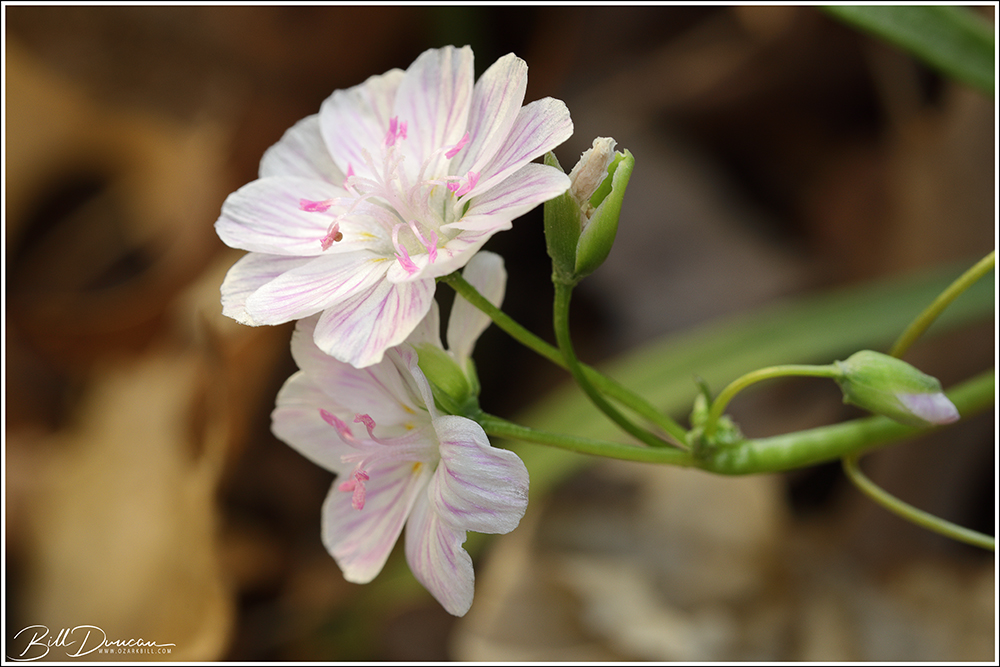
Until this spring, I assumed that spring ephemerals, like Claytonia virginica (spring beauty) and others that begin flowering in early spring, did not provide much sustenance for early season pollinators. For no reason in particular, I assumed that most of these plants preferred selfing versus providing the resources to attract insect pollinators.
After taking a closer look at the blankets of C. virginica that lie on the slopes of Beckemeier Conservation Area near our house, my eyes were opened. I found pollinators everywhere on multiple trips during this long and cool spring. Unfortunately many species were so quick that they eluded me and my camera. However, I managed to nab a few of the more cooperative and with some help of those smart folks at BugGuide.Net, I got as close to the right identifications as I could.
Andrena erigenidae, the spring beauty bee
Have you heard of oligolecty? Until doing this research, I had not either. Oligolectic is a term that describes certain bees species that have specialized preference to pollen from only specific plant groups – plants from a small group of genera, a single genus, or in this case, one single species.
Andrena erigenidae reaching for its nectar reward
The spring beauty bee (Andrena erigenidae) is a mining bee (Andrenidae) that feeds exclusively on the pollen and nectar of C. virginica. In fact, the larvae of this species cannot grow optimally on any other pollen source. So, it may not come as a surprise that this was the most common bee I found foraging on the fields of spring beauty.
Andrena erigenidae female with pollen-laden legs
These mining bees will take the pollen during a flight run that may last up to more than an hour and then bring it back to their self-constructed nursery hole in the ground. There they will turn the pollen into cakes and lay a single egg on each. This will be all the material needed for an individual larvae to develop into an adult.
Andrena erigenidae making another stop
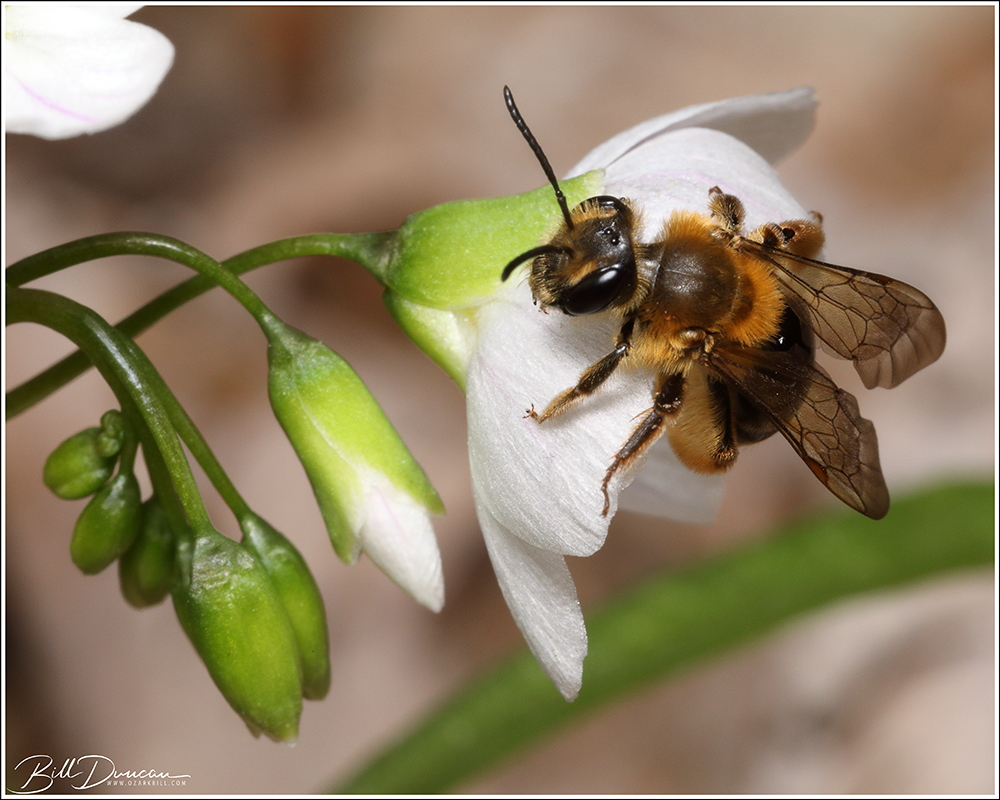
The next pollinator is a bee from the same genus, Adrena. This is a huge genus, comprised of more than 450 species in the U.S. Most often they are impossible to identify to species without having the bee in-hand and available for close inspection.
A beautiful Andrena bee
This beautiful and hairy ginger was considerably larger than the previous Andrena. I estimate this bee was about two-thirds the size of the domesticated honeybee.
Mining bee (Andrena sp.)
I’m not sure if this individual was a male, or if it was only interested in getting nectar, but I never saw this species actively collecting pollen from C. virginica.
Mining bee (Andrena sp.)
The long tongue on this one will allow for it to collect nectar from a larger variety of flowers, while the hairs on this bee definitely help it meet its pollinator status.
Mining bee (Andrena sp.)
I found a couple cuckoo bees foraging amoung the C. virginica as well. This “nomad cuckoo” pictured below is a cleptoparasite, meaning the female will lay its egg inside the nest of a different host species. The cleptoparisitc larvae will hatch first and will often kill the eggs or larvae of its host and then use the pollen provisions the host mother left to complete its development. This particular genus, the Nomada, is known to primarily use species in the above discussed Andrena genus as its host.
Cuckoo bee (Nomada sp.) nectaring on spring beauty
The cuckoo wasp, like this metalic green beauty in the Chrysididae family are also cleptoparasites that likely will use Adrena bees as hosts.
Cuckoo wasp (Chrysididae) on spring beauty
Bees and wasps were not the only pollinators I found on spring beauty. I also found a couple species of ants (not pictured because they never stand still long enough) and a couple of dipteran species, like this tachinid fly.
Tachinid fly (Gonia sp.) on spring beauty
I now want to introduce what was probably the most interesting thing I learned about spring beauty this year. Having been able to work on Asian Soybean Rust for a couple years during my career, I have since been very interested in the complex life-cycles of plant rusts. I suppose due to the dense population of C. virginica at this location and the cool and wet spring we have had, I found that many plants were infected with spring beauty plant rust (Puccinia mariae-wilsoniae). With just taking a cursory estimation of the hillsides, I think that as many as 50% of this population was infected with this rust. When I took the succeeding photo ( I so wish I had taken more and better photos of this), little did I know that my investigation would take me into a complex relationship that not only involved this plant host and rust relationship, but would also involve slugs (yes slugs) and the very pollinators that enticed me to bend the knee in the first place.
Spring beauty plant rust (Puccinia mariae-wilsoniae) aecia (a type of spore forming legion) on the abaxial (lower) leaf surface of spring beauty (Claytonia virginica)
I am sure that anyone who has taken the time to appreciate spring beauty more than during one season and/or place has noticed the variability in flower parts coloration. The majority of what is to follow here comes from an intriguing bit of work by Frank Frey (2004). C. virginica can vary from almost completely white to being mostly colored with pink to mauve to crimson stripes and other floral parts. Frank describes that plants that with higher levels of theses reddish pigments are preferred by pollinators and therefore, “…floral redness was associated with higher percentage fruit set.” Well then, this should beg the question, if this is the case why are there still plenty of individuals and populations of the less-fecund whitish pigmented flowers? Shouldn’t selection have taken care of this by now?
Here is where the slugs and rust comes into the story. These two, surprisingly, affect opposing selective forces on the coloration of C. virginica flowers. Plants with more white-colored flowers hold up better against predation by slugs due to the anti-herbivore properties of the flavonol pigments that produce the white coloration in these plants. In addition, for reasons that are not completely understood, the rust pathogen does better at infecting and propagating new spores on plants with redder-colored flowers. This was eye-opening for me to learn that something besides pollinator preference was manifesting a selective force on floral morphologies.
This is a highly simplified summary of the story this paper holds. I highly encourage you to check it out for yourself by following the link below.
An aberrant spring beauty flower. Typical spring beauty flowers have five petals. This plant may be infected by virus or have a genetic mutation that caused the increase in petal numbers seen here.
I love the never ending stories that can be learned from a single, common and seemingly simple spring ephemeral wildflower. I’m sure that spring beauty still has a number of stories to tell. I wish I had taken more photos of the rust and I will try and see if I can find plants with telia, the next form of spore-producing legion by this rust. It occurs later in the lifecycle of the plant. I just hope I’m not too late to get it this season.
This post is a modified article that was originally published in the Webster Groves Nature Study Society’s journal, Nature Notes (January, 2020, Vol. 92, No. 1).
Finding the orchid, Triphora trianthophora (three-bird orchid, nodding pogonia), during open bloom can be somewhat of a chore, particularly among us weekend warriors. Casey Galvin and I were both intrigued about the possibility of getting photographs of this diminutive and gorgeous orchid since learning of their discovery at Babler State Park by the WGNSS Botany Group led by Nels Holmberg, John Oliver and others in 2018. The following descriptions and photographs are anecdotal and were not collected using rigorous scientific methodology.
Phenology
There are several reasons it is challenging to find this extremely ephemeral plant in bloom. First, being partially saprophytic, the plants exhibit periodic dormancy and may not send up above-ground shoots every year, persisting instead as subterranean tubers for extended periods (Homoya, 1992). Even when they do produce stems and leaves, there is no guarantee the plants will flower in a given year. Additionally, when they do flower, any one bloom is open for only a few hours during a single day.
Exhibiting a phenomenon known as thermoperiodicity, a group or population of these plants are synchronized to open mature buds on the same day. This first wave of synchronous blooming is reportedly induced by a drop in minimum daily temperature of at least three degrees over two or more consecutive days. Following another 48-hour period, all mature buds within the population will then open on the same day (Luer 1975). Being skeptically minded, this was something I wanted to observe for myself.
Beginning in late July, Casey and I began monitoring the easier to get to population at Babler State Park. The first wave of synchronous flowering occurred on August 3rd. We unfortunately missed this but know the exact date because of visits on days immediately before and after this date. Looking into historical temperatures collected from the closest publicly-available weather station (Babler Park Estates – KMOBALLW37) revealed the initial blooming date fit the required temperature pattern perfectly (see attached figure). I continued monitoring and collecting flowering data and observed two more large flushes of synchronized blooms along with three days interspersed where only 3–10 stems/plants opened flowers. For subsequent synchronized days, I did not observe a coinciding drop in temperature as described above. I assume that the trigger for the initial bloom works to synchronize the population and subsequent larger bloom days are consequently synchronized due to all plants ‘running ahead’ at the same rate. However, there could potentially be some other unknown environmental triggers that are playing a hand here.
The first synchronous bloom occurred on August 3rd, approximately 48 hours following a four-day drop of approximately seven degrees in minimum daily temperature. Data collected from https://www.wunderground.com/ accessed on 12/06/2019. No longer “nodding”. Triphora trianthophora flowers open towards the sky en masse on just the right day. Photo by Bill Duncan.Arrive a day too late and this will be what you find. Photo by Casey Galvin.Much like the flowers, these developing pendulous seed capsules will become erect at maturity. Photo by Bill Duncan.
Pollination
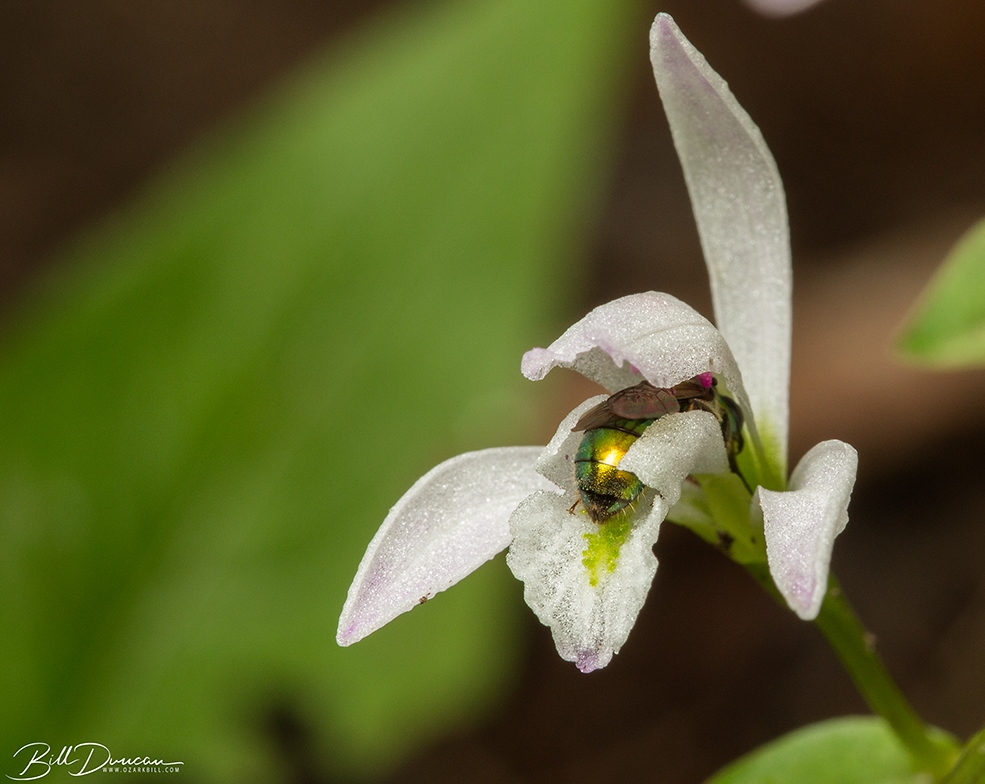
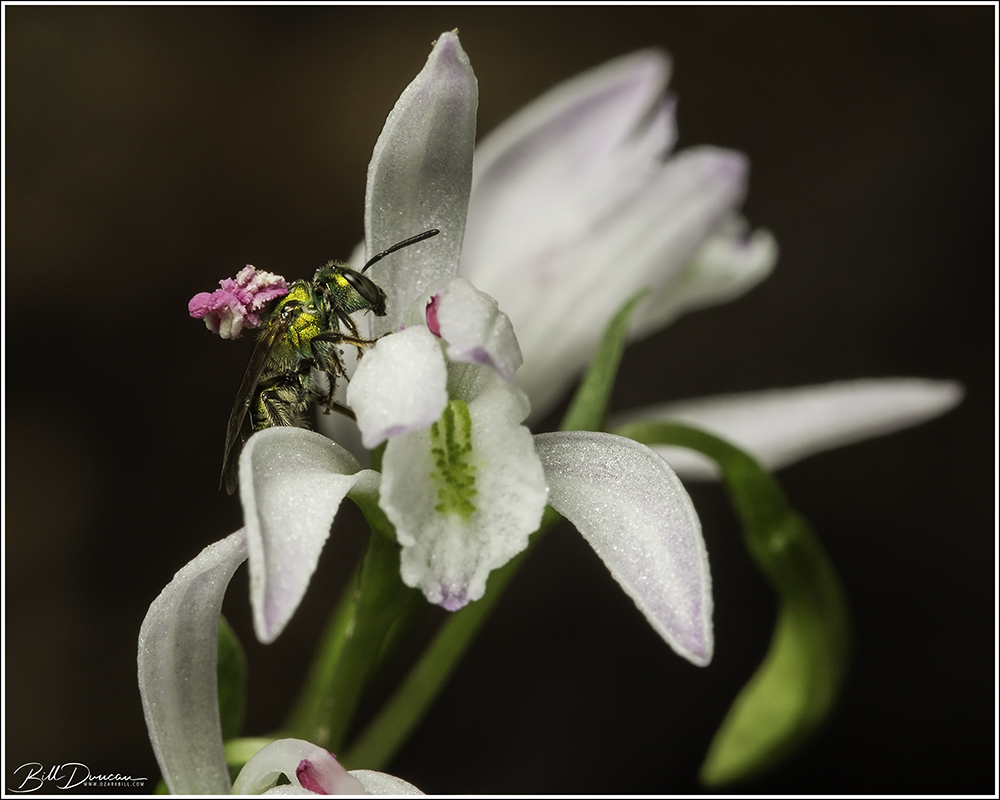
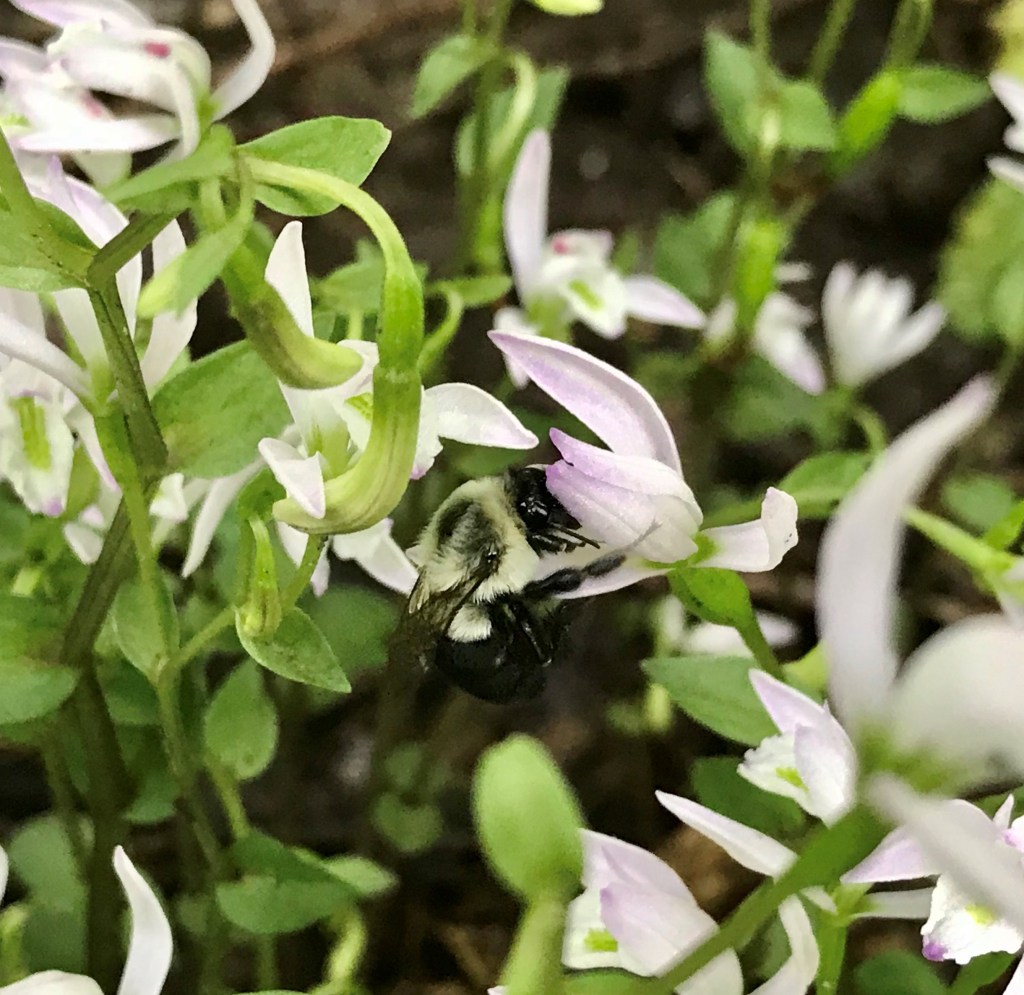
Halictid bees have been reported to be the primary pollinator for this species (Luer 1975). I had this in mind as I observed and began taking photographs while visiting on a large bloom day but doubted I would be fortunate enough to observe or photograph a potential pollinator visit. However, patience allowed me to do just that. I first observed visits by small flies and Bombus impatiens. Although Williams (1994) reported that Bombus have acted as pollinators of this species, I did not observe any of these visitors with attached pollinia during the 10-15 flowers I watched them visit. Eventually, I observed three different Halictid bees as they visited multiple flowers and observed these were heavily attached with pollinia. As described by Williams (1994), seed capsule production (successful pollination) is a relatively rare event in this species. Nevertheless, this was a treat to observe and photograph.
Nectar thieving flies and developing buds can be seen along with an open flower. Photo by Casey Galvin.Like a hand to a glove… This halictid bee (Augochlora pura) does not yet realize the burden it will be asked to take in exchange for sweet nectar. Photo by Bill Duncan.Removing itself along with attached pollinium requires some gymnastic effort. Photo by Bill Duncan.Removing itself along with attached pollinium requires some gymnastic effort. Photo by Bill Duncan.If you had to make this bee anymore attractive? Augochlora pura with attached colorful Triphora trianthophora pollinium. Photo by Bill Duncan.Bees in the genus Bombus have been described as active pollinators of Triphora trianthophora. I watched several B. impatiens each visit multiple flowers and observed no attached pollinia. Photo by Bill Duncan.
REFERENCES
Homoya, M.A. Orchids of Indiana. Indiana University Press, Indianapolis, Indiana, USA.
Luer, C.A. 1975. The Native Orchids of the United States and Canada. New York Botanical Garden, Bronx, New York, USA.
Williams, S.A. 1994. Observations on reproduction in Triphora trianthophora. Rhodora 96:30-43.
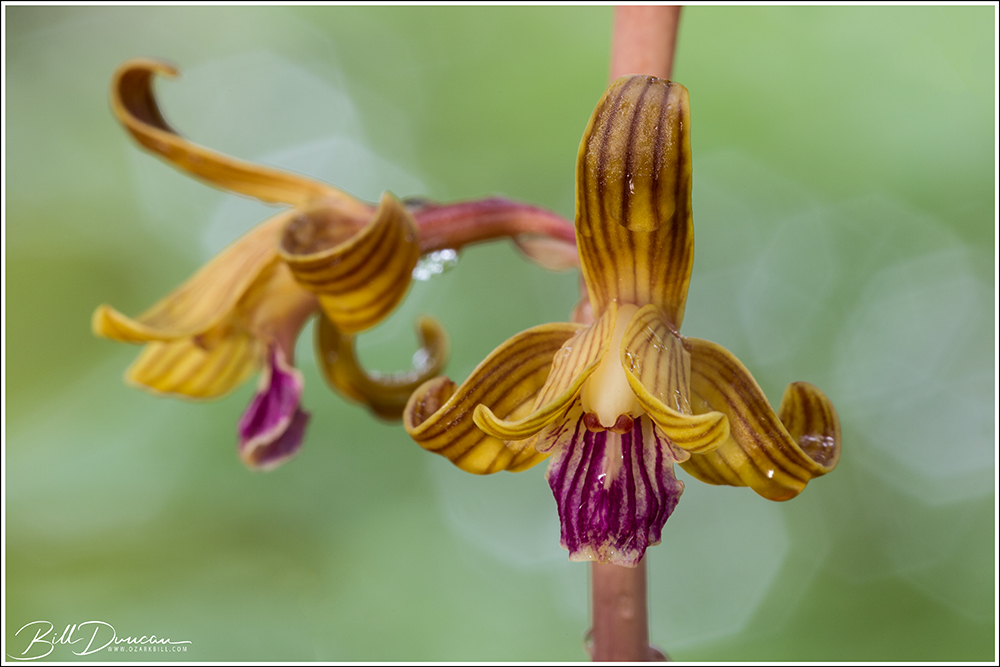
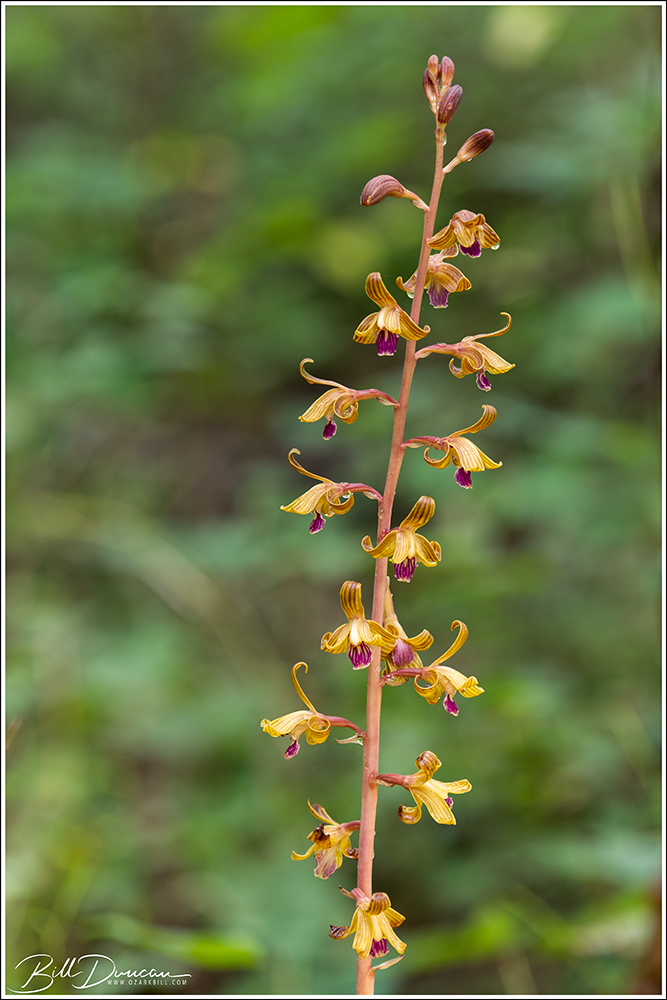
This single stalk that bloomed in early August was found by the WGNSS Botany Group in Jefferson County, MO. Many thanks to John Oliver, Scott George and others who helped get me on this plant during the bloom.
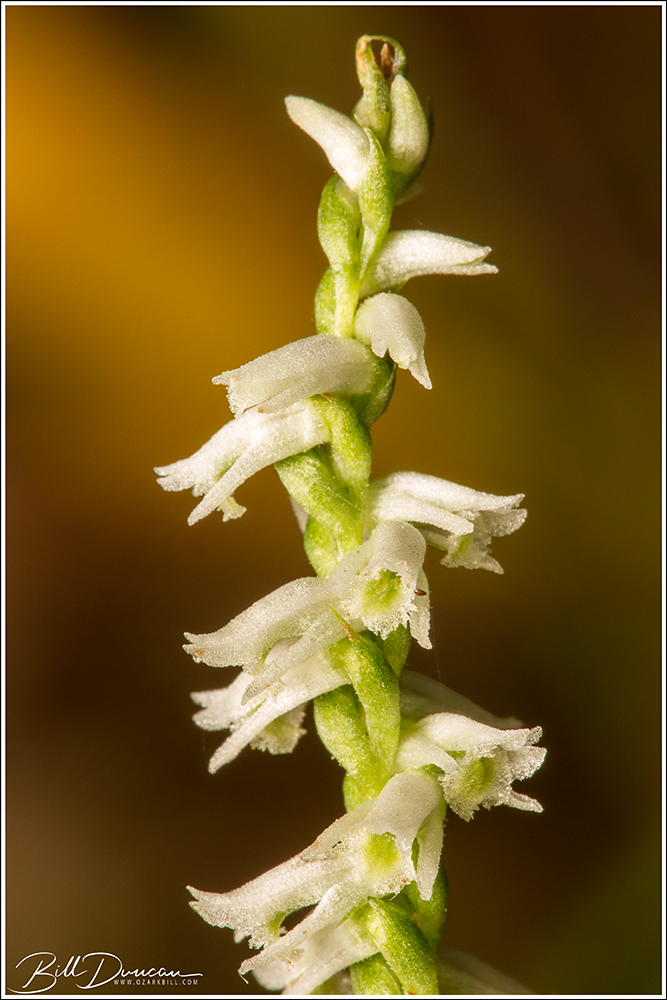
Spiranthes lacera, St. Francois Co, MO. f/16, 1/50 sec., ISO-640, 234 mm focal length equivalent
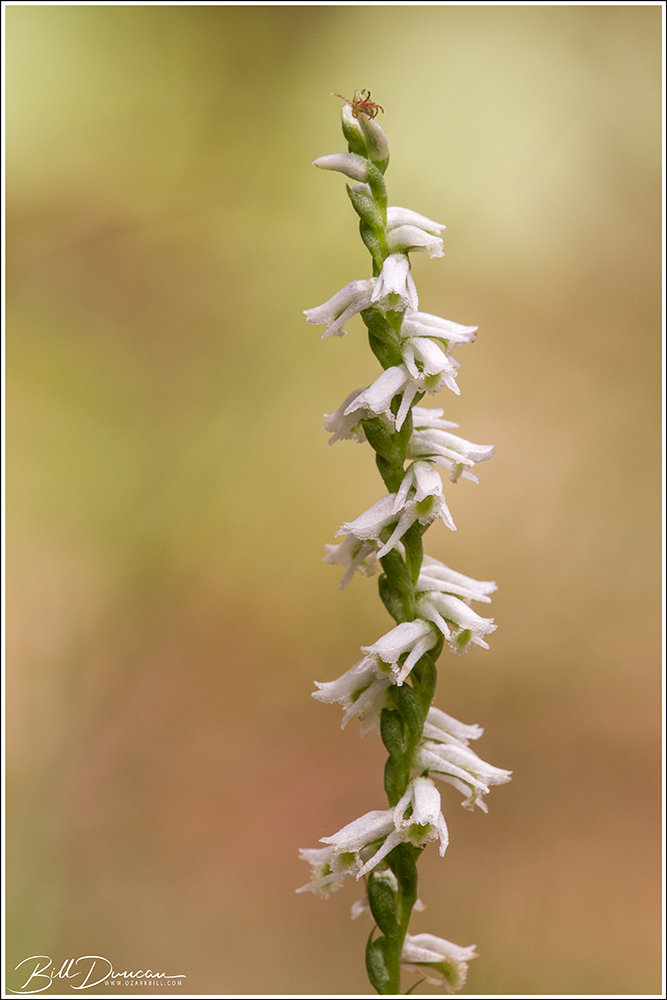
I only managed to photograph one of the Spiranthes this year. I had opportunities for others, but I just couldn’t get to the right place at the right time. Good news is that it shouldn’t be too difficult to add them next year.
Spiranthes lacera, St. Francois Co, MO. f/16, 1/60 sec., ISO-640, 234 mm focal length equivalent
A bit closer really shows off the delicate details in flower and twisting stem.
Spiranthes lacera with passenger, St. Francois Co, MO. f/16, 1/50 sec., ISO-640, 234 mm focal length equivalent
















 A Thousand Acres of Silphiums