"What a thousand acres of Silphiums looked like when they tickled the bellies of the buffalo is a question never again to be answered, and perhaps not even asked." -Aldo Leopold
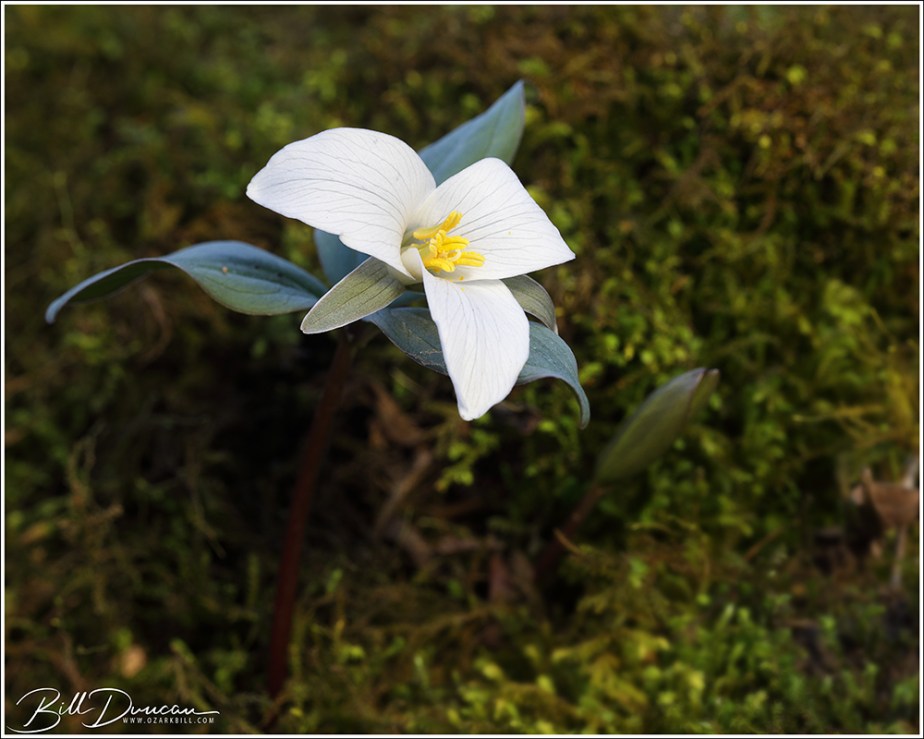
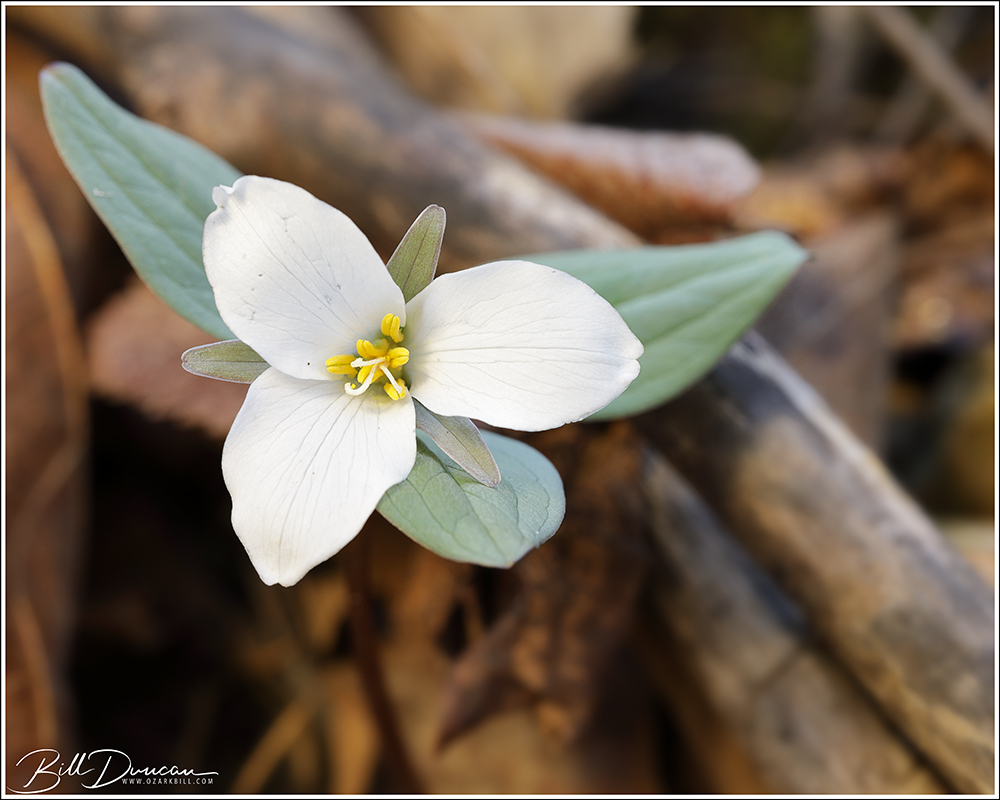
Many thanks to Casey Galvin for showing me these little guys. Snow trillium are the first trillium to bloom in Missouri and one of the first blooming wildflowers in the state. Potentially being found in bloom with snow on the ground, snow trillium begins blooming in mid-March. Photographed at Battle of Athens State Historic Site on 20, March, 2021.
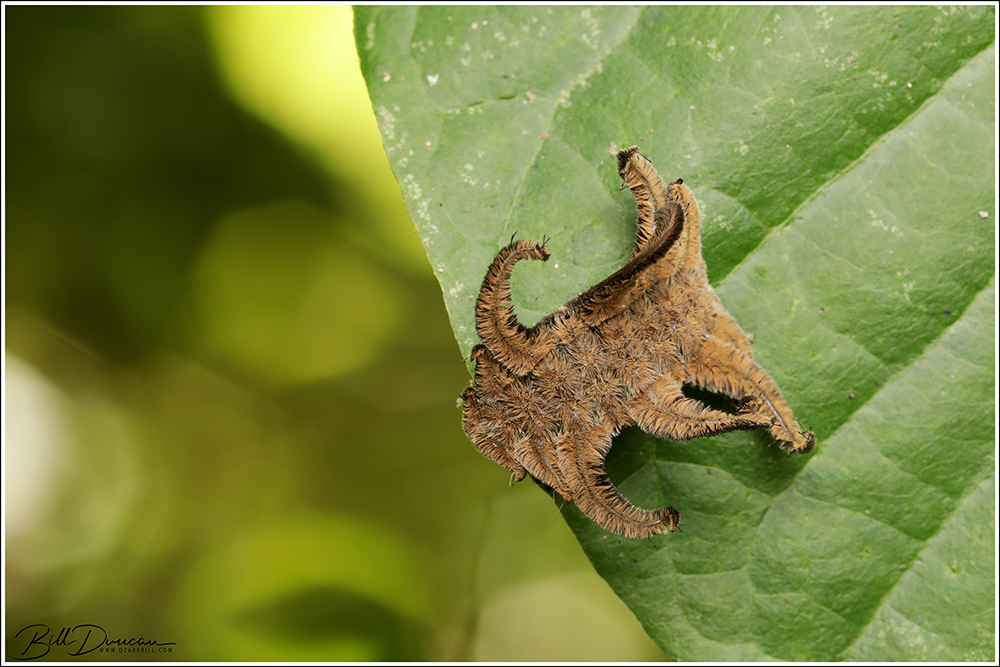
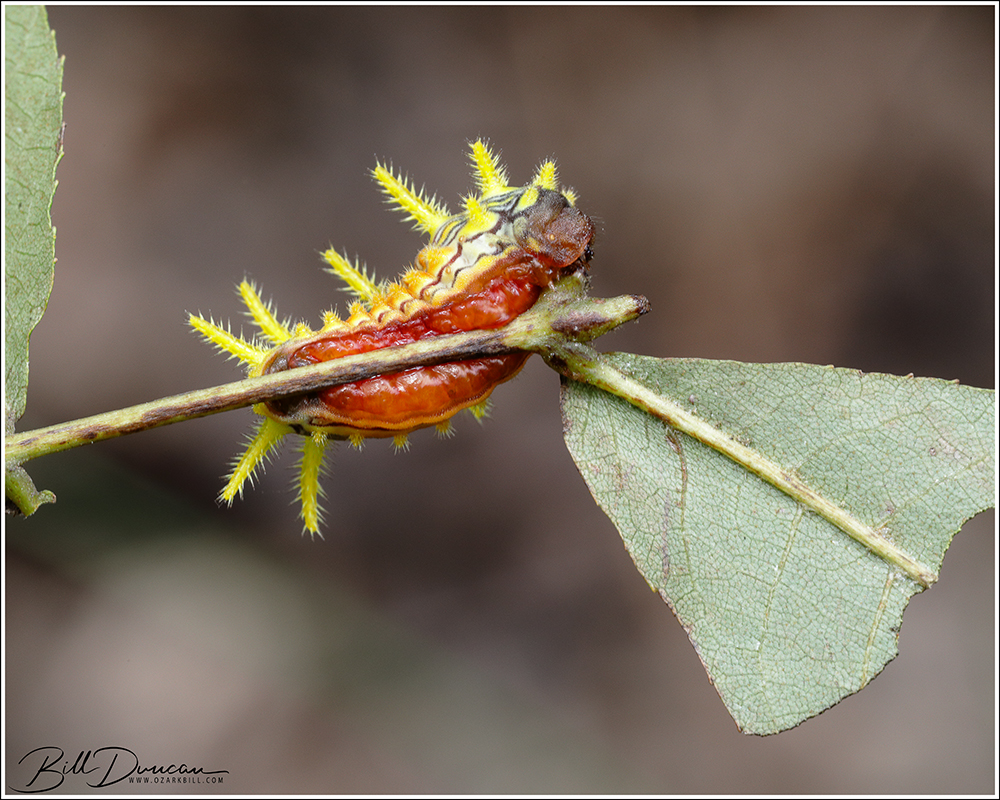
This hag moth, or monkey slug caterpillar (Phobetron pithecium) was found on a pawpaw along the Meramec River at Shaw Nature Reserve in early September.
As it seems I say every year, I did not find the time to go out looking for insects as much as I had hoped for in 2020. Here are a few of my favorites from this past season. As always, please correct any inaccurate species identifications if you are in the know. I try my best, but can always be wrong. Thanks.
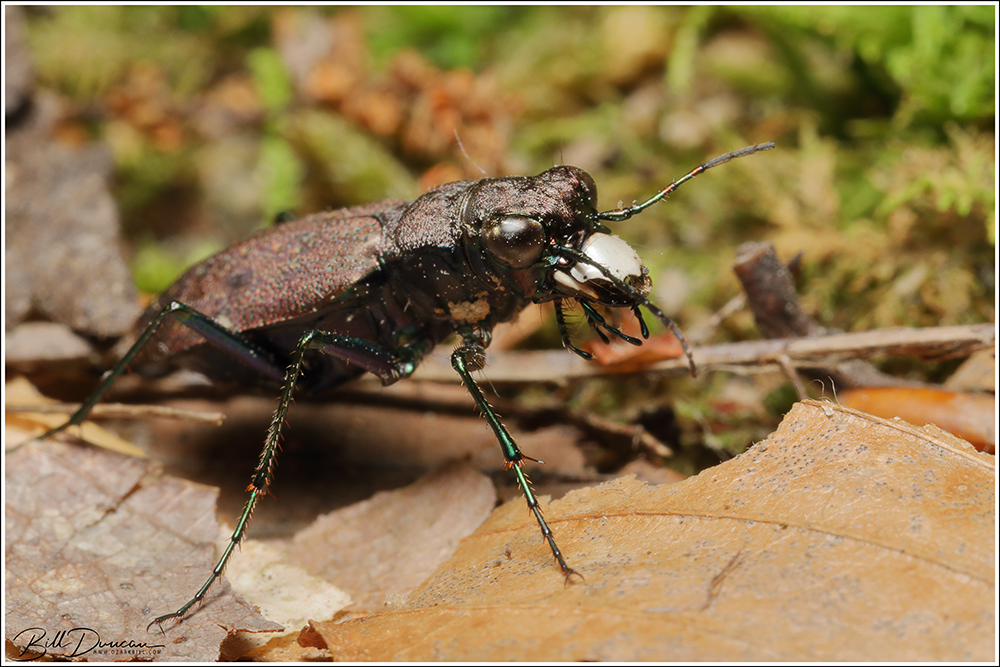
This punctured tiger beetle (Cicindelidia punctulata) provided quite a lighting challenge for Casey and me.
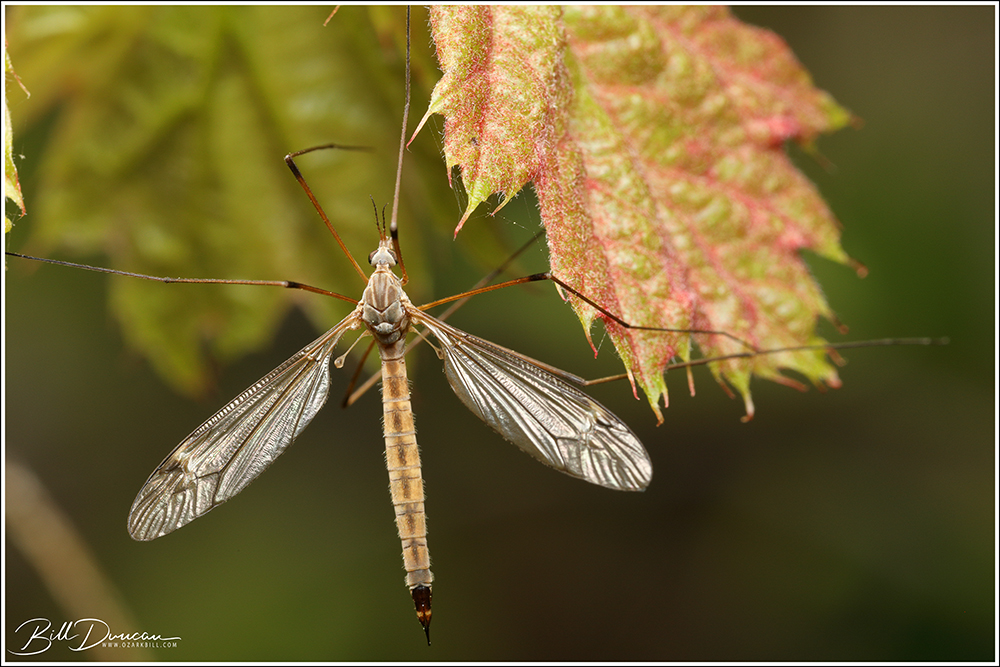
We found this crane fly in late April. It makes a nice compliment to the early oak leaf.
I tried capturing this greater bee fly (Bombylius major) in mid-air, but failed in that attempt. A portrait shot would have to suffice.
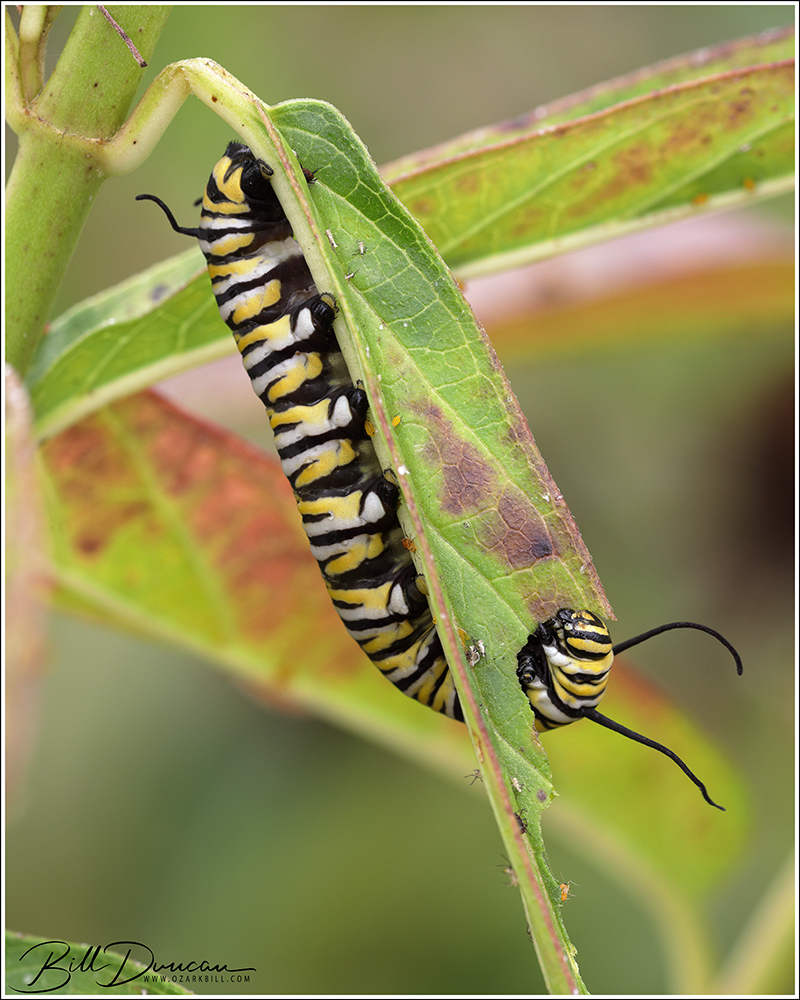
This monarch caterpillar was found feasting on the leaves of swamp milkweed that was in a planter near the SNR visitor’s center.
Sarah and I found this hanging thief robberfly (Diogmites sp.) feeding on a German wasp (Vespula germanica) on the side of our house in July.
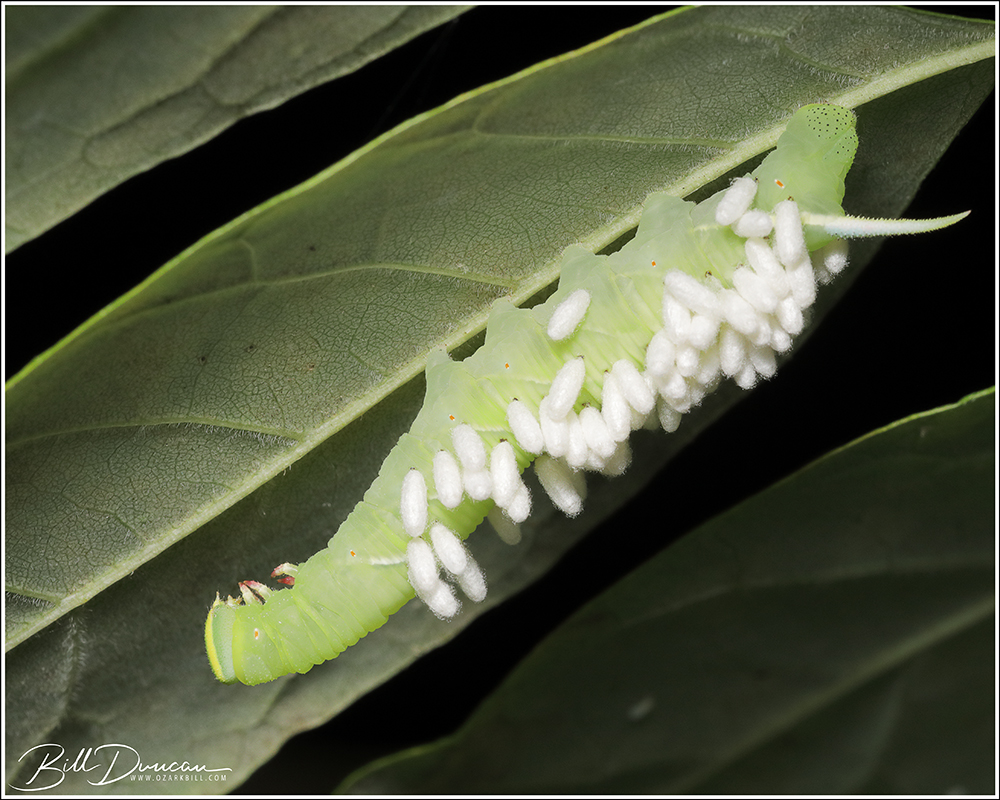
While looking for cats at Weldon Spring CA one evening, I was thrilled to find this saddled prominent (Heterocampa guttivitta) that had been parasitized by braconid wasps. This particular species of parasitoid changes the chemistry of the host’s brain so that after the was larvae emerge the caterpillar spins its own silk around the developing pupae and stands guard over them. When touched, the caterpillar thrashes and hisses, guarding them until it starves.
One of my favorite cats to find is Apatelodes torrefacta (spotted apatelodes). They can be found in yellow, or this white form. One day I’ll have to track down an adult to photograph.
A White-blotched Heterocampa (Heterocampa umbrata) shows off its incredible camouflage that allows it to eat as it becomes one with the leaf.
A waved sphinx (Ceratomia undulosa) that has been parasitized by numerous braconid wasps.
In September, I found this nice specimen of a fungus in the Cordycipitaceae family that had attacked a spider. This is most likely Gibelulla leiopus, an obligate parasitic fungus that preys on spiders with an almost worldwide distribution.
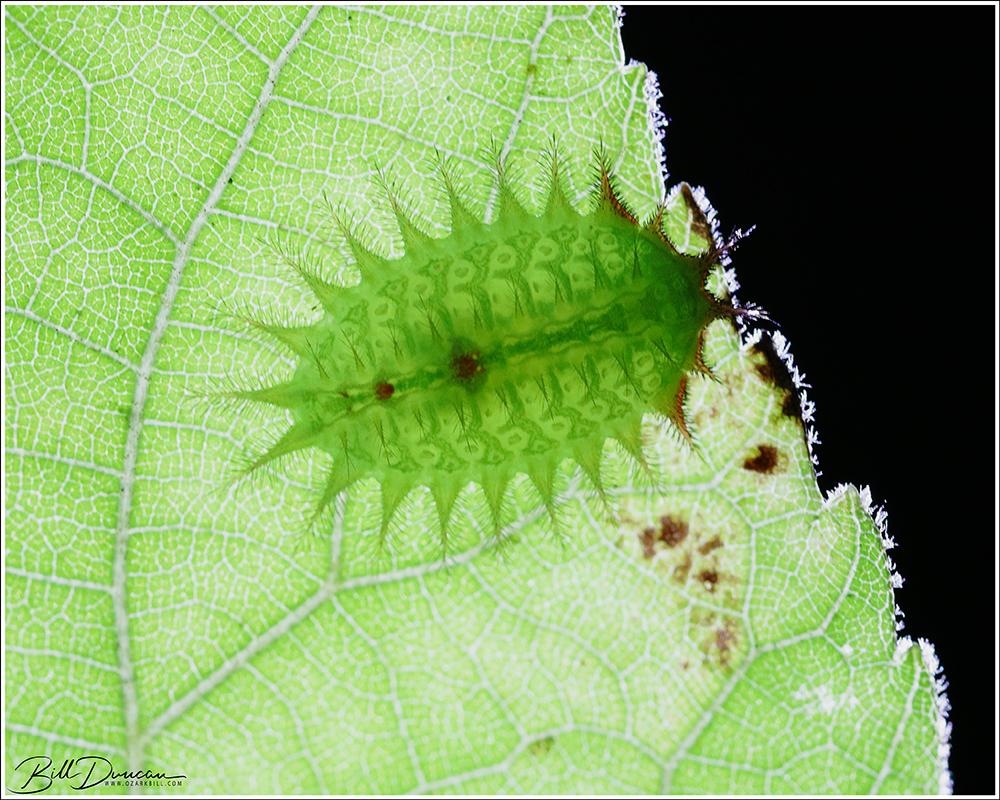
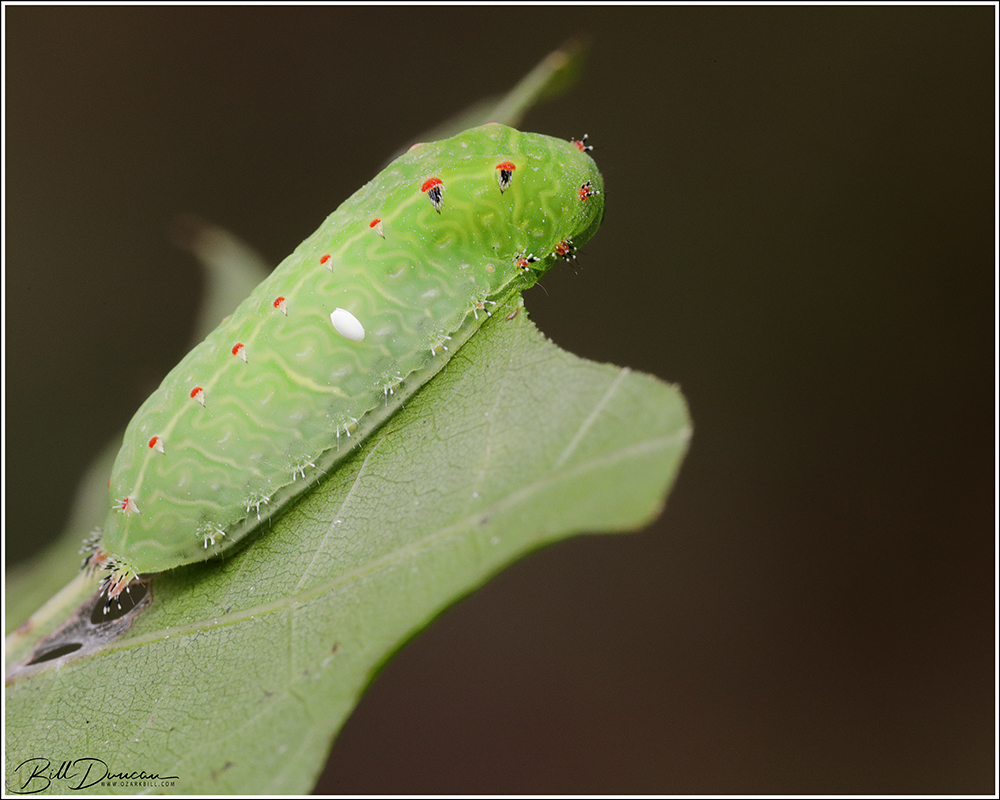
Of course I did a little slug moth caterpillar hunting this season. Here I photographed this crowned-slug (Isa textula) catterpillar by using the flash behind the leaf, showing the delicate patterns of the insect.
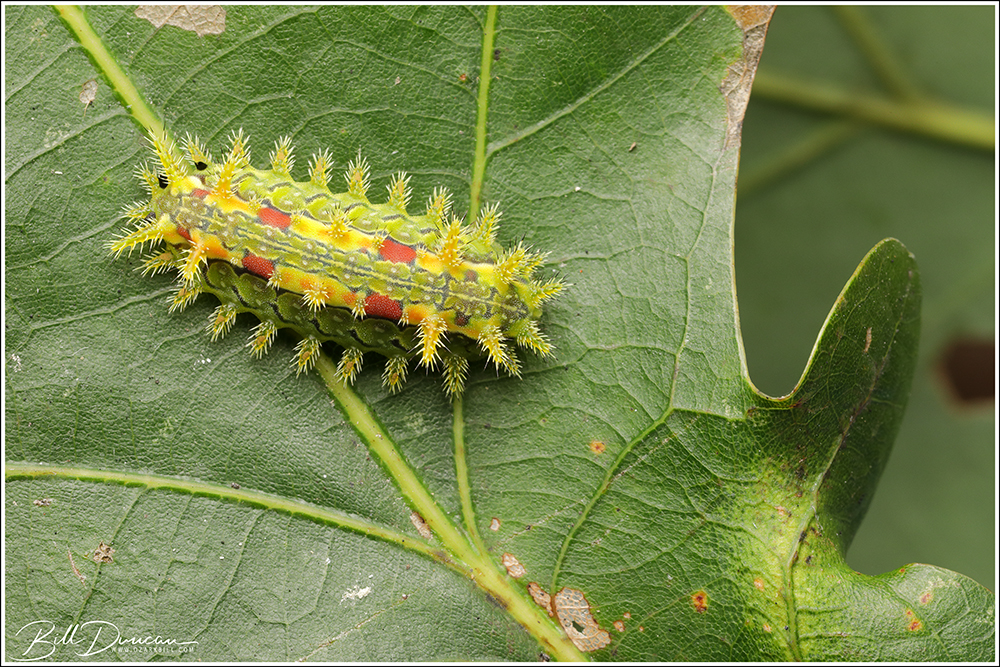
The highly variable stinging rose slug (Parasa indetermina) is always a welcome find.
The same species pictured above, here showing its bright red underbelly.
I found this spiney oak slug (Euclea delphinii) by searching the undersides of oak leaves at Babler State Park in mid-September.
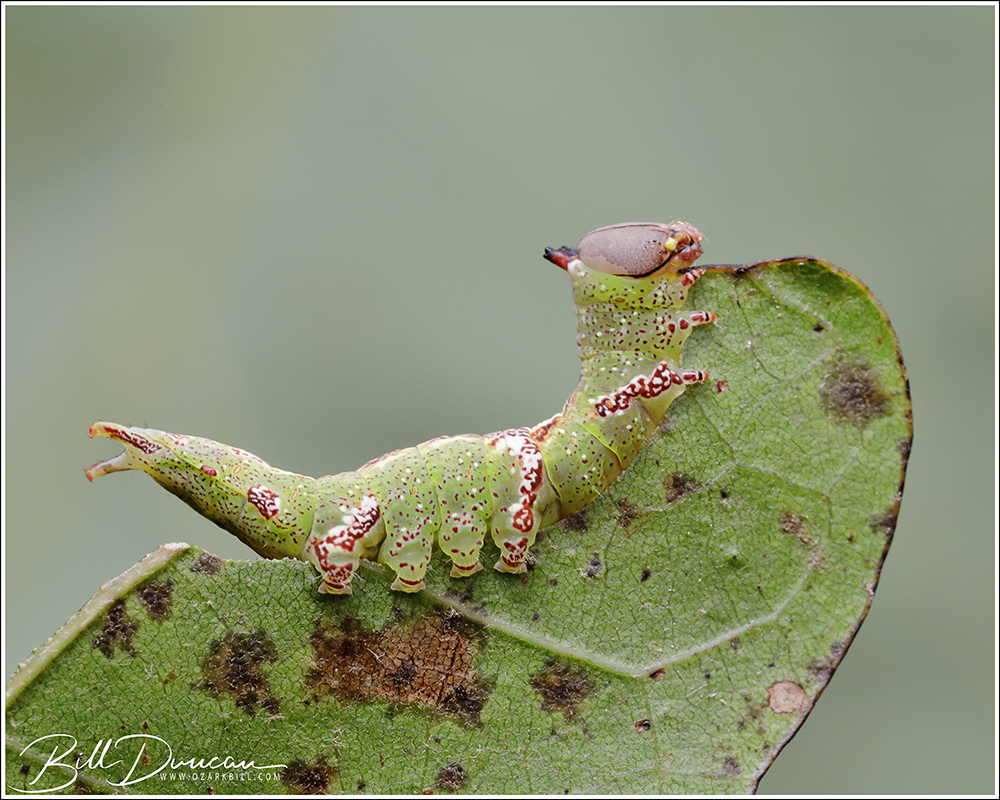
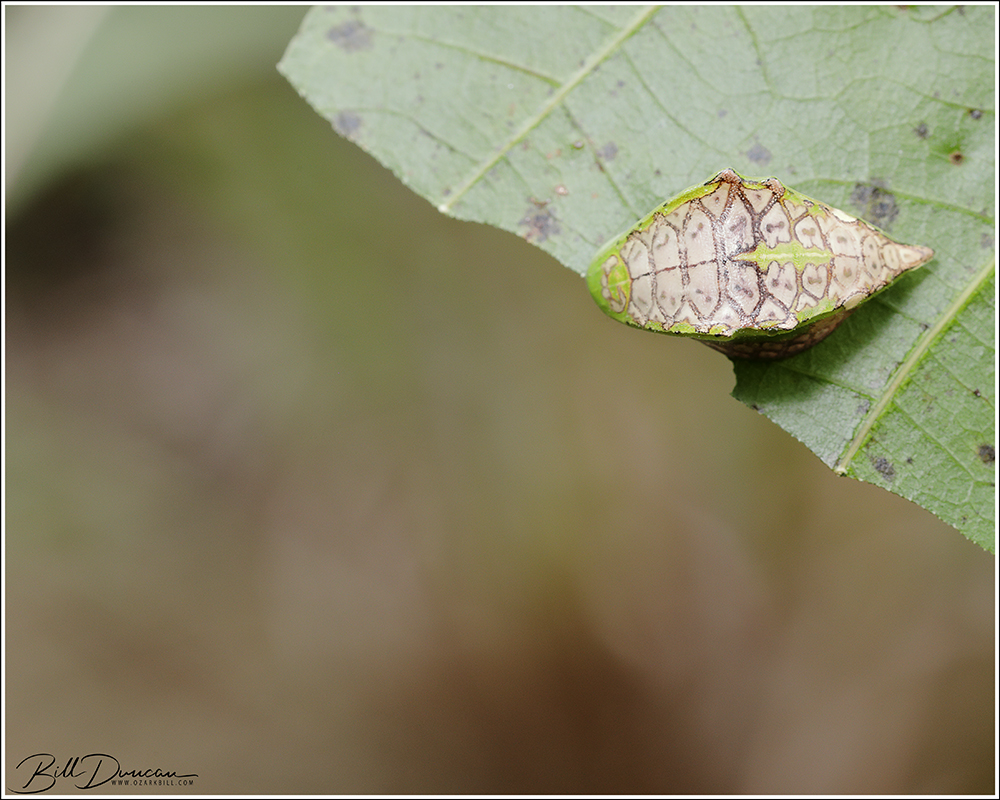
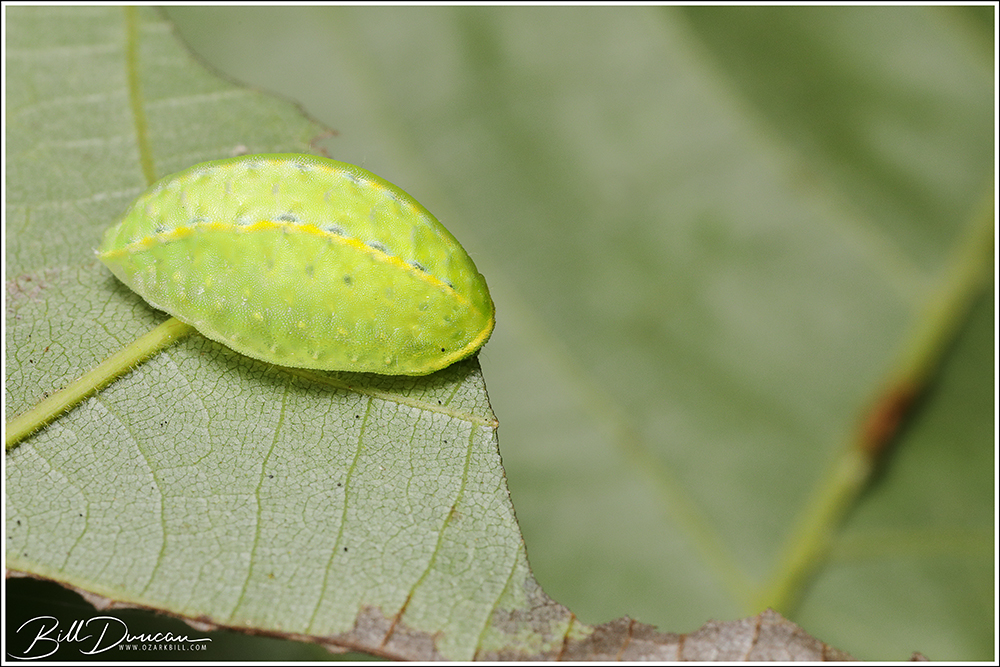
The skiff moth (Prolimacodes badia) cats are highly variable, ranging from nearly a complete uniform green to being more decorated like this individual.
Here is the same individual as above, showing more of its interesting “senescent leaf” patterning.
A very common site while looking for slug moth cats, this Nasan’s slug moth (Natada nasoni) caterpillar has the egg of a tachinid fly on it. Most likely a death sentence for the caterpillar if the egg does hatch and the parasitoid larvae invades its host.
Only my second find of this species, this inverted-y slug (Apoda y-inversum) was found at Weldon Spring CA in mid-September.
Thanks for the visit and wishing you a great 2021 filled with more insects! -OZB
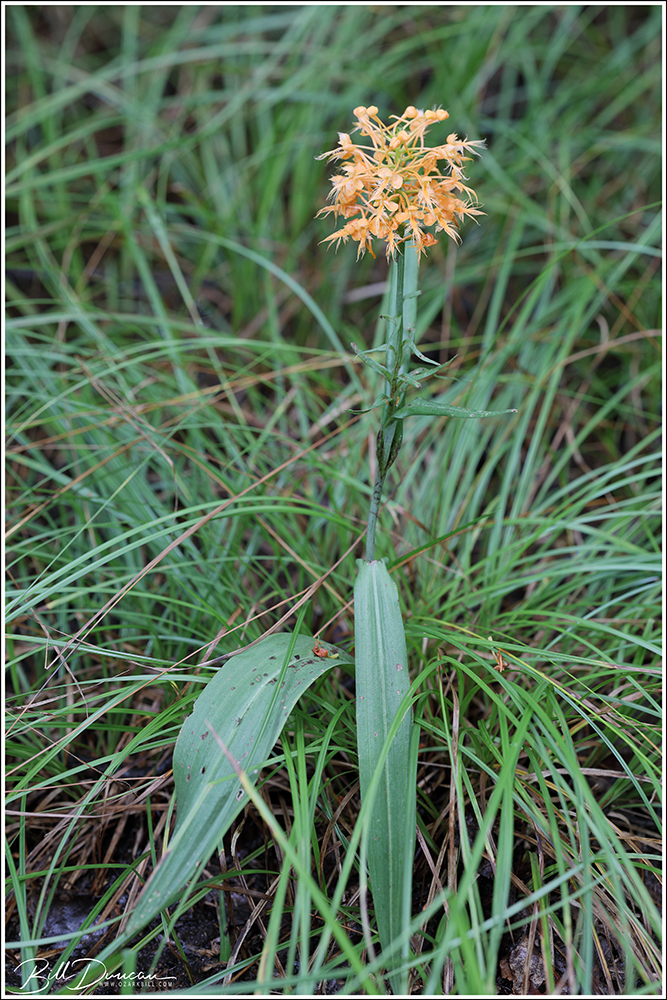
Platanthera ciliaris found at near peak bloom – Stoddard County, MO.
I have shared photos of Platanthera ciliaris taken last year. But it is such a special occasion to find these guys at peak bloom, I wanted to share these taken this past summer.
Closeup of a Platanthera ciliaris raceme.
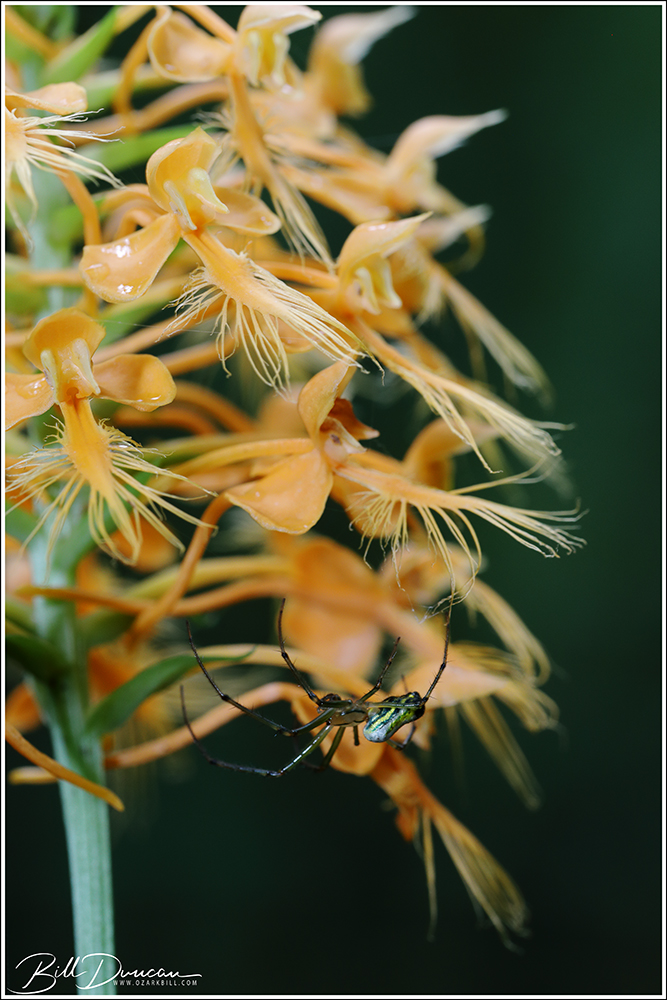
Looking closely at the raceme featured above, you might notice another beauty pictured. Here lies a gorgeous orchard spider (Leucauge venusta) waiting for a likely pollinator or other insect perhaps looking for shelter within the blooms.
A closeup of an orchard spider (Leucauge venusta) moving among the blooms of Platanthera ciliaris.
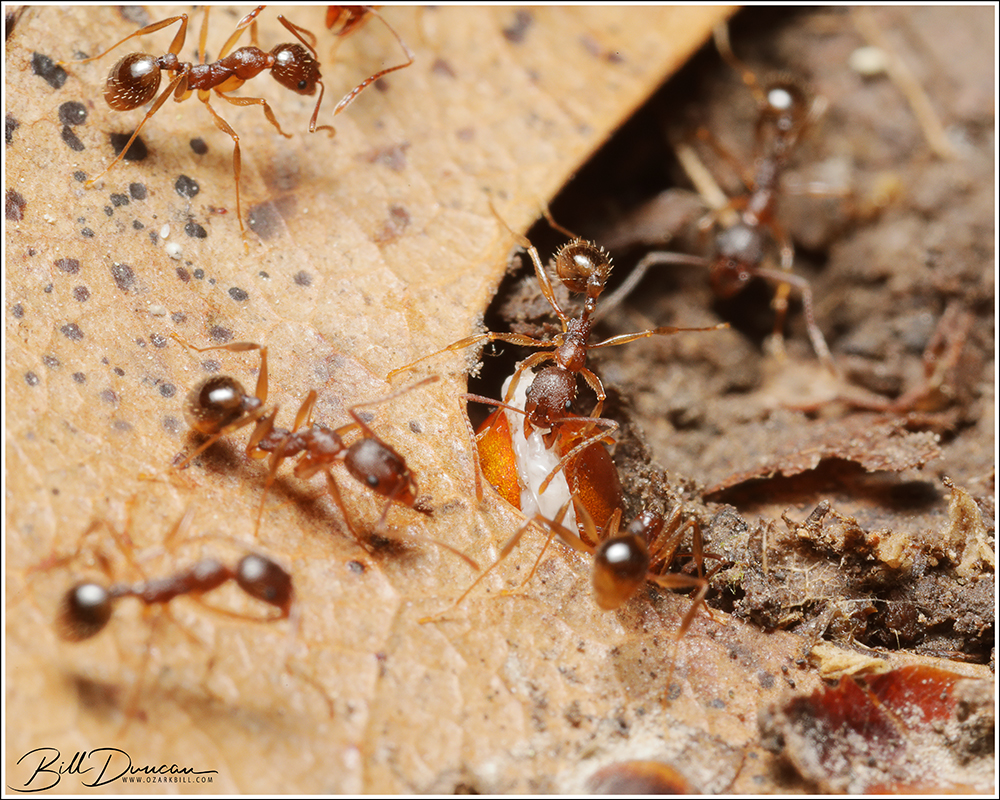
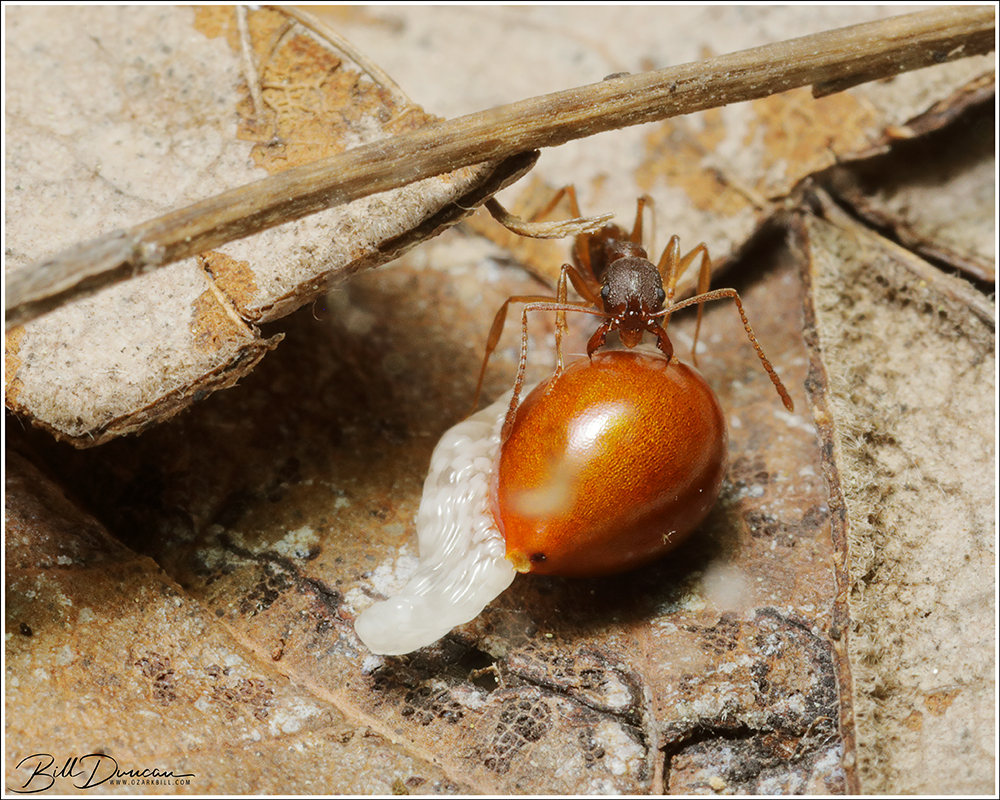
An Aphaenogaster rudis ant shown in the act of myrmecochory – here dispersing the seed of the forest understory forb, Sanguinaria canadensis (bloodroot).
Myrmecochory is a term that comes from Greek, created from “myrmeco” – of or pertaining to ants, and “chory” – plant dispersal. It is one of approximately seven plant “dispersal syndromes” classified by ecologists, is found in approximately 5% of the angiosperms and occurs in numerous ecosystems around the world.
Showing the extreme relative strength of the ants, this Aphaenogaster rudis is moving a diaspore that must be several times its own weight.
Mutualism is thought to be the basis for this dispersal syndrome. Although this is not necessarily crystal clear, the ants are attracted to the eliasome – the fleshy structure attached to the seed that is a rich source of lipids, amino acids and other nutrients. The ants typically will move the diaspore (eliasome + seed) back to their nests. Dispersal distances vary, but are generally not great – most often 2 meters or less. However, for small forbs this distance is often adequate for moving these propagules outside the range of competition of the parent plant.
Two Aphaenogaster rudis ants attempting to move this Sanguinaria canadensis (bloodroot) diaspore. This was not seen very often and shortly after this image was taken, one ant gave up its pursuit.
Distance dispersal is not the only selective advantage that plants gain from this mutualistic relationship. When the ants have moved the seeds to their nests, they remove the eliasome to feed their young and typically dispose of the seeds in their midden heaps or eject them from the nest. Seeds that are moved to midden heaps or other such locations benefit in multiple ways. First, they are placed in microenvironments that are conducive for germination and early growth. They are protected from heat of fire that could destroy the seeds and benefit from not being accessible to birds and other seed predators. This is referred to as ‘directed dispersal.’ Some studies have shown that the removal of the eliasome may promote germination, similar to the process of seed being removed from their fleshy fruit as it is passed through the gut of a vertebrate.
I rarely had to wait more than 15 minutes before the first Aphaenogaster rudis foraging scout found the pile of diaspores I placed on the ground. Mere minutes after that it was advertised across the colony and other workers showed up to carry the spoils back to their nest.
Their is typically no specialization of particular ants dispersing a particular plant species, with almost any ant species being ready to take advantage of a free meal. The possible exception being that larger diaspores must be dispersed by larger ant species.
Using one of nature’s great predators to disperse your seeds can be risky business. As seen here, the testa (seed coat) of this Sanguinaria canadensis (bloodroot) as well as most myrmecochorous plants is hard and smooth to avoid the bite that ants can deliver.
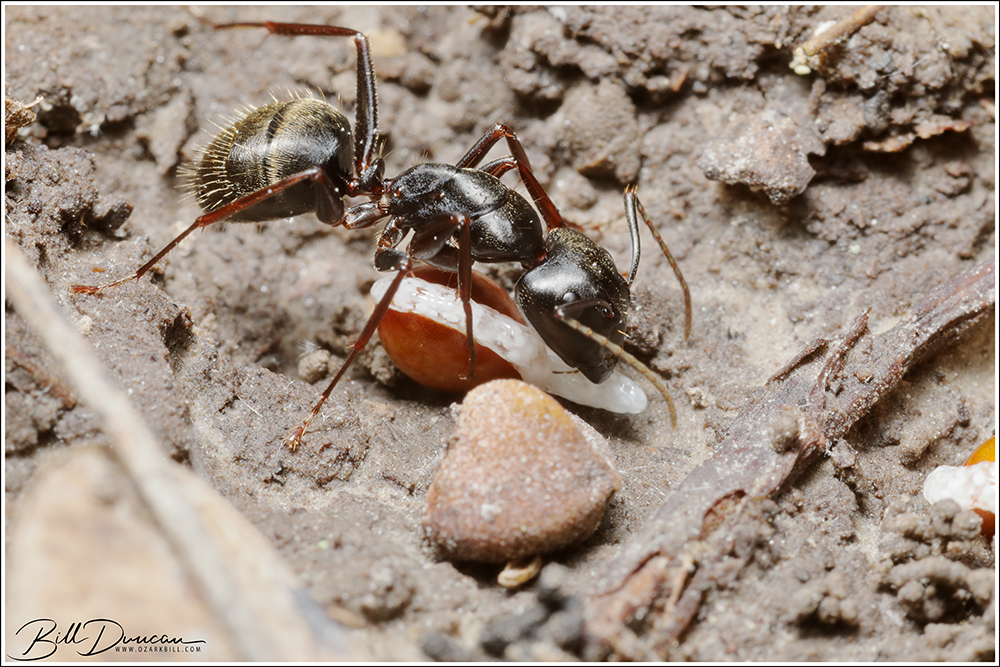
When a Camponotus pennsylvanicus ant finds a diaspore, the photographer must act quick. They don’t need much time to haul it away!
My hope was to photograph myrmecochory across a variety of species this year. I was fortunate to find success with Sanguinaria canadensis but had no luck in my attempts with Dicentra cucullaria (dutchman’s breeches). I tried hard for trillium species as well but discovered the plants I was waiting for mature fruits for weeks were being harvested most likely by SNR staff. I will be trying for these again in the future and hope to photograph prairie species as well.
A freshly fallen Stylophorum diphyllum (celandine poppy) fruit with diaspores waiting for the ants to disperse them. Note the different testa pattern and eliasome structure compared to Sanguinariacanadensis.
The fruits of Stylophorum diphyllum (celandine poppy), I discovered, had a much smaller window of ripening. I had to check at least every two days or I would miss the opportunity of a large fruit full of diaspores.
The ubiquitous Aphaenogaster rudis is a key disperser of Stylophorum diphyllum (celandine poppy).
As with many mutualistic relationships, cheaters are known in myrmecochory. Too small to properly move and disperse a diaspore of this size, this Nylanderia faisonensis is seen eating the eliasome on the spot. This was not a very common observation and it is doubtful that this would ultimately hurt the plant species.
See below for my attempts at filming myrmecochory. This was definitely challenging. I had troubles predicting the ants’ behavior, especially while under the bright, continuous lighting needed for high-magnification photography such as this. Something else to try and improve upon next year.
I’d like to thank James Trager for his assistance with ant species identification.
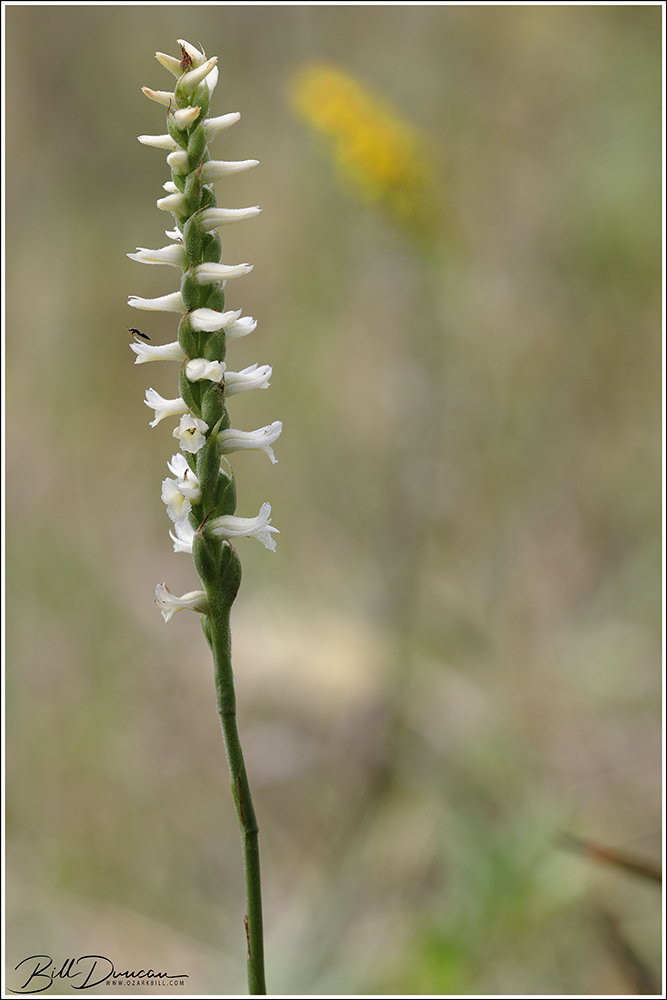
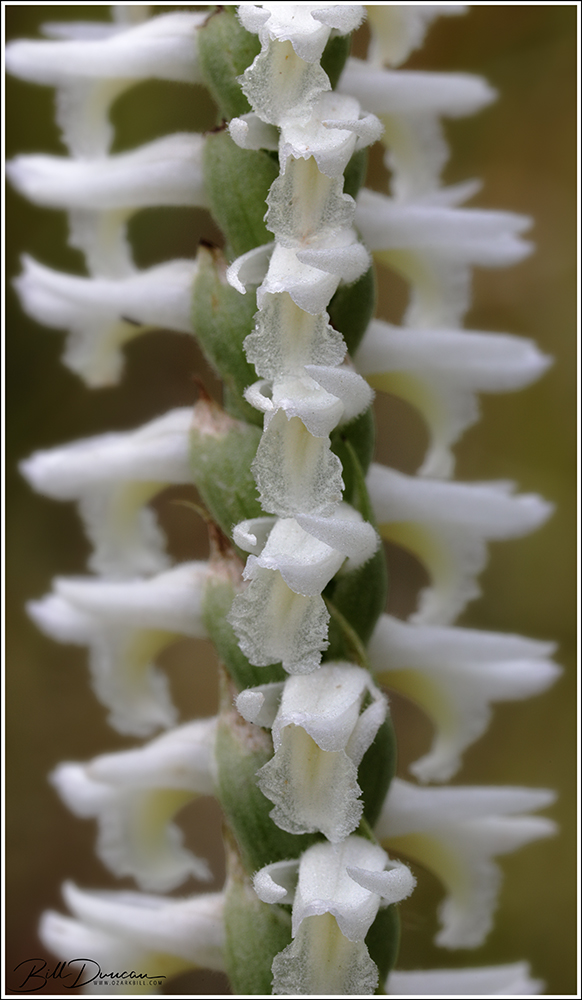
Spiranthes cernua (nodding ladies tresses) found in Jefferson County, MO
I finished 2020 having found all but one species of Spiranthes orchid expected to be found in Missouri. Many thanks to John Oliver for giving me a bit of education and help in making correct identifications; however, any errors found here are my own and no one else should be blamed. I also want to thank John and Casey Galvin for giving me the clues as to where each species could be found. Identifying these was not as difficult as I originally expected, minus the exception pictured above.
Spiranthes cernua belongs to a species complex that is still being worked out. In addition, I have read that there may be up to 20 or more “races” within this particular species. Not that all of these races are found in Missouri, but generally, this species blooms with leaves. I had a hard time coming to the correct ID because the plants I had found had no leaves at bloom. It took me some time to find out that there is a race in Missouri that does indeed bloom without leaves being present. I will stop here as I cannot speak in more educated terms about this plant other than to say I that I found it stunning.
Spiranthes magnicamporum (Great Plains ladies tresses) photographed in Franklin County, MO
Found across much of northern and southwestern Missouri on limestone glades and other calcareous substrates, Spiranthes magnicamporum, or the Great Plains ladies tresses was only just recently separated from S. cernua. It is distinguished from S. cernua not only by a few morphological floral characteristics, but also by its fragrance. S. cernua is either fragrance free, or with only a hint of olfactory cues, while S. magnicamporum typically exudes a lot of fragrance. On just the right day one may be able to find it by nose before finding it by sight. I found it to have strong vanilla and coumarin hints.
Spiranthes magnicamporum (Great Plains ladies tresses) photographed in Franklin County, MO
Spiranthes magnicamporum (Great Plains ladies tresses) photographed in Jefferson County, MO
Spiranthes magnicamporum (Great Plains ladies tresses) photographed in Jefferson County, MO
Spiranthes magnicamporum (Great Plains ladies tresses) photographed in Jefferson County, MO. Note the widely spreading lateral sepals that arch above most of the flowers, a floral trait that is distinctive to the species.
The flowers of the next Spiranthes, little ladies tresses (Spiranthes tuberosa) were described perfectly by Homoya as “jewelaceous”. Here he was referring to the jewel-like look that a magnified view of the flowers have. Many orchid flowers have this look, with each of the “jewels” being composed of individual cells. This is one of the daintiest of orchids found in the state. In Missouri, they are found in dry, sandstone habitats away from competition. Although quite small, when in bloom they should be easy to find as they stand virtually alone in brutal xeric habitat.
Spiranthes tuberosa (little ladies tresses) found on private sandstone glades in Jefferson County, MO.
Spiranthes tuberosa (little ladies tresses) being visited by an halctid bee, one of its primary pollinators.
Spiranthes tuberosa (little ladies tresses) with a crab spider, lying in wait for a solitary bee to visit.
Platanthera lacera (green fringed-orchid) – a sole individual found in Franklin County, MO.
Today I’m showing a couple of orchids from the Platanthera genus. The title of this post suggests these are both prairie obligates, however this is not true with the first species shown here – P. lacera, the green fringed-orchid. P. lacera most likely appears in more different habitat types than any other orchid in the state. You can find this orchid in places ranging from dry hay fields to fens to forest habitats. The sole individual I was able to find this year was on a reconstructed prairie in Franklin County, MO. Unfortunately, this plant was several days past peak bloom so, I’ll be looking for others in the coming seasons.
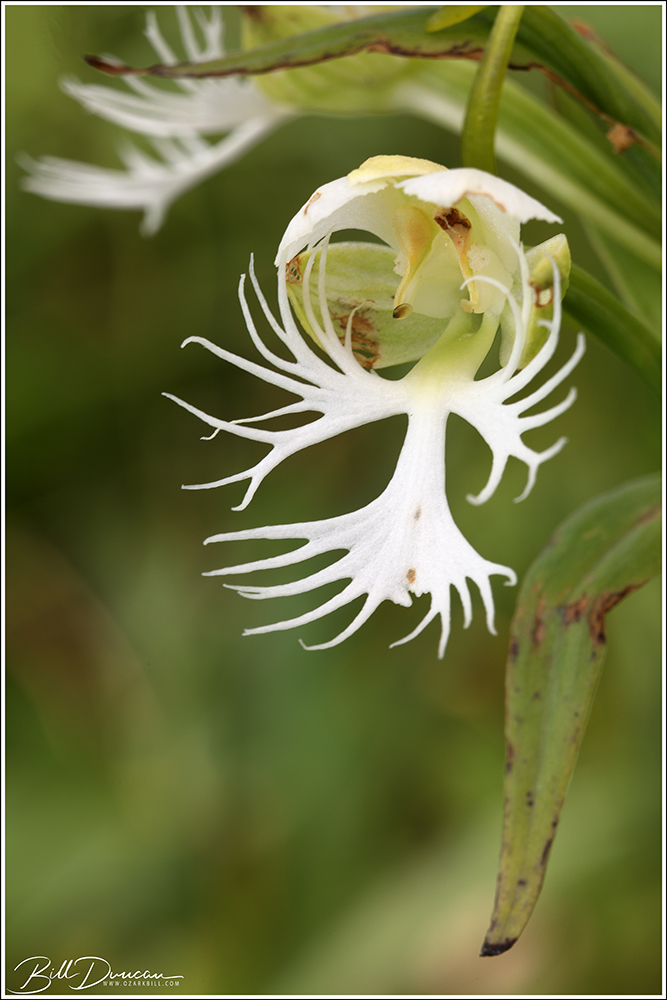
Sarah and I had quite a treat when we made a long day trip to north-western MO in mid-June of this year. We were able to find a few western prairie fringed-orchids just past peak bloom. This was a first for both of us. Platanthera praeclara is a globally endangered species and listed as an S1 species (critically imperiled) by the state of Missouri. This is just another of the many species in such a status due to the unregulated destruction of prairie habitat in the midwest for crop cultivation over the past 200 years. The large white flowers of this species are pollinated by nocturnal sphinx moths – a potential photography project in years to come.
A closeup of a single Platanthera praeclara flower.
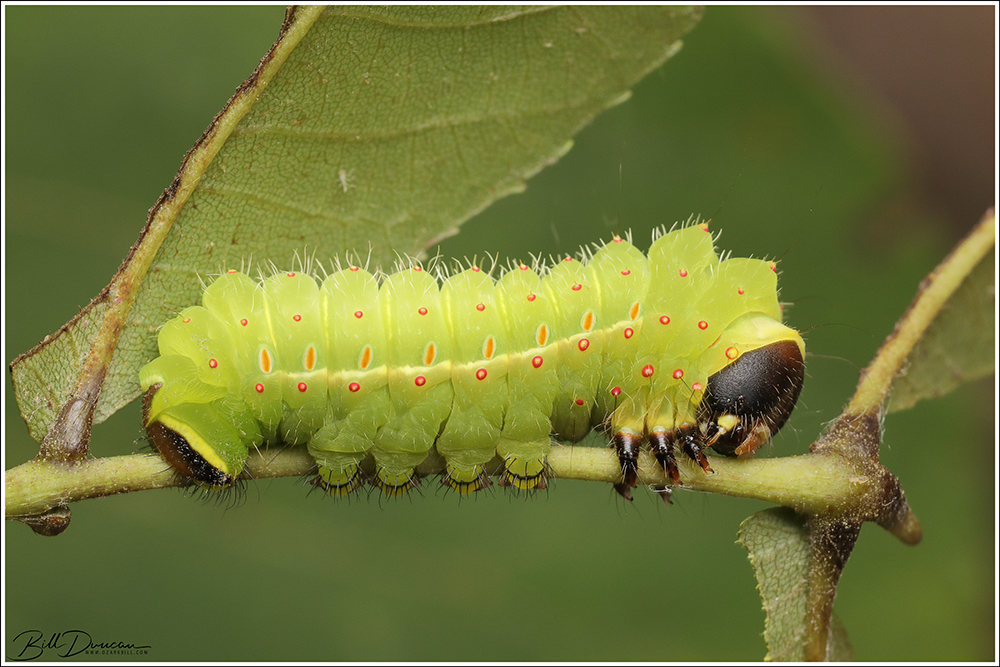
I typically don’t have very much luck finding caterpillars of the giant silk moths from the Saturnidae family. This past season was a little more successful. I found three polyphemus moth (Antheraea polyphemus) caterpillars and Sarah found the above luna moth caterpillar during our birthday hunting trip in mid-September. Larvae of these two species look very similar, but there are a few easy characteristics than can be used to distinguish between the two.
Spiranthes ovalis var. erostellata (oval ladies ‘-tresses)
Spiranthesovalis var. erostellata can be very difficult to find. Usually growing in groups of ones and twos, it is a small plant that prefers shadier locations that get dappled sunlight. I want to thank John Oliver for all his assistance getting me on this and a number of other Spiranthes species this year.
This species of ladies’-tresses is known for its graceful and diminutive flowers. Casey and I found only a couple of plants, each with flowers rather less developed than hoped for. I’m not sure if we were a day or two early, or if this might be all to expect from this population. We found these plants alongside trails at Babler State Park in mid-September.
Spiranthes ovalis var. erostellata (oval ladies ‘-tresses) The flowering stem can be seen here at the same time as its basal leaf.
A rare open flower of Corallorhiza odontorhiza (autumn coralroot). Most plants of this species produce cleistogamous flowers that do not open, thus facilitating self-pollination.
Casey and I found three separate populations of Corallorhiza odontorhiza in early to mid September this year, each population consisting of just a few bunches of plants. Most plants of this species found in Missouri are cleistogamous, containing flowers that never open and thus forcing the plant to self-pollinate. This might account for the rather dull colors and patterns on flowers of this species when compared to its vernal-blooming relative, C. wisteriana. Of the three locations, we found only one bunch of plants, located in St. Louis County, that contained open (chasmogamous) flowers and these were slightly more showy than I expected them to be.
Chasmogamous flowers of Corallorhiza odontorhiza with obvious swollen ovaries.
Like C. wisteriana, this species is myco-heterotrophic, parasitizing mycorrhizal fungi to obtain carbon and other necessary nutrients. Consequently, this species never produces leaves. Both Corallorhiza species are found scattered throughout Missouri and can be found in a variety of habitats, but seem to prefer open woodlands on xeric to mesic soils.
Corallorhiza odontorhiza. These are cleistogamous flowering stems that Casey and I monitored from just after emergence. The flowers never opened and ovaries began to swell prior to the flowering stems reaching their full height.
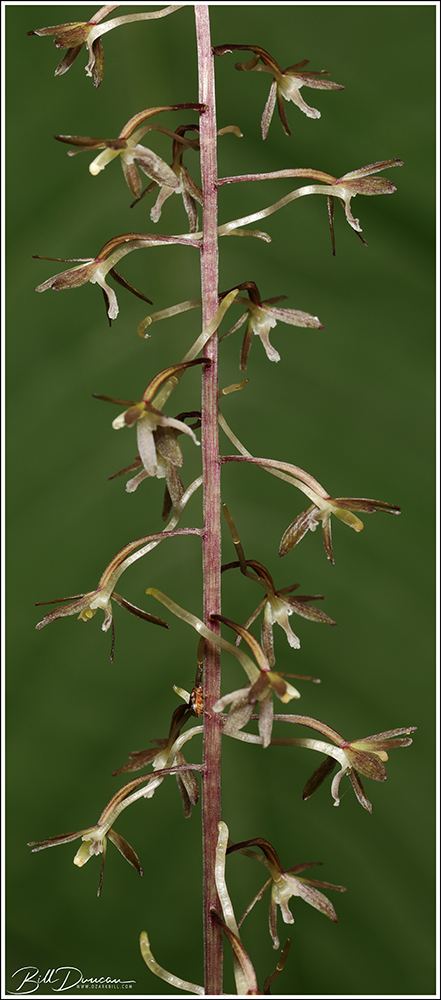
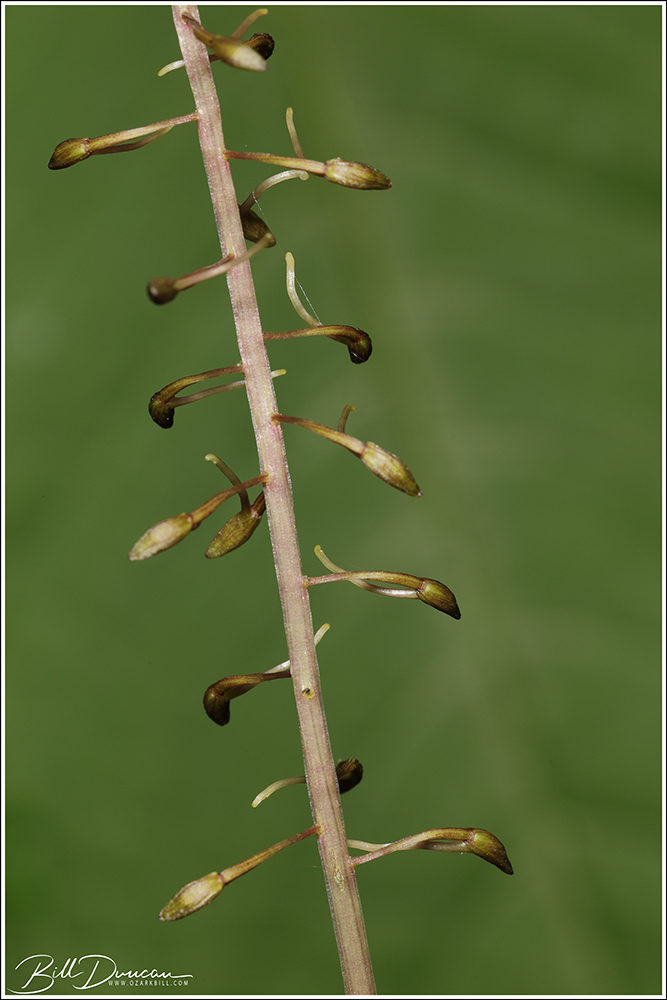
Tipularia discolor, the cranefly orchid so-called due to the appearance of the flowers to a hovering group of crane flies.
Tipulariadiscolor, or the ‘cranefly orchid,’ was first collected in Missouri in 1988 and new discoveries across the Midwest in recent decades suggest it is actively expanding its range. Similar to the puttyroot orchid (Aplectrum hyemale), this orchid blooms in the summer without the presence of any leaves. Leaves emerge in autumn and are usually completely withered by May. Both the common and genus names come from the apparent resemblance of the open flowers to that of crane flies in the genus Tipula. Moths in the family Noctuidae are the primary pollinators and use their proboscises to collect nectar from the long nectar spurs of the flowers.
This is the only species in the genus to be found in the Americas. Casey and I found these plants in Stoddard County on August 1st of this year.
Tipularia discolor blooms in tight bud. The nectar spurs are easy to discern at this stage of development.




















 A Thousand Acres of Silphiums