Hardworking for Hyperactive Hesperiidae

This season Casey and I have been focusing on trying to find some of the more rare and harder to find skipper butterflies in the family Hesperiidae. We’ve come up short a few times – there are several who seem to be on severe declines in our area and may be extirpated from previous well-known sites. Here are a few we had luck with finding and worked our tails of to get a few photos.

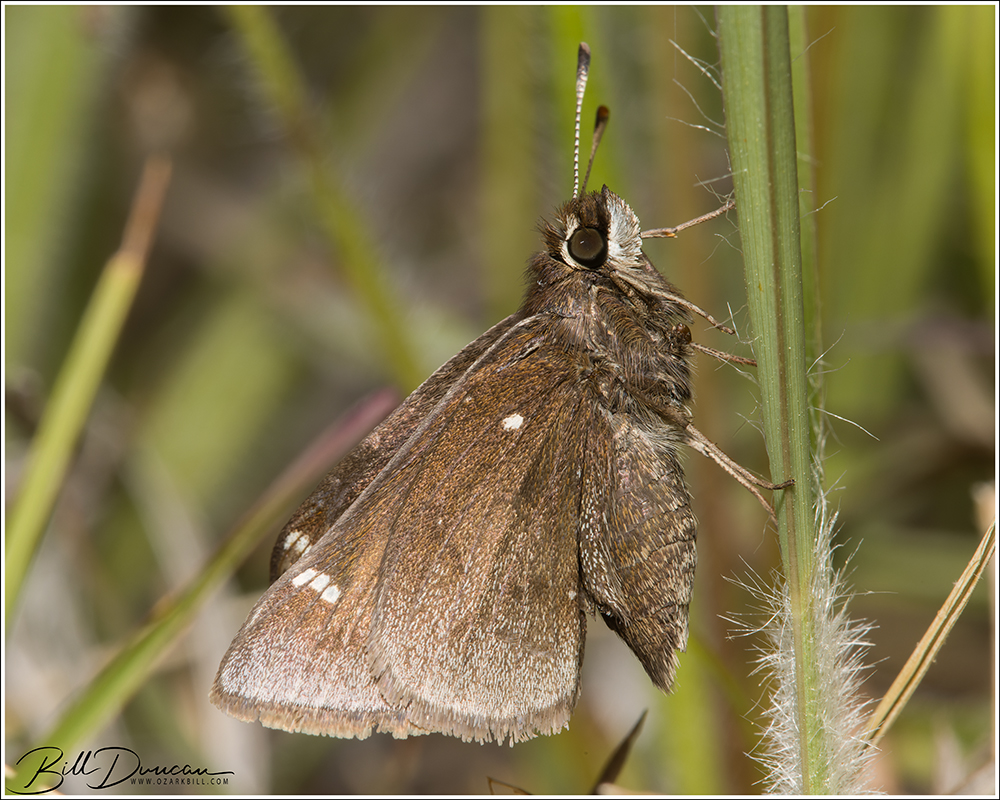
Atrytonopsis hianna (dusted skipper)
This striking skipper was found in the glades of Jefferson County, MO in May of 2023.

Problema byssus (byssus skipper)
Classified as vulnerable by the Xerces Society, the byssus skipper uses eastern gamma grass and big bluestem as its host and is threatened by the continued loss of prairie and grassland habitat throughout its range.

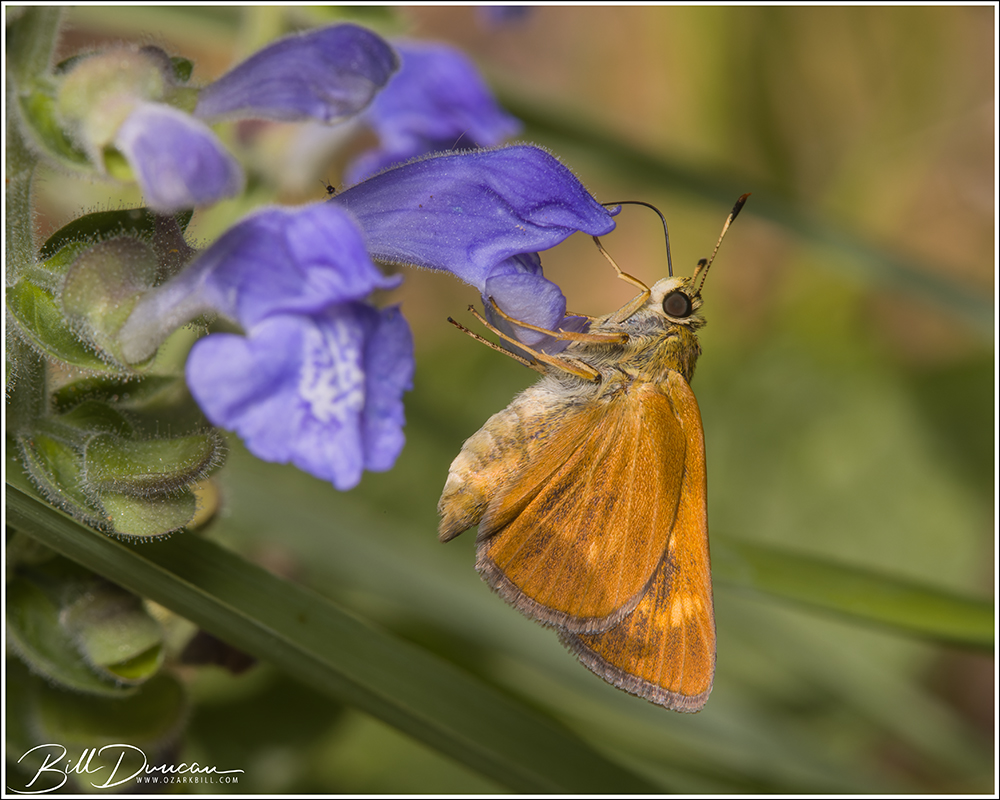
Euphyes dukesi (Duke’s skipper)
Uncommon throughout its fragmented range, the Duke’s skipper uses sedges in moist fields, marshes and forests for its host. This species is highly vulnerable to ongoing draining and development of these habitats. Casey and I refound this particular population in St. Charles County and we were happy to find a few in ditches alongside heavily trafficked roads.

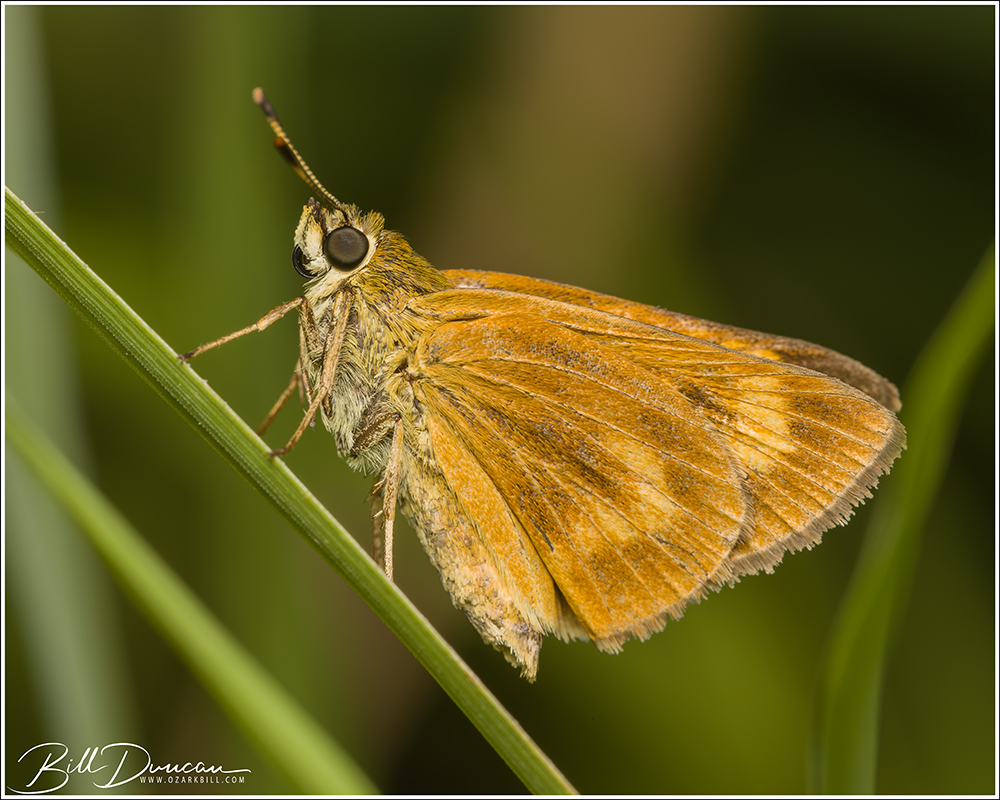
Dorsal view of Euphyes dukesi (Duke’s skipper)
I has thrilled to be able to catch this female Duke’s skipper ovipositing on a sedge stem

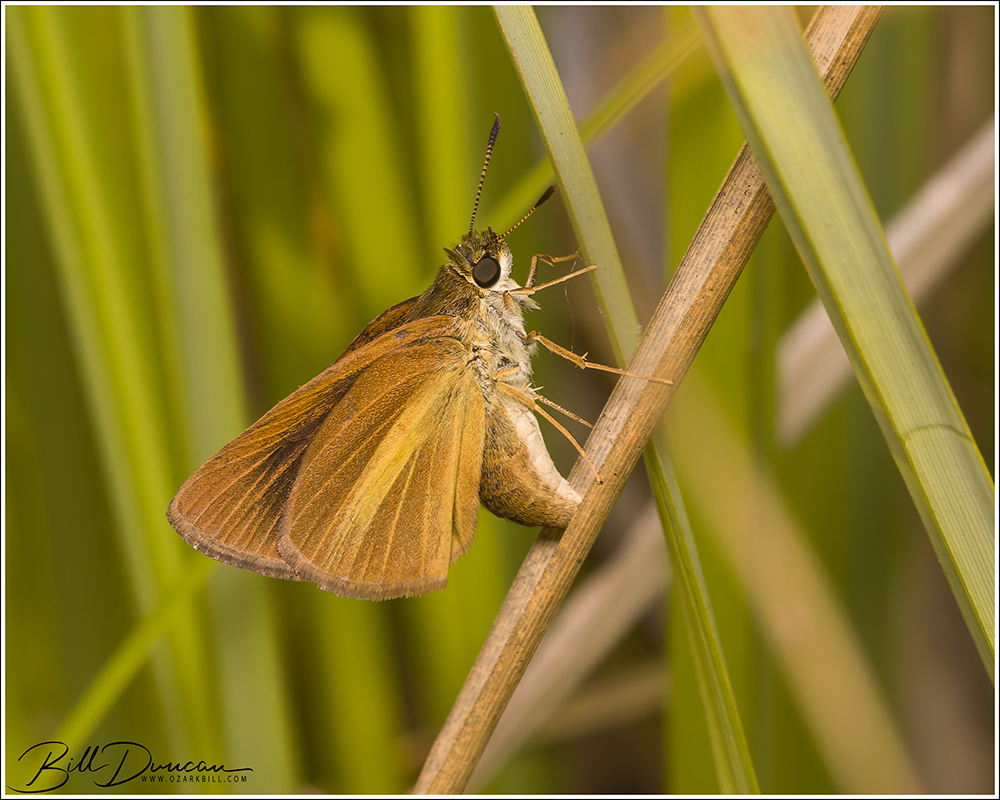
Amblyscirtes hegon (pepper and salt skipper)
With a very large range, covering most of the eastern U.S., the pepper and salt skipper is nevertheless difficult to find and photograph.

Amblyscirtes hegon (pepper and salt skipper)

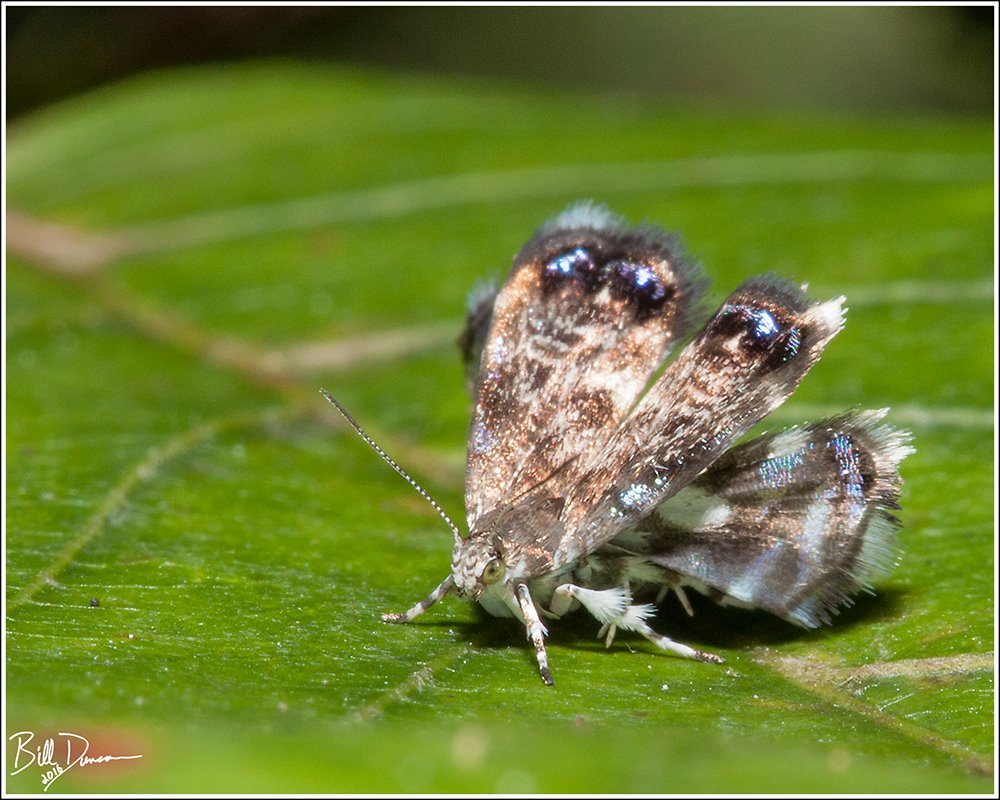
Peacock Brenthia (Brenthia pavonacella)

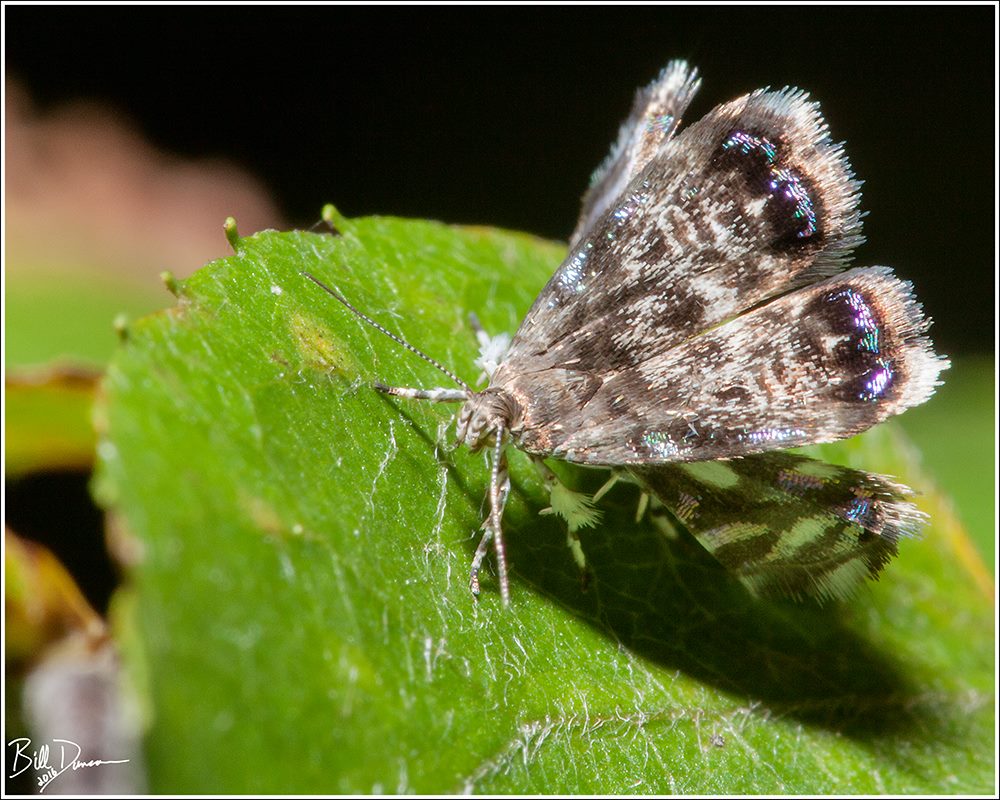
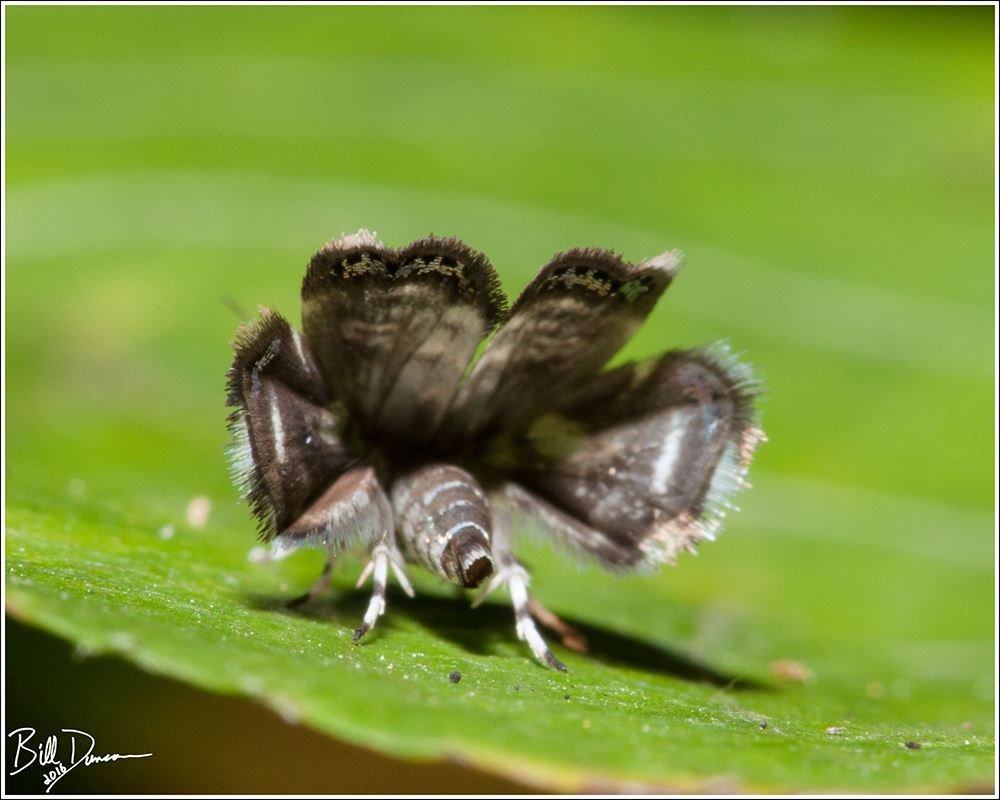
Here is another set from the bowels of Facebook that I wanted to make sure gets captured here. This is the diurnal metalmark moth (Choreutidae), Brenthia pavonacella (Hodges #2627). It is known as the peacock brenthia, due to its unusual mating display behaviors that can be seen here.

Peacock Brenthia (Brenthia pavonacella)
Back side

Schinia nr-jaguarina (French-grass Flower Moth)

These are some older photos that I posted on Facebook back in 2018 when I had the annoying habit of posting some interesting topics only on Facebook for some reason.

Schinia nr-jaguarina (French-grass flower moth)

Only discovered in 2012, this species of flower moth (Schinia nr-jaguarina) has yet to be described and named. This was photographed at Desplaines State Fish and Wildlife Area near Joliet Illinois. This species seems to be an obligate feeder on Orbexilum onobrychis (scurf pea, french-grass, among others). To read more about this recent discovery, head over to this location: http://jimmccormac.blogspot.com/…/interesting-moth-new…

Schinia nr-jaguarina (French-grass flower moth)

2023 Update
This past weekend, the WGNSS Entomology Group spent the better part of a day exploring the wonderful Horn’s Prairie Grove LWR, just north of Vandalia, IL, and discovered a population of Schinia nr-jaguarina (apparently, this species has still not been officially described and the specific name given here is just a placeholder).

One of us collected a specimen to rear so I might be able to get photographs of an adult soon.

Schinia nr-jaguarina (French-grass flower moth)

I finally collected them all!

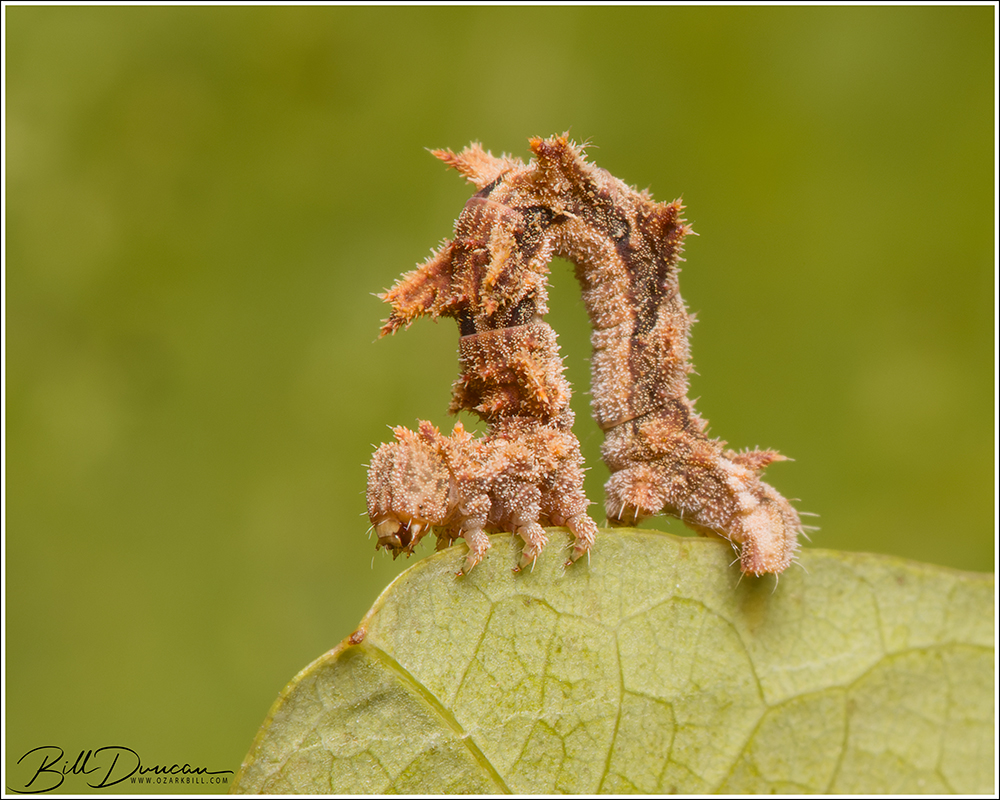
Spun Glass Slug Moth (Isochaetes beutenmuelleri). This animal is likely not in its last instar and should have even larger arms before its ultimate diapause.

Maybe I owe those of generation Y and the Millennials a bit of a silent apology. I too have been on a mission to ‘collecting them all.’ In my case, however, I think the objects of my search are far more brilliant, fascinating and mysterious than anything in the Pokemon universe could ever dream of being. For about the past four years, I have been occupied in late August to late September with finding all the slug moth caterpillars that can be found, or at least expected, in the state of Missouri.

Spun Glass Slug Moth (Isochaetes beutenmuelleri). This species, like most of the limacodids, are generalist feeders. The slug moths can be found on virtually any species of woody plant in Missouri.

Many thanks to Kyran Leeker for pointing me to a couple of hot spots she had found that contained some of the last species of slug moth caterpillar I needed to find and photograph – the spun glass slug moth, or Beutenmueller’s slug moth (Isochaetes beutenmuelleri). After hearing this, Sarah and I hit these locations soon after. My radar for these creatures was definitely in need of a re-calibration. I did not find a single slug moth caterpillar but Sarah found three, including this I. beutenmuelleri and two smaller parasa (Parasa chloris) – a species I had found before, but only had photographed with my cell phone. This was an exciting day indeed!

Spun Glass Slug Moth (Isochaetes beutenmuelleri). Sometime during late September to mid-October this little one will spin a cocoon and overwinter. In the spring it will then pupate into a non-feeding adult moth.

Although not as colorful or spiny as some of its more flamboyant relatives, the smaller parasa (Parasa chloris) is quite an interesting slug moth in its own right. Individuals can vary a lot in their patterns and are warmly toned with tans, oranges and pinks. I can’t get enough of looking at these guys.

Smaller parasa (Parasa chloris). Each of its humps is equipped with a few barbs that can inject an annoying, but not dangerous venom.

Smaller parasa (Parasa chloris) with wood grain or marble-like pattern.

Smaller parasa (Parasa chloris) with its head out of its protective hood.

Sarah found the following poor creature. Although you can’t help but feel sorry for it, I was glad to capture this natural history story. This little one was gregariously parasitized by approximately 15 braconid wasps, likely from the Microgastrinae subfamily.

Smaller parasa (Parasa chloris) parasitized by braconid wasps. Note the multiple stages of wasp development, from larvae that have completed their cocoons, to those still at work spinning their webs to larvae just emerging from their host. Their is no chance for the survival of this caterpillar.

These wasps were definitely in the process of preparing for their next stage of life. I have come across lots of caterpillars in the past that were parasitized by wasps like this, but always after the larvae had emerged and spun their cocoons  and often after the wasps had cut the tops off and exited. This was very special indeed, finding them in this process. This was taking place much quicker than I had anticipated. It was plain to see the movement of the wasps and observe their progress. I had to take some video to capture this. I have sped the footage up by 1.5X to better showcase this activity.

Before I finish, I couldn’t help but think of one of my favorite Darwin quotes. Watching this footage a few times, I couldn’t help but agree with his reasoning.

In a letter to his friend and botanist, Asa Gray, Darwin wrote…

With respect to the theological view of the question: This is always painful to me. I am bewildered. I had no intention to write atheistically, but I own that I cannot see as plainly as others do, and as I should wish to do, evidence of design and beneficence on all sides of us. There seems to me too much misery in the world. I cannot persuade myself that a beneficent and omnipotent God would have designedly created the Ichneumonidae with the express intention of their feeding within the living bodies of caterpillars …”
-Charles Darwin

Hummingbird Clearwing

Camera settings: f/7.1, 1/1600 sec., ISO-640, 520mm focal length equivalent.

From a WGNSS Nature Photography Group outing from last July at Shaw Nature Reserve, here are some images of a Hummingbird Clearwing (Hemaris thysbe) as it foraged among blooming Garden Phlox (Phlox paniculata).

Camera settings: f/8, 1/1250 sec., ISO-640, 520mm focal length equivalent.

Camera settings: f/8, 1/1250 sec., ISO-640, 520mm focal length equivalent.

Camera settings: f/8, 1/1250 sec., ISO-640, 520mm focal length equivalent.

Swamp Metalmark – Calephelis muticum

Swamp Metalmark – 234 mm focal length equivalent, f/14, 1/125 sec., ISO-640

These special butterflies, endangered or threatened across much of their small range, have their stronghold in the state of Missouri. These images were taken in St. Francis Co., MO.

Swamp Metalmark – 234 mm focal length equivalent, f/14, 1/80 sec., ISO-640

Swamp Metalmark – 234 mm focal length equivalent, f/18, 1/60 sec., ISO-640

Swamp Metalmark – 234 mm focal length equivalent, f/18, 1/60 sec., ISO-640

Swamp Metalmark – 234 mm focal length equivalent, f/18, 1/80 sec., ISO-640

Meet the Slugs – Red-crossed Button Slug

Red-crossed Button Slug - Limacodidae - Tortricidia-pallida (4653), Millstream Gardens Conservation Area, MO
Red-crossed Button Slug – Limacodidae – Tortricidia-pallida (4653), Millstream Gardens Conservation Area, MO

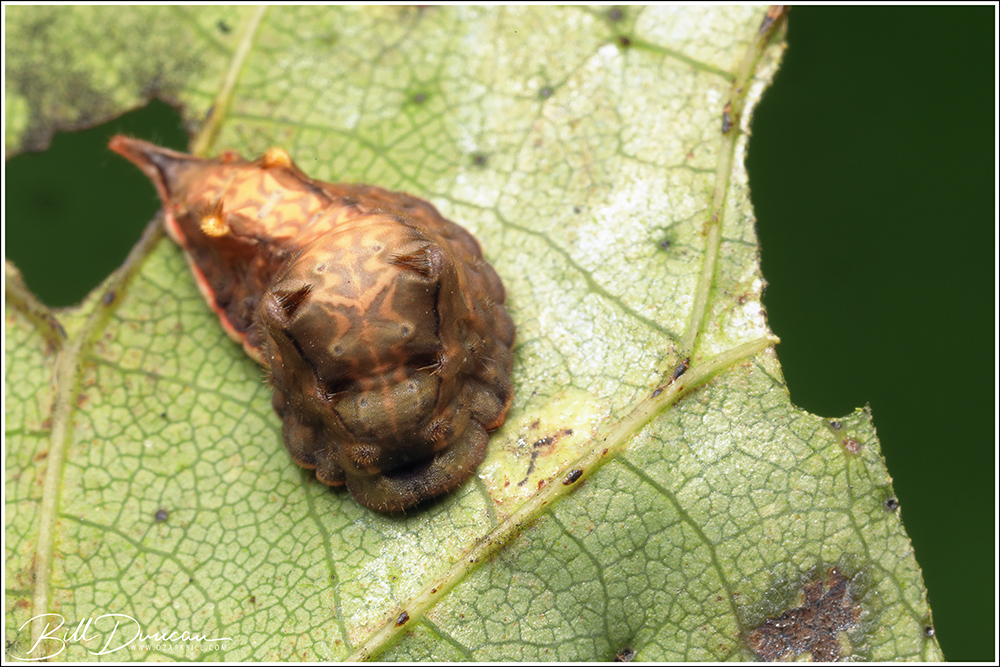
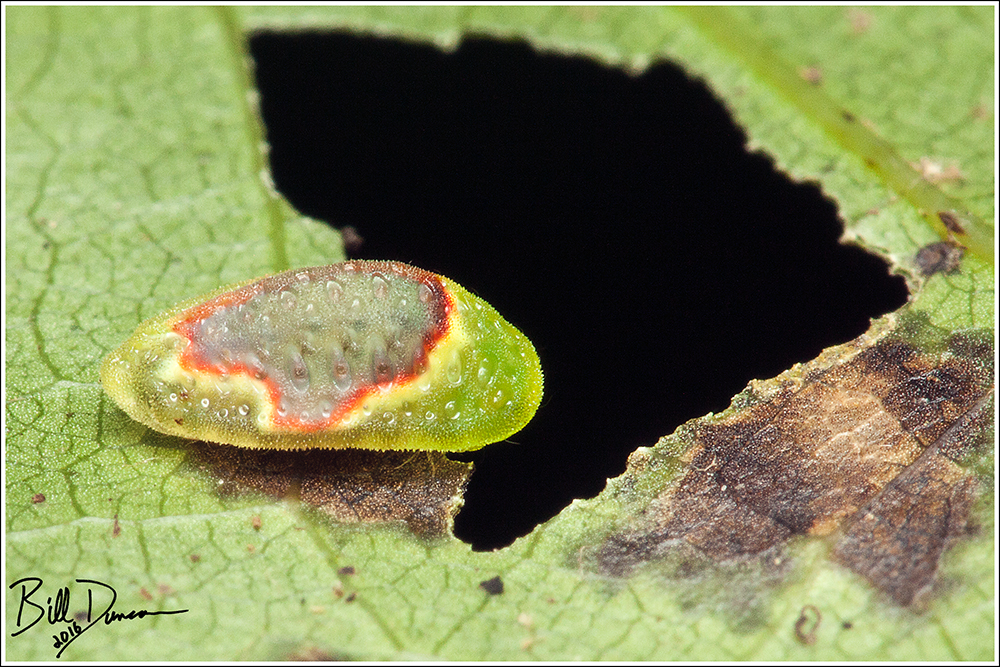
The next slug to make your acquaintance is the Red-crossed Button Slug.  This species is quite similar to one or two others as both larvae and adult, but given that most lists I have seen from Missouri list this one and not the others, I am pretty confident in this ID.  This species lacks the stinging, protective hairs, going instead with a more camouflage approach of looking like a bit of leaf blight as it passes over leaves of oaks, hickories and quite a few other known woody, deciduous host plants.

red-crossed-button-slug-limacodidae-tortricidia-pallida-4653-img_8265
On a trail of silk – Red-crossed Button Slug – Limacodidae – Tortricidia-pallida (4653), Hickory Canyon Natural Area

The image above gives a glimpse into how the slugs get around – on a substance described as liquid silk.  See the winding trails?

red-crossed-button-slug-limacodidae-tortricidia-pallida-4653-img_8305
Even their frass is distinctive – Red-crossed Button Slug – Limacodidae – Tortricidia-pallida (4653), Hickory Canyon Natural Area

Here I caught one in the act.  From what I’ve read, slugs leave distinctively shaped (indented) frass that is different from that of other caterpillars.  I didn’t pause long enough to investigate.

red-crossed-button-slug-limacodidae-tortricidia-pallida-4653-img_7119
The slug moth – Red-crossed Button Slug – Limacodidae – Tortricidia-pallida (4653), Hickory Canyon Natural Area

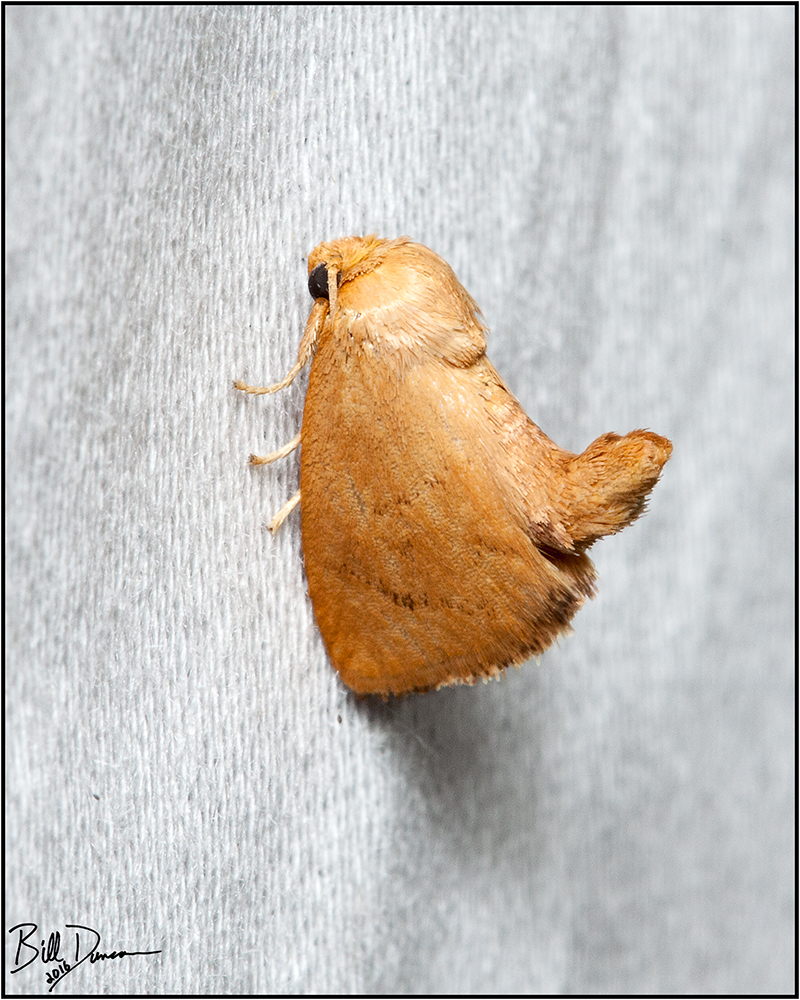
Finally, the adult slug moth is pictured above.  Slug moths are strongly attracted to lights and, from what I have read, are often some of the first species to show up when setting up a light and sheet/trap.  I have a theory that this may be why I find many less slug caterpillars the closer I look near St. Louis.  Although I found very similar habitats with the same composition and numbers of sapling oaks and hickories (the favored host plants), the closer I came to the city the number of slug caterpillars dropped significantly.  Perhaps the city lights are sucking in the adults before they are able to reproduce?  Probably a too simplistic idea, but it is a trend I noticed.  It could just as well be due to fragmented habitat and overall less habitat available the closer one gets to the city.

The Imperial Moth

Belonging to the family of moths called Saturniidae, the Imperial Moth can reach up to  six inches.  Many members of this family are large-bodied and short-lived as adults – typically living only one or two weeks and not feeding in this stage.  This female was attracted to lights during a national moth week event at Cuivre River State Park on July 31, 2016.
Imperial Moth - Saturniidae - Eacles imperialis, photographed at Cuivre River SP during national moth week.
Imperial Moth – Saturniidae – Eacles imperialis, photographed at Cuivre River SP during national moth week.