"What a thousand acres of Silphiums looked like when they tickled the bellies of the buffalo is a question never again to be answered, and perhaps not even asked." -Aldo Leopold
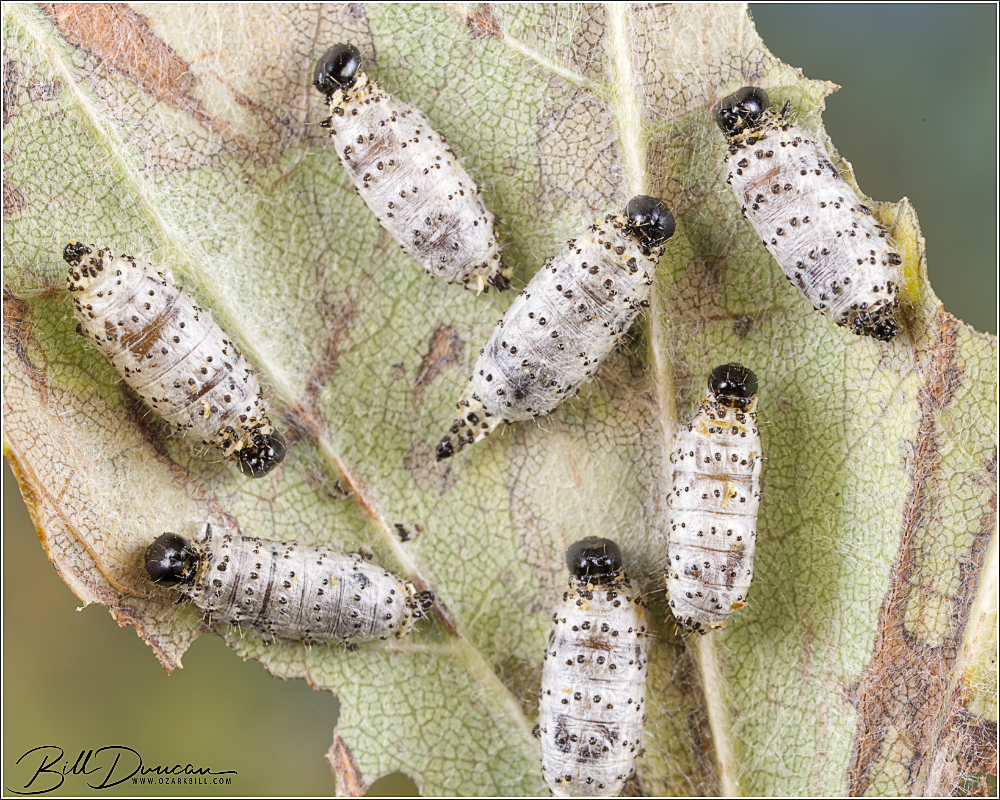
During a caterpillar hunt in mid-September at Don Robinson State Park, I came across a redbud leaf with a number of mummified Oedemasia concinna (red-humped caterpillar moth) caterpillars. These cats all appeared to be dead and were wrapped in what looks like their own silk. After close inspection, I could not find any exit holes that the potential parasitoid would have made. So, I collected the leaf and the baker’s dozen of these hosts and took them home to hopefully rear the parasitoids.
Parasitized Oedemasia concinna (red-humped caterpillar). This species is gregarious as early instars.
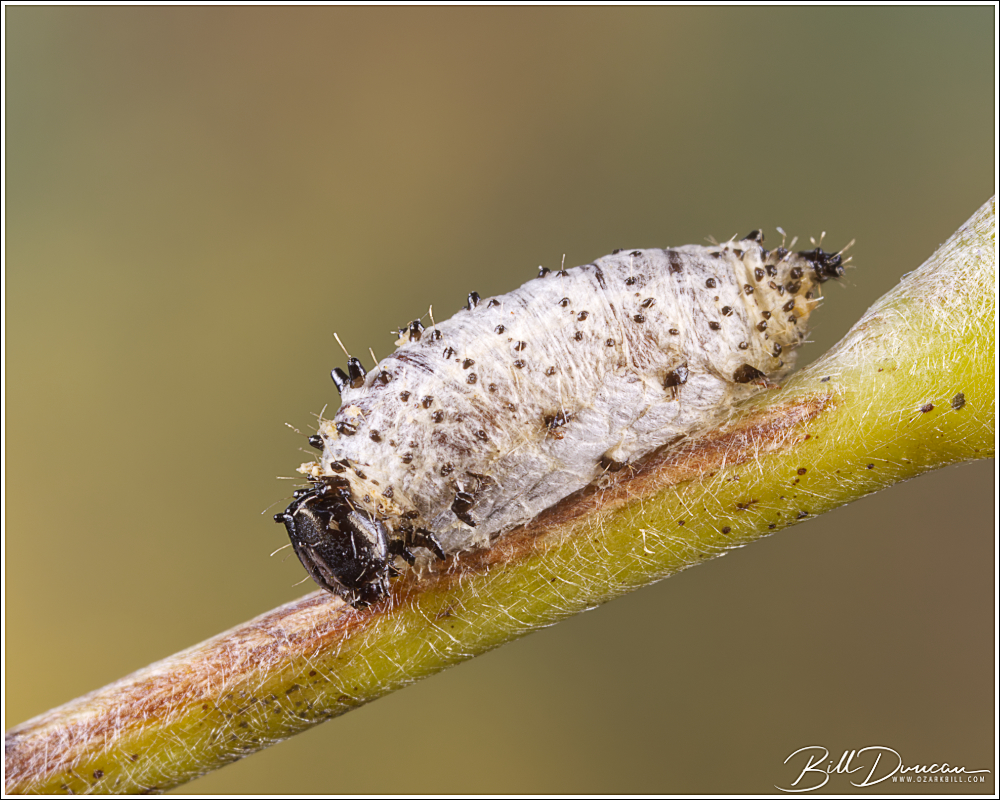
A closeup of one of the unfortunate caterpillars.
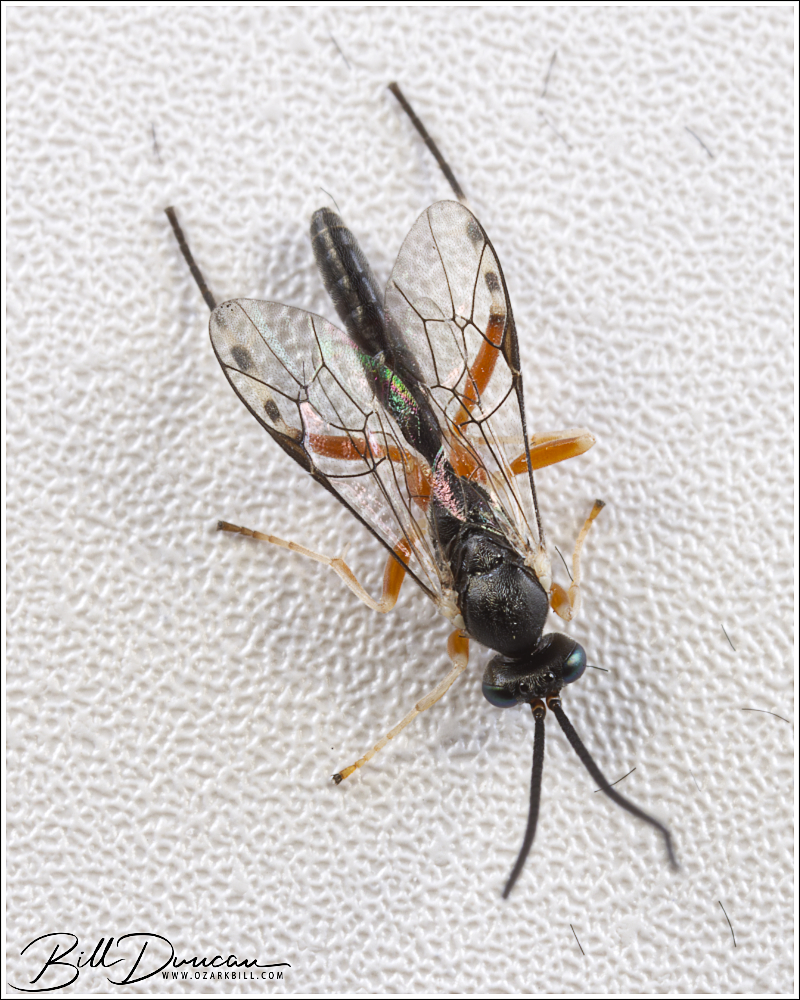
About three days later I checked the container that held these guys. To my surprise every single parasitoid had emerged from their hosts. In this case, the natural enemy is the Ichneumonid parasitoid, Hyposoter fugitivus. In the following images you can see the tiny wasps that have emerged from the even tinier caterpillars.
The ichneumonid wasp Hyposoter fugitivus recently emerged from its host, Oedemasia concinna.The ichneumonid wasp Hyposoter fugitivus recently emerged from its host, Oedemasia concinna.
Here are some closeups of the wasps.
Finally, a photo of the gorgeous caterpillar they may have become if not for these natural enemies…
Oedemasia concinna (red-humped caterpillar) found at Tyson Research Center, St. Louis County, MO.
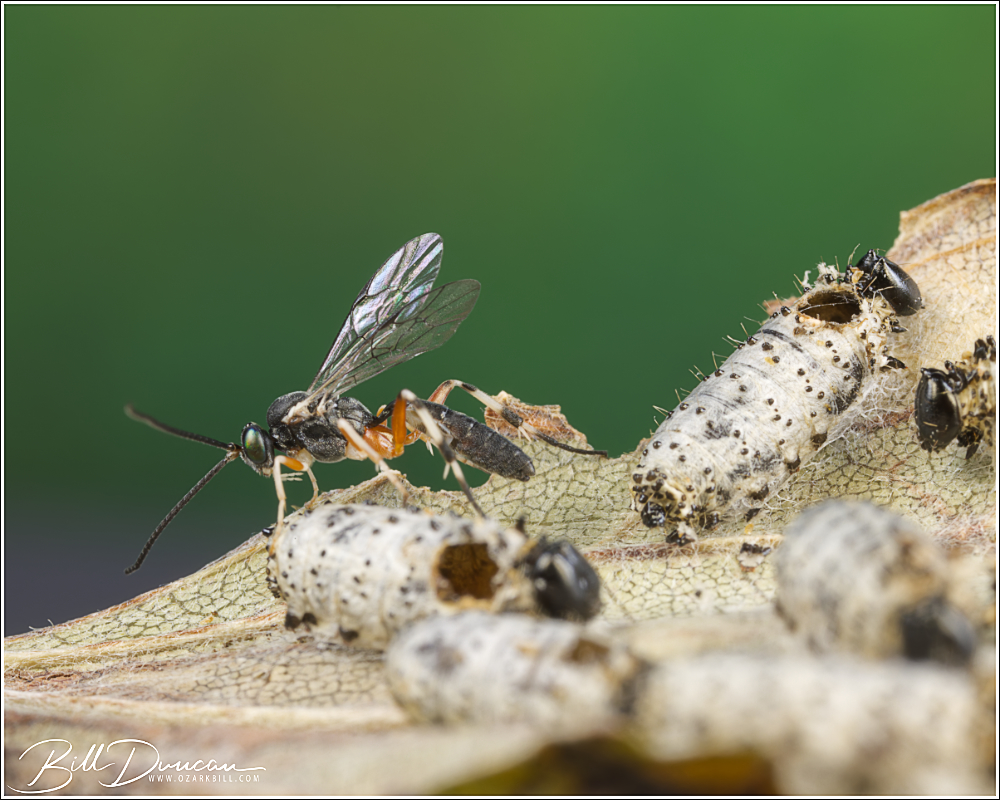
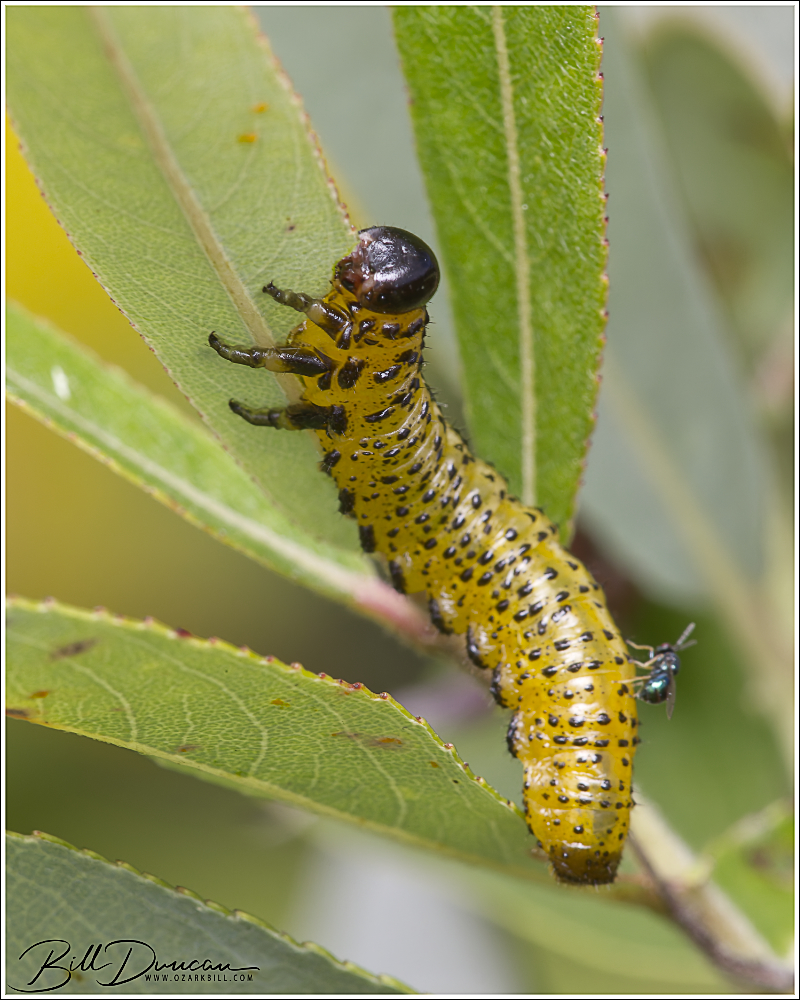
While hunting caterpillars in mid-September. I found this sawfly larvae in the middle of the Kaintuck Hollow Fen in Phelps County. This might be in the Nematus genus as this group feeds a lot on willows. It wasn’t until I looked closely at the photo much later that I noticed it was being parasitized by a small wasp. I would have loved to have gotten a closer photo of the wasp.
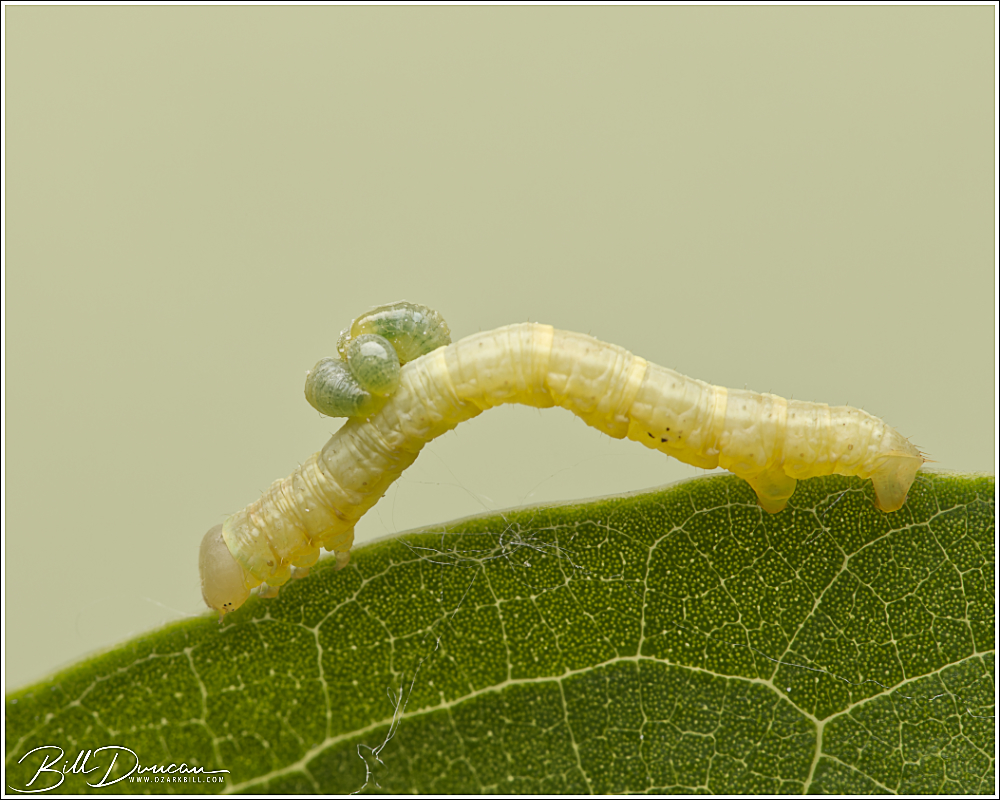
I found this unfortunate little geometrid caterpillar during a hunting session at work back in July. In these photos it is serving as host to some ectoparasitoid wasps in the Eulophidae family. I attempted to rear these but everyone succumbed in quick order.
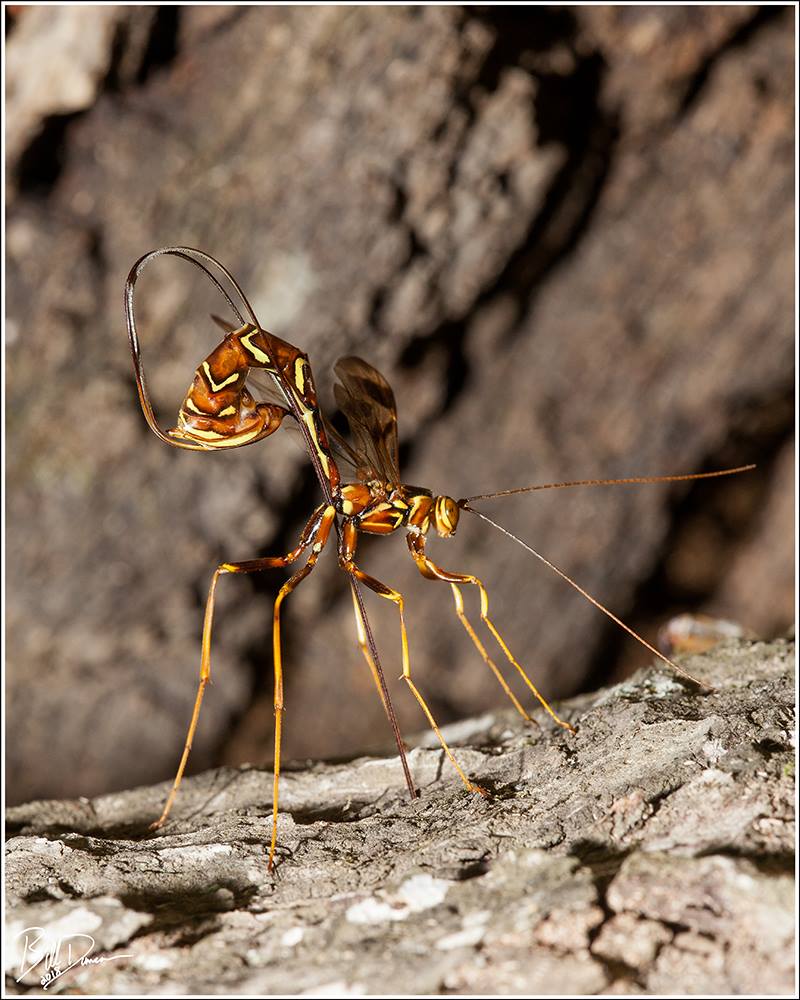
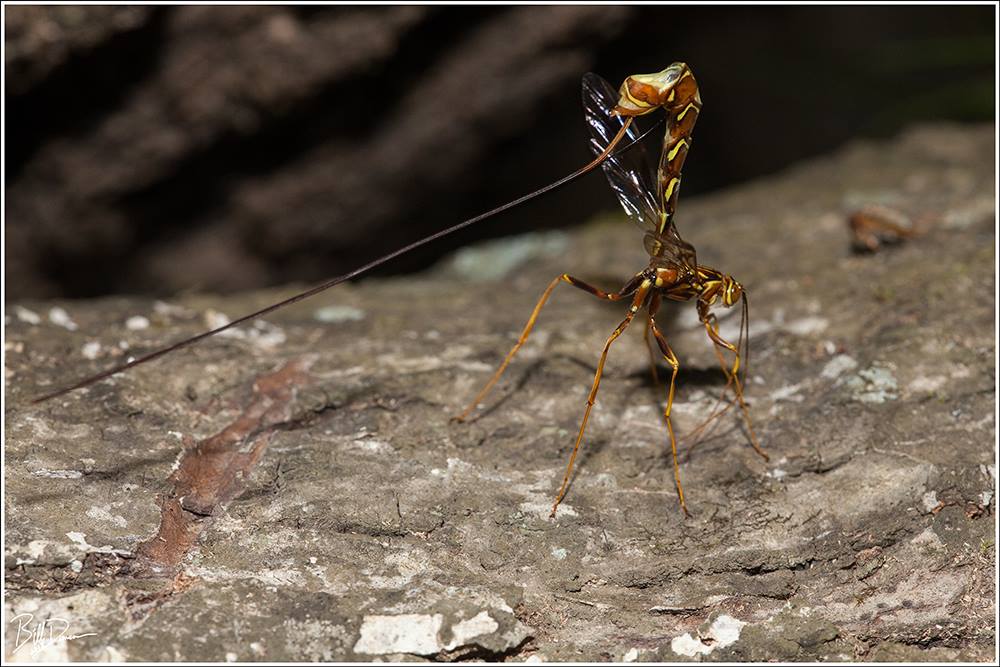
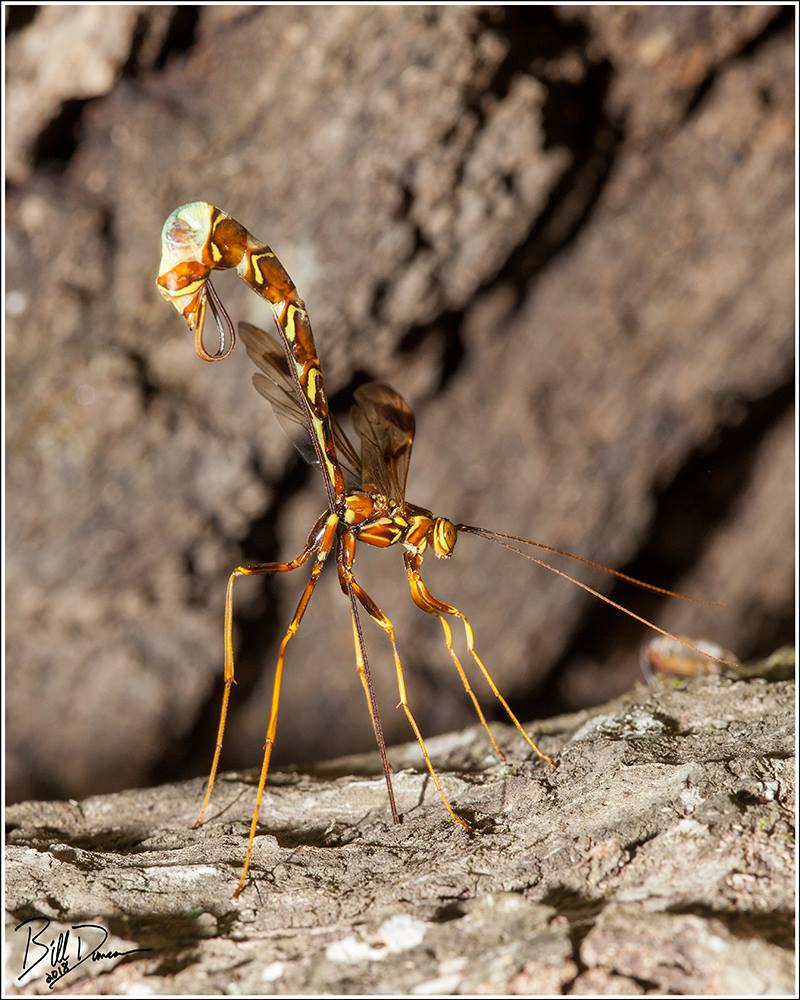
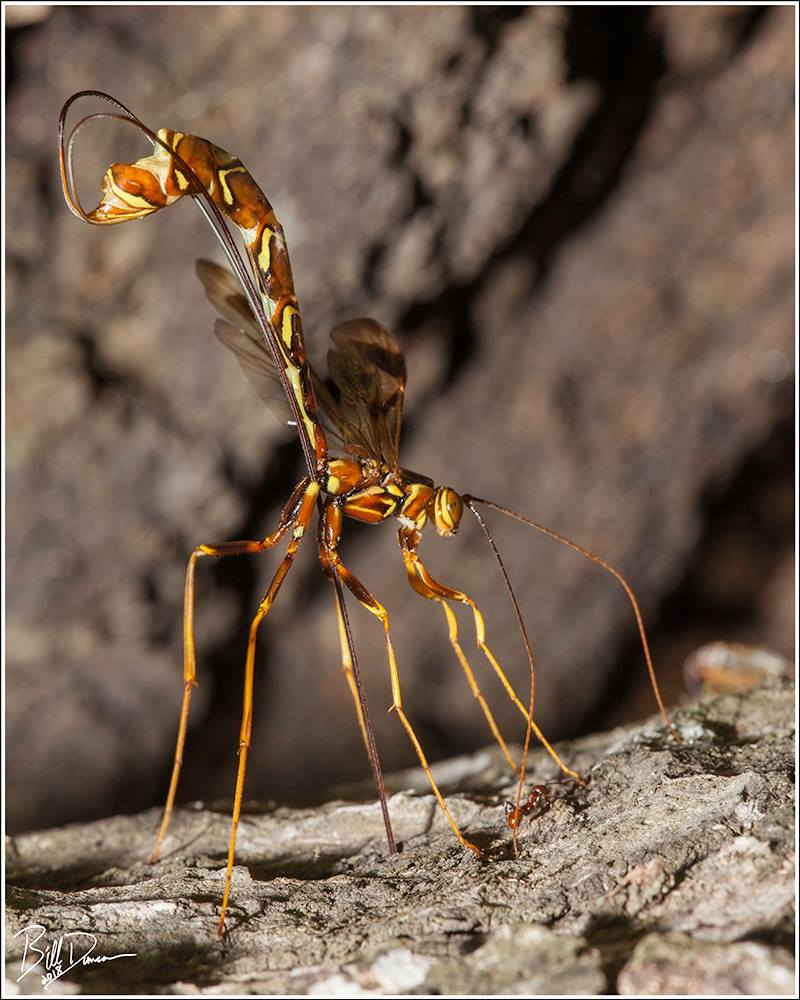
Here’s another set from the bowels of Facebook that I neglected to put on the blog for some reason. These were taken in 2018 at Pickle Springs Natural Area where Casey and I found this fantastic insect.
The long-tailed giant ichneumonid (Megarhyssa macrurus) is our region’s largest ichneumonid wasp. This species is a parasitoid and its sole host is the pigeon horntail (Tremex columba, fam. Symphyta) that bores tunnels into decaying hardwood species. The long-tailed giant ichneumonid uses its keen senses to find the host and then uses its long ovipositor to drill into the tunnel where it lays an egg and injects venom to paralyze the horntail. This species does not sting.
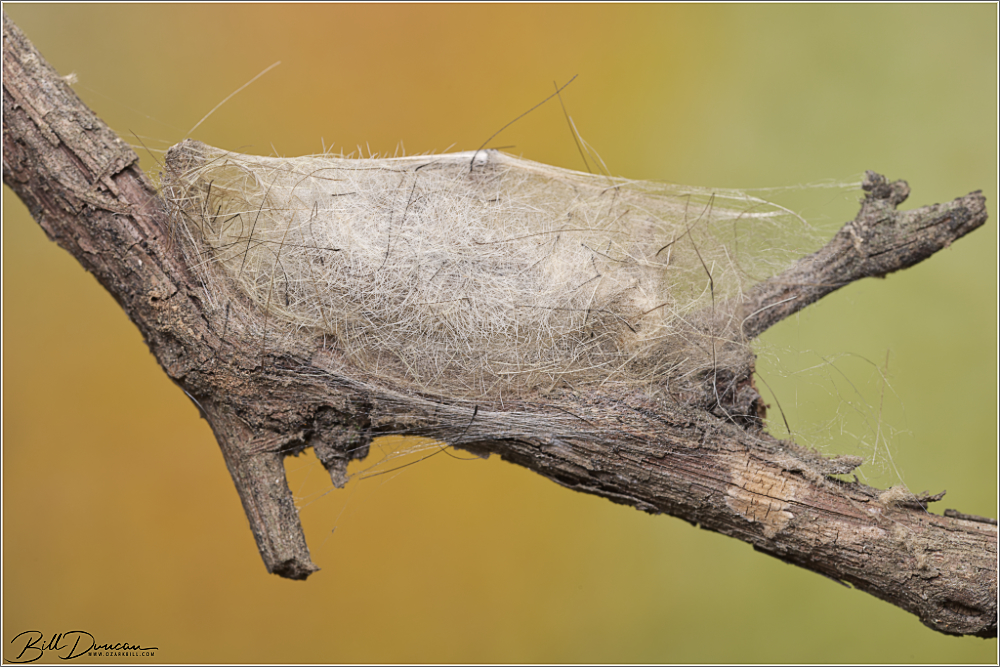
This post is related to the rearing work I shared previously of the Orgyia leucostigma (white-marked tussock moth). During a caterpillar hunting outing with Sarah, I found what was obviously a cocoon of a tussock moth. I can’t say for certain it belonged to O. leucostigma, but it is likely. So, I photographed it in the field and brought it home, keeping it separate from the O. leucostigma cocoons that I was rearing that were collected from my yard. As time went on and the other cocoons I was rearing began producing moths, I figured something was going to be different with the one pictured below.
A tussock moth (Orgyia sp.) cocoon collected on 21, Sep, 2024 at Onondaga Cave State Park. Note the long setae from the tussock moth caterpillar that are incorporated into their cocoons
Checking the container on 6-October, I found this beautiful Orgichneumon calcatorius, an Ichneumonid wasp with a Holarctic range that is a parasitoid of moths in the Orgyia and Dasychira genera. After taking a few photos, I let it go in the backyard. After emerging, females of the species mate and then overwinter as adults utilizing crevices in tree bark. In the spring and summer of the following year, they look for new caterpillars to insert their eggs.
A newly emerged Orgichneumon calcatorius with the pupa and cocoon that hosted it in the background.
A closeup look of the brilliantly patterned Orgichneumon calcatorius
Today I am showcasing an example of biological pest control that I came across in my own neighborhood in late April of this year. The image below shows a bronzed cutworm moth larvae (Nephelodes minians) in the Family Noctuidae that has been parasitized by a Braconid wasp in the genus Cotesia. This is a very species-rich genus of parasitoids, but there is a fair chance of this species being C. marginiventris. Thanks very much to Alex Soohoo-Hui for his assistance in narrowing down the identification of this minute wasp.
A deceased bronzed cutworm (Nephelodes minians) caterpillar in the final stages of hosting its parasitoid Braconid brood.
The bronzed cutworm is a very common moth that feeds on various grasses, including crops like maize and other cereals as well as turf grasses. I consistently find these cats or their chrysalis whenever I dig a new hole in the yard.
When I found and collected these animals, the last couple of wasp larvae were finishing up spinning their cocoons.
After the wasp deposits her eggs on the host, the wasp larvae feed on the caterpillar internally, being careful not to do much damage to vital organs. The host will never survive, but the parasitoids must ensure that it stays alive long enough for the brood to reach maturity. Often, the caterpillar will still be alive when the wasp larvae emerge and begin to spin their cocoons and will defend itself and its parasites from potential predators.
Three cocoons showing the doors that the adult wasps chewed their way out of.
In this case, the caterpillar seemed dead. I collected it and took it home with hopes of rearing out the tiny wasps to photograph and identify. In about four days, I came home to find 15-20 adult wasps had emerged.
The adult wasps are extremely tiny, measuring 2-3 mm. In order to have a chance at getting photographs, I placed their enclosure into the refrigerator for a minute or two. The wasps in the accompanying images might appear dead, but they perked up within a couple of minutes. After getting my photographs, I released the brood into my backyard to continue their pest control services.
A Braconid wasp in the genus Cotesia, potentially C. marginiventris.
A couple more looks at this diminutive but effective parasitoid.
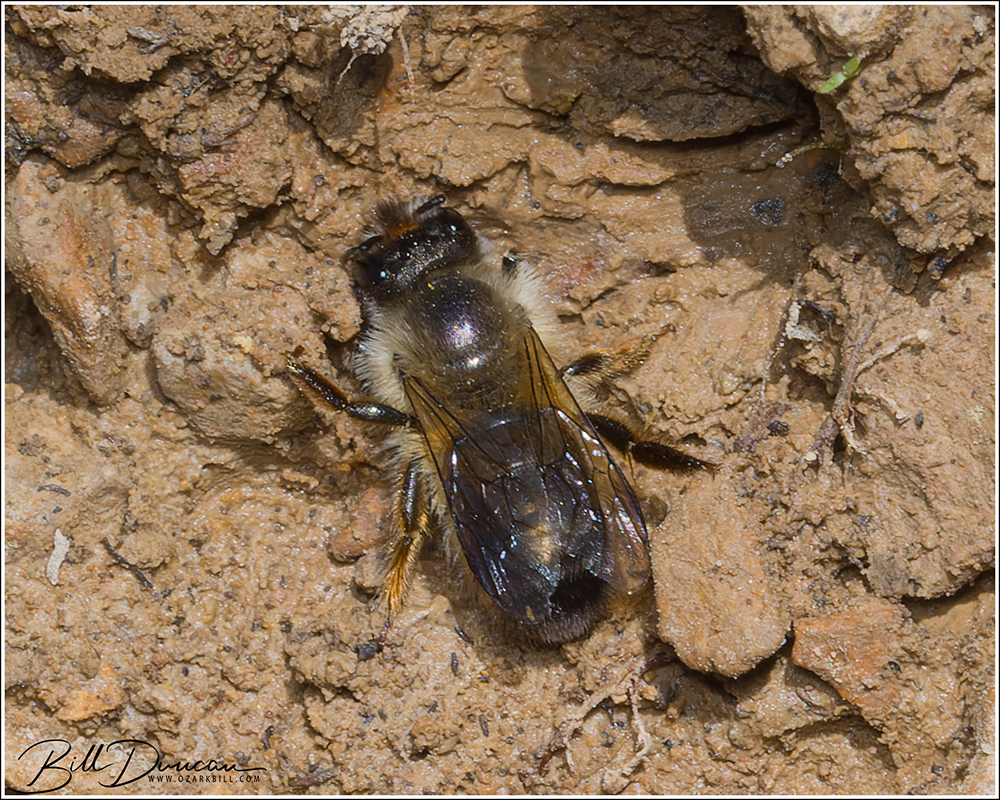
Casey and I found these mason bees in mid April this year at Hughes Mountain N.A. I had no clue what these were but was intrigued to “discover” a new-for-me bee so early in the season. Unfortunately, I was to find out it is yet another introduced species. Apparently these were first found in Maryland in the 1970’s and have spread west since then.
For the past few years I have noticed a good number of native bee nest holes along exposed sections of bare soil at one of my favorite hiking and nature observation sites – August G. Beckemeier Conservation Area in St. Louis Co., MO. This past spring I finally decided to make this a project and set about a quest to make some images of these gals provisioning their nests. As usual, I wound up learning along the way.
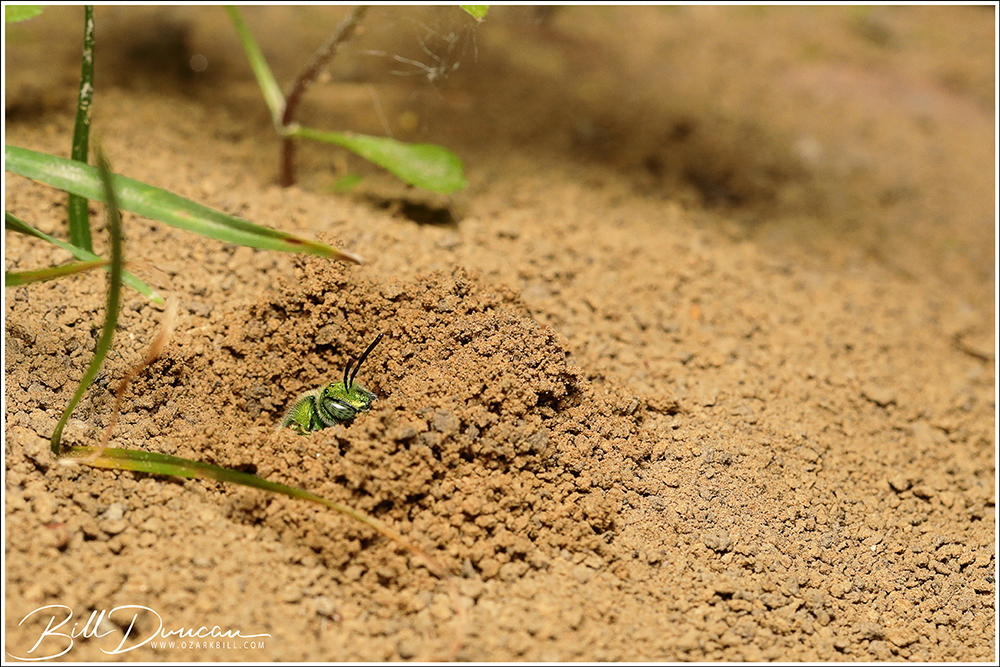
An Agapostemon virescens pauses at the entrance of the largest of the communal nest entrances I observed. It is impossible for me to accurately count the number of females using this ~ 10 cm tall conical entrance, but I observed six individuals at one time on or hovering above the entrance.
As is commonly known, many of our native bees are solitary and nest without close contact or cooperation in regards to conspecifics. At the opposite side of this spectrum of sociality in the Hymenoptera are most species of bumble bees and the honeybee. These bees are considered truly social, or, eusocial. The characteristics necessary to be considered a eusocial species are 1) cooperative care of offspring of others within the colony, 2) overlapping generations within a colony of adults, and 3) a division of labor into reproductive and non-reproductive groups. Many of our bee species lie somewhere between these two extremes. The bee of focus here, Agapostemon virescens, lies early in the area we call being presocial, aka parasocial.
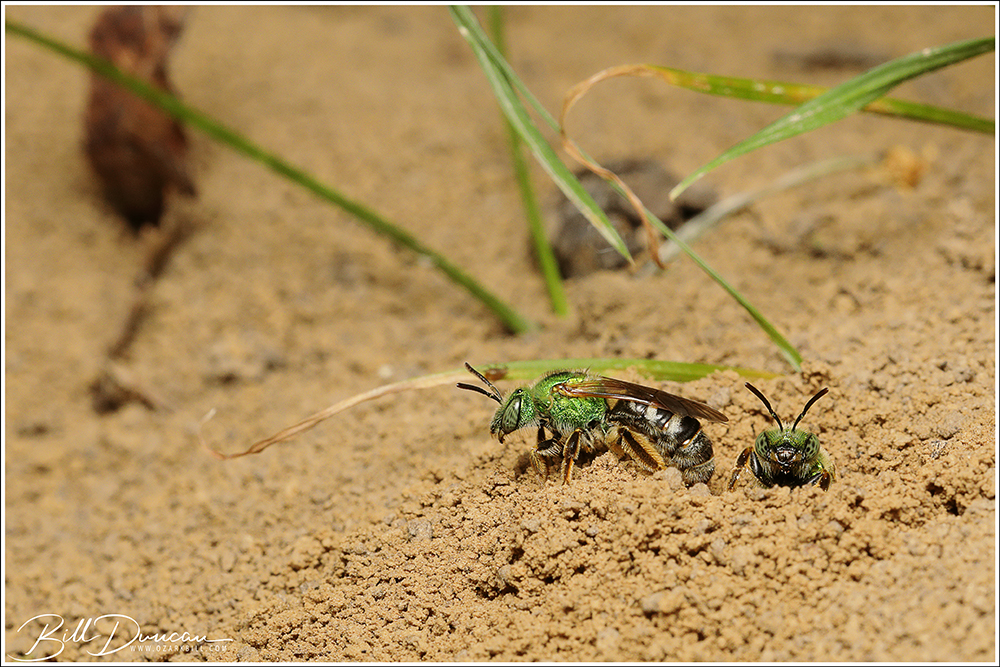
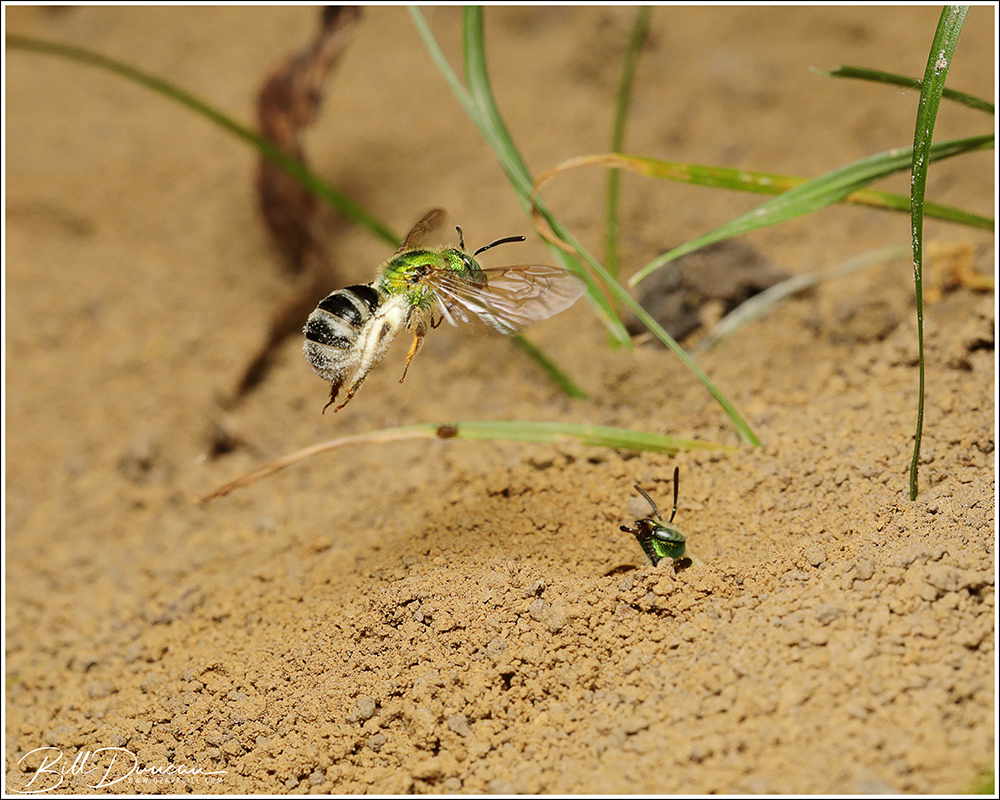
Two Agapostemon virescens females exiting a communal nest entrance having dropped off their loads into their individual cells.
Let’s clarify the differences between a presocial species such as A. virescens and the eusocial honeybee. The honeybee shows all three necessary characteristics of a eusocial species. The individual workers obviously care for brood that are not their own – they don’t even have offspring of their own, instead spending much of their lives caring for the offspring of their queen (sisters). They have multiple overlapping generations within the hive in a particular season, as well as across multiple seasons and as just mentioned, there is a division of labor into reproductive and non-reproductive castes.A. virescens on the other hand, is not nearly as cooperative. Individuals of this species share basically just a front door to their brood chambers and nothing more. After entering the communal nest, each female builds their own brood sub-chamber cells and each provisions their own by processing pollen into cakes and leaving them in their respective brood chambers. There is no brood care after the egg is deposited and the sub-chamber sealed. The offspring then emerges later in the summer.
So, what are the pre-conditions necessary for the eventual development of more complicated forms of sociality, i.e. eusociality? Or more directly, what advantages are there in adopting more of a social lifestyle if we assume the starting point was a solitary existence? Scientists consider two important pre-conditions need be met for the evolution of eusociality. First, the species offspring must be altricial, or require a great amount of parental care in order to reach maturity. Second, there need be low reproductive success rates of solitary pairs that attempt to reproduce. Here is what is believed to be the primary driver that pushed A. virescens into this presocial condition.
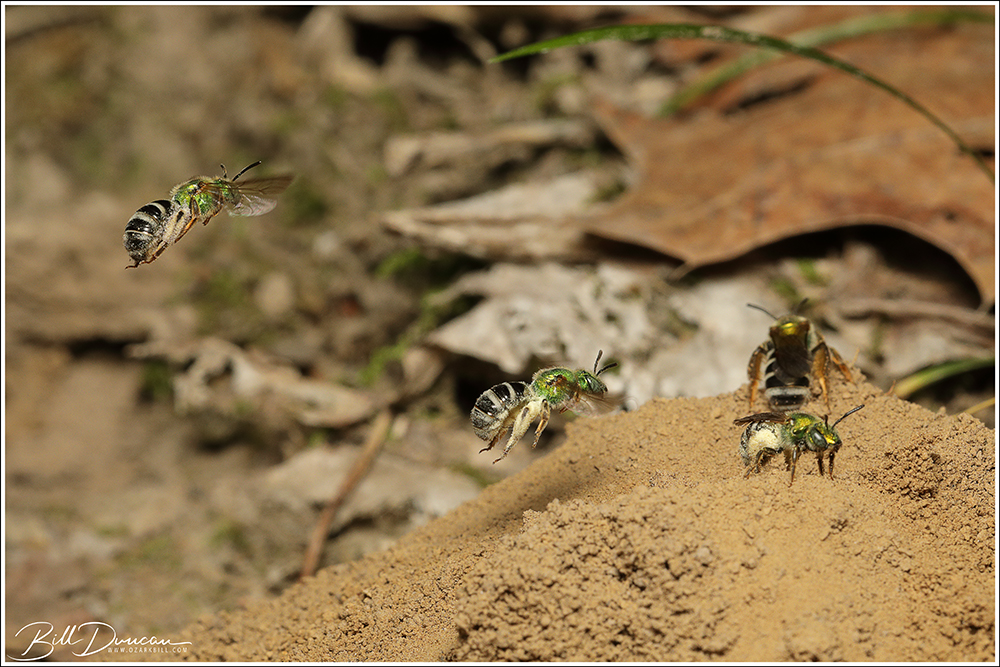
A sentry Agapostemon virescens stands guard at the communal nest entrance allowing only conspecifics to enter. This guarding of potential kleptoparastism is regarded as the primary benefit that led to communal nesting in this species.
This sentry Agapostemon virescens closely inspects an incoming conspecific. How it is determined who stands watch while its neighbors forage is not known.
Kleptoparasitism is where one animal takes advantage of the hard work of another by taking their prey or collected foods. In this case, we are primarily concerned with the large group of bees known as cuckoo bees. Kleptoparasitism has evolved numerous times in the Hymenoptera and cuckoo bees lay their egg on or near the host’s provisions. The parasite will hatch first and eat the host’s pollen and will often kill and eat the host’s larvae as well. With such an obviously successful reproductive strategy, it should come as no surprise that there would be a strong selective advantage of finding ways to thwart these parasites. In the case of A. virescens, evidence suggests that by communal living as described here, the rate of kleptoparasitism is much lower when compared to related species that have the completely solitary reproductive strategy.
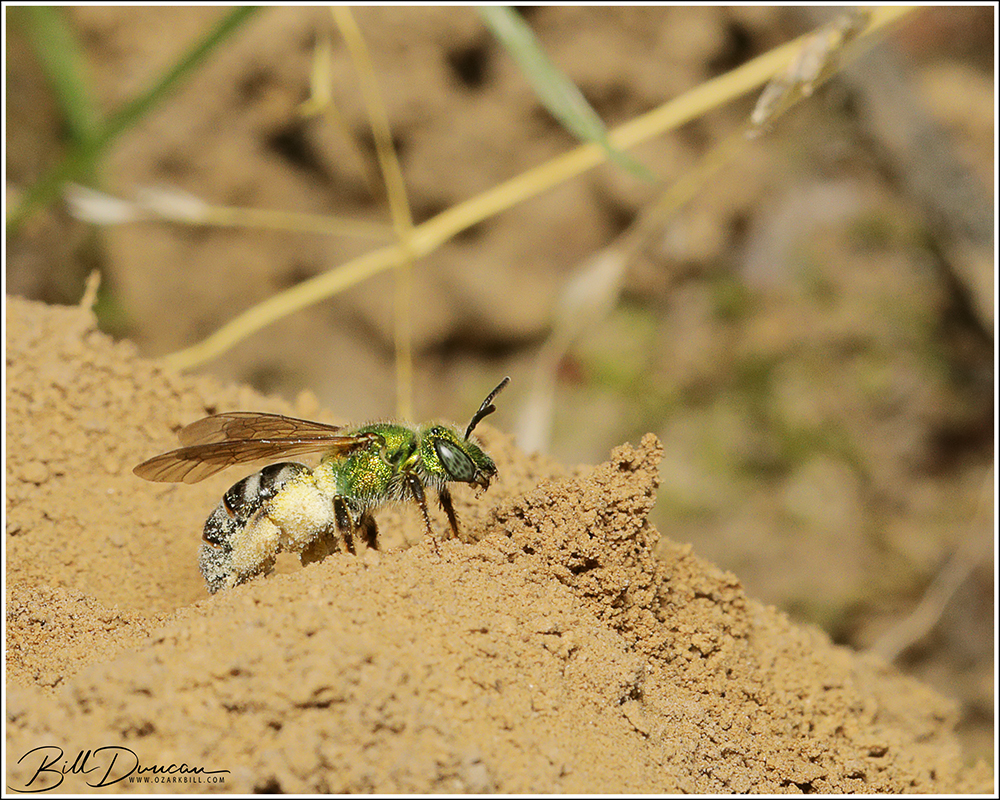
A busy day of bringing in pollen provisions for these Agapostemon virescens sweat bees.
I guess the obvious next question is how in the world could eusociality evolve from this state? This is a fascinating story that involves terms like kin selection, altruism and haplodiploidy. It also involves a good deal of math and explanation from some of the greatest evolutionary thinkers since the time of Darwin (read anything by William D. Hamilton for example). It is also well out of the scope of this piece. But, I hope it is clear that before getting near the high rung of eusociality on this ladder, that a small first step like seen in this example would be necessary.
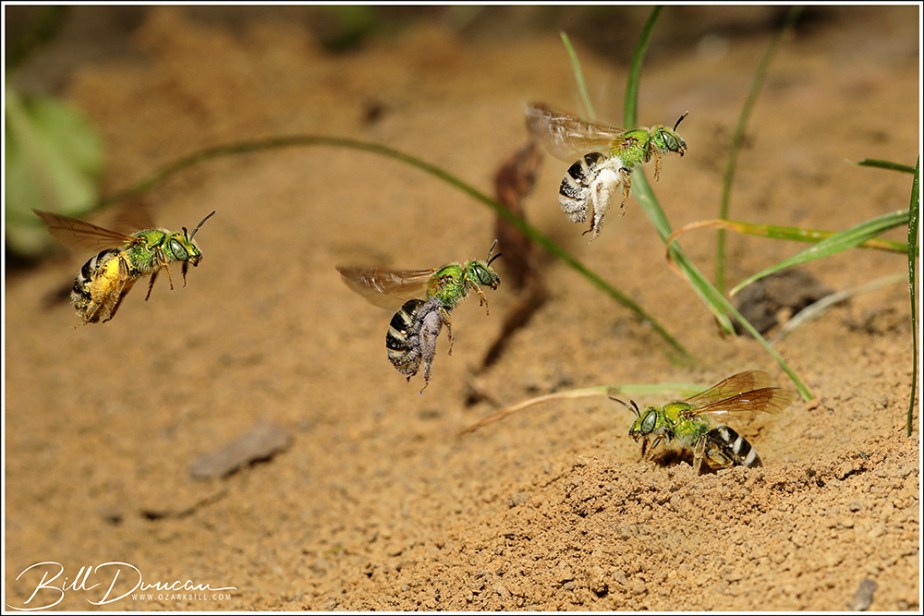
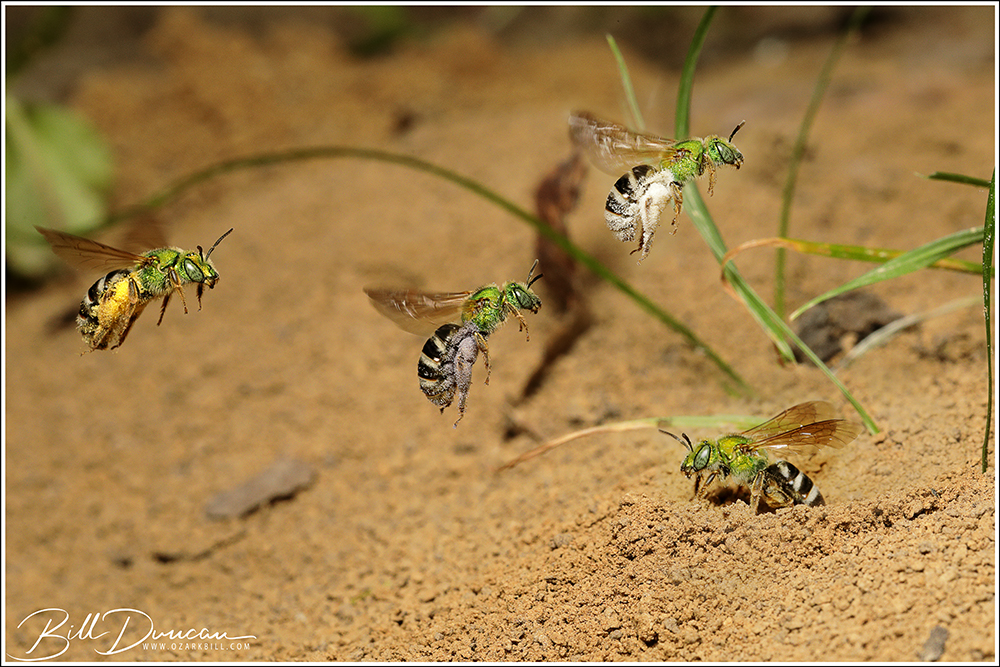
Although Agapostemon virescens sweat bees are communal nesters, this photo gives a clue that they are not cooperative foragers like the honeybee. Each of the three returning females is carrying different colored pollen, indicating different pollen source plants for each.
I hope I got most of this correct enough. It’s been a long time since I took Zuleyma Tang-Martinez’s Evolution of Animal Sociality class at University, which I thoroughly enjoyed. Please feel free to leave a comment to correct or clarify or ask a question.
Much of what I covered here and a lot more can be found in Malte Andersson’s The evolution of eusociality (Ann. Rev. Ecol. Syst. 1984. 15:165-89
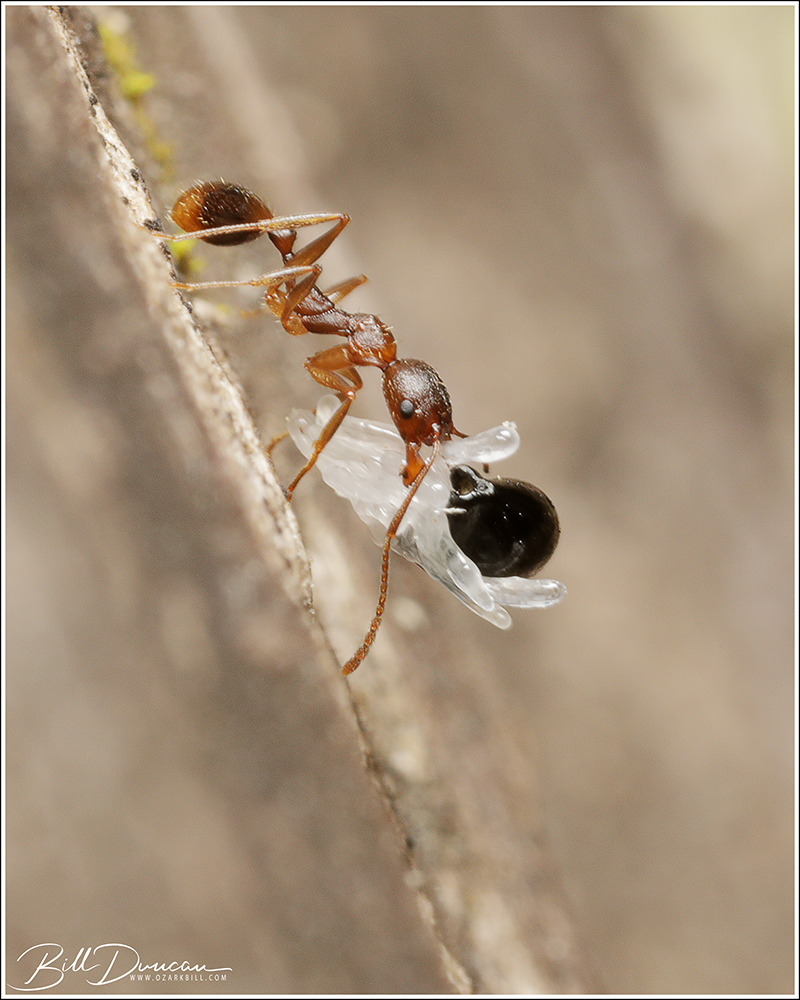
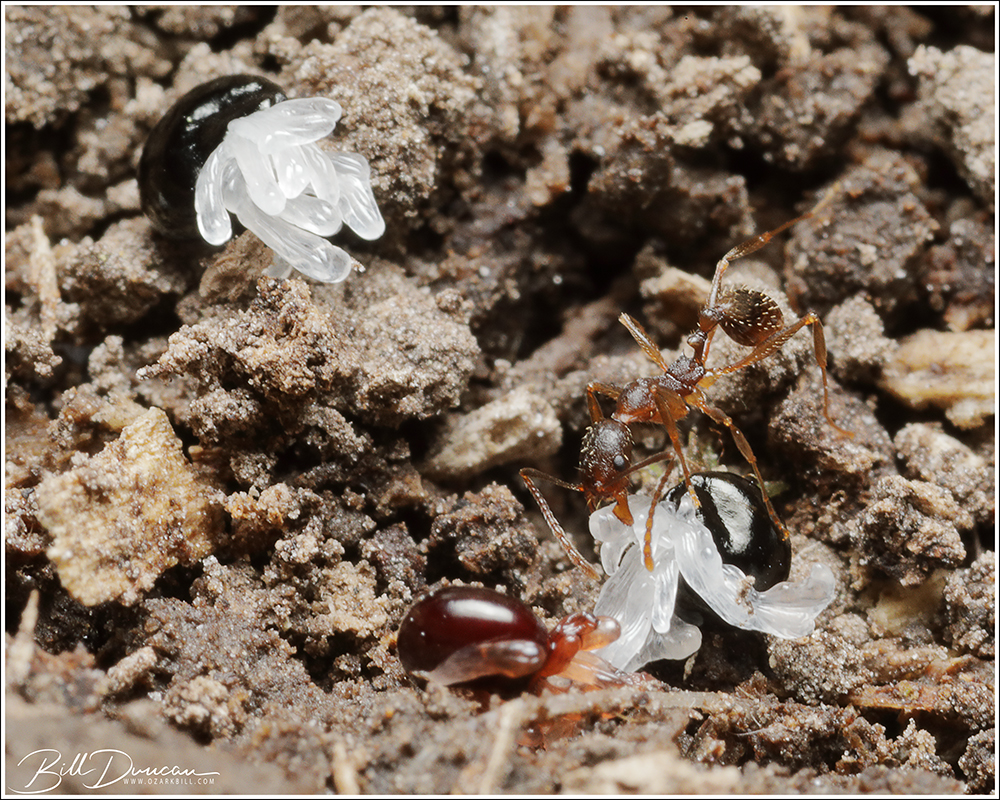
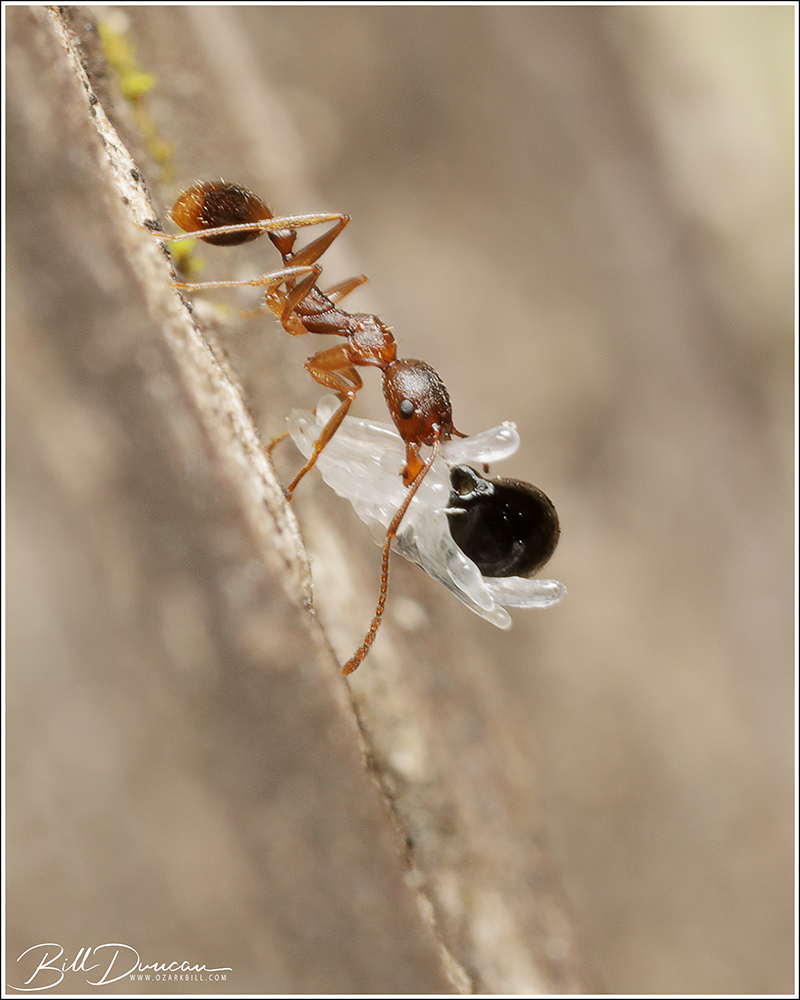
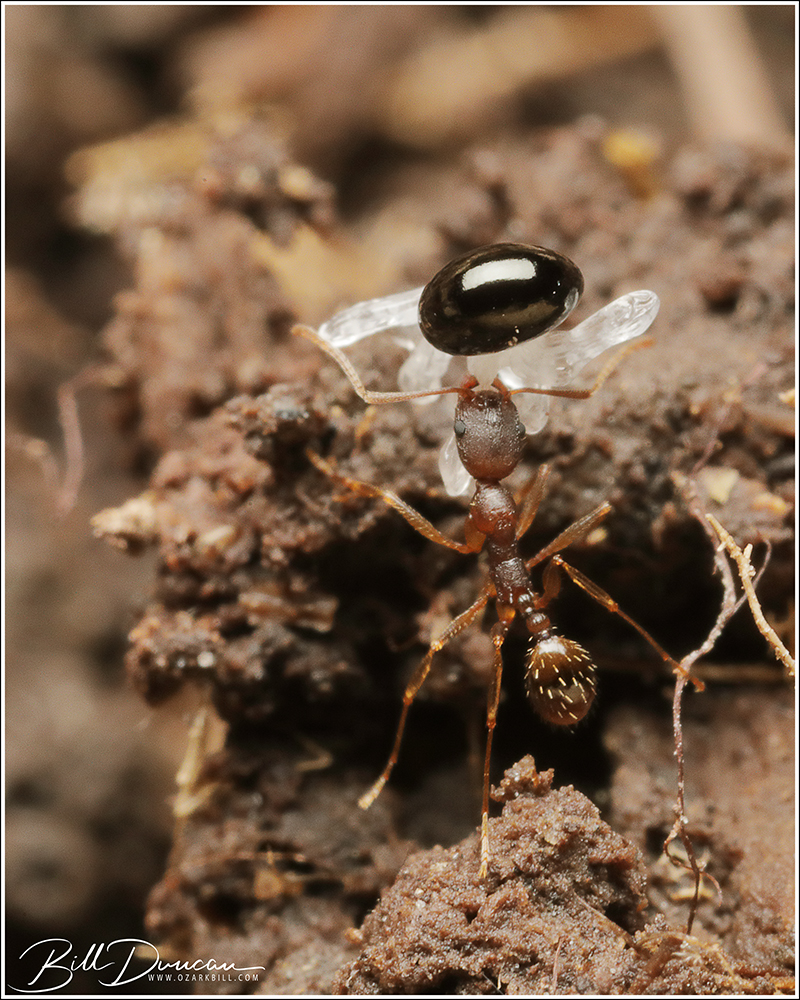
In continuing my work from last year, this year I was able to capture a few Aphaenogaster rudis moving the diaspores of Dicentra cucullaria (Dutchman’s breeches). Although this was the best year I’ve ever seen for D. cucullaria, getting everything to work just right in order to photograph this process was difficult. I was often short on the time needed to do this. Also, the cool temps we had this spring made it a bit difficult to find the foraging ants, even when the supply of diaspores I had at my disposal were ample.











 A Thousand Acres of Silphiums