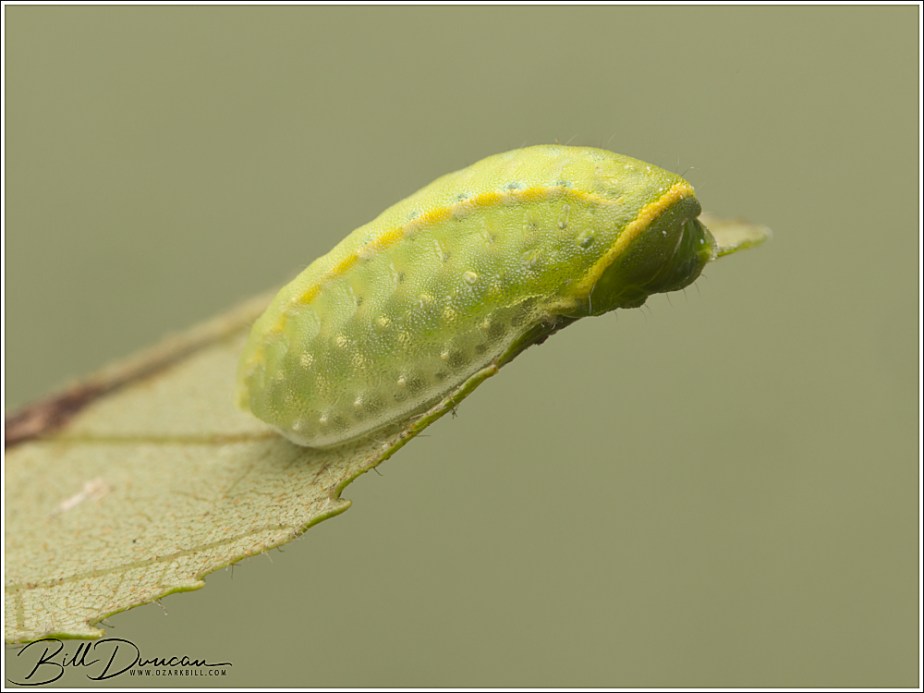
2024 Caterpillar Season – Yellow-collared Slug

I got out early this morning and visited one of my favorite caterpillar hunting grounds – Cuivre River State Park in Lincoln County, MO. The pecker gnats were bad around sunrise but they would get to unbearable by lunch time, along with some nice heat and humidity. It was a typical mid-summer outing – rather slow. However, I always seem to find enough to keep me interested.

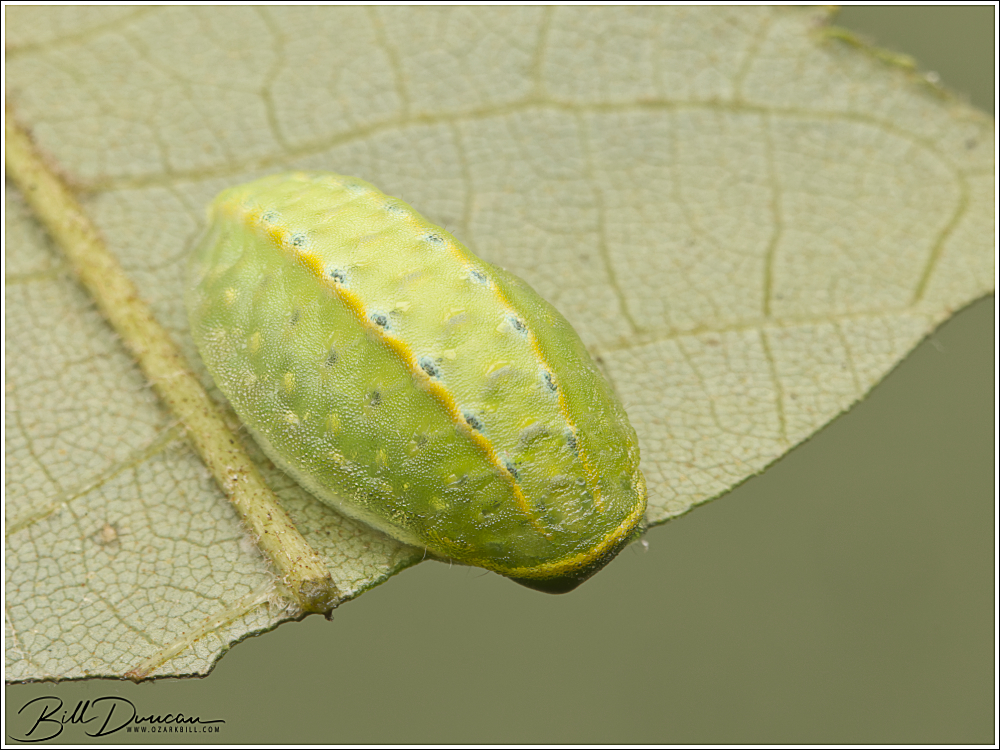
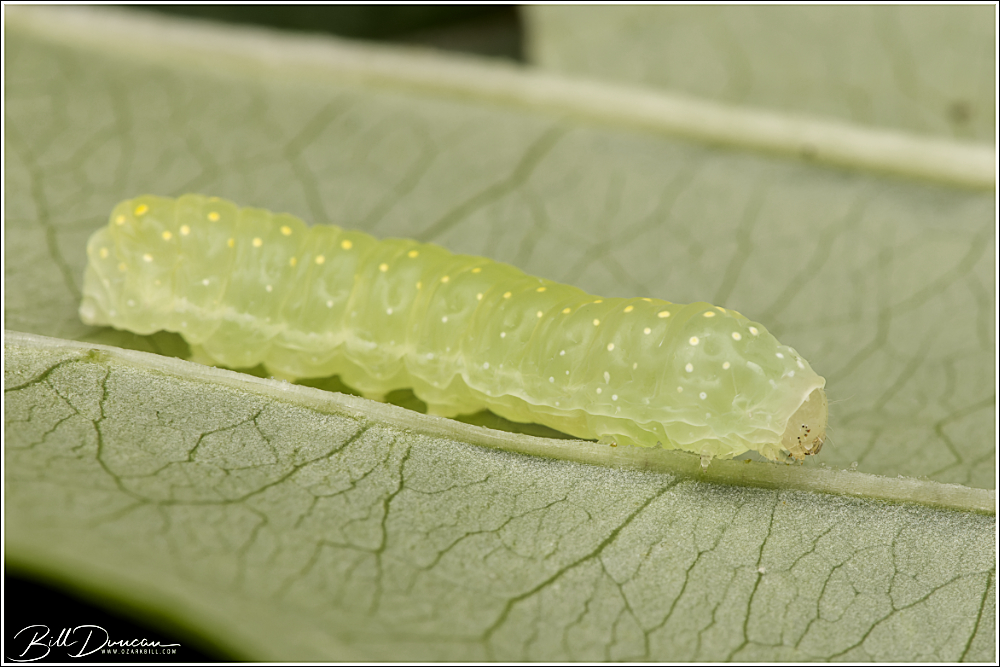
Apoda y-inversum

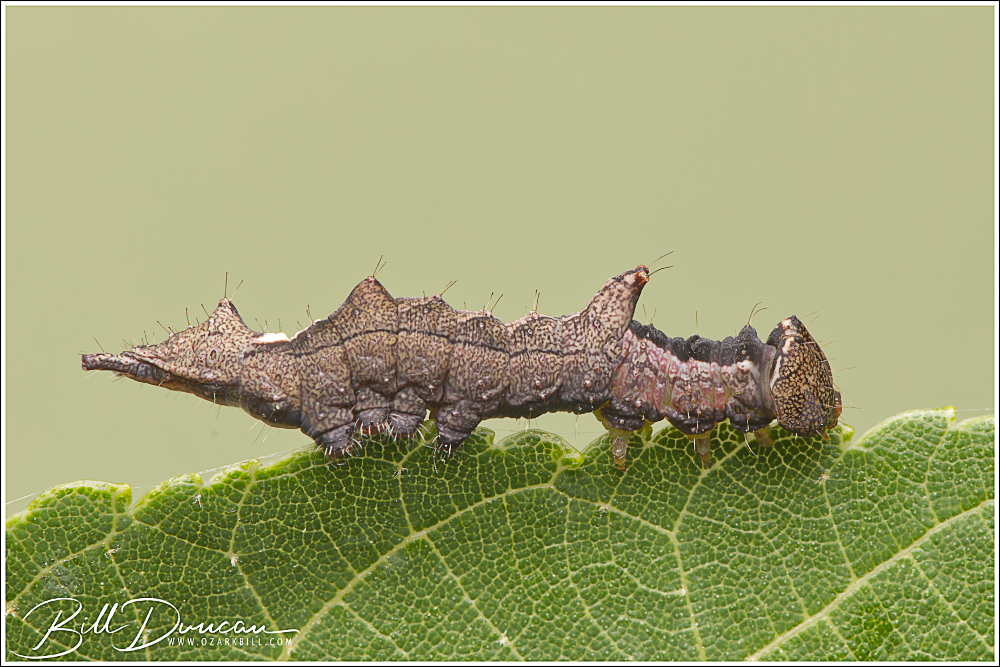
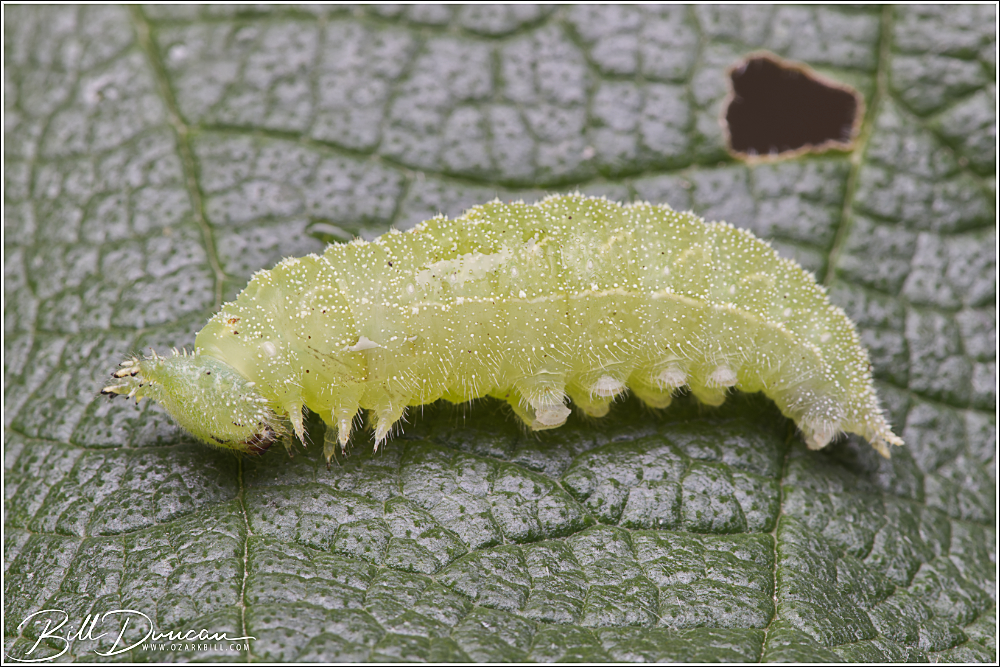
Along with a couple of new species, I was pleased to find two specimens of the yellow-collared slug (Apoda y-inversum #4667). A member of my favorite Family – the Limacodidae, the adult moth of this species is known by the name of the inverted-Y slug moth. Both of these cats were found on different leaves of the same hickory sapling. I don’t find these guys every season, so this was a nice find indeed.

Two cats on the same tree!

Slug moth caterpillars are standouts in the lepidopteran world in more ways than one. In these photos I hoped to showcase their peculiar way of shielding their heads by keeping it retracted in their thorax. Even during feeding, they keep their head covered by a fleshy extension of the first thoracic segment. Seeing their true heads extended, especially in this species is quite a rare sight. I guess the one who briefly did show its face for me today was getting a little curious about what I was doing to the leaf it was feeding on as I manipulated the leaf in the clamp to get the angles I was looking for.

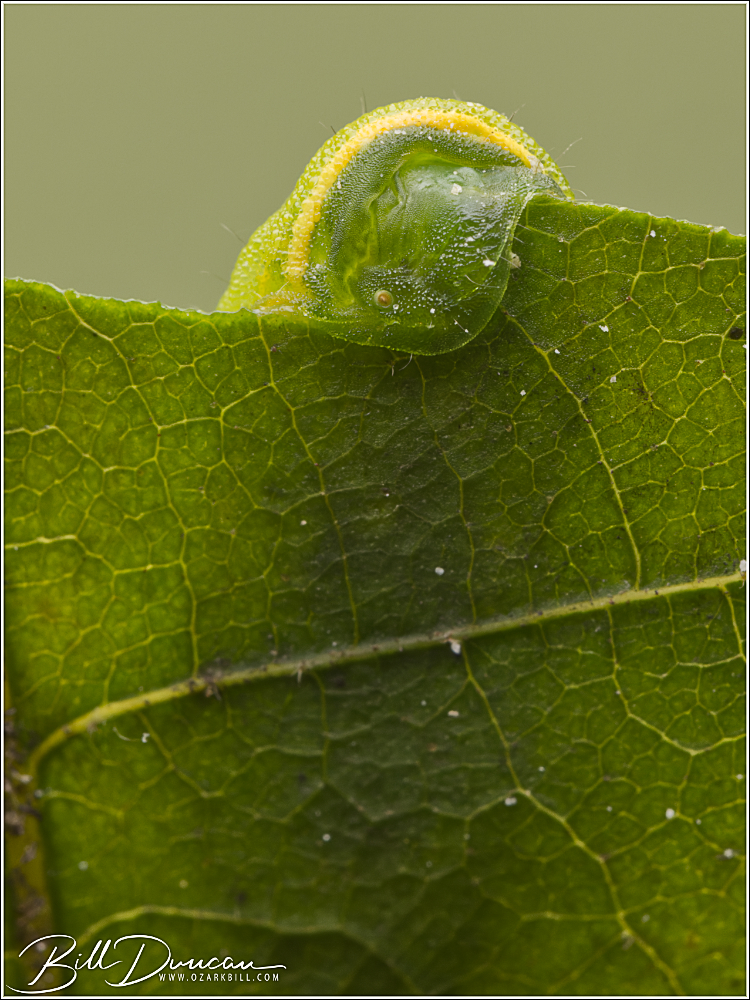
A look at the fleshy thoracic segment that covers the caterpillar’s head. It will drape this covering over the leaf margin, allowing it to eat without exposing its head.
A closer look of a feeding Apoda y-inversum. Notice the typical straight-edge feeding pattern that the Limacodidae are known for.
A partial look at the exposed head capsule of Apoda y-inversum.
Apoda y-inversum

2024 Caterpillar Season – Confused Woodgrain

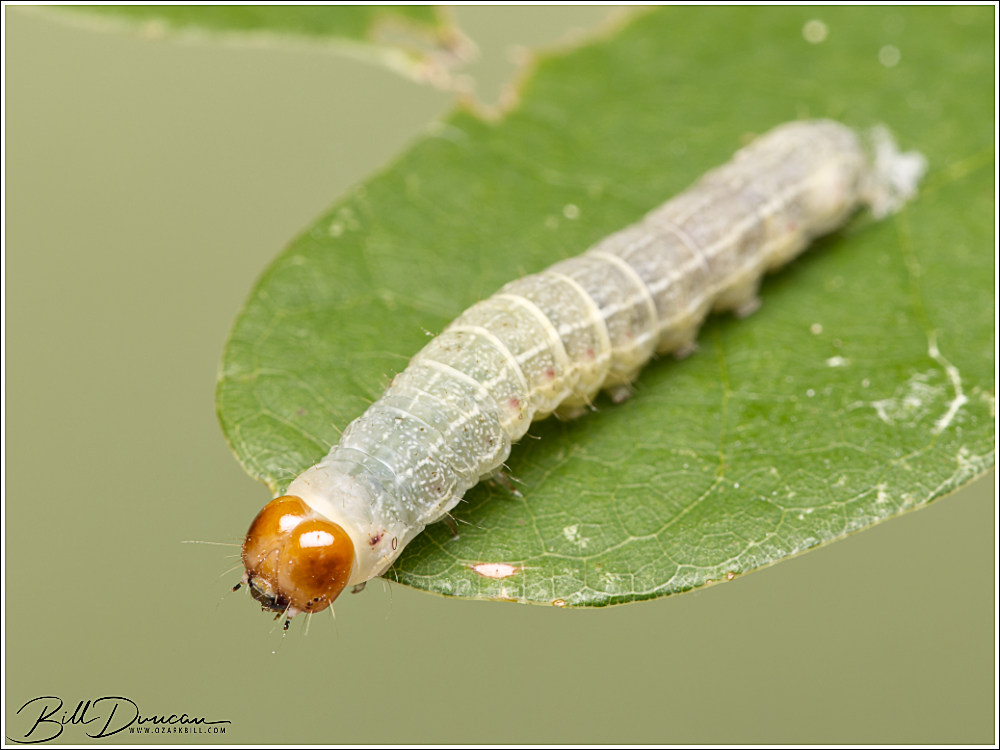
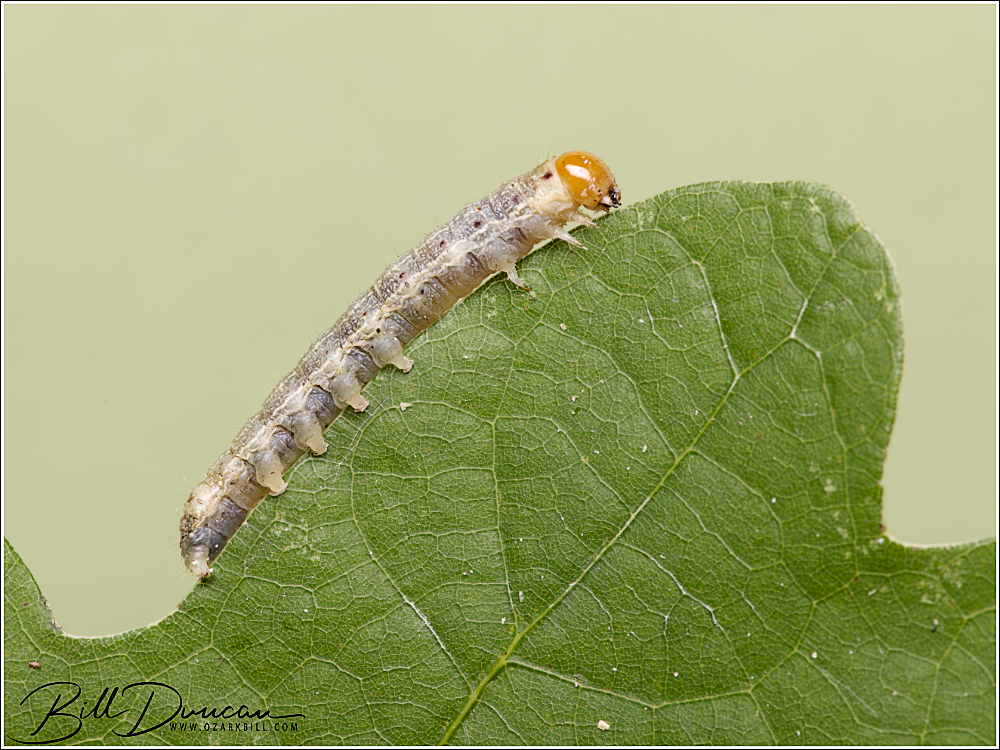
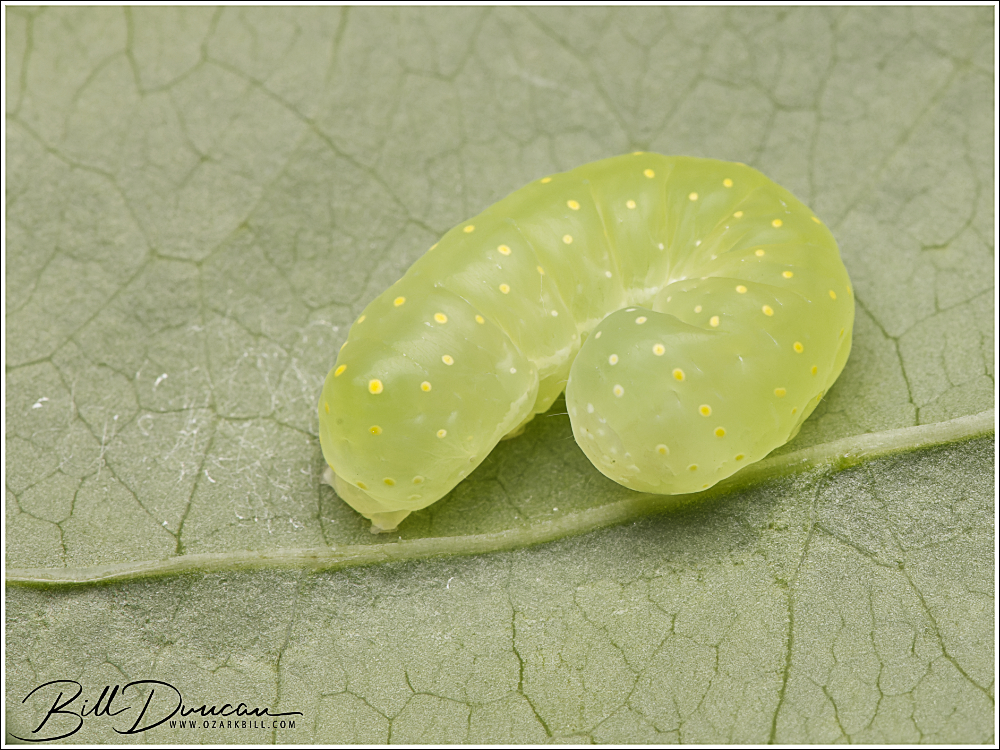
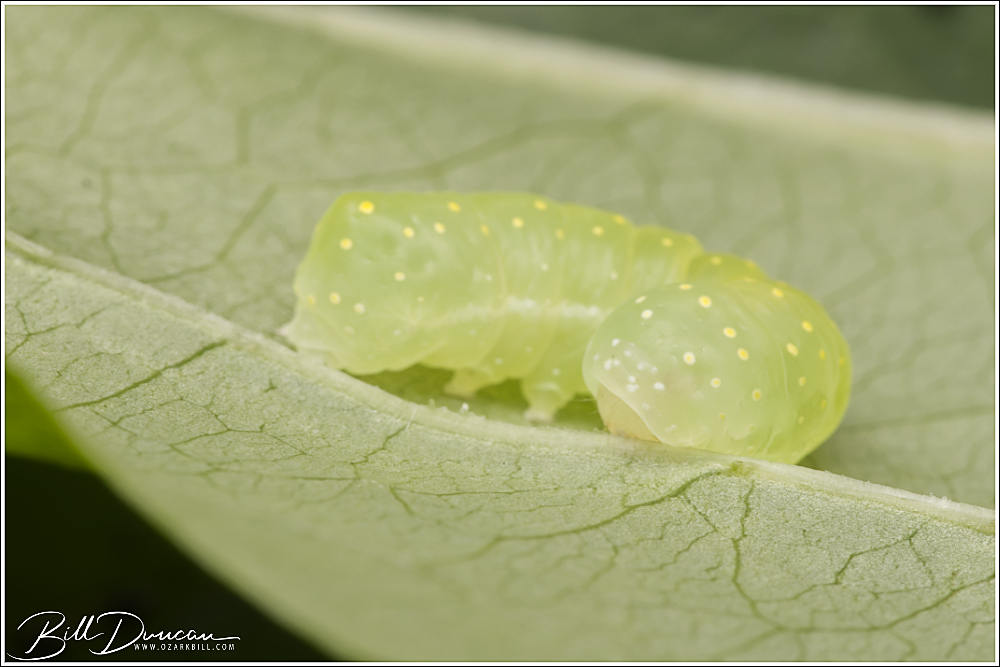
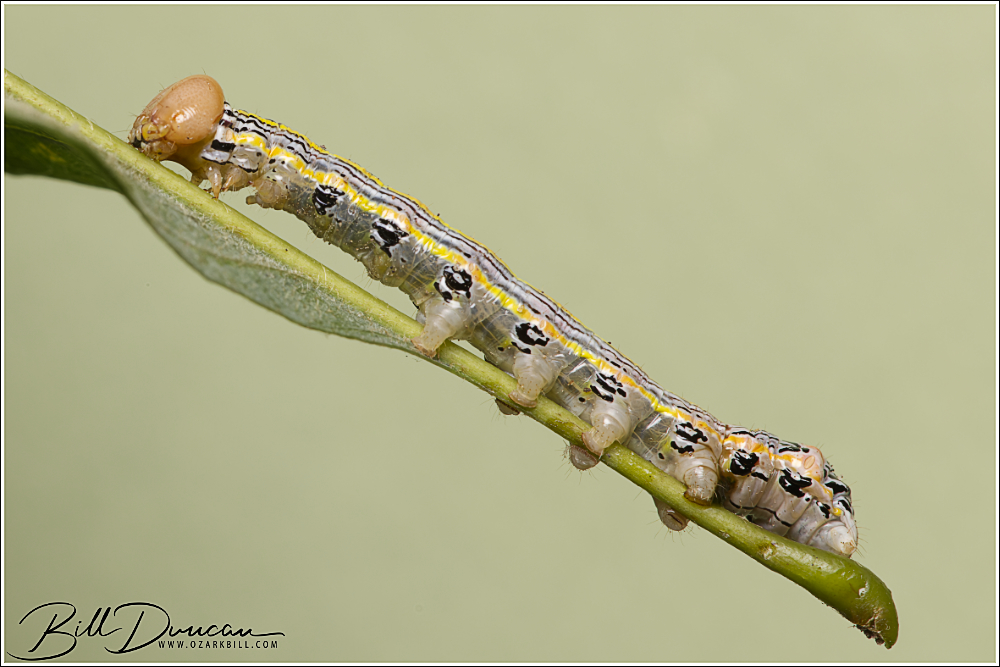
Today’s caterpillar resides in the very diverse Family Noctuidae. The confused woodgrain (Morrisonia confusa #10521) is a generalist, feeding on a wide variety of dicotyledonous plants. The two I am featuring here were found on white oak (Quercus alba) at Huzzah Conservation Area in Phelps County, MO.

The confused woodgrain, named because of the wing pattering of the adult, has only a single brood each year. The larvae can be found from June through October. This long development in the larval stage is common in polyphagous species. This is assumedly due to the wide variety of secondary phytochemicals that the larvae and their gut flora must be able to contend with. It is also assumed that specialist species generally develop quicker due to being in sync with just one or a few specific hosts.

2024 Caterpillar Season – Black-Blotched Schizura

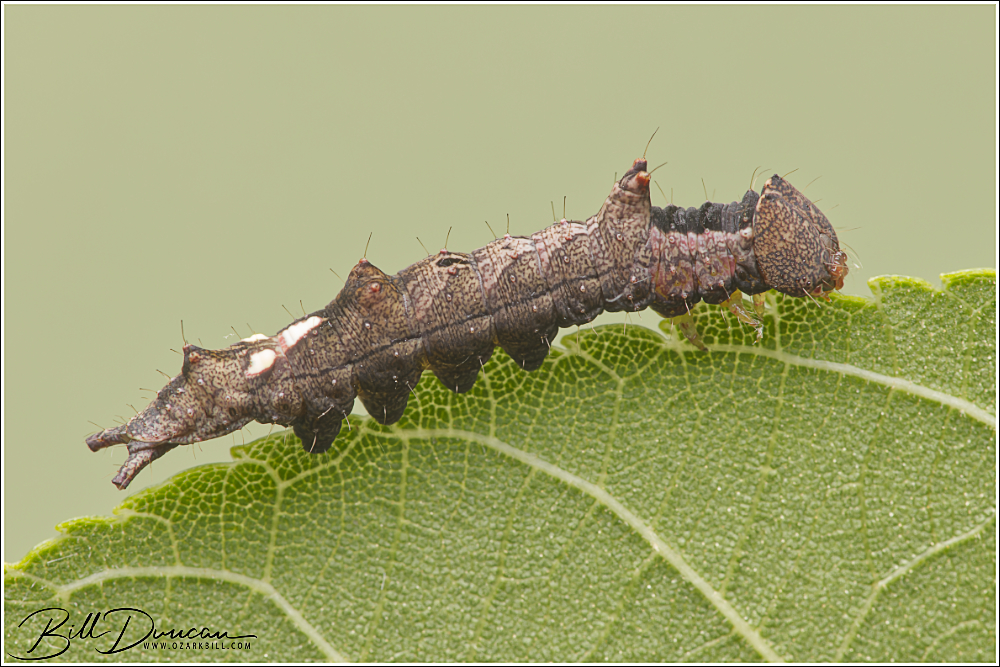
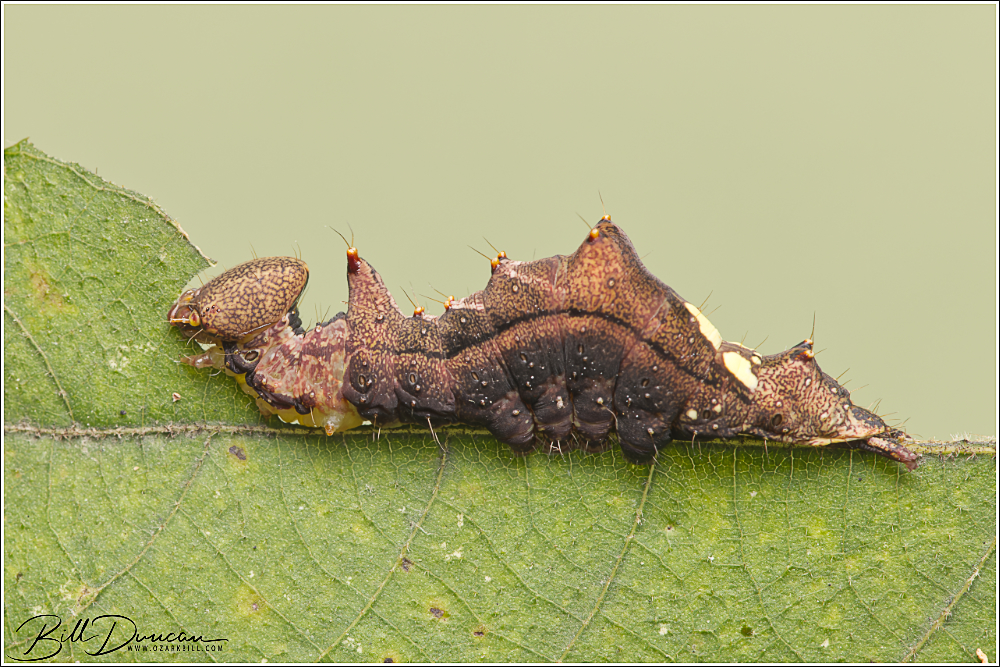
Tonight we have a common, but fantastic member of the Notodontidae Family. The black-blotched schizura (Schizura leptinoides #8011) is most often found on hickory and walnut, but can be found on other woody plants as well. The two cats I found this season were both found on low hickory branches.

The protuberances and warts found along the length of its body come in handy as it mimics damaged and senescent portions of the leaf blade as they feed openly, taking the place of the leaf tissue that they consume.

black-blotched schizura (Schizura leptinoides #8011)

2024 Caterpillar Season – Spotted Phosphila

Today’s caterpillar is one of a few amazing Noctuids that specialize on greenbrier (Smilax sp.). As fantastic as the larval stage of Phosphila miselioides (Hodges #9619) is, the adult is even better and I hope to find it one day.

Phosphila miselioides in its typical body position when disturbed.
Phosphila miselioides

2024 Caterpillar Season – Tulip-tree Beauty

I’ll admit it, I will typically put members of the Geometridae right back on the plants that I found them on without taking any photos. The “inchworms” or “loopers” are typically very small and difficult to get a good photograph of. Additionally, species in this family tend to exhibit a great deal of variability in colors and patterns. To make matters even worse, members of this family tend to be polyphagous, or generalists when it comes to their host plants. These factors can make it quite difficult to accurately identify the specimens to species level when working only with photographs. However, this is a very important family when it comes to available biomass to birds and other predators in the spring and early summer.

Tulip-tree Beauty (Epimecis hortaria – 6599)

I tend to be a big fan of common names given to moths, but I feel this one misses the mark. This season, I found the tulip-tree beauty (Epimecis hortaria – 6599) on sassafras, pawpaw and flowering dogwood. Why they chose this name for such a generalist species is beyond me. However, I guess it definitely is a beauty.

Tulip-tree Beauty (Epimecis hortaria – 6599)

This species is known to have a good deal of variability in the color and patterns they exhibit, but the half dozen or so I found all looked like the one pictured in this post. Maybe this variability is region specific, or I just had bad luck? It is a relatively easy species of inchworm to identify due to its unusual body proportion, making it look as though it might brag about how much it can bench 😉

Tulip-tree Beauty (Epimecis hortaria – 6599)

This poor guy has fallen prey to an external parasitoid wasp (Euplectrus sp.) larvae and, unfortunately, will not make it to its adult stage.

Tulip-tree Beauty (Epimecis hortaria – 6599)

2024 Caterpillar Season – Grapevine Cats

Two caterpillar species today, each commonly found on the native grapes (Vitis sp.) in Missouri. First up is the Noctuid species Alypia octomaculata (eight-spotted forester moth). These guys are stunning as both larvae and adults.

Eight-spotted Forrester Moth (Alypia octomaculata)

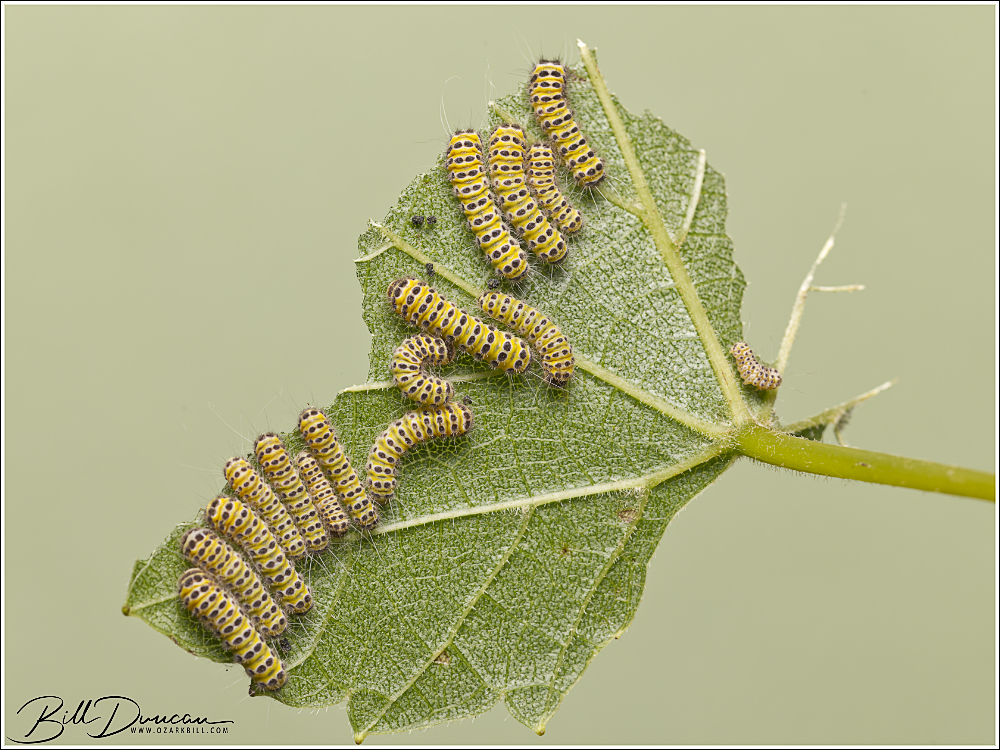
Next up is the grapeleaf skeletonizer moth (Harrisina americana) in the Family Zygaenidae. Both H. americana and the eight-spotted forester moth, pictured above can be found visiting flowers during the day. This species is gregarious and are often seen lined up side by side.

Grapeleaf Skeletonizer Moth (Harrisina americana)

2024 Caterpillar Season – Humped Oakworm

Today’s caterpillar is one of two species of Notodontid in the genus Symmerista. This is one of those frustrating cases of two species being so similar that confirming an identification is near impossible. Most of the literature suggests that the caterpillars of S. canicosta (red-humped oakworm) and S. albifrons (white-headed prominent) are indistinguishable as larvae and are so similar as adults that the only way to distinguish the two is by dissecting the genitalia. Both species are found in Missouri and both feed on the same host plants – beech, chestnut and oaks (any members of the Fagaceae). These are common and attractive cats that are gregarious in early instars but go solo when they get to this stage.

Found at Young Conservation area on 30, June, 2024.

2024 Caterpillar Season – Hackberry Emperor

For the past month or so I’ve been hitting the trails hard, trying my best to find caterpillars in the early to mid season. As expected, this has been tougher than the late season for me. My success rate in finding interesting and new species has been lower than I would like, but good thing the one strength I feel I truly possess in this life is pertinacity.

Usually by the late season cat hunts, hackberry trees (Celtis sp.) have all but dropped their leaves or look as though they should. Once I started beating branches of hackberries this summer, I found that the two species of Asterocampa (Nymphalidae) found in Missouri were quite easily found. Not only are the hackberry butterfly adults beautiful, but I find the caterpillars to be extremely cute as I hope you can agree with the photos below of the hackberry emperor (Asterocampa celtis).

Larvae of Asterocampa celtis