The forecast suggested the day in which I had been waiting for years might finally be here. Finally, the combination of snow in the big-spring country of south-eastern Missouri Ozark region, a vehicle that can move through these hilly, un-plowed roads and a day off to enjoy myself in them. I was also fortunate to have a friend who was just as excited about it as I was! I told Steve I’d pick him up from his place and we would visit Big Spring and whatever other places we desired and had the daylight to enjoy. This is the second winter season I have owned my current 4WD vehicle, but considering our winter last year, this was really the first time I’ve gotten to drive it under snow and icy conditions. It definitely lived up to my expectations. Remembering one must still drive slow and anticipate braking (as the three 4WD vehicles in the ditch that I passed demonstrated) we took our time and arrived at Big Spring State Park with a minimum of butt-clenching. It was definitely worth the drive! My photos do not begin to capture the beauty and peacefulness of our surroundings.
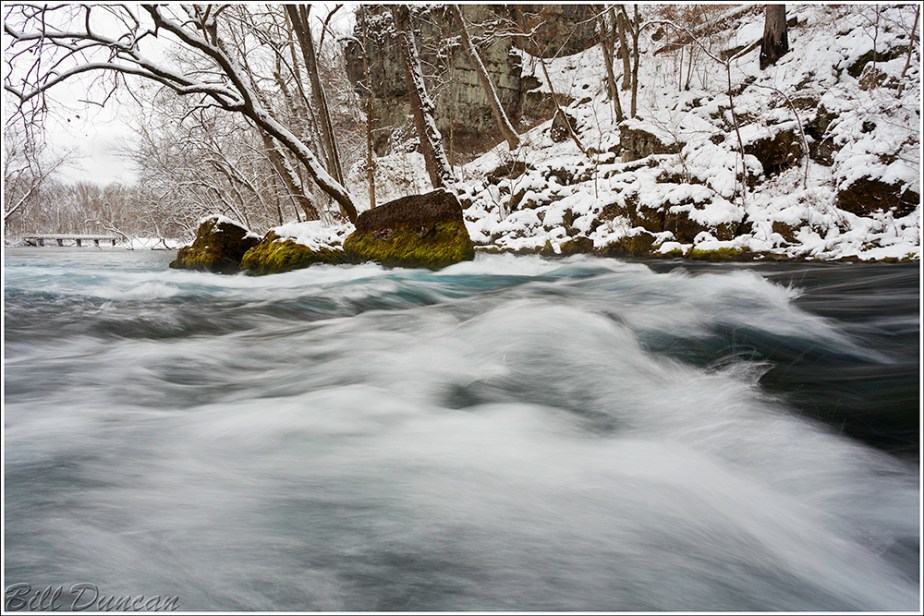
“Ozark Whitewater″
Technical details: Canon EOS 5D Mark II camera, EF17-40mm f/4L USM @ 19mm, ISO 100, f/13, 1/10 sec
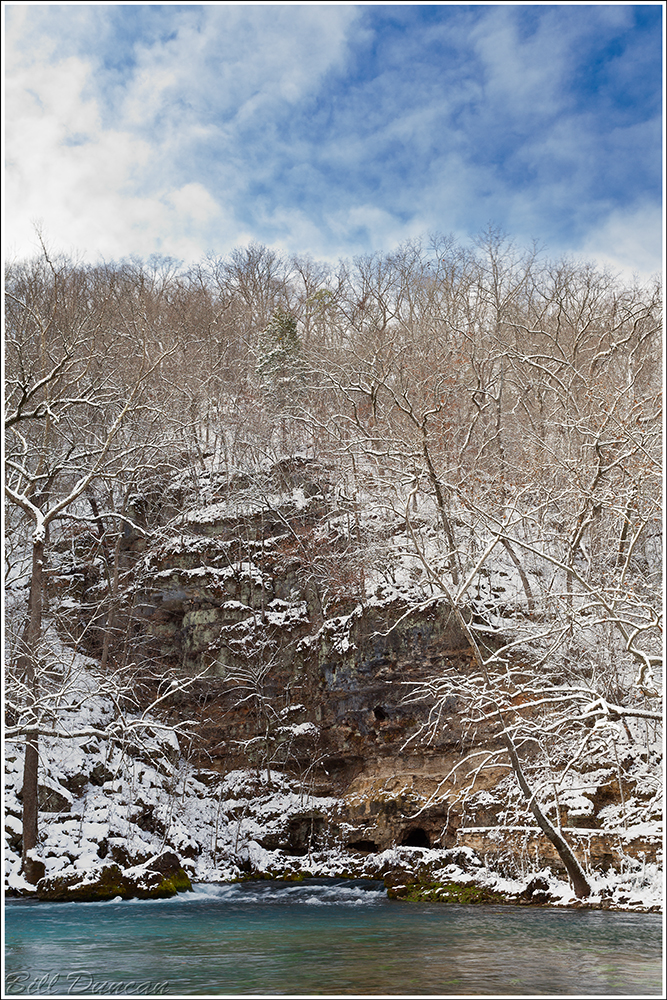
Nothing can beat a day spent during or after a snow at a place such as this. Although definitely slower and quieter during this “blue season”, life was still obvious in surrounding us. Mosses and lichen were wet and vibrant, and the bright green watercress contrasted nicely with the deep blues and sharp turquoise of the spring effluent. A first for my eyes was the conspicuous in-this-season mistletoe bunches that are evergreen and apparently still robbing their Sycamore hosts even during the “dead of winter”. I imagine I have observed these plants in the past, but assumed they were dead leaves potentially put together by a squirrel. And the birds! The birds were very abundant immediately surrounding the spring. Nothing beats being able to observe a Bald Eagle and a Belted Kingfisher simultaneously without having to turn your head. The photo below shows the geology that is not as visible in the green months.
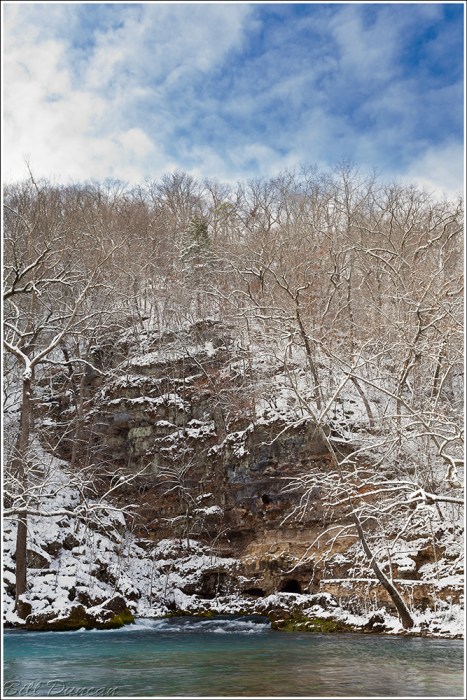
“Big Spring, Winter 2012″
Technical details: Canon EOS 5D Mark II camera, EF17-40mm f/4L USM @ 36mm, ISO 100, f/11, 1/60 sec
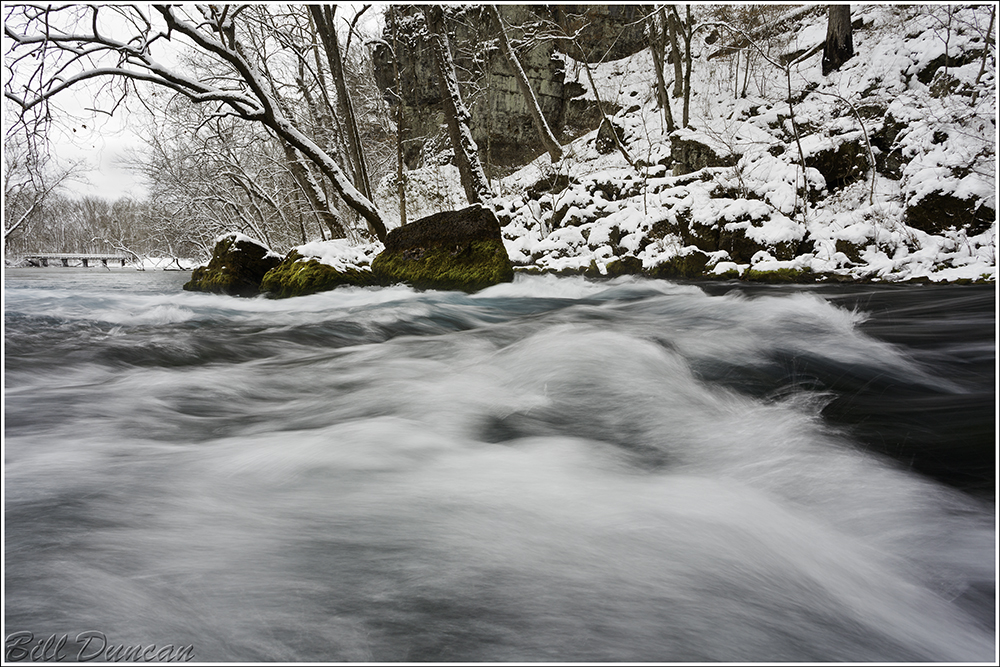
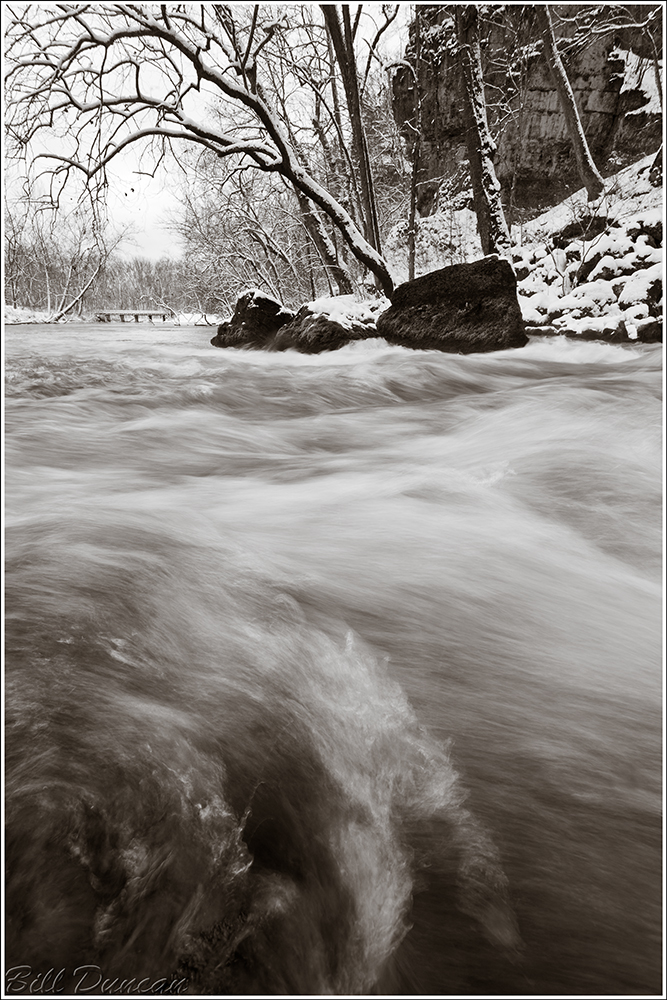
Every slight change in viewing angle resulted in noticeable changes in color of different sections of the spring’s effluent. I don’t believe I have ever seen so many shades of blue in one place at one time. I converted the image below to black and white, then toned as a “duotone” by bringing a selenium tone to the shadows. I hoped to focus attention on the textures in the water and the heights these waves reached.
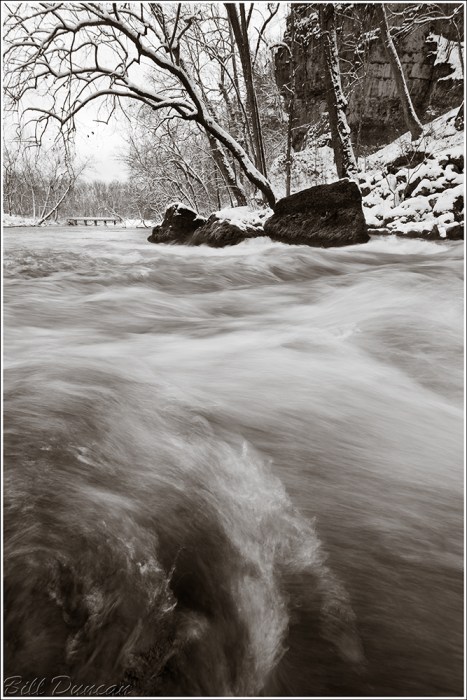
“Exhalation″
Technical details: Canon EOS 5D Mark II camera, EF17-40mm f/4L USM @ 17mm, ISO 100, f/14, 1/8 sec
After getting a satisfactory but still much too short experience at Big Spring, we left what unmarred snow was remaining and headed to the next spot I was eager to see with a cap of snow, Falling Spring.
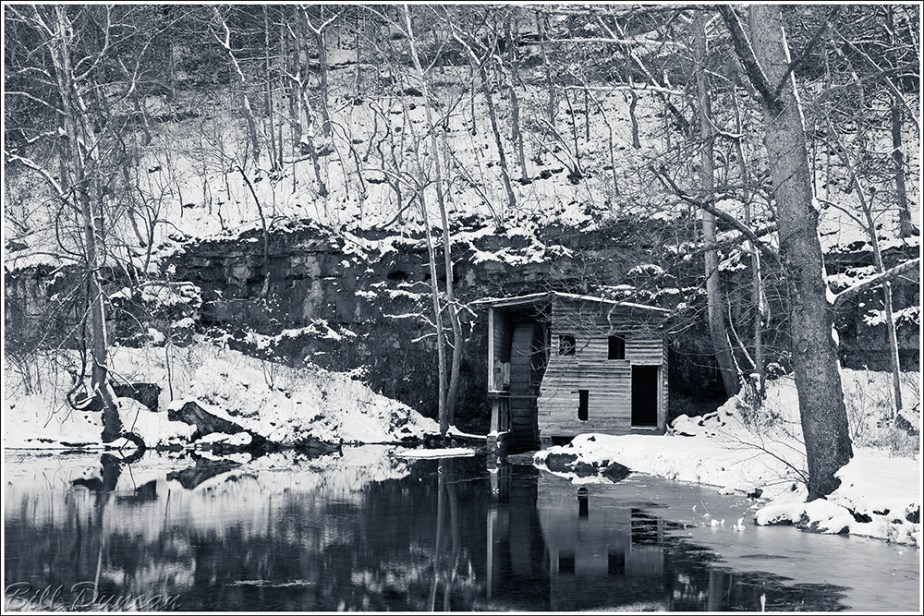
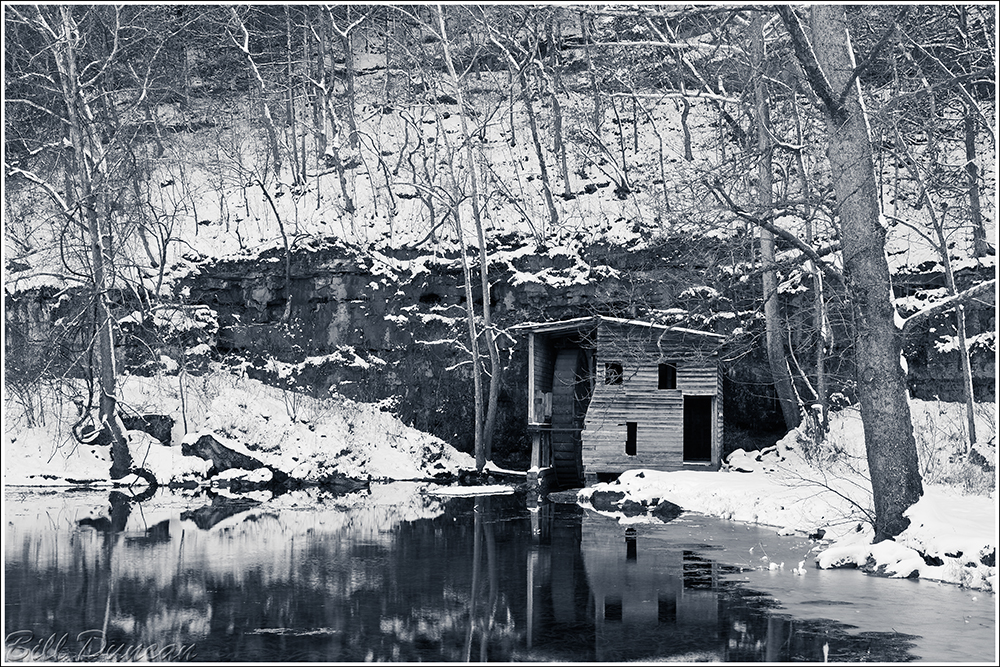
“Falling Spring Mill-house, Winter 2012″
Technical details: Canon EOS 5D Mark II camera, EF24-105mm f/4L IS USM @ 40mm, ISO 100, f/11, 0.4 sec
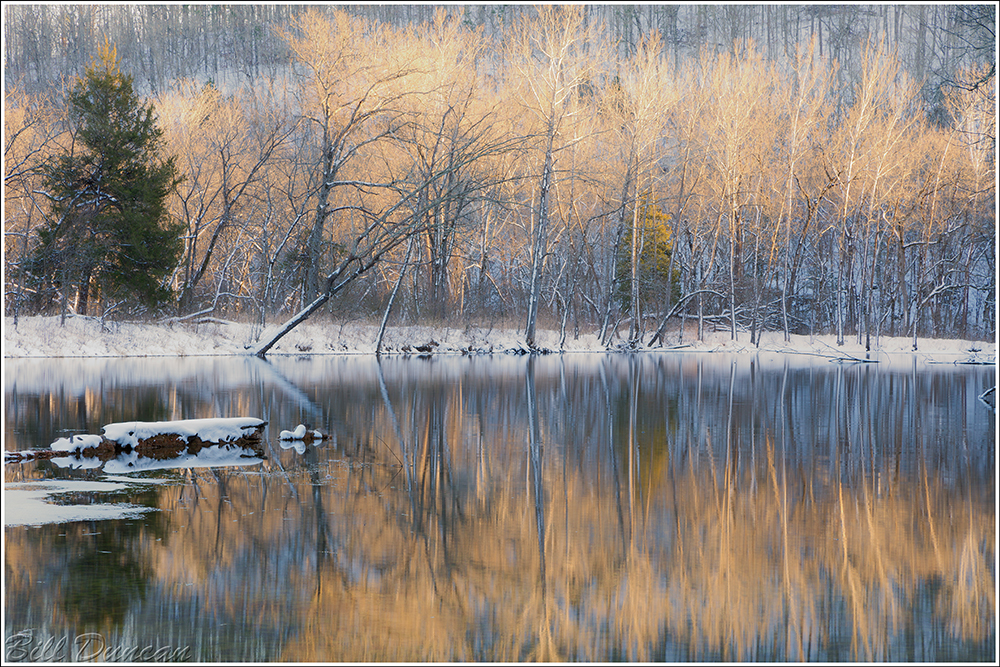
It always brightens my spirit to see that this delicate structure still stands and in relatively little disabuse. The spring’s discharge was light on this day, but the noise of the water falling the ~20 feet to the pool below was enough to drown almost every other sound. A nice point of visiting in the winter was being able to trek around the beaver pond a bit. Steve discovered the beaver den with obvious “trails” moving outward from it in the water. The picture below was taken facing away from the spring and shows the fiery warmth of the late-day sun that was cut by the height of the hill. I love the contrasts provided by the bare Sycamore branches and the reflections from the beaver pond. A stunning view indeed!
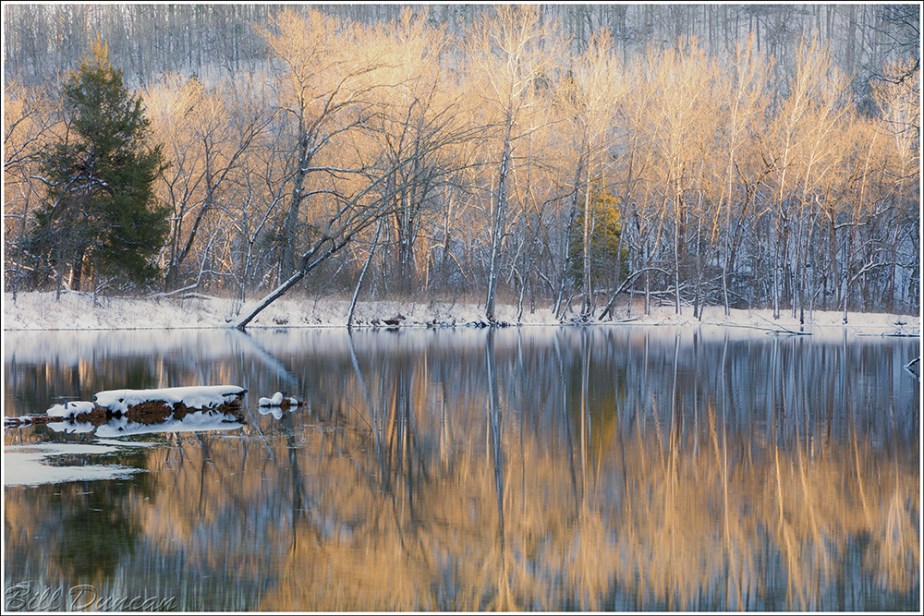
“Holding the Sun″
Technical details: Canon EOS 5D Mark II camera, EF24-105mm f/4L IS USM @ 85mm, ISO 100, f/14, 0.6 sec
Seeing what can be found on a day like this and how few people were out to make these experiences ensures that I will definitely be down here to capture more scenes like these.



 A Thousand Acres of Silphiums