I have finally got the video to a point where I can post it online. I lost a lot of quality in the process, but baby steps I guess…
"What a thousand acres of Silphiums looked like when they tickled the bellies of the buffalo is a question never again to be answered, and perhaps not even asked." -Aldo Leopold
I have finally got the video to a point where I can post it online. I lost a lot of quality in the process, but baby steps I guess…
“Take that, Monday!”
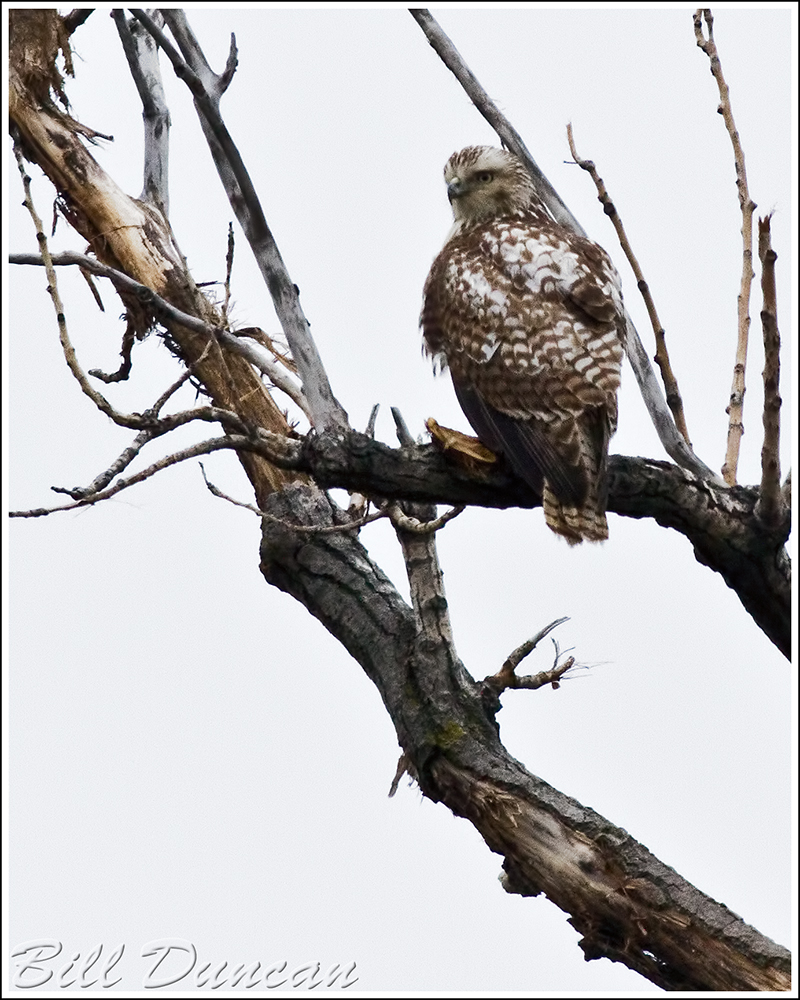
I spent the AM hours at Riverlands Migratory Bird Sanctuary and Columbia Bottom C.A. yesterday. I mostly ran into lots of the usual: waterfowl, American Kestrels, Harriers, Eagles and an assortment of Sparrows. Two birds at RMBS were a bit unusual. The first was this juvenile, “Krider’s morph” light phase Red-Tailed Hawk. I watched him at this perch for a while until one of the resident Eagles decided it was time for him to leave the tree. I looked for him the rest of the morning, both at RMBS and CBCA, but never spotted him again.
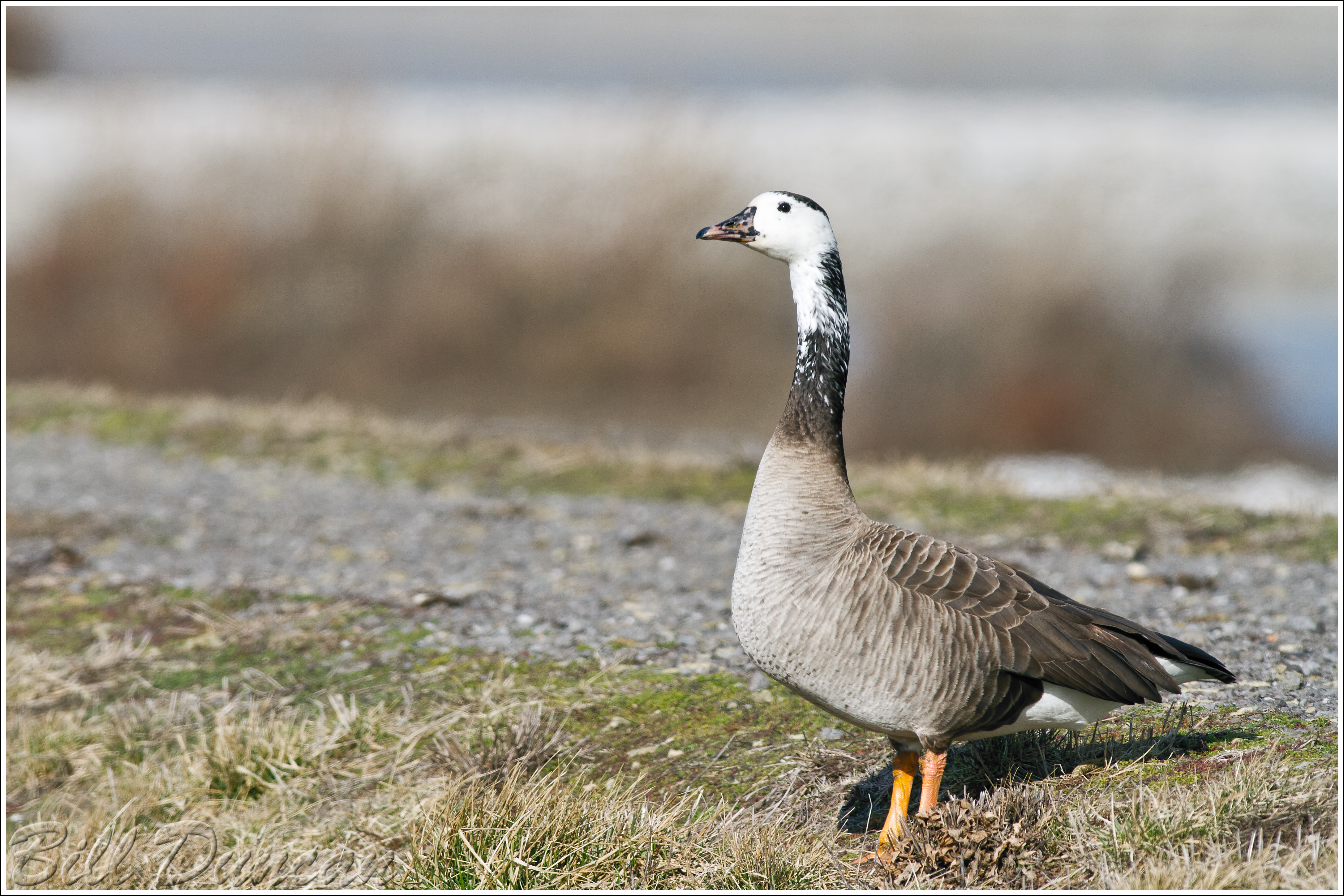
The other bird that drew my attention was this guy below. I am making no sure statements as to what this one is. It mostly reminds me of an aberrant Canada Goose, i.e. partial leucistic. However, the orange legs remind me of a Greater White-fronted Goose. Perhaps a mix of some kind? Hopefully the experts can shed some light…
On a rare Saturday off from work Sarah decided she wanted to join me in a birding trip up the Mississippi flyway following Highway 79. Lately, we have not done as many of these trips together as we once did, so this was a rare treat and I expected she would bring her typical luck and skills at finding the interesting birds. I was not mistaken. We hit the road early and made our leisurely way up north following a breakfast at Cracker Barrel. Our goals were to ultimately hit Lock and Dam 24 in Clarksville to see if there was enough ice over the river to bring the Eagles in significant numbers. What makes this trip so nice is that you rarely drive more than ten miles without having a nice place along the river to stop and look for birds and other wildlife.
Our first stop was the Winfield Dam where we looked for the American Avocet that apparently is happy to overwinter here. We did not find this bird, but were happy to watch the Northern Shoveler and American Pelican that were quite active in the nearby slough. Also unseen were the dozens of Common Snipe that were there a few weeks prior during my last trip up this way. Leaving the dam we headed back north and made mostly unproductive stops at BK Leach C.A., Clarence Cannon NWR and a few other locations. With most shallow waters frozen, not many waterfowl or marsh birds were apparent, but raptors, particularly Red-Tailed Hawk, American Kestral and Northern Harrier were abundant. We were able to watch as a coyote crossed across this “frozen waste”, amazed at the sight of him running full-speed over frozen water while not loosing a bit of speed. He was a healthy looking animal, which we love seeing on our excursions.
Arriving at Clarksville we were rather alarmed to discover that we had arrived at “Eagle Days”, meaning that finding parking and ample real estate to set up for photography near the river would not be easy. We were able to see that the eagles were not present in great numbers around the dam, so this made our decision easy to continue heading north. The drive between Clarksville and Louisiana is scenic. If you are in the area stop at the Village of the Blue Rose as a bed and breakfast or a one-stop restaurant. You will not be disappointed.
For the past several years highway 79 has ended just north of Louisiana, major rerouting/new bridge? have kept the direct route to Ted Shanks C.A. closed. We decided to give it a try and were pleased to see the road was now open. Although mostly frozen, it was nevertheless nice to finally drive through this large wetland/forest area. Other than several Bald Eagle, no birds of note were observed. I was finally able to photograph a lovely Fox Squirrel. She was satisfied sitting out in the open collecting some sun-rays on this nice winter day. However, as the shadow of an eagle literally passed on top of her, she quickly scurried into his knot-home and cautiously peaked out to see if the coast was clear.
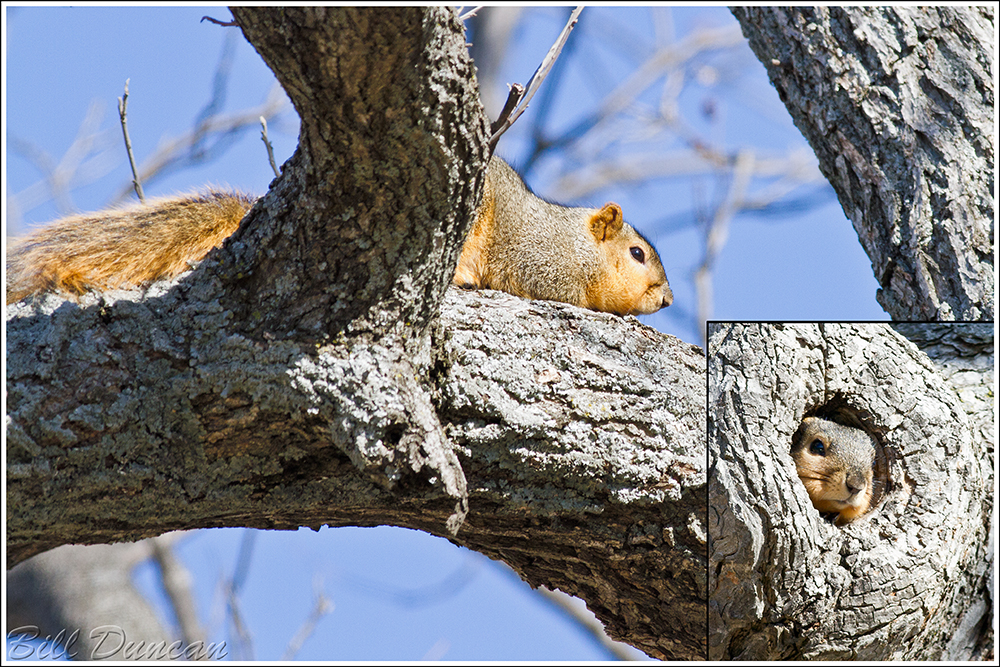 Technical details: Canon EOS 7D camera, EF500mm f/4.5L USM lens, ISO 640, f/7.1, 1/1250 sec
Leaving Ted Shanks we headed a few miles further north and turned around in the city of Hannibal. Going back towards home and snacking in the car we made similar stops. I had planned to spend the last couple hours of daylight at BK Leach C.A. and hopefully spot the Short-eared Owl that I have heard were really working the area. The problem was that BK Leach covers a lot of ground and we were not sure where the greatest likelihood for success might be for spotting them. Ultimately we decided to drive slowly through areas where the habitat seemed most to their liking: area of shrub and grass, agricultural fields – especially those that were recently left to fallow. So this is what we did and this is when the fun started. As usual I was driving a bit too fast for our situation (I’m always afraid we are missing something down the road) when Sarah yelled, “stop, what the hell is that?”. Looking out the windshield of my side I looked down and watched as a pair of Ring-necked Pheasant stared curiously back up at us. This was my first view of this exotic, naturalized species. Unfortunately, I could not get a photograph of the female, but she was every bit as beautiful as the brightly colored male, although quite different in appearance.
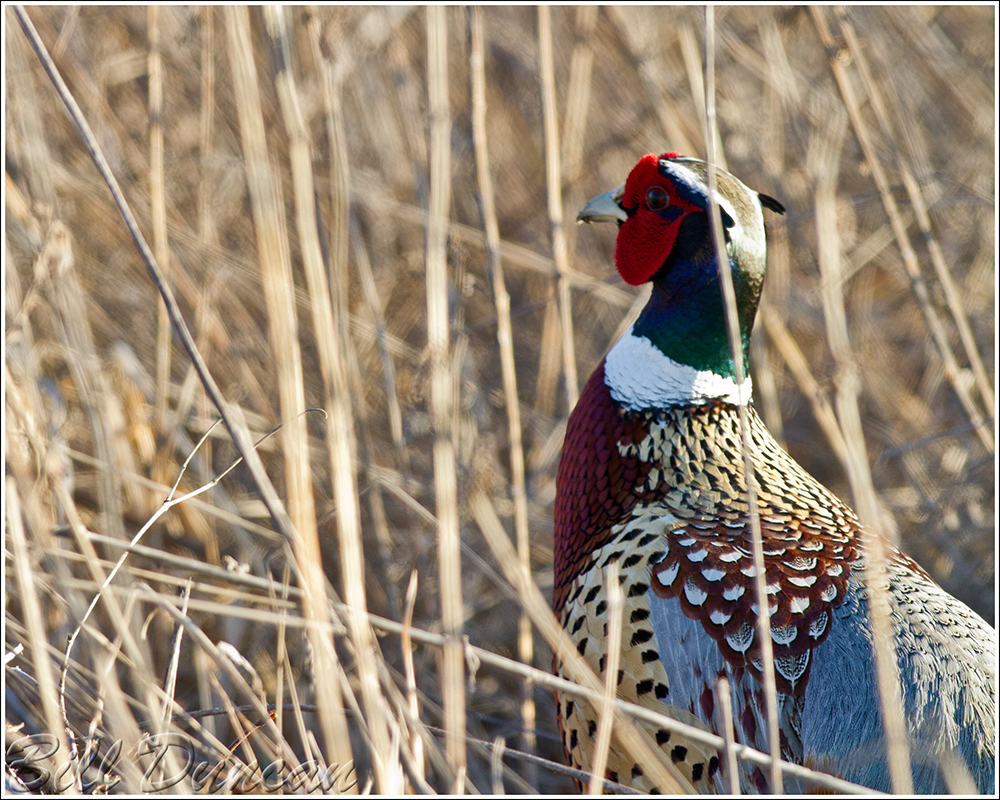
Technical details: Canon EOS 7D camera, EF500mm f/4.5L USM lens, ISO 640, f/7.1, 1/500 sec
After a few seconds in the relative open these two moved deeper into the grass until they were just barely out of sight. We could hear them clucking and vocalizing back and forth, but we decided to move on and look for the owls, knowing we could likely spot them later. Just mere minutes following our decision to move forward once again Sarah pointed down the road on the driver’s side and asked is that a bird? With unaided vision it appeared to be a jumble of dried leaves suspended a foot or two above the thick grass. As I got the binoculars on it, it turned into a SEOW! How easy was that!? We made our way slowly down the road, stopping now and then to make sure we at least got documentary photographs. This photo shows the first bird in the same position in which we found it, bathed in the glorious warm light from the late-day, winter’s sun just a few inches above the tops of the Lincoln Hills.
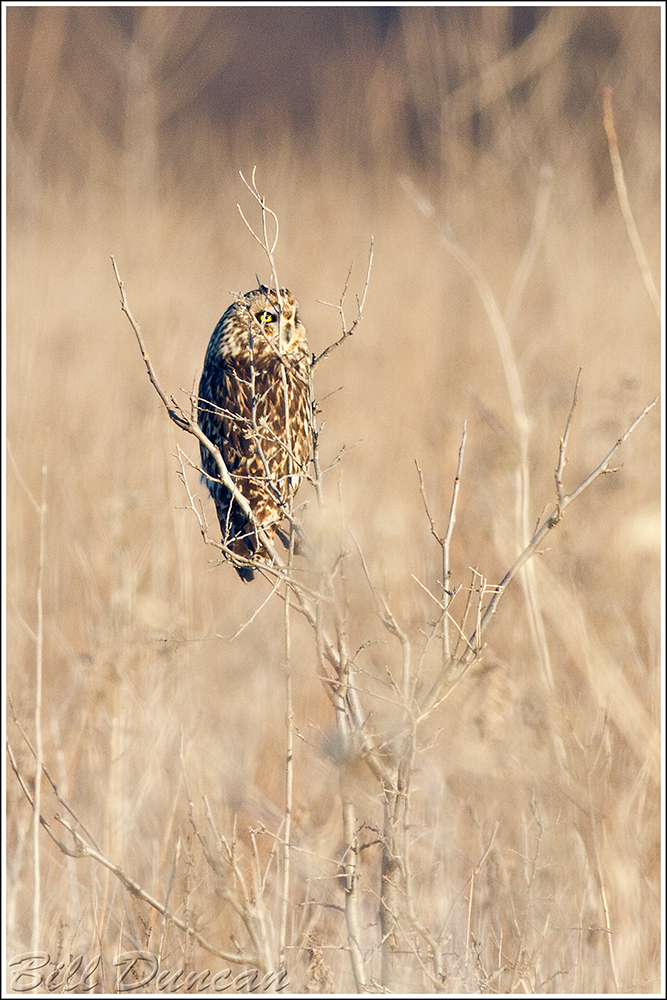
Technical details: Canon EOS 7D camera, EF500mm f/4.5L USM lens, ISO 640, f/6.3, 1/1000 sec
SEOW are reportedly the most diurnal/crepuscular species of owl to be found in Missouri. They can often be spotted hunted during the day and are usually easily observed at dawn and dusk. Shortly after this image was taken the sun was mostly covered by what little cloud cover existed. Typical. This meant that ISO would have to go up while shutter speed went down. This created the challenge of keeping the new lens steady in order to come at all close to a reasonably sharp image. It also meant trying to get closer and that auto-focus on birds in flight would be problematic at best. I also came to the conclusion that a much more stable and professional bean-bag support will be needed to shoot from the vehicle’s window.
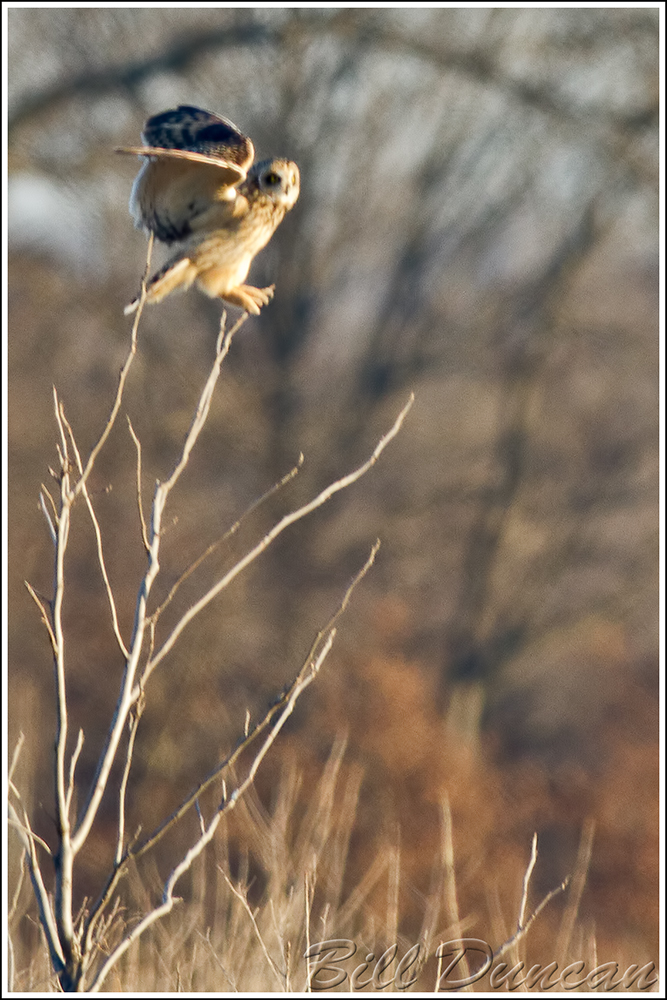
Technical details: Canon EOS 7D camera, EF500mm f/4.5L USM lens, ISO 640, f/6.3, 1/500 sec
The photo above shows the characteristic feather-covered legs and feet of these birds. SEOW are also well known for their style of flight; they slowly and methodically beat their wings in a rhythm and pattern quite reminiscent of moths. Previous to this day, my one experience with this species was watching a far-off silhouette flying in this manner as the last light of the day ended. This day was definitely more satisfying.
Technical details: Canon EOS 7D camera, EF500mm f/4.5L USM lens, ISO 800, f/6.3, 1/500 sec
Not long after seeing the first owl we began to see giant moths silently gliding across the landscape. They would land for several minutes on a perch, often signs placed along the road, and then take to wing. Once Sarah and I watched as one tried for a pray item, but came up empty-taloned. They were not the only predators in the area. Northern Harrier, aka “Marsh Hawk” are the daytime counterpart of the SEOW. They both fill the same basic niche, gliding low and silent over the terrain, listening for the sounds of rustling rodents. In fact, because they so often come into contact with one another, squabbles and violence sometimes occurs. NOHA are known for stealing food from the owls and sometimes even killing and eating them. The image below shows a Harrier in flight. These guys are one of my nemesis birds. Keenly aware of their surroundings, they have a knack for staying far enough away to avoid being able to get the perfect photograph.
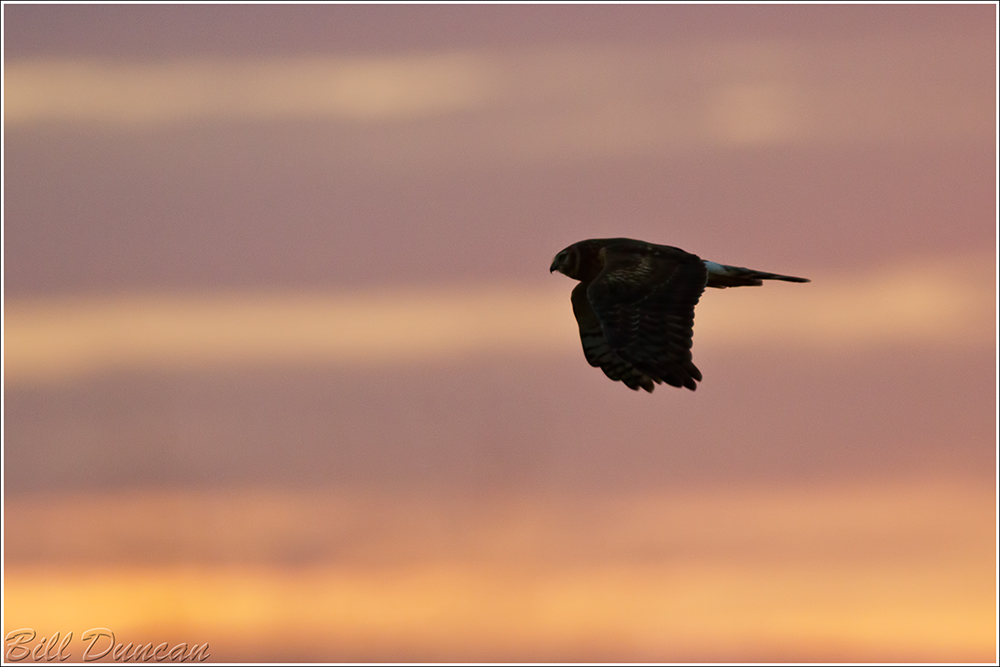
Technical details: Canon EOS 7D camera, EF500mm f/4.5L USM lens, ISO 1600, f/5, 1/640 sec
I could not believe how active these birds were. How dynamic the scene presented. Oh, if the last hour of the sun were allow to shine and not be covered by the clouds and hills! We counted at least six SEOW and probably as many NOHA within sight of our vehicle. The SEOW not only have to keep an eye out for the Marsh Hawk, but each other. We saw constant apparent aggressive behavior among up to three birds in flight at a time. For several minutes, we watched and photographed the bird pictured below against the Lincoln Hills. The bird’s head rarely stopped moving as it scanned and watched all the flying raptors surrounding it. No wonder they were using anything as a possible perch!
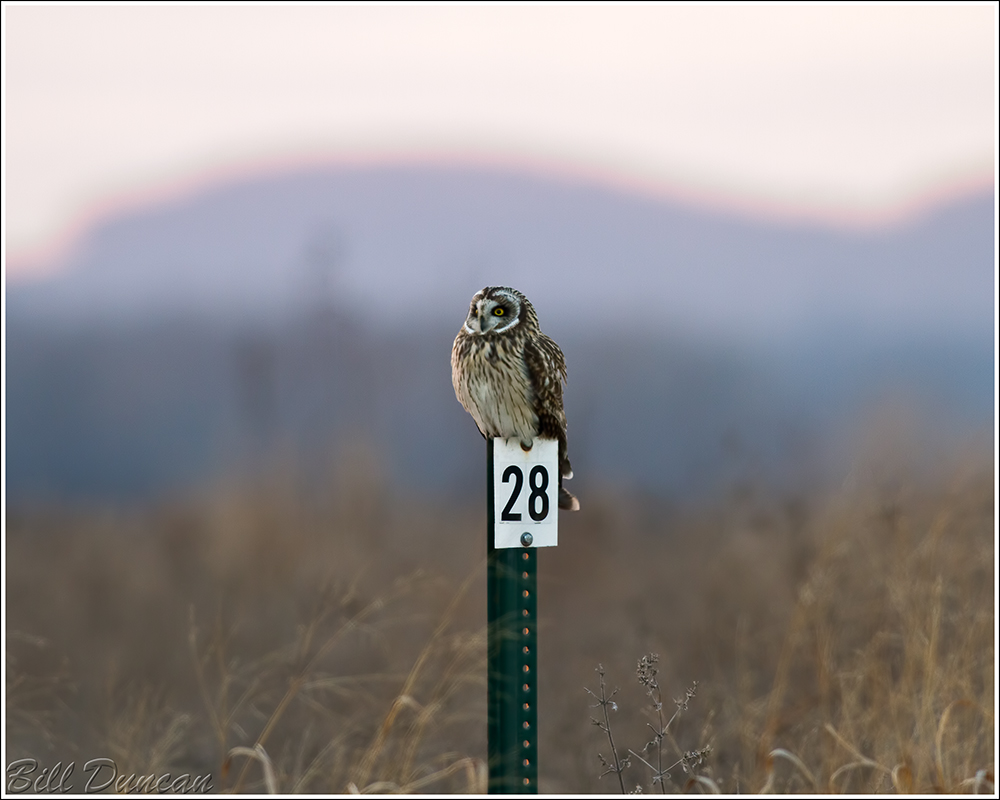
Technical details: Canon EOS 7D camera, EF500mm f/4.5L USM lens, ISO 1000, f/5, 1/160 sec
A question of ethics. Wildlife photographers have a reputation, often deservedly, of using questionable practices in getting their images. This has been a growing concern of mine lately. I by no means consider myself perfect in this regard, and I realize that some of my activities could be seen as unethical by others. I do, however, feel there is a line of continuum in certain practices used by photographers, or other nature observers. For instance, using flash photography on owls is seen by the majority of wildlife photographers to be off limits, but some will use fill-flash to capture images of diurnal birds. I have dabbled with this in the past and in my opinion the use of flash has a definite effect on their behavior a significant amount of time. Therefore, I will not use artificial lighting to capture wildlife. Similarly, most, but unfortunately, not all photographers consider the use of live bait to attract raptors as taboo. But, we will use fruit and seed to attract species that feed on such.
I bring this up because of something Sarah and I observed last night. I am somewhat embarrassed that I had never heard or read about this technique. When Sarah and I stopped to watch and shoot the first couple of owls, we saw that ~0.5 miles or so down the road was a car that appeared to be on an owl that was on a perch no more than 30″ from the car! We were jealous, but being very eager not to disturb the bird or the photographer we made sure to stay far away. Twenty minutes later we realize the bird had not moved once off its perch. What luck we thought! Even with sometimes two other owls buzzing by it time and again, the owl stayed put. We finally inched close enough to realize the owl was indeed a pretty well done decoy and the photographer was outside the car sitting against it shooting the owls as they strafed by the perched fake.
I had to do some internet searching to finally figure out what was going on. Now I do feel guilty about sometimes causing a perched bird to flush as I inch closer, but this bird was perched inches from a road. These roads do have traffic from hunters and general wildlife watchers and are constantly being exposed to vehicles when they perch near the road like this. I will also use some voice playback, as minimal as possible, and phishing to attract birds closer for a picture. I am not quite certain about this practice of decoys, but it does taste of going past that invisible ethical line to me. Is it as bad as using live bait to attract an owl or other raptor, or getting within 10 feet of a Barn Owl and using flash to get a photo? Probably not. I plan on asking some veteran and respected birders and photographers what they think. Please let me know your opinion. On a further note, when driving by this guy who was using the decoy, for some reason he gave us the stink-eye. I’m not sure what that was about, maybe he thought we were taking advantage of his hard work?
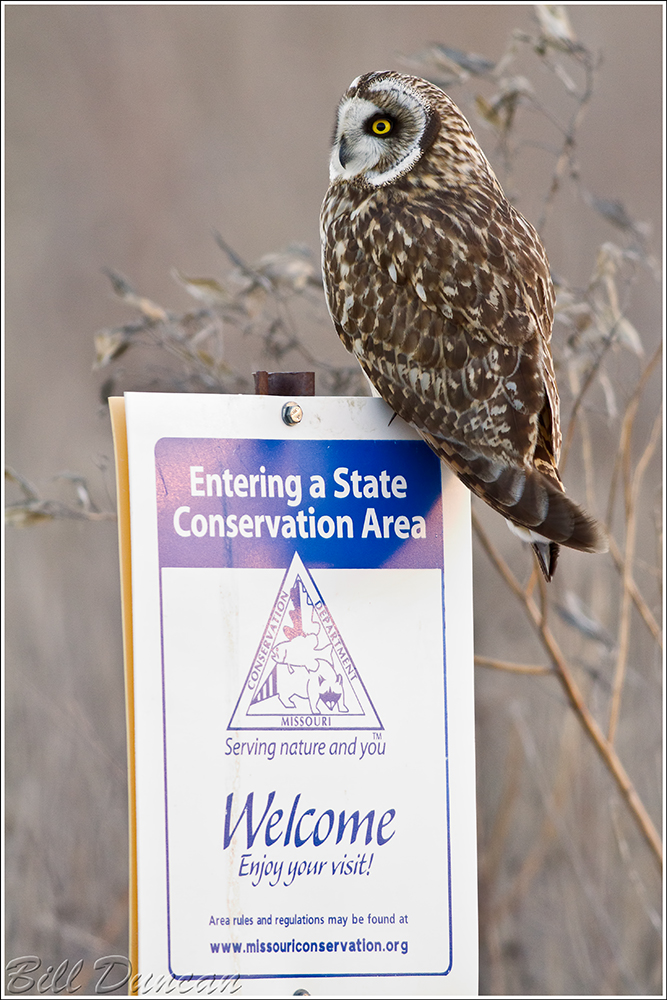
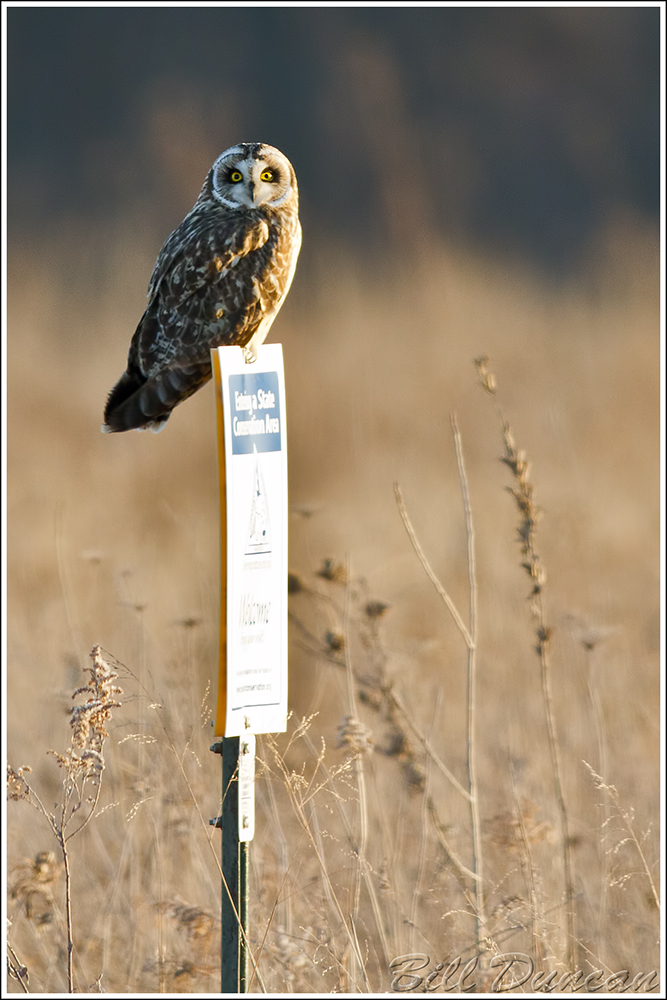
Technical details: Canon EOS 7D camera, EF500mm f/4.5L USM lens, ISO 1000, f/5, 1/250 sec
In my humble opinion the photo of a SEOW perched on a sign or post has become a bit cliche’, but this is still probably my favorite image from the day. Any time you can watch a bird like this so close, to see that detail and be able to capture it with your camera is very special. I think this photo depicts how special these Conservation Areas are for providing the necessary habitat that these species needs.
This photo will also always remind me of a particularly memorable moment. This image was taken at near 5:00, well past lunch and damn-near dinner time. Now, I am perfectly used to eating fruits and nuts for most of the day, you know, “hippie food”, and then having a hearty dinner. Well Sarah’s stomach was definitely not made aware of this and just when we were closer to one of these owls than at any other time, her stomach decided to stage a vocal protest. It was loud and it was continuous! I was becoming legitimately concerned it might disturb this beautiful animal! So she and I of course started chuckling. The more we tried to stop, the worse it came. Thankfully, I don’t think the bird took any more notice than before.
So ended a fantastic day. The sun setting behind the Lincoln Hills lit up the clouds in a dramatic, fiery sky. We did not try to find a spot to make a sunset shot, but preferred to watch as we slowly drove away from the owls and harriers as they went about their living in the Mississippi flood plain.
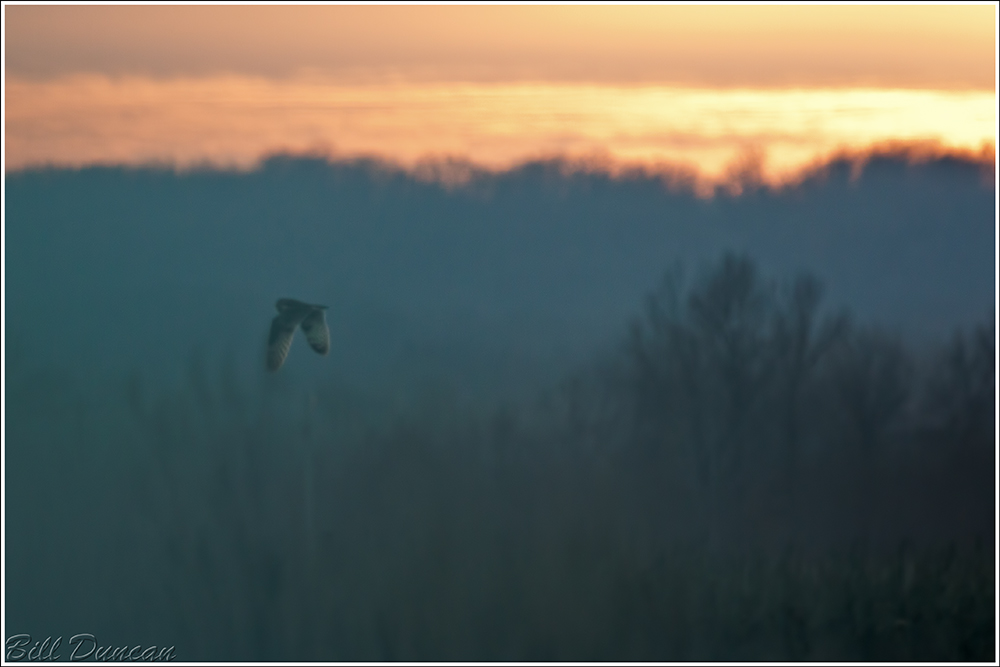
Technical details: Canon EOS 7D camera, EF500mm f/4.5L USM lens, ISO 1000, f/5, 1/640 sec
With forecasted highs near 60F, there was no question what I would be doing this past Saturday. The only problem was where to take a hike! Being mid-January and a warm, sunny day, I knew that Lower Rock Creek would not disappoint. As expected, the Ozark Witch Hazel was in full bloom and beautifully fragrant. The sky was completely clear and the lighting harsh for much photography of the many water features the area has to offer, but of course I had to try. Ultimately I just tried to enjoy the hike and experience the wilderness that life continually rips from my fingertips. There were a good number of ice formations still left on north-facing canyon walls and this particular patch was beginning to melt, releasing its maker into a mirror-like pool that ultimately fell down this drop and married with the rest of the stream. I looked for ways to get closer to these formations but could not find a safe passage.
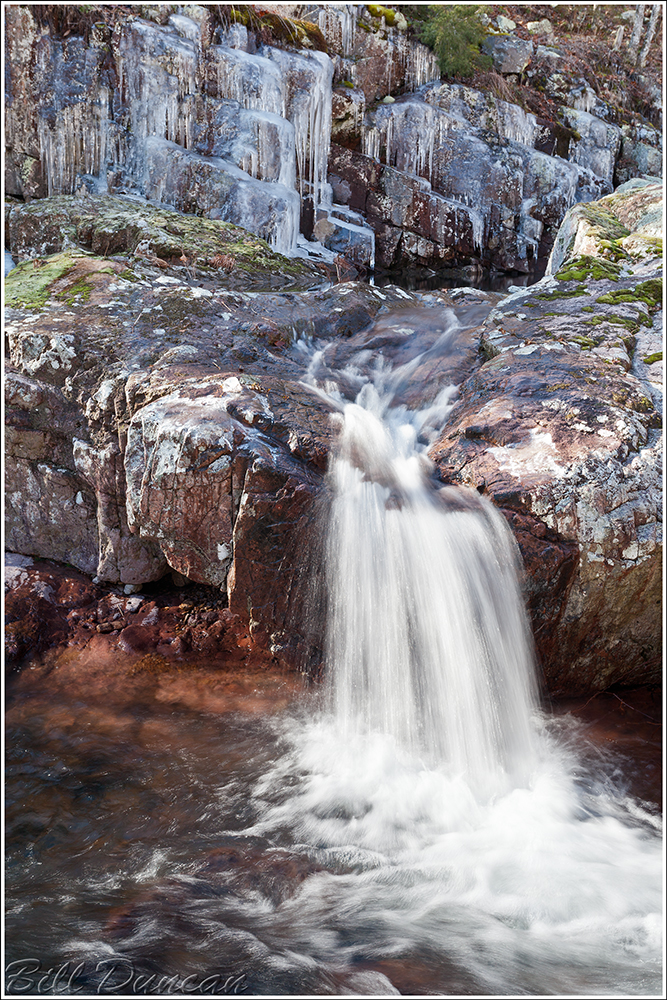
Technical details: Canon EOS 5D Mark II camera, EF17-40mm f/4L USM @ 40mm, ISO 200, f/11, manual blend of two exposures
On the way upstream, I stayed off the trail as much as possible; I preferred following the creek bed although wet and icy rocks often made this a challenge. A couple of times near bends I was forced to go up and over a ridge because of lack of good foot or handholds above the creek. After about three hours of rock hopping with my 30lb pack, fatigue started to creep in and I twisted my ankle bad enough to cause a minor sprain/strain. This was very close to this wonderful swimming hole, so I pulled my boot and sock off and dunked my foot into this spring-fed water… for about 30 seconds.

Technical details: Canon EOS 5D Mark II camera, EF17-40mm f/4L USM @ 25mm, ISO 100, f/11, manual blend of two exposures
On the way back downstream I followed the trail most of the way, shedding layers as the temperature rose over 5oF. Along the route I was fortunate to spot a coupling couple of Eastern Garter Snakes. These light-bodied snakes, much like grasshoppers and Morning Cloak Butterflies, will often wake up and see what’s happening on a warm winter day. And usually, the males have something other than food in mind. As can be seen in this image, the female was about two thirds larger than her mate. Following a successful copulation, the female can store sperm until closer to the warmer months, and many snake species can and do copulate several times and will actively select sperm of her choosing. I tried my best not to disturb this pair too much. They were rather laid back and didn’t seem to be alarmed, even when I lowered the diffuser mere inches from them. When I left the male was still busily making his intentions known, while she kept her eye and tongue focused in my direction.

Technical details: Canon EOS 5D Mark II camera, EF100mm f/2.8L Macro IS USM, ISO 400, f/11, 1/40 sec
After having some lunch at the car I tried my best at finding the John James Audubon Trail that I have been wanting to visit for a while. After some fruitless searching I was unable to find a single trail-head, placard, sign or blaze marker that I was confident in. Unless I hear otherwise I will consider this a defunct trail. So I decided to visit the Castor River Shut-ins and spend the remainder of the daylight hopping around on even more rocks. The lighting was still rather poor and I had little inspiration for finding a composition so I experimented a bit, focusing on the effect of minute changes in exposure time on capturing the movement of flowing waters.
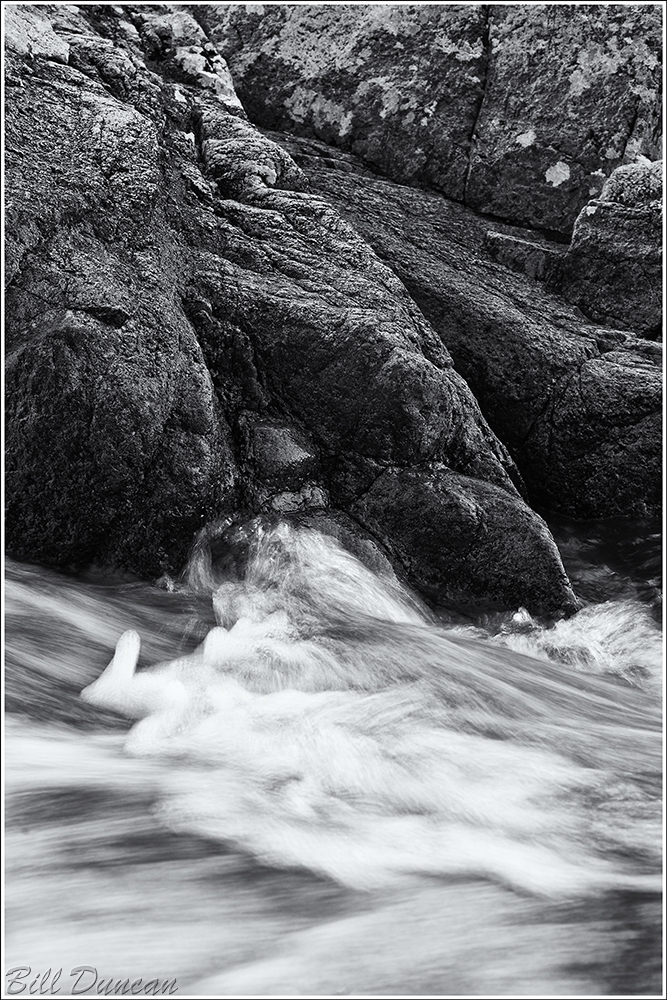
Technical details: Canon EOS 5D Mark II camera, EF24-105mm f/4L IS USM @ 60mm, ISO 320, f/7.1, 1/13 sec

Technical details: Canon EOS 5D Mark II camera, EF24-105mm f/4L IS USM @ 80mm, ISO 400, f/6.3, 1/40 sec
“It is a century now since Darwin gave us the first glimpse of the origin of species. We know now what was unknown to all the preceding caravan of generations: that men are only fellow-voyagers with other creatures in the odyssey of evolution. This new knowledge should have given us, by this time, a sense of kinship with fellow-creatures; a wish to live and let live; a sense of wonder over the magnitude and duration of the biotic enterprise.”
-Aldo Leopold-
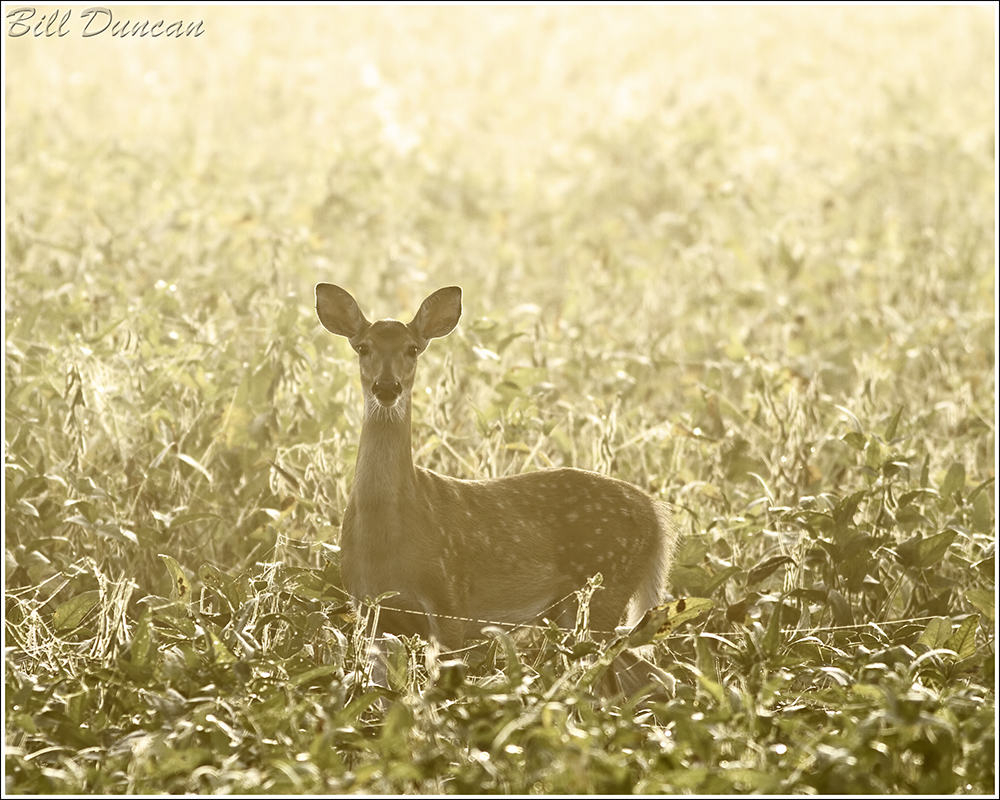
“Fellow Voyagers”
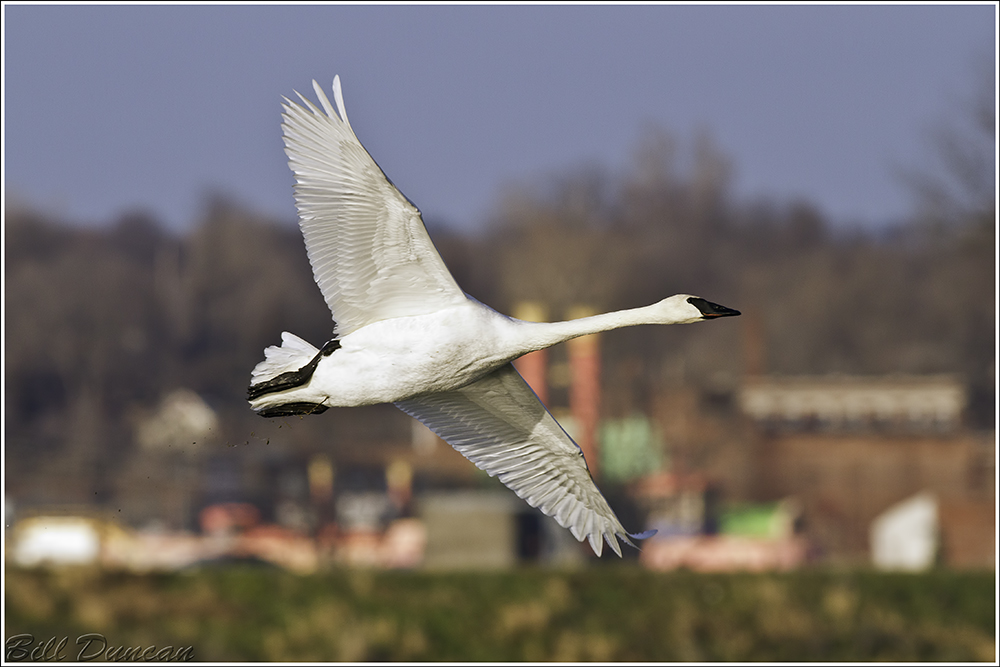
I don’t have much to say today, I just thought I’d share a few random Trumpeter images taken recently. My best wishes to anyone paying a visit during the holidays.

“Flyby”

“Beating Traffic”
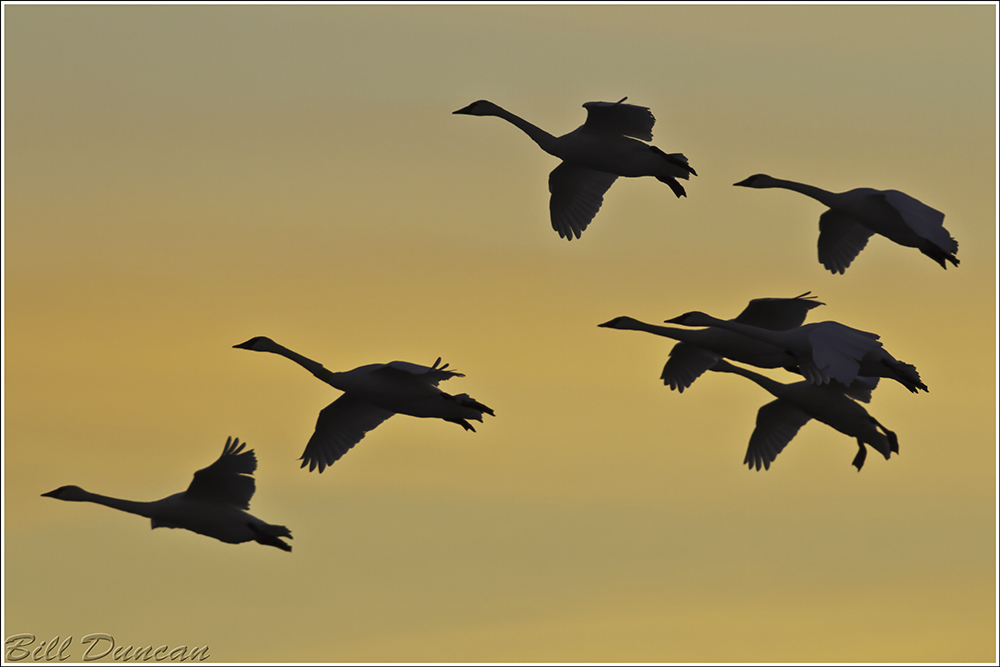
“Warm Friends”
No, I’m not talking Yankees or those pesky French-Canadians. The invaders I’m speaking about are rare northern birds that are moving further south than usual, including the Ozarks. I’ve been having some fun trying to find these rarities, and some of these we can’t even call rare this winter. During the past month Missouri has had multiple reports of sightings of at least these birds: Common Redpoll, Pine Siskin, Red-breasted Nuthatch, Red Crossbill, White-winged Crossbill and Northern Shrike. I have been able to photograph all these with the exception of the WWCB and CORE, but it looks as though I may have ample time to find these species yet.
In the five or six years I have been bird watching I can count on one hand how many times I’ve been able to see a Red-breasted Nuthatch. In the past month or two I’ve literally been able to spot more than 100 of these birds. It has been fun training my ear to discern the differences between the nasal call notes of the WBNH and the more nasal notes of the RBNH. From what I’ve heard and read the irruption southward of this species happens periodically every few years or so.
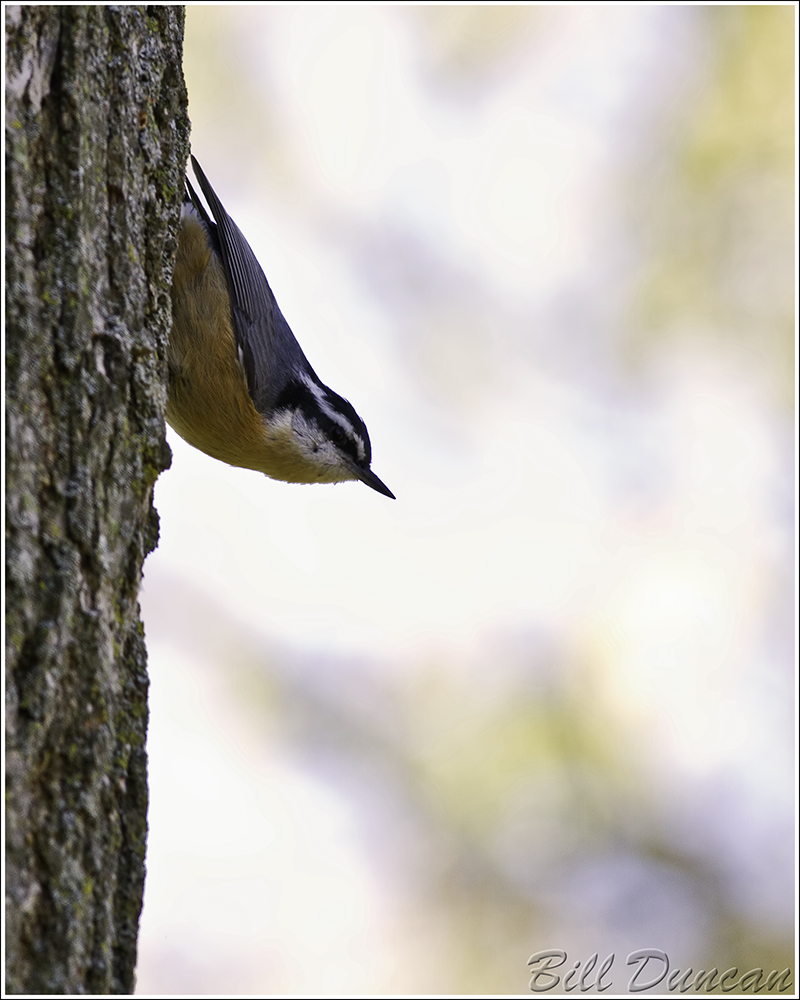
“Red-breasted Nuthatch”
Pine Siskins can also be found over most of Missouri right now. Almost always found in flocks ranging from six to thirty or more birds, these guys typically prefer to forage at the top of branches of seed-bearing trees, like this hemlock. Similar to the RBNH, this species is well known to have irruption years where they plunge southward in great numbers.
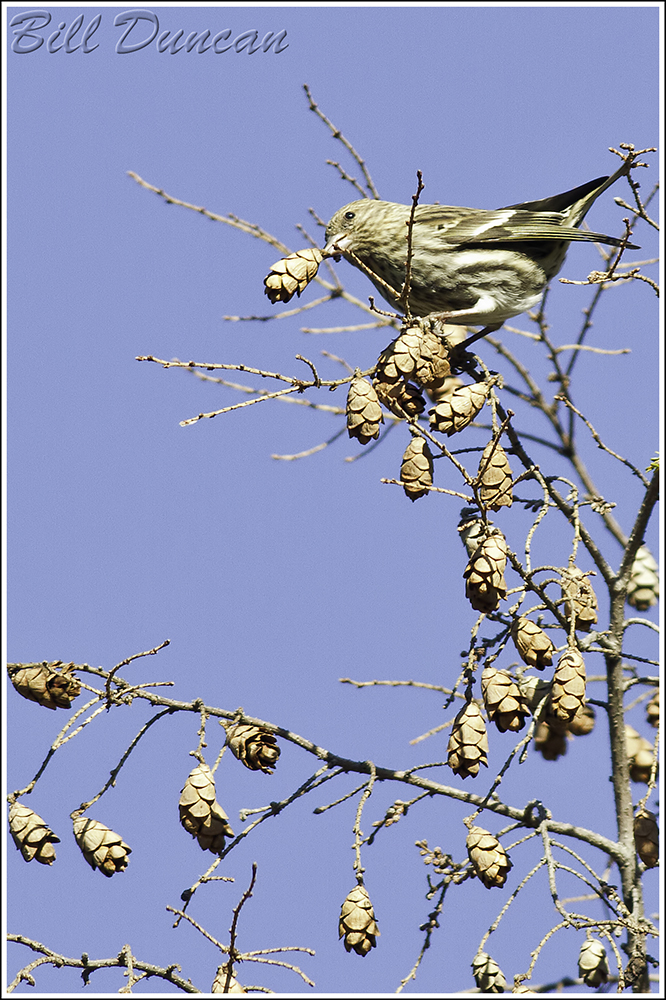
“Pine Siskin”
Not only was this the first photograph of a Red Crossbill I was able to get, but it was a lifer for me as well. This was definitely an unexpected and exciting development in the StL area this year. These guys are feeding mainly on Hemlocks and Sweetgums in selected parks where these trees are found around the metropolitan area. You can just make out the characteristic crossed-bills in this photo, apparent adaptations for better removing seeds from the cones of tree species like hemlocks. Like I mentioned earlier, I have yet to photograph the WWCR, but I did get to see one lone individual briefly.
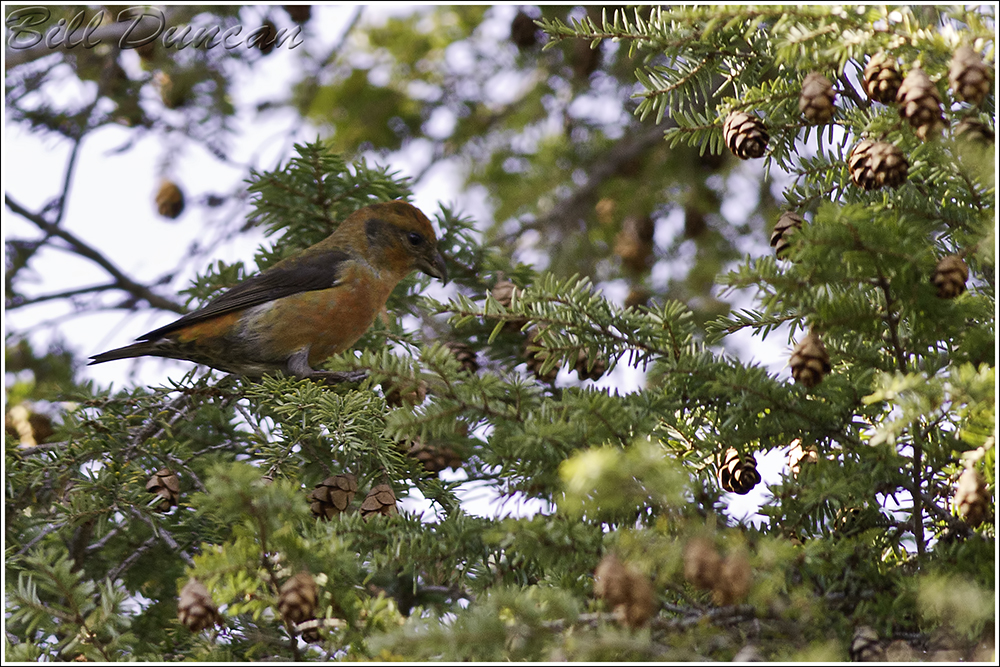
“Red Crossbill”
The next and final bird in this post is one of those special and unusual species for my tenure as a birder. The Northern Shrike is apparently much more uncommon in Missouri than the Loggerhead Shrike. I believe this is the forth NOSH I have seen and I have yet to see a LOSH. It seems that the NOSH might find something it likes around the StL area, where they seem to have been spotted more frequently. For any “non-birder” reading this, if you do not know about the Shrikes, look them up now. These birds are too cool for school and I love watching them. Check out this interesting link for more information.
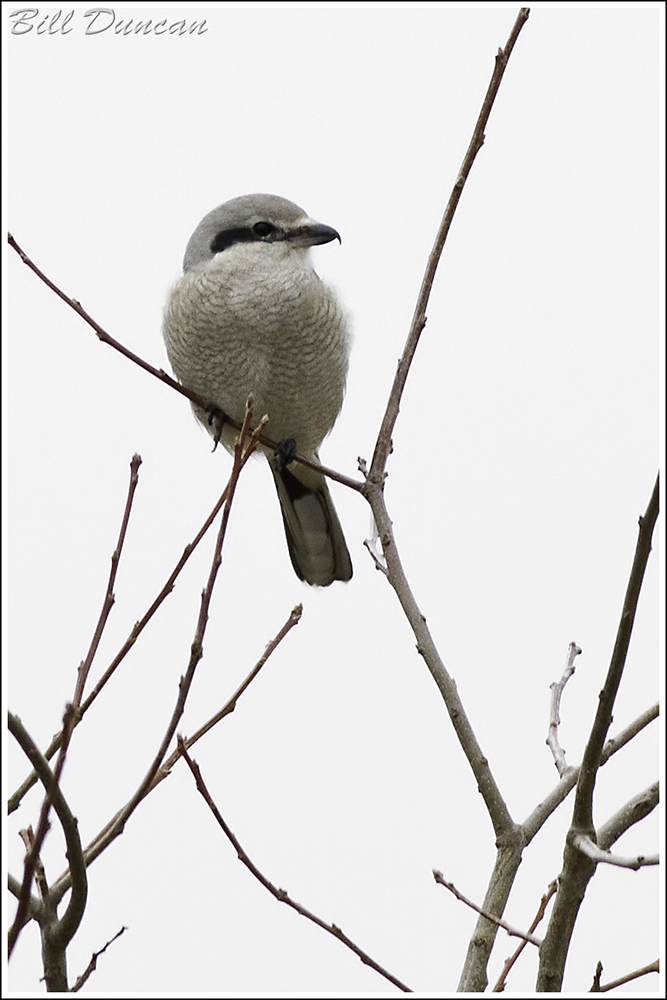
“Northern Shrike”
During my hunt through the fields of this nice little park, located in the western outskirts of the StL metro area, I was stoked to be able to find three short honey-locust trees that this bird was using as food caches. There are several reasons proposed for the uses of these caches, including use as a food reserve, territory marking and attracting mates. All three of these ideas sound like they could be plausible. These birds will use barbed-wire to do this as well, and sometimes small vertebrates such as lizards, small rodents and even smaller song birds can be found stuck on thornes. Not only was I pleased to find these cache’s, but I am really excited about bringing my love for all things Lionel Ritchie, by using this photo’s title… ;=)
“…Yes I’m on my way, I’m mighty glad you stayed…”

The Snow Goose ranks right up there with the warblers, in my opinion, in a peculiar sector of the natural world that lie conspicuously under the noses of the vast majority of our neighbors who have no idea they even exist. Take one of your friends outside for a spring-migratory birding experience. Explain to them that the population of the bird we call Snow Geese stands at more than five million and that the majority of these birds travel twice a year through the Mississippi River Flyway Migratory Corridor, which ranges from eastern Nebraska and Kansas to Eastern Illinois. In February and March, find a nice open piece of high land within 50 or so miles of either side of the Mississippi River and let them watch with binoculars or scope as groups of birds ranging from 50 to 5000 birds or more travel back to Canada for their nesting season. Similarly to the beautifully colored and tiny wood warblers who travel through Missouri northward bound mainly during the months of April and May, your friend or neighbor will most likely tell you that they had no idea these beings even existed, much less spent some time in the trees or skies right outside their own front doors.
The Snow Goose population may actually be a harbinger of things to come for the human species. Low numbers of traditional predators combined with the fact that these birds are both extremely difficult to hunt (compared to other water fowl) and are not a source of desirable meat are resulting in this species’ increasing population to a critical mass. These birds taste for a particular diet in their nesting grounds and as stated above, low levels of predation, are pushing this species very close to a population crash. Current research is showing that Snow Geese are currently experiencing increased levels of starvation and disease incidence.
In my opinion, this could be analogous to the human population’s pace of continued growth with too little concern for population control and resource management. As long as political “leaders” focus the majority of their efforts on up to the minute economic concerns, rather than the long-term prosperity of our planet and the resources of the commons, we will continue towards a similar state.
The Great Rivers Confluence is the area where North America’s two largest rivers, the Missouri and the Mississippi, meet together and flow as the Mississippi. This confluence is just north of St. Louis, Missouri and provides many opportunities for birds along the Mississippi migratory flyway to find the habitat they need. These areas provide great opportunities for bird-watchers, hunters, and other outdoors types and go by names such as Riverlands Migratory Bird Sanctuary, Jones Confluence State Park, Columbia Bottom Conservation Area, Marais Temps Clair CA, and a handful of other public properties that have been given mandates based on conserving the basic habitat that wild birds and our other wildlife kin rely upon for their existence.
I have been bird watching in this region for about five years and taking bird photographs here for the last two or three. In this post, I will be showcasing six of my favorite images I have made at Riverlands MBS and Confluence SP. I will feature another group taken at Columbia Bottom CA, which sets on the south side of the Missouri River at another time.

The bird pictured above is an Osprey, also known as the Fish Hawk and is one of several species of conservation concern that benefit from the types of refuge that Riverlands and the other preserved and well-managed habitats in the confluence region provide. These birds feed almost exclusively on fish so it is of no surprise that these birds utilize the Mississippi River and surrounding waterways during their migration for their supper. These birds will use man-made structures, such as telephone poles to build their nests. At RMBS you can find special structures designed for this specific purpose. To my knowledge, these structures have not been used but the birds have nested in trees nearby for the past several years.
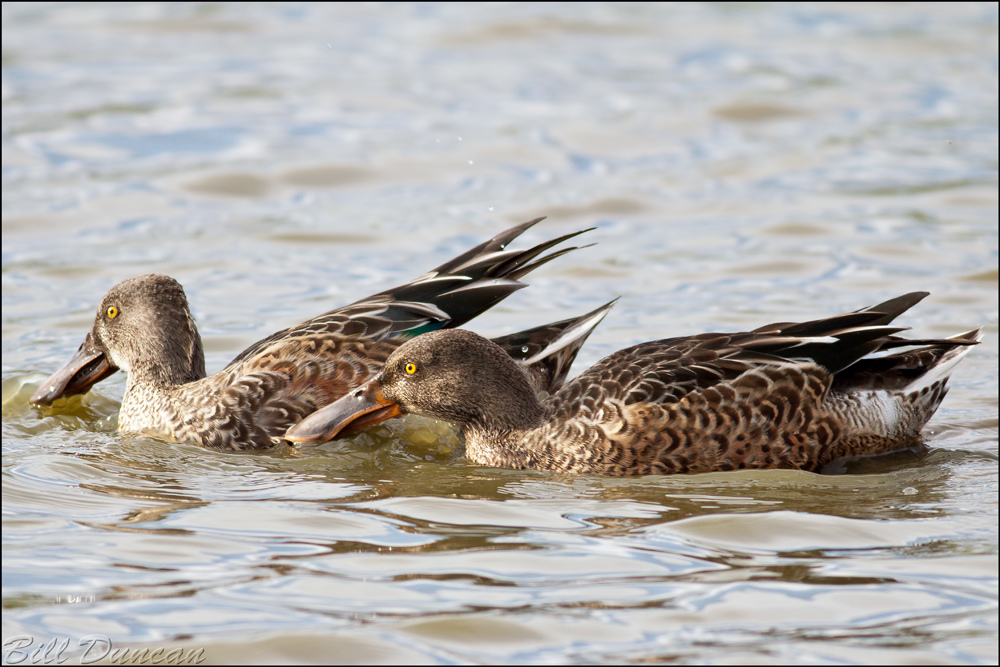
Probably the best known group of birds that rely on the habitat of the confluence region are the waterfowl. In this day and age, hunting has been one of the bright spots in conservation and management of the types of habitat that ducks and swans rely on during migration. Without hunters and the money they spend we probably would have lost much more land to development along the Mississippi flyway than we have. The number of waterfowl hunters has decreased over the past few decades, while the number of bird-watchers, nature photographers and other conservation-minded types has increased. This is somewhat ironical because organizations that have relied on funds generated from hunting to purchase, protect and manage wetlands are now experiencing budget shortages. Bird-watching, photography and hiking do not, naturally put money back into the system. If a new method of fundraising is not found, we may be facing a crisis in the management and protection of these wetlands and the chance to procure new properties for this purpose. An obvious solution would be for private donations to be given by anyone interested in the protection of these habitats. Anyone can purchase Duck Stamps, which monies go into managing habitats in which migratory waterfowl rely.

Other groups of birds, the waders, shorebirds, songbirds and others also rely on the habitat found at Riverlands. This Yellow-crowned Knight Heron, for instance, is a species that is seldomly found here. One early August morning I came across a group of these juveniles who were making their way south through the Mississippi flyway together. As you can see, their colors and patterns make them difficult to spot in almost any natural habitat.
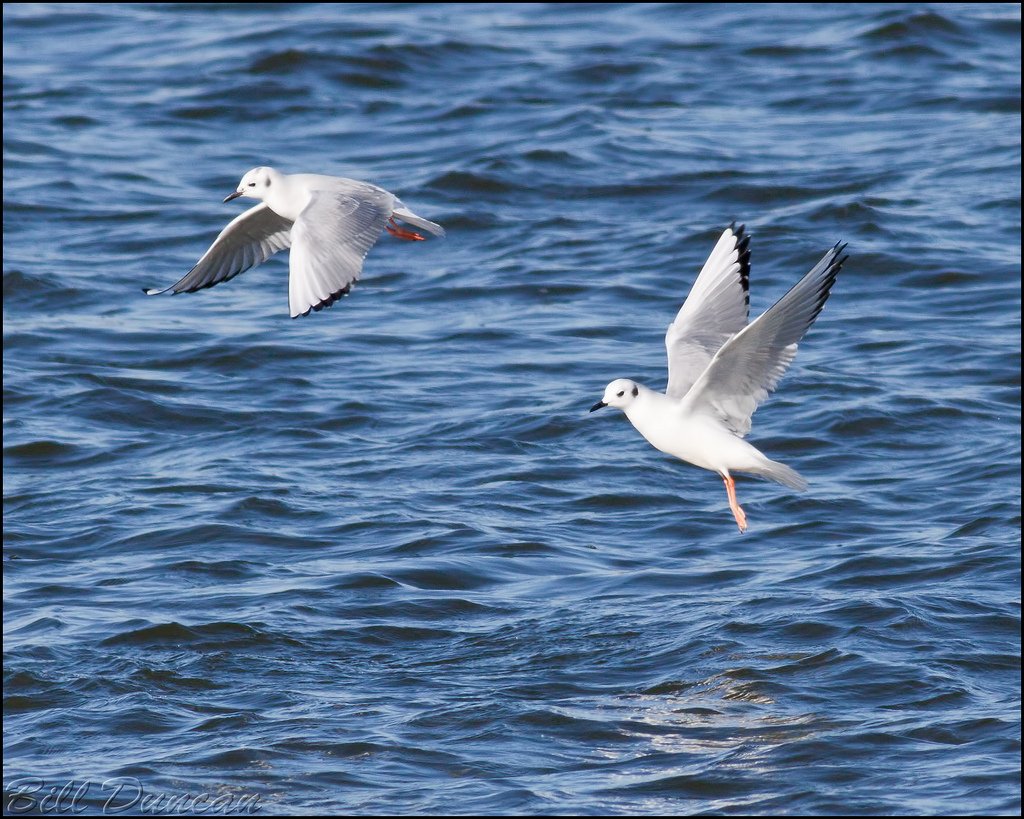
Winter gulls are a very challenging group of birds to identify. During normal winters, unlike the tropical winter we are experiencing this year, several rare northern migrants can be found along the dam and other man-made structures. During the dead of winter it is not uncommon to find groups of experienced birders shivering under the frigid temperatures and gale-force winds at the lock and dam at Riverlands looking at hard to distinguish, rather drab gulls through 60X scopes hoping to find that rare gull to add to their year list. I have done a little of this myself and it can become addicting! These cute and graceful Bonaparte’s Gulls are rather earlier migrants that favor warmer weather than many other gulls.
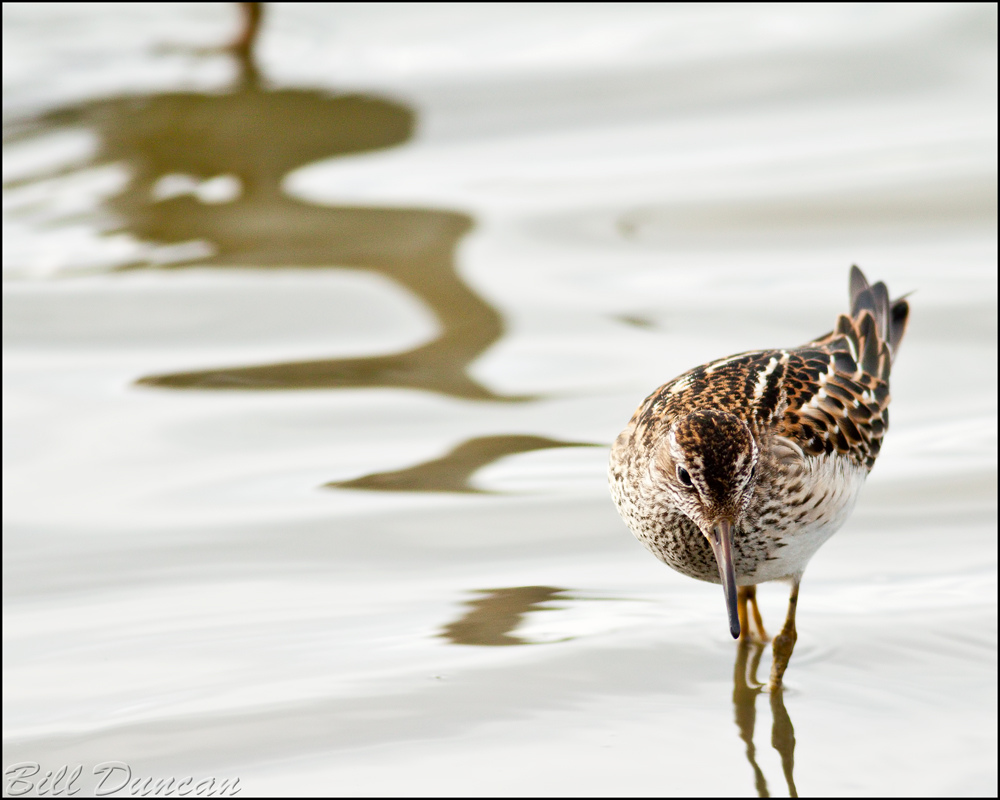
Another challenging group of birds that will have the uber-birder skipping work, church and ignoring family is the shore-birds. These birds, whom I have recently become enamored with, move through the confluence region mostly during March-May in the spring and August-October in the fall. These are beautiful, photogenic and biologically fascinating and diverse birds. The shorebirds are almost strictly a migratory group concerning the confluence region. These birds have some of the largest migratory routes in the animal kingdom and their routes across Missouri and Illinois vary and can be tricky in predicting. Farming and other land development practices are hurting this group badly across their migratory route. Most species of shorebird have pretty narrow requirements or preferences when it comes to the particular habitat and water depth they need to thrive. Managing a wetland becomes troublesome when the specific needs for a species is considered and skilled management practices are a must. Unfortunately, almost half of the shorebirds of the new-world are experiencing declining populations, due almost solely to man-made influences. Serious action needs to be taken to preserve these populations. You can read more about this by reading the United States Shorebird Conservation Plan.
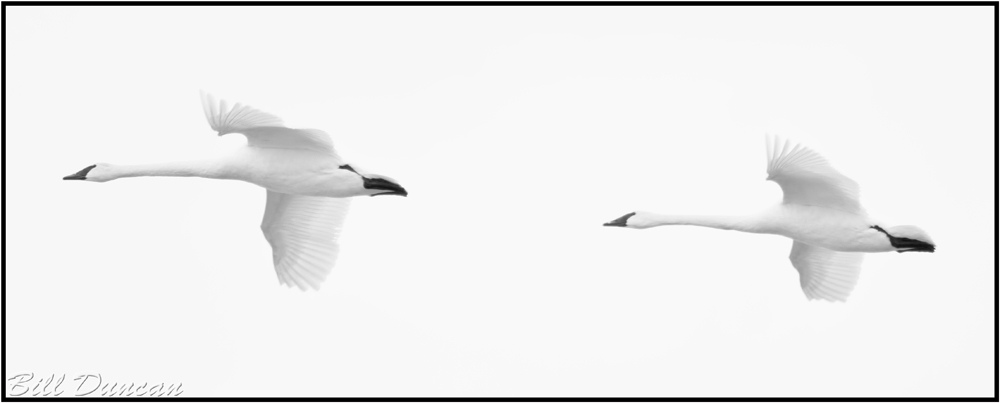
Next to the Bald Eagle, the Trumpeter Swan may be the most recognized bird species of conservation concern that calls the confluence region home during the winter. Upwards of 400 of these birds and lower numbers of the similar, Tundra Swan can be seen in a single day at Riverlands and surrounding area. These birds are rugged survivors that spend the majority of their day searching the surrounding farm fields for wasted grain and overnighting in the sanctuary’s water bodies. These birds, the world’s heaviest that are still capable of flight, are a treasure to watch and photograph.
I often tell people that photographing birds is simultaneously the most rewarding and the most frustrating experience I can think of. For each of these six images that I am relatively proud of there are at least 500 that were unusable. Fortune favors the prepared photographer who understands not only how to use their equipment, but understands the behavior of the birds they are after. Getting close is key, but not getting so close as to disturb the natural behavior and sense of security these wild animals should expect to have. This is often a fine line.
The confluence region where the Big Muddy and the Father of Waters join was once one of the greatest wetlands areas in all the temperate regions of the world. Farming and urban sprawl have made considerable changes to these natural habitats. We can do something to maintain and potentially repair some of what has been lost.
 A Thousand Acres of Silphiums