Bizarre Creatures in My Garden

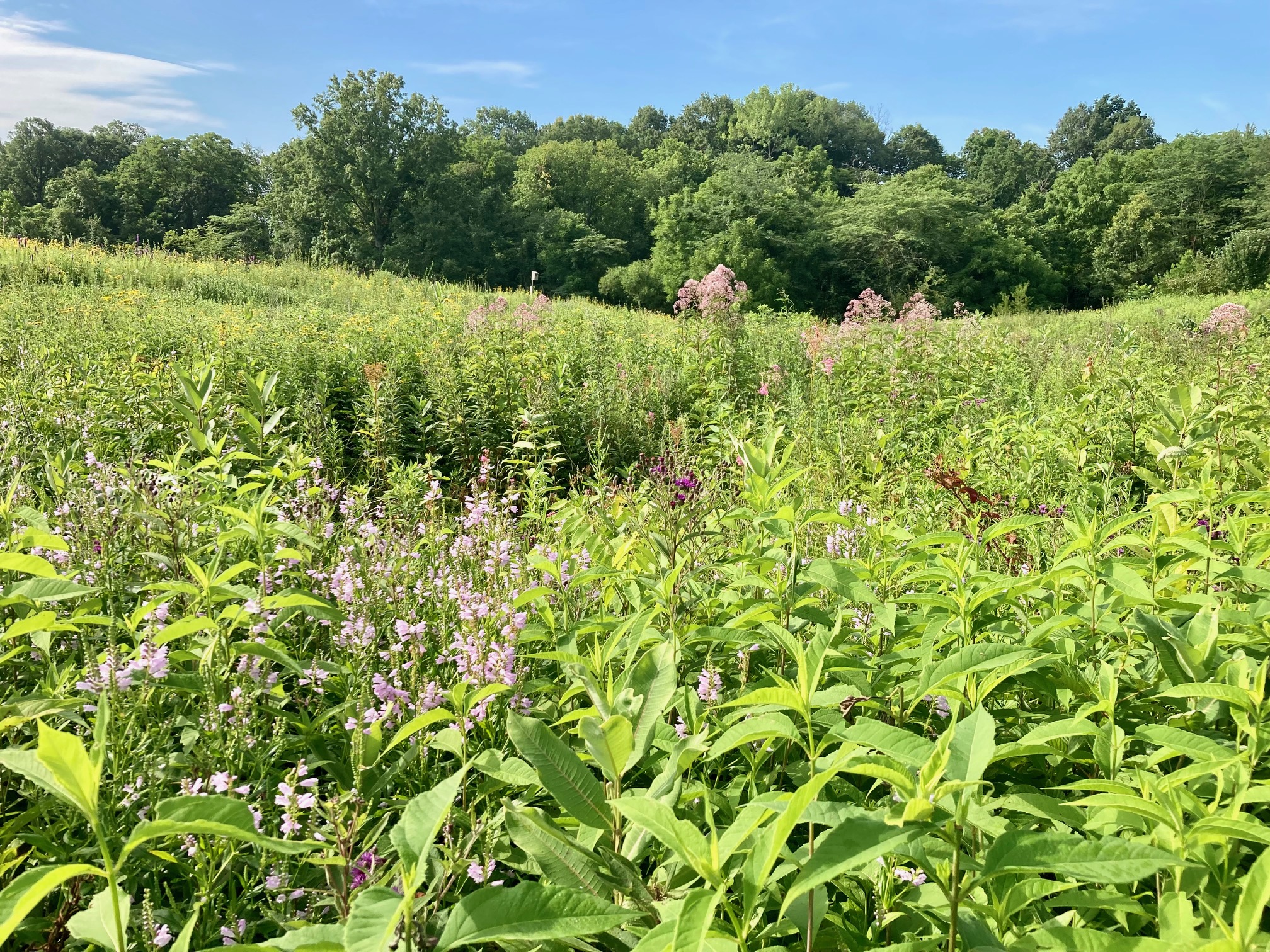
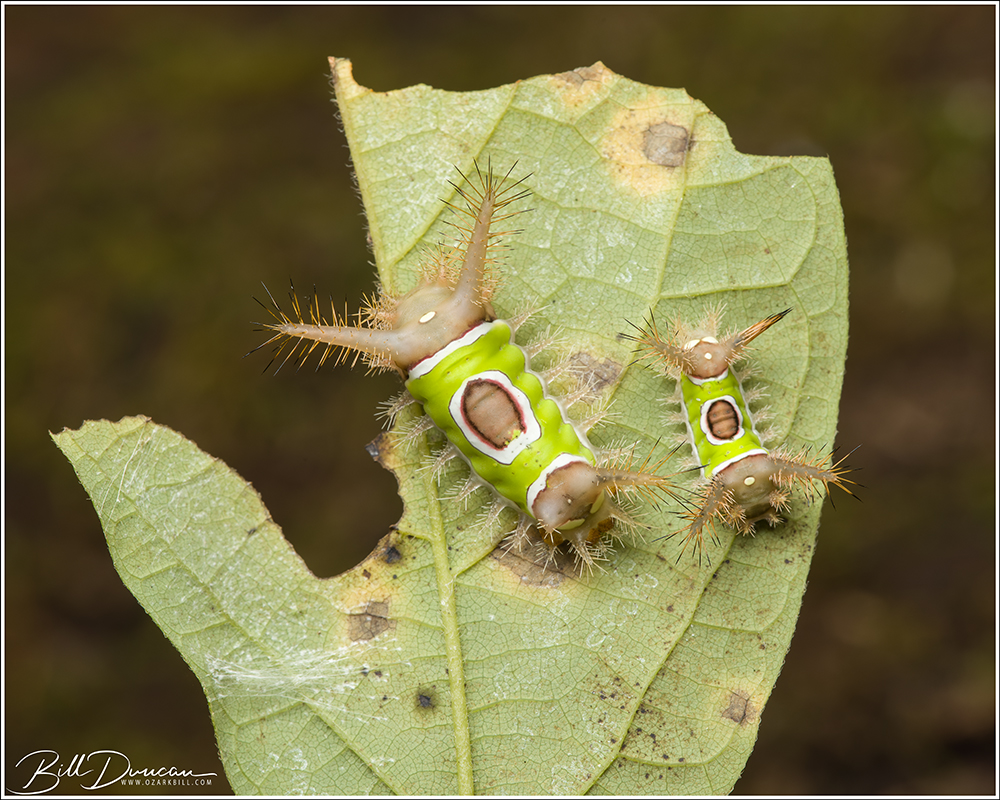
Here is a perfect example of ‘why native plants?’ in the home garden. This is the first year of our new native flower garden in front of our new house. This spring we spent a good deal of money and time getting the old exotic evergreen bushes out of the beds and planting a new garden consisting of mostly native forbs and a couple patches of grasses. After a long and cool spring, we are finally getting some heat units on these mostly gladey and xeric species and a few are starting to respond nicely.

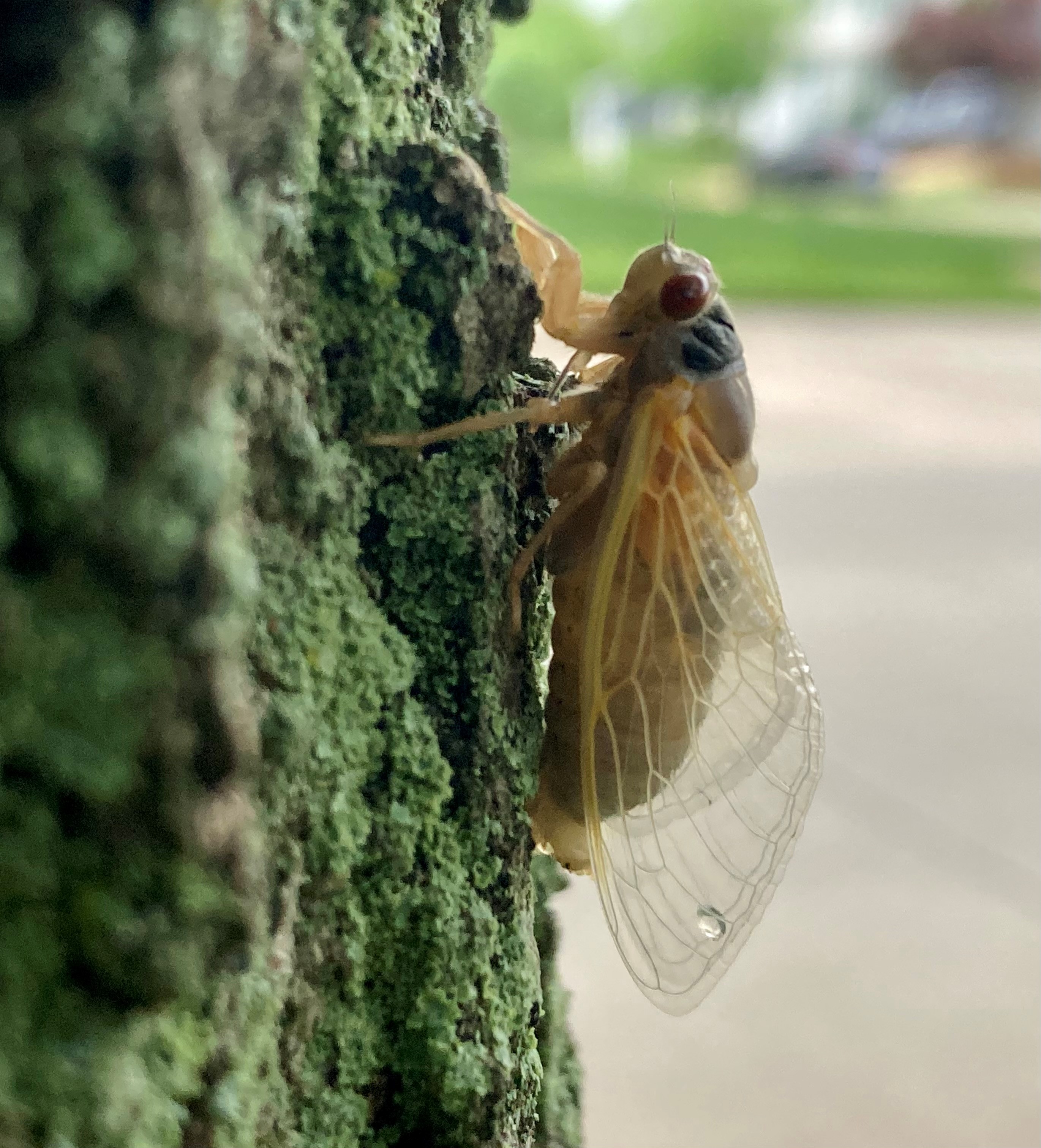
These golden drops turned out to be eggs of a leaf-footed bug (Coreidae family)

During my daily deadheading of some flowering Coreopsis and other asters, I notice new things from time to time. The arthropods are beginning to come. Since the original razing of the land that this subdivision sets on some 45+ years ago, these plant and insect communities have undoubtedly been rare. While my 100 square feet of natives won’t likely make a big difference, hopefully more and more of us will ‘go native’

I originally noticed these eggs by observing this jumping spider. The concurrence is assumed accidental.

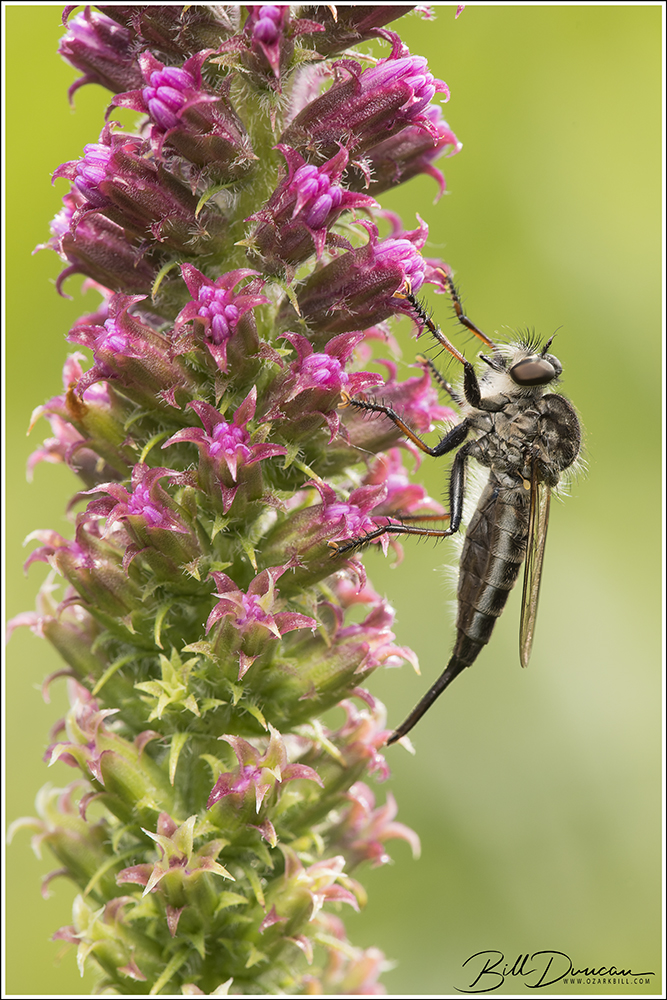
About a week ago, I noticed these golden drops on the leaf of a Liatris spicata (marsh blazing star). After taking a few photos in situ, I decided to collect the leaf and see what the hatch might be. I figured it was a hemipteran of some sort and after a little research, I narrowed it down to the Coreidae family, or ‘leaf-footed bugs.’ If you can identify these to any degree of higher specificity, please let me know.

Coreid nymphs within an hour of hatching.

After three or four days in a jar, all of a sudden the leaf was alive with the movement of spikey mechanisms. I took a few photos on their cradle leaf, then moved a few to a Coreopsis sp. bloom. Afterwards, I let them go to feed as they like on our plants, maybe to see them another day.
-OZB

Nesting Birds of Missouri – Black-and-White Warbler

The Black-and-white Warbler (Mniotilta varia) is another weirdo in the Parulidae family. It is the only extant member of the genus, Mniotilta, and it definitely stands out against the other wood warblers that we find in Missouri. Whereas other warblers flit about the leaves at ends of branches, through bush or along forest floors, gleaning for arthropods, the Black-and-white Warbler finds another niche. It forages by hugging tree trunks and inner branches, much like a nuthatch or creeper. The interesting genus name apparently comes from another of this bird’s behaviors. This name comes from the Ancient Greek mnion, meaning “seaweed”, and tillo, “to pluck”. Apparently, Black-and-white Warblers strip mosses and reindeer lichens to line their nests, which they make in mature forests across much of eastern and central North America.
The Black-and-white Warbler (Mniotilta varia) can be an easy target for the bird photographer, often being seen exposed along inner tree branches.
A Black-and-white Warbler (Mniotilta varia) refueling in the trees at Tower Grove Park in St. Louis.

-OZB

WGNSS Natural History Photo Group Field Trip – January, 2019

Bald Eagle subadult “3rd year”

The WGNSS Natural History Photo Group had a fun field trip in January, when we headed north up the Mississippi to the riverside town of Clarksville. Here at lock and dam #24, we were fortunate to be alongside ~75 eagles of various ages that took turns in catching the stunned shad that is their primary winter food source along the great river. We arrived early in the morning and made a day of it, experiencing wide shifts in weather from grey and snowy to partly sunny skies. I’m not an expert in aging these eagles, but I believe the bird picture above is a subadult II, which means it is 2.5 – 3 years old. In this photo you can see several retained juvenile secondaries on each wing.

Bald Eagle subadult “2nd year”

The long and pointed secondaries make me think this bird is probably a year younger than the bird in the previous photo. I would guess this bird is 1.5 – 2 years old. The temperatures on this day were cold, but not too severe. We arrived with the car’s thermometer reading 16°F. There was a light wind most of the day, but not nearly as bad as there could have been.

Bald Eagle Adult

With patience, there were some opportunities to capture a bird’s profile as it came to pick up a poor stunned fish.

The successful fisher

The majority of prey captured in this way is small enough to be eaten immediately on the wing in a single “bite”. Sometimes, however, the bird is forced to retreat with its groceries and eat in seclusion.

Bald Eagle subadult “4th year”

The bird pictured above is much closer to looking like an adult bird, showing the mostly white head and tail. I estimate this bird as being 3.5 to 4 years old.

Bald Eagle – juvenile fishing

I noticed this in previous years, that it seems like the juveniles spend more time fishing than the adults. In the photo above, you can see a juvenile with an already full crop is pulling another fish from the river.

This is just a few I have processed so far. We have something in the works that may produce something much more in terms of eagle photography. Until next time.

-OZB


Comparing Canon’s Newest Teleconverters

Short-eared Owl
Image made with Canon 7d mkii, Canon EF 500mm f/4L IS II USM Lens and Canon Extender EF 2X III

I don’t usually like to discuss gear on this blog, but once in a while I think there are some things new or interesting enough to talk about, particularly when I think they may be critical for producing the best possible results. I have been wanting to test and compare the 2 latest Canon teleconverters (Canon Extender EF 1.4X III, Canon Extender EF 2X III) in a head to head test for sometime and this past weekend found me with an opportunity to do so. To be clear, this was not the optimal situation to make this test. The light was poor and the subject was probably too far away and not covering enough pixels to make a relevant comparison. But, I thought I’d give it a try.

These tests were setup as equally, but not scientifically, as possible. For these first two images, I processed as normal and tried my best to be equal in all capture and processing steps. I cropped to make the bird approximately the same size in both images, so obviously, the photo made with the 1.4X tc was enlarged more than the one made with the 2X tc. I then resized each to make them 1000 pixels on the horizontal. The purpose here was to see if there is a discernible difference in sharpness and image quality between the two. The 2X tc often gets poor reviews, but just as often gets raves by those who claim to know what they’re doing. Many claim that the better results are made by using a 1.4X tc, or native lens and cropping in post to obtain better results than those obtained by using the 2X tc for an optical zoom.

Short-eared Owl Image made with Canon 7d mkii, Canon EF 500mm f/4L IS II USM Lens and Canon Extender EF 1.4X III

Open the two images above in separate tabs to see a roughly equal comparison. In my opinion, I was pretty pleased with the results of the 2X tc in sub-optimal conditions. Both photos are fine for sharing on the web, although the IQ would limit print size. Like I said, the conditions were poor and the bird at a great distance. However, I think I would give a slight edge to the photo made with the 2X converter. This edge might just as well be due to differences in how I processed or with changing conditions within the few minutes between captured images.

Let’s look next at the “100% crops” of both photos. This simply means that these photos were both cropped at the same dimensions (4″ x 6″) and not resized. These examples were NOT sharpened.

Focal length equivalent = 500 x 1.6 x 2.0 = 1,600mm


Focal length equivalent = 500 x 1.6 x 1.4 = 1,120mm

Again, with this comparison, I find the two very close. Either one would work well enough, but if your goal was to maximize print/display size, I would probably go with the 2X tc. I guess this has surprised me a bit. I was expecting that, under these sub-optimal conditions, the 2x tc would fall behind the supposedly sharper combination of the 500mm + 1.4X tc.

What do you think? Did I make any major blunders in my comparison or analysis? Please let me know. I do hope to make this comparison again under perfect light and optimally placed subject sometime in the future.

Thanks for stopping by and reading this far!

-OZB


Horned Fungus Beetle

Bolitotherus cornutus

Here is one of the interesting visitors I had to my black lights at Hawn State Park this summer.  Bolitotherus cornutus, or horned fungus beetle is in the darkling beetle family, Tenebrionidae.  I wish I knew of their preference for polypore fungi as larvae and adults so that I could have photographed them on more suitable substrate.

Bolitotherus cornutus

Black Carpenter Ants

Black Carpenter Ants Feasting On Ring-necked Snake

This series was taken on the joint outing of the WGNSS Entomology and Nature Photography Groups at Council Bluff Lake.  Here we have eastern black carpenter ants (Camponotus pennsylvanicus) feeding on a freshly dead ring-necked snake (Diadophis punctatus).

Black Carpenter Ants Feasting On Ring-necked Snake

Black Carpenter Ants Feasting On Ring-necked Snake

Birds of the Texas Gulf Coast – Flying High on High Island

Cormorants and Spoonbill - High Island TX - Rookery
Cormorants and Spoonbill – High Island TX – Rookery

Most birders who have had the opportunity to travel will know about High Island, a small township along the gulf coast that is among the most famous of birding locations in the country.  This relatively small plot of land, along with other spots within a few minutes drive, can boast bird lists higher than many states, if not whole geographic regions of the country.  What surprised me during our visit last May was the diversity in habitat.  High Island is mostly famous for its potential for massive fallout during spring migration – migrating songbirds either traveling up the coast or flying directly over the gulf will stop here for a drink of fresh water and to fill up on grub before continuing north to nesting grounds.  We realized we were going to miss most of the migration at the end of May, but still wanted to pay a visit.  The place is so popular that there is bleacher seating around key ponds to allow for visitors to watch as birds by the hundreds land for a drink and forage through the live oaks.

520a4104
No Vacancies – High Island TX – Rookery

The numbers and diversity of songbirds across the Houston/Galveston coastal areas we visited were even sparser than we anticipated, but on arriving pre-dawn at the rookery we were quite surprised.  Every bit of vegetation on this relatively small island was being used by wading birds.  We were in awe by the numbers of Neotropical Cormorants and Roseate Spoonbills that filled the branches as well as the skies.

520a3917
Roseate Spoonbills on nest – High Island TX – Rookery

Lighting was quite challenging – what little light available at this time of the morning was often coming from behind the subject.  Evening may have been better photographically but we had lots of ground to cover.  One of the sights that had me the most excited was a nesting Great-Egret.  These are birds that are routinely found during the warmer months in Missouri, but finding one feeding chicks was a real treat.

520a4049
Great Egret Nest – High Island TX – Rookery

Early in the dawn hours we were treated a Common Gallinule (Moorhead) hen bringing her chicks down to the water for a drink.

common-gallinule-rallidae-gallinula-galeata-520a4010
Common Gallinule – High Island TX – Rookery

Prehistoric looking Spoonbills would sometimes fly right overhead.

520a3802
Roseate Spoonbill – High Island TX – Rookery

I hope to visit High Island some spring during a nice fallout period one day, but I will be just as excited to watch and photograph at the rookery once more.

520a3789
Cattle Egret – High Island TX – Rookery

You can see more photos from the High Island rookery and the Texas Gulf Coast by visiting me on Flickr.

Until next time…
-OZB