"What a thousand acres of Silphiums looked like when they tickled the bellies of the buffalo is a question never again to be answered, and perhaps not even asked." -Aldo Leopold
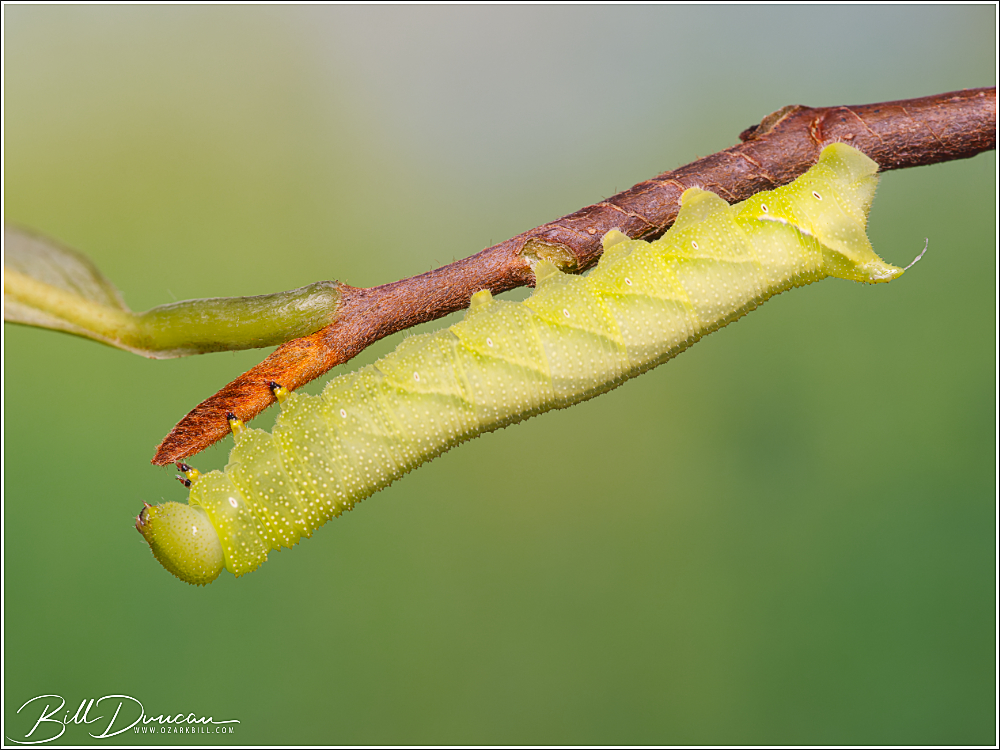
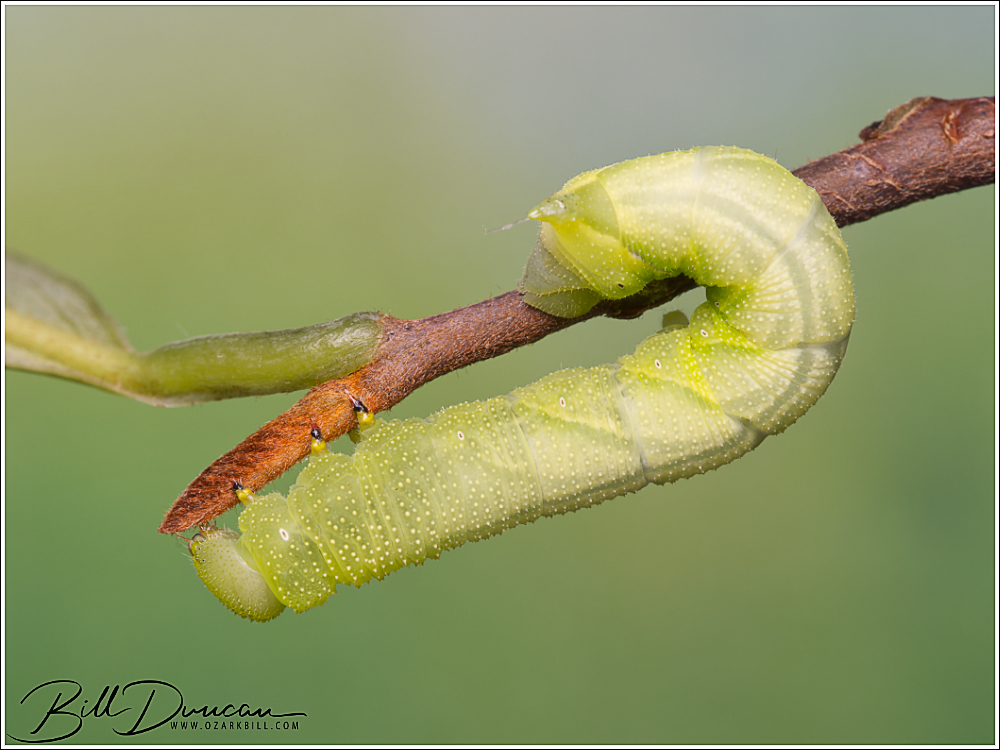
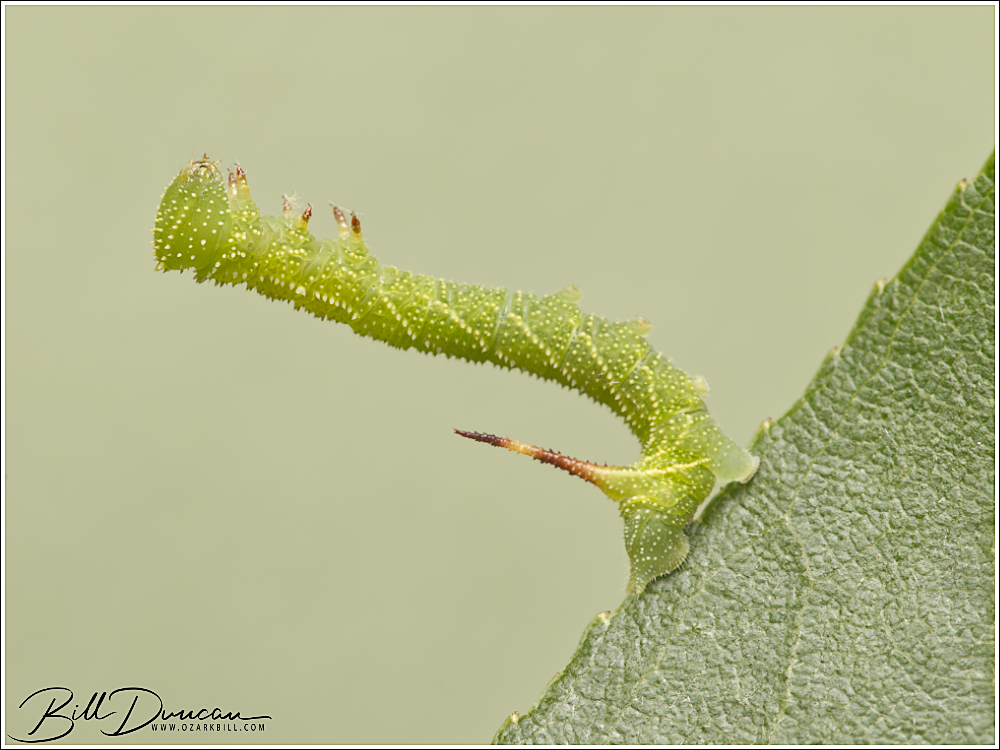
Today’s caterpillar is from another monotypic genus in the family Sphingidae. The pawpaw sphinx (Dolba hyloeus) hosts not only on pawpaw (Asimina triloba), but also on hollies-Ilex and blueberries-Vaccinium. This animal was found on A. triloba in early August at Babler State Park in St. Louis County, MO.
For tonight’s caterpillar, I am featuring the Sphingidae family member, Amorpha juglandis – the walnut sphinx moth. This is the only species in the monotypic genus, Amorpha, a name that is shared with a plant genus that holds our leadplant (Amorpha canescens) and false indigo bush (A. fruticosa). This name comes from the Greek – amorphos- meaning formless or mishappen. This describes the lack of wing and keel petals of the corolla of these beans. For the moth, I am not completely certain, but it may have to do with the unique shape and placement of the rear wings when this moth is at rest. This species is very easily identified in both larval and adult forms.
First up are a couple of early instar brood mates that I found on the same walnut tree in mid-July at Kaintuck Hollow in Phelps County, MO.
Next up is an older cat found at Schoolcraft Prairie in Washington County, MO in mid-August. Caterpillars of this species at this stage are infamous for its defensive displays when harassed, including emitting a high-pitched squeak, thrashing and biting. Unfortunately, this one was pretty chill, so I could not show this off to the folks I was with.
Amorpha juglandis – the walnut sphinx moth
Finally, on the same night we photographed the caterpillar pictured immediately above, an adult male moth was attracted to our blacklight setup. This was my first looks at the adult form of this species.
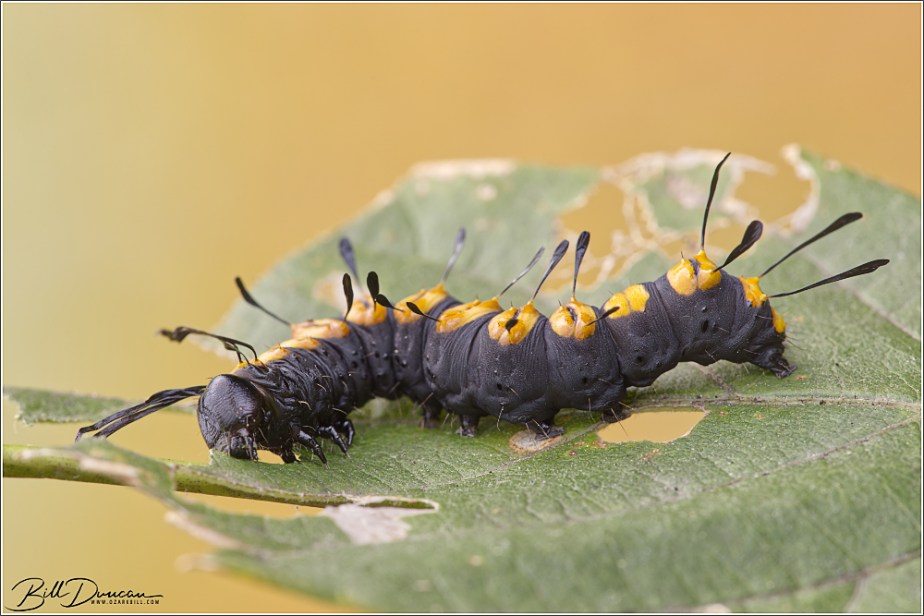
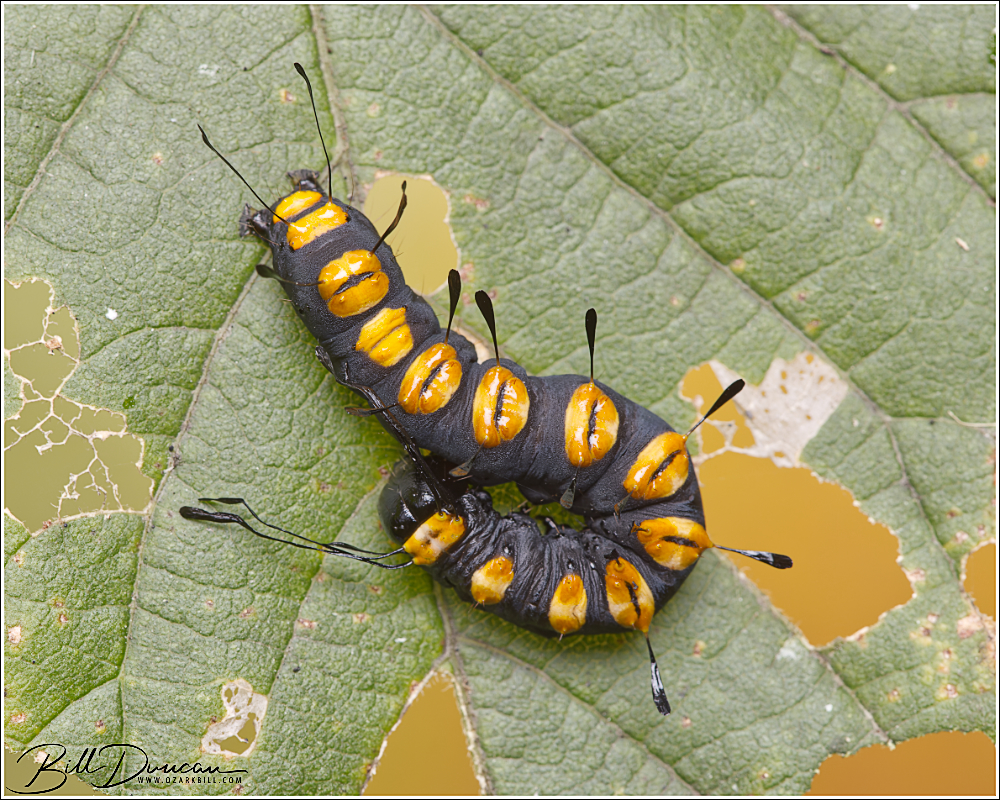
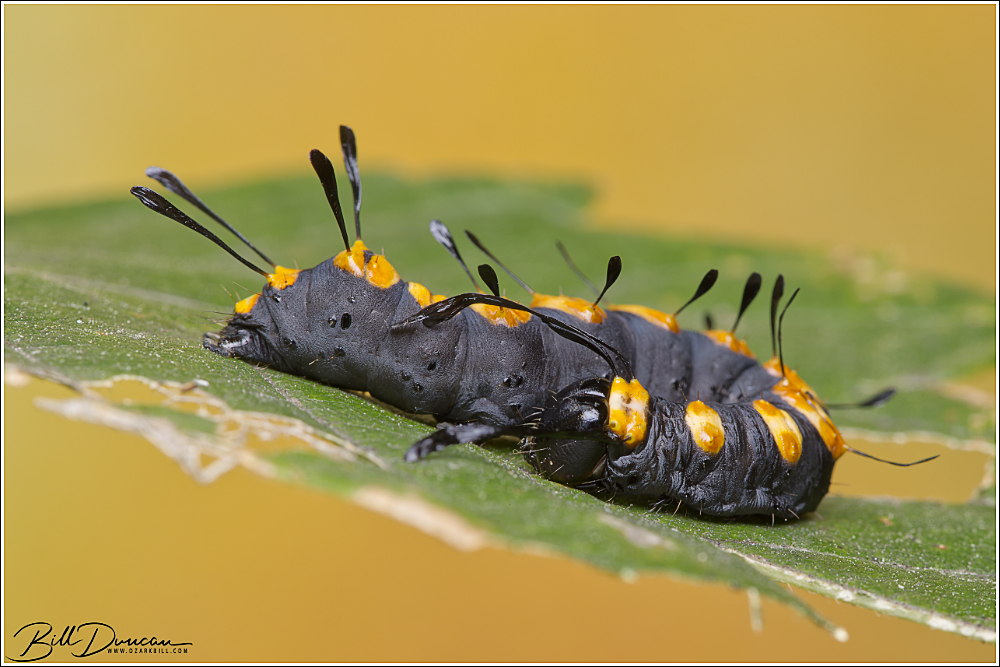
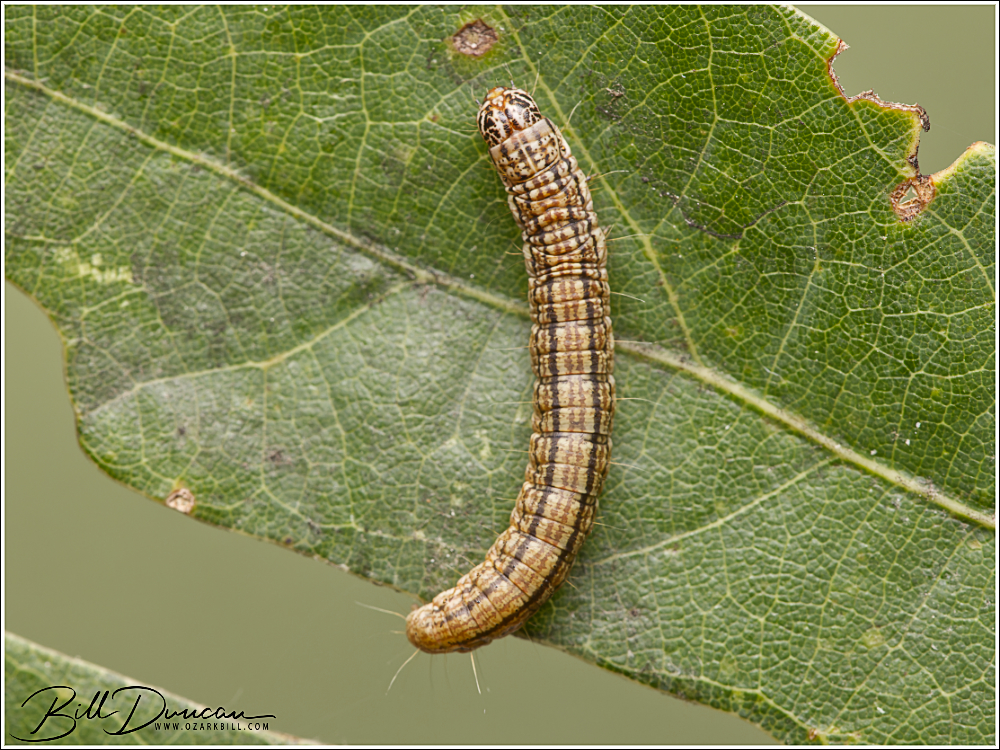
Yes! In what is likely one of the last good weekends of the 2024 season, the WGNSS Nature Photography Group headed back to Kaintuck Hollow where we found this final instar Acronicta funeralis (paddle caterpillar/funerary dagger), Noctuidae, feeding on Acer negundo (box elder). I recently shared photos of this species in one of its mid-instars.
Acronicta funeralis (paddle caterpillar/funerary dagger) final instar larvae in the typical “J pose,” often seen when they are resting or disturbed.
We have maybe one or two good weekends left for this season so maybe we’ll find something else. Either way, I’m preparing my list for hopeful species to find next season.
Acronicta funeralis (paddle caterpillar/funerary dagger) final instar larvae
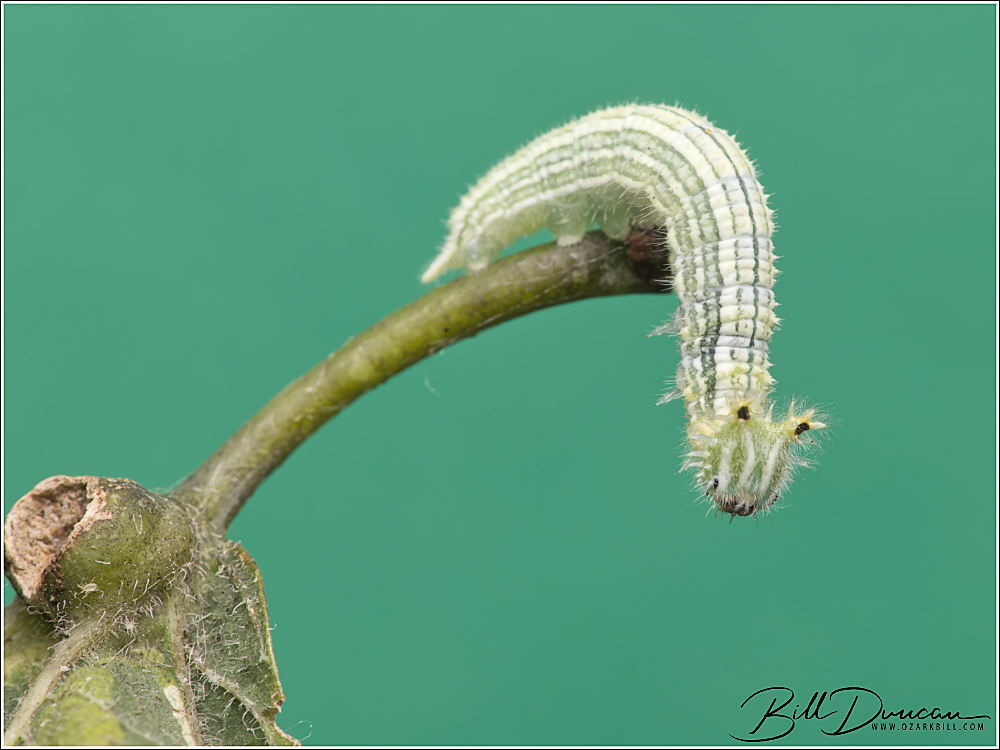
Today’s caterpillar is an interesting species from an obscure family – Thyrididae, or window-winged moths. Pseudothyris sepulchralis (mournful thyris) is sharp looking as a caterpillar as well as an adult moth. This species is a specialist on greenbriers (Smilax sp.) and this individual was found rolled in a Smilax leaf about head-high at Kaintuck Hollow in Phelps County, MO in mid-July.
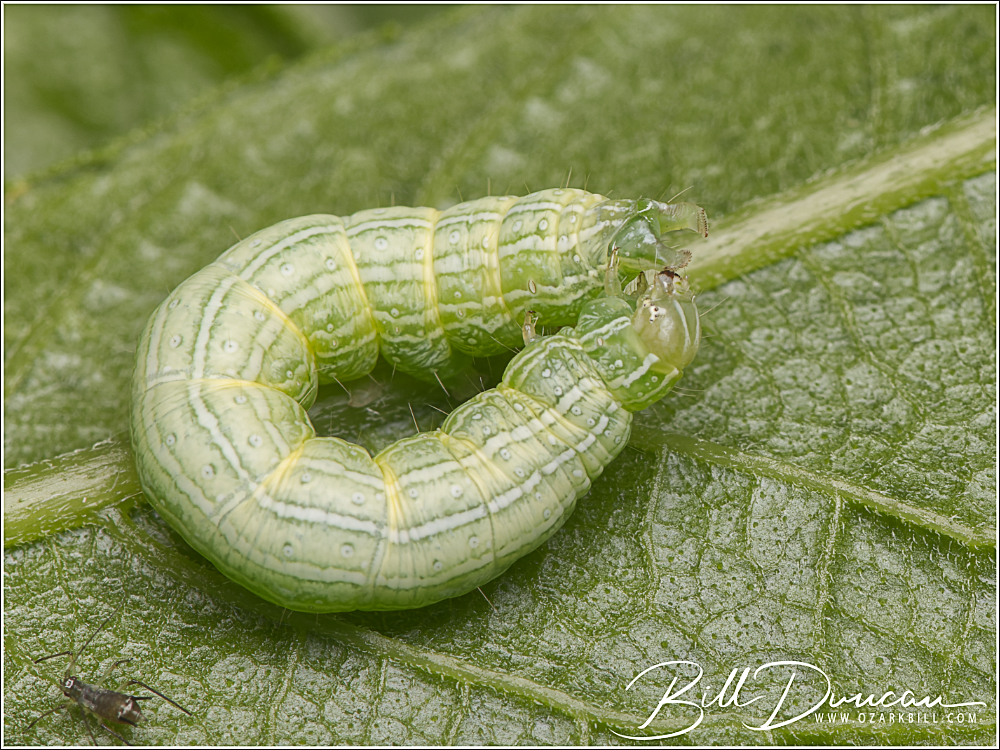
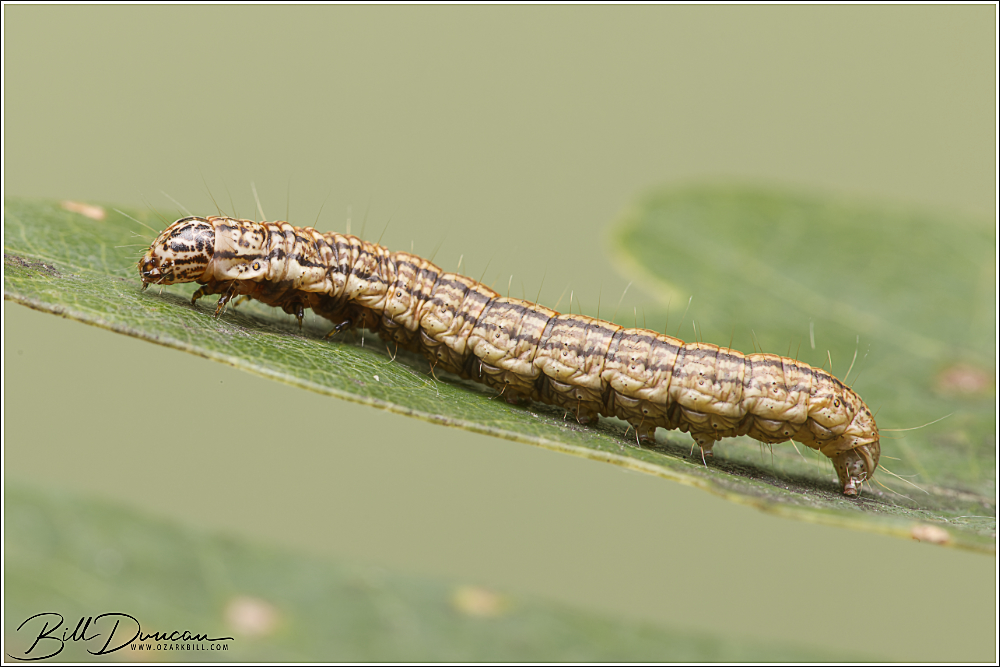
Today’s featured caterpillar is the Noctuid, Ogdoconta cinereola, or “common pinkband groundling.” This one was found in early July at St. Francois State Park on wingstem (Verbesina).
Tonight’s caterpillar is a member of the Crambidae family – Saucrobotys futilalis, or the “dogbane saucrobotys moth.” The host for this species is the namesake dogbane (Apocynum species) and they can also feed on milkweeds (Asclepias species). I found these pretty easy to find in mid to late July at Don Robinson State Park by simply looking for their web nests within dogbane plants. There were usually several cats within each nest and a little beating of the plants could get quite a few tumbling out.
Saucrobotys futilalis (dogbane saucrobotys moth)
I find the Latin binomial for this one to be pretty entertaining. Saucro, coming from the Greek for graceful, pretty and beauty, along with botys, the genus to which this moth was originally ascribed. While, on the other hand, the specific futilalis seems to come from the Latin futilis, meaning brittle, vain, or worthless. Taxonomic nomenclature can be confusing and is often steeped in history (this species was described in 1863), but I find this grouping to be pretty entertaining.
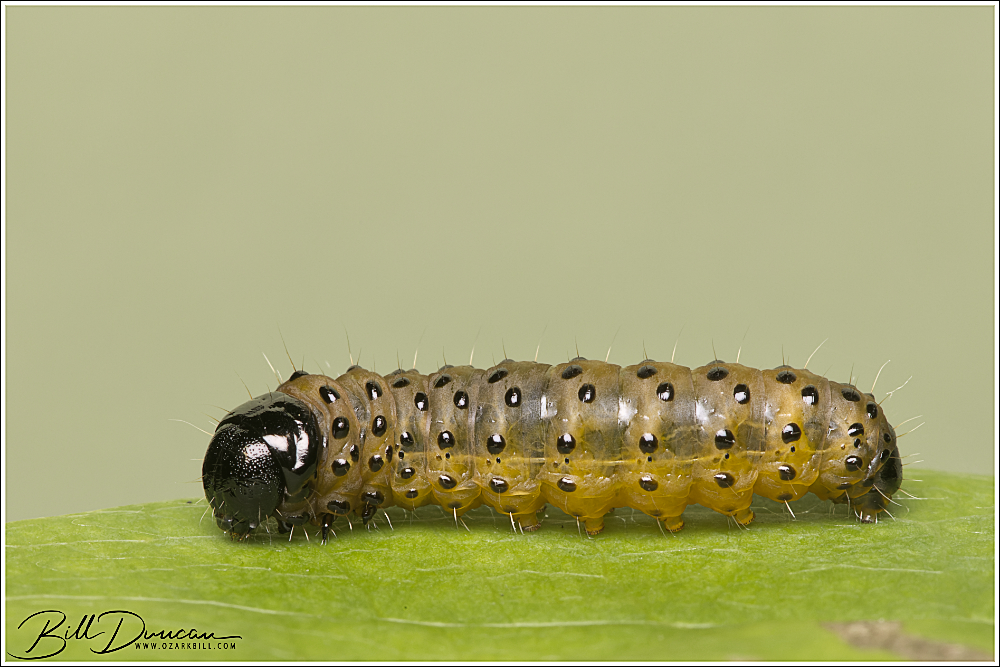
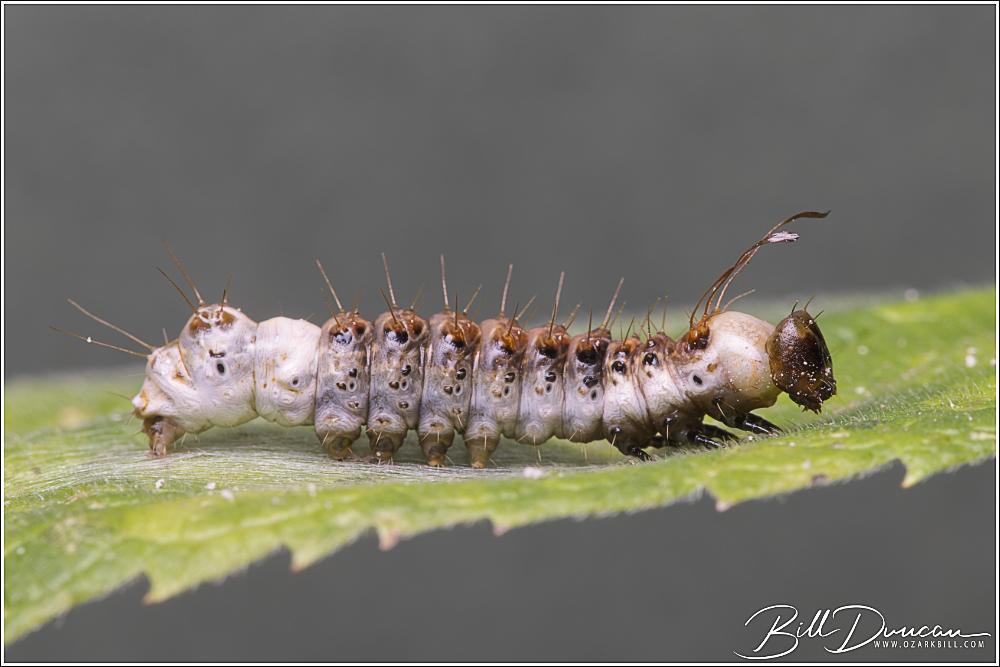
I’m pleased to say I found a “holy grail” caterpillar species this year. Unfortunately, at the time, I did not know what I had found. On July 13th, while searching right off a parking lot at Huzzah Conservation Area in Crawford County, MO, I found this smallish bird poop mimic caterpillar. I knew I had seen this one in photos before, but on this day I had left my field guides at home and I was in an area with absolutely no cell phone coverage.
Mid instar of Acronicta funeralis (paddle caterpillar)
After getting back home, I identified this as a member of the Noctuidae family – Acronicta funeralis, aka the paddle caterpillar. It gets its common name from the paired paddlelike subdorsal setae that are present on the final instar of the caterpillar. I really wish I had known what I had found at the time. I would have brought this guy home to rear in order to get photos of the final instar of this cat. This species is rare enough that it might be the one and only that I find, but I think if I try hard enough, others will come in time.
Mid instar of Acronicta funeralis (paddle caterpillar)
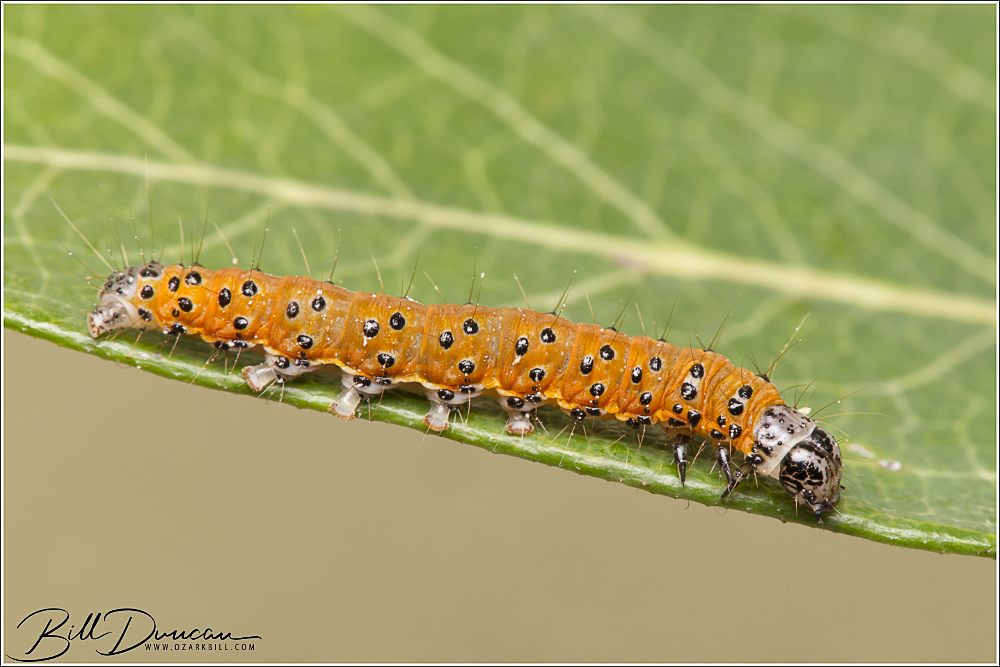
Today’s cat is in the Pyralidae family. It is most likely Pococera expandens (double-humped pococera moth), but with at least 27 species in this genus and many of which that feed on oak, upon which this one was found, other species could be an option. This guy was photographed in early July during a WGNSS Nature Photography field trip at Prairie Garden Trust in Calloway County, MO.
I posted about the hackberry emperor (Asterocampa celtis) caterpillar last month. Today’s cat is also found on hackberry (Celtis sp.) trees, but are far less common. Here is the tawny emperor (A. clyton) photographed at Shaw Nature Reserve in July.












 A Thousand Acres of Silphiums