"What a thousand acres of Silphiums looked like when they tickled the bellies of the buffalo is a question never again to be answered, and perhaps not even asked." -Aldo Leopold
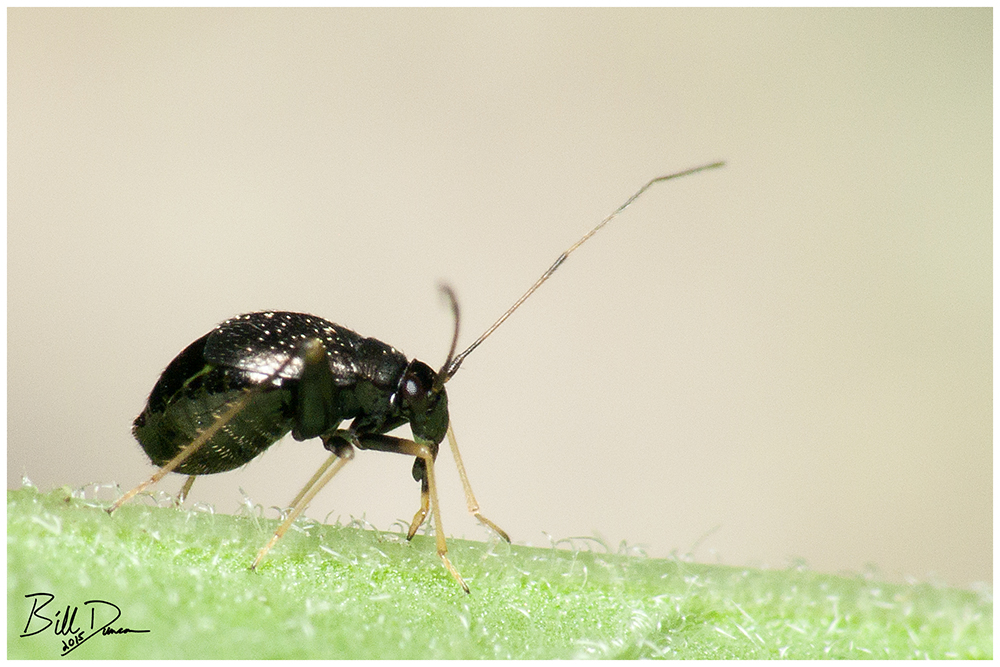
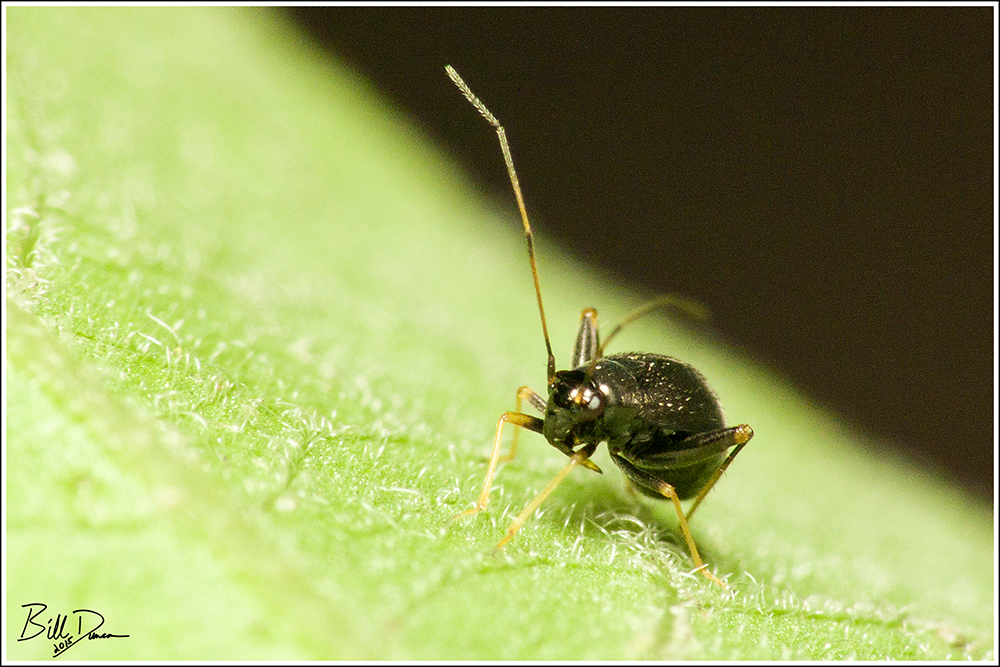
These tiny ones are ubiquitous in a number of habitats and host plants, reach 1-2 mm in length as adults and are pests to a number of agricultural crops. This brachypterous (short-winged) female was photographed on a Maypop vine (Passiflora incarnata) at Shaw Nature Reserve in the northern Ozarks of Missouri.
We came upon this little spiky one at Shaw Nature Reserve. I believe this to be a nymph of the Helmeted Squash Bug (Euthochtha galeator) Family – Coreidae.
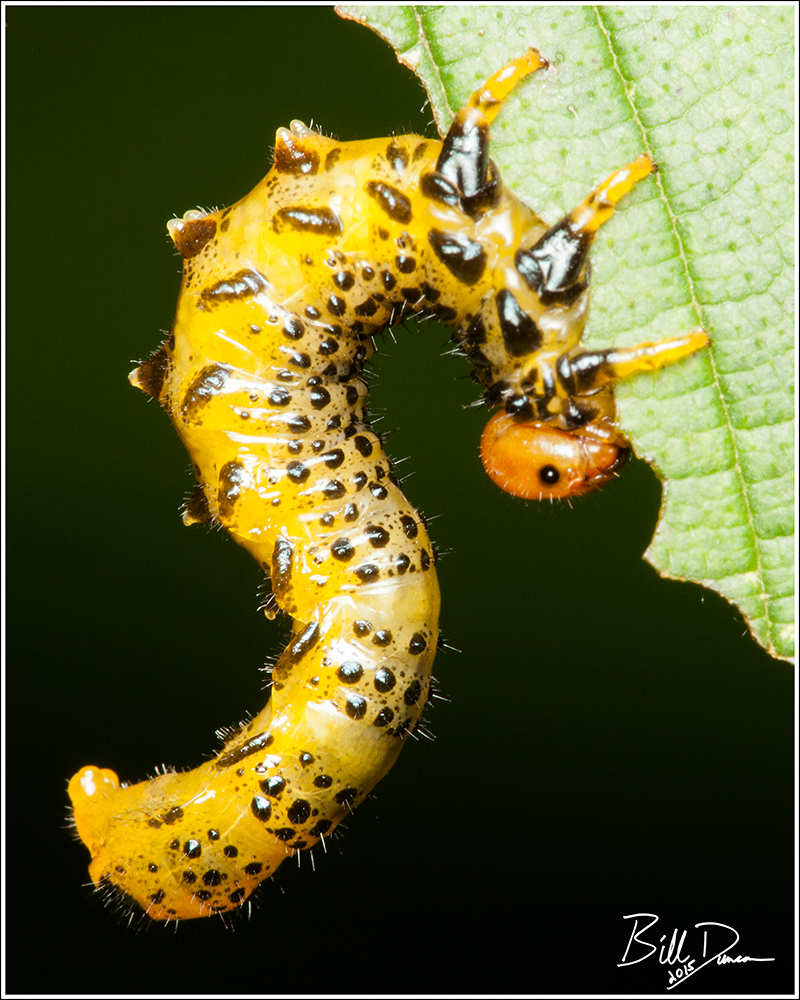
Did you know that there is a primitive group of the hymenoptera with free-living larvae that look very much like the caterpillars of the lepidoptera? Known as the Sawfly, there are morphological distinctions between them and the caterpillars and they can also be distinguished by this defensive posture adapted by the Sawfly larvae (Arge sp.) pictured here.
The mimicry that insects exhibit can be astounding. Walking around Shaw Nature Reserve this summer, I noticed quite a fresh and disgusting looking bird dropping on a small bush near the trail. Something made me take a closer glance and I discovered it wasn’t a poop at all, but a caterpillar. The caterpillar was an early instar of the Giant Swallowtail Butterfly (Family Papilionidae). These caterpillars feed on member of the citrus family, the Rutacea, and this individual was found on a small hop bush. Youngsters like this one will most often be found directly on the surface of a leaf (as poops are most likely to be found), while older stages are likely to be found on leaf petioles or slender branches. In citrus production areas of the south, these guys have the nickname “Orange Dogs” due to their dietary needs. They can be considered a pest in such situations. Unfortunately, I forgot that, if harassed these guys will evert a pair of bright red structures called osmeterium. The function of these organs appears to be defensive in multiple ways. Often brightly colored, they can look quite like the forked tongue of a snake, and go along with other morphological adaptations in some members of the swallowtails in making them appear like a snake. In addition, numerous chemical compounds can be released with the osmeterium that have been shown to repel ants and other potential insect predators.
Giant Swallowtail
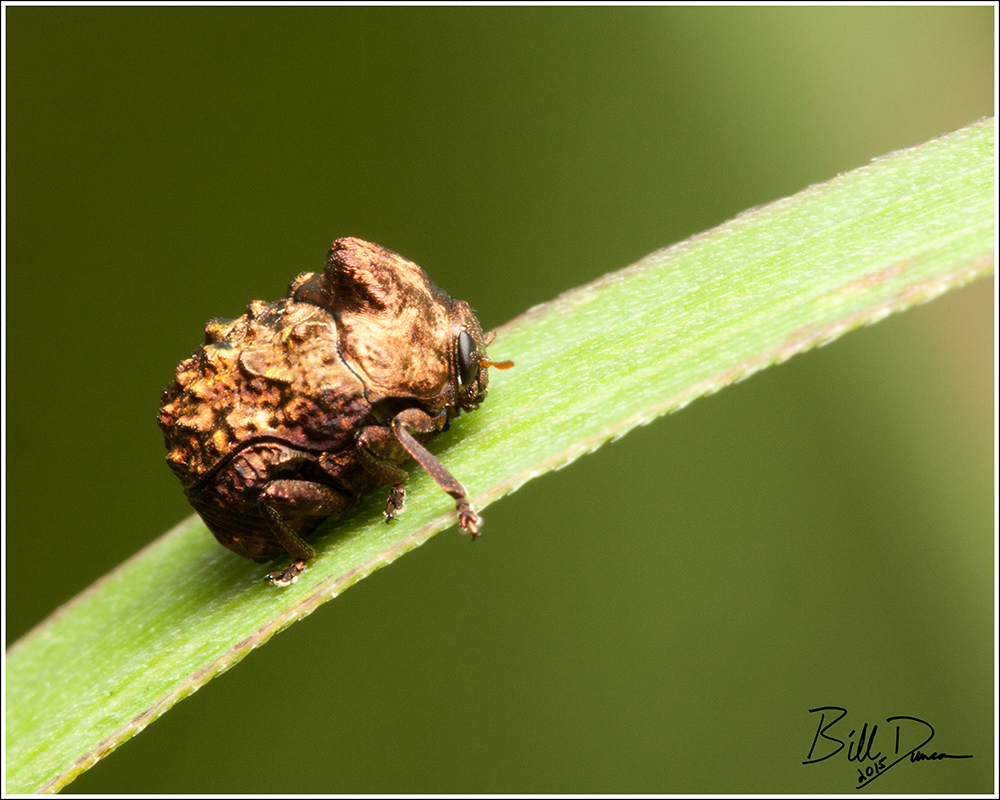
Moving from bird droppings to the droppings of a caterpillar we come to this fascinating creature that is most often found on raspberry bushes. A member of the diverse family of beetles – the Chrysomelidae, this Warty Leaf Beetle (Pacybrachis nigricornis), will tuck in its appendages and drop, looking exactly like a caterpillar’s droppings, or “frass” (anyone remember the action figures from the 80s, the Rock Lords?).
Warty Leaf Beetle
-OZB
References
Marshall, S.A. 2006. Insects Their Natural History and Diversity. Firefly Books Ltd.
Evans, A.V. 2014. Beetles of Eastern North America. Princetone University Press.
Damman, H. 1986. The osmeterial glands of the swallowtail butterfly Eurytides Marcellus as a defense against natural enemies. Ecol.Entomol. 11: 261-265.
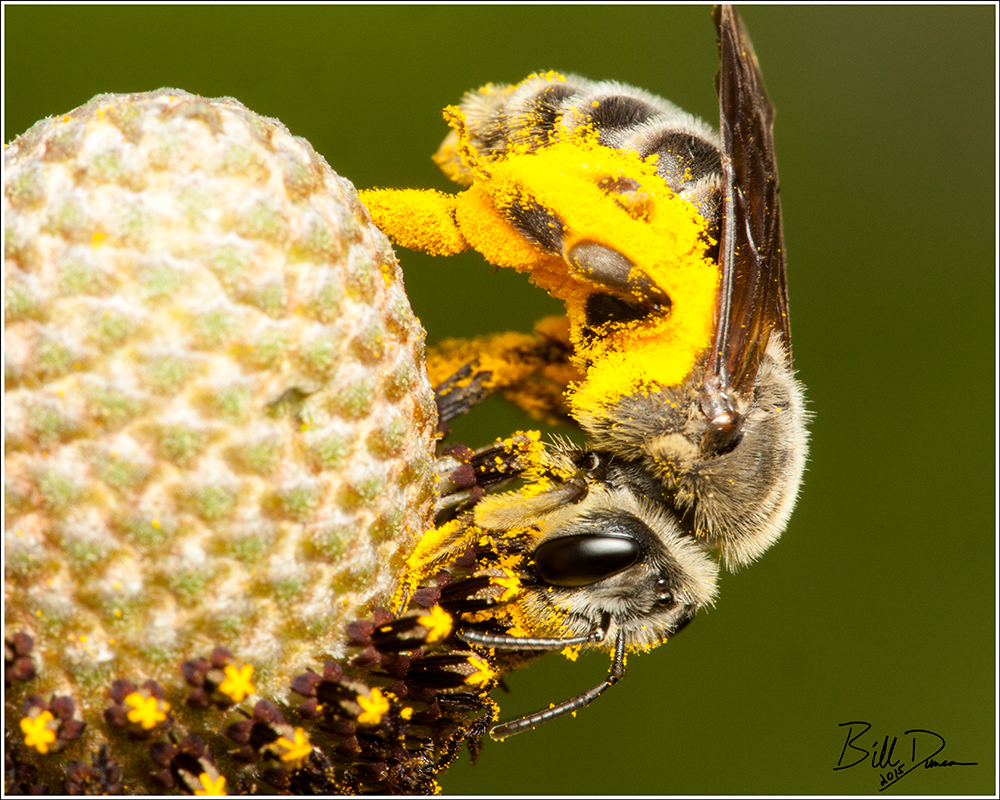
Tonight we have a couple of native bees photographed this summer at Shaw’s Nature Reserve. I may very well be incorrect, but I believe the bee pictured above is a Mining bee in the family Andrenidae. I would love to know how much pollen is taken away in a season by these guys.
Sweat Bee
The final two photos show a sweat bee (Halactidae). These are quite challenging to photograph, but worth the effort.
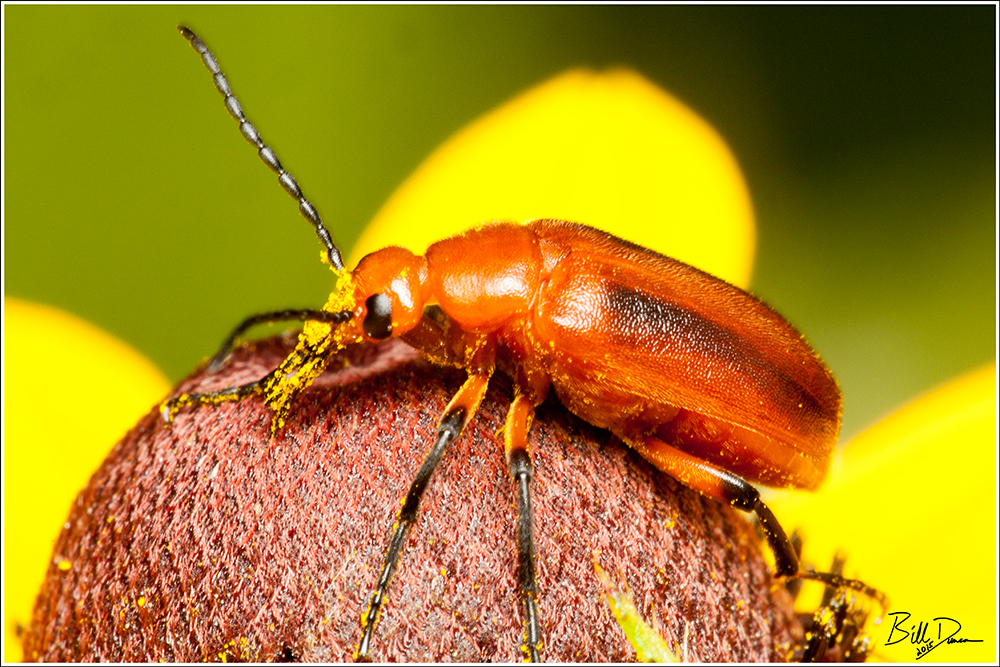
How fascinating a beetle. Did you know this group of beetles begin their lives as kleptoparasites – stealing food from the the nests of solitary bees? As adults these beetles are primarily nectar and pollen feeders and use the specialized mouth parts visible in this photograph to collect their food – primarily from the flowers of Asteraceae. If that were not enough, these guys get their names from a defensive chemical they produce called cantharidin which can produce severe chemical burns and blisters when sprayed on skin and severe poisoning if ingested. This chemical has proven an effective treatment against diseases such as cancers and leishmaniasis. This guy was found at Shaw Nature Reserve.
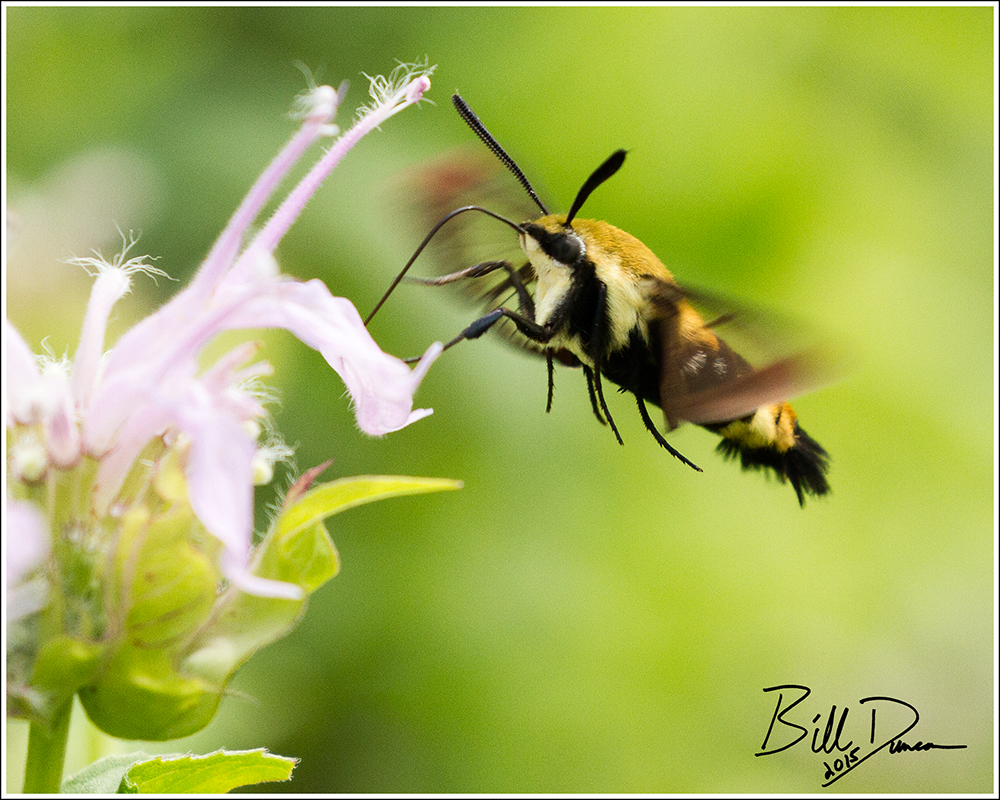
The Snowberry Clearwing is a member of the Sphinx Moths (AKA Hawk Moths). Its name comes from the fact that one of this species important larval foods is the Snowberry plant. Sphinx moths are important pollinators and are often mistakenly identified as Hummingbirds or Bumble Bees due to their size and their habits of visiting flowers. Most Sphinx Moths are active nocturnally or at dawn and dusk, but the Snowberry Clearwing is diurnal. One Missouri favorite, the Missouri Evening Primrose of glade habitats, shares an obligate pollination mutualism with a species of Hawk Moth, meaning that no other animal can provide pollination services for this plant. This is a photography project someday in the future!
Not a Humingbird…
The caterpillars of these moths are known as “hornworms”, and they are just as fascinating as the adults. Included in this group is the Tobacco Hornworm, which is a notorious pest on tomato plants. A useful natural controller of hornworms are the parasitoid braconid wasps that lay their eggs on the developing moth and whose larvae then eat the caterpillar from the inside out.
A Sphinx Moth
Next time you are in the garden, take a closer look at that bumblebee or hummingbird. It might not be what you assume it to be!












 A Thousand Acres of Silphiums