The Halcyon Days

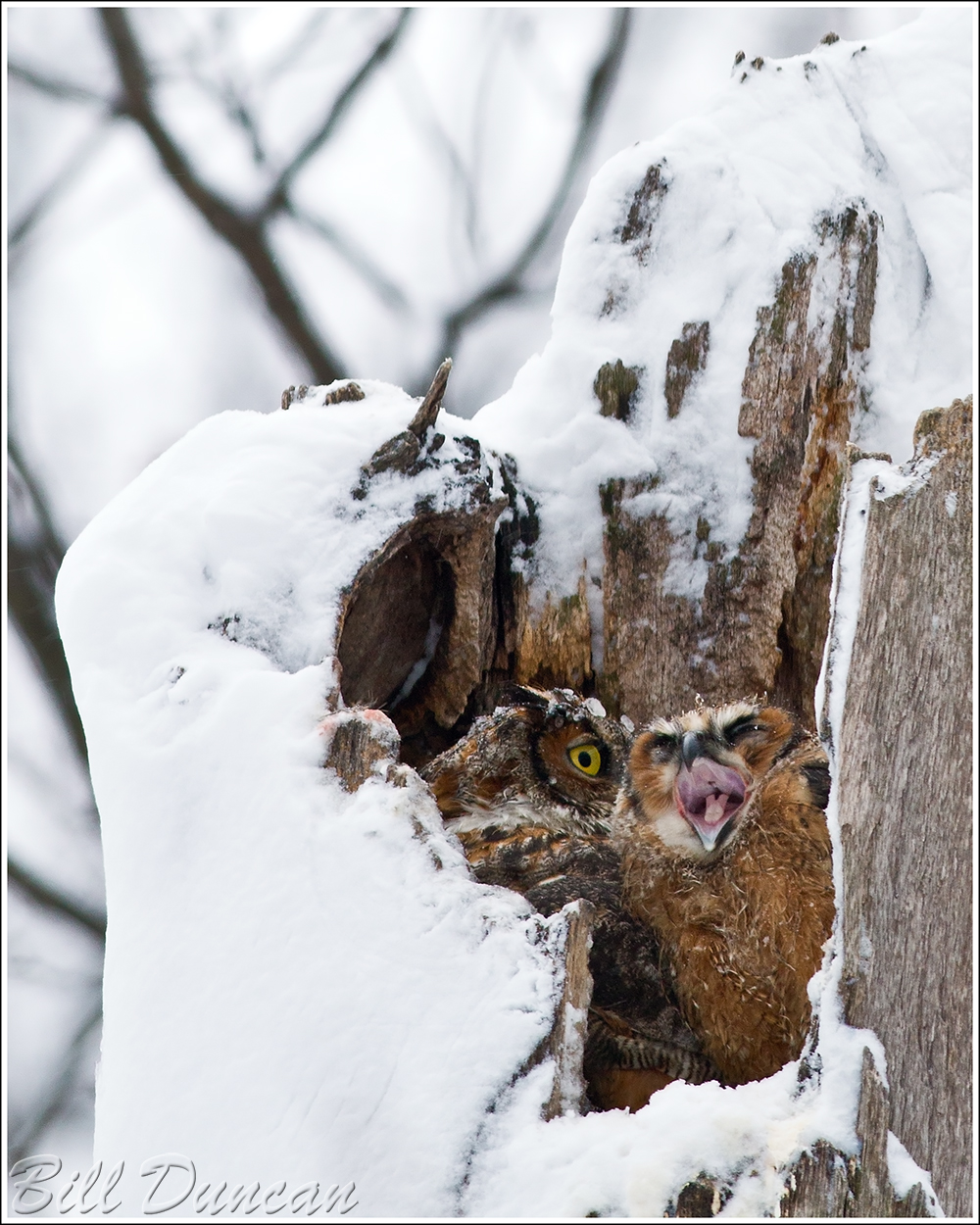
It’s surprising how often these guys take to yawning.  The poor things spend the first couple months or so stuck in the nest, so what else do they have to do?  I’m sure this time for them lasts forever, just like those endless days of summer youth do for us.  Do they reminisce as they move on through the years of those days spent packed in a tube with their siblings?

IMG_2130

“The Great Yawn”
Technical details: Canon EOS 7D camera, EF500mm f/4.5L USM lens, ISO 800,  f/5.6, 1/100 sec

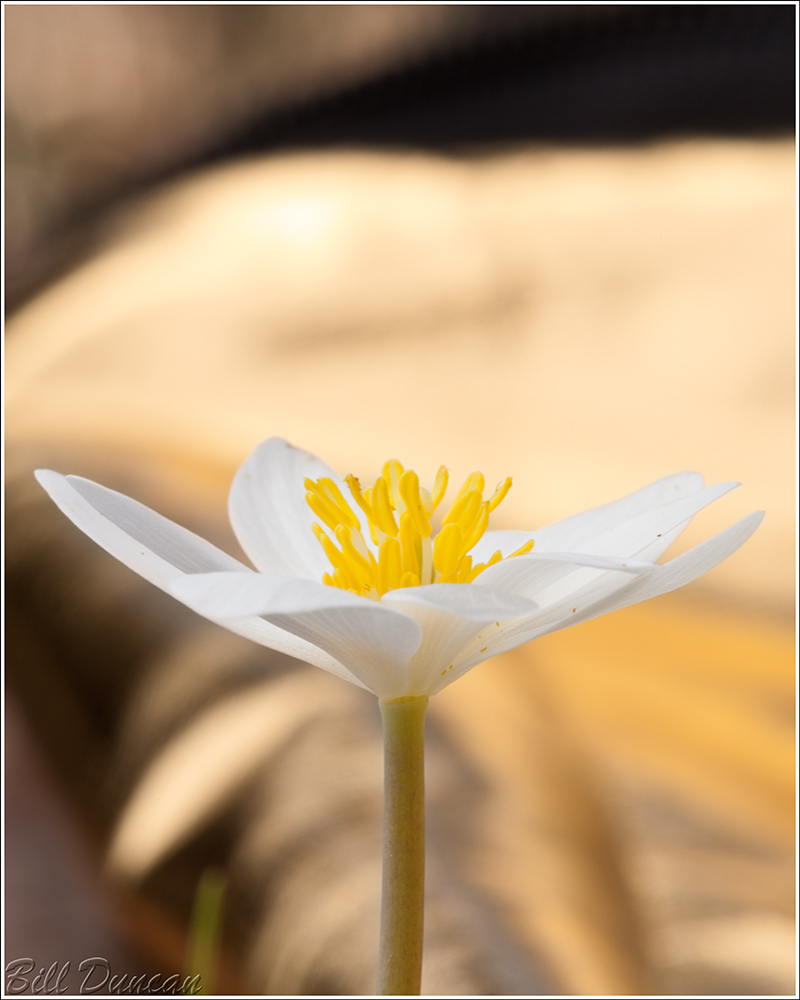
First Bloodroot of the Year!

Putting close to 15 miles on the trails this glorious weekend, I was noticing just how delayed spring was this year compared with the past several.  Harbinger of Spring is about at its peak at the St. Louis latitude, and Spring Beauty and Cutleaf Toothwort are a few days to a week before their peak will be here.  But, it is coming.  I saw thousands of these plants pushing there way up through the leaf litter along with Dutchman’s Breeches (very cute little buds, I must say).  I finally tried the rhizome of the Toothwort today while on a hike at LaBarque Creek C.A. near Eureka.  A member of the mustard family, the Toothwort’s small, fleshy and crisp rhizome has a tooth-like appearance, hence its common name.  Another colloquial name associated with this plant is Pepper root, also in description of the rhizome.  I found the taste to have hints of horseradish and green onion, with a little peppery heat.  The perfect size and flavor makes me think it would be perfect in a variety of dishes, including stir-fry and salads.  But since it would require killing a lot of plants, I doubt I will make a habit of it.

As I was coming to the last mile or so of my hike today, I thought I would once again strike out on my first Bloodroot of the season.  But, just in time, I saw a single, fully-opened bloom a couple of feet from the creek.  This was the only subject I photographed all weekend, but it was still a grand couple days for a walk.

IMG_3243

“First Bloodroot of the Year!″

Technical details: Canon EOS 5D Mark II camera, EF100mm f/2.8L Macro IS USM, ISO 200,  f/22, 1/15 sec

A Hike Down Rocky Creek

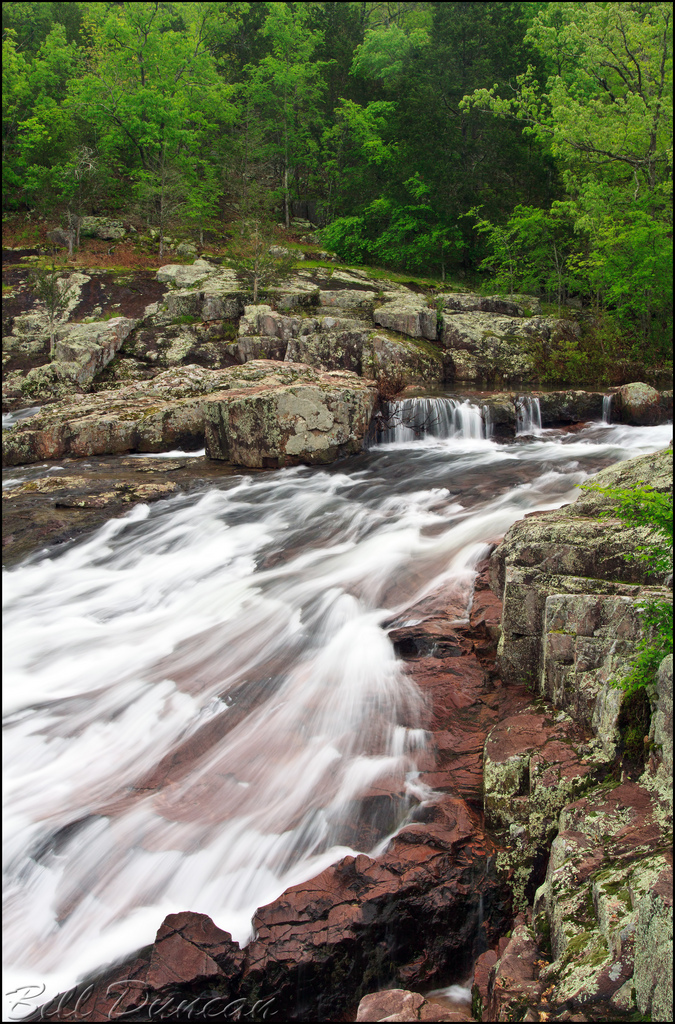
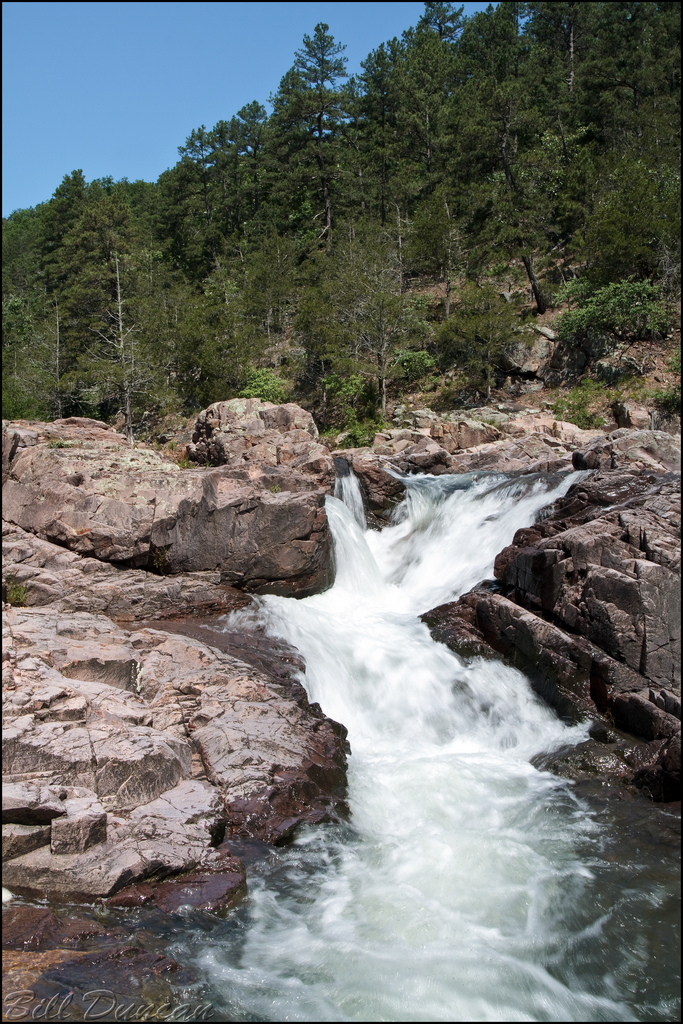
I have been wanting to make the hike down Rocky Creek to its confluence with the Current since I read about the idea in Louis C. White’s Ozark Hideways.  This past Saturday, Steve and I were both aching to get on the trails, to be with nature on a beautiful late winter’s day.  This hike was high on the ever-growing list of potential day-hikes, so we decided that this was the day for this one.  As was the plan, we started at the Rocky Falls N.A. parking lot.  We found that the water level in Rocky Creek was a bit higher than we expected.  While this is fantastic if your goal is to get some nice flowing water shots, it can make for some wetter than desired hiking and stream crossing.  Although this stream is not officially in the St. Francois Mountains, the exposed red rhyolite reminds me of the scenery there to the north-east.  We would see three of the best shut-in areas to be found in the Missouri Ozarks, with Rocky Creek Falls being first.  This image was taken on a previous visit.
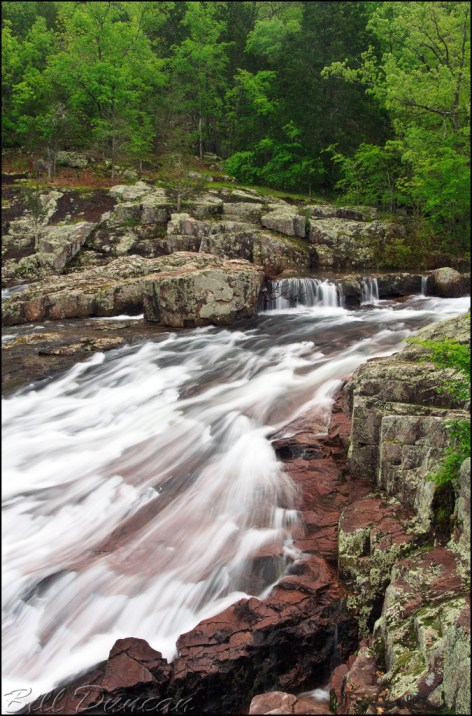
Rocky Falls

“Rocky Creek Falls″

Technical details: Canon EOS 50D camera, EF17-40mm f/4L USM @ 23mm, ISO 100,  f/16, 1/4 sec

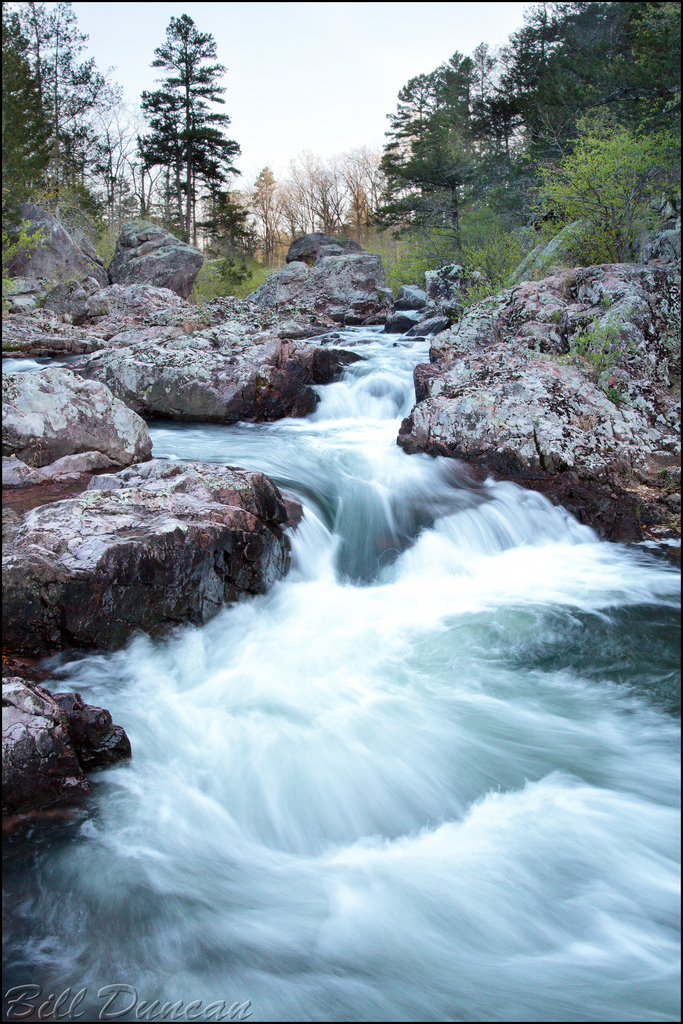
The first half mile or so of the hike is spent walking alongside the creek, past an impressive beaver-pond until this little side-spur hooks into the Ozark Trail.  A right turn leads to Stegall Mountain, one of the “higher” peaks in Missouri and Peck Ranch C.A.  We turned left to keep along with Rocky Creek and head ultimately to the Current River.  The OZT comes and goes from within sight of the stream.  When possible, Steve and I strayed from the trail and kept close to the stream.  About a half mile from the Hwy NN crossing, we came across the next series of major shut-ins, those at the base of Buzzard Mountain.  The photo below was made on a previous visit.
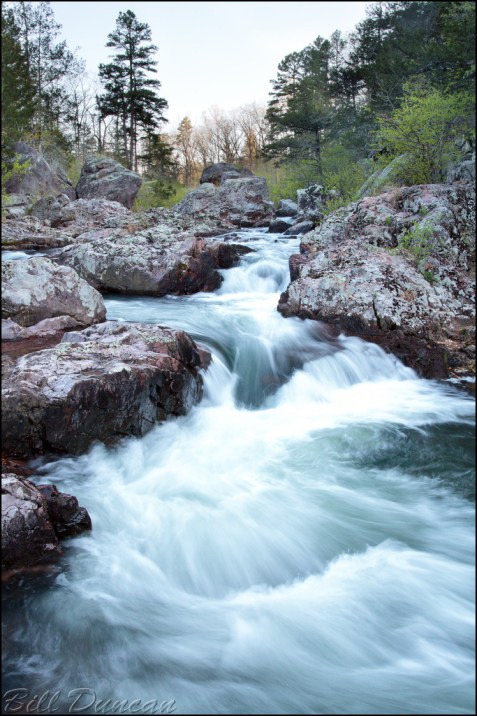
Buzzard Mountain Shut-ins

“Buzzard Mountain Shut-Ins″

Technical details: Canon EOS 50D camera, EF17-40mm f/4L USM @ 22mm, ISO 250,  f/14, 1/20 sec

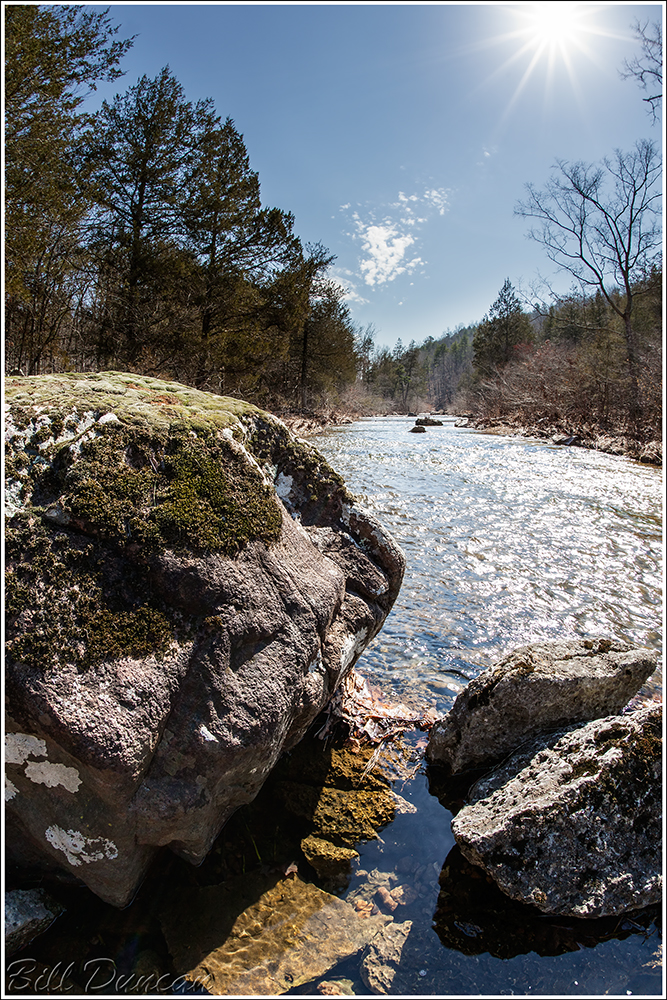
Continuing past these beautiful formations of rock vs. water we followed the stream.  It was difficult to make progress, as around every bend there were shelves of exposed, upraised porphyry.  These ~ 3.5 billion year old “benches” were perfect traps for lounging and loafing, snacking and passing the time philosophizing, all the while listening to the ever present sounds of the crystal-clear water fighting its endless battle downstream.  This image was made in between our breaks.
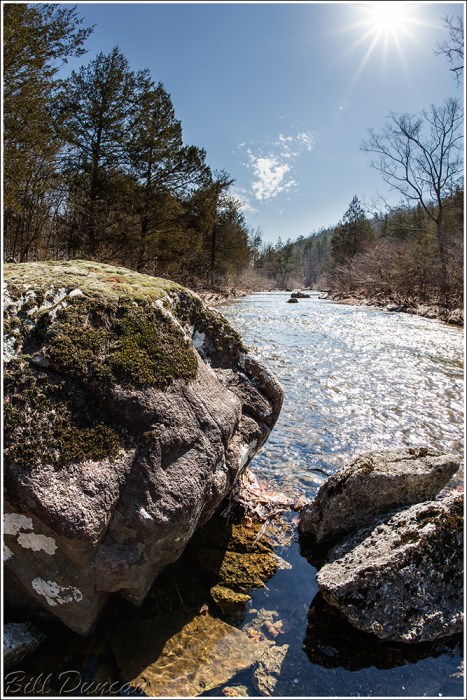
IMG_3052

“Another World″

Technical details: Canon EOS 5D Mark II camera, Sigma 15mm f/2.8 EX DG, ISO 100,  f/14, manual blend of two exposures

A mile or two past Buzzard Mountain we came across the third and last of the major shut-ins along Rocky Creek.  These shut-ins are at the base of Mill Mountain, and the Klepzig Mill can still be found here.  Somehow, after several visits I have still not photographed the mill structure.  Oh well, another excuse to return.  Below is a photo of the shut-ins made on a prior visit to the area.
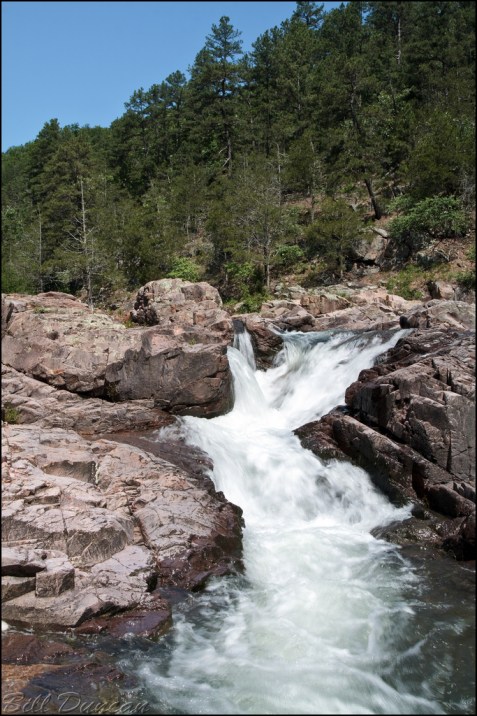
 

“Mill Mountain Shut-Ins″

Technical details: Canon EOS 50D camera, EF17-40mm f/4L USM @ 24mm, ISO 250,  f/16, 1/25 sec

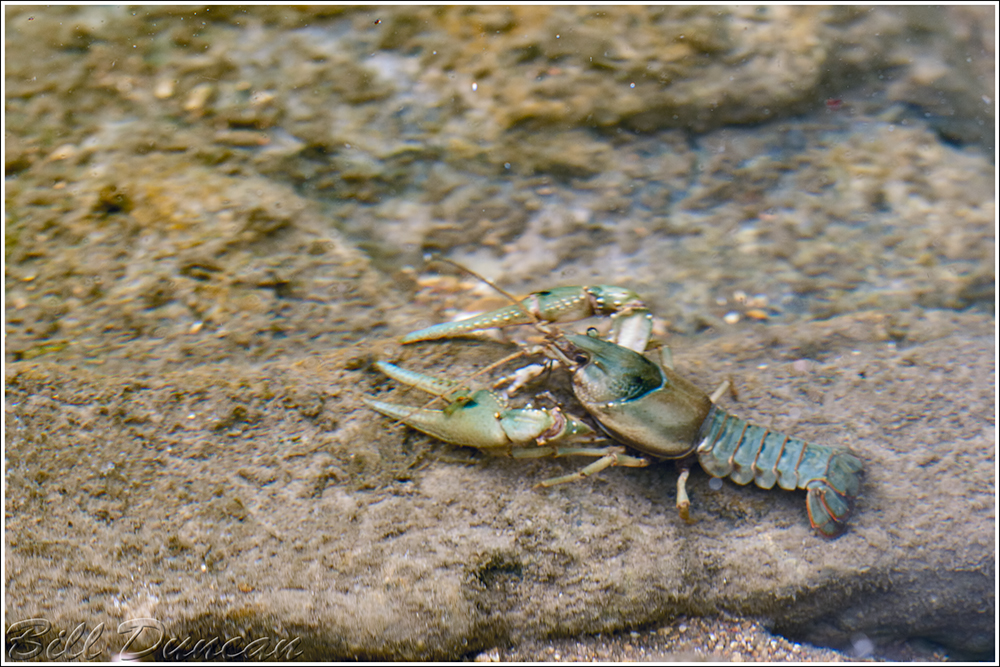
About here we left the OZT to continue east with the stream towards its rendezvous with the Current.  The vast majority of the course of the stream has a very shallow base; in most places it can be forded without wetting your knees.  Once in awhile, pools deep enough to swim in would come about.  These pools held some decent sized fish and looked quite inviting for a swim.  Near one of these we stopped for a bite, including some tuna sandwiches that Steve brought along.  At one point Steve missed his mouth and a chunk of tuna  landed in the water along a shallow shelf.  We watched to see if a fish would come along for a free bite.  No fish found this piece, but in a few minutes this guy, smelling the oils leaching from the fish presumably, came out of the depths to scavenge our waste.
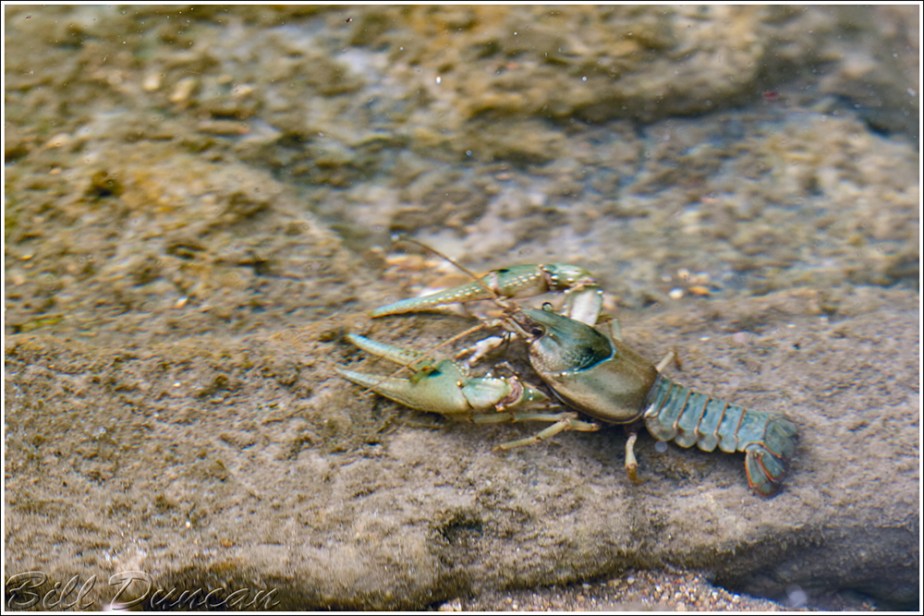
IMG_3115

“Spothanded Crayfish″

Technical details: Canon EOS 5D Mark II camera, EF100mm f/2.8L Macro IS USM, ISO 400,  f/4, 1/60 sec

Did you know…? The Missouri Ozarks are home to 25 species of Crayfish, seven of which are found nowhere else.  The ancient geology of the Ozark region has created spatially isolated streams, supporting varied aquatic habitats based on bedrock and erosional composition.  This has enabled high speciation rates of crayfish and other aquatic and riparian animals.

The Spothanded Crayfish is known to have specific color and other morphological differences between populations in Missouri.  In the western populations, such as this one found in the Current River watershed, the species is greenish in color and contains the dark spots  on the base of the pincers, while populations in the eastern drainages of the Meramec and Black Rivers usually do not show the spots and have red or orange tinted pincers.

Read more about the Spothanded Crayfish or any other of Missouri’s Crayfish by checking out this wonderful guide: The Crayfishes of Missouri, by William Pflieger.

Another two or three miles of stream-side bushwhacking, trail and forest road hiking and we found ourselves at the confluence, the now flat and tranquil Rocky Creek dumping its waters into the Current River.  The hike back was quicker and partially under the cover of darkness.  A highlight of our return was very close looks of an American Woodcock that we heard wobbling  among the dry leaves near the trail.  A favorite of mine.

We finished the day by grabbing a couple of pies at Saso’s in nearby Ellington.  The pies were fine, but no homemade baklava was on hand… 😦

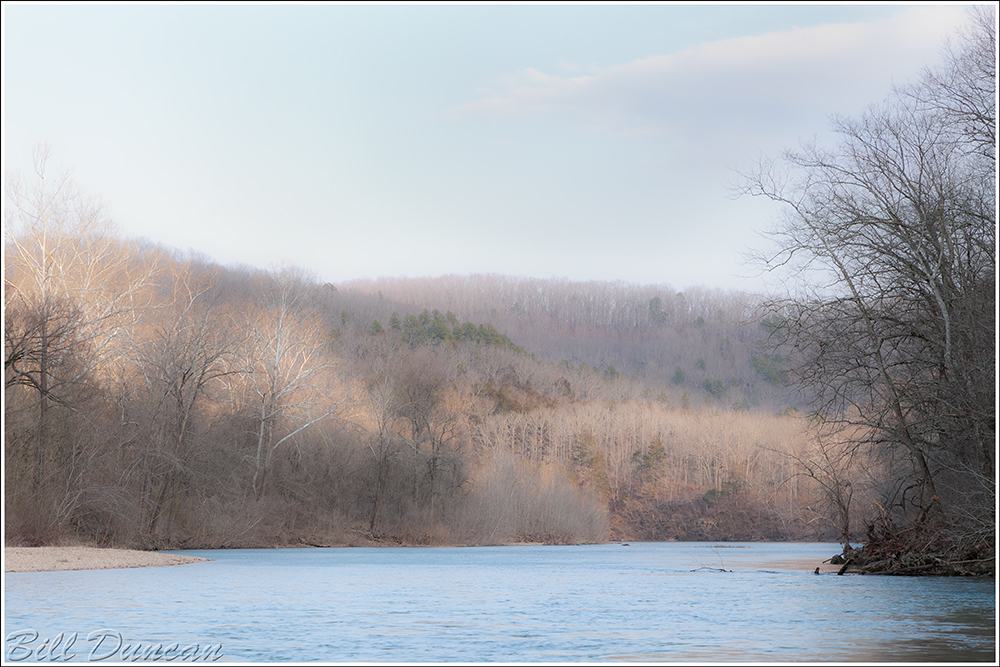
I’ll end with the late-afternoon view we had from the point of the confluence.  Rocky Creek is moving in from the right.  The sun was pushing its last of the day onto the hills and was partially obscured by rapidly-moving clouds.  This resulted in the dynamic light across the landscape on the opposite bank of the Current.  I decided to go with a bit of a pictorialist treatment, but I am not completely convinced it was the best direction to go.  I used the clarity slider in ACR RAW to give the image a softer, less defined appearance, hopefully bringing attention to the changing tones as well as to the calmness of the water, which is juxtaposed by the images made upstream that were placed earlier in this post.

Well, I hope this wasn’t boring, and perhaps makes you wish to witness some of these locations for yourself.  Until next time, make like a camper and go take a hike.
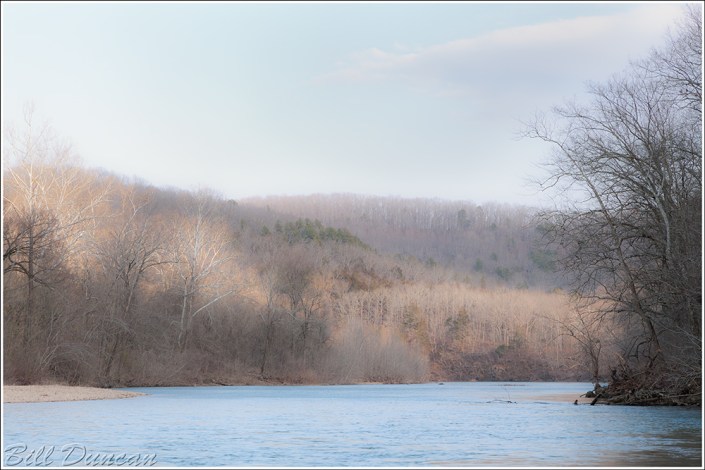
IMG_3139


“A Place in My Heart″

Technical details: Canon EOS 5D Mark II camera, EF24-105mm f/4L IS USM @ 96mm, ISO 125,  f/10, 1/13 sec
Shaw Nature Reserve – Photo of the Month

One of my first serious bird photos I made, showing a Red-bellied Woodpecker taking advantage of some Black Gum berries, was honored as March’s “Photo of the Month” by SNR.

4252123357_1593444ce0_o

“Red-bellied Woodpecker”

Technical details: Canon EOS 50D camera, EF70-200mm f/2.8L USM +1.4x @ 280mm, ISO 400,  f/6.7, 1/750 sec

A Warm Winter’s Day in the St. Francois

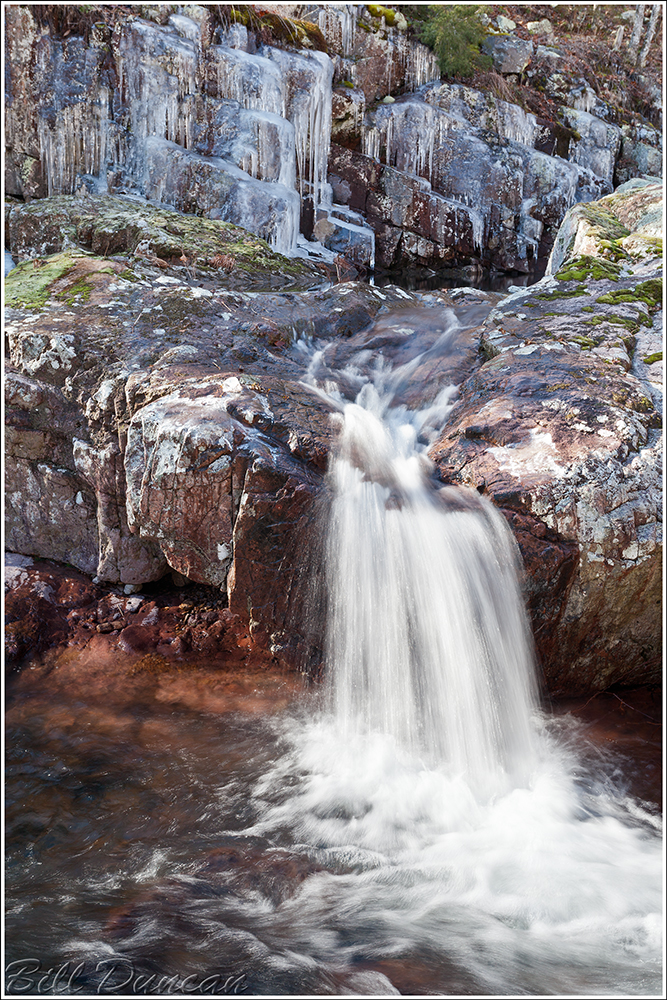
With forecasted highs near 60F, there was no question what I would be doing this past Saturday.  The only problem was where to take a hike!  Being mid-January and a warm, sunny day, I knew that Lower Rock Creek would not disappoint.  As expected, the Ozark Witch Hazel was in full bloom and beautifully fragrant.  The sky was completely clear and the lighting harsh for much photography of the many water features the area has to offer, but of course I had to try.  Ultimately I just tried to enjoy the hike and experience the wilderness that life continually rips from my fingertips.  There were a good number of ice formations still left on north-facing canyon walls and this particular patch was beginning to melt, releasing its maker into a mirror-like pool that ultimately fell down this drop and married with the rest of the stream.  I looked for ways to get closer to these formations but could not find a safe passage.

IMG_2548

Technical details: Canon EOS 5D Mark II camera, EF17-40mm f/4L USM @ 40mm, ISO 200,  f/11, manual blend of two exposures

On the way upstream, I stayed off the trail as much as possible; I preferred following the creek bed although wet and icy rocks often made this a challenge.  A couple of times near bends I was forced to go up and over a ridge because of lack of good foot or handholds above the creek.  After about three hours of rock hopping with my 30lb pack, fatigue started to creep in and I twisted my ankle bad enough to cause a minor sprain/strain.  This was very close to this wonderful swimming hole, so I pulled my boot and sock off and dunked my foot into this spring-fed water… for about 30 seconds.

 IMG_2551

 Technical details: Canon EOS 5D Mark II camera, EF17-40mm f/4L USM @ 25mm, ISO 100,  f/11, manual blend of two exposures

 On the way back downstream I followed the trail most of the way, shedding layers as the temperature rose over 5oF.  Along the route I was fortunate to spot a coupling couple of Eastern Garter Snakes.  These light-bodied snakes, much like grasshoppers and Morning Cloak Butterflies, will often wake up and see what’s happening on a warm winter day.  And usually, the males have something other than food in mind.  As can be seen in this image, the female was about two thirds larger than her mate.  Following a successful copulation, the female can store sperm until closer to the warmer months, and many snake species can and do copulate several times and will actively select sperm of her choosing.  I tried my best not to disturb this pair too much.  They were rather laid back and didn’t seem to be alarmed, even when I lowered the diffuser mere inches from them.  When I left the male was still busily making his intentions known, while she kept her eye and tongue focused in my direction.

IMG_2597

Technical details: Canon EOS 5D Mark II camera, EF100mm f/2.8L Macro IS USM, ISO 400,  f/11, 1/40 sec

 After having some lunch at the car I tried my best at finding the John James Audubon Trail that I have been wanting to visit for a while.  After some fruitless searching I was unable to find a single trail-head, placard, sign or blaze marker that I was confident in.  Unless I hear otherwise I will consider this a defunct trail.  So I decided to visit the Castor River Shut-ins and spend the remainder of the daylight hopping around on even more rocks.  The lighting was still rather poor and I had little inspiration for finding a composition so I experimented a bit, focusing on the effect of minute changes in exposure time on capturing the movement of flowing waters.

IMG_2651

 Technical details: Canon EOS 5D Mark II camera, EF24-105mm f/4L IS USM @ 60mm, ISO 320,  f/7.1, 1/13 sec

IMG_2789

Technical details: Canon EOS 5D Mark II camera, EF24-105mm f/4L IS USM @ 80mm, ISO 400,  f/6.3, 1/40 sec

Three Fuzzballs

“No important change in ethics was ever accomplished without an internal change in our intellectual emphasis, loyalties, affection, and convictions.  The proof that conservation has not yet touched these foundations of conduct lies in the fact that philosophy and religion have not yet heard of it.  In our attempt to make conservation easy, we have made it trivial.”

-Aldo Leopold-

IMG_7754

Technical details: Canon EOS 7D camera,  EF400mm f/5.6L USM lens, ISO 400,  f/6.3, 1/160 sec

Mondays Are For The Birds – Black-throated Green Warbler

The BTGW nests primarily in conifers such as white pines, spruce and hemlocks in Canada’s boreal forests.  Did you know…?  A major source of wood pulp for the paper and tissue industry are the trees that are harvested from the boreal forests of the world.  There are two easy things we can all do to limit our burden on these resources.

1) Recycle: Recycling is quite easy in much of the country and has a significant role in limiting the need for virgin wood pulp.  Also consider purchasing products made from recycled paper products.

2) Limit use of unnecessary paper products: A horrible player here are solicitous catalogs and junk-mail.  There are ways we can drastically reduce the pounds of this we receive in a year’s time.  https://www.catalogchoice.org/  The disposable paper towels and other sanitary wipes are other industries that use significant percentages of wood pulp.  There are many ways we can reduce usage of these products as well.

Yes, wood pulp is a renewable resource, and yes, humans are part of planet and will always be users of these resources.  However, what many do not realize is that replanting trees is not the same as replanting natural habitat.  Many bird species, including several wood warblers will only nest in specific, old-growth trees.  These habitats have taken hundreds of thousands of years to develop the complex interactions of this original, world wide web.  Planting a monoculture of cultivars developed to best meet the needs of man comes nowhere close to replacing the splendid diversity or wilderness aspects of these places hold.

“The only conclusion I have reached is that I love all trees, but I am in love with pines.”

-Aldo Leopold-

IMG_6189

“Black-throated Green Warbler, September 2012”

Technical details: Canon EOS 7D camera,  EF400mm f/5.6L USM lens, ISO 640,  f/5.6, 1/640 sec

Missouri’s Conservation Ethic

Did you know?  The Missouri program of The Nature Conservancy has protected nearly 150,000 acres of critically important natural habitat?  Their science-based approach to choosing important and biologically diverse habitats combined with their ability to work with private individuals, governments, corporations and a variety of other organizations has enabled them to protect forests/woodlands, savannahs/prairies and freshwater habitats across our great state.  Their annual update was released recently and in it are a few photographs I donated for it’s use.  Please have a read to see what The Nature Conservancy has been up to in Missouri this past year.  And please, do give some thought of making a charitable donation for your new-years plans.

IMG_2391 color

Technical details: Canon EOS 5D Mark II camera, EF17-40mm f/4L USM @ 40mm, ISO 100,  f/14, 1/10 sec