"What a thousand acres of Silphiums looked like when they tickled the bellies of the buffalo is a question never again to be answered, and perhaps not even asked." -Aldo Leopold
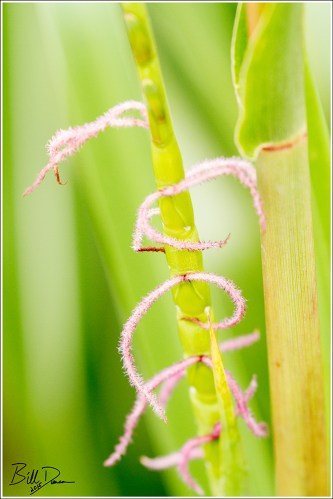
Today I am sharing a few photos of Eastern Gama Grass (Tripsacum dactyloides), an interesting plant that grows in abundance at Shaw Nature Reserve. This warm-season grass has a C4 metabolism and can grow in a wide variety of habitats. Due to its use as a forage crop, man has introduced this perennial plant across the Americas. Gama Grass is a distant relative of maize, separating approximately 60,000 years ago. The inflorescence of the plant can be seen above. Whereas maize has its male and female flowers borne on separate spikes, Gama Grass carries its flowers on separate sections of the same terminal spikes. You can see the exposed anthers towards the upper 75% of the spike, while the developing seed are located in the lighter green sections nearest the stem. The photograph below shows a closeup of the exposed stigmas, waiting for the wind-borne pollen.
Gama Grass Stigma
In the final image, you can see a grape vine using a Gama Grass spike for its support.
It is about that time of year. I am again excited to announce that OZB will be presenting his work (~100 unique prints, specialty enlargements, calendars, greeting cards and more will be available) at Art at the Shaw Nature Reserve 10th Annual Show & Sale to be held the weekend of November 7th and 8th. There will be more than 20 artists, providing art in a wide variety of mediums, including one particularly pathetic photographer… 😉 Here are directions to the show…
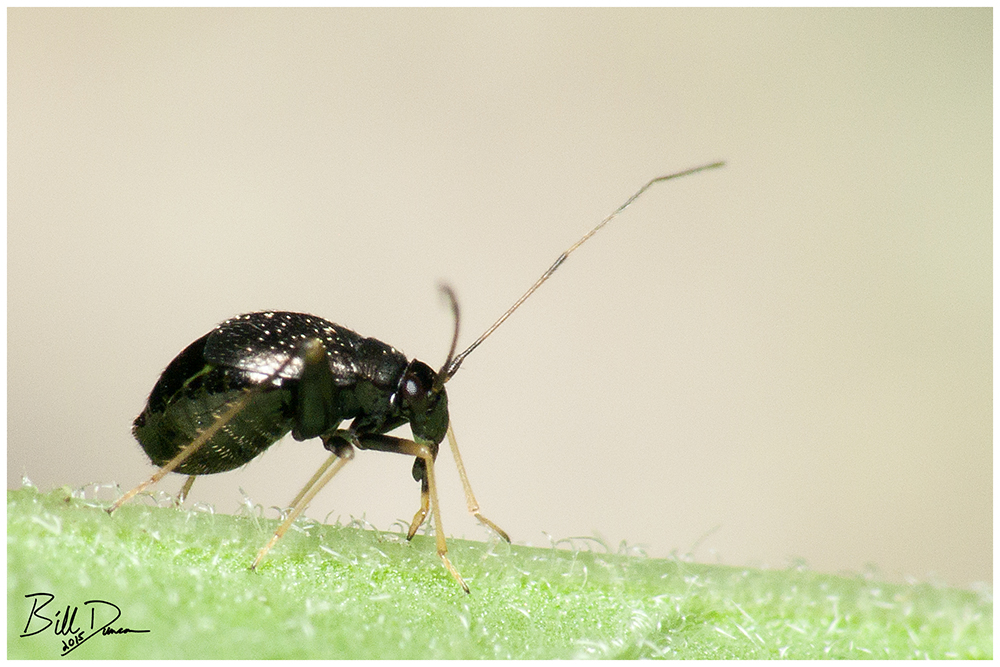
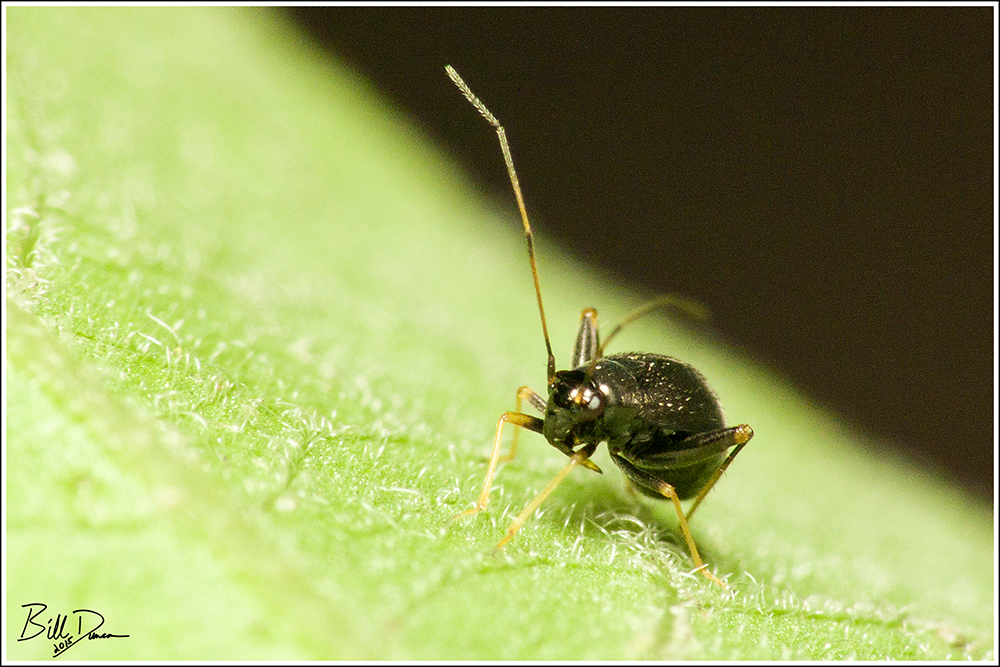
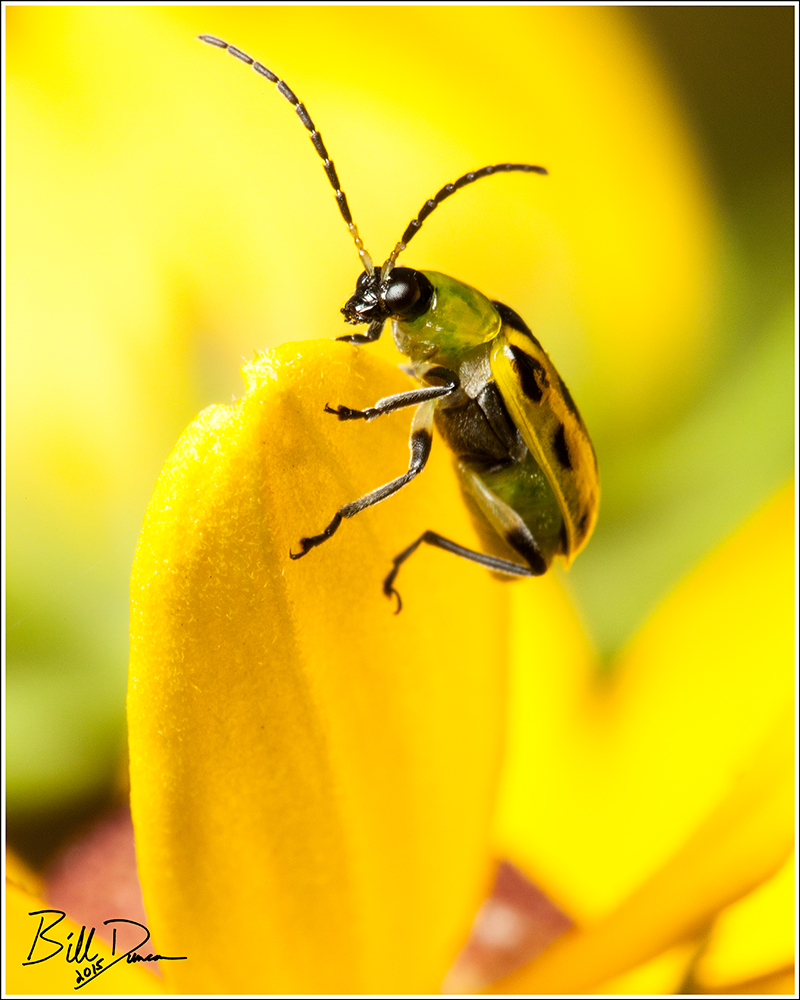
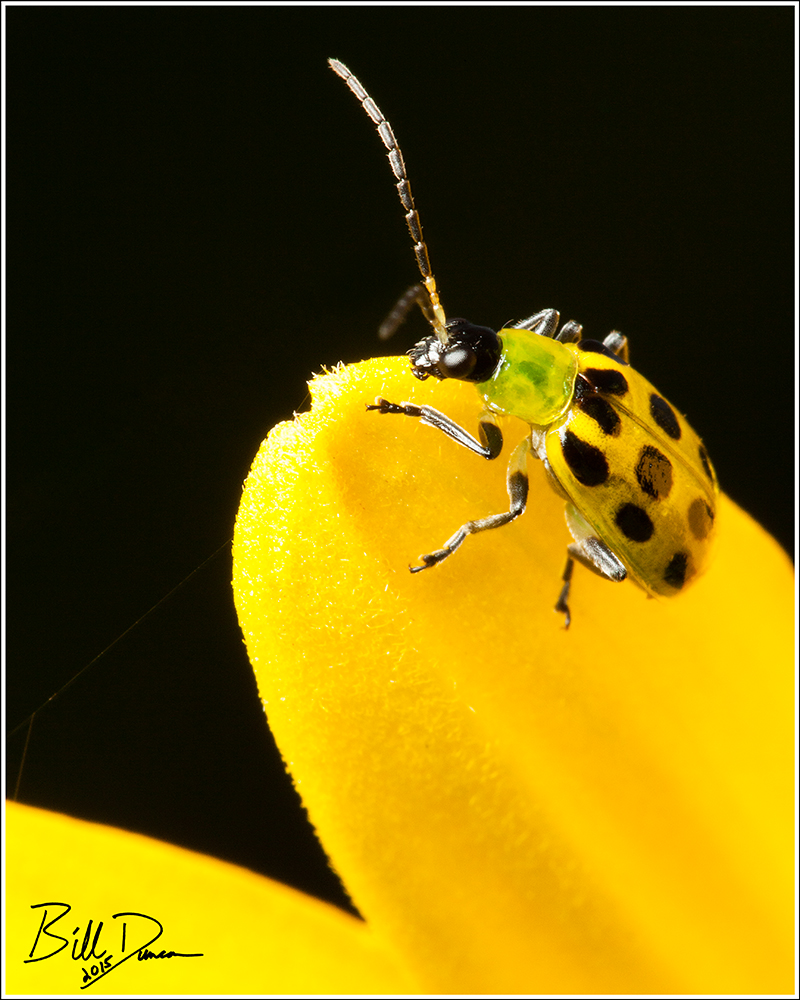
These tiny ones are ubiquitous in a number of habitats and host plants, reach 1-2 mm in length as adults and are pests to a number of agricultural crops. This brachypterous (short-winged) female was photographed on a Maypop vine (Passiflora incarnata) at Shaw Nature Reserve in the northern Ozarks of Missouri.
We came upon this little spiky one at Shaw Nature Reserve. I believe this to be a nymph of the Helmeted Squash Bug (Euthochtha galeator) Family – Coreidae.
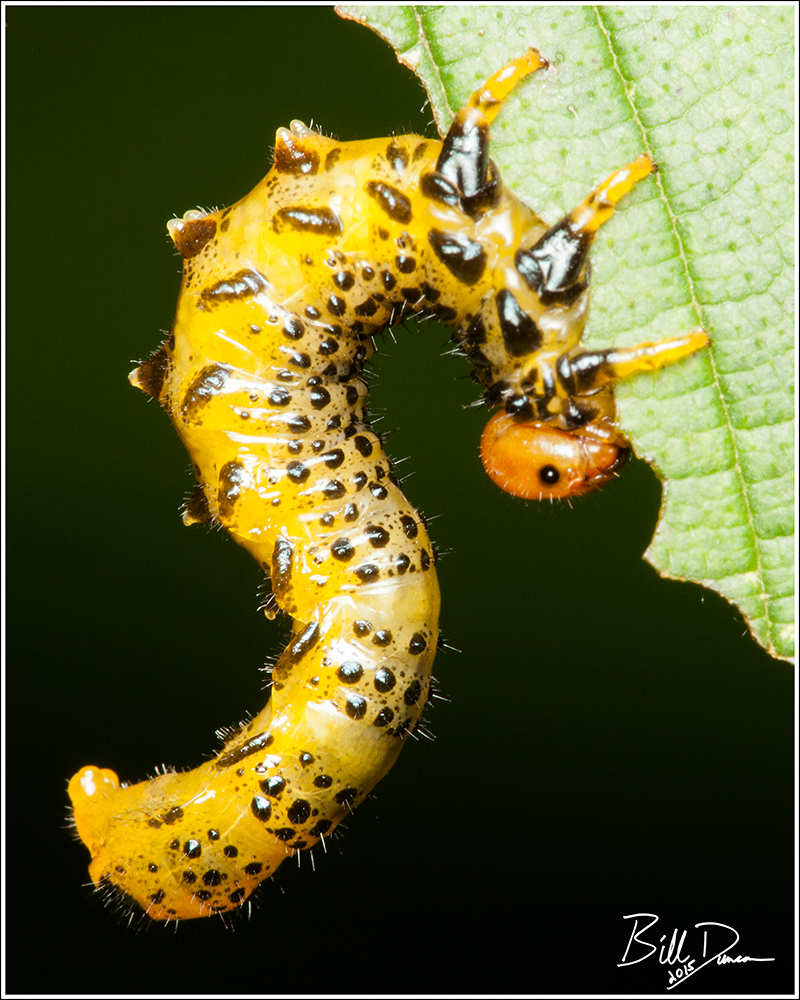
Did you know that there is a primitive group of the hymenoptera with free-living larvae that look very much like the caterpillars of the lepidoptera? Known as the Sawfly, there are morphological distinctions between them and the caterpillars and they can also be distinguished by this defensive posture adapted by the Sawfly larvae (Arge sp.) pictured here.
And now for something completely different… I have been working on the following video off and on for most of the summer. I’ll post it up here, and will speak a little about it and share some stills and other photos below. I would love to hear any thoughts you might like to share.
Working on this video has been educational in more ways than one. All the footage used was taken with the GoPro Hero 3 (gifted to me by my lovely and generous wife, Sarah. Thank you!). Although capable of tremendous quality, there are challenges and many things to learn when making this type of video. Although I improved with a little practice, a few problems are still apparent in the final cuts. There is a back available for the GoPro that allows you to see what is being filmed in real time. However, this piece cuts the already limited battery life by a lot, and I do not own one. This resulted in the fish being partially or fully cut out of the frame more often than desirable. I partially corrected this problem by finding some prescription swim goggles (quite cheap!), snorkel and swim shoes. This combination allowed me to get in the water and behind the camera. After a little practice, filming the different species in such a way as to not intimidate them became easier.
Another issue that I had is obvious at different parts of the film – early stage hypothermia. Although these clips were made on some of the hottest days of the summer, these spring-fed streams cooled me down so much that I could not control my limbs from shaking. I am considering investing in a wet suit to avoid this in the future.
This activity helped start me on knowing Missouri’s fishes a bit better. I had never given much thought, but so many species have to be in-hand in order to get a proper identification (at least by me).
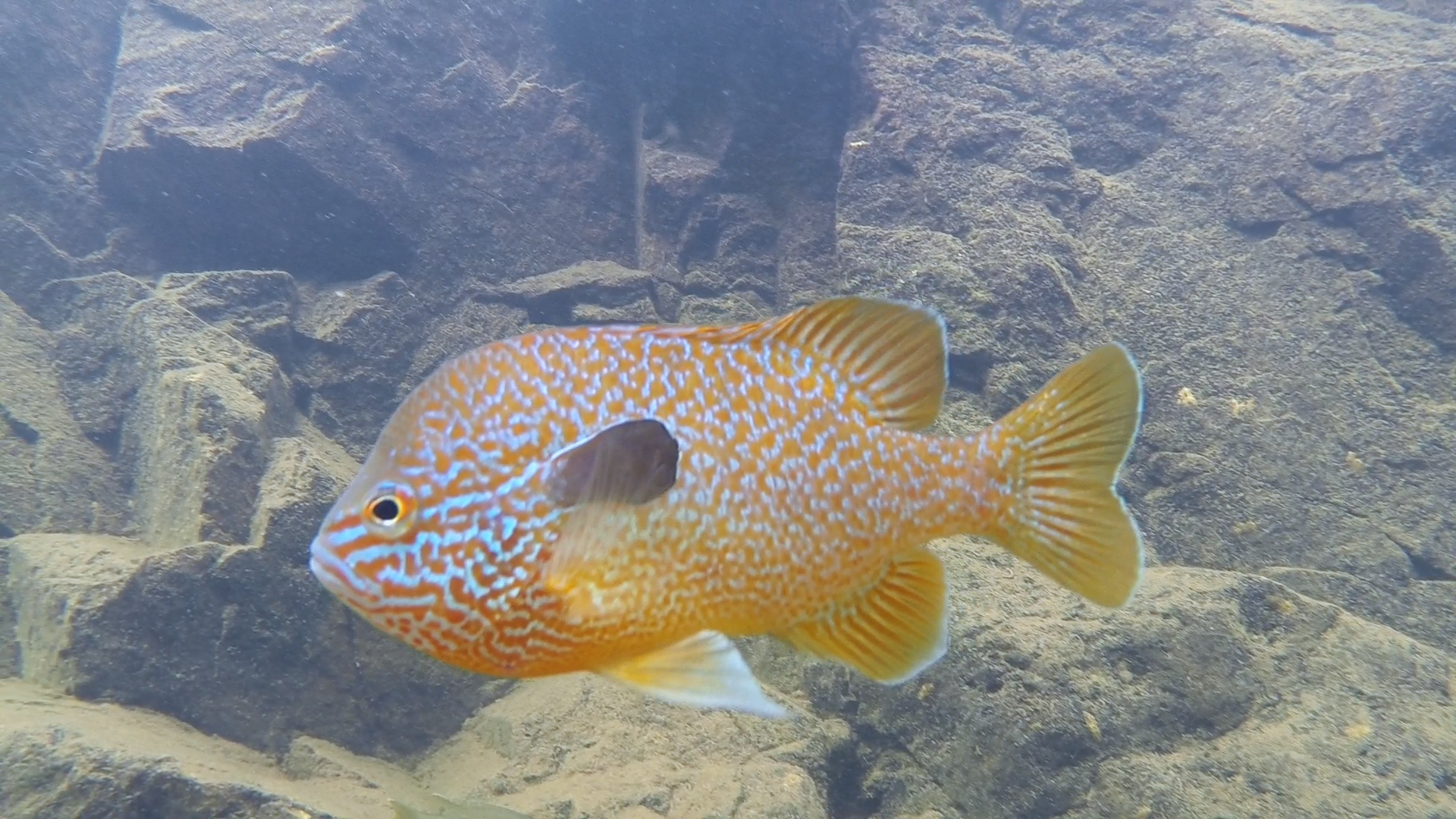
Long-eared Sunfish
The Long-eared Sunfish were incredibly brilliant. When filmed in less than three feet of water under direct sunlight, the colors dazzled.
Smallmouth Bass
The Smallmouth Bass were quite common, slowly patrolling the pools that were their private hunting grounds.
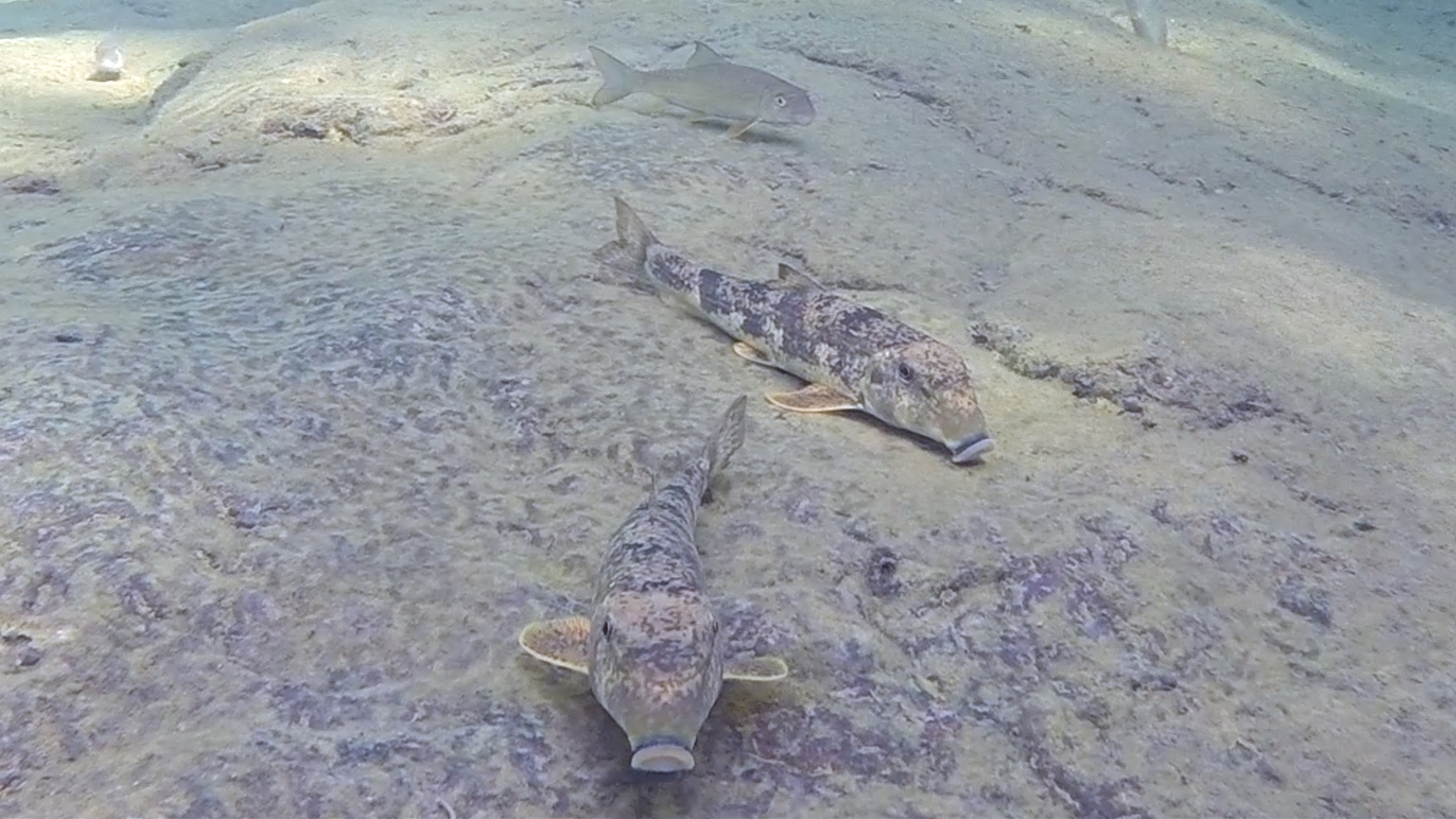
Hogsucker
The bottom feeding Hogsucker were one of my favorites. Quite colorful and contrastingly patterned, they could still disappear easily on the sun-dappled stream bottoms.
Green Sunfish
The Green Sunfish were one of the most common and surely the least shy stars of the film. Quite often they would inspect the camera and our skin with their mouths.
Minnow
Even with field guides I find it impossible to name some of the minnows. These guys were surprisingly large. I think they may be a shiner species, but am unsure.
Red Horse
There were many large Red Horse species found in deeper stretches of the streams.
Spotted Bass
This was the only Spotted Bass individual we were to come across.
Darter
Greenside or Johnny Darter? I just can’t say.
Yellow Bullhead
The star of the film? I think so…
Wood Duck Drake
The out-of-water footage was taken via canoe along the upper stretches of the Jack’s Fork River. A terrific trip we had, back in May, where the weather was fine and the birds were plentiful. Getting to know the underwater vertebrates really helps to appreciate the roles many of the birds play along an Ozark stream and how all the members of this intertwined ecosystem make their respective livings. This Wood Duck drake posed for a short time towards the end of the day.
Osprey
Finding an Osprey is a telltale sign that there is a quality fish community below our seats.
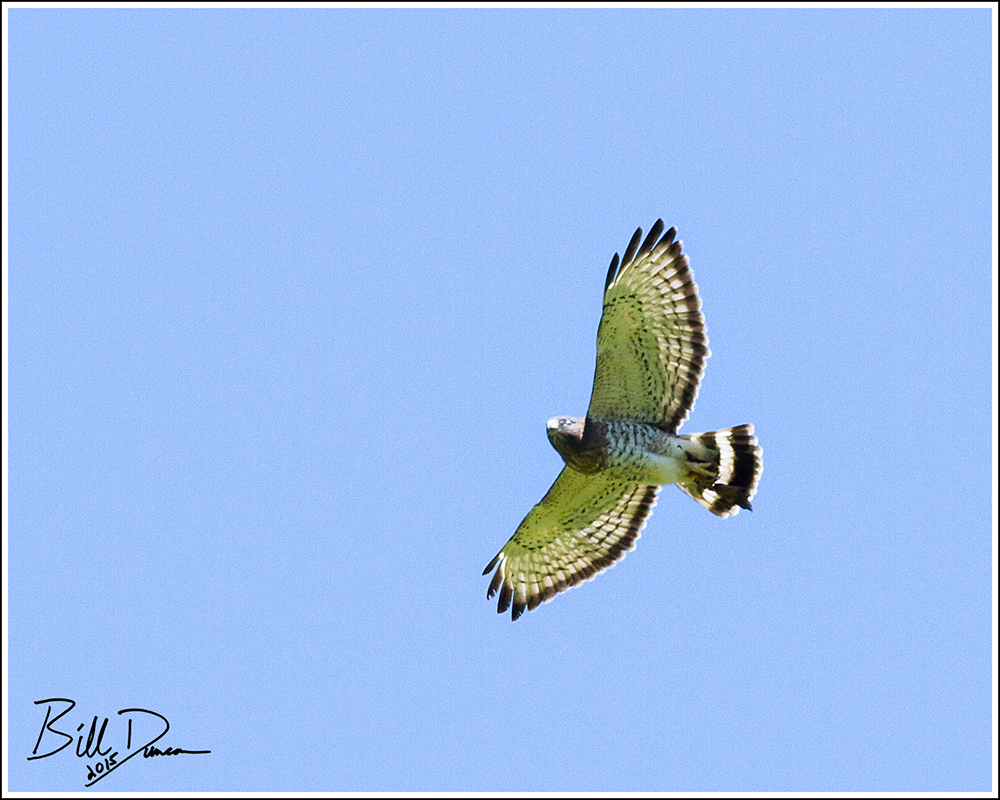
Broad-winged Hawk
The high-pitch sound of the Broad-winged Hawk almost always precedes a look. This was no exception.
Green Heron
Green Heron know where the fish are to be found as well.
Spotted Sandpiper
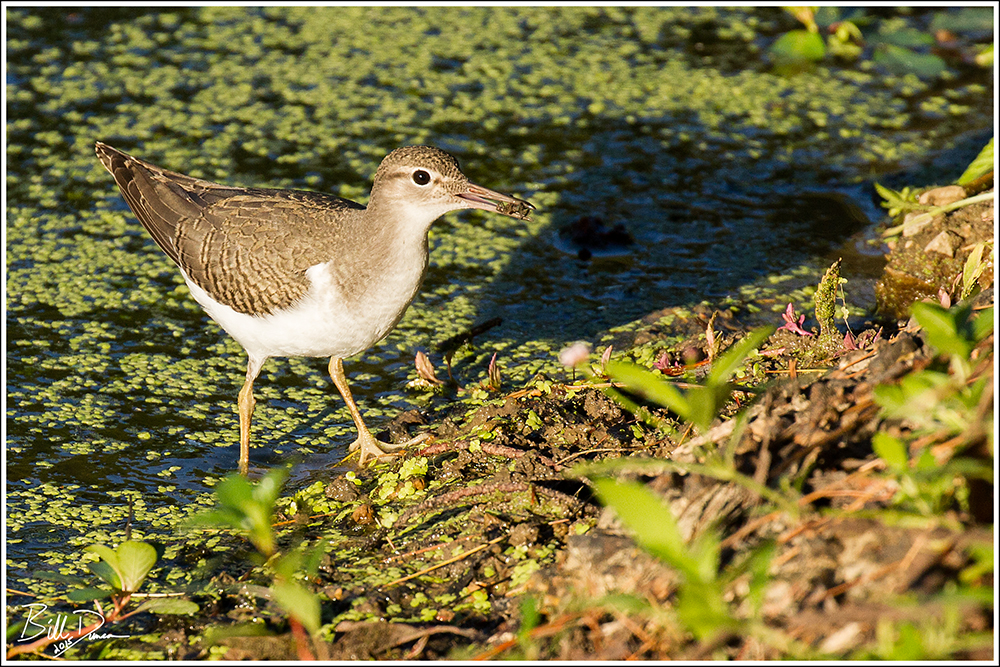
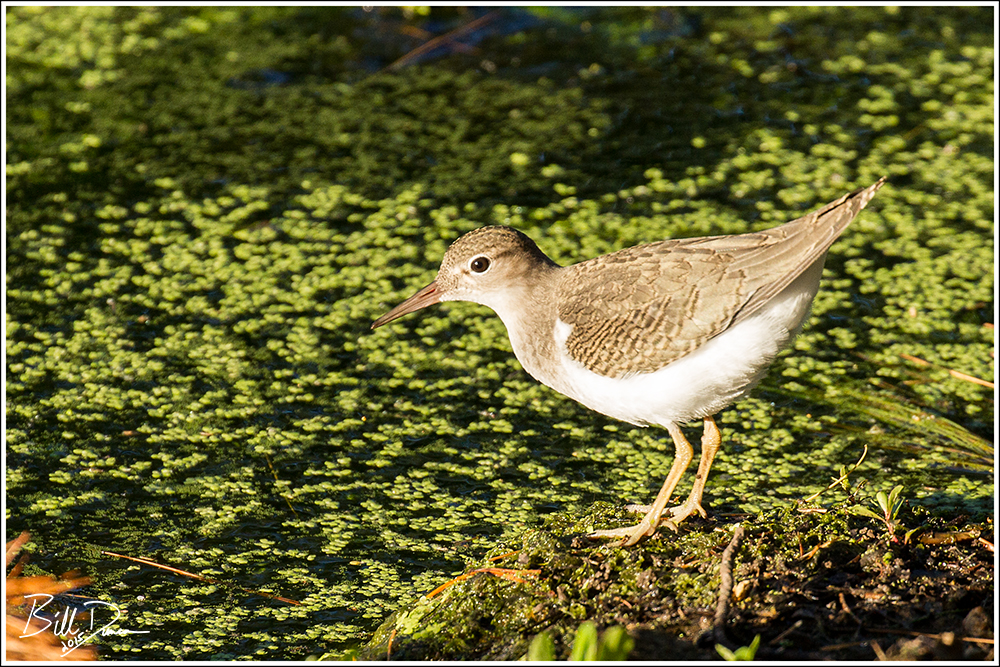
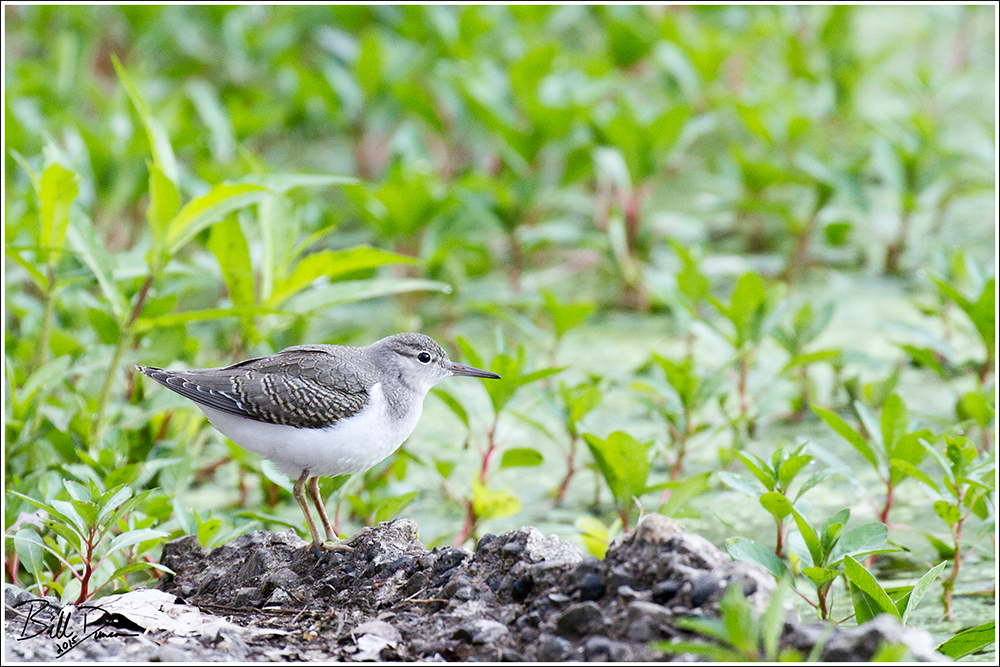
Typically, if you spot a shorebird along an Ozark stream bank, it will be the Spotted Sandpiper. Look for the indicative bobbing of the tail as it makes its way along the rocky shores.
Common Map Turtles
Common Map Turtles were found anywhere they could get a surface on which to bask. They were so keen on heating themselves up that we were allowed to float by at pretty close distances before they took the plunge back into the water. These guys will feed on the invertebrates such as mollusks and arthropods as well as any fish they are able to catch.
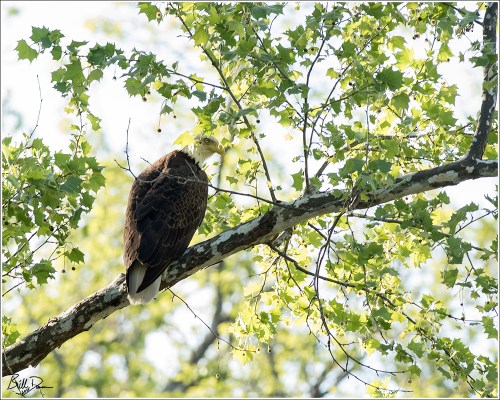
Bald Eagle
Finally, it just isn’t a trip out to any significant Missouri waterway without finding a Bald Eagle or two.
The mimicry that insects exhibit can be astounding. Walking around Shaw Nature Reserve this summer, I noticed quite a fresh and disgusting looking bird dropping on a small bush near the trail. Something made me take a closer glance and I discovered it wasn’t a poop at all, but a caterpillar. The caterpillar was an early instar of the Giant Swallowtail Butterfly (Family Papilionidae). These caterpillars feed on member of the citrus family, the Rutacea, and this individual was found on a small hop bush. Youngsters like this one will most often be found directly on the surface of a leaf (as poops are most likely to be found), while older stages are likely to be found on leaf petioles or slender branches. In citrus production areas of the south, these guys have the nickname “Orange Dogs” due to their dietary needs. They can be considered a pest in such situations. Unfortunately, I forgot that, if harassed these guys will evert a pair of bright red structures called osmeterium. The function of these organs appears to be defensive in multiple ways. Often brightly colored, they can look quite like the forked tongue of a snake, and go along with other morphological adaptations in some members of the swallowtails in making them appear like a snake. In addition, numerous chemical compounds can be released with the osmeterium that have been shown to repel ants and other potential insect predators.
Giant Swallowtail
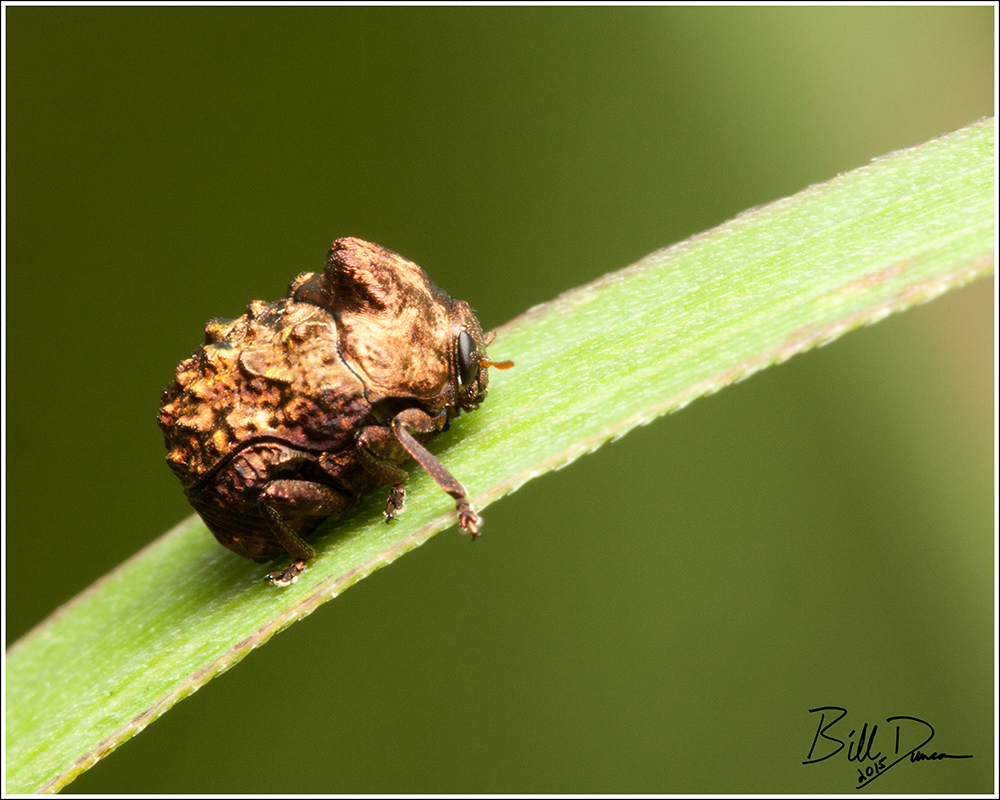
Moving from bird droppings to the droppings of a caterpillar we come to this fascinating creature that is most often found on raspberry bushes. A member of the diverse family of beetles – the Chrysomelidae, this Warty Leaf Beetle (Pacybrachis nigricornis), will tuck in its appendages and drop, looking exactly like a caterpillar’s droppings, or “frass” (anyone remember the action figures from the 80s, the Rock Lords?).
Warty Leaf Beetle
-OZB
References
Marshall, S.A. 2006. Insects Their Natural History and Diversity. Firefly Books Ltd.
Evans, A.V. 2014. Beetles of Eastern North America. Princetone University Press.
Damman, H. 1986. The osmeterial glands of the swallowtail butterfly Eurytides Marcellus as a defense against natural enemies. Ecol.Entomol. 11: 261-265.
















 A Thousand Acres of Silphiums