"What a thousand acres of Silphiums looked like when they tickled the bellies of the buffalo is a question never again to be answered, and perhaps not even asked." -Aldo Leopold
I’ll admit it, I will typically put members of the Geometridae right back on the plants that I found them on without taking any photos. The “inchworms” or “loopers” are typically very small and difficult to get a good photograph of. Additionally, species in this family tend to exhibit a great deal of variability in colors and patterns. To make matters even worse, members of this family tend to be polyphagous, or generalists when it comes to their host plants. These factors can make it quite difficult to accurately identify the specimens to species level when working only with photographs. However, this is a very important family when it comes to available biomass to birds and other predators in the spring and early summer.
Tulip-tree Beauty (Epimecis hortaria – 6599)
I tend to be a big fan of common names given to moths, but I feel this one misses the mark. This season, I found the tulip-tree beauty (Epimecis hortaria – 6599) on sassafras, pawpaw and flowering dogwood. Why they chose this name for such a generalist species is beyond me. However, I guess it definitely is a beauty.
Tulip-tree Beauty (Epimecis hortaria – 6599)
This species is known to have a good deal of variability in the color and patterns they exhibit, but the half dozen or so I found all looked like the one pictured in this post. Maybe this variability is region specific, or I just had bad luck? It is a relatively easy species of inchworm to identify due to its unusual body proportion, making it look as though it might brag about how much it can bench 😉
Tulip-tree Beauty (Epimecis hortaria – 6599)
This poor guy has fallen prey to an external parasitoid wasp (Euplectrus sp.) larvae and, unfortunately, will not make it to its adult stage.
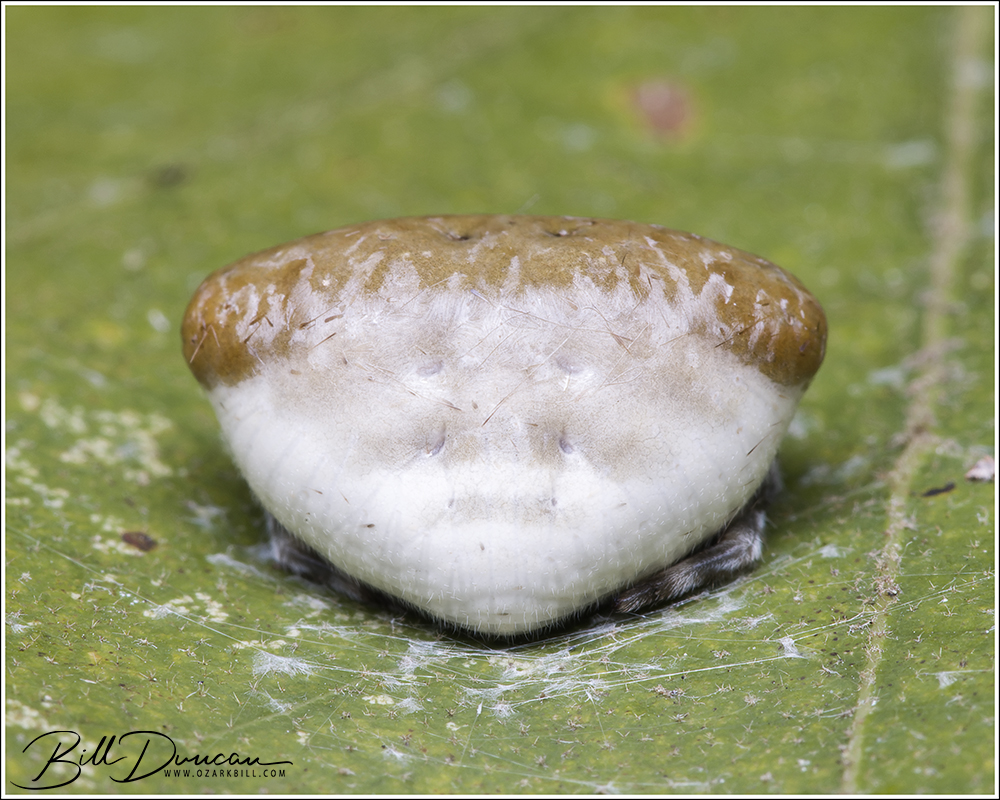
On a cat hunting trip to St. Francois State Park in September, Casey and I had the great fortune of finding one of the coolest spiders in the state – the toadlike bolas spider (Mastophora phrynosoma). Females of this species are well known for their unique hunting method. By day, they sit around, often out in the open, looking very much like a bird dropping. At night, instead of building webs, they move to the edge of a leaf or twig and hang a single line of silk with one or more sticky globules attached – their “bolas” that they use to ensnare moths and other flying prey. See this great video by the BBC for a demonstration of this.
This is the second year in a row I’ve had the fortune in finding one of these girls. If I’m lucky enough next year, I’ll be sure to try my hand at catching her hunting behaviors with the camera.
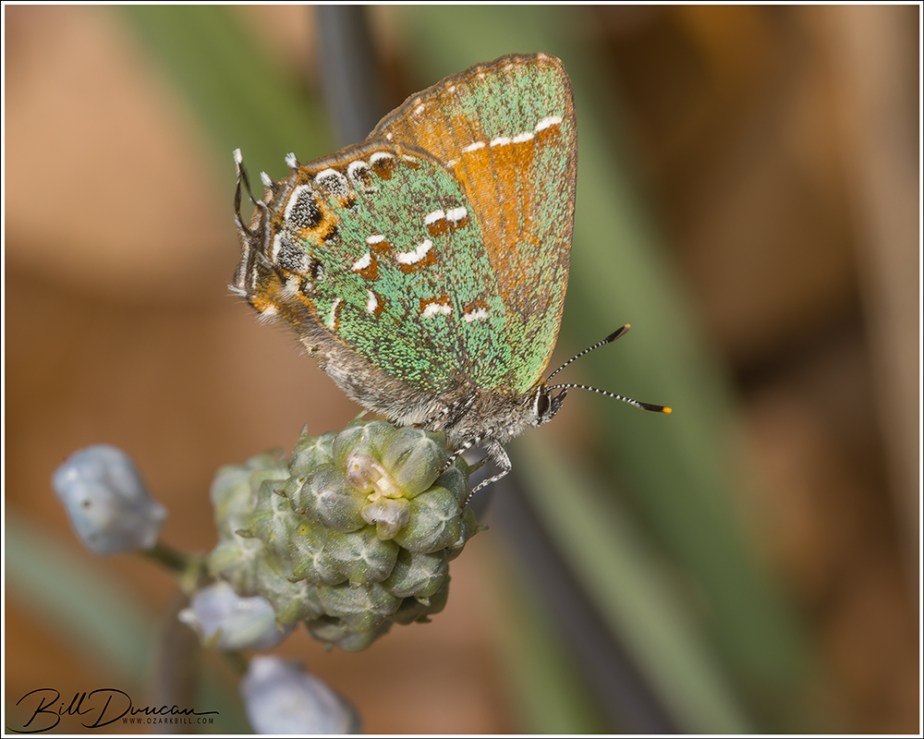
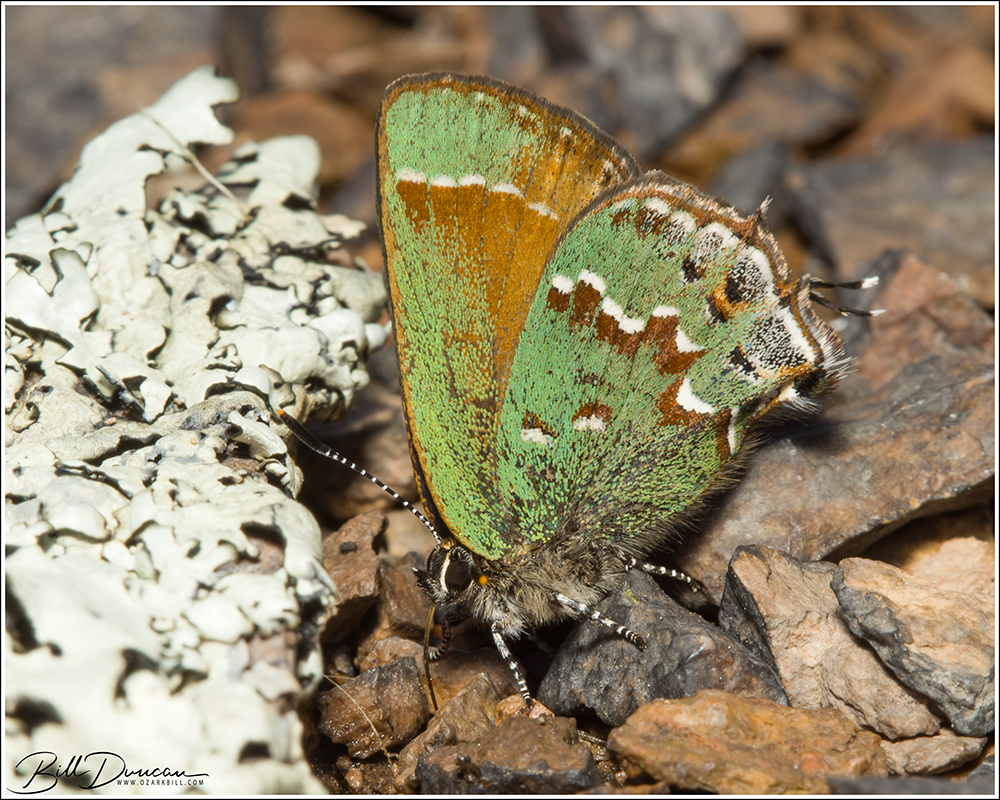
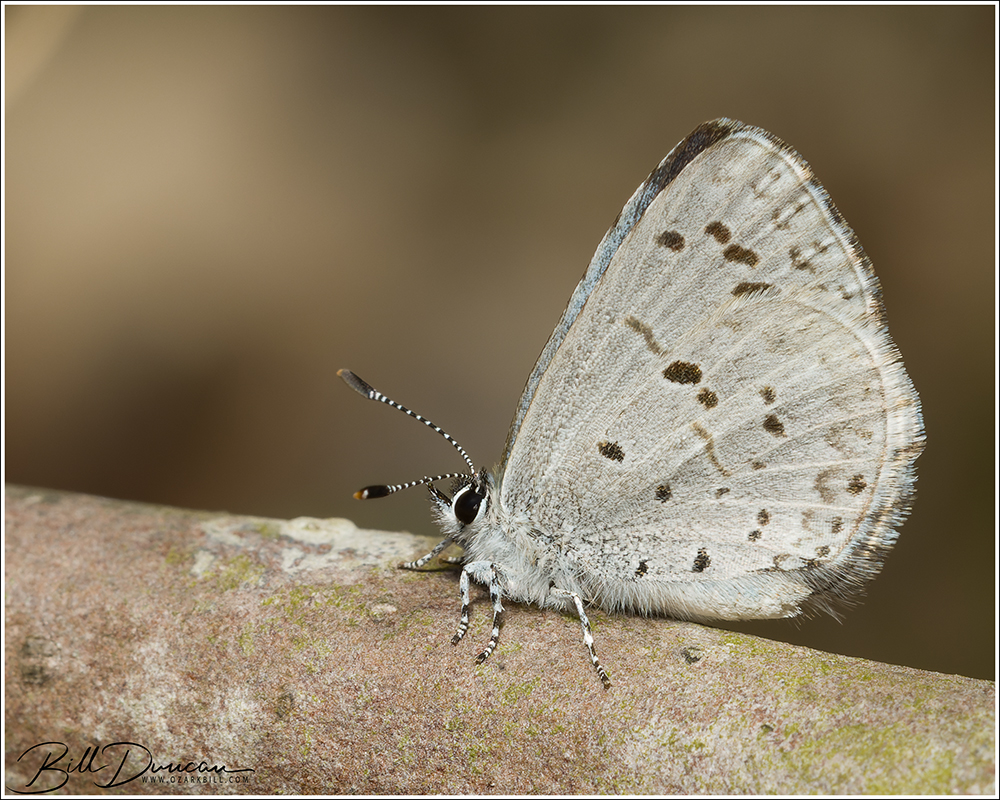
Tonight I’m just sharing some photos of a few lovely Lycaenid butterflies that I had the pleasure of photographing this season. The Lycaenidae family is the second largest family of butterflies, with about 6,000 species worldwide. The highlight was the bountiful season that the juniper hairstreak (Callophrys gryneus) had. Prior to this year, I had only seen one or two in a season, usually without my macro rig with me. In a few trips to the glades in Jefferson County this spring, Casey and I had at least two dozen individuals. They are not usually cooperative, but we worked pretty hard to get something.
First up is the afore mentioned C. gryneus.
A not so lovely eastern tailed-blue (Cupido comyntas)
The perfectly names spring azure (Celastrina ladon)
I know I posted some similar pics last year, but I can’t get enough of these flowers. Although we literally had thousands of these flowers blooming in the yard this year from seed I collected last fall, I didn’t get around to photographing them until on a WGNSS Nature Photo Group trip to Don Robinson State Park in early September.
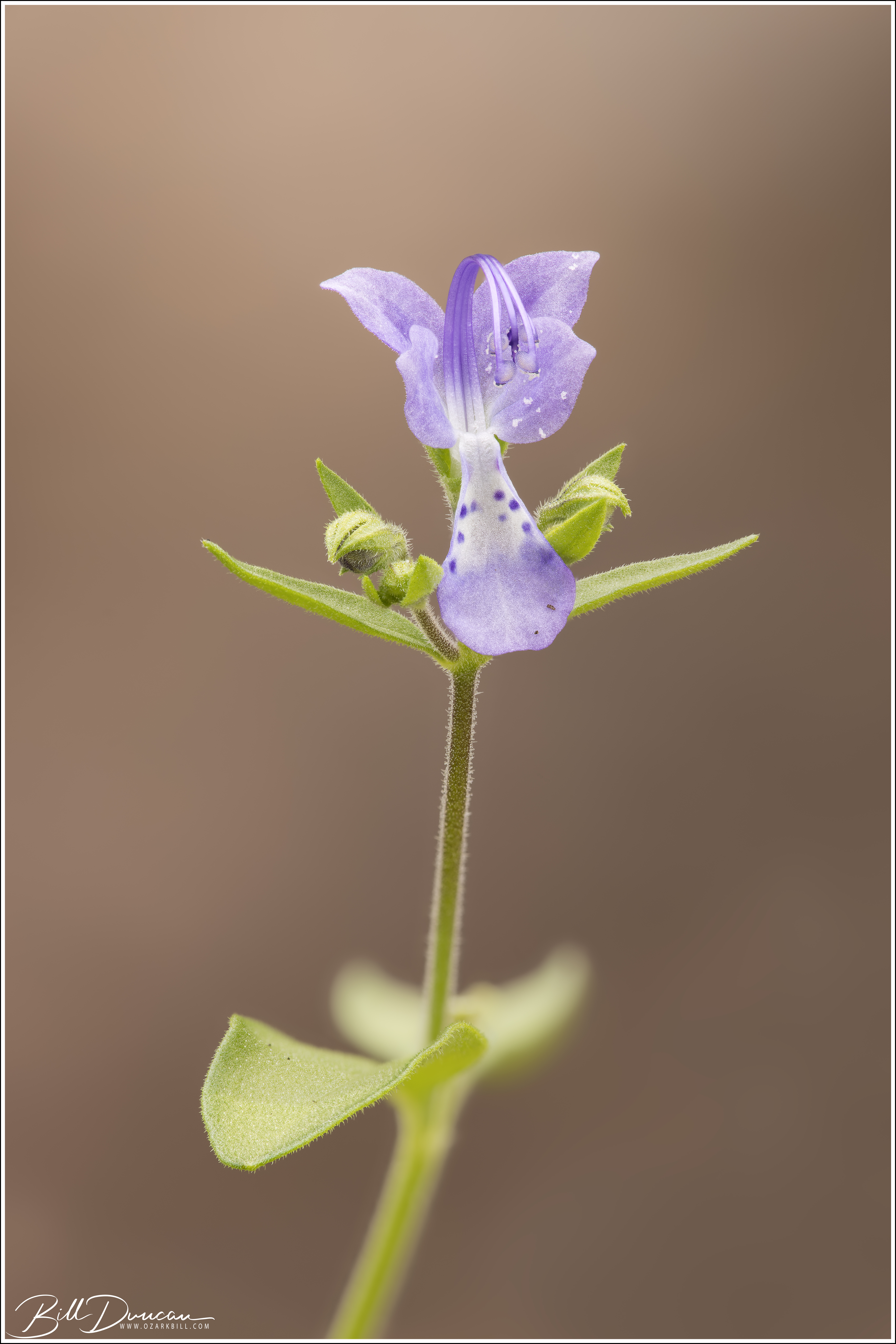
Forked Blue Curls (Trichostema dichotomum)
These flowers are both tiny and deep in multidimensions. Because of this, a narrow aperture is typically required to photograph with enough depth of field to get all parts of the flower in reasonably sharp focus. However, stopping down the aperture needed for this greater DOF comes with a couple of problems. First, adjusting the aperture too much above f/14 or so begins to dramatically lower sharpness due to the diffraction of the incoming light. Second, and probably more importantly, a small aperture will also bring more of your background into focus. Depending on the closeness and business of the background, this can simply ruin a nice composition.
So, what’s another alternative to stopping down? This flower is a perfect example of when it is a good idea to use focus stacking. In focus stacking, the photographer takes several images at a lower aperture to get “slices” of the subject in focus. Depending on the size of the subject, the focal length of the lens you are using and the magnification you are shooting it at will determine how many of these slices are required to get the entire subject covered. Then, you combine the individual images, or slices, in the computer to hopefully get a perfectly sharp subject with the creamy out-of-focus background that makes a nice image.
Forked Blue Curls (Trichostema dichotomum)
For my macro focus stacking, I typically use a 180mm macro lens and shoot at f/8. Depending on the criteria mentioned above, I will typically need 10-50 images to cover a subject. There are a few ways you can go about taking the images needed for a focus stack. You can shoot them manually, typically taken on a tripod and moving the focus ring a little at a time, or by using a macro focusing rail, which you move your rig closer to the subject for each image. If you are using an autofocusing lens, there are also automated ways to collect the images needed for a focus stack. The one I use is a specialized extension tube that has a computer chip inside. I let the extension tube know what the focal length is of the lens and the aperture I have the camera set to, make sure my focus is just before the first part of the subject I want to focus on and then hit the shutter release. The camera will then take image after image, changing to a deeper focus with each one until either I feel I have covered the entire subject or the lens hits infinity. Finally, newer cameras allow you to focus stack using controls built into the camera’s software. These typically provide a wide range of options for the photographer to control. I imagine using this has somewhat of a learning curve. I have not used this in my Canon R5, partly because I like the simplicity of what I use and partly because you cannot use flash when using this feature in Canon cameras to date.
If you’re having troubles getting the types of images you want of small subjects under high magnification, give focus stacking a try. But, remember, your subjects need to be stationary!
I can’t help but to marvel at this grand post oak every time I visit Victoria Glades in Jefferson County, MO. I’m always hoping to be there in good light and skies to take a worthy photograph of it. On a morning of a WGNSS Nature Photo Group field trip, I arrived a little early with this in mind. Not an interesting sky, but I used the bright sun to my advantage to create a starburst.
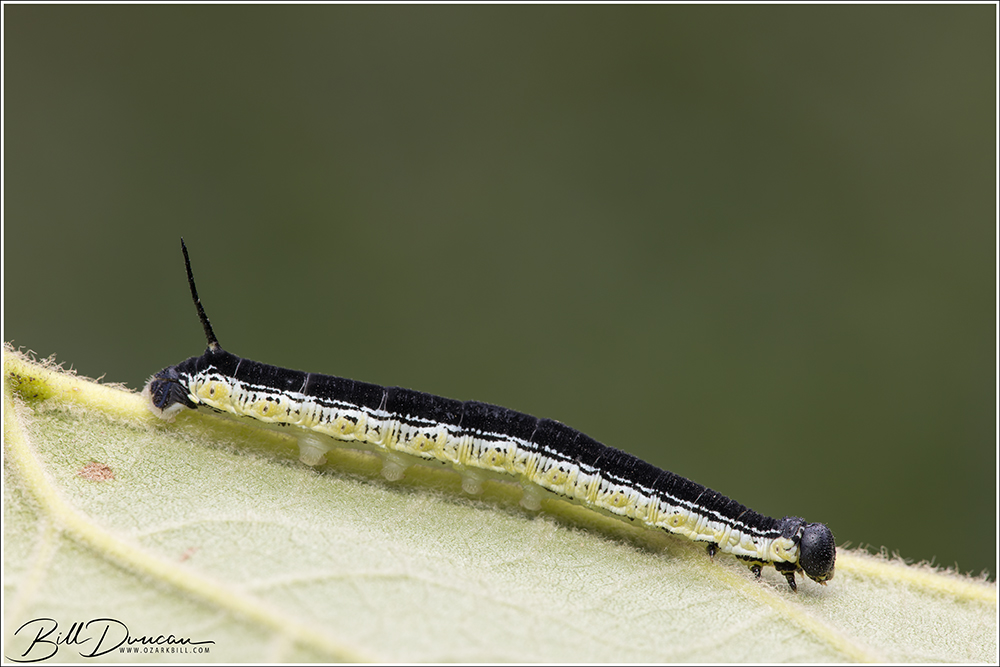
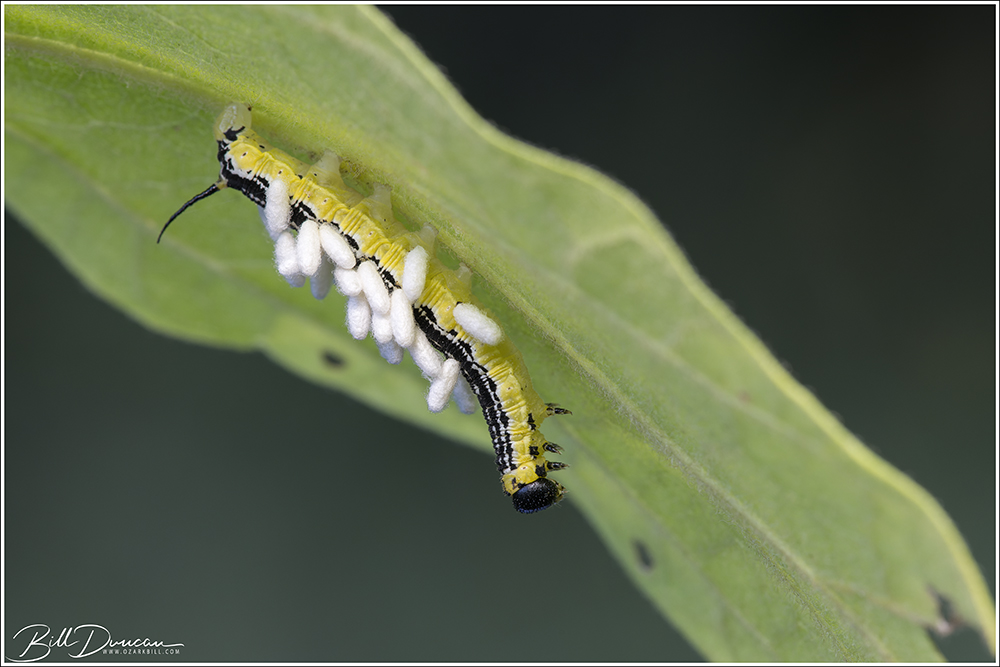
Miguel and I found an aggregation of the catalpa sphinx moth caterpillars on a caterpillar hunt in early September. I have been looking for this species for a while so this was a nice find. Of the ten or so we found, one was infested with the parasitoid braconid wasp cocoons. See photos below.


















 A Thousand Acres of Silphiums