Winter of the Short-eared

I have shared images and discussed the Short-eared Owl on a number of previous blog posts.  Never did I imagine the “storm” that the “winter” of 2015/2016 was to bring.  On many different trips to a few different places, I along with my partners Sarah and Steve, were fortunate to have great looks at great numbers of these fluffy fascinations in feathers.  I can’t say for certain if this winter in this region was abnormal for hosting a greater than average number of SEOW, or if my observational skills have just improved, but it certainly seemed easier than in past years to find and watch these birds.  I’ve just finished putting together a video with some video clips and highlight images that I wanted to share. Without further ado, here you are…

Oh, the challenges video brings to an inexperienced, unprepared and poorly equipped photographer.  Throw in the fact that these birds are utterly unpredictable and it’s hard to believe I was able to capture what I did.  So, I learn and take notes and hopefully improve next year.

Short-eared Owl
Short-eared Owl

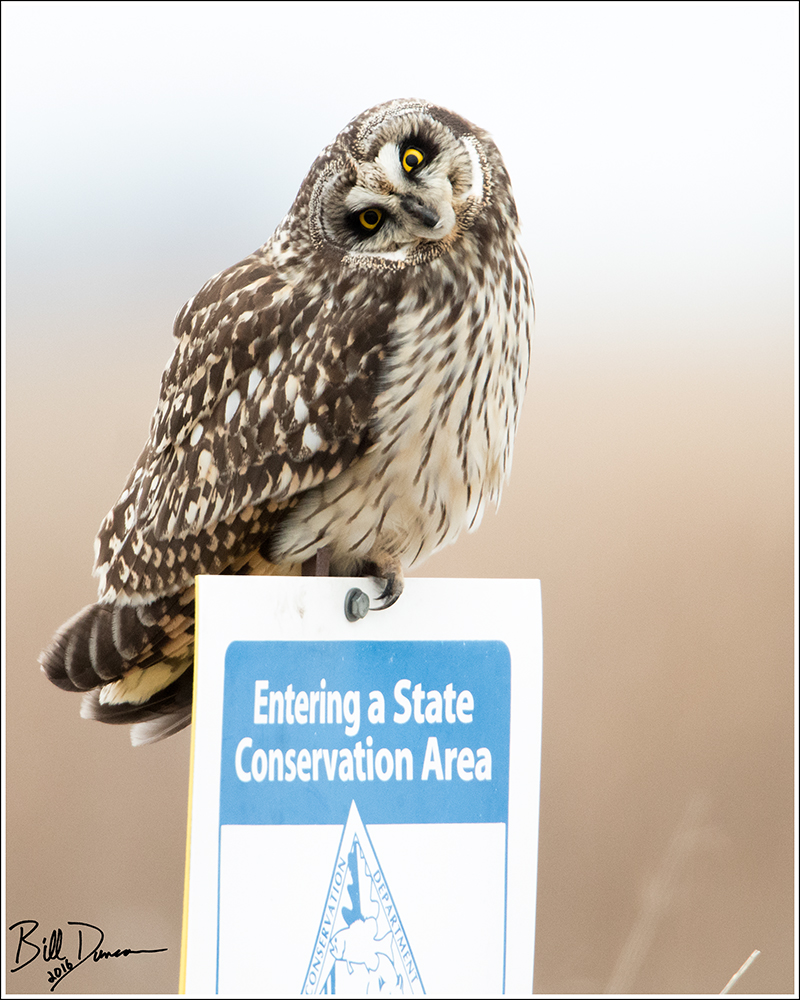
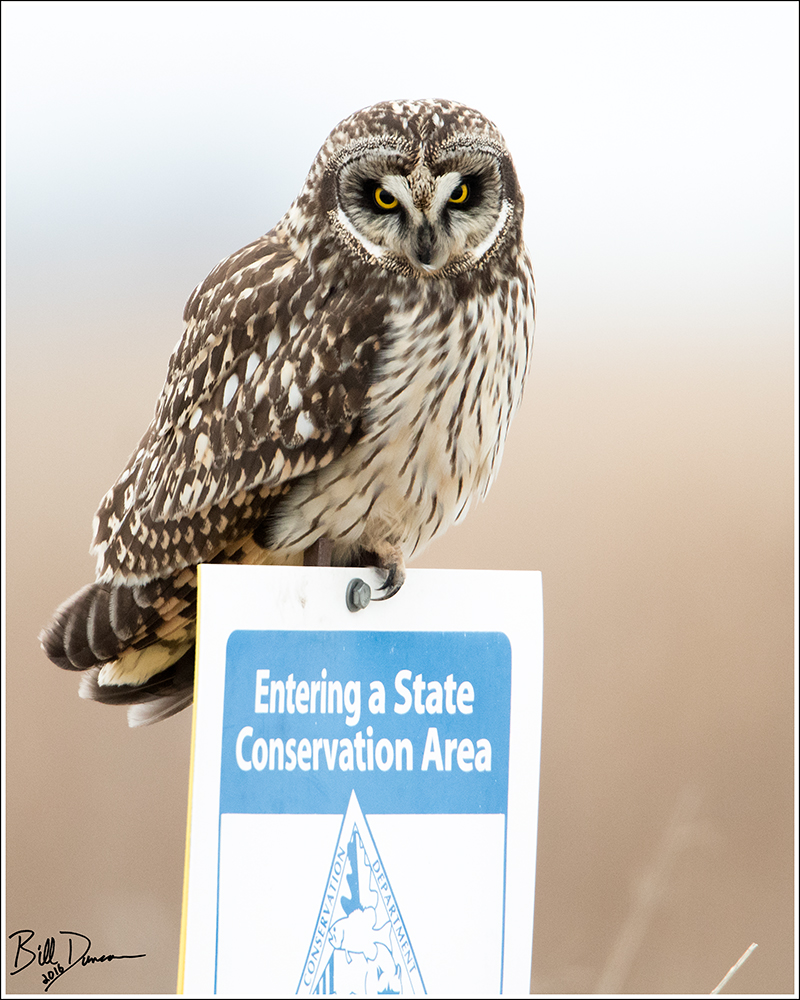
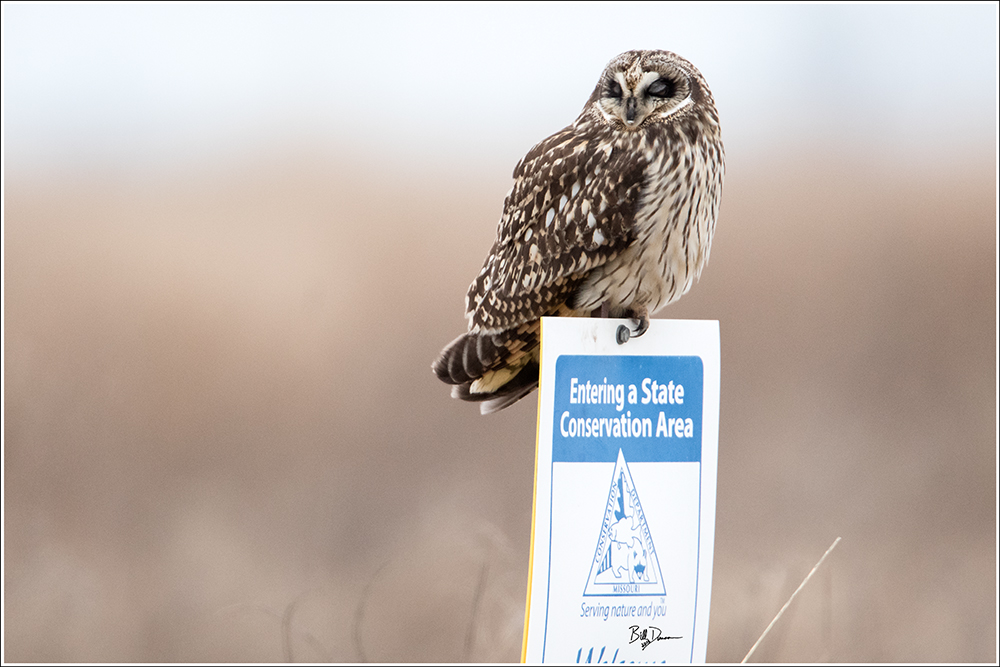
Other than the simians, is there another species easier to anthropomorphize?  Here we have cute and inquisitive SEOW, followed mere seconds later by the evil, harbinger of doom SEOW of which early writers told.

Short-eared Owl
Short-eared Owl

And then we have the indifferent SEOW…

Short-eared Owl
Short-eared Owl

Okay, I’ll stop now before they take my biologist card away from me…
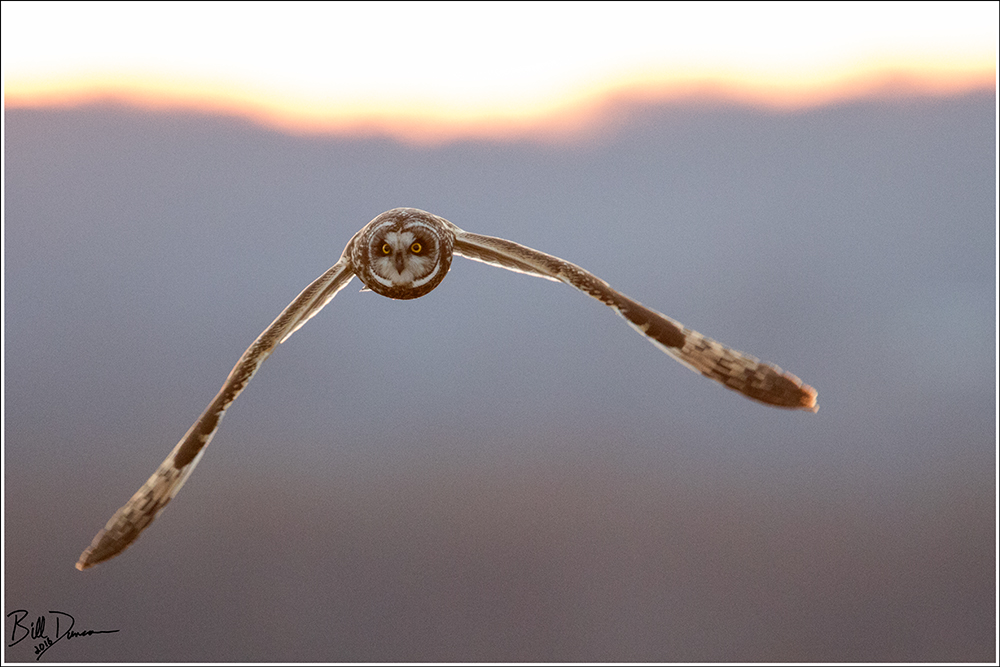
Although I got a few images, I struggled mightily and missed several great opportunities at capturing SEOW in flight this season.  The randomness of the encounters coupled with challenges with lighting and equipment make this a true challenge.  Funnily, one of my better in-flight photographs was taken with a setting sun at the bird’s back – not the best opportunity…

Short-eared Owl
Short-eared Owl

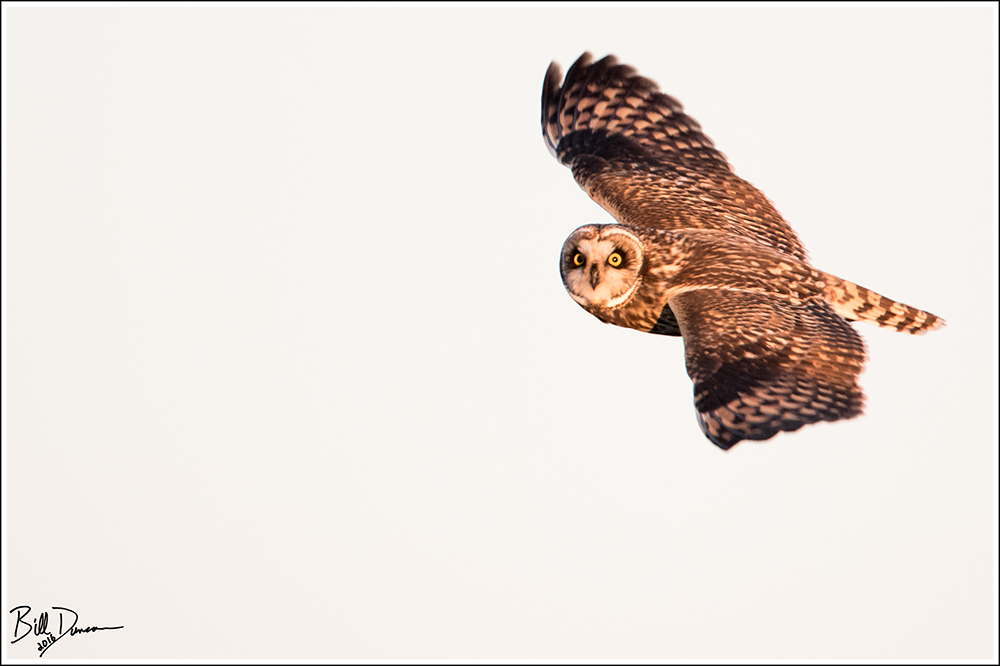
The image below was taken with the sun in a better position.  Notice the catch light, which suggests that the bird was up and in flight with the sun still in the sky.  Something else in this photo that I noticed before is the difference in dilatation of the lit pupil compared to the pupil of the shaded eye.

Short-eared Owl
Short-eared Owl

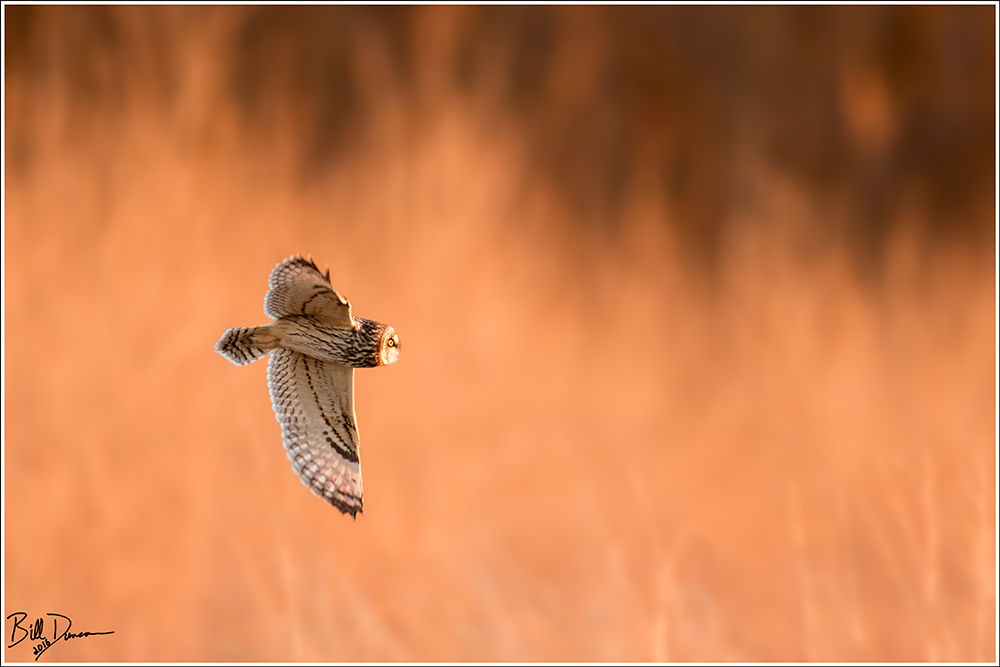
Below is a flight shot from a further distance.  I liked the warm light of the golden hour, painting the dead prairie vegetation in fire.

Short-eared Owl
Short-eared Owl

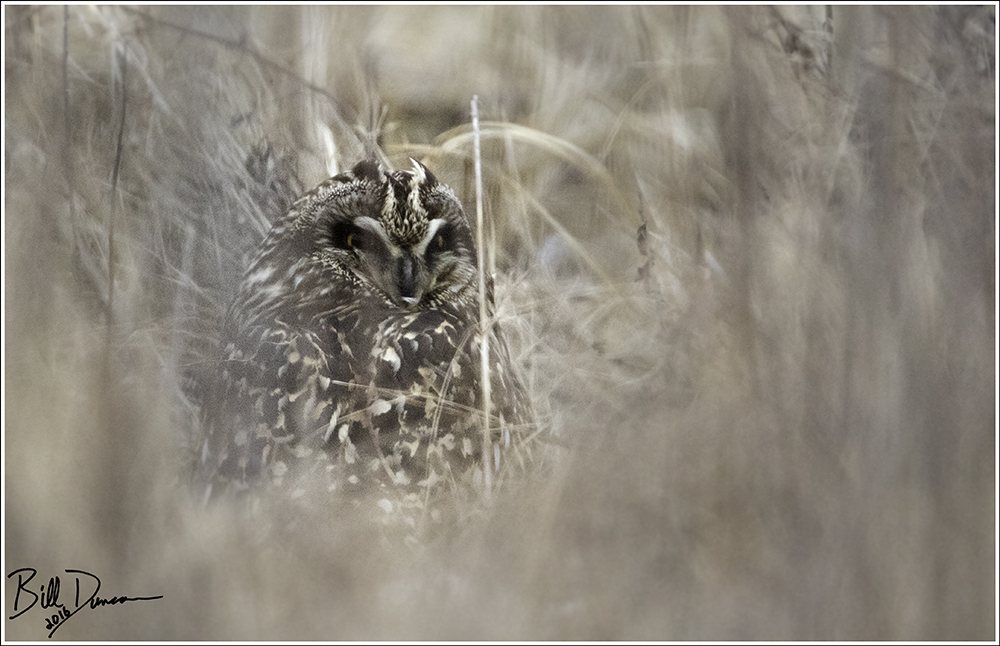
One night Steve and I were fortunate to have an owl perch close to our car well into dusk.  It then left its perch and landed nearby in the vegetation.  We could not tell if it was after a prey or decided to go back to bed, as it sat there for the short remainder of the day.

Short-eared Owl
Short-eared Owl

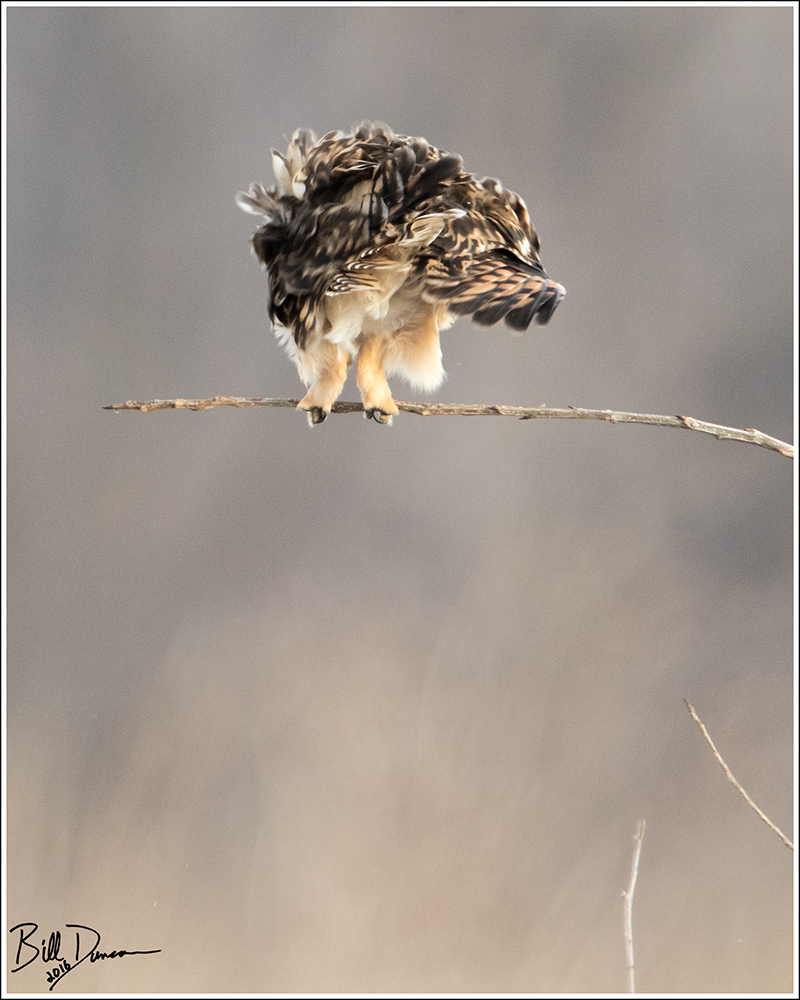
The final image I am sharing here is just to show off those feather-covered legs.  A great adaptation for the cold climates in which these birds are found.

Short-eared Owl
Short-eared Owl

-OZB

The Leafcutter Bee

Leafcutter Bee - Megachile sp.
Leafcutter Bee – Megachile sp.

The Leafcutter Bees are an interesting group of native solitary bees found within the Megachilidae Family along with Mason Bees, Resin Bees and Carder Bees.  There are approximately 200 species of Leafcutter Bees (Megachile genus) found in North America and several of these species can be easily found in gardens throughout the eastern United States where they favor the plant families Asteraceae, Campanulaceae and Fabaceae.


Leafcutter Bee - Megachile sp.
Leafcutter Bee – Megachile sp.

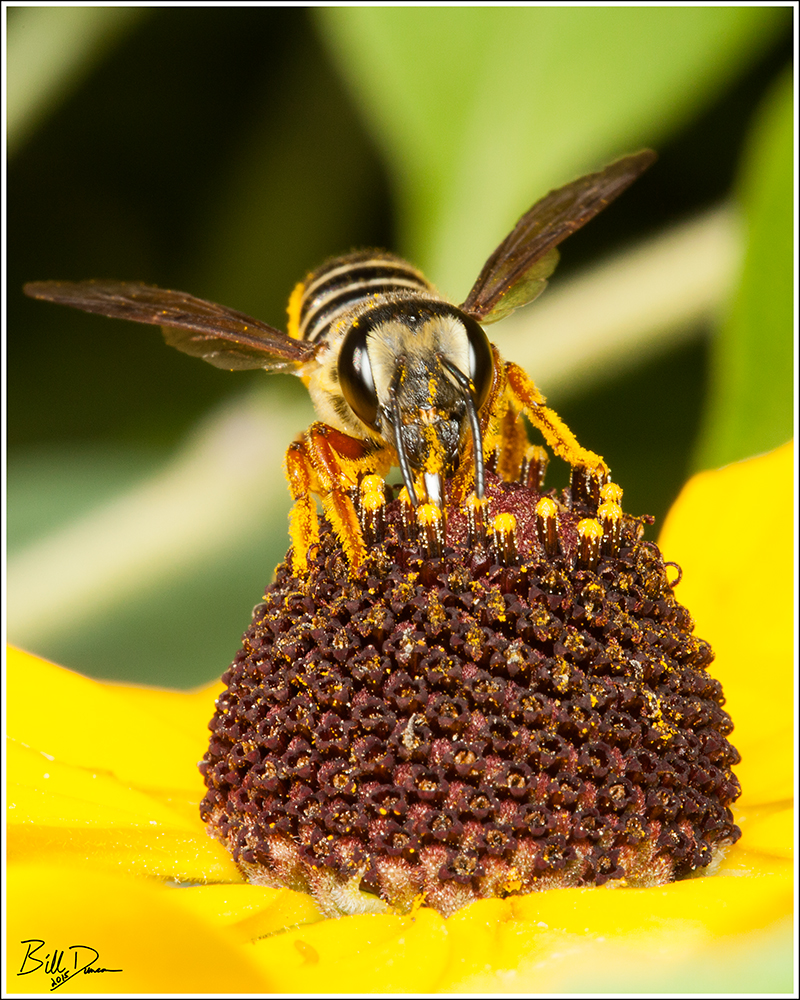
Leafcutter Bees get their names from an obvious behavior.  These bees line their chosen nest cavities (stems, cracks, wood-boring beetle borings, holes of all kinds) with circular discs that they cut from green leaves or flower petals.  When a cavity has been sufficiently lined, the bee will deposit an egg along with a provision of nectar and pollen, afterward abandoning the nest.

Leafcutter Bee - Megachile sp.
Leafcutter Bee – Megachile sp.

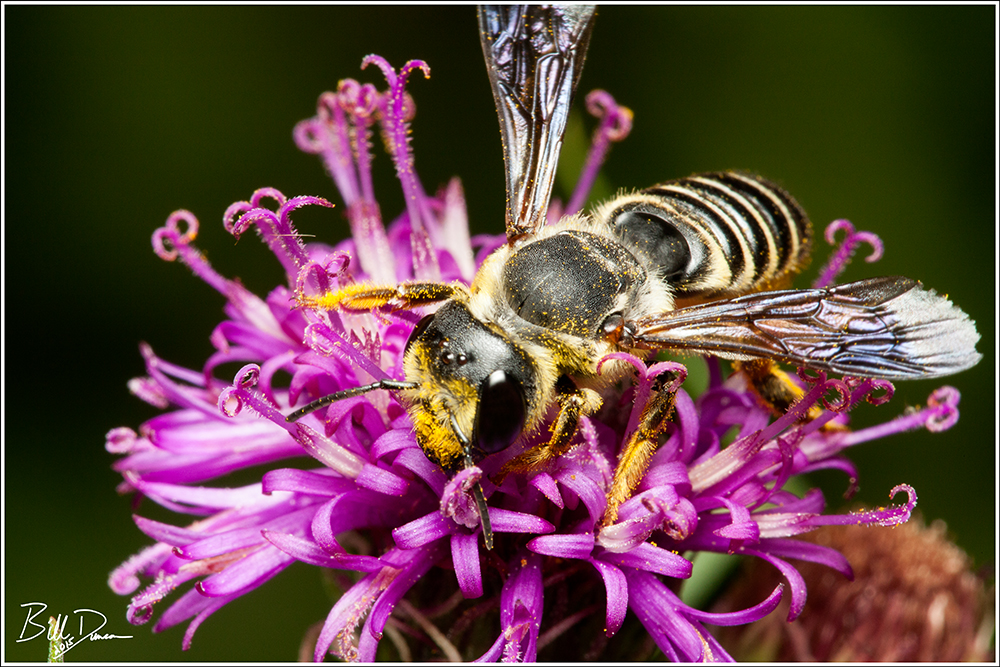
Bees in this family are abdominal pollen collectors, as can be seen in the photo above.  Unlike most bees that hold pollen in brushes on their legs, the Megachilidae hold their pollen on the underside of their abdomens that consist of course, unbranched hairs that curves towards the tail.

Leafcutter Bee - Megachile sp.
Leafcutter Bee – Megachile sp.

A diagnostic behavior of the Leafcutter Bee is their habit of extending their abdomen vertically while they forage.  I have not been able to find an accepted reason that they do this.

Leafcutter Bee - Megachile sp.
Leafcutter Bee – Megachile sp.

This is a group of native insects that anyone can help in their own backyard.  Consider making, purchasing and installing nesting structures for your native pollinating bees.  It’s quite easy to do and will help out a lot in suburban where natural sites for nests are often hard to find.

Fragrant Water Lilies

Fragrant Water Lilies - 1
Fragrant Water Lilies – 1

Here is a series of the freshly blooming Fragrant Water Lilies (Nymphaeaceae – Nymphaea odorata) taken at Shaw Nature Reserve this past summer.  I converted these to look like oil paintings using Photoshop CS6.

Fragrant Water Lilies - 2
Fragrant Water Lilies – 2

This plant uses an interesting pollination strategy.  Insects are attracted to the flower and land on the concave tip of the ovary which contains a small amount of liquid.  If the insect has visited another lily flower previously, then the pollen it is carrying gets washed off in this fluid and pollinates the flower.  Often, the insect pollinator (usually small, native bees) will not be able to escape this small pool before the flower closes for the night and will therefore drown.  See Steyermark’s Flora of Missouri by George Yatskievych for more details on these interesting wetland plants.

Water Lilies - 3
Fragrant Water Lilies – 3

Thanks for visiting…
-OZB

A Tale of Three White Giants

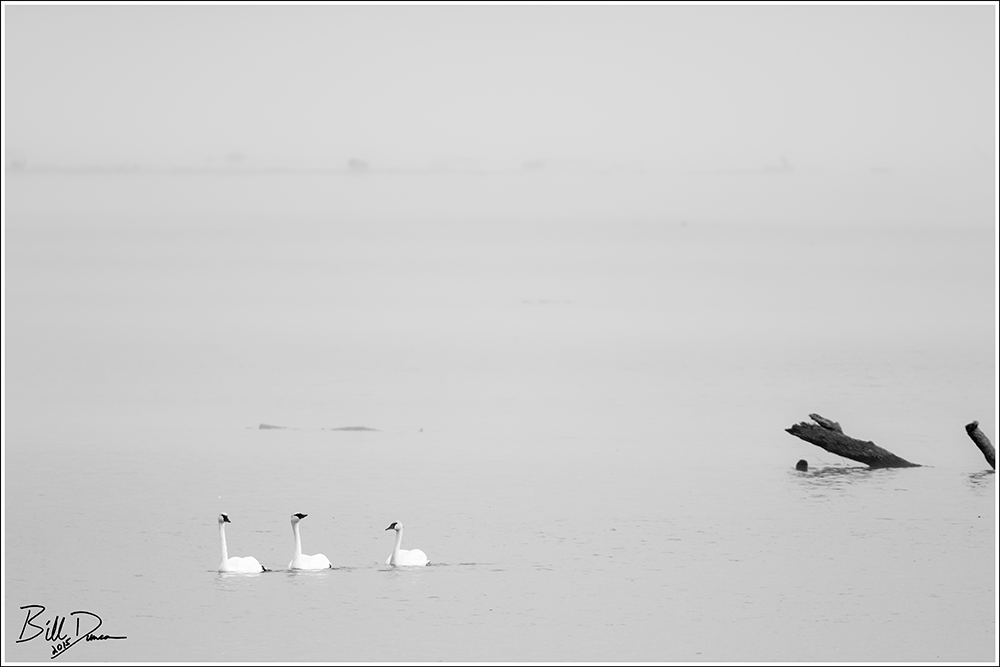
Trumpeter Swans
Trumpeter Swans

Missouri is home to three giant white swan species that can be difficult to distinguish without a bit of training or education.  All three swans belong to the genus Cygnus and rank among the largest waterfowl on the planet.  The first species we will consider is the Trumpeter Swan (C. buccinator).  Ranked as both the largest waterfowl species in the world and the largest flying bird of North America, the Trumpeter Swan is considered a conservation success.  Beginning in the 1600s the birds were collected for their meat, skins and feathers.  This unregulated slaughter lasted until the passage of the Migratory Bird Treaty Act, which provided the species some protection. Their population rebounded from a level as low as 32 birds documented in 1932 to 15,000 – 20,000 estimated today.  Trumpeter Swans only winter in Missouri, spending their summer nesting season from the upper great plains up to Alaska.  As many as 600 birds have been counted at Riverlands Migratory Bird Sanctuary during a winter season.

Trumpeter Swans
Trumpeter Swans

The Tundra Swan  (C. columbianus) are more widespread across North America compared to its larger relative, the Trumpeter.  And, although they far outnumber the Trumpeter in total population, the Trumpeter is actually the more abundant winter resident in Missouri.  For reasons unknown, this winter we have seen an unusually high number of the comparatively rare Tundra, giving birders something to be excited about.

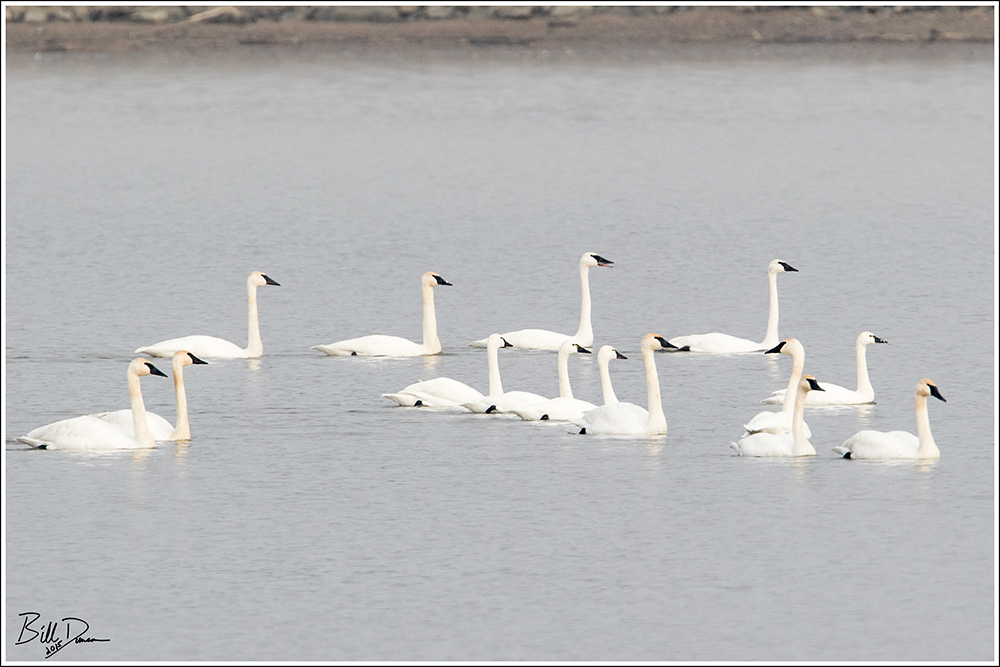
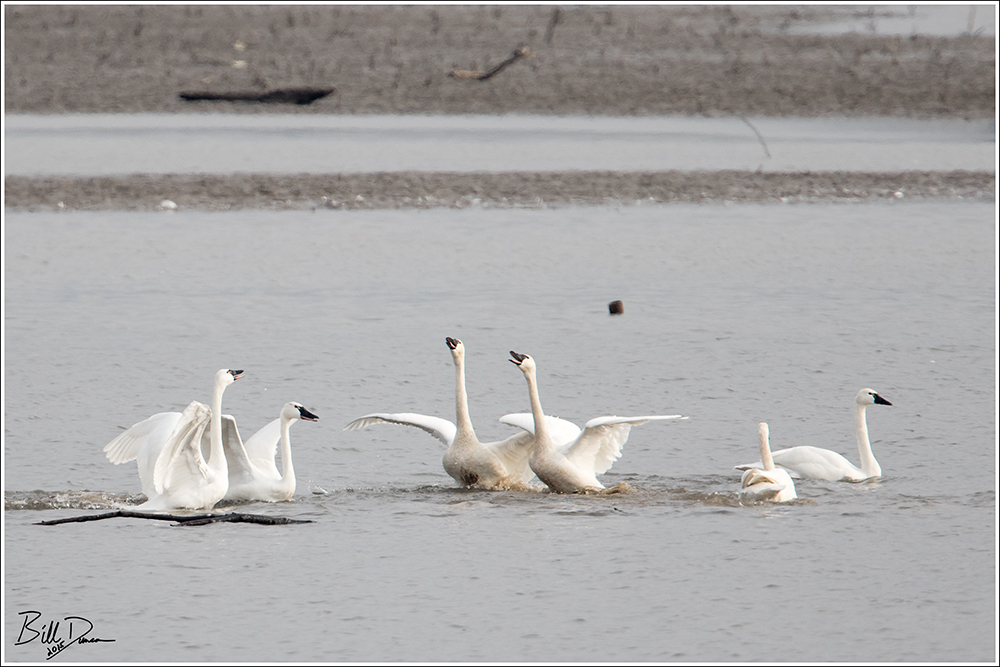
In single species groups, especially at a distance, the two species can be challenging to tell apart.  However, when seen up close and spaced closely together, the differences are more easily identified.  On average, the Tundra is 1/3 to 1/2 the size of the Trumpeter.  In addition the border of the black color surrounding the bill is different in the two species and the Tundra usually has a yellow spot on the lores, near the base of the bill.  I’ll guide you to your favorite field guide for more specifics.  With this information, can you spot the four Tundras in the image below?

Mix of Swans
Mix of Swans

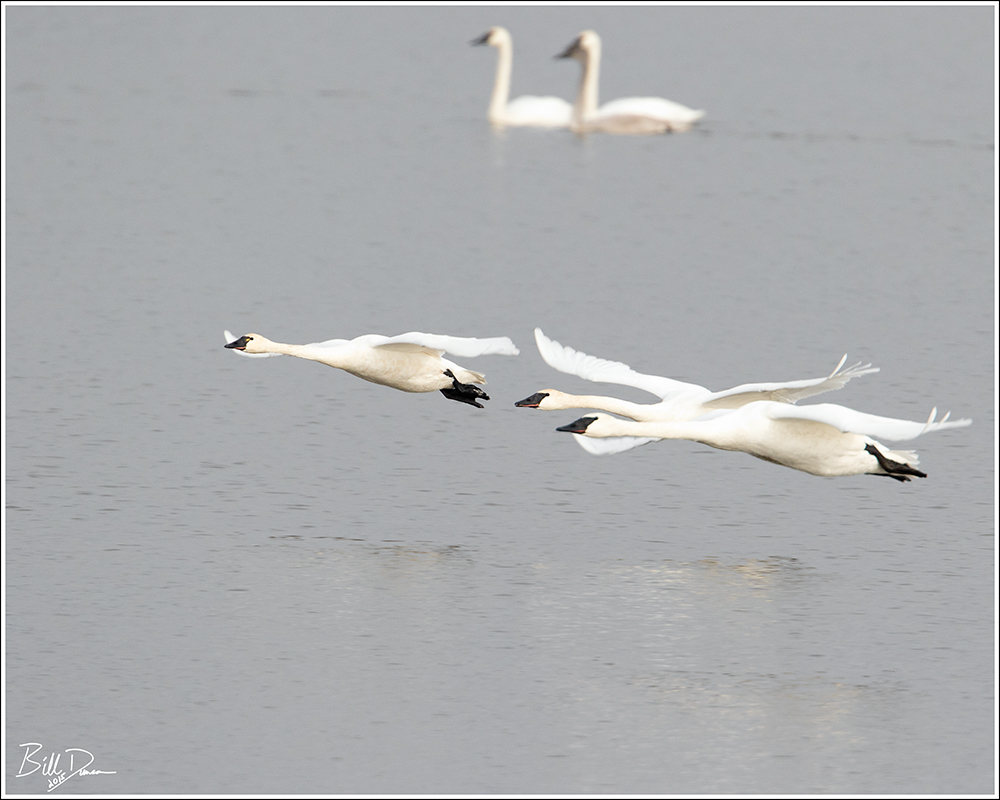
Here is a closeup of the two species in flight.  Easy to spot the Tundra here.  Right?

Trumpeter : Tundra - 2.1
Trumpeter : Tundra – 2.1

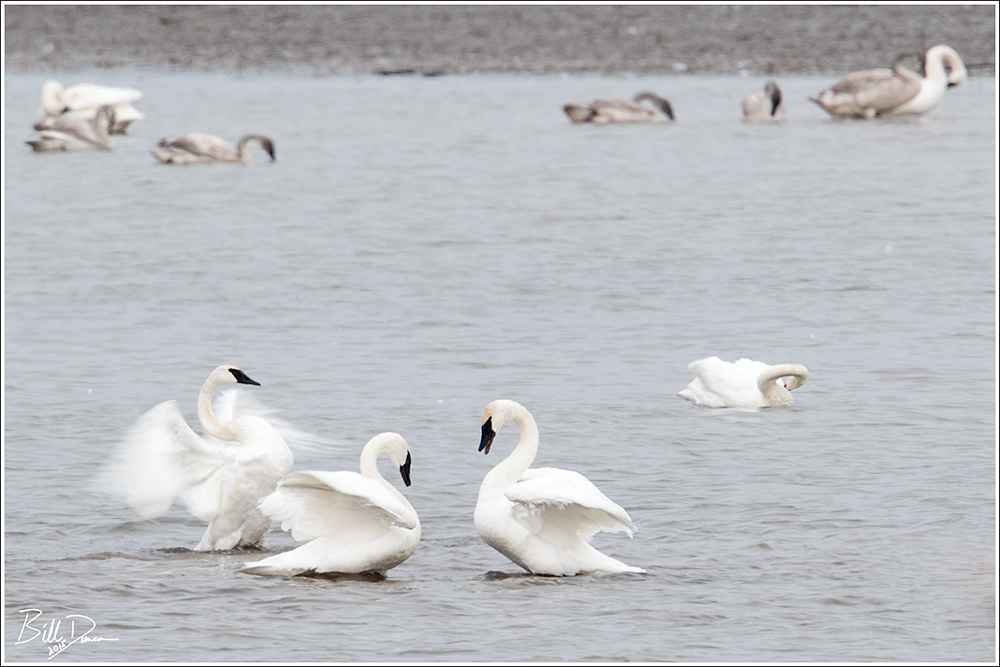
It was such a treat being able to watch a group of Tundras carrying on…

Tundra Swans
Tundra Swans

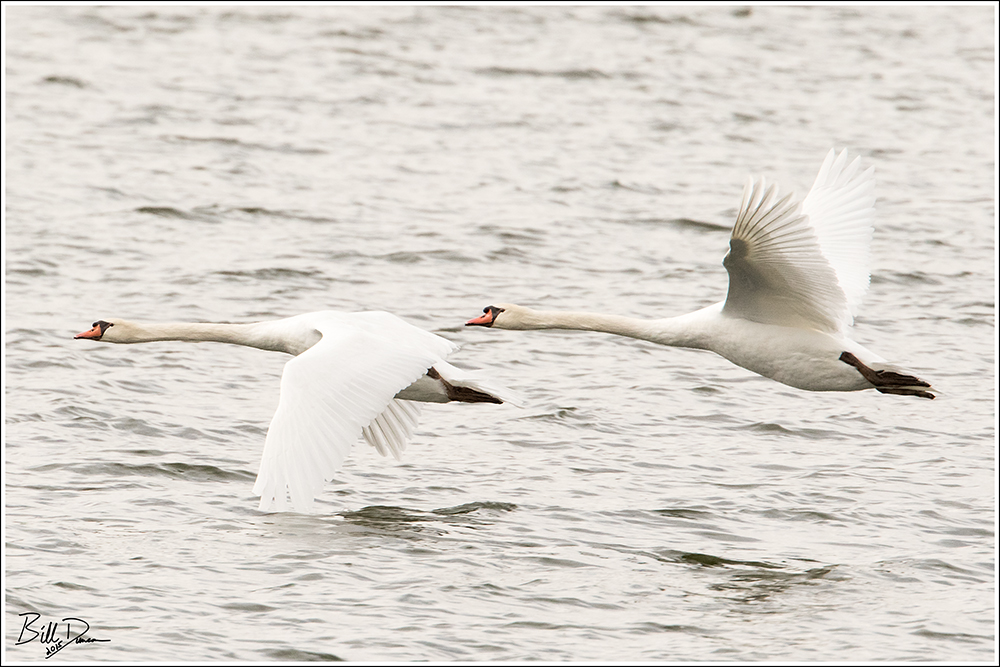
Finally, our last (and quietest) of Missouri’s Cygnus – the Mute Swan (Color).  The Mute is native to the old world and exists in North America as a naturalized resident.  Still raised and sold on the captive market, the Mute is typically a year-round resident in these parts, moving only to find open water in the dead of winter.  These birds are easily recognized by the large, orange-collored bills, often with a bulge at its base.  I photographed this pair at Binder Lake S.P.

Mute Swans
Mute Swans

There you are, a quick overview of the Missouri’s white giants.

Thanks for the visit.
-OZB
A Straight-snouted Weevil

Baptisia alba
Baptisia alba Seedpod

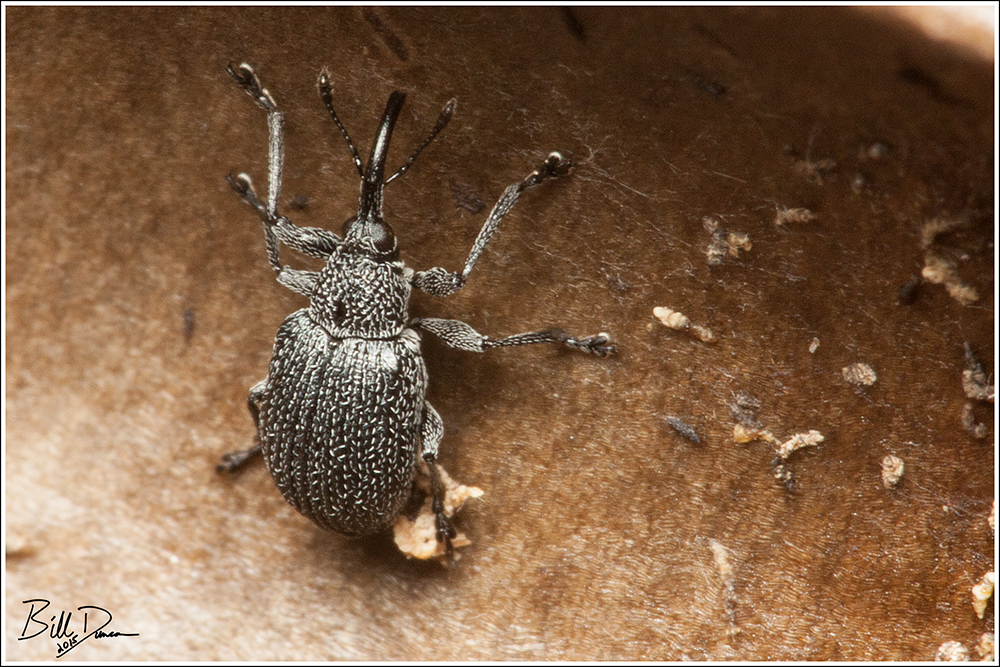
Almost reflexively, I pull the baby rattle-shaped seed pod from the stately White Wild Indigo (Baptisia alba) as I meander through Shaw Nature Reserve’s prairie trails.  I can’t help it.  I make sure the pods are always black, mature and any seeds left unravaged I simply help to disperse along my walk.  But in doing this so often in the late summer and autumn for so many years I have come to notice that this common forb cannot disperse many seed.  Because, inside the seed pods, like the one pictured above, I usually find multiple seed predators – the short-snouted weevils, Trichapion rostrum (Family Brentidae).

Trichapion rostrum
Trichapion rostrum

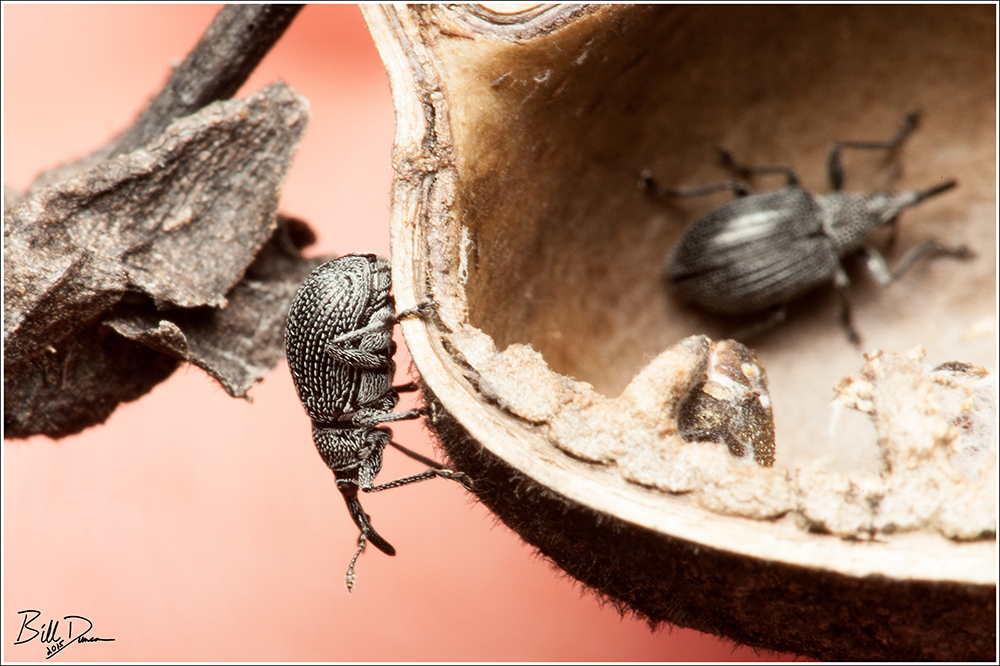
Baptisia seed are favored among other insects as well, but what they may lose in this stage of life, they pick up as they grow, for the false indigo are long-lived, drought-tolerant perennials that contain large amounts of secondary compounds that make them absolutely unpalatable to grazing mammals.  The photo below shows these tiny beetles (3.0 – 3.5 mm) among the husks of a number of seeds.  I have not been able to find a source that suggests if both larvae and adults feed on these seeds, or just one of the growth stages.

Trichapion rostrum
Destroyer of Seeds

Here is an image of a couple, shortly after I split their double-wide…

It's the Visitors, Martha!
It’s the Visitors, Martha!

These little one have been a source of fascination for me.  I hope to learn more about them someday.

-OZB
Groundhog. See Woodchuck

Groundhog
Groundhog

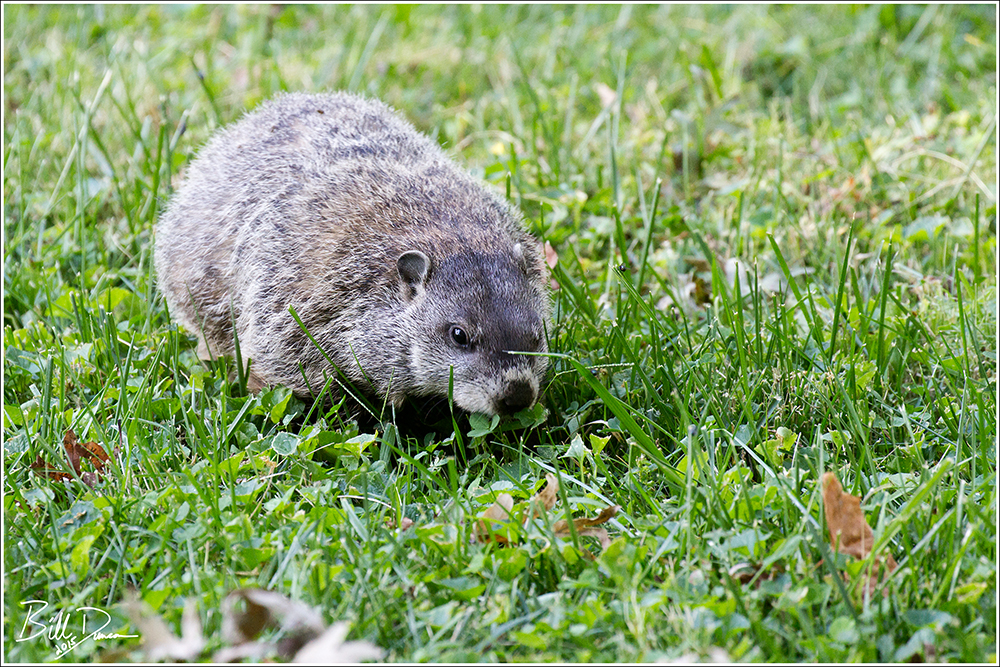
I met a couple new friends this late summer.  I had begun to notice a couple of Groundhogs, aka – Woodchucks, at Wild Acres Park in Overland, not too far from home.  These fascinating animals are quite tolerant of people and will allow for close viewing in areas like parks where they are accustomed to those who mean them no harm.  See the photo below for what I am assuming/hoping is a reproductive pair.

Groundhog
Groundhog Pair?

Groundhogs undergo hard hibernation.  I began to see less of these guys, foraging for their favorite plant foods around the entrances to their burrows, as the autumn advanced.  I believe the last I saw of them was late November or early December.  Once asleep, Groundhogs will hibernate in their burrows until February, in which they may loose up to half their autumn body weight.  A brief courtship/mating season is then held, followed by  an average of 4-5 pups in late March.  I will be keeping an eye out for that.

Lookin' Out My Backdoor
Lookin’ Out My Backdoor.

The photo above shows a Groundhog doing its second favorite past time, basking in or near a burrow entrance.  I have been able to find four burrow entrances in the park so far.

'Till the Spring
‘Till the Spring

Hopefully this crazy El Niño winter is not affecting these guys too badly as they take their winter naps deep inside their burrows.  I’m looking forward to spring.

-OZB
The Bee Wolves

Bee Wasp
Bee Wolf

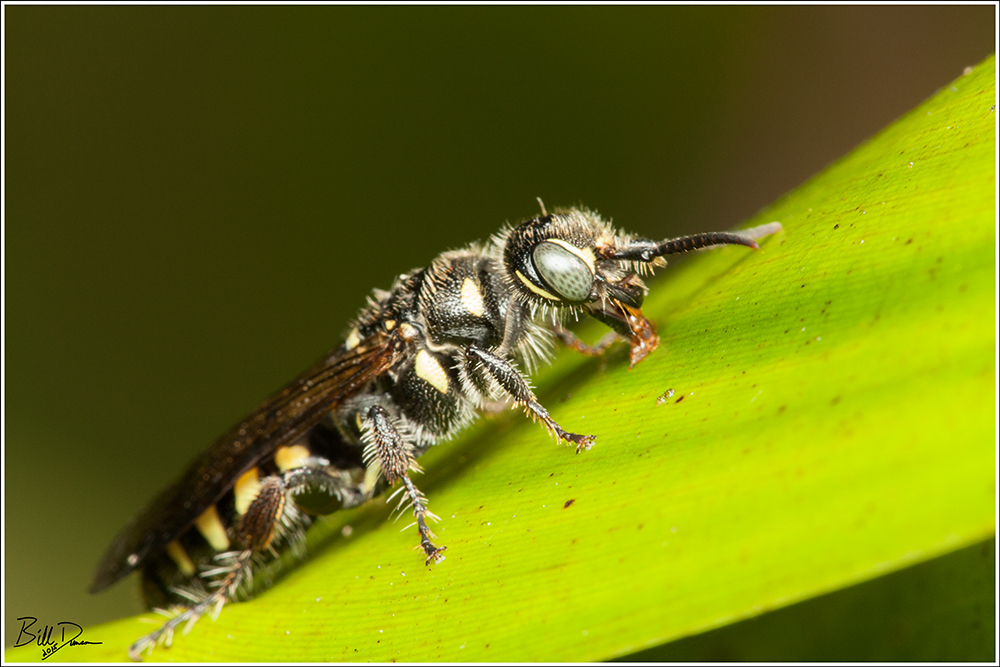
I was thrilled when I took my camera inside from shooting in my wildflower garden on a past summer day and identified this hymenopteran as a Bee Wolf.  Philanthus gibbosus (Family Crabonidae) is what I am calling this one.  Bee Wolves get their name from doing what you expect, feeding primarily on bees.  These solitary wasps will load their brood chambers with pretty much any bee or wasp smaller than themselves that they can catch as a provision for a single egg they deposit prior to sealing the chamber shut.  Some taxa have specific bees they prefer to catch and this can aid in identification.  This poor thing was quite beaten up as you can see in the photograph below.  Missing a few legs, it probably escaped a bird or larger insect, and was not happy to have me and my camera in its face.  In the photo above I captured it doing a rapid vibration of its wings, something I read that these guys are known for doing as a communication.  I can’t imagine what she may have been trying to tell me…

Bee Wolf
Bee Wolf

I believe the insect below to also be a species of Bee Wolf, but have not yet been able to put a name with this one.  I photographed this one having a drink in a wet area of Shaw Nature Reserve early one morning.

Bee Wolf?
Bee Wolf?

-OZB


False Milkweed Bug

False Milkweed Bug
False Milkweed Bug

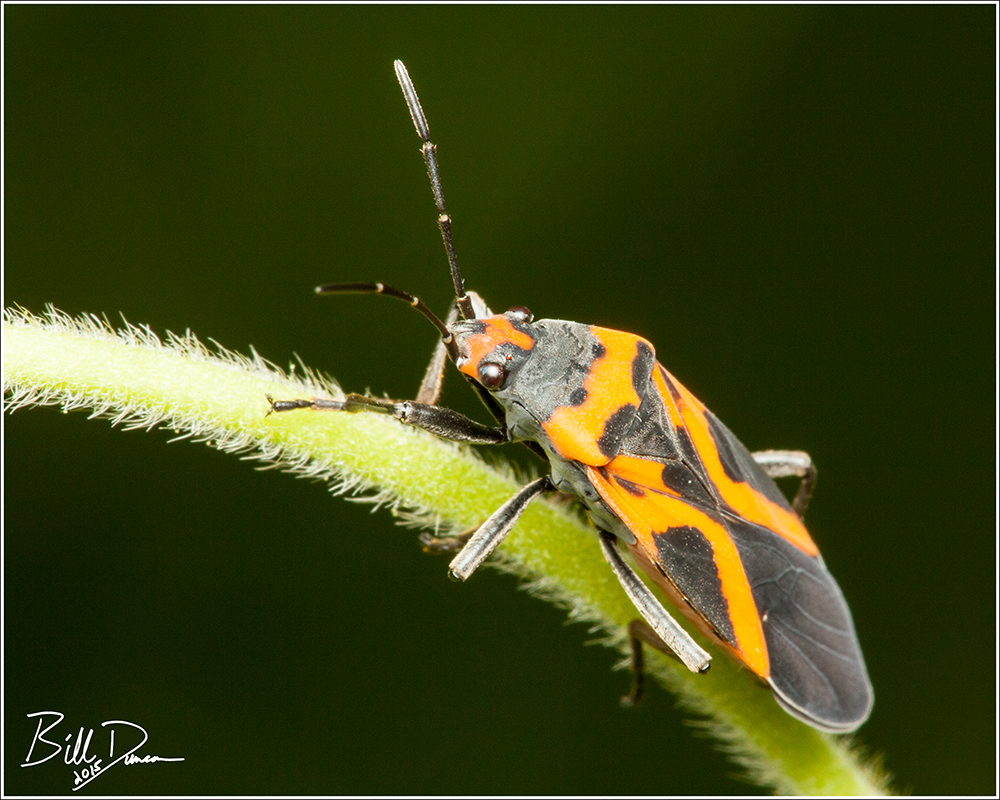
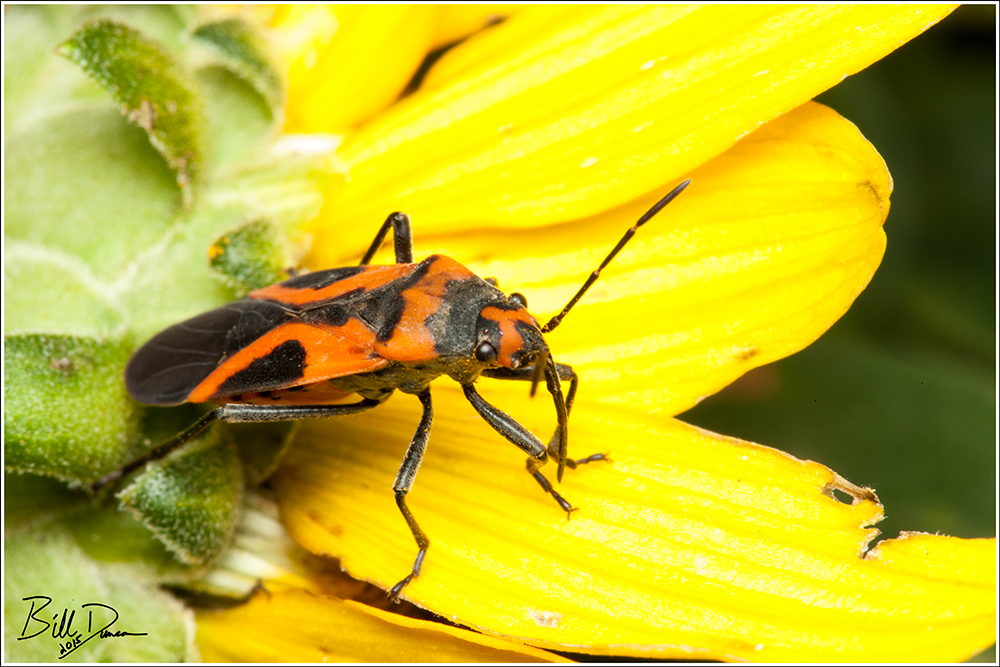
The False Milkweed Bug (Lygaeus turcicus) is a seed bug that, although quite similar in appearance to the Small Milkweed Bug (Lygaeus kalmii), is not strongly associated with milkweed.

False Milkweed Bug
False Milkweed Bug

As can be seen in the photograph above, the False Milkweed Bug is most often found feeding on yellow composites (Family Asteraceae).  These bugs were all photographed at Shaw Nature Reserve on what seems to be this insect species’ favorite food plant, the False Sunflower (Heliopsis helianthoides).

False Milkweed Bug
False Milkweed Bug

There are several members of the Lygaeidae family that are aposematically colored and found in North American prairies.  As mentioned, it seems that the False Milkweed Bug does not typically utilize milkweeds.  The Small Milkweed Bug feeds on milkweeds as well as other plant taxa.  The Large Milkweed Bug feeds exclusively on milkweed.  There is obviously a great case of Mullerian mimicry (distasteful organisms appearing similar to one another to benefit from a an easily identified color or body type) going on here, but it gets pretty complicated.

What has happened to the False Milkweed Bug?  Is this a case of a species that once fed primarily on milkweed and developed aposematic coloration but has since switched food preference?  Or, is this a case of a palatable species mimicking (Batesian mimicry this time) the aposematic coloration of a truly noxious species?  Thinking about this, it is easy to see the selective advantages that could result from either possibility.

First, a little background…
Some insects that feed on milkweed benefit by concentrating chemicals called cardiac glycosides that are toxic irritants to vertebrate predators.  Cardiac glycosides are an irritant to vertebrate herbivores (livestock) and vertebrates that feed on insects that feed on milkweed and store these compounds in their tissues.  However, they are not a significant problem for insects that feed on milkweeds – they simply pass through their guts (insects that store these specific toxins, for example the monarch, must have biochemical changes to avoid toxic effects).  The milkweed’s primary defense against the seed bugs and other herbivorous insects is the milky sap that gets forcefully pumped from any mechanical damage that is inflicted on the plant.  For this reason the milkweed is a pain for an insect to feed on.

For a seed bug, with its piercing-sucking mouth parts, feeding on the gummy sap of a milkweed is a significant hurdle.  Assuming the False Milkweed Bug once fed from milkweed primarily and gave it up would be a significant advantage.  Keeping the aposematic coloration, which would allow it to gain the benefit from its vile-tasting, similarly colored cousins, still feeding on milkweed, would be advantageous as well.  With my brief observations, the False Milkweed Bug still behaves conspicuously – feeding and doing everything else it does out in the open, suggesting that the aposematic coloration is still working in this mimic-model system, whatever the source history ultimately may be.

-OZB
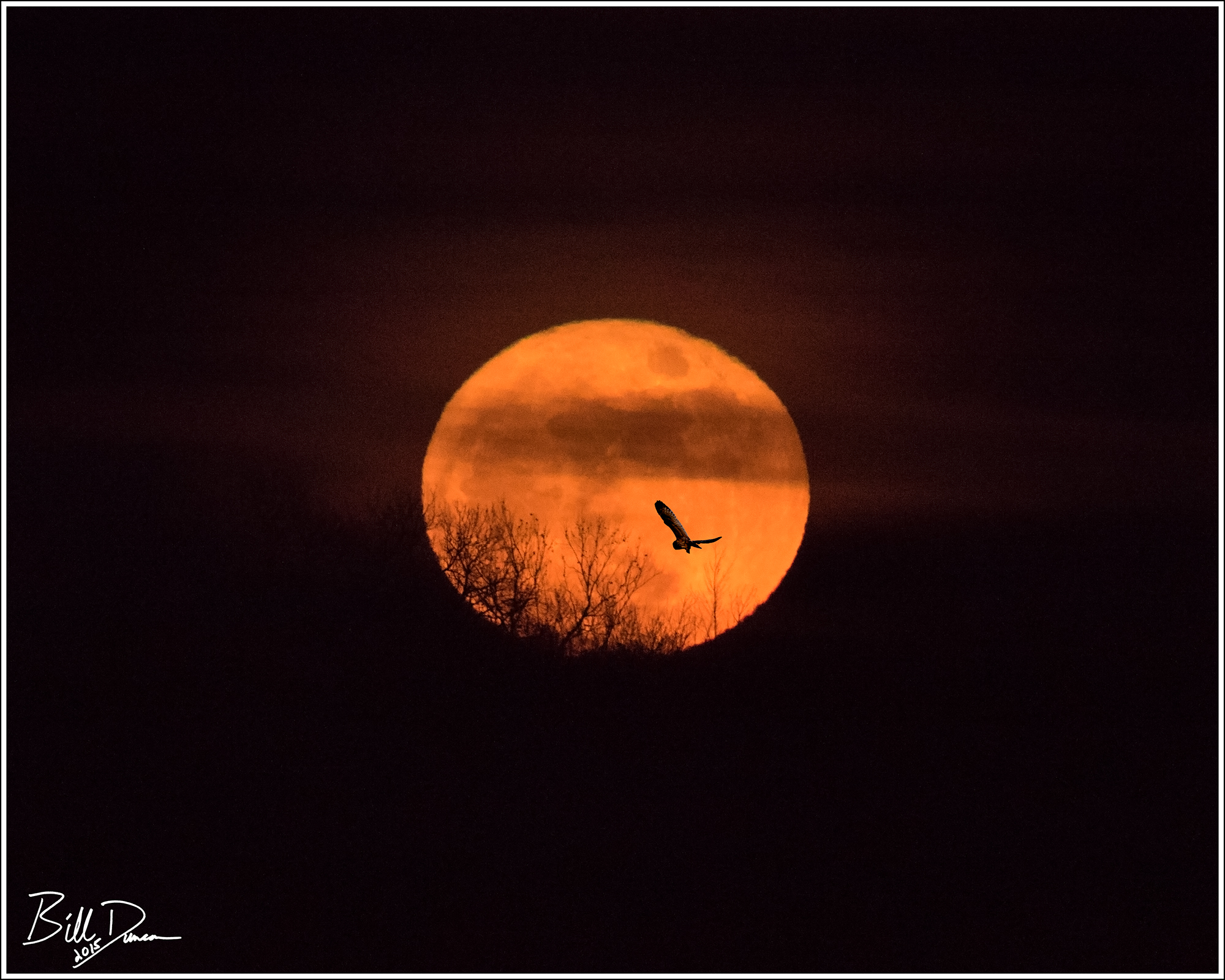
Short-eared Owls and a Christmas Moon

SEOW & Christmas Moon

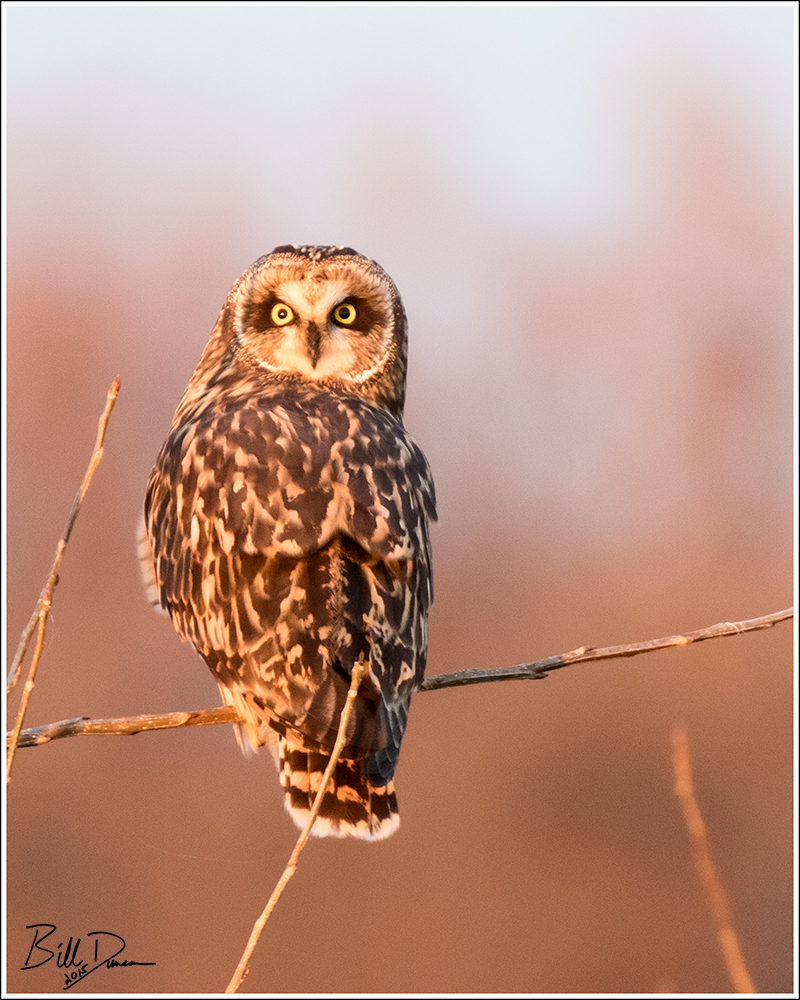
Wow.  I’ve been looking for an evening like this for a number of years.  I have heard and read that Short-eared Owls will often start their night early and often will often be up and active with several hours of day left.  I have seen them before at dusk, right before sunset, but last night at B.K. Leach C.A. we had several on the move with almost two hours of light left.  We were able to count a minimum of eight SEOW, but there may have been more.  Immediately before sunset I was able to observe somewhere between 25-30 Northern Harriers along with the owls.  It was quite a treat, listening to the Owl’s peculiar barks and screams as they were dog-fighting with the other owls and the Harriers who were looking for their spots to spend the night.

Short-eared Owl
Short-eared Owl

-OZB
Floating the Upper Current

Upper Current in Autumn

I’m finally ready to share a few more images from a float down the upper third or so of the Current River that Steve and I had the great fortune to experience this past October.  We started at navigable mile 8.0 at Cedar Grove Access and pulled out three days later at mile 51, the confluence of the Current and that other, oh-so desirable, Ozark stream – the Jacks Fork.  If one floats slow and quiet, the opportunity to see wildlife is very high in this National Park (Ozark National Scenic Riverways N.P.).  I’v shared a couple of images of these guys previously.  I believe we found 8-9 Mink during the first day of this float.  It was enjoyable watching them busily hunt along the stream banks, mostly oblivious to our presence.  As usual, Steve did a great job in keeping us quiet and pointed in the optimal direction for capturing some images.

American Mink
American Mink

It was quite a challenge to keep up with these guys as they fished.  This one below had caught a nice-sized crayfish and barely slowed to stop and enjoy his snack.

Ozark Lobster!
Ozark Lobster!

Here is a photo of one investigating the water prior to dipping back in.

Testing the Water
Testing the Water

Not only does a float down the Current allow for great observations of wildlife, but many geological features are most easily seen by being on the river as well.  Cave Spring can now be accessed via a nice newer trail, but it is much nicer accessing it by boat.  The endpoint of a vast and interesting karst drainage system, Cave Spring rises from the back of a short cave.  At the rear of this cave one can guide a boat over the vertical conduit of the spring, which is ~155 feet deep!  What an eerie sensation it is to shine your light down and still see no more than a fraction of the length of the conduit shaft.  In the image below, I am on a dry exposed shelf adjacent to the spring’s outlet and Steve is guiding the canoe towards the river.

Cave Spring
Cave Spring

Pultite is a spring found on this upper stretch of the Current River that is surrounded on all sides except the river by private property.  This means that one must boat or wade/swim to visit it.  At only ~ 1/10 the output of Big Spring, Pultite is still quite a good-sized spring with and average daily output of ~ 25 million gallons.  The effluent channel on this one is quite attractive and I hope to visit more often.

Pultite Channel
Pultite Channel

If day one was for the Mink, day two was our River Otter day.  We had no Mink, but 5 or 6 of these large weasels were spotted.

North American River Otter

Not to forget the birds!  These days, a trip to nearly any permanent Missouri water source will likely bring an encounter with a Bald Eagle.  Observing these guys in the Ozarks will never get old to me.

Bald Eagle
Bald Eagle

Another constant companion on these floats are the Fish Crows, here pictured finishing up a little Ozark lobster.

Fish Crow
Fish Crow

We were fortunate in having mostly clear and dry skies on this trip, which allowed us to throw our bags directly on whatever gravel bar that struck our fancy and sleep directly underneath the stars.  A morning fire was necessary – not only to burn the dew off of our sleeping bags, but of course, for the river-water French-press coffee.  Dark skies on these streams afford great opportunities for astrophotography.  My only wish for this trip is that I was a little more tolerant of the cold, tiredness and laziness that limited my patience for getting better nightscape images… 😉

Nightscape on the Upper Current

I will be posting more images of this trip on my Flickr account in the near future.  Thanks for visiting and I hope to post again in the near future.

-OZB