"What a thousand acres of Silphiums looked like when they tickled the bellies of the buffalo is a question never again to be answered, and perhaps not even asked." -Aldo Leopold
One of the penalties of an ecological education is that one lives alone in a world of wounds. Much of the damage inflicted on land is quite invisible to laymen. An ecologist must either harden his shell and make believe that the consequences of science are none of his business, or he must be the doctor who sees the marks of death in a community that believes itself well and does not want to be told otherwise.
Aldo Leopold
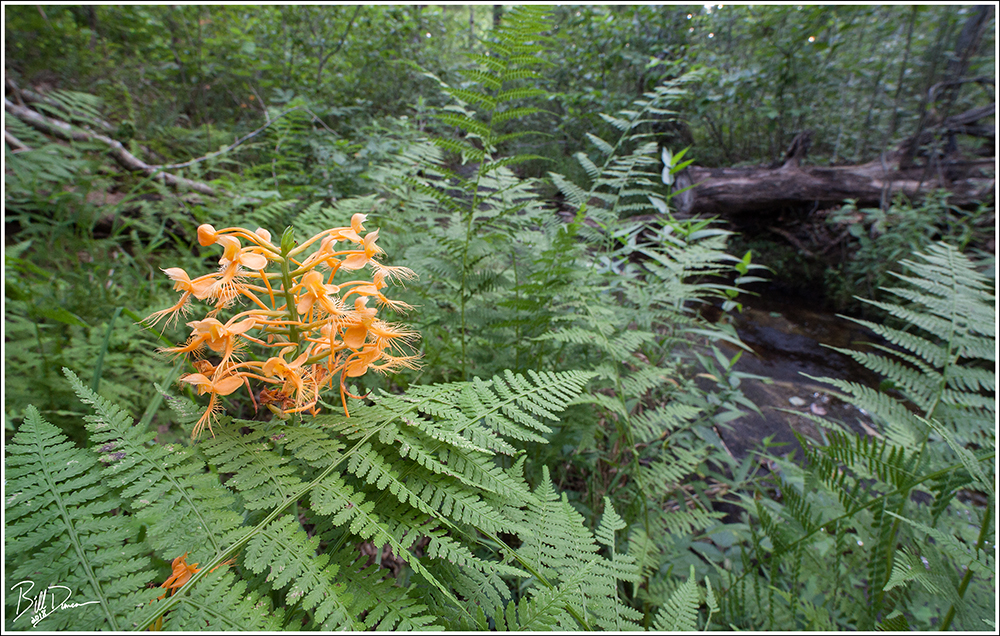
Yellow-fringed Orchid (Platanthera ciliaris)
With the help of a friend, over the last few weeks I’ve been able to get a good start at finding and photographing as many of the 35 +/- orchids that can be found in Missouri. The yellow-fringed orchid (Platanthera ciliaris) is known from only a handful of threatened locations in the state. I was really thankful to be shown these in full bloom where they reside in acidic seeps in St. Francois County.
I had seen rattlesnake plantain (Goodyera pubescens) before, as its wonderful evergreen leaves stand out during winter hikes. This was the first time I’ve seen them in bloom. Photographed in Ste. Genevieve County.
Not the greatest photo of the greatest specimen, but this seemed to be the absolute last grass pink orchid (Calopogon tuberosus) to be found in bloom for the season at this location in St. Francois County.
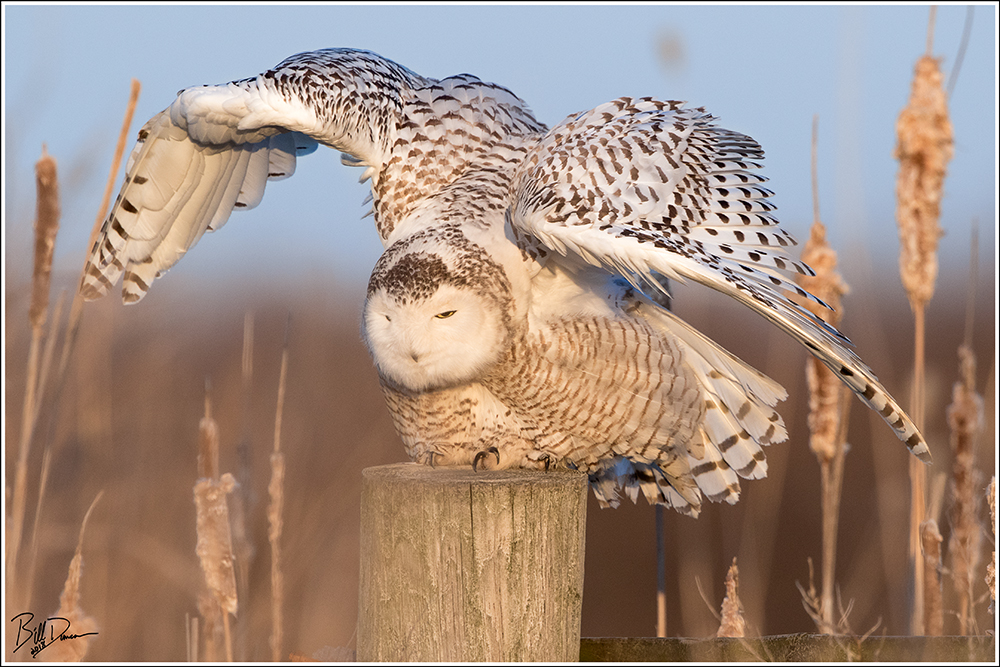
A huge thank you to Danny Brown, without whom I most likely would have stayed at zero Snowy Owls for the great Snowy irruption of the 2017/2018 winter. Because of travel and just poor luck, I had missed out on finding the Snowy Owls that had salted the state this winter and would never have imagined that we would have another chance a week into April. But, since the weather to date suggests little of spring, I suppose we should have not been too surprised.
Snowy Stretch
The birding on Saturday was seemingly great everywhere and Steve, I and others were having good luck finding interesting species at RMBS when we received the messages from our phones about Danny’s find. I think Steve and I would have been satisfied with our usual views from a football’s field or two away, but were ecstatic to find the bird perched at an optimal viewing distance, resting after a nice meal that others had documented earlier in the day.
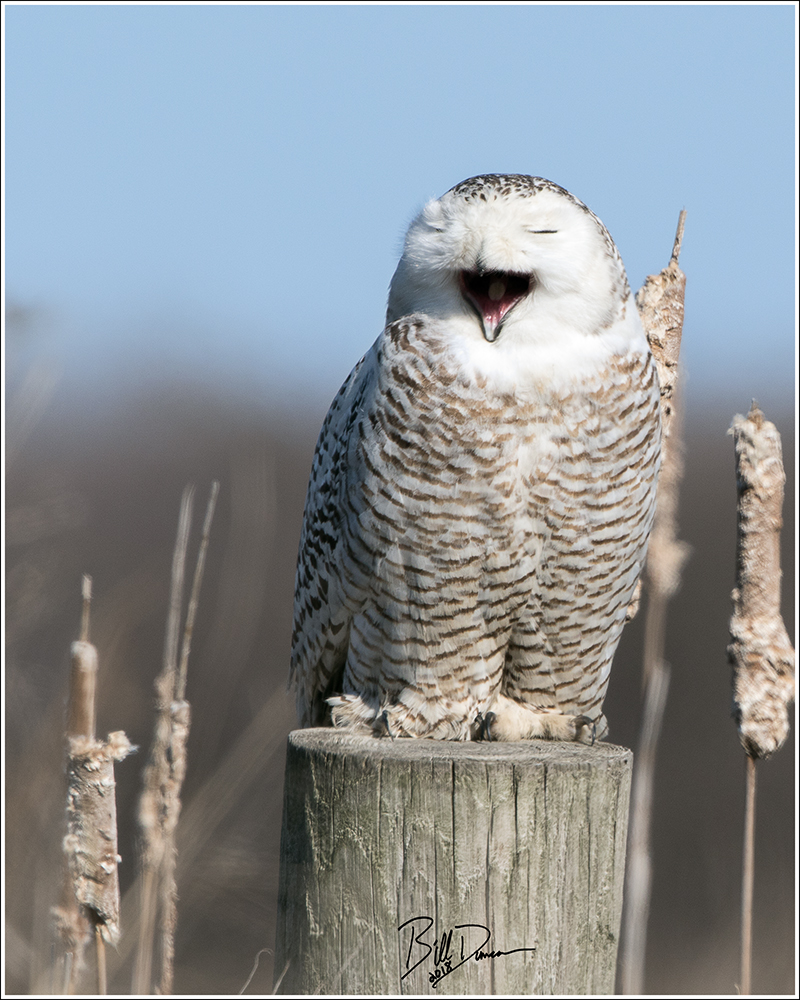
Snowy Yawn
We left the bird still on its perch shortly after sunset. On the way out of the conservation area we had a Short-eared Owl and American Bittern flyovers. Thanks again, Danny.
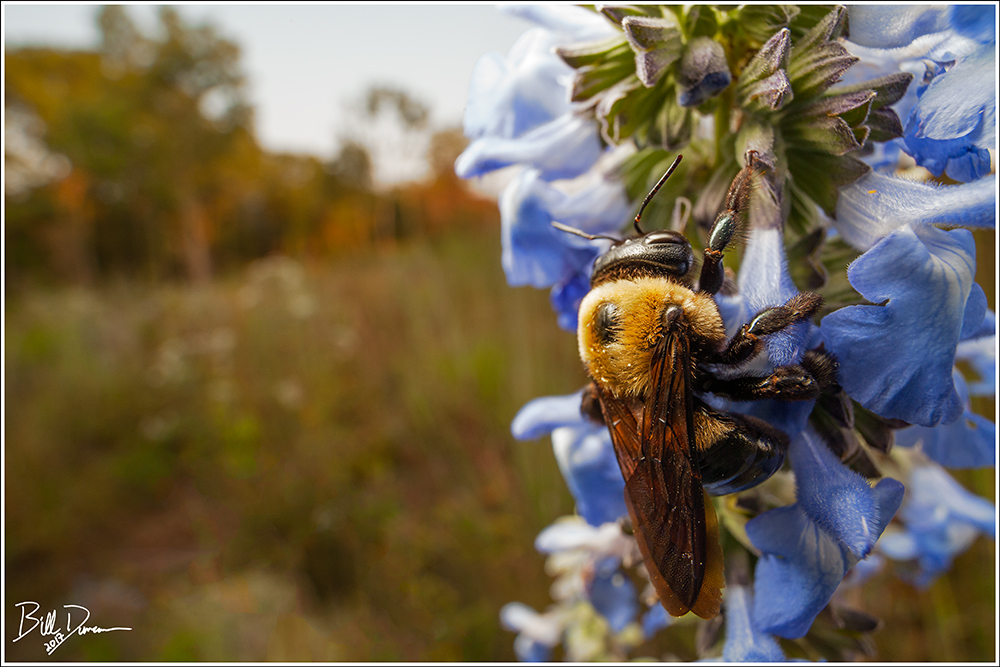
Eastern Carpenter Bee (Xylocopa virginica) on Blue Sage (Salvia azurea)
The WGNSS Photography Nature Group met at Cuivre River State Park on Saturday the 2nd in hopes to find members of Limacodidae (slug moths). Perplexing to me, we struck out in the same time and place I found them in numbers and diversity a year ago.
It was still a good time. We found a number of other macro subjects and explored a couple of new places. I also got to give a first spin to my new lens. A wide-angle macro – the Laowa 15mm f/4 Wide Angle Macro. A rather new lens design and one with a pretty steep learning curve, these photos are really just practice. With time and strategy, I think I can get better at this.
Two areas to focus on in improving with this lens:
1) Getting a better handle on exposing for the environment (background) while getting the right amount of light from the flash to properly expose the foreground macro subject. I think this should be easier to predict with practice. I’m not at all sure that I can ever get it on a first try.
2) Figuring out how much dof is just right. Sometimes getting more detail in the background will be desirable. Other times, it is best to blur it out to bring focus on the primary subject.
This is a funnel web or grass spider (Agelenopsis spp.) that we found protecting her egg sack on the leaf of poison ivy (Toxicodendron radicans). She will likely guard the eggs here until the winter takes her.
Grass Spider – Agelenopsis spp.
One of the nice finds of the day was this Black-waved Flannel Moth (Megalopygidae – Lagoa crispata (4644)). One of the key features of this lens is being able to focus close enough to the primary subject for macro-level detail while capturing so much more in the subject’s environment. In this case, I tried to give the perspective of what it may be like for the bug when being discovered by entomologists or nature photographers. Pictured left to right are WGNSS members Rich Thoma, Dave Seidensticker and Casey Galvin.
After the group disbanded at Cuivre River SP, Miguel Acosta and I decided to visit and explore Little Lost Creek Conservation Area near Warrenton. We hiked about 6 miles and I camped there the following evening. I took a quick photo hike in the morning and found these two Brown Stink Bugs (Pentatomidae – Euschistus servus) in copulation. They didn’t like that lens being so close and kept moving to the opposite side of the boneset (Eupatorium) blooms.
Brown Stink Bug – Pentatomidae – Euschistus servus
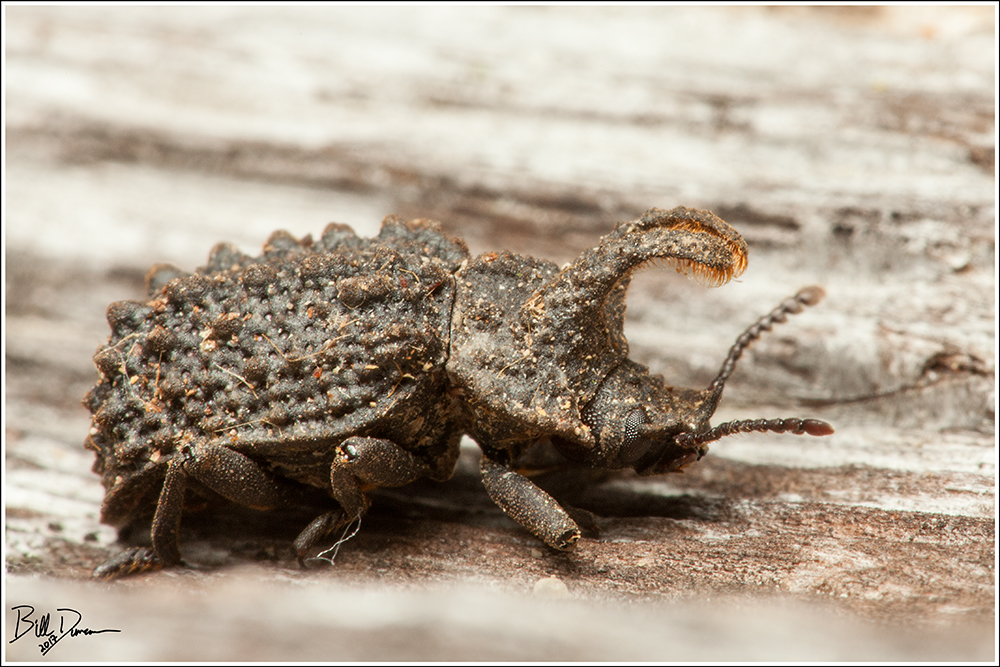
Here is one of the interesting visitors I had to my black lights at Hawn State Park this summer. Bolitotherus cornutus, or horned fungus beetle is in the darkling beetle family, Tenebrionidae. I wish I knew of their preference for polypore fungi as larvae and adults so that I could have photographed them on more suitable substrate.
Members of WGNSS Entomology and Nature Photography Groups met on June 24th, 2017 to see what interesting insects could be found. In this post I am sharing a few of the more interesting that I was able to get photographs of during the day. The find of the day had to be the Cerambycid pictured above that was, by no surprise, found by Ted MacRae.
Delta Flower Scarab
We found that blooms were a great way to find beetles. It is easy to see how the delta flower scarab (Trigonopeltastes delta) got its name.
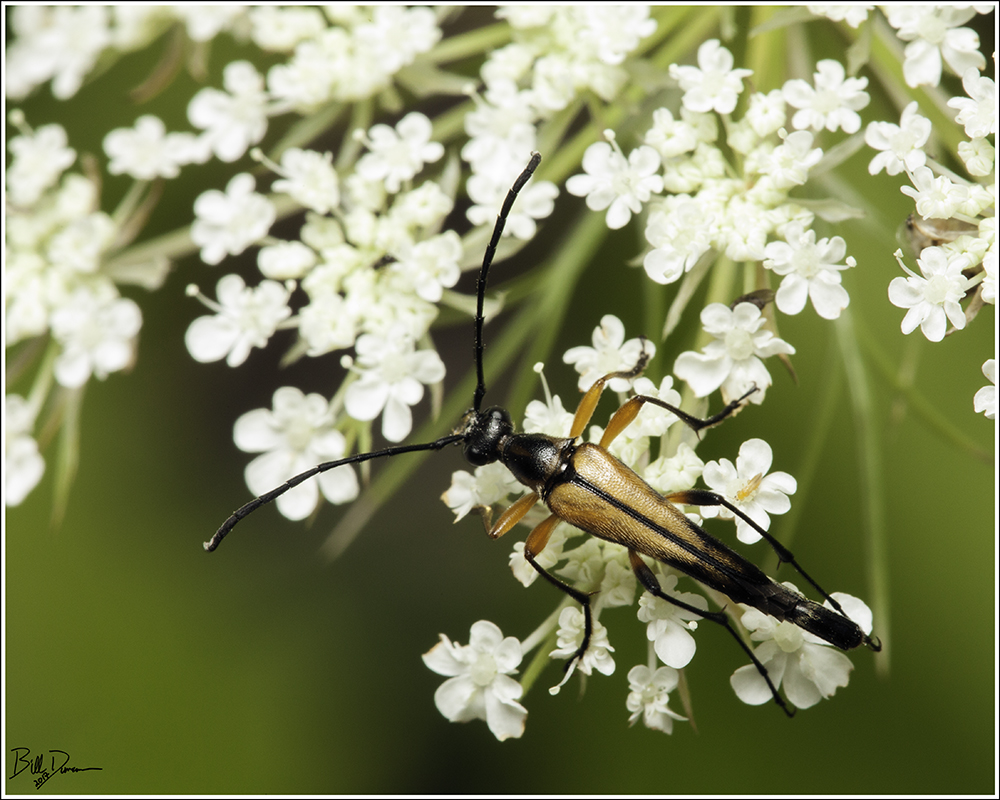
Flower Longhorn
Cerambicids like this flower longhorn can readily be found on blooms.
Banded Netwing
The banded netwing beetle (Calopteron reticulatum) are easy to find, often located in the open atop vegetation. They rely on aposematic coloration to advertise that they carry aboard chemical compounds that make them a distasteful meal.
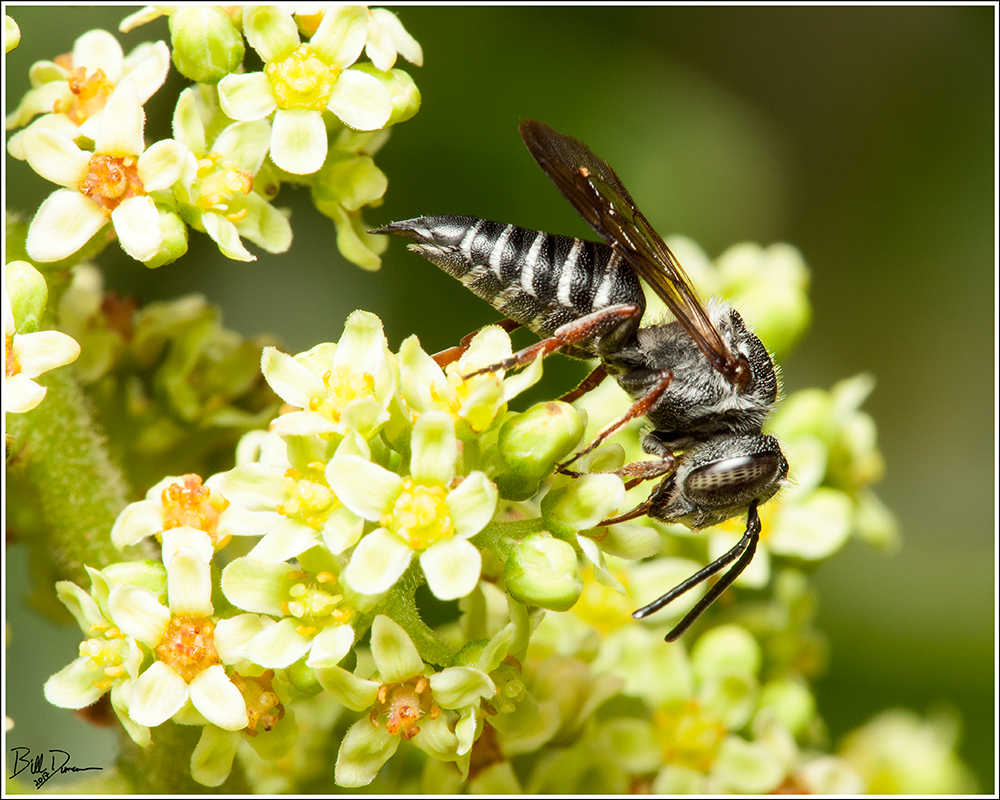
Agapostemon sp
The Hymenoptera were well represented on blooms of wild hydrangea (Hydrangea arborescens), Queen Ann’s lace (Daucus carota) and as pictured above, fragrant sumac (Rhus aromatica). I find the native bees to be tricky to identify by photographs, but I believe this can be placed in the genus Agopostemon. These bees nest in the ground and to promote them, leave patches of soil exposed somewhere in your yard.
Not to leave out the Leps, this double-toothed prominent moth larvae was found. These guys have developed very effective camouflage that allows them to blend in and resemble the toothed, wavy margins of their elm (Ulmus) host plants.
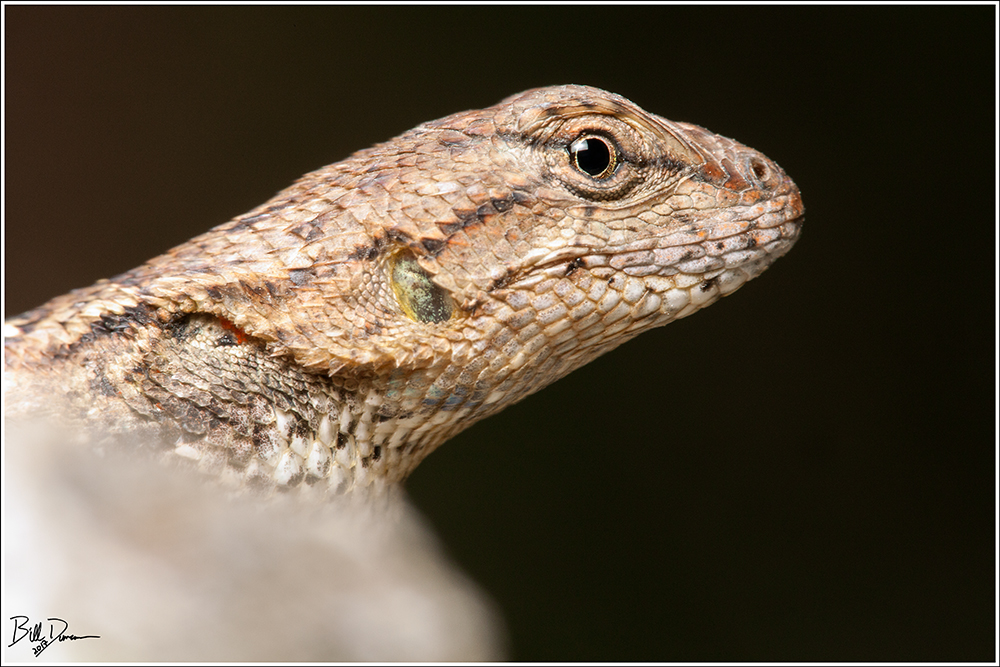
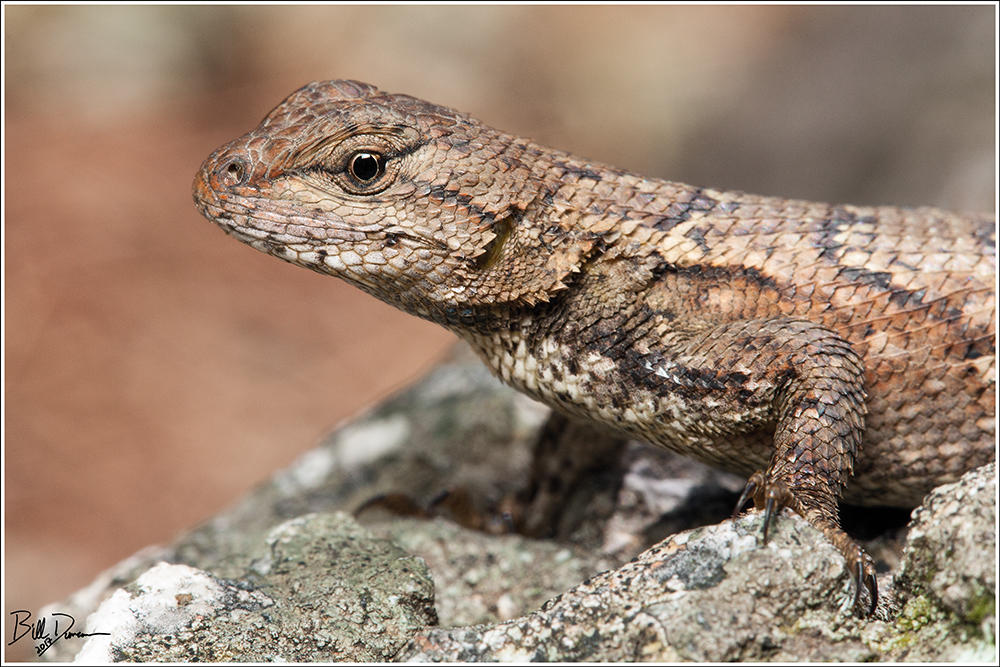
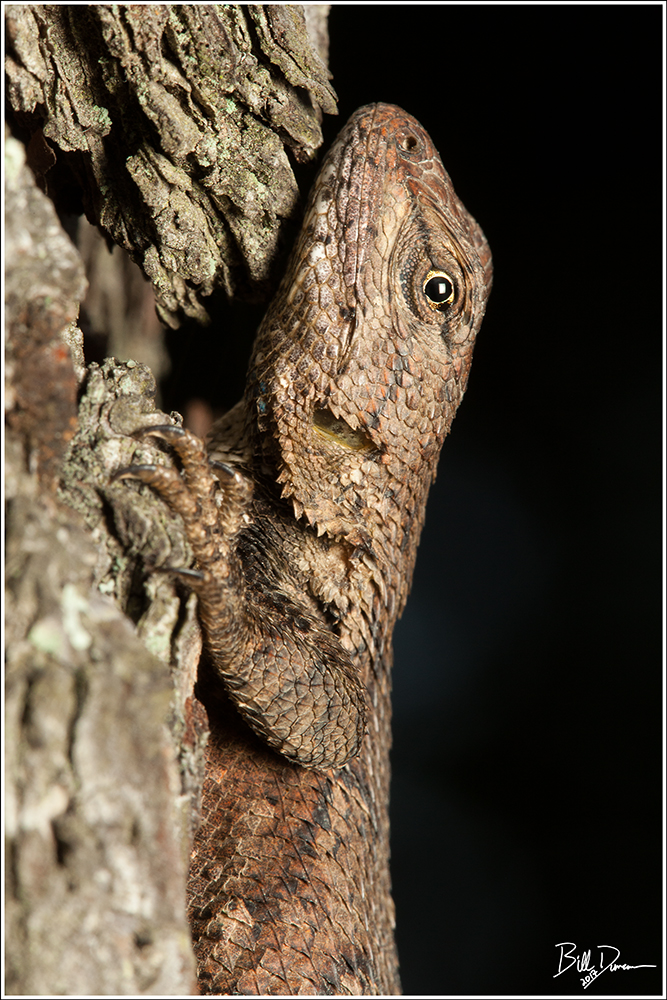
During our search for insects at Council Bluff Lake, the WGNSS Nature Photography Group stumbled upon this cooperative and gravid female northern fence lizard (Sceloporus undulatus hyacinthus). She allowed our close inspection as she attempted to bask and warm herself on a rock.
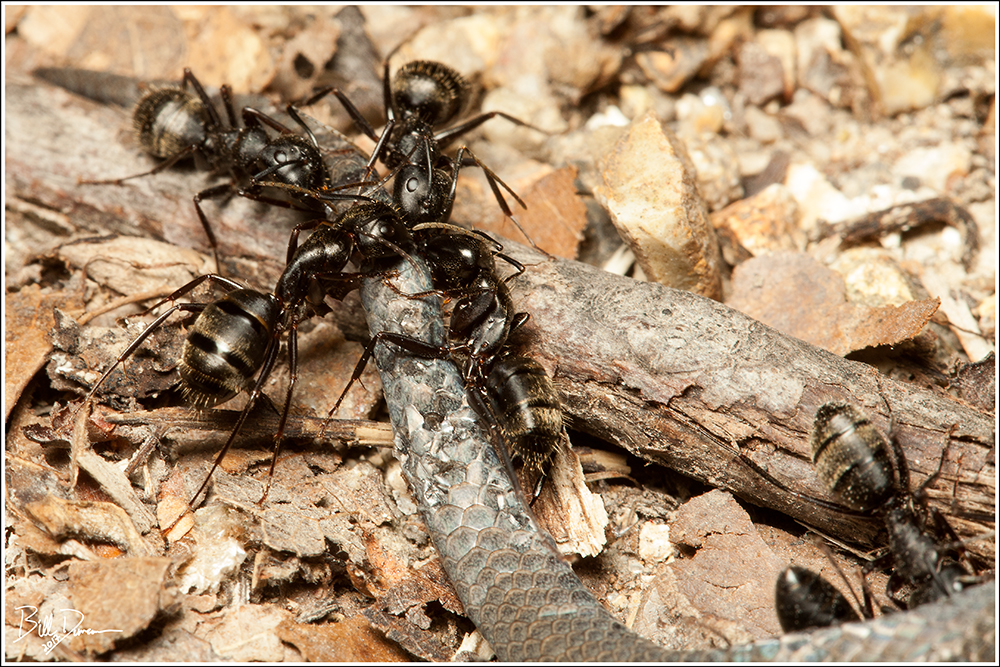
Black Carpenter Ants Feasting On Ring-necked Snake
This series was taken on the joint outing of the WGNSS Entomology and Nature Photography Groups at Council Bluff Lake. Here we have eastern black carpenter ants (Camponotus pennsylvanicus) feeding on a freshly dead ring-necked snake (Diadophis punctatus).
Black Carpenter Ants Feasting On Ring-necked SnakeBlack Carpenter Ants Feasting On Ring-necked Snake











 A Thousand Acres of Silphiums