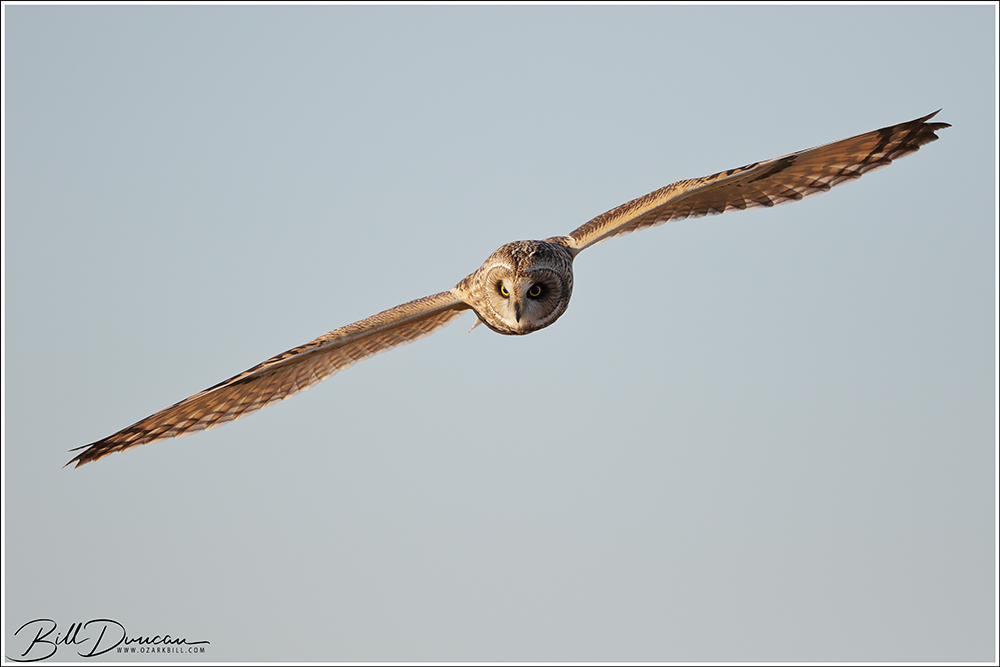
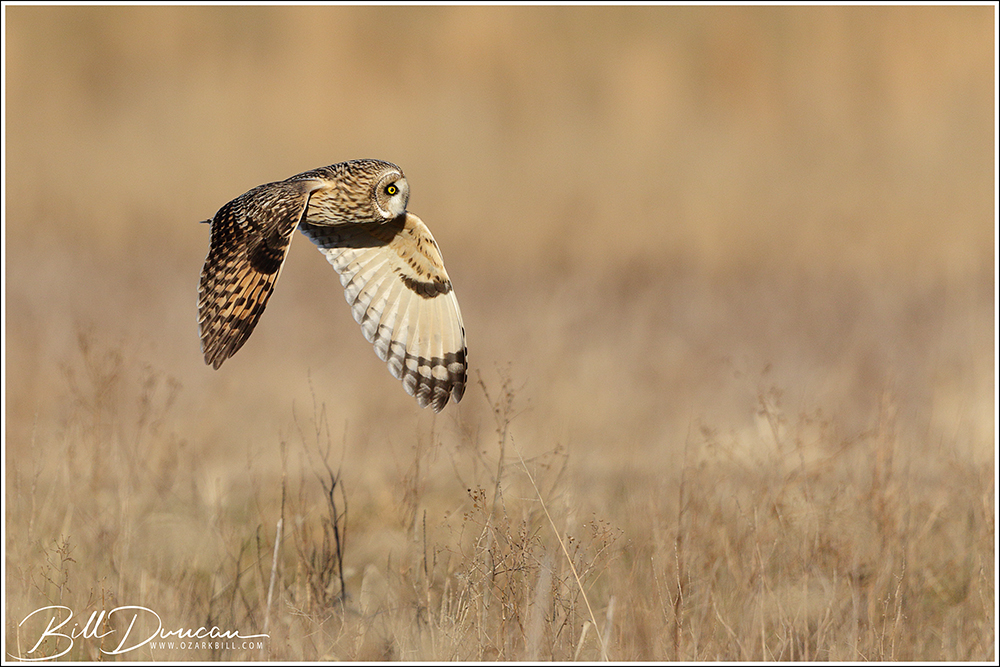
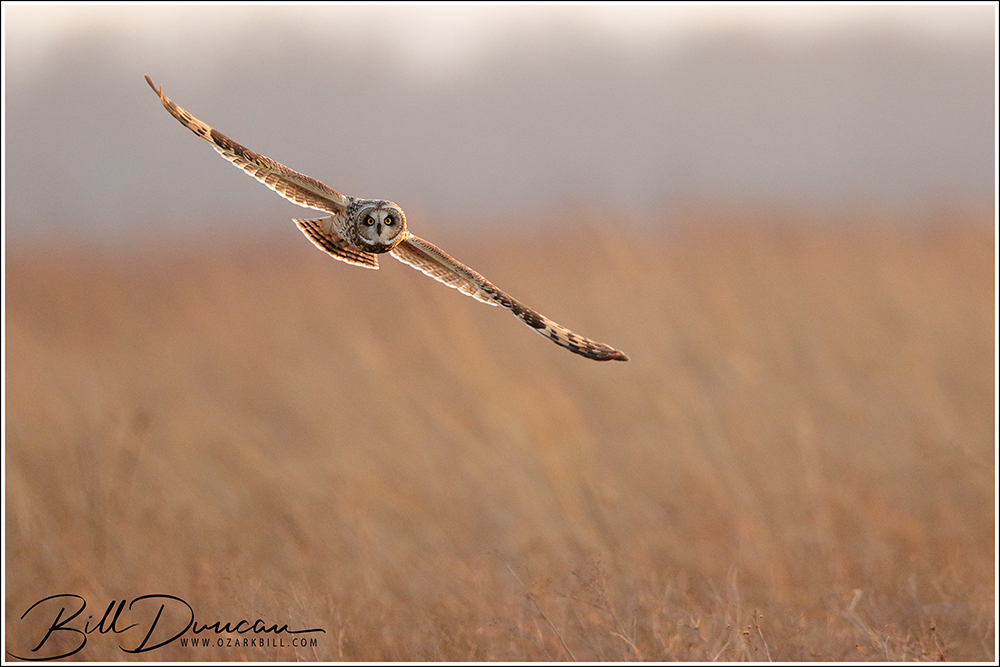
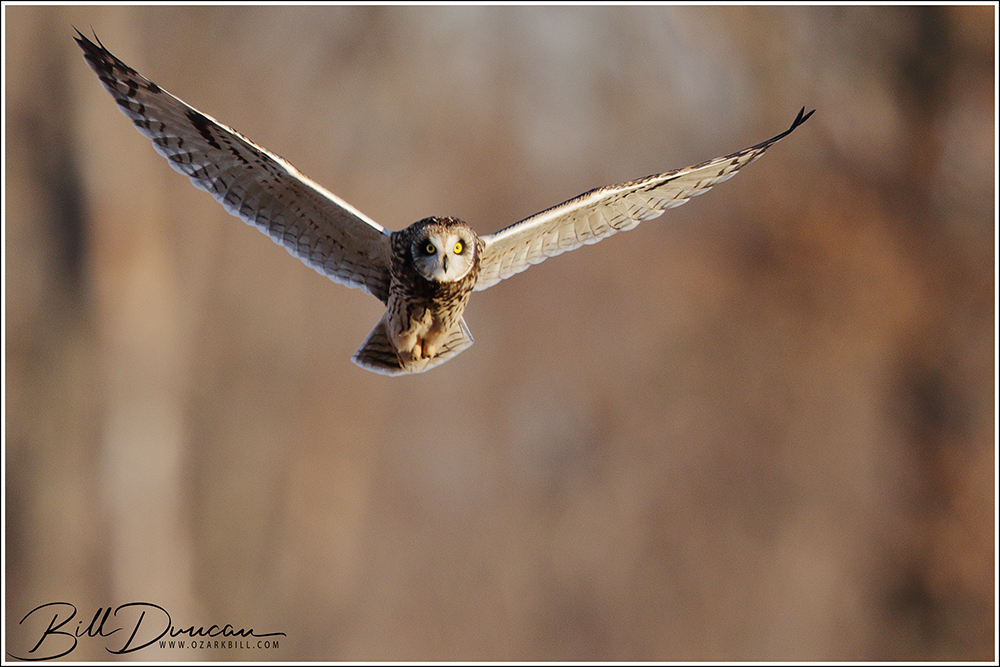
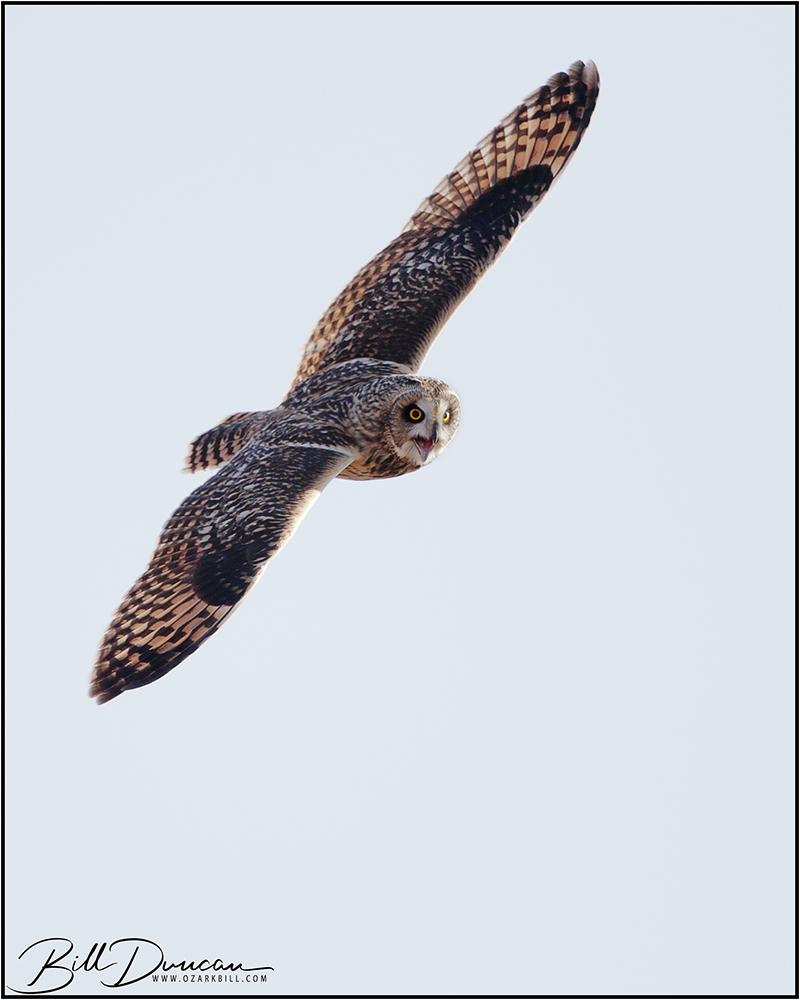
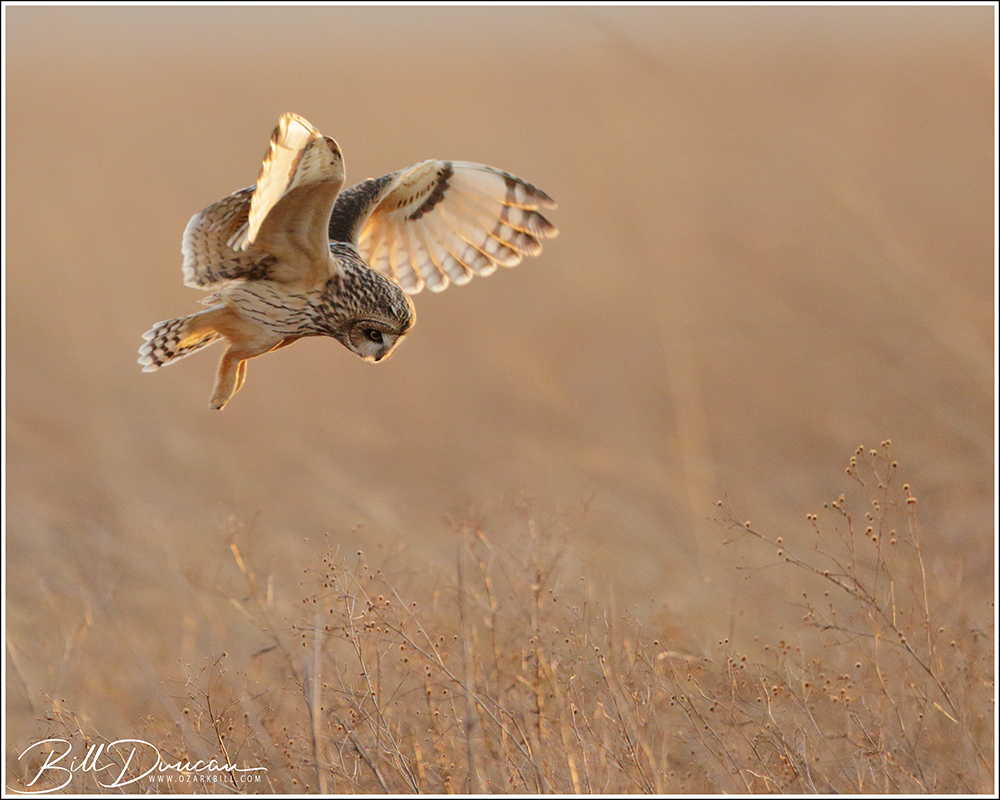
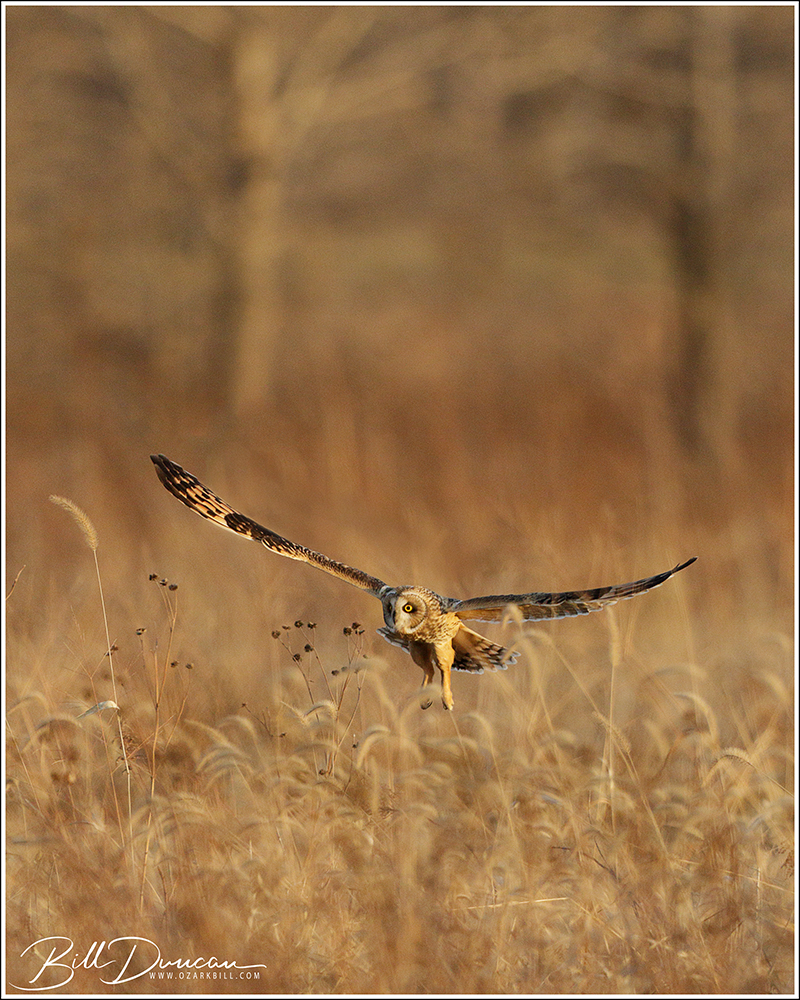
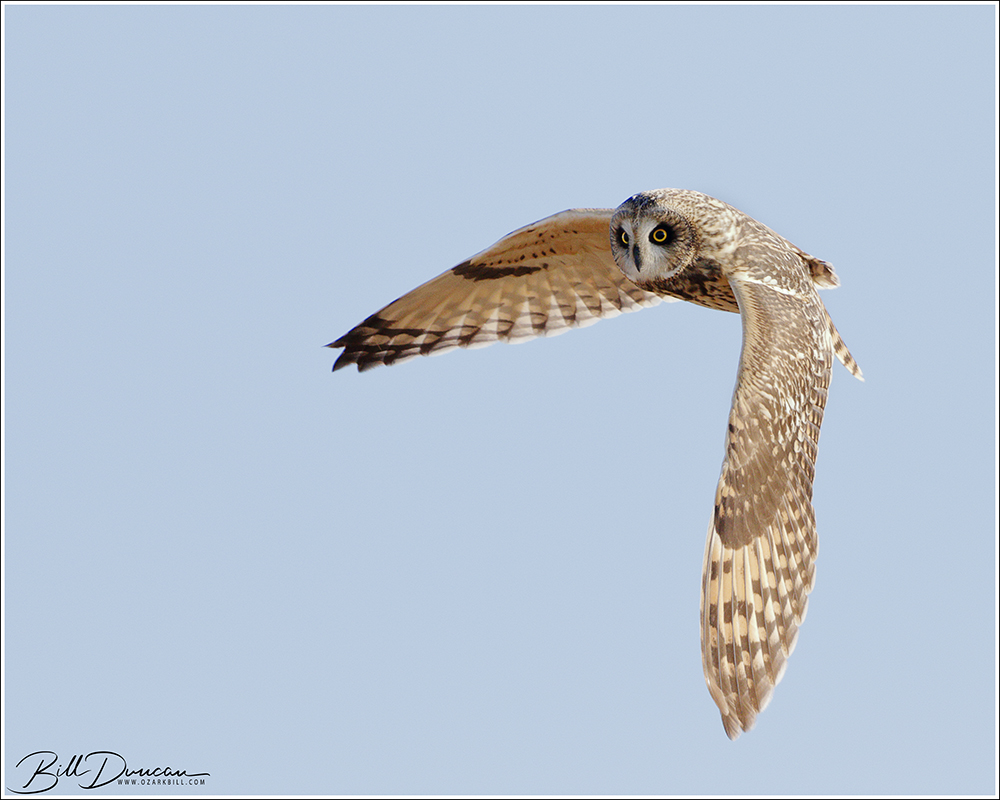
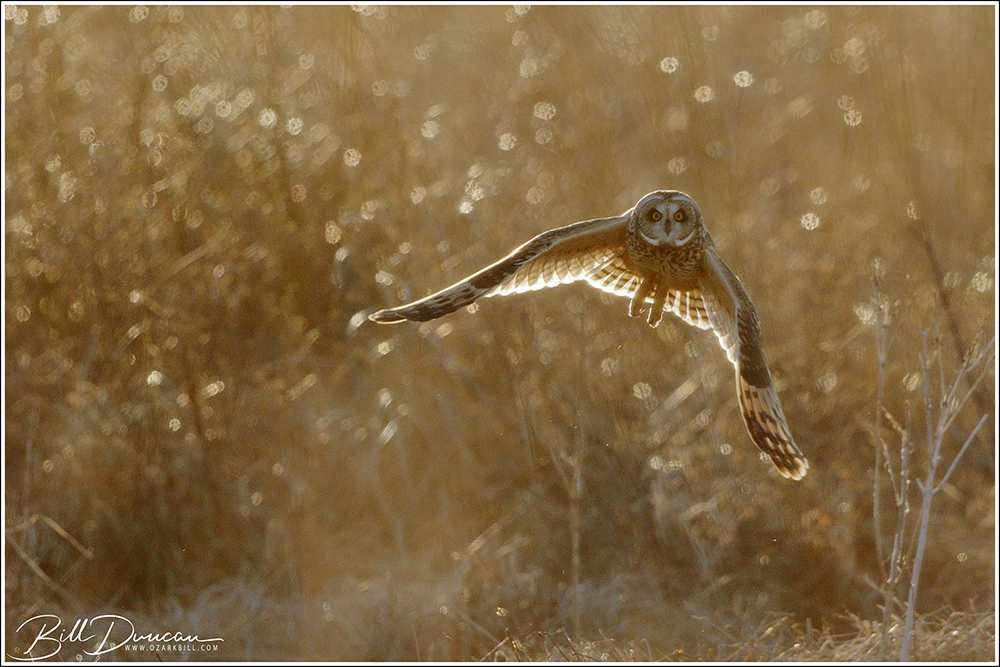
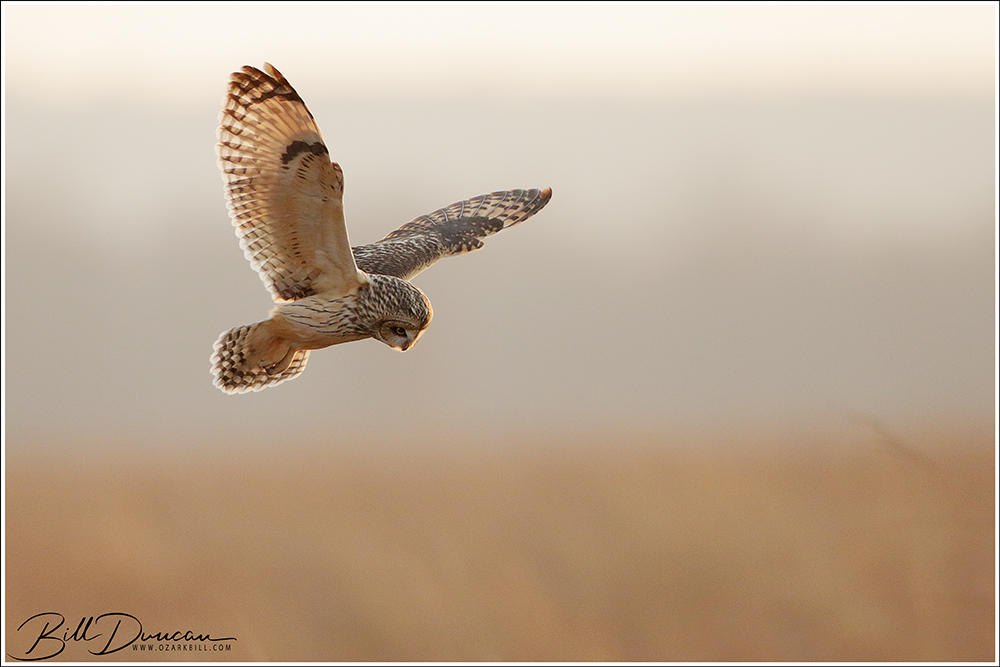
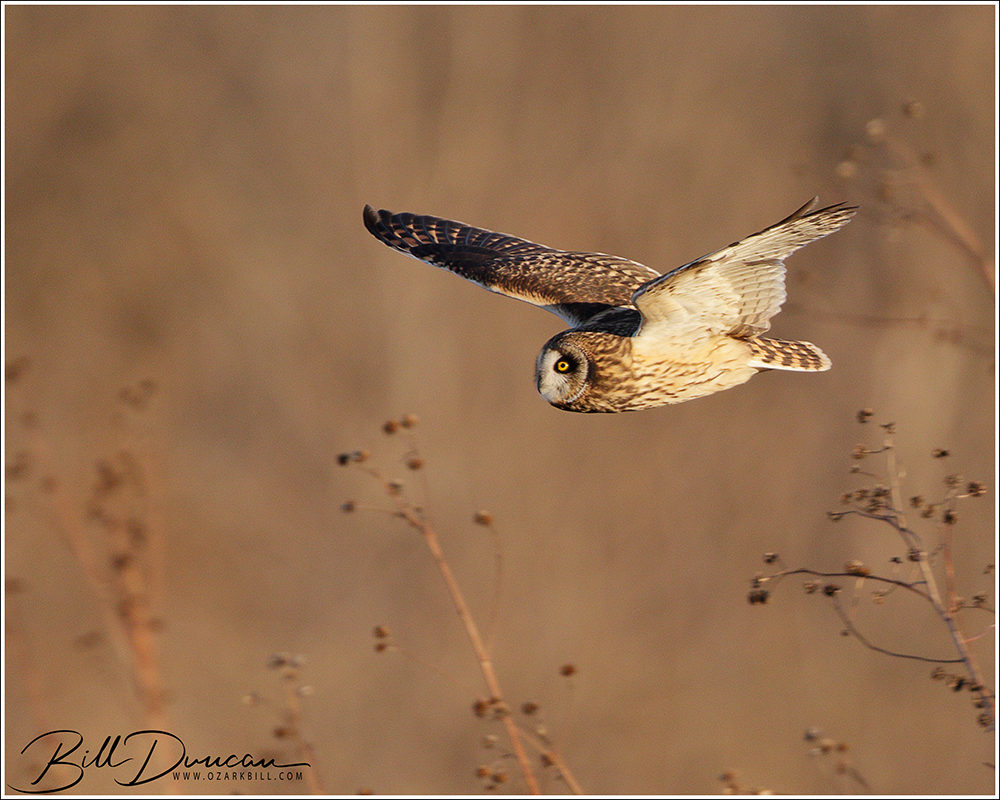
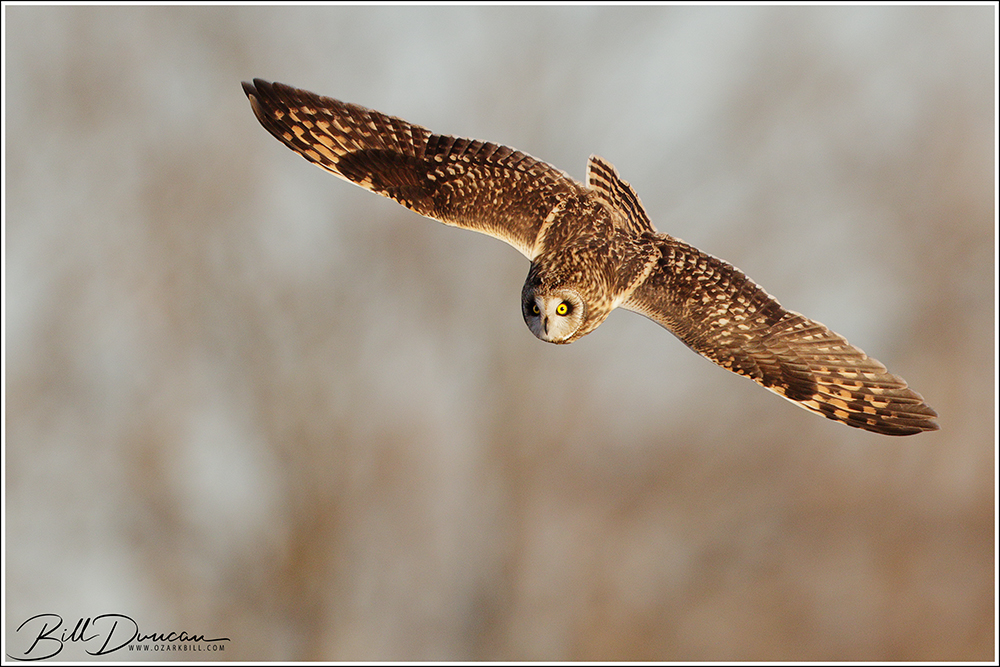
Short-eared Owl – In Flight Shots and Some Natural History

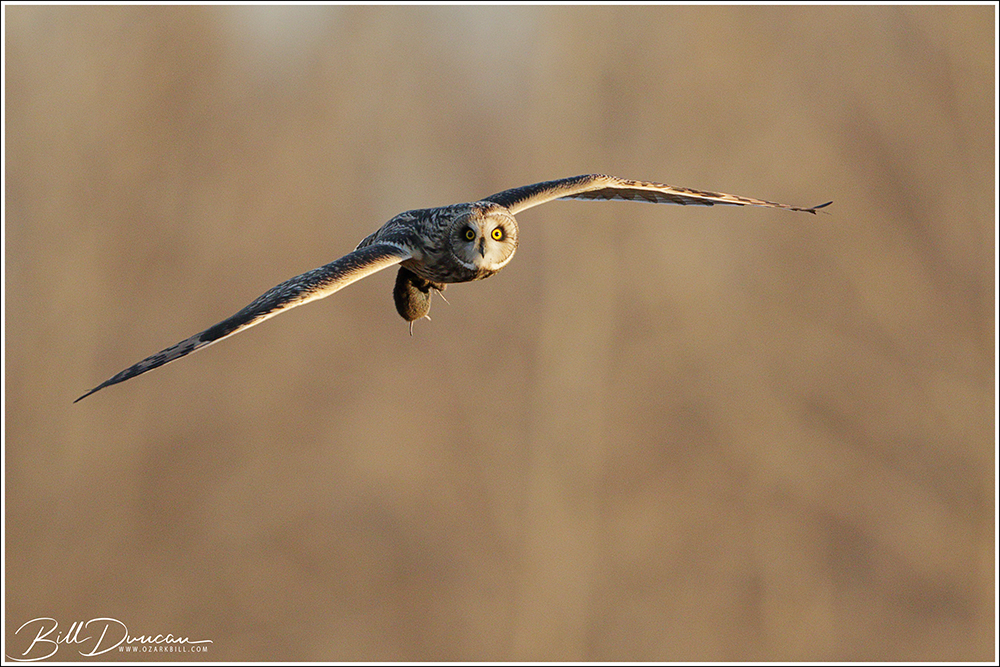
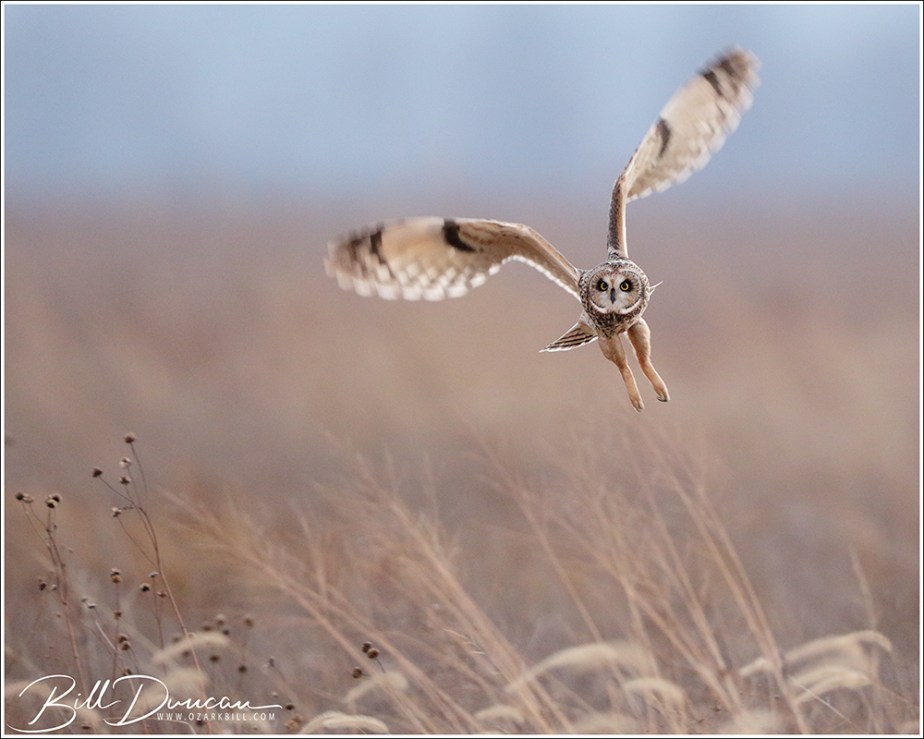
As you know by now, the Short-eared Owl does not nest in Missouri. It uses our state as a wintering ground and nests in the plains states and up into the tundra of Alaska and Canada. It does the same in conducive habitats in South America, Europe and Asia and is even found in Hawaii. In Missouri winters, these birds of prey feed primarily on voles, mice and other small mammals but, in the summer, they expand their diets to include almost anything they can catch including arthropods, birds, reptiles and amphibians.

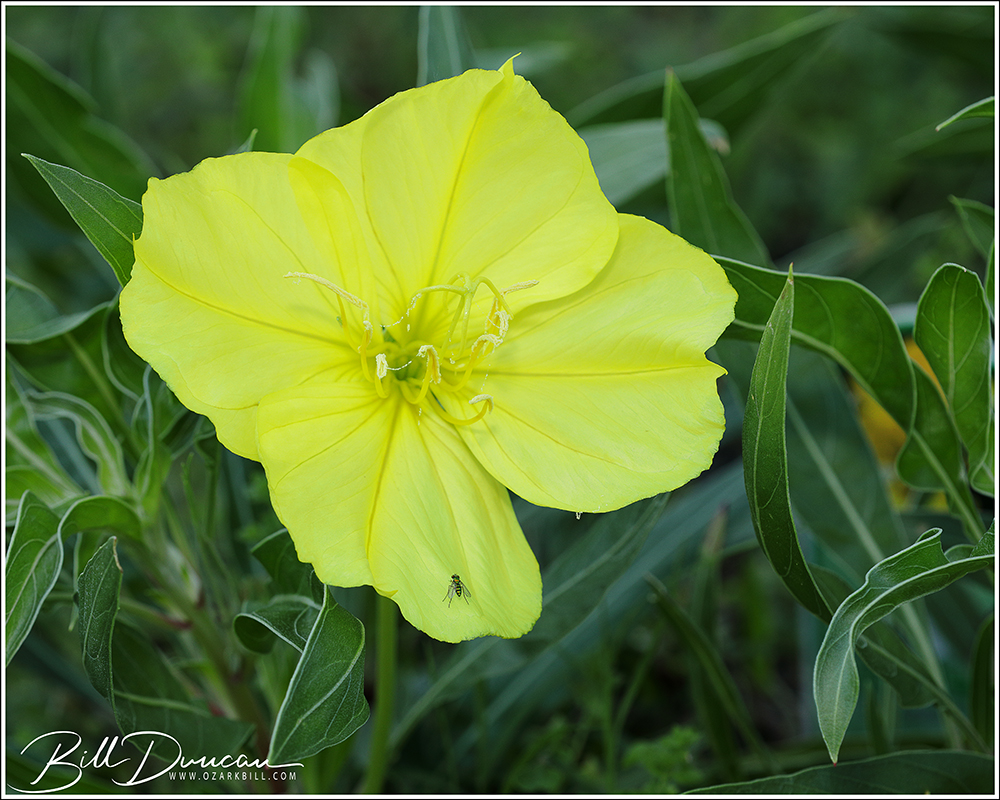
From the Home Garden – Oenothera macrocarpa (Ozark Sundrop)

I know this is a well-known plant for those of us who care about such things, but I can’t believe it isn’t more popular than it is. For the most part, it gets along pretty well with much of our soils (I’m hoping it will stick around in our yard despite the fact that its growing in a mostly clay bed), needs no watering, is easy to propagate and is a perennial! You will typically see this plant listed as “Missouri evening primrose”. However, I recently read it referred to as “Ozark sundrop” and thought that was just perfect.

Oenothera macrocarpa (Ozark Sundrop) grown in my front yard bed.

Anyway, I was pleasantly surprised that the couple of potted plants I put in the ground last spring decide to bloom in their first year. I know the flowers last but a day, but I don’t have to tell you how much they’re worth seeing when they bloom right outside your front door. Check these out in the wild too. They grow in great numbers at a couple of glade spots in Jefferson County – Valley View Glades and Victoria Glades – along with a lot of other fantastic species that bloom at the same time.

The Flaming Owl

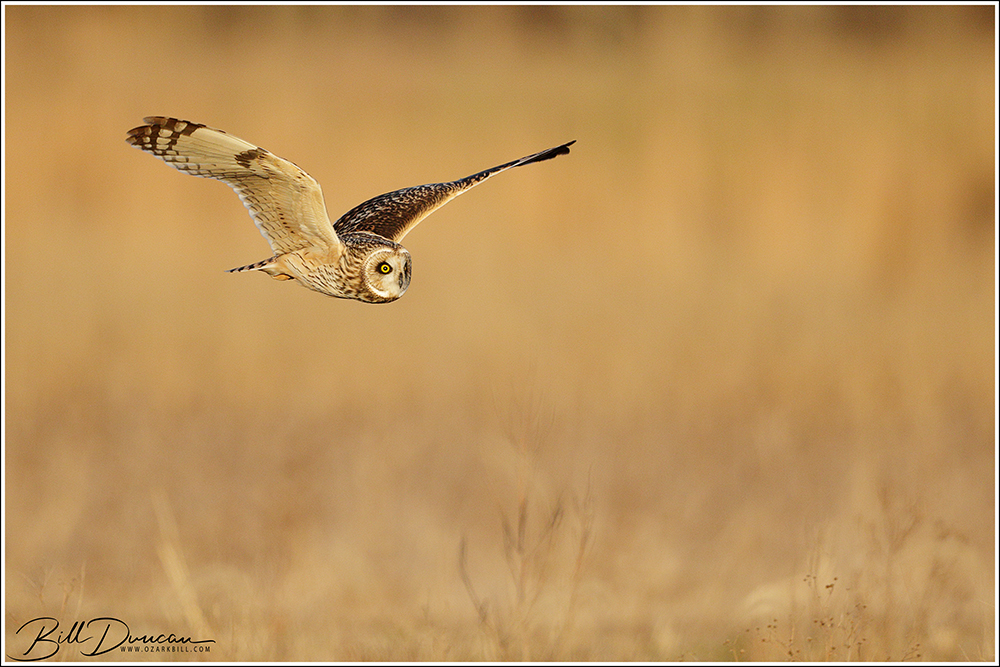
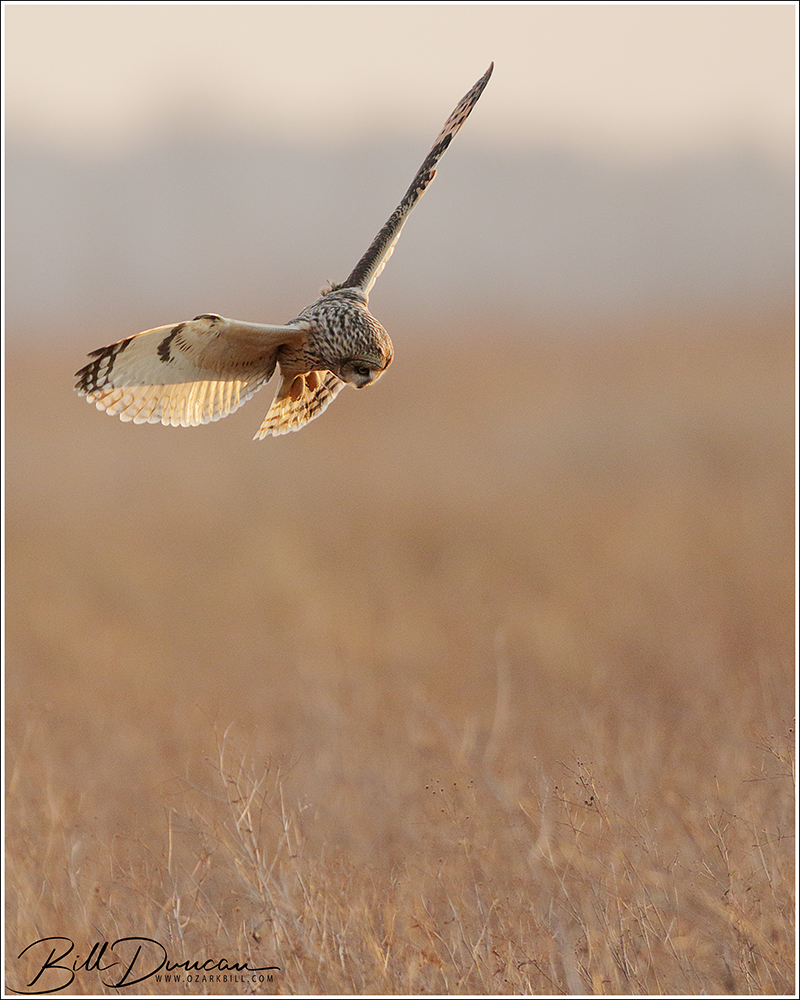
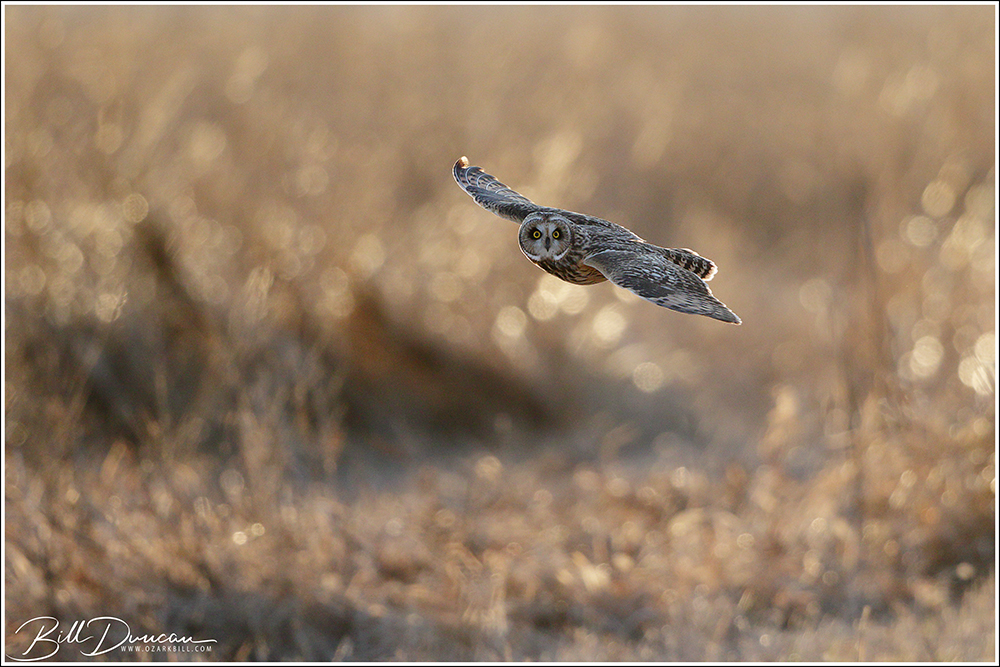
The Flaming Owl was the original English name given to the Short-eared Owl. This directly represented its Latin binomial of Asio flammeus, and assumedly refers to the fiery textures and colors of its plumage. I like to think that it might better represent the look of the bird when it is typically seen – in the golden warm light of the setting or rising sun.

Season of the Short-eared

I’ve been hunting and trying to photograph Short-eared Owls in Lincoln County, MO for nearly 10 years with mixed success. The past three years or so have been particularly challenging with lower numbers than typical, often without seeing a single owl on several outings. We hypothesize that a year or two of bad flooding in these areas adjacent to the Mississippi River have caused dramatic declines in the small rodents that these and other birds of prey need in order to spend their winters here.

Whatever the reasons, this winter (2021/2022) we are seeing incredible numbers of these long-winged beauties. Although primarily nocturnal, this species also exhibits diurnal and crepuscular habits and this is another area where we have been fortunate. I have spent close to 25 afternoons and evenings with these birds over the past six weeks, sometimes alone and sometimes with friends. On most of these days at least one or two owls were seen flying with the sun still well into the sky. This makes for excellent opportunities for observing their behaviors and working on better strategies to get the meaningful photographs we are after.

I have probably kept way too many photographs that will require purchasing new external drives much sooner than I anticipated and I have probably processed too many as well. Still, I plan on sharing many of these here over the course of the next several weeks. Hell, the season isn’t over. I’ll probably try for more before they head back to the great north for the breeding season.
Green Heron – From the Canoe

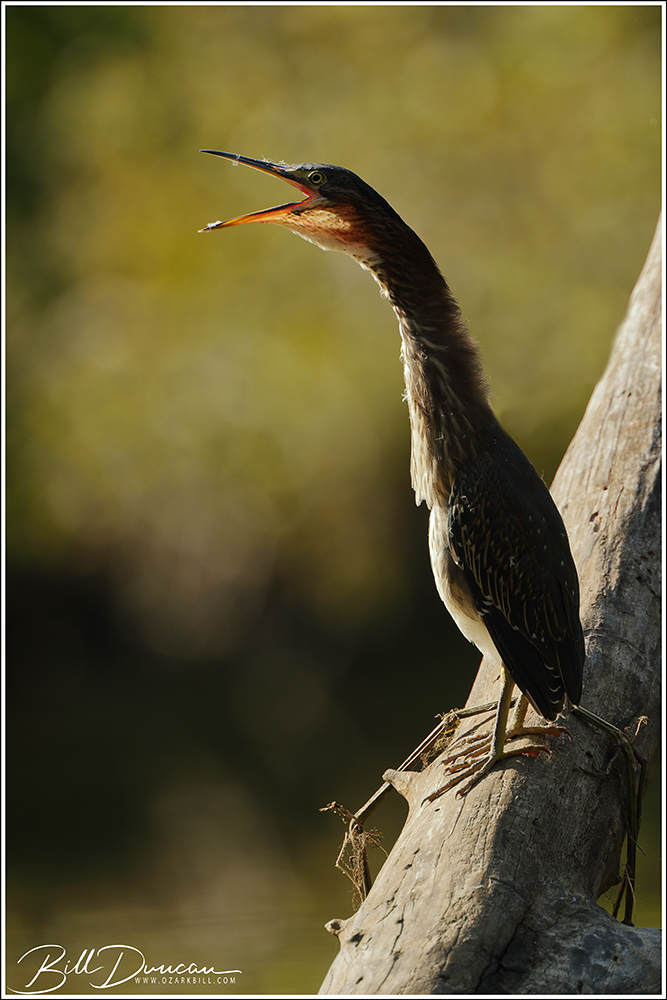
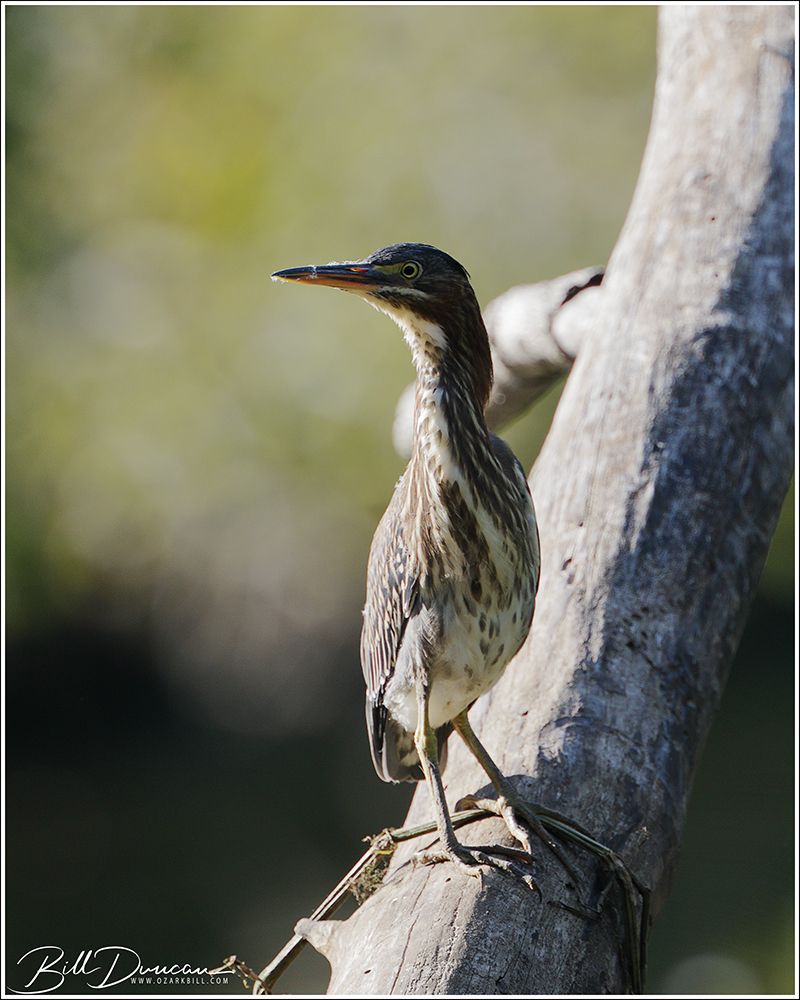
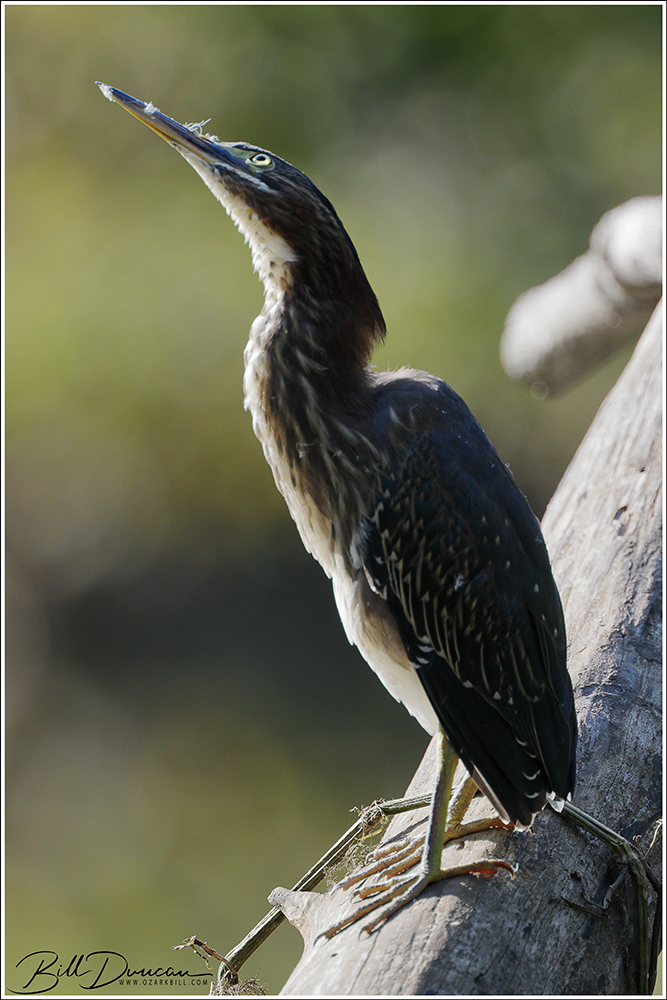
On my last trip out with the canoe, back in September, I came across this most cooperative Green Heron. It did not care at all that I was hanging out watching it hunt. It was a fun challenge, maneuvering around as quietly and methodically as I could in order to get the right light on the bird and the best background possible.

The benefits of wildlife photography from a boat.

Thank you for stopping by.

-OZB

Euonymus americanus (Strawberry Bush)

Euonymus americanus in bloom. Strawberry bush usually blooms in mid to late May in MO. This species can be difficult to distinguish from the other bushy Euonymus in the area, including the invasive Euonymus alatus (burning bush). When not in bloom, E. americanus is the only bushy Euonymus that has five petals, all the remaining having four.

Ranked as an S2 (imperiled) species of conservation concern in Missouri, Euonymus americanus is a striking plant in more than one season. Where it grows in the Show Me State it is always threatened by white-tailed deer who absolutely love our native Euonymus spp. In areas with overpopulation of deer, the plant has been removed from the landscape. This past autumn, I planted one in the fenced-in portion of our backyard in the remaining humus and decay of an old ash stump. I’m hoping the soil here will be rich enough for its liking and that the deer will not discover it.

The unique and unmistakable fruits that give strawberry bush its name. This plant was found in Butler County, MO.