"What a thousand acres of Silphiums looked like when they tickled the bellies of the buffalo is a question never again to be answered, and perhaps not even asked." -Aldo Leopold
I was fortunate to come across this most cooperative juvenile Red-shouldered Hawk over the recent holiday break. Using the newly acquired pre-capture mode in my camera makes it much easier to grab shots like these. By half-pressing the shutter button, the camera stores half a second’s worth of frames in its buffer. Immediately after the action takes place, fully depressing the shutter button will instruct the camera to write the images from the previous half-second onto the card. As long as you are on the ball, missing unpredictable action shots like a bird leaving its perch will be a thing of the past.
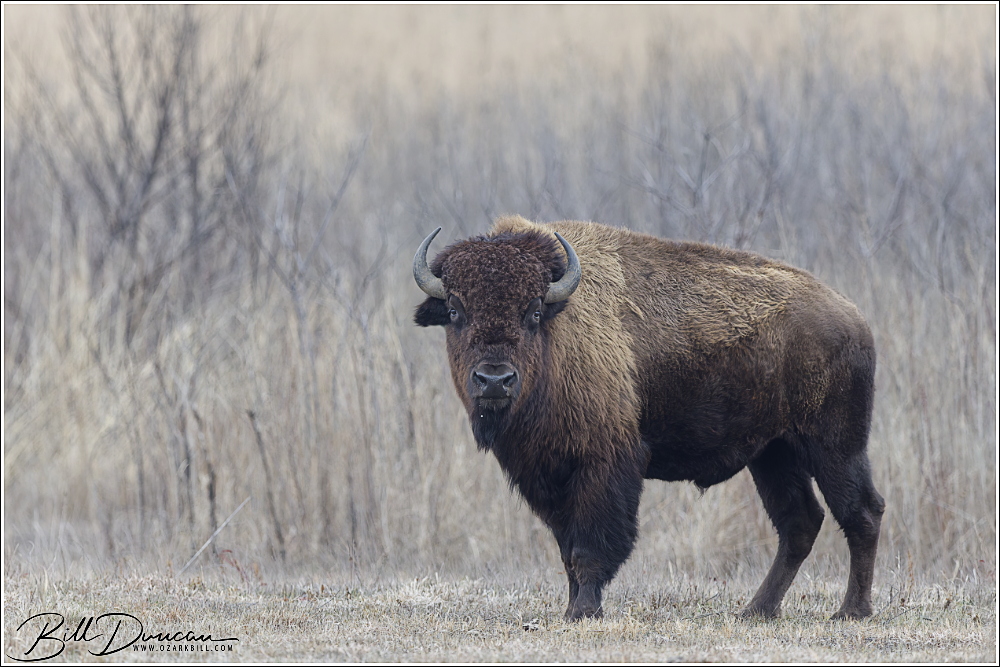
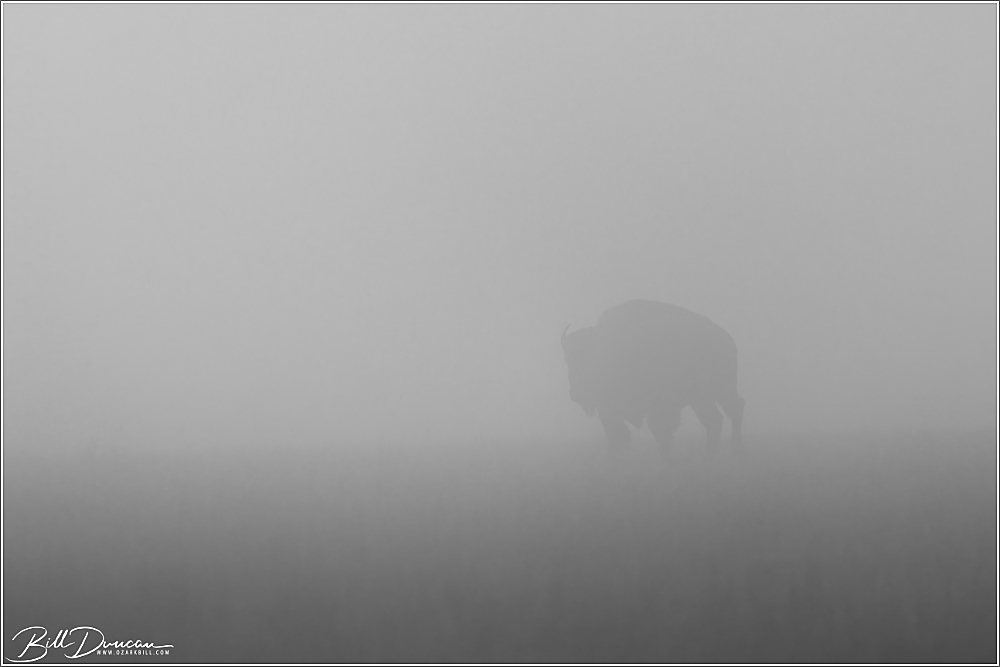
Over the holiday break, the WGNSS Nature Photography Group traveled to southwestern Missouri to visit Prairie State Park and surrounding prairie and wetland locations. We were hoping for opportunities to photograph the free-roaming bison within Prairie SP and hopefully find some interesting winter vagrant bird species. Likely due to the unseasonably warm conditions we were having, finding birds was a no-go. Thankfully the bison were there as expected. On two of the mornings we were there, the fog was incredibly thick. It made for some interesting photos but we had to be careful to not stumble too closely onto fog-concealed bison that probably would not appreciate that.
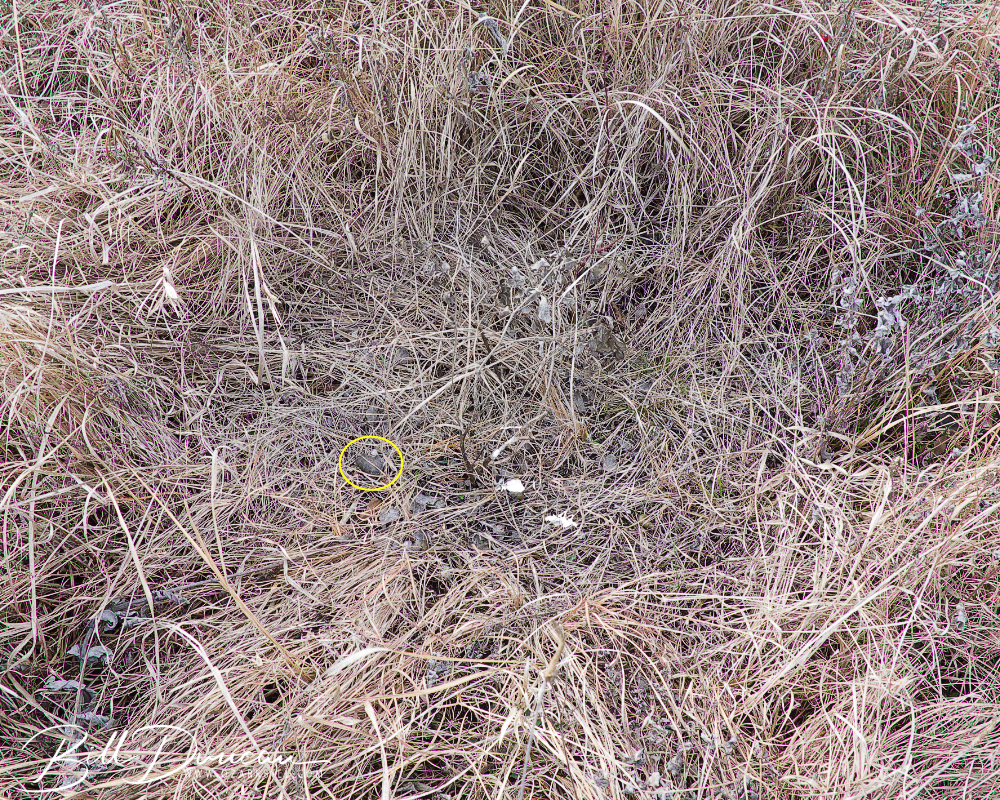
I did have a bird related first on this trip. While walking through Golden Prairie in Barton County, we stumbled upon the depression pictured below. In the center of the depression were fresh urates (nitrogenous waste produced by birds and reptiles) and also within the depression was a fresh owl pellet, still warm and stinking. We stumbled across the day-roost of a Short-eared Owl! After taking a picture, I picked up the pellet to add to my collection. I now only need to collect pellets of the Eastern Screech Owl to finish the owls of Missouri. The pellet can be seen within the yellow circle in this picture.
Theis depression in the prairie grasses was a daytime roosting area of a Short-eared Owl
In five years living in our current home, there has not been a single occurrence of any of the numerous, and often misbehaving, white-tailed deer of the neighborhood jumping the short fence that encloses the upper half of our backyard. I had gotten so convinced that we would never see a deer in this area that I put more deer-palate-friendly woody plants in this part of the yard and only have minimal protection against rabbits. The absence of deer from this enclosed portion of the yard, I suspect, is due to the relatively small area and closeness to the house. The fence is short and is an easy hop for the average deer.
Bucky on the first day we met. Notice the swollen front right leg.
About two weeks ago our new guest, Bucky, arrived. I had first seen Bucky early one morning as I was leaving the house for a walk. He was standing in the yard, very close to the side of our house. I hadn’t given it too much thought, but upon returning about an hour or so later, he hadn’t moved. As I got closer to the house, I guess I got a bit too close for his liking and he began to walk away. Then I noticed he had a very injured front leg. The leg, dangling and disjointed, was obviously of little use and Bucky was hesitant to put any weight at all on the appendage. He was able to move far enough that I eventually lost sight of him and I figured if I ever saw him again, he would probably be deceased somewhere in the neighborhood.
One of Bucky’s resting spots
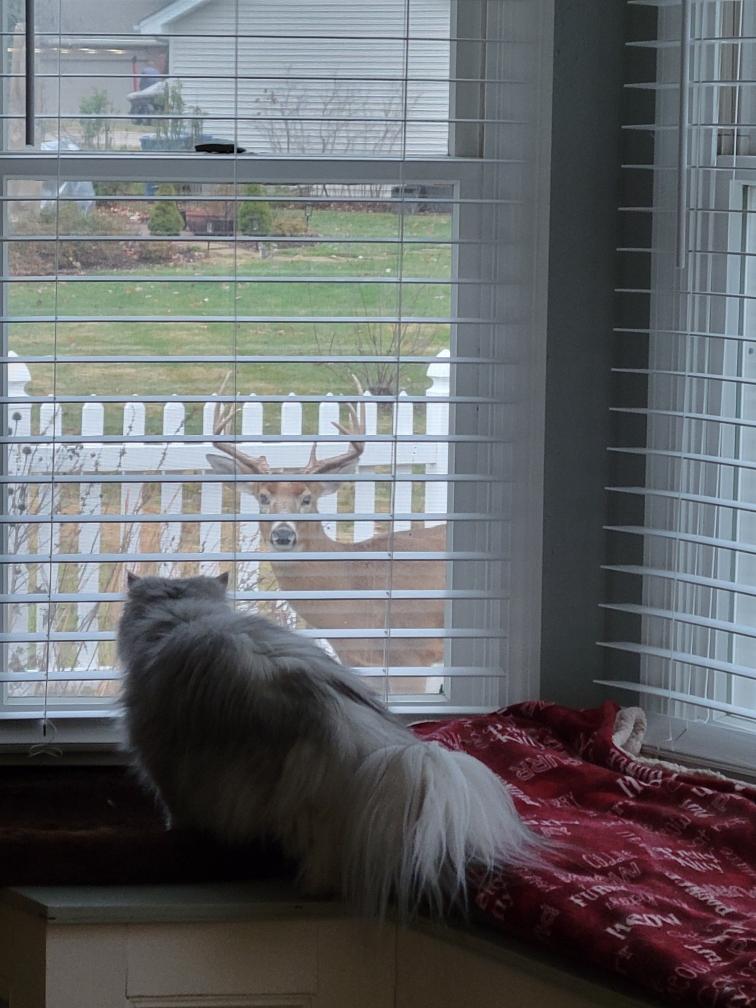
A few days later as I was sleeping in during my holiday break, Sarah rudely woke me up and told me to look out the blinds. There was a buck lying down, damn near touching the edge of our screen porch inside the fenced area of our backyard! Well, I was concerned and perturbed and I went outside as fast as I could to persuade this brute to move on. Upon watching him get up and start moving, I discovered it was the deer I had seen several days earlier – Bucky! I stood in disbelief as this prime, but severely injured deer leaped over the fence with only three working legs.
Cleaning out the “deer feeder”
Moving this story along, Bucky has now been a regular visitor inside my fenced fortification. We do not see him every day, but he often arrives during the night to take his usual sleeping spot. By the looks of what he’s been dropping in the yard, he even seems to be getting plenty to eat. I imagine he might be using this spot to escape other large bucks in the area and potentially coyotes that I have heard in the neighborhood. I have sprayed my tasty woodies with deer repellent to dissuade him from nibbling but he has destroyed a couple of tree enclosures and has damaged, now for the forth time since planting, my poor nannyberry. Despite this, we have decided to let him squat. It’s a relatively secure spot for him to attempt to recuperate and he can access my lower bird feeder to get a little bite now and then. Hopefully in return, he can do me the favor of dropping those antlers in the yard.
Bucky and Phoebe getting acquainted
Time will tell whether Bucky will get back on his feet or not. He’ll definitely have to be tough to get through the weather we are having currently. It has been two days since we last saw him. If I find out anything else about his fortune, I’ll be sure to update here.
-OZB
January 10th update.
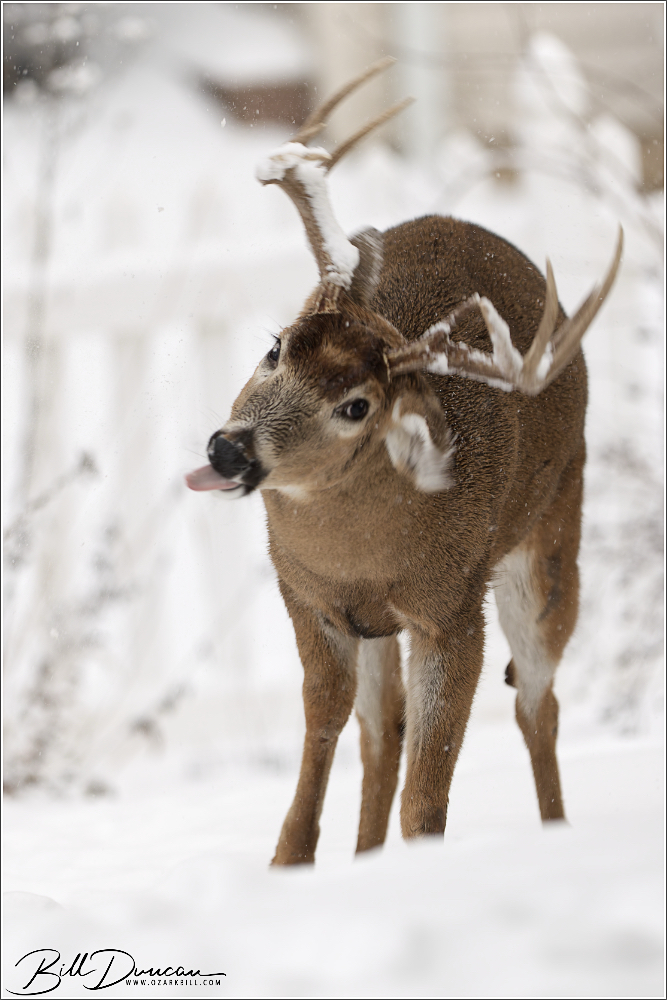
Bucky returned last night after not being seen for four days. Unfortunately I wasn’t paying attention as I fed the birds and by the time I noticed he had already stood up from his bedding area. I went and grabbed the camera and got some shots as he shook off some snow and did a little grooming. He then jumped the fence to make his daily rounds.
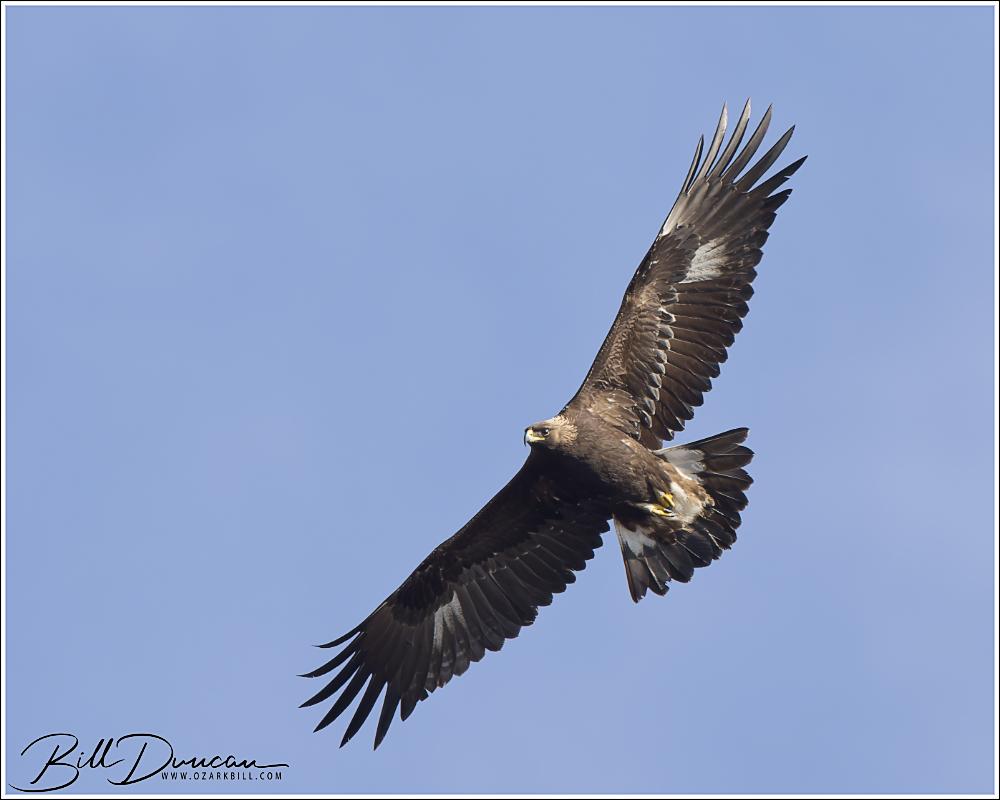
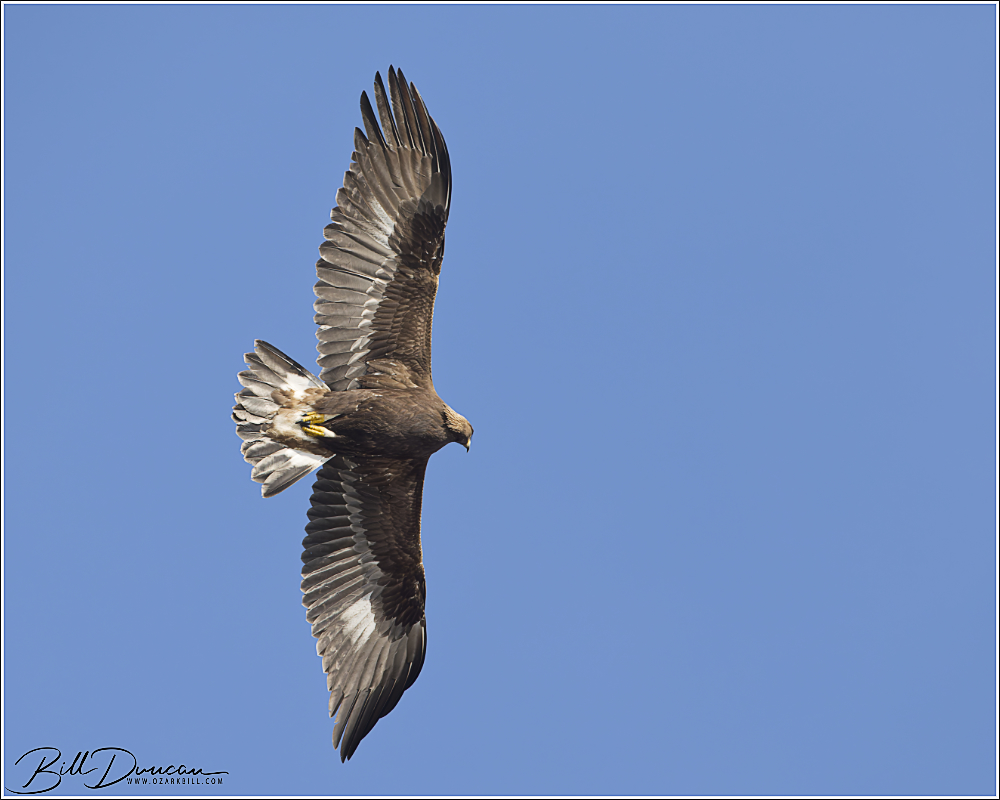
Most of my outings over the recent holiday break were pretty slow. Probably due to the warmer winter season so far, finding birds of any sort has been problematic to say the least. I did have some fortune on a trip up to Pike County, Missouri on December 19th, when I found and got my best photos to date of a couple of Golden Eagles.
Immature Golden Eagle, December 2024
I am no expert in aging Golden Eagles and it seems to be a bit tricky even for those who are familiar. I believe this first bird would be considered an immature stage, likely between 1 and 3.5 years of age.
Another look at an immature Golden Eagle
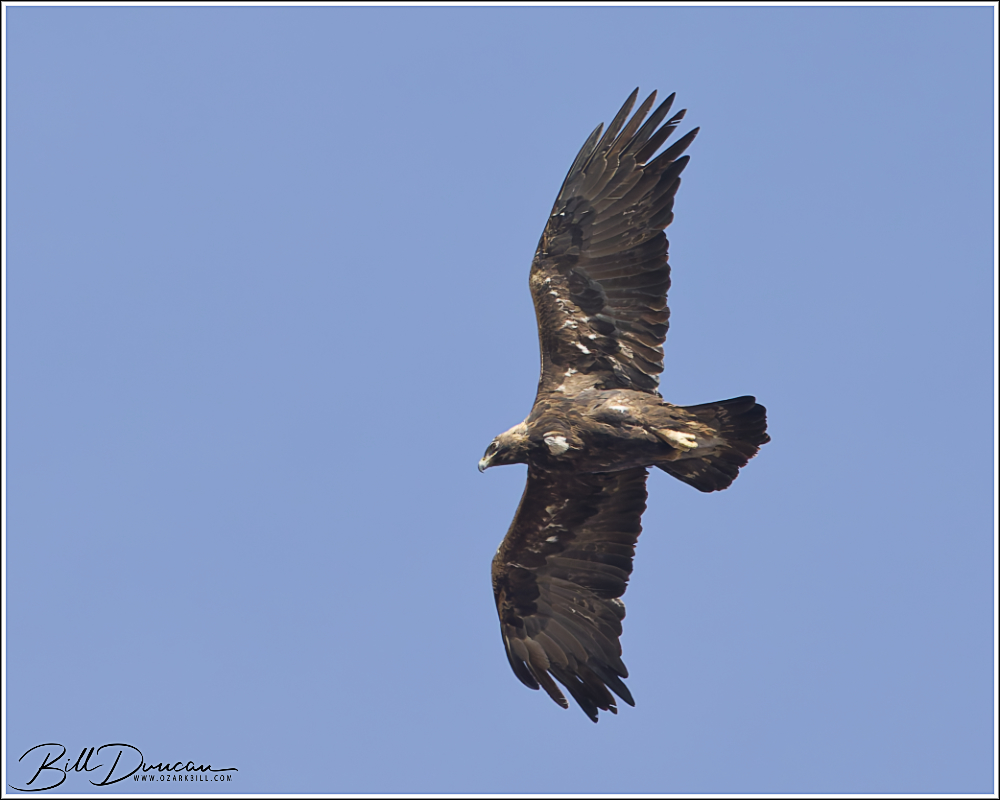
This next bird I believe to be a full adult of at least five years.
Adult Golden Eagle
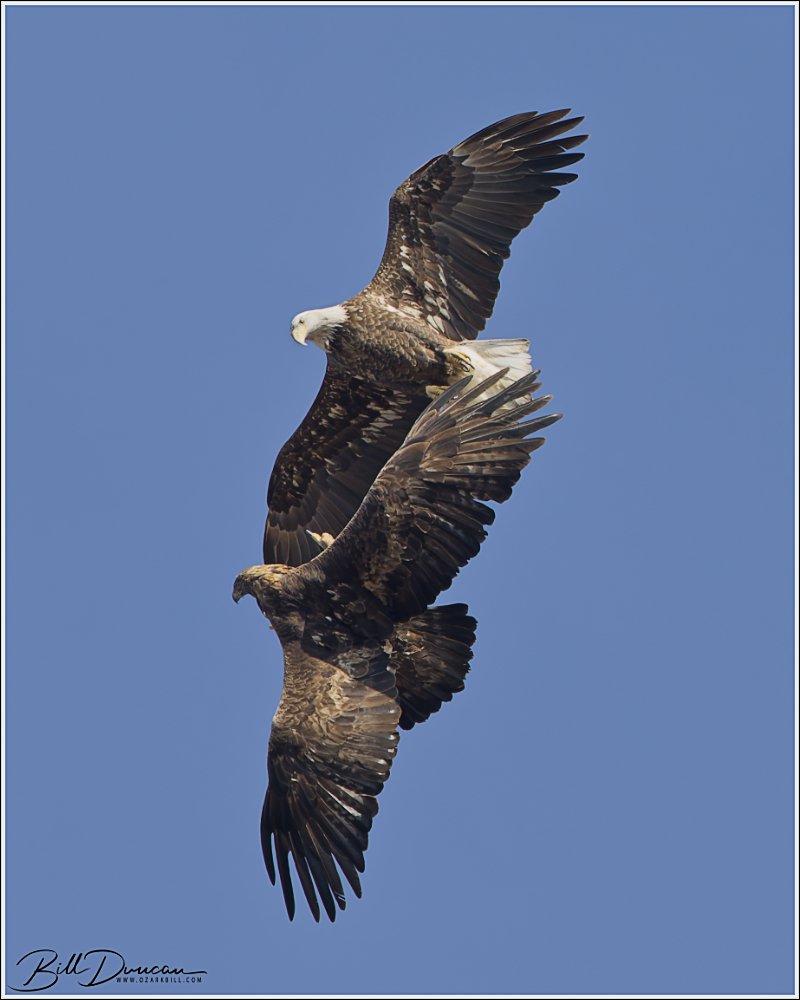
Here is the same adult Golden Eagle getting into it with a Bald Eagle. This is something I have seen on several occasions when observing the Golden Eagles in Pike County.
Adult Golden Eagle and adult Bald Eagle getting familiar
Sometime patience really pays off. I am grateful to have had the opportunity to visit some places on multiple occasions to increase my chances at an opportunity like this. Hopefully we’ll be getting some real winter weather that will stick around and be able to get more opportunities this season.
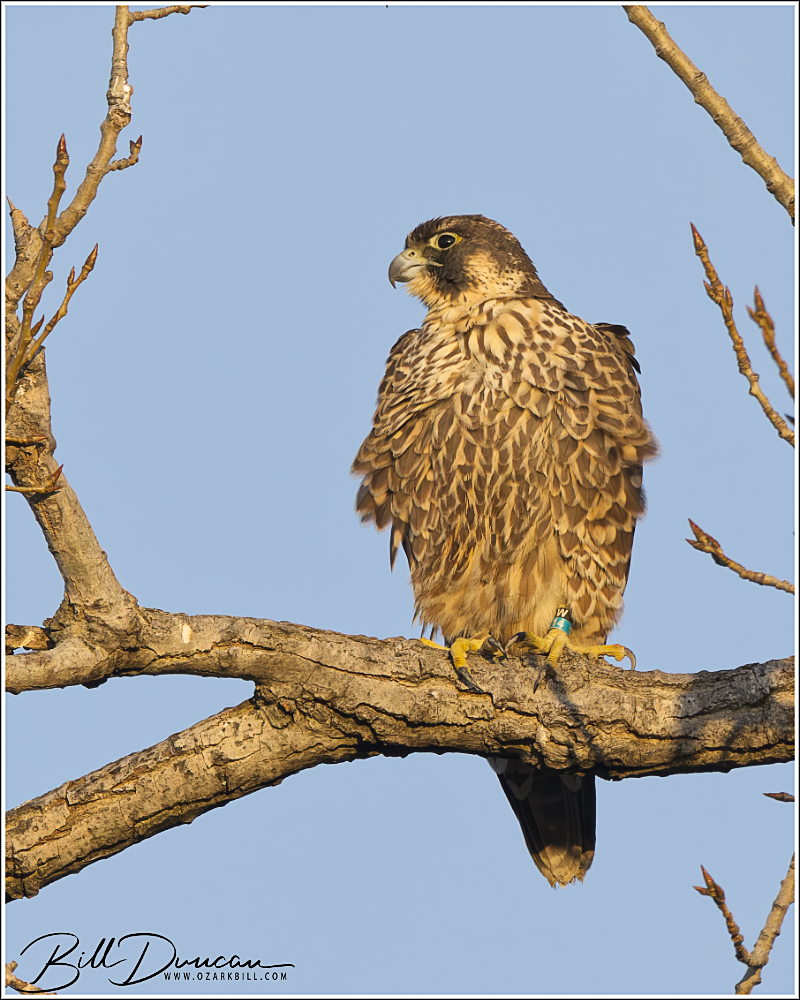
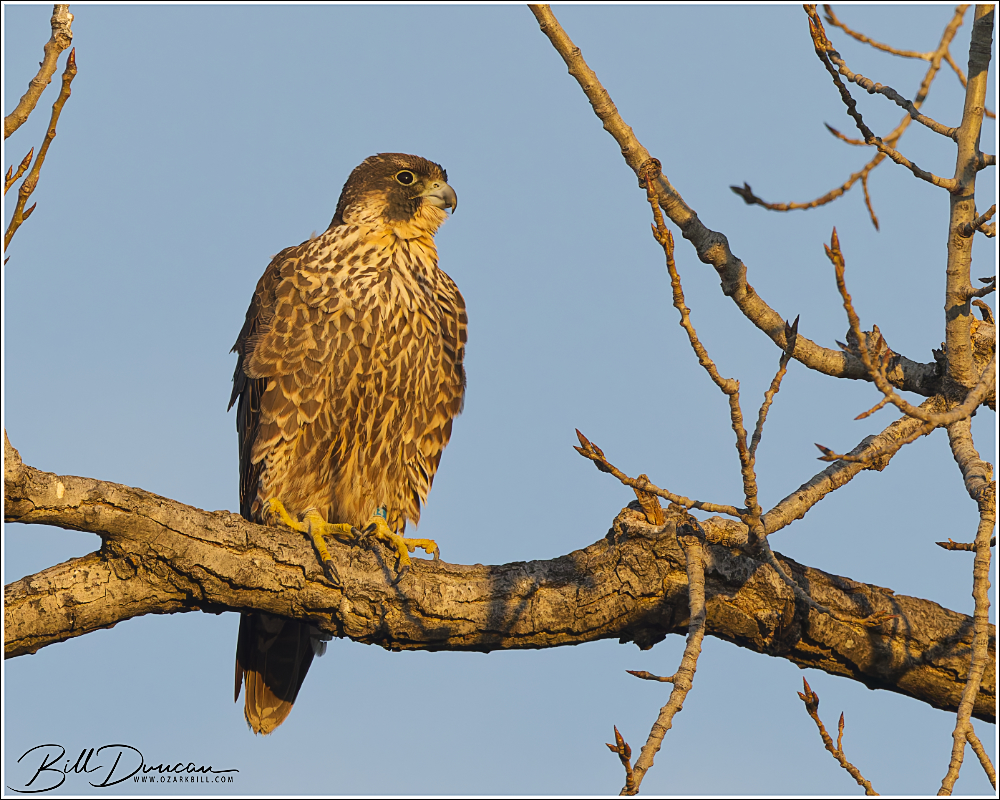
I had the opportunity to visit Clarence Cannon National Wildlife Refuge in Pike County a few times during my holiday break. During each visit, I encountered this first-year Peregrine Falcon in the same particular cottonwood tree that is usually popular with the area’s raptors.
“Wok Sape” a first-year Peregrine Falcon female
I was fortunate to get nice looks and photos that I could clearly see the band information on the left leg. Looking up the information on the Midwest Peregrine Society website, this appears to be a young female bird, named “Wok Sape.” She was hatched on May 21st of this year in Winona County, MN.
According to the Midwest Peregrine Society, the average dispersal distance of female falcons from their natal sites is 345 km (~214 miles). I am still waiting to hear back from the bander that the bird pictured here is indeed “Wok Sape.” If this is indeed the bird I found, then she has moved approximately 645 km (~400 miles) from her hatching location in about four months or so.
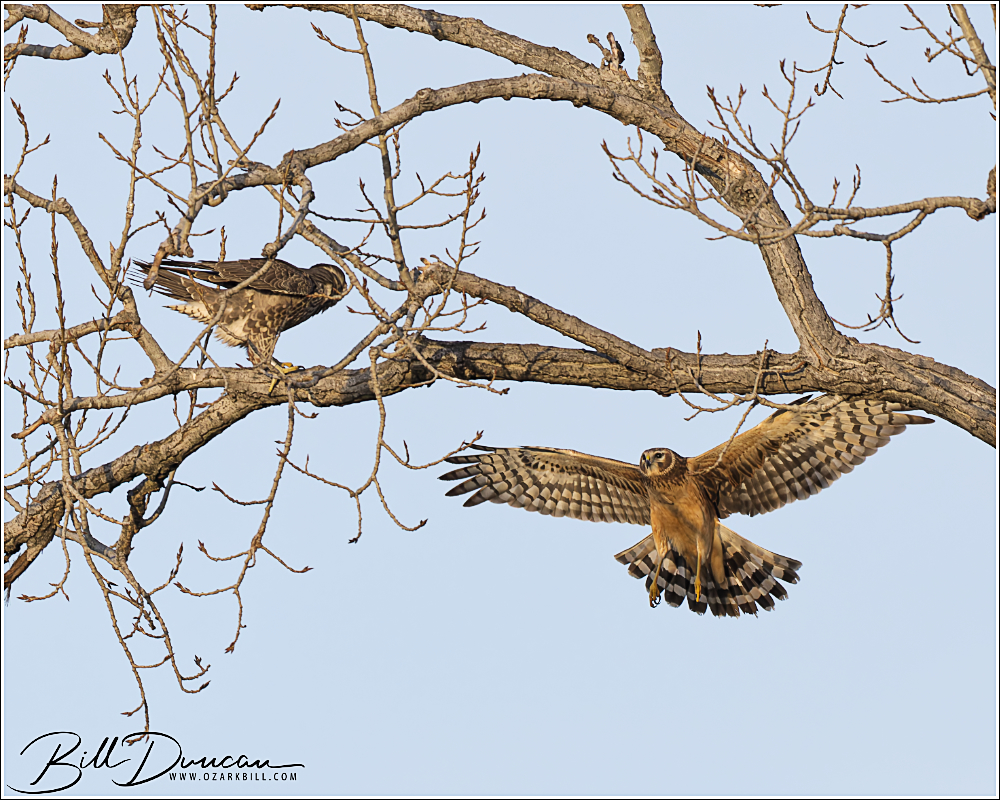
As raptors like to do, I watched as this young falcon was harassed a bit by a passing Northern Harrier as seen below.
A passing Northern Harrier passing close to young Wok Sape for close inspection. The Harrier tried to get as close as possible, attempting to land on a nearby branch, but eventually decided the falcon was too well concealed in the branches and left.
I believe this is the last I have to share from this year’s caterpillar season. Overall, I think this was a successful season and I had a lot of fun finding some cool species. I still have tons to learn and species to find. I’m hoping to continue this next year and hopefully get going on early season hunting. This is quite difficult because the spring and early summer are great for things like birds and plants as well. I need more Saturdays!
I’ll finish up with this fantastic late season walnut sphinx caterpillar (Amorpha juglandis) that I found at Onondaga Cave State Park in late September. I finally noticed that this genus name, Amorpha, is shared with one of my favorite groups of plants, the false indigos, like Amorpha fruticosa. I looked this up and Amorpha comes from Greek for “shapeless” or “deformed.” This genus of plants received this name due to their having only one petal on their flowers, unlike the rest of the Fabaceae.
Amorpha juglandis has been in a few other genera and now is placed in it’s own monotypic genus. I have not been able to find out which particular characteristic provides the “deformed” nature for the Amorpha epithet. If you know this, I’d be grateful to learn this.
Red-crossed Button Slug Tortricidia pallida fam. Limacodidae Host plant: red oak member (Quercus sp.) Dates found: 14, Sep, 2024 Locations Found: Kaintuck Hollow, Phelps County, MO Notes: Although we supposedly have two other button slug species in Missouri, this is the only one I’ve been able to identify. Very common.
Silvery Checkerspot Chlosyne nycteis fam. Nymphalidae Host plant: yellow wingstem (Verbesina alternifolia) Dates found: 30, Jun, 2024 Locations Found: Young Conservation Area, Franklin County, MO Notes: This species overwinters as third instar caterpillars.
With books, apps and internet sources, I think I did a fair job of identifying most of the caterpillars that came my way this year. There are still a few that I have not been able to identify, however. I placed the following on iNaturalist and Bugguide months ago, but so far no experts have given their opinions. If you have any ideas that could help, I’d appreciate to hear them.
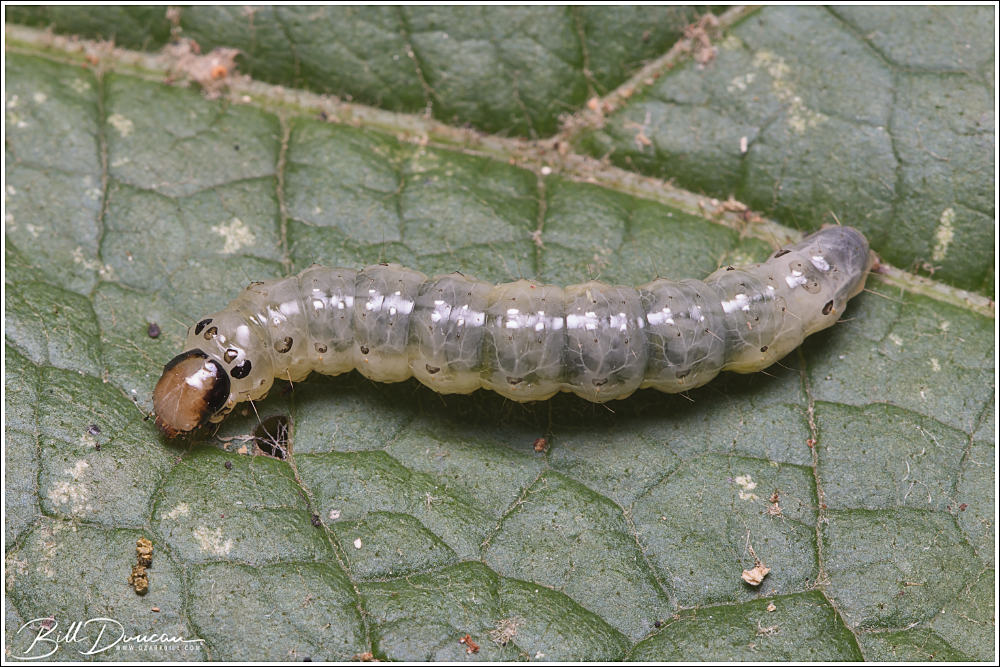
This first cute little one I found at Englemann Woods N.A. in Franklin County, MO in late June. I wish I had taken more photos. I think this could be one of the punkies (fam. Nolidae), but it might also belong to one of the other spiney families.
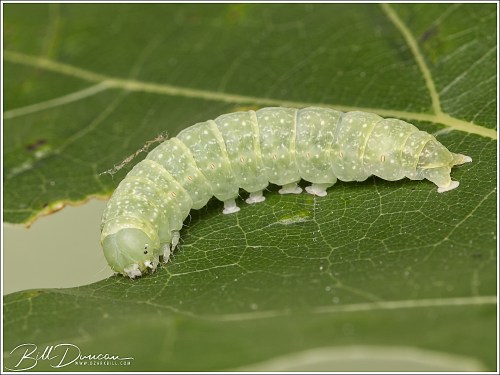
This next one is part of a group I really loath to try to identify – nondescript green cats. I’ve gone through the guides numerous times but simply couldn’t find a perfect match. It most likely belongs to the Noctuidae family, but that doesn’t narrow it down very far. This was also found at Englemann Woods N.A. in late June and found on white oak (Quercus alba).
Next up is also a group that I haven’t gotten the hang of yet. This is likely a tiger moth (subfam. Arctiinae), but I’m not sure where to begin there. Found at Prairie Garden Trust on July 6th. Host plant not recorded.
Finally, a cat that I found in a leaf shelter of Vitis aestivalis at Kaintuck Hollow in Phelps County on July 13th. I believe this might be Herpetogramma aeglealis (fam. Carambidae) but it’s not close enough for me to be certain.














 A Thousand Acres of Silphiums