"What a thousand acres of Silphiums looked like when they tickled the bellies of the buffalo is a question never again to be answered, and perhaps not even asked." -Aldo Leopold
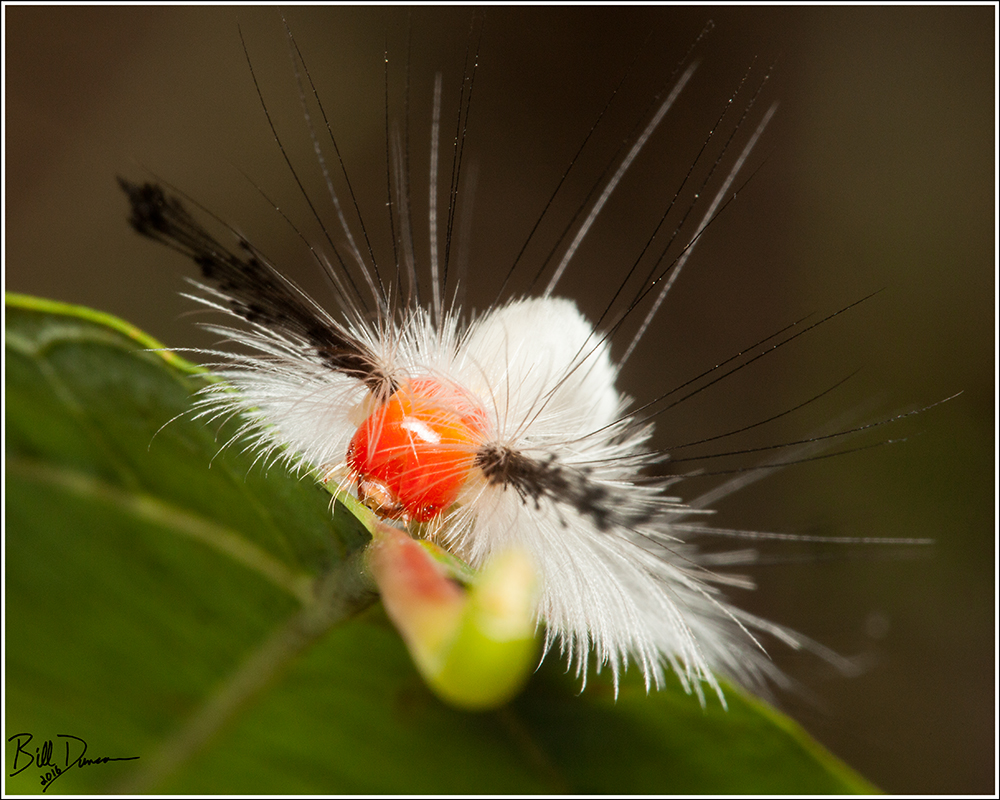
White-marked Tussock Moth, Ste. Genevieve County, MO
This gorgeous redhead is the White-marked Tussock Moth (Lymantriidae – Orgyia leucostigma – 8316). I was amazed at how abundant they were and routinely found on the underside of leaves on woody plants this summer. Most folks have never seen one!
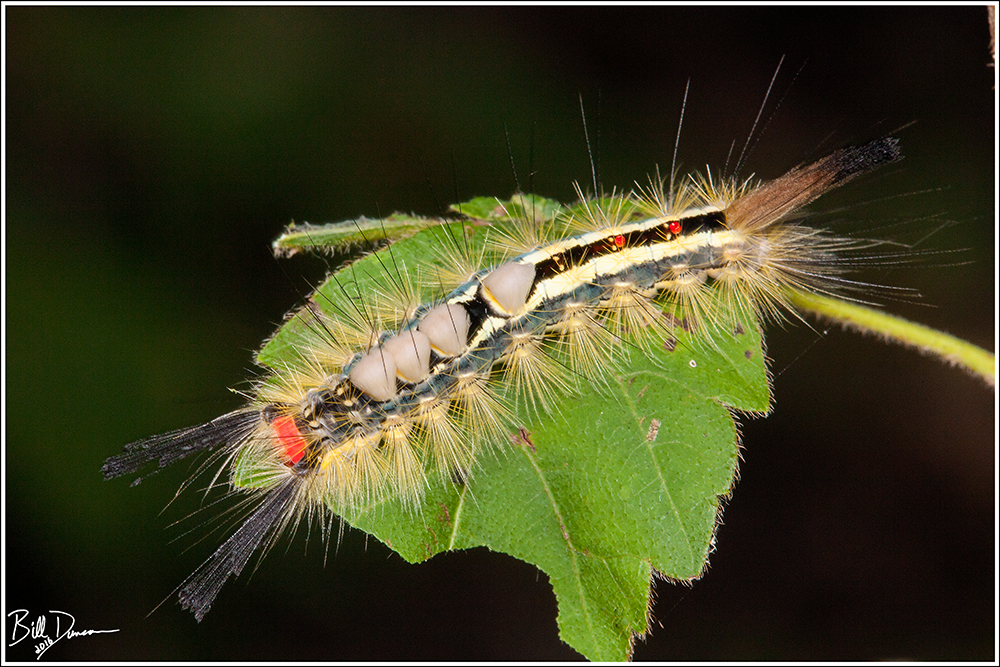
White-marked Tussock Moth, Cuivre River SP, Lincoln County, MO
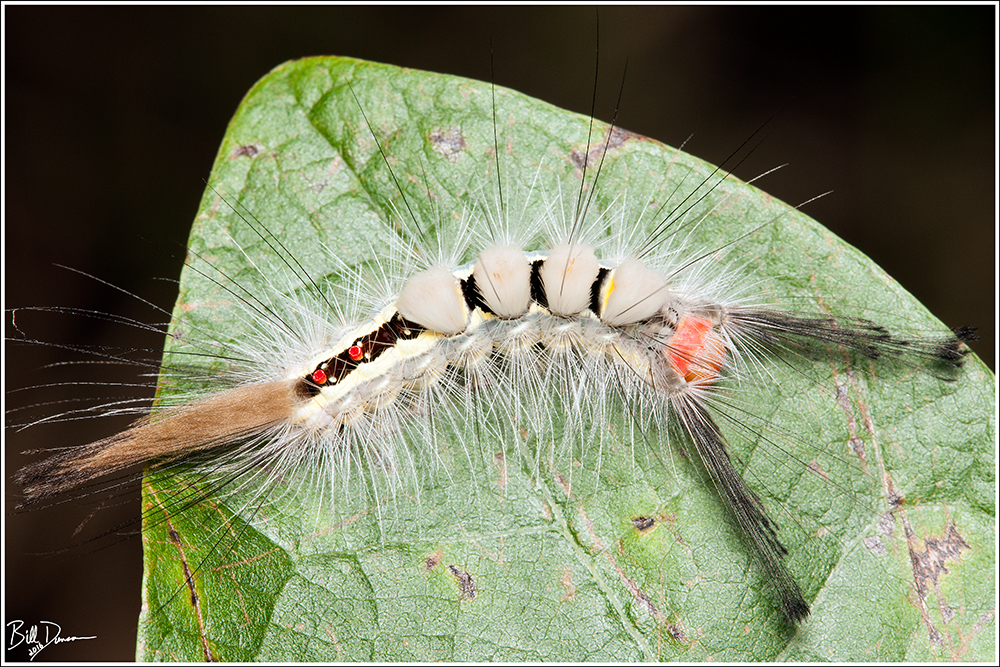
Besides their striking colors and patterns, these moths have toxin-filled hairs that can cause irritation, especially to areas of sensitive skin. I have not yet photographed an adult, but I was interested to hear that the females of this species are nearly wingless and cannot fly.
White-marked Tussock Moth, Ste. Genevieve County, MO
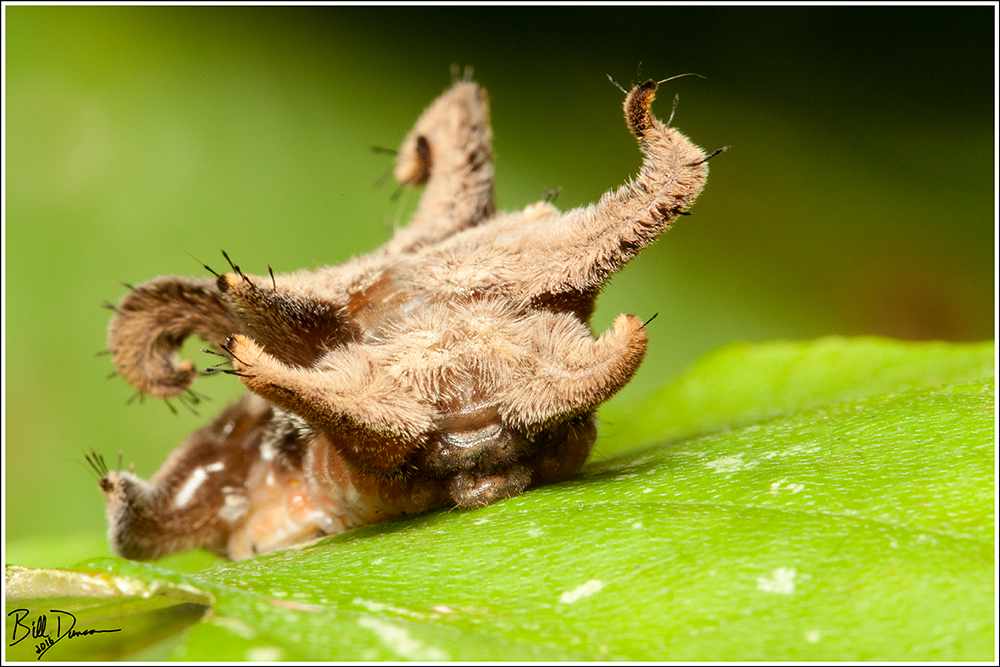
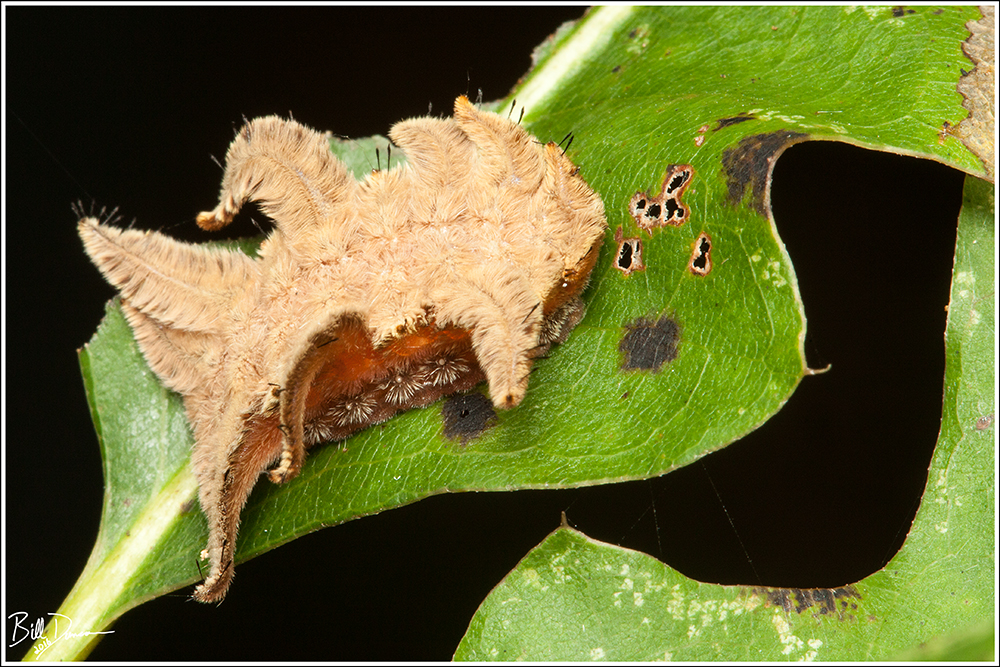
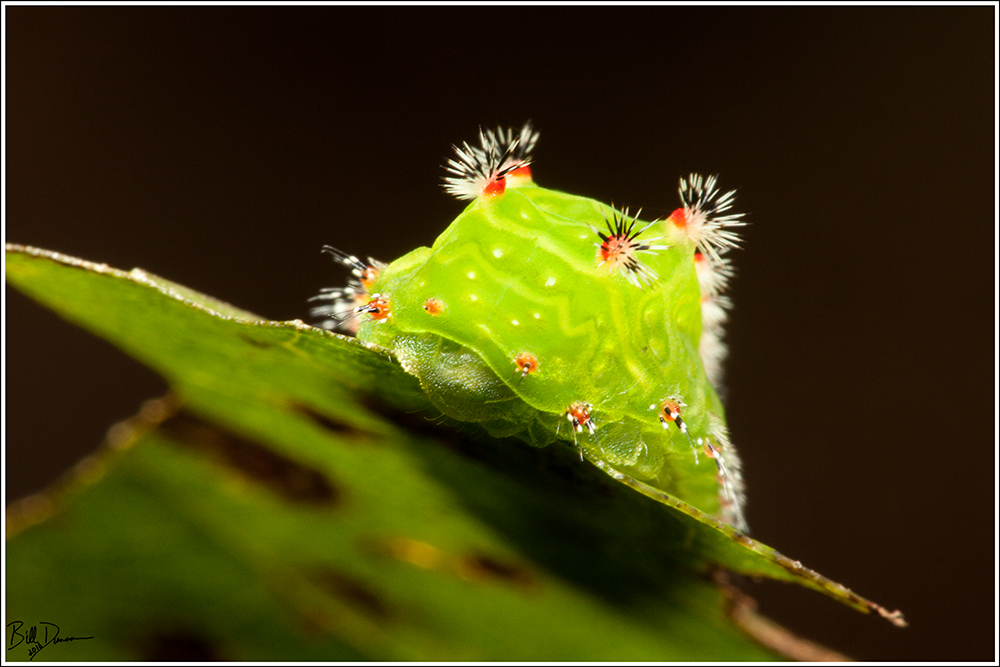
Monkey Slug – Limacodidae – Phobetron pithecium (4677) – Horseshoe Bend Natural Area, Texas County, MO
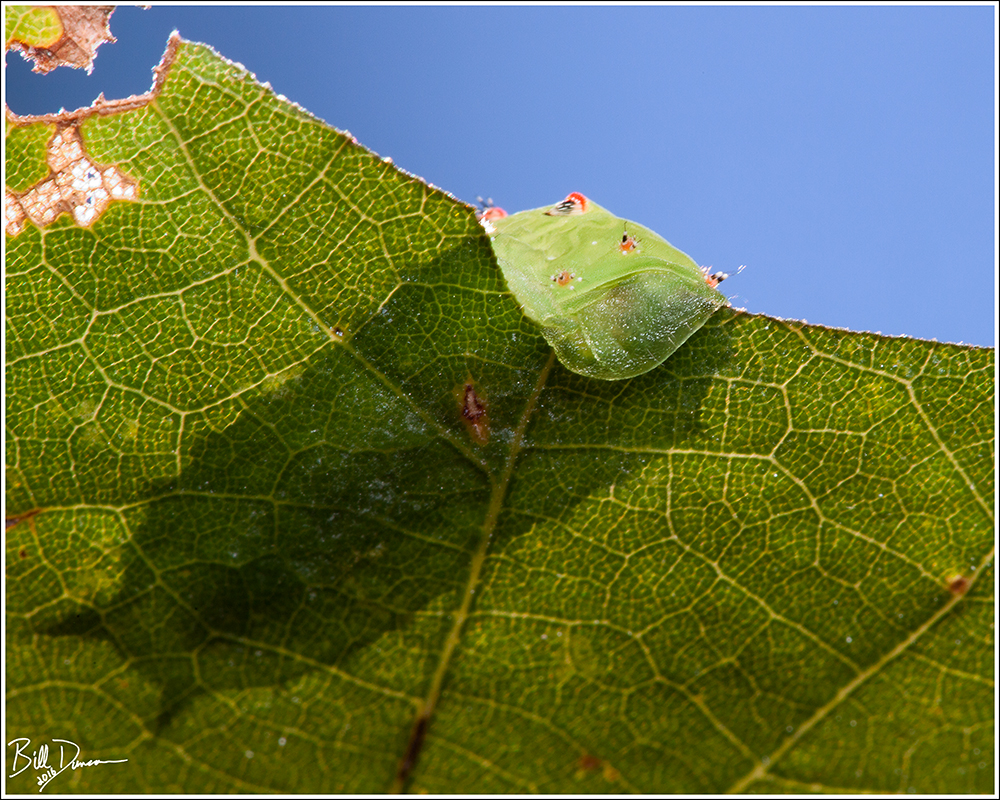
The final and perhaps most stunning of the slug moth caterpillars that we were able to find this past summer was the Monkey Slug, or “Hag Moth” caterpillar. This particular one was first noticed by Sarah on the upper side of a dogwood leaf during a visit to Horseshoe Bend Natural Area near Houston MO. We went on to find two in this particular tree.
Monkey Slug – Limacodidae – Phobetron pithecium (4677) – Horseshoe Bend Natural Area, Texas County, MO
A leading thought on why these guys look the way they do is to mimic the shed exoskeleton of a tarantula.
Monkey Slug – Limacodidae – Phobetron pithecium (4677) – Cuivre River State Park, Lincoln County, MO
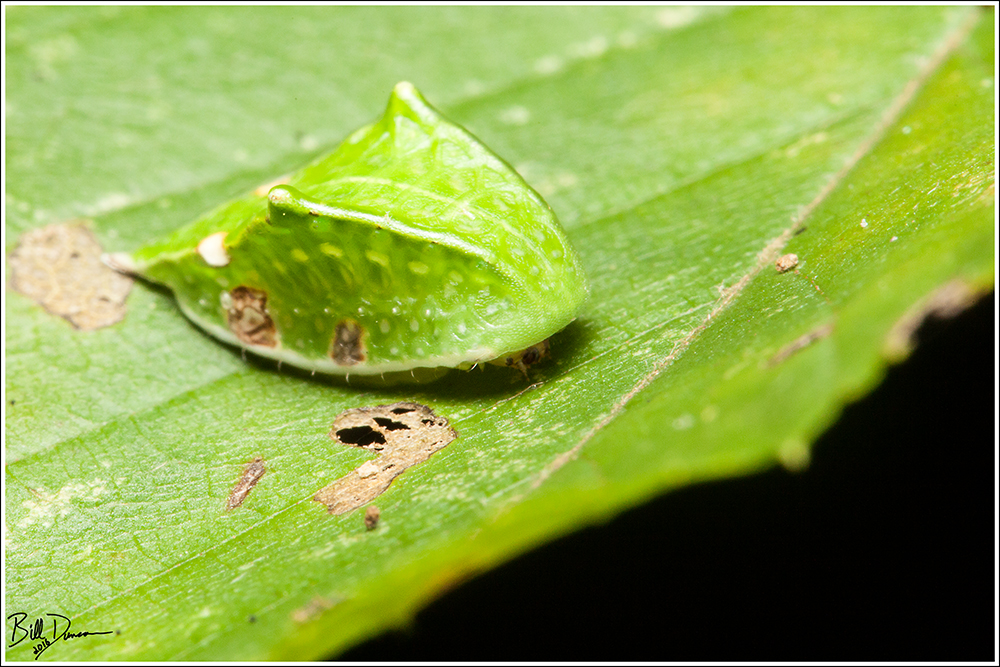
I found only a few Elegant-tailed Slugs this year and all were found at Hickory Canyons Natural Area in Ste. Genevieve County, Missouri. The image below documents the only occasion where I found more than one slug on the same leaf, here a Spiny Oak Slug was found on the same curled leaf as our new Elegant-tailed Slug.
Spiny Oak and Elegant-tailed Slug Moths – Limacodidae
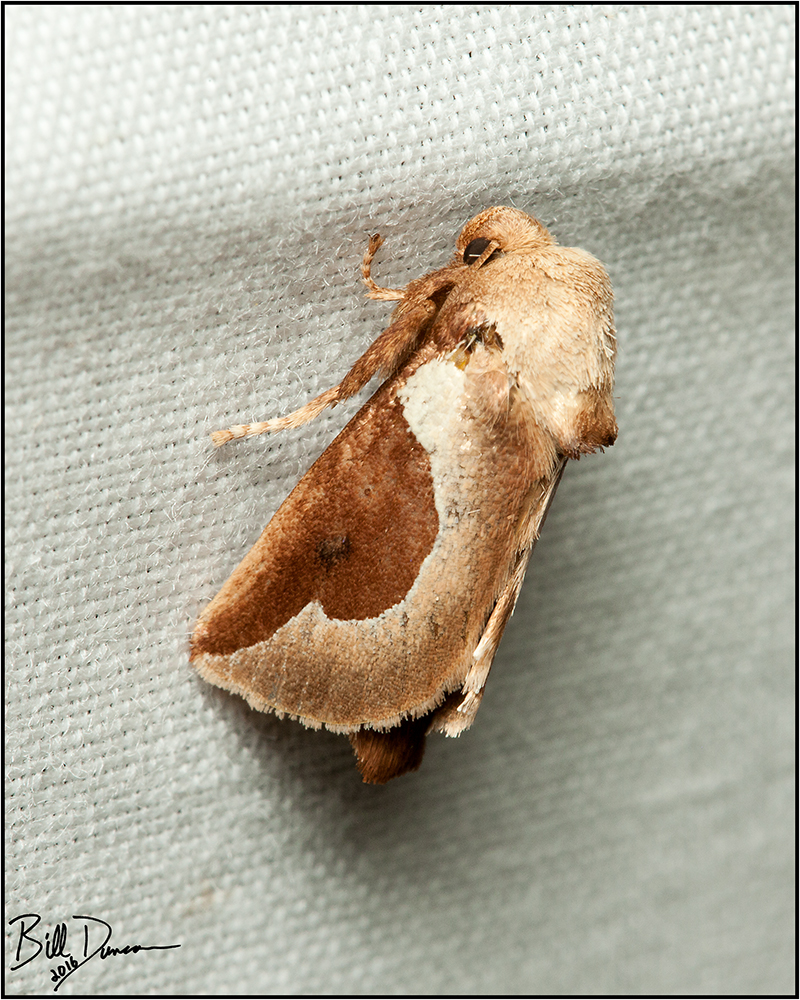
The highly variable colors and patterns of the skiff moth are hypothesized to mimic senescent/necrotic lesions on leaf surfaces. They often have paired white spots that are thought to mimic the eggs of the tachinid fly, a parasite that enters the caterpillar after hatching. These “egg mimics” are hypothesized to work by dissuading flies that may attempt to avoid depositing eggs on victims that were previously parasitized.
In my anecdotal experience of hunting for slug caterpillars over a six to eight week period this summer, the Nason’s slug (Natada nasoni – Hodges #4679) was by far the most abundant that I came across. This was particularly true in the drier, oak/hickory/pine hillsides of Hickory Canyon N.A. in Sainte Genevieve County.
Nason’s Slug – Limacodidae – Natada nasoni (4679). Horseshoe Bend Natural Area – Washington SP, Texas Co, MO.
This species is able to retract its spines, elongating them to their fullest with any notion of danger. These guys have pretty substantial spines and because the cats were so abundant, I found I was accidentally stung a few times while lifting vegetation. This was not a pleasant experience.
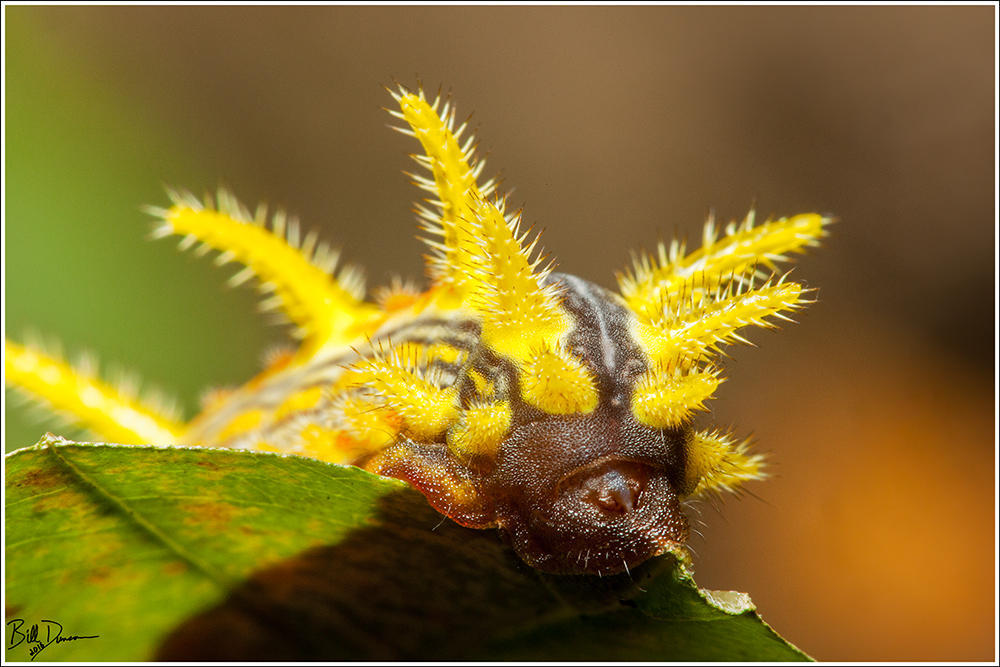
The image below was one that I had previsualized and worked a good bit on to get it right. I used my plamp to hold the leaf and attached the plamp to a dead limb to position the leaf high enough to get the leaf and caterpillar back lit by the sun. I then used just a bit of flash to illuminate the ‘face’ of the caterpillar and the underside of the leaf. In cases where I removed the leaf to get a photo, I always placed the leaf securely back on the same plant.
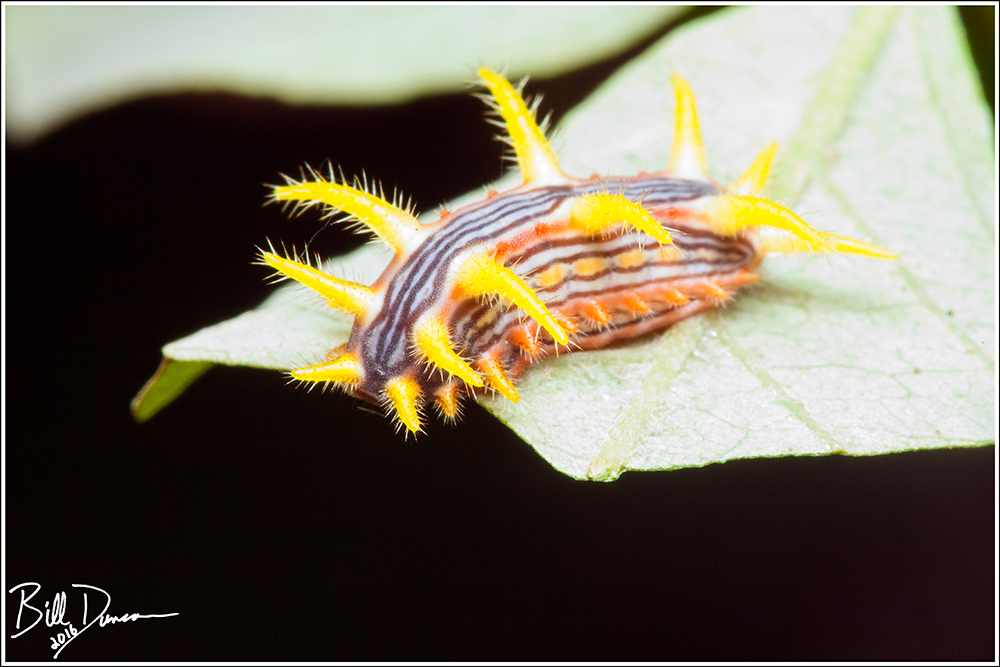
Stinging Rose Caterpillar -Limacodidae – Parasa intermedia (4699). Cuivre River State Park, Lincoln Co, MO.
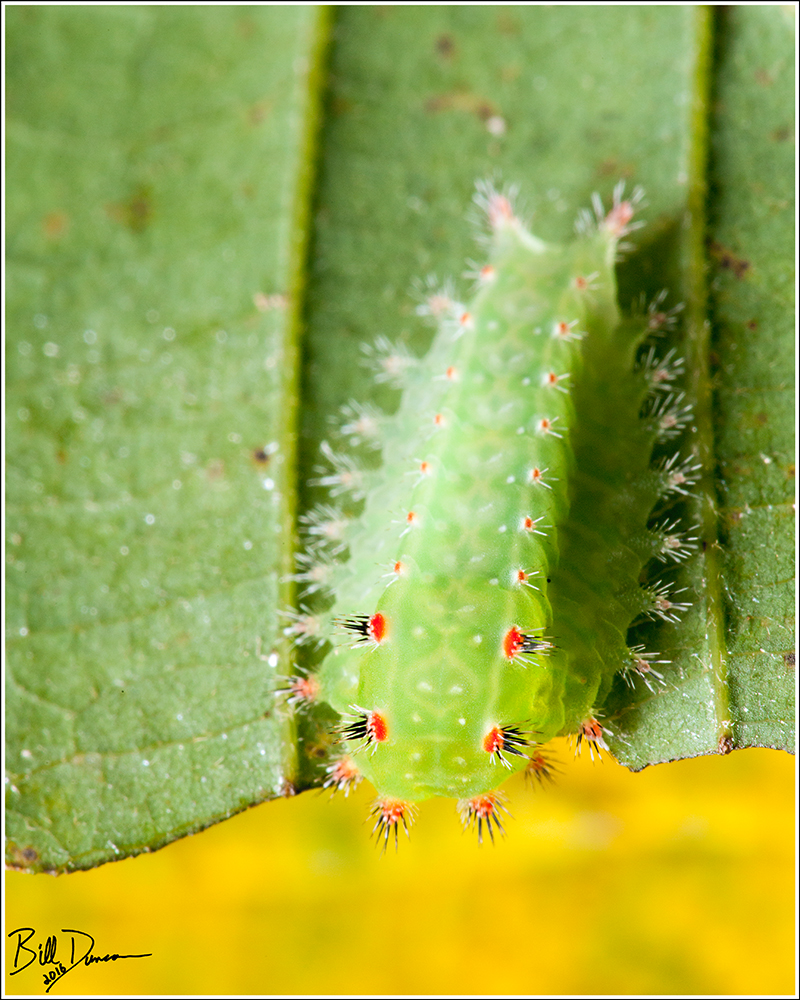
Arguably the most stunning of Missouri’s slug moth caterpillars, the Stinging Rose Caterpillar can most often be found on oak and hickory saplings. However, a number of other woody species (including those in the rose family) will also be used as host plants.
Stinging Rose Caterpillar -Limacodidae – Parasa intermedia (4699). Horseshoe Bend Natural Area – Washington SP, Texas Co, MO.
This is one of the species I voluntarily allowed to sting me – it wasn’t that bad, perhaps a mild ‘stinging-nettle’ type of experience that was gone in 30 minutes or so.
Stinging Rose Caterpillar -Limacodidae – Parasa intermedia (4699). Horseshoe Bend Natural Area – Washington SP, Texas Co, MO.
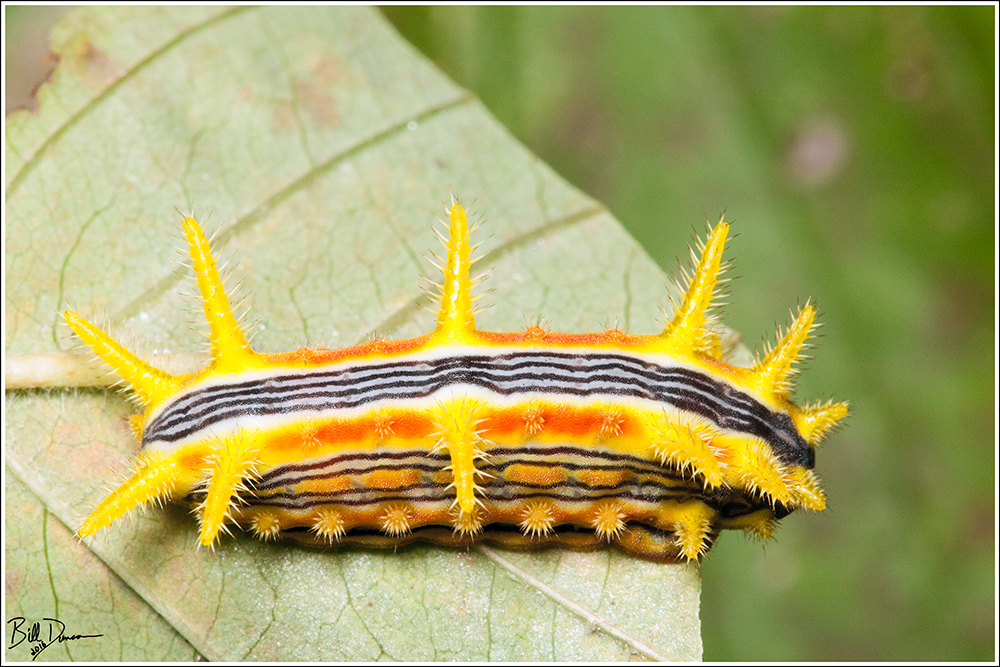
The image below shows a little of the variety of color and patterns that can be found in this species, this one showing more of a yellow/orange background. Some animals can be found that are completely yellow.
Stinging Rose Caterpillar -Limacodidae – Parasa intermedia (4699). Horseshoe Bend Natural Area – Washington SP, Texas Co, MO.
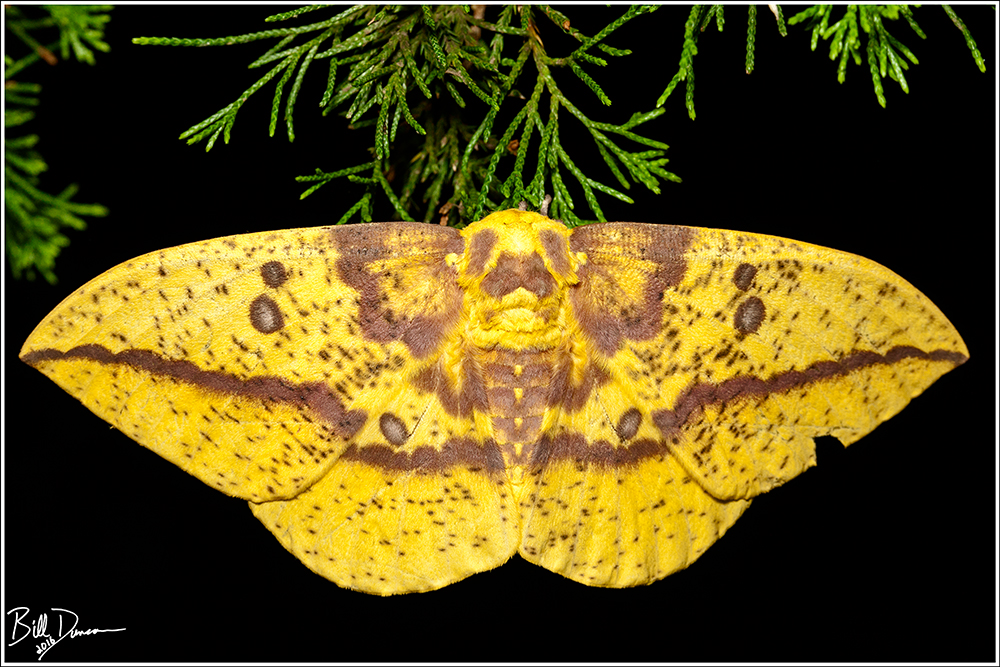
Belonging to the family of moths called Saturniidae, the Imperial Moth can reach up to six inches. Many members of this family are large-bodied and short-lived as adults – typically living only one or two weeks and not feeding in this stage. This female was attracted to lights during a national moth week event at Cuivre River State Park on July 31, 2016.
Imperial Moth – Saturniidae – Eacles imperialis, photographed at Cuivre River SP during national moth week.
While investigating a patch of Maypop (Passiflora incarnata) I could not find my goal of the Passion Flower Flea Beetle, but I was still happy to find a number of Shiny Flea Beetles – Chrysomelidae – Asphaera lustrans.
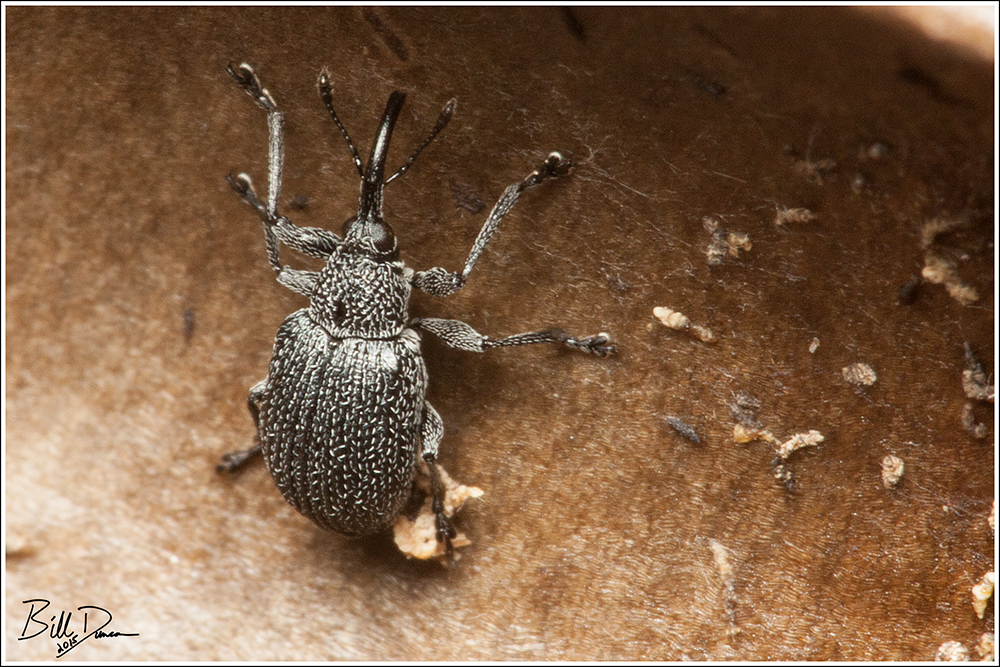
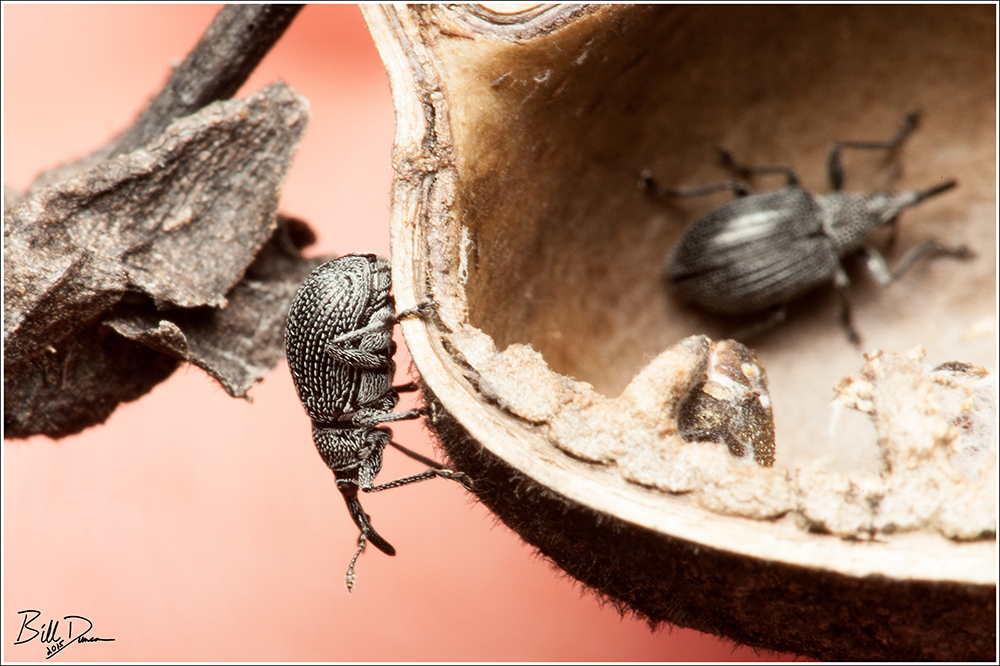
Almost reflexively, I pull the baby rattle-shaped seed pod from the stately White Wild Indigo (Baptisia alba) as I meander through Shaw Nature Reserve’s prairie trails. I can’t help it. I make sure the pods are always black, mature and any seeds left unravaged I simply help to disperse along my walk. But in doing this so often in the late summer and autumn for so many years I have come to notice that this common forb cannot disperse many seed. Because, inside the seed pods, like the one pictured above, I usually find multiple seed predators – the short-snouted weevils, Trichapion rostrum (Family Brentidae).
Trichapion rostrum
Baptisia seed are favored among other insects as well, but what they may lose in this stage of life, they pick up as they grow, for the false indigo are long-lived, drought-tolerant perennials that contain large amounts of secondary compounds that make them absolutely unpalatable to grazing mammals. The photo below shows these tiny beetles (3.0 – 3.5 mm) among the husks of a number of seeds. I have not been able to find a source that suggests if both larvae and adults feed on these seeds, or just one of the growth stages.
Destroyer of Seeds
Here is an image of a couple, shortly after I split their double-wide…
It’s the Visitors, Martha!
These little one have been a source of fascination for me. I hope to learn more about them someday.









 A Thousand Acres of Silphiums