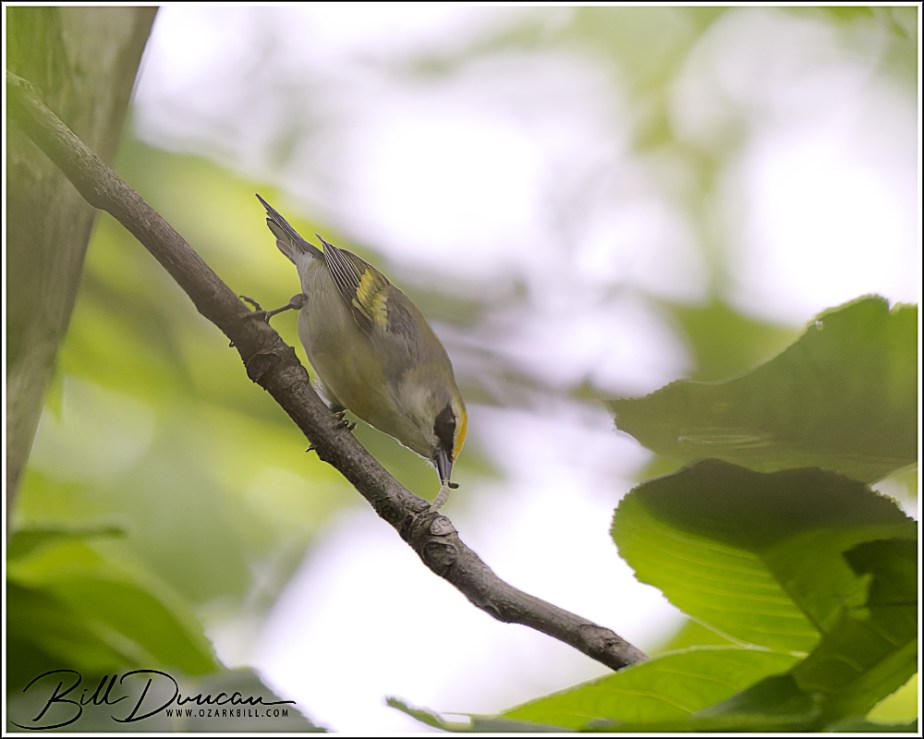
One of my goals this spring has been to get a better photograph of the Golden-winged Warbler (GWWA), a species that passes through Missouri during migration to nest in the upper Midwest, Ohio valley and northern Appalachia. Although I have been lucky in finding at least ten of these birds so far this spring, they are primarily treetop dwellers and I have struck out in getting one near enough and in good light.
While birding at Babler State Park in St. Louis County last weekend, I heard the familiar “bzzzzzzz buzz buzz buzz” vocalization of the GWWA. My birding companions and I began our search and I grabbed a few mediocre images before the bird quickly departed. Because I knew the lighting was poor and the distance was long, I didn’t spend much time reviewing the photos in the field. Arriving home later that evening, I reviewed the photos I collected that day and realized I captured something I was not expecting.
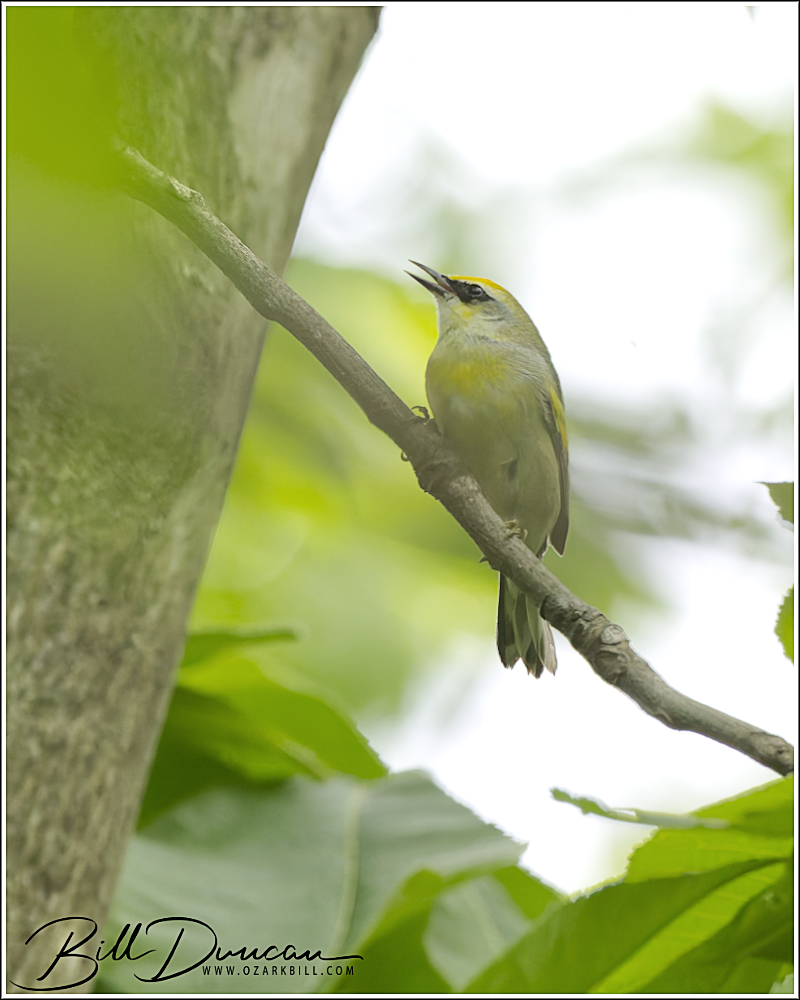
It is well known in the birding community that the Golden-winged Warbler is closely related to it’s more southerly cousin, the Blue-winged Warbler (BWWA). Despite completely different physical appearances and different vocalizations, it has now been shown that the two species are 99.97% genetically alike. Where the nesting range of these two species overlap, hybridization occurs. There are two primary forms of this interspecies union. The first is what is known as the Brewster’s Warbler pictured here. The Brewster’s Warbler looks pretty much like a GWWA but lacks the dark throat patch and has an eye stripe more similar to the BWWA. This is the more common of the two hybrid forms between the BWWA and GWWA. The other hybrid form is known as the Lawrence’s Warbler. The Lawrence’s Warbler keeps the yellow belly coloration of the BWWA and has the black throat of the GWWA that is the recessive version of this trait.
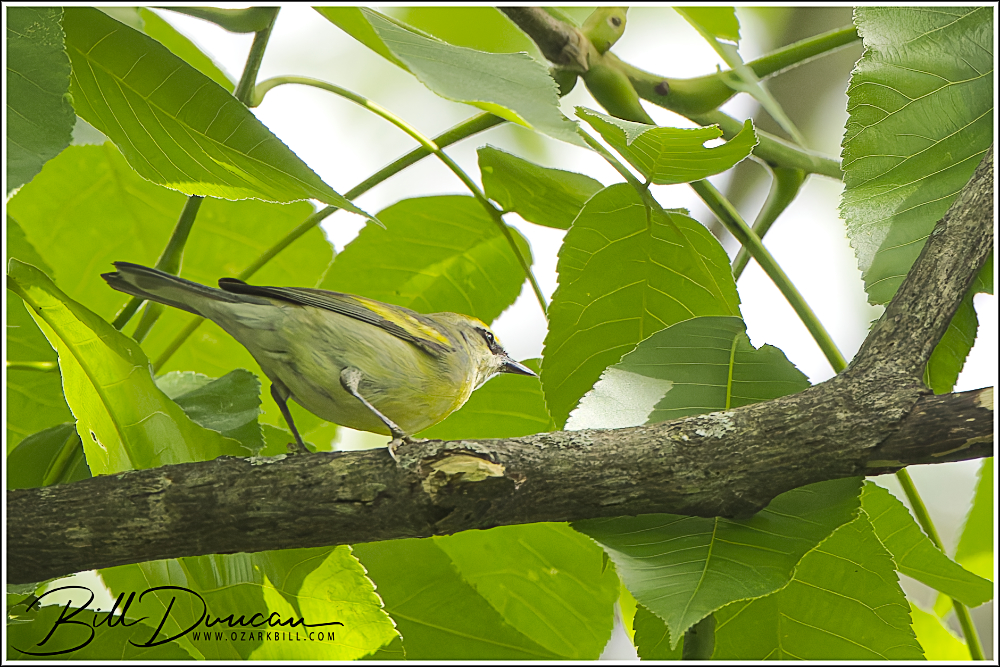
Little did I know I’d be getting a “lifer” so close to home this weekend!






 A Thousand Acres of Silphiums