"What a thousand acres of Silphiums looked like when they tickled the bellies of the buffalo is a question never again to be answered, and perhaps not even asked." -Aldo Leopold
This past Thanksgiving break Steve and I found ourselves back at Jasper-Pulaski to see the tens of thousands of Sandhill Cranes that stop there during their autumn and vernal migrations. Although the spectacle of that many three-foot birds in one place is always worth the drive, of course we wind up with heavy overcast skies, which makes getting interesting photos quite a challenge. The numbers of birds during this visit did not disappoint.
During the night, the majority of birds roost in one or two places on the reserve or nearby. During the day they spend their time picking up fallen grain in the surrounding agricultural fields. After lunch one day, we were driving around watching the different groups move across the landscape. With light as poor as it was, my attention went to staying awake, while Steve lost the fight and started to dose off and on. After a time, I was startled back to full alertness by Steve’s exclamation of “White!” I found a place to pull over at the nearest opportunity. And, after wrenching our necks, we confirmed what we were both anticipating the bird to be…
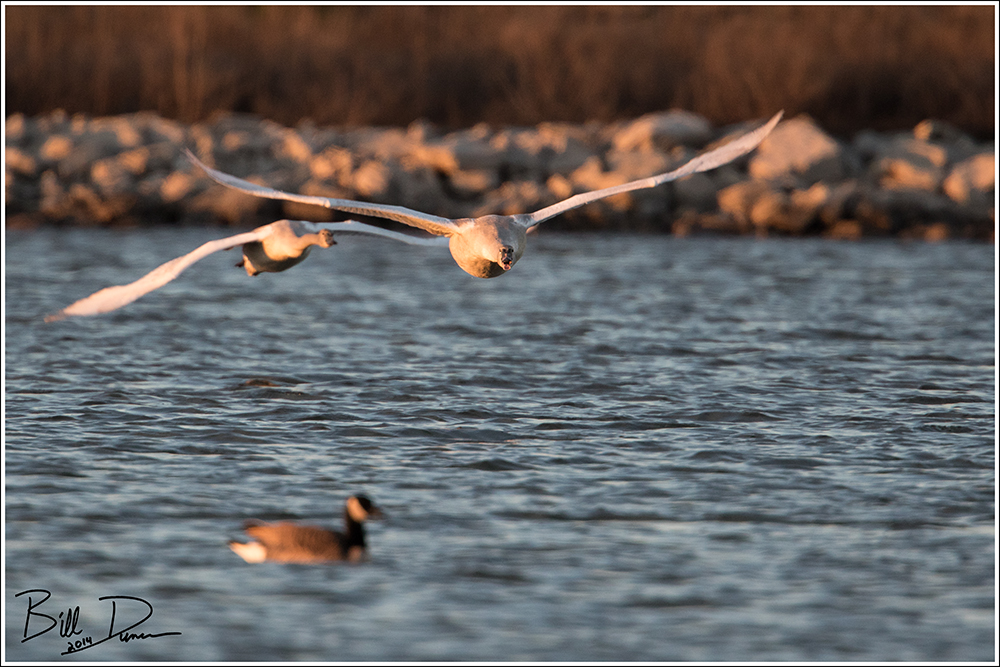
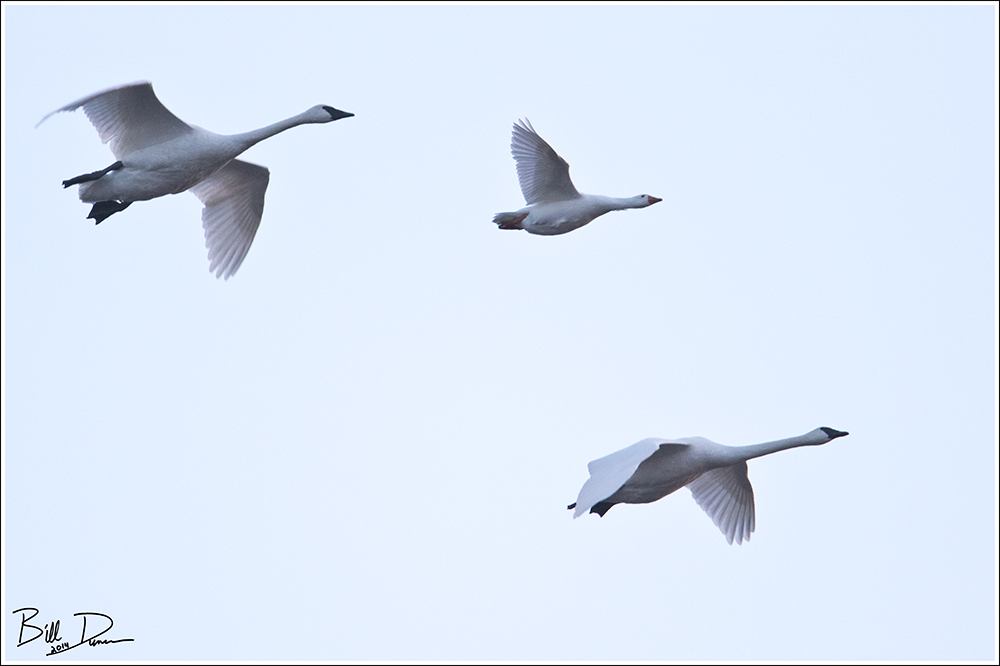
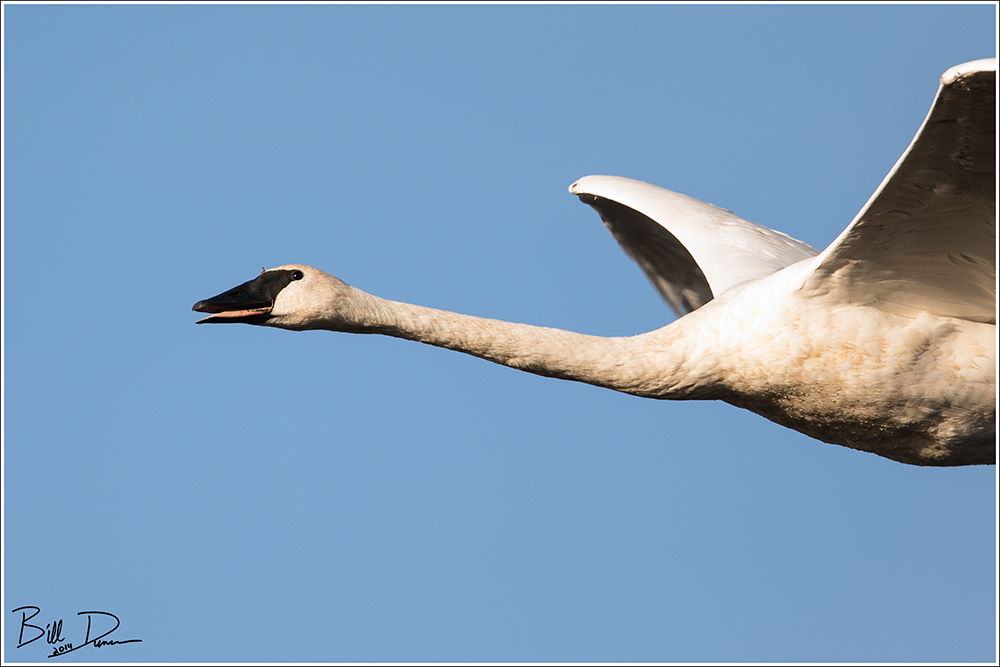
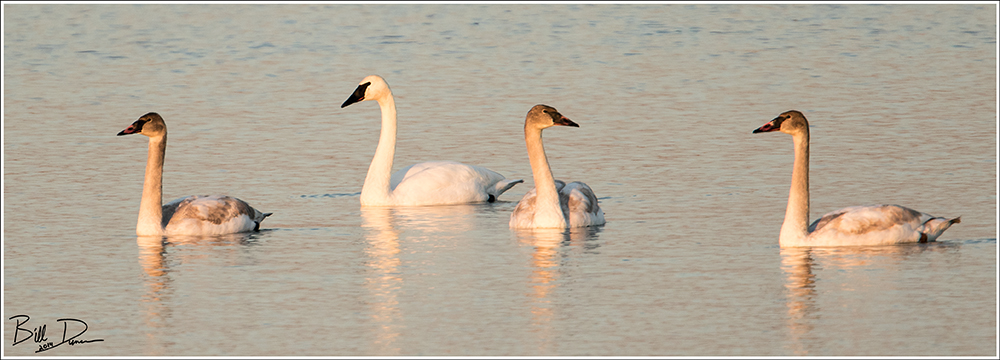
Nougat the Whooper
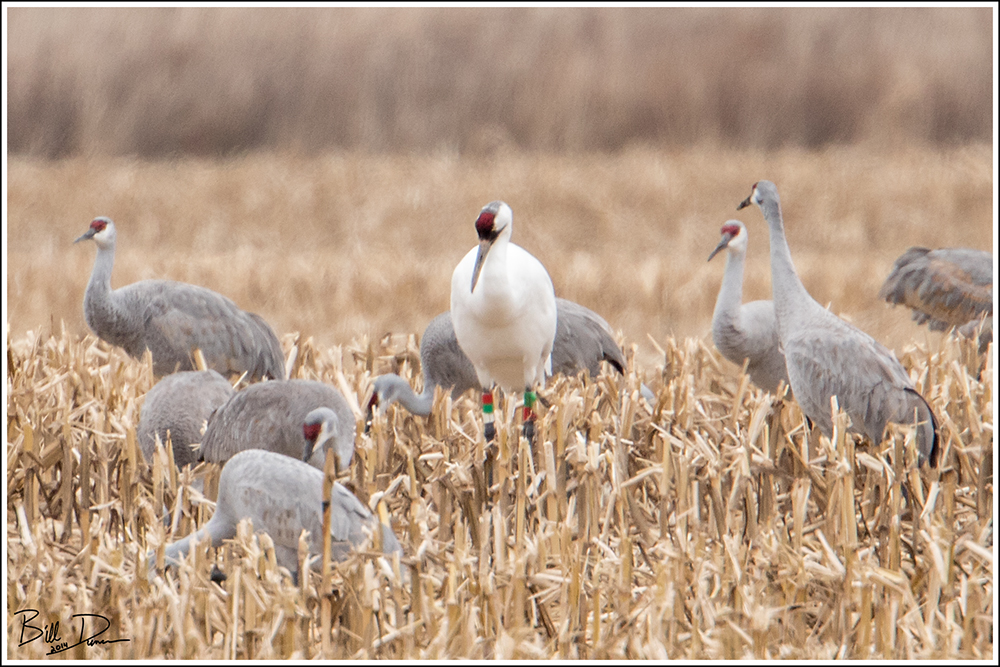
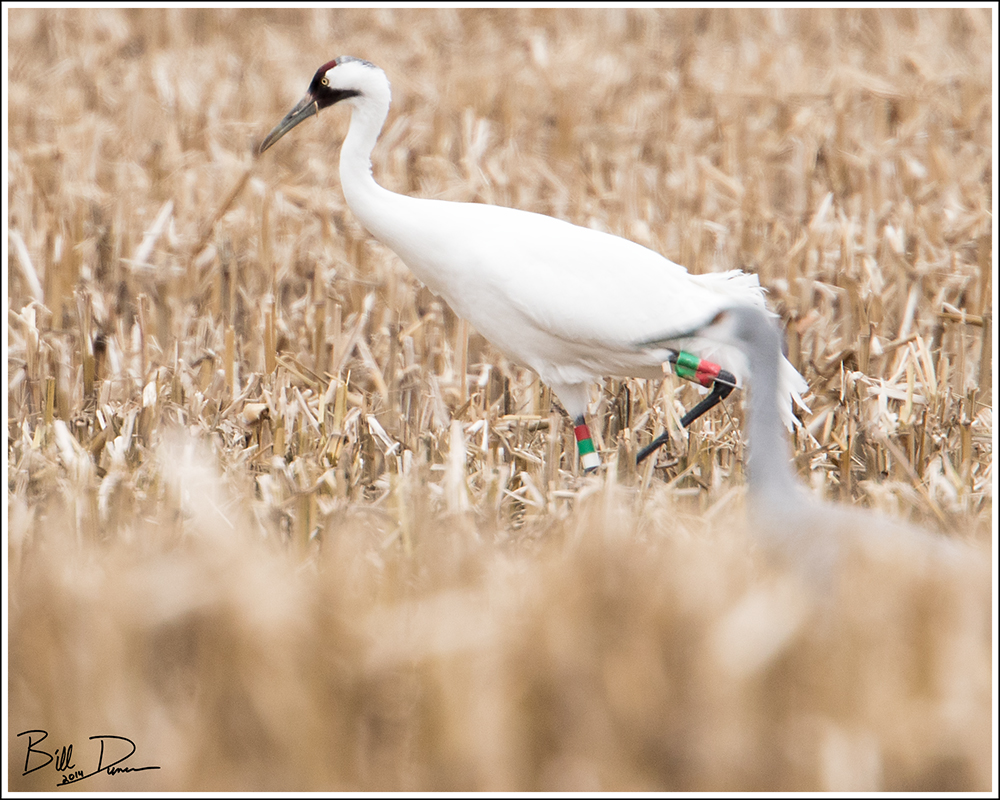
This was a life bird for the both of us, and with about 500 birds left on the entire planet, we were sure going to watch this guy as much as we could. At five feet tall, with nearly an eight foot wingspan, this mostly white bird could be seen for well more than a mile away. This made him easy to follow, but we made sure we gave him his space. He was definitely attached to the Sandhill Cranes, and seemingly was uncomfortable without being near at least a few of his cousins.
Nougat the Sandhill?
How do we know that Nougat is a male? See his colored leg bands in the 2nd and 3rd photos of this post? These are used to identify and keep track of the banded birds.
Crane # 18-11(DAR)
Click on Nougat to read more about this fantastic bird.
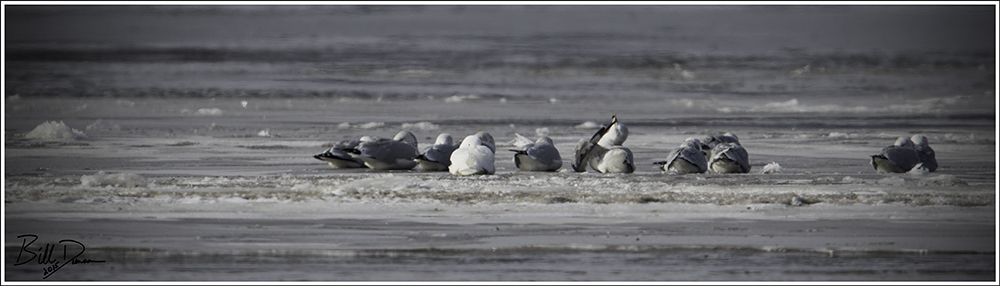
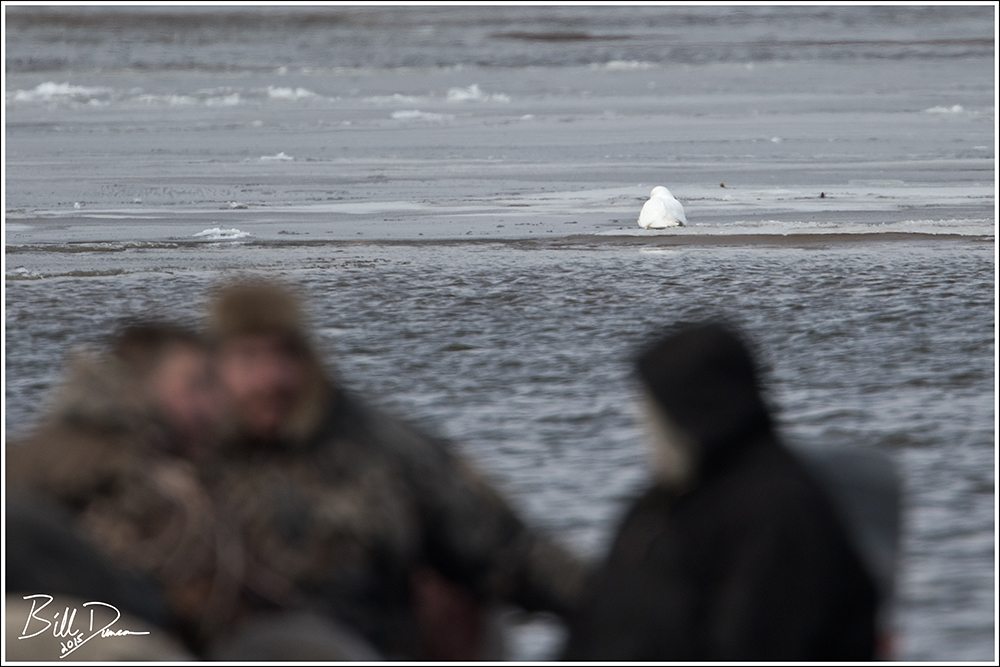
Finally, my first successful photos of a Glaucous Gull. This 1st winter bird was photographed yesterday as I tried to make some eagle fishing photos at Lock and Dam #24 at Clarksville MO. In an interesting coincidence, I ran into Brenda Hente, from Great-Horned Owls Will and Kate fame, and Danny Brown, from MDC Photography fame.
1st Winter Glaucous Gull
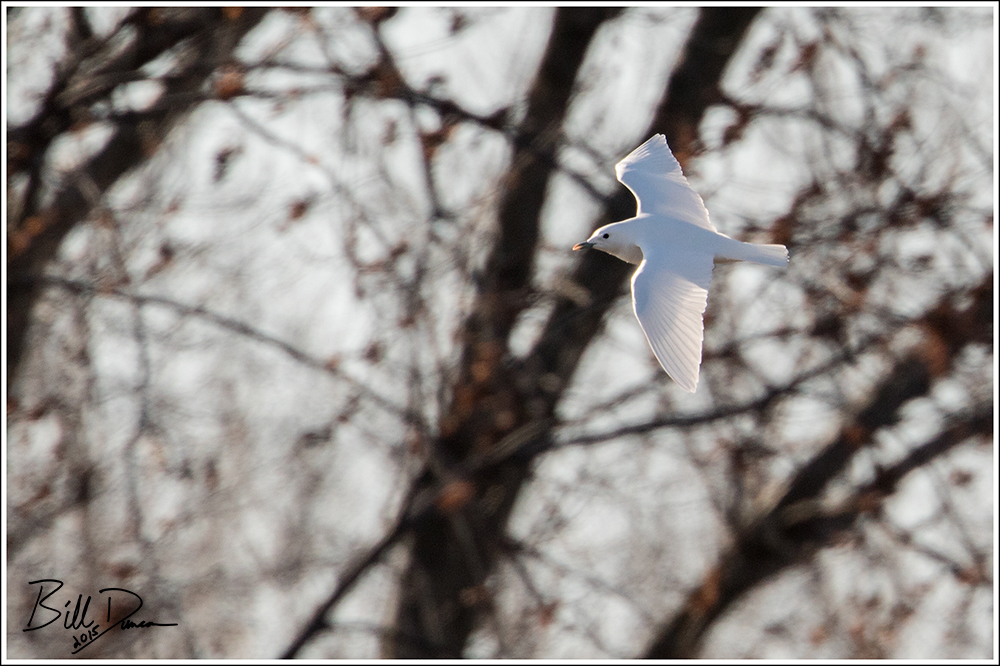
Earlier in the day I joined Josh Uffman, from uber birder fame, and the hoard of birders from across the country at Lock and Dam #21 at Quincy, looking for what is likely the most famous bird in the nation – the Ivory Gull. Unfortunately, this was to turn out to be the first day the bird was not successfully found since its discovery on or about 2-January. I am so glad Steve and I headed there last weekend to get a look and a few pics (yet to be posted).
Hello, and thanks for paying a visit. This final post from our September 2014 trip to the west will focus on a few highlights from a couple of spots in central Kansas, Quivera NWR and Cheyenne Bottoms, or what I like to call the birding Mecca of the central plains. I apologize for the grey shots, but during the far too few hours we spent here, we were given mostly heavy overcast skies.
Least Tern
These two locations and their combined 60,00+ acres are incredibly important for nearly 400 species of birds. The vast wetlands of Cheyenne Bottoms and the salt marsh and sand prairie habitats of Quivera NWR provide habitat for breading birds such as the endangered interior populations of the Least Tern, pictured above. Other nesting birds, which utilize these habitats, include Swainson’s Hawks, Mississippi Kites, Snowy Plover, American Avocet and White-faced Ibis.
American Avocet
With most of my birding experiences restricted to the southern half of the Show-me State, some of what I observed simply shocked me. Observing hundreds of the American Avocet was something I could not have imagined previously.
White-faced Ibis
Also found in the hundreds, White-faced Ibis were as common as gulls!
Yellow-headed Blackbird
Referred to by someone as an inverse sunflower, I found the YHBB to be stunning, even if they were in their off-season plumage.
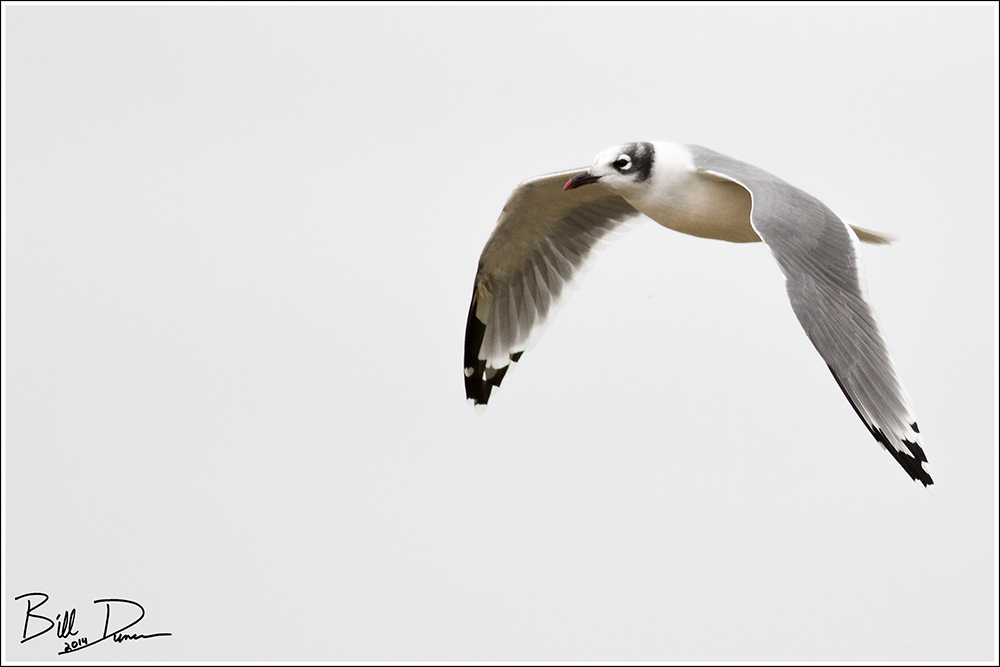
Franklin’s Gulls
Numerous Franklin’s Gulls were a nice surprise. Oh, how a trip in every season is critical at these locations!
Coyote Bird
Just to show we were interested in more than just birds… I am sure the coyotes make quite a living on these habitats.
Merlin
What an unexpected treat. My first non-winter Merlin.
Wilson’s Phalerope
Wilson’s Phaleropes were found in the dozens among the big and little marshes of Quivera NWR.
Willet
As cute as any terrier that ever was, a lone Willet patiently posed for me. And finally, a Ring-neck Pheasant hen showed me her backside during the our evening visit to Cheyenne Bottoms. Until next time…
I have a goodly number of images backing up to share, so here are a few chosen at random, more or less.
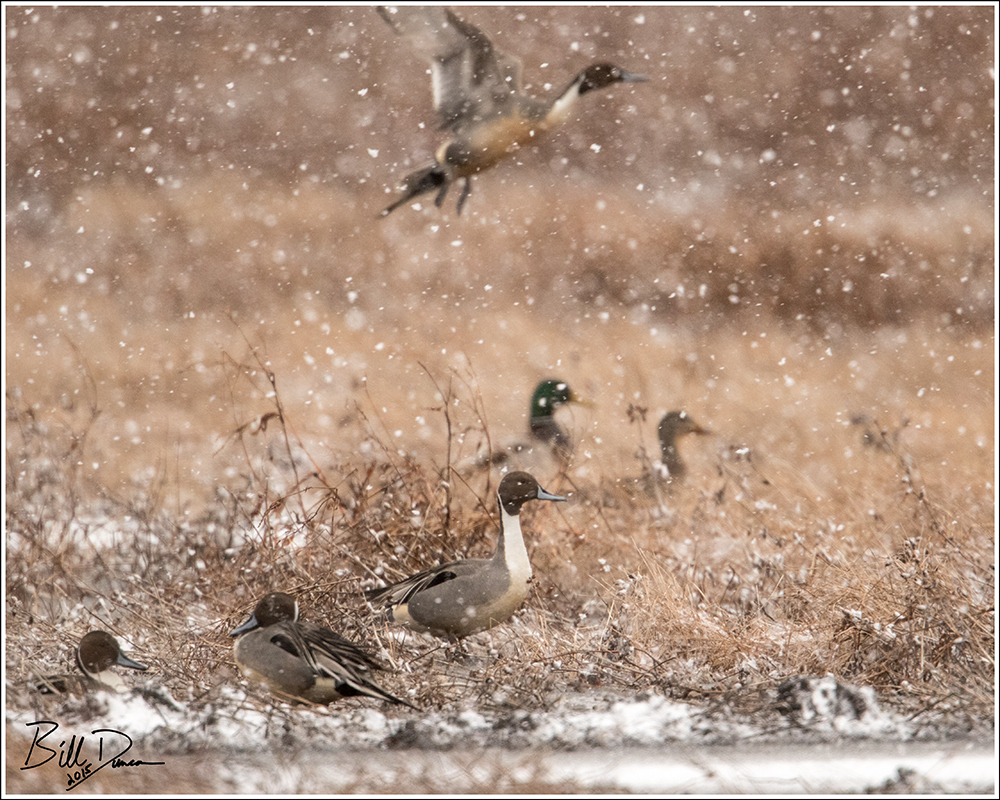
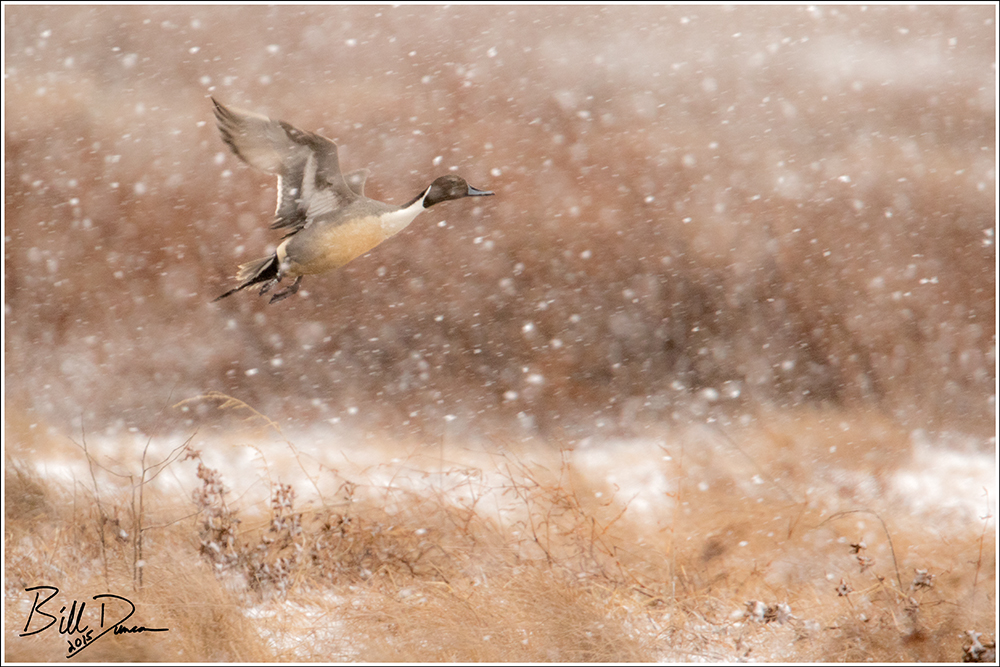
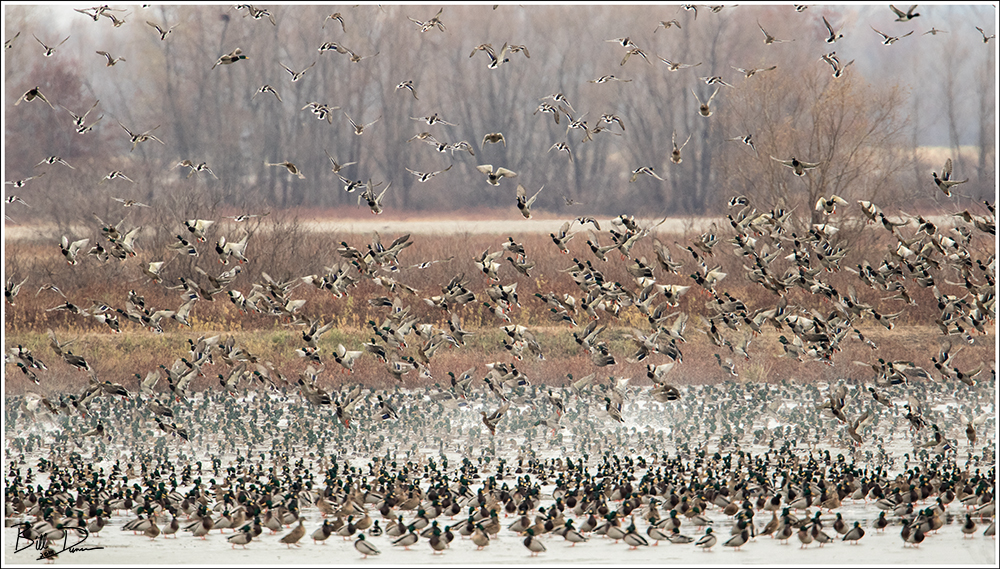
The first image was from a month or so back, when Steve and I traveled up to Clarence Cannon NWR. The highlight was the extraordinary number of Mallards we found. Not too much in the way of diversity of waterfowl during this visit, but the mallards were using the refuge in the peak of the hunting season. We tried our best to keep them in peace, as they were obviously trepidatious to anything with two legs.
Many a Mallard
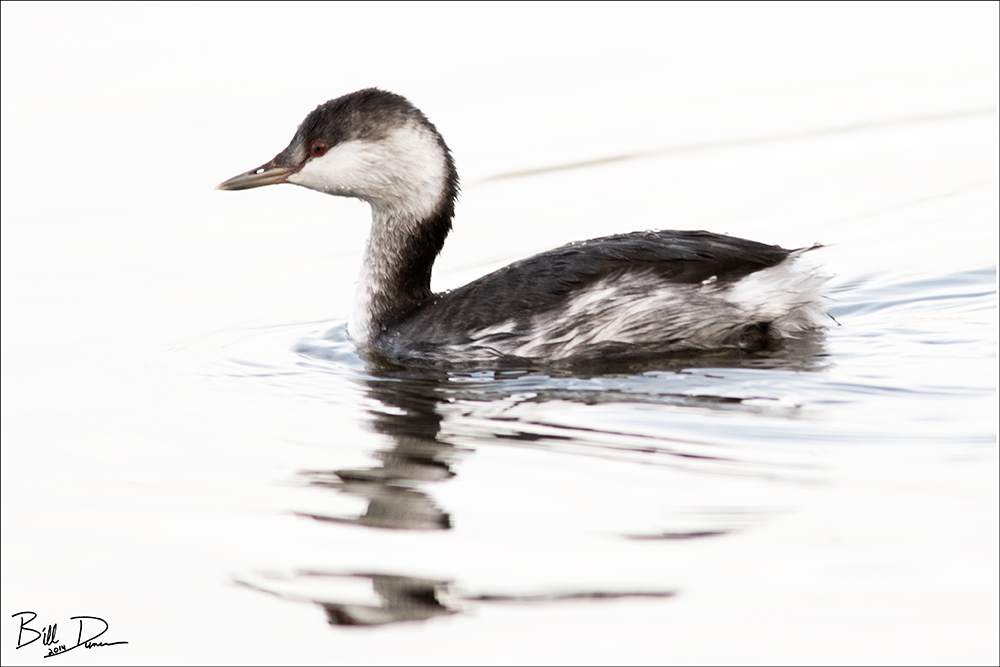
The next pair showcase a couple of birds that exemplify the great winter season we have been having in this region so far. The first is a Horned-Grebe that we were able to get quite nice views of during a very cold morning at Creve Coeur Lake in November.
Horned Grebe
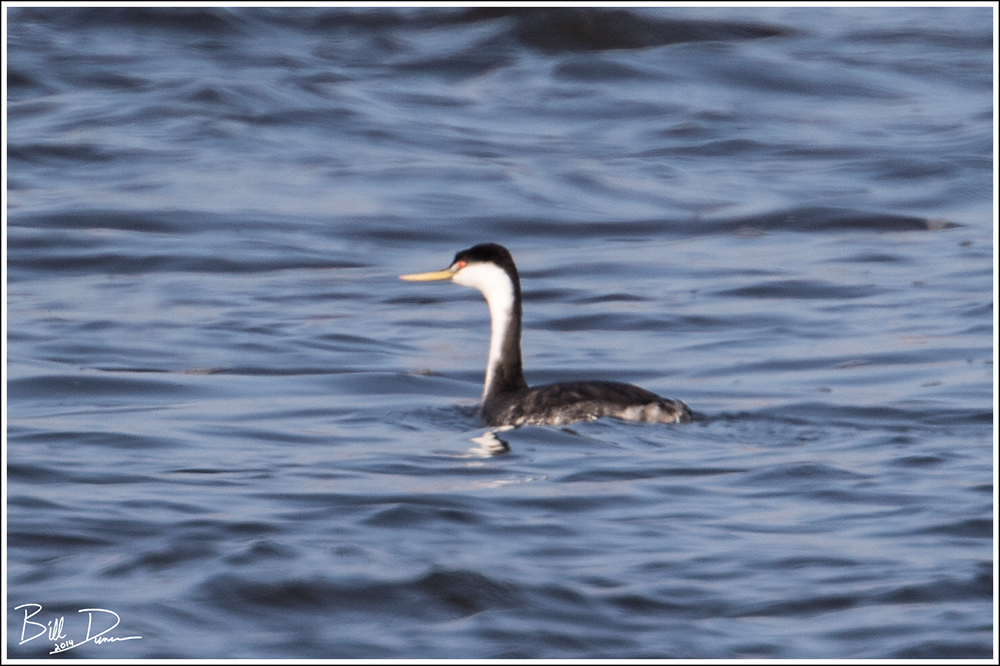
The next photo is of a Western Grebe and is the first photo of this species I was able to acquire. I found this guy near the Clark Bridge near RMBS, where he may still be found.
Western Grebe
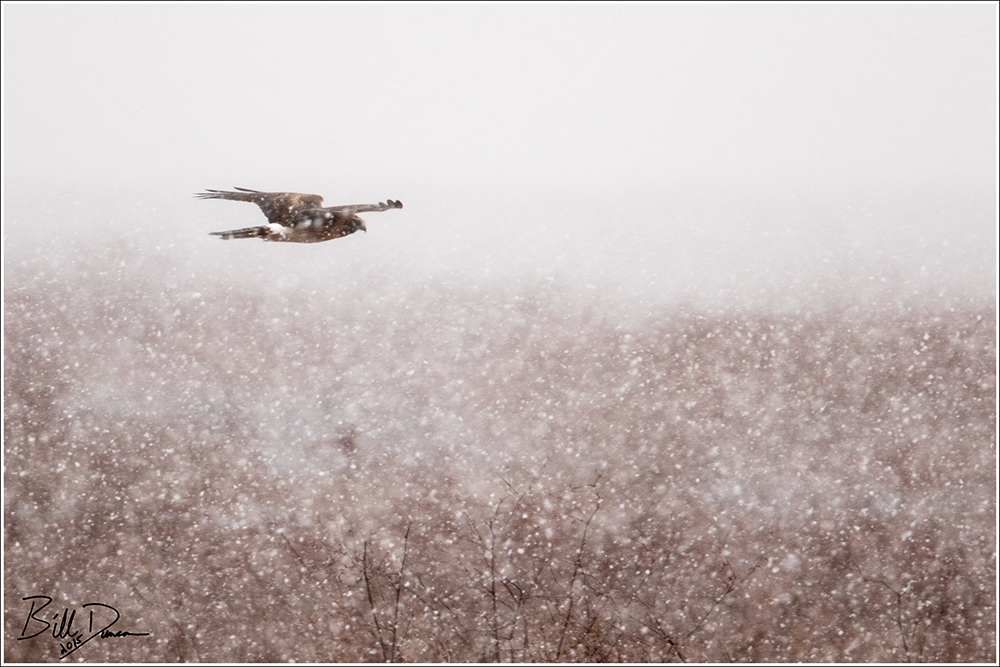
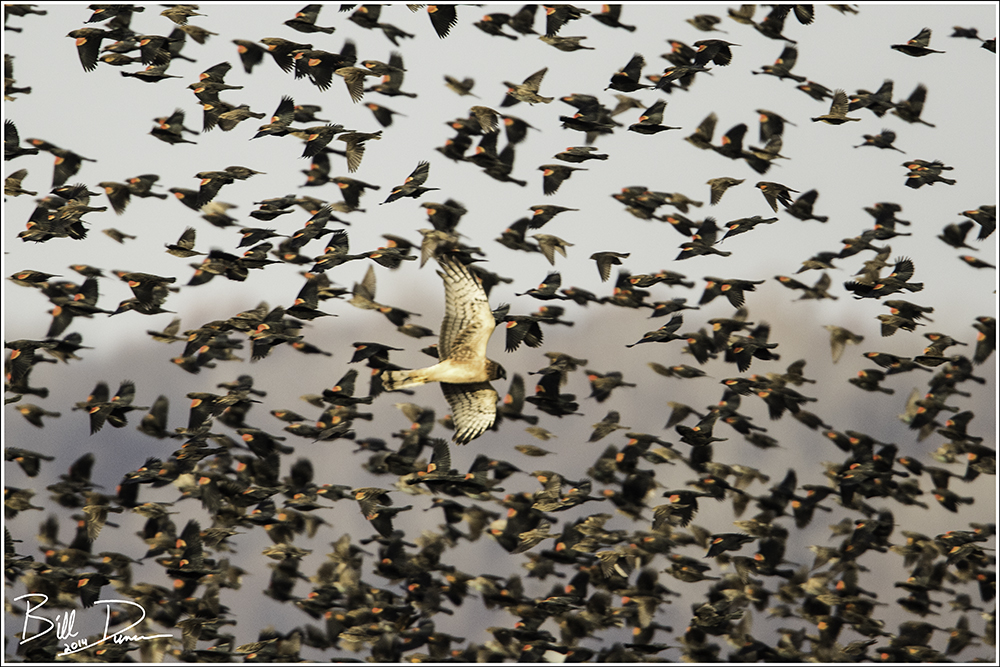
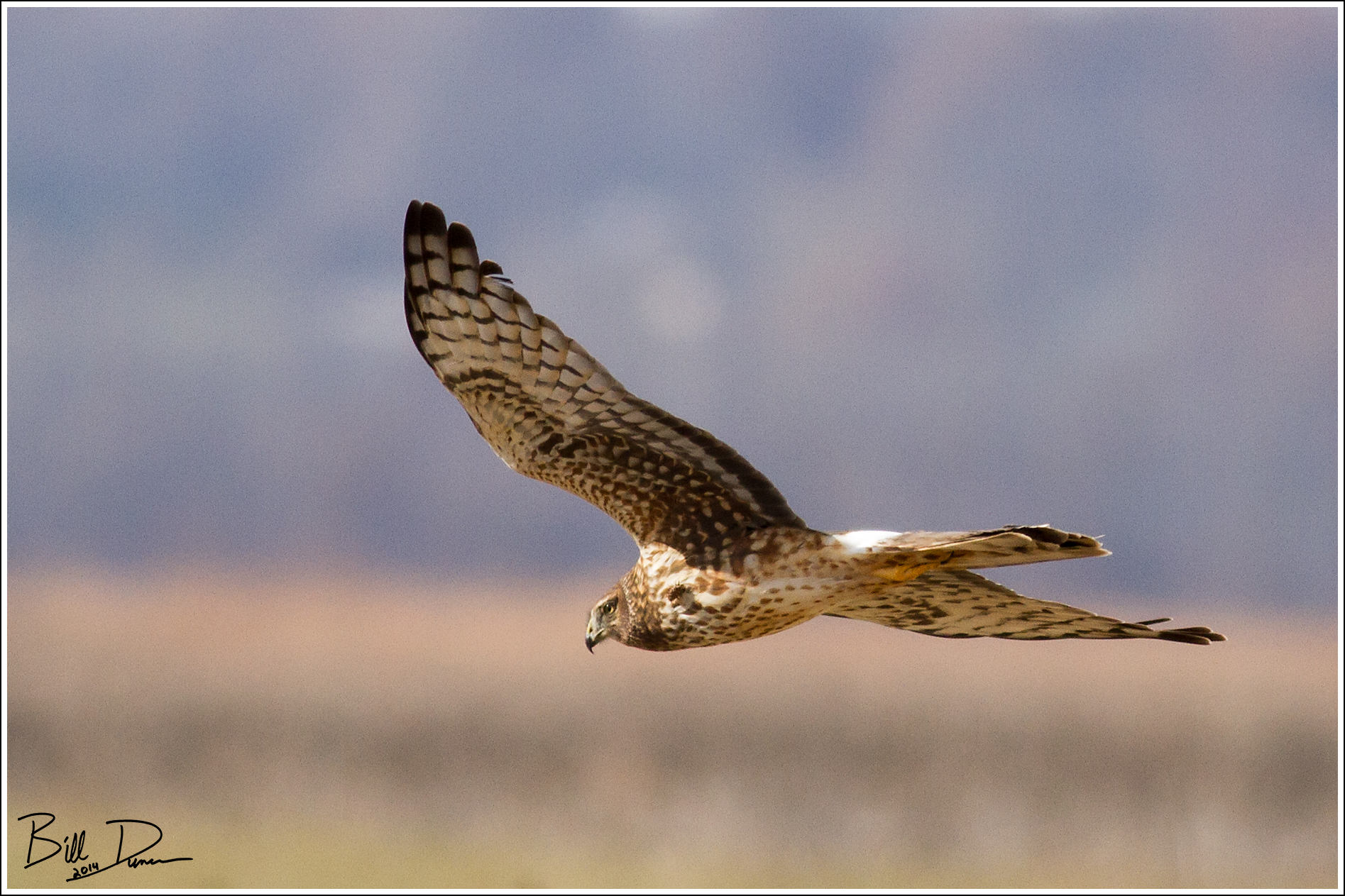
The final pair of images are of a couple Northern Harriers, a species I have been finally able to achieve some success with lately. The first, taken at CBCA, was fortunately timed while the bird was back-dropped by a flock of Blackbirds.
FlashMob
I have provided this last photo, also a Harrier taken at CBCA, in a larger size so you can see the cockle-bur that is stuck on the underside of this poor creature. I know these things can be a nuisance for me in this habitat, and I guess it is for the birds as well.
I missed out on getting a usable image of the Yellow-fronted Woodpecker, which I considered to be the most striking bird I was able to observe in Brazil, but on my last day out shooting before heading for home, I was able to spot and shoot these guys. Huge, active and vocal, these were very much reminiscent to the Flickers in North America.
Warning: although I find the material in this post quite interesting and I am pleased with the observations made and detective work accomplished, there is not, unfortunately, a happy ending.
Having the fortune of living within minutes of a few Ste. Genevieve County gems, this summer Steve was fortunate to find something we had been on the lookout for while on a stroll at Hawn S.P. He sent word that he had found an active nest of a pair of Acadian Flycatchers. Not only that, but it was in a fairly nice position for photography and the pair did not seem too concerned if the viewer stayed low and silent. Needless to say, I was excited. We visited days later to find mom on the eggs – yet to hatch.
Acadian Flycatcher – On Nest
The female would leave the nest for less than three to four minutes at a time to feed herself. The male was primarily concerned with scouting and announcing his territory, vocalizing continuously as he traveled its circumference.
Acadian Flycatchers – Mom Taking a Break
Once in a while both parents would be at the nest at the same time. Gee, I wonder why dad doesn’t come around more often… 😉 We were surprised by the relatively large size of the bird’s beaks and the small size of the nest!
Acadian Flycatchers – Giving the Business
To give some idea of the habitat these guys were using… These are definitely forest dwelling birds. This section of Hawn was close to a 50:50 mix of Short-leaf Pine and deciduous trees. The nest itself was located in a Black Gum that was approximately 30-40′ tall.
Acadian Flycatchers – Habitat Shot
A follow up visit a week later found that two visible chicks were in that tiny nest! In the photo below, one of the parents had just brought a spider back to feed to one of the altricial young.
Acadian Flycatchers – Feeding Time
The next photo documents the large, developing eyes of these sightless young. Also take note of the characteristic nests of these birds. The tendrils on these nests are strung up with spider webs and can be up to a meter long. According to the literature, this nest is near the maximum height range from the ground (~25′) that this species will build. As great as this was, I would love to find a nest built lower.
Acadian Flycatchers – Unmistakable
The following Saturday we visited during prime lighting hours for where the nest was located. With the relatively quick fledging time of these songbirds, we gave it about a 50% chance that the chicks would still be in the nest. We got to our viewing spot – a dry creek bed that gave us partial cover, and waited. Other than an occasional song from dad at a distance, we had no sign whatsoever of anything going on at the nest. After sitting silent and ready for about 40 minutes, we had concluded that the nest was no longer in use. The chicks might have fledged?
We decided we could safely walk directly under the nest without interfering with anything. When we arrived we were disappointed to find that both chicks were lying directly underneath the nest, dead. For a while we contemplated what could have happened. Could a storm or wind gust have knocked them from the perch? As we lamented the demise of these fresh beings, Steve saw something near the crotch where the nest branch met the trunk. Here is what we observed and answered our questions.
Black Rat Snake – Eater of Chicks
See that bulge in this young Rat Snake? We hypothesized that this was a third chick that this guy had preyed upon. We suppose that during the process of ingesting this chick, the other two were either pushed or decided they were better off jumping from the nest, then wait for the fate of the unfortunate sibling. We were fortunate to arrive at the nest in time to spot this snake before it had moved on. We bothered it long enough to take some images, then let him hide in peace to digest his meal.