Photographed with my friends Miguel and David at Sax Zim Bog on December 31, 2019.
Tag: birds
Birds of North Carolina Coast – Ruddy Turnstone

f/5.6, 1/1600 sec., ISO-500, 540 mm focal length equivalent


Backyard Birding – Missouri Winter Songbirds. – 01/12/2019
An excellent post by Miguel Acosta using photos he captured at my backyard feeders.

A big thanks to the Duncan’s for inviting me to their home, to photography winter songbirds at their bird feeder.
A cold winter day is perfect for curling up by your living room or you can stock your bird feeder, get your camera, a turkey chair and check out the activity at the feeder.
Here’s a quick rundown of the most common backyard birds, I saw while spending an afternoon at my friend’s bird feeder.

House finch – love Nyjer seed, often mistakenly called thistle seed. Offer it in tube feeders or net bags, and watch these colorful birds swoop in for a visit.
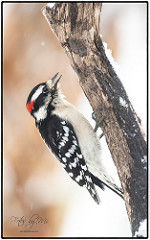
Woodpeckers – In the winter, beef suet is an energy-rich substitute for the insect fare that downy, hairy, and red-bellied woodpeckers feed on during the summer. Other bird species such as jays will also eat suet, but it’s…
View original post 225 more words
WGNSS Natural History Photo Group Field Trip – January, 2019

The WGNSS Natural History Photo Group had a fun field trip in January, when we headed north up the Mississippi to the riverside town of Clarksville. Here at lock and dam #24, we were fortunate to be alongside ~75 eagles of various ages that took turns in catching the stunned shad that is their primary winter food source along the great river. We arrived early in the morning and made a day of it, experiencing wide shifts in weather from grey and snowy to partly sunny skies. I’m not an expert in aging these eagles, but I believe the bird picture above is a subadult II, which means it is 2.5 – 3 years old. In this photo you can see several retained juvenile secondaries on each wing.
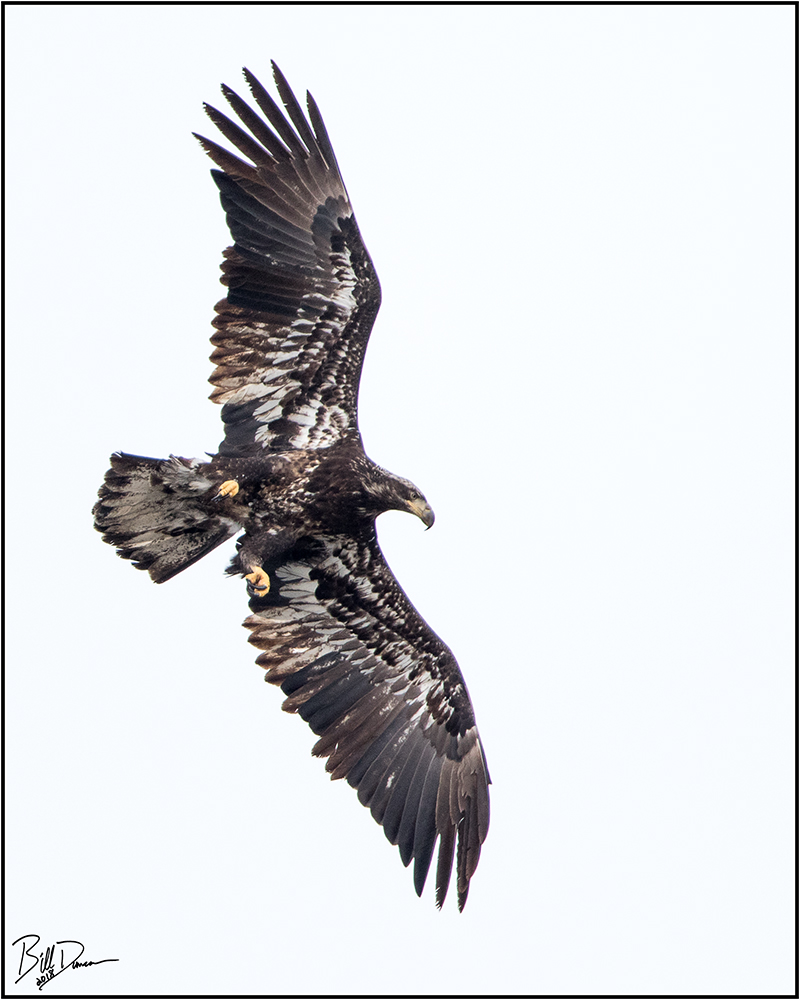
The long and pointed secondaries make me think this bird is probably a year younger than the bird in the previous photo. I would guess this bird is 1.5 – 2 years old. The temperatures on this day were cold, but not too severe. We arrived with the car’s thermometer reading 16°F. There was a light wind most of the day, but not nearly as bad as there could have been.

With patience, there were some opportunities to capture a bird’s profile as it came to pick up a poor stunned fish.

The majority of prey captured in this way is small enough to be eaten immediately on the wing in a single “bite”. Sometimes, however, the bird is forced to retreat with its groceries and eat in seclusion.
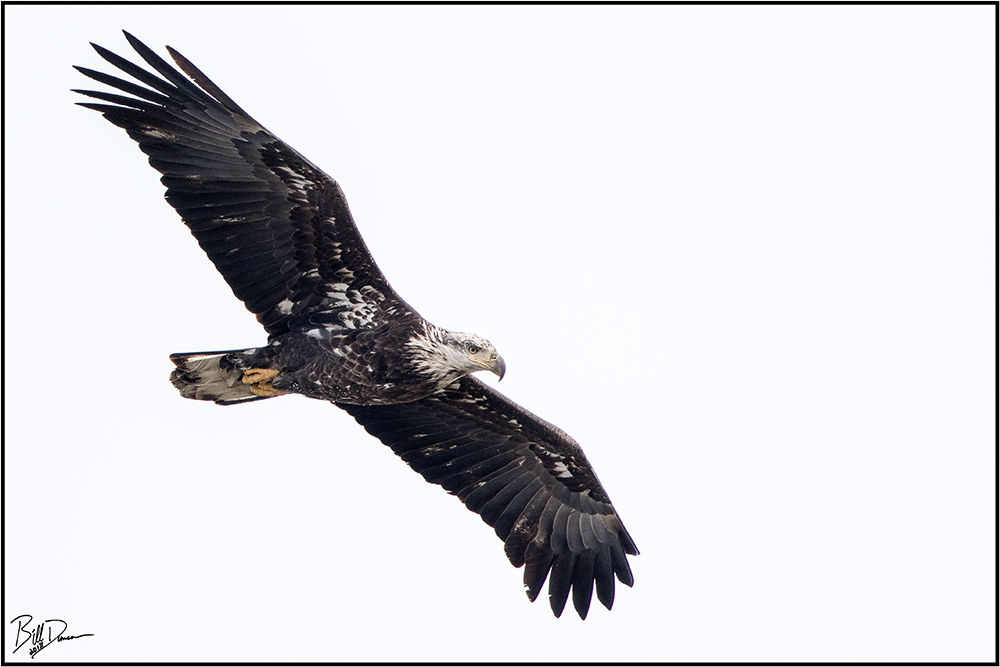
The bird pictured above is much closer to looking like an adult bird, showing the mostly white head and tail. I estimate this bird as being 3.5 to 4 years old.

I noticed this in previous years, that it seems like the juveniles spend more time fishing than the adults. In the photo above, you can see a juvenile with an already full crop is pulling another fish from the river.
This is just a few I have processed so far. We have something in the works that may produce something much more in terms of eagle photography. Until next time.
-OZB
Comparing Canon’s Newest Teleconverters
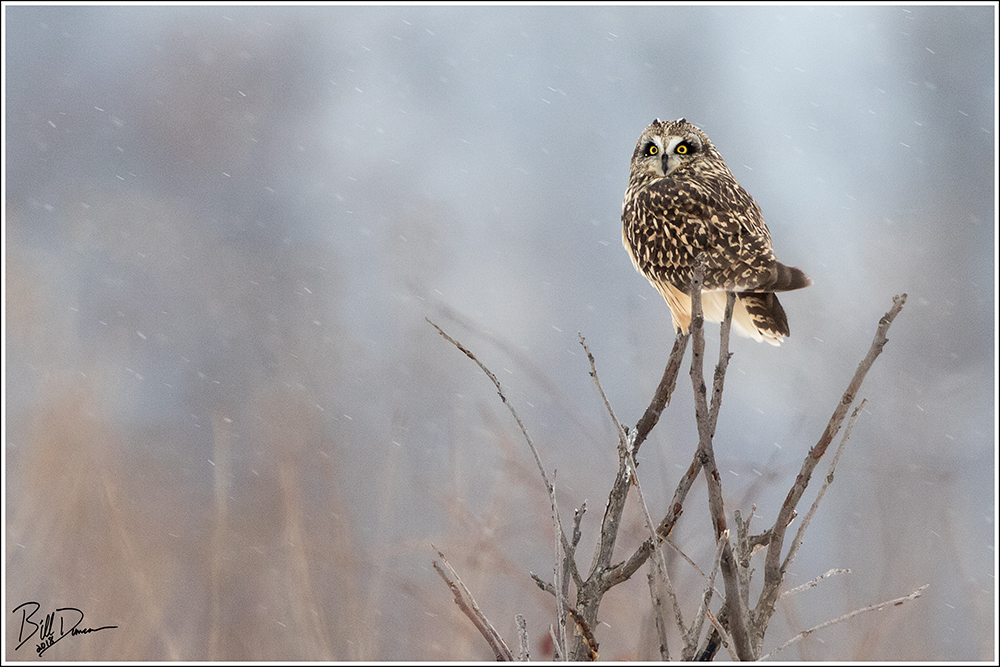
Image made with Canon 7d mkii, Canon EF 500mm f/4L IS II USM Lens and Canon Extender EF 2X III
I don’t usually like to discuss gear on this blog, but once in a while I think there are some things new or interesting enough to talk about, particularly when I think they may be critical for producing the best possible results. I have been wanting to test and compare the 2 latest Canon teleconverters (Canon Extender EF 1.4X III, Canon Extender EF 2X III) in a head to head test for sometime and this past weekend found me with an opportunity to do so. To be clear, this was not the optimal situation to make this test. The light was poor and the subject was probably too far away and not covering enough pixels to make a relevant comparison. But, I thought I’d give it a try.
These tests were setup as equally, but not scientifically, as possible. For these first two images, I processed as normal and tried my best to be equal in all capture and processing steps. I cropped to make the bird approximately the same size in both images, so obviously, the photo made with the 1.4X tc was enlarged more than the one made with the 2X tc. I then resized each to make them 1000 pixels on the horizontal. The purpose here was to see if there is a discernible difference in sharpness and image quality between the two. The 2X tc often gets poor reviews, but just as often gets raves by those who claim to know what they’re doing. Many claim that the better results are made by using a 1.4X tc, or native lens and cropping in post to obtain better results than those obtained by using the 2X tc for an optical zoom.
Open the two images above in separate tabs to see a roughly equal comparison. In my opinion, I was pretty pleased with the results of the 2X tc in sub-optimal conditions. Both photos are fine for sharing on the web, although the IQ would limit print size. Like I said, the conditions were poor and the bird at a great distance. However, I think I would give a slight edge to the photo made with the 2X converter. This edge might just as well be due to differences in how I processed or with changing conditions within the few minutes between captured images.
Let’s look next at the “100% crops” of both photos. This simply means that these photos were both cropped at the same dimensions (4″ x 6″) and not resized. These examples were NOT sharpened.
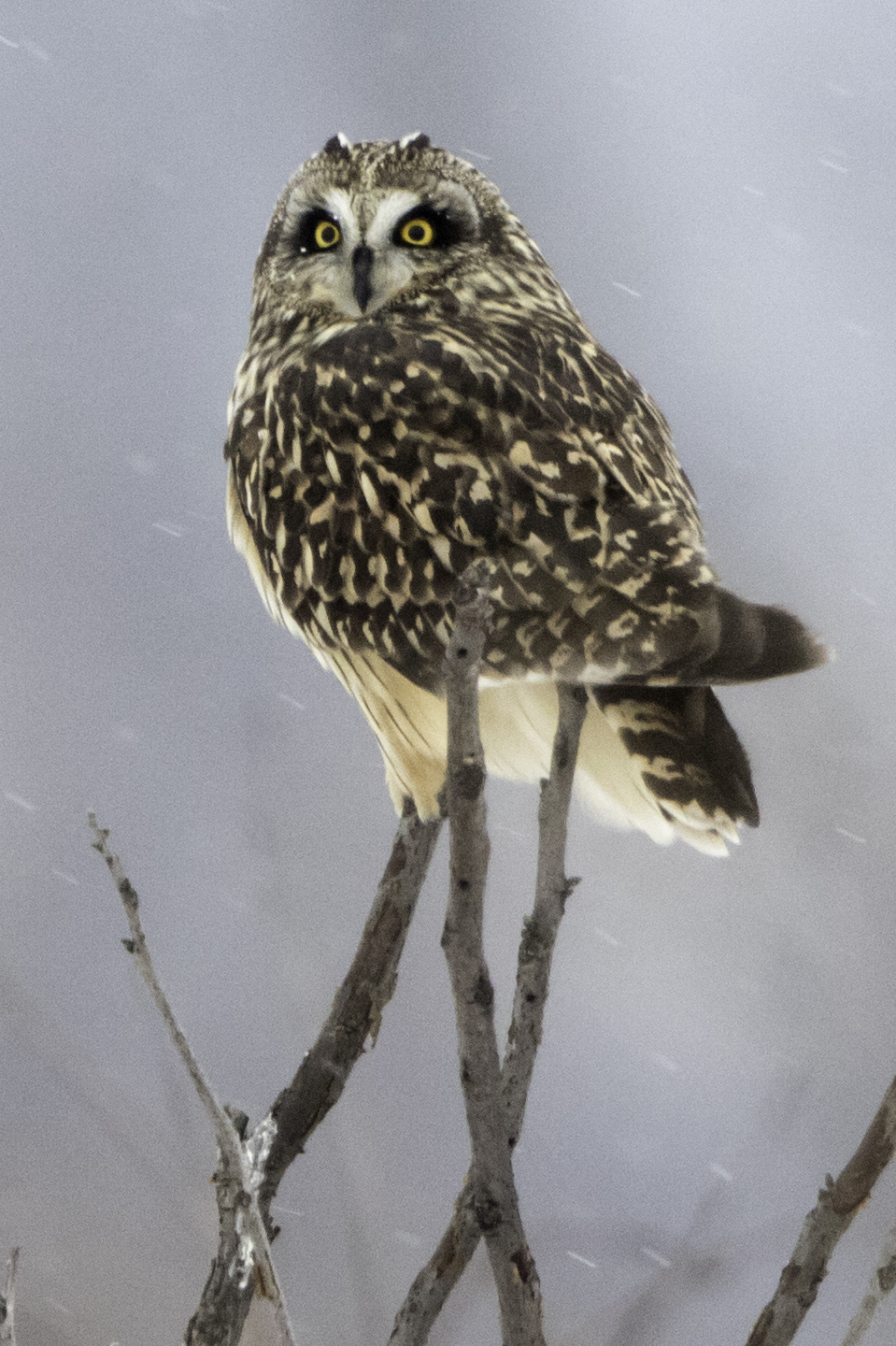
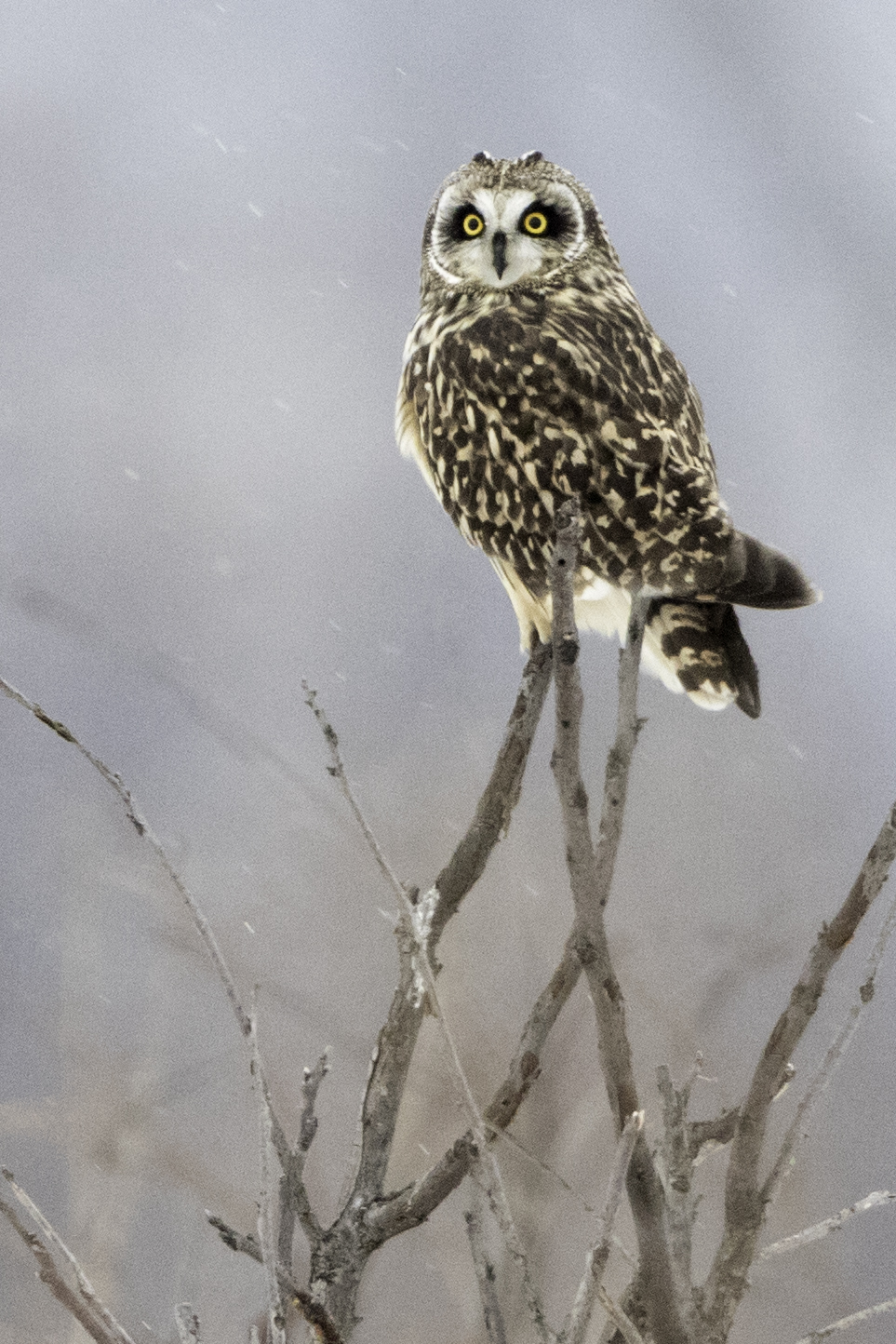
Again, with this comparison, I find the two very close. Either one would work well enough, but if your goal was to maximize print/display size, I would probably go with the 2X tc. I guess this has surprised me a bit. I was expecting that, under these sub-optimal conditions, the 2x tc would fall behind the supposedly sharper combination of the 500mm + 1.4X tc.
What do you think? Did I make any major blunders in my comparison or analysis? Please let me know. I do hope to make this comparison again under perfect light and optimally placed subject sometime in the future.
Thanks for stopping by and reading this far!
-OZB
Making the Birds Earn their Supper
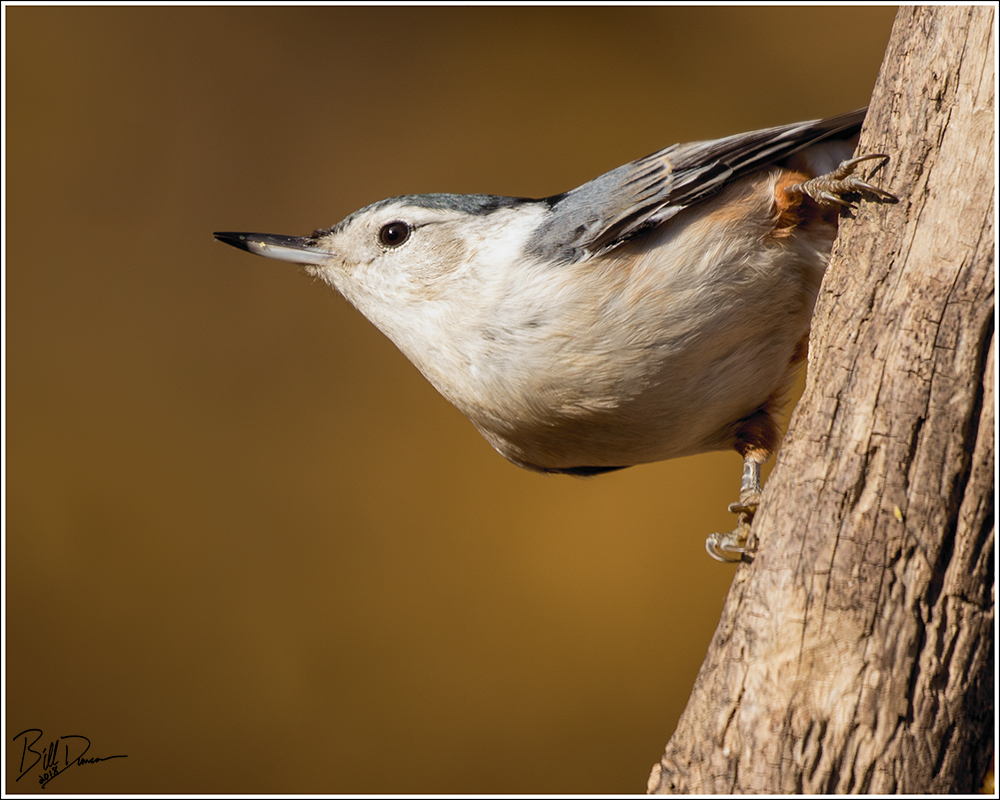
I have been given a lot inspiration lately by a number of Facebook friends to photograph the great birds that visit our feeders, or to put it another way, make these models work for their supper. On a recent birding trip, Sarah and I collected some great drift wood that I turned into horizontal and vertical branches in the backyard, not too far from the feeders and our sun-porch.

I drilled a few extra holes towards the rear of some of these to act as unseen cavities to place my homemade bark butter. It only took the Juncos a couple of hours to find their favorite food. These guys go crazy trying to figure out how to get to this stuff. I made sure to place a few feeding spots near horizontal perches that they could access without too much difficulty as they cannot grasp vertical perches very well. These guys are so tame that they were my primary subjects, other species being a little more timid to visit the close perches and seed deposits that I sat close to.

For a first attempt, I’m pretty pleased. These were shot hand-held in mixed lighting with my 100-400 mm lens and I shot through the not-so clean windows of the sun-porch. I tried sitting behind the open windows, but this must have made me much more conspicuous. I sat for an hour or more with few birds coming in to feed. Within seconds of me closing the windows, the Juncos came to the feeding stations.

I’m a little concerned that my resident Downy Woodpeckers might have a little too much of the rich food I am providing. They now have access to the peanut and tree nuts in the no-mess mix I provide, beef tallow suet blocks, and now the bark butter. But, I suppose it would take a lot for a wild bird to over indulge.
Anyone who feeds their wild birds and has an interest and access to photography should give this a try. I’m looking forward to more cold mornings spent outside trying my hand at this.
-OZB
Ruby-throated Hummingbird Nest – Part Three
Part three of a three-part series documenting the progression of a RTHU nest.
Ruby-throated Hummingbird Nest – Part Two
Part two of a three-part series documenting the progression of a RTHU nest.
Finding Snow in April

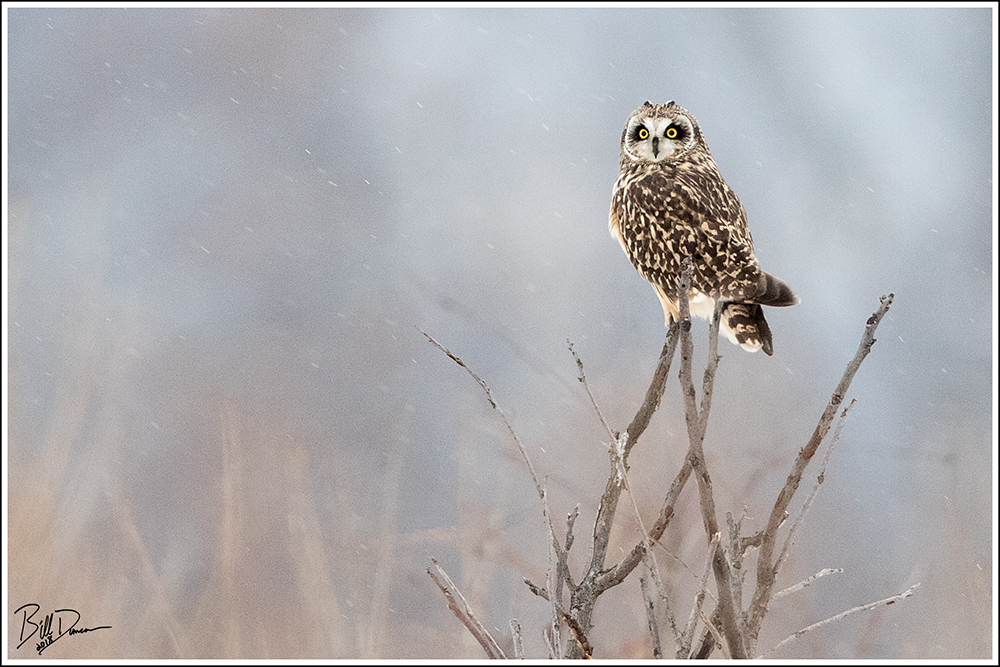
A huge thank you to Danny Brown, without whom I most likely would have stayed at zero Snowy Owls for the great Snowy irruption of the 2017/2018 winter. Because of travel and just poor luck, I had missed out on finding the Snowy Owls that had salted the state this winter and would never have imagined that we would have another chance a week into April. But, since the weather to date suggests little of spring, I suppose we should have not been too surprised.
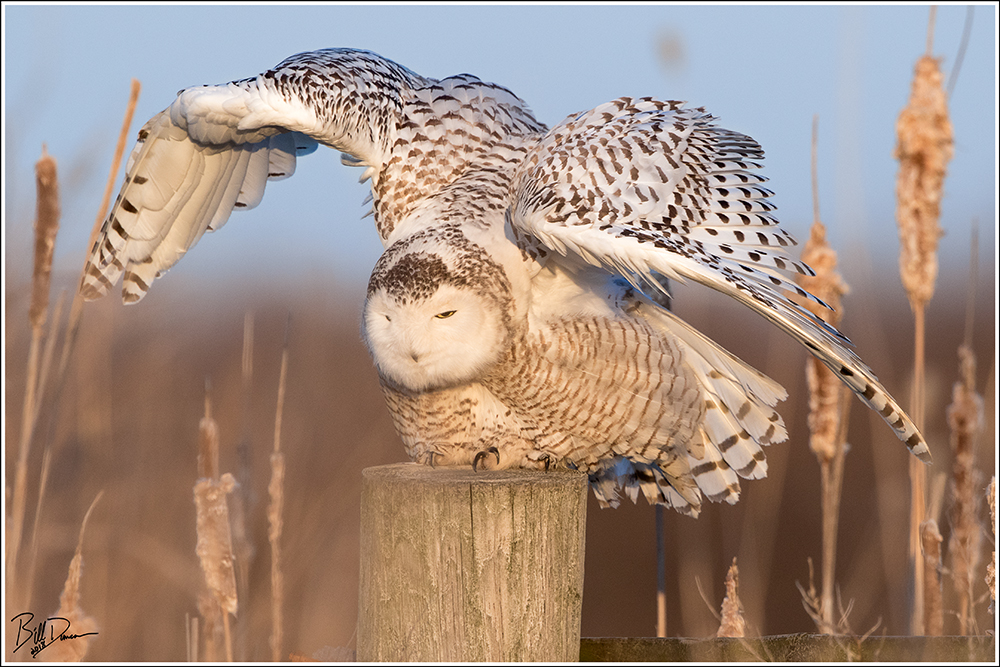
The birding on Saturday was seemingly great everywhere and Steve, I and others were having good luck finding interesting species at RMBS when we received the messages from our phones about Danny’s find. I think Steve and I would have been satisfied with our usual views from a football’s field or two away, but were ecstatic to find the bird perched at an optimal viewing distance, resting after a nice meal that others had documented earlier in the day.
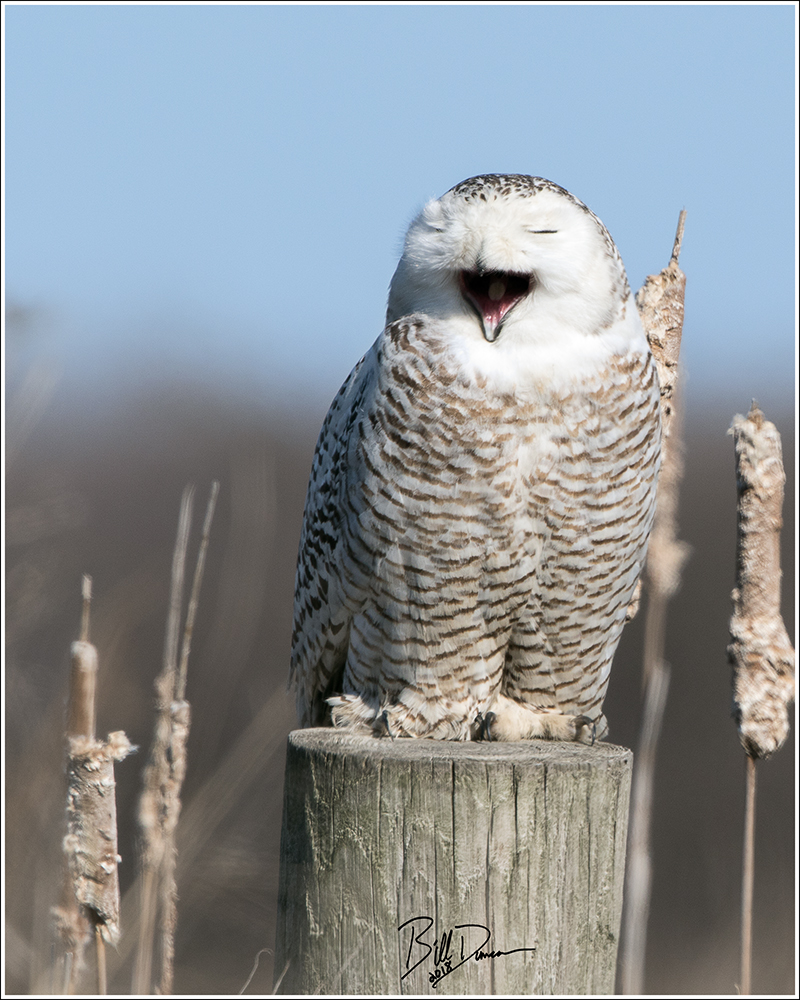
We left the bird still on its perch shortly after sunset. On the way out of the conservation area we had a Short-eared Owl and American Bittern flyovers. Thanks again, Danny.
Birds of Australia – White-bellied Sea Eagle

The first place we explored during our single day at Wilson’s Promontory National Park was Miller’s Landing and it’s associated trails. Miller’s Landing is a north-facing beach that leads to a healthy and productive inlet and marine sanctuary. The chances for finding all sorts of birds and other wildlife were high. We just needed to get lucky. After a few minutes of walking along the coastal mangrove marsh at low tide, Collin and I got a show that I’ll never forget. I only wish we had a spotting scope to see it better. After passing nearly overhead in a horrible back-lit situation, we watched this impressive White-bellied Sea Eagle fly off shore and into the inlet. We thought that would be the end – watching it fly until we couldn’t see it any longer. But this bird was on the hunt.
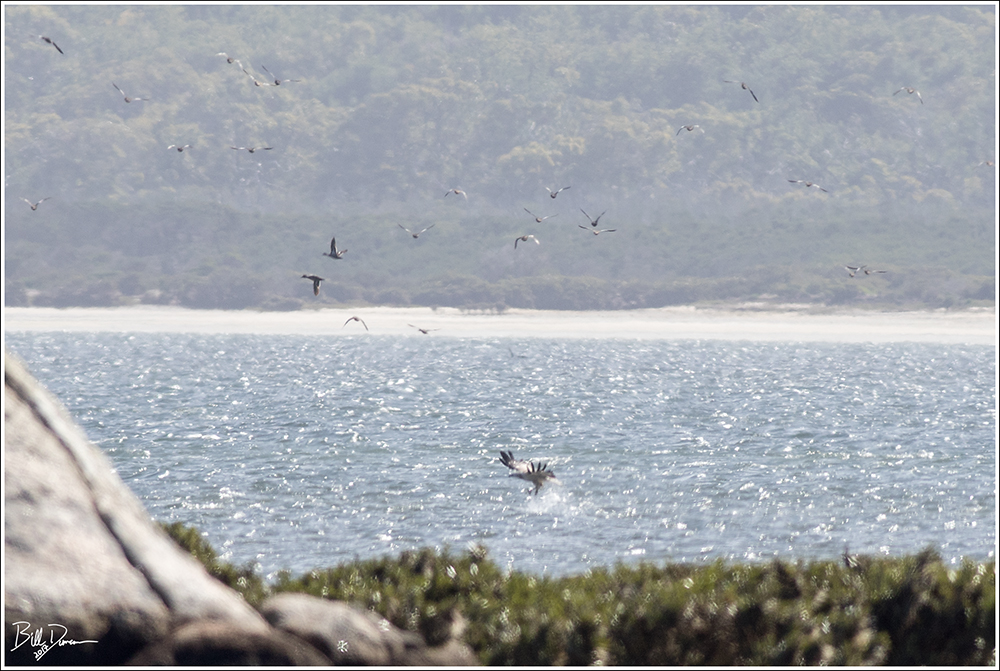
I’m not sure of the species, but for the next several minutes we watched this eagle hunt and eventually capture a duck. Without stopping to rest, this eagle hover-hunted, trying time and time again to capture a duck that was diving and putting up a fight. I couldn’t believe this large bird had the stamina to continuously try at capturing this bird without rest.
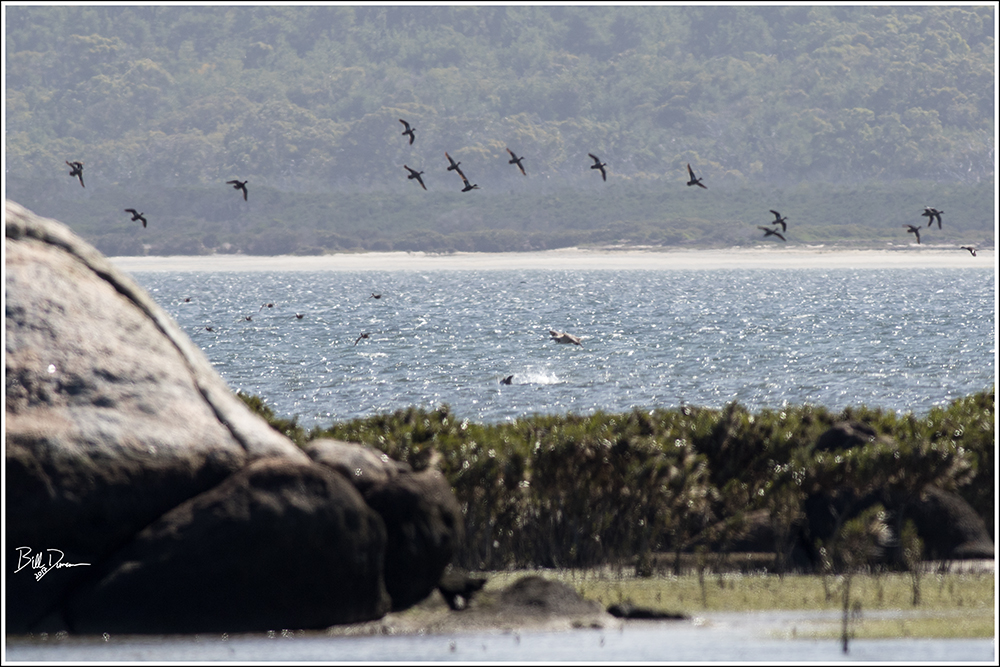
Collin and I were the only humans on the beach and the only ones fortunate enough to observe this struggle. Although difficult to see in detail from our position, we could tell the duck was trying its best. It lasted at least 5 minutes and perhaps as long as ten. Eventually, the eagle won its prey, perhaps taking it to a nest nearby.

 A Thousand Acres of Silphiums