Eastern Skunk Cabbage Inflorescence

Eastern skunk cabbage (Symplocarpus foetidus) in bloom at Bennett’s Terraqueous Garden (Peoria County, IL)

Many thanks to Casey Galvin who turned me on to the closest places to find and photograph a plant species that had been a target of mine for some time now. Eastern skunk cabbage (Symplocarpus foetidus) is a fascinating plant that is typically found in eastern North America and the upper midwest. The nearest populations to St. Louis that I am aware of are near Peoria, Illinois, which is about a three hour drive from my front door.

These are one of several early blooming plants that start the spring botanical season. These members of the Araceae family, known as the aroids, bloom from February through April. Like several plants in this family, this species produces odors reminiscent of rotting meet in order to attract pollinators that are predominantly dipterans (flies), hymenopterans (bees) and other, more terrestrial arthropods. I did not find the odor too overpowering and I also thought I picked up a slightly sweet, syrupy smell.
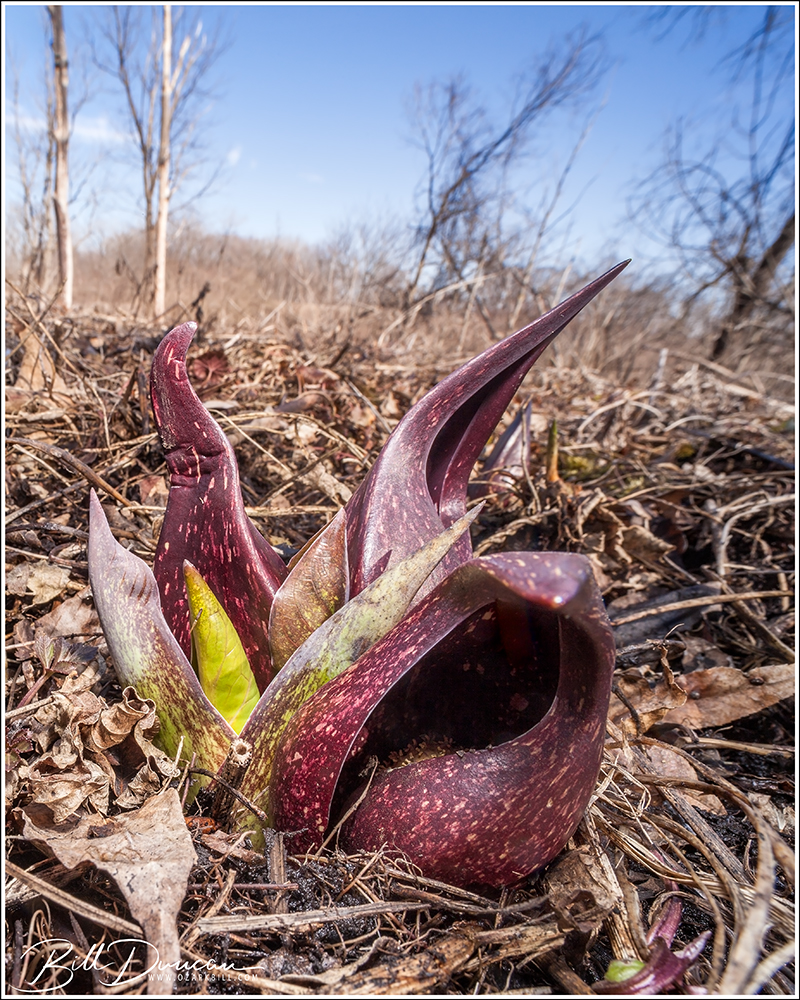
Eastern skunk cabbage (S. foetidus) in its seep-spring habitat at Miller-Anderson Woods Nature Preserve (Bureau/Putnam counties, IL)

Another remarkable aspect to this species pollination biology is that the spadex and surrounding tissues are thermogenic – meaning they produce their own heat. This thermogenesis, produced via enzymatic reactions not too dissimilar to the reactions that occur in mammals, may serve to assist the inflorescence and leaves of the plant to break through frozen grounds. It also likely serves as to further the ploy that the plant is a rotting carcass, hopefully attracting flies and other insects interested in such things.

A honeybee (Apis mellifera) visiting the inflorescence of an eastern skunk cabbage (S. foetidus)

Other than a few very small flies and a couple of small native bees, the only pollinator I found during my visit was the honey bee. These were quite abundant.

Spathe and associated carpels of eastern skunk cabbage (S. foetidus)

To show the moisture associated with the seep habitat I was in, here is a skunk cabbage spathe surrounded by snakeskin liverwort (Conocephalum salebrosum).

That’s all I have for now. Most of the information in this post and much more can be found in the following source:

Thorington, Katherine K. Pollination and Fruiting Success in the Eastern Skunk Cabbage. The Journal of Biospheric Science, vol. 1 no. 1, April 1999 http://www.mtholyoke.edu/courses/mmcmenam/journal.html
Comparing Canon’s Newest Teleconverters

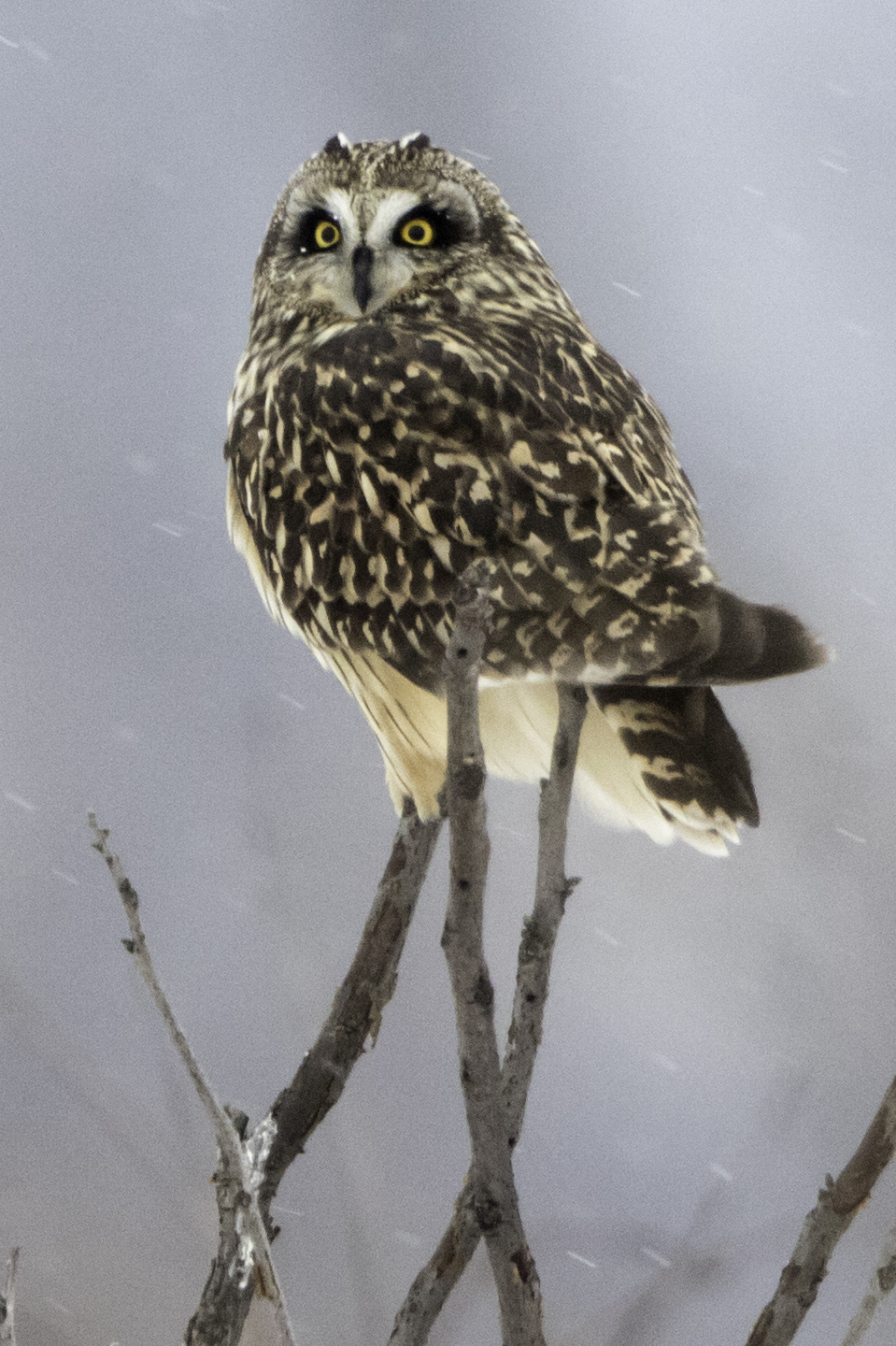
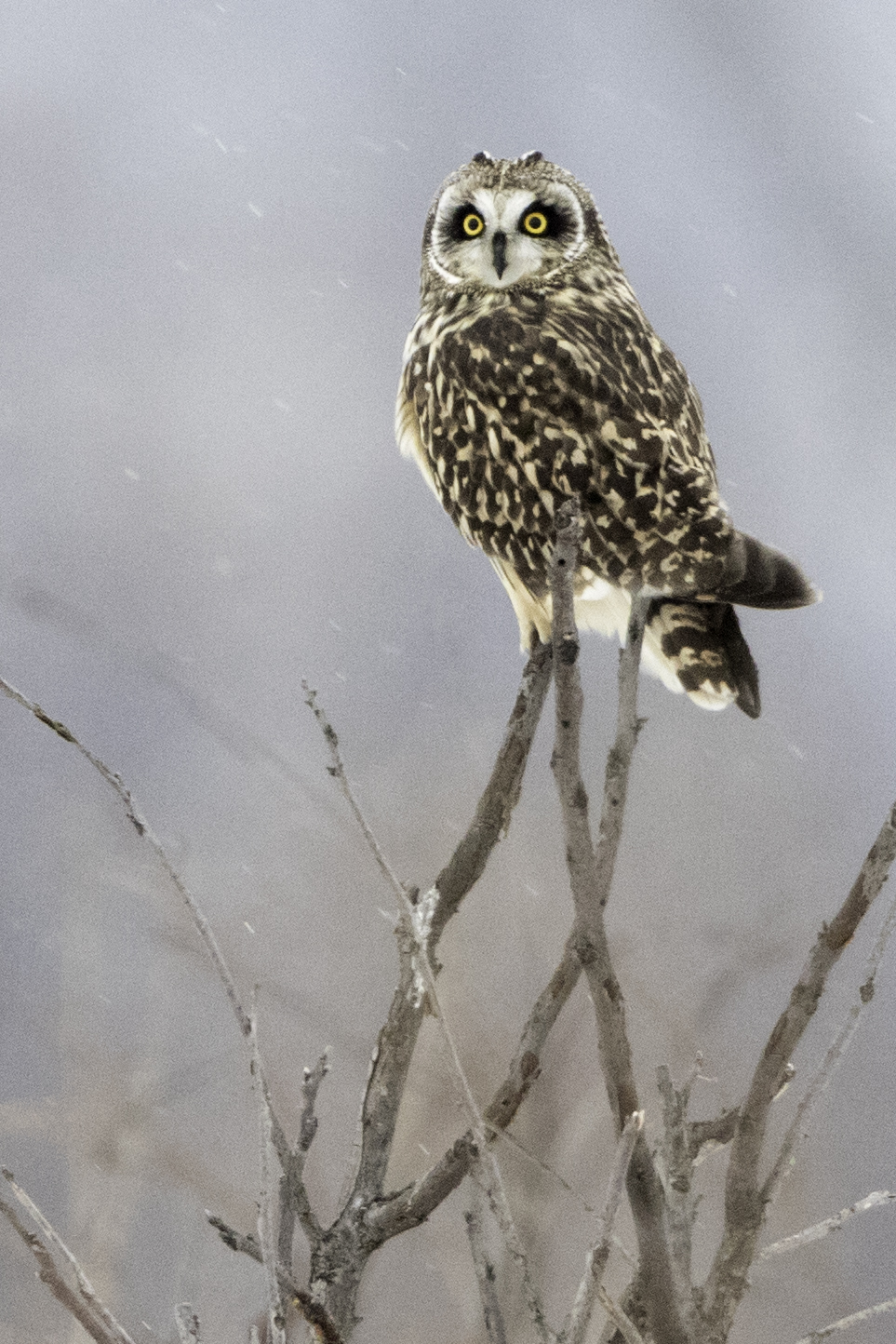
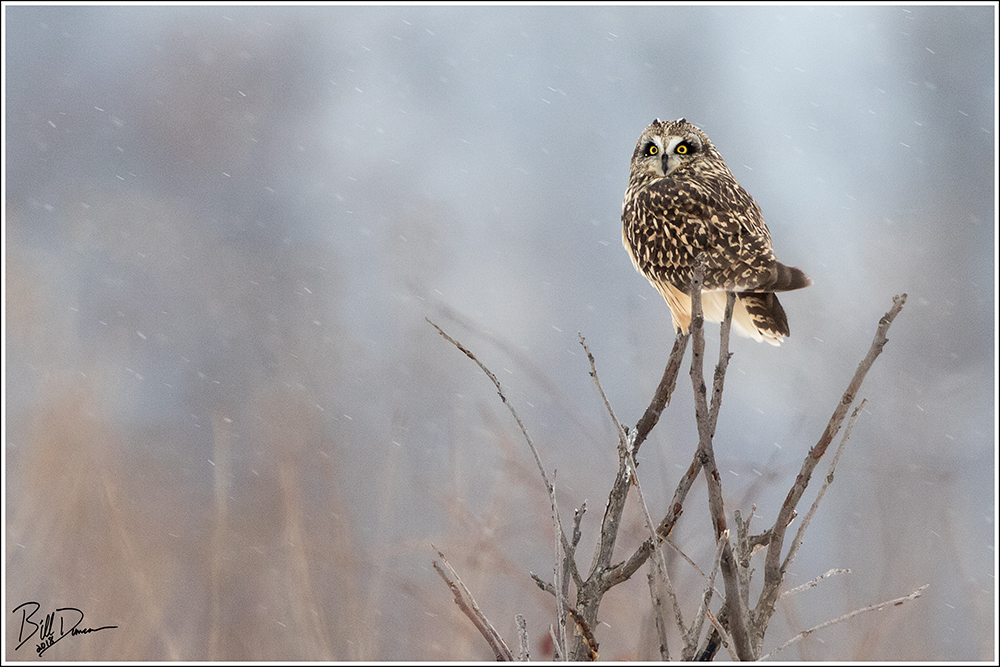
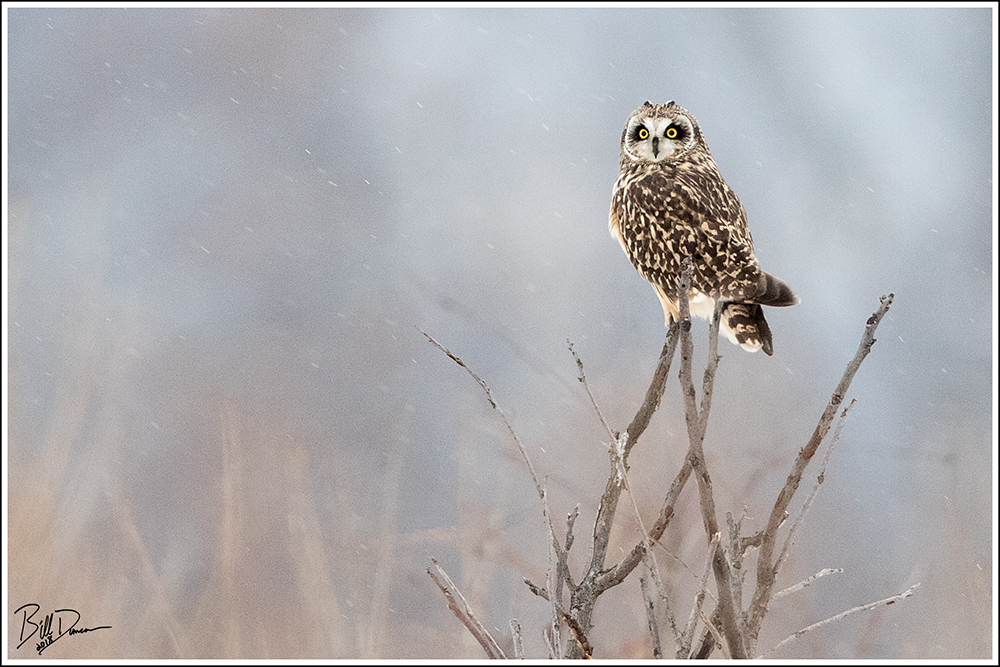
Short-eared Owl
Image made with Canon 7d mkii, Canon EF 500mm f/4L IS II USM Lens and Canon Extender EF 2X III

I don’t usually like to discuss gear on this blog, but once in a while I think there are some things new or interesting enough to talk about, particularly when I think they may be critical for producing the best possible results. I have been wanting to test and compare the 2 latest Canon teleconverters (Canon Extender EF 1.4X III, Canon Extender EF 2X III) in a head to head test for sometime and this past weekend found me with an opportunity to do so. To be clear, this was not the optimal situation to make this test. The light was poor and the subject was probably too far away and not covering enough pixels to make a relevant comparison. But, I thought I’d give it a try.

These tests were setup as equally, but not scientifically, as possible. For these first two images, I processed as normal and tried my best to be equal in all capture and processing steps. I cropped to make the bird approximately the same size in both images, so obviously, the photo made with the 1.4X tc was enlarged more than the one made with the 2X tc. I then resized each to make them 1000 pixels on the horizontal. The purpose here was to see if there is a discernible difference in sharpness and image quality between the two. The 2X tc often gets poor reviews, but just as often gets raves by those who claim to know what they’re doing. Many claim that the better results are made by using a 1.4X tc, or native lens and cropping in post to obtain better results than those obtained by using the 2X tc for an optical zoom.

Short-eared Owl Image made with Canon 7d mkii, Canon EF 500mm f/4L IS II USM Lens and Canon Extender EF 1.4X III

Open the two images above in separate tabs to see a roughly equal comparison. In my opinion, I was pretty pleased with the results of the 2X tc in sub-optimal conditions. Both photos are fine for sharing on the web, although the IQ would limit print size. Like I said, the conditions were poor and the bird at a great distance. However, I think I would give a slight edge to the photo made with the 2X converter. This edge might just as well be due to differences in how I processed or with changing conditions within the few minutes between captured images.

Let’s look next at the “100% crops” of both photos. This simply means that these photos were both cropped at the same dimensions (4″ x 6″) and not resized. These examples were NOT sharpened.

Focal length equivalent = 500 x 1.6 x 2.0 = 1,600mm


Focal length equivalent = 500 x 1.6 x 1.4 = 1,120mm

Again, with this comparison, I find the two very close. Either one would work well enough, but if your goal was to maximize print/display size, I would probably go with the 2X tc. I guess this has surprised me a bit. I was expecting that, under these sub-optimal conditions, the 2x tc would fall behind the supposedly sharper combination of the 500mm + 1.4X tc.

What do you think? Did I make any major blunders in my comparison or analysis? Please let me know. I do hope to make this comparison again under perfect light and optimally placed subject sometime in the future.

Thanks for stopping by and reading this far!

-OZB


Birding the not-so-windy city

Piping Plover – Captive bird held at the Lincoln Park Zoo

A few of us headed up to Montrose Harbor on the north side of Chicago yesterday in search of a rare and late shorebird visitor. There has been a Piping Plover that has intermittently been using the beaches here since October. We visited following approximately four straight days that the bird was sighted and the weather forecast was great for this time of year. Unfortunately, the bird was a no-show for us on this day. Since the Lincoln Park Zoo was almost directly across the street, we checked to see if they had a Piping Plover in their collection. This is the female bird in winter plumage pictured above.

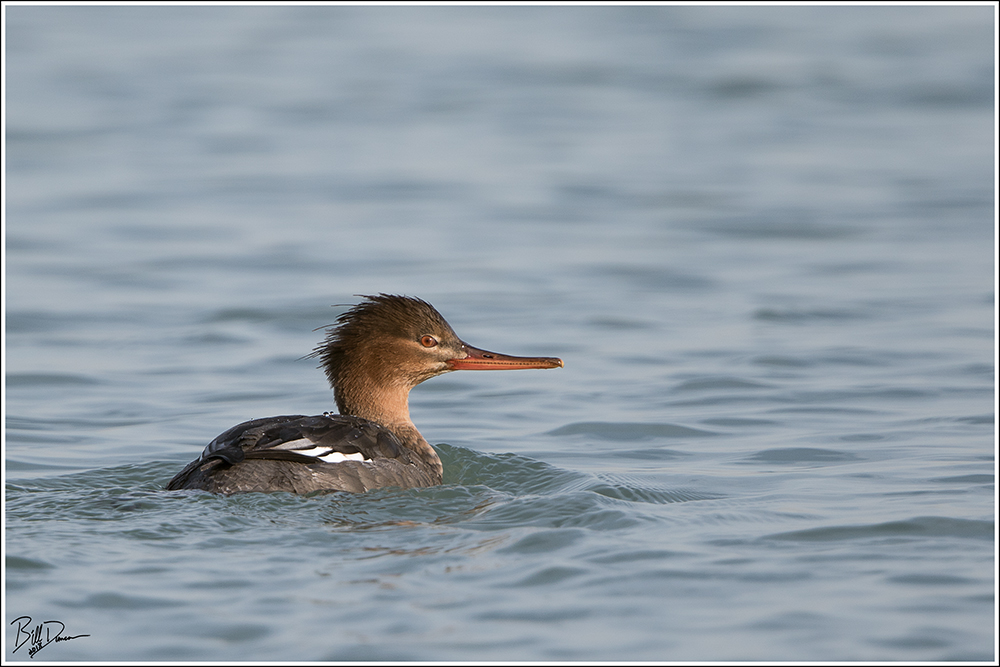
The harbor held a decent number of waterfowl that we were able to get close enough for some shots. See below.

Common Goldeneye


Red-breasted Merganser


Red-breasted Merganser

-OZB


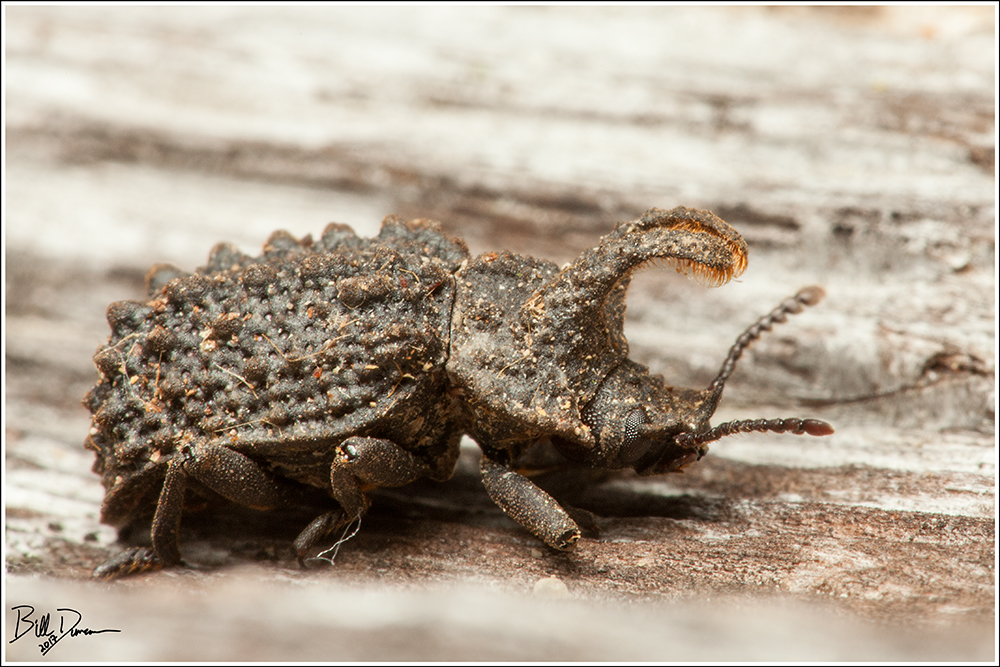
Horned Fungus Beetle

Bolitotherus cornutus

Here is one of the interesting visitors I had to my black lights at Hawn State Park this summer.  Bolitotherus cornutus, or horned fungus beetle is in the darkling beetle family, Tenebrionidae.  I wish I knew of their preference for polypore fungi as larvae and adults so that I could have photographed them on more suitable substrate.

Bolitotherus cornutus

Black Carpenter Ants

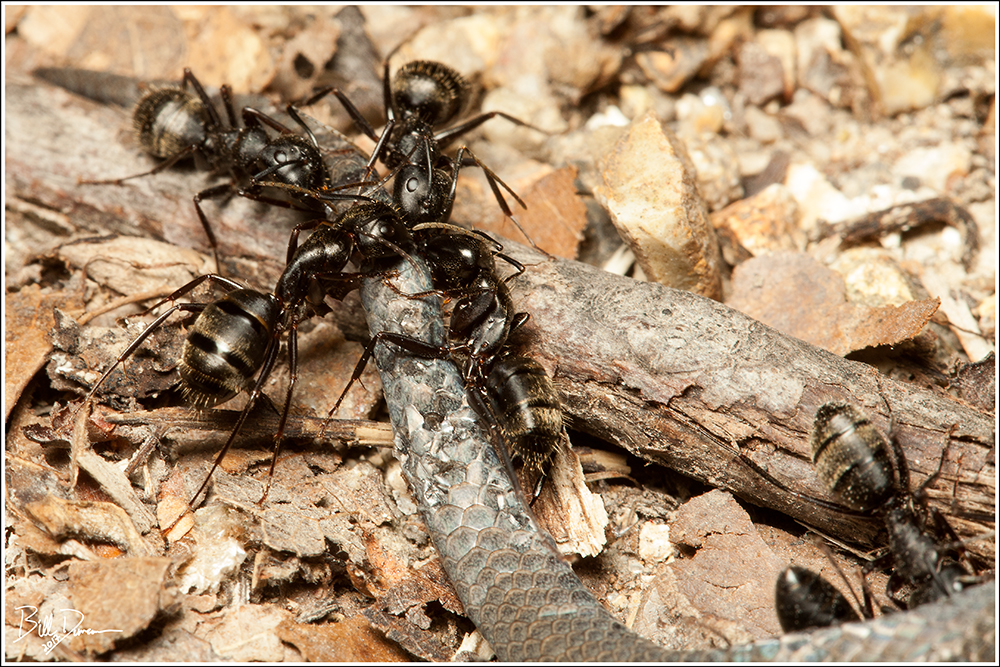
Black Carpenter Ants Feasting On Ring-necked Snake

This series was taken on the joint outing of the WGNSS Entomology and Nature Photography Groups at Council Bluff Lake.  Here we have eastern black carpenter ants (Camponotus pennsylvanicus) feeding on a freshly dead ring-necked snake (Diadophis punctatus).

Black Carpenter Ants Feasting On Ring-necked Snake

Birds of the Texas Gulf Coast – Flying High on High Island

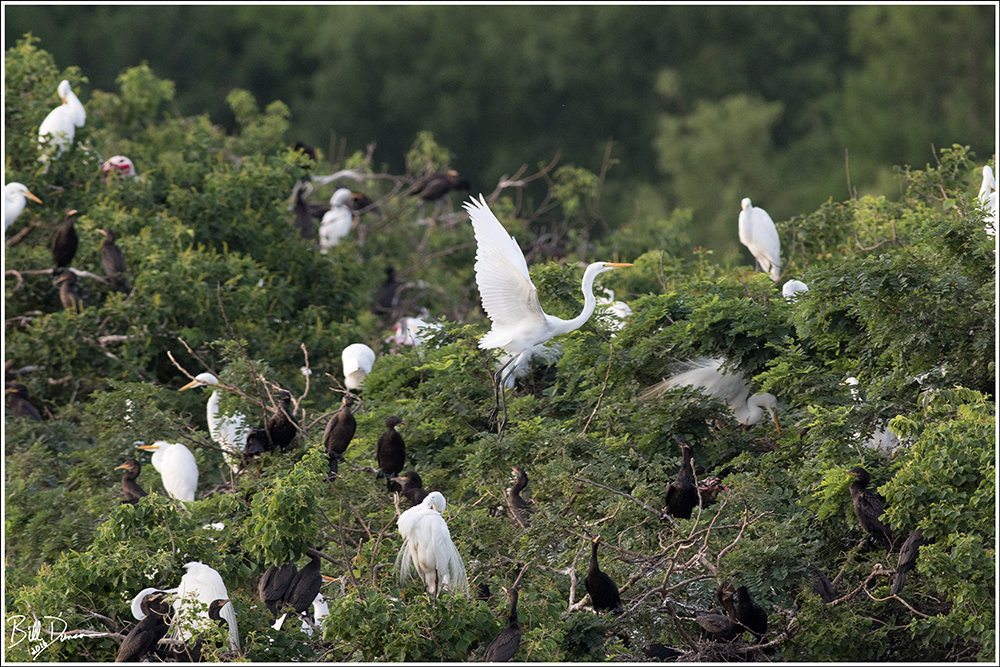
Cormorants and Spoonbill - High Island TX - Rookery
Cormorants and Spoonbill – High Island TX – Rookery

Most birders who have had the opportunity to travel will know about High Island, a small township along the gulf coast that is among the most famous of birding locations in the country.  This relatively small plot of land, along with other spots within a few minutes drive, can boast bird lists higher than many states, if not whole geographic regions of the country.  What surprised me during our visit last May was the diversity in habitat.  High Island is mostly famous for its potential for massive fallout during spring migration – migrating songbirds either traveling up the coast or flying directly over the gulf will stop here for a drink of fresh water and to fill up on grub before continuing north to nesting grounds.  We realized we were going to miss most of the migration at the end of May, but still wanted to pay a visit.  The place is so popular that there is bleacher seating around key ponds to allow for visitors to watch as birds by the hundreds land for a drink and forage through the live oaks.

520a4104
No Vacancies – High Island TX – Rookery

The numbers and diversity of songbirds across the Houston/Galveston coastal areas we visited were even sparser than we anticipated, but on arriving pre-dawn at the rookery we were quite surprised.  Every bit of vegetation on this relatively small island was being used by wading birds.  We were in awe by the numbers of Neotropical Cormorants and Roseate Spoonbills that filled the branches as well as the skies.

520a3917
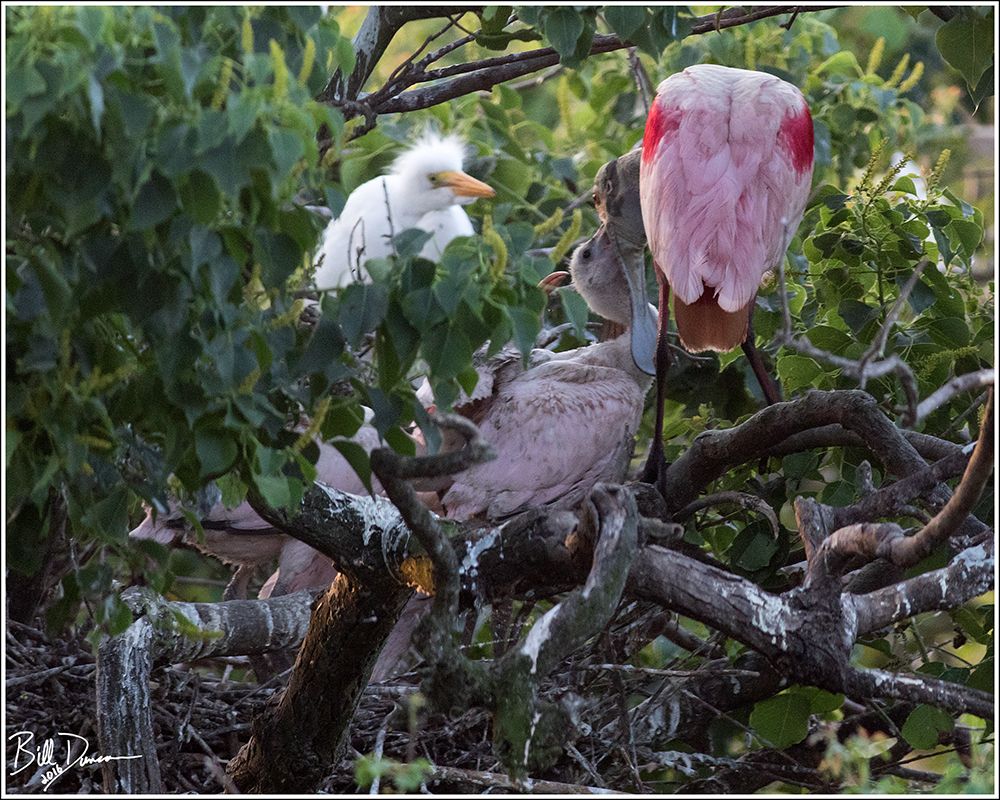
Roseate Spoonbills on nest – High Island TX – Rookery

Lighting was quite challenging – what little light available at this time of the morning was often coming from behind the subject.  Evening may have been better photographically but we had lots of ground to cover.  One of the sights that had me the most excited was a nesting Great-Egret.  These are birds that are routinely found during the warmer months in Missouri, but finding one feeding chicks was a real treat.

520a4049
Great Egret Nest – High Island TX – Rookery

Early in the dawn hours we were treated a Common Gallinule (Moorhead) hen bringing her chicks down to the water for a drink.

common-gallinule-rallidae-gallinula-galeata-520a4010
Common Gallinule – High Island TX – Rookery

Prehistoric looking Spoonbills would sometimes fly right overhead.

520a3802
Roseate Spoonbill – High Island TX – Rookery

I hope to visit High Island some spring during a nice fallout period one day, but I will be just as excited to watch and photograph at the rookery once more.

520a3789
Cattle Egret – High Island TX – Rookery

You can see more photos from the High Island rookery and the Texas Gulf Coast by visiting me on Flickr.

Until next time…
-OZB


The Fantastic Owls of Moorehead Park

520a0889
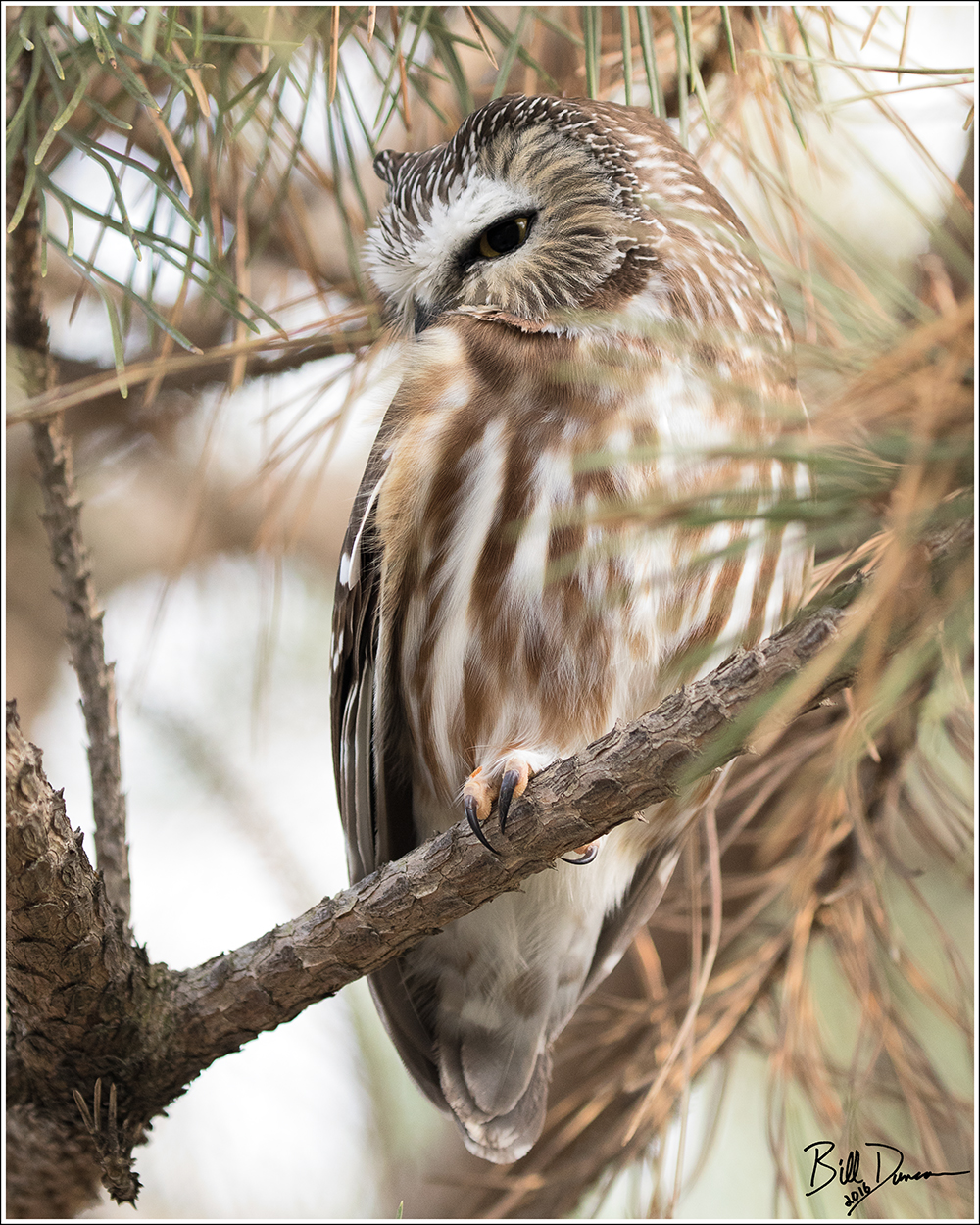
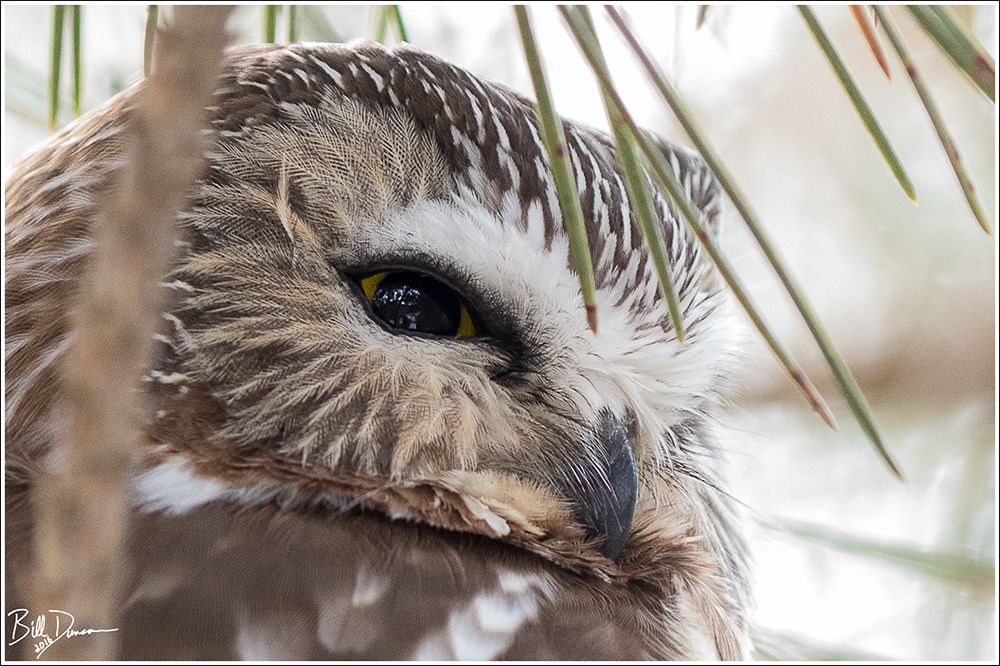
Northern Saw-whet Owl, Moorehead Park, IA

It was a pleasant surprise to be able to add two new owl species to my bird species photographed list over my long holiday break.  The second owl species and subject of this specific post is the Northern Saw-whet Owl.  Although this species can be found in the Show-me State during winter, I heard of a location along with a Radagast like wizard who could conjure up this species upon request within a mere eight-hour drive from our front door.  Having waited longer to do this than we should have, Sarah and I loaded up the Subaru and headed for the wilds of west-central Iowa.

dsc00153
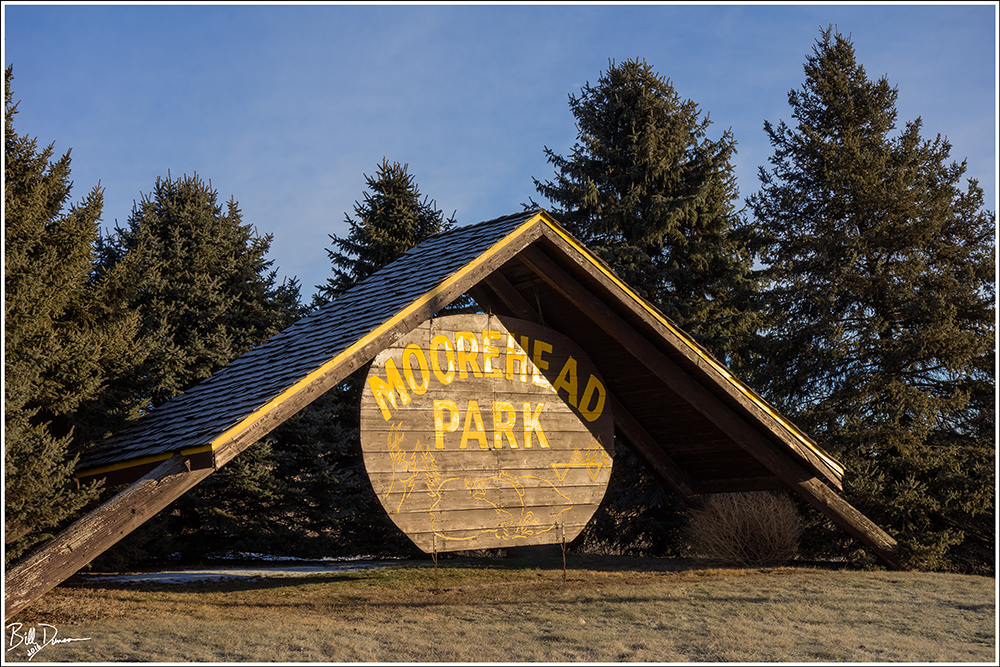
Moorehead Park – Ida Grove, IA

Don Poggensee is no mere wizard, but an accomplished photographer, pilot and naturalist who loves spending time during his retirement monitoring the park’s owls and showing them to anyone interested in getting exceptional looks and knowledge about these visitors from the north.  Don has been monitoring, helping in banding projects and showing folks (in the hundreds, if not thousands by now) the owls since 1989.  Sarah and I met up with Don one morning along with a couple of other birders, including The Birding Project’s Christian Hagenlocher.  We grabbed our cameras and binoculars – not that we would be needing these and followed Don to the specific roost tree that he knew the owl would be found.

31835782301_c13f09e857_o
In the right habitat. Left to right – Don, Sulli, Christian.

Winter weather in this part of the Midwest can be brutal and unpredictable.  In the days preceding our visit, temps bottomed out at ~ -25 F.  As Don explained to us, colder temperatures and heavy snowfalls often force the owls to find more suitable roost sites that he is typically not able to find.  We lucked out and had rather comfortable conditions for the short hike to the owl’s roost tree.

520a0876
Northern Saw-whet Owl, Moorehead Park, IA

Saw-whets are year-round residents across southern Canada and the northern U.S. but winters across most of the continental U.S.  They typically can be found roosting 3 – 12′ in conifers but can also be found in honeysuckle tangles in winter locations where their preferred conifers may not be abundant.  Banding programs, made up of mostly citizen scientists have only recently begun to shed light on the seasonal migratory movements of this species.  Along with locations and dates, these banding programs have shown that most migrants are females or immature males.  Adult males stay on breeding grounds during winter, presumably to hold onto prey-rich territories.

520a0909
Northern Saw-whet Owl, Moorehead Park, IA

In case you are wondering, Saw-whets got their name from the apparent similarities that one of their common vocalizations has to the sounds made by the sharpening, or whetting of a saw’s blade.  They actually make at least nine distinct vocalizations, including an ascending wail that is reminiscent of an Eastern Screech Owl.

520a0959
Vole Cleavers – Northern Saw-whet Owl, Moorehead Park, IA

At six to nine inches high, our typical response is to wish to put one in our pocket to take home.  They are quite cute.  However, to nearly anything that is their size or smaller, these guys must be regarded as horrifying.  While checking roost trees we found a number of their tiny pellets, each with surfaces studded by the stained bones of their rodent prey.

520a0974
Northern Saw-whet Owl, Moorehead Park, IA

Works used and recommended readings:

  • Weidensaul, Scott. Peterson Reference Guide to Owls of North America and the Caribbean. Houghton Mifflin Harcourt, 2015.
  • Dunne, Pete. Pete Dunne’s Essential Field Guide Companion. Houghton Mifflin Harcourt, 2006.

Until next time…
-OZB