"What a thousand acres of Silphiums looked like when they tickled the bellies of the buffalo is a question never again to be answered, and perhaps not even asked." -Aldo Leopold
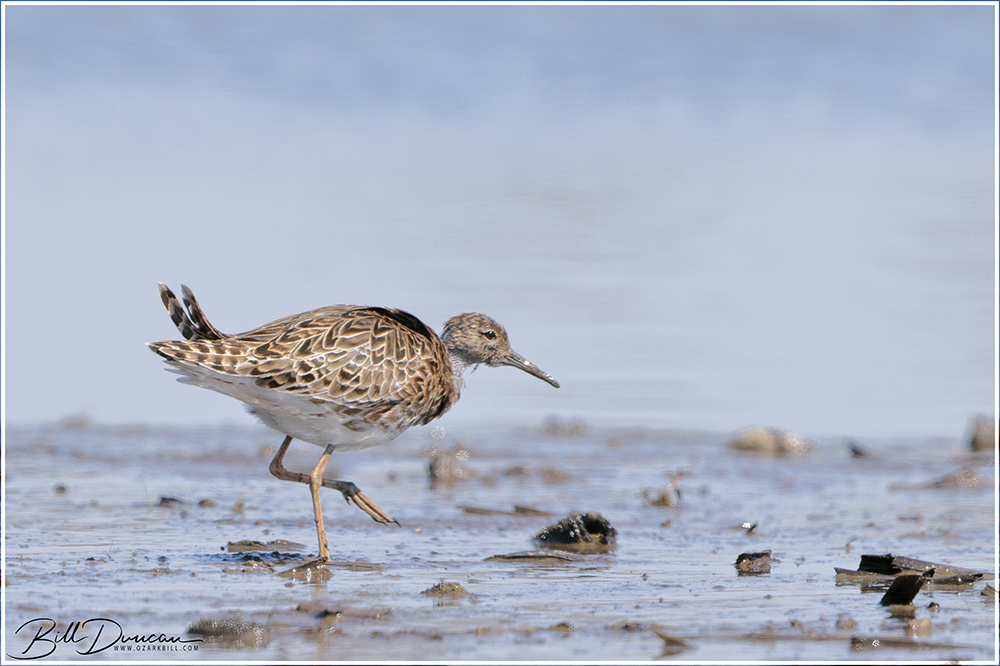
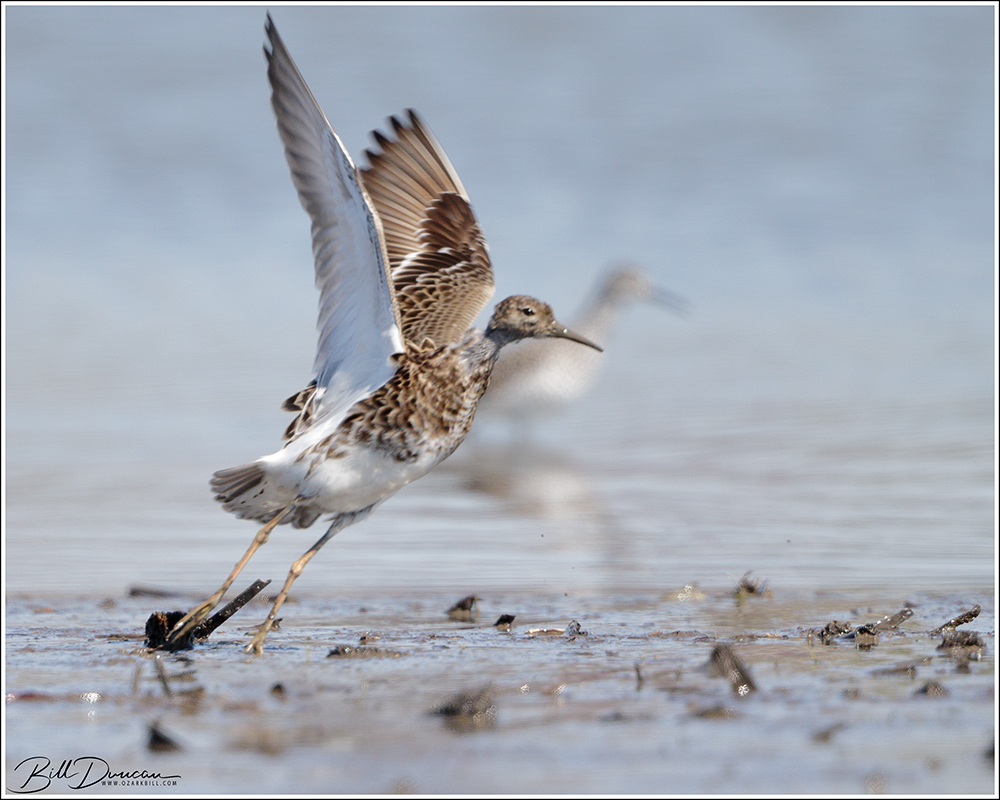
Ruff (Calidris pugnax) Camera settings: f/8, 1/1000 sec., ISO-640, 1120 mm focal length equivalent.
Never have I worked so hard to get mediocre photos of such an ugly bird. The sky was clear, the air cool and this combination created a terribly turbulent atmosphere over the mud flats the bird was foraging in, making it near impossible to get the sharpness desired in a photograph.
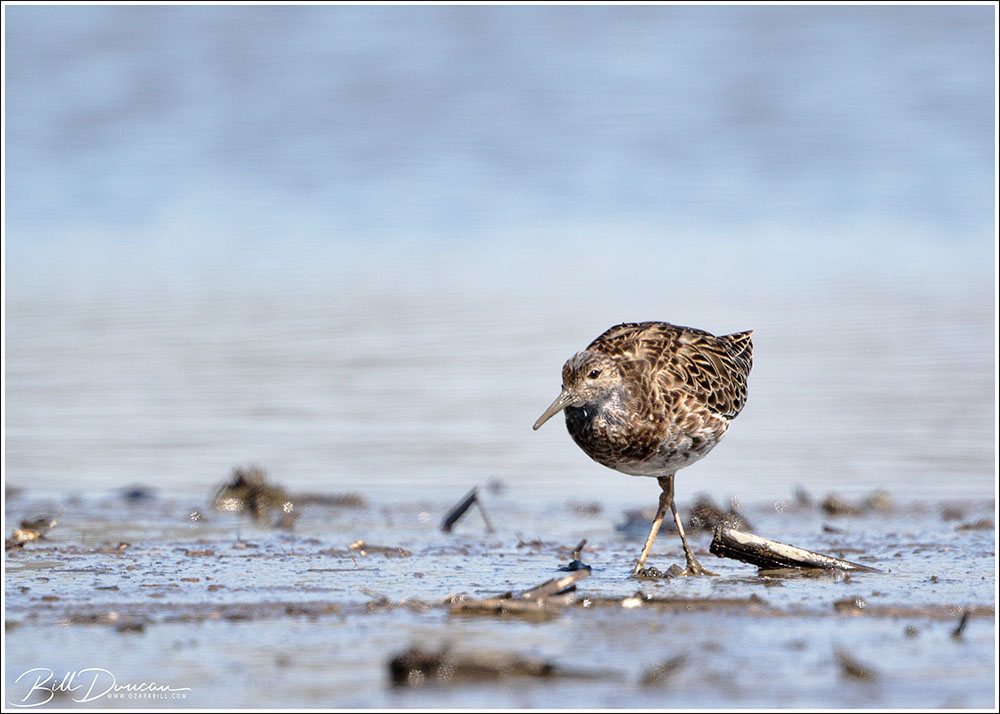
Ruff (Calidris pugnax) Camera settings: f/5.6, 1/1250 sec., ISO-400, 1120 mm focal length equivalent.
The Ruff is a bird that is native to Eurasia, visiting North America somewhat regularly. There have been sightings of this species in Missouri and Illinois in the recent past (at least three during this spring), but this is the first one I’ve been able to track down and photograph. Josh Uffman happened to discover this bird near Riverlands Migratory Bird Sanctuary on April 18th while we were in the area. I want to thank Josh who turned on the St. Louis birding community to this special visitor from overseas.
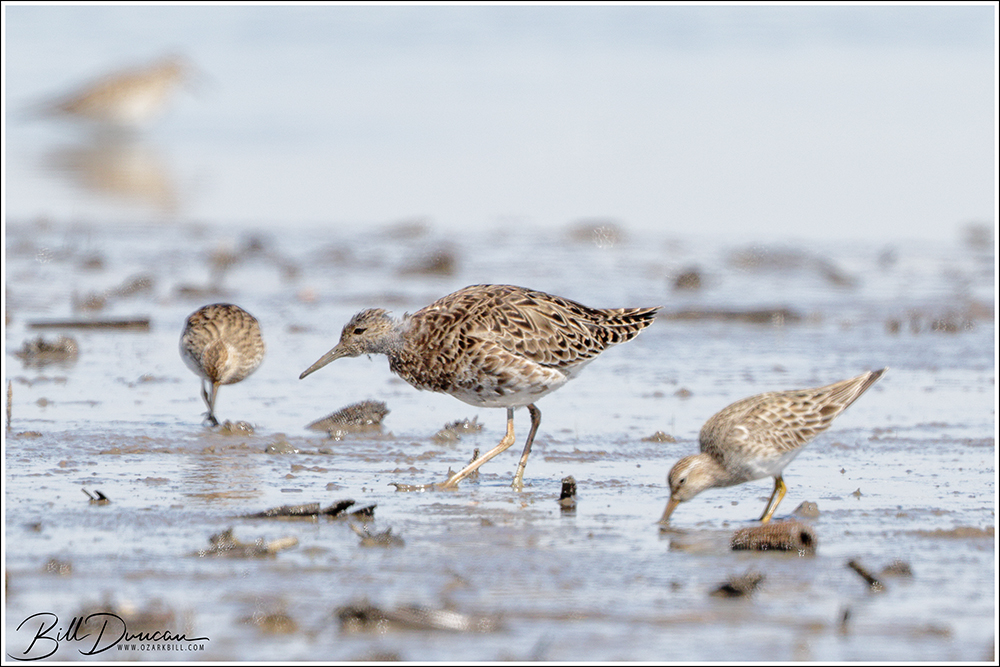
Ruff (Calidris pugnax) Camera settings: f/8, 1/1000 sec., ISO-640, 1120 mm focal length equivalent.
The Ruff is a member of the Calidris genus of shorebirds. Local members of this group include many of the sandpipers we are familiar with, like the peeps, Dunlin and Red Knot.
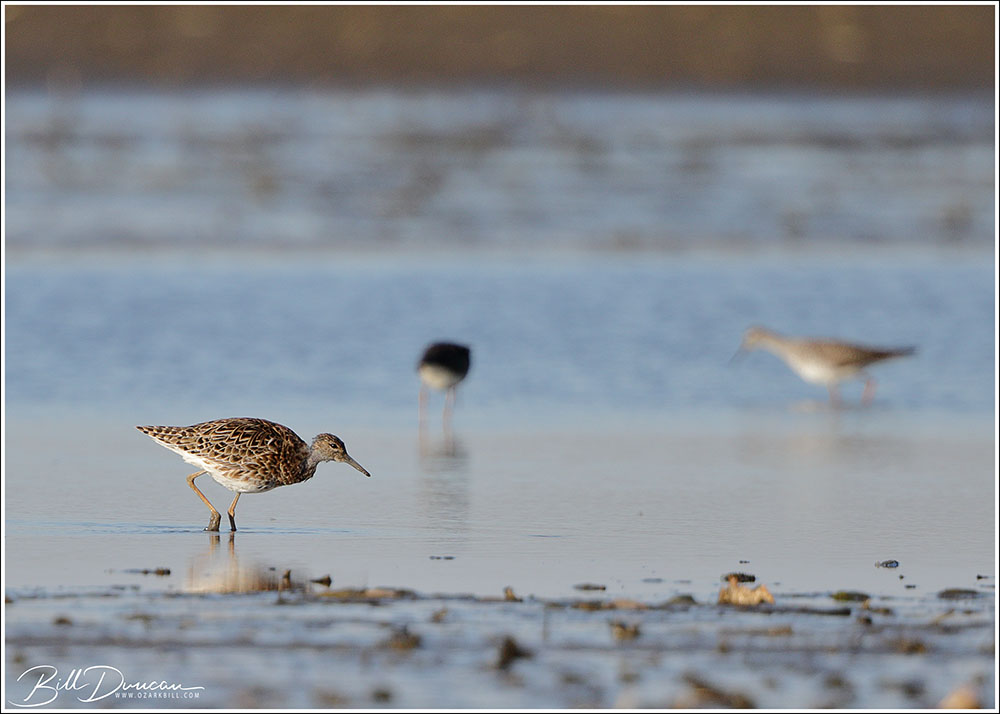
Ruff (Calidris pugnax) Camera settings: f/5.6, 1/1000 sec., ISO-200, 1120 mm focal length equivalent.
I know I called this particular bird ugly earlier in the post. However, if you are not familiar, look this bird up on the internet or your favorite bird guide. The birds in breeding plumage are absolutely stunning and their behavior on leks makes them a very special bird.
Ruff (Calidris pugnax) Camera settings: f/5.6, 1/1250 sec., ISO-400, 1120 mm focal length equivalent.
These were just a few of the couple thousand or so photos of this bird taken on that day. Most were boring shots of the bird foraging in the flooded farm field. Perhaps one day I’ll be fortunate enough to see these guys on their leks.
Whooping Cranes Camera settings: f/6.3, 1/3200 sec., ISO-320, 700 mm focal length.
I have traveled to Kaskaskia Island, IL at least 7 times in the past four years in hopes of being fortunate to find these beautiful birds in close distance to a road. Most visits result in being able to find them, but most often they are a football field or more away. Back in early January 2020, Sarah and I finally won the lottery.
Whooping Crane Camera settings: f/8, 1/2000 sec., ISO-250, 700 mm focal length.
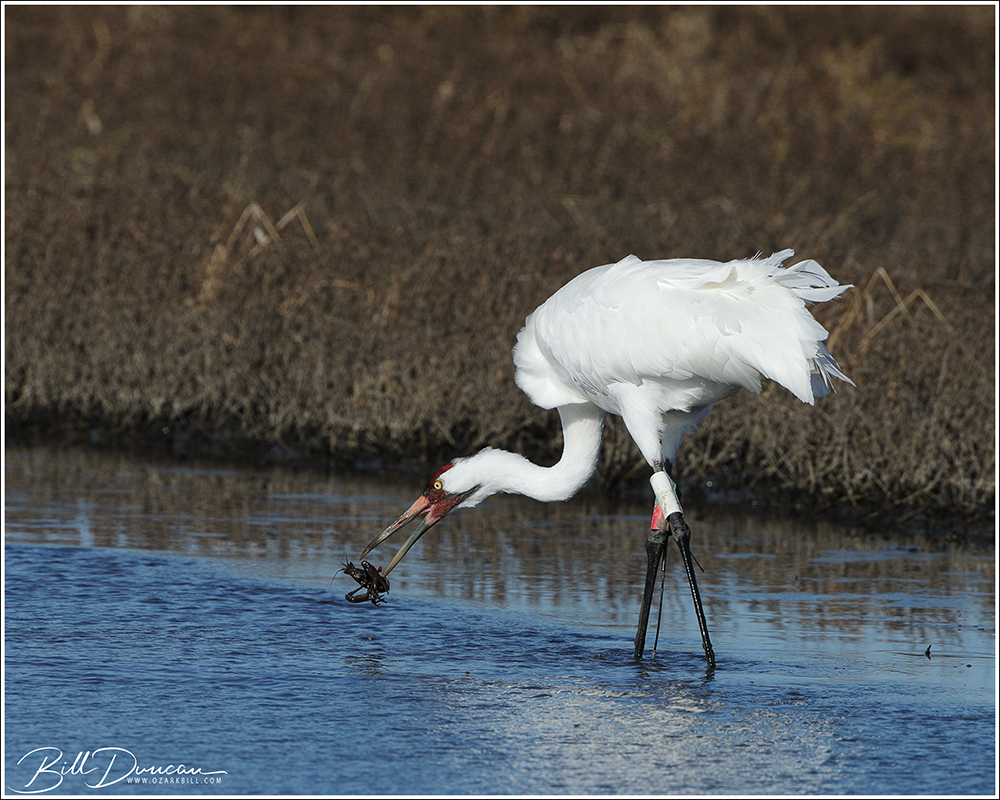
We found these birds quite close to the road and actively foraging in the permanent drainage canals of this river valley farming area.
Catching crayfish. Camera settings: f/8, 1/2000 sec., ISO-250, 700 mm focal length.
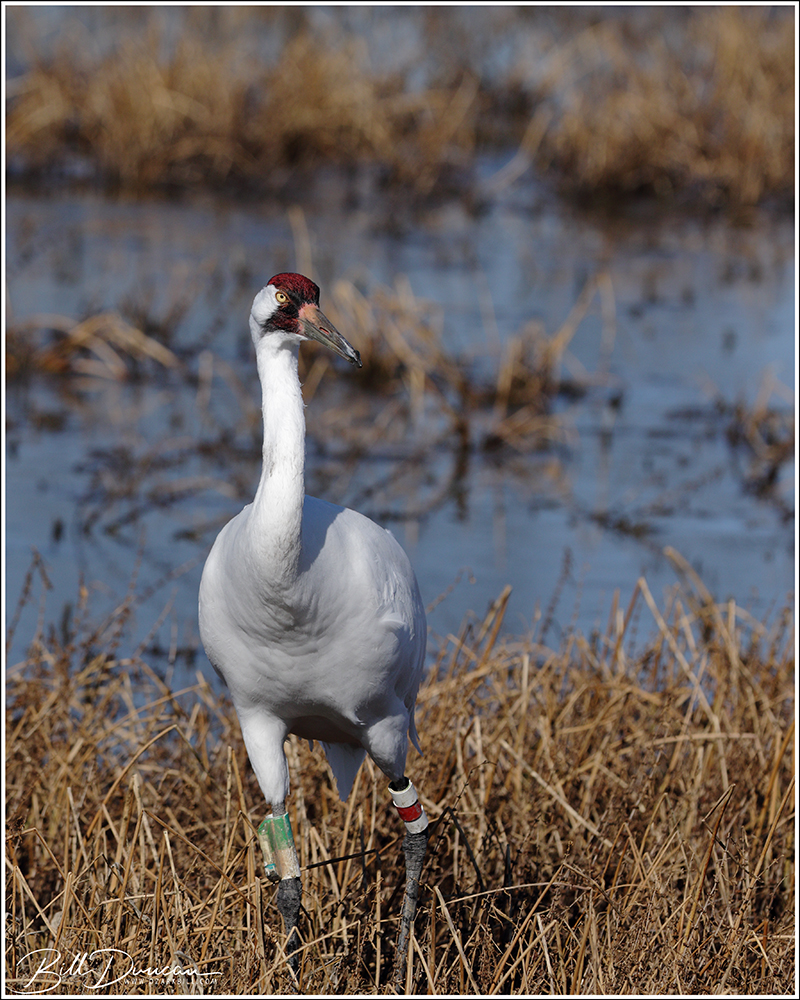
Whooping Cranes are still endangered; however, thanks to the USFWS/USGS captive breeding and reintroduction program, this species has come back from the brink of extinction. In 1941 the species was down to only 21 individuals due to rampant conversion of natural habitat to farmland, coastal development, and unregulated hunting. The captive breeding program was initiated in 1967 and today there are now more than 800 birds in the wild.
Catching frogs in January Camera settings: f/8, 1/2000 sec., ISO-320, 700 mm focal length.
Captive breeding and reintroduction has now been transferred from the federal institutions to a good number of other organizations who will continue towards the goal of making the Whooping Crane self-sufficient again. This efforts is not completely without problems as there have been and continue to be problems associated with getting the reintroduced birds to migrate, interact and successfully nest.
Whooping Crane Camera Settings: f/6.3, 1/2000 sec., ISO-250, 420 mm focal length equivalent.
A case in point may be the recent history of these birds in the state of Missouri (only the 8th record in MO since 1953). The first reports of a four-bird cohort observed in Columbia MO was in May, 2016. These were the same birds observed over-wintering in Kaskaskia Island, IL. These four birds were from a release who then strayed from their population that was following the traditional Wisconsin to Florida migration route. Since then at least two of the original four birds have died. Hopefully these two (I have been told, but have not yet been able to confirm that this is a sexual pair) will get back on track one day and do their part in propagating the species.
Whooping Crane Camera Settings: f/8, 1/2000 sec., ISO-125, 700 mm focal length.
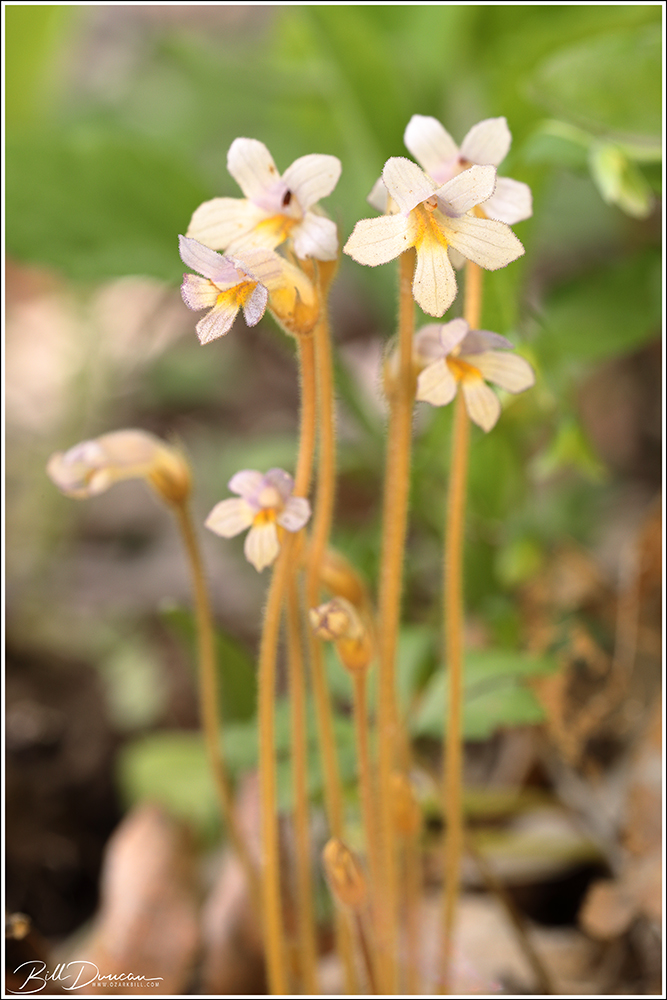
I’ve been fortunate enough to find time to get out this spring and add some spring ephemeral wildflowers to my photographic list. Englemann Woods NA near Wildwood, MO has been a great place for this along with other nature observations. Today’s photo is Trillium flexipes. It is one of the white trillium that can be somewhat confusing to identify properly. I found a number of associated common names, but ‘nodding trillium’ seems to be the most commonly used.
Nodding Trillium Camera settings: f/7.1, 1/25 sec., ISO-640, 90 mm focal length. Used Canon’s 90 mm tilt-shift macro lens with ~7° right tilt.
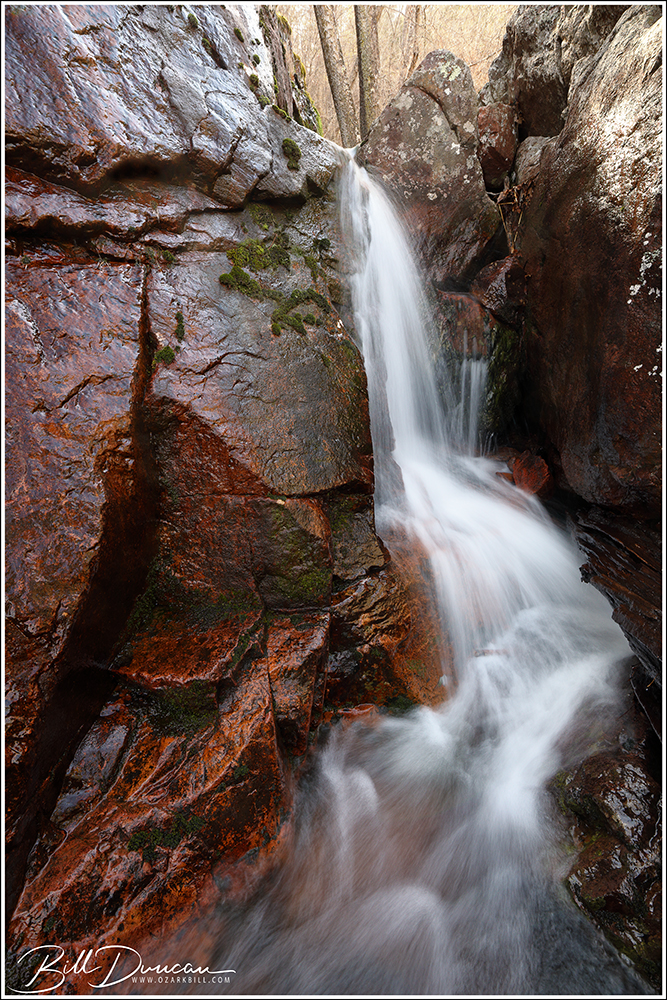
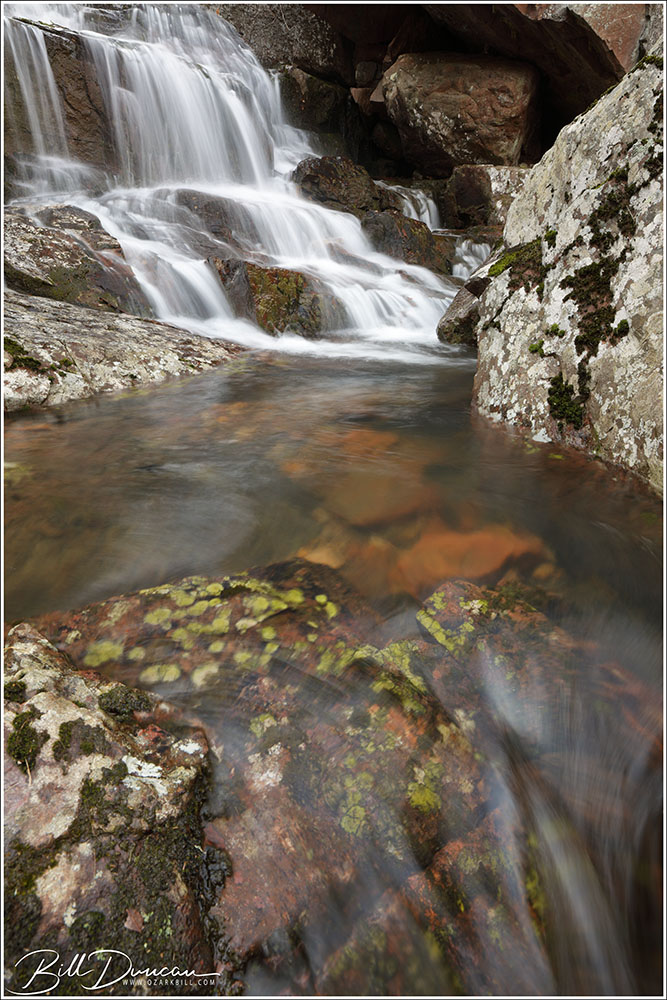
Black Mountain Cascades, March 2020 Camera settings: f/11, 1/3 sec., ISO-250, 17mm focal length.
I’ve posted images of the cascades on Black Mountain before. After some good rains, Casey and I visited this past March with hopes of making it to the top. This is not an easy hike, but Casey had not yet seen most of the cascades. This was our intention, but it was quickly realized that the overcast afternoon we were promised was not going to be. So, we utilized the few clouds remaining to the best of our ability and climbed high enough to find some falls hidden behind canyon walls that blocked the harsh afternoon sun.
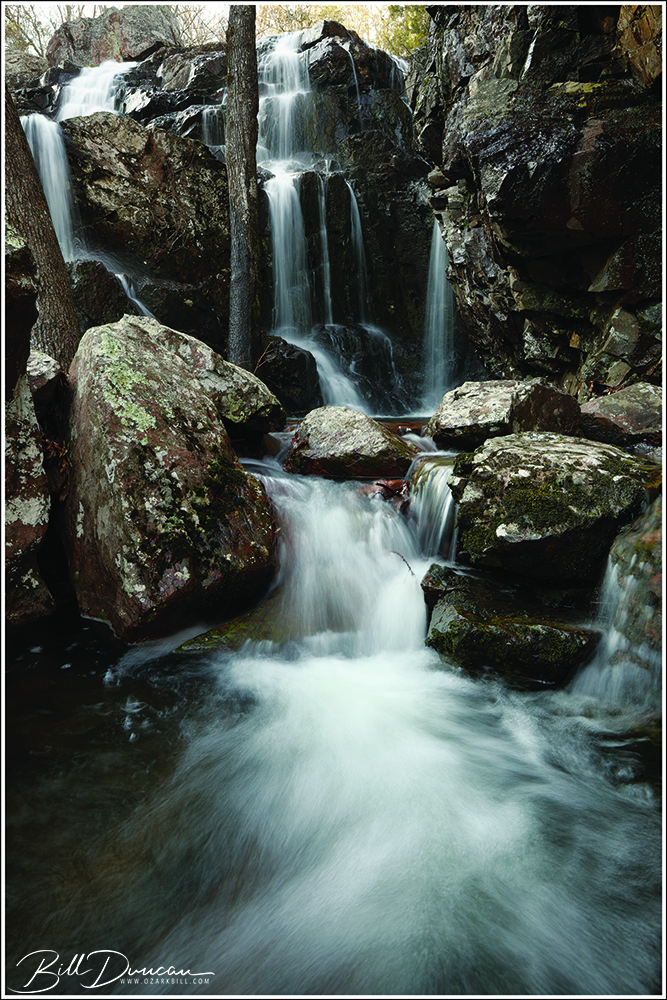
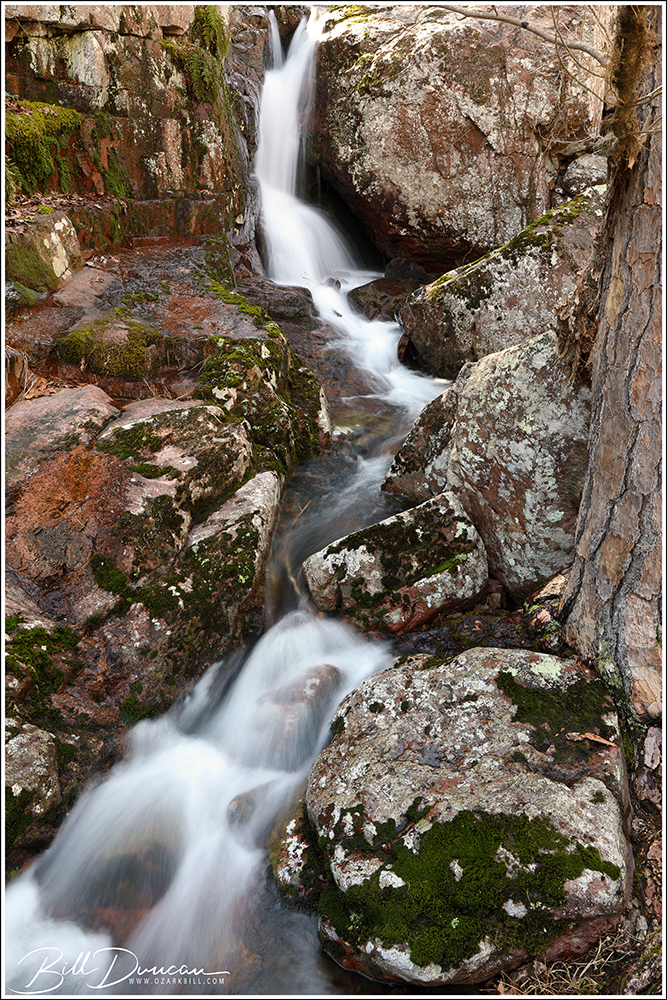
Black Mountain Cascades, March 2020 Camera settings: f/11, 1/2 sec., ISO-100, 24 mm focal length.Black Mountain Cascades, March 2020 Camera settings: f/11, 0.6 sec., ISO-100, 24 mm focal length.Black Mountain Cascades, March 2020 Camera settings: f/14, 1/2 sec., ISO-200, 25 mm focal length.
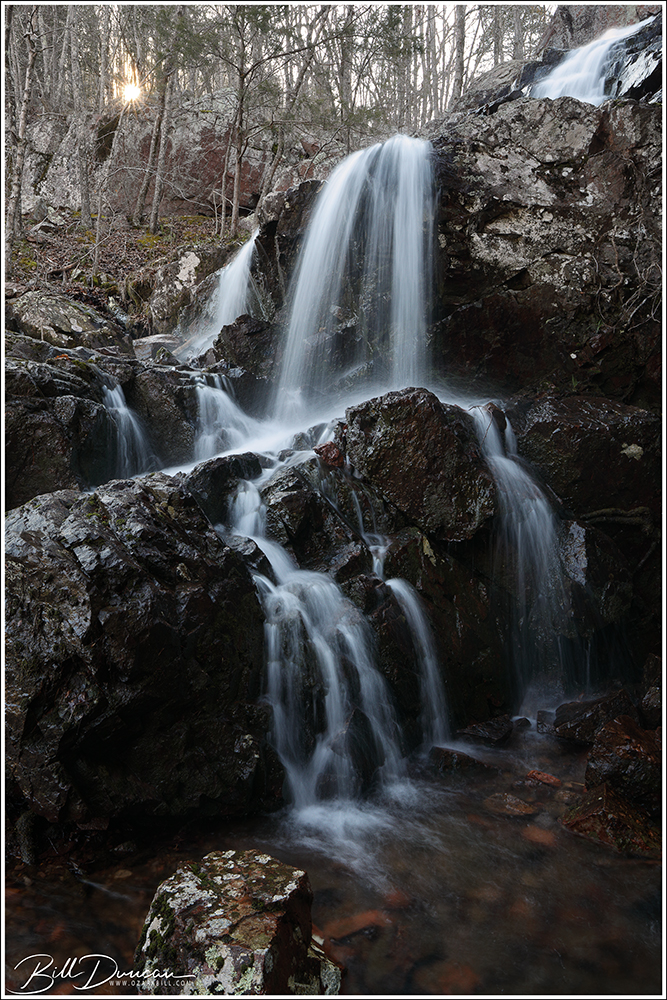
Black Mountain Cascades, March 2020 Camera settings: f/14, 1/2 sec., ISO-100, 20 mm focal length.
This post is a modified article that was originally published in the Webster Groves Nature Study Society’s journal, Nature Notes (February, 2020, Vol. 92, No. 2).
The alarm on the phone sounds off at 4:00 am. You have a quick, light breakfast but no coffee. Making moves required during the act of recycling that coffee would be detrimental to your goals this morning. You’ve packed the car the night before, so you simply need to wash your face and throw on the required number of layers it will take to stay warm enough during your several hours sit. This requires some critical thought as morning temperatures during the rut can often be in the teens or twenties.
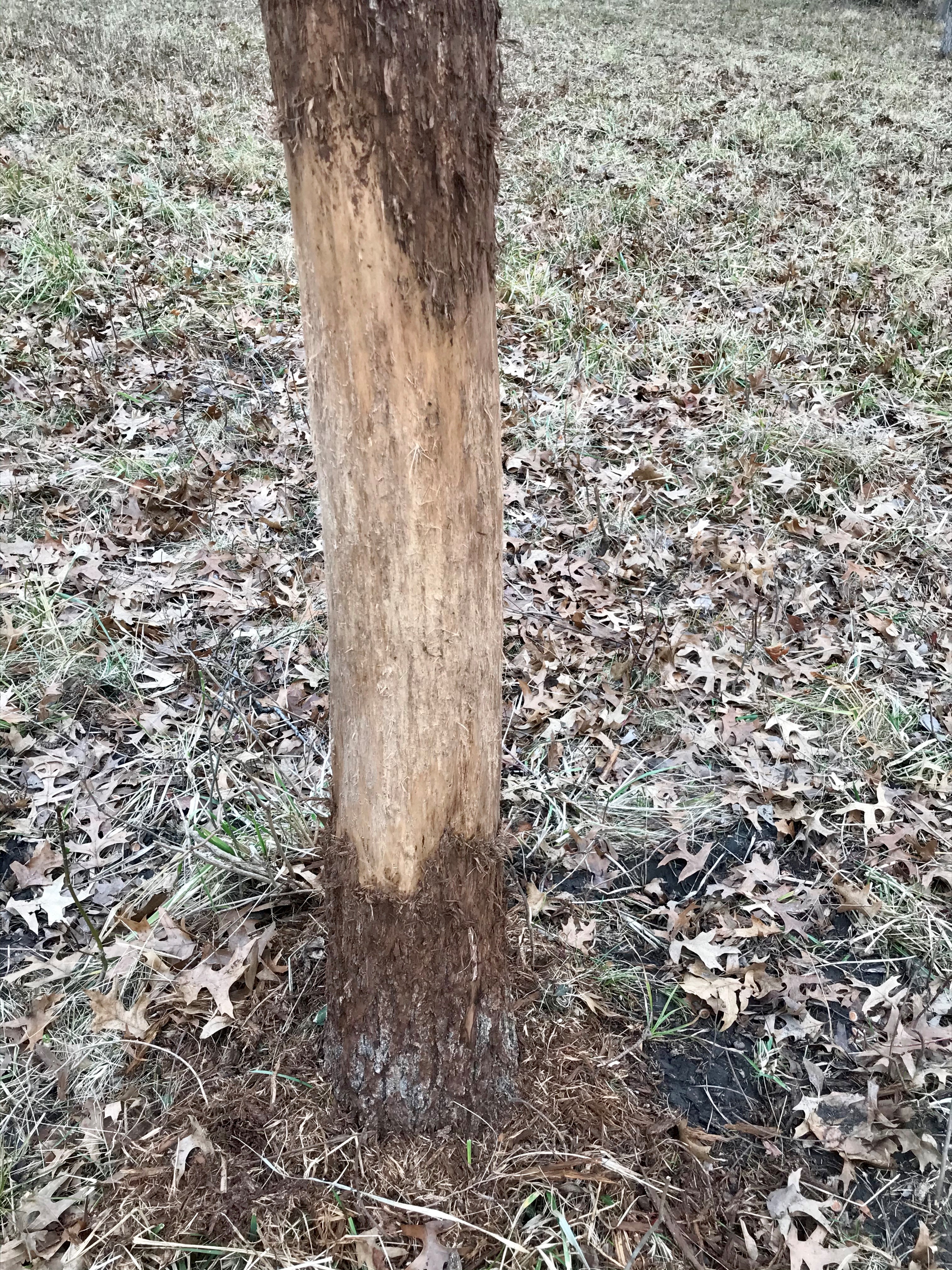
You arrive at the site by 5:30 am and are under cover at your pre-scouted location by 6:15 am — first light. Sunrise and the golden-hour will come in about 30 minutes. You picked this location due to heavy deer traffic signified by sign such as tracks and scat, scrapes and rubs. You put your back to the rising sun to take advantage of the beautiful golden-hour light that will be splashed across the scene. You also considered the potential background for your photos. You made sure there is plenty of space between your subjects and a natural, potentially autumn-colored background to get that creamy, out of focus quality that helps your magnificent subject stand out. Remember, the key to improving your nature photography is to make the photo, not simply take the photo. Previsualization and planning are often critical!
Arriving prior to first light brings the best potential for being unnoticed in your blind. However, deer are often just as active at night and sometimes you may find your spot is already occupied by your subjects! Don’t worry too much; you may spook those deer out of the area, but there are plenty of others who will likely visit these hangouts before the morning is over. Where you choose to photograph will be important in this respect. Take advantage of photographing in areas that are closed to hunting, like parks and sanctuaries. Here the deer are very accustomed to people and our scents, showing little fear. Often, during the rut, younger bucks may be curious and will move closer to you. You will typically need to work harder to get closer to the wearier does and old, veteran bucks who have been around the block a few times. In non-hunting areas, you can often get close enough to your subjects to make meaningful photographs by simply having an early-morning walk around with a longer telephoto lens (e.g. 300-600 mm focal length).
Like clockwork, at 6:30 am every morning, large flocks of blackbirds move overhead from the west, chasing the rising sun in search of feeding grounds. Photographing the rut is very similar to hunting. Deer hunters in our area typically use tree stands. This higher elevation provides advantages in being able to see greater distances, being out of direct eye-line of the deer and aids in dispersing your scent, which is frequently a give away of the pursuer. When hunting with a camera and lens, you need to stay on level ground and shoot the deer at eye level or lower.
A method Miguel Acosta and I like to use is hiding in a blind (we like the portability of ‘throw-blinds’) along well-established deer trail or nearby communal rub or scrape areas. This will require using camouflage, blinds or similar methods to break up the human form. In the types of areas described above, you need not worry too much about your scent. Deer have very strong sense of smell and in the middle of an unpopulated forest, your odors can very easily give you away. But, in areas like parks where people and deer are often found in close proximity, your own scent is less likely to alarm the deer and thereby allow you to get much closer.
Around mid-morning a Red-shouldered Hawk, perched above our location, vocalizes and a mixed-species flock of songbirds moves into our copse of trees. Since we have our large lenses, we try our hands at photographing Chickadees and Titmouse. Although scent and wind direction may not play an important role in this setting, being quiet is important for getting those close and intimate shots. I recommend doing everything you can to keep your noise to a minimum. Try and chose gear without Velcro or other noisy fasteners. Keep your voices to a minimum and try not to move frequently. If available on your camera, choose the “silent shutter” setting. Many dSLR cameras have this setting that lowers the volume of the mirror flapping. Consequently, this will lower the frame rate of the camera, but this is preferable to spooking your subjects before you get your shots. New mirrorless cameras lack the mirror box of their older brethren and can shoot very quietly at high frame rates.
Later in the morning I awake from a nap to the sound of Wild Turkeys vocalizing. I quickly realize that a small flock have wandered near our location and Miguel is offering them some verbal enticement to come a little closer to our shooting lane. It didn’t work, but the fact they were within ten yards of our location offers further proof that our blinds and technique work to get us closer to wild animals. Until recently, I had never given our North American game species much thought as a subject of natural history study. I’m sure that not growing up as a hunter or outdoorsman has had an influence on this. Over the past couple of years, I have fallen hook, line and sinker into learning everything I can about white-tailed deer and finding ways to best capture them with the camera. Miguel and I have much to learn and we are eager in making more photographs, capturing their different behaviors and at different times of the year.
For recommended reading about the rut and other aspects of the lives of white-tailed deer, I recommend reading any books you can find by authors Leonard Lee Rue III and Mark Raycroft.
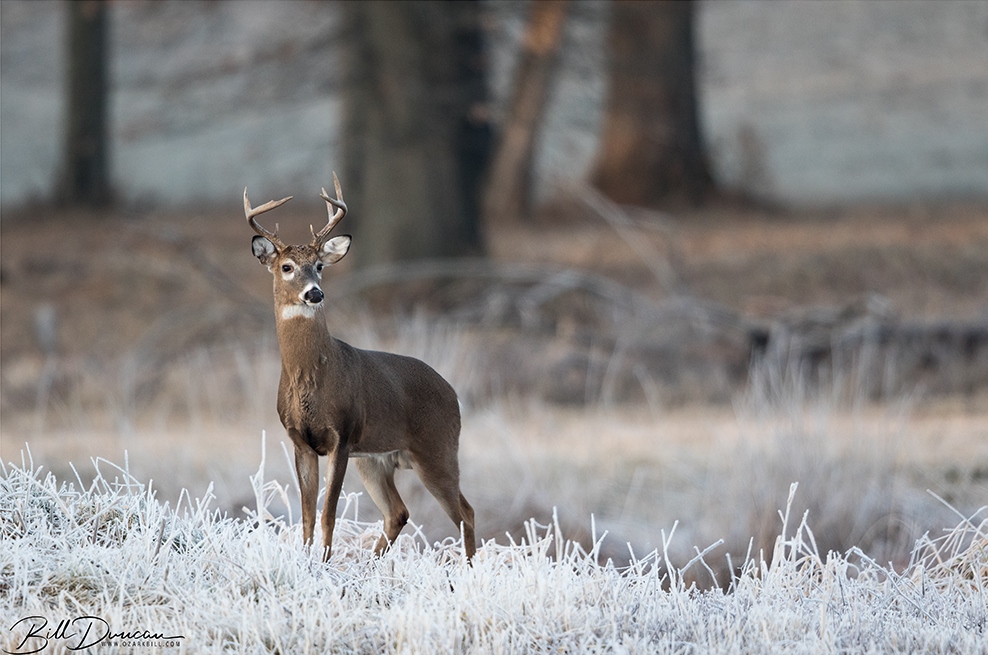
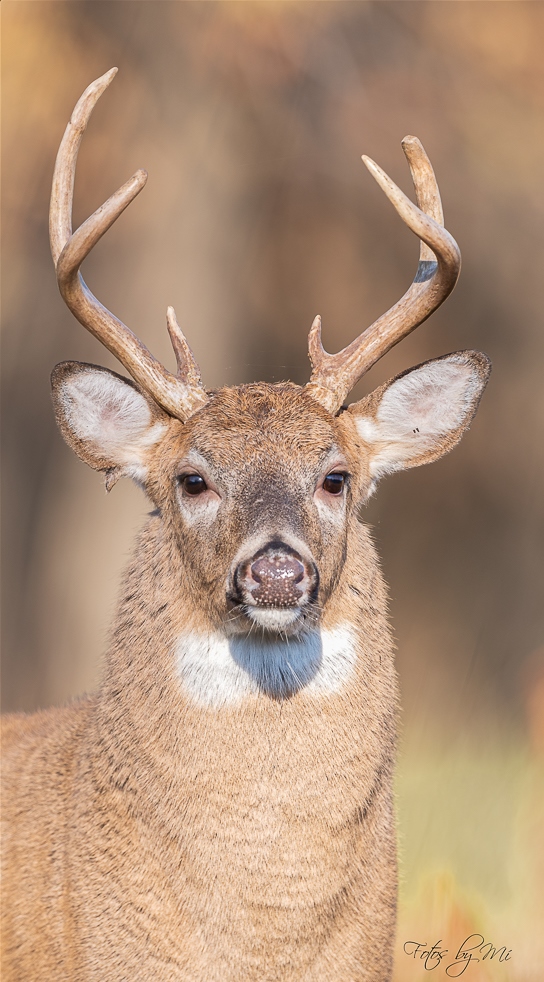
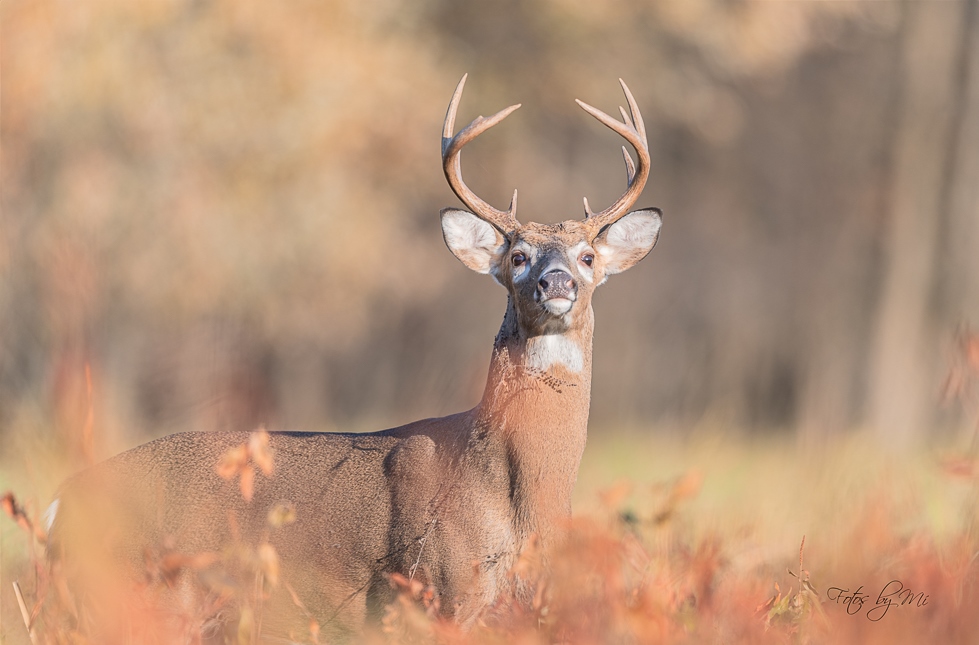
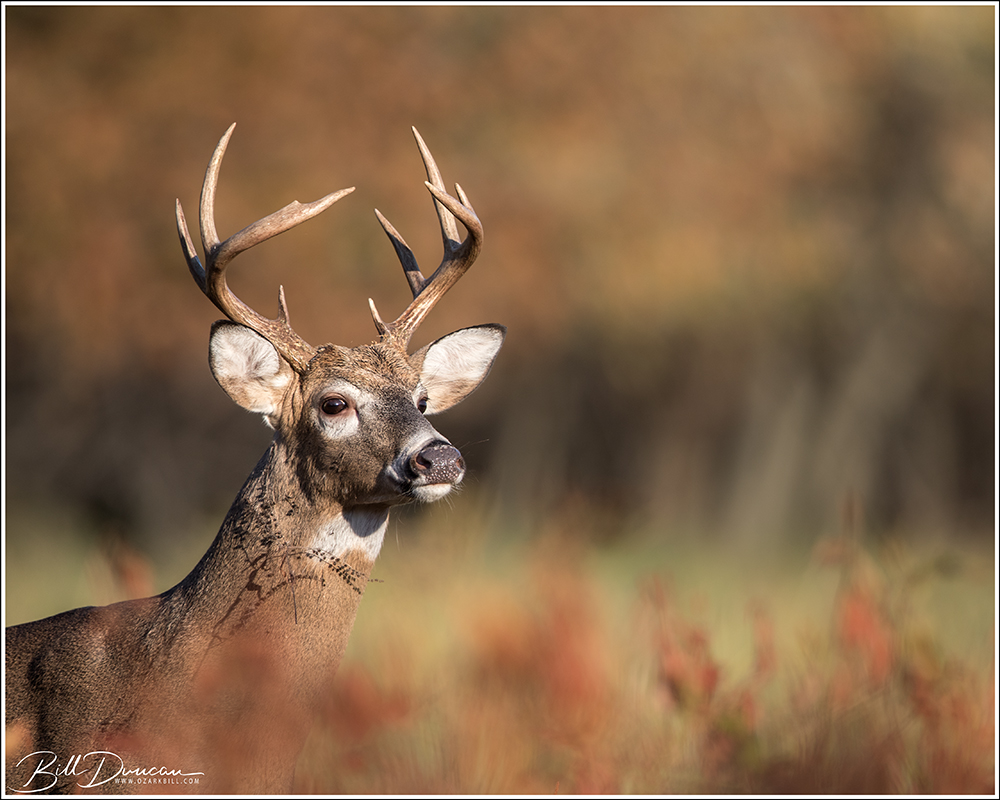
For those just getting into photographing the rut, grabbing your camera and walking around the right park can yield some satisfying results. Photo by Bill Duncan.It was once believed that spike bucks were always the young bucks of the year. Now most believe that genetics and nutrition play major roles in antler development. Photo by Miguel Acosta.Most of the bucks that came near our blind were likely 1.5-years old. This bruiser, despite his relatively weak rack is likely older than this. Photo by Miguel Acosta.A cleared patch of ground known as a ‘scrape.’ Urinating and depositing materials from different scent glands, deer use these as informational signposts. Photo by Bill Duncan.Antler rubs are also important means of communication by bucks. Setting up near active rubs and scrapes can be very productive when hunting deer with camera or weapon. Photo by Bill Duncan.This inquisitive buck, that I have taken to calling “Bright Eyes”, is often available for posing for our cameras. Here you can see him using his most important sensory organ, trying to figure out the strange scents coming from our direction. Photo by Miguel Acosta.During the rut, bucks will often increase their typical home range. In mid-November, this buck was found just outside the author’s back door. Photo by Bill Duncan.Even the little guys get worked up during the rut, trying at every opportunity. This doe, however, wants nothing to do with this pathetic creature. Photo by Bill Duncan.Photographing in a blind can be a great way at getting much closer to your subject. At times we wondered if the deer might walk over top of us! Photo by Bill Duncan.Whether you hunt with a weapon or camera, all hunters are looking for their own particular trophy. Photo by Bill Duncan.
This post is a modified article that was originally published in the Webster Groves Nature Study Society’s journal, Nature Notes (January, 2020, Vol. 92, No. 1).
Finding the orchid, Triphora trianthophora (three-bird orchid, nodding pogonia), during open bloom can be somewhat of a chore, particularly among us weekend warriors. Casey Galvin and I were both intrigued about the possibility of getting photographs of this diminutive and gorgeous orchid since learning of their discovery at Babler State Park by the WGNSS Botany Group led by Nels Holmberg, John Oliver and others in 2018. The following descriptions and photographs are anecdotal and were not collected using rigorous scientific methodology.
Phenology
There are several reasons it is challenging to find this extremely ephemeral plant in bloom. First, being partially saprophytic, the plants exhibit periodic dormancy and may not send up above-ground shoots every year, persisting instead as subterranean tubers for extended periods (Homoya, 1992). Even when they do produce stems and leaves, there is no guarantee the plants will flower in a given year. Additionally, when they do flower, any one bloom is open for only a few hours during a single day.
Exhibiting a phenomenon known as thermoperiodicity, a group or population of these plants are synchronized to open mature buds on the same day. This first wave of synchronous blooming is reportedly induced by a drop in minimum daily temperature of at least three degrees over two or more consecutive days. Following another 48-hour period, all mature buds within the population will then open on the same day (Luer 1975). Being skeptically minded, this was something I wanted to observe for myself.
Beginning in late July, Casey and I began monitoring the easier to get to population at Babler State Park. The first wave of synchronous flowering occurred on August 3rd. We unfortunately missed this but know the exact date because of visits on days immediately before and after this date. Looking into historical temperatures collected from the closest publicly-available weather station (Babler Park Estates – KMOBALLW37) revealed the initial blooming date fit the required temperature pattern perfectly (see attached figure). I continued monitoring and collecting flowering data and observed two more large flushes of synchronized blooms along with three days interspersed where only 3–10 stems/plants opened flowers. For subsequent synchronized days, I did not observe a coinciding drop in temperature as described above. I assume that the trigger for the initial bloom works to synchronize the population and subsequent larger bloom days are consequently synchronized due to all plants ‘running ahead’ at the same rate. However, there could potentially be some other unknown environmental triggers that are playing a hand here.
The first synchronous bloom occurred on August 3rd, approximately 48 hours following a four-day drop of approximately seven degrees in minimum daily temperature. Data collected from https://www.wunderground.com/ accessed on 12/06/2019. No longer “nodding”. Triphora trianthophora flowers open towards the sky en masse on just the right day. Photo by Bill Duncan.Arrive a day too late and this will be what you find. Photo by Casey Galvin.Much like the flowers, these developing pendulous seed capsules will become erect at maturity. Photo by Bill Duncan.
Pollination
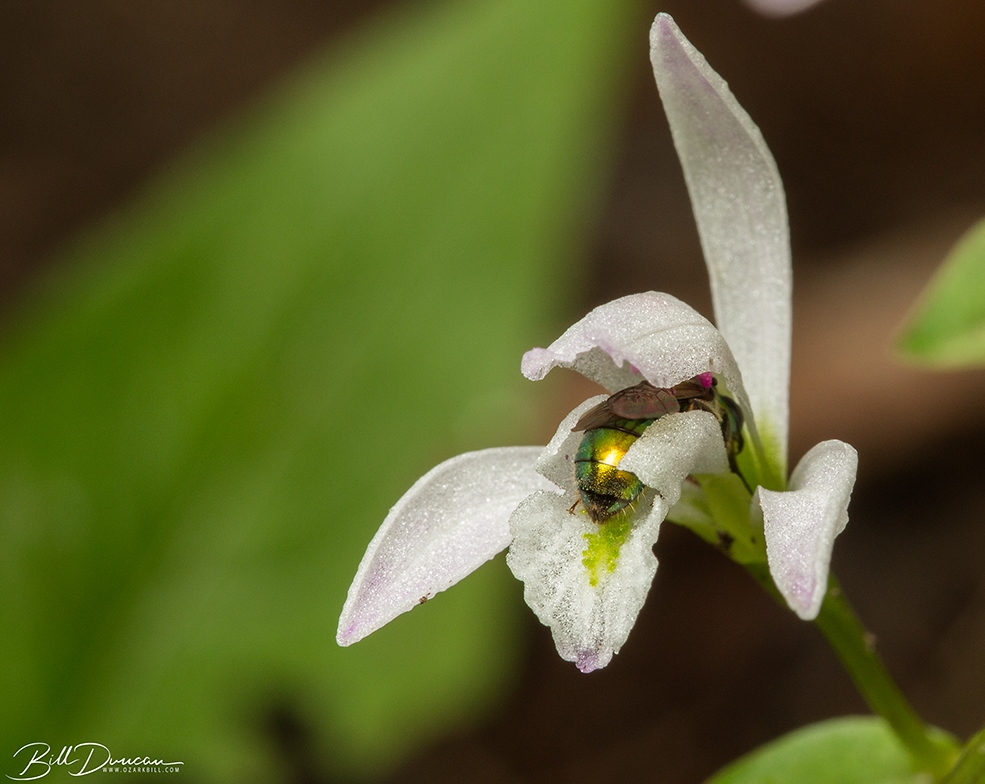
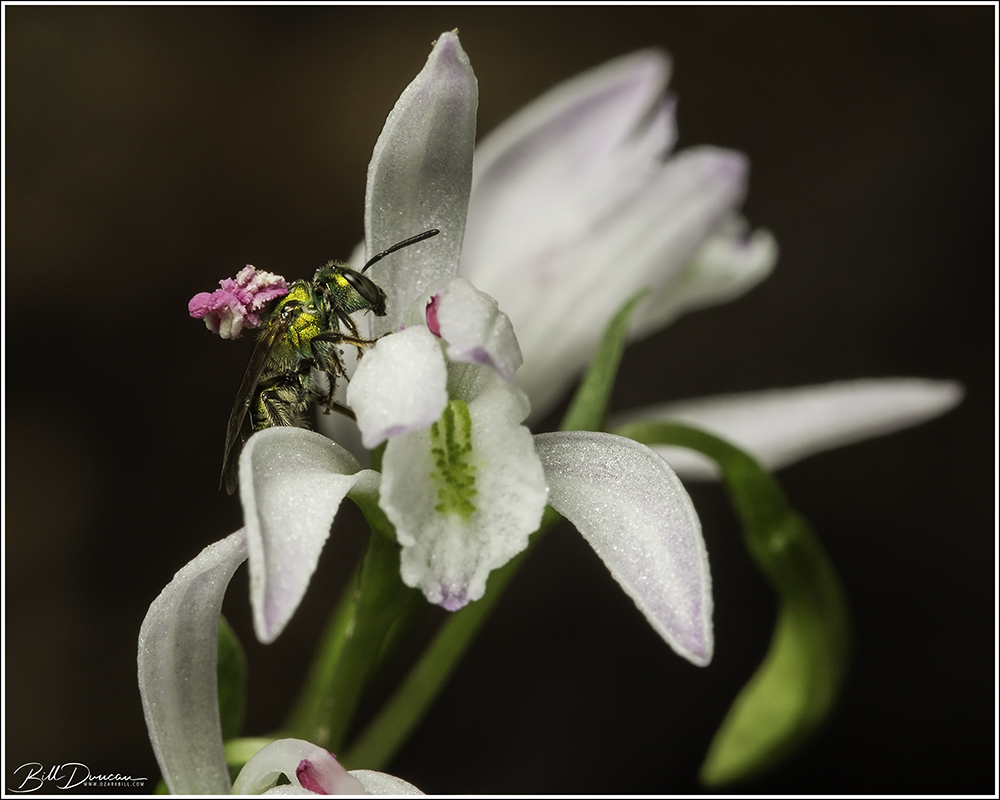
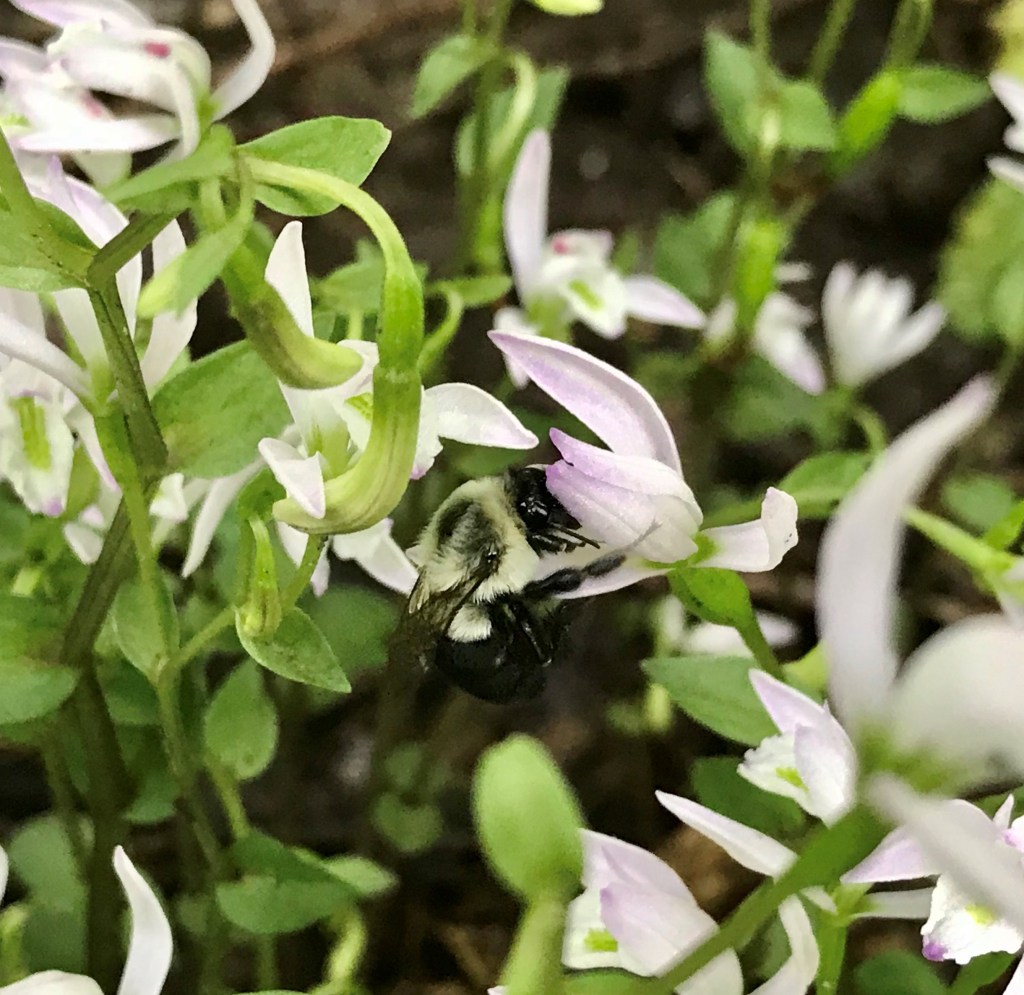
Halictid bees have been reported to be the primary pollinator for this species (Luer 1975). I had this in mind as I observed and began taking photographs while visiting on a large bloom day but doubted I would be fortunate enough to observe or photograph a potential pollinator visit. However, patience allowed me to do just that. I first observed visits by small flies and Bombus impatiens. Although Williams (1994) reported that Bombus have acted as pollinators of this species, I did not observe any of these visitors with attached pollinia during the 10-15 flowers I watched them visit. Eventually, I observed three different Halictid bees as they visited multiple flowers and observed these were heavily attached with pollinia. As described by Williams (1994), seed capsule production (successful pollination) is a relatively rare event in this species. Nevertheless, this was a treat to observe and photograph.
Nectar thieving flies and developing buds can be seen along with an open flower. Photo by Casey Galvin.Like a hand to a glove… This halictid bee (Augochlora pura) does not yet realize the burden it will be asked to take in exchange for sweet nectar. Photo by Bill Duncan.Removing itself along with attached pollinium requires some gymnastic effort. Photo by Bill Duncan.Removing itself along with attached pollinium requires some gymnastic effort. Photo by Bill Duncan.If you had to make this bee anymore attractive? Augochlora pura with attached colorful Triphora trianthophora pollinium. Photo by Bill Duncan.Bees in the genus Bombus have been described as active pollinators of Triphora trianthophora. I watched several B. impatiens each visit multiple flowers and observed no attached pollinia. Photo by Bill Duncan.
REFERENCES
Homoya, M.A. Orchids of Indiana. Indiana University Press, Indianapolis, Indiana, USA.
Luer, C.A. 1975. The Native Orchids of the United States and Canada. New York Botanical Garden, Bronx, New York, USA.
Williams, S.A. 1994. Observations on reproduction in Triphora trianthophora. Rhodora 96:30-43.













 A Thousand Acres of Silphiums