"What a thousand acres of Silphiums looked like when they tickled the bellies of the buffalo is a question never again to be answered, and perhaps not even asked." -Aldo Leopold
In population biology the term “refugium” is used to describe a location that supports an isolated population of a once more widespread species. Refugia are almost always referenced in regards to climate. For example, a plant species that has found refuge in a cool and moist valley in a geography that is mostly inhospitable for its survival. I have come to discover another important example of this term in my own suburban neighborhood and examples of which can be found in most major metropolitan areas.
The photos I am sharing today come from the woodlot refugia that supply critical habitat for a variety of organisms that find themselves in the relative ecological desert known as the suburbs.
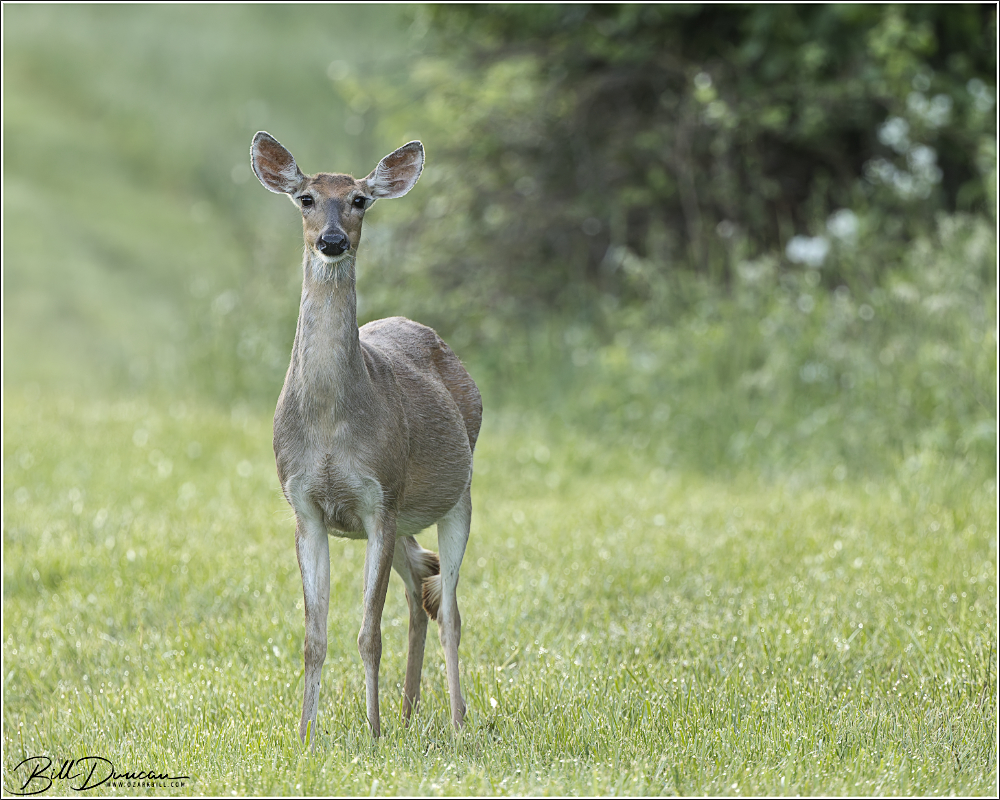
Although white-tailed deer will leave the woodlots to feed in our suburban lawns at night, they use these refugia for much of their feeding and daytime refuge.
Another mammal I frequently encounter on my early morning hikes through the woodlots is the Virginia opossum.
Woodlot refugia are green oases for migrating songbirds looking for food and shelter during their stopovers. There are also resident nesting birds that rely heavily on this resource as well.
Barred Owls (pictured above) and Great-horned Owls reside and nest in woodlot refugia.
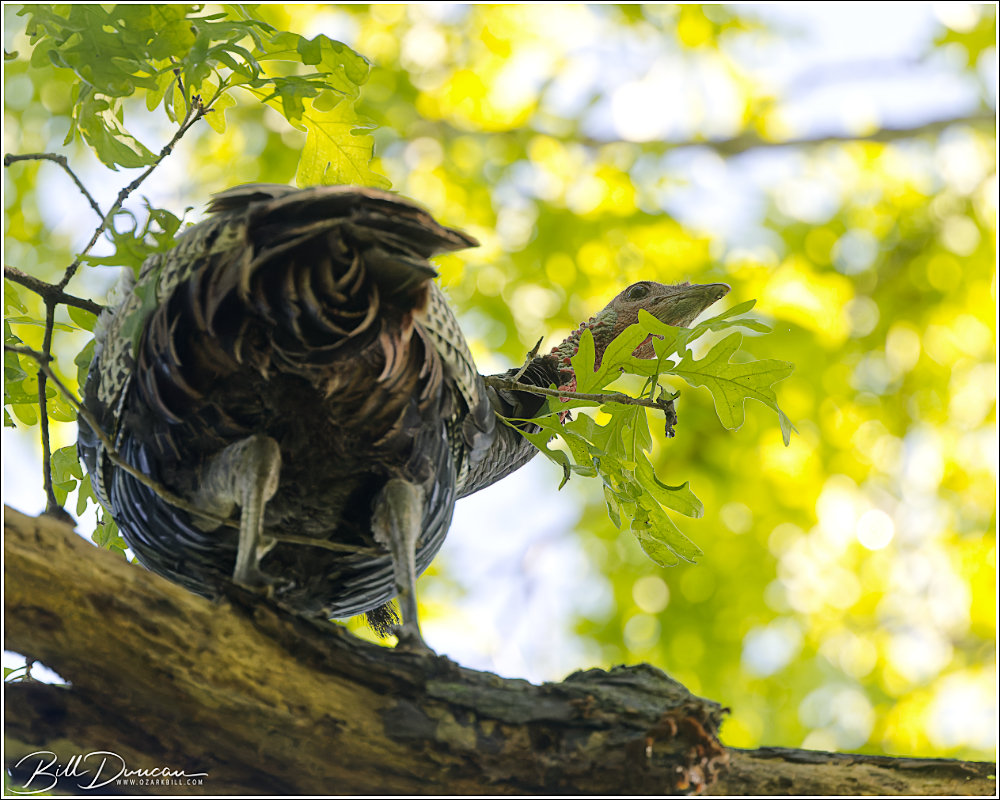
One of my woodlots, that I have named “Gobbler Hollow” holds a flock of close to two dozen Wild Turkeys.
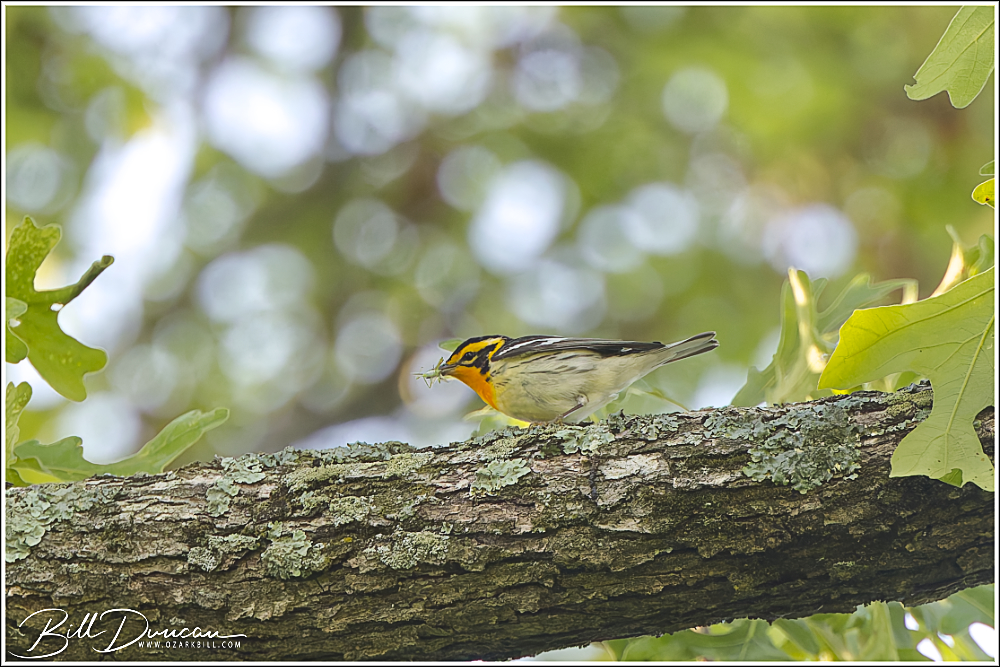
Here are a few migrant songbirds that stop at our woodlot refugia during their northward trip to nesting grounds.
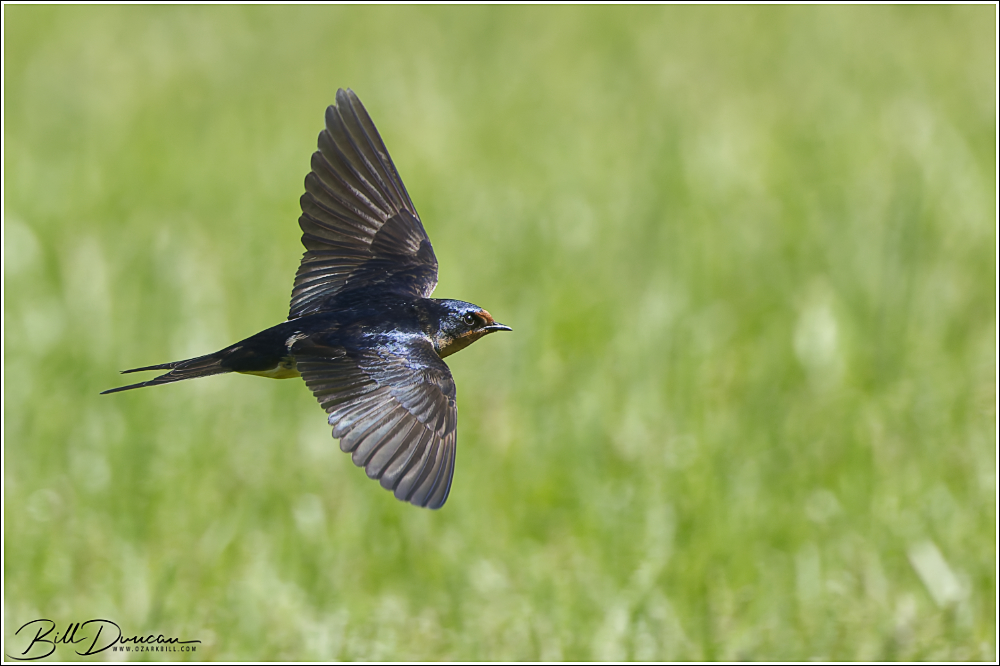
This final bird is not necessarily a user of the woodlot refugia, but it is a bird I always look forward to seeing return in the spring when I walk through our common grounds turf fields on my way to the woodlots.
Barn Swallow flying over turf picking up insects.
Please make note of potential woodlot refugia in your neighborhoods. It is so easy to lose a 1-10 acre woodlot in the name of neighborhood development, but these places are critical refugia to the flora and fauna we share our homes with.
As much as I love the change of seasons generally, nothing can beat the excitement and enjoyment of the arrival of spring. I simply can’t get out of doors enough during April and May. This past weekend Miguel and I had a great time in hunting newly arrived birds and newly emerged plants at a few of our favorite spots not too far from home. Here are a few photos from our day out.
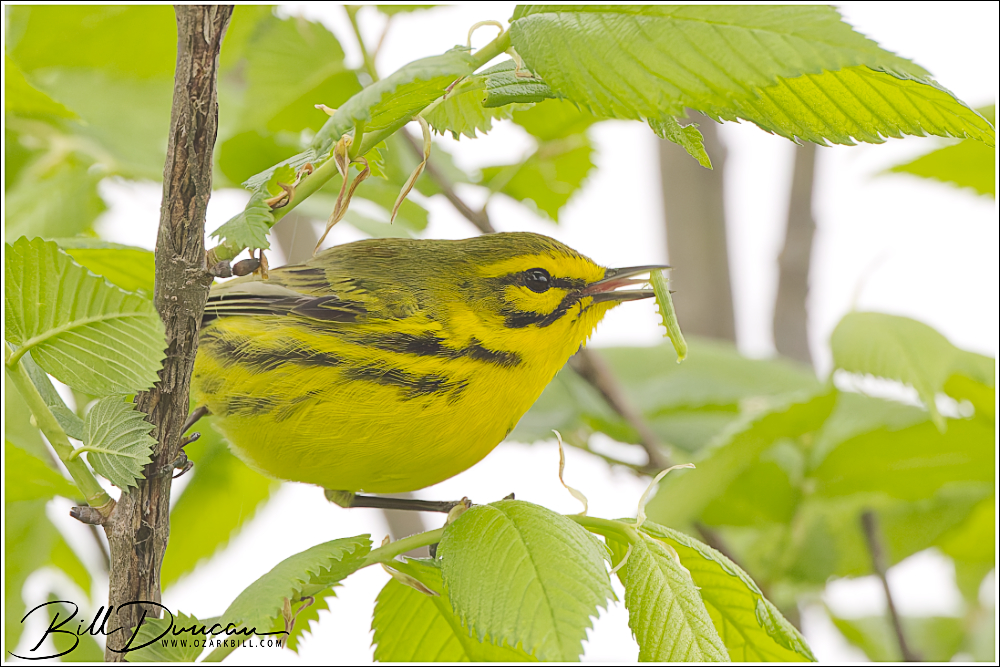
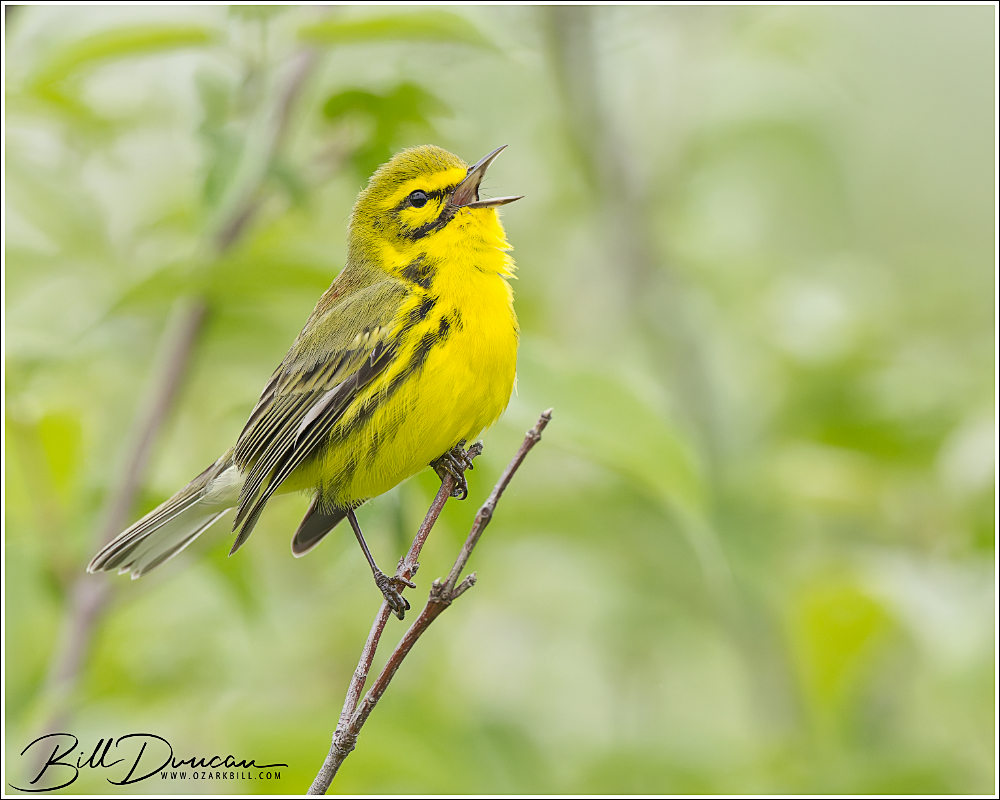
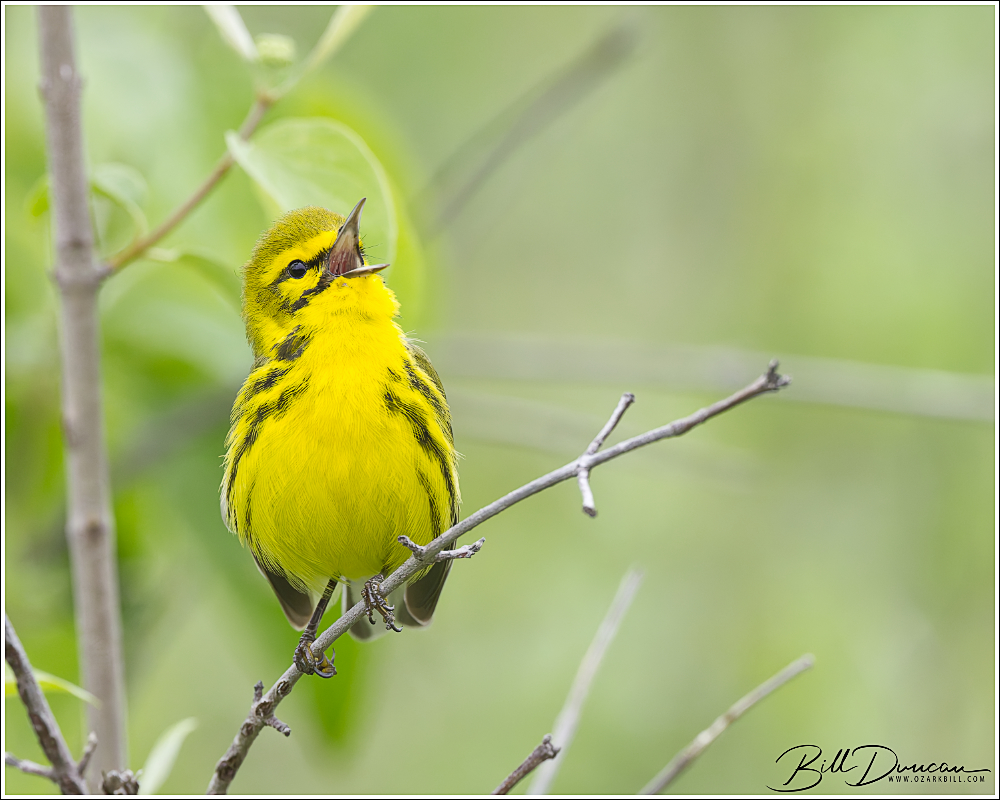
First, a beautiful male Prairie Warbler from Weldon Springs Conservation Area.
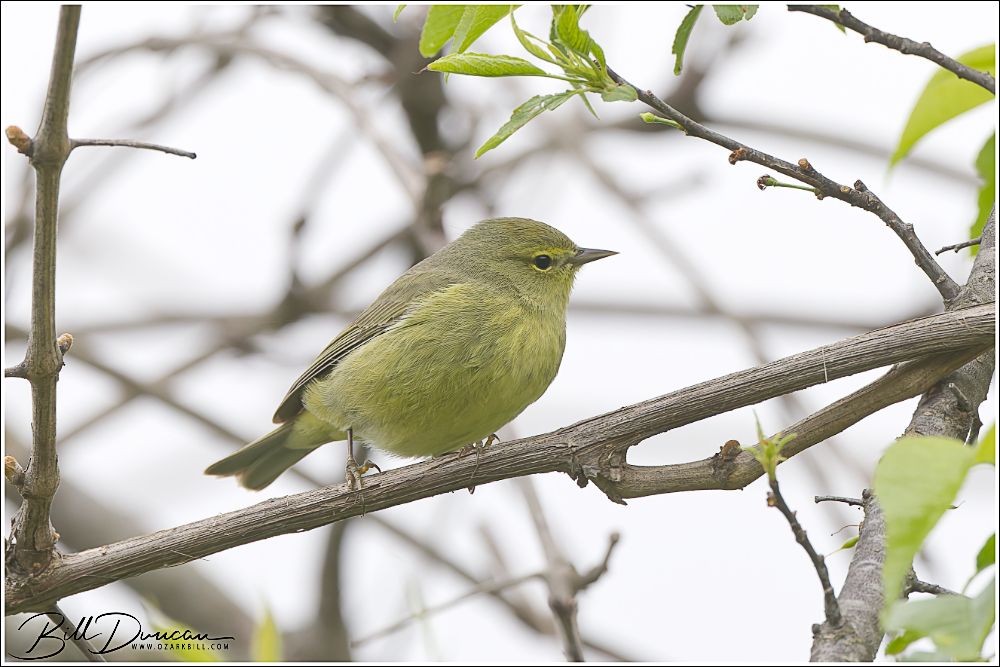
Orange-crowned Warbler photographed at Bush Wildlife Conservation Area
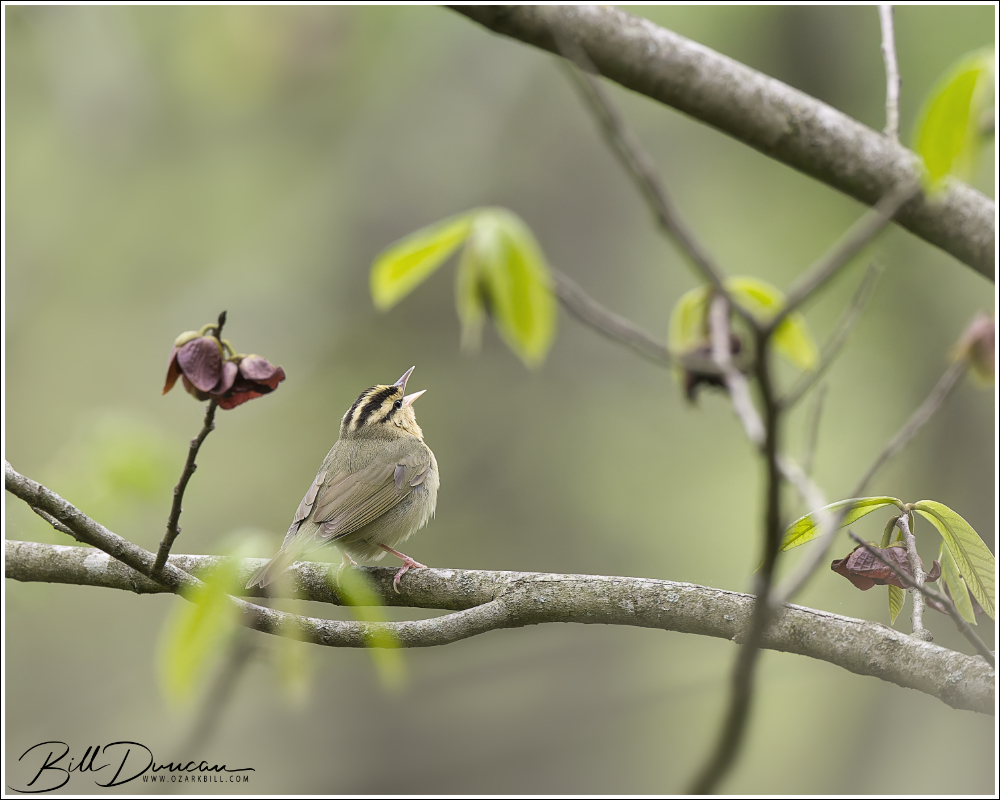
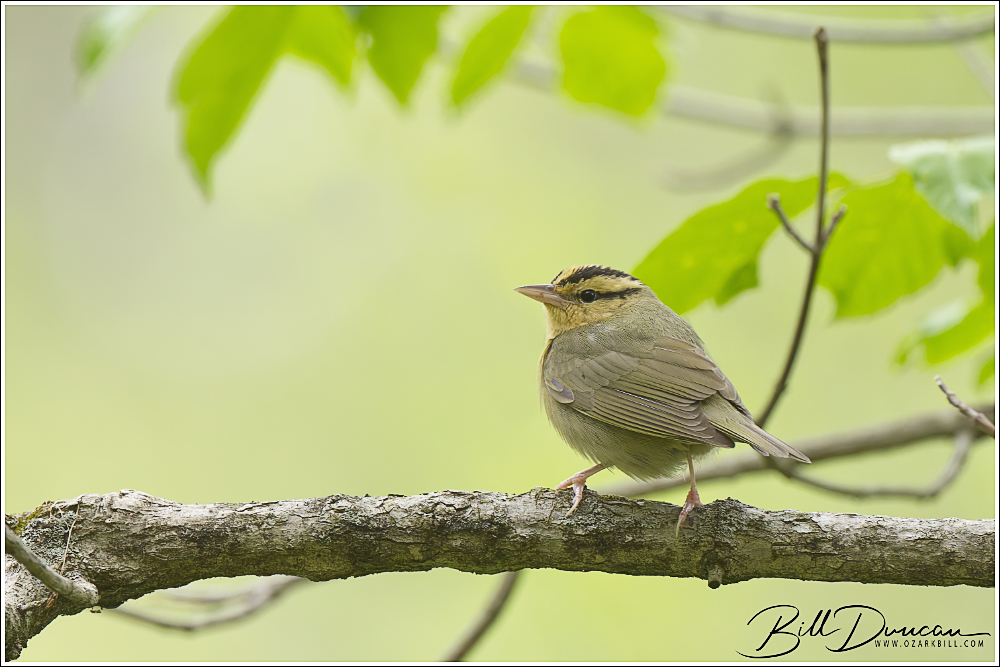
A Worm-eating Warbler also found at Bush Wildlife C.A.
After a brick-fired pizza for lunch, we crossed the river to another favorite nearby location – Engelmann Woods Conservation Area. Here we were hoping to find the Wister’s coralroot orchid for Miguel to scratch off his list. During a good year, hundreds of flowering stems of this species can be found here. This year we found 15-20 stems just by looking along a mile or so along the trail.
Corallorhiza wisteriana (Wister’s coralroot)
Finally, we were able to find three stems of the parasitic Orobanche uniflora (one-flowered broomrape) mere inches off of the trail.
Orobanche uniflora (one-flowered broomrape)
Hoping you find the time to get out and enjoy this wonderful spring!
During this past weekend the WGNSS Nature Photography group met up with our friend Dr. Rick Essner from SIUE to see and photograph one of our favorite subjects, the Illinois chorus frog (Pseudacris illinoensis) . I first wrote about these wonderful little guys a couple of years ago when Rick helped a few of us see them for the first time.
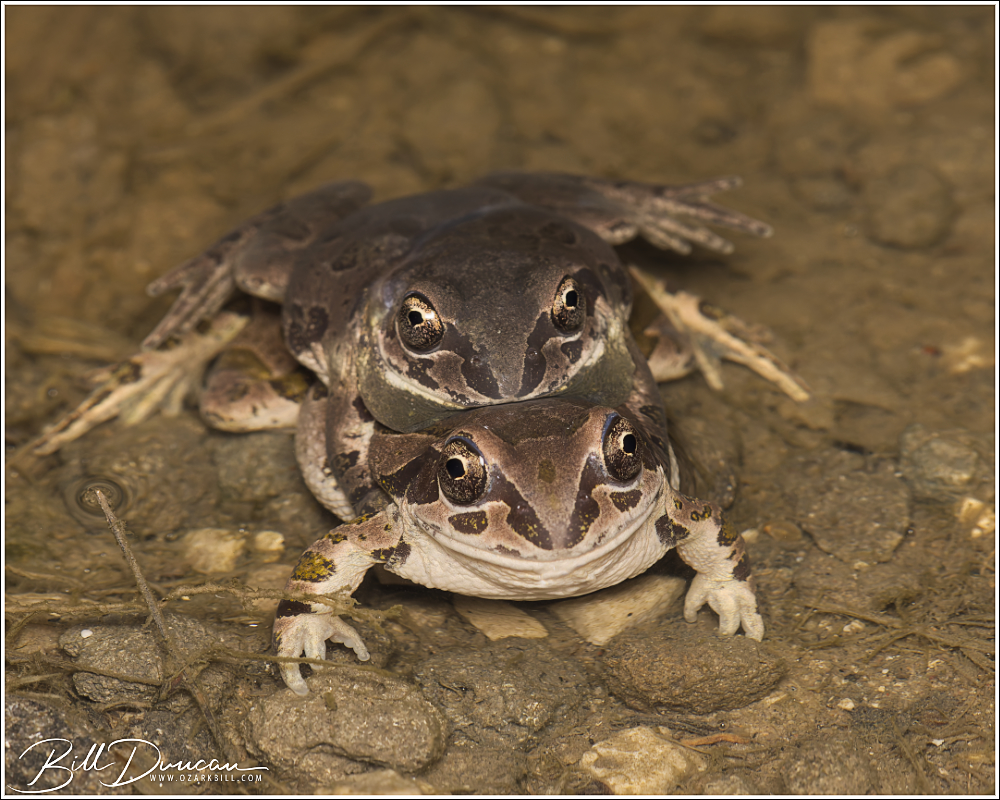
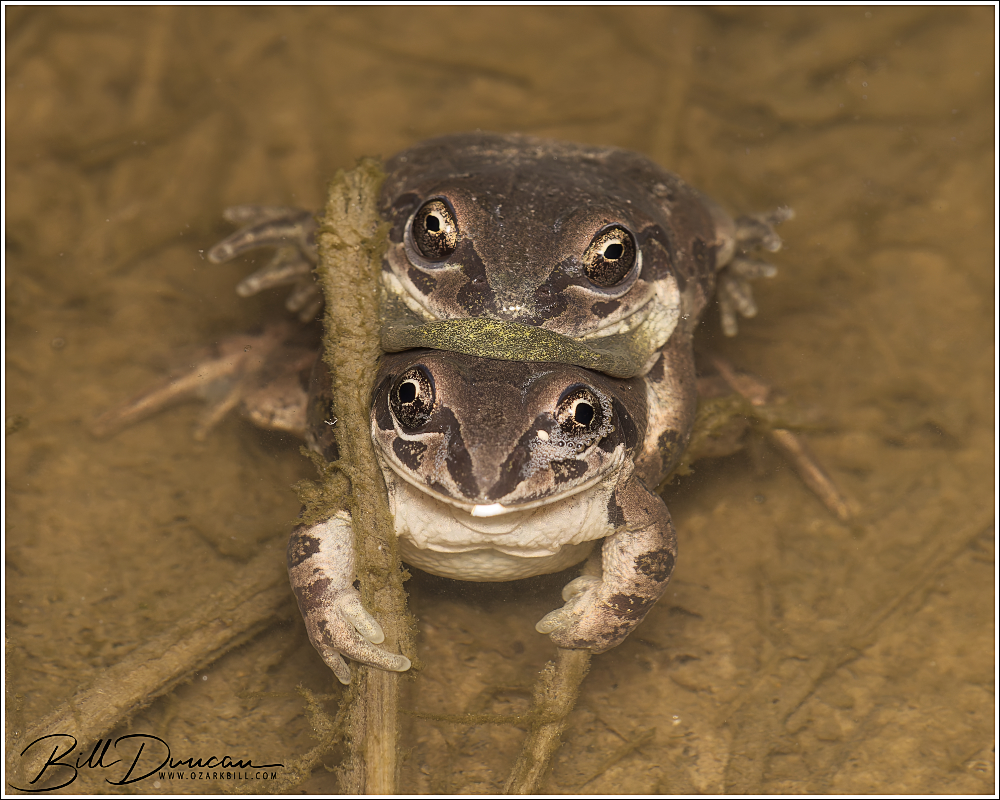
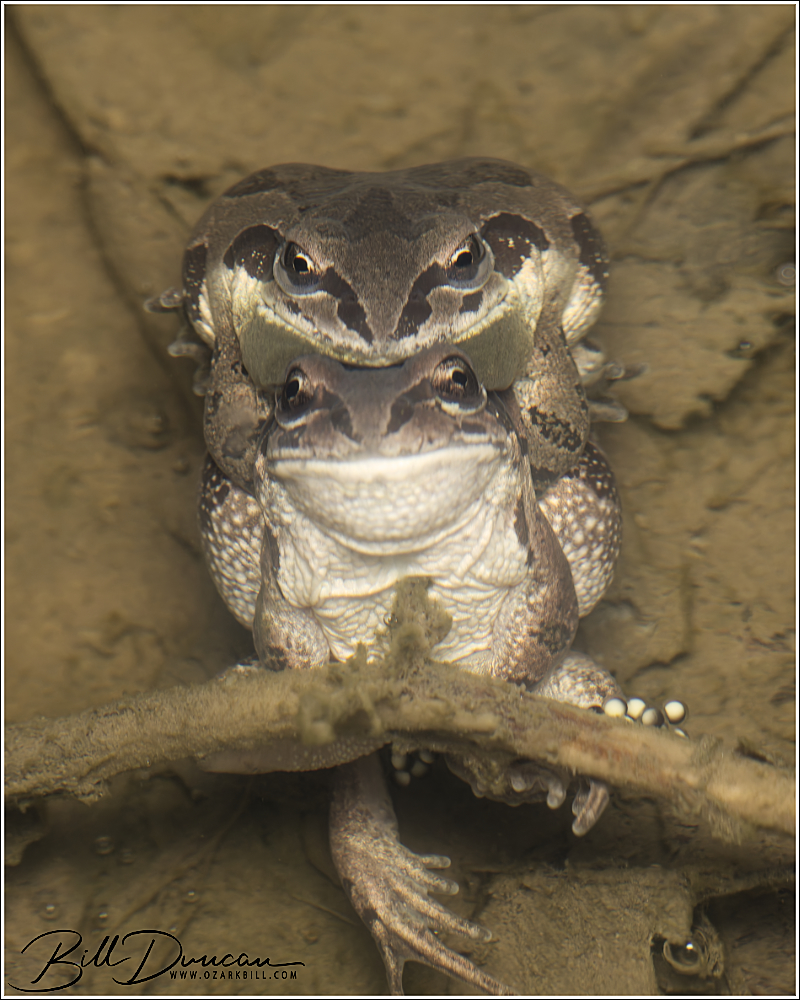
This year’s visit was perfectly timed for my primary photography goal, which was to photograph this species during amplexus. Our first stop was at a sand-prairie habitat where the frogs use small plastic basins that are set into the ground in order to keep the standing water these frogs need to deposit eggs and the resulting tadpoles need for their development. In addition to these artificial basins, the land mangers at this and a nearby sand prairie tract have recently installed larger ponds with liners to retain water long enough to see the frogs through their development cycle without the need to worry about egg-predating fish. These ponds were only installed this winter, however, and cover-providing vegetation and structures in the water are not yet established. We only found a couple of frogs at these locations but hopefully these new ponds will support a strong breeding population in years to come.
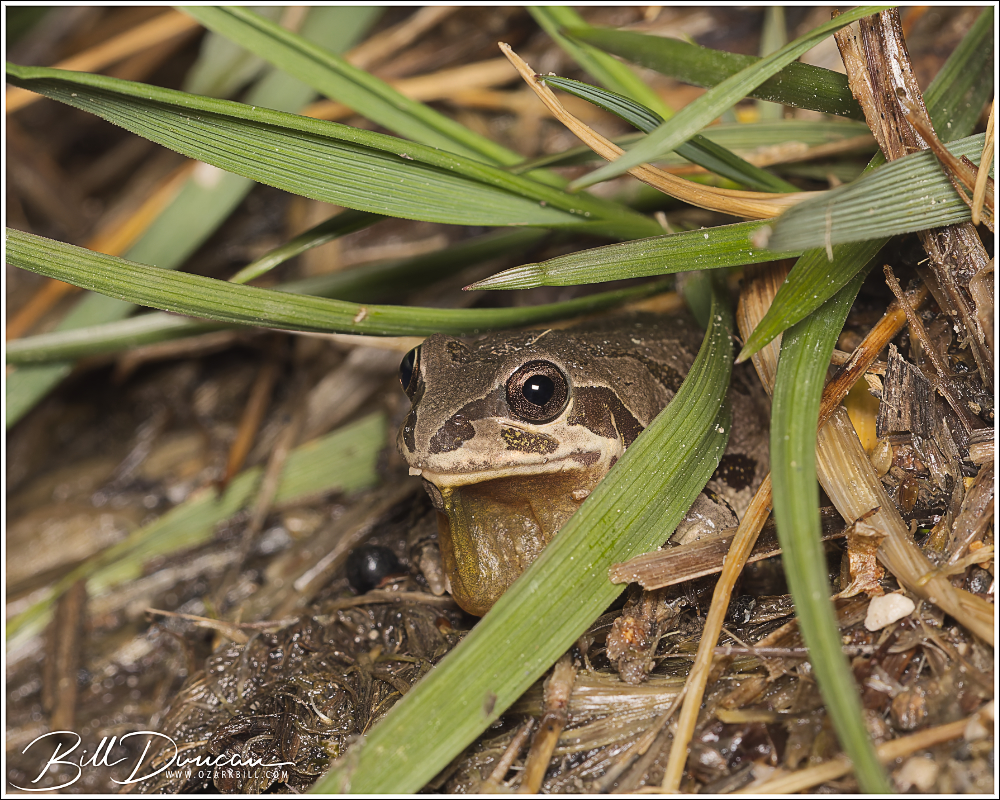
An Illinois chorus frog hunkering in the sandy bank of one of the new future breeding ponds.
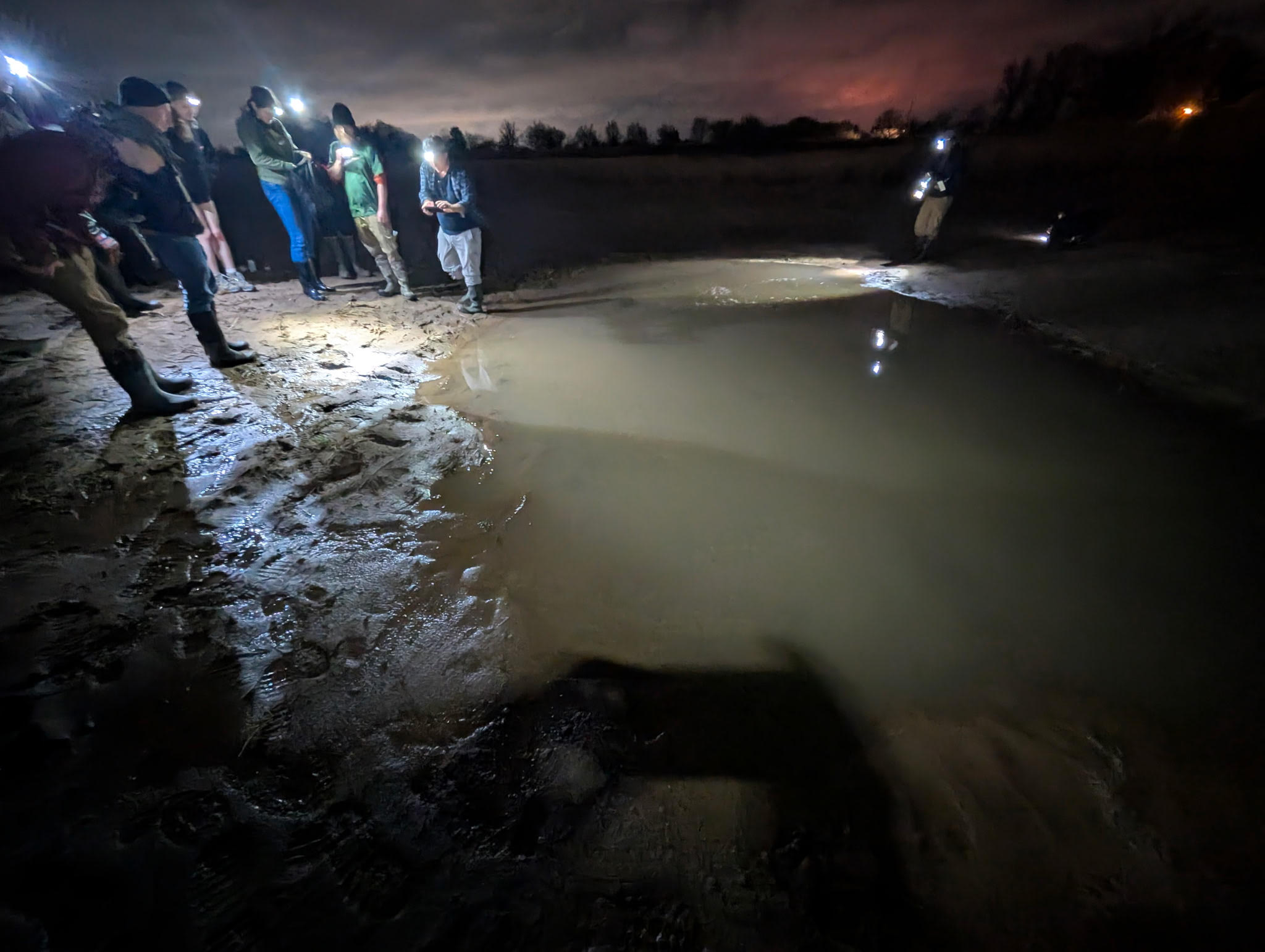
Rick Essner, his students and WGNSS photographers standing on the banks of one of the new breeding ponds within the sand prairie habitat. Photo by Miguel Acosta.
WGNSS members and frog paparazzi, Casey, Dave and Miguel photograph a frog while a student collects measurement data on another.
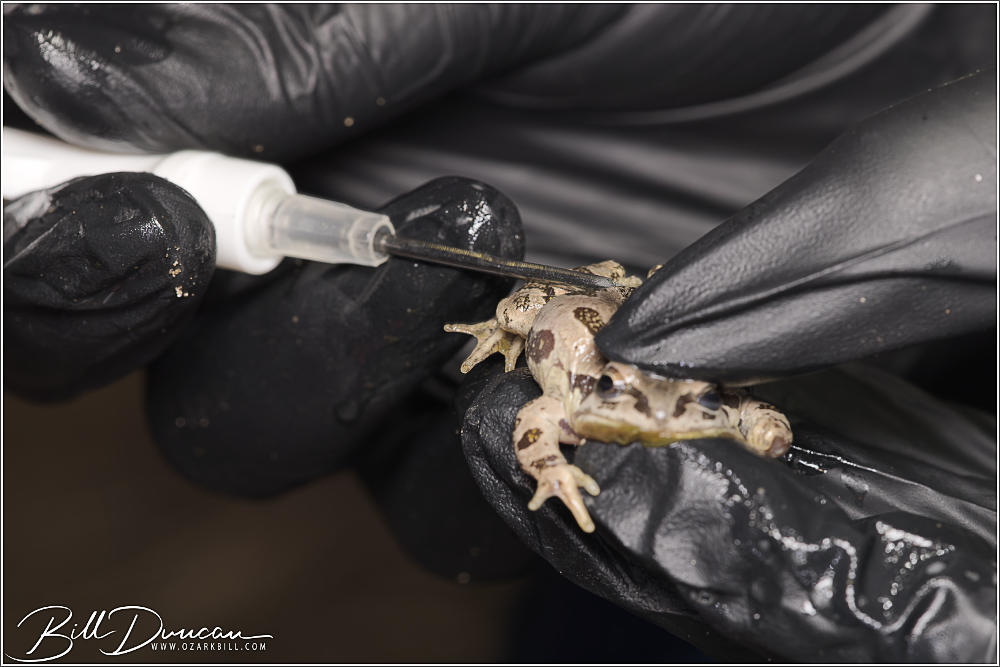
Getting photographs was not the primary reason Rick and his students were out on this fantastic evening. The biologists at SIUE are using mark-recapture techniques to study population demography and spatial activity, as well as the frog’s feeding behavior, locomotor behavior, and diet. It was fascinating to watch the students insert the smallest available PIT (Passive Integrated Transponders) tags in order to identify individual frogs in order to monitor their growth, movement and other characteristics over time.
A student uses calipers to take the frog’s snout-vent length measurement
A student prepares to insert the PIT subcutaneously into the frog. Following the insertion, the puncture in the skin is sealed with Vetbond.
After the PIT has been inserted, the student checks that the identification from the transponder can be read and recorded. The frog now has an identity!
After finding a few frogs in the sand prairie, we followed Rick and his students to other potential locations that might contain breeding frogs. We found what we were looking for in a location that was somewhat unfortunate but definitely contained what the frogs were looking for. At a drainage ditch between a small blacktop road and an agricultural field we found a group that I estimated to be between 25 and 50 Illinois chorus frogs along with quite a few American toads (Anaxyrus americanus). Here we easily photographed pairs in amplexus and struggled to photograph calling male Illinois chorus frogs.
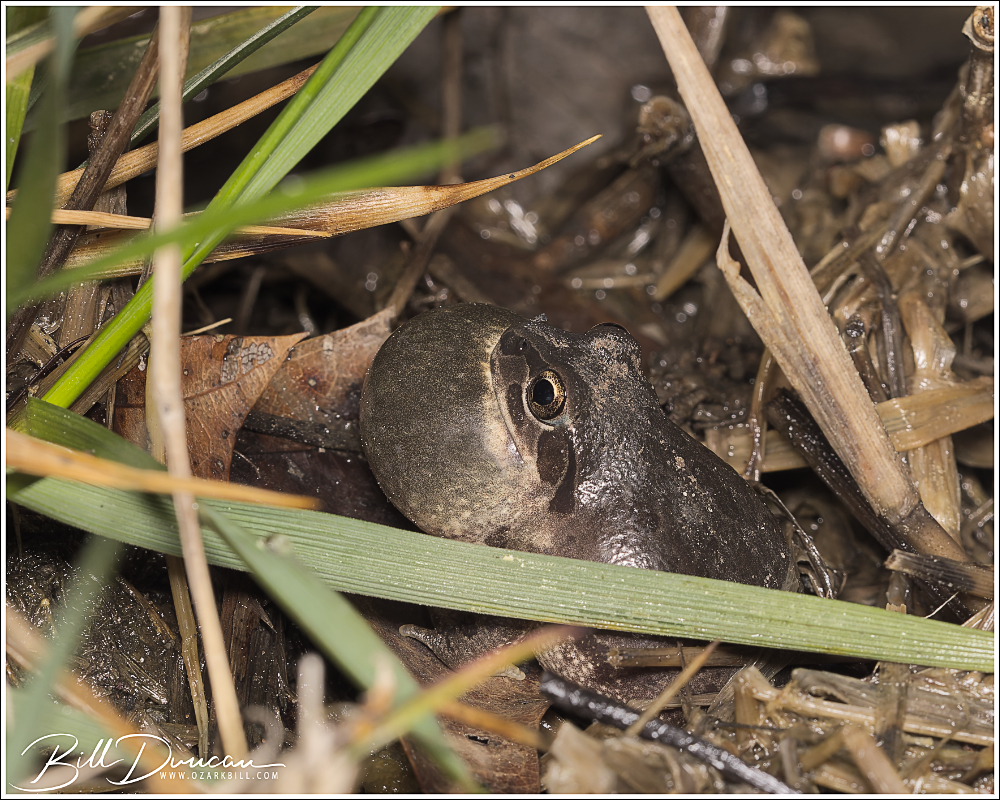
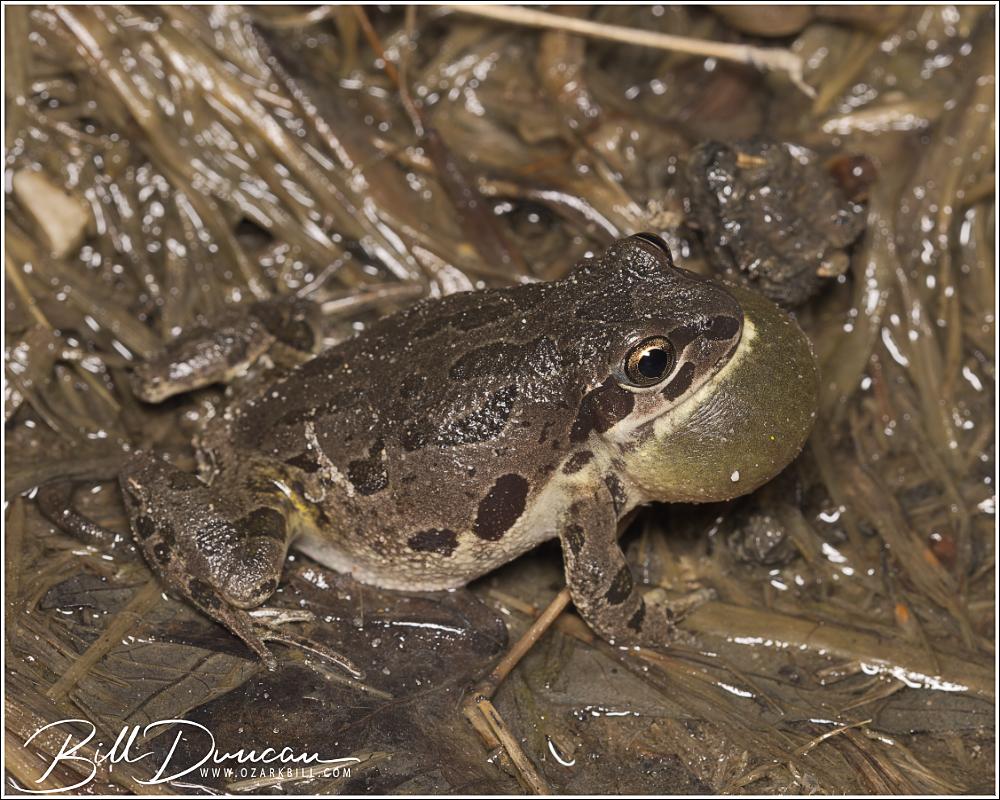
In order to photograph the frogs with inflated vocal sacs during their vocalizations, we first needed to find the solo males that were vocalizing. This was the first challenge. The unpaired males seemed to have a high preference for vocalizing under the cover of the short vegetation along the banks of the ditch. This made finding them quite a difficulty. Additionally, as anyone who might have the experience of attempting to find vocalizing frogs will know, they exhibit what could be called a ventriloquist effect. As the observer hones into the location where the frog must be calling from, it is simply impossible to find. This effect is hypothesized to be an adaptation to predation avoidance. A stationary frog, vocalizing at incredible decibels, could be seen as ringing the dinner bell for predators with the ability to use auditory cues to track their prey. This may help with predator avoidance, but then how does the female find her chosen mate with the sweetest voice?
Finding the vocalizing males was just half the battle. In order to photograph these guys at night, we must shine a light in order to focus on them. More times than not, as soon as I trained my focusing light on to one of them, they would quit calling. It would then take quite a while for them to get started again after sitting still with the lights out. It took me quite a few attempts to get the few successful images I was fortunate to get.
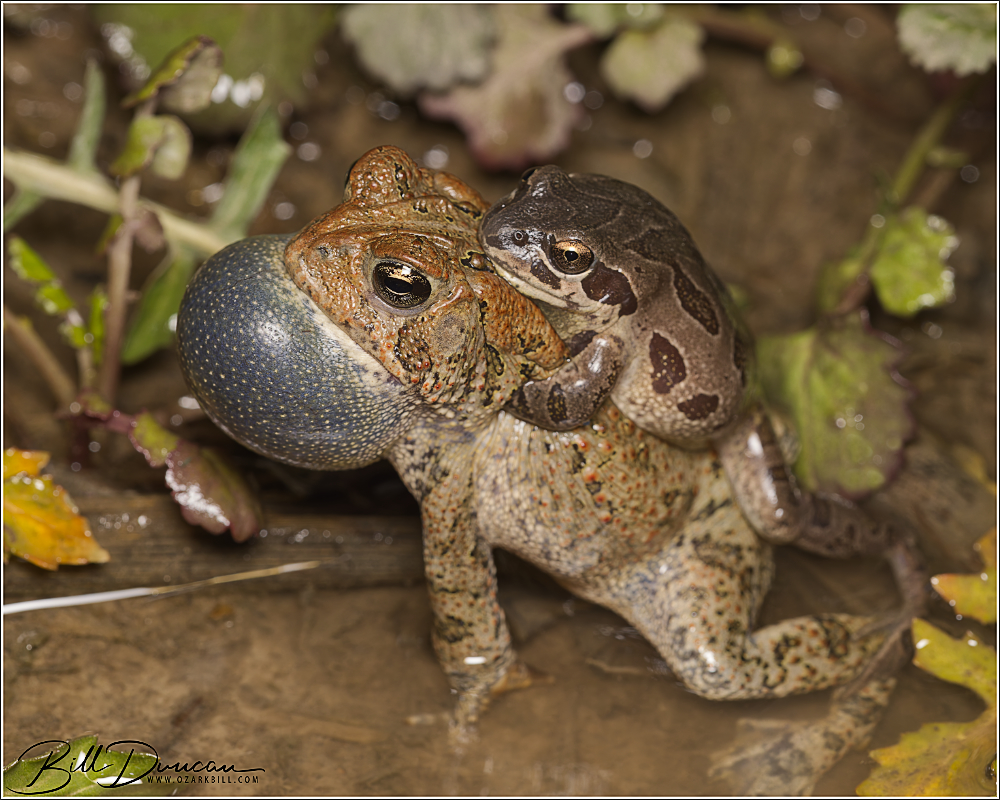
When male frogs are in a perfect situation such as this, they are eager for ANY opportunity. If it moves and in any way matches their search pattern – namely, any other frog, they are known to grab and hold on, whether that be a conspecific female or male, or sometimes something even more, shall we say, less evolutionarily appropriate…
This Illinois chorus frog was so randy that this American toad looked ripe for the picking!
On top of this interspecies attempt, the toad turned out to be a male!
That’s all I have to share from this wonderful evening. I’m happy to see that researchers at SIUE are studying this threatened species and that the land managers are making strong attempts at improving breeding habitats for this wonderful species.
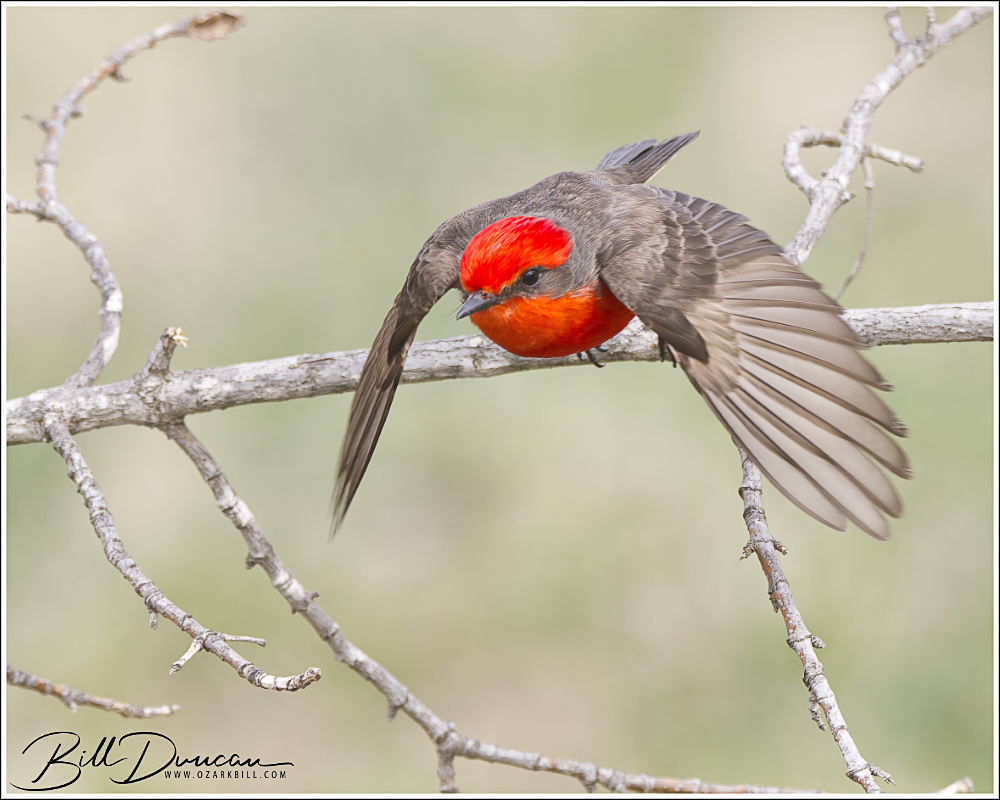
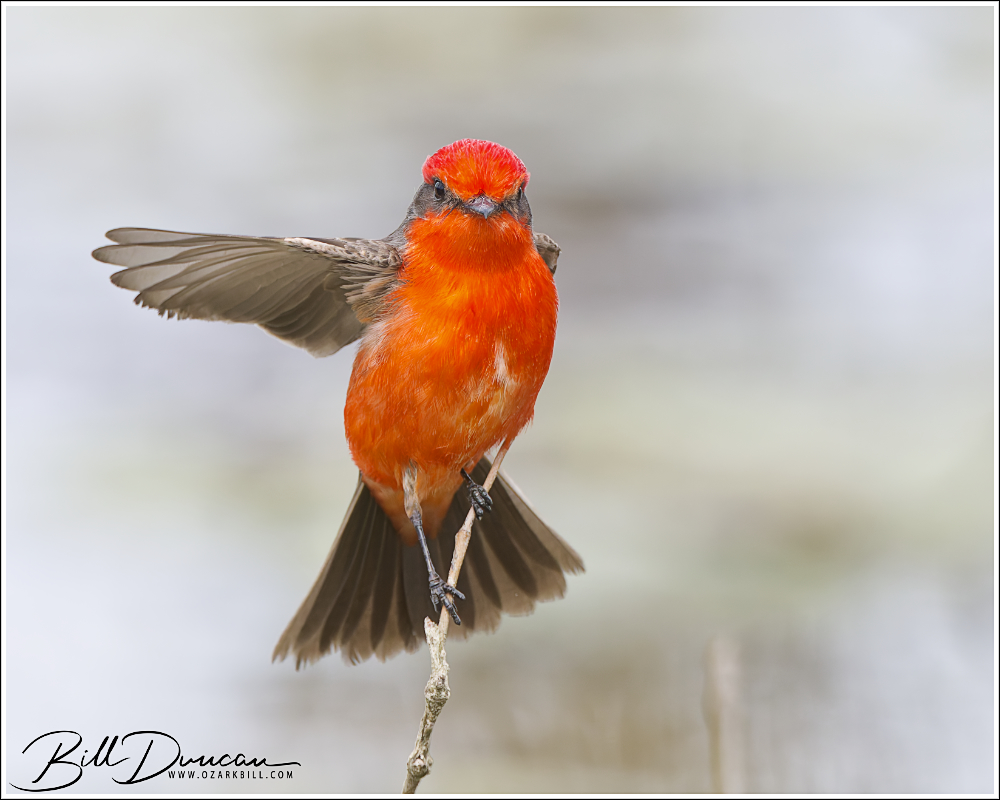
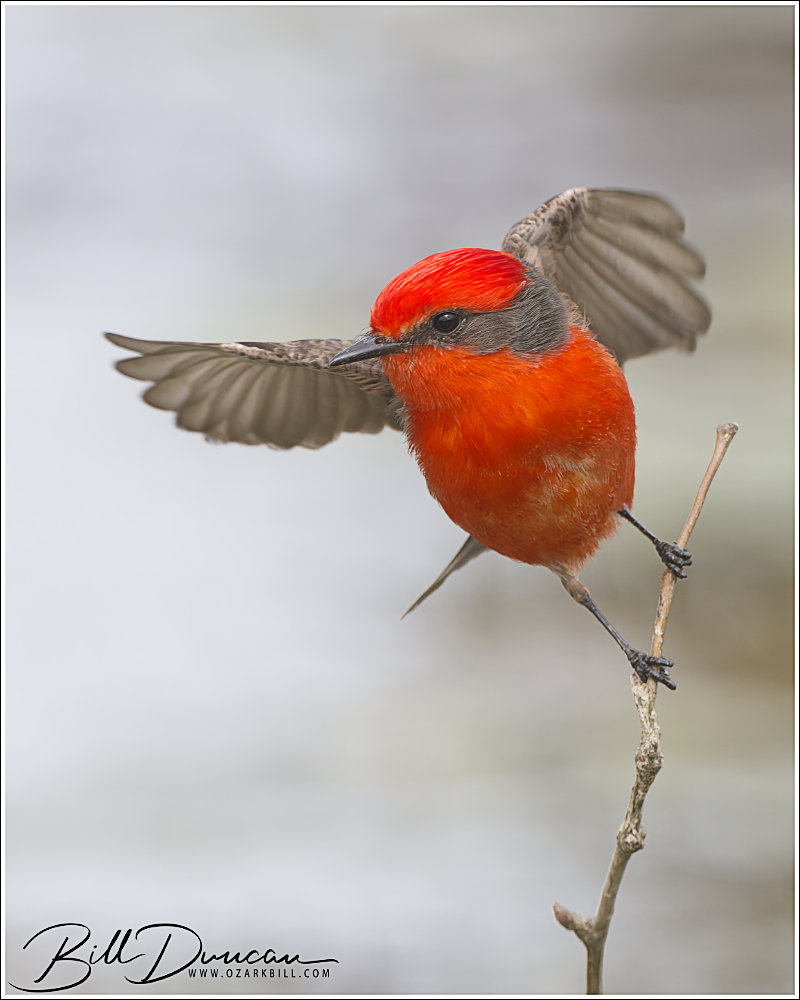
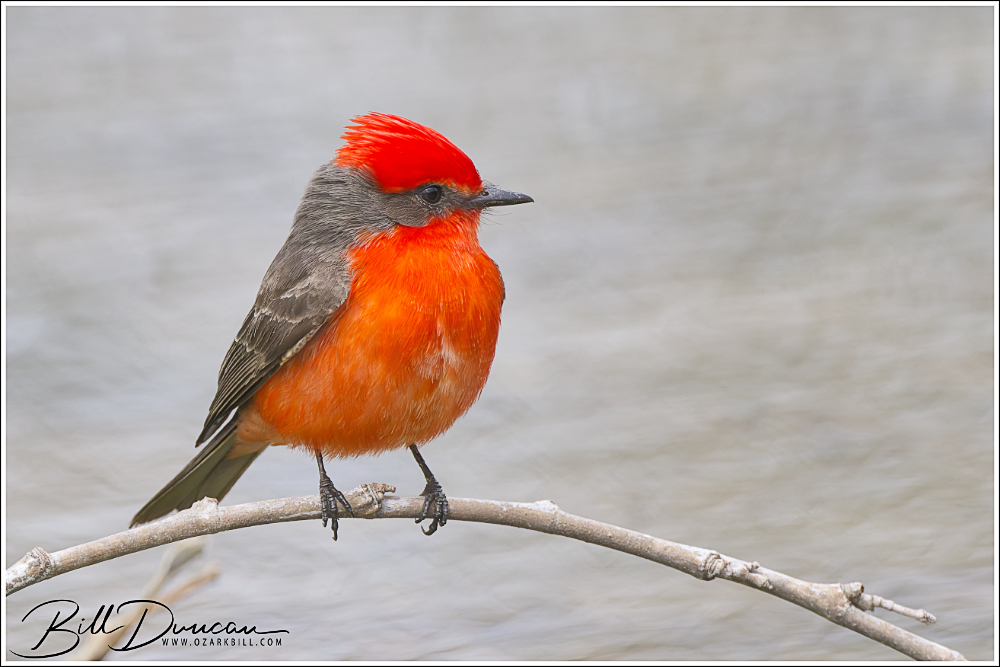
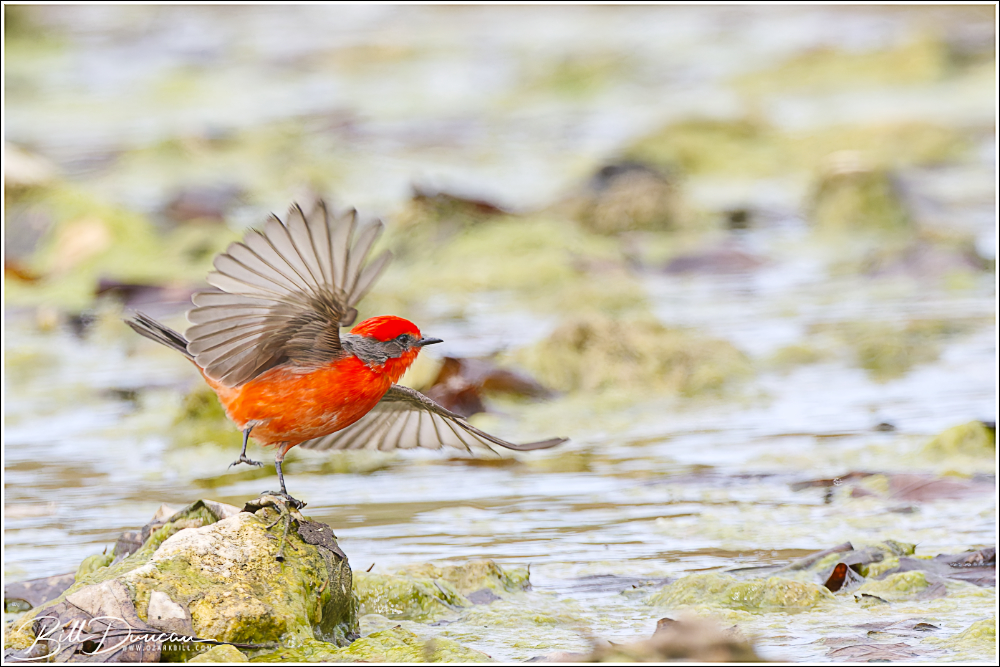
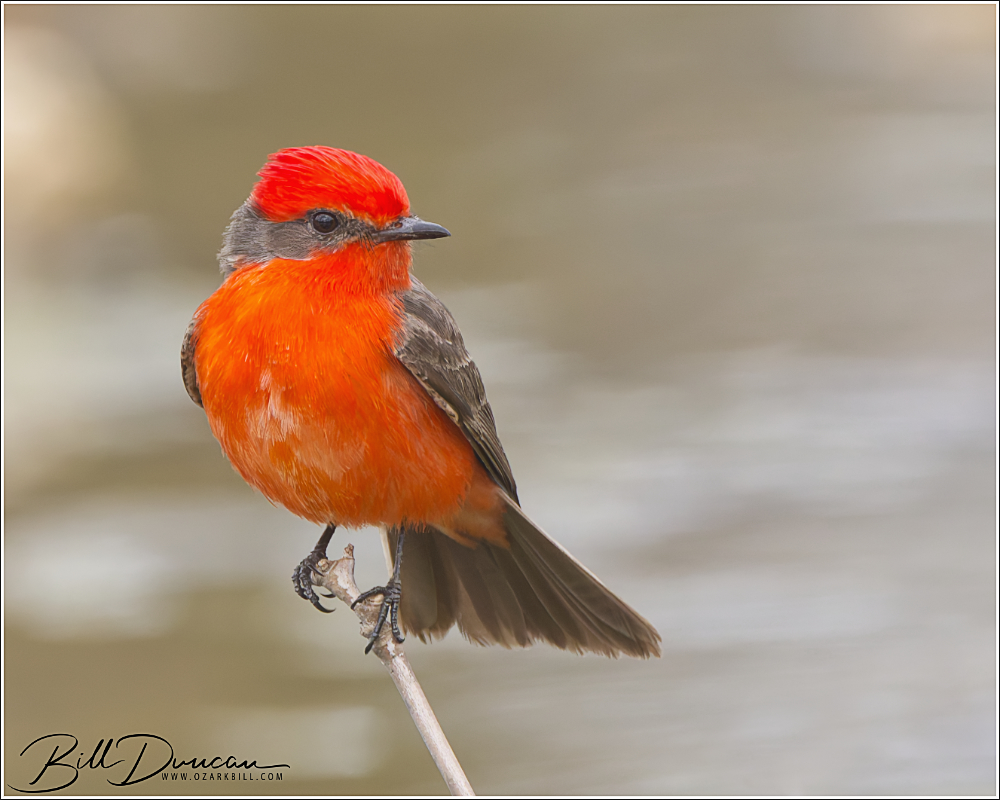
This beautiful Vermilion Flycatcher (Pyrocephalus rubinus) was recently found in the central Missouri’s Miller County. Many thanks to Chris Barrigar, who first found this bird and shared it with the birding community.
The Vermilion Flycatcher’s typical range includes much of South and Central America. It is also found in the southwestern U.S. states like Texas, Arizona, and New Mexico. Chances are likely that this bird was pushed along with a series of storms that moved through Missouri in the last week. Appropriately, this bird’s genus name, Pyrocephalus, means “fire-headed.”
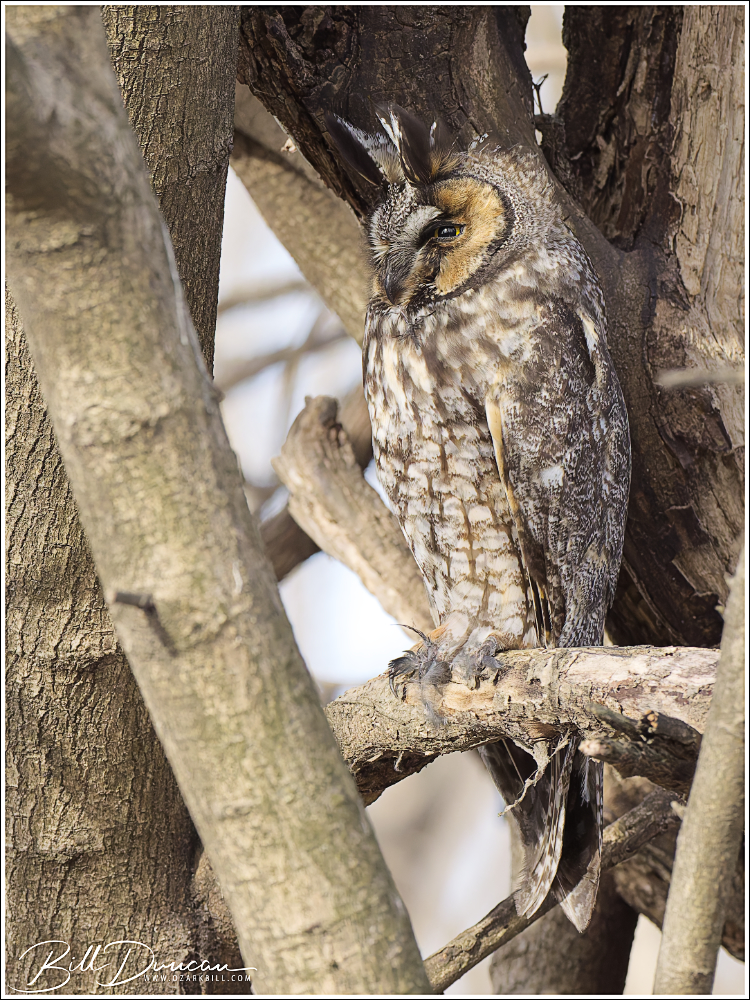
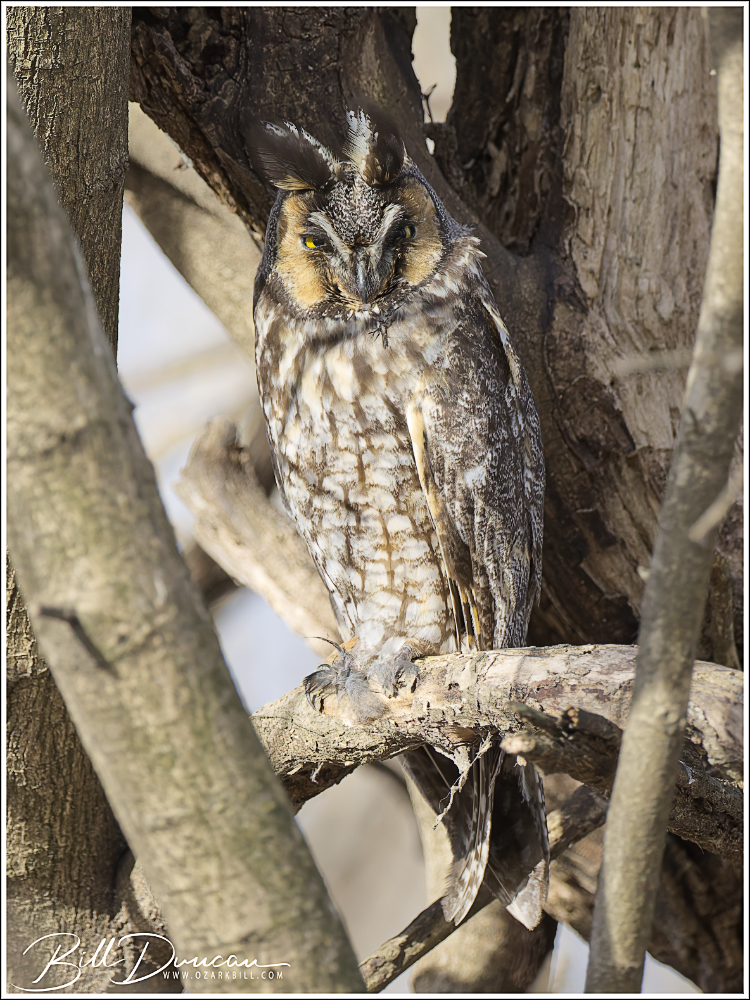
It was interesting to find a couple of Long-eared Owls that had come back to an exact place they had been found nearly a year before in a small wooded area in St. Charles County.
Long-eared Owls are notorious for being found in thick vegetation. During my first visit, this was the best I could do for a photograph.
Returning later in the morning, my luck was much better.
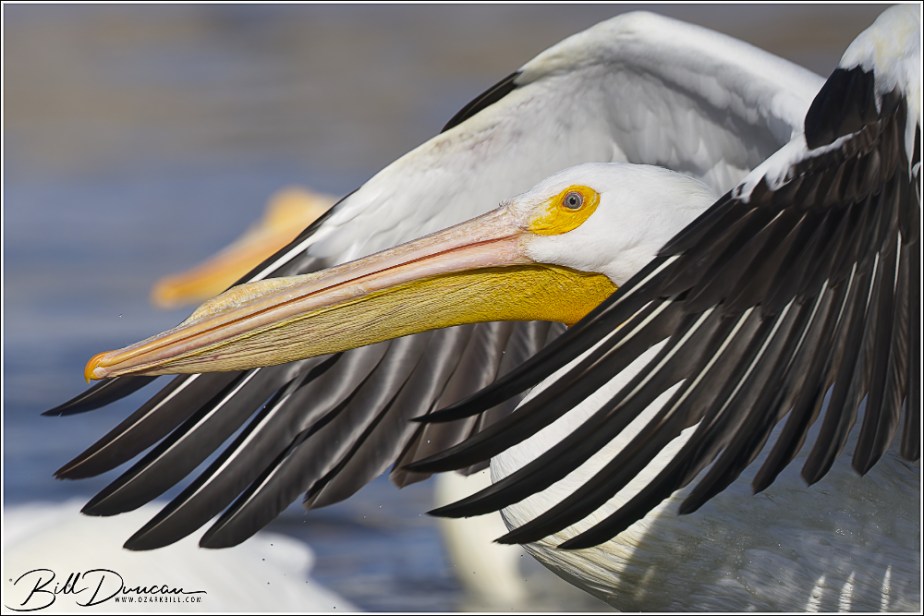
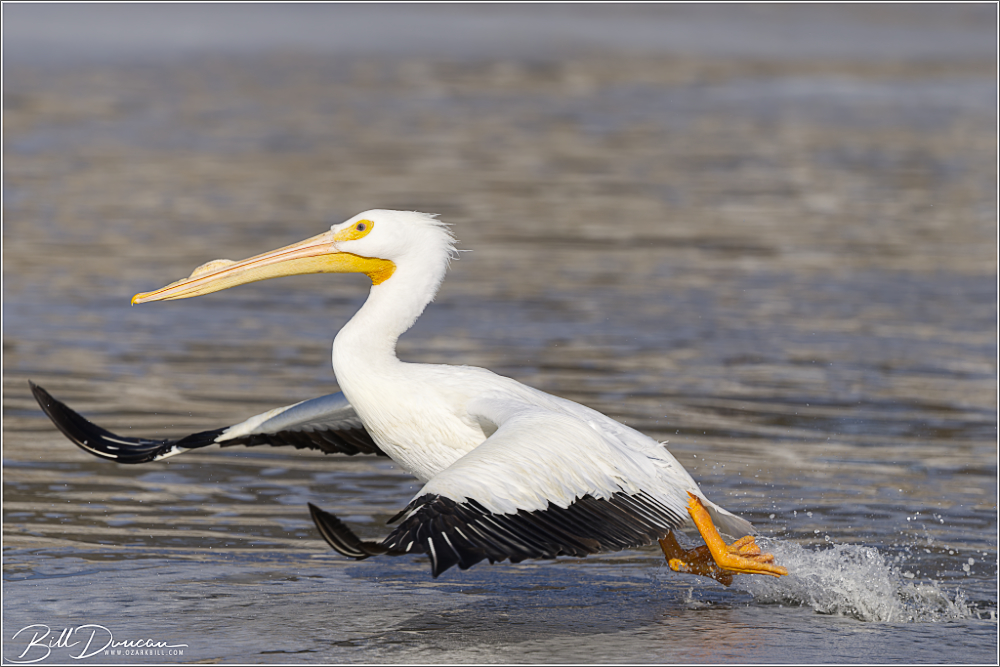
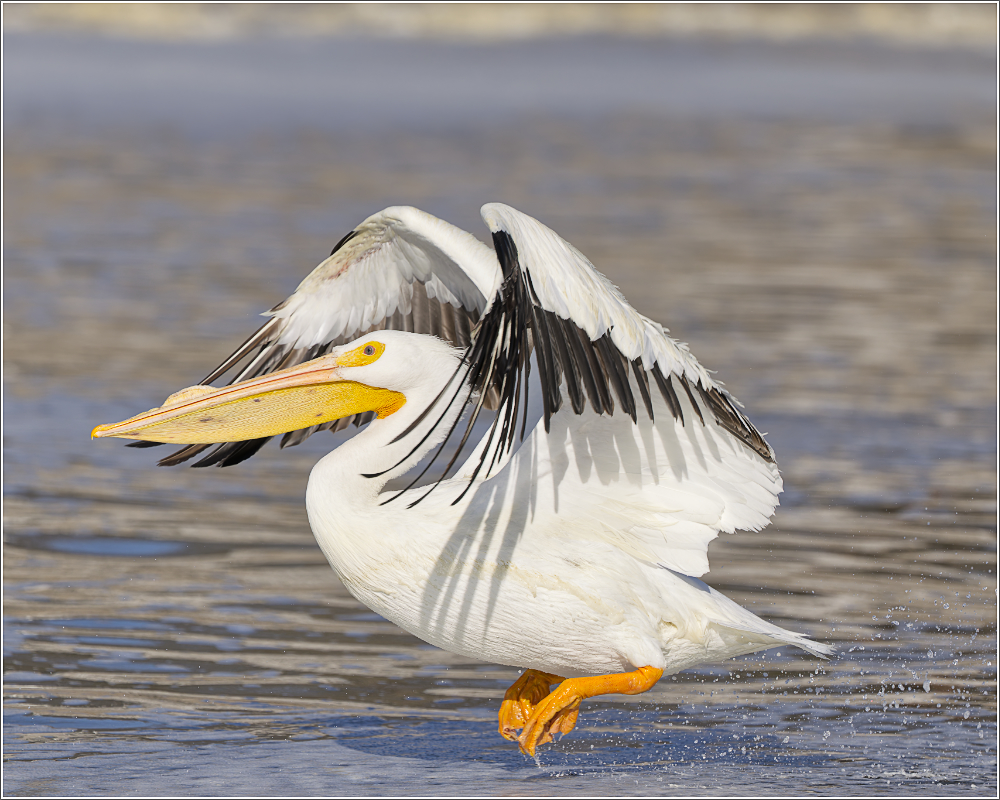
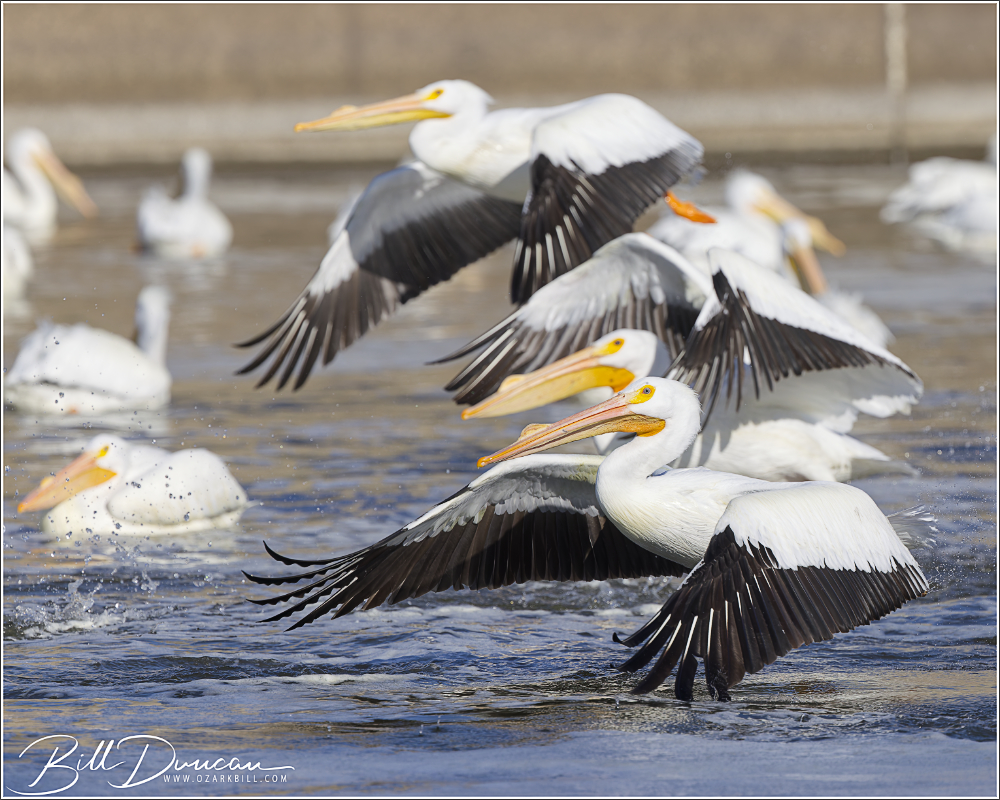
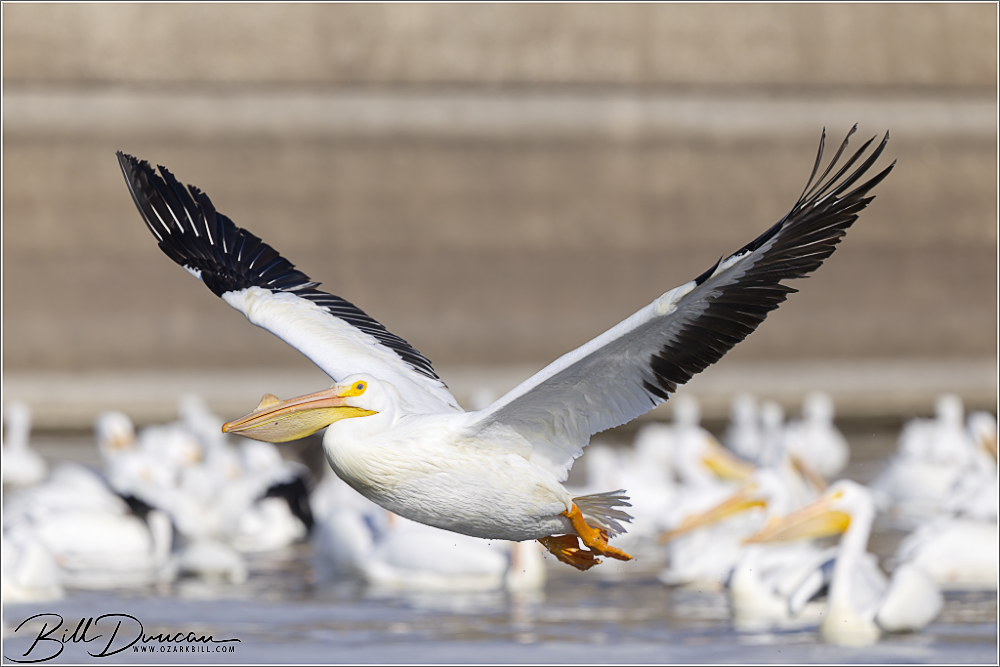
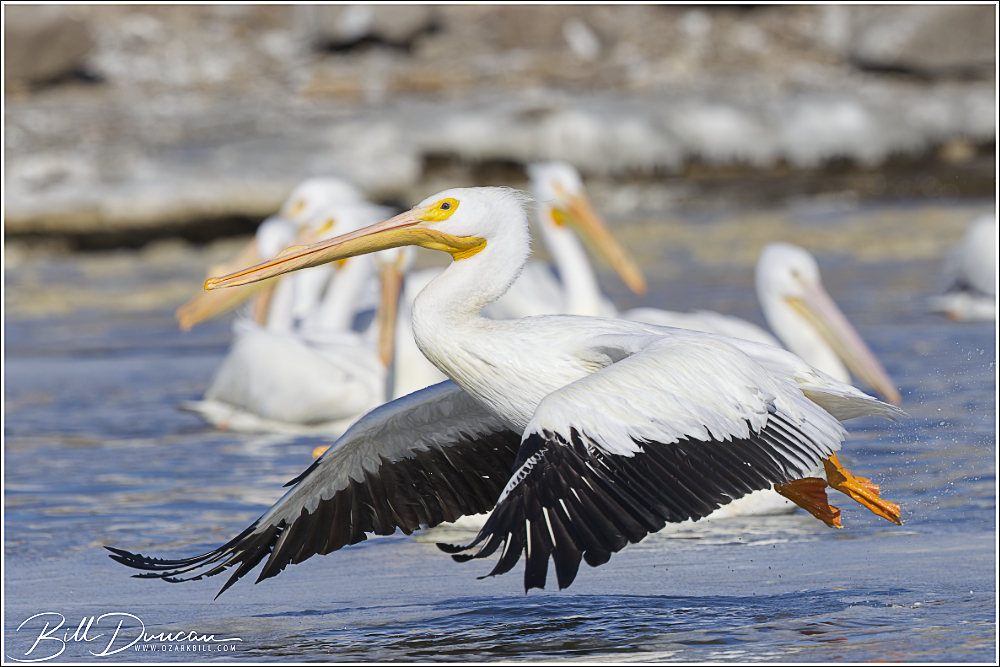
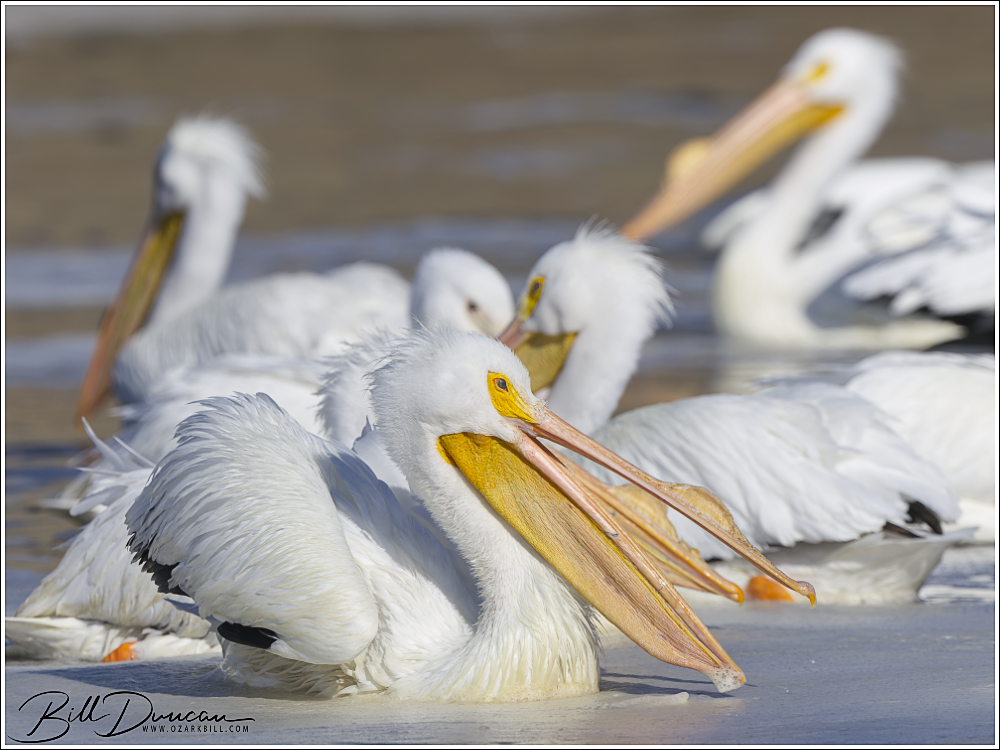
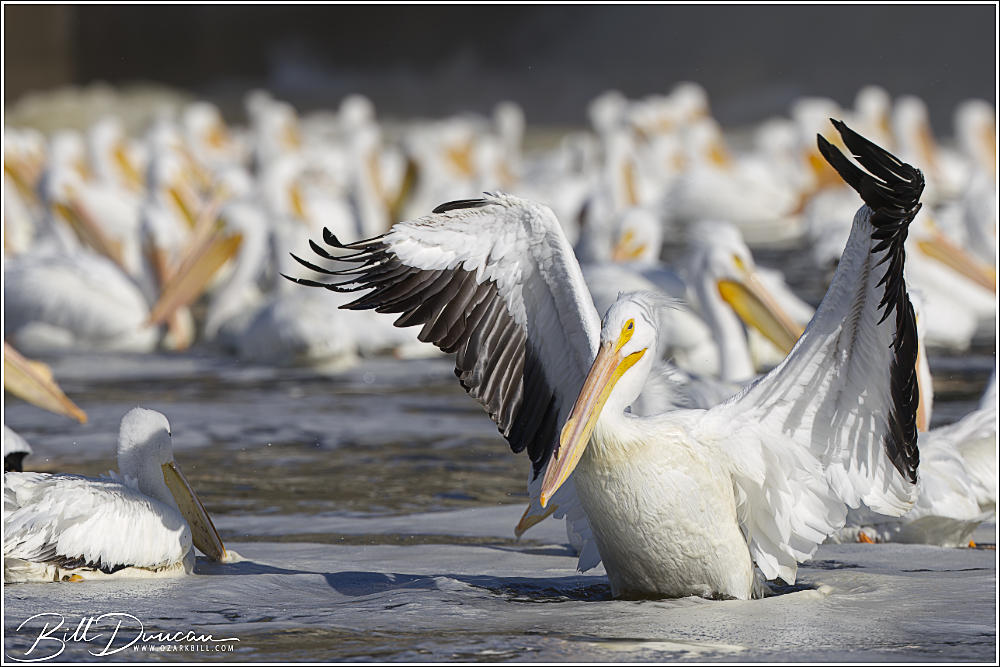
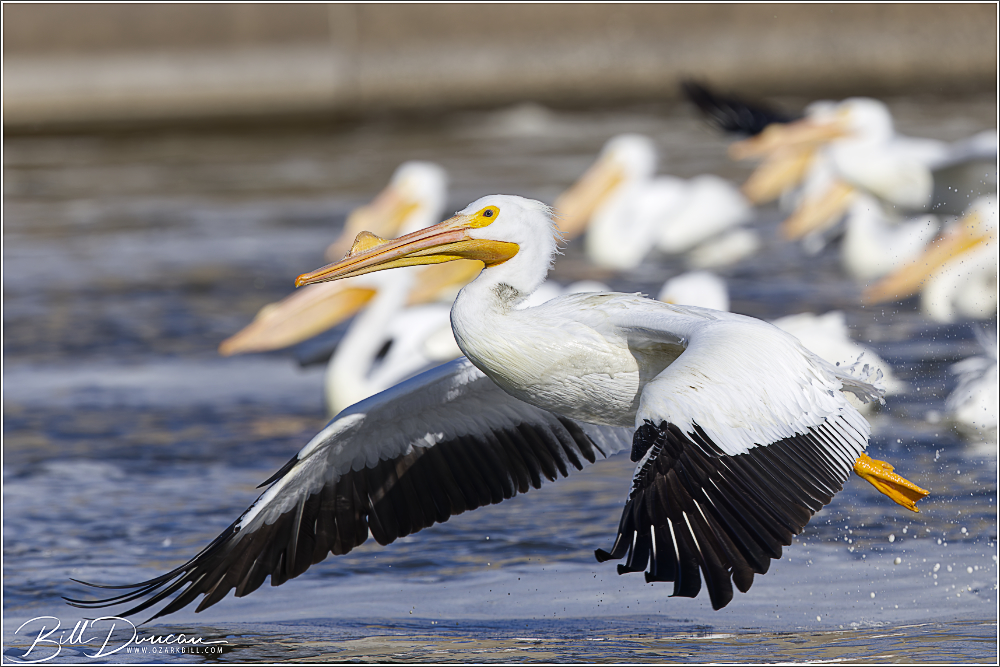
I took another trip recently to Carlyle Lake and had a blast photographing these American White Pelicans. There were far more than 1,000 of these giant birds, coming and going from the dam’s spillway.
I can’t believe it’s been ten years since I have done a top ten post like this. I love the idea but I guess I’ve been too lazy and too busy thinking and working on new images to do this. My hope is to continue this going forward. This post is not designed to necessarily showcase my best images of 2024, but the ones that have a special value to me, the ones that I find significant and interesting, and the ones I wish to remember the most. As expected, it was quite difficult to narrow down the list to 10. There are another five or so that pain me to exclude, but we have to draw the line somewhere.
A few things that I noted after looking at this list: 1) I have only one landscape image, although this does not surprise me as landscapes are not something I spent a lot of time on last year, 2) No deep space astrophotography image. This is primarily because I only had one outing last year where I came away with a successful image. I hope to get back into the swing this year, but that is easier said than done, 3) My interests still seem to be diverse. I tell myself I should try and focus on just one or two subject areas, e.g. birds and wildlife, macro, or landscapes. This makes sense as the more practice you get in one discipline, it can be argued that you will get better in that area. It can also be argued the more time spent in that one area, the better the opportunities are to make that standout image. Nevertheless, my interests are what they are. Much of what is seen in this list was made with fortunate opportunities and not necessarily by meeting goals that I set out to accomplish. I guess there’s a lot to be said in that.
Here are my top 10 favorites of 2024. You can click the links of the titles of each one to view the original posts to see more photos from that series.
Finding new forms for my Missouri orchids project has gotten to be more difficult in recent years. The discovery of this small group of Dactylorhiza viridis in Illinois was fortunate and I am grateful to those that shared this location with me.
As I’m sure most experienced landscape photographers in Missouri can agree with, finding new compositions and situations to photograph Elephant Rocks can be a difficult endeavor. That was why I was so excited to join the WGNSS Nature Photography Group on this trip last February to photograph this location using the light of the full moon.
Moonscape of Elephant Rocks Featuring the Pleiades Star Cluster
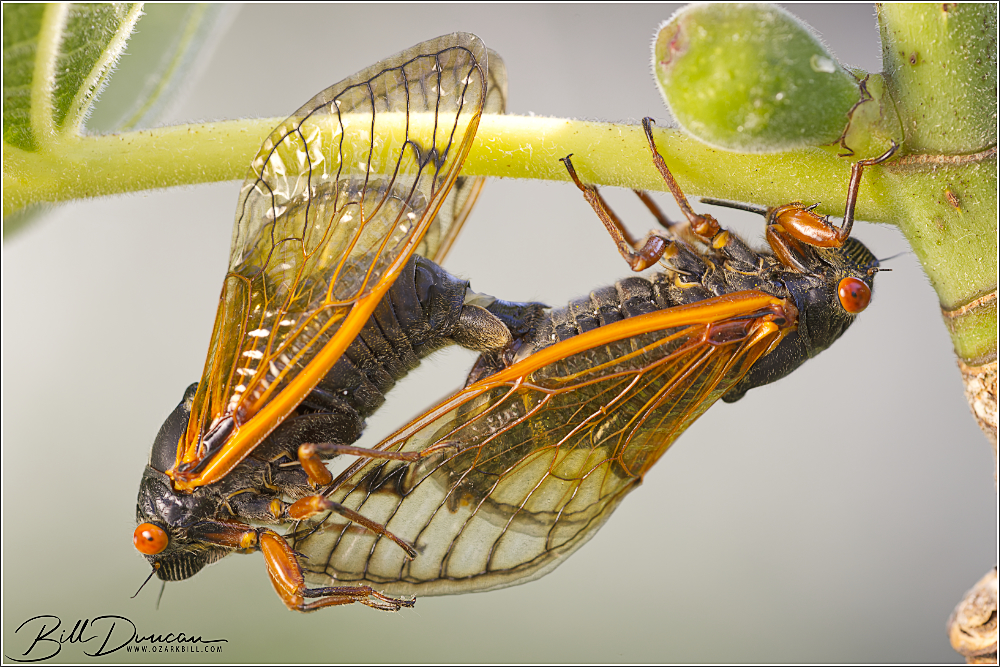
I wrote extensively about the emergence of Brood XIX, the 13-year periodical cicada emergence that brought me so much joy and angst back in May. The majority of my young woody plants in the yard still bear the scars of this spectacular phenomenon and will likely show them for years to come. It was tough to pick a single image for this one, but I thought that showing the reason behind this predator-satiating emergence was most appropriate.
I like this image for several reasons. First, it’s an albino snake found in the wild and it is one that I personally had the pleasure of finding. It was also taken on a WGNSS Nature Photography Group outing where our target subjects were something completely different. This goes to show that the nature photographer should be flexible and open to things that might not have been the objective of that outing.
Armed with my bag blind, decoys and a slate call, I had some minor successes with attracting wild turkeys for photography in my neighborhood wood lot last year. I’m hoping for more in the next couple of months.
Considered one of the holy grail species of caterpillar for eastern North America, I was pleased to have been able to find two of these this past season. The first one I found was not a final instar, but this one, found on a WGNSS Nature Photography Group outing was.
This one comes from an unforgettable trip to Wisconsin that Casey and I took in April of last year. We were fortunate to find nearly perfect circumstances that led to thousands of images and videos on our cards.
Perhaps the title I present here is not that flattering to such an interesting natural history story. You can read more by clicking the title that will take you to the original post. This is a very common species but I was able to witness and document the rarely observed reproductive story that I doubted I would ever be able to observe in such detail.
Stationary Bag of Eggs – Ovipositing Orgyia leucostigma
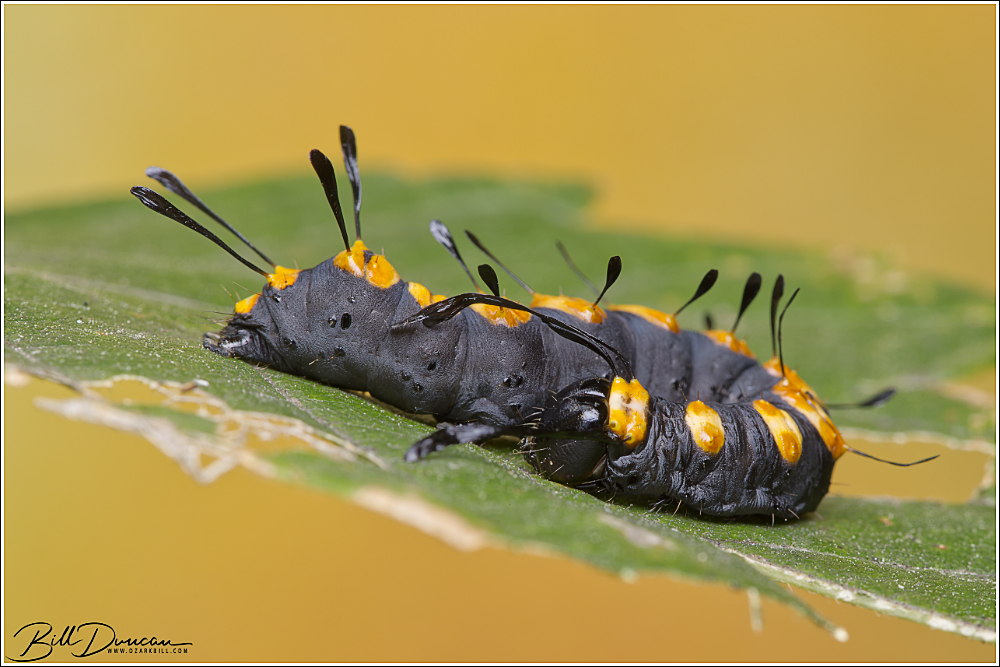
The spiny oak slug caterpillar comes in two primary color morphs. One is a base of bright green with patches of yellows, oranges and reds. The other, as pictured here, is a base of brown with patches of olive green and appears lichenous. In my experience, the later morph is the more uncommon form to find in Missouri. This one was found during a great trip to Schoolcraft Prairie in Washington County.
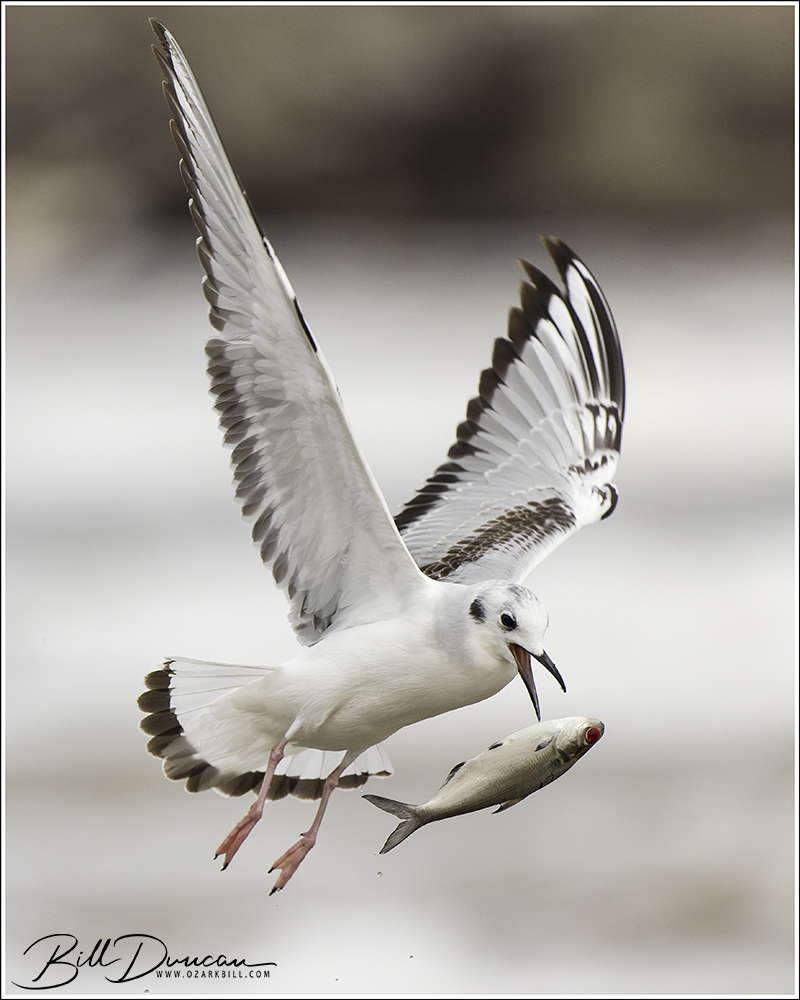
From another set I took last winter, this is but one image of several I could have chosen of these voracious Bonaparte’s Gulls who were fishing in the Carlyle Lake Dam spillway. This is an image that would have been difficult, if not impossible for me to have made three years or more ago. The lighting was poor for taking high-speed action shots like this. With the advent of mirrorless cameras and their incredible image quality at higher ISO settings and the ability of autofocus systems to perform as needed in suboptimal lighting, photographers can shoot in nearly any condition and still have a chance at getting wall-hanging photos.
First-year Bonaparte’s Gull with Catch
This wraps up my list for my top 10 favorite images of 2024. I want to thank everyone who was with me or helped me to make these shots. Please let me know in the comments if I overlooked a favorite of yours. Best wishes for the remainder of 2025. Hopefully your opportunities are abundant and I hope to see you in the field sometime.
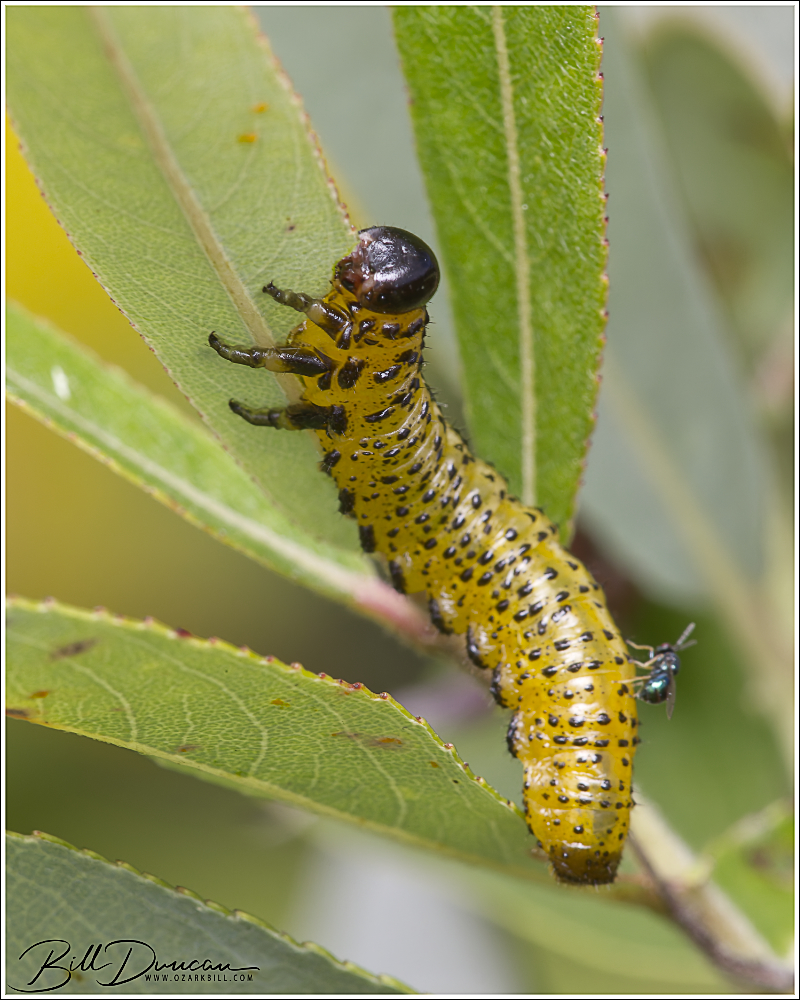
While hunting caterpillars in mid-September. I found this sawfly larvae in the middle of the Kaintuck Hollow Fen in Phelps County. This might be in the Nematus genus as this group feeds a lot on willows. It wasn’t until I looked closely at the photo much later that I noticed it was being parasitized by a small wasp. I would have loved to have gotten a closer photo of the wasp.
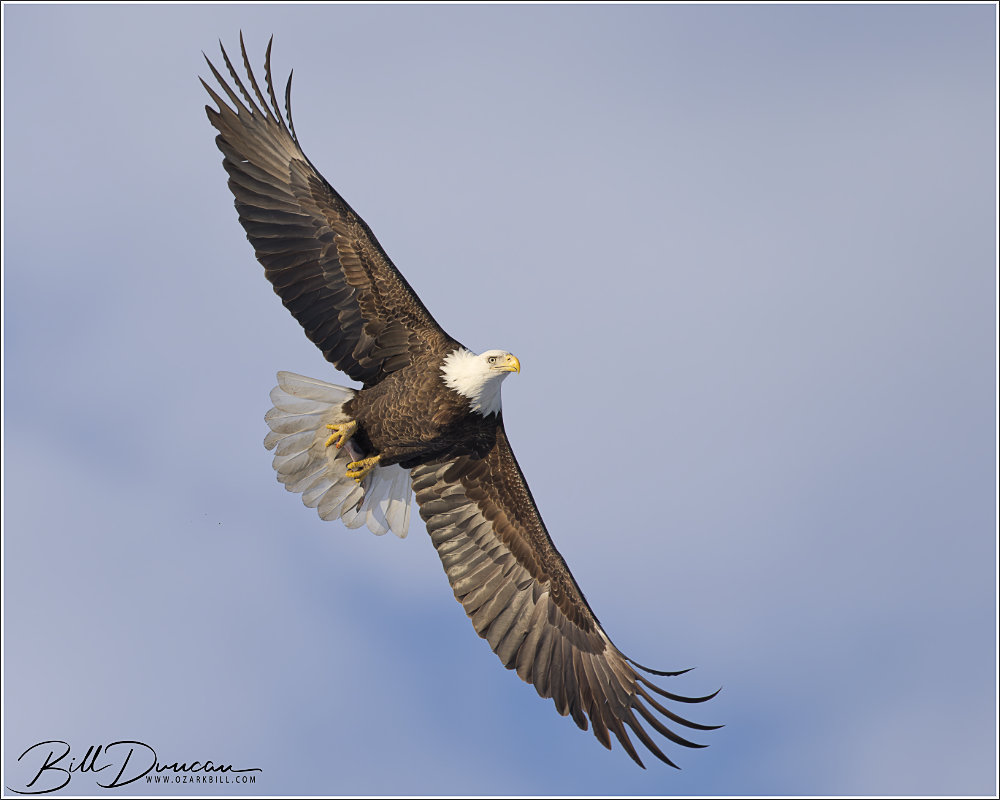
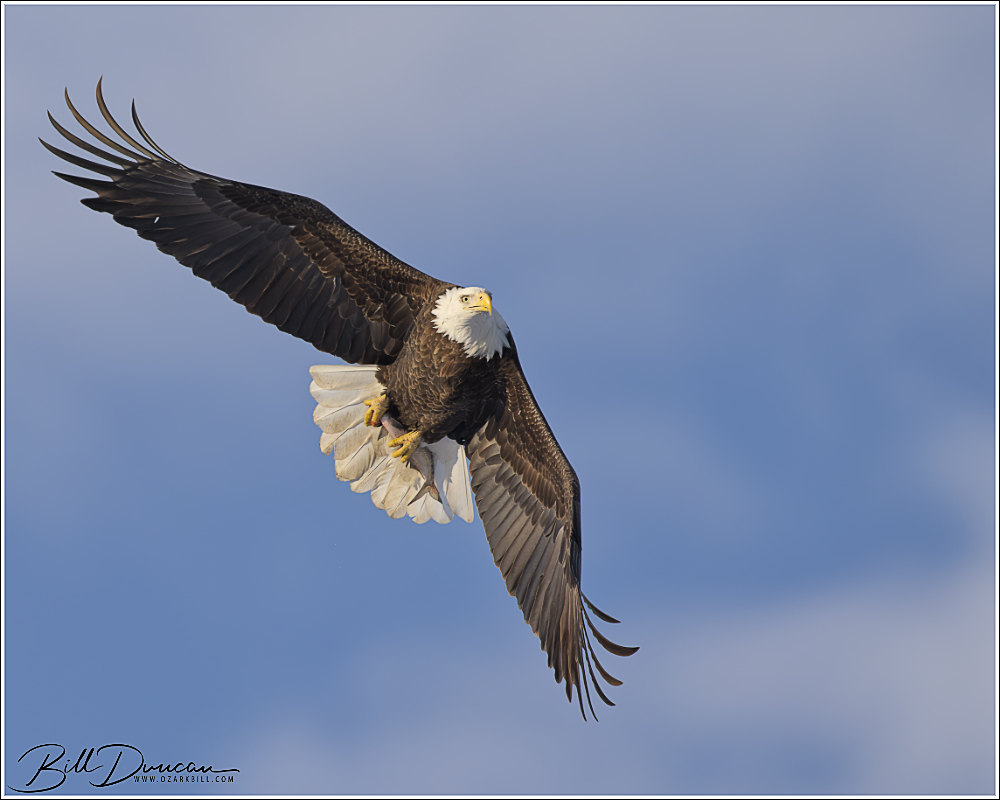
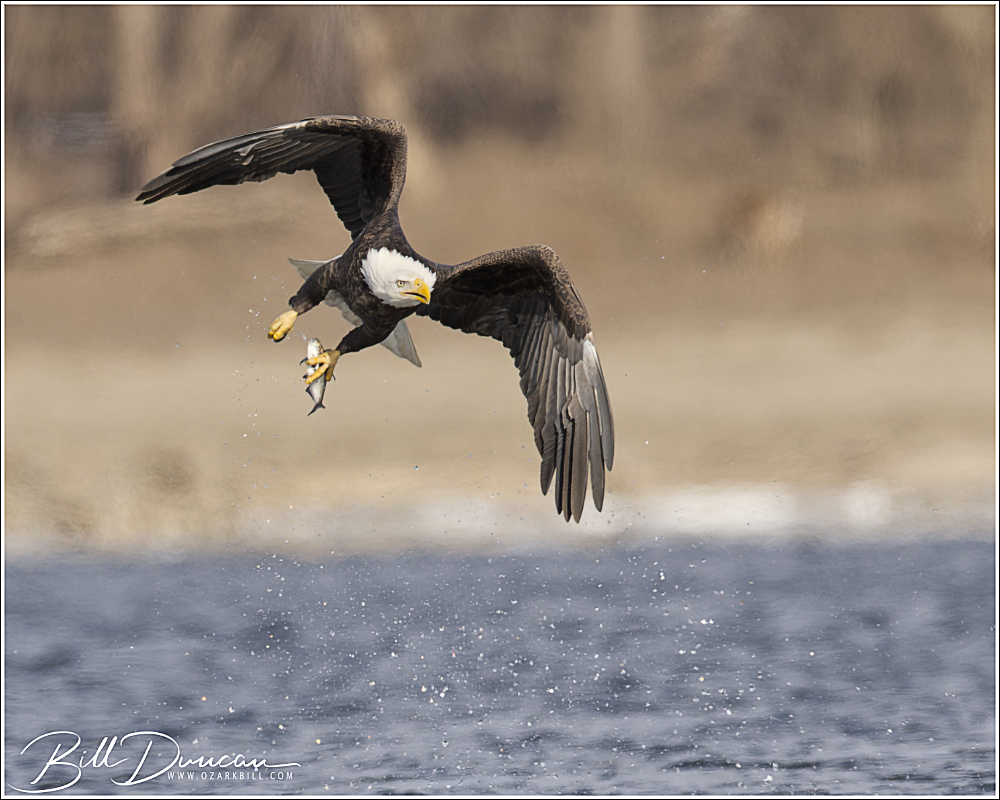
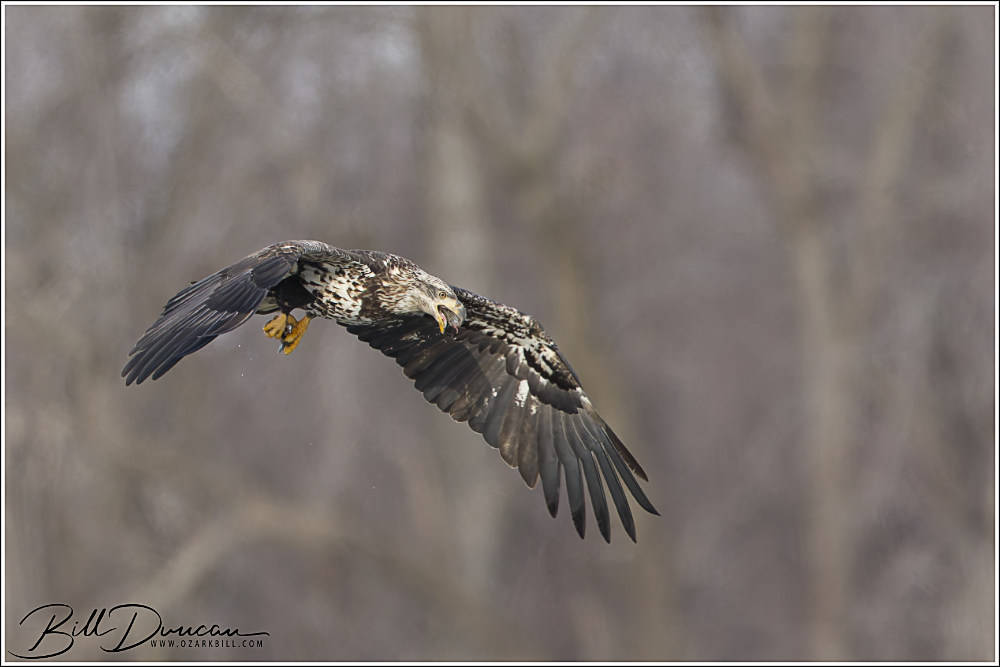
Miguel and I had the fortune to spend a couple of cold, fun and somewhat successful afternoons photographing eagles at the Clarksville lock and dam over the last couple of weeks. I really enjoyed the variety of ages of these birds as can be seen in the different plumages. During these extremely cold days with nice light, heat distortion becomes a terrible nuisance. Heat distortion is created by the warmer temperatures of the water causing warmer air to rise rapidly through the much colder air and thereby causing light refraction. The name of the game is being out there long enough and being fortunate enough to have a bird soar or grab a fish that is close enough to you so that this refraction does not destroy all that potential detail. Keeper rates have not been high in my attempts so far.
I was fortunate to come across this most cooperative juvenile Red-shouldered Hawk over the recent holiday break. Using the newly acquired pre-capture mode in my camera makes it much easier to grab shots like these. By half-pressing the shutter button, the camera stores half a second’s worth of frames in its buffer. Immediately after the action takes place, fully depressing the shutter button will instruct the camera to write the images from the previous half-second onto the card. As long as you are on the ball, missing unpredictable action shots like a bird leaving its perch will be a thing of the past.

































 A Thousand Acres of Silphiums