"What a thousand acres of Silphiums looked like when they tickled the bellies of the buffalo is a question never again to be answered, and perhaps not even asked." -Aldo Leopold
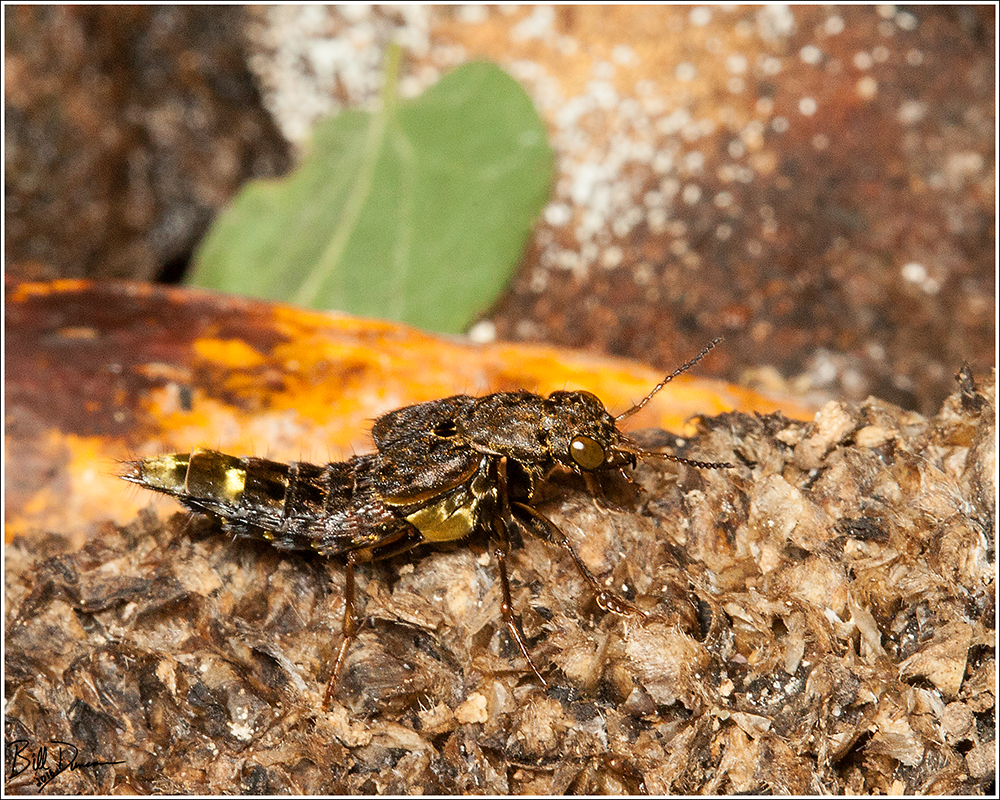
While searching for arthropod subjects to photograph on Steve’s property, we decided to check the compost/midden pile and found something completely unexpected.
Gold and Brown Rove Beetle – Staphylinidae-Ontholestes cingulatus, Farmington, MO
These beetles were crazy to watch – super speedy while flipping their gold-tipped abdomens over their backs in display. These guys yield even more support to my contention that the vast majority of ideas used in the sci-fi genre (particularly the creature-features) were taken from somewhere within the natural world.
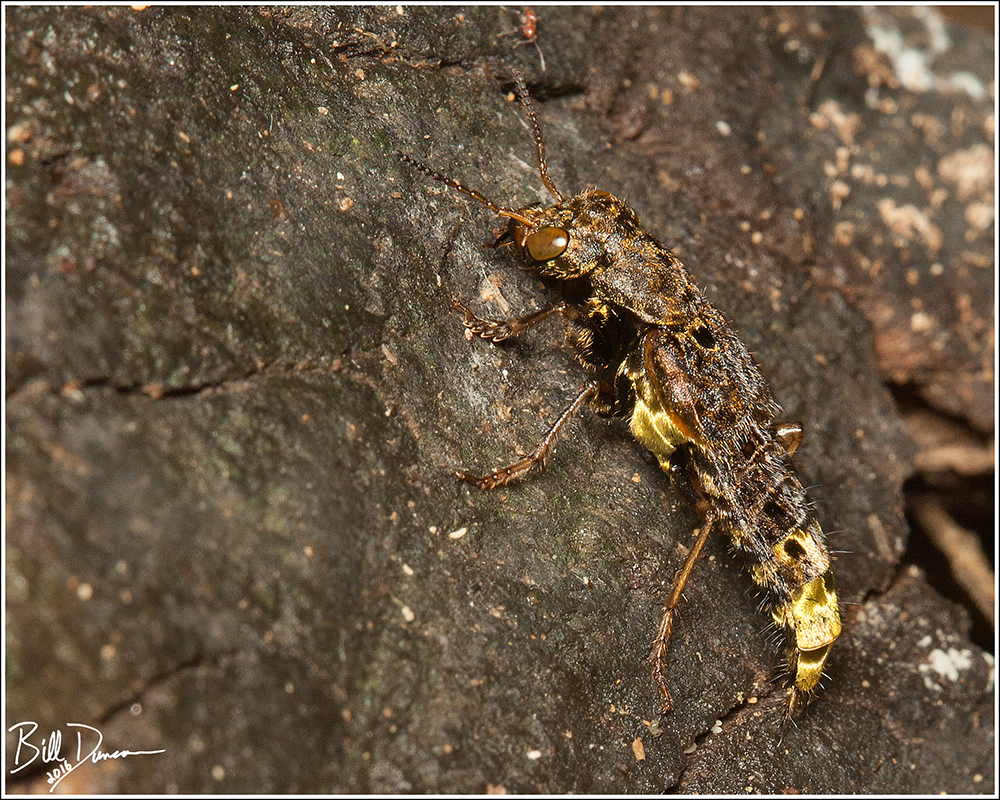
Gold and Brown Rove Beetle – Staphylinidae-Ontholestes cingulatus, Farmington, MO
Check out those chompers!
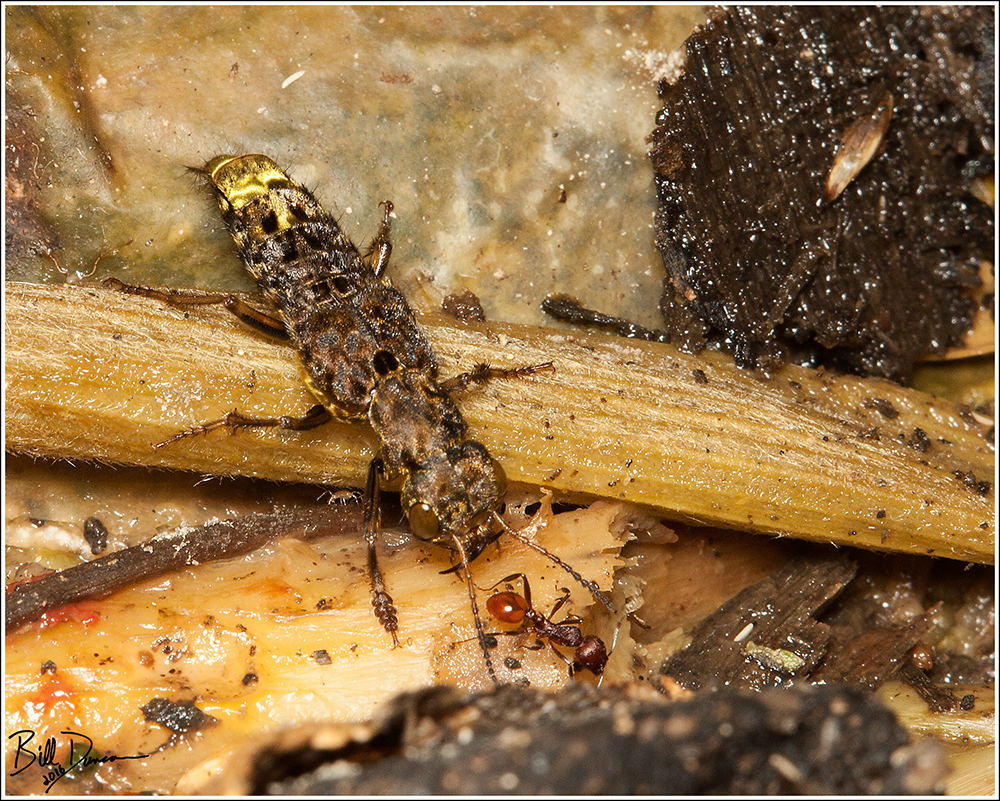
Gold and Brown Rove Beetle – Staphylinidae-Ontholestes cingulatus, Farmington, MO
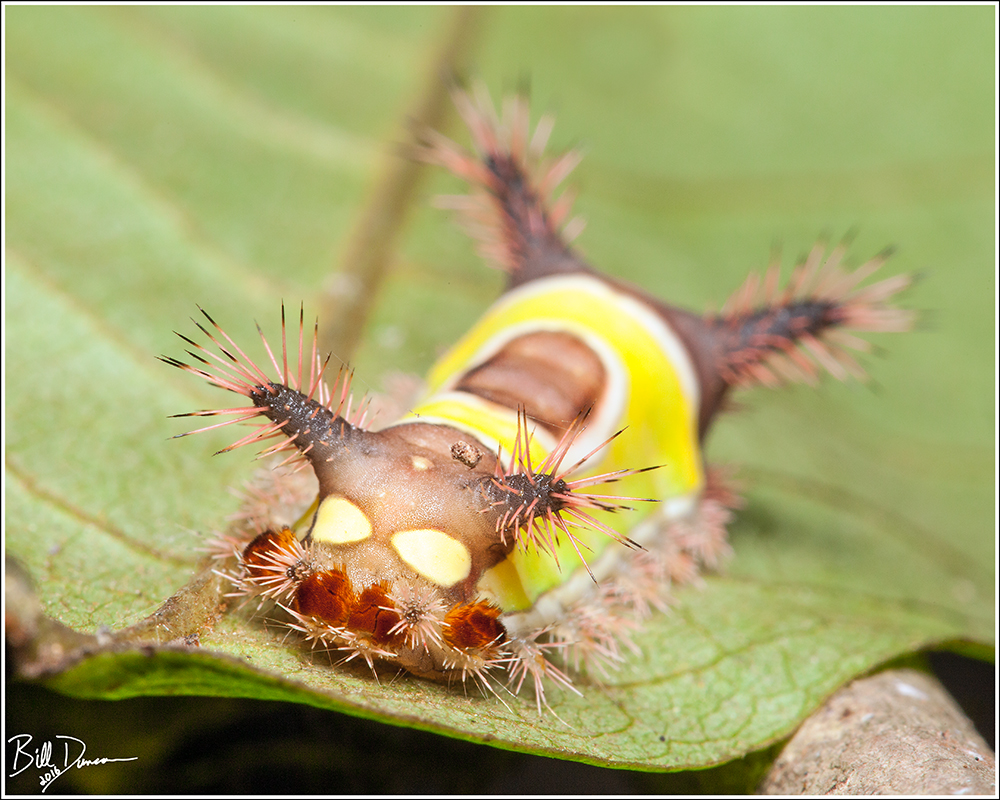
Saddleback Caterpillar (Acharia stimulea) photographed at Millstream Garden Conservation Area in late August, 2016.
We were quite fortunate during our first summer of hunting for “slug” caterpillars – members of the moth family Limacodidae who get their name from their absence of prolegs, which are replaced by a sucker that enables them to move quite similarly to a true slug. We (Sarah, Steve and I) were fortunate because we were able to locate and photograph ten species of slugs. I had read about these fascinating animals before, but never realized how abundant and diverse they actually were in the Missouri Ozarks. Yes, a good amount of work and patience is necessary to find them – I don’t want to tally up the hours, but it was time well spent outdoors.
I’ve decided to begin sharing these images with a species that is probably most well known of those who have heard of the slugs – the aptly named saddleback caterpillar. As can be seen in the image below, the saddleback wears a green saddle, bordered with white. Also apparent in these images are the urticating (stinging) hairs that are concentrated along fleshy nobs located at both ends of the caterpillar. These spines are found on a number, but not all of the caterpillars in this family and are capable of delivering a painful sting that is quite similar to that of the stinging nettle plant.
Saddleback Caterpillar (Acharia stimulea) photographed at Cuivre River State Park in mid August, 2016.
The image below shows the ocellus, or eyespots, which are actually on the posterior end of the animal.
Saddleback Caterpillar – Posterior (Acharia stimulea) photographed at Cuivre River State Park in mid August, 2016.
Finally, the anterior end – the animal’s head is nicely hidden under a few fleshy folds that are armed with spiny protuberances.
Saddleback Caterpillar – Posterior (Acharia stimulea) photographed at Cuivre River State Park in mid August, 2016.
I look forward to sharing more examples of this fascinating group of Missouri slugs in the near future.
…comes the newest in reality based, sustainable living instructional programming: Corruption Construction!
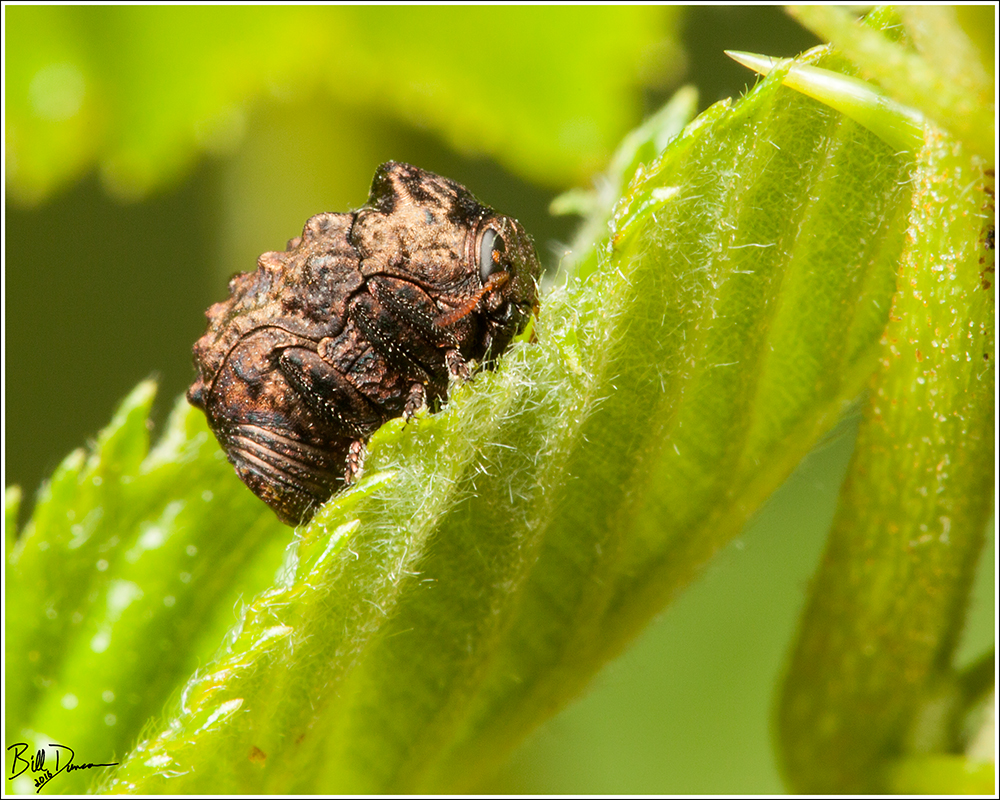
In a previous post I wrote a bit about the Warty Leaf Beetle (Neochlamisus gibbosus), a member of the Cryptocephalinae subfamily. Fascinating due to the fact that the adult form seems to be a perfect mimic of caterpillar frass, this species is much more interesting than I had imagined.
This species is highly, if not solely, associated with blackberry as a host plant. While watching these guys and looking for other insects on these plants I kept noticing gall-like structures, usually on the undersides of the leaves.
Paying closer attention, I noticed that these structures were not galls, nor were they attached directly to the plant tissue – they moved. On closer inspection, I could sometimes see the legs of the creature that resided within the house.
I had to crack one open to see if I could get an idea of what sort of organism built and resided within. As you can see in the photograph below, the animal appeared to be a beetle larvae.
Warty Leaf Beetle – Chrysomelidae – Neochlamisus gibbosus. Larvae exposed from within its scatological residence. Photographed at Shaw Nature Reserve, MO.
It took me a while to put it together, but eventually I confirmed that the larvae belonged to the same species as the adult beetles that I observed all over the blackberries. My next question was, on what materials did the larvae use to build its shelter? Usually, an insect will use detritus or perhaps fresh plant tissue that it processes to make a protective enclosure like this. These guys do it a bit differently.
It starts with mom. As she oviposits, she encases each egg with a layer of her own feces and some rectal secretions. As the larvae hatches and grows, it continues to expand its home by building with its own feces to accommodate its increasing bulk. Here is a photo of an adult and larvae close together.
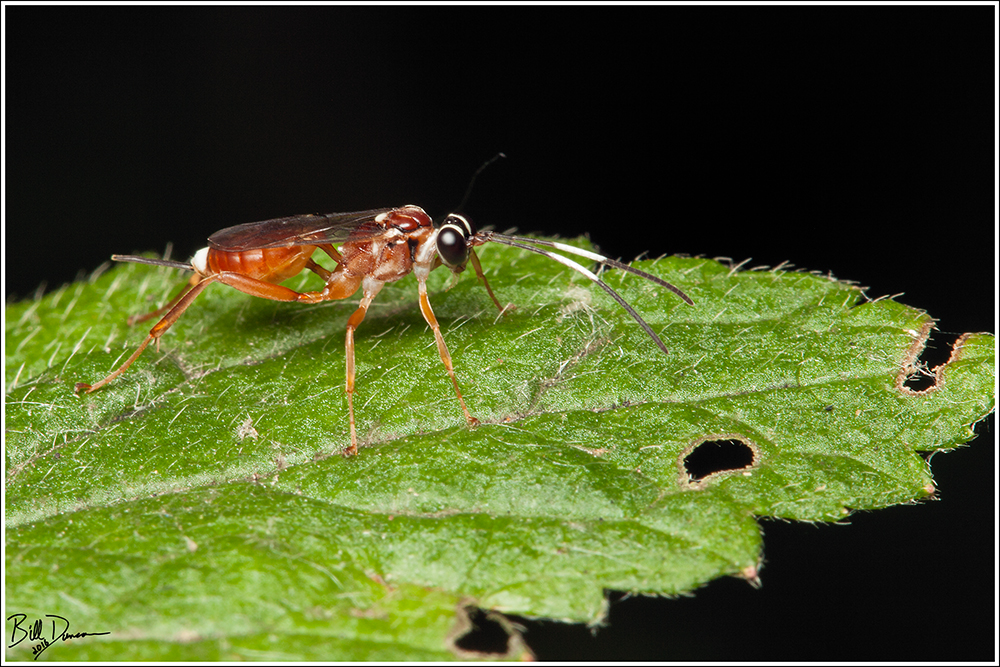
This tiny and speedy ichneumon wasp, which I am calling a Theronia species, has been hanging around my patch of wild strawberries for a couple of months. If I am close to correct in the identification (with more than 100,000 described ichneumons, how close could I be?), then this species parasitize tent caterpillars along with a number of other lepidopterans.
Ichneumonidae – Theronia sp. – Female – Photographed in the author’s wild strawberry patch, St. Louis Co., MO.
“I cannot persuade myself that a beneficent & omnipotent God would have designedly created the Ichneumonidæ with the express intention of their feeding within the living bodies of caterpillars …”
-Charles Darwin-
Ichneumonidae – Theronia sp. – Female – Photographed in the author’s wild strawberry patch, St. Louis Co., MO.
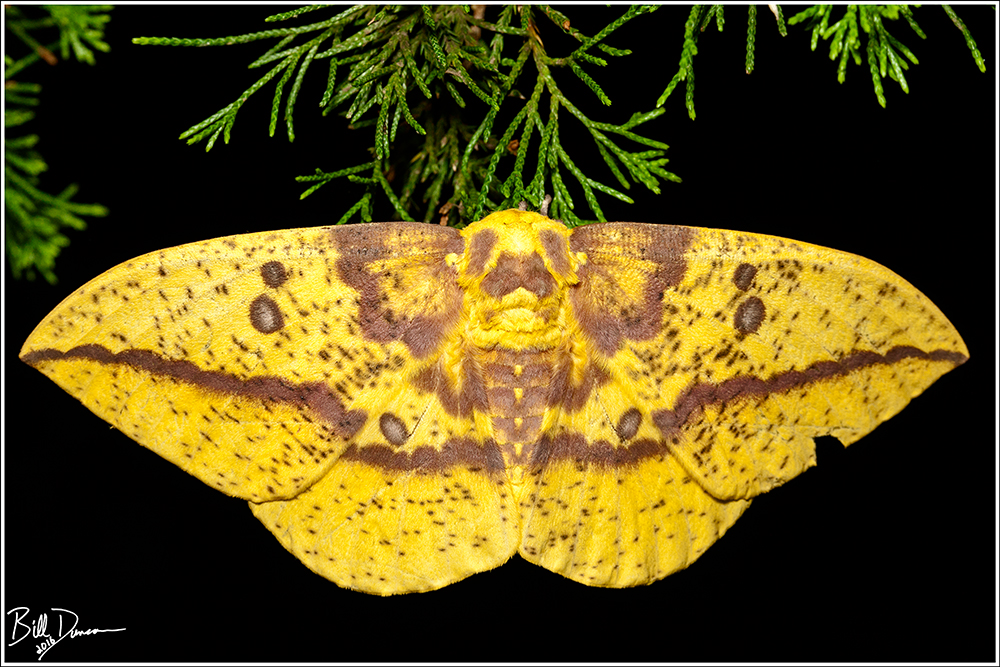
Belonging to the family of moths called Saturniidae, the Imperial Moth can reach up to six inches. Many members of this family are large-bodied and short-lived as adults – typically living only one or two weeks and not feeding in this stage. This female was attracted to lights during a national moth week event at Cuivre River State Park on July 31, 2016.
Imperial Moth – Saturniidae – Eacles imperialis, photographed at Cuivre River SP during national moth week.
Acroclisoides wasps are tiny insects that parasitise wasps that parasitise bugs. That’s right. Somehow, these wasps find a clutch of bug eggs (which are really small to start with) that have already been parasitised by a wasp and manage to get their little babies into those wasp larvae.
Acroclisoides wasp (3mm long, max) investigates which of these bug eggs are most viable for her own egg deposit. She spent quite a lot of time wandering around ‘feeling’ with her antennae trying to work out where to lay her eggs. Mount Ommaney, QLD.
Even while I was shooting this wasp I had no idea of how beautiful she was. She’s a metallic gold and was very busy populating these bug eggs with her offspring. In this shot you can just see her starting to pierce the bug egg with her ovipositor. Mount Ommaney, QLD.
A shot from above while she is ovipositing. Her head…
While investigating a patch of Maypop (Passiflora incarnata) I could not find my goal of the Passion Flower Flea Beetle, but I was still happy to find a number of Shiny Flea Beetles – Chrysomelidae – Asphaera lustrans.
Hidden along the Eleven Point River in the south-eastern Missouri Ozarks lies Greer Spring (the 2nd largest spring in the state). This location and surrounding areas of bottomland and riverfront forest are widely heralded among birders in Missouri as being prime for easily picking up a number of forest species. Cerulean, Swainson’s, Worm-eating, Kentucky, and Hooded Warblers, to name a few, are documented as nesting in this area. These clips were recorded during a trip that Steve and I made this past May.







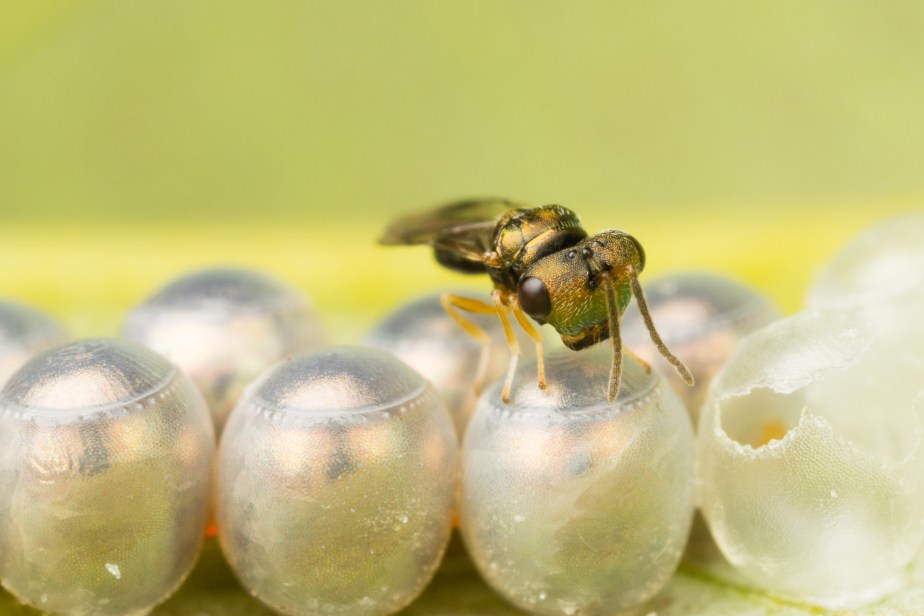 Acroclisoides wasp (3mm long, max) investigates which of these bug eggs are most viable for her own egg deposit. She spent quite a lot of time wandering around ‘feeling’ with her antennae trying to work out where to lay her eggs. Mount Ommaney, QLD.
  Even while I was shooting this wasp I had no idea of how beautiful she was. She’s a metallic gold and was very busy populating these bug eggs with her offspring. In this shot you can just see her starting to pierce the bug egg with her ovipositor. Mount Ommaney, QLD.
  A shot from above while she is ovipositing. Her head…



 A Thousand Acres of Silphiums