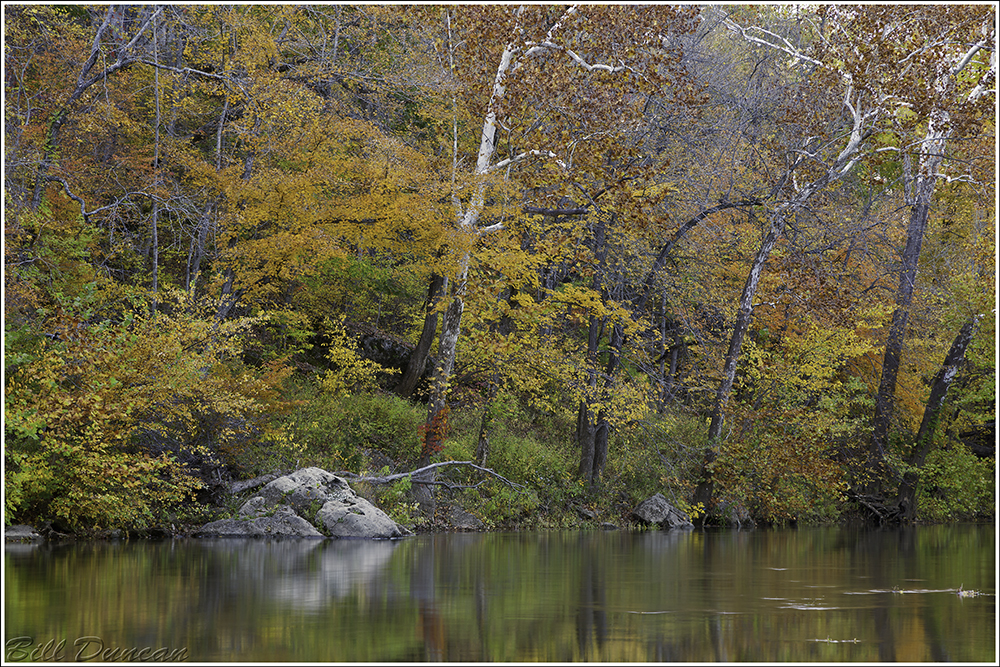
“Rainy days and Mondays always get me down”
-Karen Carpenter-
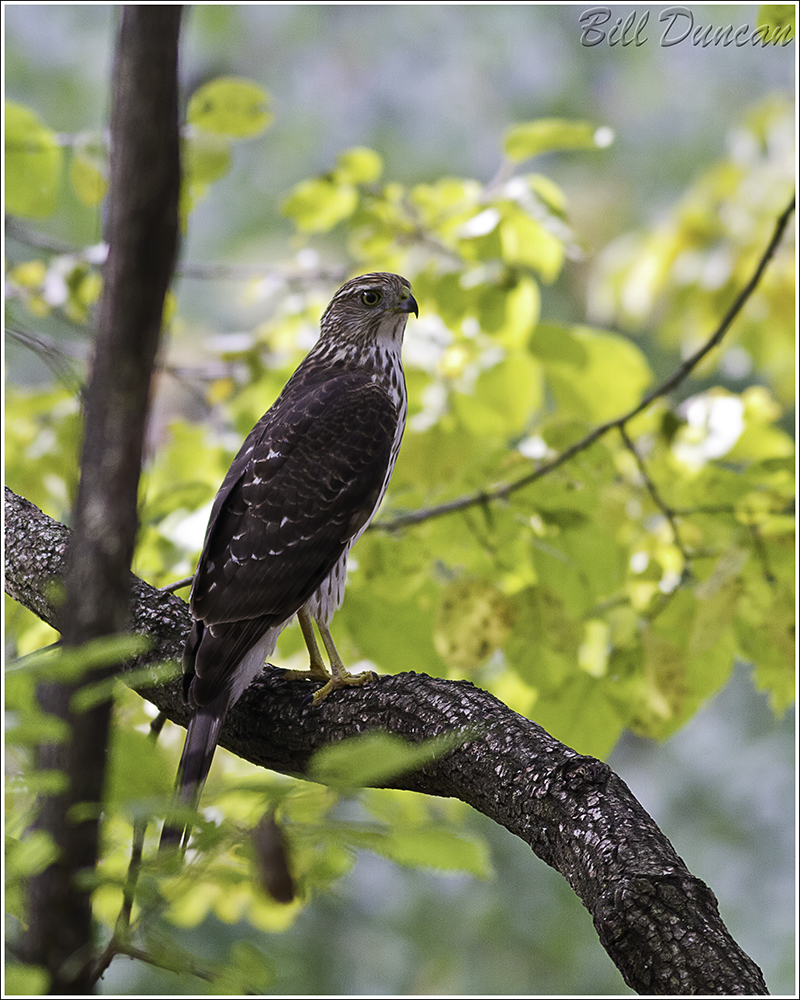
“Cooper’s Hawk”
Technical details: Canon EOS 7D camera, EF400mm f/5.6L USM lens, ISO 640, f/5.6, 1/200 sec
"What a thousand acres of Silphiums looked like when they tickled the bellies of the buffalo is a question never again to be answered, and perhaps not even asked." -Aldo Leopold
“Rainy days and Mondays always get me down”
-Karen Carpenter-
“Cooper’s Hawk”
While growing up in the inner St. Louis suburbs, I have relatively few memories of nature before entering my twenties. One memory that particularly stands out is on a trip south seeing an Osage orange fruit for the first time. Just what the heck was this strange fruit, so reminiscent of the cerebral cortex of the human brain? Like so many ignorant of nature, I wondered what its purpose was and why it had to be so creepy.
Thirty years later I realized I still did not know much about this tree. Sarah found this fruit on our trip through the Ozarks and I brought it back to make it the subject of this study. The common name, “Osage orange” is rather self explanatory. The name Osage comes from the Osage tribe that was historically found over much of Missouri and the fruit does resemble an orange, so commonly eaten. I have since learned that the best adaptive story to explain such a large amount of flesh covering the hidden nut is that the primary disperser of these seeds were the Mastadons. Following the disappearance of these large herbivores, humans became the primary dispersers of this species, planting these trees as windbreaks and fences. The wood of these trees is some of the heaviest, densest and hardest in the Ozarks. This fact plus the thorns on young branches made this the perfect species for such purposes.
The nature of this species wood also made them perfect for use in making bows by native Americans. This fact prompted the French to name them “Bois d’Arc” or bowwood. This name is the most favored in being responsible for the name “Ozarks” given to the hills and habitats of Missouri, Arkansas and surrounding states. It is theorized that Bois d’Arc was bastardized to “Bodark”, and later to Ozarks by English settlers. To my understanding, this cannot be proven, but is the best conjecture given by historians. That is why I titled this post “The Ozark Tree”.
So, I brought this fruit home and took it out in the backyard and placed it among colorful white-oak leaves, a milkweed pod, Monarda seed heads, and a prairie dock leaf. It is still siting in my backyard. I want to see, if left alone to rot over winter, whether or not the seeds will germinate.

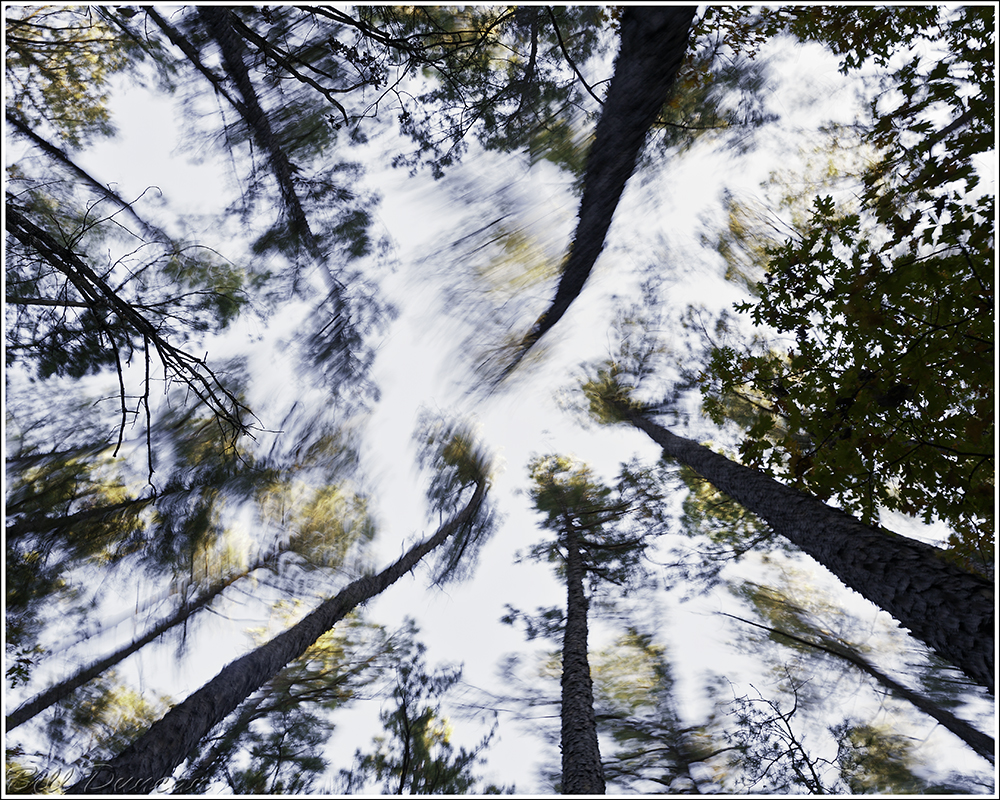
During the first day of our short vacation this fall, Sarah and I took the winding, yet scenic Hwy 19 south. Always a nice drive, it is particularly attractive in autumn. About halfway through the drive the sky opened up on us, but I did use this opportunity to find a few new places and at least get them on the ol’ GPS. This stretch of highway contains many potential destinations and we have only begun making real visits or hikes into most of these. Later, we went back to a place I’ve had on my radar for quite some time, the “Virgin Pine Forest”. This amounts to a strip of apparently virgin shortleaf pine, many of which are over 200 years old, on both sides of the road. The wind was very strong here so I let the pines tell their story…
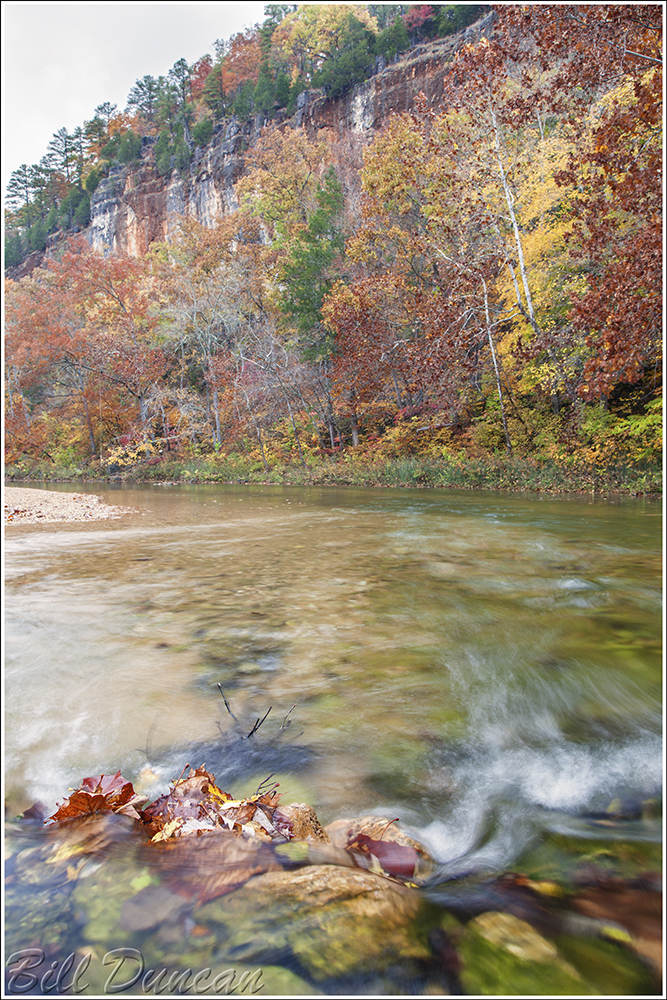
Just a short drive from the town of Steelville lies the aptly-named “Red Bluff Recreation Area”. I have seen photographs of this place and it was as beautiful in person. Carved over time by Huzzah Creek, these bluffs get their color from the high amounts of iron oxide in the limestone. This spot was almost indescribable. Incredibly peaceful and full of singing birds, the first thing I did was take off my shoes and pants and wade into the river to make this picture. At times like these my city-slicker feet never fail to disappoint me. Each step was painful and it was then that I realized my mitochondria training regimen was getting me nowhere. Anyway, this place has lots that would make a return trip worth the drive, including a natural arch and the ruins of an old grist mill site. Definitely a place on my “return to” list.
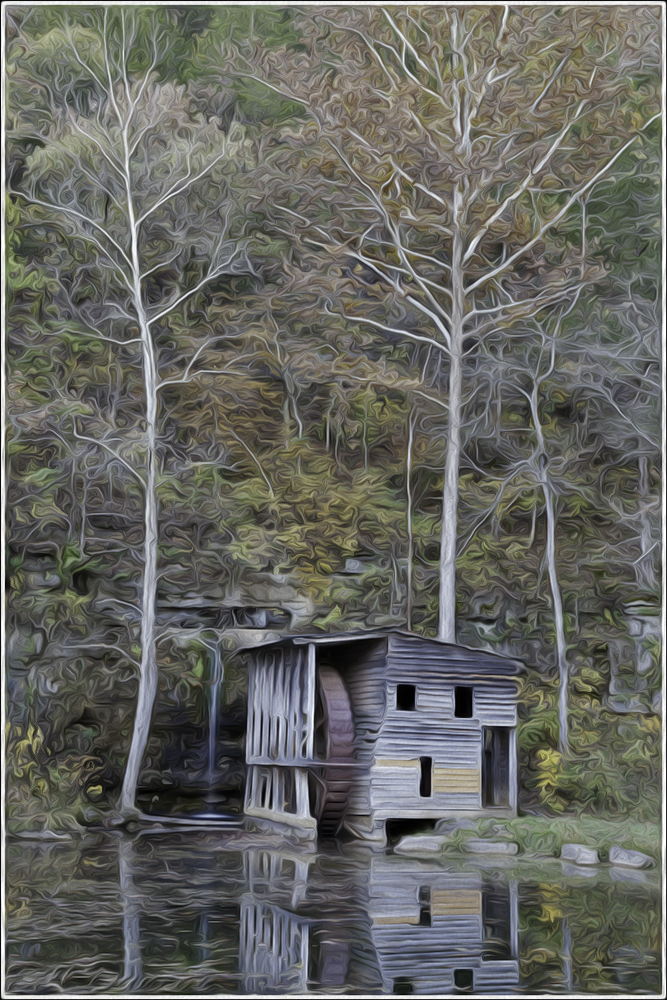
Continuing on Hwy 19, south of Winona is another of our favorite visited spots – Falling Spring. This spot is out of the way and if the spring is flowing, will never disappoint. My mind’s eye pictured better autumn colors than were actually found, but it is always a treat to find that vandals have not completely taken the old structure down.
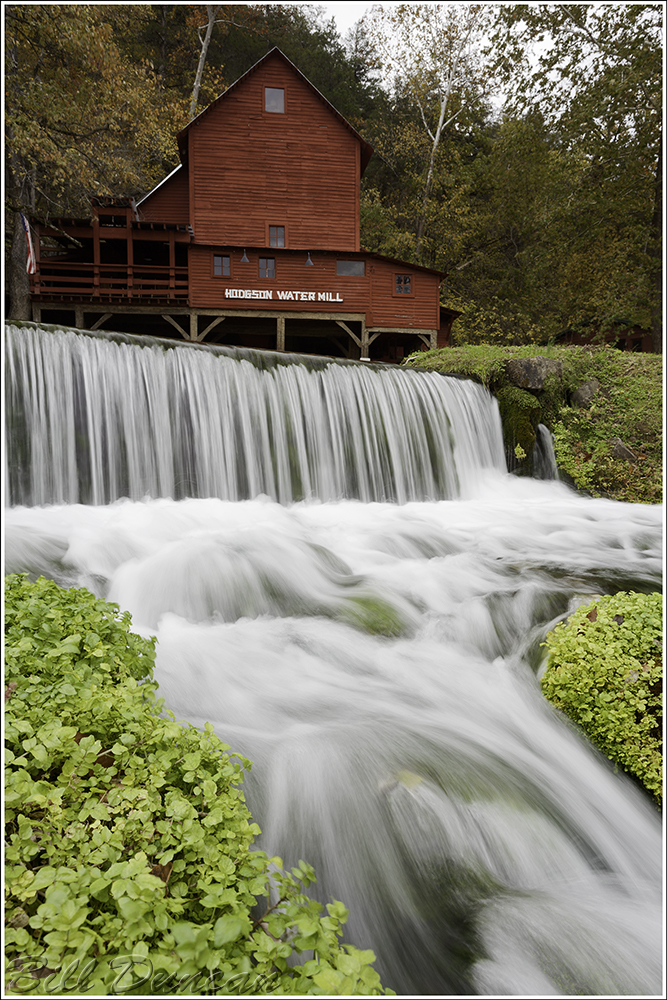
Further west in south-central Missouri Sarah and I visited the Hodgson Water Mill located on Bryant Creek. This picturesque mill is still in business as a museum/store. The spring discharges from a cave just behind the building and its 24 million gallons per day powered two underwater turbines for milling operations.
So that’s a little more from our splendid autumn Ozark trip from 2012. I still have a few images to share and will hopefully post some in the near future. I’m quite thankful that there are so many nicely written books available with descriptions of these locations. I use these books quite often and one of these days I will list them in a post.
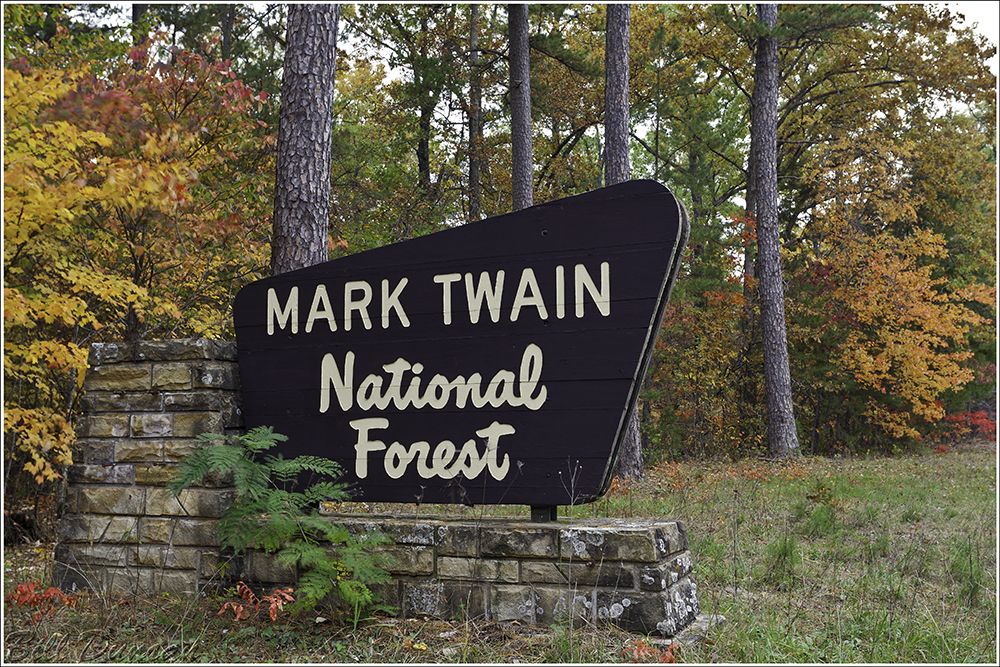
The Mark Twain National Forest contains near 1.5 million acres across the Missouri Ozarks. Make some time to pay a visit, as it belongs to us all, except the areas that are logged… ;=)
Did you know…?
-The first nest of the Le Conte’s Sparrow was was not discovered until almost 100 years after the bird was first described by science.
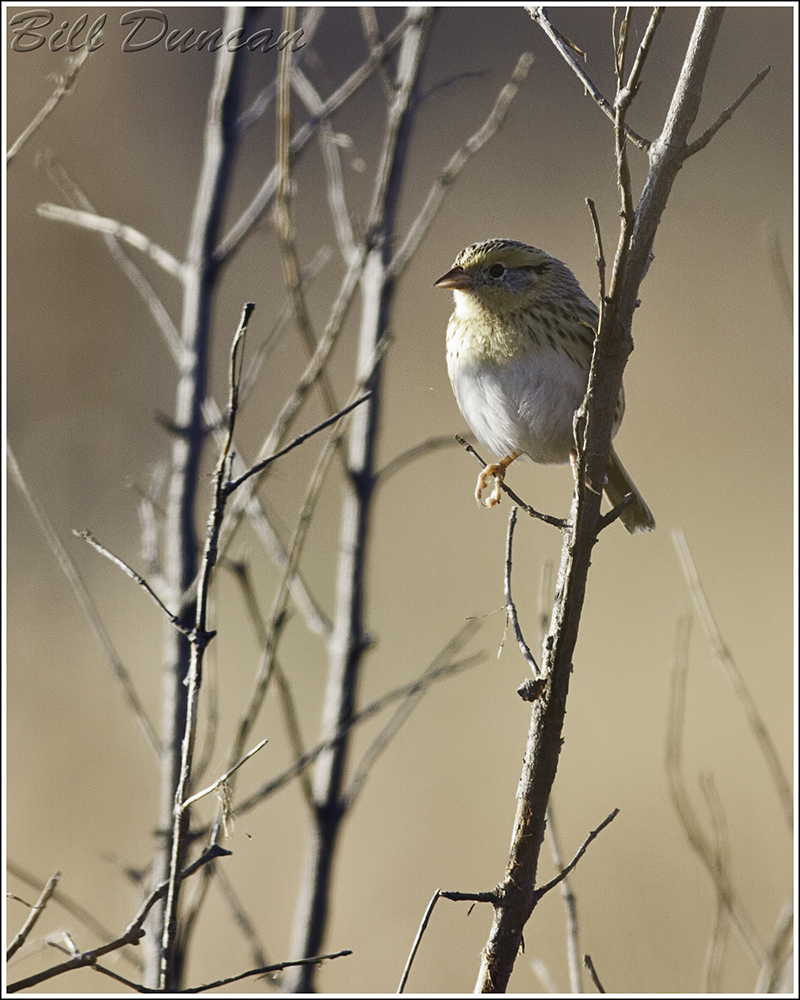
“Le Conte’s Sparrow”
This year Sarah and I timed our autumn trip into the Missouri Ozarks perfectly. The autumn colors were near their peak and more spectacular than I can ever remember. As is one of our favorite customs, we reserved one of the cabins at Big Spring State Park, located within the Ozark National Scenic Waterways. Built in the 1930s by the CCC, rustic is the perfect description for these cabins and the nearby lodge. We were a week or so earlier than normal this year and the cabins were a bit more full than usual, so we were not able to get a choice cabin that does not have a long flight of stairs. Once I got all the unnecessary equipment and supplies we carry up these stairs and inside the cabin, we were ready to have some fun.

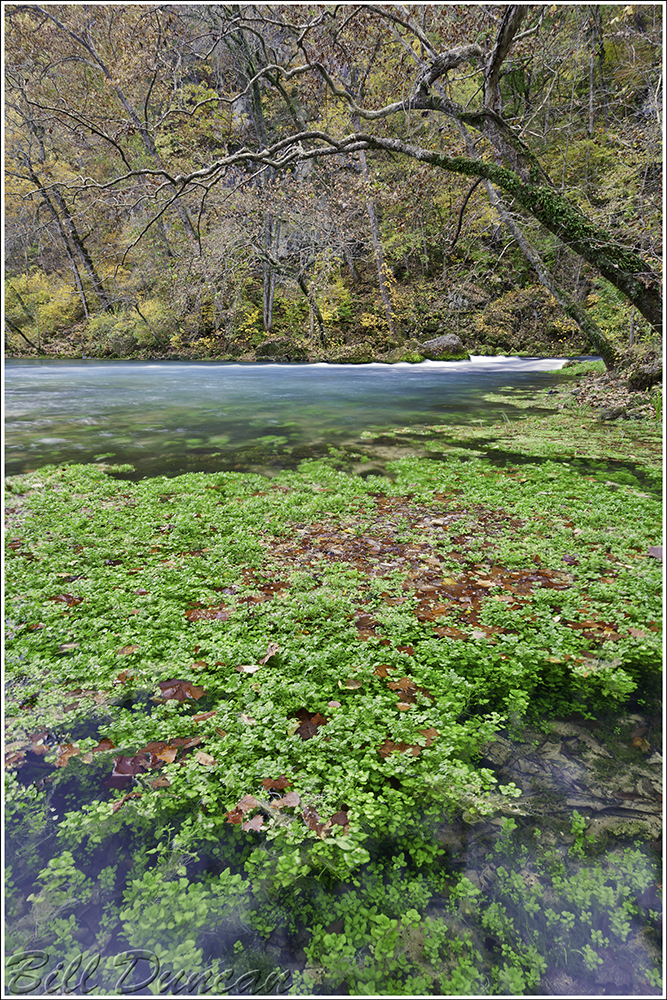
Located a few miles from the town of Van Buren, Big Spring is in contention for one of the largest springs on the continent, pouring an average of 286 million gallons (13 cubic meter/sec) a day into the Current River. I have never visited the spring without being mesmerized by the beauty and sense of peace that the spring presents as it flows from the base of the limestone bluff. Autumn and spring time are by far the best times to make a visit. The cool blue waters that seem to come from nowhere contrast nicely with the warm autumn colors displayed by sycamores and other trees that take hold along the bluff. The image below showcases the watercress that is found here and in most of the large springs of the Missouri Ozarks. Although watercress is an exotic species, it is now naturalized across most of the country, and does not seem to present much of a problem with the delicate ecosystems that these springs create.
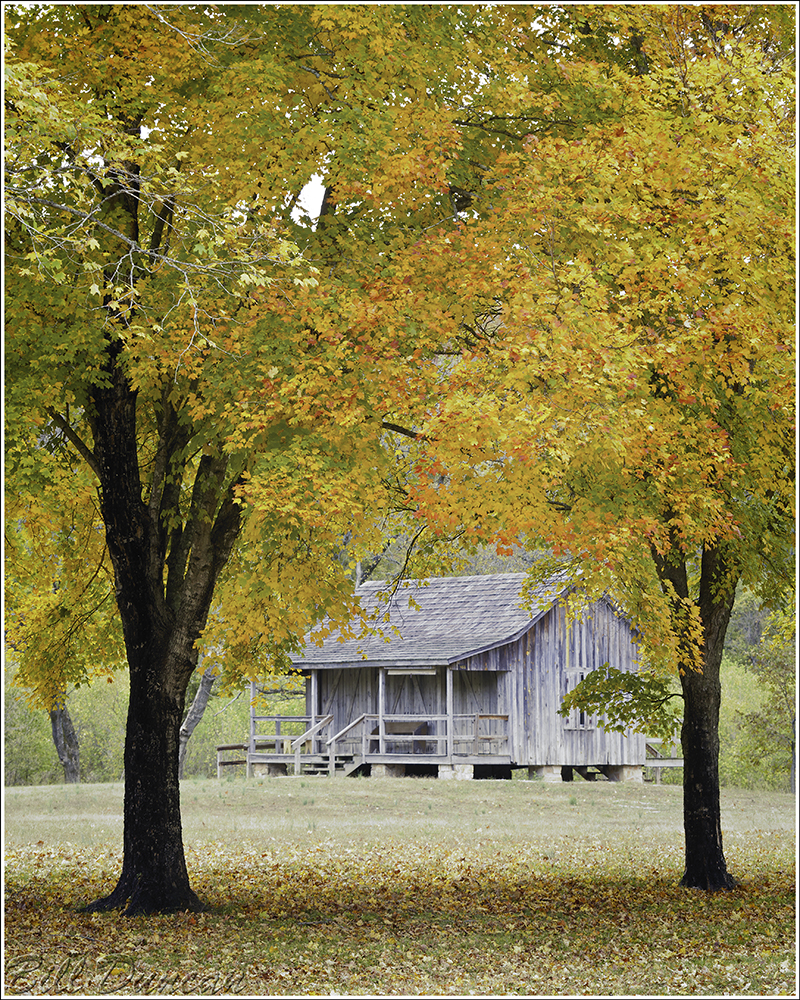
Placed nearby the spring is this early Ozark settlement period structure. These maples frame it nicely.
As I have told anyone who has had the patience to listen, my idea of a perfect morning, one I could relive every day until the end of my days is getting up and hitting the trails surrounding Big Spring before sunrise. The temperature is quite chilly, the air saturated to the point of a nice fog and I am usually greeted with the the crepuscular greeting of a Barred Owl. Who cooks for me? Why, Sarah will have some of the best french toast imaginable to go with my cup of french-press when I get back to the cabin sometime around mid-morning. I better get to hiking these hills so I can burn some of those calories 😉
The morning this image was made was definitely memorable. I actually carried my bird/wildlife lens along with my landscape gear. Just past the confluence of the spring effluent, where those crystal-blue waters flow into the lazy Current River I eagerly watch the eastern sky. Will this finally be the morning I see some color? Yes indeed! However, just after setting up the gear and getting ready to capture this scene, an Eastern Screech Owl starts vocalizing maybe 20-30 yards up the wooded slope directly behind me. What to do!? Go after the owl in attempts to finally get a photo of that bird or take the sure thing of a quickly changing landscape? I decided to be satisfied with leaving the bird alone and concentrated on the sunrise while listening to one of the most beautiful songs imaginable. There was no real fog, but what a morning!
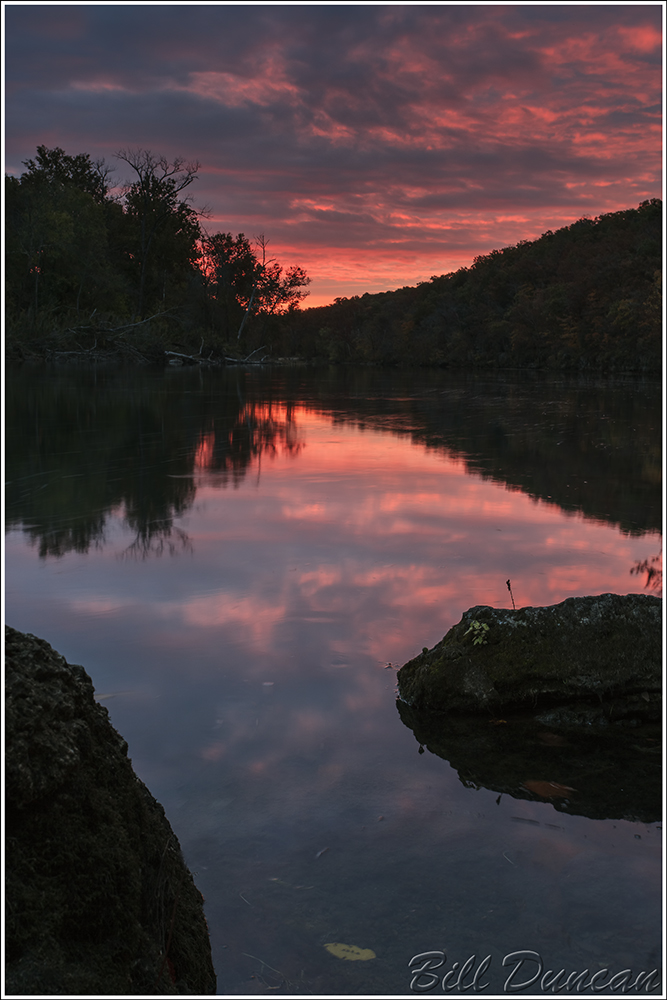
I also joke that I always take the same composition every time I visit the spring. Here it is from this occasion. I can’t help it and I won’t apologize. I will hopefully get an original idea one of these years, but until then…

So, there is a bit of detail and a few of my favorite images from this autumn’s Big Spring visit. It is surprising that so many people in the StL area have never even heard of Big Spring. But I’m not complaining. Let them take their expensive vacation to the popular destinations. If I can have this place to myself, as I almost always do on these morning hikes, I’ll be satisfied and want for nothing. Until the next time, I’ll be pining for my next visit home.

So, the president pardoned two turkeys today, named “Gobble” and “Gobble” apparently. Who writes this stuff? The country slaughters near 60 million birds and sparing these two is supposed to make it all okay? Don’t get me wrong, next to chicken and salmon, turkey flesh is one of my favorite animal protein sources. What I am suggesting is that the Wednesday before Thanksgiving should be designated as another national holiday in which everyone who plans on eating turkey on that special Thursday must find and hug one first. Think about it. The amount of calories spent in this endeavor should just about equal that which will be ingested by the glutton. I’m not sure which of my favorite ideas for a new national holiday will catch on first, this one or my idea for a national “punch a weatherman in the face” day. Happy Thanksgiving.
Anyway, did you know…?
-During the 1930’s the Wild Turkey population was estimated to be less than 30,000 birds. Through hunting regulations and habitat management there are now between 5-10 million birds in this country.
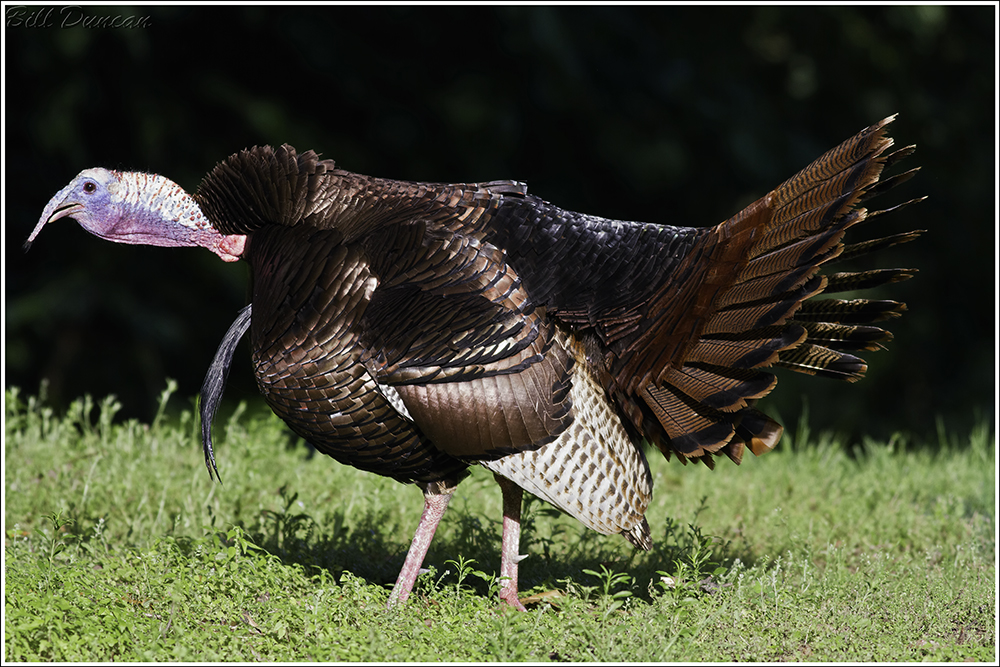
“Wild Turkey!”
“”In short, they who have not attended particularly to this subject are but little aware to what an extent quadrupeds and birds are employed, especially in the fall, in collecting, and so disseminating and planting, the seeds of trees.”
-Henry David Thoreau-

“Golden-crowned Kinglet”
“I do not see what the Puritans did at this season, when the Maples blaze out in scarlet. They certainly could not have worshiped in groves then. Perhaps that is what they built meeting-houses and fenced them round with horse-sheds for.”
-Henry David Thoreau-

Ansel Adams and some of his cohorts fought an epic battle in the first half of the 20th century against pictorialism – the manipulation of pure, sharp photographs with other artistic objectives. Pictorialists often produced images that were deliberately lacking in sharpness, low DoF, were hand-painted or toned with various pigments, all in order to place more of an artistic interpretation to the relatively cold and literal technological tools that photography introduced. Although most of the greats of this period, Adams and Steichen, Weston and Cunningham, began as Pictorialists, by the end of their respective careers these folks had shunned this practice and those that persisted to its employ. The literal interpretive of negative to positive in the photographic process was considered to be the only truly valid option of the photographic artist. Certain protocol were acceptable – using darkroom tools to manipulate emphasis in tones of the final print, for example. But, other than focusing on composition and obtaining as much DoF and overall sharpness as possible, the photographer became shackled in the tools that were “acceptable” to being taken seriously as an artist.
This is pretty much true today. Sure photography has been and to this day is still used in other types of art – using photos in mixed-media, pop culture works for instance. But the modernist view of photography is still the dominant and expected form. Any manipulation in making the exposure “in the camera” is acceptable, but other than the digital manipulation that is analogous to the darkroom of old, you are not allowed to interfere with risk of being completely shunned. For as long as I have been involved in serious photography I have wholeheartedly agreed with this. We have all seen the effects of plug-in filters in “Photoshop” and how tacky and cliched they become. I have looked through images like these on Flickr and thought those thoughts exactly. Until recently. The latest Photoshop, “CS6” has a new and improved “oil paint” filter. I have experimented with it a bit lately and I must say, it is growing on me. I think it does a great job of mimicking a real oil-painting.

The “photographer” is given six sliders to manipulate their painting/photo: four for the “brush”: stylization, cleanliness, scale and bristle detail, and two for “lighting”: angular direction and shine. With these sliders the artist can manipulate the “canvas” almost as much as one of those snobby old people with an easel who insist in sitting right where you’d prefer to set up your tripod. Just kidding! The majority of painters I’ve come across have been quite friendly and eager to talk nature with me. My point is that you have a lot of options in how the final output can look like.

What I feel I like best about doing this to a photograph can be observed in the two images above. In both of these un-manipulated photos the bush was nearly too chaotic, although each had pleasing colors, shapes and form. It made the composition messy. Putting some brush strokes on top of this took a bite out of all that detail and presented, may I say – order? from the brush of the “composer”.
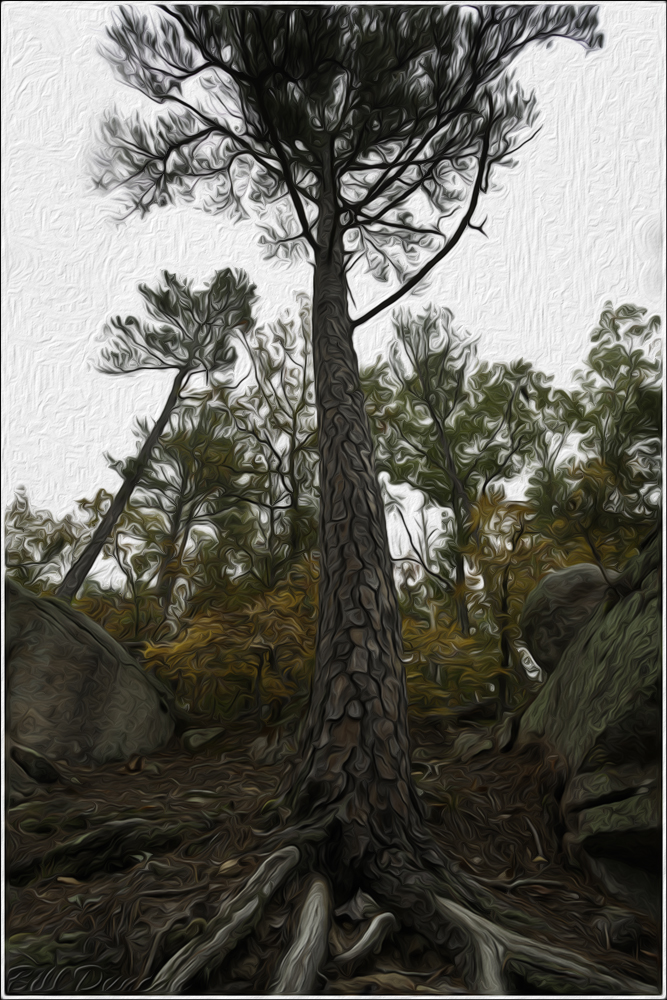
One of the most characteristic plants of the St. Francois Mountain region of the Missouri Ozarks, these trees are easily identified by their unique bark. If I were patient enough to paint, I know that bark would be my favorite thing to represent in this composition. The oil paint filter adds a bit of texture to the empty, white negative space. I feel this images is improved by this treatment as well.
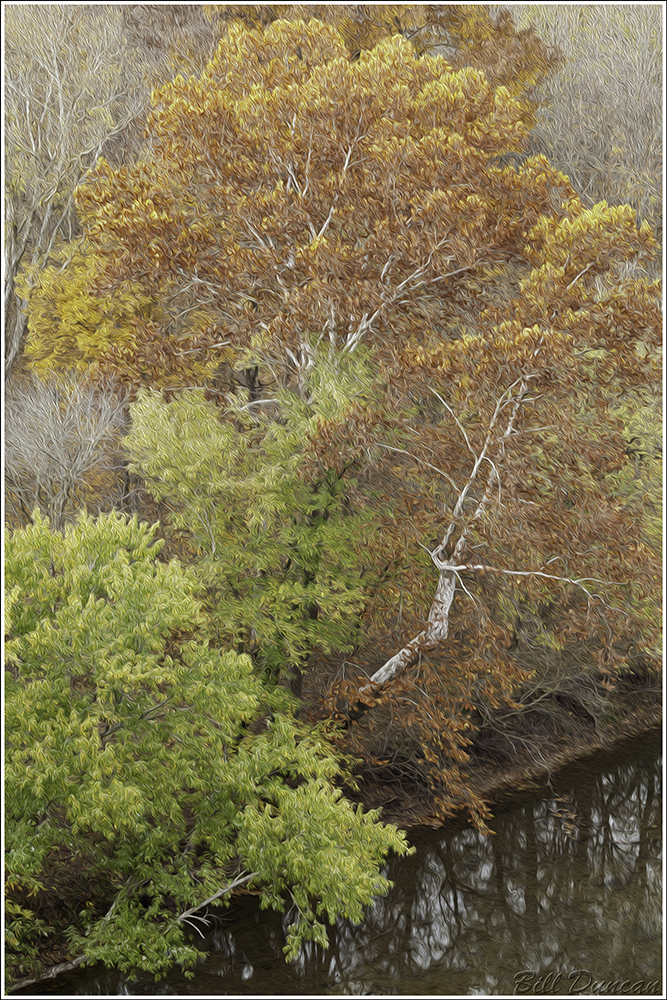
I love that this technique can be used to emphasize texture and pattern, something that could be difficult to do in a traditional modern photograph. I can easily see an image like one of these printed on canvas. Would you be able to tell the difference? I’m not saying that all photos should be presented like this. It would be easy to overdo and I can see this one becoming cliche’ like the emboss or watercolor filters that have been in PS for years. I do think there is something interesting going on. Painters have been using photography, to greater or lesser degree, to help their art work for decades. In some of these cases the only difference in output is that the person lays down oils on top of projections. Here, the computer does the same thing in a shorter time.
“When you come to observe faithfully the changes of each humblest plant, you find that each has, sooner or later, its peculiar autumnal tint; and if you undertake to make a complete list of the bright tints, it will be nearly as long as a catalogue of the plants in your vicinity.”
-Henry David Thoreau-