Synchlora aerata (camouflaged looper)

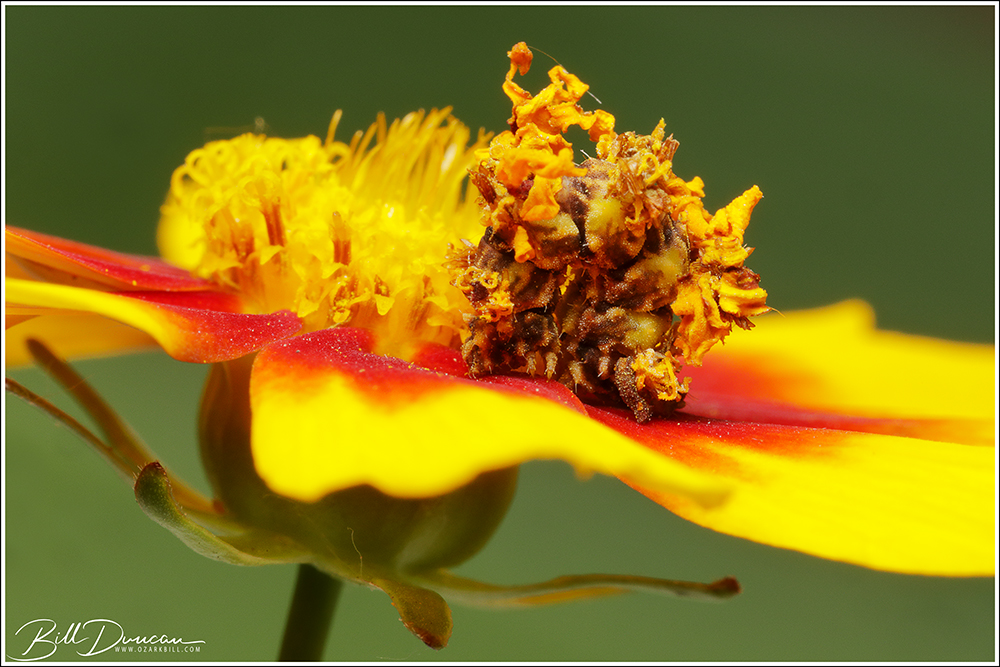
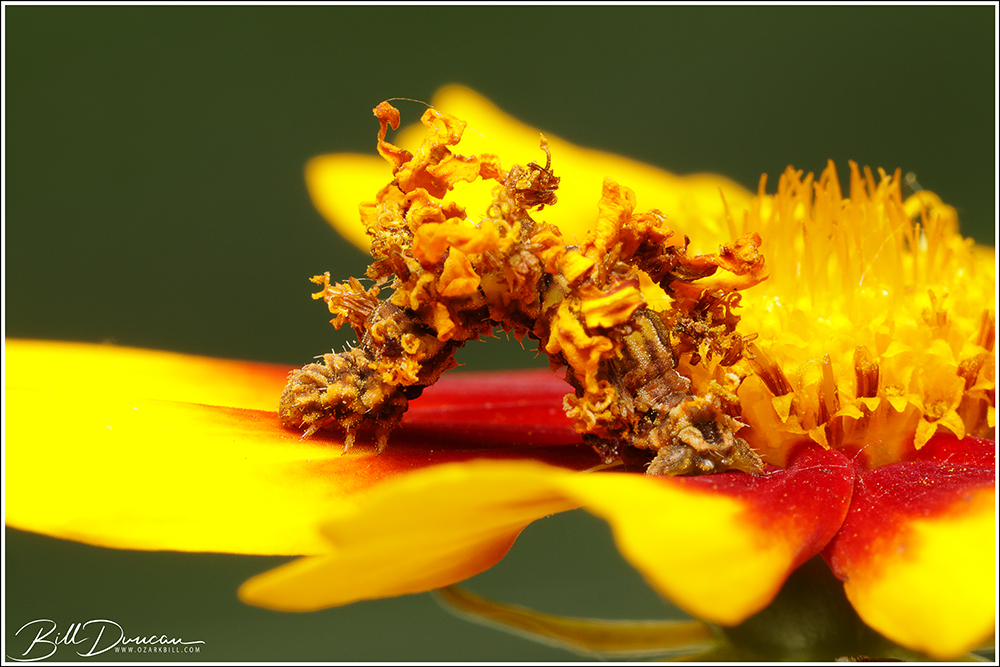
Back in mid-June I discovered a number of Synchlora aerata (camouflaged looper, wavy-lined emerald moth) that were using our coreopsis as host. Not only are these spectacular adult moths in the family Geometridae, but they are obviously special while in the larval phase as well. These caterpillars are known for attaching bits and pieces of the plant tissues they feed on (often flower petals) to their backs as means of camouflaging against their predators.

The Synchlora aerata, on Coreopsis sp. in a suburban wildflower garden in St. Louis County, MO, USA
I often find these guys with their camouflage dull, dry and not very attractive. You can change this pretty easily by placing them in a container with a fresh native flower of your choice. Hopefully within a day or two the caterpillar will have adorned itself with a fresh and colorful coat!

From the Home Garden – Callirhoe bushii (Bush’s poppy mallow)

Photographed on June 11th of this year. I chose this species of Callirhoe because it is the most likely to stay small and behave in the front yard beds. However, I fear that the primarily clay soils will get the worst of it and it won’t stick around long. Of the three plants, only one made it to flower. These guys are adapted to more xeric and well-draining soils.

Leaf and flower of Callirhoe bushii (Malvaceae)

Styrax americanus (American Snowbell)

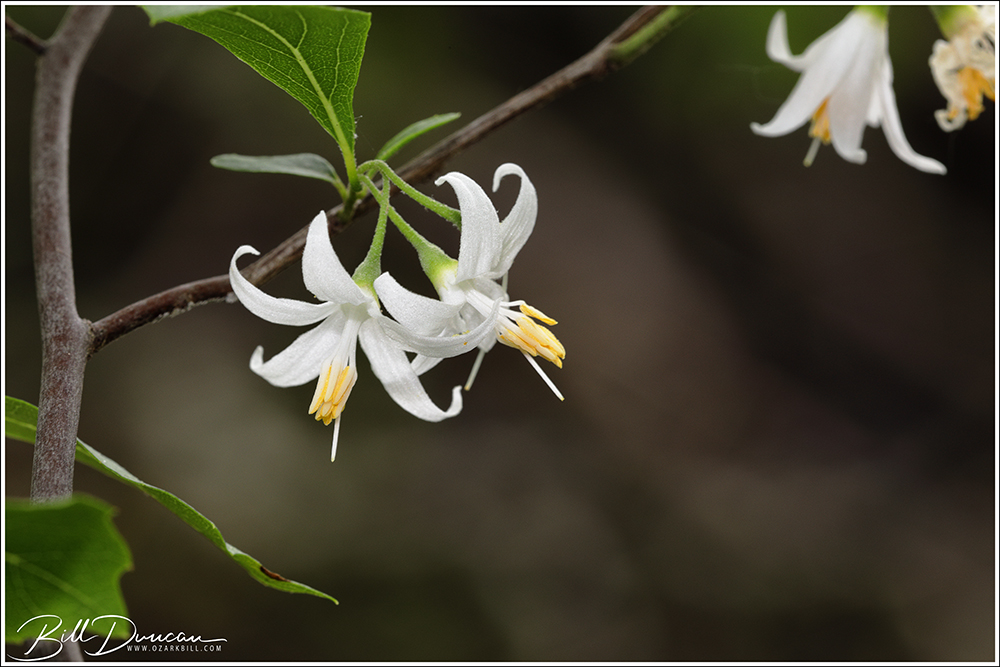
Found in approximately nine counties in southeastern Missouri, Styrax americanus can be found in low-lying wet habitats. This individual was found at Mingo National Wildlife Refuge. This plant is one of many different hosts of the promethea silkmoth (Callosamia promethea).

Styrax americanus – the American Snowbell. Photographed on May 22, 2021 at Mingo NWR near Puxico, MO.

Sedum pulchellum (Widow’s Cross)

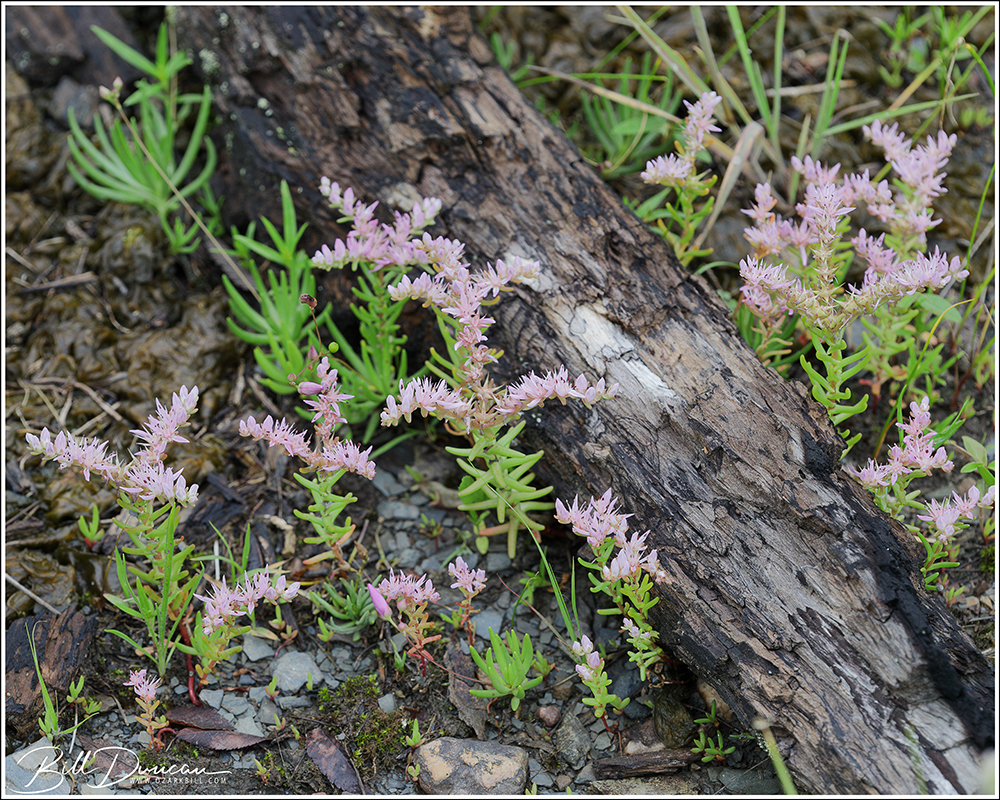
Sedum pulchellum, or widow’s cross, is another fantastic plant that Casey and I found in bloom at Middle Fork Barrens Natural Area in Hempstead County, Arkansas back in May, 2021. Growing primarily on calcareous glades, S. pulchellum is a member of the stonecrop family (Crassulaceae). The stonecrop family is known for being quite diverse (the pineapple is also a stonecrop). Along with most species being considered as succulents, stonecrop members utilize CAM photosynthesis – a strategy that helps plants in arid conditions.

The short succulent leaves and utilization of CAM photosynthesis allows Sedum pulchellum to thrive in the shallow soils of glades and barrens in the Ozarks.

The Last of the Ladies Tresses

This year I was able to find and photograph the last two of the Spiranthes (ladies tresses) orchids that can be expected to be found in Missouri.

First up is a plant that Casey and I found in Nevada County, Arkansas on May 9th. To my knowledge, S. praecox (grass-leaved ladies tresses) is found in only one location in the Show Me State. However, after checking for it on a few occasions, it looks as though the plant(s) did not bloom this year. Hopefully this population is still there and will bloom in a future year. The couple of blooming spikes Casey and I found in Arkansas were very striking, with deep green venation on the labellum.

Spiranthes praecox, grass-leaved ladies tresses

It is interesting to me that the final two Spiranthes orchids I had to add to my list are the largest two species by far. While S. praecox can reach heights of up to 75 cm, S. vernalis (spring ladies tresses) has been recorded at a meter in height! This species is distributed throughout the state, but is considered locally rare. This plant was found at Otter Slough C.A.

Spiranthes vernalis, spring ladies tresses

Back to the Prairie Platanthera

We really lucked out this past June when Casey and I took a trip to the northwest of Missouri in search of the two state-endangered prairie-fringed orchids. We were not sure if we would find Platanthera leucophaea (eastern prairie-fringed orchid) at all and chances were iffy to find both species flowering simultaneously. During some years, there may be gaps in the phenology of flowering of these two species in the state, which would require at least a couple of these long trips. As mentioned above, we not only found both species in our search but found them both at near-peak bloom.

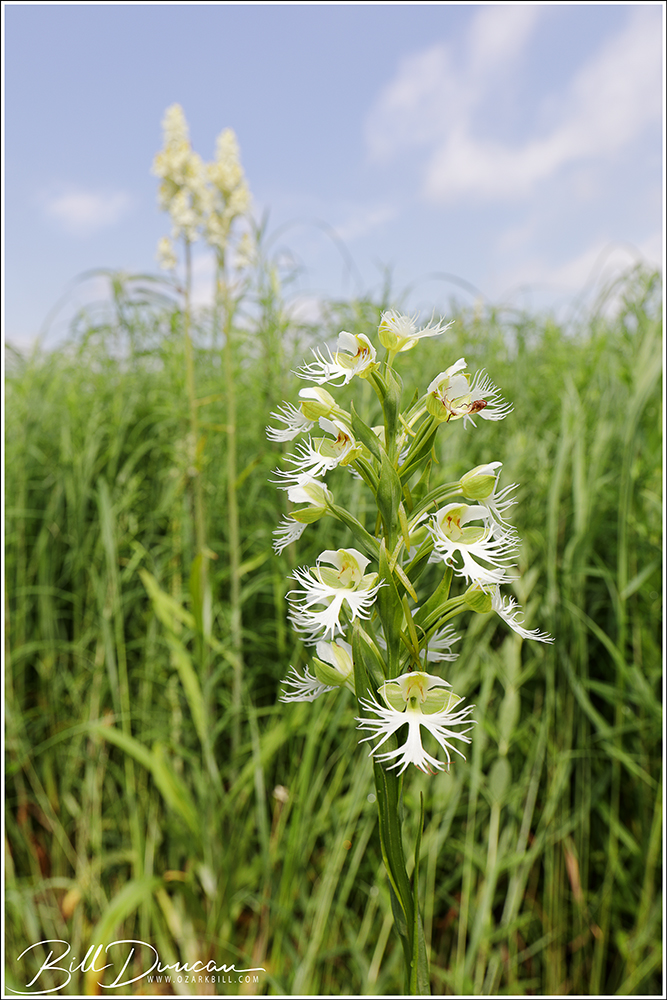
First up is Platanthera praeclara (western prairie-fringed orchid) that we found in a reliable spot in Harrison County.

The state-endangered and federally-threatened Platanthera praeclara was photographed with a backdrop of tallgrass prairie in Harrison County, MO
Naturally pollinated by nocturnal sphinx moths, some state programs are now hand-pollinating prairie-fringed orchids in efforts to increase populations and reintroduce the plants to new areas.

We were thrilled to find a population of approximately 40 Platanthera leucophaea (eastern prairie-fringed orchid) plants at a Grundy County location.

A pair of Platanthera leucophaea stand tall in a wet prairie in Grundy Co, MO.
The long nectar spurs require an insect with a long proboscis to act as pollinator of Platanthera leucophaea.
A pair of grasshopper nymphs feeding on Platanthera leucophaea. This was the only plant we observed with heavy arthropod feeding pressure like this.

Edit – September 2025
Unfortunate news for this population of Platanthera leucophaea pictured above. It has come to my attention that this field was plowed by the landowner, essentially dooming this species at this location. Whether this was done accidentally or on purpose is unclear to me, but this is obviously a horrendous situation for this protected species in Missouri.

Hottonia inflata (American Featherfoil)

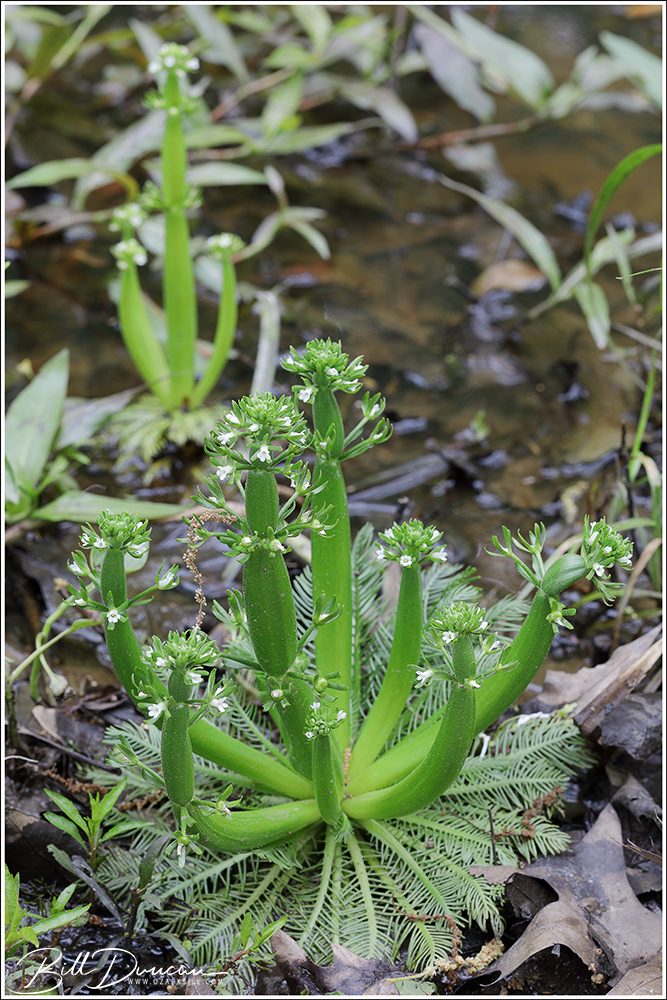
Many thanks to Stephen, Pete and Casey for introducing me to this special plant this spring. Hottonia inflata, or American featherfoil, is ranked as imperiled (S2) in the state of Missouri and is a species of conservation concern in most states within its range. The destruction of wetlands habitats in the U.S. is the cause of the scarcity of this winter annual member of the primrose family (Primulaceae). The stems of this plant are spongy organs filled with air pockets and are the characteristic described in the specific name – inflata.

The gas-filled stems and leaves of Hottonia inflata allow this aquatic member of the primrose family to keep its flowers above the water’s surface.