"What a thousand acres of Silphiums looked like when they tickled the bellies of the buffalo is a question never again to be answered, and perhaps not even asked." -Aldo Leopold
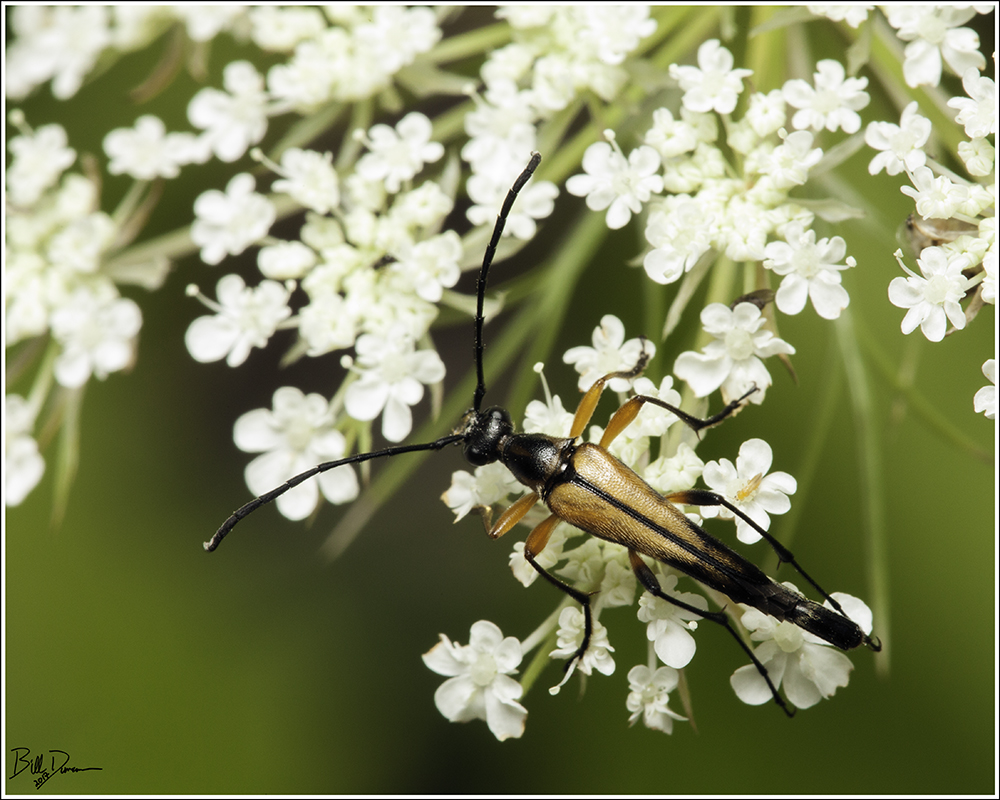
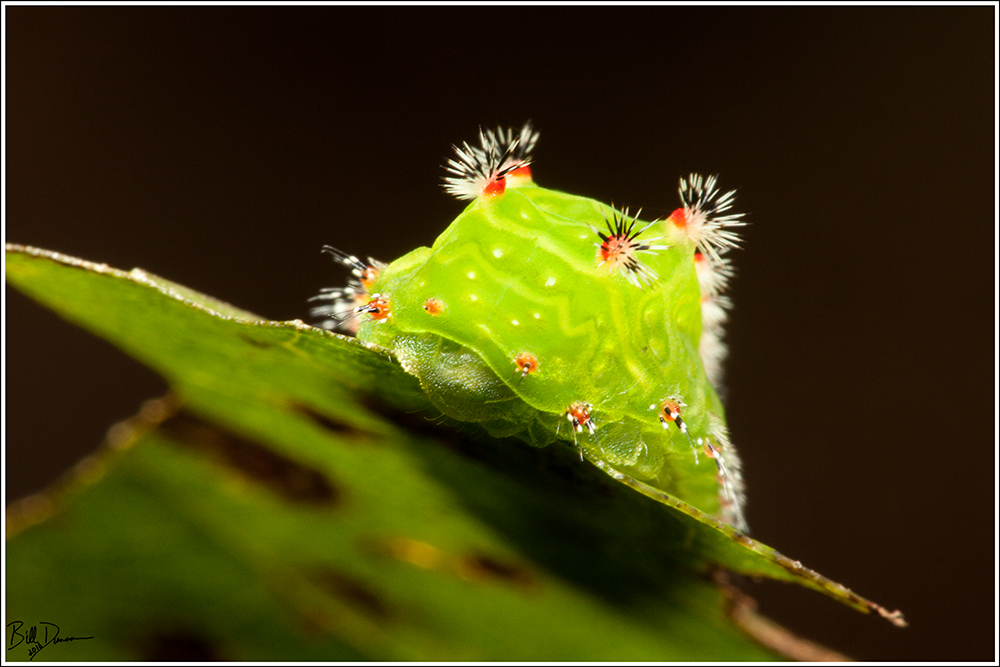
Members of WGNSS Entomology and Nature Photography Groups met on June 24th, 2017 to see what interesting insects could be found. In this post I am sharing a few of the more interesting that I was able to get photographs of during the day. The find of the day had to be the Cerambycid pictured above that was, by no surprise, found by Ted MacRae.
Delta Flower Scarab
We found that blooms were a great way to find beetles. It is easy to see how the delta flower scarab (Trigonopeltastes delta) got its name.
Flower Longhorn
Cerambicids like this flower longhorn can readily be found on blooms.
Banded Netwing
The banded netwing beetle (Calopteron reticulatum) are easy to find, often located in the open atop vegetation. They rely on aposematic coloration to advertise that they carry aboard chemical compounds that make them a distasteful meal.
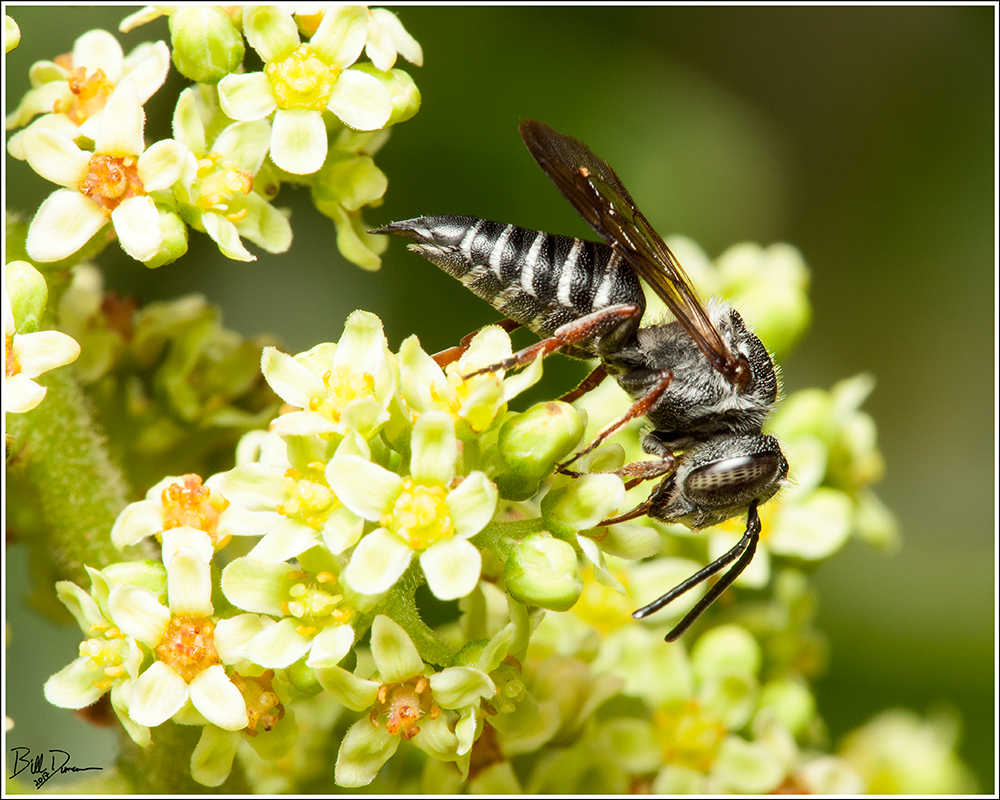
Agapostemon sp
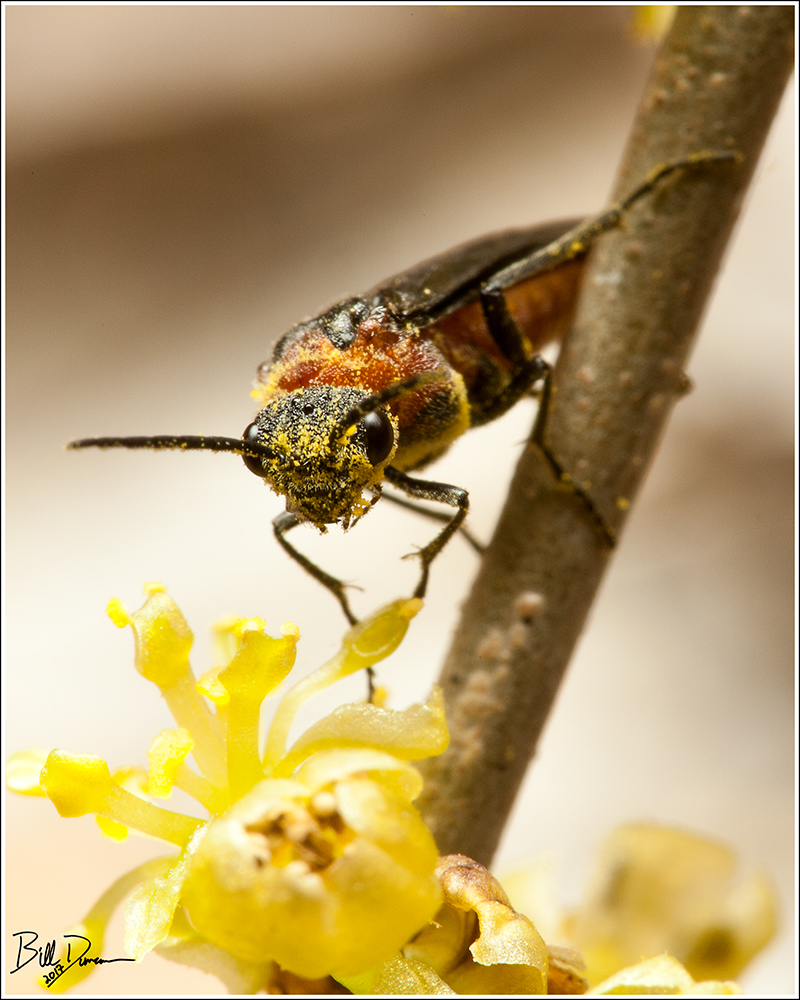
The Hymenoptera were well represented on blooms of wild hydrangea (Hydrangea arborescens), Queen Ann’s lace (Daucus carota) and as pictured above, fragrant sumac (Rhus aromatica). I find the native bees to be tricky to identify by photographs, but I believe this can be placed in the genus Agopostemon. These bees nest in the ground and to promote them, leave patches of soil exposed somewhere in your yard.
Not to leave out the Leps, this double-toothed prominent moth larvae was found. These guys have developed very effective camouflage that allows them to blend in and resemble the toothed, wavy margins of their elm (Ulmus) host plants.
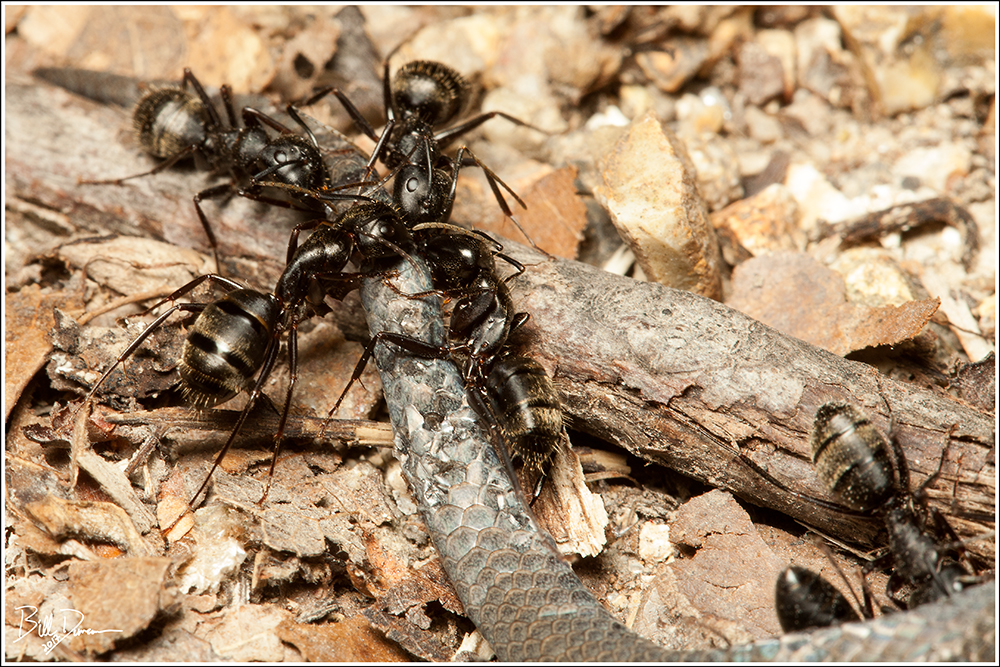
Black Carpenter Ants Feasting On Ring-necked Snake
This series was taken on the joint outing of the WGNSS Entomology and Nature Photography Groups at Council Bluff Lake. Here we have eastern black carpenter ants (Camponotus pennsylvanicus) feeding on a freshly dead ring-necked snake (Diadophis punctatus).
Black Carpenter Ants Feasting On Ring-necked SnakeBlack Carpenter Ants Feasting On Ring-necked Snake
With some extra nature time last week, I hit the trails at Shaw Nature Reserve hoping to get some shots of Claytonia virginica (spring beauty) being visited by its pollinators – particularly the small solitary Halactid bees. The problem I had on this day is that these bees don’t typically like to be very active on cloudy, grey days. There were a few flies visiting the spring ephemerals, but they were much to flighty to bother with. So, I decided to give some attention to the Linderabenzoin (spicebush) that were blooming in abundance along the river bottom trails. My goal then became to document the pollinators that visit this early-blooming bush.
Sawfly – Tenthredinidae – Dolerus neoagcistus
One of the more obvious of these pollinators that I found was this sawfly. This is my best guess on identification. This sawfly was quite small and by the looks of it, is quite an efficient pollinator.
Sawfly – Tenthredinidae – Dolerus neoagcistus
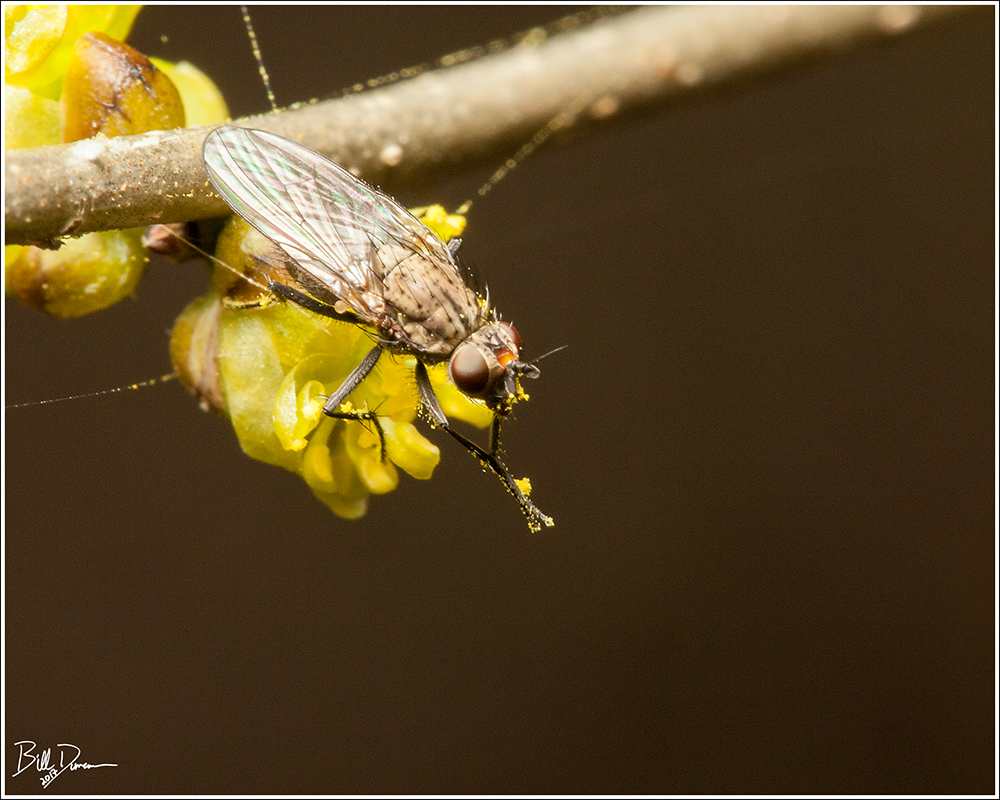
Probably the most abundant pollinator I came across were these Tachinid flies (again, flies are difficult and I could be wrong).
Tachinid Fly?
The hair-like setae that probably serve to aid the fly in responding to changing air pressures also serve as nice holders to move pollen from flower to flower.
Tachinid Fly?
I also found a number of multicolored asian lady beetles (Harmonia axyridis). Typically predators of aphids, these beetles are also known to feed on pollen. This is what I figure was going on in the image below. Since there are probably few aphids to be found during the early spring, with few leaves being available, pollen is the next best protein source. I suppose there could be aphids to be found hiding within the flowers, but did not inspect closely enough.
Multicolored Asian Lady Beetle – Coccinellidae – Harmonia axyridis
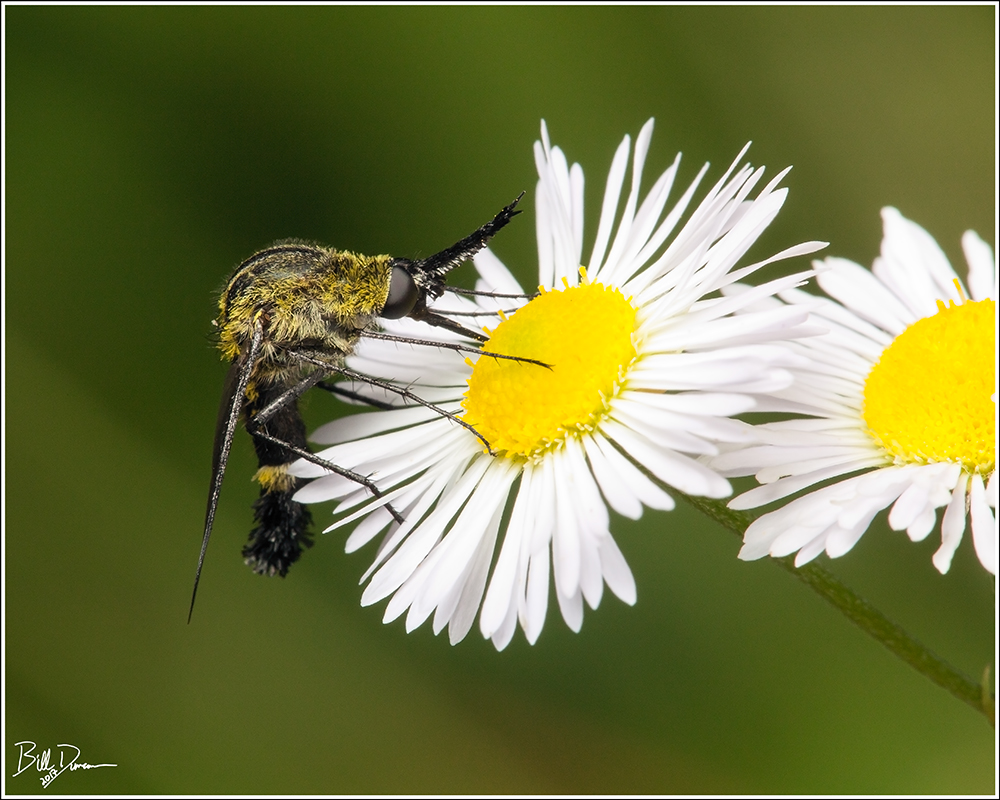
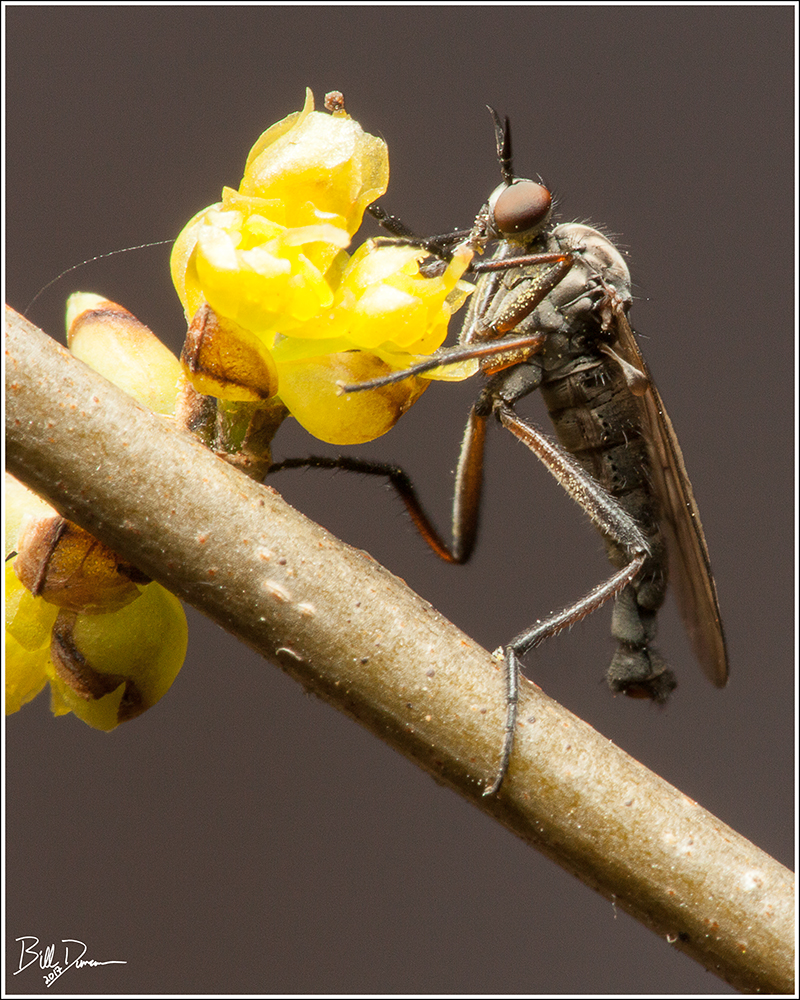
Probably my favorite find of the day were several flies of the family Empididae. These are fascinating flies that are primarily predatory, but a few taxa will visit flowers to feed on nectar or pollen.
Dagger fly – Empididae – Empis or Hilara genus
Within this family are at least a few where the females will not hunt themselves, instead relying on a “nuptial gift” of a prey item from a male. Males of some species will wrap their gift in a silk wrapper. In these taxa the sex roles will often be reversed – the females courting the males to get these gifts and the opportunity to mate. In at least one species, the females will inflate themselves grossly with air to give herself the appearance of being bound with eggs and fecund, to trick the male into thinking she is a prime candidate to provide his gift and have the opportunity to mate with.
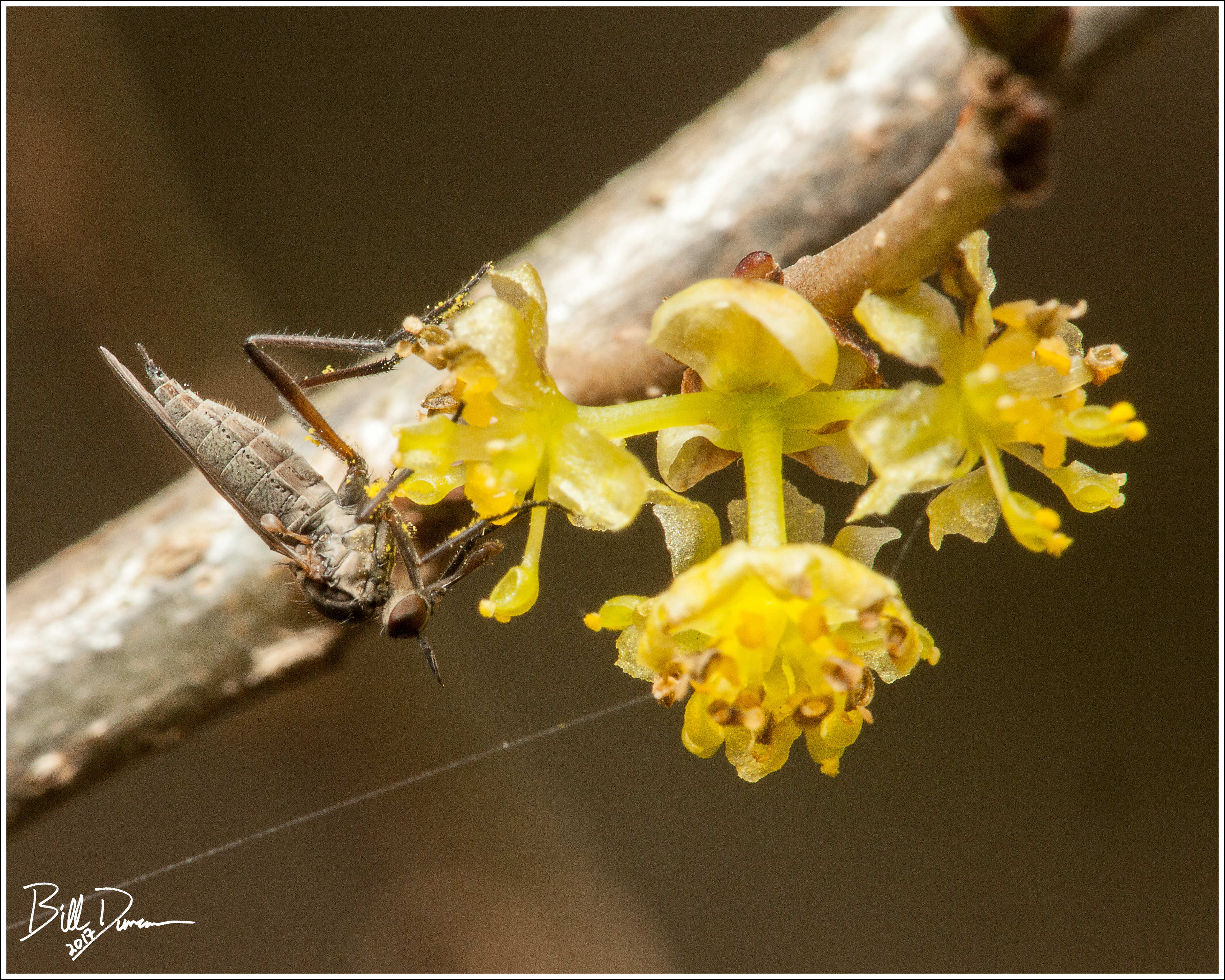
Dagger fly – Empididae – Empis or Hilara genus
At least one species has taken this system a step further. The males no longer provide a prey wrapped in its decorative covering, but simply provide the silken covering, or balloon, giving them the name “balloon flies”. The photo below provides a good look at the dagger-like moth parts that give these guys another of their common names. Another overlooked beneficial fly. Not only do these guys prey on mosquitoes and other potential pest insect species, but their larvae are also predatory, feeding on insects in the soil and leaf litter.
Dagger fly – Empididae – Empis or Hilara genus
I’ll leave you with one final image. This one isn’t a pollinator of the spicebush, but potentially feeds on its leaves in summer. What I believe this to be is a (Camptonotus carolinensis) Carolina leaf roller that was parasitized by one of the “zombie fungi”, potentially Cordyceps sometime last summer or early fall. This poor cricket was infected with this fungi that took control of its “mind”, forcing it it to climb high up on a branch of the spicebush. Once there, the fungi used the cricket’s resources to fruit and spread its spores from this higher location in order to reinfect others.
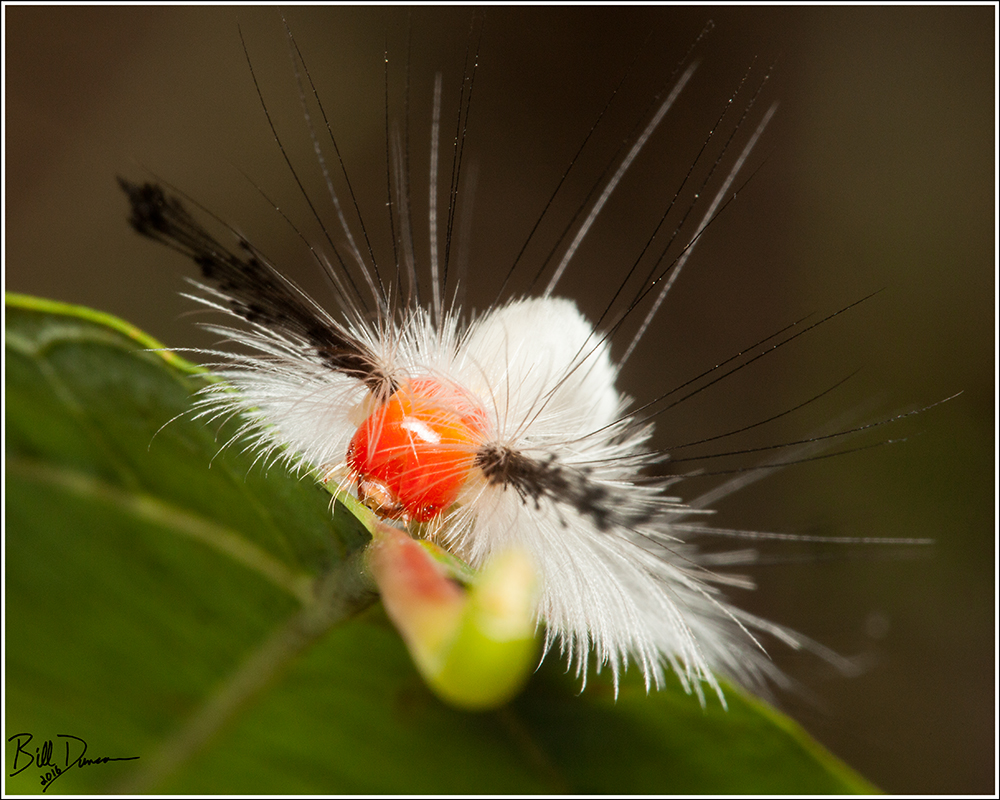
White-marked Tussock Moth, Ste. Genevieve County, MO
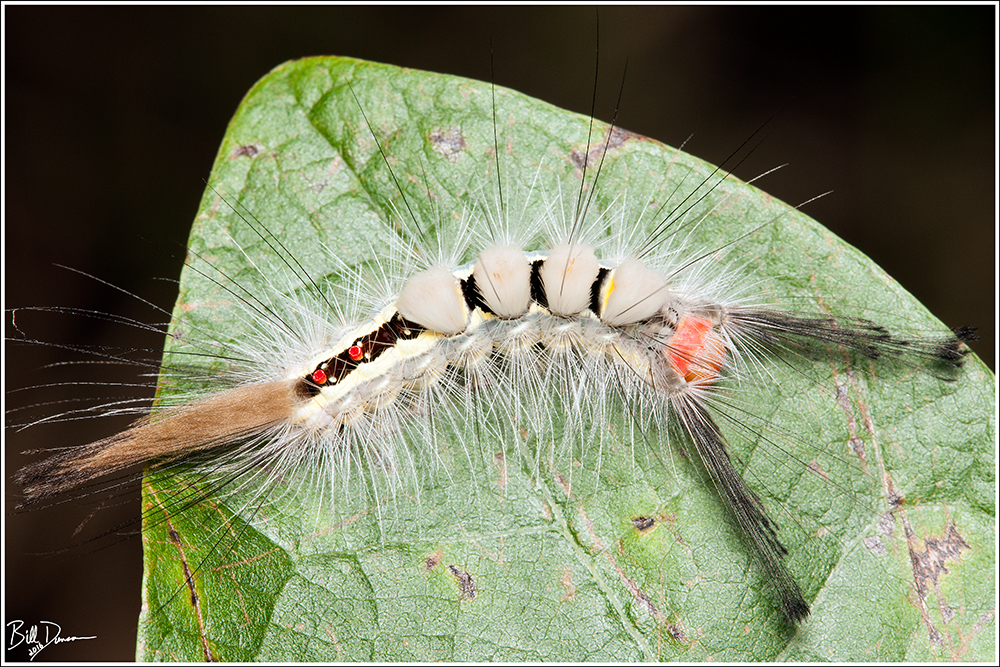
This gorgeous redhead is the White-marked Tussock Moth (Lymantriidae – Orgyia leucostigma – 8316). I was amazed at how abundant they were and routinely found on the underside of leaves on woody plants this summer. Most folks have never seen one!
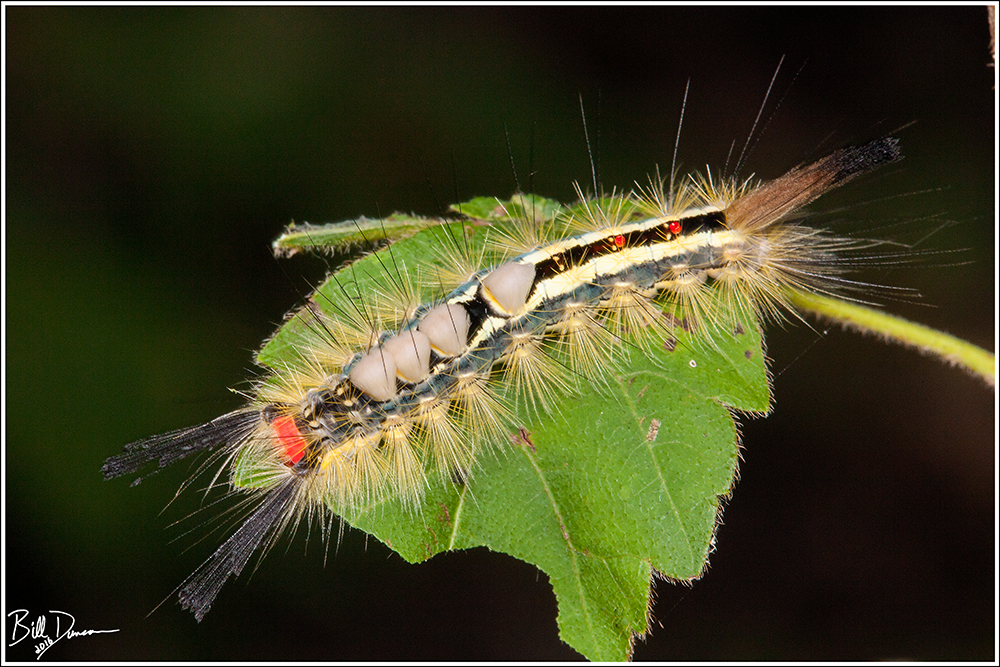
White-marked Tussock Moth, Cuivre River SP, Lincoln County, MO
Besides their striking colors and patterns, these moths have toxin-filled hairs that can cause irritation, especially to areas of sensitive skin. I have not yet photographed an adult, but I was interested to hear that the females of this species are nearly wingless and cannot fly.
White-marked Tussock Moth, Ste. Genevieve County, MO
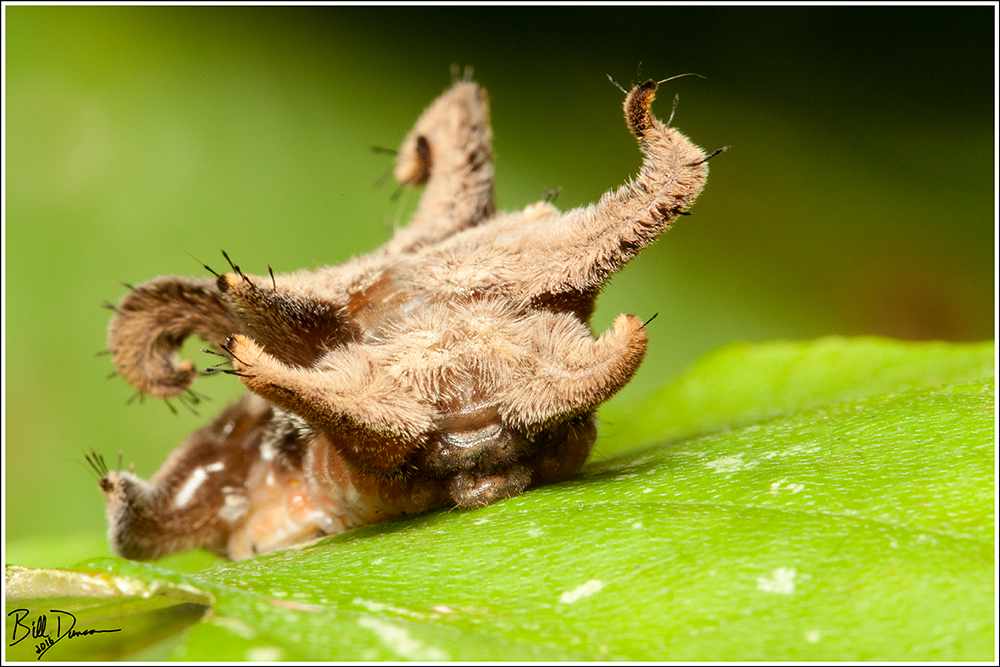
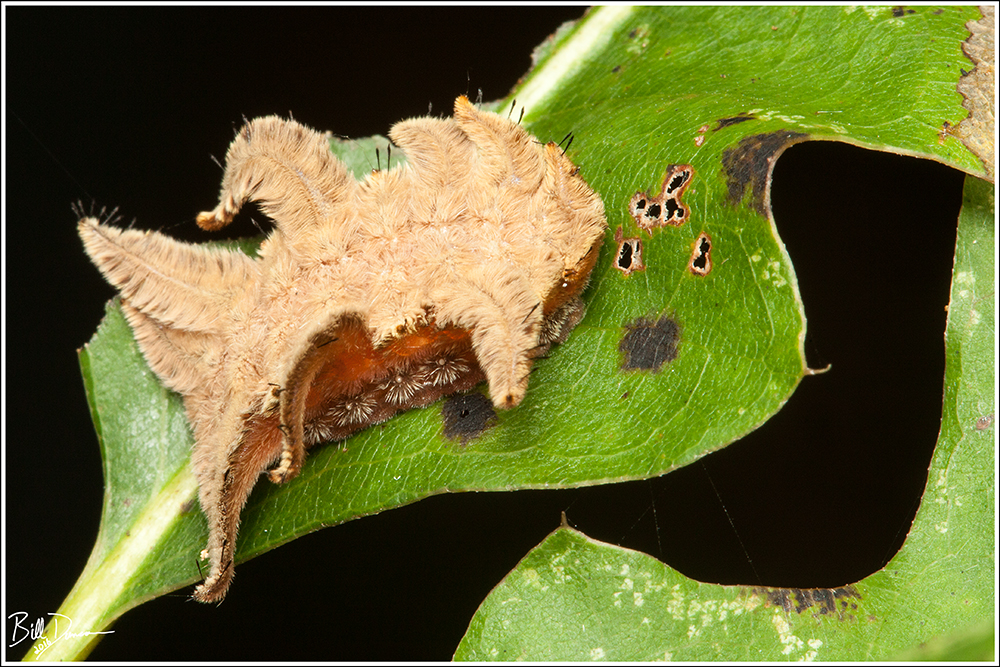
Monkey Slug – Limacodidae – Phobetron pithecium (4677) – Horseshoe Bend Natural Area, Texas County, MO
The final and perhaps most stunning of the slug moth caterpillars that we were able to find this past summer was the Monkey Slug, or “Hag Moth” caterpillar. This particular one was first noticed by Sarah on the upper side of a dogwood leaf during a visit to Horseshoe Bend Natural Area near Houston MO. We went on to find two in this particular tree.
Monkey Slug – Limacodidae – Phobetron pithecium (4677) – Horseshoe Bend Natural Area, Texas County, MO
A leading thought on why these guys look the way they do is to mimic the shed exoskeleton of a tarantula.
Monkey Slug – Limacodidae – Phobetron pithecium (4677) – Cuivre River State Park, Lincoln County, MO
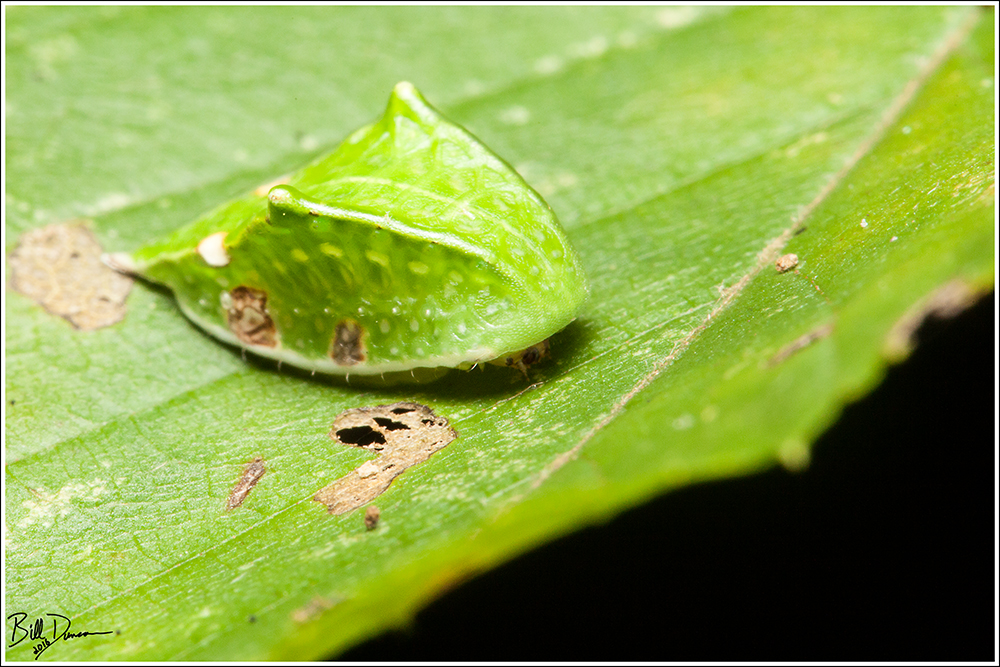
I found only a few Elegant-tailed Slugs this year and all were found at Hickory Canyons Natural Area in Ste. Genevieve County, Missouri. The image below documents the only occasion where I found more than one slug on the same leaf, here a Spiny Oak Slug was found on the same curled leaf as our new Elegant-tailed Slug.
Spiny Oak and Elegant-tailed Slug Moths – Limacodidae
Pelecinid Wasp – Pelecinidae – Pelecinus polyturator. Millstream Gardens Conservation Area, Madison County, MO.
Parasitoids of insect larvae, the Pelecinid Wasp female uses her extremely large abdomen to thrust through soil to deposit eggs primarily on scarab beetles. I assume the family and genus names are derived from the Greek – pelicos, referring to the great size of the wasp. Females can reach lengths of up to 6 cm. No need to worry, these guys do not have stingers.
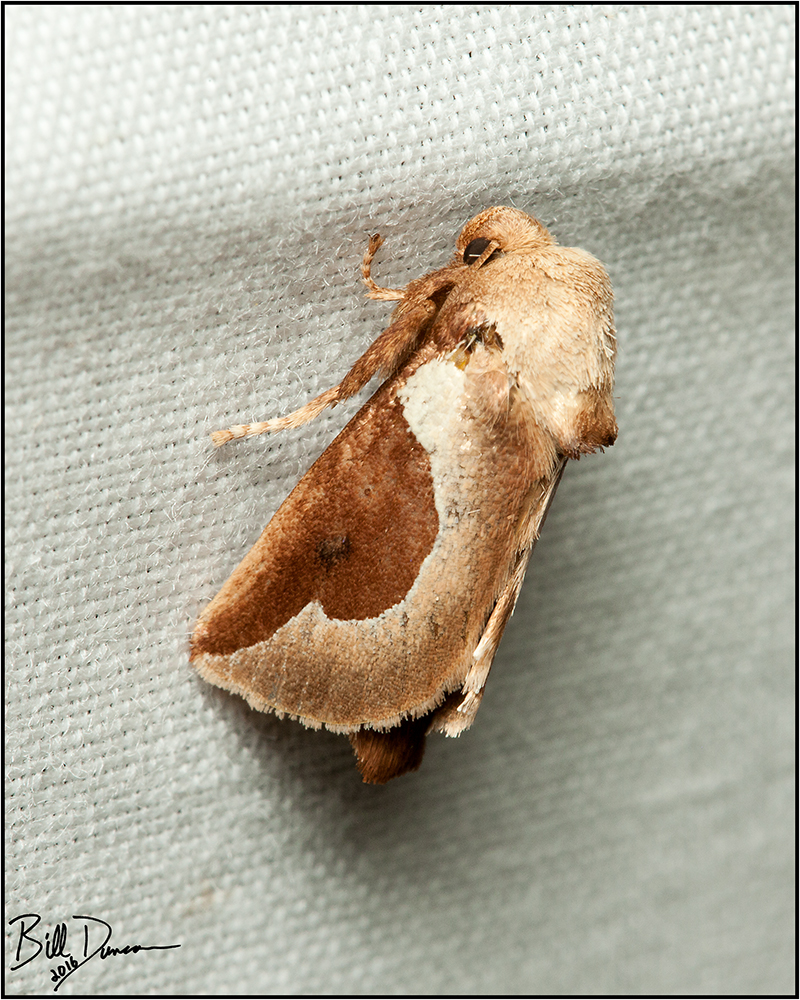
The highly variable colors and patterns of the skiff moth are hypothesized to mimic senescent/necrotic lesions on leaf surfaces. They often have paired white spots that are thought to mimic the eggs of the tachinid fly, a parasite that enters the caterpillar after hatching. These “egg mimics” are hypothesized to work by dissuading flies that may attempt to avoid depositing eggs on victims that were previously parasitized.
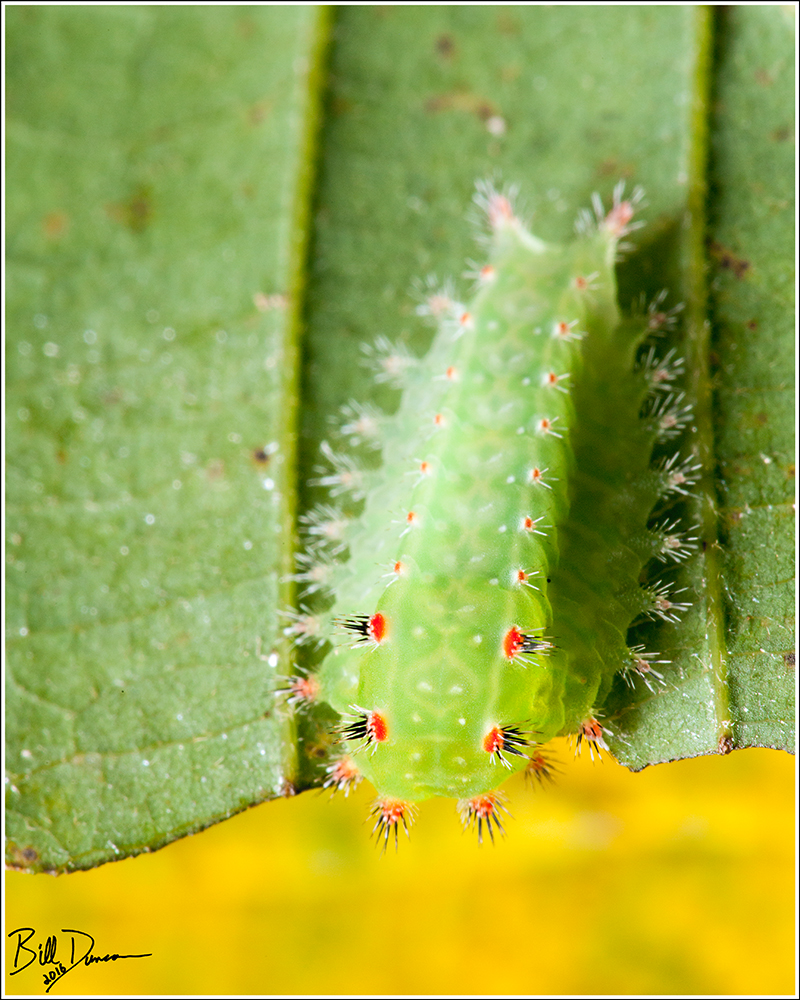
In my anecdotal experience of hunting for slug caterpillars over a six to eight week period this summer, the Nason’s slug (Natada nasoni – Hodges #4679) was by far the most abundant that I came across. This was particularly true in the drier, oak/hickory/pine hillsides of Hickory Canyon N.A. in Sainte Genevieve County.
Nason’s Slug – Limacodidae – Natada nasoni (4679). Horseshoe Bend Natural Area – Washington SP, Texas Co, MO.
This species is able to retract its spines, elongating them to their fullest with any notion of danger. These guys have pretty substantial spines and because the cats were so abundant, I found I was accidentally stung a few times while lifting vegetation. This was not a pleasant experience.
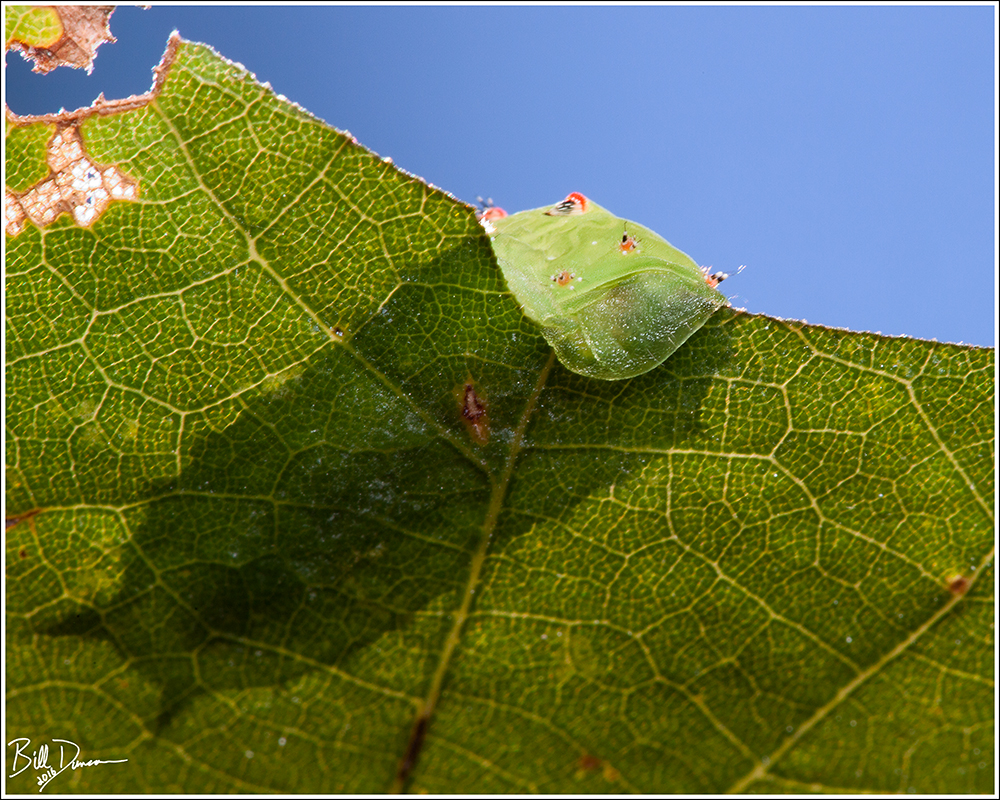
The image below was one that I had previsualized and worked a good bit on to get it right. I used my plamp to hold the leaf and attached the plamp to a dead limb to position the leaf high enough to get the leaf and caterpillar back lit by the sun. I then used just a bit of flash to illuminate the ‘face’ of the caterpillar and the underside of the leaf. In cases where I removed the leaf to get a photo, I always placed the leaf securely back on the same plant.

















 A Thousand Acres of Silphiums