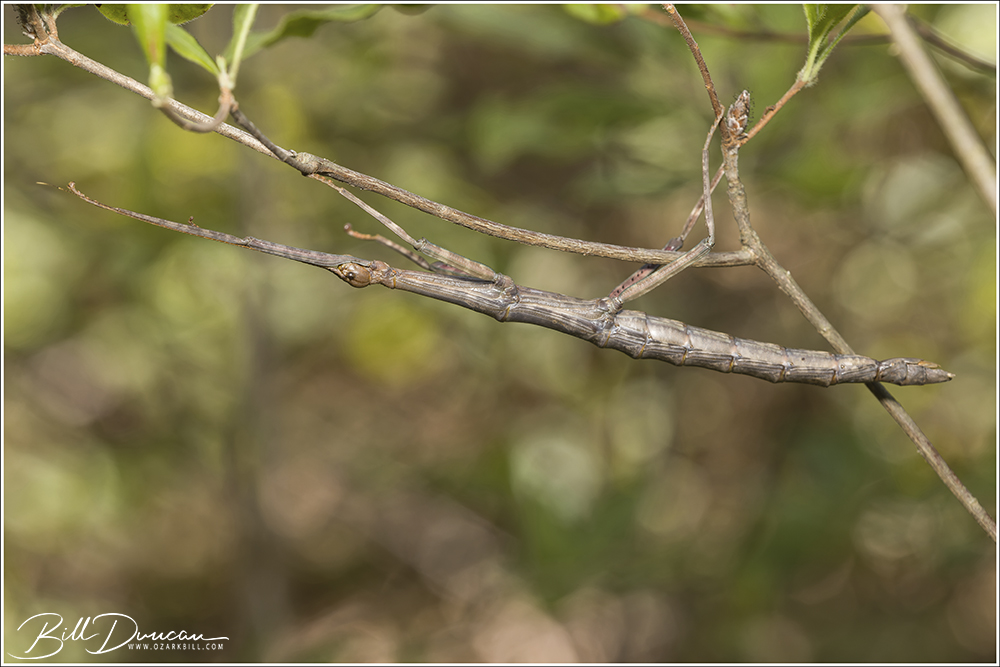
A few miscellaneous arthropods from 2023.




"What a thousand acres of Silphiums looked like when they tickled the bellies of the buffalo is a question never again to be answered, and perhaps not even asked." -Aldo Leopold
A few miscellaneous arthropods from 2023.
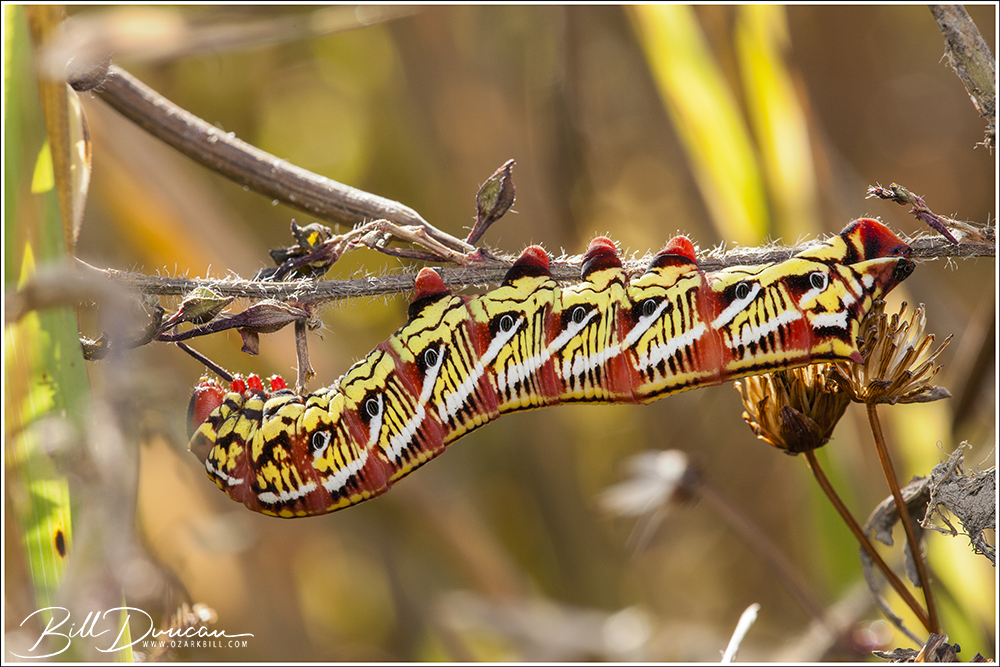
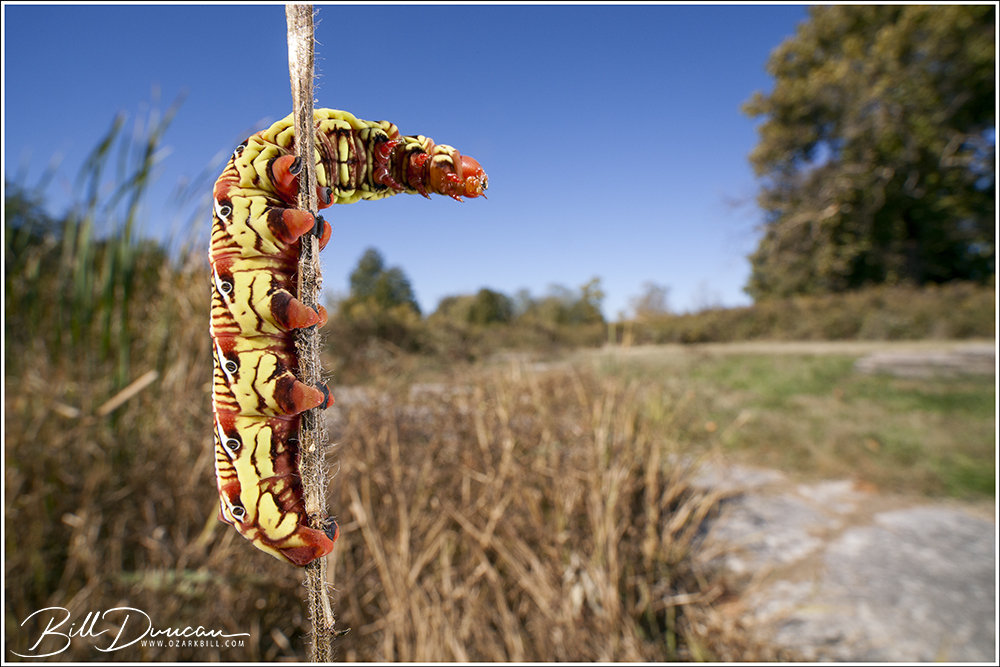
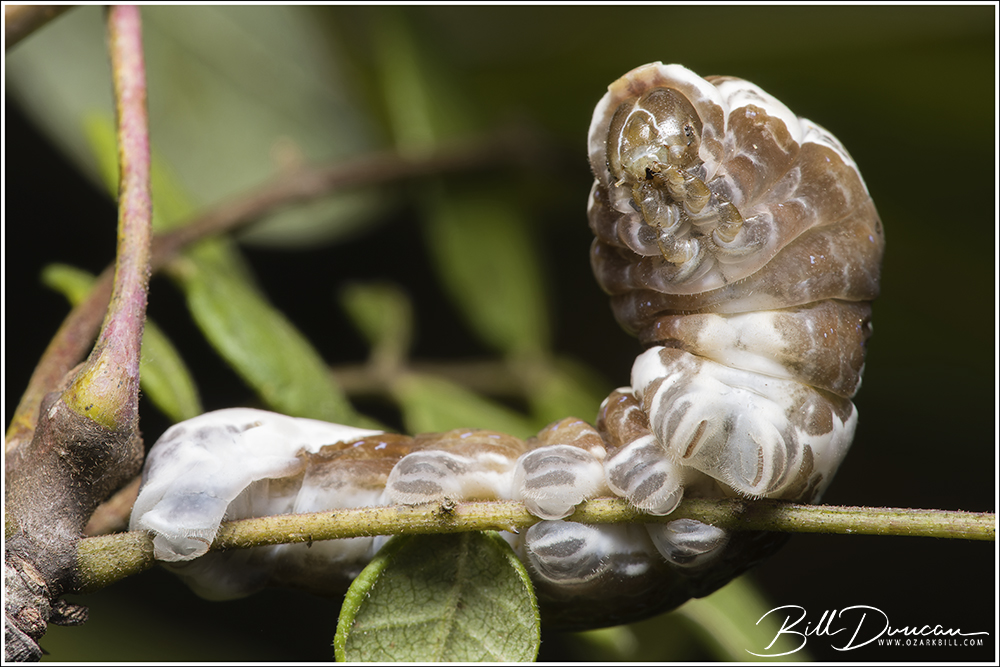
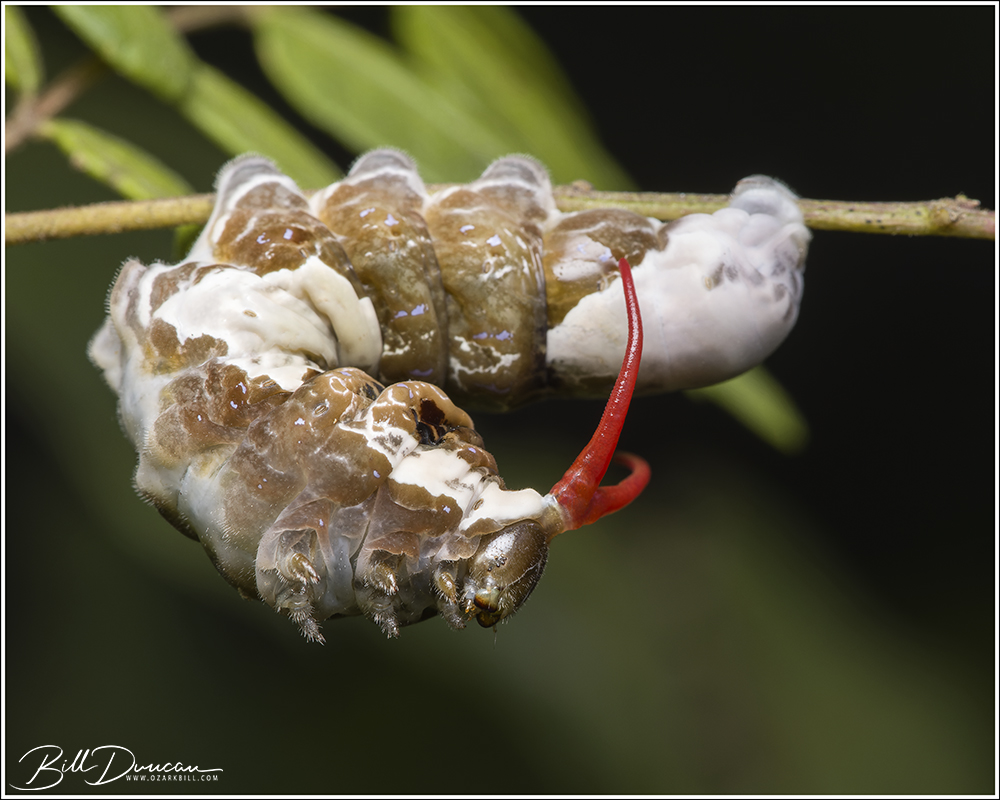
Here’s one from 2018 that I only posted on Facebook for some reason. As you can see this is too fantastic of a caterpillar not to capture in the blog. These are caterpillars of the banded sphinx moth (Eumorpha fasciatus, Hodges #7865) that were photographed on their host plant – primrose willow (Ludwigia sp.). Many thanks again to Kyran Leeker who turned me on to these guys.


These are not the photos I envisioned getting when going after the falcate orangetip (Anthocharis midea). Casey and I must have spent more than a couple of hours running around Hugh’s Mountain Natural Area, waiting for one of these gorgeous males to land at a flower to nectar. Unfortunately, this rarely happened, and when they did finally set they were up again within seconds.
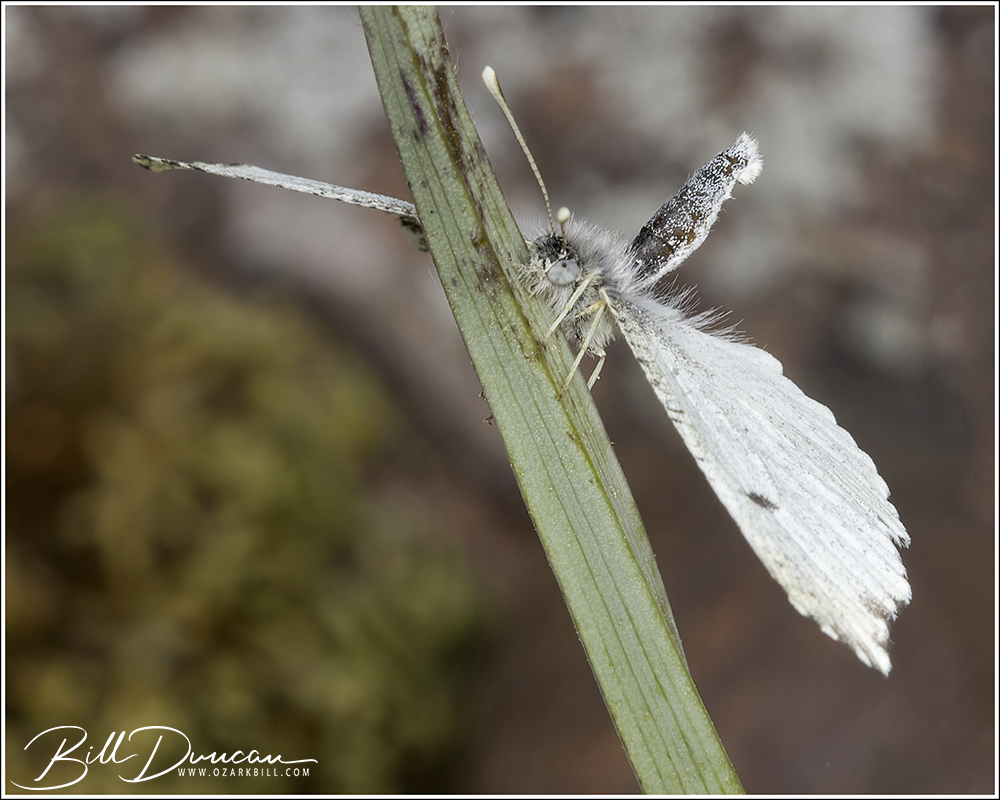
These guys were definitely not interested in feeding while we were there, instead they incessantly roamed the glades and woodland edges hunting for females. This is where I finally got a little bit of luck by finding a stationary female. She had drawn the attention of several males who were fighting for a chance to breed.
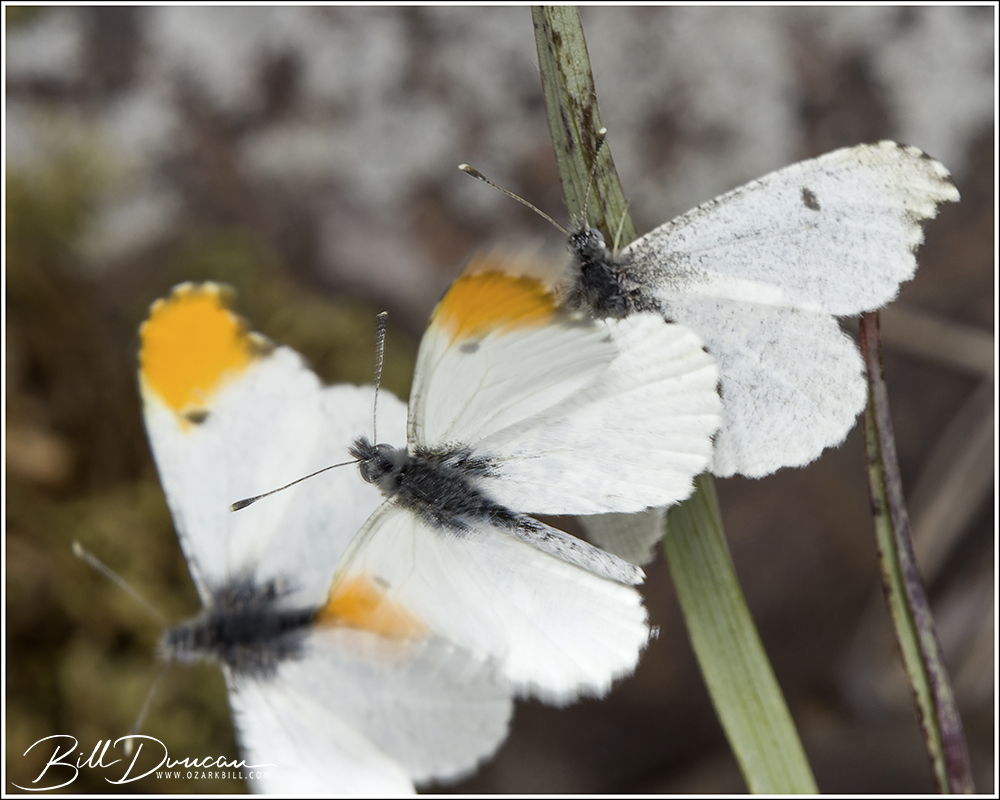
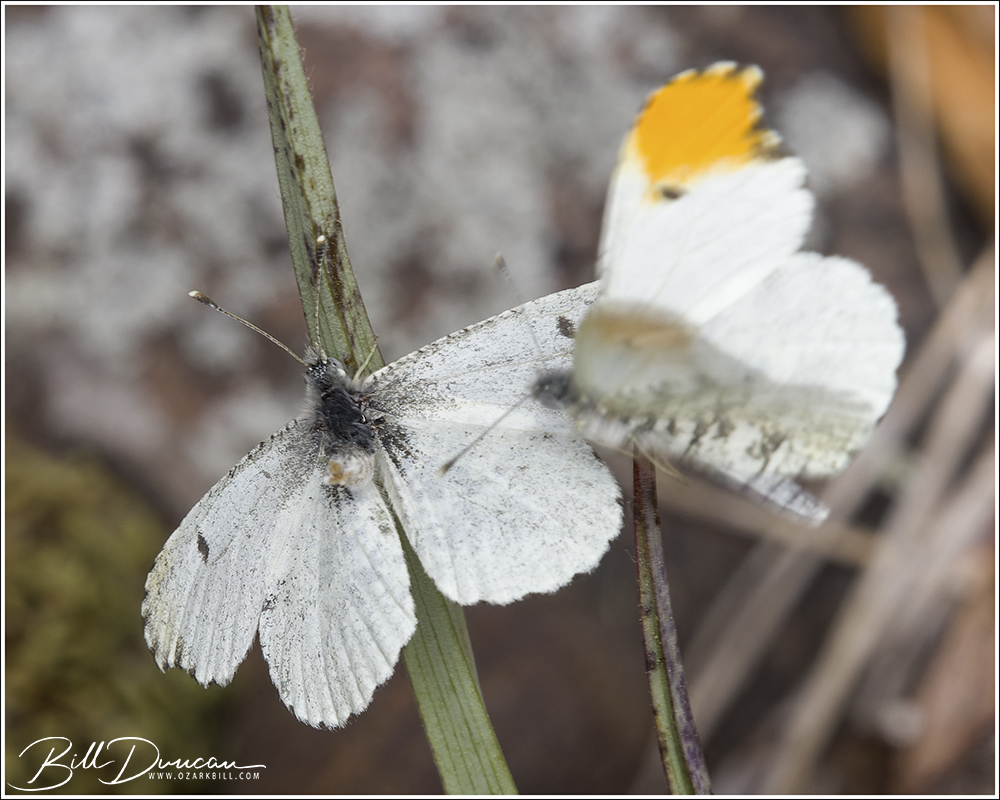
Members of the Pieridae family, the falcate orangetip’s host are members of the mustard family (Brassicaceae). The caterpillars feed mostly at night on the flower tissues of these plants.
I was happy to final start working on getting some butterfly and skipper photos in 2023. I joined the local North American Butterfly Association and really enjoyed getting out on a few of their counts. I’m still learning the diurnal moths (butterflies) and have a ways to go before I can call myself competent. Here are a few photos from the Nymphalidae family to share from 2023.
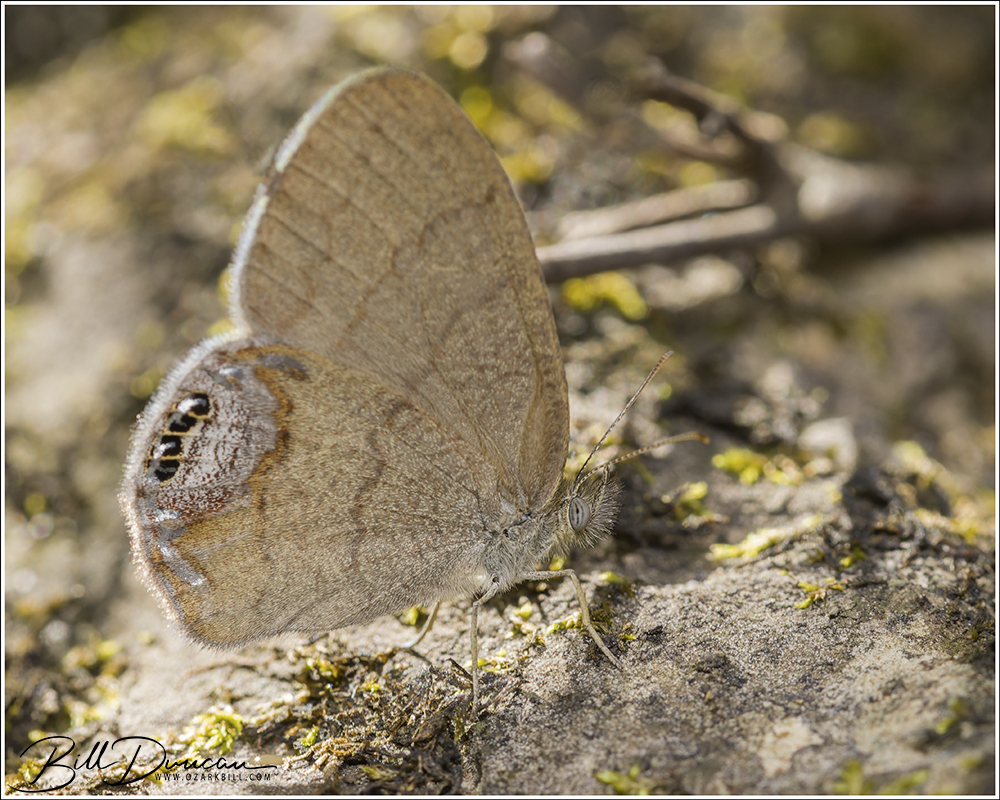
This gemmed satyr was an unexpected find while visiting St. Francois State Park in September. Not long ago this species was restricted to extreme southern Missouri. They now seem to be continuing a northern expansion in their range. Quite a few butterflies have eyespots that are found on different locations of their wings, presumably to make them look like much larger organisms as well as to persuade would-be predators to attack something beside the vulnerable true heads. I have recently read that some have hypothesized the spot on this species wings developed to mimic certain jumping spiders. In my photo I think this looks to be highly plausible – with the two primary eyes centered around a grey backdrop that looks very much like a jumping spider to me.

Once believed to be a pure example of Batesian mimicry in a complex with the monarch and queen butterflies, some evidence now suggests that the viceroy may be distasteful to predators, providing evidence that this is instead should be considered a case of Müllerian mimicry. This is turning out to be quite the complex case to understand, with some reports suggesting that the host plant that a particular individual viceroy was raised on determines whether or not it is distasteful. Other work has suggested that gene complexes that may differ between populations of viceroys determines distastefulness. More work is needed to determine what exactly is going on here. This photo was taken on a NABA walk ate Marais Temps Clair C.A. in September.

Photographed at Marais Temps Clair C.A. in early October, the red admiral is a lover of nettles, feeding solely on members of the Urticaceae family.

Famous for its migration, the painted lady hosts on numerous species of Asteraceae.

Being strictly found in the new-world, the American lady can be distinguished from the painted lady by the number of spots on the ventral sides of the hindwings. As seen in the photo above, the American lady has two large eyespots whereas its cousin, the painted lady, has four. Photographed at Horn’s Prairie Grove LWR in July.
Today I’m finishing up with the remaining cats of late summer and autumn hunting trips of 2023 from an assortment of families.
Walnut Sphinx Moth (Amorpha juglandis) Sphingidae, Hodges#7287
These are among my favorites. Not only are they quite handsome when viewed up close, but they are one of the few caterpillars with a voice! Be prepared if you handle or otherwise disturb them; they will let out a surprising squeak when they feel threatened.

Curve-lined Angle (Diagrammia continuata) Geometridae, Hodges#6362
Casey and I observed that the juniper hairstreaks (Callophrys gryneus) had a bumper year this year while hiking in glades early in the season. We thought this might be the year to finally find the fantastic larvae of this species. We spent several hours beat-sheeting the red cedars in these areas in late summer and early fall. No luck in finding that species, but we did find another inconspicuous cat that uses this plant as its host. You can probably see that, like the hairstreak, the caterpillars of this moth species would be next to impossible to find without the use of a beat-sheet.
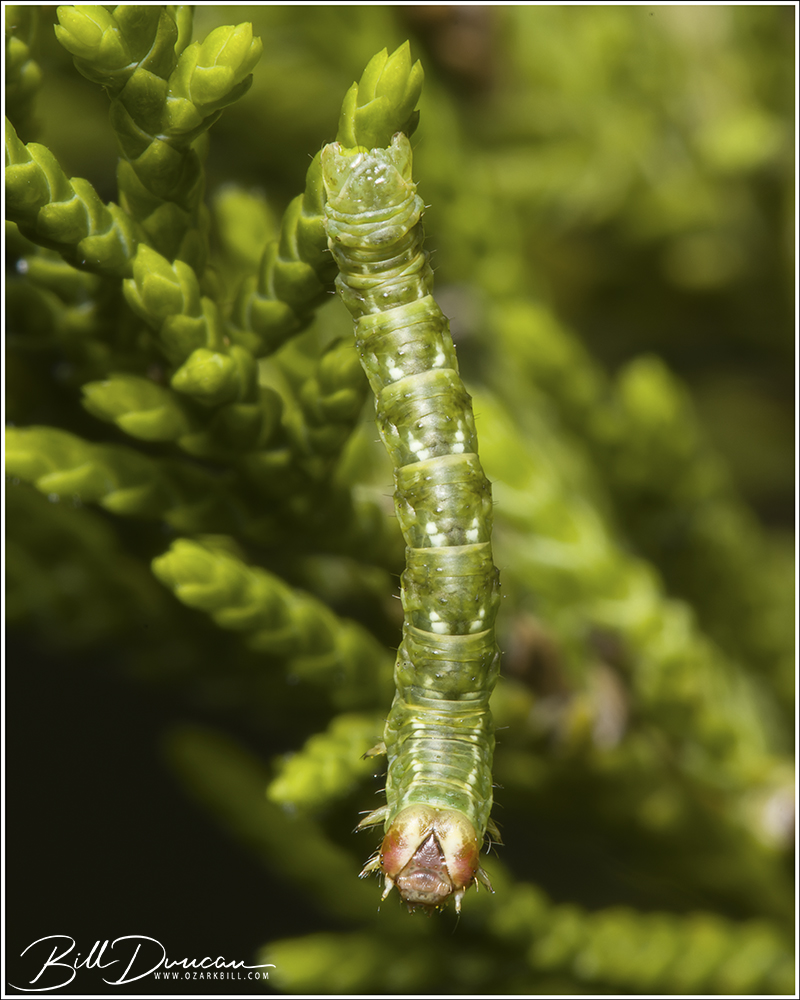
Undescribed Flower Moth (Schinia nr-jaguarina) Noctuidae, Hodges#11132.01
I shared photos of this yet to be described species before. These are photos of the cats we found at a new location, Horn’s Prairie Grove LWR, in central Illinois.


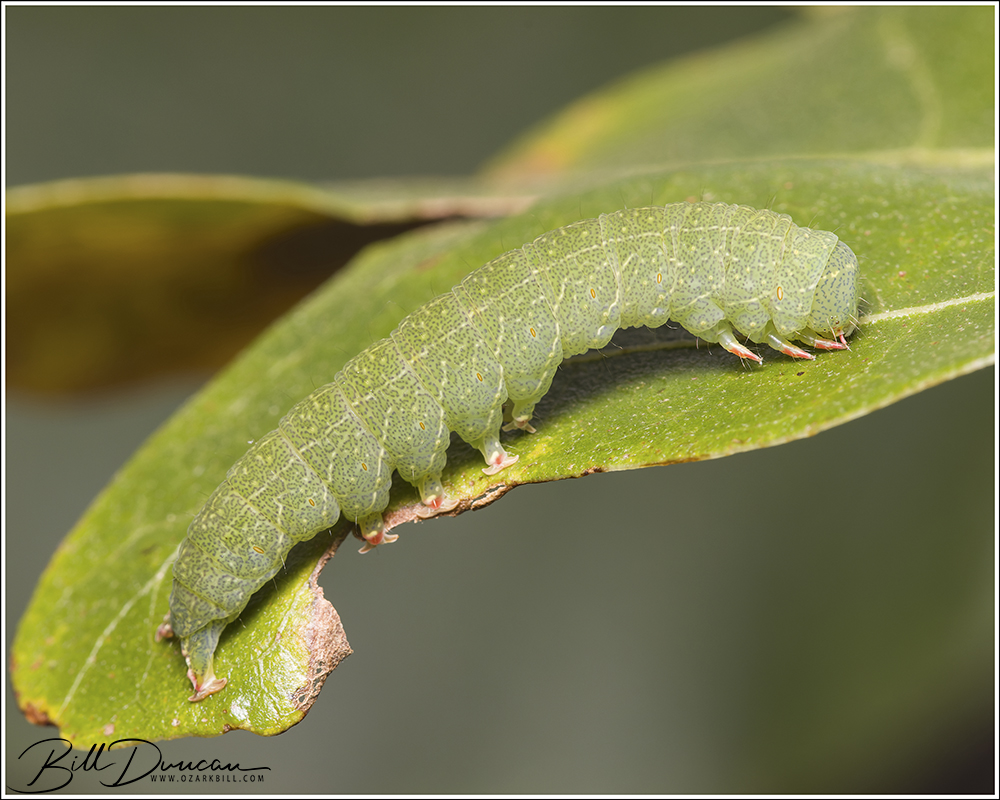
Red-lined Panopoda (Panopoda rufimargo) Erebidae, Hodges#8587
An interesting cat we found while beet-sheeting a hickory thicket on a friend’s property in St. Francois County.
Pipevine Swallowtail (Battus philenor) Papilionoidea
Conspicuous and distasteful due to the absorbed secondary chemicals of their pipevine host, it seems like we always find these guys in low-light situations, making the use of supplemental light a necessity.

Giant Swallowtail (Papilio cresphontes) Papilionoidea
My favorite swallowtail species. It was a real treat finding this final instar cat back in September.



Here are a few of the members of the Noctuidae family of moth caterpillars we found in 2023. Commonly know as “owlet moths,” this is a very diverse clade that is still continuing to be revised and divided. Until recently, this was the largest lepidopteran family. A number of economically important members are found in this family, such as armyworm and cutworm species.
American Dagger Moth (Acronicta americana) Noctuidae, Hodges#9200
Rarely a day on the hunt goes by without finding one or more of these little beauties. This guy was not perturbed at all by us stopping to watch. It continued to chow on the leaf as I photographed it.

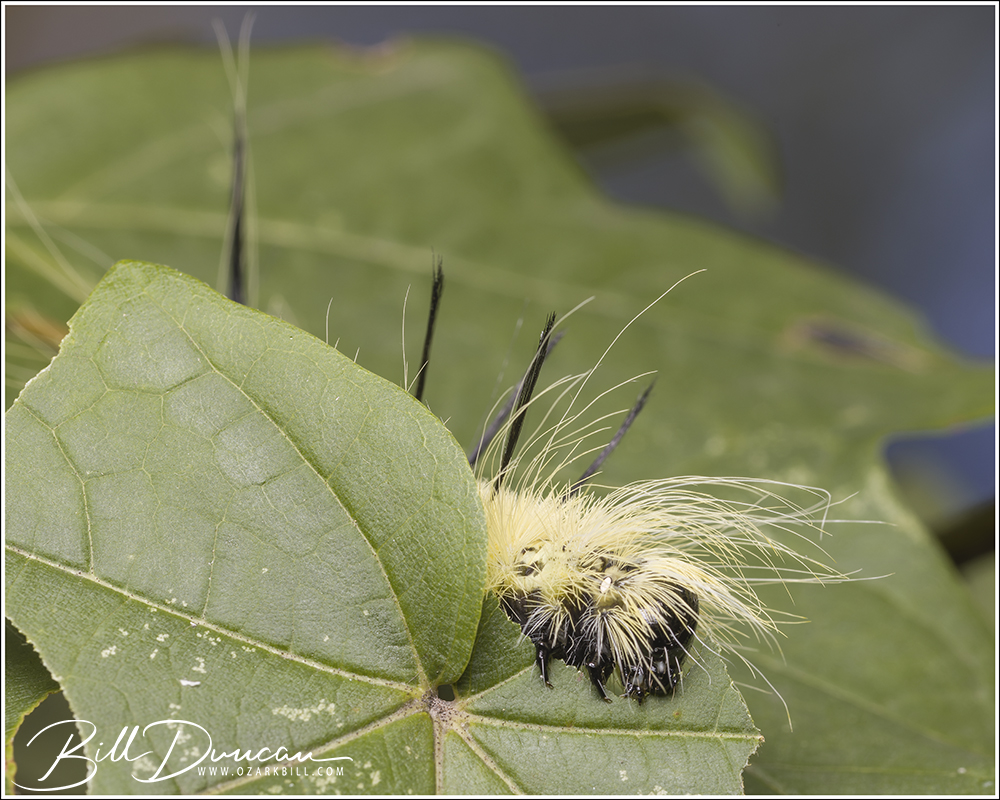
Two-spotted Oak Punkie (Meganola phylla) Noctuidae, Hodges#8983.1
Found on Quercus alba (white oak).

Eclipsed Oak Dagger (Acronicta increta) Noctuidae, Hodges#9249
Not that I keep great records but I am pretty certain that this one is by far the most abundant caterpillar we come across while looking on oaks. I probably find five of these to one of other species on oaks. There are a few similar species. The second one may be a different species of Acronicta.
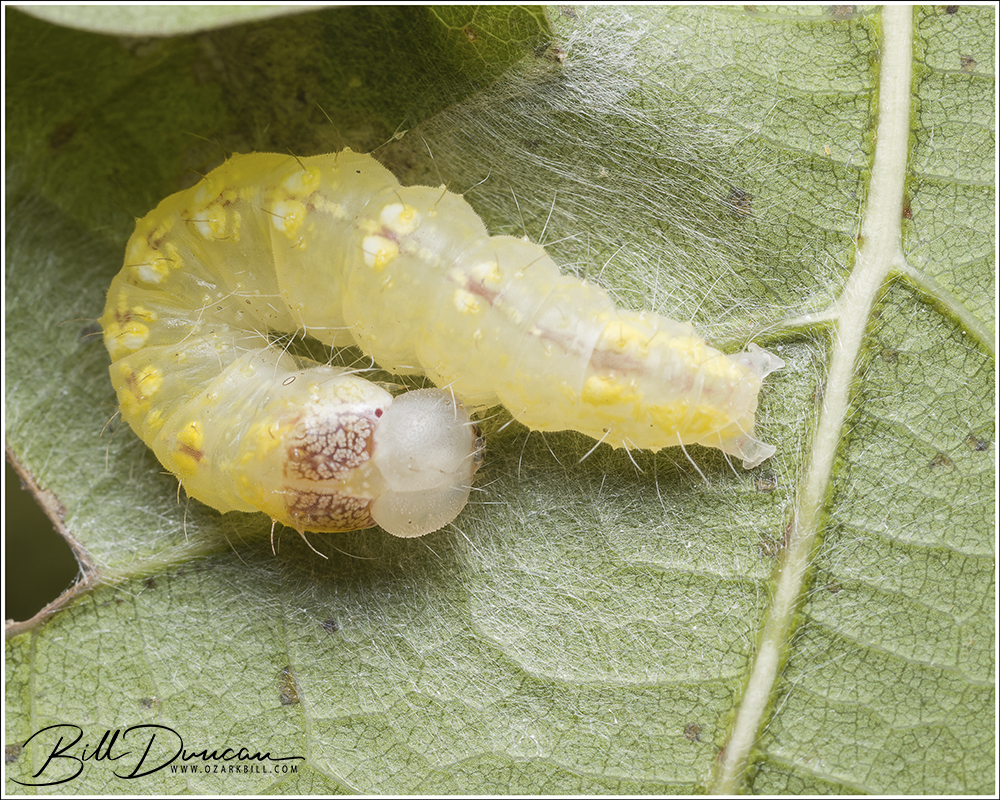
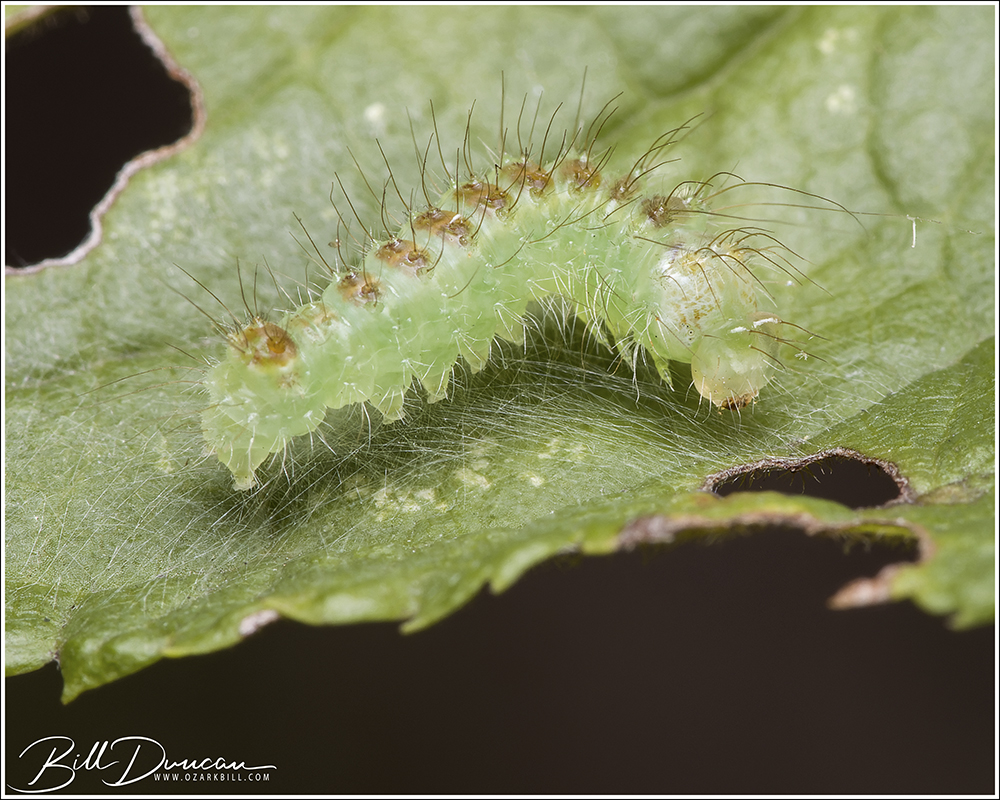
Noctuidae (Acronicta sp.)
This is what I get for not taking photos of some of these from multiple angles. Not even the experts on iNaturalist could get this guy to species using this one image. It was a gorgeous and large caterpillar.
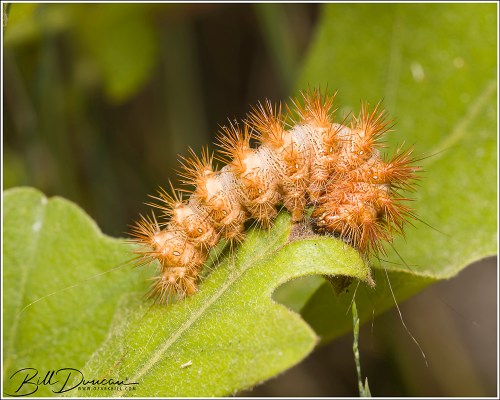
Gold Moth (Basilodes pepita) Noctuidae, Hodges#9781
Finally – I am sharing a cat that does not feed on woody plants. Also, a rare case of a moth that is gorgeous in both adult and larval forms. Unfortunately, this was a pretty early instar and does not show the bright and contrasting colors of older caterpillars. The gold moth feeds exclusively on Verbina species (wingstems, crownbeards).

Have a good one!
-OZB
Today I am featuring the more interesting larvae we found of the Notodontidae Family, commonly known as the prominent moths. This is a widely distributed and diverse family with close to 4,000 species described worldwide. Hosts for this family are mostly woody plants and we often find these feeding on oaks and hickories.
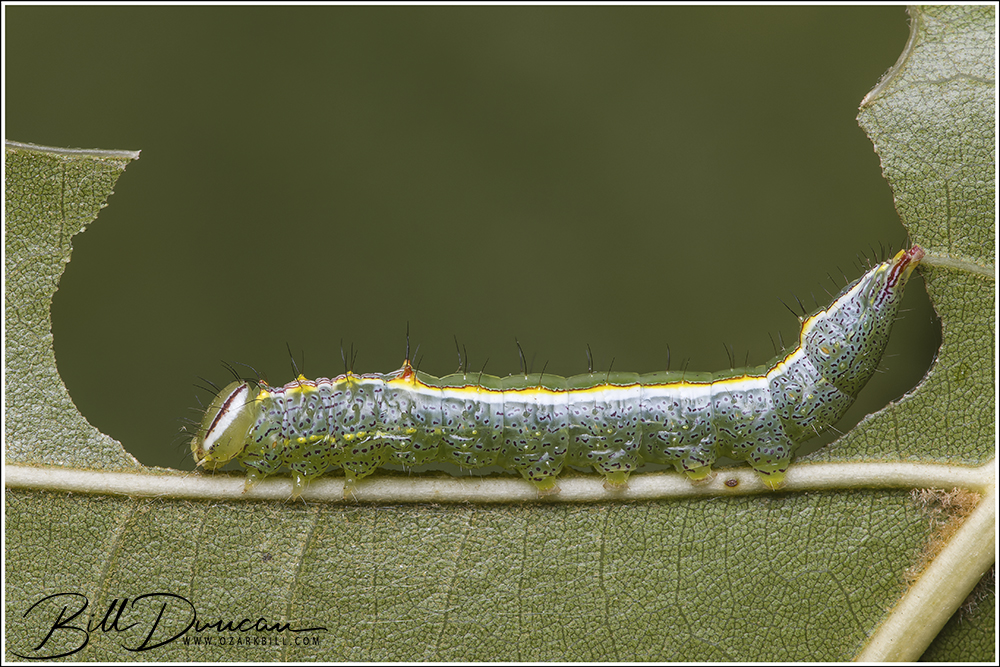
Variable Oakleaf Caterpillar (Lochmaeus manteo) Notodontidae, Hodges#7998
Finding a lot more than I decided to photograph, this aptly-named species feeds primarily on oaks (Quercus sp.) and is highly variable in coloration and pattern. This is a species you may get tired of finding when focusing on oaks during your searches.

Mottled Prominent (Macrurocampa marthesia) Notodontidae, Hodges#7975
We found a few of these guys this year and I find these to be very handsome little cats.
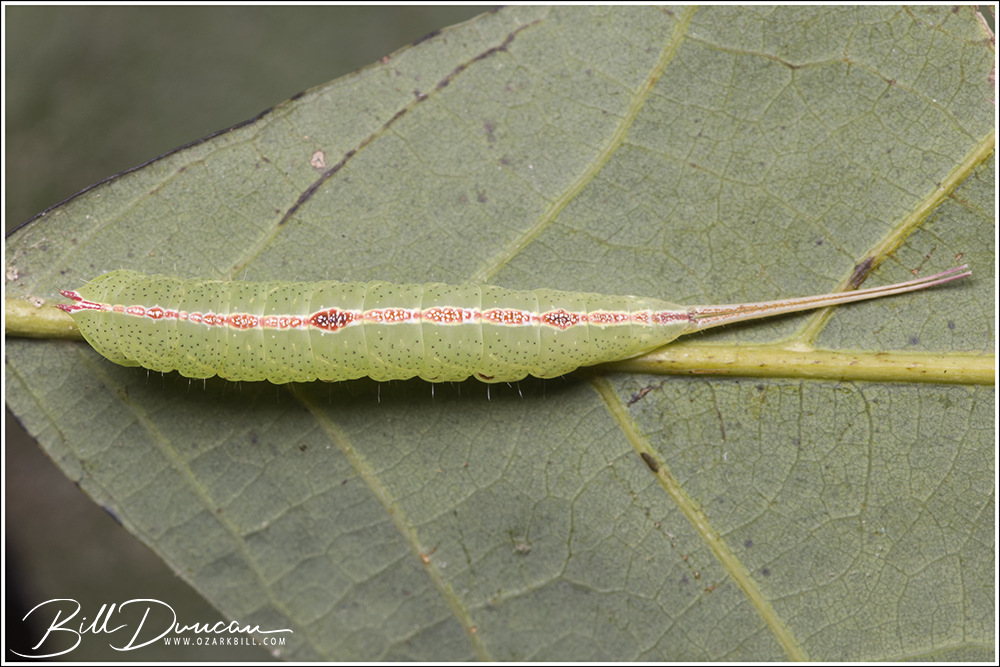
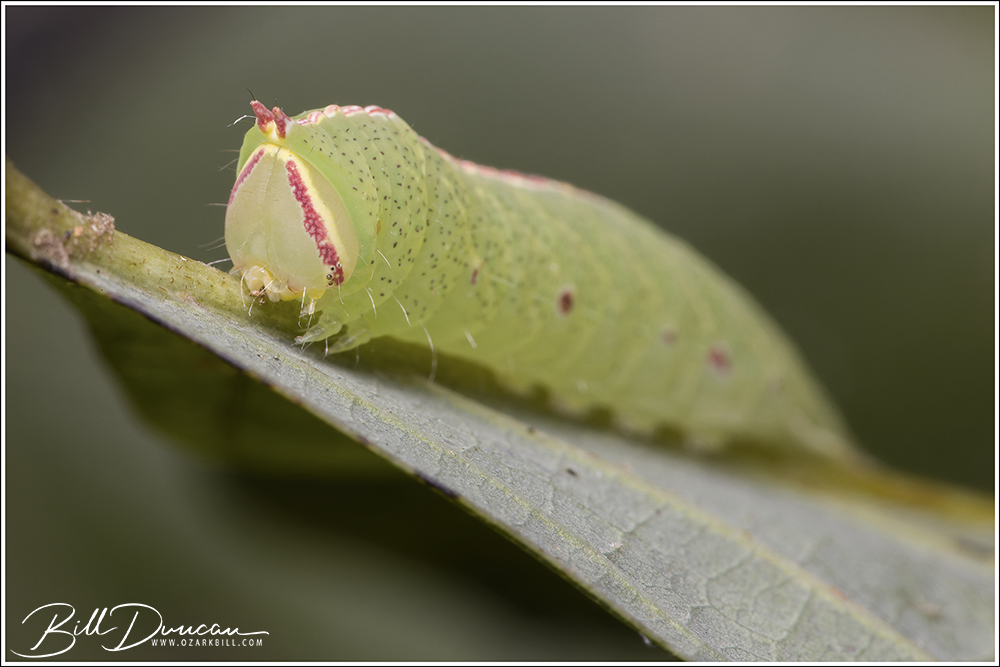

Heterocampa pulverea, Notodontidae, Hodges#7990.1
Until recently, this was a pretty large genus, containing close to 50 species. A couple of years ago, armed with molecular data, this genus was split and now contains 18 species. This one was found on a WGNSS group outing at Pickle Spring Conservation Area in early September.

Orange-banded Prominent (Litodonta hydromeli) Notodontidae, Hodges#7968
We found this guy on another WGNSS outing while looking for the bumelia borer beetle (Plinthocoelium suaveolens). We did not find our target that day but I was thrilled to find this cat that previously I did not know existed. This is another specialist that only feeds on the gum bumelia (Sideroxylon lanuginosum).
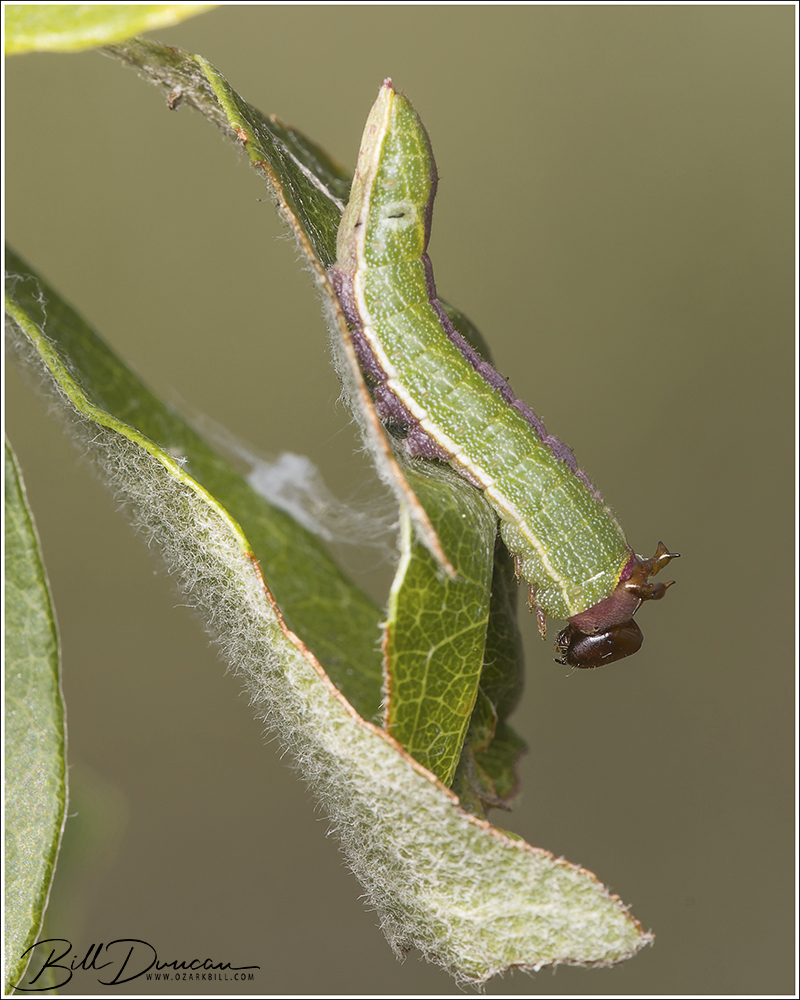
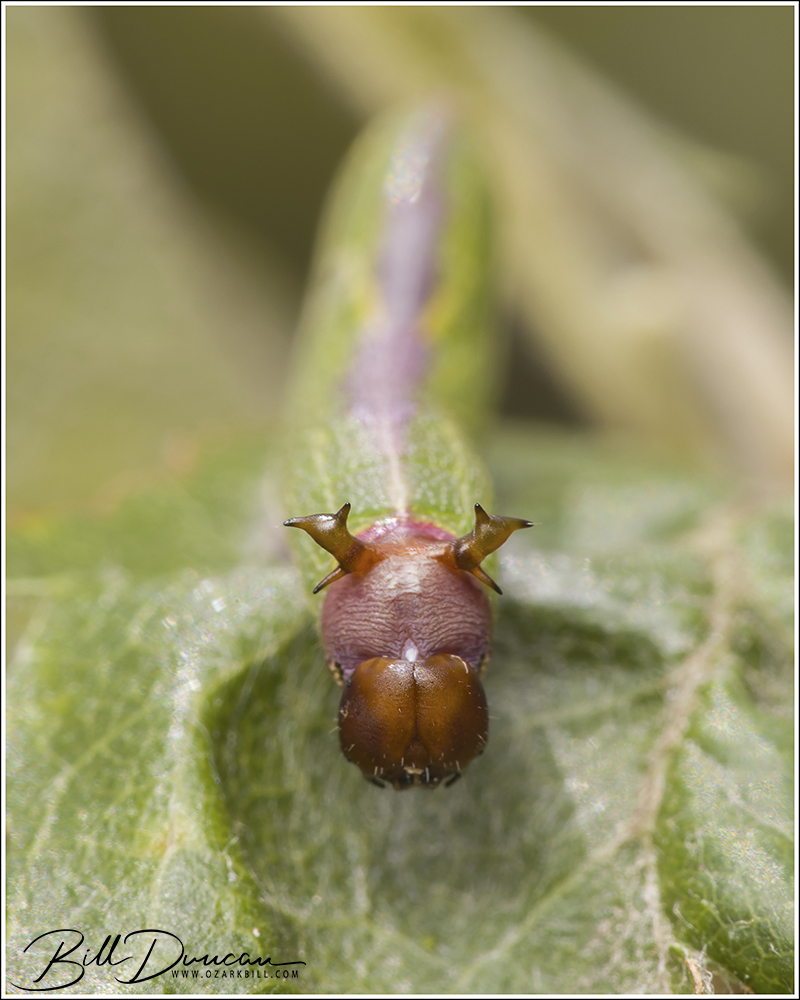
Saddled Prominent (Cecrita guttivitta) Notodontidae, Hodges#7994
This is a very common species that feeds on oaks and until recently belonged in the genus Heterocampa.
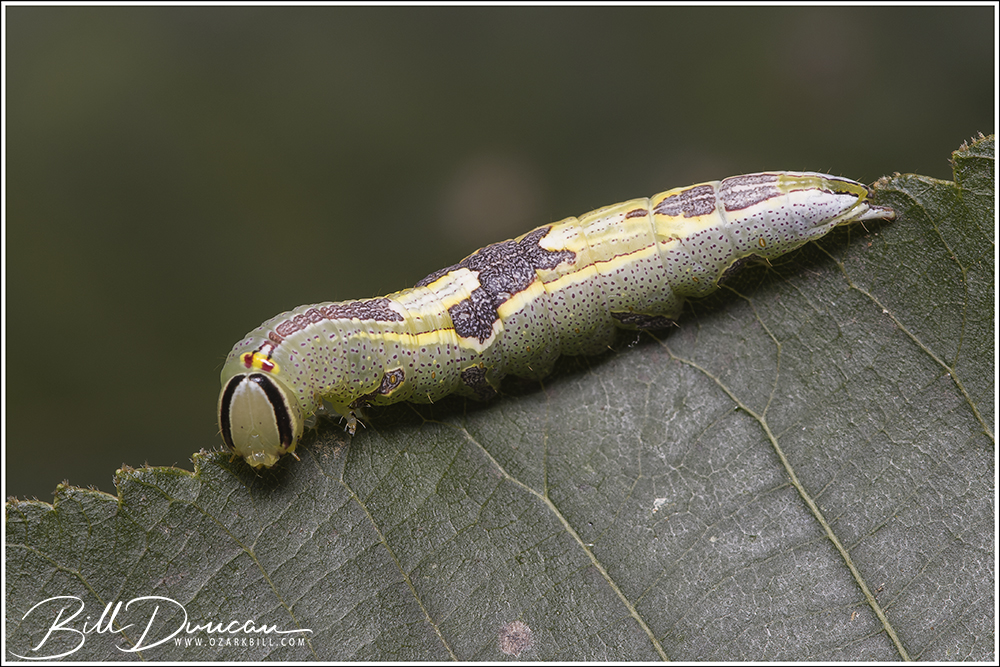

White-streaked Prominent (Ianassa lignicolor) Notodontidae, Hodges#8017
Also known as the lace-capped caterpillar, this is one of many caterpillars in this family that hide in plain sight. You will almost always find these sitting on the section of leaf they have previously eaten, using their coloration and patterns to look like a diseased or senescent portion of the leaf. These can be quite tricky to find until you get the right search engine installed in your brain.

Red-washed Prominent (Oedemasia_semirufescens) Notodontidae, Hodges#8012
Although considered fairly common, this was the first year I was finally able to find one of these outstanding cats. This species is quite polyphagous, feeding on almost any native woody plants. One of the two we found this year was feeding on pawpaw (Asimina triloba).

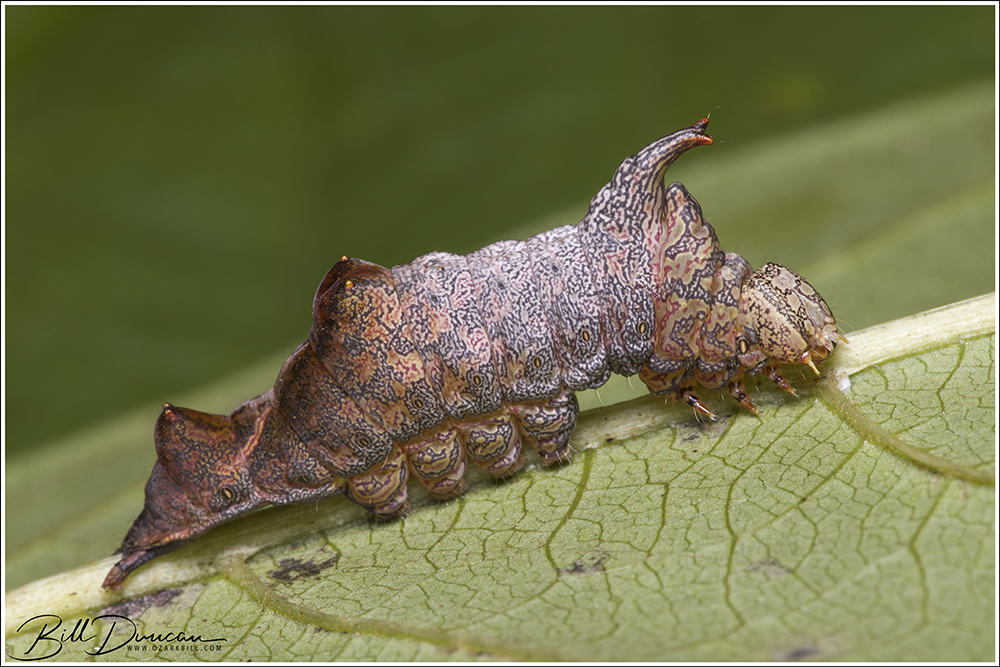
Datana Caterpillars (Datana sp.) Notodontidae
Most notodontids are solitary. But certain groups, like these Datana are gregarious and can be found in large groups even in later instars.
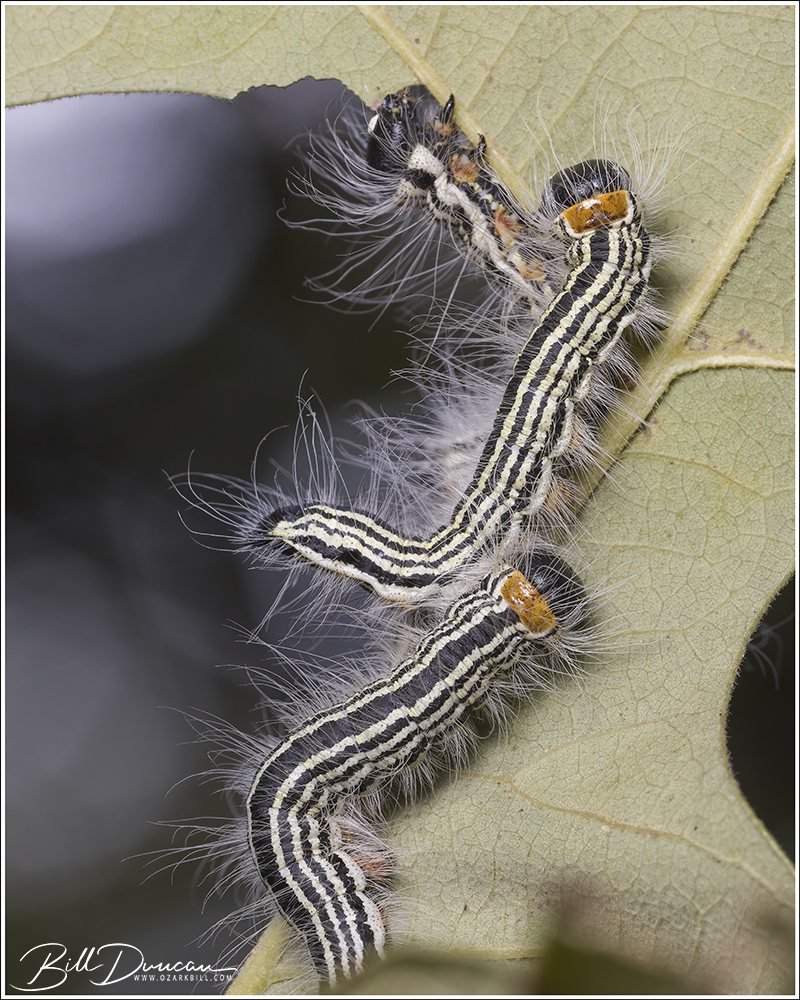
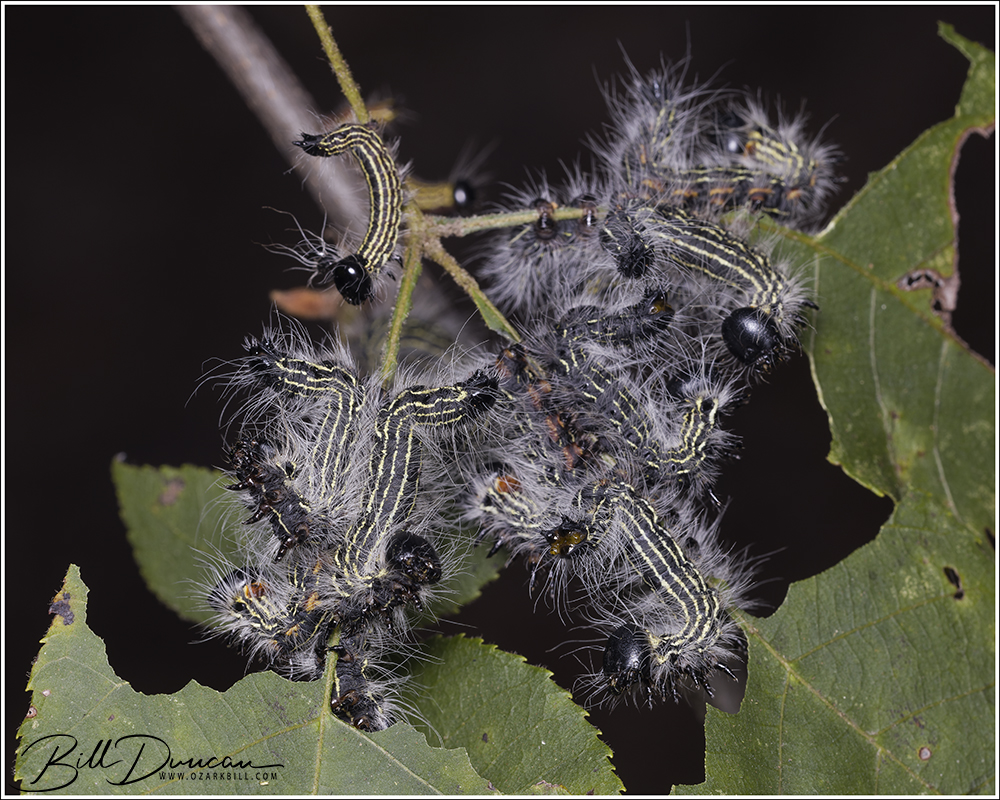
Symmerista Prominents (Symmerista sp.) Notodontidae
Another gregarious taxa, the Symmerista are notoriously difficult to identify to species in both larval and adult phases.
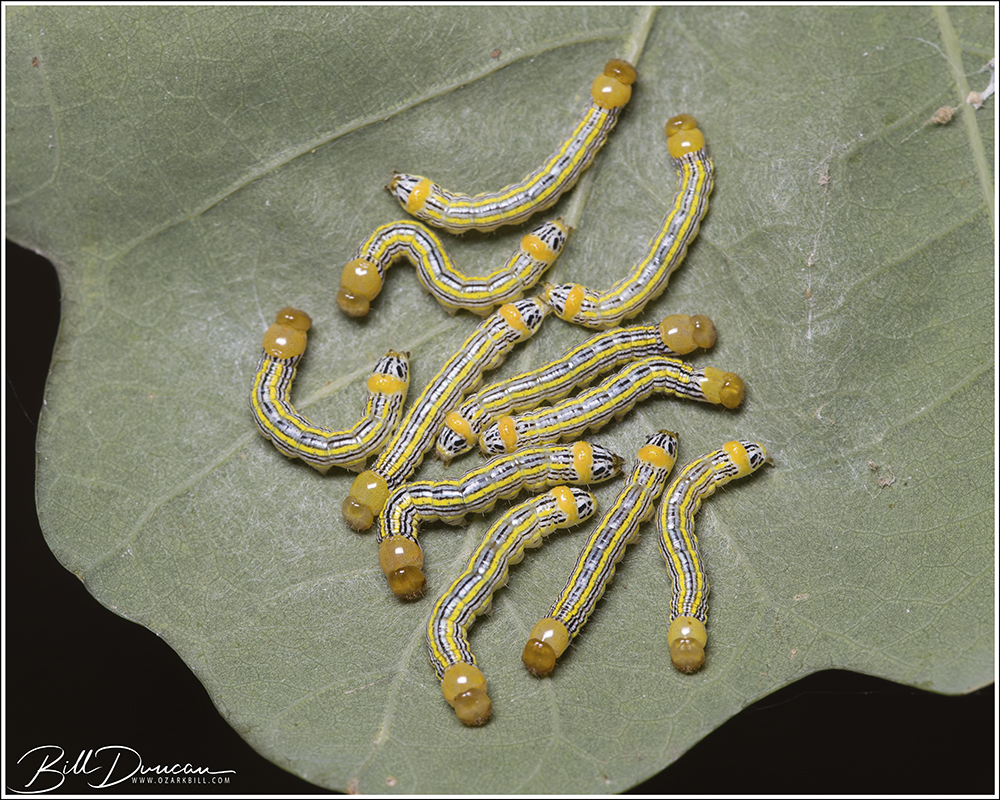
White-dotted Prominent (Nadata gibbosa) Notodontidae, Hodges#7915
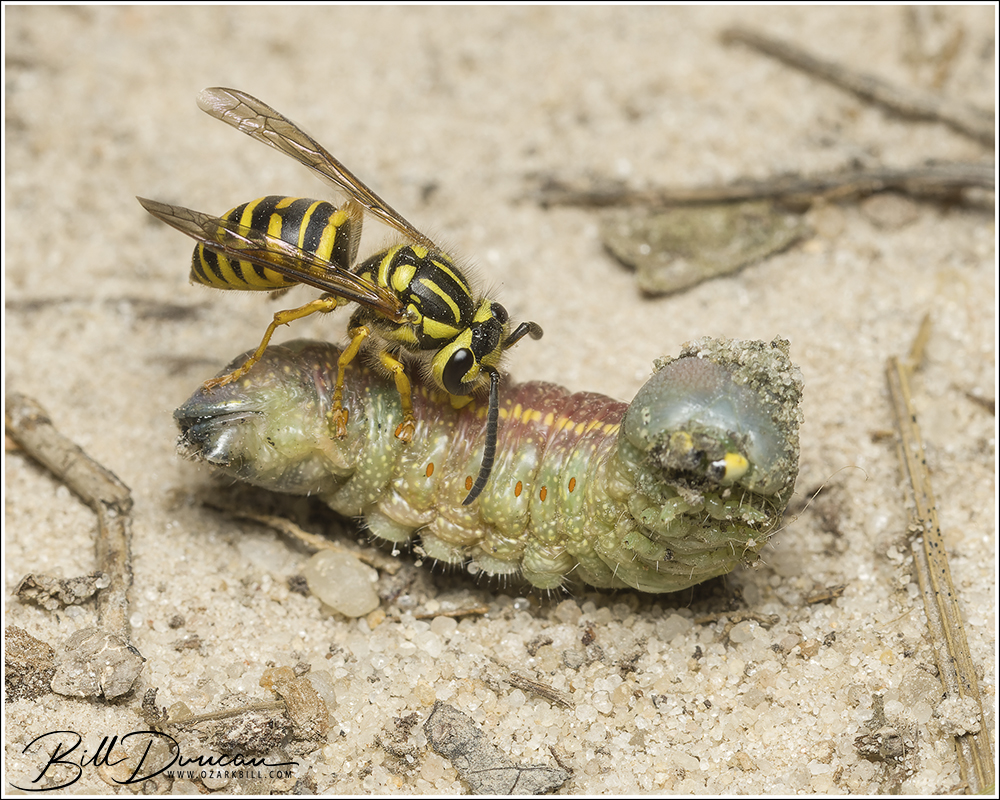
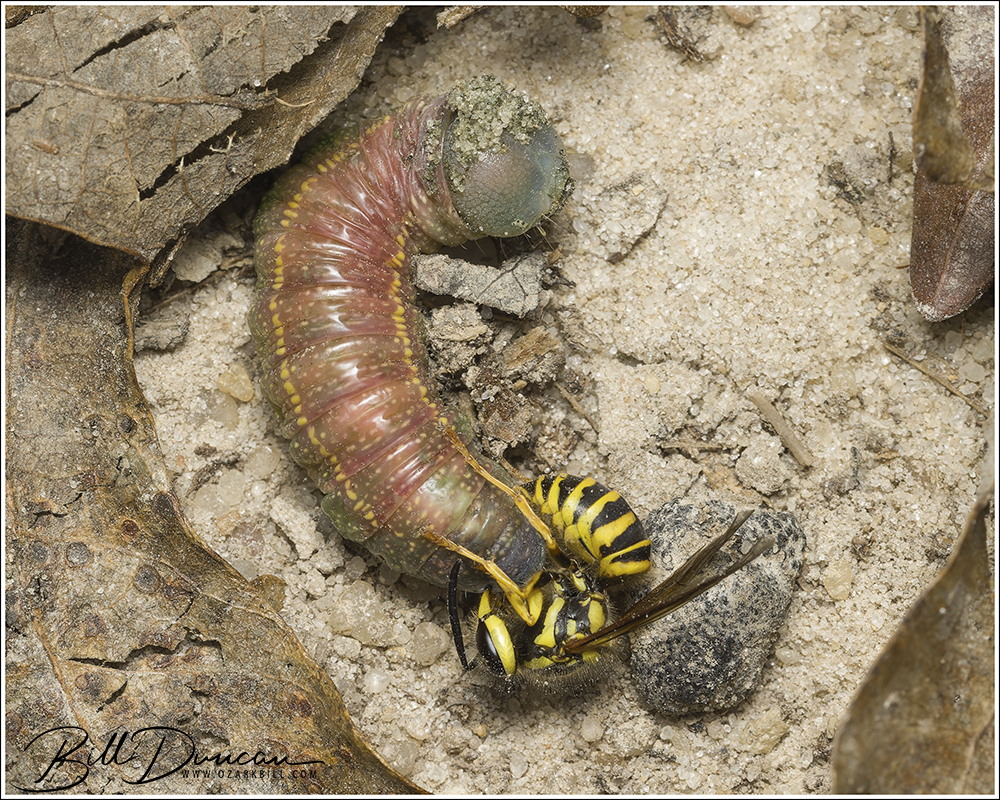
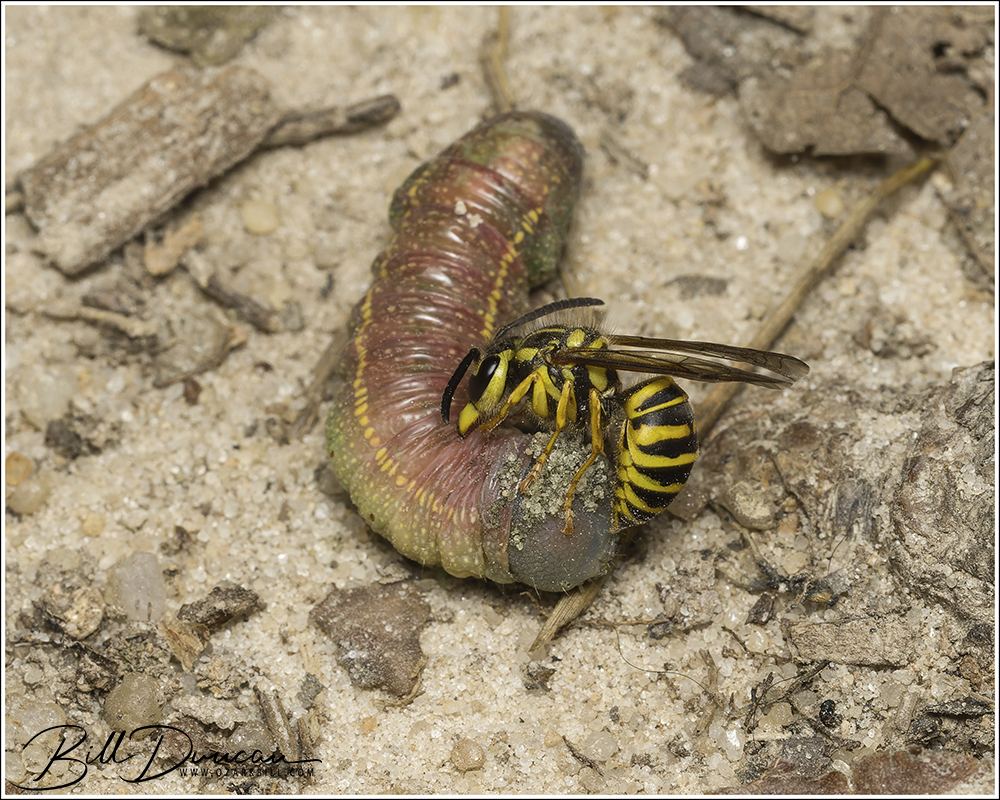
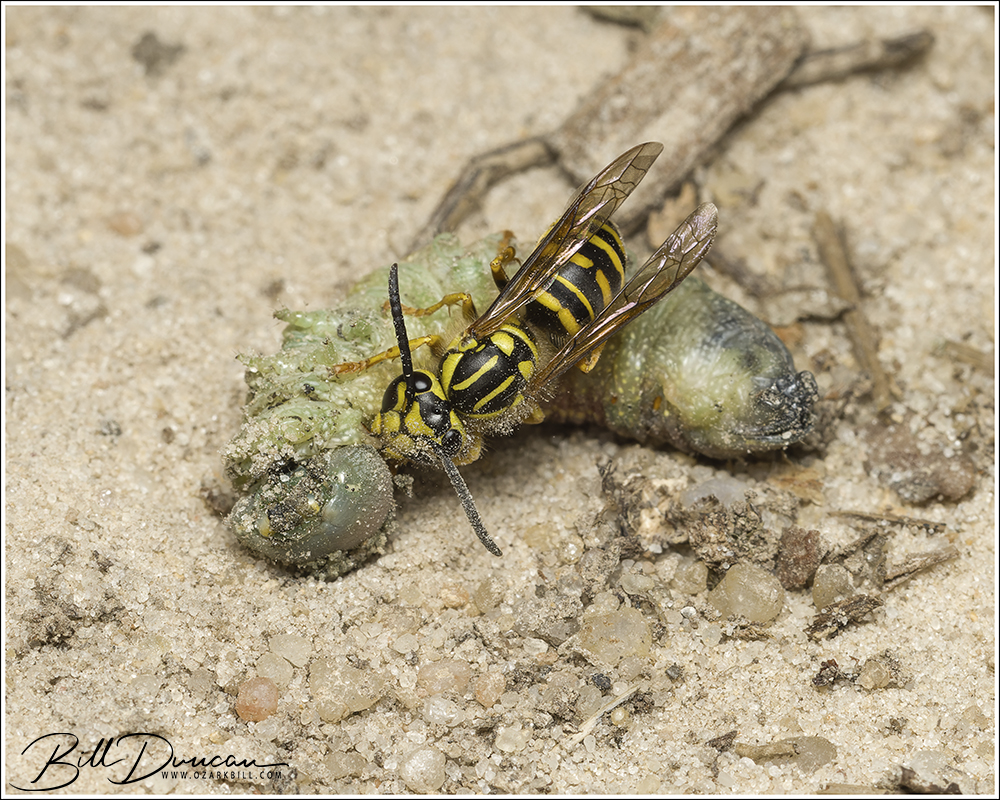
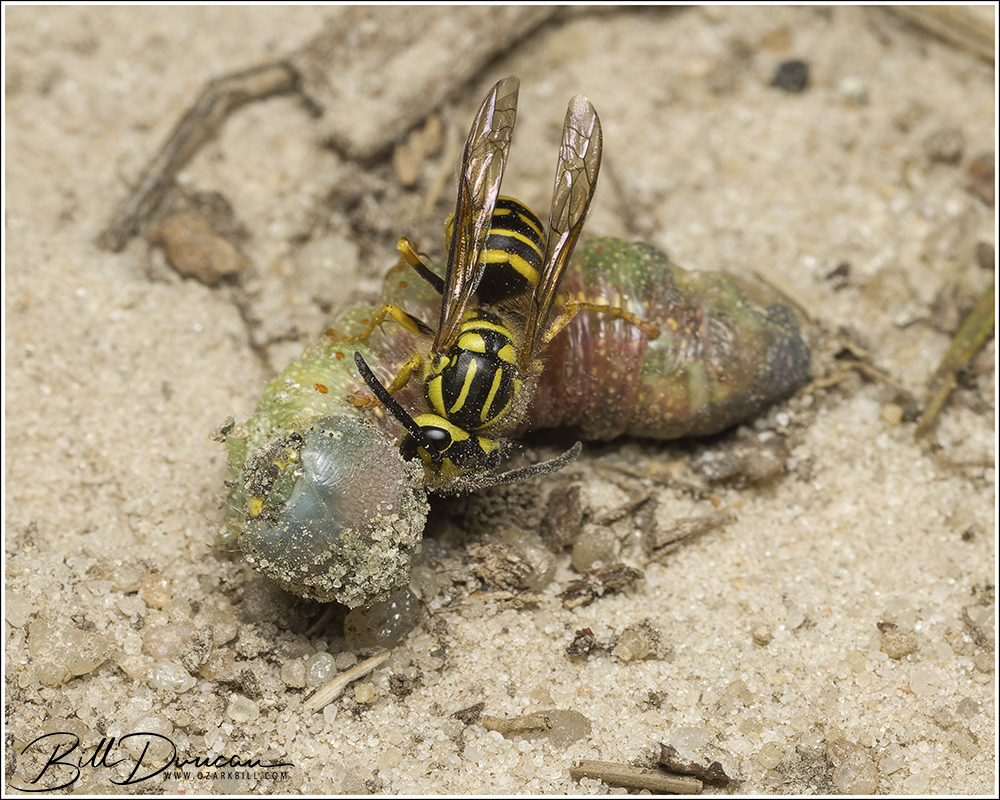
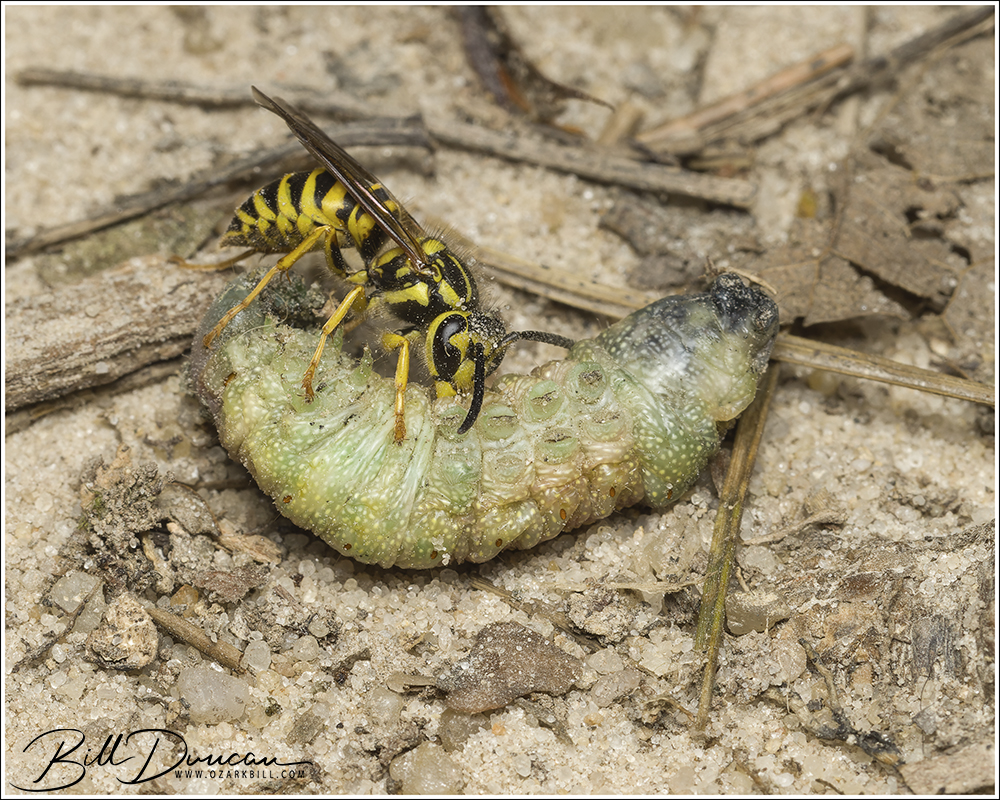
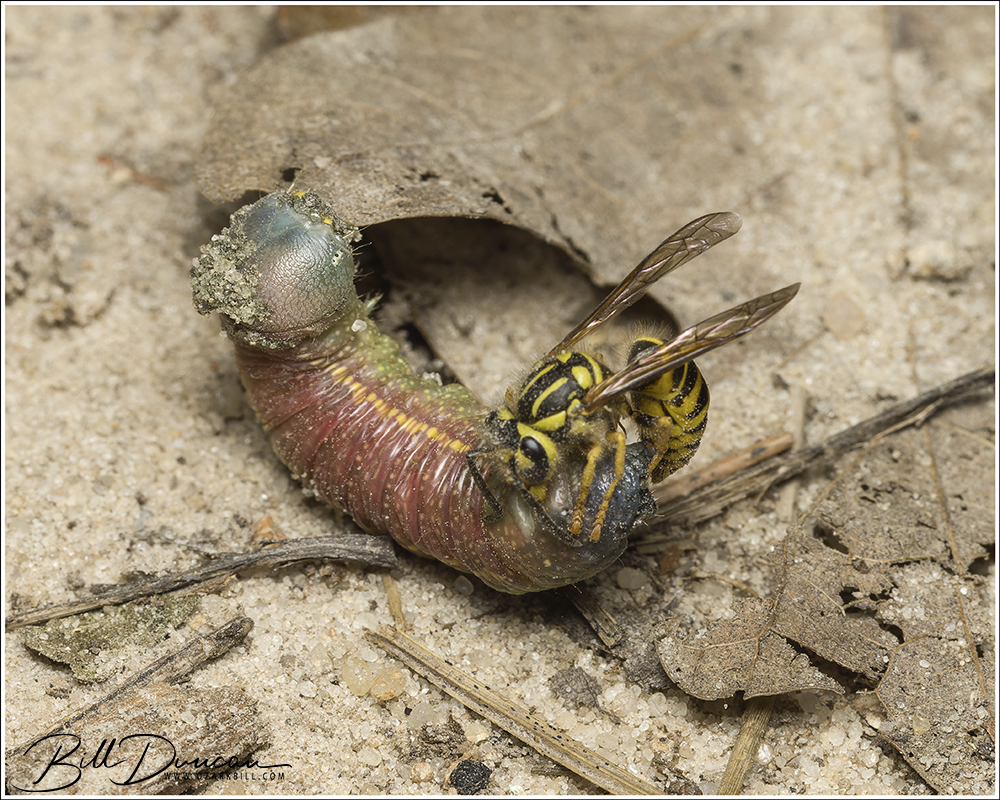
Perhaps the most common caterpillar we find on our hunting trips, the white-dotted prominent can be found in large numbers on oaks. We find these so often that I rarely even tell the others in the group when I find them. But here we find a common species in a not so common situation. We came across this one on its way to find its pupation spot that would likely be in the ground or leaf litter. You can tell this was the case by the reddish or maroon coloration. Many caterpillars will change to this type of coloration immediately before they begin the pre-pupal stage. Unfortunately for the caterpillar, some southern yellowjackets (Vespula squamosa) found it as well. We watched the drama unfold as the wasps continued to sting and bite at the poor creature that will not likely make it to adulthood.
Thanks for stopping by!
-OZB
I got back into serious hunting of caterpillars beginning in late August of this year. On some trips, I hunted with a nice group of friends and on several others I went on solo outings. All in all, it was a lot of work and, at times, I wondered if the payoff was worth the time and effort. However, like I’ve said before, anytime spent in quality spots in the outdoors is time well spent. In this first post, I am sharing, as no surprise to those who know me well enough, images of larvae from my favorite family of Leps – the Limacodidae, otherwise known as the “slug moth” caterpillars.
Red-crossed Button Slug Moth (Tortricidia pallida) Limacodidae, Hodges#4653
By far the most abundant slug we found this season was the red-crossed button. I did not collect good enough records to put a specific number of the individuals found, but it would be close to 25.

Nason’s Slug Moth (Natada nasoni) Limacodidae, Hodges#4679
This is another one that is usually found in goodly numbers during the hunting season. We found a few, but not nearly as abundant as in most years.

Stinging Rose Caterpillar Moth (Parasa indetermina) Limacodidae, Hodges#4699
Always a pleasure to find, the stinging rose caterpillars will vary considerably in the amounts of the yellow, white, black and red colors.


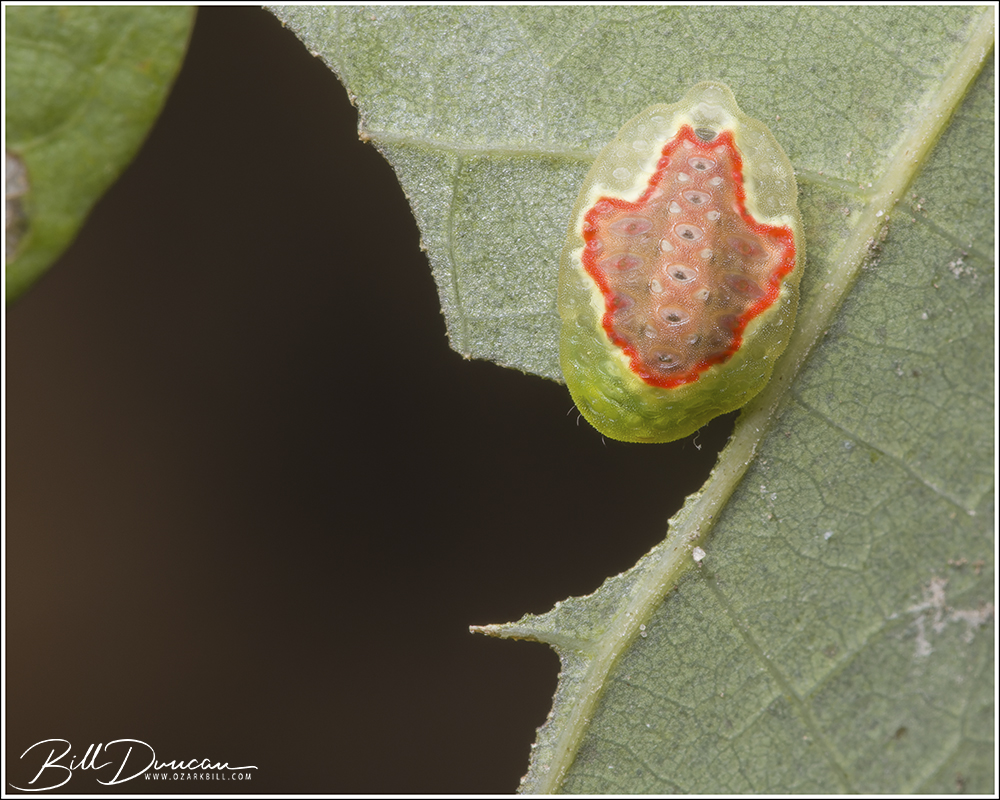
Skiff Moth (Prolimacodes badia) Limacodidae, Hodges#4671
Another slug that can be quite variable in colors and patterns, the skiff moths can often be found on the tops of leaves. This is opposed to most of the cats in this family being located on the undersides of leaves. As you can see in the one pictured here, these guys are patterned to appear as easily-overlooked spots of necrosis on late-season green leaves.

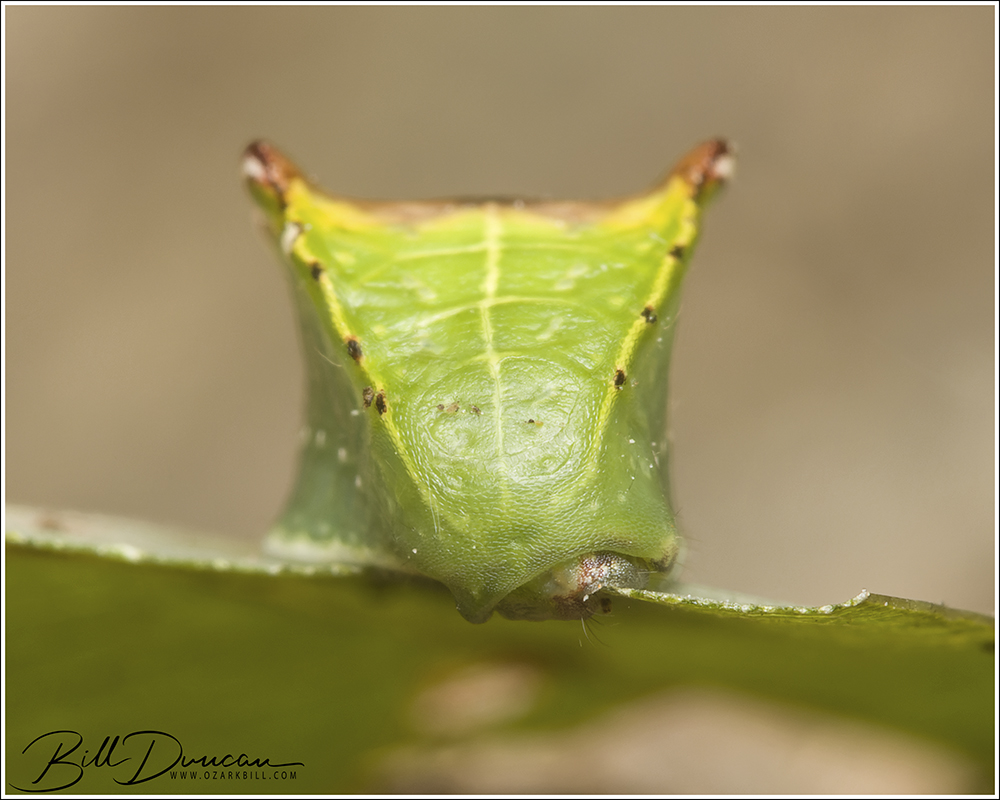

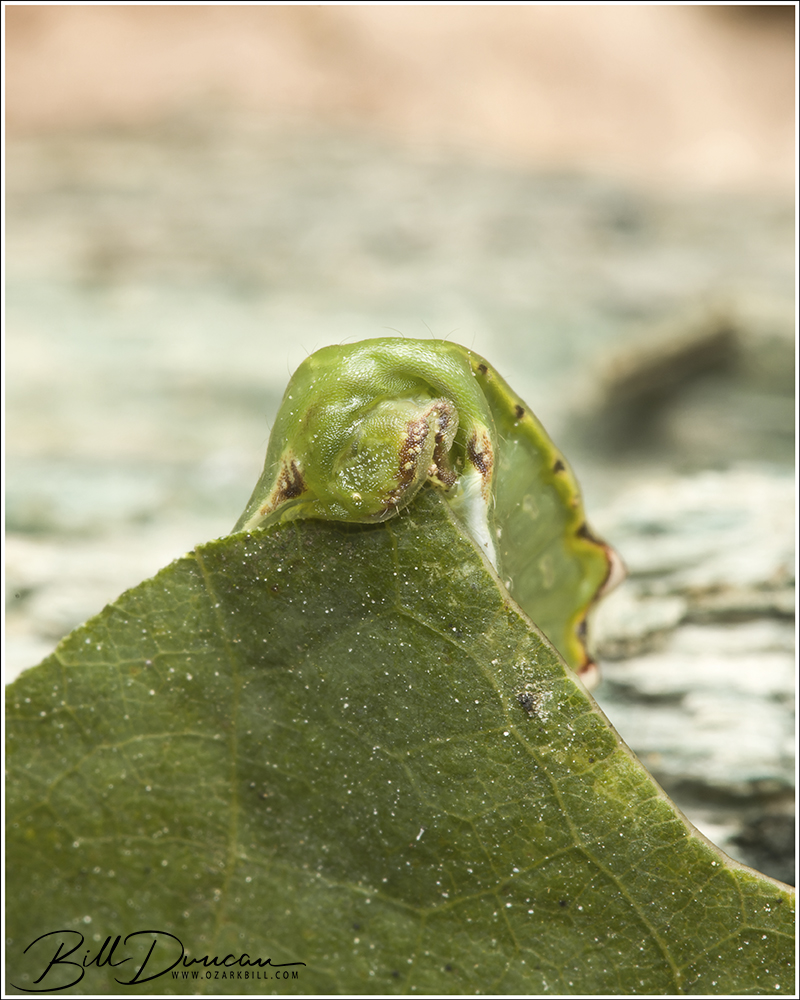
Inverted Y Slug Moth (Apoda y-inversum) Limacodidae, Hodges#4667
Overall, I was a little disappointed in the numbers and diversity of slugs we found this season, however this species and the following one are not always encountered every season. I believe this is only the third cat of this species I have been able to find.
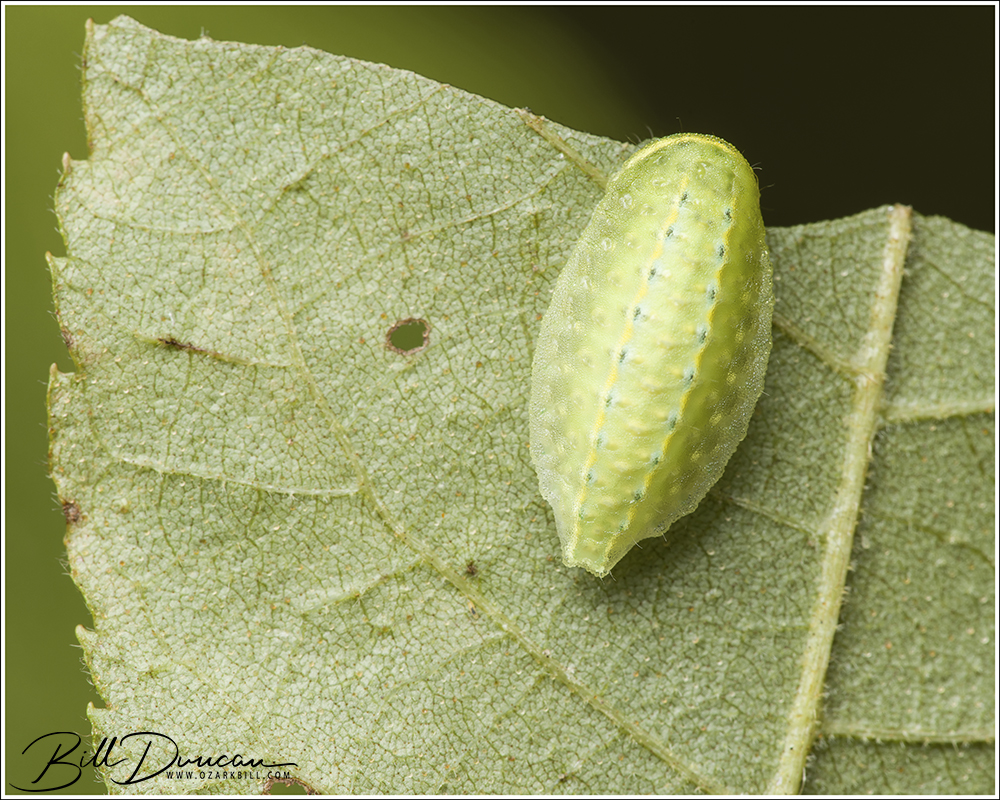
Beutenmueller’s Slug Moth (Isochaetes beutenmuelleri) Limacodidae, Hodges#4675
Until this year, I have only been able to see one caterpillar of the Beutenmueller’s slug, better known as the “spun-glass” slug. This year I found three! I’ll never get tired of seeing these.


Unknown Limacodid
This mid-instar cat could potentially be one of several species. I think there is a chance it could be the – jeweled tailed slug moth (Packardia geminata), but it is most likely a yellow-shouldered slug (Lithacodes fasciola). I wish I would have thought to bring it home to rear. In the know and have a better idea on the identity of this one? Please let me know in the comments below.

Shagreened Slug Moth (Apoda biguttata) Limacodidae, Hodges#4669
In the picture below of this shagreened slug, you can see a couple of the traits that are distinctive to the Limacodidae. First, it is quite common that the slug cats will eat the leaves in a more horizontal direction, squaring off the leaves, so-to-speak. Most other caterpillars will eat circular notches in the leaves as they feed. Second, although difficult to see in this picture, is the distinctive frass the caterpillar is dropping. Limacodid frass is distinctly shaped, with one section being notched to “fit” along side the ones before and after. Interestingly, monarch (Danaus plexippus) and likely other groups also share this trait.

Hag Moth (Phobetron pithecium) Limacodidae, Hodges#4677
Either we were out too early, in general, or the hag moth cats, AKA “monkey slugs,” were later than usual. I found quite a few mid-instar monkey slugs this season but not a single late-instar. I was too lazy, or perhaps disappointed, to pull out the big rig to photograph any of these, so here is a cellphone shot. The reason I wanted to share this is to show the interesting feeding behavior of cats at this stage of their development.
Notice the wavy, white to lime-green patches on the top of this leaf? This is indicative of how this younger monkey slug is feeding. Instead of free-feeding and consuming the entire leaf, this guy is feeding like a skeletonizer or a leaf-miner, in that it is scraping the top layer of the leaf. In this photo, you can see fresh scraping areas and ones that are much older, suggesting that this cat has been living on this leaf for some time. I suppose it likely that early to mid instars of all species in this family feed in this way, but I am not usually out hunting in early to mid summer to have observed this before.

Black-waved Flannel Moth (Megalopyge crispata) Megalopygidae, Hodges#4644
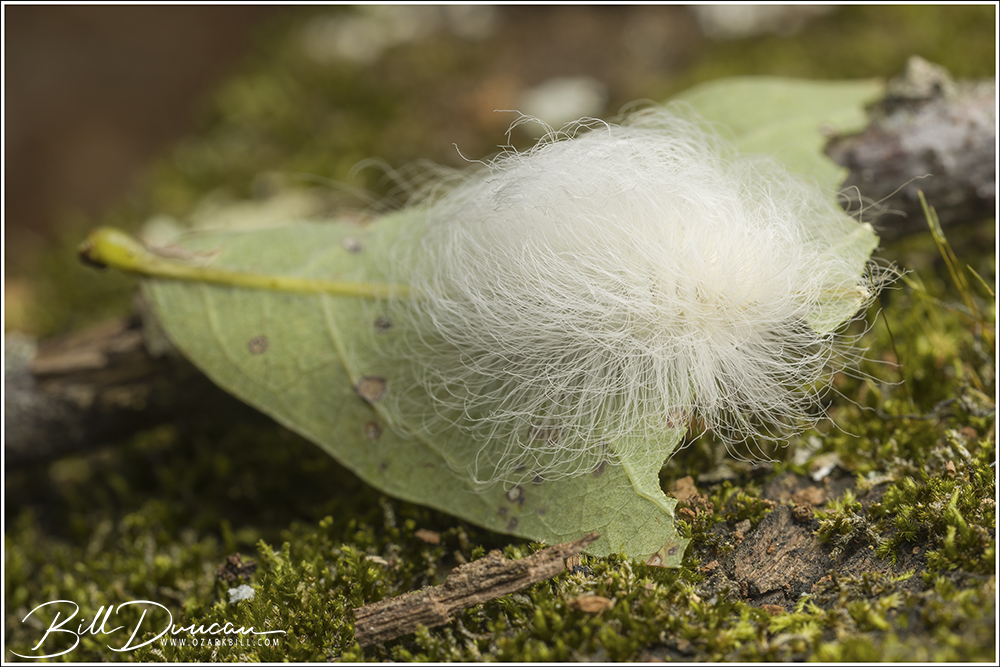
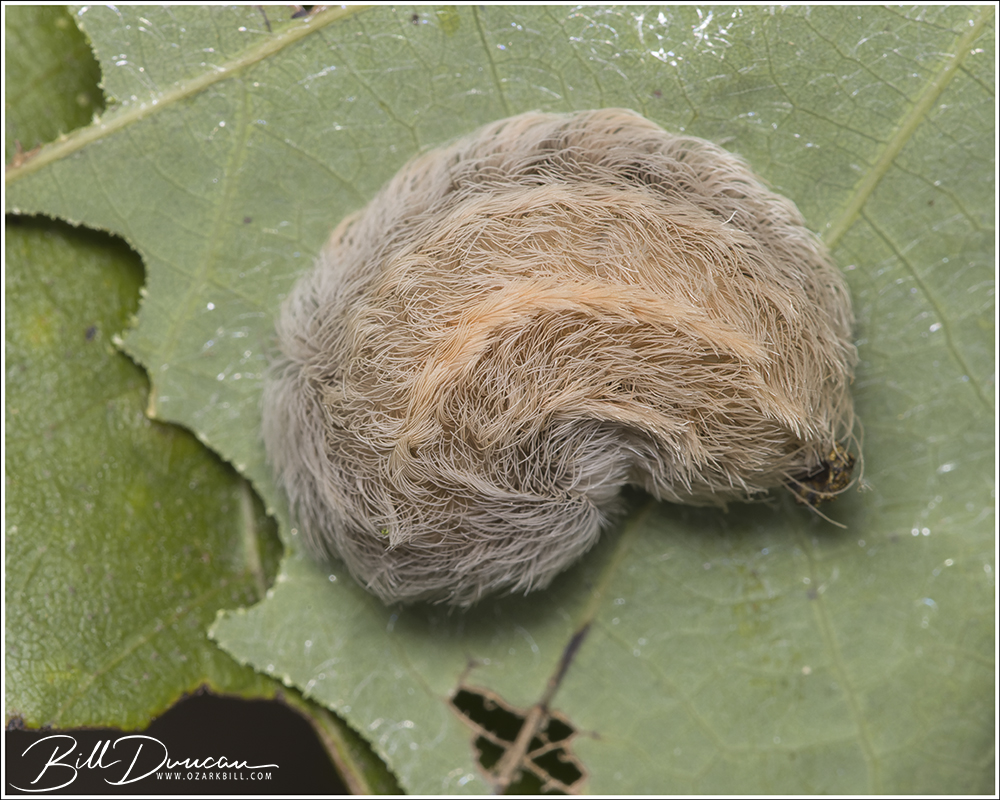
Technically, not a Limacodidae family member, the black-waved flannel moth is in the closely related family, Megalopygidae, within the same super family (Zygaenoidea), which include not only the slugs and flannel moths, but leaf skeletonizer moths as well. We regularly find this species on our late-season outings. This year I was able to find and photograph two different stages. The earlier instars are fluffy white in appearance, while the final instars are colored in warmer browns.
Remember, these guys are not for petting. Descriptions vary, but the hairs on these have been described as highly irritating to downright dangerous, potentially requiring a hospital visit.
Late instars of this species are draped in reds and browns. Some have suggested they can look like the top of a recent “president’s” head.
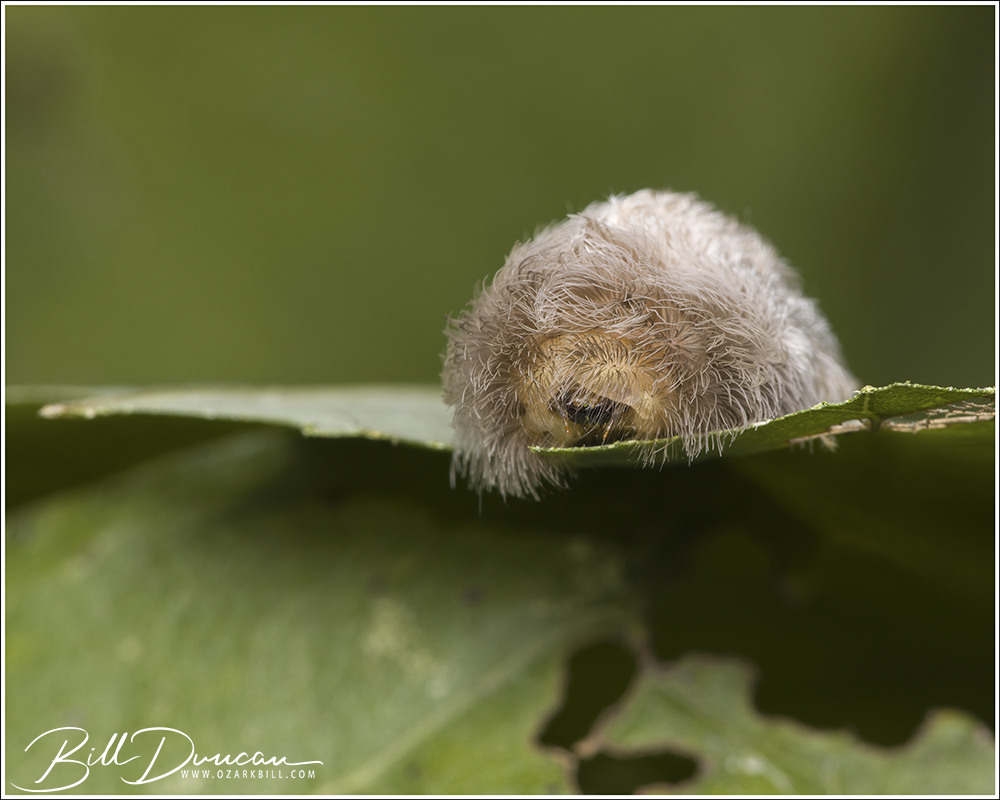
I believe these are all of the photos I have to share of the Limacodidae from this past season. Thanks for visiting and please let me know if you find any errors in my identifications by making comments below.
-OZB
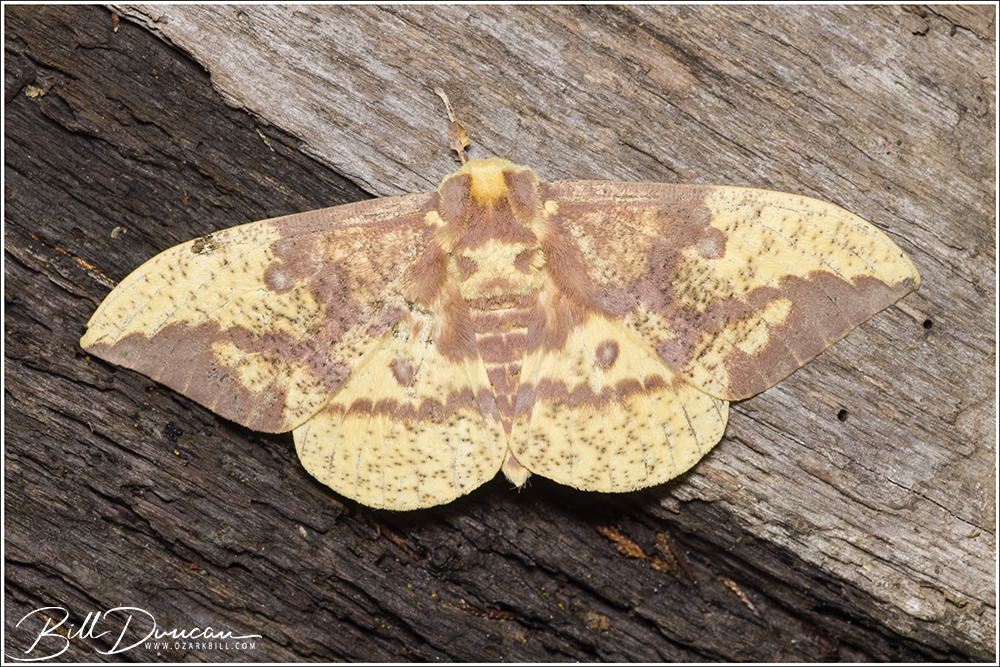
I forgot to post the following adult imperial moth from our black-lighting night this year in the previous post. As you can see, it was a worthwhile night! I photographed this species once before and they do commonly show up on black-lighting occasions, but I never get tired of them showing up! All of these images were taken at Engelmann Natural Area in Franklin County, MO.

This imperial moth caterpillar was found on a night cat hunt in late September.

I got a whole one night of black-lighting in this season, when Miguel and I headed to Engelmann Woods Natural Area in Franklin County, Mo in early August. For only a few hours in a single night, our results were pretty fun. Here are some of what I have gotten around to processing so far.
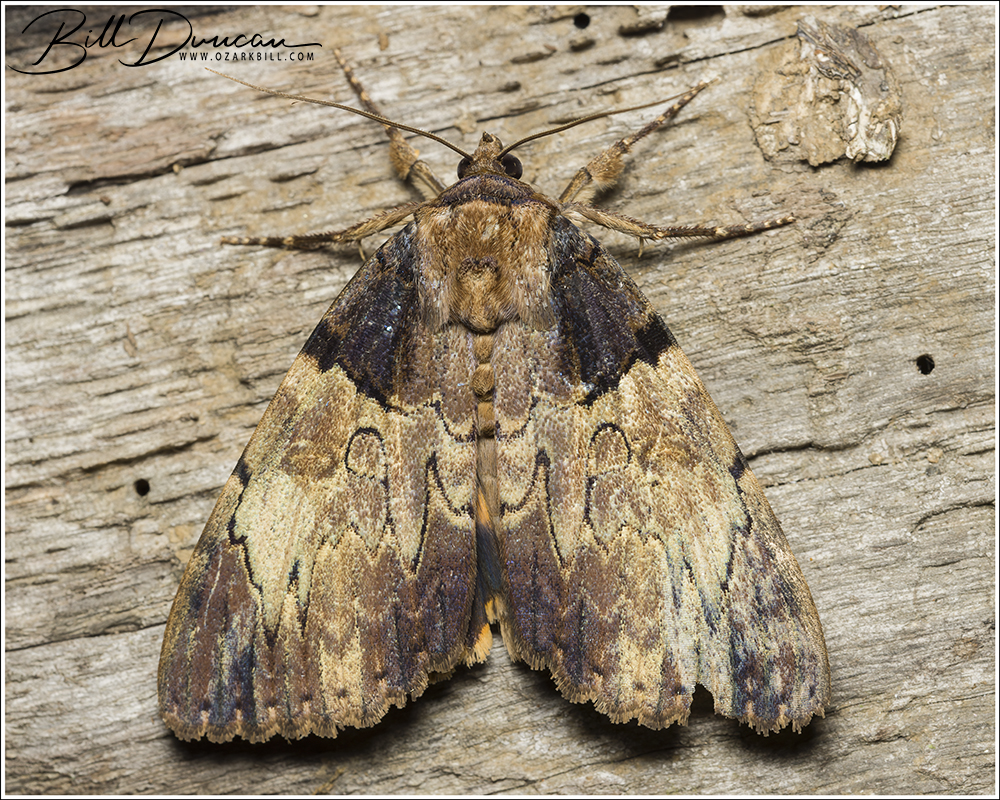
Clouded Underwing (Catocala nebulosa) Erebidae, Hodges#8796
This one wouldn’t open up his wings to show the pink tones that are hiding on the dorsal side of its hind wings. Nonetheless, the pattern and warm tones make this a very handsome species. Now I just need to find the beautiful larvae!
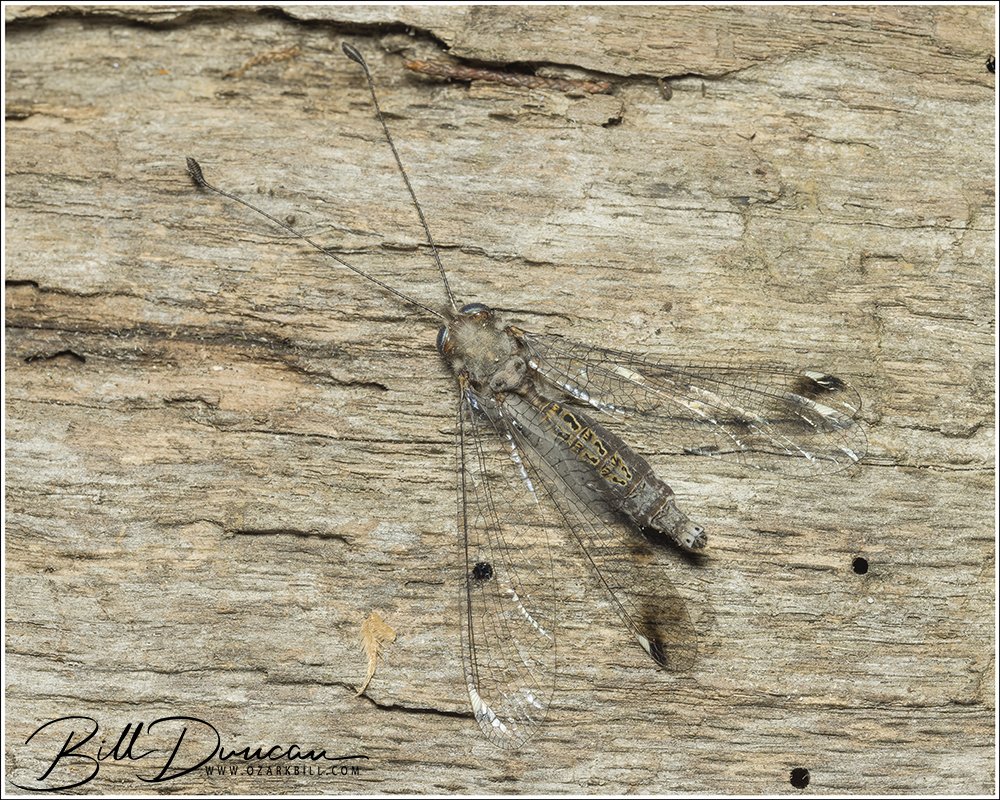
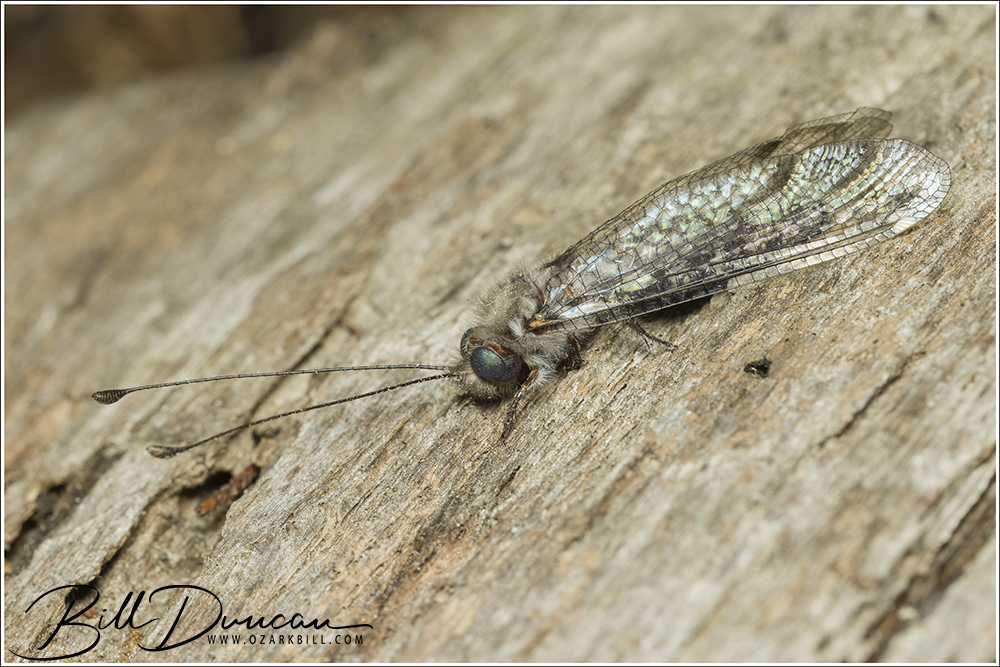
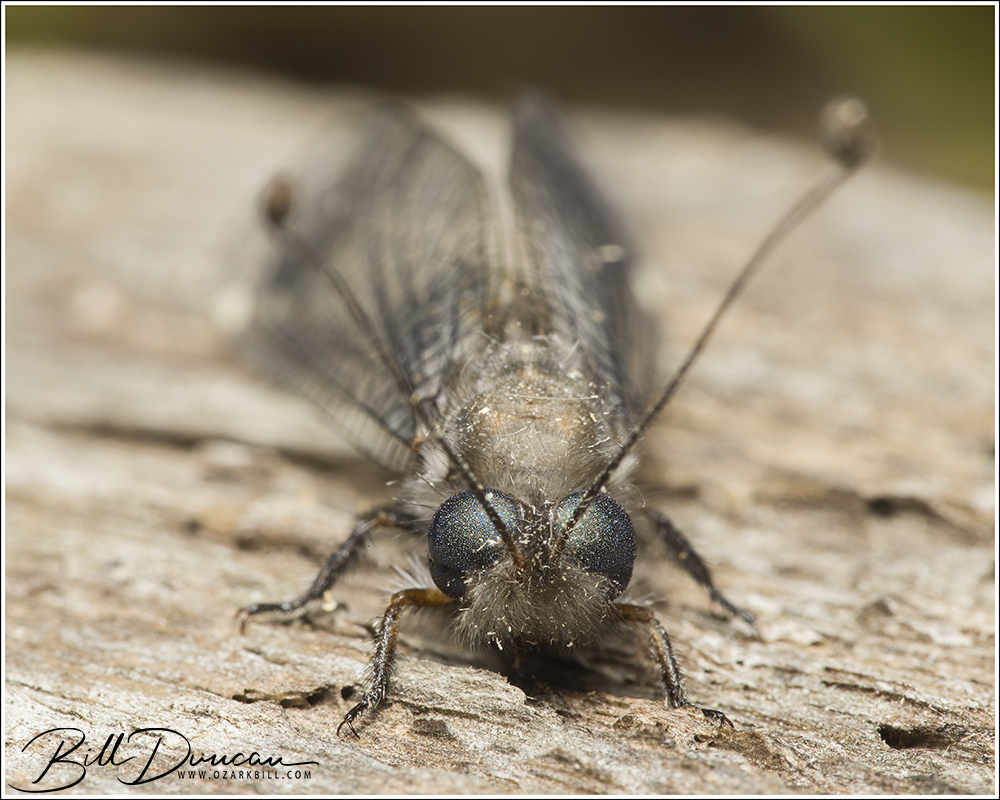
Owlfly (Ululodes sp.) Ascalaphidae
These guys show up to the lights from time to time and it’s always a nice treat to find them.
Eastern Hercules Beetle (Dynastes tityus) Scarabaeidae
It’s a party when one of these shows up. This is the third individual I’ve been able to find and they were all females. I want to find a male badly!


Heitzman’s Dagger Moth (Acronicta heitzmani) Noctuidae, Hodges#9241.1
Not only is this a very attractive dagger moth (a group I’m becoming much more interested in), but is a really special species for Missouri and a real privilege to find and photograph. Missouri is a stronghold in the range of this species and the type specimen was collected at Truman State Park. It was named for the late lepidopterist, Richard Heitzman – author of the “Butterflies and Moths of Missouri” books published by the MDC. To my knowledge, the larvae of this species has yet to be found or photographed.

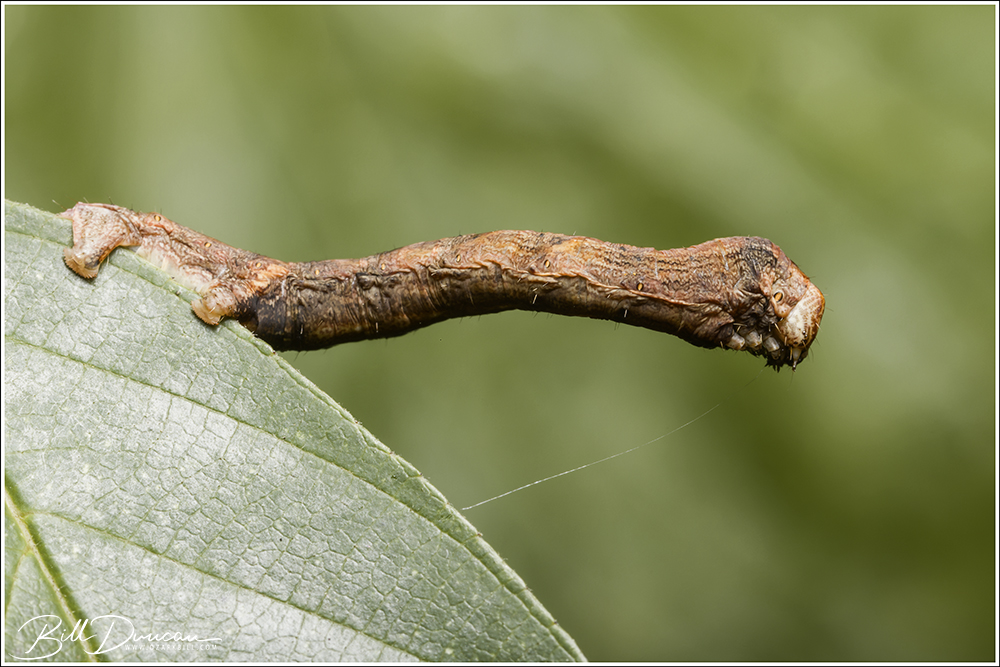
Small engrailed (Ectropis crepuscularia) Geometridae. Hodges#6597
We also found some time to do a little caterpillar hunting. The larvae of this Geometrid are known by the name of saddleback looper. This one was found on persimmon (Diospyros virginiana).
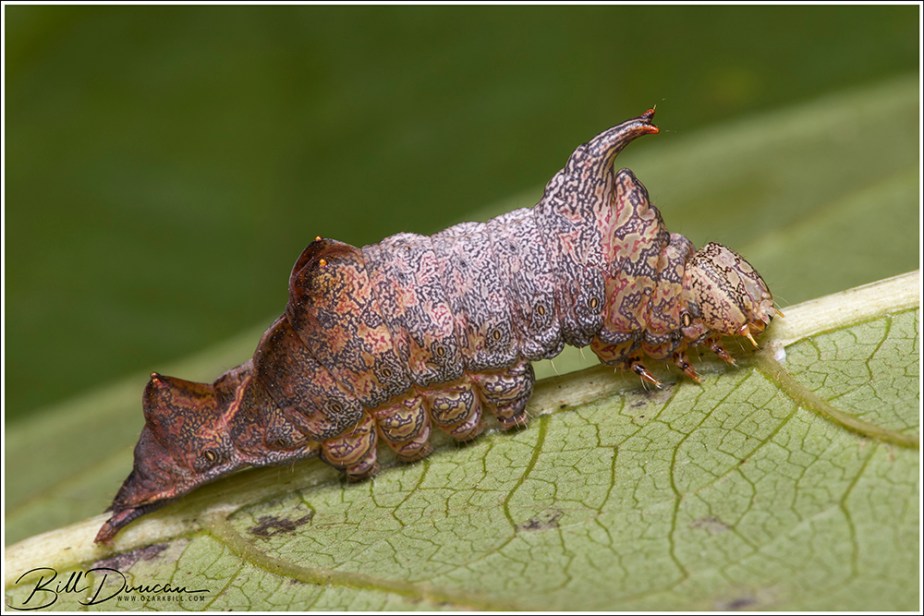
Skiff moth (Prolimacodes badia) Limacodidae, Hodges#4671
Limacodid, or “slug” moths are known to be some of the first and most abundant moths attracted to lights and I always feel a bit guilty to see them trapped against the sheets while black-lighting. Even on the slowest evenings, you can usually count on a skiff moth or several to make an appearance.

These are the highlights from black-lighting in 2023. I hope to get out for this a few more times next year.
Thanks for visiting!
OZB


 A Thousand Acres of Silphiums