"What a thousand acres of Silphiums looked like when they tickled the bellies of the buffalo is a question never again to be answered, and perhaps not even asked." -Aldo Leopold
Hidden along the Eleven Point River in the south-eastern Missouri Ozarks lies Greer Spring (the 2nd largest spring in the state). This location and surrounding areas of bottomland and riverfront forest are widely heralded among birders in Missouri as being prime for easily picking up a number of forest species. Cerulean, Swainson’s, Worm-eating, Kentucky, and Hooded Warblers, to name a few, are documented as nesting in this area. These clips were recorded during a trip that Steve and I made this past May.
I have featured Bell’s Vireo on this site before, but it is one of my favorites and I never get tired of hunting, watching and photographing this grassland cutie.
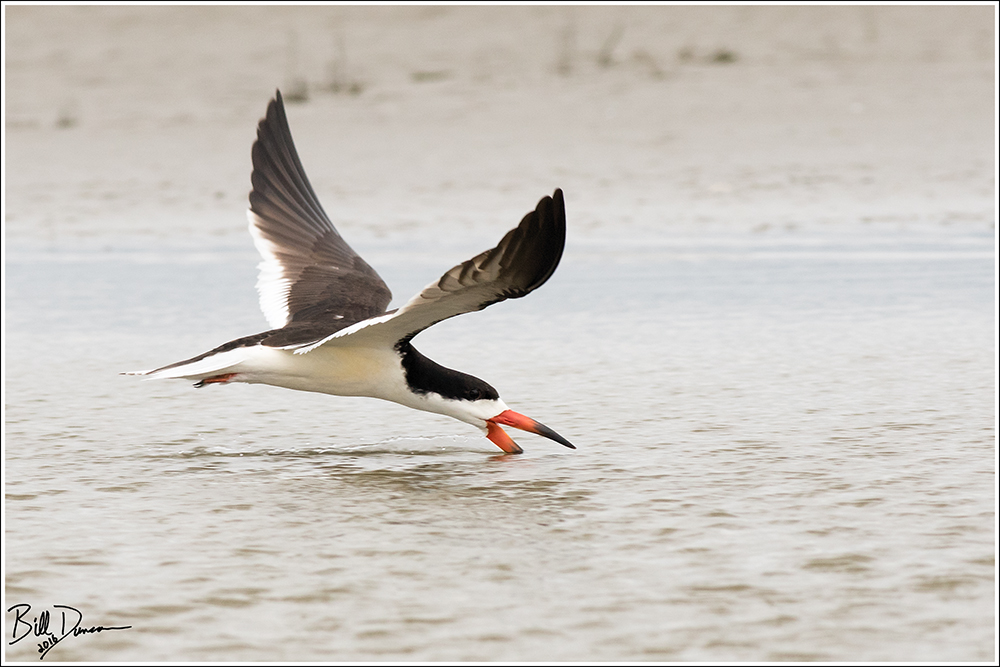
Black Skimmer – East End Lagoon Nature Park and Preserve, Galveston TX
Steve and I are a couple of weeks back from a nice few days of birding the Texas Gulf Coast. We were able to visit a number of habitats and locations along the gulf and were mostly able to dodge the rains and flood waters.
Boat-tailed Grackle – Anahuac NWR, TX
Of course, we were able to pick up a good list of lifers as the number of specialists, such as this Boat-tailed Grackle, in this region was quite impressive.
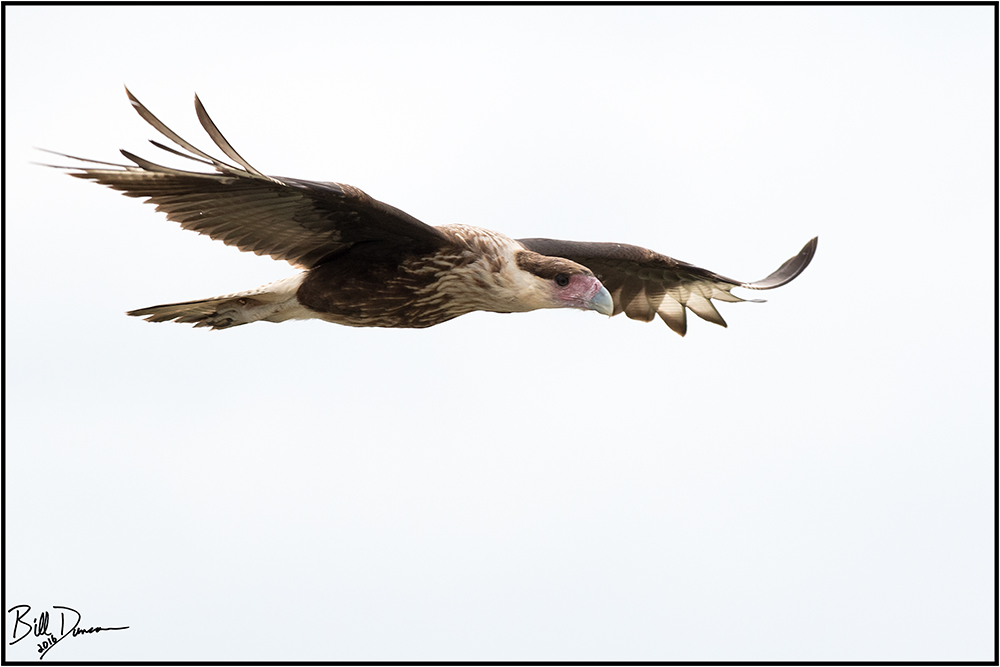
Crested Caracara – East End Lagoon Nature Park and Preserve, Galveston TX
Mostly a bird of the new world tropics, the Crested Caracara is considered to be common in Texas. We were able to find a few.
Roseate Spoonbill – Houston Audubon Society Smith Oaks Bird Sanctuary, TX
The Spoonbills were quite a treat. At the HAS Smith Oaks Bird Sanctuary we were fortunate to visit at a time when the local rookery was in full swing. We observed active nests of not only the Spoonbills, but also of Great Egret, Snowy and Cattle Egret and Common Gallinule.
Seaside Sparrow – Anahuac NWR, TX
The Seaside Sparrow may have been my most exciting find of the trip. I have long wondered about this interesting sparrow that sticks to coastal habitats and sings its interesting song. There are currently nine recognized subspecies of the Seaside Sparrow – this one is likely Ammodramus maritimus fisheri. These birds are among the many that are threatened with destruction of habitat for human coastal development. The Houston metro area is a sprawling web of concrete and Steve and I couldn’t help but notice that natural areas were still being bulldozed and paved.
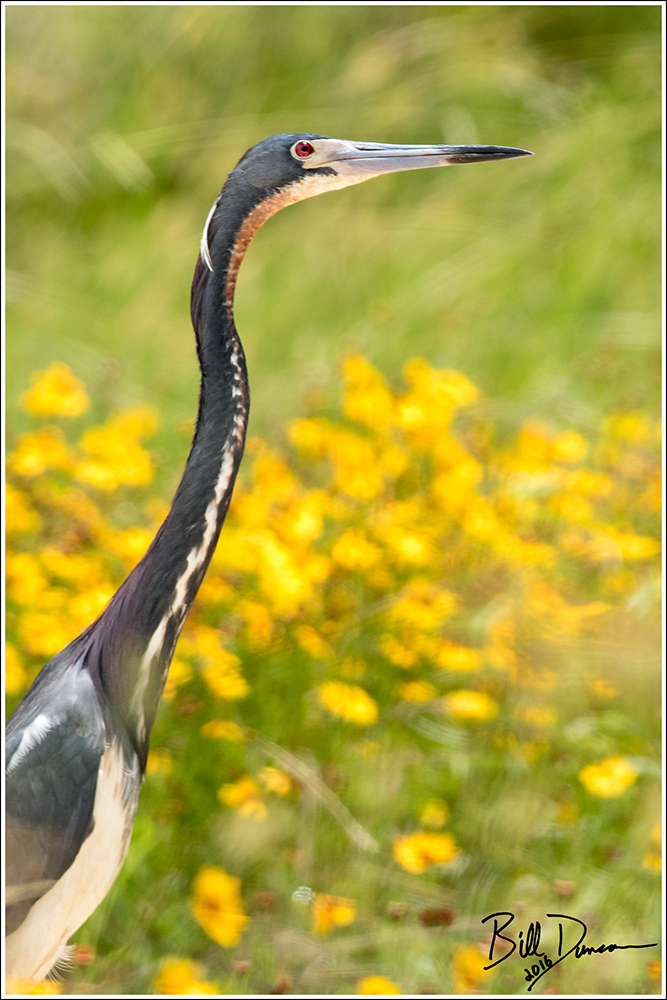
Tri-colored Heron – San Bernard NWR, TX
The Tri-colored Heron was yet another lifer for both Steve and me. This gorgeous bird was found with a lovely backdrop of wildflowers at San Bernard NWR, one of several locations that we could have gladly wasted a week in.
That is all that I have processed and am prepared to share for now. More to come. -OZB
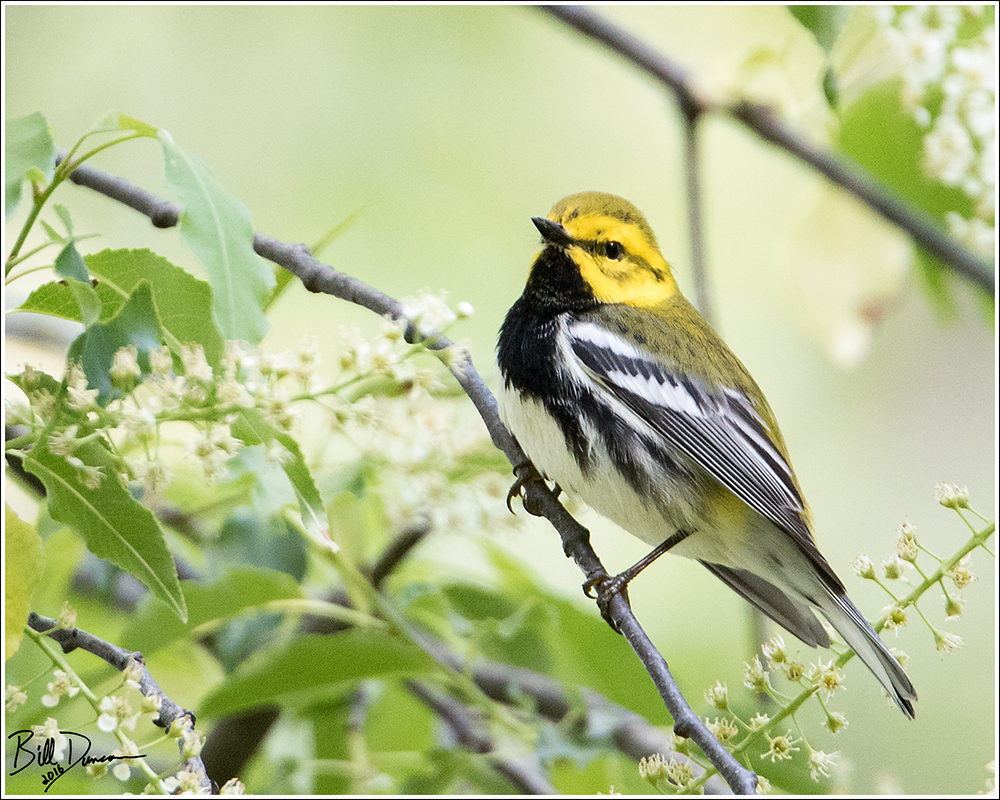
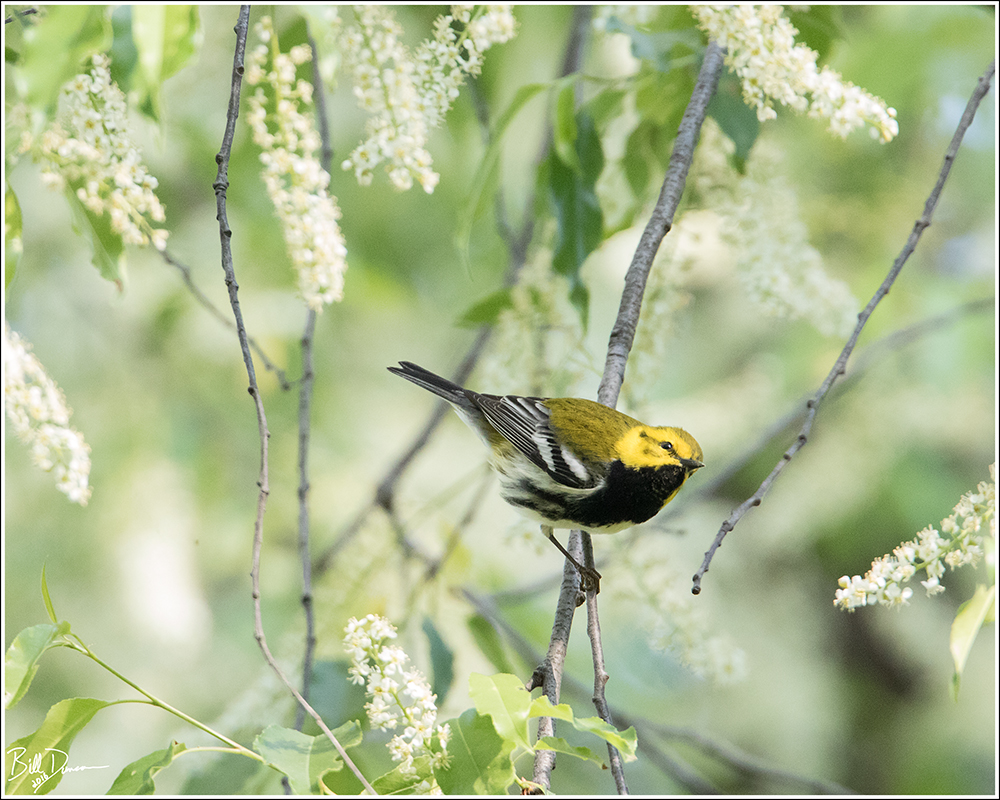
Black-throated Green Warbler; Tower Grove Park, St. Louis, Missouri
As is often the case, no better description of a bird can be found other than those of Arthur Cleveland Bent. From Life History of American Wood Warblers…
“The northern black-throated green warbler I have always associated with the white pine woods, the delightful fragrance of fallen pine needles carpeting the forest floor and the murmuring of the warm summer breeze. The song has been written as ‘trees, trees, murmuring trees,’ appropriate words that seem to call vividly to mind the pretty little bird in its sylvan haunts and its delicious and soothing voice.”
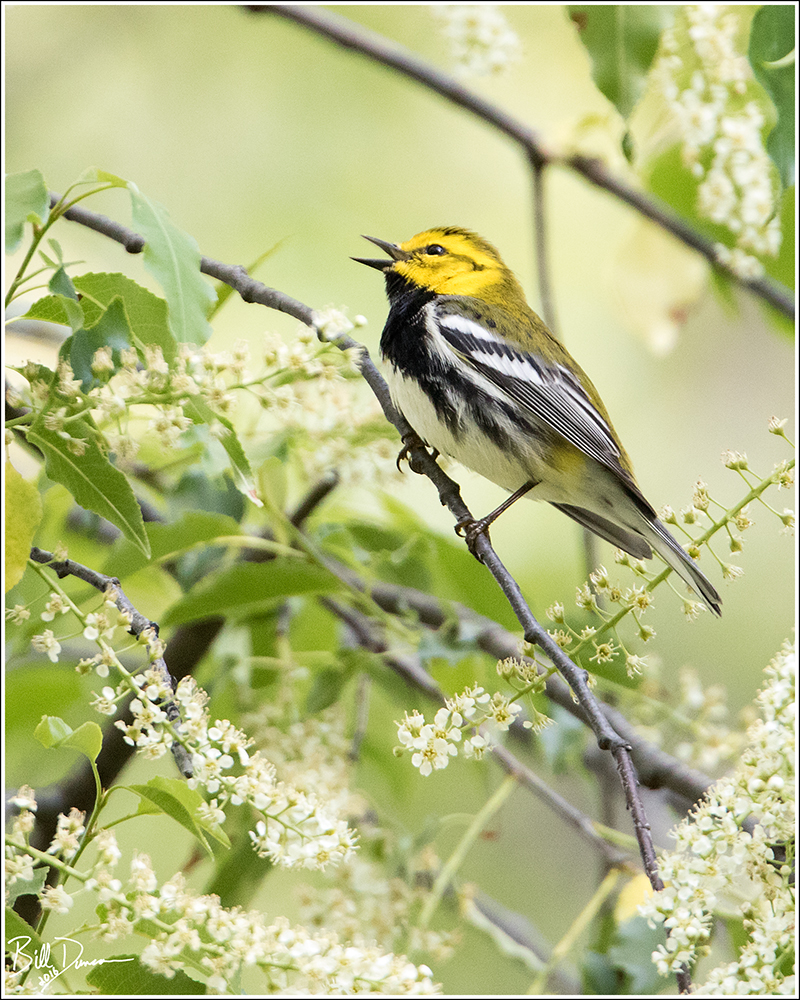
Trees, Trees, Murmuring Trees – Black-throated Green Warbler; Tower Grove Park, St. Louis, Missouri
As is usually the case, I was only able to get to Tower Grove Park a few times this year in order to witness the songbird migration that rolls through this migrant trap every spring and fall. Thankfully, I was able to be there for a couple good days in terms of numbers and diversity, and was pleased to find this cooperative BGWA singing and foraging through a flowering Black Cherry.
Black-throated Green Warbler; Tower Grove Park, St. Louis, Missouri
I don’t believe the pleasing colors and patterns of this stately bird could be captured in a single better pose than what is pictured above.
Black-throated Green Warbler; Tower Grove Park, St. Louis, Missouri
Beginning in the first few days of April, Ruby-crowned Kinglets move northward through the St. Louis region on their way up to their eventual nesting grounds of the Canadian boreal forests.
Ruby-crowned Kinglet
Moving through our area this early allows for nice opportunities for watching and photography before our deciduous trees have begun leafing out. Although described by Pete Dunne as “A bird that moves like spit on a skillet”, if patient, the nature photographer can find brief periods where even these birds will stop and have a look around.
How on earth did these birds get their name?
When flitting through the branches looking for their insect prey, the intense scarlet-colored crown patch can be difficult to spot. But with camera and patience, this spot that the birds use to aggressively communicate with other Kinglets, can be seen.
The Music Box
The song of the RCKI I find to be quite special. These guys typically start with a couple or three wind-up notes that lead to a wren-like jumble of rapidly progressing complexity. A welcome sound of spring.
See you in the fall…
The Kinglets have mostly removed themselves from the Show-Me State by now. They will return this fall following their nesting season and there will be folks with lenses of all sorts looking to find that ruby-red crown.
On a rainy March day at BK Leach CA Sarah and I came across a couple of young Bald Eagles hanging out. The bird on the left is a 4-year old and his partner is likely a 2nd year bird.
While driving around BK Leach Conservation Area this spring, we came across a Turkey Vulture feeding on a raccoon carcass. Did you know that the Turkey Vulture has the most advanced olfactory system of any known bird? They can pick up the smell of a rotting animal from more than a mile away. As shown below, we noticed the bird would attempt to cover up its meal when it spotted other vultures soaring nearby.
It’s all mine!
Turkey Vultures can often be seen with their wings widely spread in what is referred to as an “horaltic pose”. The benefits of doing this are not entirely known but have been hypothesized to be an aid in warming the birds and helping to dry feathers. The bird posing in the shot below was taken one morning while I was hiking at Shaw Nature Reserve.
Horaltic Poser
Finally, I thought I would share some video footage that this patient bird let us take whilst it was digging into some coon.
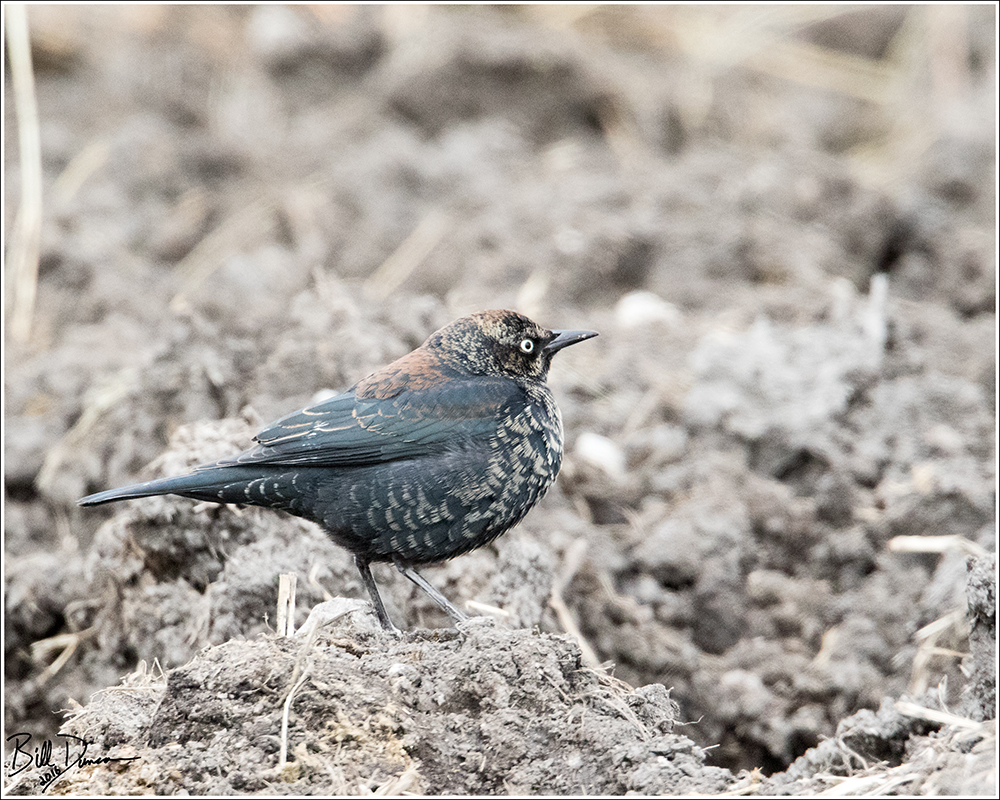
The northernmost breeding blackbird of North America, the Rusty Blackbird unfortunately has the distinction of being in one of the steepest population declines of all N.A. bird species.
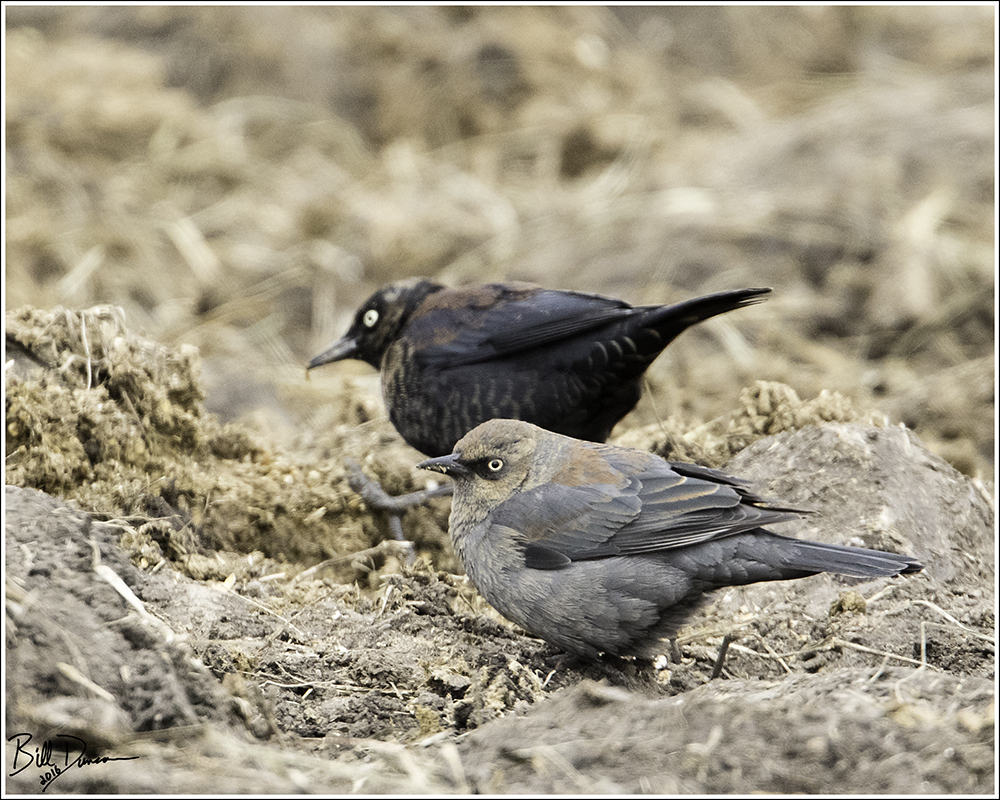
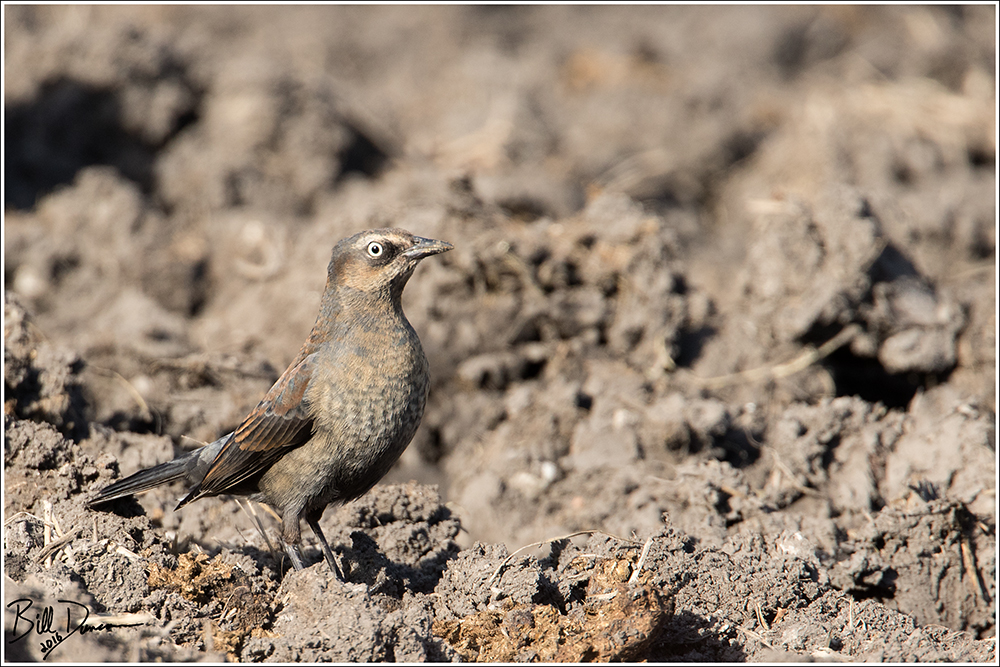
Rusty Blackbird – Female
Rusty Blackbirds nest throughout the boreal forests of Canada and Alaska, but winters throughout the eastern United States in areas including wet forests near permanent bodies of water. They will also utilize agricultural environments. Among the protected areas considered important for overwintering habitat is Mingo NWR, located in south-eastern MO.
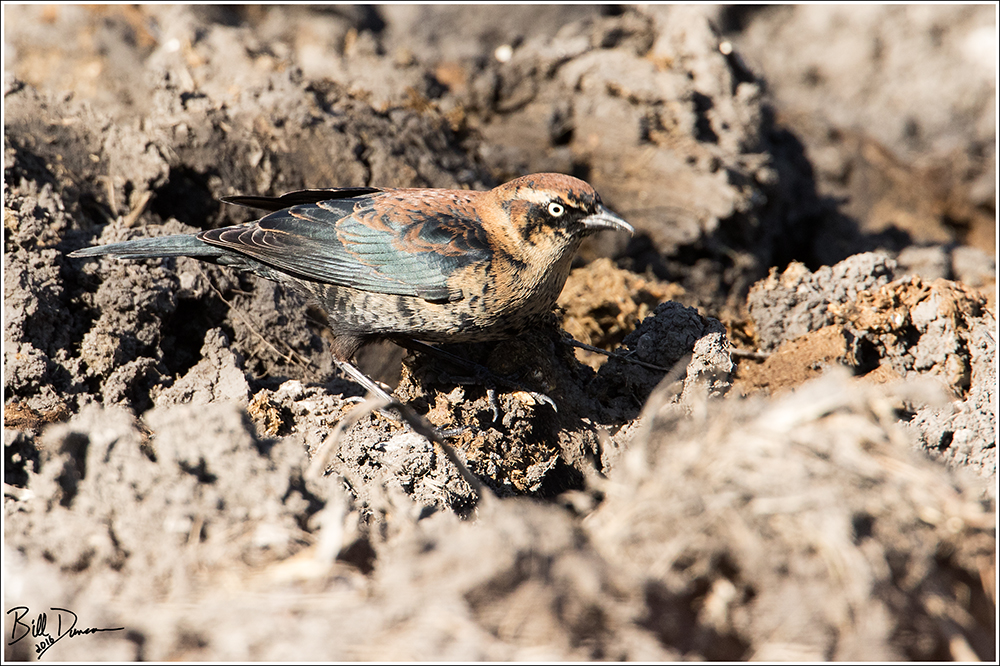
Rusty Blackbird – Male
Rusties exhibit an interesting variability in plumage throughout winter and spring, as can be observed in the different birds photographed in this post. Males are dressed with varying amounts of the rusty warm color that gives this species its name. This coloration is located on the tips of newly emerged feathers during the molt. As these fine feather tips wear and break off, the males will become primarily black and luminescent in summer breeding plumage. Female Rusties are even more interestingly plumaged, with tans, browns and blues.
Rusty Blackbird – Female
Different survey methods, such as the Breeding Bird Survey and Christmas Bird Count all suggest that the Rusty Blackbird population has declined by more than 90% over the past three decades. Reasons for this decline are not well understood, but are likely to include the acidification of wetlands, loss of wetland habitat in general, loss of forested wetland habitat on wintering grounds and poisoning of mixed-species wintering blackbird flocks in south-eastern United States, where they are considered as agricultural pests.
Rusty Blackbird – Male
In his book Birder’s Conservation Handbook – 100 North American Birds at Risk, where much of the information in this post was collected, Jeffry Wells suggests the following actions to address the population decline of the Rusty Blackbird:
Limit global warming pollution and acid deposition via air pollution.
Implement protections and management plans across the boreal forest of North America.
Stop deforestation of wintering habitat and implement habitat restoration.
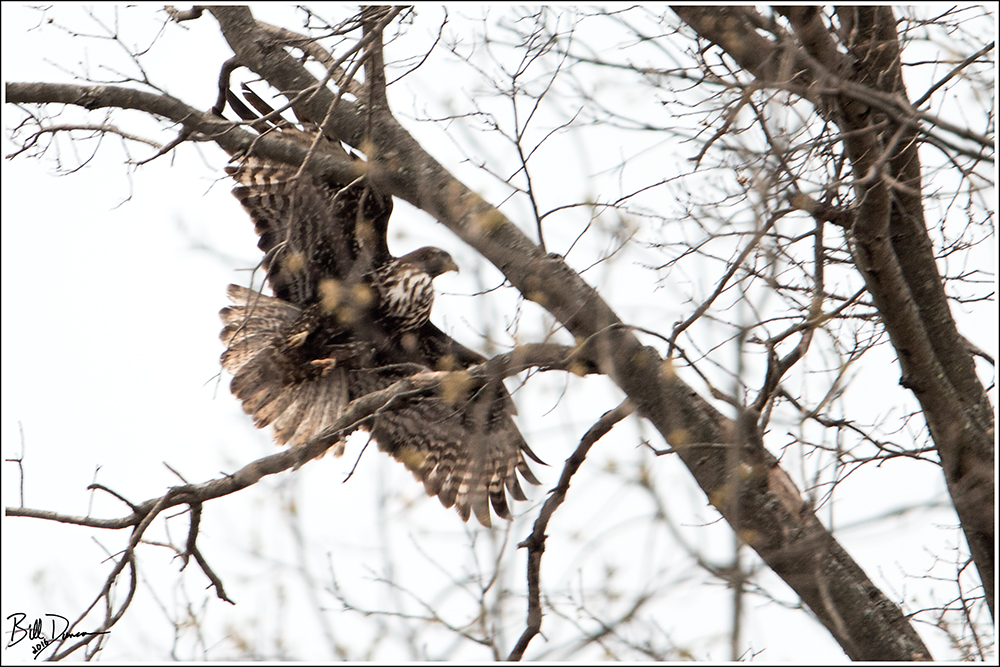
Sarah and I came across this gorgeously colored Red-tailed Hawk early this spring at BK Leach C.A. I may be wrong, but my best call is a juvenile Harlan’s.








 A Thousand Acres of Silphiums