"What a thousand acres of Silphiums looked like when they tickled the bellies of the buffalo is a question never again to be answered, and perhaps not even asked." -Aldo Leopold
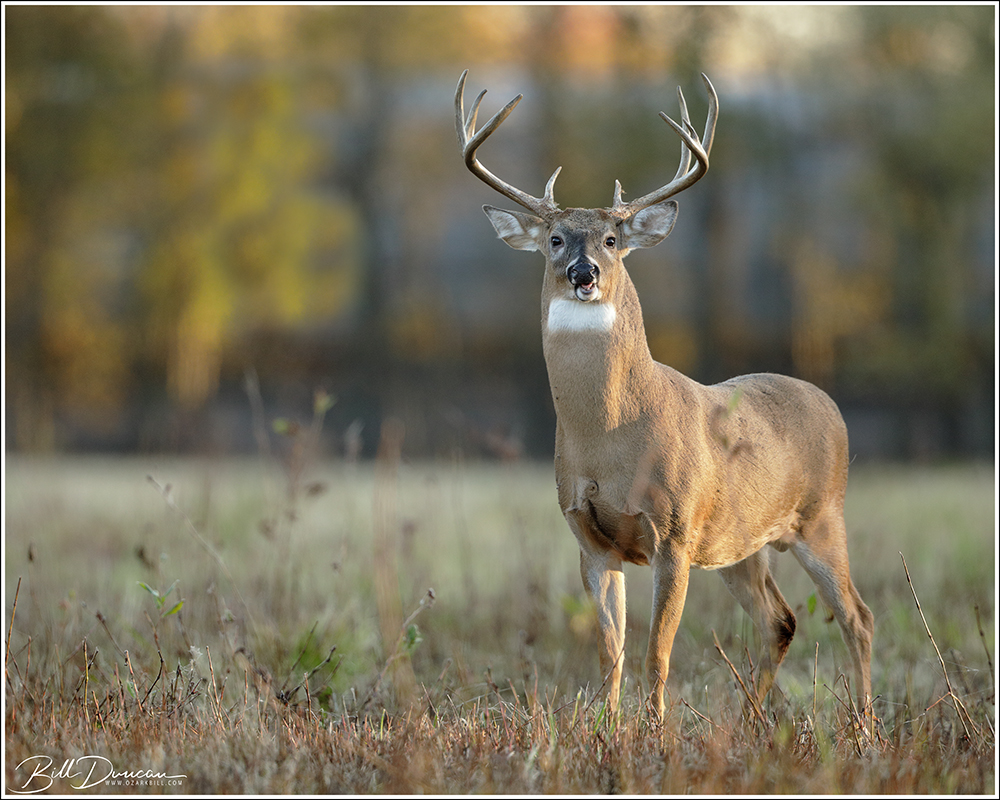
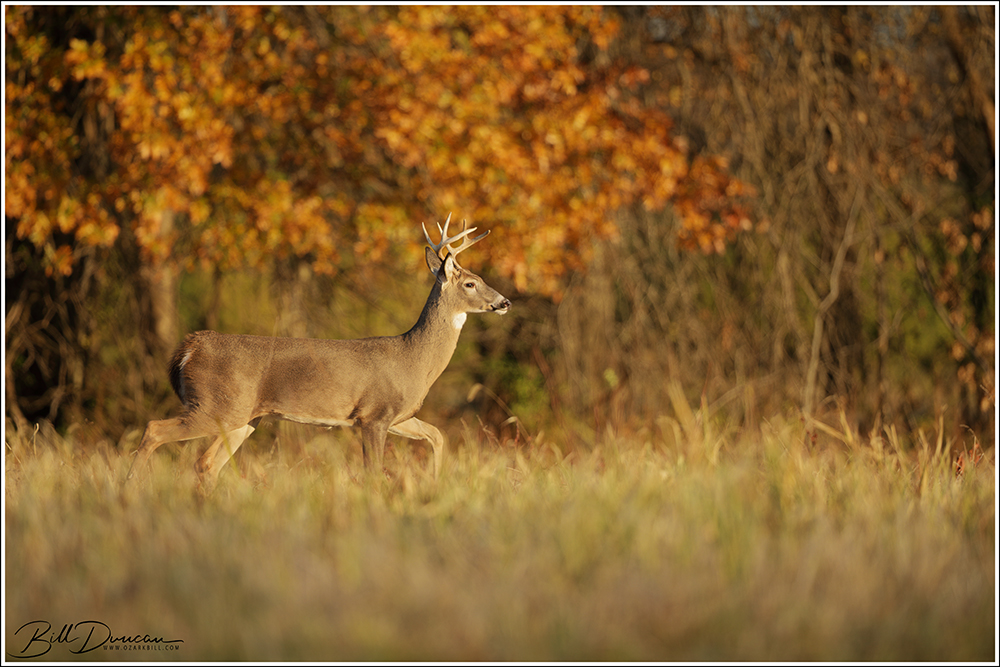
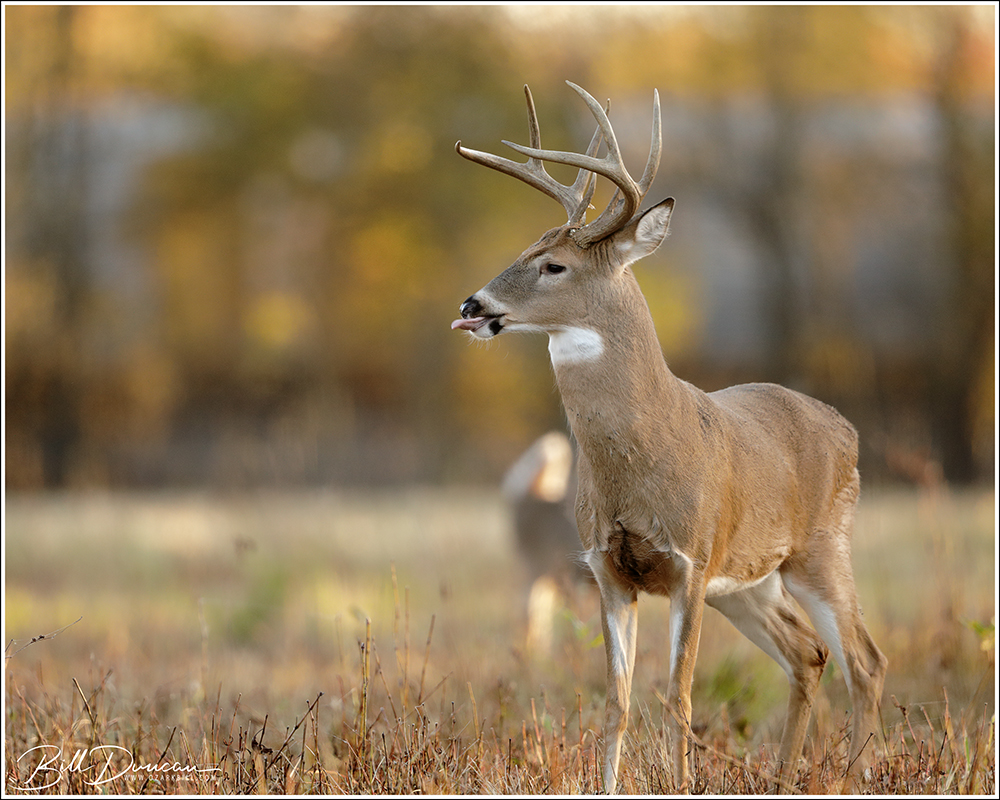
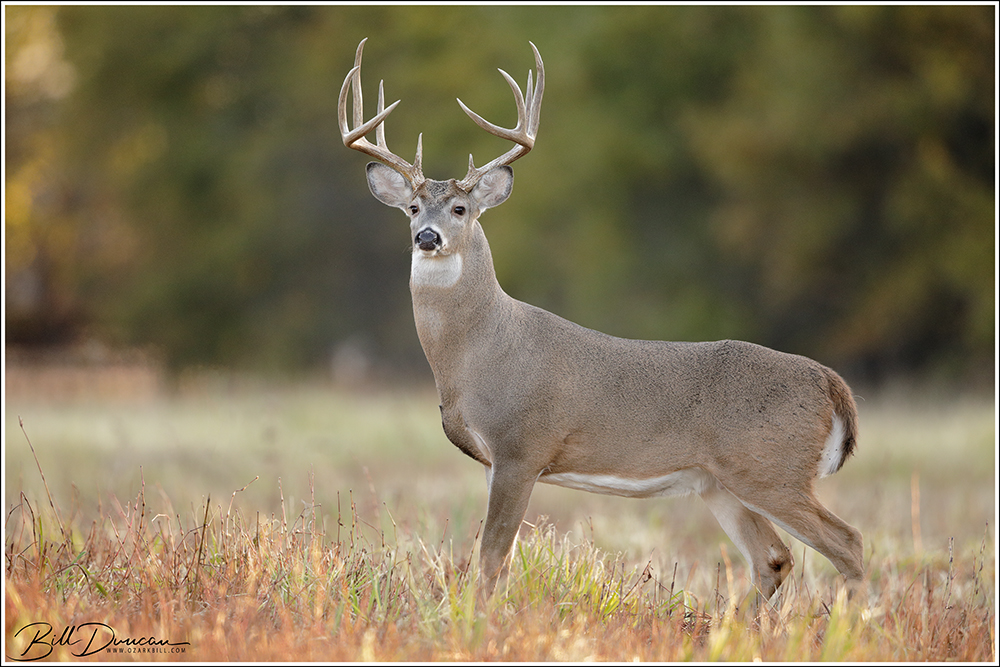
The rut of 2020 turned out pretty well for me. I was able to get to my favorite place for this type of photography five or six times. I tried for a few more days, but weather and flooding caused me to change plans. I didn’t get any high action shots, but I am happy with the portraits I got of some of the larger bucks in this herd.
This smaller eight-pointer has an extra antler growing.White-tailed bucks will often drool in the heat of the rut.This “wide eight” knew somebody was watching but never did find me.A buck looking for just the right scent on the breeze.This guy thinks he found the one. He chased her into the bush and beyond my sight.Waiting on the edge of the dance floor.This location was not the greatest for fall colors, but I lucked into a couple of interesting environmental portraits.I lucked into this guy walking under the nicest colored tree in the area.The class clown.My favorite portrait of the year.Here’s looking to bigger and brighter in 2021.
A buck with small, deformed antlers. Antler growth like this is usually caused by injury or poor nutrition.
Tonight I’m finishing off the neighborhood deer photos from 2020. This buck pictured in the first two photos was a bit odd. Not just because of the aberrant antlers, but he also did not mind my close approach or my following him as he browsed.
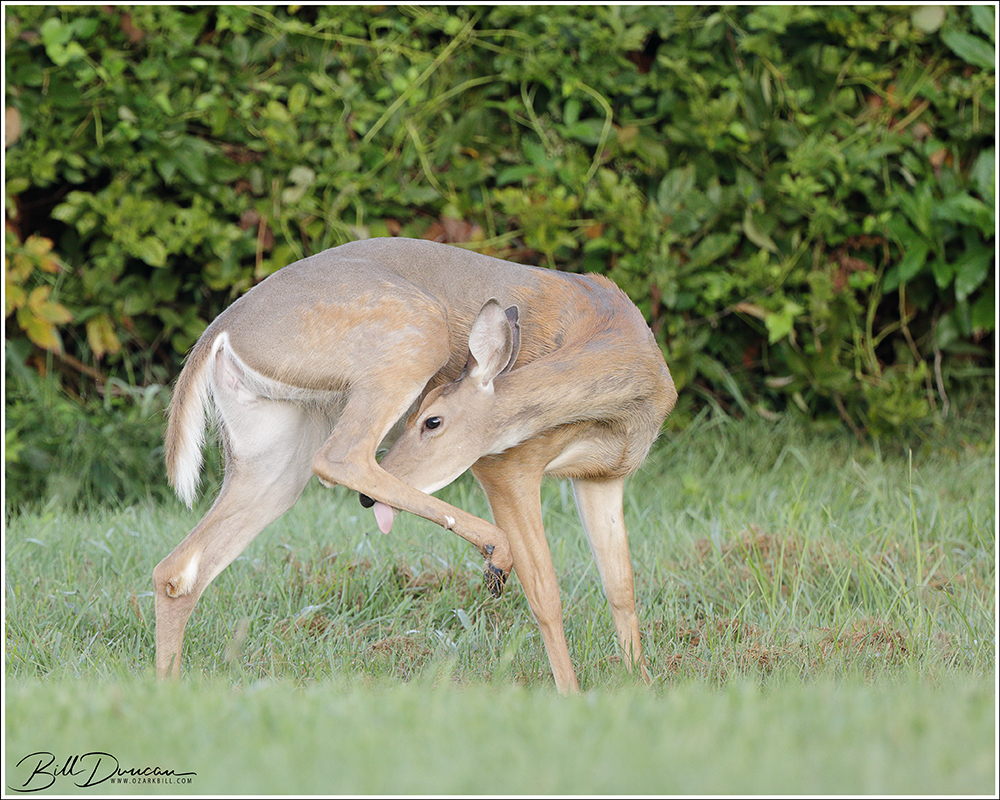
Same oddball buck stretching to reach wild grapevine.A young buck in velvet.A forky at dawn.The curious fawn, never too far from mother, browsing in the background.A velvet IN fog.A young doe giving attention to her tarsal glands.On the first of September this fawn still looks to mother for reassurance.
A fortunate position led to a rather regal portrait for this suburban prince.
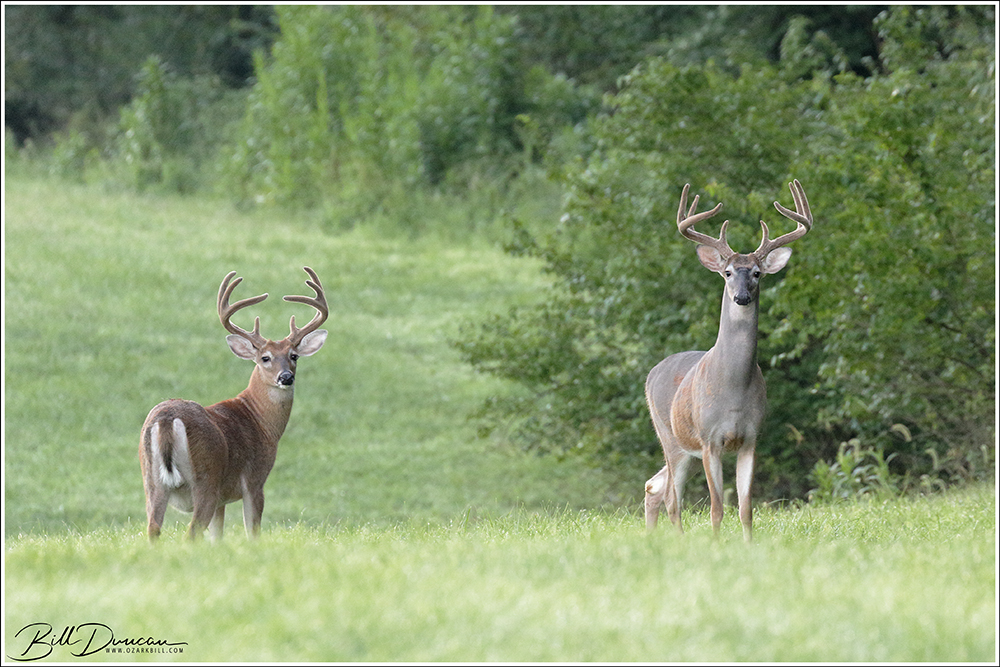
A few more white-taileds from August. Have a look at the next three images. I’m hoping someone with some knowledge in the genetics of these guys might have some idea what is going on with the buck on the right. With his rack and size, he obviously has the genes, but he looks so different from what I think we would agree is a more typical buck next to him. In addition to the shapes of their heads and faces, their coats are vastly different as well. Thanks for sending any thoughts you might have about what these difference might be caused by.
A couple of different bucks. These are the largest and most impressive of the lot that I found in the neighborhood this year.Another look at these juxtaposed bucks.Another look at the contrasting colors and facial shapes of these two buddies.A white-tailed fawn.A younger buck in velvet.See you next time!
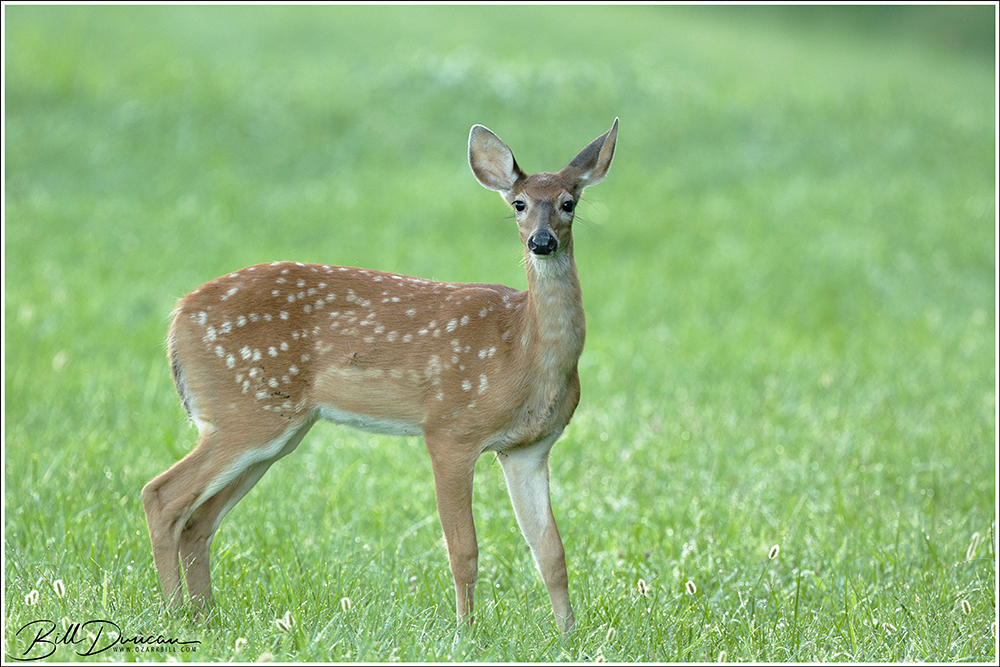
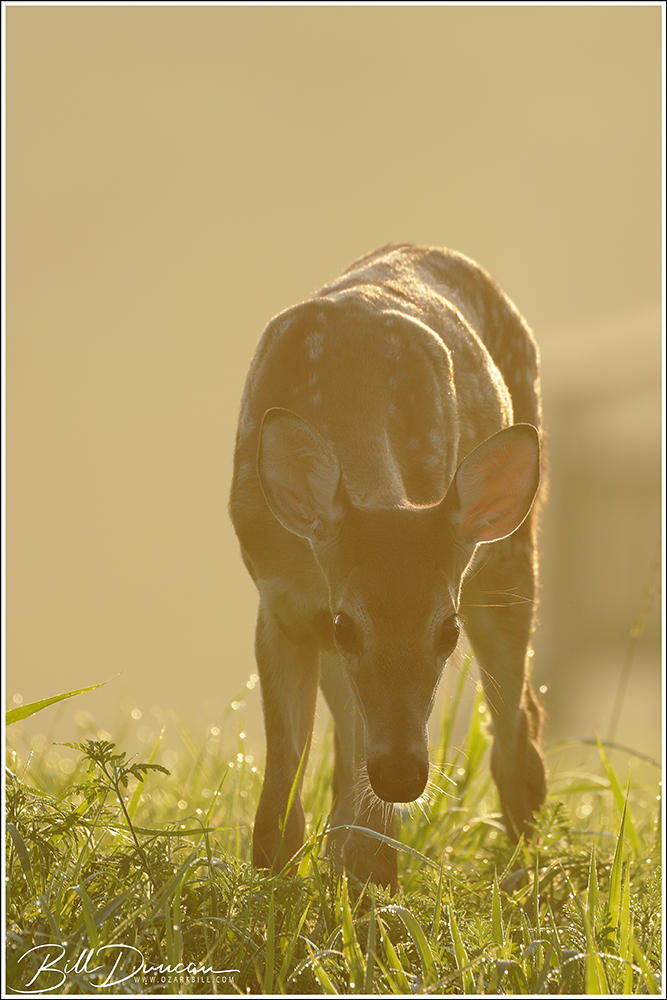
A brave white-tailed deer fawn stands on its own, not concerned by the photographer.
2020 was a decent year for me in finding and photographing white-tailed deer. It started in the summer a I walked the high-voltage line cuts that run through our neighborhood. These turf fields, the wood lots and scrub fields that run along this area and our yards are home to a good size population of these deer. As I get more into landscaping our yard with native plants, I’m sure I’ll develop issues with these guys, but they are a lot of fun to watch and photograph.
Four bucks and a baby.
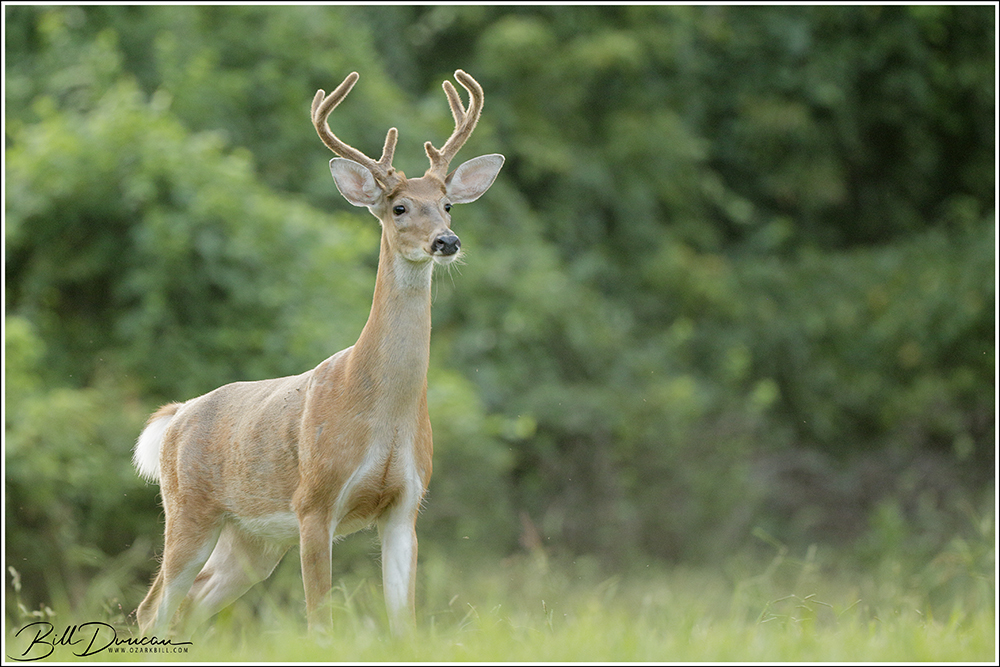
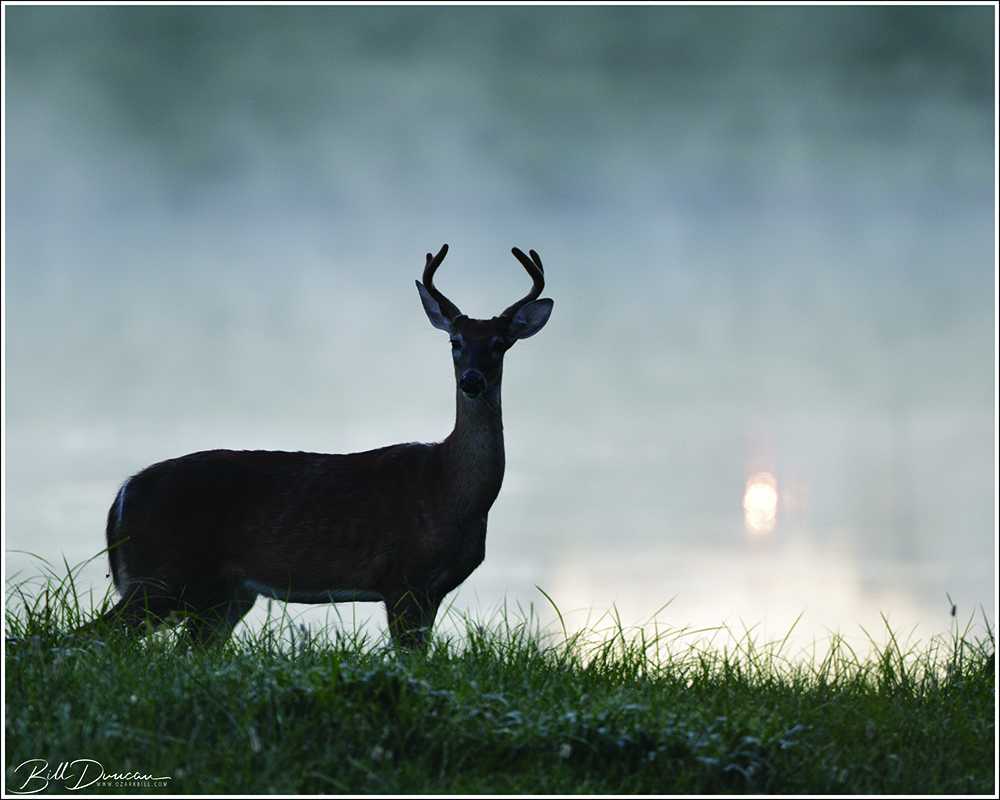
Typically, summer bucks in velvet are not easy to see in the daytime. They typically stick to a small area, eat the abundant greenery and try not to damage their sensitive new headwear. Suburban bucks are different. In fact, I had much easier times finding bucks this summer in the neighborhood than I did during the rut season when they are typically easier to find and get close to.
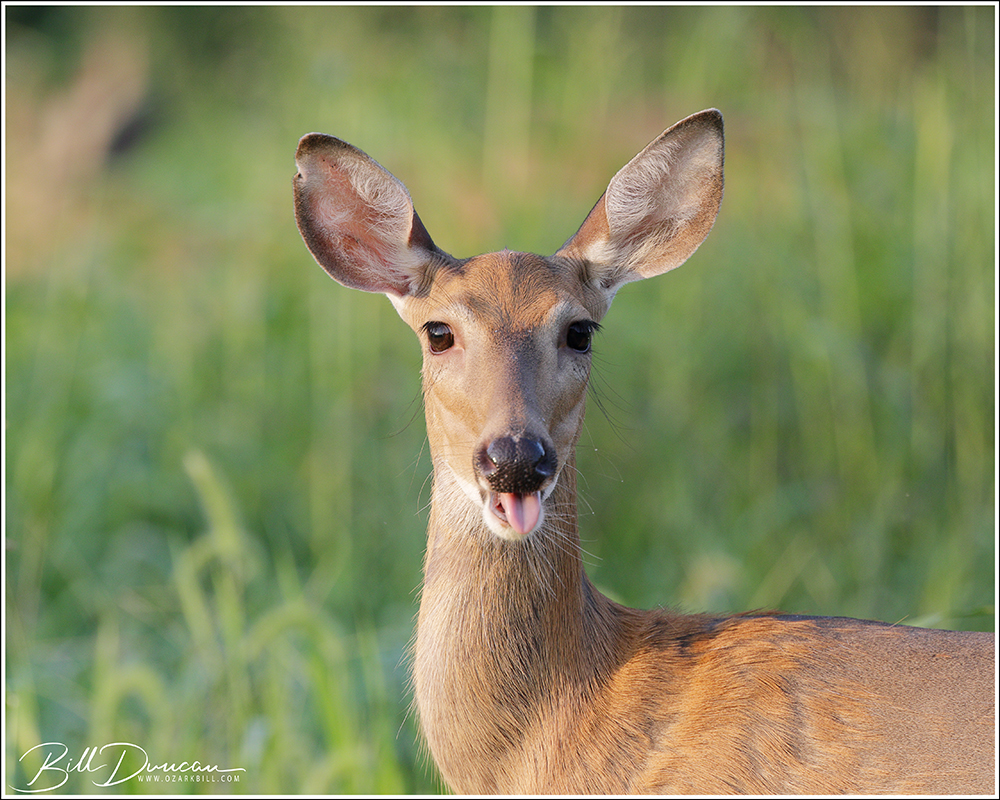
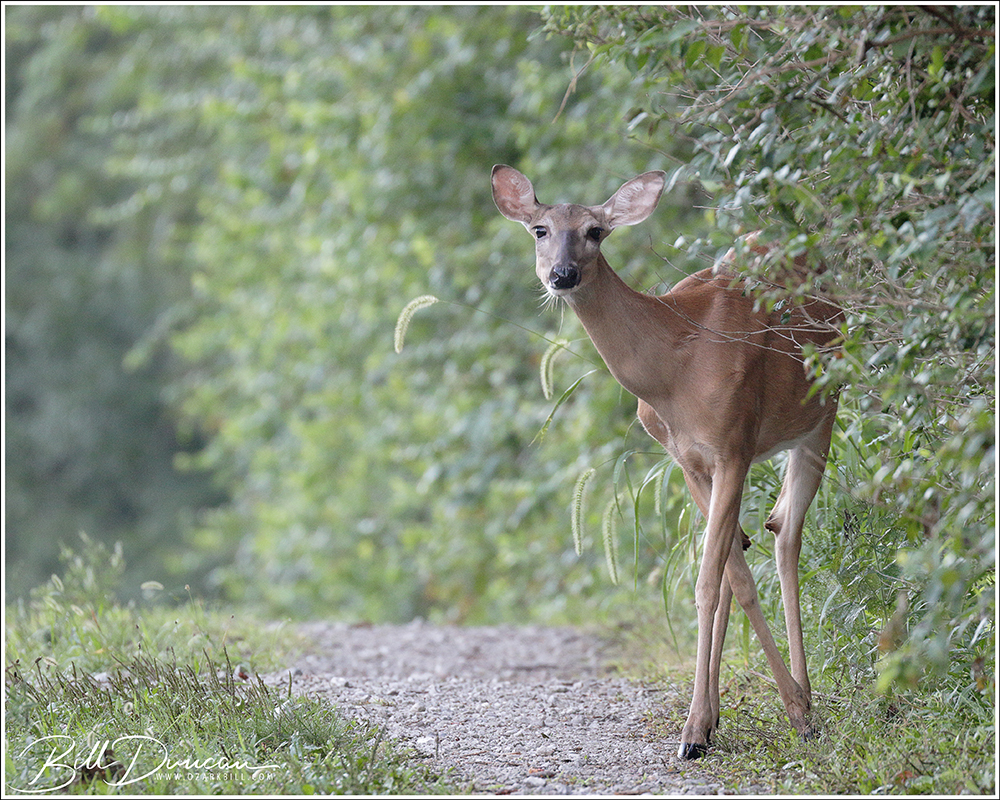
I came across this doe early one morning when walking up this gravel trail.I tell them its not polite to stare but they never listen.Great light for a portrait.The back-lighting here causes the velvet of this buck’s developing antlers to glow.This curious fawn, photographed the same morning as the previous image, actively pursued me and eventually got closer than the minimum focusing distance of my lens!I found these three in the turf fields later in the day and the season than the rest of their herd. I imagine mom wanted to refuel for as long as she could before heading to the woods.
That’s all for this set. Stay tuned and check back later to see more from the neighborhood this summer as well as images I took during the rut.
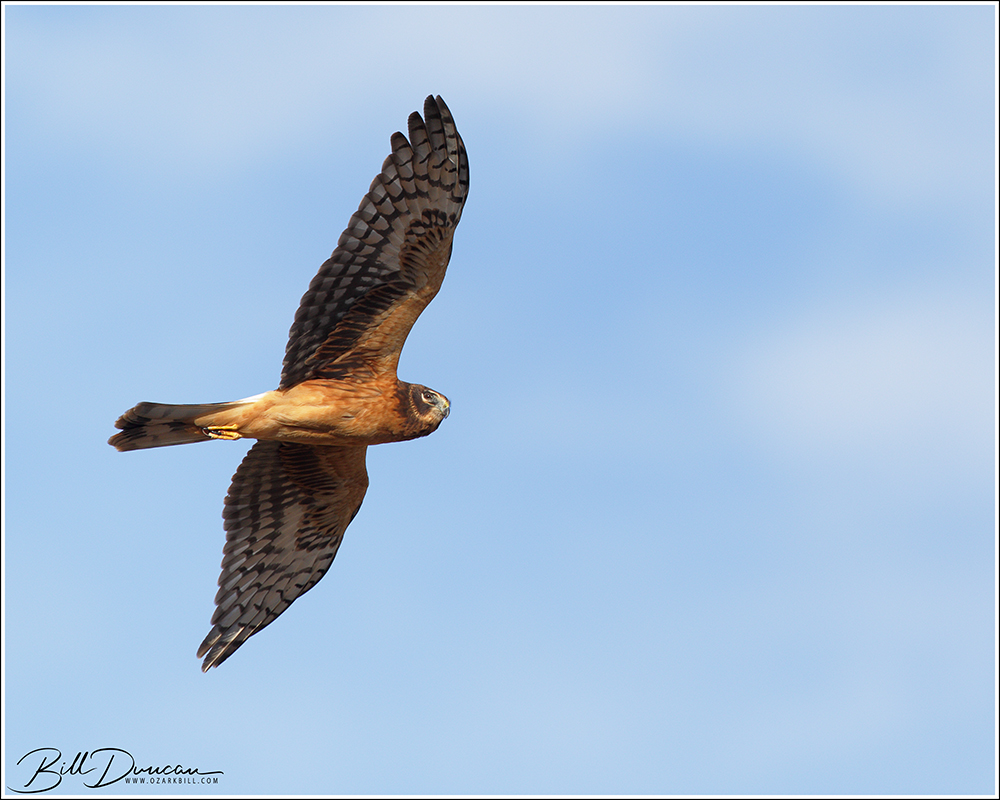
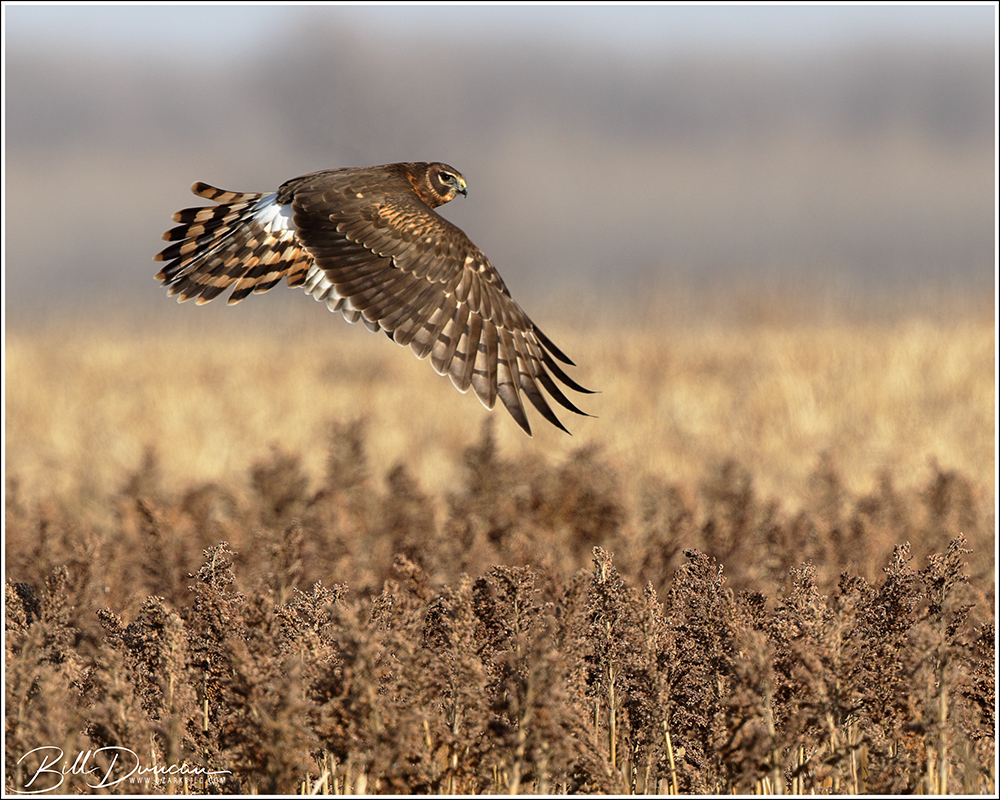
A Northern Harrier formel glides by, always on the lookout for a small mammal.
Sometimes it’s better to be lucky than good. In fact, with the Northern Harrier, a bird with keen eyesight and talent for being as far from people as they possibly can, I’d say being lucky is the best thing to be.
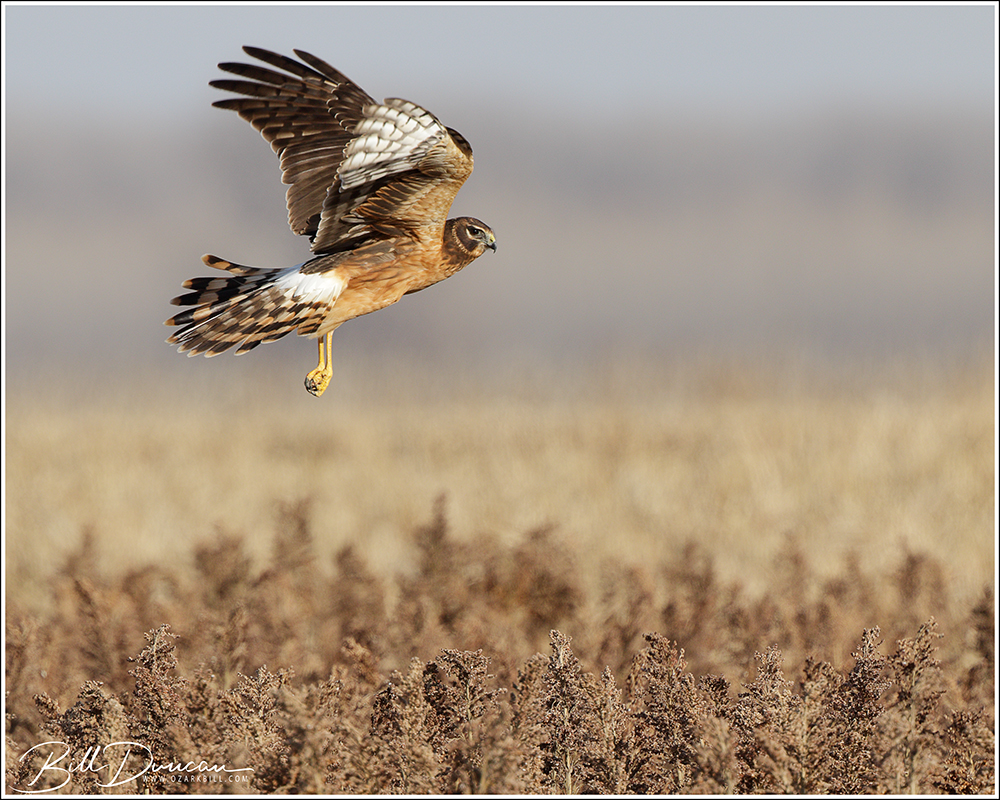
A female Northern Harrier photographed at Columbia Bottom C.A. in St. Louis County.
During a recent trip to Columbia Bottom C.A., I spotted this formel (an old-school name for a female hawk or raptor) flying back and forth over this small patch of sorghum that was planted near an equipment shed and a small patch of woods that were both near an easy place to park. I doubted I would have the time to get close enough without being seen, but thought I’d give it a try.
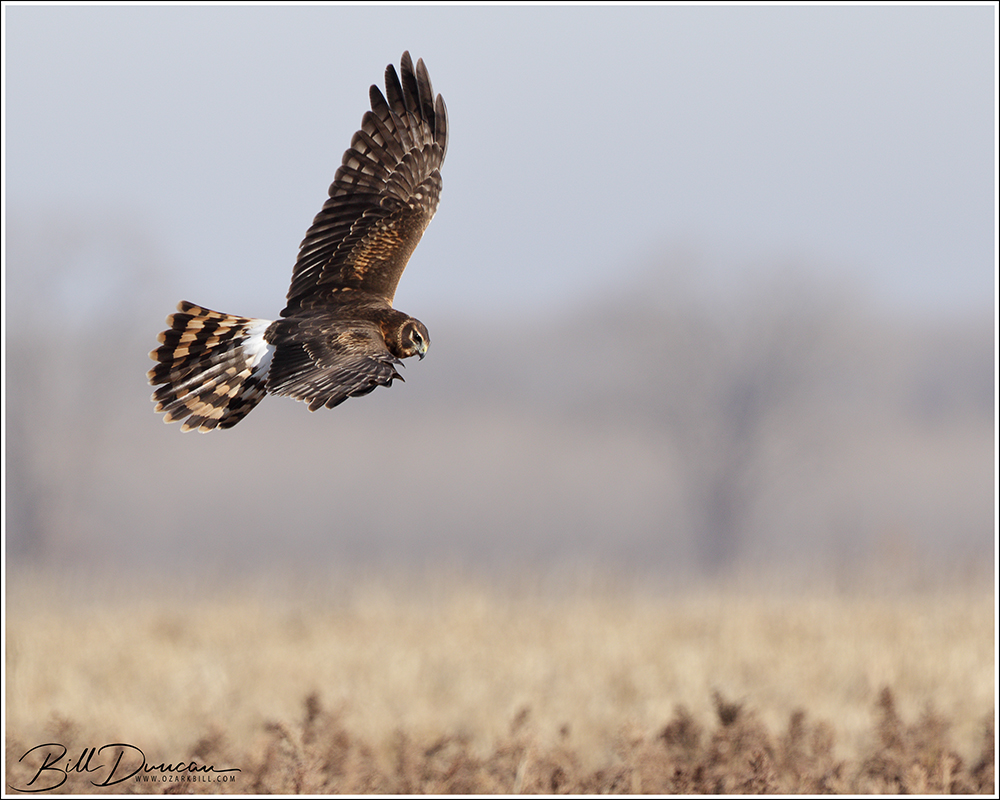
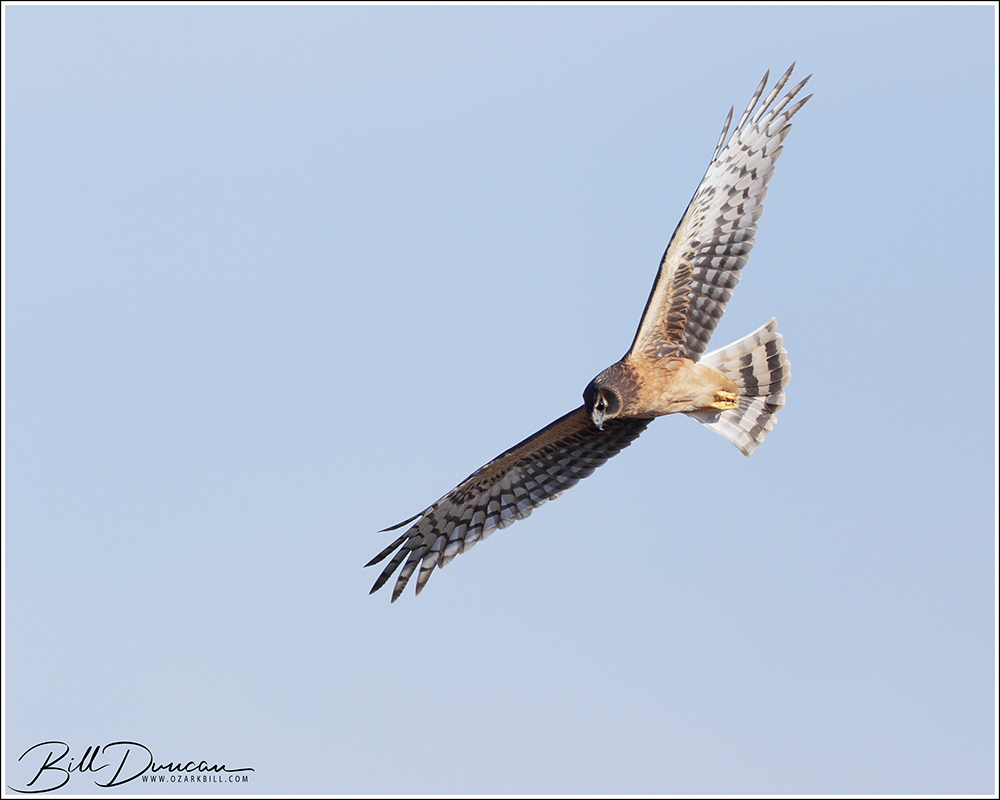
Northern Harrier in a typical “V” gliding pattern used to silently move inches above the fields while hunting.
I realized I was in a promising position in which I could move perpendicular to the course the bird was moving. I just needed to make sure I was either hunkered into the scrub-lined woods on the one side, or plastered against the equipment shed on the other. I did this without either being seen by the bird or at least by not being considered a threat.
The Northern Harrier is a rare sexually dimorphic raptor. Males are smaller and colored blue-grey and white while females, like the one pictured here, are full of warm-toned browns.
When I was close enough that I felt I could put my 400 mm f/4 lens to good use, I was ready to shoot the next time she came by. I was able to get some shots on a couple or three passes before she started to move to other locations. Unfortunately, I did not have my camera settings optimized for such an occasion. I left a lot of potential aperture (DOF) and shutter speed on the table (these were mostly shot at ISO 100). But, I am happy with what I was able to get while being sure I did not make the bird too uncomfortable in the process.
The last looks a lot of poor mammals might have – a Northern Harrier overhead.
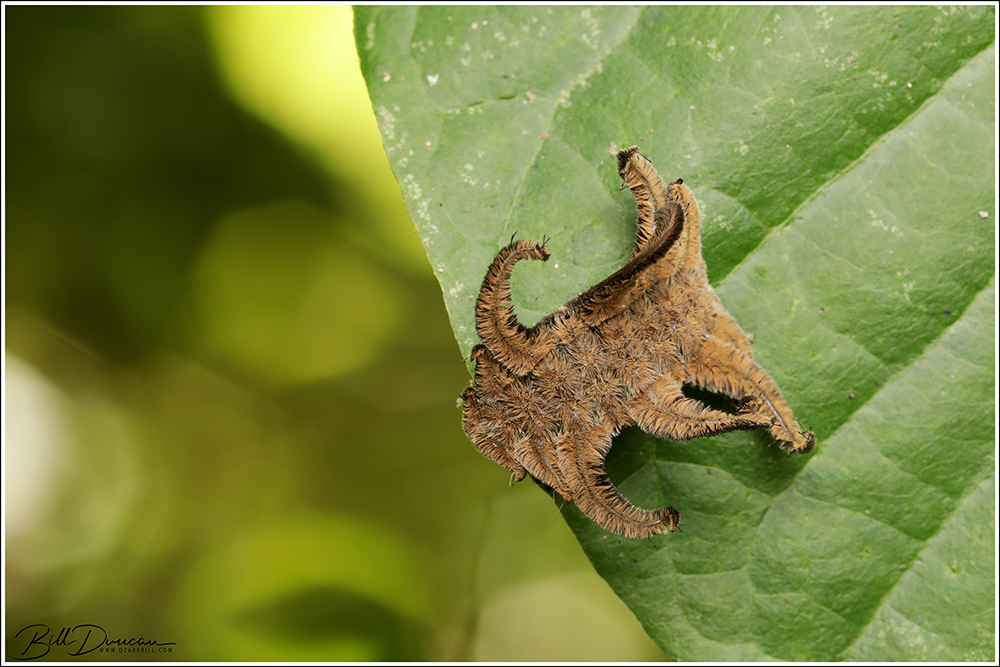
This hag moth, or monkey slug caterpillar (Phobetron pithecium) was found on a pawpaw along the Meramec River at Shaw Nature Reserve in early September.
As it seems I say every year, I did not find the time to go out looking for insects as much as I had hoped for in 2020. Here are a few of my favorites from this past season. As always, please correct any inaccurate species identifications if you are in the know. I try my best, but can always be wrong. Thanks.
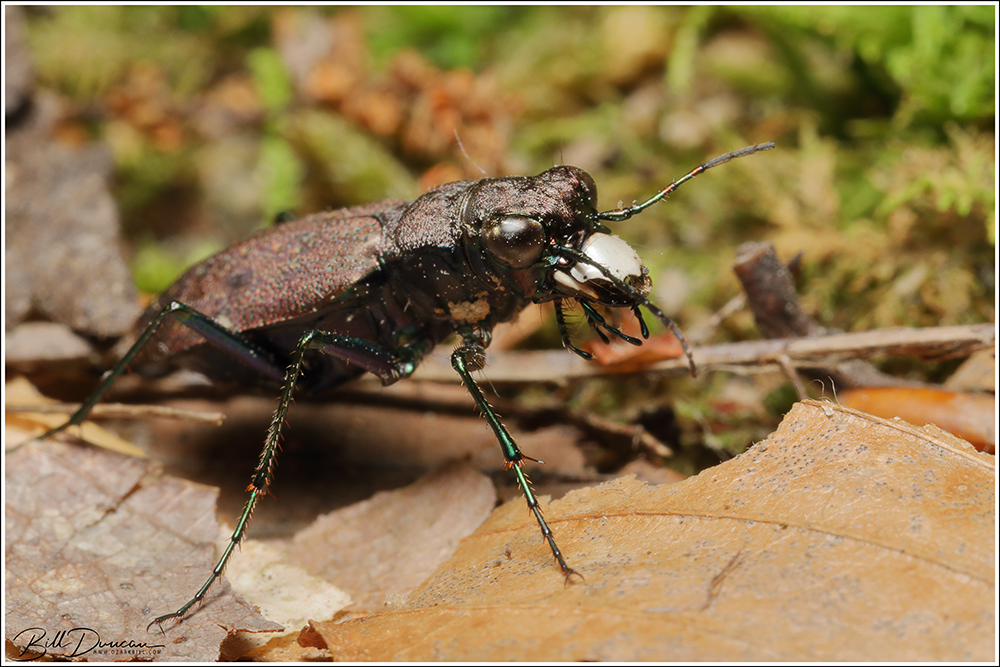
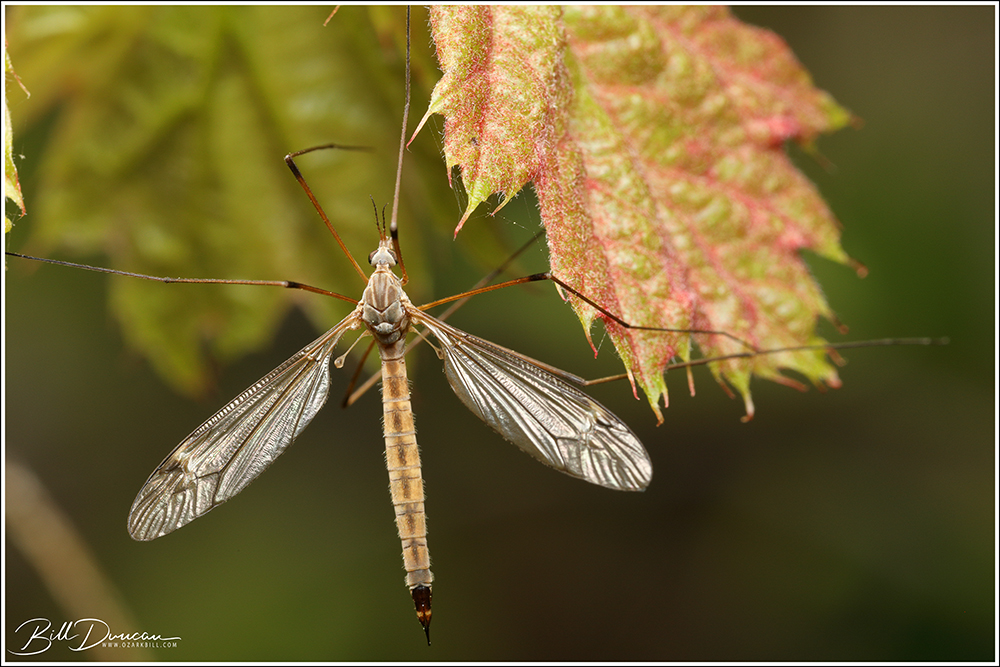
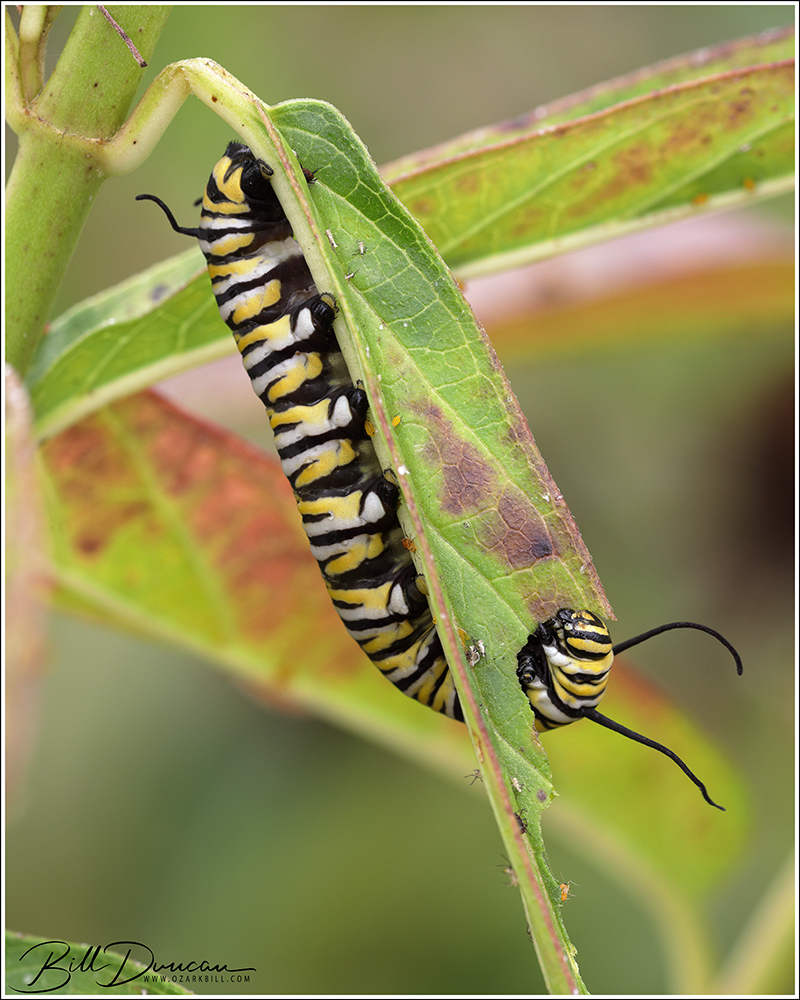
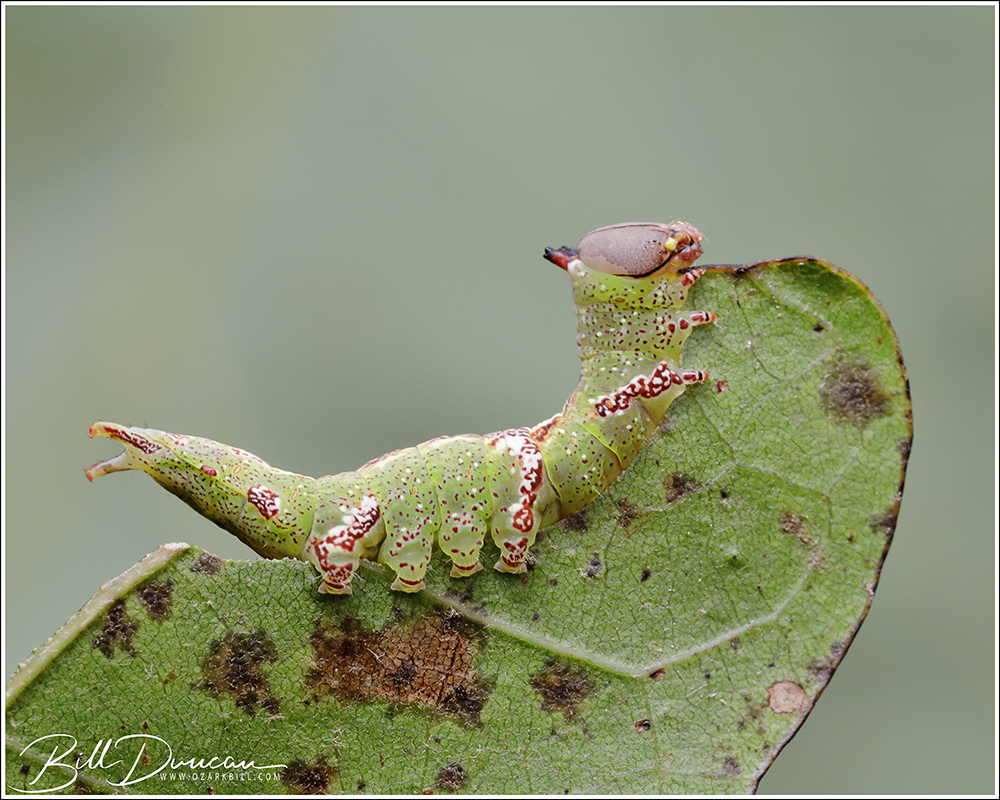
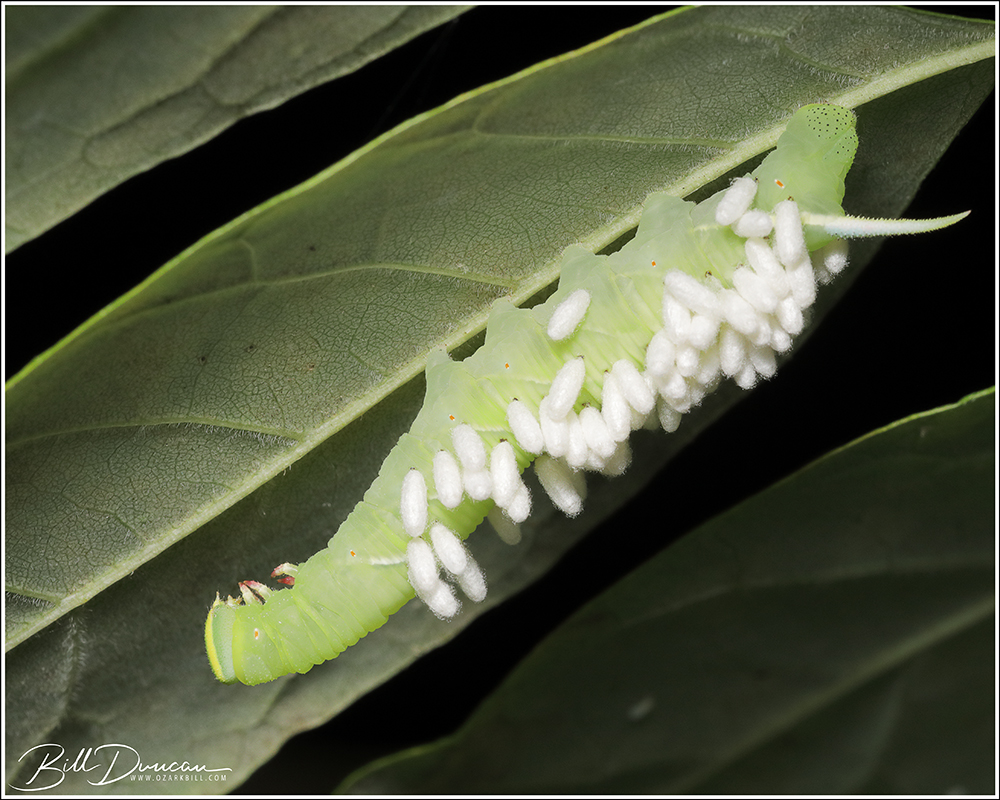
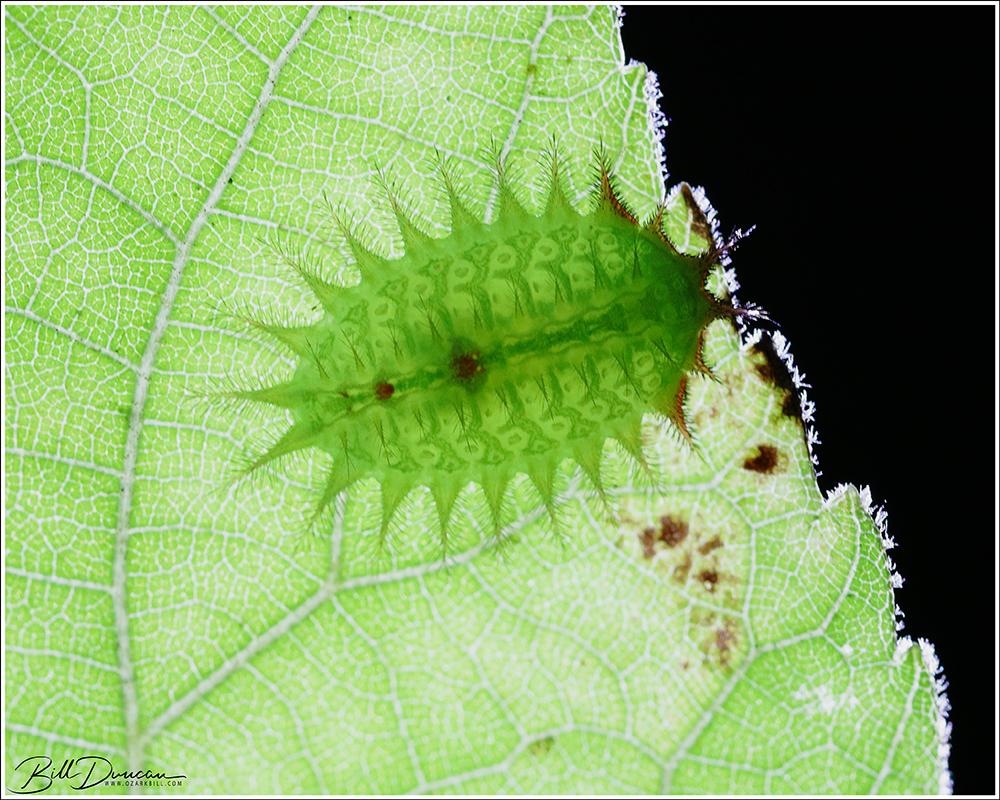
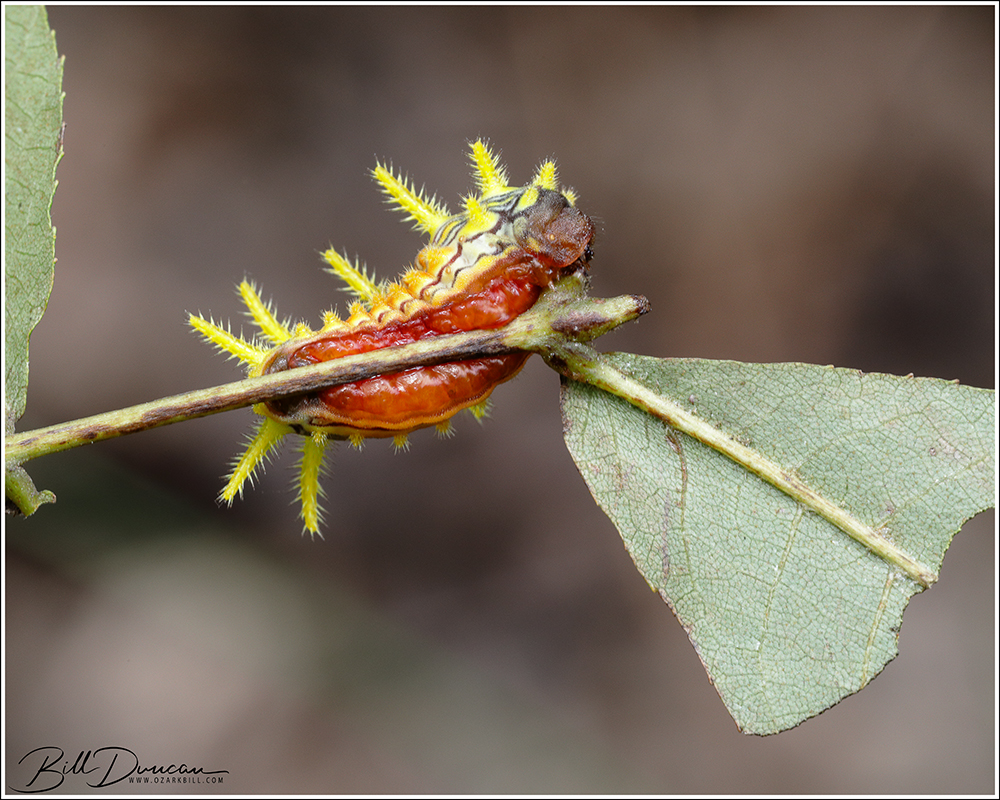
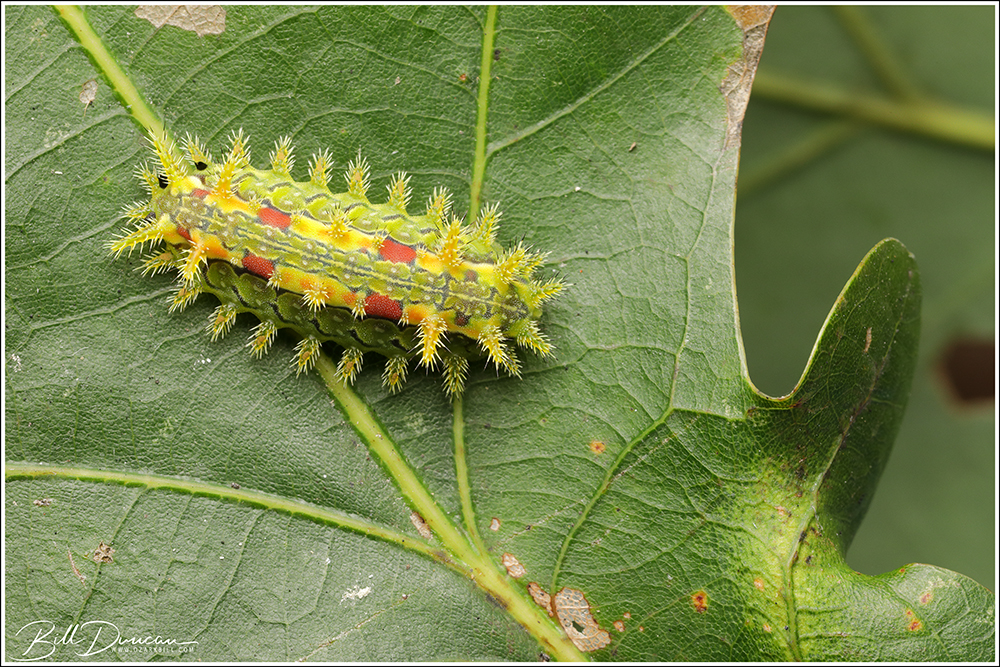
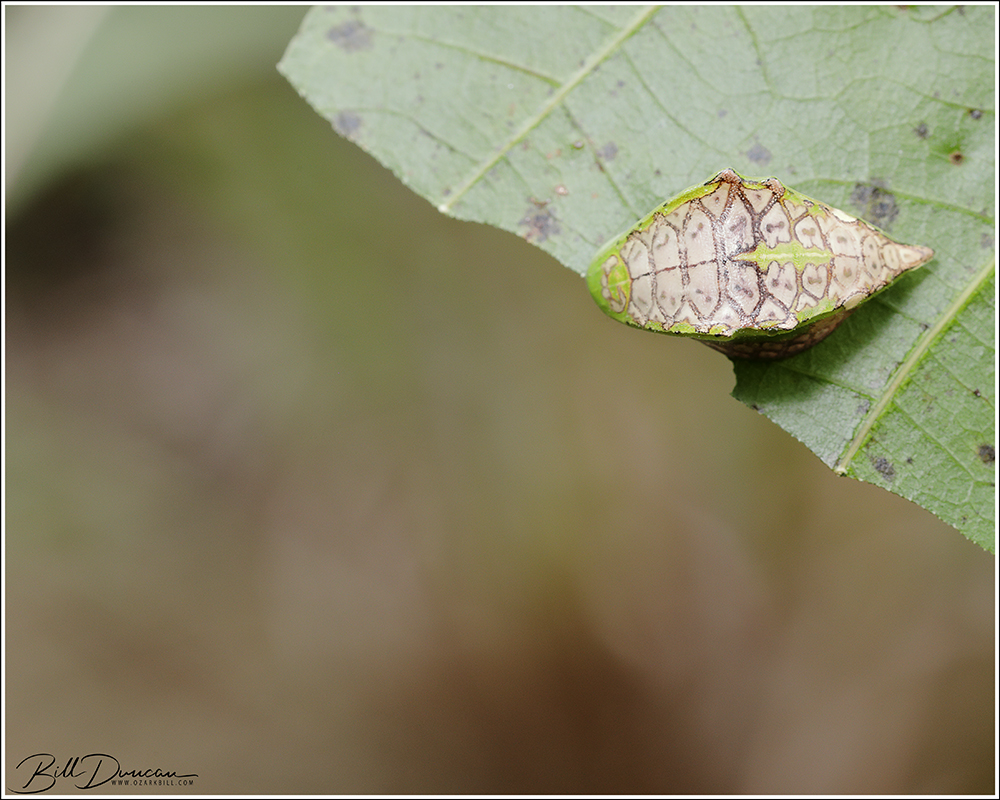
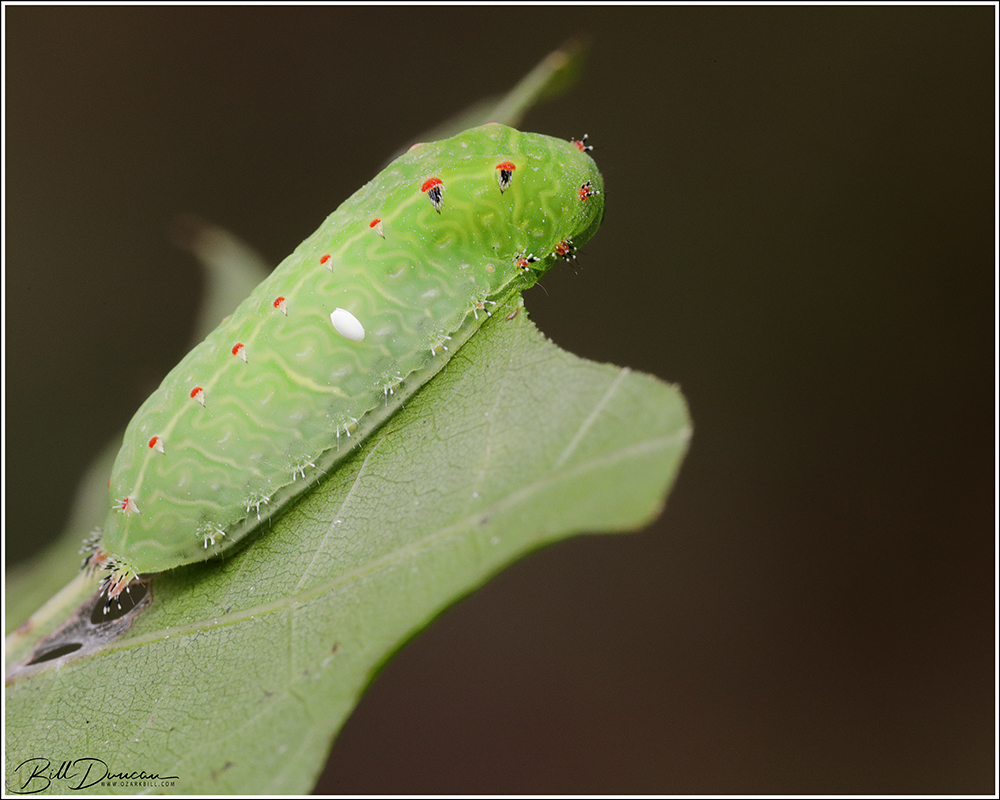
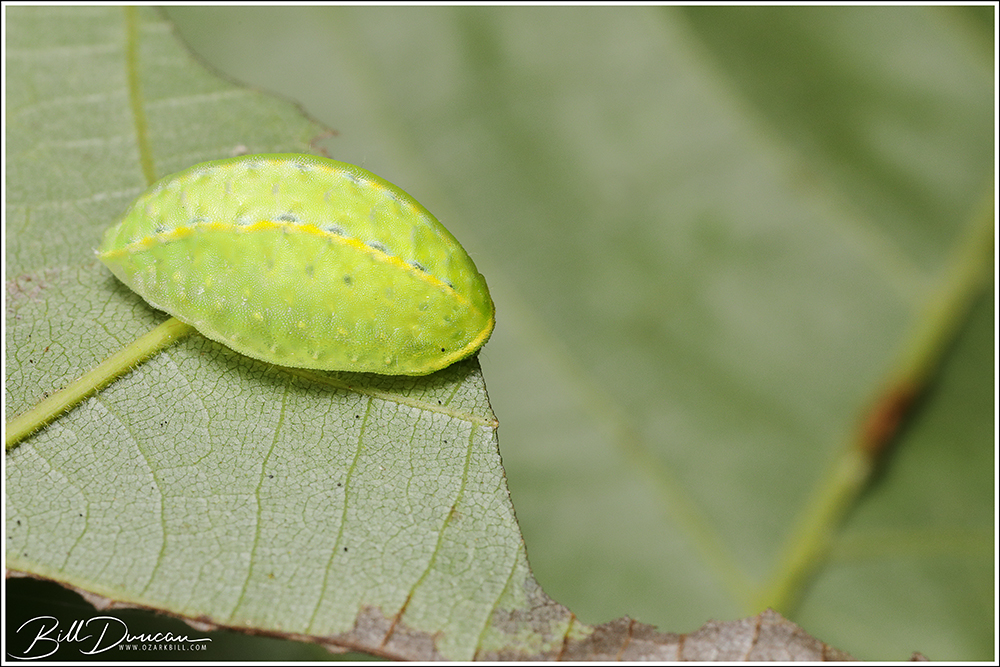
This punctured tiger beetle (Cicindelidia punctulata) provided quite a lighting challenge for Casey and me.We found this crane fly in late April. It makes a nice compliment to the early oak leaf.I tried capturing this greater bee fly (Bombylius major) in mid-air, but failed in that attempt. A portrait shot would have to suffice.This monarch caterpillar was found feasting on the leaves of swamp milkweed that was in a planter near the SNR visitor’s center.Sarah and I found this hanging thief robberfly (Diogmites sp.) feeding on a German wasp (Vespula germanica) on the side of our house in July.While looking for cats at Weldon Spring CA one evening, I was thrilled to find this saddled prominent (Heterocampa guttivitta) that had been parasitized by braconid wasps. This particular species of parasitoid changes the chemistry of the host’s brain so that after the was larvae emerge the caterpillar spins its own silk around the developing pupae and stands guard over them. When touched, the caterpillar thrashes and hisses, guarding them until it starves.One of my favorite cats to find is Apatelodes torrefacta (spotted apatelodes). They can be found in yellow, or this white form. One day I’ll have to track down an adult to photograph.A White-blotched Heterocampa (Heterocampa umbrata) shows off its incredible camouflage that allows it to eat as it becomes one with the leaf.A waved sphinx (Ceratomia undulosa) that has been parasitized by numerous braconid wasps.In September, I found this nice specimen of a fungus in the Cordycipitaceae family that had attacked a spider. This is most likely Gibelulla leiopus, an obligate parasitic fungus that preys on spiders with an almost worldwide distribution.Of course I did a little slug moth caterpillar hunting this season. Here I photographed this crowned-slug (Isa textula) catterpillar by using the flash behind the leaf, showing the delicate patterns of the insect.The highly variable stinging rose slug (Parasa indetermina) is always a welcome find.The same species pictured above, here showing its bright red underbelly.I found this spiney oak slug (Euclea delphinii) by searching the undersides of oak leaves at Babler State Park in mid-September.The skiff moth (Prolimacodes badia) cats are highly variable, ranging from nearly a complete uniform green to being more decorated like this individual.Here is the same individual as above, showing more of its interesting “senescent leaf” patterning.A very common site while looking for slug moth cats, this Nasan’s slug moth (Natada nasoni) caterpillar has the egg of a tachinid fly on it. Most likely a death sentence for the caterpillar if the egg does hatch and the parasitoid larvae invades its host.Only my second find of this species, this inverted-y slug (Apoda y-inversum) was found at Weldon Spring CA in mid-September.
Thanks for the visit and wishing you a great 2021 filled with more insects! -OZB























 A Thousand Acres of Silphiums