"What a thousand acres of Silphiums looked like when they tickled the bellies of the buffalo is a question never again to be answered, and perhaps not even asked." -Aldo Leopold
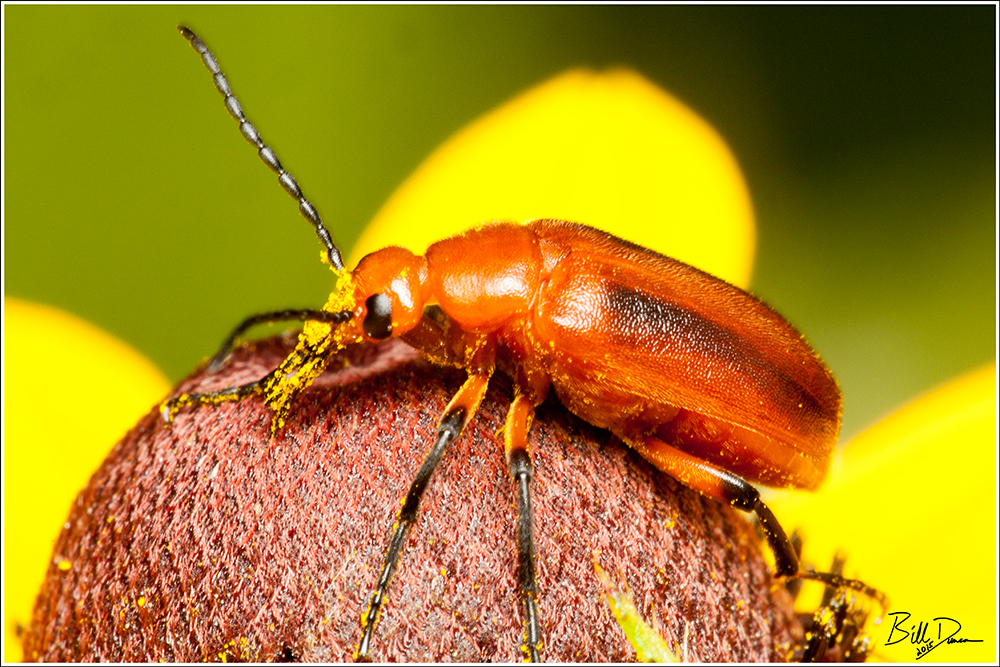
How fascinating a beetle. Did you know this group of beetles begin their lives as kleptoparasites – stealing food from the the nests of solitary bees? As adults these beetles are primarily nectar and pollen feeders and use the specialized mouth parts visible in this photograph to collect their food – primarily from the flowers of Asteraceae. If that were not enough, these guys get their names from a defensive chemical they produce called cantharidin which can produce severe chemical burns and blisters when sprayed on skin and severe poisoning if ingested. This chemical has proven an effective treatment against diseases such as cancers and leishmaniasis. This guy was found at Shaw Nature Reserve.
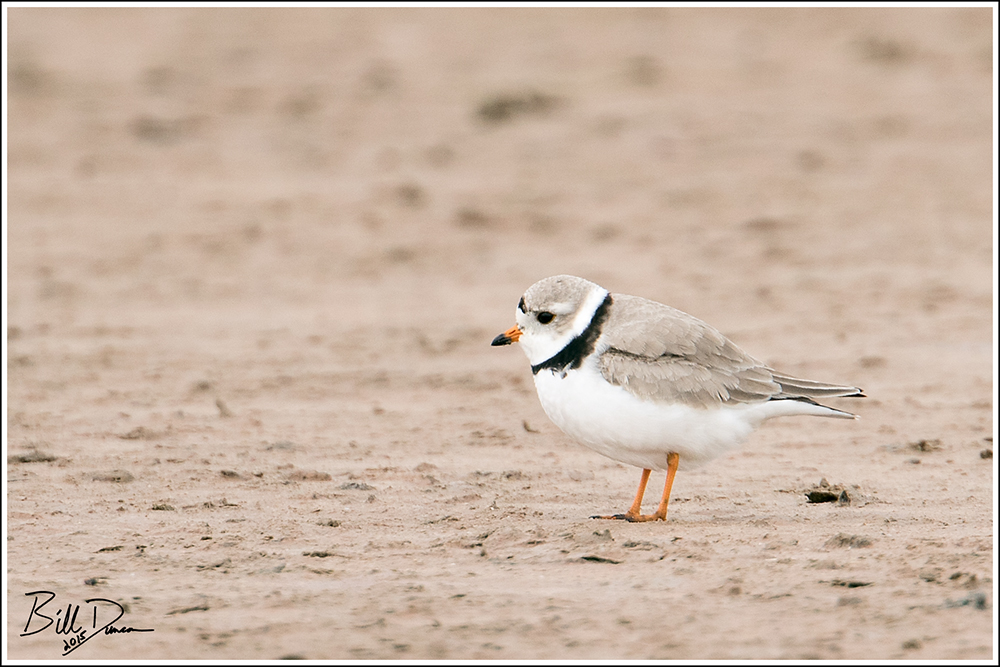
The Piping Plover, or as Pete Dunne has named them – the Sand Wraith, was one of the more special birds that Steve and I were able to view and photograph at Quivira this spring. The Piping can be identified by its top color of dry sand (vs. the wet sand-colored top of the Semipalmated Plover) and its bright yellow-orange legs (vs. the gray-legged Snowy Plover).
Piping Plover
There are currently an estimate of ~2500 pairs of Piping Plover left on the planet – causing this species to be listed on the endangered species list. Unlike most of the shorebirds – who pass over most of North America on their migration north to nest in the arctic tundra, the Piping Plover dares to nest on Atlantic coasts and sandy shores of lakes of the northern plains. It is here where its nesting needs have been overlooked by the desires of man who has converted its coastal habitat to development and flooded its fresh-water beaches and whose dogs and cats have made easy meals of its eggs and chicks.
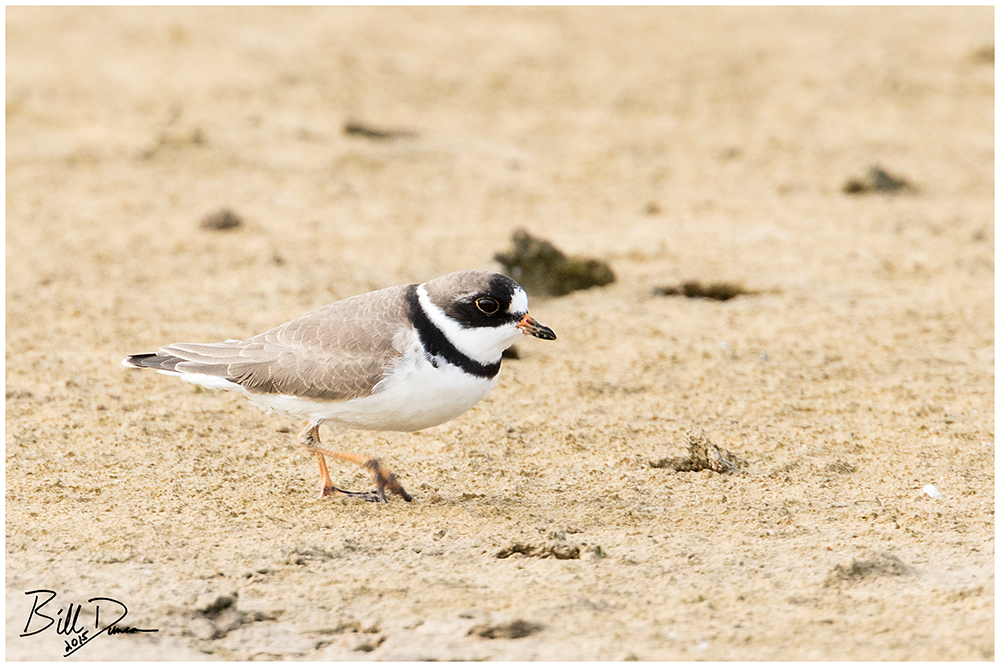
Cousin to the slightly smaller Piping Plover and the ubiquitous, double-striped Killdeer, the handsome species that is the subject of this post is the Semipalmated Plover. Semipalmated refers to this bird’s semi-webbed toes.
Semipalmated Plover
I find it interesting that these birds are typically tolerant of feeding among other shorebird species such as Piping plovers and Peep Sandpipers, but will not tolerate conspecifics during migration, aggressively defending a feeding territory.
Semipalmated Plover
I have read it described that the Semipalmated Plover is the color of wet sand, while its similar looking cousin, the Piping Plover, is the color of dry sand. Stay tuned next time we visit Quivira NWR when I plan on showcasing this species.
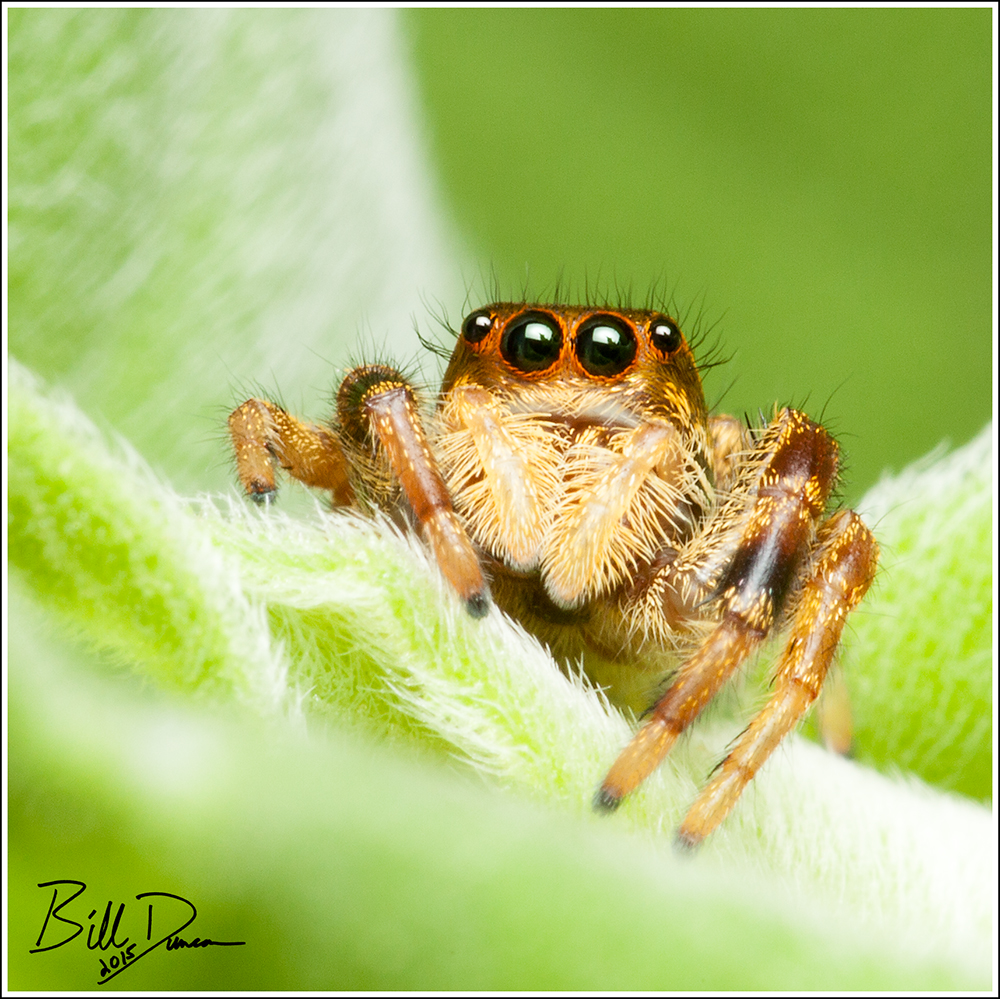
I’ve always loved jumping spiders. It is hard not to assume a higher level of intelligence as these guys follow every movement you make and will turn to face the camera, your finger or your face in order to keep an eye on you. They are tremendous predators and loaded with all sorts of great behaviors, including elaborate dances in order to attract mates. I have found a few species in the backyard but they all are tricky in getting a usable photograph.
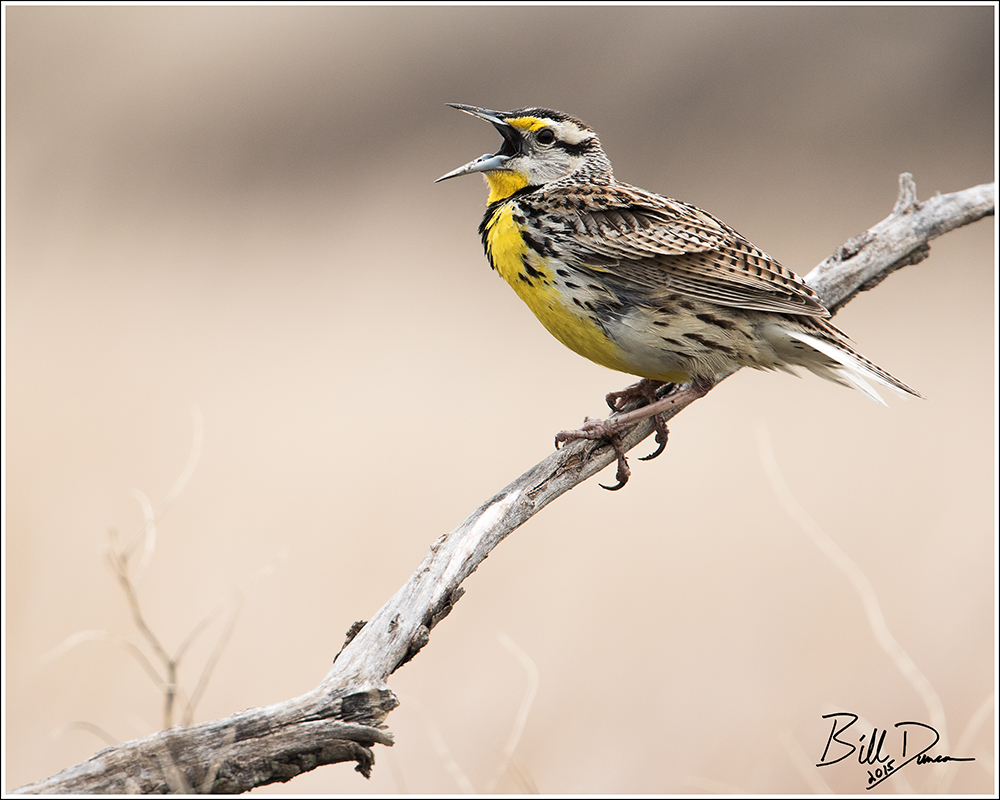
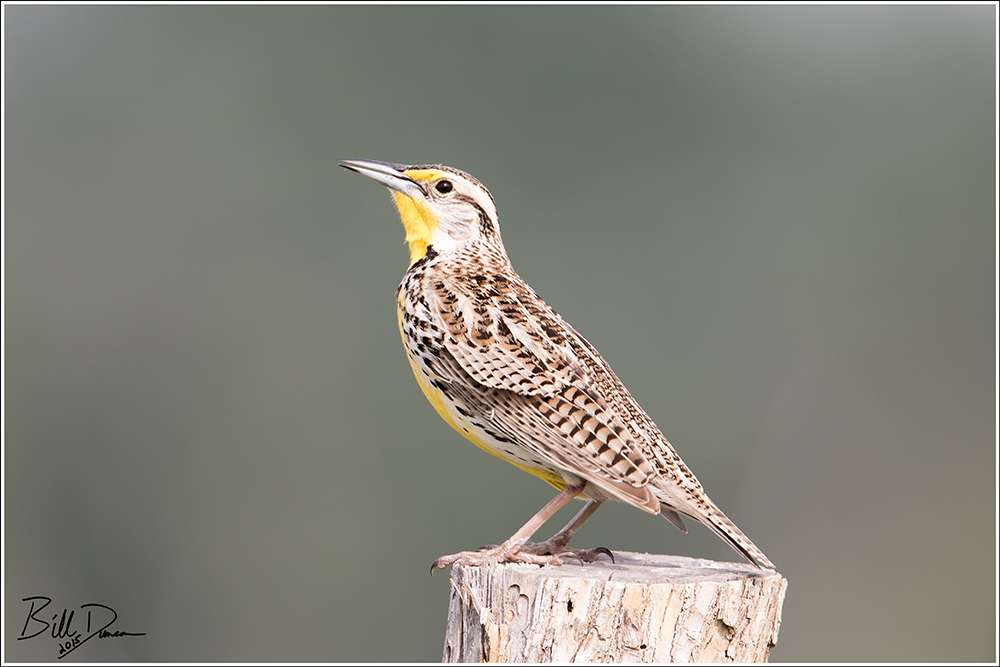
Located in south-central Kansas, Quivira NWR lies within the overlap of the ranges of both Eastern and Western Meadowlarks. We had observed both species (mostly Eastern) in a past trip or two to western Missouri, but Steve and I were immersed in an almost 50/50 mix of the two at Quivira. According to the literature, these guys participate similarly in their respective habitats, although Westerns prefer things a bit drier. Visually, the two species are quite similar and depending on the season may be difficult for even the most experienced birder to be certain of their ID based on solely visual cues. I believe the two images presented here do represent some of these subtle visual differences. The Western appears to be less contrasty and lighter in color overall than the Eastern. Pay close attention to the sub-moustachial area in the two birds pictured. In the western, the yellow from the chin spills over into this area, but remains a clear and distinct white in the Eastern. Lastly, the head stripes of the Eastern are darker than those of the Western.
Western Meadowlark
Advertisement songs and calls are quite distinct between the two species and should always be sought for best identifications. I was quite confident in this knowledge and sure that I had this down until I read recently, that because these are songbirds after-all, and songbirds learn their songs, there may be some similarities – especially where the two ranges overlap. So, maybe the calls are the only true tool we have?
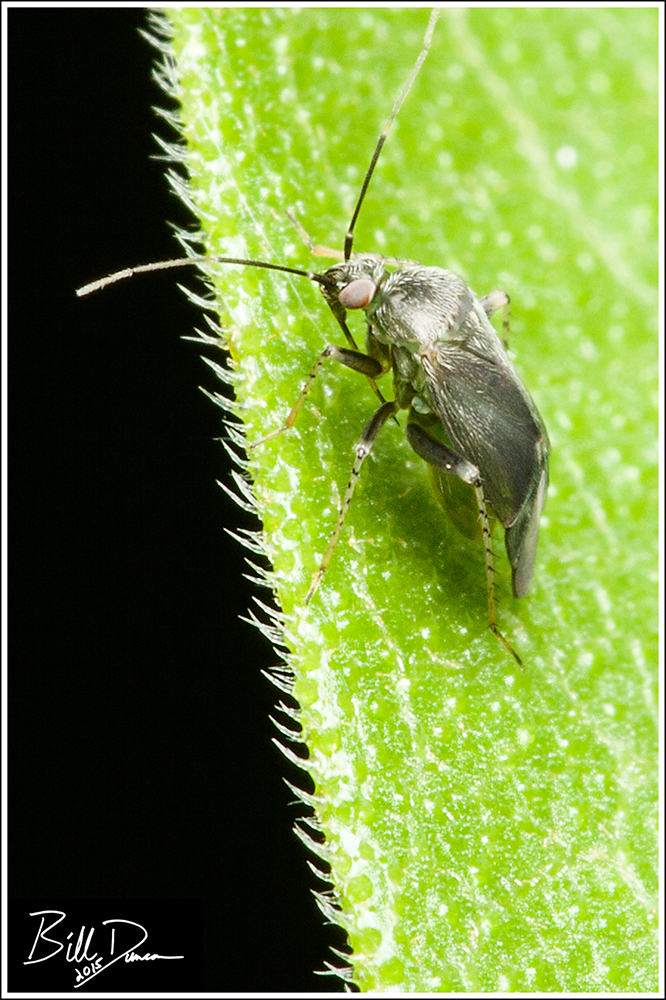
Today’s “From the Garden” spotlight is on another insidious predator, the Minute Pirate Bugs, or Flower Bugs. These true bugs, classified within the Family Anthocoridae, specialize in piercing and sucking the contents of any soft-bodied insects that are roughly their own size or smaller. These prey insects, such as thrips, aphids, caterpillars and their eggs, are important insect pests. I believe the insect pictured in this post falls within the genus Orius.
Ask the average gringo about their perception of Puerto Rico’s climate and habitats and I am sure most would describe heavy rains associated with tropical rainforests. However, due to rain shadow effects from the central mountain chain known as the Cordillera Central, much of the southern coastal regions receive very little direct rainfall. On my first day of exploring southwestern Puerto Rico, I found myself a 20 minute drive west of Ponce in the Dry Forest of Guanica. Guanica receives about 30″ of rainfall per year, which is very close to the annual average for the state of Missouri. However, with the harsher tropical suns, coastal winds and rocky/sandy soils, this amount of precipitation does not go nearly as far in Guanica. This coastal habitat is much more dry-adapted than the comparatively lush Ozark forests of Missouri.
Welcome to Guanica
Typically dense and developed as Puerto Rico tends to be, the entrance to this reserve was literally on the edge of a subdivision, which is where I found myself with an hour to wait near sunrise before the gates where opened. No worries, I grabbed the camera and the binocs and did some of my first real birding on the island. With about 12 named trails of who knows how many total miles, Guanica (~10,00 acres) offers a lot to see, including a Guayacan tree estimated to be over 700 years old. The photo below shows a monument I was to see elsewhere on the island. These identification markers were carved by FDR’s Civilian Conservation Corps (“Las Tres C” in Puerto Rico). I had never given a thought about the CCC’s presence in U.S. territories like Alaska and PR, but it turns out they were quite active in PR – not only building roads and other structures but replanting forests as well. Applauds to these guys for replanting so many trees and helping to set up these reserves. However, along with the National Forest Service the CCC unfortunately participated in bringing exotic, “desirable” trees like mahogany, teak and eucalyptus. Many of these trees were chosen for their fast-growing ability and their tendencies to suck up a lot of water in order to dry out the island. Consequently, in Puerto Rico’s protected natural areas, a significant amount of the forests’ composition is Australian or Asian and completely altered.
CCC-Puerto Rican Style
I parked at the visitor’s center, which is located on the site of an old sugarmill ruins. I was unable to find a single trail sign. I had read the park ranger on duty spoke English, but if the attendant on this Saturday morning did, maybe he was hesitant to do so with the sweaty, ginger gringo who wielded no more than a dozen words of Spanish (see below).
Pathetic Gringo
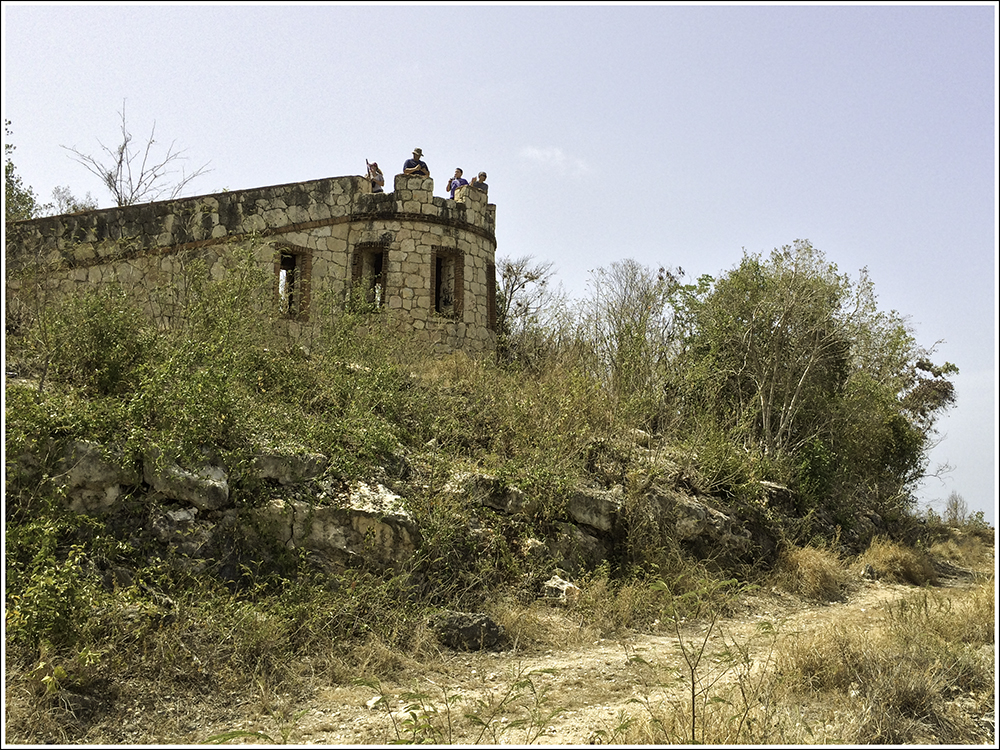
Always a good idea while out in wild areas, but definitely a good idea in PR is to use a GPS device. Every map I could find was deficient in more ways than one. The GPS unit I found to be the best during my visit was the map app on my iPhone. Also, as you might have guessed, the Guanica Dry Forest is DRY. Bring plenty of water. I thought the three liters I brought on this hike was a bit of overkill. However, at the end of my ~ eight miles of hiking up and down these coastal hills under extreme heat and sun, I was completely dry. I decided to head out on the most promising of the retired forest road trails and it wound up being the one I hoped it was, leading me to the coast where I was to find Fort Capron that was built by Americans in 1898 and is really more of a lookout tower. There is also a lighthouse nearby, but not all that interesting either.
Fort Capron
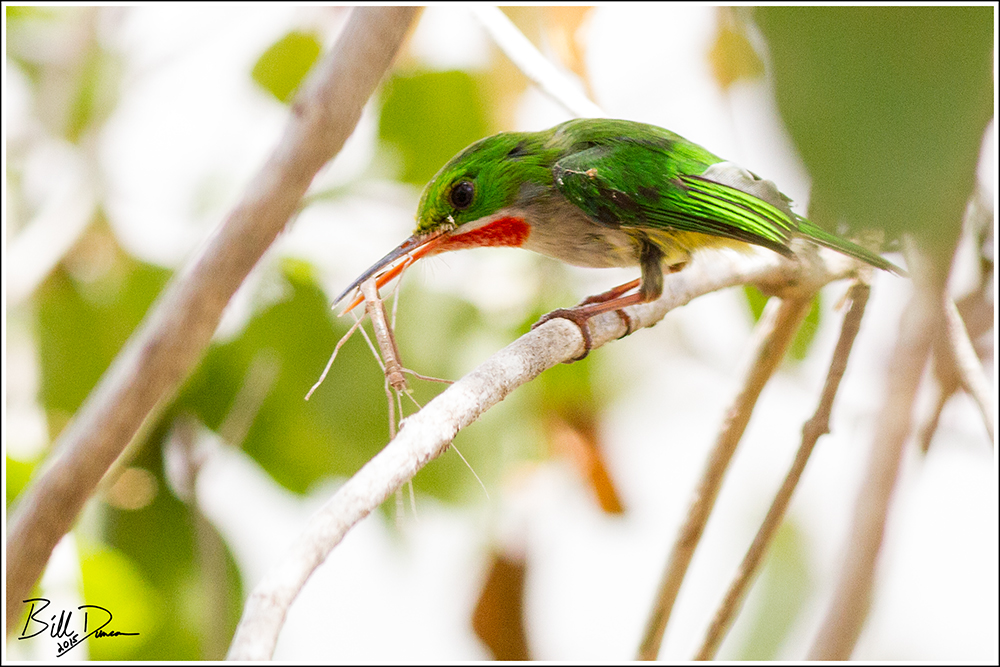
Okay, enough with the tour guide stuff. Early in the day, I made my first acquaintance with what would turn out to be my favorite bird of the trip – the Puerto Rican Tody. Check it out…
Puerto Rican Tody
I would find these guys all over my travels in southwestern PR. They are related to and behave somewhat like the Kingfishers, are slightly larger than a Chickadee, are nearly as bold as a Kingbird and as brilliantly colored as a Parrot. I captured the one below as it tackled a stick insect.
Puerto Rican Tody
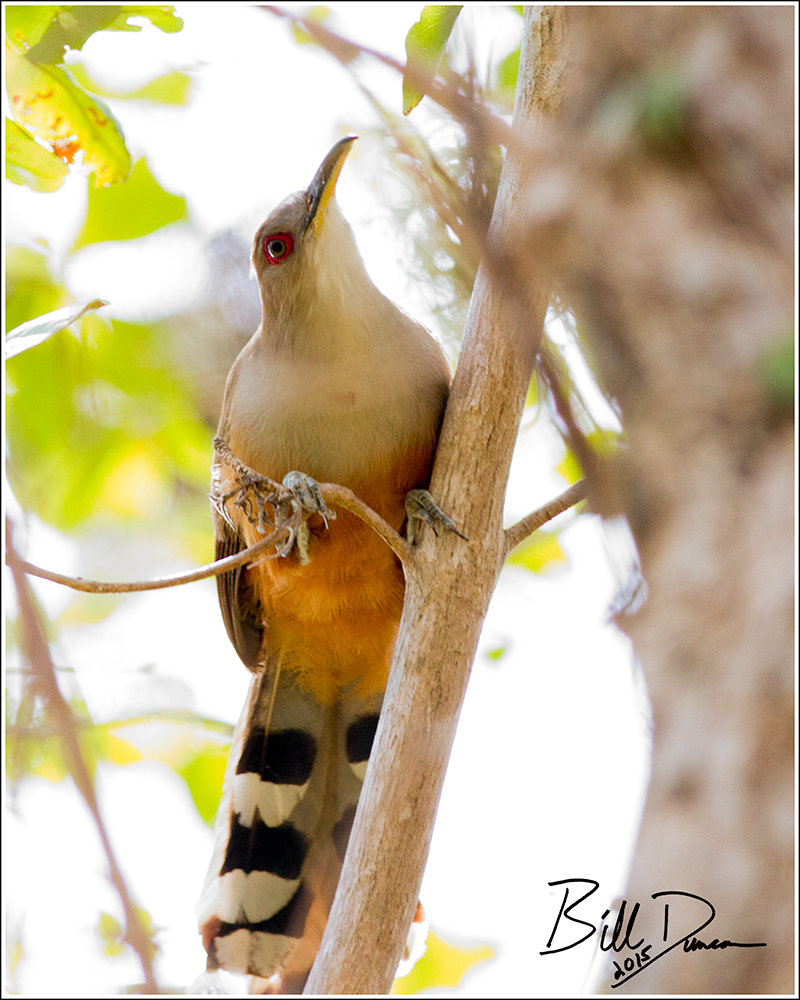
Much of the trails of Guanica are old forest roads that cut through the habitat, mostly along hilltops. Along most of my hike I was faced with thick walls of scrubby vegetation about 10- 20 feet high, often so thick that I was faced with a mere meter or two of visibility. Even though I could hear bird vocalizations, I was often at a lost to see or identify the species. With patience, however, views can be had. Near the fort, where the hillside slopes got steeper and the coast loomed near, I heard what I immediately knew to be cuckoo on their way up to intercept the trail – the Puerto Rican Lizard Cuckoo. These birds were at first so close, I couldn’t possibly get one in the frame without cutting off significant portions.
Puerto Rican Lizard Cuckoo
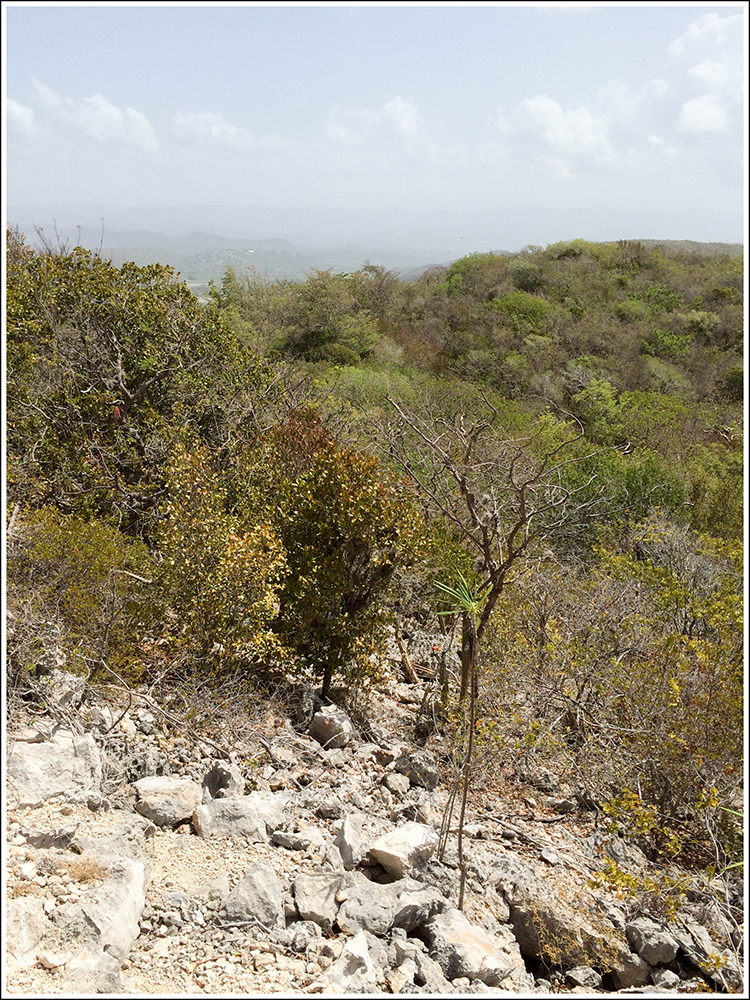
Towards this end of the reserve I was presented with more open views.
Guanica Hillside
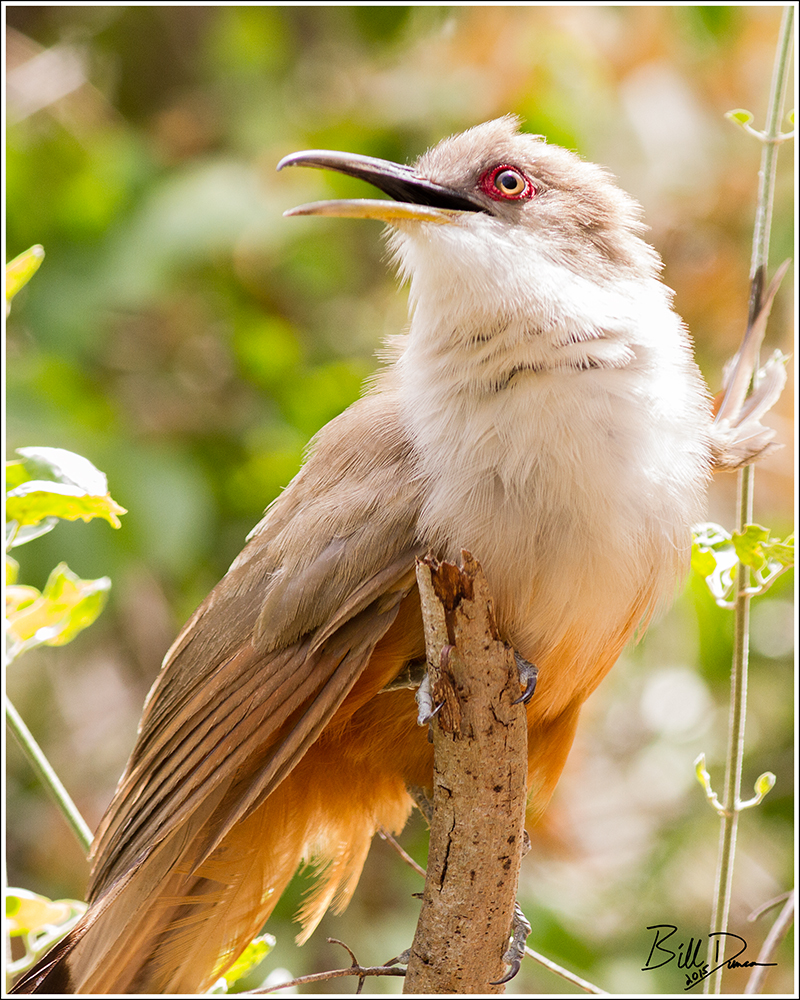
I was quite fortunate to find the quiet and shy Mangrove Cuckoo during this hike.
Mangrove Cuckoo
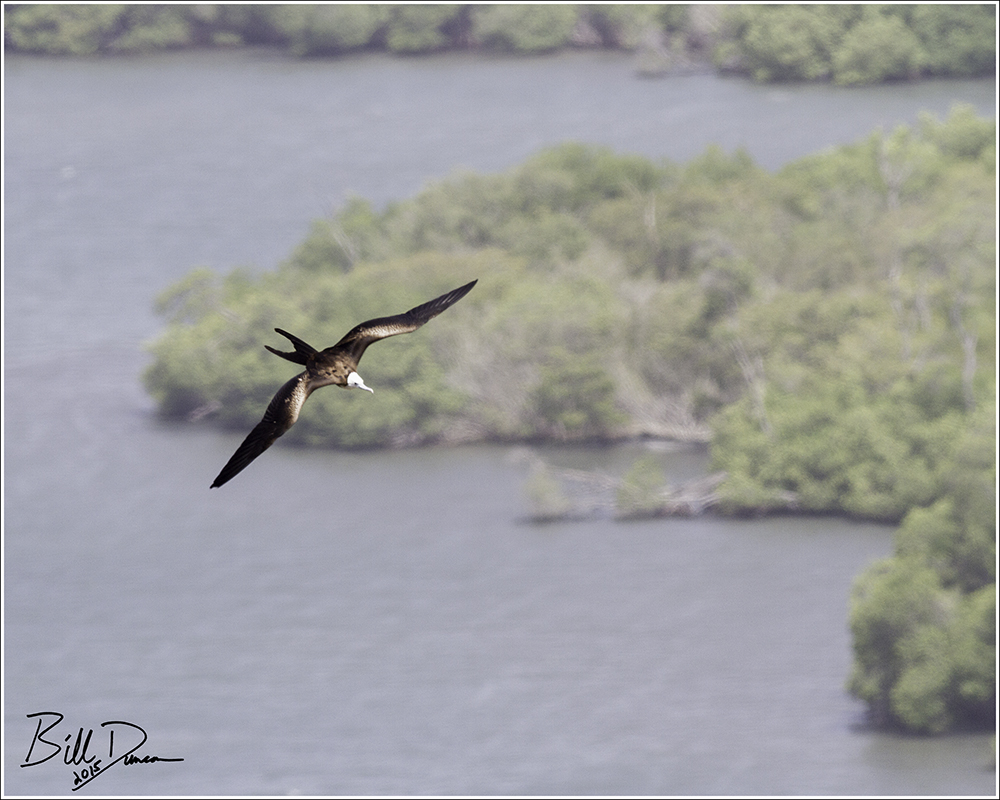
Abundant in Puerto Rico and across Caribbean coastlines, the Magnificent Frigatebird is a seabird that feeds by catching fish on the wing. This is a long-lived species. The one pictured below is a juvenile.
Magnificent Frigatebird
It seemed that the closer I was to the coast, the drier the habitat became. The Caribbean Sea is just behind me where I stood to take the picture below.
Cactus Scrub
Well, that covers my trip report for the first of three days. Southwestern PR is a great place for the birder-naturalist. Of the approximately 17 or so endemic birds on the island, all but the Puerto Rican Parrot can be found here. Also, highly varied habitats can be visited within short driving distances. Stay tuned for my next day’s trip-log where I will be summarizing my day spent at Cabo Rojo NWR and Salt Flats.
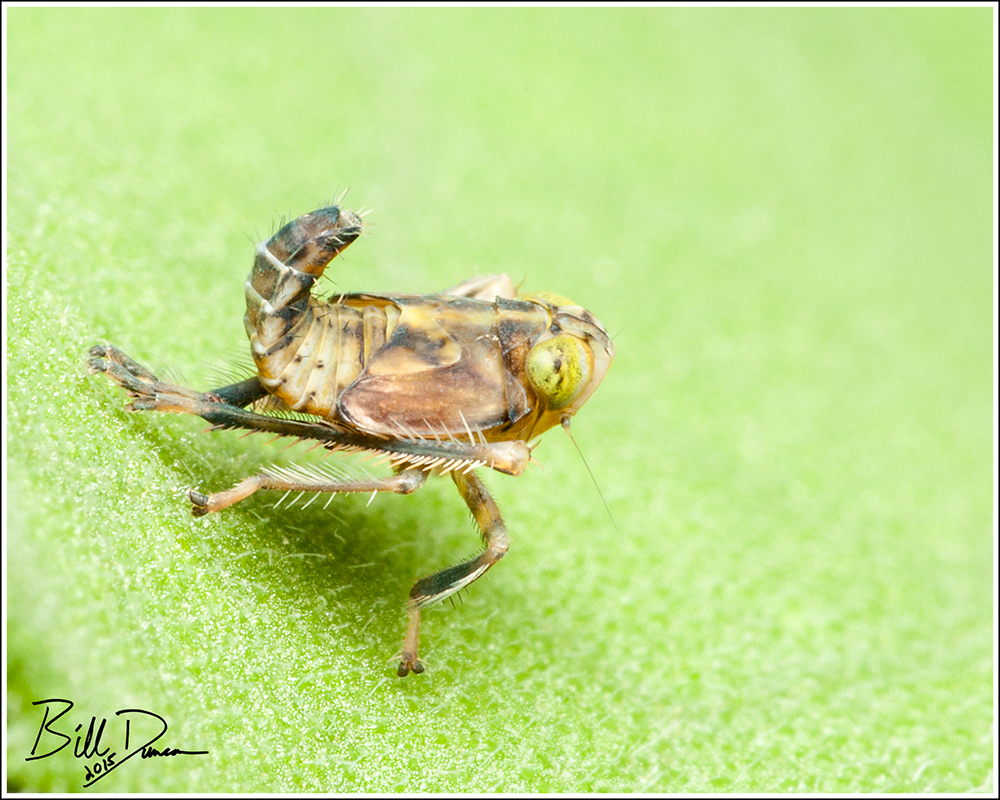
Planthoppers and Leafhoppers are groups of insects collectively found within the insect Order Hemiptera. Both groups have piercing and sucking mouth parts and feed primarily on plant saps and tissues. These groups are highly diverse. I have been able to capture a few of these fascinating creatures with the camera in the backyard, but these are generally the more common species. The insect pictured above is known as a Spittlebug – named for the behavior of encasing themselves as nymphs in a spittle-like mucous for protection.
The Stormtrooper
I’ve said before that there is no such thing as an original idea in fantasy or sci fi. I’ve found that almost every creature or effect you can find to celebrate in these films or books has been taken (consciously or not) from nature, most often from invertebrates or the deep sea.
Planthopper Nymph
This ultra-tiny guy posted above is a planthopper nymph. Often members of this group will have long, colorful waxy lengths of fibers extruding from their tail ends that are used for multiple purposes, including predator avoidance.
Candy Stripers
Many folks who have spent any time in the backyard have surely seen the Candy-striped Leafhoppers, one of the most abundant species in this group. Gorgeously colored and quick to disappear, the two pictured above are busy making more.
I look forward to sharing more photos of members of these groups in the near future.
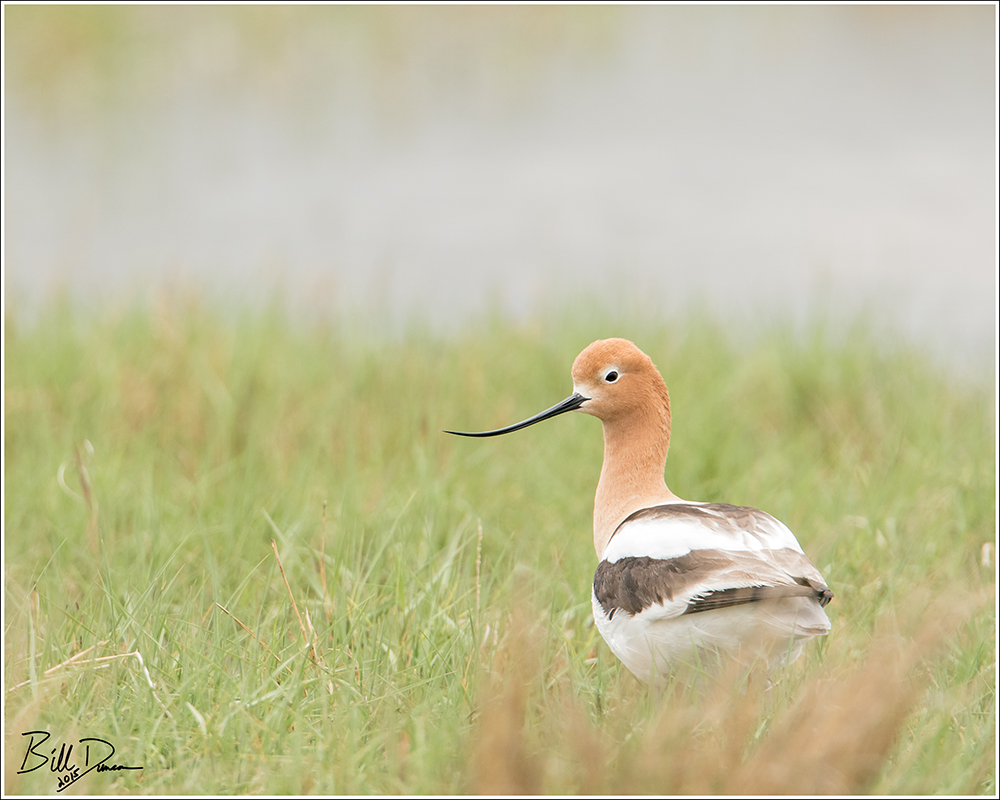
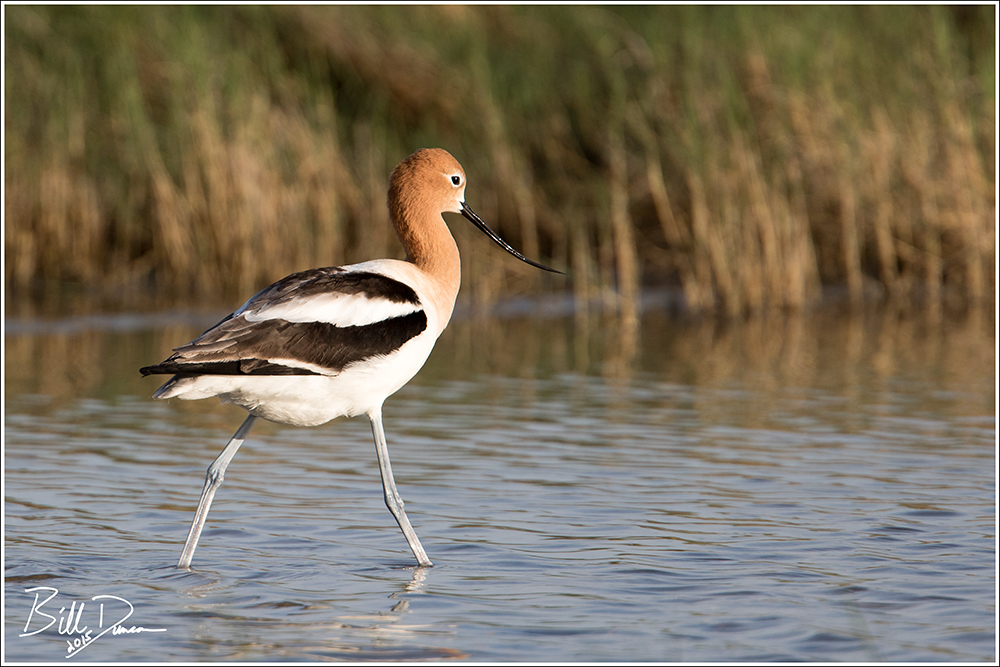
The demure, upturned bill, the black and white striped pattern and the gorgeous warmly colored head and neck make the American Avocet in breeding plumage unmistakable.
American Avocet
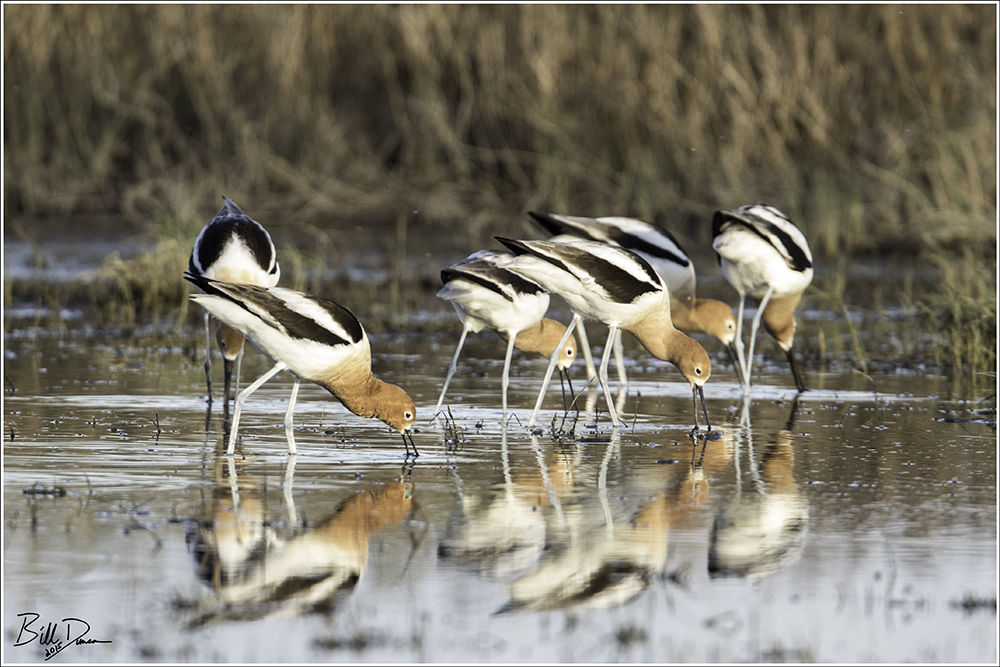
The Avocet is adapted at finding its bread in a variety of scenarios. It can fish by probing the shallows with its needle-like bill tip, but it is equally comfortable at being in over its head and using its bill as a scythe to collect its prey, sometimes while literally swimming.
American Avocets Hard At Work
I have seen no more than four of these guys at a time in winter plumage in Missouri. During four days at Quivira Steve and I observed dozens.
American Avocet
In the above image you can see the large strides in deeper water this bird’s blue, stilt-like legs afford it.












 A Thousand Acres of Silphiums