Observations of Vespicochory of Trillium recurvatum diaspores by Vespula maculifrons in St. Louis County, Missouri

Review

Formica pallidefulva ants beginning to work on moving diaspores of Trillium recurvatum.

After observing Vespula vulgaris foraging for the diaspores of Trillium ovatum in Oregon, Jules (1996) coined the term vespicochory to describe the dispersal of seed by Vespid wasps, specifically members of the Vespinae – the Vespidae subfamily that is comprised of yellowjackets and hornets. Few other descriptions have been recorded on observations of Vespinae acting as secondary seed dispersers in myrmecochorous plants. In controlled experiments, V. maculifrons has been reported to disperse T. cuneatum, T. undulatum and T. catesbaei in North Carolina and South Carolina (Zettler et al., 2001) and T. discolor in South Carolina (Bale et al., 2003). To my knowledge, this is the first recorded observation of the dispersal of T. recurvatum by Vespid wasps.

Before I begin describing my observations, I will first review and discuss the potential implications of Vespinae dispersal as an alternative to myrmecochory in trilliums. In most descriptions, myrmecochory has been described as a mutualist symbiose, meaning that both plant and ant species benefit from the relationship. Ants benefit by gaining the lipid and protein rich eliasome of the diaspore to feed their young while the plants benefit by having their seed dispersed from the parent plant and gain potential benefits in overwintering and germination environments. Similarly, for vespicochory to be considered as an important seed dispersal syndrome, we should consider the benefits to both sides and compare the role these wasps play to that of their ant cousins.

A Formica subsericea ant carrying a Trillium recurvatum diaspore.

Yellowjackets, in addition to seizing seed directly from ants, removed more seeds (40%) from index cards than did each of three ant species observed (8 – 28%) (Bale et al., 2003). Zettler et al. (2001) measured dispersal distances by V. maculifrons and found an average distance of 1.4 m compared to a mean of 0.98 m in global cases of myrmecochory (Gómez and Espadaler, 1998). This difference in dispersal distance alone is significant; however, 53% of the seeds removed by V. maculifrons in this study were moved beyond 20 m – the furthest extent of their measuring capabilities, and were unrecovered, indicating a much higher than calculated average dispersal distance.
A single foraging Vespula maculifrons finds the fruit.

In addition to dispersal distance, another important thing when considering the benefits to the plant in a particular dispersal syndrome, is what is done with the diaspore once removed. The mandibles of Vespids are considerably larger and assumedly much more powerful than those of the ant species involved in dispersing trillium seed throughout their range. It is therefore a possibility that the seed could face catastrophic damage from the foraging wasp. Of the original seed recovered by Zettler et al. (2001), 95.7% had the eliasomes removed. Of these, 17% of the seeds had scarification near where the eliasome was attached but no seeds showed visible signs of embryo damage. The ultimate use of the eliasome was unknown in Zettler et al. (2001); however, Jules (1996) observed yellowjackets taking diaspores directly into their nest where, presumably, they were fed to developing young. Vespids typically nest underground and waste (i.e. seed portions of diaspores) are deposited below the nest. As mentioned by Zettler, “…we do not know how seed burial in these nests might affect seed germination and seedling emergence.” In cases where eliasomes are removed and seed are dropped randomly on the ground, it would be interesting to know how these seed fare in comparison to those buried within the nest. Further study is needed to determine the fate of seeds moved by these wasps when compared to myrmecochory.

Observations

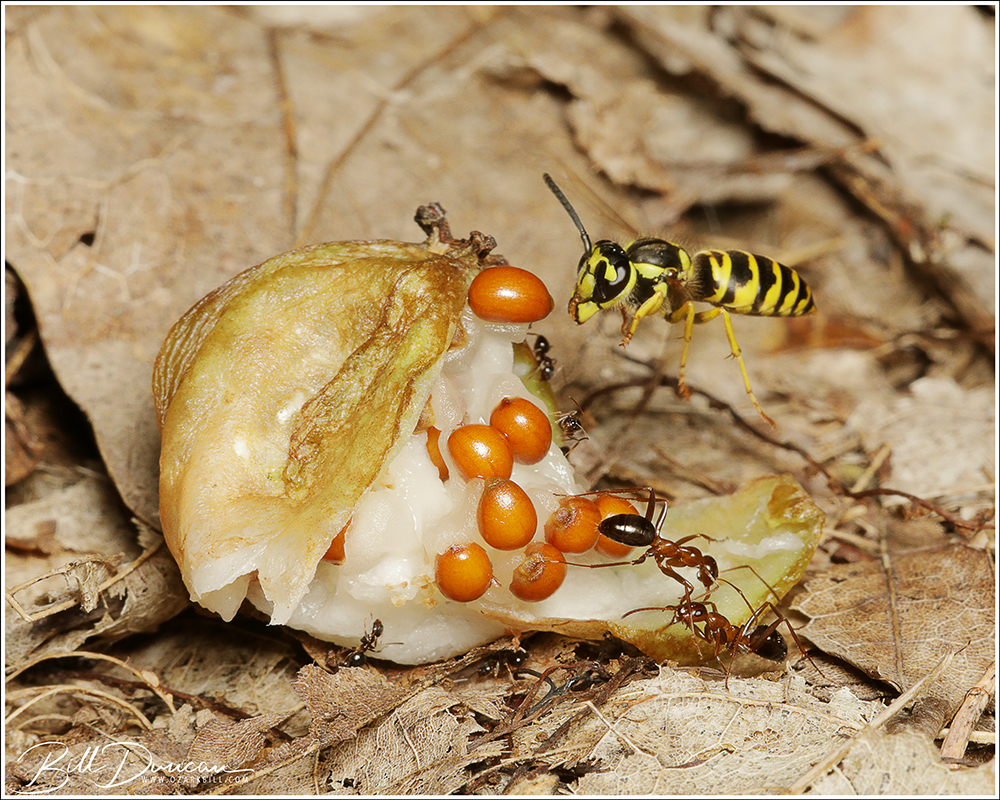
The ants try to keep their prize but the yellowjackets are too strong and fast and easily claim most of the diaspores.

The following observations and accompanying photographs were conducted at August G. Beckemeier Conservation Area in St. Louis County, Missouri. On August 5, 2021 at ~ 18:00 hrs., I collected a ripe fruit of T. recurvatum and placed it with about 25% of the seed exposed within 20 cm of a nest of Formica pallidefulva ants. My goal was to observe and photograph the ants carrying away the diaspores. The ants found the fruit within minutes and quickly began moving the loosely separated diaspores. After approximately 10 minutes the first V. maculifrons found the fruit and quickly left with a diaspore. It returned alone five times with gaps ranging between approximately one and three minutes. After the fifth visit, two to four wasps were at the scene at any given time, each working to free seeds from the fruit until all seeds were removed. I found that the wasps were able to pull the diaspores free from the fruit capsule matrix much easier than the ants. The ants tried, at times, to defend the fruit and the wasps did give them a wide berth. When two or more wasps were on the fruit at one time, however, the ants were ineffectual in their defense.

A Vespula maculifrons seizing a Trillium recurvatum dioaspore.

I was not setup to make accurate counts or to try and make seed dispersal distance measurements. It appeared the wasps moved at least 75% of the seed while F. pallidefulva moved the remaining into their nest. I believe this discrepancy was primarily due to the ability of the wasps to excise the diaspores from the fruit capsule matrix more quickly and easily than the ants. I watched one wasp perched on a short sapling approximately 1.5 m from the fruit. It removed the eliasome, letting the seed fall to the leaf litter below and then left carrying the eliasome with it.

Photography Details
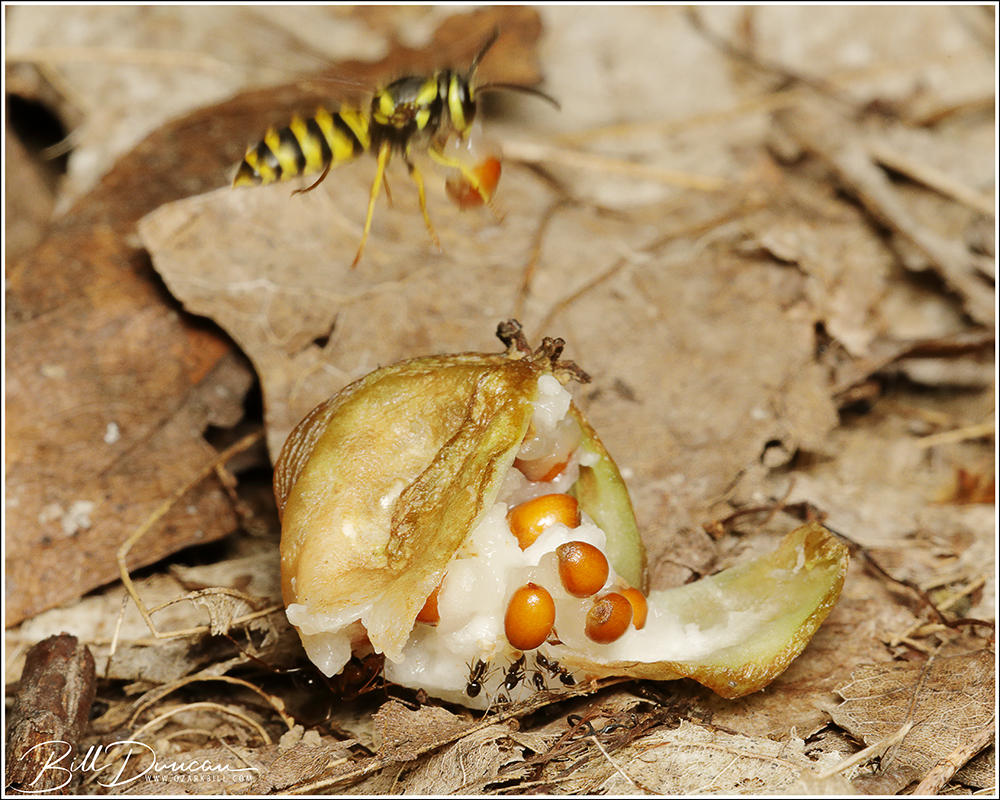
The ants try to keep their prize but the yellowjackets are too strong and fast and easily claim most of the diaspores.

These images were taken using a full-sized sensor digital camera and a 180mm macro lens with a 1.4x teleconverter and 30 mm extension tube stacked between the lens and camera body. This combination of equipment provides quite a long focusing distance, ensuring the photographer does not disturb the subjects. An off-the-body external speedlight “flash” was used at varying levels of power to obtain the extra light needed. Most of these images were taken at f/16, 1/100 sec. and ISO-640 and were taken handheld while using a fallen log for additional support.

Conclusion

This was an anecdotal observation of a single occurrence of vespicochory. This is a subject that warrants further investigation. Could vespicochory be just as or even more important in the dispersal and emergence of some “myrmecochorous” plants as myrmecochory? It would be interesting to know more about the frequency and dynamics of this unique seed dispersal mechanism.

References

  • Bale, M.T., J. A. Zettler, B.A. Robinson, T. P. Spira, & C.R. Allen. 2003. Yellow jackets may be an underestimated component of ant-seed mutualism. Southeastern Naturalist 2(4):609-614.
  • Gómez, C. & X. Espader. 1998. Myrmecochorous dispersal distances: a world survey. Journal of Biogeography 25:573-580.
  • Jules, E.S. 1996. Yellow jackets (Vespula vulgaris) as a second seed disperser for the myrmecochorous plant, Trillium ovatum. American Midland Naturalist 135(2):367-369.
  • Zettler, J.A., T.P. Spira, C.R. Allen. 2001. Yellow jackets (Vespula spp.) disperse trillium (spp.) seeds in eastern North America. American Midland Naturalist 146(2):444-446.
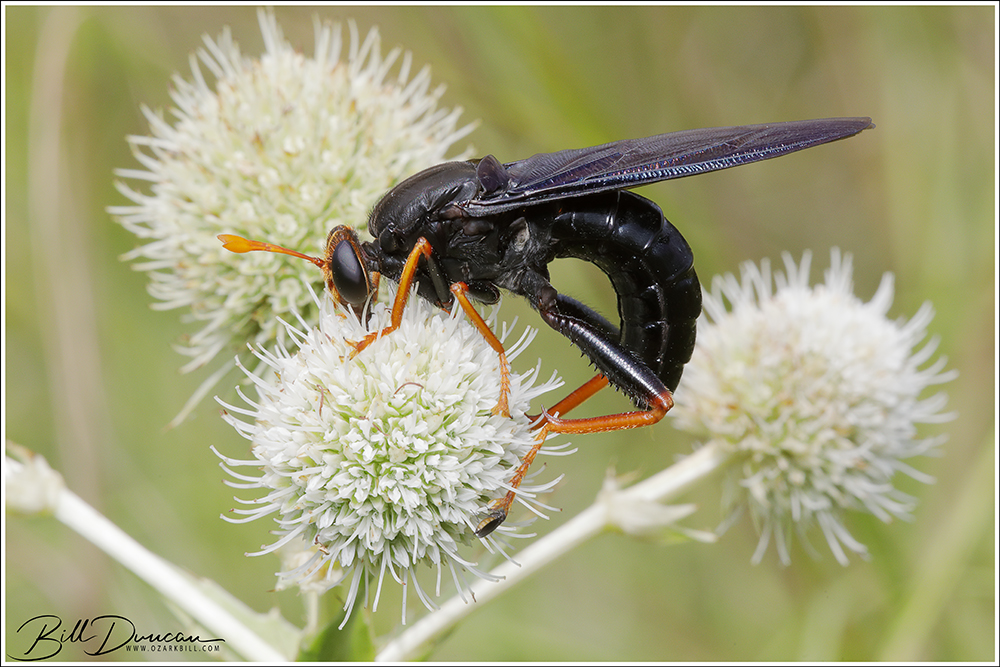
The Golden-legged Mydas (Mydas tibialis)

This past August while visiting the Weldon Spring Site Interpretive Center in St. Charles, County MO, I stumbled upon one of my favorites that I have not seen since taking entomology at the University close to 20 years ago. When first encountering this insect you immediately think it must be one of the spider wasps or perhaps the great black wasp (Sphex pensylvanicus). For those who don’t immediately flee the area and instead look a little closer, you will see this is actually a very special species of fly.

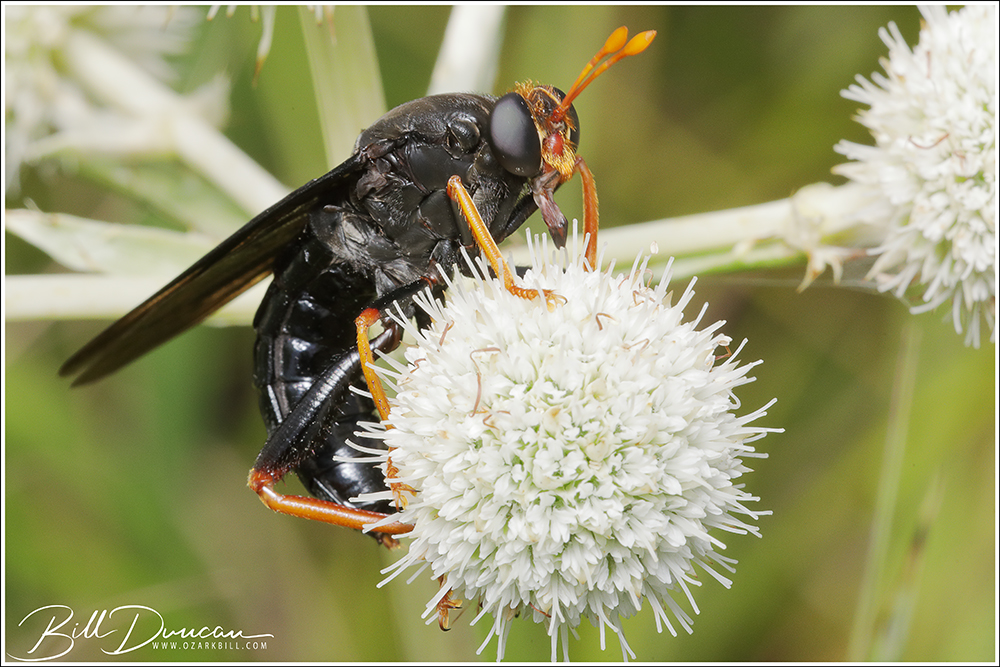
Mydas tibialis, the golden-legged mydas nectaring from one of its favorite food sources, the blossom of Eryngium yuccifolium (rattlesnake master).

Mydas tibialis (golden-legged mydas) are Batesian mimics, meaning they are harmless mimics of a potentially harmful species, such as wasps. The adult form of mydas flies are purportedly short-lived. They spend the most of their lives underground where they feed on grubs in the soil.

In order to truly appreciate the size of a mydas fly, one must see them in person. If you are familiar with the size of a typical rattlesnake master inflorescence, then you might be able to appreciate this from these photos.

After doing a short bit of research, there doesn’t seem to be nearly enough known about the life history of our mydas flies. This is a shame. Not only are they fascinating animals with much waiting to be discovered but it also looks like they can be good biocontrol agents. Hopefully it won’t be another 20 years before I find one again.

Mydas tibialis, the golden giant of the Dipterans.

Agapostemon – The Stamen Lovers

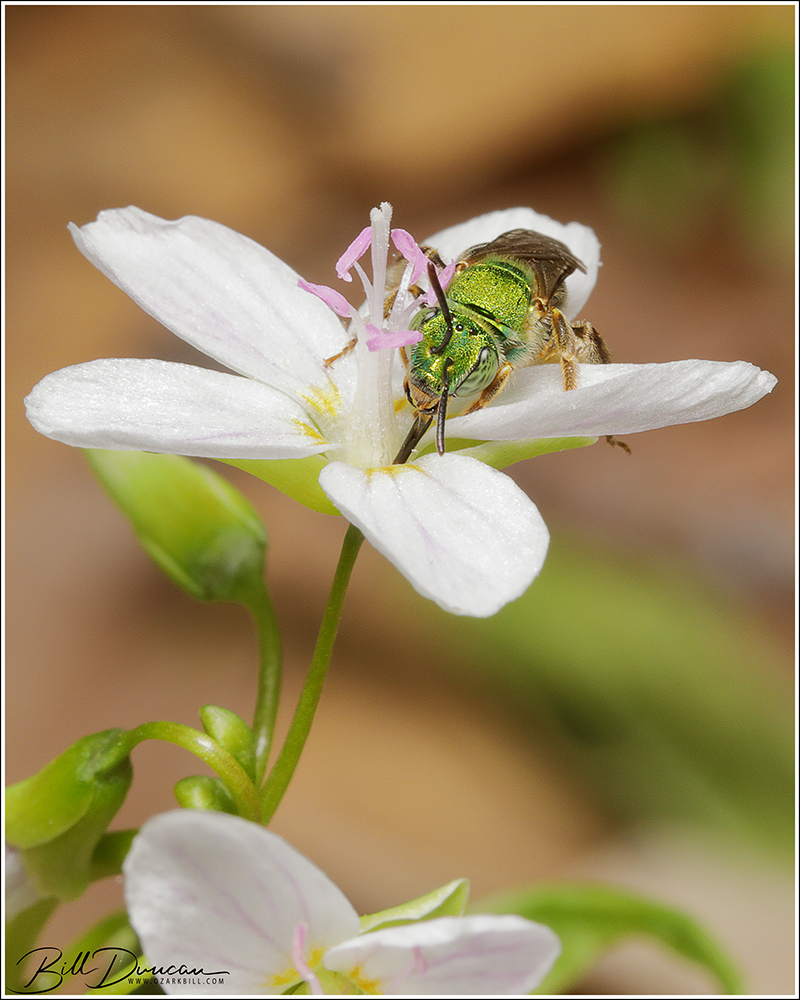
Photographed in April, this Agapostemon (either sericeus or splendens) bee is seen visiting blooms of Claytonia virginica (spring beauty). Agapostemon comes from two Greek words – agapetos, meaning beloved, and stemon, for stamen – these referring to their obvious fondness and attraction to flowers, particularly those in the Asteraceae. We can tell this bee is female because males of this genus have yellow and black striped abdomens.

An Agapostemon sp. female nectaring from a Claytonia virginica bloom, April 2021, St. Louis County, MO

Magnolia tripetala (Umbrella Magnolia)

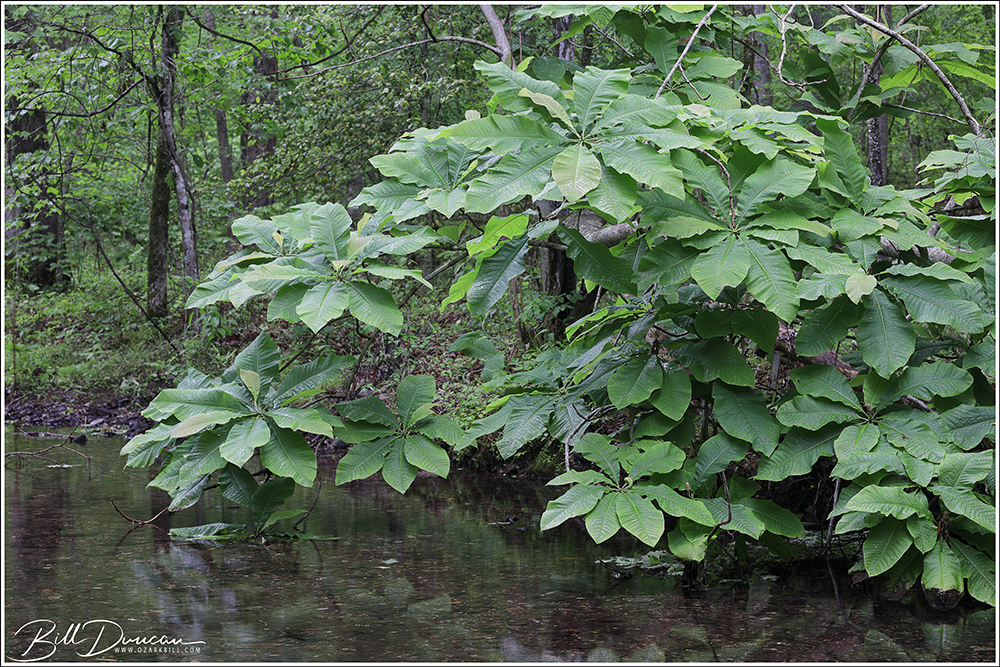
It was a pleasure seeing my first wild Magnolia tripetala on our trip to Arkansas back in May 2021. To make things even better, this plant was found within a hundred feet or so from the Kentucky lady’s slippers we were there to photograph.

Magnolia tripetala (umbrella magnolia) photographed within the Ouachita National Forest.

Zombie Spider Bastards!

A little late for a Halloween post, my apologies, but I wanted to share what is probably the best-preserved example of a Gibellula-infected spider I have found to date. Gibellula is a genus of endoparasitic Cordyceps fungi that primarily infect spiders. Although the nicely preserved jumping spider (Salticidae) and the fruiting branches of the fungus is what grabs the eye, it wasn’t until I finished processing the photos that a question came to mind for me.

See the white fibers that surround the spider? I see two possible options for the origin of these. First, I should explain a little of what I have read about the life history of these parasitic fungi. Similar to the Cordyceps that infect insects, Gibellula-infected spiders become “zombies” and will typically position themselves on the undersides of leaves, as the one pictured here was found. Here the fungus finally kills its host and sends out spores that are now nicely positioned to fall upon potential new spider hosts. Back to that bed of white threads. I see one function and two possible origin ideas of these. I believe the function of these is to keep the spider anchored to the leaf so that it does not fall to the ground and greatly hinder the ability of the fungi to infect new hosts. For the potential origin, these could be mycelia of the infecting fungus, or, even better, these could be silk created by the spider, induced by the fungus to anchor itself as the last act before its death.

If you have other ideas as to the potential origin or function of this bead of threads, please let me know!

A jumping spider infected by Gibellula fungus.

Salvia azurea (Blue Sage)

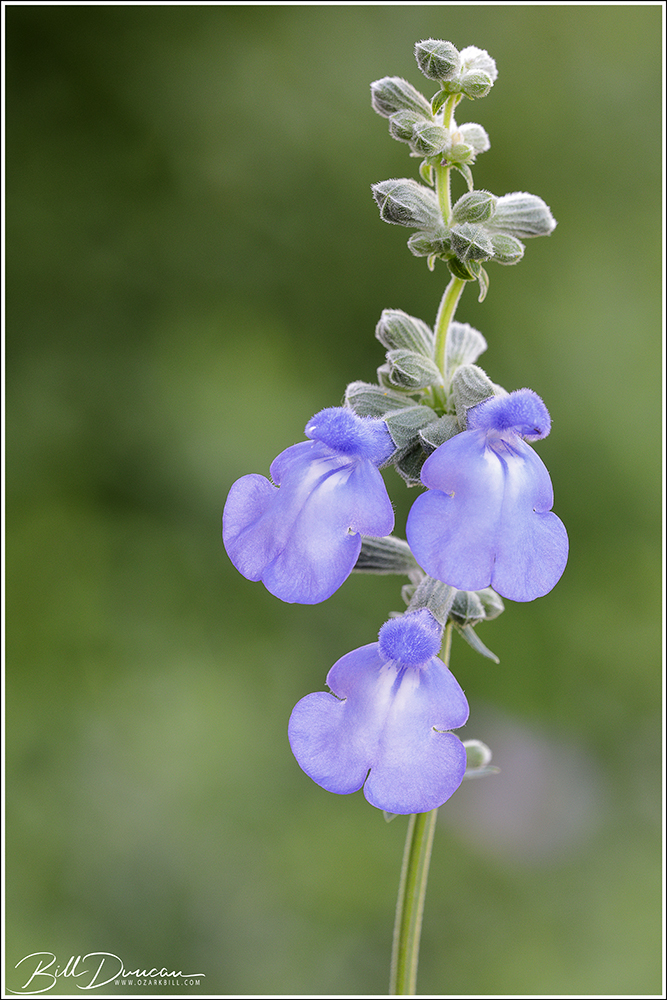
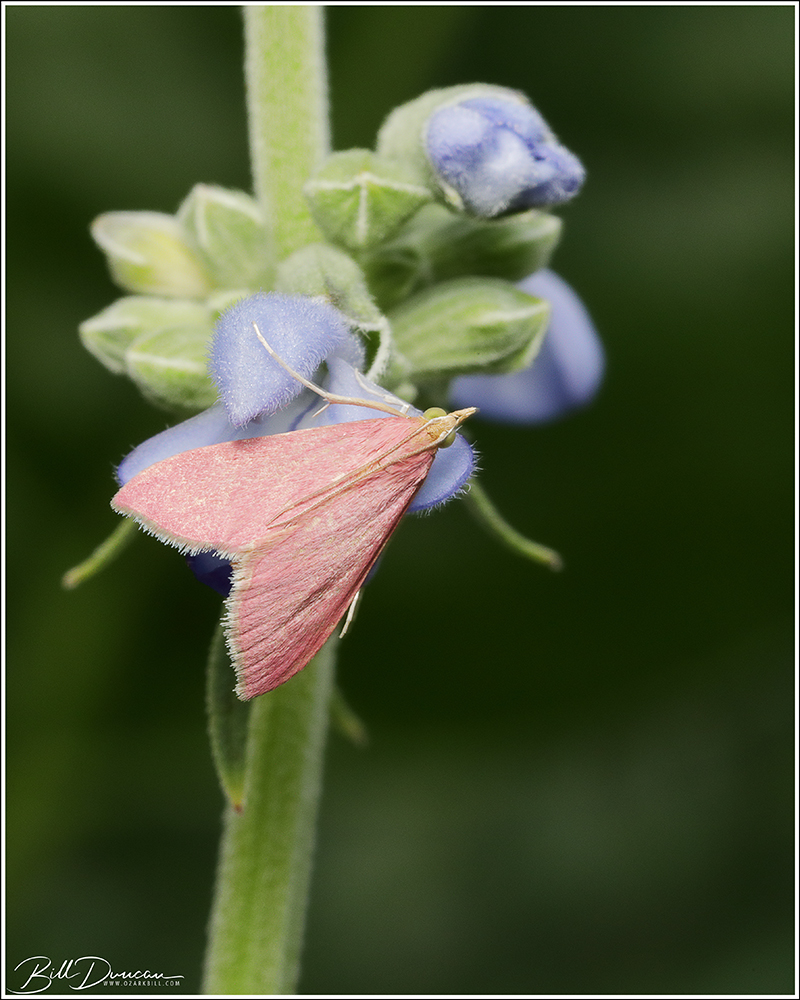
All three of the Salvia azurea I planted in the front bed did very well this year and even played host to an equally gorgeous moth, Pyrausta inornatalis.

Closeup of blooms of Salvia azurea (Lamiaceae).
The inornate pyrausta moth (Pyrausta inornatalis) uses members of the Salvia genus as host to raise its larvae.
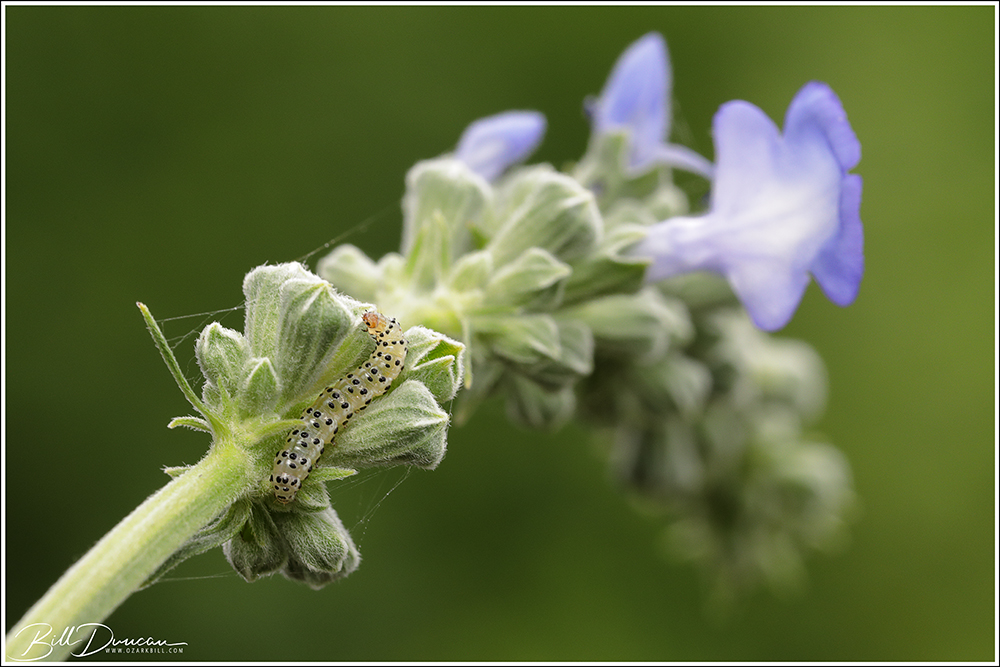
A week or so after I saw the first adult Pyrausta inornatalis, I found a few caterpillars of the same species.

Agalinis fasciculata (Fasciculate False Foxglove)

Agalinis fasciculata, known as the fasciculate false foxglove and beach false foxglove was one of the more fascinating and unexpected plants I became acquainted with this year. A member of the Orobanchaceae family, this species is an annual hemiparasitic plant that does well in poor and sandy soils. I photographed these plants at the Missouri Mines State Historic Site in St. Francois County.

The genus Agalinis comes from the Greek – agan, meaning ‘very’ and linon, refering to ‘flax’, apparently in reference to the similarity of the flowers to those of flax. The species and common names refer to the fasciculate, or bundled manner in which the leaves are attached to the stem – something I failed to take any photos of this year. In my defense, much of the stem and leaves of these plants in mid-September were beginning to senesce and were not very photogenic.

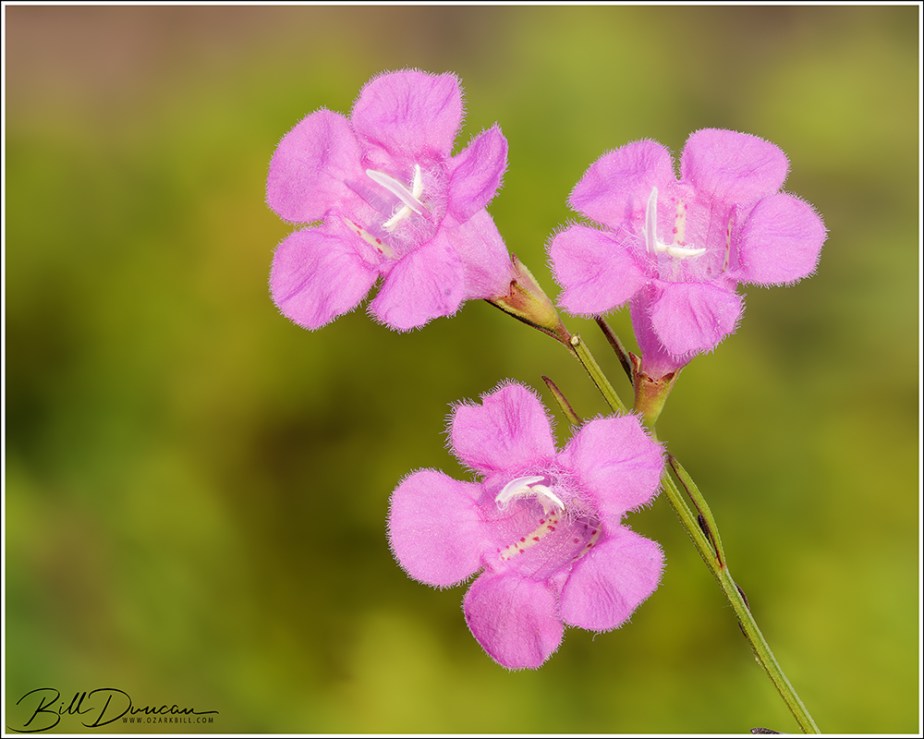
Agalinis fasciculata (Fasciculate False Foxglove) in glorious bloom at Missouri Mines State Historic Site.
Many species of bees and flies like this syrphid fly act as pollinators of Agalinis fasciculata.
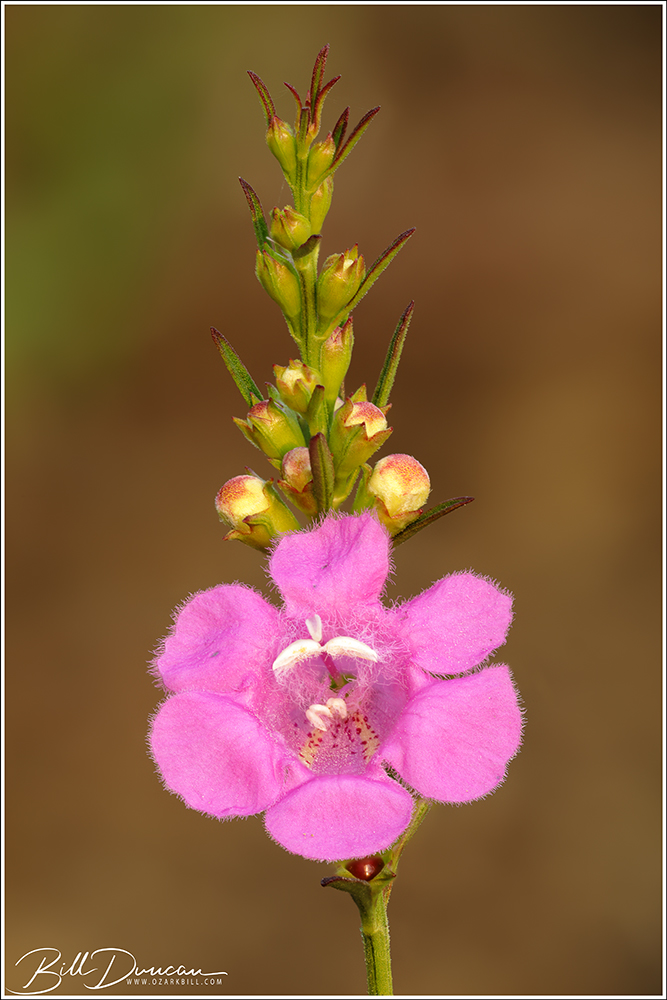
A rare six-lobed corolla of Agalinis fasciculata. This was the only six-lobed flower I found among hundreds I observed on this visit.

Photographic Observations of a Communal Nesting Sweat Bee (Agapostemon virescens)

For the past few years I have noticed a good number of native bee nest holes along exposed sections of bare soil at one of my favorite hiking and nature observation sites – August G. Beckemeier Conservation Area in St. Louis Co., MO. This past spring I finally decided to make this a project and set about a quest to make some images of these gals provisioning their nests. As usual, I wound up learning along the way.

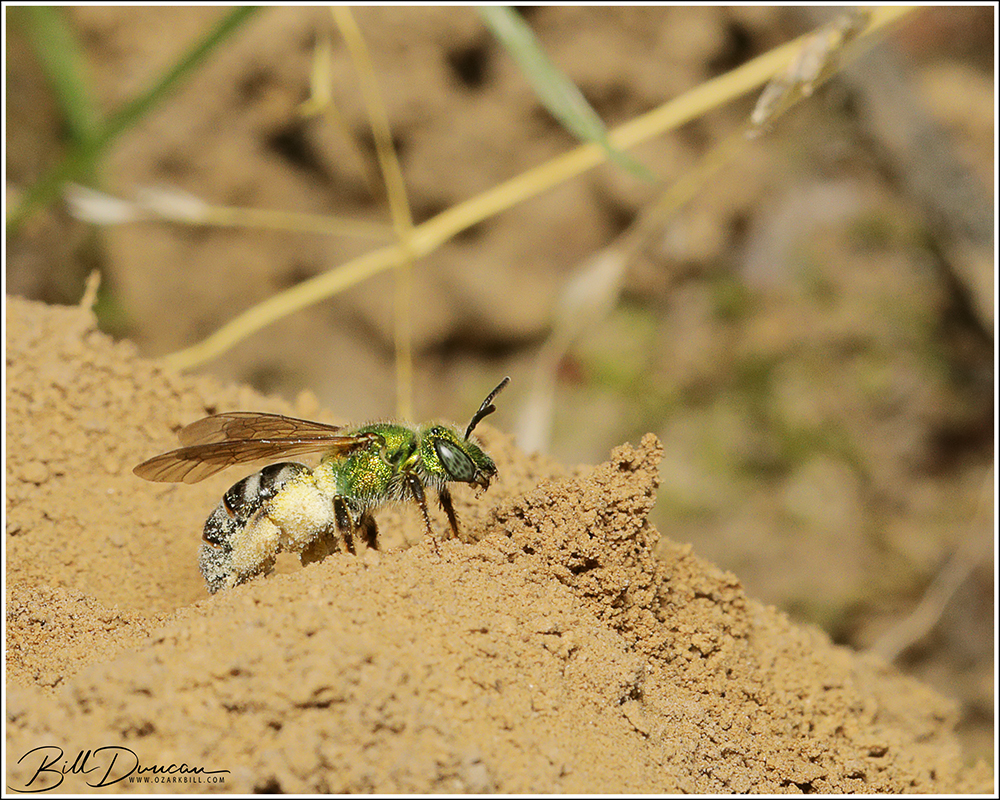
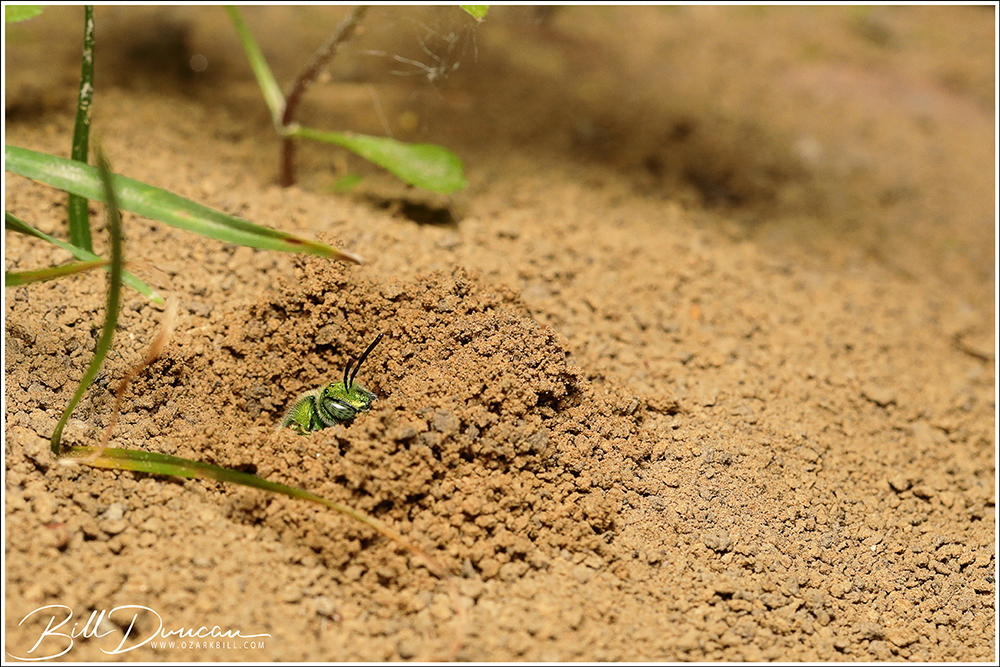
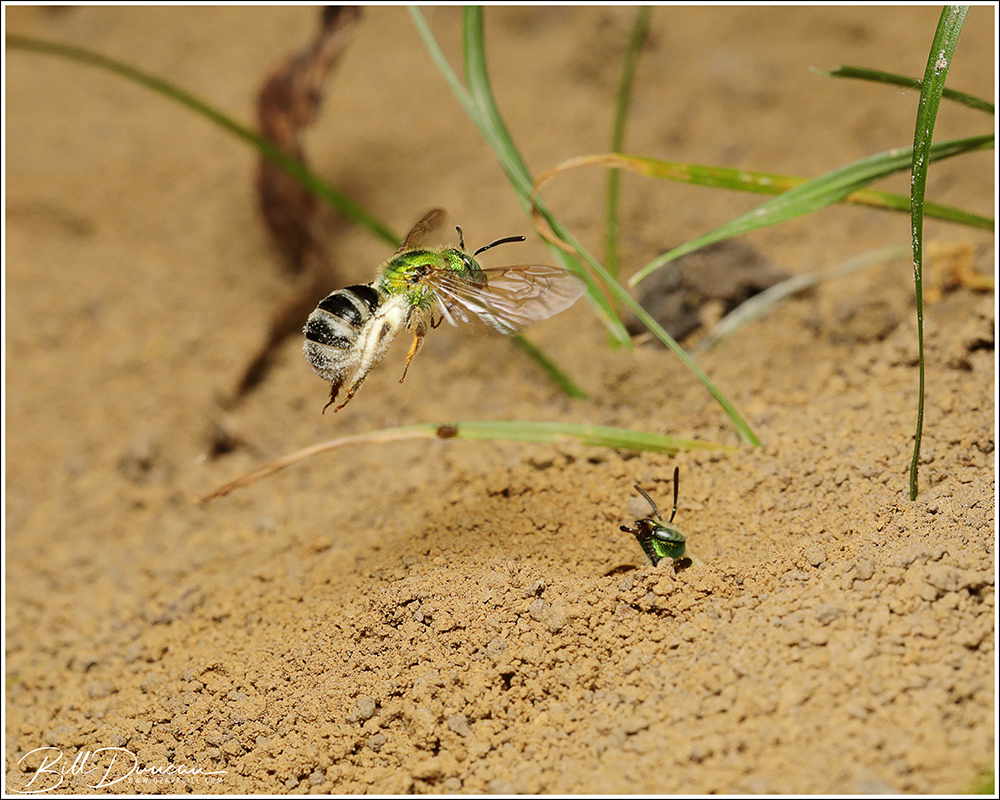
An Agapostemon virescens pauses at the entrance of the largest of the communal nest entrances I observed. It is impossible for me to accurately count the number of females using this ~ 10 cm tall conical entrance, but I observed six individuals at one time on or hovering above the entrance.

As is commonly known, many of our native bees are solitary and nest without close contact or cooperation in regards to conspecifics. At the opposite side of this spectrum of sociality in the Hymenoptera are most species of bumble bees and the honeybee. These bees are considered truly social, or, eusocial. The characteristics necessary to be considered a eusocial species are 1) cooperative care of offspring of others within the colony, 2) overlapping generations within a colony of adults, and 3) a division of labor into reproductive and non-reproductive groups. Many of our bee species lie somewhere between these two extremes. The bee of focus here, Agapostemon virescens, lies early in the area we call being presocial, aka parasocial.

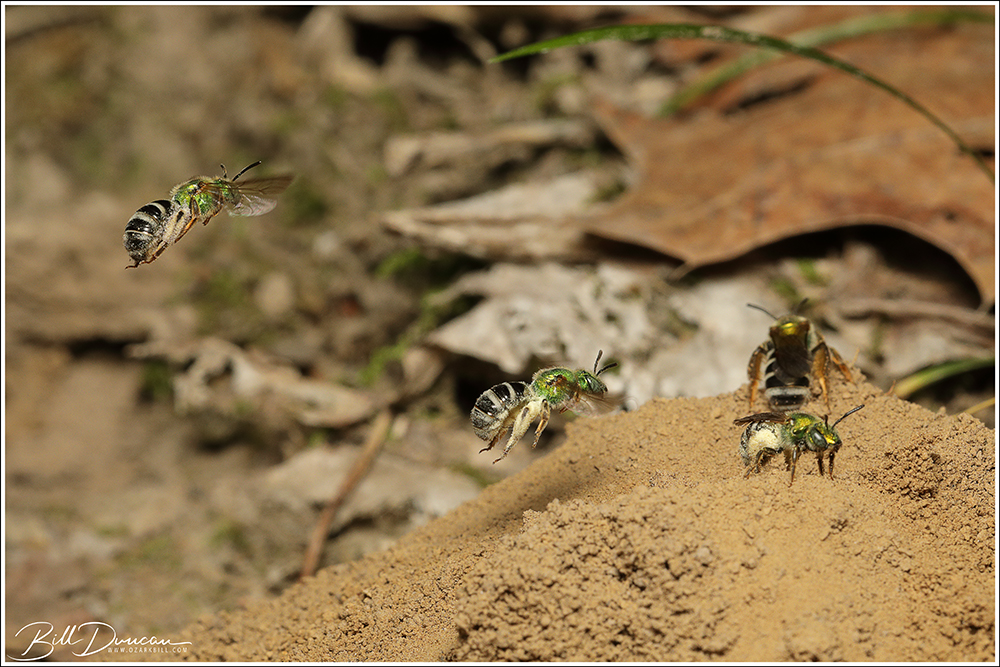
Two Agapostemon virescens females exiting a communal nest entrance having dropped off their loads into their individual cells.

Let’s clarify the differences between a presocial species such as A. virescens and the eusocial honeybee. The honeybee shows all three necessary characteristics of a eusocial species. The individual workers obviously care for brood that are not their own – they don’t even have offspring of their own, instead spending much of their lives caring for the offspring of their queen (sisters). They have multiple overlapping generations within the hive in a particular season, as well as across multiple seasons and as just mentioned, there is a division of labor into reproductive and non-reproductive castes. A. virescens on the other hand, is not nearly as cooperative. Individuals of this species share basically just a front door to their brood chambers and nothing more. After entering the communal nest, each female builds their own brood sub-chamber cells and each provisions their own by processing pollen into cakes and leaving them in their respective brood chambers. There is no brood care after the egg is deposited and the sub-chamber sealed. The offspring then emerges later in the summer.

So, what are the pre-conditions necessary for the eventual development of more complicated forms of sociality, i.e. eusociality? Or more directly, what advantages are there in adopting more of a social lifestyle if we assume the starting point was a solitary existence? Scientists consider two important pre-conditions need be met for the evolution of eusociality. First, the species offspring must be altricial, or require a great amount of parental care in order to reach maturity. Second, there need be low reproductive success rates of solitary pairs that attempt to reproduce. Here is what is believed to be the primary driver that pushed A. virescens into this presocial condition.

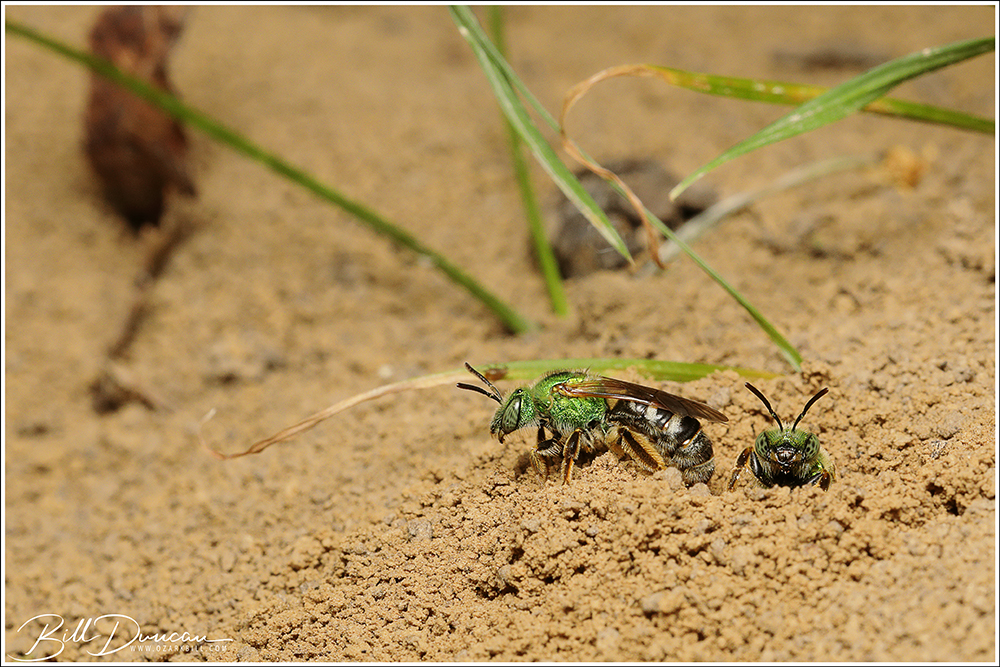
A sentry Agapostemon virescens stands guard at the communal nest entrance allowing only conspecifics to enter. This guarding of potential kleptoparastism is regarded as the primary benefit that led to communal nesting in this species.
This sentry Agapostemon virescens closely inspects an incoming conspecific. How it is determined who stands watch while its neighbors forage is not known.

Kleptoparasitism is where one animal takes advantage of the hard work of another by taking their prey or collected foods. In this case, we are primarily concerned with the large group of bees known as cuckoo bees. Kleptoparasitism has evolved numerous times in the Hymenoptera and cuckoo bees lay their egg on or near the host’s provisions. The parasite will hatch first and eat the host’s pollen and will often kill and eat the host’s larvae as well. With such an obviously successful reproductive strategy, it should come as no surprise that there would be a strong selective advantage of finding ways to thwart these parasites. In the case of A. virescens, evidence suggests that by communal living as described here, the rate of kleptoparasitism is much lower when compared to related species that have the completely solitary reproductive strategy.

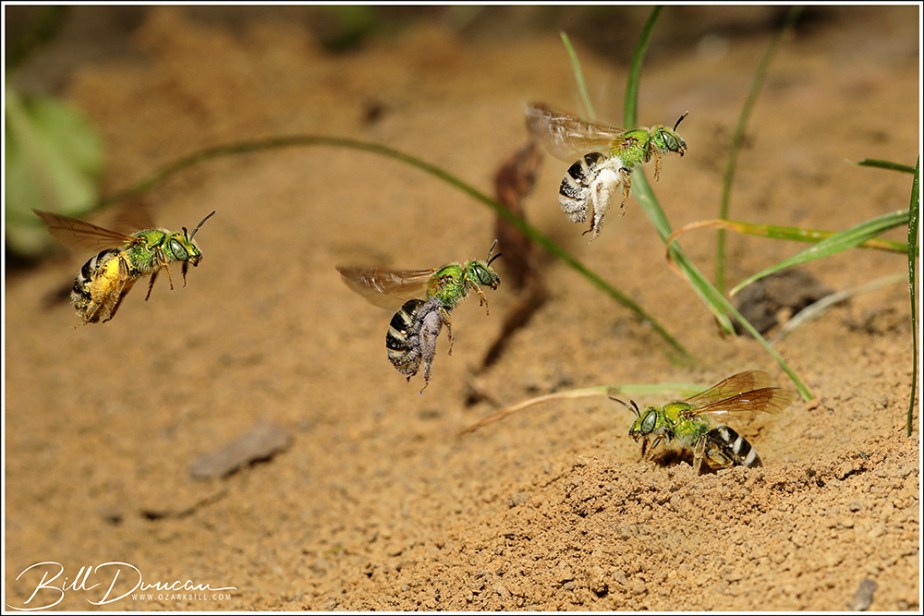
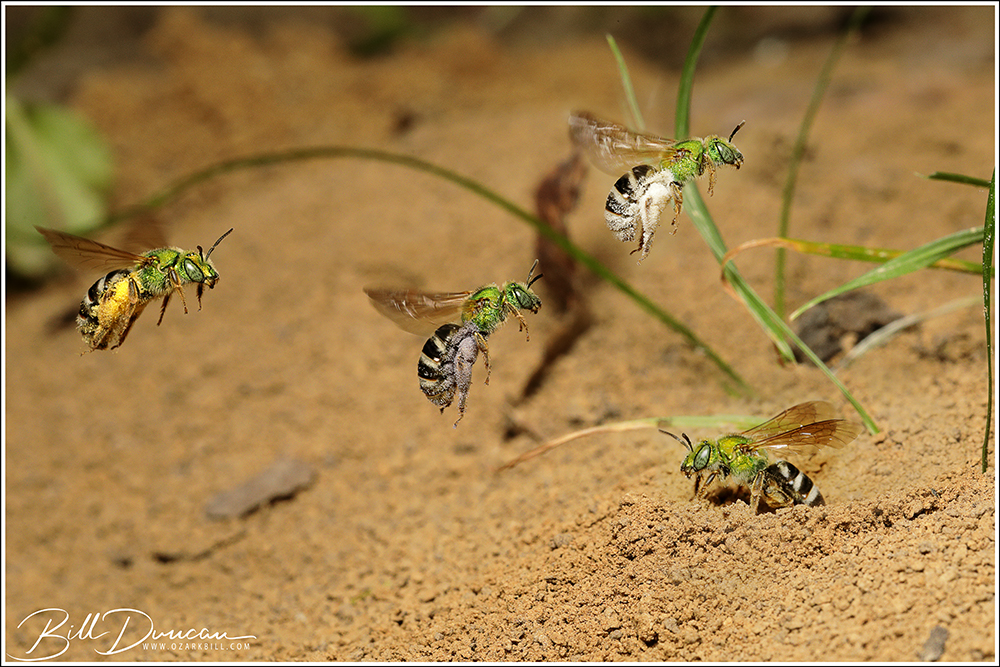
A busy day of bringing in pollen provisions for these Agapostemon virescens sweat bees.

I guess the obvious next question is how in the world could eusociality evolve from this state? This is a fascinating story that involves terms like kin selection, altruism and haplodiploidy. It also involves a good deal of math and explanation from some of the greatest evolutionary thinkers since the time of Darwin (read anything by William D. Hamilton for example). It is also well out of the scope of this piece. But, I hope it is clear that before getting near the high rung of eusociality on this ladder, that a small first step like seen in this example would be necessary.

Although Agapostemon virescens sweat bees are communal nesters, this photo gives a clue that they are not cooperative foragers like the honeybee. Each of the three returning females is carrying different colored pollen, indicating different pollen source plants for each.

I hope I got most of this correct enough. It’s been a long time since I took Zuleyma Tang-Martinez’s Evolution of Animal Sociality class at University, which I thoroughly enjoyed. Please feel free to leave a comment to correct or clarify or ask a question.

Much of what I covered here and a lot more can be found in Malte Andersson’s The evolution of eusociality (Ann. Rev. Ecol. Syst. 1984. 15:165-89

The evolution of Eusociality