
Asclepias quadrifolia (fourleaf milkweed)
"What a thousand acres of Silphiums looked like when they tickled the bellies of the buffalo is a question never again to be answered, and perhaps not even asked." -Aldo Leopold
Here is a perfect example of ‘why native plants?’ in the home garden. This is the first year of our new native flower garden in front of our new house. This spring we spent a good deal of money and time getting the old exotic evergreen bushes out of the beds and planting a new garden consisting of mostly native forbs and a couple patches of grasses. After a long and cool spring, we are finally getting some heat units on these mostly gladey and xeric species and a few are starting to respond nicely.

During my daily deadheading of some flowering Coreopsis and other asters, I notice new things from time to time. The arthropods are beginning to come. Since the original razing of the land that this subdivision sets on some 45+ years ago, these plant and insect communities have undoubtedly been rare. While my 100 square feet of natives won’t likely make a big difference, hopefully more and more of us will ‘go native’

About a week ago, I noticed these golden drops on the leaf of a Liatris spicata (marsh blazing star). After taking a few photos in situ, I decided to collect the leaf and see what the hatch might be. I figured it was a hemipteran of some sort and after a little research, I narrowed it down to the Coreidae family, or ‘leaf-footed bugs.’ If you can identify these to any degree of higher specificity, please let me know.

After three or four days in a jar, all of a sudden the leaf was alive with the movement of spikey mechanisms. I took a few photos on their cradle leaf, then moved a few to a Coreopsis sp. bloom. Afterwards, I let them go to feed as they like on our plants, maybe to see them another day.


-OZB
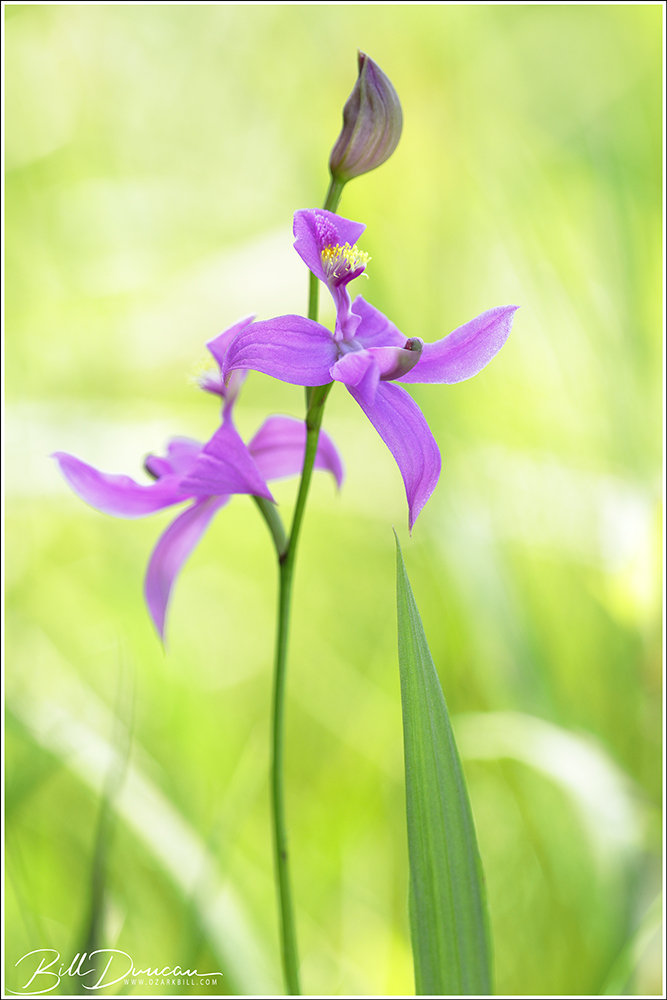
The second new “Missouri” orchid I came across on Casey’s and my trip through Arkansas in May was the Calopogon oklahomensis, the Oklahoma Grass Pink. This is a sister species to C. tuberosus, the Grass Pink, and likewise has the odd non-resupinate flower, meaning the flower pedicle does not twist and the lip is on the top side of the flower, an odd arrangement for orchids. Whereas C. tuberosus prefers wet feet and is typically found in fens, wet meadows and prairies, C. oklahomensis prefers drier feet and is found in more mesic prairies, savannas and open woods.

The orchids seen here were photographed in a prairie in Prairie County, AR. This location was a real treat, with hundreds of orchids and a variety of colorations. I wish we could have spent more time here photographing all the variations, but there were miles to be driven yet on this day.


-OZB
The Black-and-white Warbler (Mniotilta varia) is another weirdo in the Parulidae family. It is the only extant member of the genus, Mniotilta, and it definitely stands out against the other wood warblers that we find in Missouri. Whereas other warblers flit about the leaves at ends of branches, through bush or along forest floors, gleaning for arthropods, the Black-and-white Warbler finds another niche. It forages by hugging tree trunks and inner branches, much like a nuthatch or creeper. The interesting genus name apparently comes from another of this bird’s behaviors. This name comes from the Ancient Greek mnion, meaning “seaweed”, and tillo, “to pluck”. Apparently, Black-and-white Warblers strip mosses and reindeer lichens to line their nests, which they make in mature forests across much of eastern and central North America.


-OZB
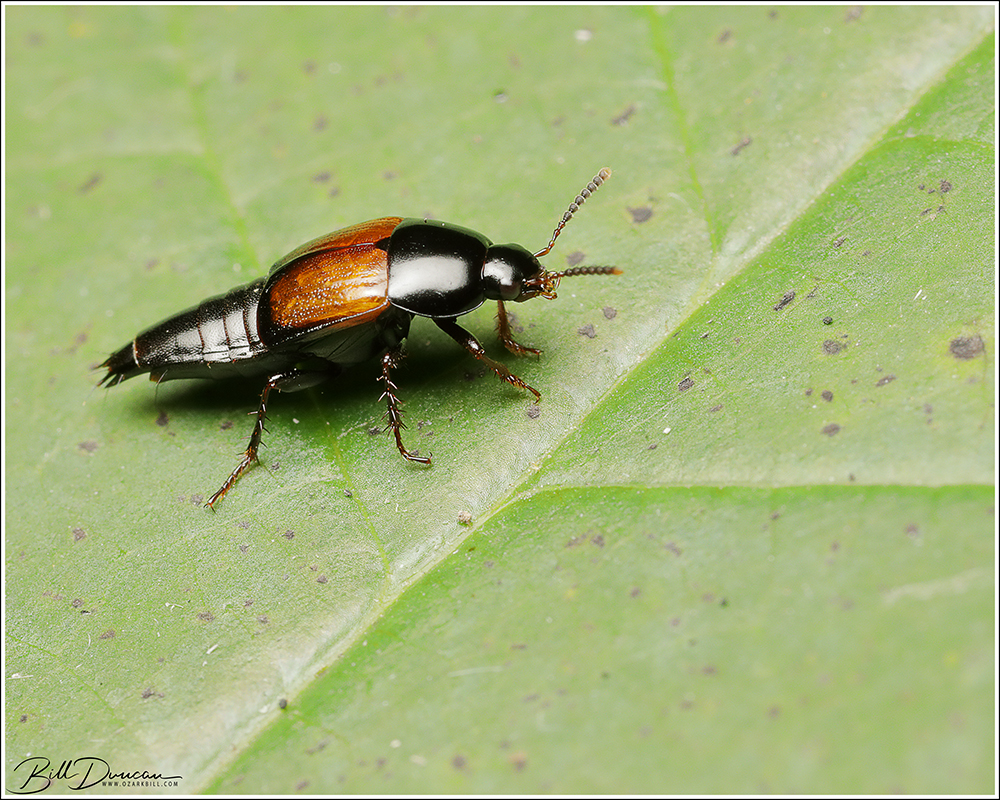
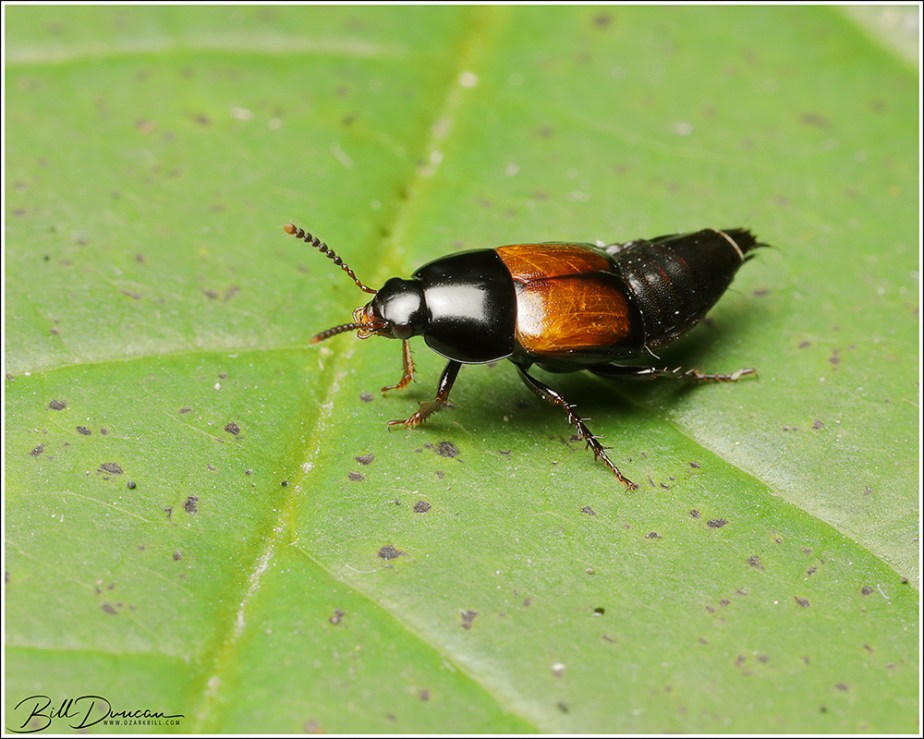
This Tachinus fimbriatus, a member of the rove beetle family, Staphylinidae, was found and photographed in September, 2020 at Babler State Park in St. Louis Co, MO. Some consider the Staphylinidae the largest family of animals in North America with close to 5,000 species described in more than 500 genera. Most rove beetles are carnivorous and feed primarily upon invertebrates. However, many feed on decaying vegetation, especially as larvae. This adorable beetle is believed to feed primarily on rotting mushrooms.

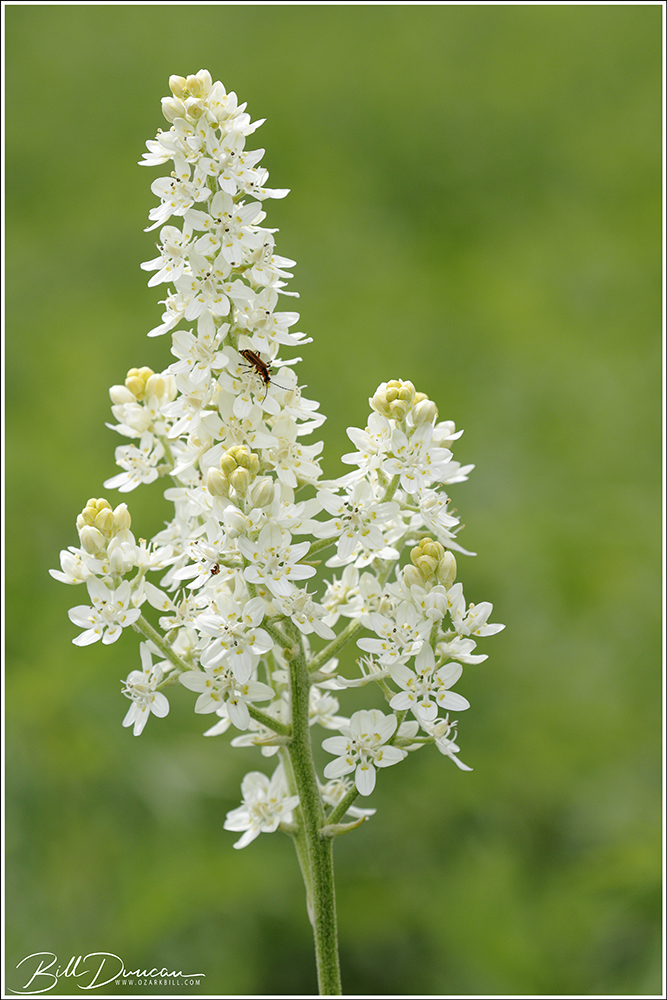
I still have quite a few from 2020 to share. These Melanthium virginicum were photographed a year ago this month at Helton Prairie Natural Area in Harrison County, MO.
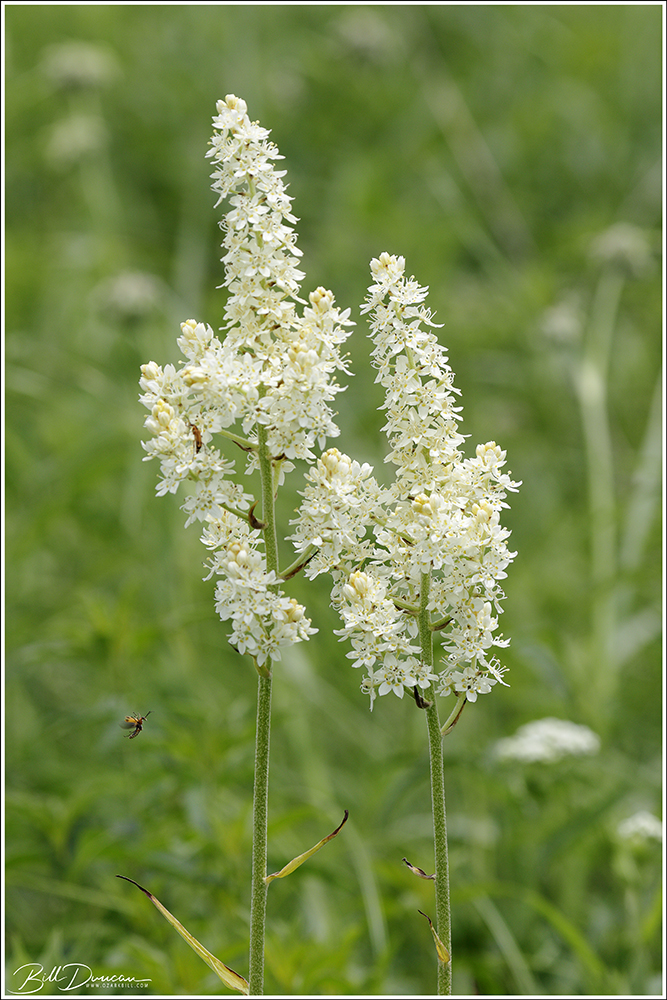
With a CC value of 9, this plant requires specific habitat of wet meadows, moist prairies, fens and acid seeps. With the loss of these habitat types, this plant has become rare in Missouri and Illinois. This plant is also toxic to mammalian herbivores. So, if you have the appropriate spot, this would be a great native perennial to plant in high deer pressure areas.

-OZB
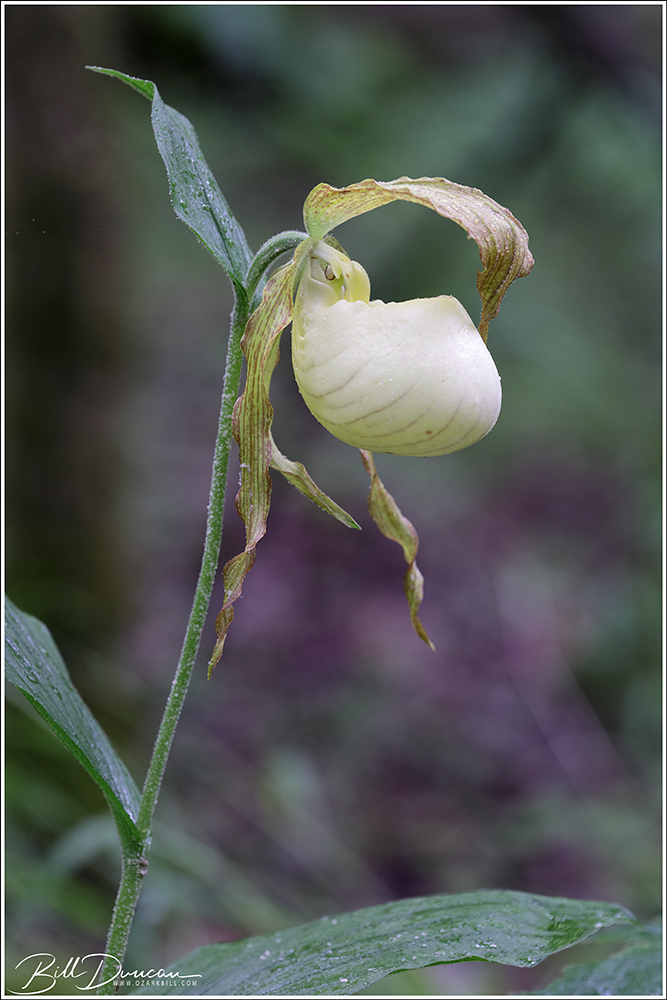
I have one more lady’s slipper orchid to share this year. I cannot count this one for my Missouri orchid list, but it is one hell of a slipper. The Kentucky lady’s slipper (Cypripedium kentuckiense) has the largest bloom of any in the Cypripedium genus and has nice diversity in colors and patterns. This is an orchid of the southeastern U.S. It has not yet been documented in Missouri, but can be found in the contiguous states of Arkansas, Tennessee, Kentucky and Oklahoma. Casey and I found these with some help in May in the Ouachita Mountains of Arkansas.


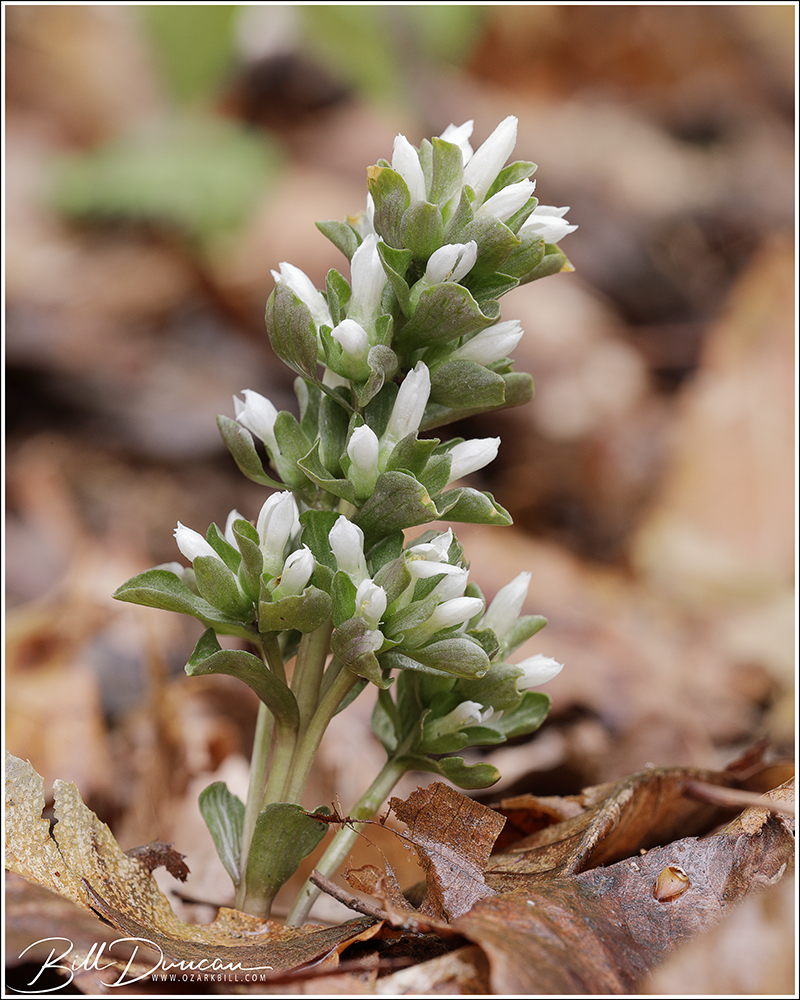
It’s not only orchids that I have had the pleasure getting to know during the past few years. Having new botanically-minded friends, I have been able to find and get to know a number of other interesting and sometimes quite rare plants found in other families. Obolaria virginica, known as Virginia pennywort or pennywort gentian, is indeed in the Gentianaceae family (gentians). It is ranked as S2 (imperiled) in Missouri, likely due to the small number of populations found here. This plant emerges very early and is much like a typical spring ephemeral. Like the coralroot orchids (Corallorhiza sp.), this plant is mycoheterotrophic, getting at least some of its nutrients by parasitizing microrrhizal fungi.

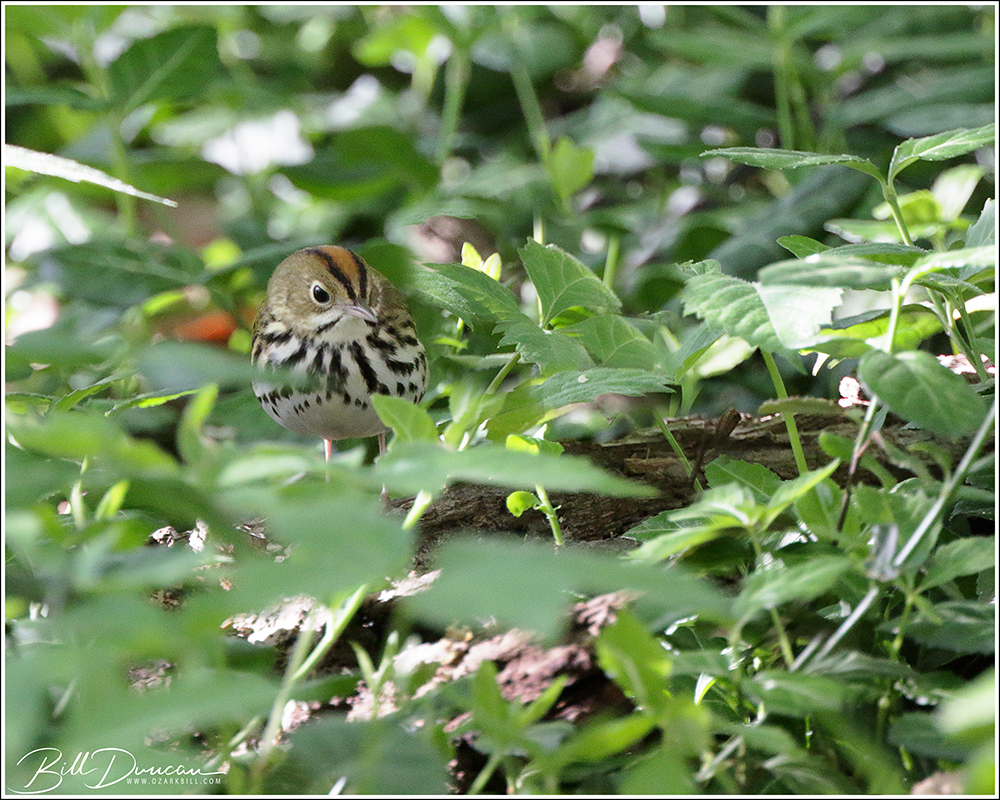
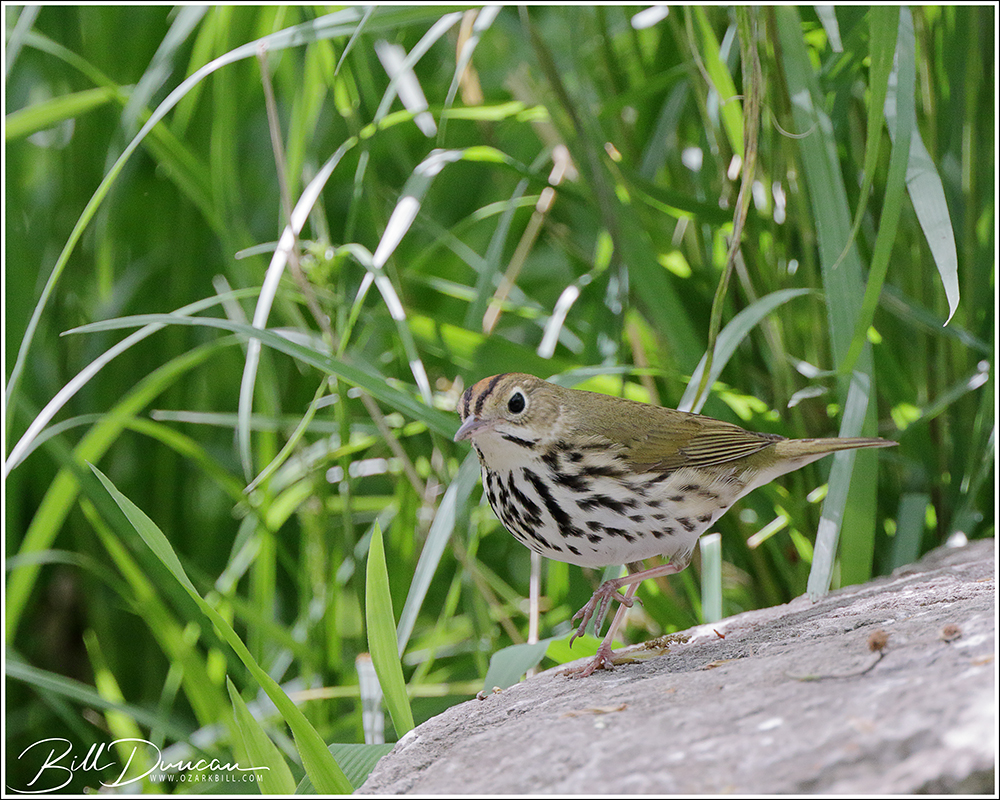
With the relatively recent removal of the Yellow-breasted Chat from the Parulidae, the title of the largest new world “wood warbler” may very well go to the Ovenbird, Seiurus aurocapilla. The Ovenbird is somewhat of a misfit itself. Seiurus is a monotypic genus, believed to have derived early in the evolution of the family. This pot-bellied, thrush-like bird nests and forages on the forest floor, getting its common name from its nest that supposedly resembles a Dutch oven.
Although the Ovenbird can be easily heard through much of the summer in any large-track deciduous forest, getting good looks and photographs is easiest by waiting to spot them in a migration trap like Tower Grove Park in St. Louis City where these photos were taken.
There is a singer everyone has heard,
Loud, a mid-summer and a mid-wood bird,
Who makes the solid tree trunks sound again.
He says that leaves are old and that for flowers
Mid-summer is to spring as one to ten.
He says the early petal-fall is past
When pear and cherry bloom went down in showers
On sunny days a moment overcast;
And comes that other fall we name the fall.
He says the highway dust is over all.
The bird would cease and be as other birds
But that he knows in singing not to sing.
The question that he frames in all but words
Is what to make of a diminished thing.
“The Ovenbird”
Robert Frost
-OZB

I have one more lady’s slipper we found in May to share. Cypripedium candidum or small white lady’s slipper requires moist and full-sun exposures, such as may be found in wet prairies, meadows, fens and forest edges. The reason for its rare status (likely found on fewer than five locations in the state) is due to habitat disturbance and orchid poachers digging them up for horticultural uses.

This species can hybridize with C. parviflorum (yellow lady’s slipper) when found in close proximity. This can potentially be a conservation concern in some states, but to my knowledge, there are no close associations between these two species in Missouri.

It was wonderful finding this and the other lady’s slippers in the state this year. I’m hoping this one can still be found here far into the future.

–OZB




 A Thousand Acres of Silphiums