
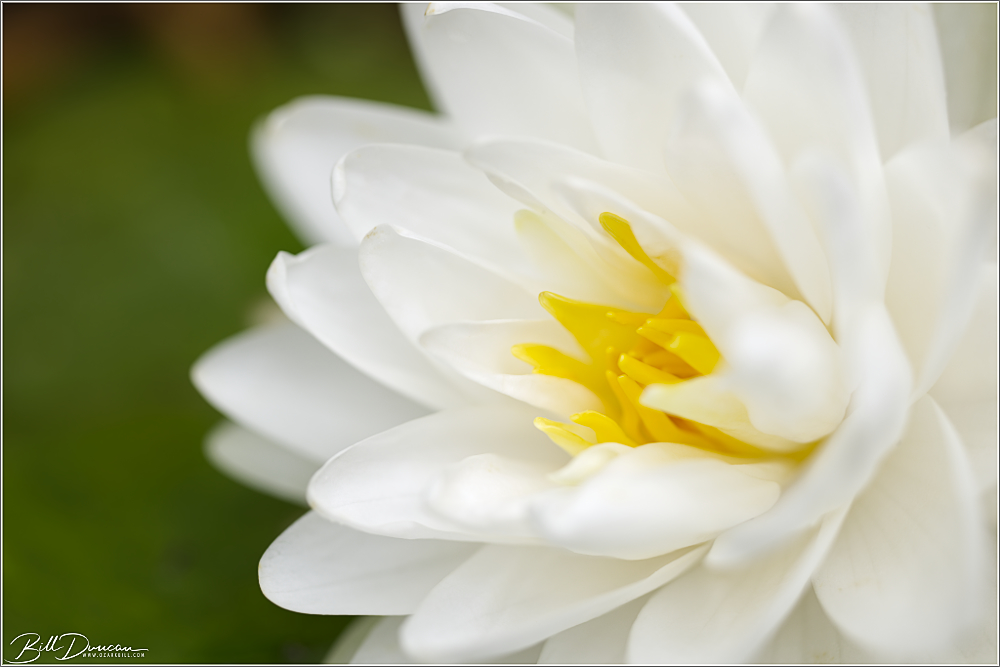
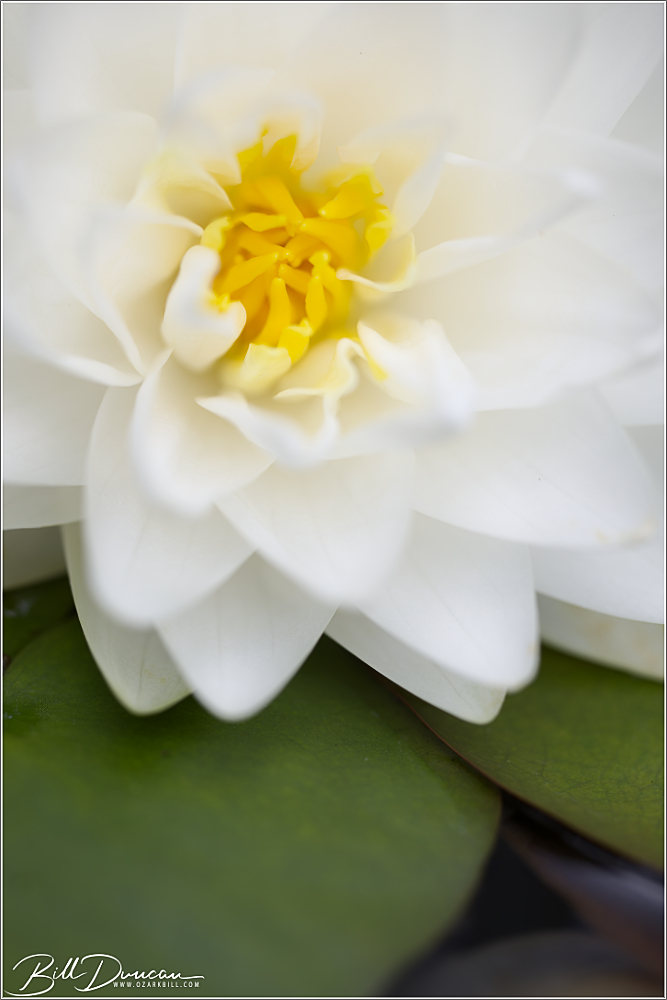

"What a thousand acres of Silphiums looked like when they tickled the bellies of the buffalo is a question never again to be answered, and perhaps not even asked." -Aldo Leopold
Tonight’s caterpillar is a member of the Crambidae family – Saucrobotys futilalis, or the “dogbane saucrobotys moth.” The host for this species is the namesake dogbane (Apocynum species) and they can also feed on milkweeds (Asclepias species). I found these pretty easy to find in mid to late July at Don Robinson State Park by simply looking for their web nests within dogbane plants. There were usually several cats within each nest and a little beating of the plants could get quite a few tumbling out.
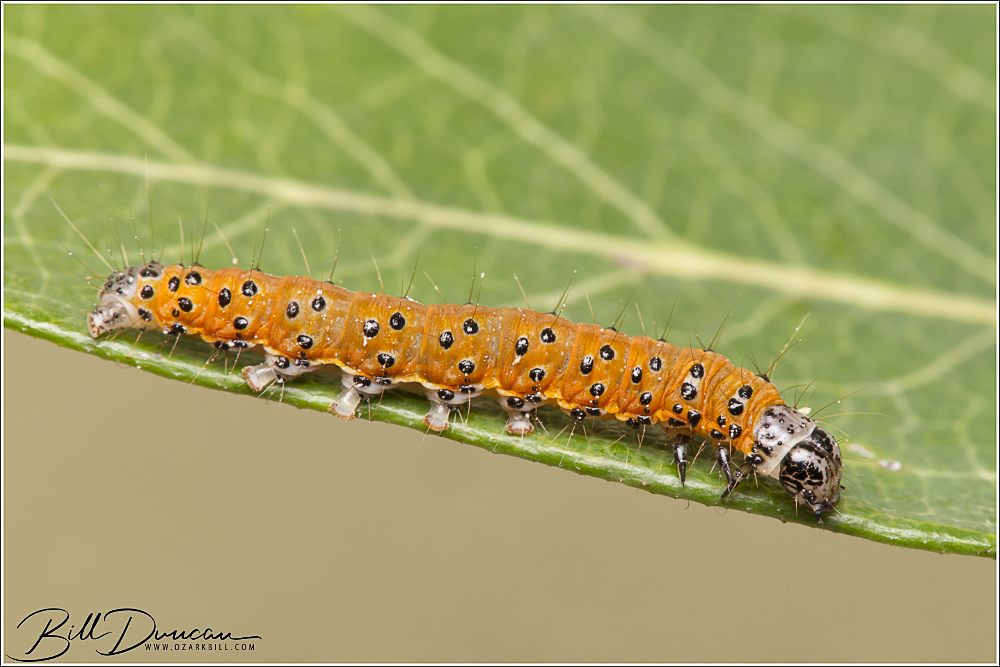
I find the Latin binomial for this one to be pretty entertaining. Saucro, coming from the Greek for graceful, pretty and beauty, along with botys, the genus to which this moth was originally ascribed. While, on the other hand, the specific futilalis seems to come from the Latin futilis, meaning brittle, vain, or worthless. Taxonomic nomenclature can be confusing and is often steeped in history (this species was described in 1863), but I find this grouping to be pretty entertaining.

It’s been a couple years since I’ve been able to add another new orchid species to my Missouri photography list. I am now down to only two remaining orchids on my list of 36 forms that can be found in the Show-me State.
Although Dactylorhiza viridis has one of the largest global ranges of any orchid species – ranging across Eurasia, Canada and the U.S., it is very uncommon in Missouri and surrounding states. Many thanks to my friends who helped get me on this small population that was within a couple hours drive from St. Louis.
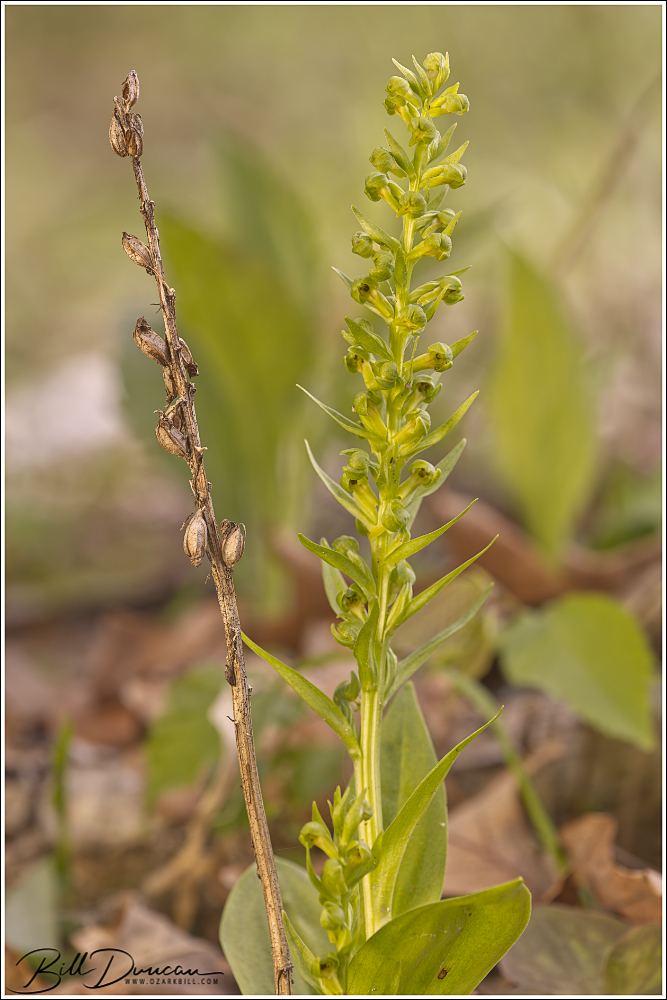
Here are a couple of closeups of the flowers of this interesting little orchid.


During the first couple of seasons in our front-yard wildflower garden, the deer took a liking to this Manfreda virginica (F. Asparagaceae). This prompted me to start spraying its foliage with deer deterrent last year. This had the desired effect and I was happy to see and photograph the blooms of this plant, which are primarily pollinated by large moths such as the sphinx moths. The blooms will also be visited by Ruby-throated Hummingbirds.

This species is typically found in dry, rocky and alkali soils, so I was not sure how it would like the clay pan in our yard. I’m happy to say that it is putting on new leaves this spring. I’ve lost a few plants in the garden during the past winter and I’m glad to see this one coming back.

Virginia snakeroot (Endodeca serpentaria) is an easily overlooked cousin of the much more familiar Dutchman’s pipevine (Aristolochia macrophylla). Belonging to the Aristolochiaceae (birthwort) family, both species host the pipevine swallowtail butterfly. The Aristolochiaceae family is composed primarily of tropical woody vining species. Virginia snakeroot is an exception in the family, being neither tropical, woody nor a vine. This species is a low and slow growing herbaceous perennial native to Missouri and is a really nice find.


A lot of folks don’t seem to like attempting to identify plants in the Asteraceae family, more commonly known as the asters. This is a very large family of plants and there are definitely many difficult cases out there in terms of identifying. However, with a good dichotomous key, a hand lens and some patience, I think most anyone can have success in learning some of these interesting plants. The key is learning what characteristics are “key.” The group I am featuring here are three members of the Symphyotrichum genus, often referred to as the “new world asters.” Following recent taxonomic revisions, the genus now holds more than 100 species, of which about 25 can be found in Missouri. Most ray flowers are light blue to violet but some can be white or pink as well.
Photographs can be useful when attempting to identify the new world asters. These can be referred to when attempting identification on your own or sending to someone with more expertise on the group. Knowing what to photograph is important.

First, both sides of the flower, referred to as the capitulum (composite inflorescence) in the asters, is important in making an identification. Photograph the ray and disk florets along with the involucre from the underside should be photographed. The involucre is a protective structure composed of a group of phyllaries (bracts) that can be beneficial in discerning between species. Asters in this group can be distinguished from one another by the number of ray florets per capitulum and the size of the flowerheads

Two other photographs you will want to take when attempting to ID the Symphyotrichum are of the plant’s growth habit and the leaves – particularly details of how the leaves are attached to the stems. There are usually key differences here that will be useful when making an identification. Unfortunately, I neglected to take closeups of the leaves while working with these three plants in the front yard this past autumn.
The next species I would like to feature is the spectacular Symphyotrichum oblongifolium, or “aromatic aster.” These plants are quite impressive. Pinch them back once sometime in the month of June and they will bush out, forming impressive globes of violet blooms. The accompanying habit photos are from our front bed and is only three plants! Although these plants create enormous amounts of blooms, I find that it is almost too late in the year. Most of the blooms don’t open until well into October. During this time, most of the pollinators that visited these blooms were honey bees, at least in my yard. I think most of the native pollinators had finished their season by this point.
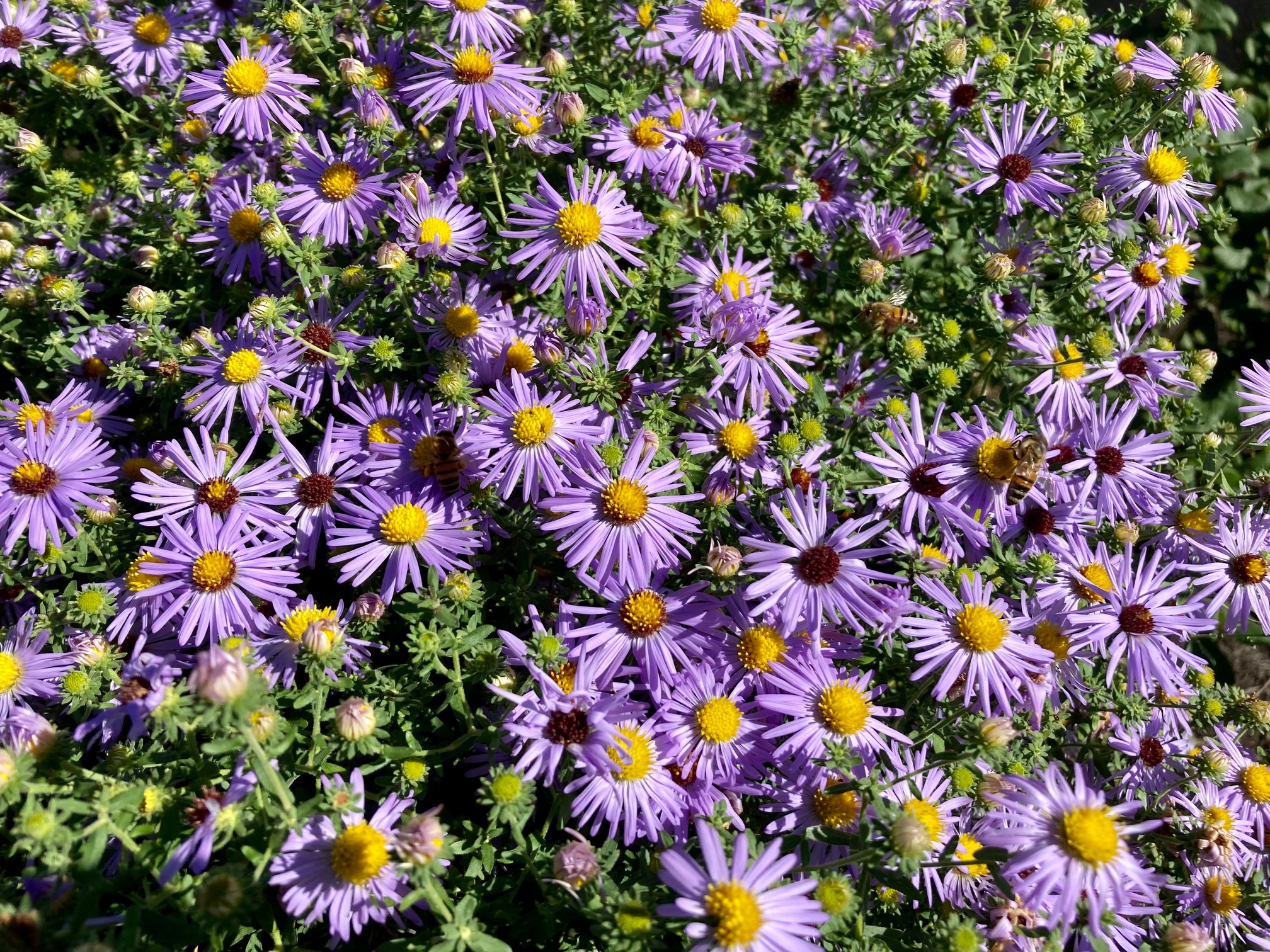
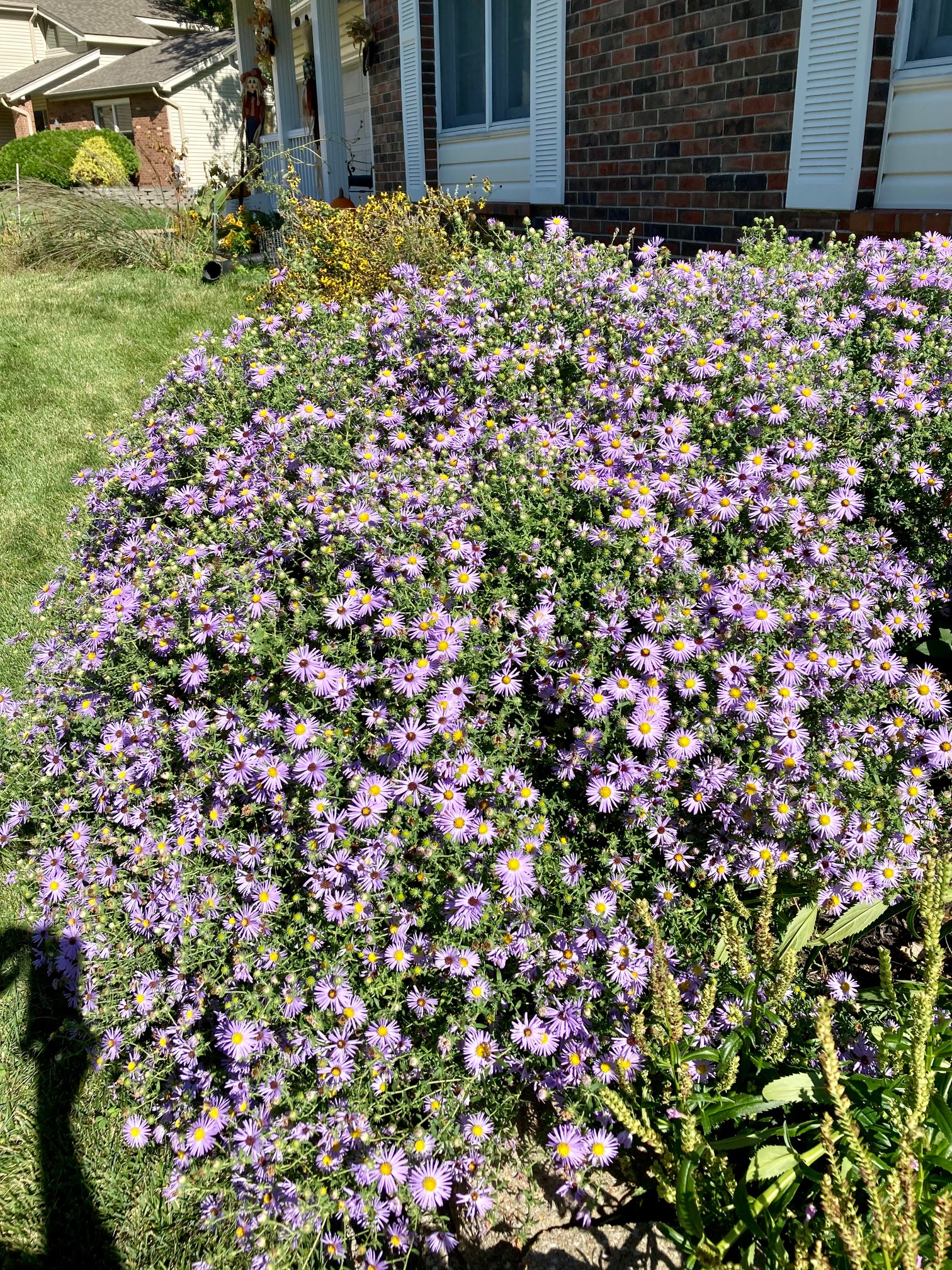
The above images show the growth habit at flowering of Symphyotrichum oblongifolium.
I hope the next couple of images exemplifies how the phyllaries are important diagnostically for identifying these plants whose flowers look very similar when viewed head-on.
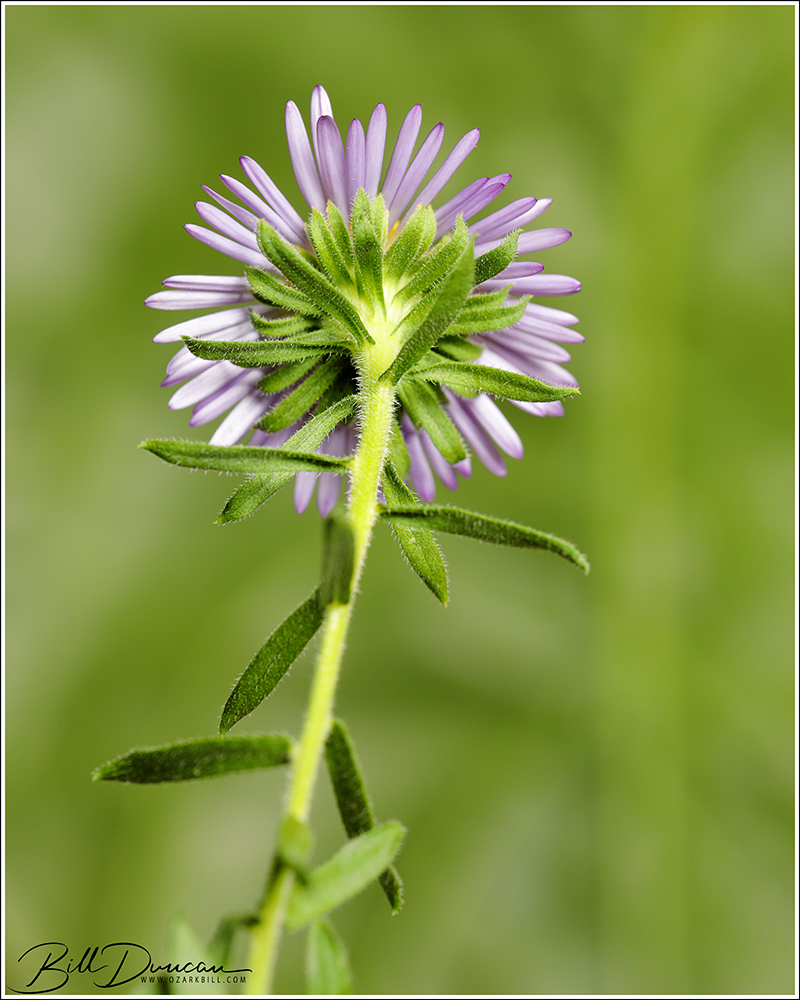

The capitulum of Symphyotrichum oblongifolium. Notice how strikingly different the involucre is compared to S. pattens.
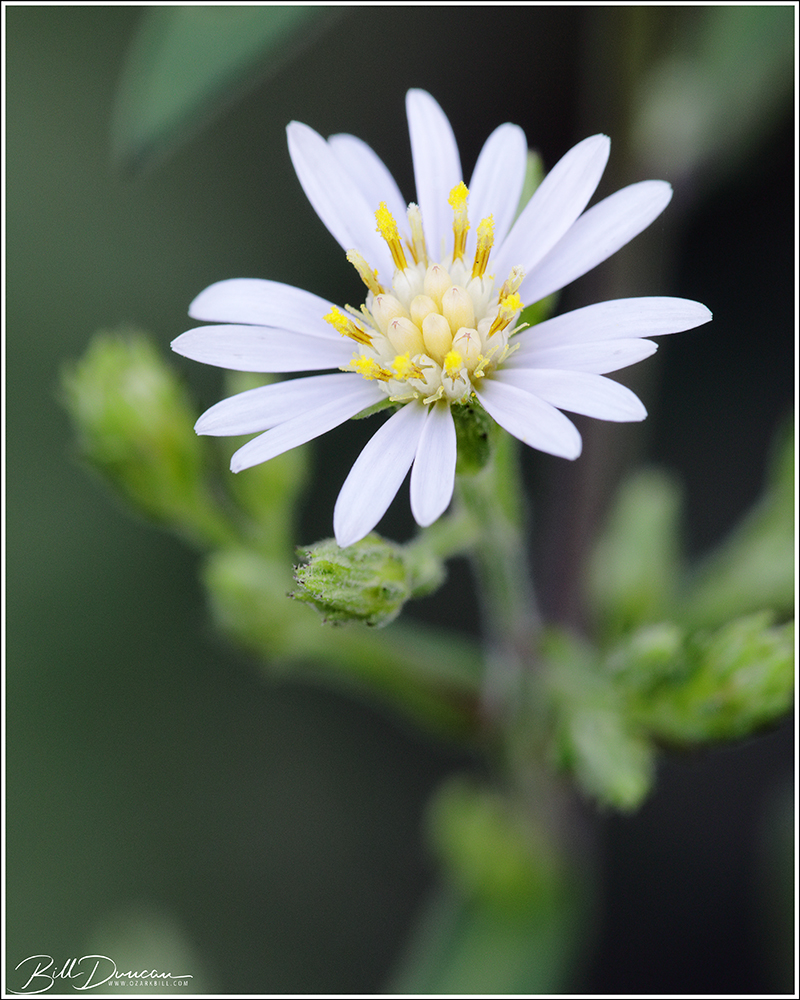
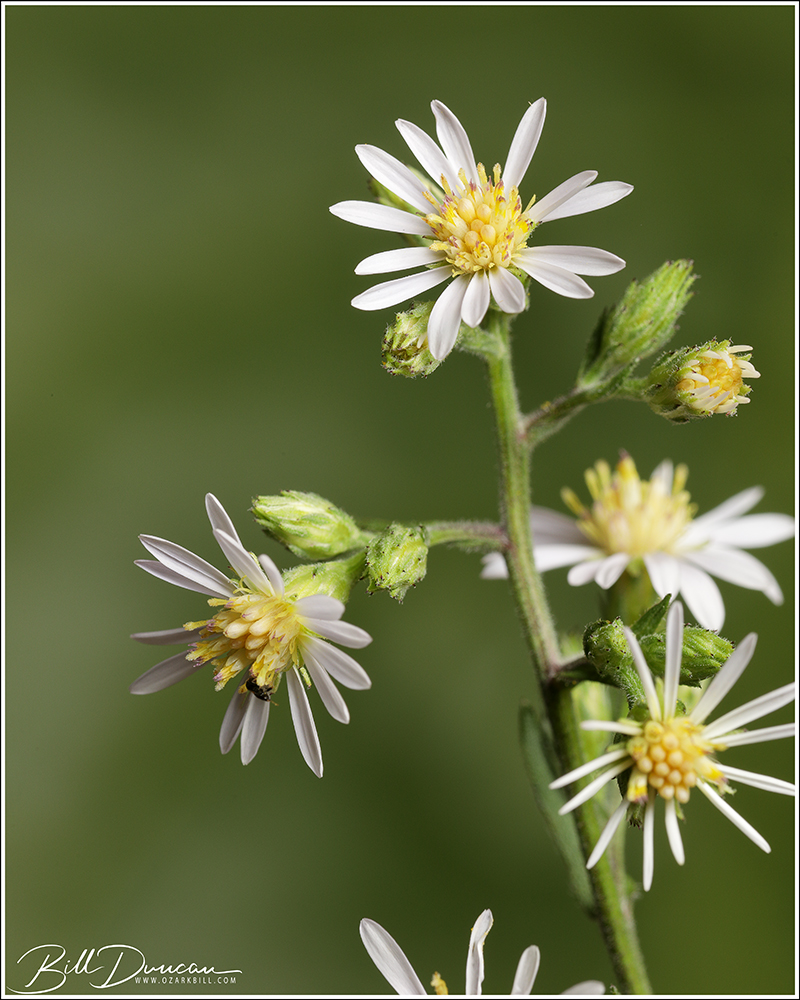
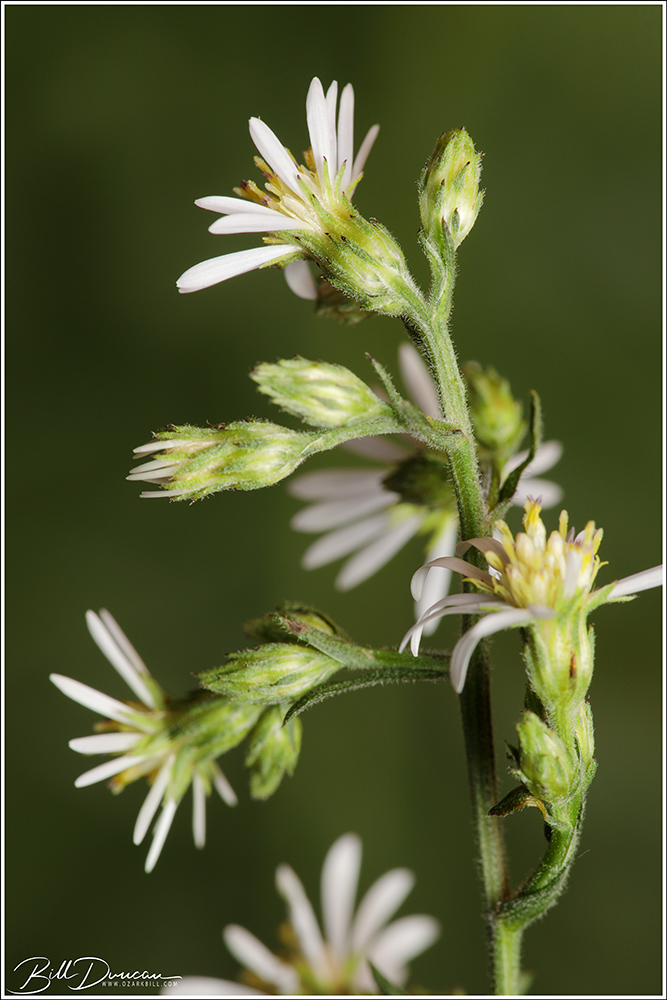
Finally, the third member of this genus I have tried in the front yard beds is Symphyotrichum drummondii (Drummond’s aster). This one looks a lot different from the other two, not only in the characteristics of the capitulum, but in its growth habit as well. This is much more of a small, dainty plant that is found in open woodlands and savannahs in the northern sections of Missouri.

Tonight I’m sharing a couple of fascinating fruits that Pete and found on a late October hike from last year. Both of these plants are in the bittersweet (Celastraceae) family.
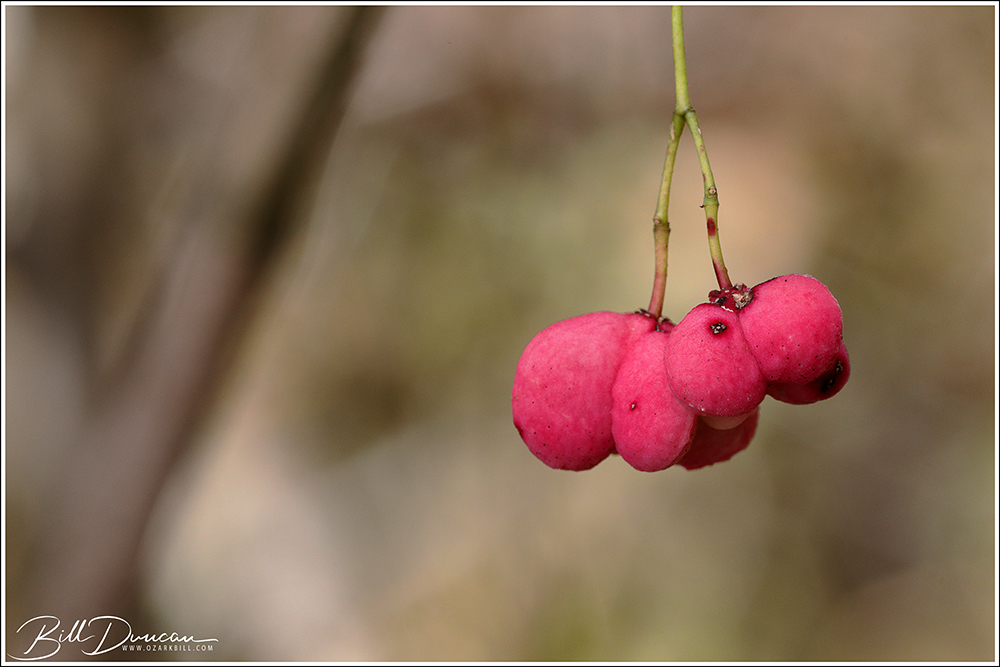
First up is Euonymus atropurpureus, or the eastern wahoo. This is a relative of the strawberry bush but is much more widespread across the state. I put one of these in the yard this past fall and am hoping it will establish itself. Like the strawberry bush, this fruit will split in autumn or winter, exposing four scarlet seeds.
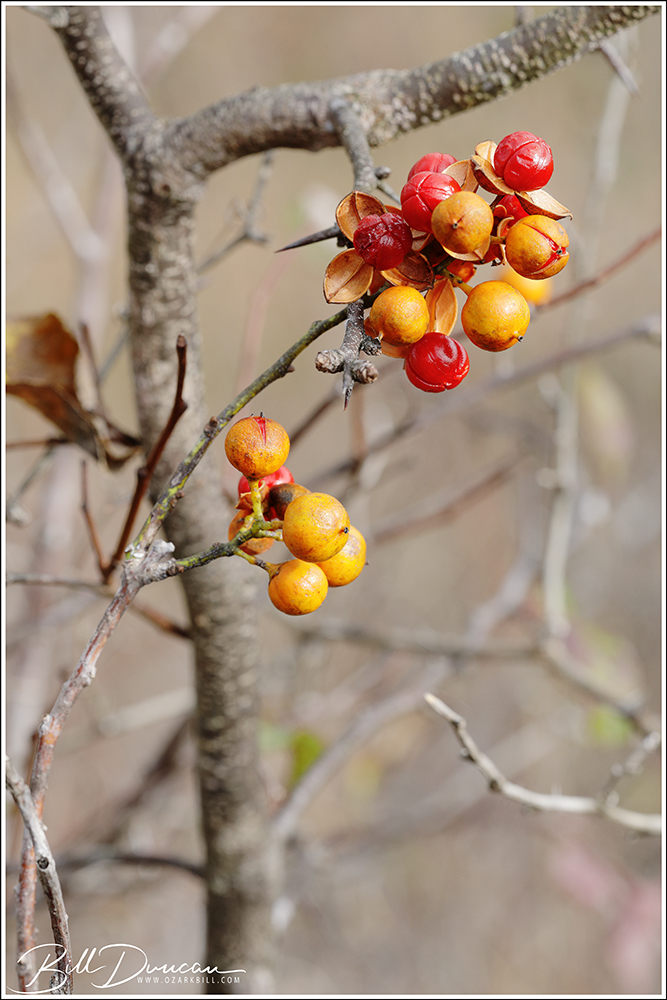
Next up is Celastrus scandens (American bittersweet), a twinning woody vine that sometimes behaves as a bush. Pete and I enjoyed a few of these sweet, intensely-red fruits. Thankfully, we did not enjoy too many as I read afterwards that these are mildly toxic if eaten. Neither of us felt any ill effects afterwards.
-Ozark Bill

Ranked as an S2 (imperiled) species of conservation concern in Missouri, Euonymus americanus is a striking plant in more than one season. Where it grows in the Show Me State it is always threatened by white-tailed deer who absolutely love our native Euonymus spp. In areas with overpopulation of deer, the plant has been removed from the landscape. This past autumn, I planted one in the fenced-in portion of our backyard in the remaining humus and decay of an old ash stump. I’m hoping the soil here will be rich enough for its liking and that the deer will not discover it.

A couple of interesting Missouri Natives from a monogeneric family – the Hydroleaceae. The genus, Hydrolea, comes from the Greek hydor (water) and eleia (olive), referring to the wet habitats these plants prefer (they definitely like their feet wet and can withstand long periods of partial to complete submersion) and their leaves resemblance to the leaves of the olive. The flowers of these plants are downright stunning – these shades of blue are pretty rare in the flora of Missouri.


 A Thousand Acres of Silphiums