"What a thousand acres of Silphiums looked like when they tickled the bellies of the buffalo is a question never again to be answered, and perhaps not even asked." -Aldo Leopold
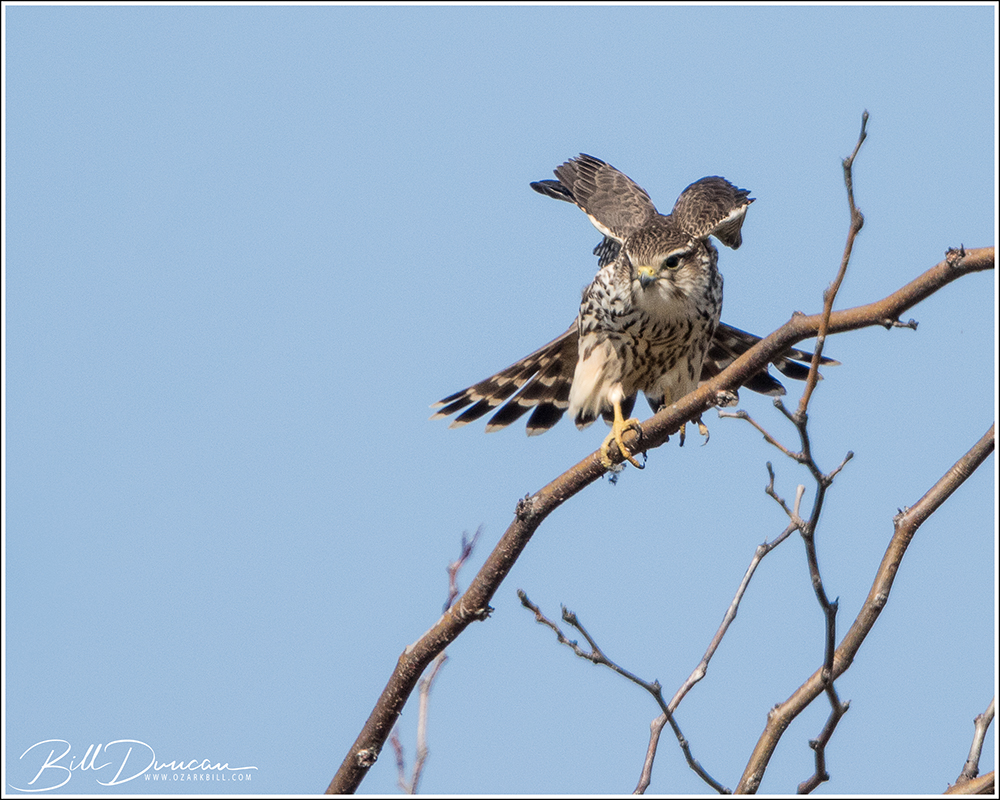
In early October of this year, while hunting for autumn migrating sparrows among the marshy grasslands at BK Leach Conservation Area, I came across this cooperative Merlin. As you can see in the photos, this bird appeared to be having the same poor luck as me at finding sparrows or any passerines whatsoever. I watched it catch and consume four dragonflies in the hour or so I sat watching from my car. They are known to prey on dragonflies and other large insects but birds make up the majority of their diet.
Another thing I found interesting in watching this bird is that it seemed to prefer sitting on the power lines although there were plenty of telephone poles and some dead snags available in the area. One of the things I’ve read about Merlins in some field guides, and have heard from my birding mentors over the years, is that when you see a small falcon perched on a wire it will almost always be a Kestrel. This is the third time I have come across Merlin sitting on wires that I can remember. But, I am sure it is still the case that they prefer more natural perches in general.
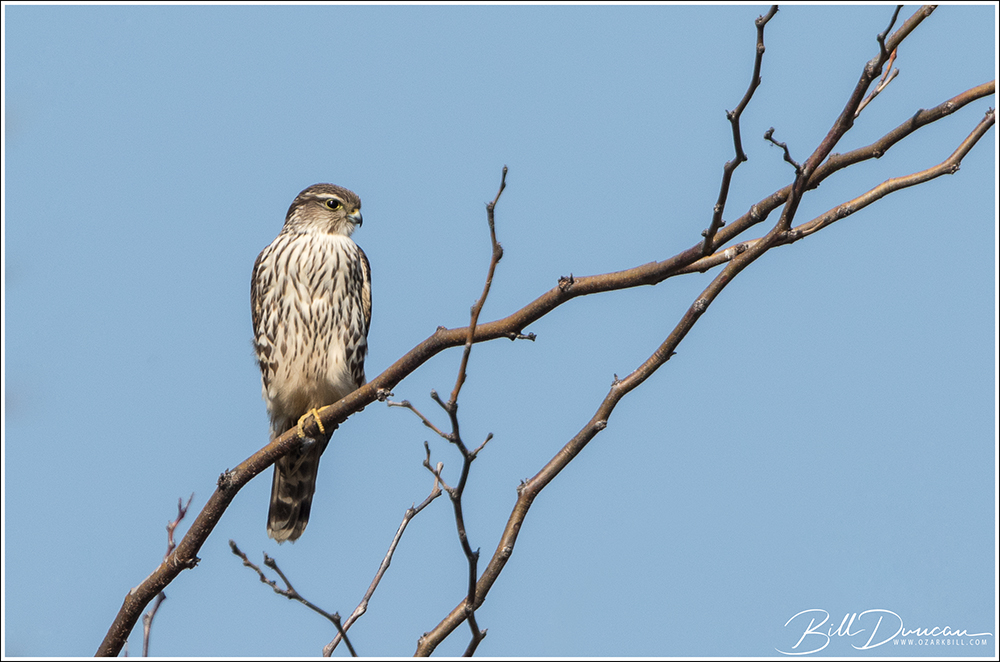
There are two subspecies of Merlin that can be found in our area during migration and winter. This bird appears to be a juvenile Taiga/Boreal (ssp. columbarius).
A trip to Riverlands Migratory Bird Sanctuary last weekend paid off. I crossed paths with this juvenile Merlin, my first of this season, three different times. In this instance I had my camera prepared. He kindly perched long enough that I could swap for the 2X teleconverter. I think the 2X performed pretty well in this perfect light, but heat distortion was a major problem on this cool but sunny day.
Seven of us made the long drive to our destination on the morning of the 23rd . The week of
Thanksgiving can be an excellent choice for visiting Loess Bluff NWR, but always depends on the
weather. We were a bit concerned with the early cold snap our region experienced this autumn.
However, in the week or so preceding the trip, the weather warmed so we were not hampered by ice
that can completely cover the shallow waters of the wetlands. Having open water affords very close
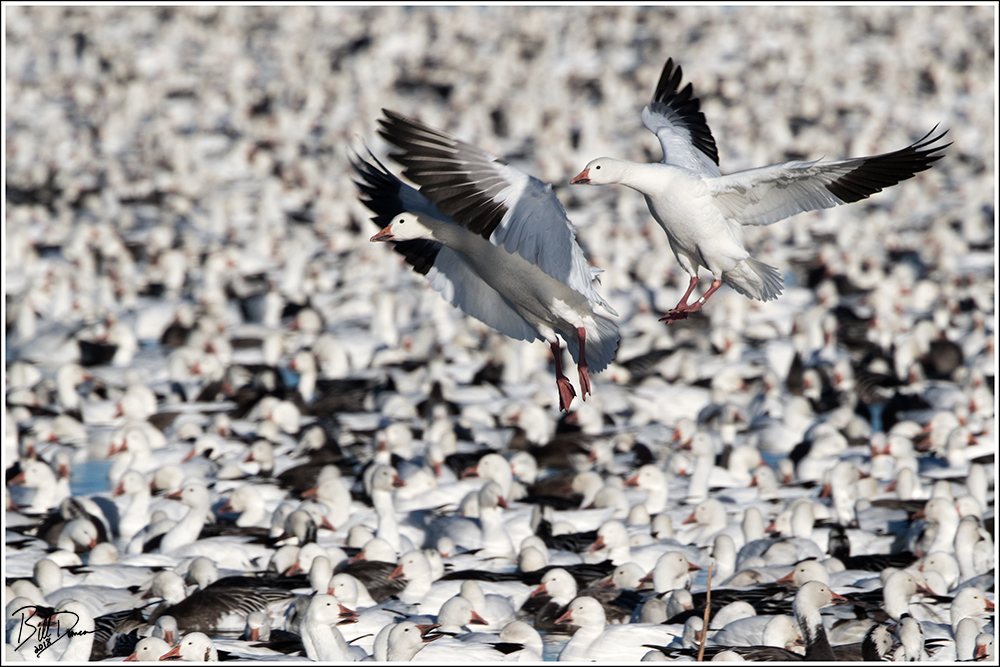
views of our photographic subjects and the primary reason we drove such a distance – the blizzard.
The blizzard
Typically, one million to two million Snow Geese will make this location a stop over during spring
and autumn migration and numbers of over 500,000 birds on a single count are not uncommon.
During our visit, the official counts were slightly over 100,000 birds, but the feeling with the group
was that this was grossly underestimated.
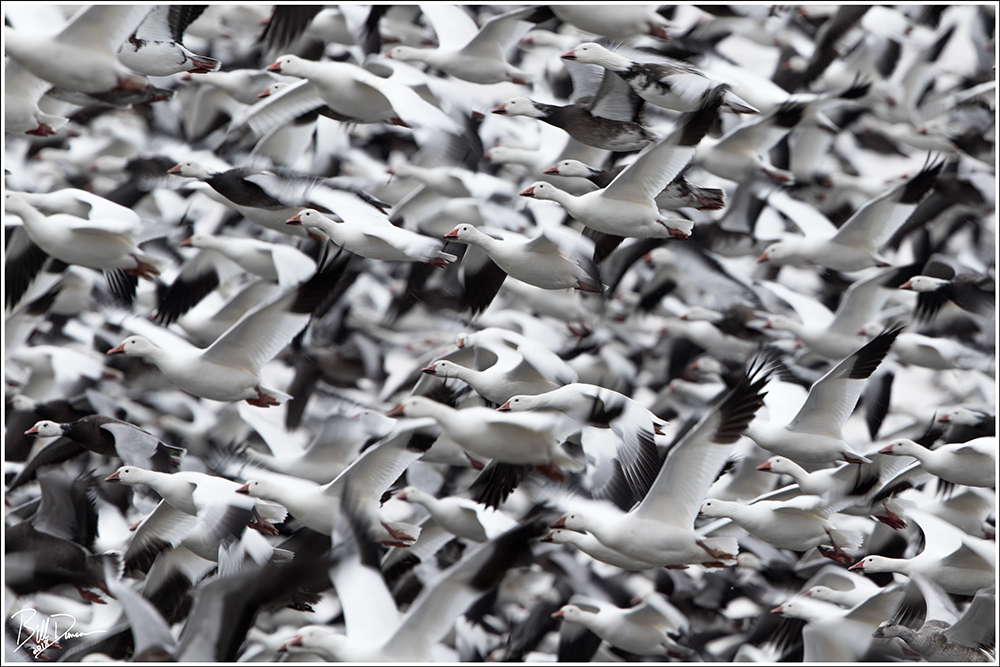
Rising snow
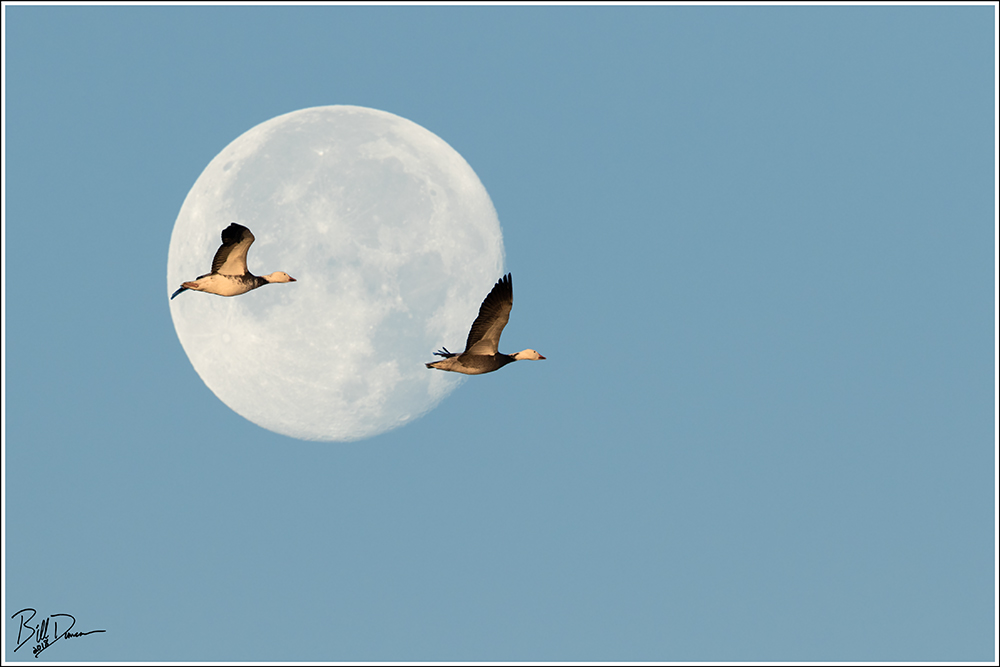
If conditions allow, getting the moon behind the Snow Geese can make a nice composition.
Rising snow against setting moon
Lunar Liberty
On our first day of the trip we were faced with mostly cloudy weather. As I told the group, this provides an opportunity to more easily try panning motion shots like the one pictured below. This is not my most successful attempt at such an image, but I wanted to share it here to demonstrate the multitude of opportunities for a diversity of photos to be made.
Panning with the action
Snow Geese are not the only subjects that make this trip worthwhile. The refuge also provides
important habitat for birds such as Bald Eagles, sparrows, a variety of ducks and wading birds, as
well as mammals like white-tailed deer and muskrats. On our initial entry to the park, Dave and Bill
found a Merlin on a relatively good perch above the road. We spent some time photographing the
bird, but regretted that the rest off our party were on the other side of the refuge and would not
likely be able to get the looks we did. Fortunately, a Merlin – likely the same bird, was spotted on
our second day and was viewable by all.
Merlin
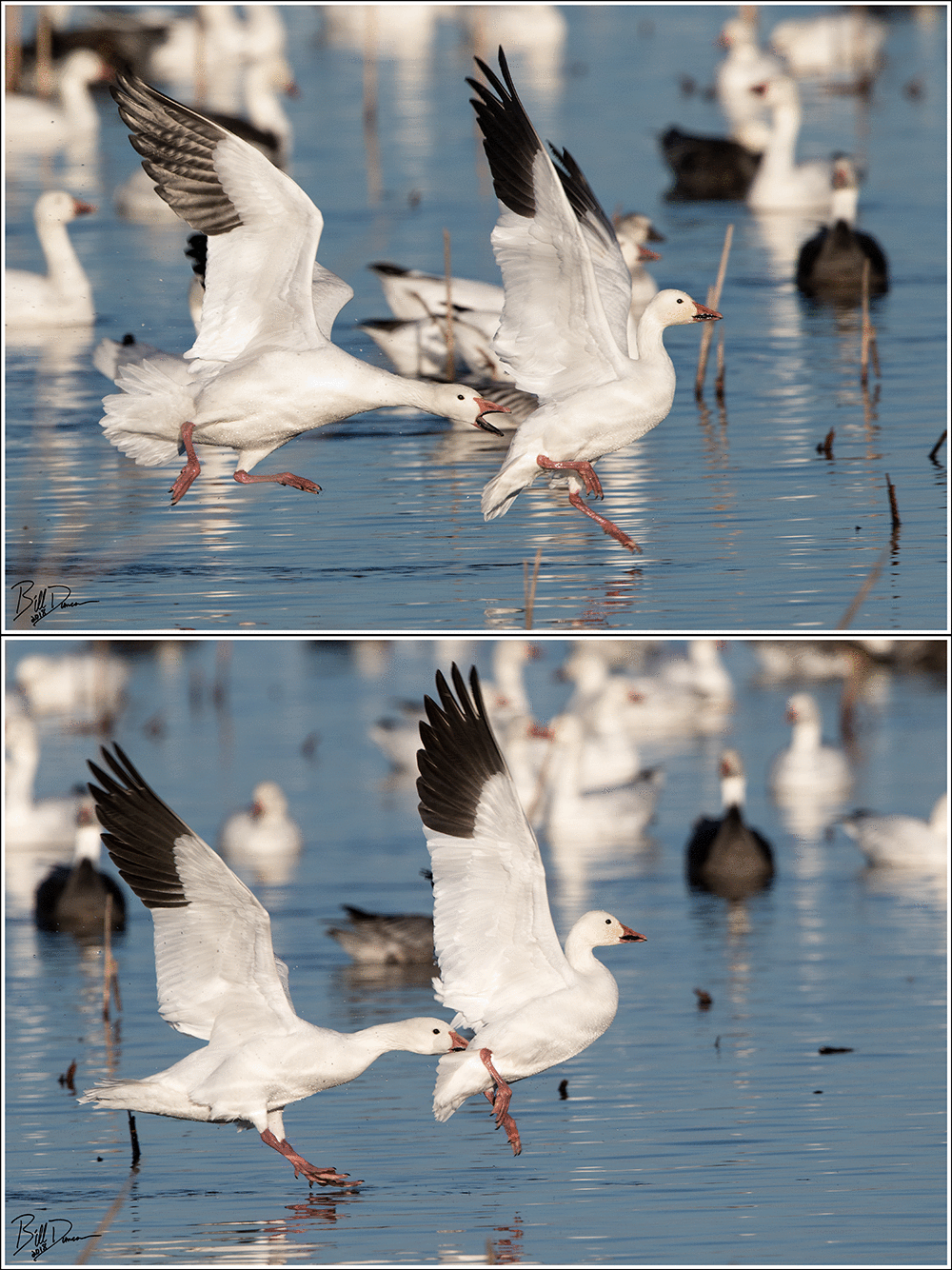
With subjects in the hundreds of thousands to the millions, making a purposeful image can be challenging. It is quite natural to want to shoot at everything that moves, but try and focus. Finding smaller action scenes is one way the photographer can focus on the individuals and their stories that make up the grander scheme.
Goosing a goose
Although we experienced skies with periods of heavy overcast, we were presented with fantastic
sunsets on both days. Being able to make the birds part of the story made these images all the more special.
Sun setting on snowy waters
A beautiful end
The WGNSS Photo Group is committed to an overnight trip to this and similar locations within the Midwest on Thanksgiving week. If you’d like to join us next year, please let me know!








 A Thousand Acres of Silphiums