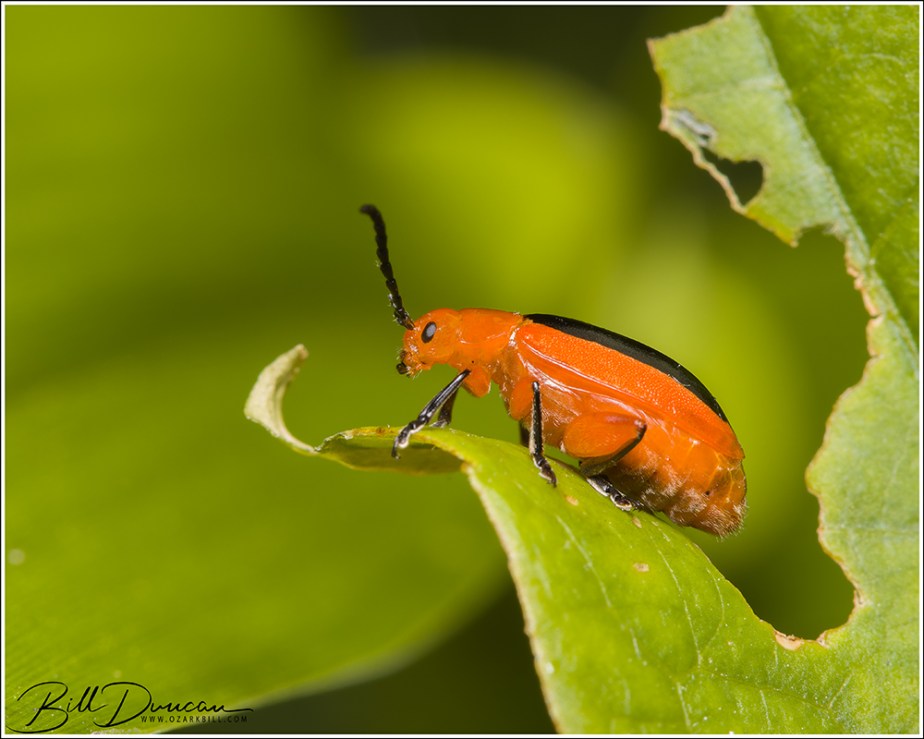
Ever since seeing the photo of Disonycha discoidea in Arthur Evans’ “Beetles of Eastern North America,” I have been wanting to find and photograph this gorgeous Chrysomelid. I have looked for years for this species around St. Louis and southeastern Missouri, and even planted one of its host plants, Passiflora incarnata, in our yard hoping to possibly attract them.
Just a couple weeks ago, my friend, Pete, posted a bunch of picks from his botany trip to southern Illinois on Facebook. As I perused through his collection of fascinating plants he found, I stopped at a photo of several beetles that were on a grape vine. In this photo was a single D. discoidea. Getting a little upset, I messaged Pete to see if he could tell me exactly where he had found this. He was at Giant City State Park and because of smartphone technology, he forwarded me his geotagged photo and I had access to exactly where he had taken the picture.

However, I knew this was a big risk and I didn’t get my hopes up. First, Pete had taken his photo approximately a week before Sarah and I took the 2.5 hour drive south. In addition, the beetle he photographed was on a grapevine, not their typical host plant. Was this just an accidental occurrence of this beetle or could they use grapes as an alternative host? Nothing in the literature suggested that this occurred with this species; apparently, it is monophagous and only uses members of the Passiflora to feed.
We decided it was worth the drive. Giant City State Park is a high quality area and I knew that if we struck out we wouldn’t have to try hard to find something else of interest. We found Pete’s spot of original find pretty easily and started searching. After a couple hours of looking as hard as we could among the grape and poison ivy we decided we weren’t going to find the species there. Utilizing smartphone technology again, I thought it might be a good idea to look for Passiflora plants that had been documented in iNaturalist within the park. My phone signal was pretty poor, so we drove to one of the highest points we could find and I found a single spot that had these plants documented.

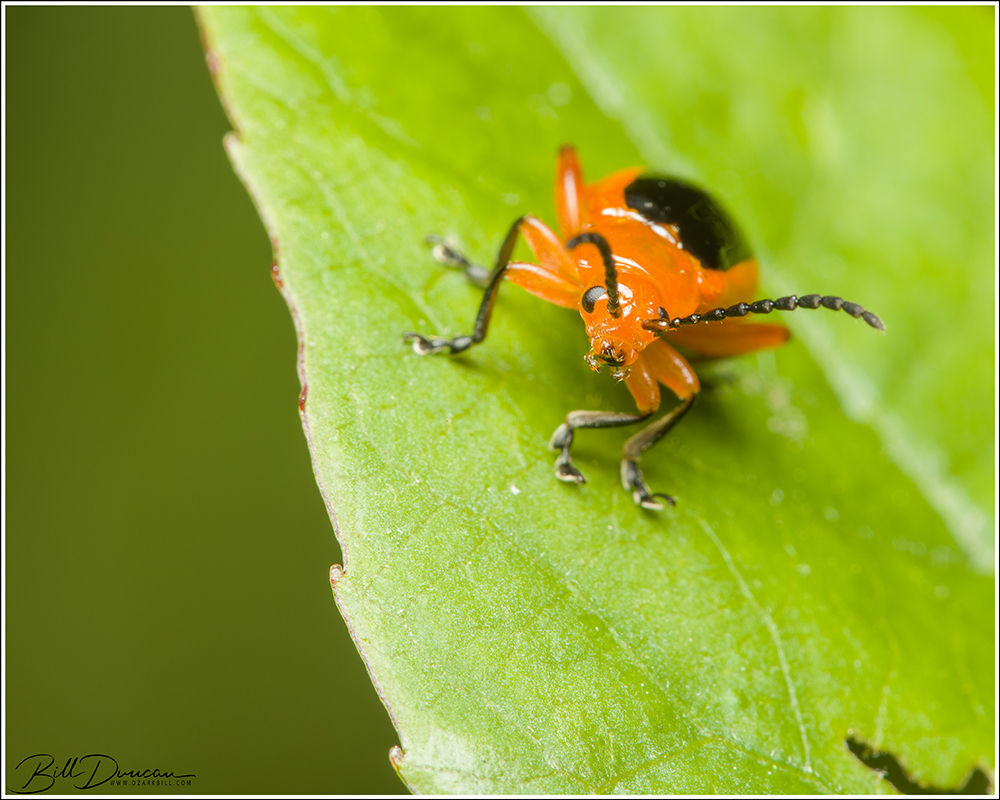
These plants were found in a poor scrub prairie habitat along with blackberry and even more poison ivy. We started looking, finding and searching between 50 and 100 of these short plants. We looked very closely and I had a chance to try my DIY collapsible beat sheets that I made over the winter. No luck. I couldn’t believe it. I really thought we had a good chance. We knew the species had been found in the park and here we were within a sizeable population of the host plants. You’ve seen the photos already, so obviously we found our target. And, of course, insect finder extraordinaire, Sarah, was the one to find the beetle on a ragged, half-eaten P. incarnata plant. I immediately got to work photographing from a safe distance. One of the reasons they call them flea beetles is that they will jump great distances upon being disturbed. Ultimately, we found four individuals all on the same plant. Thankfully, this species is quite large for a flea beetle and I didn’t need to get too close that higher magnifications would require.

So what’s up with that coloration?
This species exhibits aposematism, also known as warning coloration. This is the same reason that unpalatable or downright toxic species like monarchs and milkweed bugs along with stinging predators like yellowjackets or velvet ants show warning colorations. Disonycha discoidea picks up cyanogenic glycosides from its Passiflora host plant, making it distasteful or toxic to would-be predators. By evolving this aposematism, the insects can advertise this and avoid the predators that would be on the lookout for an easy meal. In the tropics, a group of butterflies known as the heliconiines also acquire these toxic compounds from the larval feeding on Passiflora.
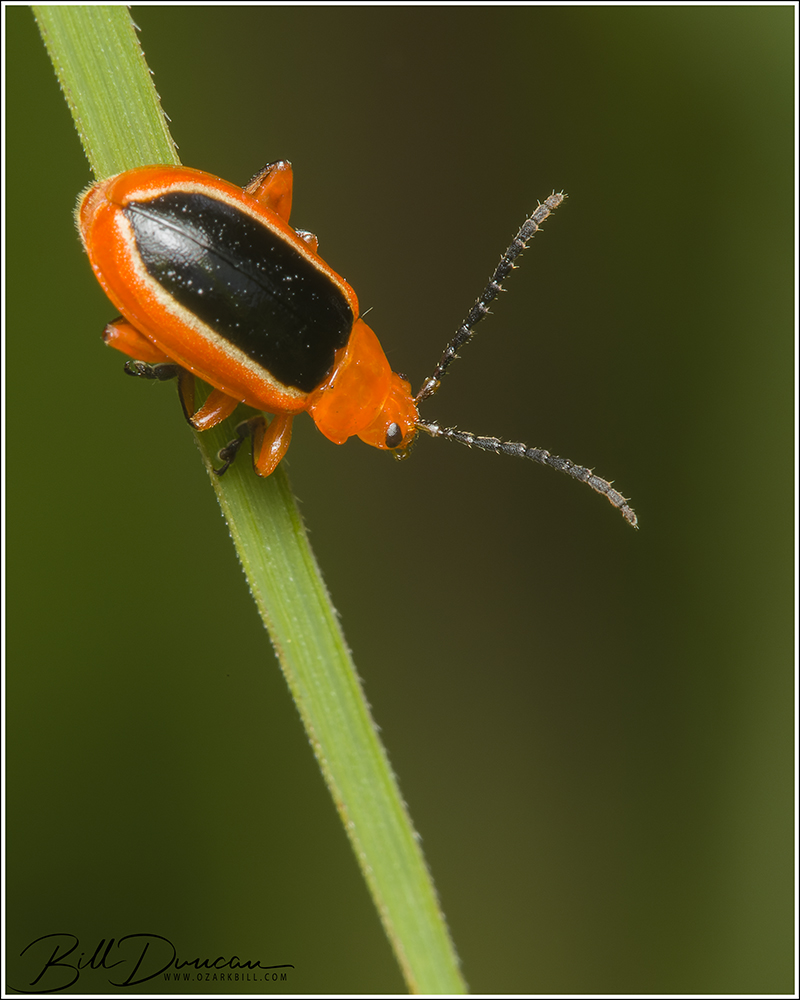
It was great to finally find this target species. The larvae of this species is also quite photogenic. If I find the time to make a return visit this summer, I would love to find a few of them as well.
Thanks for stopping by!
OZB
 A Thousand Acres of Silphiums